Science/Tech

You are currently browsing the archive for the Science/Tech category.

Masdar City’s proposed podcars have been scrapped, a casualty of the economic slowdown. From David Hill on IEEE Singularity Hub:

Sounding like something out of a Robert Heinlein novel, Masdar City’s integrated transportation plan involves four initiatives, but it was the podcar system, designed by the Italian company Zagato and developed by Dutch firm 2getthere, that held the most promise. The plan proposed a driverless fleet of 3,000 free-moving, electric vehicles that could transport 2 to 6 passengers between 85 to 100 stations, tallying up to 135,000 trips a day along preprogrammed routes. This system of podcars was basically a replacement for taxis, providing privacy to passengers without the congestion common in other urban centers. A wi-fi network would maneuver the podcars through obstacles in real time as magnets along the path continuously pull the vehicle into alignment with little variance: if one is missed, the podcar continues but if two are missed, it comes to a stop. Ultimately, the podcars were to be powered by solar panel arrays on top of buildings (which was also axed from the budget) and thermal energy-storing molten salt technology allowing the vehicles to run 24 hours a day, seven days a week.•

Tags:

From Philadelphia inventor Jack Zylkin’s site: “The USBTypewriter is a new and groundbreaking innovation in the field of obsolescence. Lovers of the look, feel, and quality of old fashioned manual typewriters can now use them as keyboards for any USB-capable computer, such as a PC, Mac, or even iPad! The modification is easy to install, it involves no messy wiring, and does not change the outward appearance of the typewriter (except for the usb adapter itself, which is mounted in the rear of the machine). So the end result is a retro-style USB keyboard that not only looks great, but feels great to use.” (Thanks IEEE Spectrum.)

Tags:


“Tests of Death: Hold mirror to mouth. If living, moisture will gather. Push pin into flesh. If dead the hole will remain. If alive it will close up. Place fingers in front of a strong light. If alive, they will appear red; if dead, black or dark. If a person is dead decomposition is almost sure to set in after 72 hours have elapsed. If it does not, then there is room for investigation by the physician. Do not permit burial of the dead until some certain indication of death is apparent.”

•From the 1902 World Almanac and Encyclopedia.

AMOLED (Active Matrix Organic Light-Emitting Diode) displays demonstrated by Samsung in Vegas recently. They’re bendable. (Thanks Reddit.)

The Chernobly skies still choked in 2010. (Image by Piotr Andryszczak.)

In “Chernobyl, My Primeval, Teeming, Irradiated Eden,Outside writer Henry Shukman tours the site of the world’s worst nuclear power plant disaster 25 years after the massive meltdown. There are some signs of life, though you couldn’t really call them green shoots. An excerpt:

“Today, around 5,000 people work in the Exclusion Zone, which over the years has grown to an area of 1,660 square miles. For one thing, you can’t just switch off a nuclear power plant. Even decommissioned, it requires maintenance, as does the new nuclear-waste storage facility on site. The workers come in for two-week shifts and receive three times normal pay. Any sign of disease at the annual medical, however, and they lose their jobs.

There are also some 300 people living in the zone: villagers who’ve been coming home to their old farming lands since not long after the disaster and teams of radio ecologists from around the world who’ve come to study the effects of radioactive fallout on plants and animals. They’ve effectively turned the zone into a giant radiation lab, a place where the animals are mostly undisturbed, living amid a preindustrial number of humans and a postapocalyptic amount of radioactive strontium and cesium. On the outside the fauna seems to be thriving: there have been huge resurgences in the numbers of large mammals, including gray wolves, brown bears, elk, roe deer, and wild boar present in quantities not recorded for more than a century. The question scientists are trying to answer is what’s happening on the inside: in their bones, and in their very DNA.

ONCE YOU ENTER THE ZONE, the quiet is a shock. It would be eerie were it not so lovely. The abandoned backstreets of Chernobyl are so overgrown, you can hardly see it’s a town. They’ve turned into dark-green tunnels buzzing with bees, filled with an orchestral score of birdsong, the lanes so narrow that the van pushes aside weeds on both sides as it creeps down them, passing house after house enshrined in forest. Red admirals, peacock butterflies, and some velvety brown lepidoptera are fluttering all over the vegetation. It looks like something out of an old Russian fairy tale.

Ukraine officially opened Chernobyl up to tourism in January 2011, but small groups have been able to visit the zone for the past few years. There are small tour operators based in Kiev that take visitors on day trips. You don’t need Geiger counters or special suits; you just have to stay with the tour, pass through several checkpoints, and get tested for radiation on your way out. The tours will shuttle you around some of the main sites—the deserted city of Pripyat, a small park filled with old Soviet army vehicles used in the cleanup, various concrete memorials to the fire crews who lost their lives after the blast. Visitors are strictly confined to areas the author ities have scanned and declared safe.” (Thanks Longreads.)

Tags:

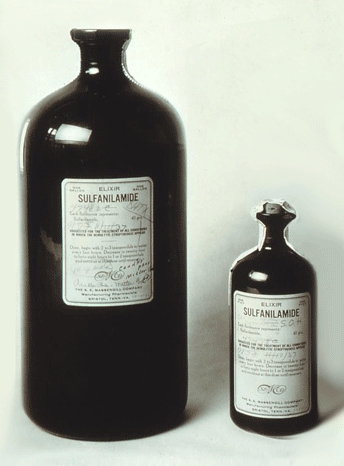
"Old poison/apothecary jars."


ANTIQUES WANTED BIZARRE STRANGE WEIRD UNUSUAL WILL PAY CASH (Staten Island)

Greetings, I am a buyer and collector of fine antique items ranging from Victorian era to early Modern. I am always glad to meet and purchase items for CASH if the price is right and they fit my criteria. Please feel free to respond anytime and I will get back to you promptly for a discussion by phone or email. You can always expect the utmost courtesy and professionalism. Standard Antiques and collectible items are welcome but I SPECIALIZE in bizarre and odd items such as:

  • Victorian Post-Mortem Photography
  • Old Poison/Apothecary Jars
  • Victorian Coffins and Urns
  • Old Surgical Equipment/Devices
  • Mortuary Equipment/Embalming Items
  • Old Keys/Locks
  • Animal Skulls Bones/Other Bones Skulls
  • Books on strange subject matters
  • Small Taxidermy such as squirrels/bats/cats/small dogs/reptiles
  • Masonic and Secret Society Lodge Items
  • Old Religious/Reliquary Items
  • Early Industrial Items/Gears/
  • Vintage Horror Movie Items/Masks


I posted earlier about the Robot Marathon taking place in Osaka, Japan. Here is the result. (Thanks IEEE Spectrum.)

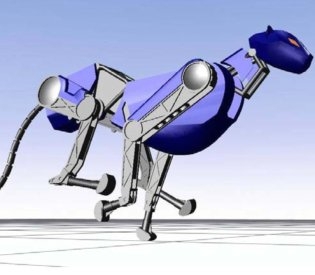
"Cheetah is designed to be a four-legged robot with a flexible spine and articulated head."

Most of you live in cheetah-free neighborhoods, but it doesn’t always have to be that way. Boston Dynamics has won contract to produce a cheetah bot. An excerpt from a Wired story:

“Boston Dynamics, maker of the Army’s BigDog robotic mule, announced today that Darpa has awarded it a contract to build a much faster and more fearsome animal-like robot, Cheetah.

As the name implies, Cheetah is designed to be a four-legged robot with a flexible spine and articulated head (and potentially a tail) that runs faster than the fastest human. In addition to raw speed, Cheetah’s makers promise that it will have the agility to make tight turns so that it can ‘zigzag to chase and evade’ and be able to stop on a dime.”

Boston Dynamics’ BigDog bot:

Crowds: very useful, but very creative?

I’m all in favor of the great utility of crowdsourcing and, for example, use Wikipedia, which is powered by a collaborative effort, on a daily basis. But those who laud Wikipedia as a creation of crowdsourcing are only half right: Wiki has been made possible by a collective, true, but it was created by two inventors: Jimmy Wales and Larry Sanger. The crowd can marshal great force to complete a task, but invention still doesn’t seem to me a domain of the many. Not that the people who toiled for no money to make Wikipedia such an amazing tool are less important than its creators, but the crowd needs an idea to rally around. It seems unlikely that the many can dream with the same sharp precision–let alone genius–as a Tesla, Tucker or Jobs. Joel West wondered about the same thing last month on the Open Innovation Blog:

“At the #BAexec event last week, one of the interesting questions from the floor was ‘could the iPhone have been produced via crowdsourcing?’

My immediate reaction was ‘no.’ What’s made Apple so special for the past 13 years has been the solitary, laser-focused vision of product design brought by its CEO. Of course, that’s just the supposition of a 35-year Apple-watcher.

What I think was more interesting was: what are the limits of crowdsourcing? Those who study crowdsourcing consider its advantages for accessing heterogeneous knowledge bases or sheer scale of ideas. But integrating that hodgepodge of ideas — no matter how good — can be daunting if not labor intensive.”

Tags: , ,

From Aaron Saenz on the Singularity Hub: “The robots are coming, the robots are coming! This spring, the San Mateo Fairgrounds will host RoboGames, the annual international event that sees robots face off in a variety of exciting competitions. Robots battle to the death in the famous RoboGames arena, shoot to win in soccer matches, fight fires in miniature mazes, and much much more.”

Tags:

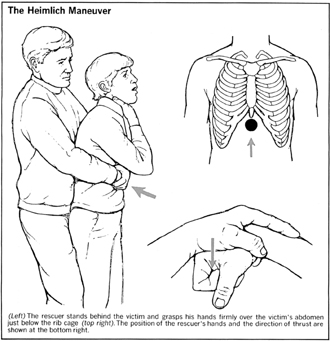
Longform pointed me to “The Choke Artist,” an interesting 2007 New Republic article by Jason Zengerle about Dr. Henry J. Heimlich, the creator of the anti-choking thrust, who’s searched, somewhat dubiously, for a second life-saving act in his career while being criticized for his methods. An excerpt:

“‘A serious matter has been brought to my attention,’ the letter began. Addressed to an official in the Office for the Protection of Research Subjects at the University of California at Los Angeles, it accused two UCLA medical researchers of participating in illegal human experiments on HIV patients in China. “These experiments consist of giving malaria to people already suffering from HIV and full-blown AIDS,” the letter alleged, before going on to make an even more startling claim: ‘[T]hese experiments have been conducted under the direction of Dr. Henry J. Heimlich, known for the Heimlich maneuver.’

The letter, which was sent via e-mail in October 2002 and was from a ‘Dr. Bob Smith,’ was merely the first in a series of epistolary attacks against Heimlich. A few months later, editors at more than 40 publications—ranging from The New York Times to the medical journal Chest—received missives from someone calling himself ‘David Ionescu’ that accused Heimlich of improperly taking credit for inventing a type of esophageal surgery. And then, in September 2003, the website heimlichinstitute.com went online. Its URL was almost identical to the official website of Henry Heimlich’s Heimlich Institute, heimlichinstitute.org, but, rather than being dedicated to burnishing the doctor’s legend, it was devoted to tearing it down. The site featured a long, angry indictment of Heimlich and accused him of all sorts of medical misconduct. The site’s proprietor was listed as ‘Holly Martins’—the protagonist in the 1949 film noir The Third Man.

The octogenarian Heimlich seemed an unlikely target of so many people’s ire. He had entered into the pantheon of medical history not for inventing a disease-eradicating vaccine or for isolating the DNA of a killer virus but, rather, for developing an anti-choking maneuver that even a child could perform. And, yet, it is the very simplicity of Heimlich’s lifesaving technique that makes it so ingenious; because anyone can perform the maneuver, anyone can save a life. Since its invention in 1974, it has become a standard First Aid procedure around the world; and, while it may have been hyperbole for Norman Vincent Peale to once declare that Heimlich ‘has saved the lives of more human beings than any other person living today,’ it was fair to say that, by the measure of name recognition at least, the maneuver had made Heimlich America’s most famous doctor.”

Tags: ,

A Trenta-sized touchscreen created by the Media Merchants is currently being tested at two Canadian Starbucks outlets. (Thanks Singularity Hub.)

"Employees are more productive when they're allowed to engage in 'Internet leisure browsing.'" (Image by Mateo Inurria.)

It’s obvious that creative thinking requires time to just space out, that your brain can’t connect the dots if it doesn’t have free moments to recognize they exist and understand the relation between them, but science backs up what’s intuitive in this case. An excerpt from Bother Me, I’m Thinking” in the Wall Street Journal, neuroscientist Jonah Lehrer’s article about the value of not focusing:

“Scientists have begun to outline the surprising benefits of not paying attention. Sometimes, too much focus can backfire; all that caffeine gets in the way. For instance, researchers have found a surprising link between daydreaming and creativity—people who daydream more are also better at generating new ideas. Other studies have found that employees are more productive when they’re allowed to engage in ‘Internet leisure browsing’ and that people unable to concentrate due to severe brain damage actually score above average on various problem-solving tasks.

A new study led by researchers at the University of Memphis and the University of Michigan extends this theme. The scientists measured the success of 60 undergraduates in various fields, from the visual arts to science. They asked the students if they’d ever won a prize at a juried art show or been honored at a science fair. In every domain, students who had been diagnosed with attention-deficit disorder achieved more: Their inability to focus turned out to be a creative advantage.”

Tags:

The story of a Beijing telephone collector.

Tags:

Bryant wasn’t the only one who needed an explanation. (Thanks Reddit.)

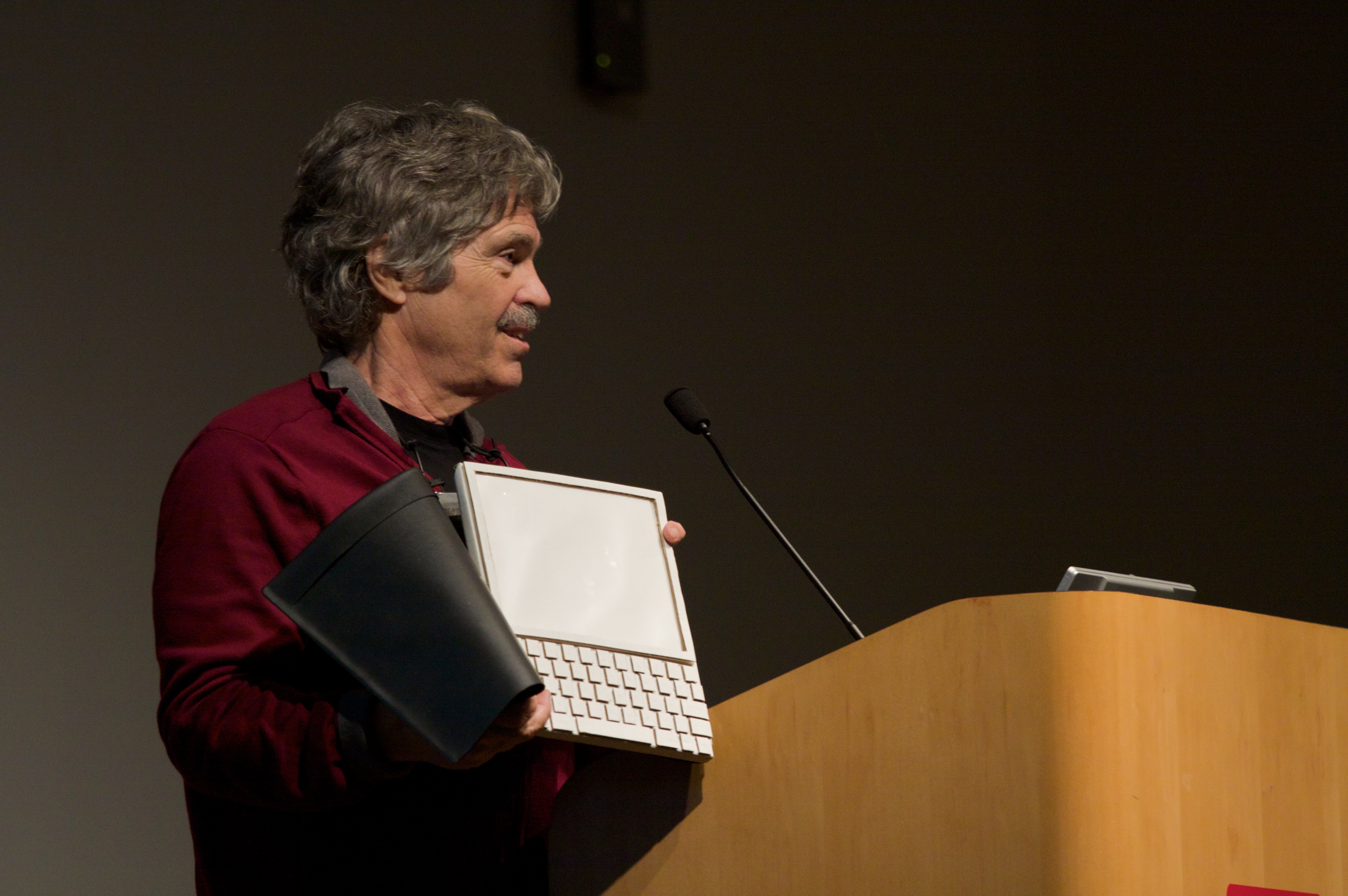
In 2008, Alan Kay presents the original 1960s Dynabook prototype, which was made of carboard.

Computer tablets became a big deal in 2010, but they weren’t anything new to Alan Kay. From “Space Wars: Fanatic Life and Symbolic Death Among the Computer Bums,” Stewart Brand’s 1972 Rolling Stone article about the emerging computer culture:

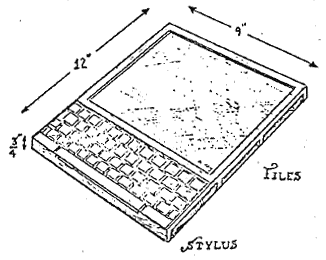
“Alan is designing a hand-held stand-alone interactive-graphic computer (about the size, shape and diversity of a Whole Earth Catalog, electric) called ‘Dynabook.’ It’s mostly high-resolution display screen, with a keyboard on the lower third and various cassette- loading slots, optional hook-up plugs, etc. His colleague Bill English describes the fantasy. thus:

‘It stores a couple of million characters of text and does all the text handling for you – editing, viewing, scanning, things of that nature. It’ll have a graphics capability which’ll let you make sketches, make drawings. Alan wants to incorporate music in it so you can use it for composing. It has the Smalltalk language capability which lets people program their own things very easily. We want to interface them with a tinker-toy kind of thing. And of course it plays Spacewar.’

"If Xerox Corporation decides to go with the concept, the Dynabooks could be available in two or three years."

The drawing capability is a program that Kay designed called ‘Paintbrush.’ Working with a stylus on the display screen, you reach up and select a shape of brush, then move the brush over and pick up a shade of half-tone-screen you like, then paint with it. If you make a mistake, paint it out with ‘white.’ The screen simultaneously displays the image you’re working on and a one-third reduction of it, where the dot pattern becomes a shaded half-tone.

A Dynabook could link up with other Dynabooks, with library facilities, with the telephone, and it could go and hide where a child hides. Alan is determined to keep the cost below $500 so that school systems could provide Dynabooks free out of their textbook budgets. If Xerox Corporation decides to go with the concept, the Dynabooks could be available in two or three years, but that’s up to Product Development, not Alan or the Research Center. Peter Deutsch comments: ‘Processors and memories are getting smaller and cheaper. Five years ago the idea of the Dynabook would have been a absolutely ridiculous. Now it merely seems difficult….'”

Tags: ,

Made herself vomit bolts right before the show, but, yes, she looks fabulous.

But real hummingbirds still taste way better. I kid.

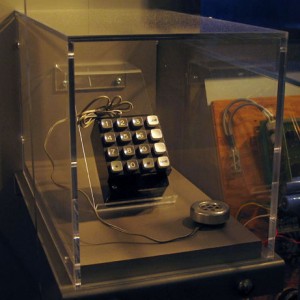
An original Blue Box at the Computer History Museum. Al Gilbertson invented the first such box, which gave callers the same control over the phone system as an operator. (Image by RaD man.)

Before the World Wide Web allowed most of the planet to be readily connected, people were already using whatever techological gadget they had at hand to try to reach out-of-the-way places and obscure information. Phone phreaks were pre-computer revolution hackers who figured out ways to place free phone calls and learn the finer points about the phone company’s computer system. For phreaks (including the pre-Apple Steves, Jobs and Wozniak), this hacking was a training ground for future endeavors in the computer industry.

The phone company was not amused, however, so these phreaks hid behind aliases like “Captain Crunch” and “Legion of Doom.” It was a subculture that few knew about until 1971, when Ron Rosenbaum’s Esquire article, “Secrets of the Little Blue Box,” profiled hacker Al Gilbertson. An excerpt:

“There is an underground telephone network in this country. Gilbertson discovered it the very day news of his activities hit the papers. That evening his phone began ringing. Phone phreaks from Seattle, from Florida, from New York, from San Jose, and from Los Angeles began calling him and telling him about the phone-phreak network. He’d get a call from a phone phreak who’d say nothing but, ‘Hang up and call this number.’

When he dialed the number he’d find himself tied into a conference of a dozen phone phreaks arranged through a quirky switching station in British Columbia. They identified themselves as phone phreaks, they demonstrated their homemade blue boxes which they called ‘M-F-ers’ (for ‘multi-frequency,’ among other things) for him, they talked shop about phone-phreak devices. They let him in on their secrets on the theory that if the phone company was after him he must be trustworthy. And, Gilbertson recalls, they stunned him with their technical sophistication.

I ask him how to get in touch with the phone-phreak network. He digs around through a file of old schematics and comes up with about a dozen numbers in three widely separated area codes.

‘Those are the centers,’ he tells me. Alongside some of the numbers he writes in first names or nicknames: names like Captain Crunch, Dr. No, Frank Carson (also a code word for a free call), Marty Freeman (code word for M-F device), Peter Perpendicular Pimple, Alefnull, and The Cheshire Cat. He makes checks alongside the names of those among these top twelve who are blind. There are five checks.
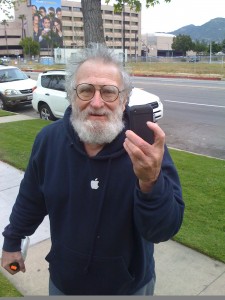
John T. Draper, the computer legend also known as "Captain Crunch." (Image by Aaron Getting.)

I ask him who this Captain Crunch person is.

‘Oh. The Captain. He’s probably the most legendary phone phreak. He calls himself Captain Crunch after the notorious Cap’n Crunch 2600 whistle.’ (Several years ago, Gilbertson explains, the makers of Cap’n Crunch breakfast cereal offered a toy-whistle prize in every box as a treat for the Cap’n Crunch set. Somehow a phone phreak discovered that the toy whistle just happened to produce a perfect 2600-cycle tone. When the man who calls himself Captain Crunch was transferred overseas to England with his Air Force unit, he would receive scores of calls from his friends and ‘mute’ them — make them free of charge to them — by blowing his Cap’n Crunch whistle into his end.)

‘Captain Crunch is one of the older phone phreaks,’ Gilbertson tells me. ‘He’s an engineer who once got in a little trouble for fooling around with the phone, but he can’t stop. Well, this guy drives across country in a Volkswagen van with an entire switchboard and a computerized super-sophisticated M-F-er in the back. He’ll pull up to a phone booth on a lonely highway somewhere, snake a cable out of his bus, hook it onto the phone and sit for hours, days sometimes, sending calls zipping back and forth across the country, all over the world….’

Back at my motel, I dialed the number he gave me for ‘Captain Crunch’ and asked for G—- T—–, his real name, or at least the name he uses when he’s not dashing into a phone booth beeping out M-F tones faster than a speeding bullet, and zipping phantomlike through the phone company’s long-distance lines.

When G—- T—– answered the phone and I told him I was preparing a story for Esquire about phone phreaks, he became very indignant.

‘I don’t do that. I don’t do that anymore at all. And if I do it, I do it for one reason and one reason only. I’m learning about a system. The phone company is a System. A computer is a System. Do you understand? If I do what I do, it is only to explore a System. Computers. Systems. That’s my bag. The phone company is nothing but a computer.'”

Tags: ,

Created by farmer Wu Yulu.

Tags:

“In 20 years, this technology will be mainstream…absolutely,” says Hod Lipson, roboticist at Cornell University. (Thanks Endgadget.)

Tags:

Hale-Bopp soars past Death Valley. (Image by Mkfairdpm.)

Newmark’s Door pointed me to a list of (thankfully) failed end-of-the world prognostications collected on Live Science. Here’s a particularly stupid one:

Heaven’s Gate, 1997

When comet Hale-Bopp appeared in 1997, rumors surfaced that an alien spacecraft was following the comet — covered up, of course, by NASA and the astronomical community. Though the claim was refuted by astronomers (and could be refuted by anyone with a good telescope), the rumors were publicized on Art Bell’s paranormal radio talk show Coast to Coast AM. These claims inspired a San Diego UFO cult named Heaven’s Gate to conclude that the world would end soon. The world did indeed end for 39 of the cult members, who committed suicide on March 26, 1997.”

Tags:

A relatively new way to die.

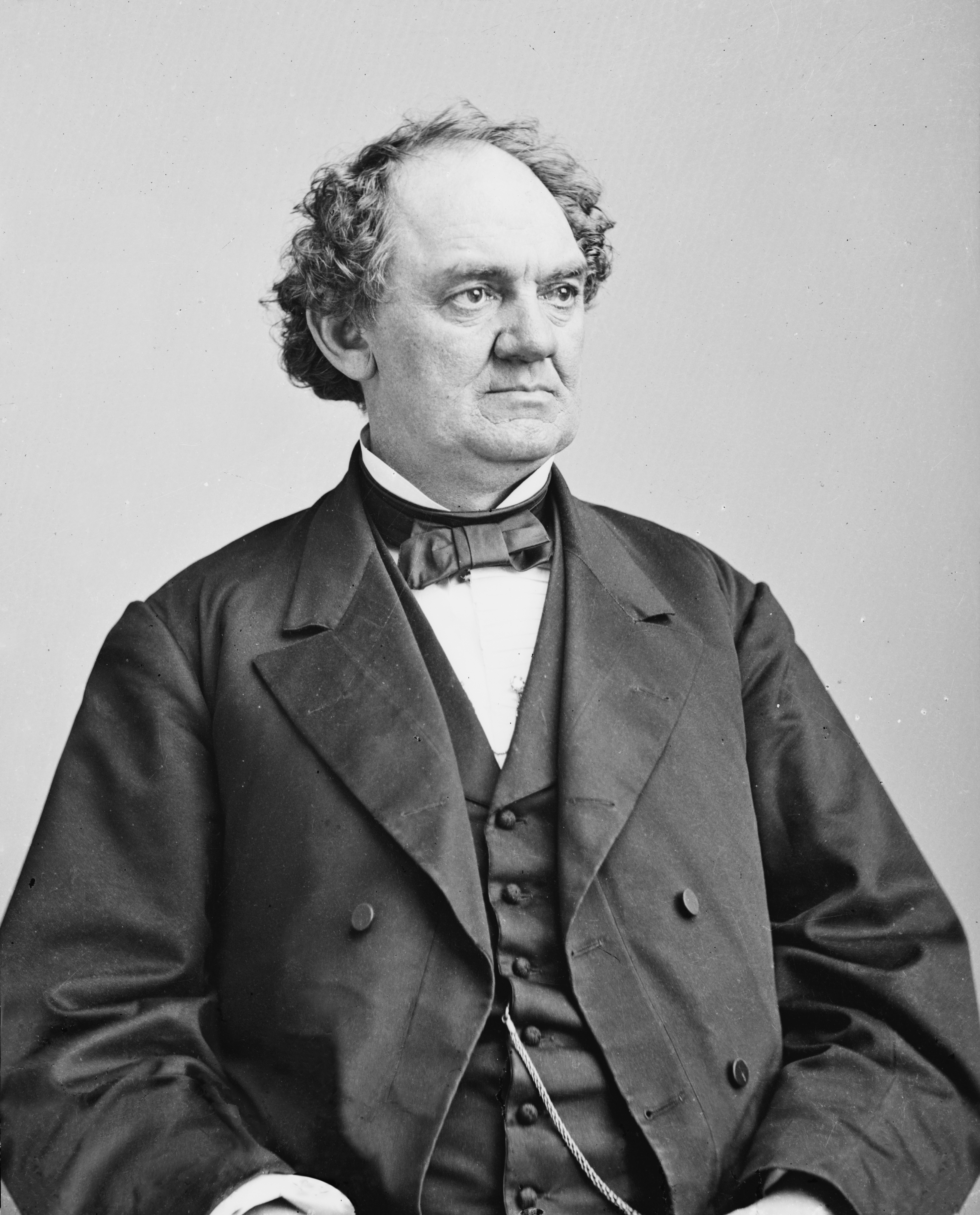
Not even P.T. Barnum could sell the Fire Annihilator, an early flame extinguisher created by British inventor William Phillips. The Big Top legend invested heavily in the apparatus and announced (with great hoopla, of course) a demonstration in Manhattan to be held on December 17, 1851. Things did not go well.

According to some publications, Barnum’s friend, Signor Blitz, a ventriloquist, bird trainer and magician, complicated matters by mischievously throwing his voice to make it sound like people and livestock were trapped by the fire that had been set for the trial. That may or not be apocryphal. Whatever the cause, the machine failed, and inside of a year the Fire Annihilator factory in London was completely destroyed–by a fire. Because Barnum had often boasted of his ability to fool all of the people all of the time, the ink-stained wretches were not kind about the public failure.

The New York Times panned the Annihilator, and here’s an excerpt from the Brooklyn Daily Eagle story about the doomed demonstration:

Yesterday, in order to satisfy our curiosity in regard to the merits of the so-called Fire Annihilator, we preceded to New York to witness the exhibition trial of the machine, which was announced to take place. In order to avoid accidents, the trial took place so far up town as 63rd street in an unenclosed space of ground, without any houses in the neighborhood. A quantity of pitch was ignited, and two of the machines applied to extinguish the flames. The pitch was spread on a frame of boards about four feet by six, and probably made a coating two or three inches in depth. One of the machines was put in operation, and a stream of white vapor resembling steam issued forth and was directed towards the fire; another similarly charged, was applied to the other side of the fire. A hissing noise followed, but when both of the machines were exhausted the fire was burning as strongly as ever. The performance was repeated several times with similar results.

As the trial was long postponed, and publicly advertised to take place on this occasion, it is to be presumed that everything was so well prepared for testing the capacity of the machine as to give fair proof of its character; and after having witnessed the trial we are forced to say, that we would put infinitely more confidence in a bucket of water, in case of a fire, than in Barnum’s Annihilator.•

Tags: , ,

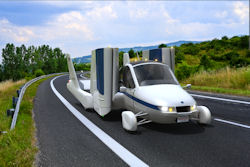
The Transition in the air... (Image by Terrafugia.)

Rebecca Boyle of Popsci has a post about the Transition, a plane-car hybrid that has been approved by the FAA for sale in 2012. It won’t be cheap, but it’s not as expensive as I might have imagined. An excerpt:

“Late next year, you’ll be able to buy your own flying car — er, ‘roadable aircraft’ — thanks to a thumbs-up from the Federal Aviation Administration. As long as you have $194,000 and a sport pilot license.

The agency approved the Transition plane-car this week, giving it a Light Sport Aircraft rating. The test prototype has been flying for about a year, but plane-maker Terrafugia will unveil its production-class plane next month at the Experimental Aircraft Association’s annual convention in Oshkosh, Wisc.

The Transition drives like a car, uses normal high-octane gasoline, has front-wheel-drive and even comes with airbags. Its fuel economy is about 30 miles per gallon. But unlike your Prius, it can unfold its wings and fly. You’ll only need a one-third of a mile strip for a runway, meaning you could conceivably use your own street. It is powered by a rear propeller and flies about 115 miles per hour.

The ideal customer is a sport pilot who gets tired of flying to regional regional airports only to have to wait for a cab, rent a car or use public transportation. Now he or she can just fold up the wings and motor on to the next errand.”

...and on the ground. (Image by Terrafugia.)

Tags:

« Older entries § Newer entries »