
Science/Tech

You are currently browsing the archive for the Science/Tech category.

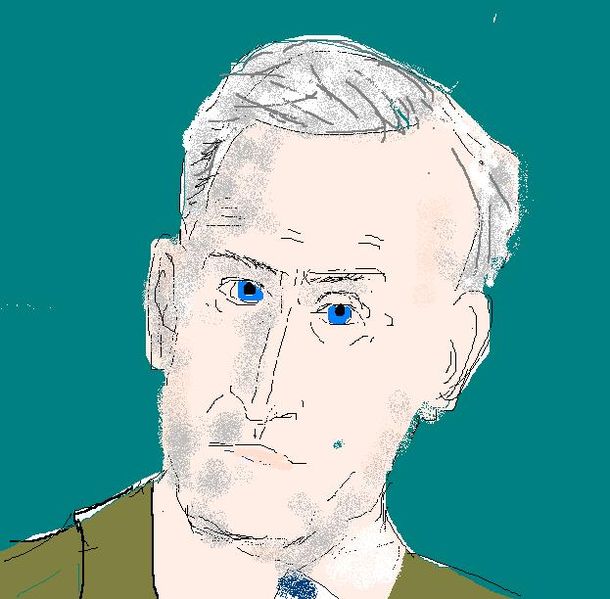
(Image by Wikimedia Foundation.)

The Awl, that fascinating stream of information and ideas, has a particularly wonderful article-length post inWikipedia and the Death of the Expert,” which was written by Maria Bustillos. It was just a few short years ago that Jimmy Wales’ brainchild was being openly mocked. People were too focused on what Wikipedia wasn’t (a flawless source), ignoring what it was (an excellent starting point for a curious mind, one of the great triumphs of crowdsourcing and an apotheosis of amateurism). But the laughter has stopped. Wikipedia hasn’t contributed to the decline of civilization but to the storehouse of knowledge, widening it with a lack of disdain toward so-called “low culture.” The original idea for Wikipedia didn’t come from crowdsourcing, but it would still be an empty room without the crowd that occupied it.

The opening of Bustillos’ Awl post:

“It’s high time people stopped kvetching about Wikipedia, which has long been the best encyclopedia available in English, and started figuring out what it portends instead. For one thing, Wikipedia is forcing us to confront the paradox inherent in the idea of learners as ‘doers, not recipients.’ If learners are indeed doers and not recipients, from whom are they learning? From one another, it appears; same as it ever was.

It’s been over five years since the landmark study in Nature that showed ‘few differences in accuracy’ between Wikipedia and theEncyclopedia Britannica. Though the honchos at Britannica threw a big hissy at the surprising results of that study, Nature stood by its methods and results, and a number of subsequent studies have confirmed its findings; so far as general accuracy of content is concerned, Wikipedia is comparable to conventionally compiled encyclopedias, including Britannica.”

••••••••••

Jimmy Wales describes the birth of Wikipedia at TED in 2005:

The conclusion of Stacy Schiff’s 2006 New Yorker article, “Know It All,” which realized that the Wiki mob was winning but wasn’t sure if the victory was Pyrrhic: “In the nineteen-sixties, William F. Buckley, Jr., said that he would sooner ‘live in a society governed by the first two thousand names in the Boston telephone directory than in a society governed by the two thousand faculty members of Harvard University.’ On Wikipedia, he might finally have his wish. How was his page? Essentially on target, he said. All the same, Buckley added, he would prefer that those anonymous two thousand souls govern, and leave the encyclopedia writing to the experts.

Over breakfast in early May, I asked Cauz for an analogy with which to compare Britannica and Wikipedia. ‘Wikipedia is to Britannica as ‘American Idol’ is to the Juilliard School,’ he e-mailed me the next day. A few days later, Wales also chose a musical metaphor. ‘Wikipedia is to Britannica as rock and roll is to easy listening,’ he suggested. “It may not be as smooth, but it scares the parents and is a lot smarter in the end.’ He is right to emphasize the fright factor over accuracy. As was the Encyclopédie, Wikipedia is a combination of manifesto and reference work. Peer review, the mainstream media, and government agencies have landed us in a ditch. Not only are we impatient with the authorities but we are in a mood to talk back. Wikipedia offers endless opportunities for self-expression. It is the love child of reading groups and chat rooms, a second home for anyone who has written an Amazon review. This is not the first time that encyclopedia-makers have snatched control from an élite, or cast a harsh light on certitude. Jimmy Wales may or may not be the new Henry Ford, yet he has sent us tooling down the interstate, with but a squint back at the railroad. We’re on the open road now, without conductors and timetables. We’re free to chart our own course, also free to get gloriously, recklessly lost. Your truth or mine?”
Tags: ,

In 1997, William Gibson expounds with scary accuracy about the fast, cheap and out-of-control nature of that developing non-hierarchical mass medium known as the World Wide Web.

Tags:

Footage of the Stepper 3D humanoid robot perambulating at Tsinghua University. The bot is being developed to participate in an annual soccer tournament called RoboCup, which will be held this year in Istanbul in July. From Singularity Hub: “I love the idea behind RoboCup: using the game of soccer to develop robotics and promote science and technology. The robots operate autonomously during play, utilizing programs that determine how they will find the ball, control the ball, and score a goal. RoboCup’s ultimate mission is to generate robots that can beat humans at a soccer match by the year 2050.”

In February, Paris Review Daily featured a James Atlas interview with Douglas Coupland about the latter’s recent biography of Marshall McLuhan:

Did you see him as a prophet of the revolution in global communications?

Douglas Coupland: No. Like most people, I only knew his three clichés: Medium equals message, global village, and the scene from Annie Hall . I’ve found that most people truly would like to know more about the man, but it’s almost impossible to do. His language is a universe unto itself and is astonishingly dense and hard to navigate. He died the year I started art school [1980], and his stock was at an all time low. His name never came up.

Why did you believe he was still relevant?

Douglas Coupland: Well, I didn’t. I had to figure that out myself. It took months of reading and rereading his stuff to realize that in Marshall we had a classically trained scholar realizing that there’s this thing coming down the pipe—the Internet—yet because he didn’t understand the ultimate interface, he was frustrated in his inability to describe it clearly. I think that’s what people really respond to in Marshall: the almost vibrating sense of being in on one of the biggest prognostications of all time, yet having news of its arrival coming from this fuddy-duddy guy in 1950s Toronto. How on earth did that happen?”

More McLuhan posts:

••••••••••

“Hello Doug. Would you personally miss bees if they disappeared?”

Tags: , ,

Have you noticed that Google searches done from two different locations or on two different computers will return markedly different results? Or that Facebook will feed you what its algortihms have decided you want to the exclusion of all else? Personalization is all the rage, as targeted information can maximize online advertising revenue. But is there a danger in algorithms fragmenting the news we receive based solely on potential profits? Are we getting what we want rather than what we need? Because of the diversity of material online, I’m not so sure this is as huge an issue as it might seem. But Internet advocate Eli Pariser, author of The Filter Bubble, believes it’s a critical flaw in Web 2.0 and took on the issue in his recent TED Talk.

Tags:

A digital coin of the realm, which emerged during Web 1.0 and collapsed when the Internet bubble burst, is trying to take root again in the form of Bitcoin. From Duncan Geere’s Wired UK article: “Bitcoins can be saved on a personal computer in a wallet file, or stored on the web in a third-party wallet service. On the one hand, that means that you’re not holding onto it yourself; on the other, it means that it’s safe if your hard drive fails.”

Physicist Leonard Susskind presents a TED Talk about the Richard Feynman he knew, the person and the scientist.

Feynman was the rare physicist famous enough to be featured in People magazine. From a 1985 piece: “As a young scientist at Los Alamos during the development of the A-bomb, Richard Feynman delighted in exposing security lapses by picking the locks on safes and filing cabinets that contained top secret information, leaving behind notes signed, ‘Same guy.’ But there were even earlier warning signals that the Nobel prizewinning physicist and California Institute of Technology professor had, as one friend says, ‘a mind that works differently from other people’s.’ As a toddler in Far Rockaway, N.Y., his father, Mel, a uniform salesman, read him excerpts from the Encyclopedia Britannica. And as a teenager he read advanced calculus for pleasure.

Now Feynman, 67 and considered one of the world’s top theoretical physicists, can claim another achievement: his deliciously amusing autobiography, Surely You’re Joking, Mr. Feynman! (W. Norton, $16.95). Co-authored by Ralph Leighton, a math teacher who started taping conversations with his friend Feynman seven years ago, the book spent 14 weeks on the New York Times best-seller list, a surprise to practically everybody—including the author. ‘I had no purpose in doing the book other than to amuse my friends,’ says Feynman.

A picturesque, unscientific collection of anecdotes, including instructions for picking up a woman in a bar, Surely You’re Joking has earned Feynman $56,000 so far and has elicited reaction from some unexpected quarters. ‘I got a call from a topless dancer,’ he says, ‘who claims we had a mutual acquaintance 15 years ago.'”

Tags: ,

We know what happens when LSD is given to a 1950s homemaker and a girl with an orange, but what about British troops? (Thanks Reddit.)

Robert D. Kaplan’s famous 1994 Harper’s article, “The Coming Anarachy,” imagined a future of global scarcity, environmental disaster, overpopulation, crime and tribalism, with nations lacking genuine boundaries and central government control. It would be a vast divide of haves and have-nots. Some of it has proven true, some not. Kaplan’s most spot-on prognostication foresaw terrorist organizations operating without regard to borders, existing as their own sovereign nation across nations. An excerpt:

“Also, war-making entities will no longer be restricted to a specific territory. Loose and shadowy organisms such as Islamic terrorist organizations suggest why borders will mean increasingly little and sedimentary layers of tribalistic identity and control will mean more. ‘From the vantage point of the present, there appears every prospect that religious . . . fanaticisms will play a larger role in the motivation of armed conflict” in the West than at any time for the last 300 years,’ Van Creveld writes. This is why analysts like Michael Vlahos are closely monitoring religious cults. Vlahos says, ‘An ideology that challenges us may not take familiar form, like the old Nazis or Commies. It may not even engage us initially in ways that fit old threat markings.’ Van Creveld concludes, ‘Armed conflict will be waged by men on earth, not robots in space. It will have more in common with the struggles of primitive tribes than with large-scale conventional war.’ While another military historian, John Keegan, in his new book A History of Warfare, draws a more benign portrait of primitive man, it is important to point out that what Van Creveld really means is re-primitivized man: warrior societies operating at a time of unprecedented resource scarcity and planetary overcrowding.” (Thanks to The Electric Typewriter.)

Tags:

"Within this group is a quixotic band of soldering, laser-cutting, software-programming types who, defying all economic logic, contend that they can reverse America’s manufacturing slump." (Image by littleBits.)

Anand Giridharadas has a really good piece in the Sunday Times Magazine this week about littleBits founder Ayah Bdeir and the American culture of manufacturing things, in the wake of the credit-default swap scheme that made nothing and left us nearly bankrupt. An excerpt:

“If you lived in Detroit in 1961 and watched Alfred Hitchcock’s Psycho at a drive-in, you might have caught a 30-minute trailer called ‘American Maker,’ sponsored by Chevrolet. ‘Of all things Americans are, we are makers,’ its narrator began, over footage of boys building sand castles. ‘With our strengths and our minds and spirit, we gather, we form and we fashion: makers and shapers and put-it-togetherers.’

Fifty years on, the American maker is in a bad way. Such is the state of American industry that waste paper is among the top 10 exports to China, behind nuclear equipment but far ahead of traditional mainstays like iron and steel. Manufacturing employment has fallen by a third in the last decade alone, with more than 40,000 factories shutting down. More Americans today are unemployed than are wage-earning ‘put-it-togetherers.’ But the American romance with making actual things is going through a resurgence. In recent years, a nationwide movement of do-it-yourself aficionados has embraced the self-made object. Within this group is a quixotic band of soldering, laser-cutting, software-programming types who, defying all economic logic, contend that they can reverse America’s manufacturing slump. America will make things again, they say, because Americans will make things — not just in factories but also in their own homes, and not because it’s artisanal or faddish but because it’s easier, better for the environment and more fun.”

••••••••••

The 1961 “American Maker” trailer mentioned in the article:

Tags: , ,

The McGurk Effect explains how what we see influences what we hear. (Thanks Reddit.)

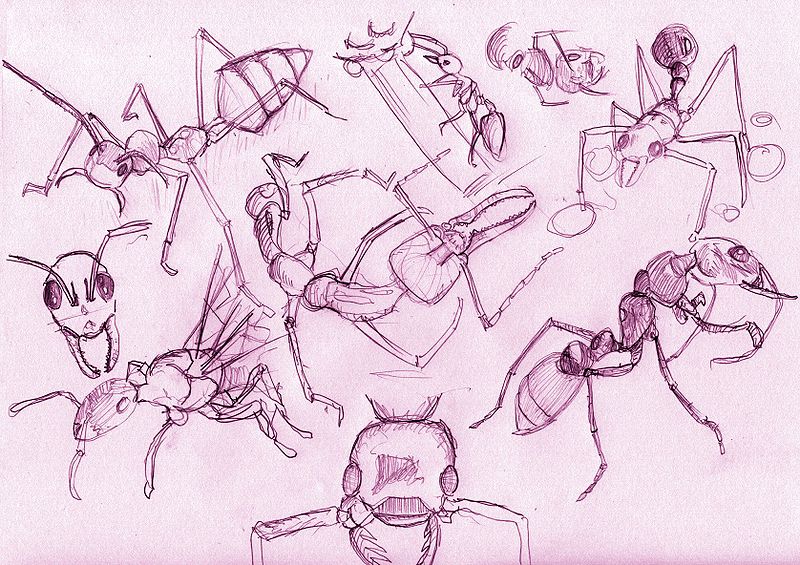
From “Invasion,” Tom Junod’s 2010 Esquire piece about his house being besieged by an army of those tiny colonists known as ants:

“A few years ago, I interviewed the great biologist E. O. Wilson right before he and his colleague Bert Hölldobler published their magnum opus, The Superorganism. The book, a study of ant societies, was an exploration of the notion that ants are such organized organisms that they almost don’t count as individual organisms at all but rather as cells of the colony they serve. The colony is the superorganism, and as Wilson told me, ‘an ant colony is far more intelligent than an ant.’ I’ll say. An ant by itself is an inoffensive creature, at worst a crunchy annoyance, smidgeny and obsessively clean and, above all, dumb, with a pindot of a brain. An ant by itself is not going to get any ideas… the problem being that it’s rarely by itself, that it’s representative of something, and that what it represents not only has ideas — it has designs. Wilson’s book proposes that what an ant colony possesses is a kind of accumulated intelligence, the result of individual ants carrying out specialized tasks and giving one another constant feedback about what they find as they do so. Well, once they start accumulating in your house in sufficient numbers, you get a chance to see that accumulated intelligence at work. You get a chance to find out what it wants. And what you find out — what the accumulated intelligence of the colony eventually tells you — is that it wants what you want. You find out that you, an organism, are competing for your house with a superorganism that knows how to do nothing but compete. You are not only competing in the most basic evolutionary sense; you are competing with a purely adaptive intelligence, and so you are competing with the force of evolution itself.” (Thanks Atlantic.)

••••••••••

Ant-sploitation horror movie trailer from 1977:

Tags: , ,

“A World for Women in Engineering” is an excellent 20-minute doc made by Bell Labs in 1975. It’s a look at a multicultural collection of women working for Bell during the age of feminist ascendancy and the push for the Equal Rights Amendment. A testament to the times as well as a love letter to science.

Tags: , , , ,

Immigrants arrive at Ellis Island in NYC in 1902.

Annie Lowrey’s Slate piece,Let in the Super-Immigrants!,” argues that America’s quickest path to economic turnaround is to fast-track educated alien workers to citizenship status, favoring the highly skilled over the poor, huddles masses. The opening:

“This winter, George Mason economist Tyler Cowen published The Great Stagnation, an ebook arguing that the United States has exhausted all its easy sources of growth. We have, Cowen says, no more low-hanging fruit: no more cheap frontier land to farm, no more places to build new interstates, no rural homes to electrify, no more girls to send to school and then add to the workforce. From now on, Cowen says, growth will be slower, and transformative innovations like toilets and telephones will be rarer.

Cowen is alarmingly convincing, and The Great Stagnation received a round of queasy applause from the chattering classes—including from this publication. But maybe there remains one last shiny, fat apple hanging right in front of our faces, one last endeavor that would bring us fast, costless, and easy growth. It is immigration reform. The United States can grow faster by stealing the rest of the world’s smart people.

Today, the Obama White House is reaffirming its pledge to do just that.”


Tags: ,

Yotel opens in Manhattan in June. (Thanks Singularity Hub.)

Yesterday, I put up a post about the neurological phenomenon Synesthesia, in which the senses merge, allowing some people to taste colors, smell words and identify numbers by their “personalities.” Here’s a Time video, featuring neuroscientist V.S. Ramachandran, which demonstrates this disorder.

Tags:

The Eames Lounge Chair debuts in 1956 on an Arlene Francis show on NBC.

Tags: , ,

"The employees families have to promise 'not sue the compan.'"(Image by Glenn Fleishman.)

If a new report on Think Progress is accurate, Apple is employing curious methods to deal with a series of suicides by workers turning out iPhones and iPads at a soul-crushing pace at the Taiwan-based Foxconn factories:

“In the wake of a huge wave of suicides at Foxconn plants, the company began reforming its practices related to the suicides. Among these changes included installing anti-suicide nets to catch workers who attempted to leap out of company windows. Yet workers are also being forced to sign a non-suicide pact as a condition of employment. As part of the pact, the employees families have to promise ‘not sue the company, bring excessive demands, take drastic actions that would damage the company’s reputation or cause trouble that would hurt normal operations’ in the case of a suicide.”

joandidionwater34567

The opening of Holy Water,” Joan Didion’s 1977 essay about H2O, a scarce and precious thing in Southern California, with its endless summer, omnipresent swimming pools and expansive deserts:

Some of us who live in arid parts of the world think about water with a reverence others might find excessive. The water I will draw tomorrow from my tap in Malibu is today crossing the Mojave Desert from the Colorado River, and I like to think about exactly where that water is. The water I will drink tonight in a restaurant in Hollywood is by now well down the Los Angeles Aqueduct from the Owens River, and I also think about exactly where that water is: I particularly like to imagine it as it cascades down the 45-degree stone steps that aerate Owens water after its airless passage through the mountain pipes and siphons.

As it happens my own reverence for water has always taken the form of this constant meditation upon where the water is, of an obsessive interest not in the politics of water but in the waterworks themselves, in the movement of water through aqueducts and siphons and pumps and forebays and afterbays and weirs and drains, in plumbing on the grand scale. I know the data on water projects I will never see. I know the difficulty Kaiser had closing the last two sluiceway gates on the Guri Dam in Venezuela. I keep watch on evaporation behind the Aswan in Egypt. I can put myself to sleep imagining the water dropping a thousand feet into the turbines at Churchill Falls in Labrador. If the Churchill Falls Project fails to materialize, I fall back on waterworks closer at hand — the tailrace at Hoover on the Colorado, the surge tank in the Tehachapi Mountains that receives California Aqueduct water pumped before — and finally I replay a morning when I was seventeen years old and caught, in a military-surplus life raft, in the construction of the Nimbus Afterbay Dam on the American River near Sacramento. I remember that at the moment it happened I was trying to open a tin of anchovies with capers. I recall the raft spinning into the narrow chute through which the river had been temporarily diverted. I recall being deliriously happy.•

joandidion6

Tags:

A Michael Matas TED Talk about the coming evolution of e-books. The Kindle probably needs to be free and ubiquitous really soon in order to have a future. (Thanks Open Culture.)

Tags:

A Radiolab series called Limits examines how far humans can push themselves in a variety of ways. In one episode, entitled “Limits of the Mind,” hosts Jad Abumrad and Robert Krulwich explore the outer boundaries of memory, focusing on the story of 1920s Russian journalist Mr. S., (Solomon Veniaminovich Shereshevsky, to be precise), who had a memory so elastic so as to be almost without borders. Mr. S., who was the subject of a book and became a popular mnemonist who performed at circuses, suffered from a neurological disorder known as Synesthesia, which was responsible for his remarkable recall and many of his problems in life. (Thanks Atlantic.)

Tags: , ,

Doesn’t sass you like those punks at the Key Food. (Thanks IEEE Spectrum.)

The heft of Google’s wealth and influence is squarely behind the proliferation of self-driving cars, a concept which has been around since the 1950s and may be coming to Nevada roads in the near future. John Markoff reports in the New York Times:

“Google, a pioneer of self-driving cars, is quietly lobbying for legislation that would make Nevada the first state where they could be legally operated on public roads.

And yes, the proposed legislation would include an exemption from the ban on distracted driving to allow occupants to send text messages while sitting behind the wheel.

The two bills, which have received little attention outside Nevada’s Capitol, are being introduced less than a year after the giant search engine company acknowledged that it was developing cars that could be safely driven without human intervention.

Last year, in response to a reporter’s query about its then-secret research and development program, Google said it had test-driven robotic hybrid vehicles more than 140,000 miles on California roads — including Highway 1 between Los Angeles and San Francisco.

More than 1,000 miles had been driven entirely autonomously at that point; one of the company’s engineers was testing some of the car’s autonomous features on his 50-mile commute from Berkeley to Google’s headquarters in Mountain View.”

Tags:

Typing words instead of processing them. (Thanks Reddit.)

Meghalaya, India, is a very wet place, so the locals use roots from live strangler figs to build pedestrian bridges that are alive. Video from BBC’s Human Planet series.

« Older entries § Newer entries »