Science/Tech

You are currently browsing the archive for the Science/Tech category.

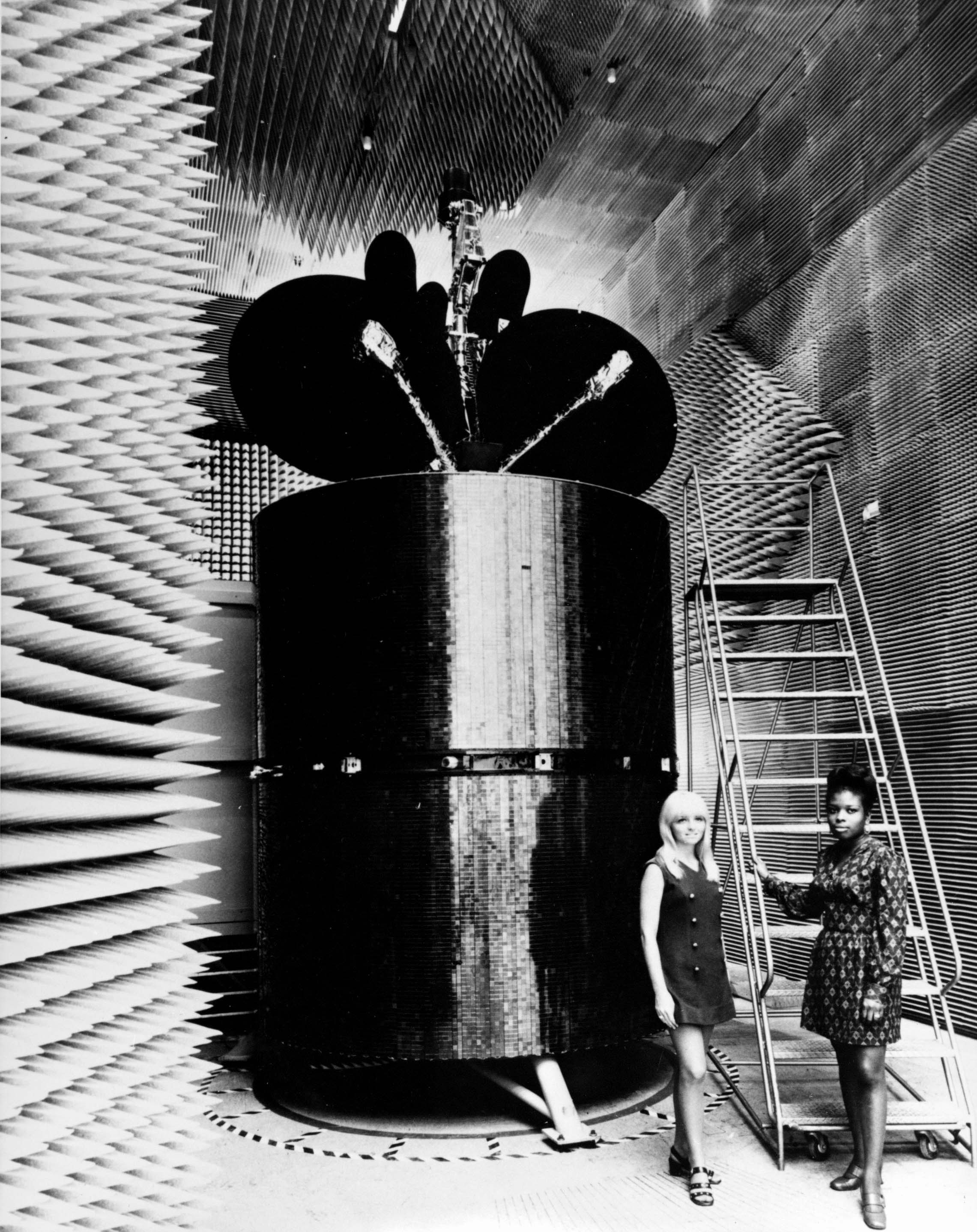
In this classic 1972 photograph, two unidentified NASA employees in period dresses pose in a sound-absorbing chamber next to the International Telecommunications Satellite. According to the NASA release, the Intelsat IV “was built by the Hughes Aircraft Company for an international consortium of 65 nations to meet the growing demand for channels of communication and greatly expanded the commercial communications network. Intelsat IV was placed in a synchronous orbit over the Atlantic Ocean with the capacity of about 6,000 circuits or 13 television channels.”

Baby confused by print magazine not having a touchpad. Adorable yet terrifying. (Thanks Mediabistro.)

While I’m posting clips of McLuhan, here’s the Canadian seer discussing books “taking on a totally different meaning” in the age of microfilm. From the 1960s.

Tags:

More about tools. From Bloomberg Businessweek‘sSteve Jobs: The Beginning, 1955-1985“:

“In the late 1970s, computer makers were popping up much the way car companies did in Detroit at the turn of the 20th century. Osborne, Commodore, and RadioShack were all selling what were becoming known as ‘personal computers.’ Like the Apple I, they were made for hobbyists. They were hard to use and didn’t really do much. The Altair, the earliest, pretty much just lit up little lights once you laboriously connected a bunch of switches on the logic board.

Jobs wanted the next computer to be something different—an appliance, something anyone could use. That was the Apple II, which came out a year after the Apple I. He hammered at his message as the company grew: Computers should be tools. Trip Hawkins, one of Apple’s first 50 employees, remembers Jobs obsessing over an article he’d read in a science magazine about the locomotive efficiency of animal species. ‘The most efficient species was the condor, which could fly for miles on only a few calories,’ Hawkins says. ‘Humans were way down the list. But then if you put a man on a bicycle, he was instantly twice as efficient as the condor.’ The computer, Jobs said, was a ‘bicycle for the mind.'”

••••••••••

Trick riding, 1899:

Tags:

Marshall McLuhan fearing the Global Village, 1977. On the hopeful side: He wasn’t always right.

Tags:

The tools we use are only as good as those of us using them. There’s no denying that tablet computers and smart phones are among the greatest tools ever invented. They connect us to a dramatically large number of people and an astonishing amount of information–potentially. But I don’t think I’ve ever been sitting next to someone using a tablet when they weren’t watching some cruddy sitcom, updating their Facebook page or reading a dopey magazine. And considering the screens keep getting smaller and print books scarcer, where are we headed? If these new gadgets are just about ease of function and not introducing ourselves to better content, we’re talking more about a mirror–and not even an honest one–than a looking glass. Will it just be the same crap on a different screen? But others are more sanguine. From Kevin Kelly’sTools Are the Revolution,” in 2000’s Whole Earth Catalog: 

“Tools make revolutions. ‘When we make a new tool, we see a new cosmos,’ says physicist Freeman Dyson. He was probably thinking of microscopes, telescopes, and atomic particle accelerators. But even the workaday tools reviewed in this issue can alter our perspective. A tool—any tool—is possibility at one end and a handle at the other. Because tools open up options, they remake us. A really fantastic atlas of the world  is literally a new world. A whisper-quiet ultra-efficient electricity generator and a wireless Internet let us see ourselves as more nomadic than perhaps we have seen ourselves lately.

There are many ways to change the world, but I think the most direct way, the way being pioneered by artists, hackers, and scientists—third-culture citizens—is to adopt new tools.”

Tags:

From a Cory Doctorow-Ray Kurzweil discussion about the Singularity in Asimov’s in 1995;

“‘Progress is exponential–not just a measure of power of computation, number of Internet nodes, and magnetic spots on a hard disk–the rate of paradigm shift is itself accelerating, doubling every decade. Scientists look at a problem and they intuitively conclude that since we’ve solved 1 percent over the last year, it’ll therefore be one hundred years until the problem is exhausted: but the rate of progress doubles every decade, and the power of the information tools (in price-performance, resolution, bandwidth, and so on) doubles every year. People, even scientists, don’t grasp exponential growth. During the first decade of the human genome project, we only solved 2 percent of the problem, but we solved the remaining 98 percent in five years.’

But Kurzweil doesn’t think that the future will arrive in a rush. As William Gibson observed, ‘The future is here, it’s just not evenly distributed.'” (Thanks Longform.)

•••••••

Kurzweil sits for an interview with that dashing cyborg Charlie Rose, 2007:

Tags: ,

Did Steve Jobs being a jerk to underlings help make his products great, or was the meanness something that was withstood because of his genius but unnecessary? Is greatness and kindness a zero-sum game? Can a perfectionist be a nice person? D.B. Grady votes “no” to the latter question withIn Praise of Bad Steve in the Atlantic. An excerpt:

“Steve Jobs was a genius, and one of the most important businessmen and inventors of our time. But he was not a kindly, soft-spoken sage who might otherwise live atop a mountain in India, dispatching wisdom to pilgrims. He was a taskmaster who knew how to get things done. ‘Real artists ship’ was an Apple battle cry from the earliest days. Everyone, by now, knows about the Steve Jobs ‘reality distortion field’ — the charismatic Care Bear Stare that compels otherwise reasonable people to spend weeks in line for a slightly faster telephone. In his biography of Jobs, journalist Alan Deutschman described the Apple co-founder’s lesser-known hero-shithead roller coaster. ‘He could be Good Steve or he could be Bad Steve. When he was Bad Steve, he didn’t seem to care about the severe damage he caused to egos or emotions so long as he pushed for greatness.’ When confronted with the full ‘terrifying’ wrath of Bad Steve (even over the slightest of details), the brains at Apple would push themselves beyond all personal limits to find a way to meet Jobs’s exacting demands, and somehow return to his good graces. And the process would repeat itself. ‘Steve was willing to be loved or feared, whatever worked.’ As Bud Tribble, Vice President of Software Technology at Apple explained. ‘It let the engineers know that it wasn’t OK to be sloppy in anything they did, even the 99 percent that Steve would never look at.'”

Tags: ,

“Oh, that’s wonderful.'” Yes, it is. (Thanks Physorg.)

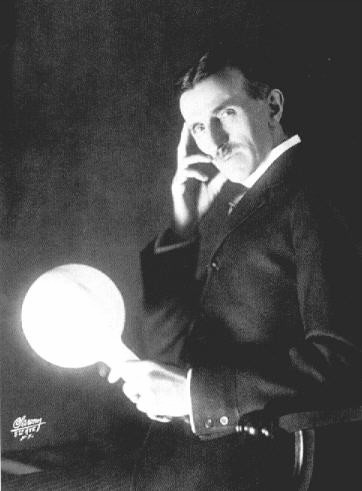
A tidy encapsulation of the what caused the rift between Edison and Tesla, courtesy of Smithsonian:

‘After Edison developed the first practical incandescent light bulb in 1879, supported by his own direct current electrical system, the rush to build hydroelectric plants to generate DC power in cities across the United States practically guaranteed Edison a fortune in patent royalties. But early on, Edison recognized the limitations of DC power. It was very difficult to transmit over distances without a significant loss of energy, and the inventor turned to a 28-year-old Serbian mathematician and engineer whom he’d recently hired at Edison Machine Works to help solve the problem. Nikola Tesla claimed that Edison even offered him significant compensation if he could design a more practical form of power transmission. Tesla accepted the challenge. With a background in mathematics that his inventor boss did not have, he set out to redesign Edison’s DC generators. The future of electric distribution, Tesla told Edison, was in alternating current—where high-voltage energy could be transmitted over long distances using lower current—miles beyond generating plants, allowing a much more efficient delivery system. Edison dismissed Tesla’s ideas as ‘splendid’ but ‘utterly impractical.’ Tesla was crushed and claimed that Edison not only refused to consider AC power, but also declined to compensate him properly for his work. Tesla left Edison in 1885 and set out to raise capital on his own for Tesla Electric Light & Manufacturing, even digging ditches for the Edison Company to pay his bills in the interim, until the industrialist George Westinghouse at Westinghouse Electric & Manufacturing Company, a believer in AC power, bought some of Tesla’s patents and set about commercializing the system so as to take electric light to something more than an urban luxury service. While Tesla’s ideas and ambitions might be brushed aside, Westinghouse had both ambition and capital, and Edison immediately recognized the threat to his business.”

••••••••••

Bowie as Tesla, The Prestige:

Tags: ,

Walter Cronkite reports on the Three Mile Island accident–March 30, 1979.

Tags:

If only it were so. An economic prediction from “The Long Boom,” Wired, 1997:

“But there’s a new, very different meme, a radically optimistic meme: We are watching the beginnings of a global economic boom on a scale never experienced before. We have entered a period of sustained growth that could eventually double the world’s economy every dozen years and bring increasing prosperity for – quite literally – billions of people on the planet. We are riding the early waves of a 25-year run of a greatly expanding economy that will do much to solve seemingly intractable problems like poverty and to ease tensions throughout the world. And we’ll do it without blowing the lid off the environment.

If this holds true, historians will look back on our era as an extraordinary moment. They will chronicle the 40-year period from 1980 to 2020 as the key years of a remarkable transformation. In the developed countries of the West, new technology will lead to big productivity increases that will cause high economic growth – actually, waves of technology will continue to roll out through the early part of the 21st century. And then the relentless process of globalization, the opening up of national economies and the integration of markets, will drive the growth through much of the rest of the world.”

In honor of what would have been animator’s Art Clokey’s 90th birthday, here’s an episode where Gumby goes to the moon. He probably saw Whitey while he was there.

Art Clokey.

Tags:

The single best description of a personality type that I have ever read is still “Caring for Your Introvert,” Jonathan Rauch’s 2003 Atlantic article. The opening:

“Do you know someone who needs hours alone every day? Who loves quiet conversations about feelings or ideas, and can give a dynamite presentation to a big audience, but seems awkward in groups and maladroit at small talk? Who has to be dragged to parties and then needs the rest of the day to recuperate? Who growls or scowls or grunts or winces when accosted with pleasantries by people who are just trying to be nice?

If so, do you tell this person he is ‘too serious,’ or ask if he is okay? Regard him as aloof, arrogant, rude? Redouble your efforts to draw him out?

If you answered yes to these questions, chances are that you have an introvert on your hands—and that you aren’t caring for him properly.”

••••••••••

“I vant to be…”:

Tags:

An excerpt from Spencer Ackerman’s Wired article about a brand new touchscreen war-planning tablet by the AAI Corporation, which makes lethal combat “easier” than ever:

“[Chris] Ellsworth provides a quick demo. On the massive tablet is a map of a hypothetical warzone. Blue icons represent the positioning of Team America assets — ground troops and overhead aircraft. Red icons show the enemy. When a new red diamond pops up, Ellsworth taps his finger on it, and then drags a bluish character over it.

It looks a little bit like a ghost from Ms. Pac-Man. But Ellsworth has just directed a drone — in this (fictional) case, one of AAI’s tiny Aerosonde-1 spy robots — to the enemy position. Whoever’s sitting miles away in an air conditioned Ground Control Station, wielding the joystick that controls the drone, has now received her new orders on an equivalent device — perhaps the smartphone that the Army might one day put in her pocket.

Either way, an IM confirming that the order is understood pops up on an adjacent flatscreen TV repurposed as a computer monitor. The drone above our fictional warzone should be on its way to its new position imminently.”

••••••••••

A piece about the increasing digitization of warfare, featuring AAI:

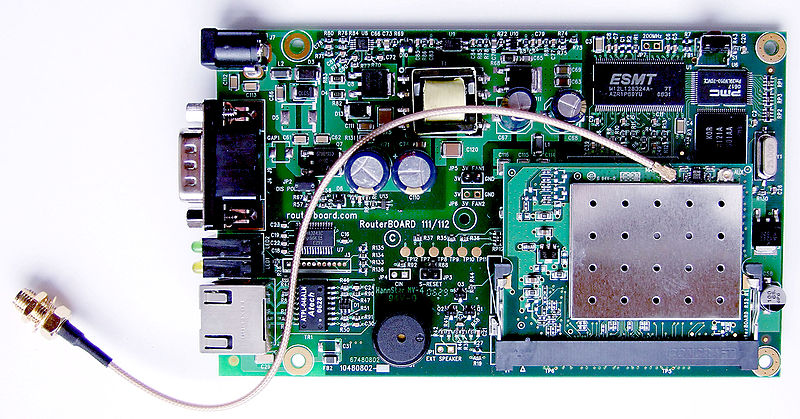
From an Ars Technica history of Wi-Fi, which surprisingly had its origins in the sandy environs of Hawaii:

“The journey started back in the early 1970s. The University of Hawaii had facilities scattered around different islands, but the computers were located at the main campus in Honolulu. Back then, computers weren’t all that portable, but it was still possible to connect to those computers from remote locations by way of a terminal and a telephone connection at the blazing speed of 300 to 1200 bits per second. But the telephone connection was both slow and unreliable.

A small group of networking pioneers led by Norman Abramson felt that they could design a better system to connect their remote terminals to the university’s central computing facilities. The basic idea, later developed into ‘AlohaNET,’ was to use radio communications to transmit the data from the terminals on the remote islands to the central computers and back again. In those days, the well-established approach to sharing radio resources among several stations was to divide the channel either into time slots or into frequency bands, then assign a slot or band to each of the stations. (These two approaches are called time division multiple access [TDMA] and frequency division multiple access [FDMA], respectively.)

Obviously, dividing the initial channel into smaller, fixed-size slots or channels results in several lower-speed channels, so the AlohaNET creators came up with a different system to share the radio bandwidth. AlohaNET was designed with only two high-speed UHF channels: one downlink (from Honolulu) and one uplink (to Honolulu). The uplink channel was to be shared by all the remote locations to transmit to Honolulu. To avoid slicing and dicing into smaller slots or channels, the full channel capacity was available to everyone. But this created the possibility that two remote stations transmit at the same time, making both transmissions impossible to decode in Honolulu. Transmissions might fail, just like any surfer might fall off her board while riding a wave. But hey, nothing prevents her from trying again. This was the fundamental, ground-breaking advance of AlohaNET, reused in all members of the family of protocols collectively known as ‘random access protocols.'”
Tags: , ,

Very experimental, neurology-centric Jim Henson bit from the Tonight Show in 1974. Johnny, who may have had a few belts before the show, introduces his guest as “Jim Jenson.” Jack Benny is seated next to Henson in the latter part of the video.

Tags: , ,

They move clockwise.

Tags:

I’ve never fully comprehended people who reject the idea of genetically modified food. I’m not speaking of concerns about corporations producing the food safely or the FDA’s reluctance to have such food labeled–those concerns I understand. I’m talking more about people who out of hand reject the notion that we should be using biotechnology when it comes to our diet. The weather patterns we currently enjoy, which allow for our agrarian culture, have existed for only about 10,000 years. Even if we were treating our environment well, which we’re most definitely not, those weather patterns will eventually shift, and we’ll need new ways to prevent famine. There seems to be a dogged belief that anything natural is good and anything engineered by humans is somehow tainted. But there are plenty of lethal plants which exist in nature. At Singularity Hub, Aaron Saenz brings common sense to the argument over the labeling genetically modified foods:

“We should label GMOs. I don’t see why the FDA and GMO developers are fighting this. I believe in GMO technology. I think it’s one of the most likely paths to cheaply and securely feeding the world. While current incarnations of the technology are still far from perfect, a mature GMO industry may be able to design humanity with the organisms it needs to survive in the 21st Century.

But I still think GMOs should be labeled.

Why the hell not? Let consumers see the benefits of GM crops. Sure, some will definitely switch to competitors products because they are adverse to consuming new forms of food. That’s fine. If GM foods really are cheaper then many more consumers will choose them to save money. If GM foods aren’t cheap enough to compete with non-GMO foods, then their developers should go back to the drawing board and make GMOs that can compete. By keeping consumers in the dark we’re artificially stalling GMO science.”

••••••••••

Bill Gates in Davos, 2010:

Tags:

Nanotechnology may be able to transform air expelled through the nose during respiration into a source of power which could in turn provide the energy for medical devices implanted in the human head. An excerpt from a Science Daily report:

“‘Basically, we are harvesting mechanical energy from biological systems. The airflow of normal human respiration is typically below about two meters per second,’ says Wang. ‘We calculated that if we could make this material thin enough, small vibrations could produce a microwatt of electrical energy that could be useful for sensors or other devices implanted in the face.’

Researchers are taking advantage of advances in nanotechnology and miniaturized electronics to develop a host of biomedical devices that could monitor blood glucose for diabetics or keep a pacemaker battery charged so that it would not need replacing. What’s needed to run these tiny devices is a miniscule power supply. Waste energy in the form or blood flow, motion, heat, or in this case respiration, offers a consistent source of power.”

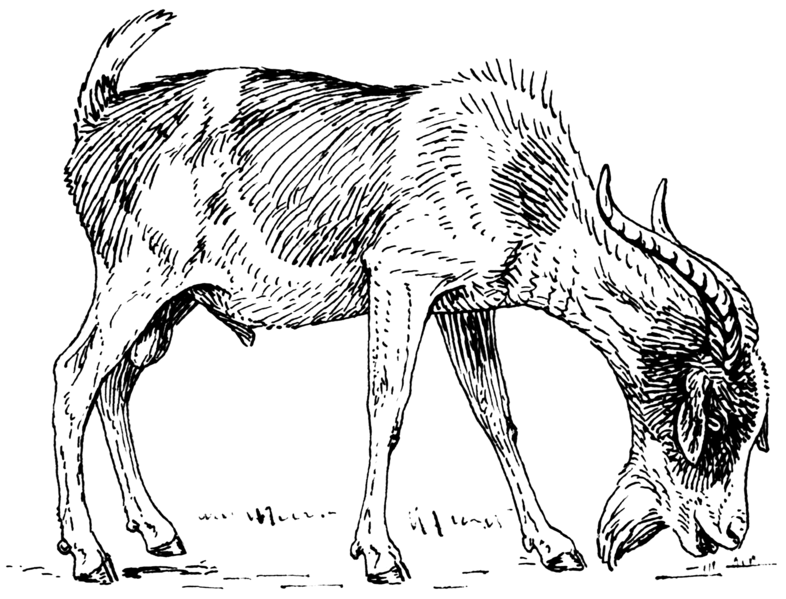
“A syringe, previously heated, was filled with blood drawn from the jugular vein of a goat.”

Medicine wasn’t quite as advanced 160 years ago as it is today, so sometimes doctors would just inject goat blood into a sick person to see if that voodoo would work. One such example can be gleaned from the following article published in the February 1, 1843 edition of the Brooklyn Daily Eagle:

“A man 38 years of age, says a late member of the Edinburgh Medical and Surgical Journal was seized with haemhptysis, which continued so long, and so violent, that the only means of saving his life appeared to be by supplying the loss of blood by transfusion. On the fifth day after the attack a cannula was introduced into the median vein of his left arm; a syringe, previously heated, was filled with blood drawn from the jugular vein of a goat and about five ounces were injected into the vein of the man. Immediately he complained of a feeling of oppression; but this soon afterwards went off. An attack of phlebitis came on the next day, but was subdued in eight days by means of cold applications alone. His strength from this day returned, and at the end of three months he was able to resume his usual occupation. It is remarked, as the interesting point of this case, that it proves that the injection of the blood of one animal into the veins of another is not necessarily fatal.”

This month marks the 40th anniversary of the first ARPANET email, which was sent by Ray Tomlinson. A remembrance of that leap forward in communications, via The Next Web:

“As Tomlinson told the Times in 2008, he doesn’t remember what that first email actually said – perhaps ‘QWERTY’ or another string of characters, but whatever it was, it traveled a distance of one meter between two separate computers. One small step for a message, one giant leap for mankind.

Besides inventing email, Tomlinson is also the man to thank for the popularity of the ‘@’ symbol. He established the convention of an email ‘address’ in order to identify the recipient and the computer or network that they were using. To separate these two pieces of information, he chose ‘@’. He told The Times,  ‘It conveyed a sense of place, which seemed to suit.'”

Tags:

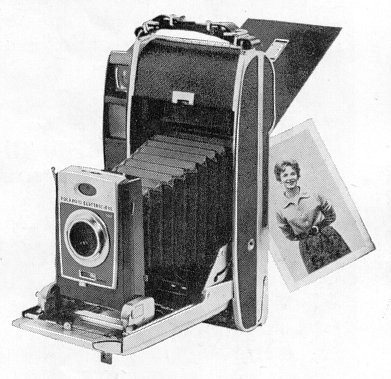
Polaroid has faltered badly in the digital age, but that company’s genius inventor Edwin H. Land was to his time what Steve Jobs was to ours, and, yet, his name is probably unfamiliar to most people just two decades after his death. Christopher Bonanos has an excellent piece in the New York Times about the Land-Jobs link. An excerpt:

“Most of all, Land believed in the power of the scientific demonstration. Starting in the 60s, he began to turn Polaroid’s shareholders’ meetings into dramatic showcases for whatever line the company was about to introduce. In a perfectly art-directed setting, sometimes with live music between segments, he would take the stage, slides projected behind him, the new product in hand, and instead of deploying snake-oil salesmanship would draw you into Land’s World. By the end of the afternoon, you probably wanted to stay there.

Three decades later, Jobs would do exactly the same thing, except in a black turtleneck and jeans. His admiration for Land was open and unabashed. In 1985, he told an interviewer, ‘The man is a national treasure. I don’t understand why people like that can’t be held up as models: This is the most incredible thing to be — not an astronaut, not a football player — but this.'”

••••••••••

Land demonstrates the Polaroid instant camera, 1948:

Tags: , ,

This classic 1971 photograph of the crescent Earth was taken by astronaut Alan Shepard, while he was aboard Apollo 14, exactly a decade after he became the first American in space. From Shepard’s 1998 New York Times obituary“On the morning of May 5, 1961, Mr. Shepard became an immediate American hero. A lean, crew-cut former Navy test pilot, then 37, he began the day lying on his back in a cramped Mercury capsule atop a seven-story Redstone rocket filled with explosive fuel. After four tense hours of weather and mechanical delays, he was shot into the sky on a 15-minute flight that grazed the fringes of space, at an altitude of 115 miles, and ended in a splashdown in the Atlantic Ocean 302 miles downrange from Cape Canaveral, Fla.

Though not much by today’s standards, the brief suborbital flight had stopped a whole country in its tracks, waiting anxiously at radios and television sets. When the message of success came through — with a phrase that would enter the idiom, ‘Everything is A-O.K.!’– everyone seemed to let out a collective sigh of relief.

Yuri Gagarin of the Soviet Union may have been first into space, 23 days before, and have flown a full orbit, but with Mr. Shepard’s flight the United States finally had reason to cheer. In fact, Mr. Shepard’s success is credited with giving President John F. Kennedy the confidence to commit the nation to the goal of landing men on the Moon within the decade.”

Tags:

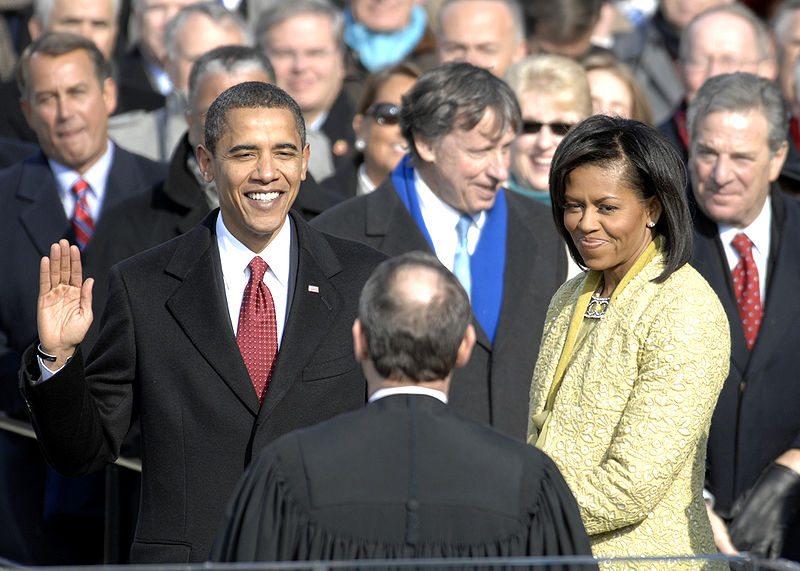
At Slate, James Verini examines “The Obama Effect,” a theory gaining traction which states that dwindling violent-crime rates in predominantly African-American neighborhoods in the past three years, even during this bruising recession, is the result of a more positive outlook among blacks since the election of the first African-American President. An excerpt:

“One unlikely explanation that is gaining credence among experts, including some of the biggest names in the field, is a phenomenon tentatively dubbed ‘the Obama Effect.’ Simply put, it holds that the election of the first black president has provided such collective inspiration that it has changed the thinking or behavior of would-be or one-time criminals. The effect is not yet quantifiable, but some very numbers-driven researchers believe it may exist. 

Rick Rosenfeld, the president of the American Society of Criminology, studies the relationship between consumer sentiment and crime rates, which appear to track closely. Despite the recession, Rosenfeld has found, black Americans are remarkably confident about their economic futures. In 2009, despite being in the midst of the worst economic downturn since the Great Depression, 39 percent of black people surveyed said they were better off than they’d been five years before, as opposed to just 20 percent who answered that question in the affirmative in 2007. In the same survey, there was a 14 percent increase among blacks who said they thought the standard of living gap between themselves and whites was diminishing, and a 9 percent increase in blacks who believed that the future for black people will be better.

‘I think there’s little question the election had the effect of improving the general outlook of blacks and especially their economic outlook,’ Rosenfeld told me. ‘Normally, blacks tend to be more pessimistic about economic prospects, even in good economic times.'”

Tags: , ,

« Older entries § Newer entries »