Science/Tech

You are currently browsing the archive for the Science/Tech category.

Steve Jobs looked at a mock-up tablet version of Sports Illustrated in 2009–roughly six months before he unveiled the iPad–and was his usual charming self in evaluating it. From Mediabistro:

“The demo was impressive, especially considering the Apple iPad would not be unveiled for another half a year. Unfortunately, not everyone was impressed. After Apple unveiled the iPad, Steve Jobs came to Time Inc.’s New York offices and met with the editors of some of their biggest magazines. He was asked what he thought of SI’s demo.

‘I think it is really, really stupid,’ Jobs said. That stung Terry McDonnell, the editor of SI and the Time Inc. sports group.

‘I was sad, and we were all kind of stunned,’ McDonnell said. ‘It was not stupid, in fact it anticipated everything he was doing.'”

Furby taunts Siri.

Carl Sagan’s eloquent meditation on the moon landing’s significance.

Tags:

One Laptop Per Child, an ambitious and well-intentioned project that seems to have been undercut by the market, has settled on an unusual new means of distribution for its cheap computers. An excerpt from an Ars Technica story:

“The One Laptop Per Child (OLPC) project has devised a bizarre plan for deploying its new XO-3 tablet. The organization plans to drop the touchscreen computers from helicopters near remote villages in developing countries. The devices will then be abandoned and left for the villagers to find, distribute, support, and use on their own.

OLPC founder Nicholas Negroponte is optimistic that the portable devices—which will be stocked with electronic books—will empower children to learn to read without any external support or instruction. The strange scheme reflects the OLPC project’s roots in constructivist education theory, which emphasizes self-directed learning.

The OLPC project was originally founded to produce low-cost education-focused laptops for children. The organization planned to sell the devices in bulk to governments in developing countries, which would then distribute them in classrooms. The plan was to leverage economy of scale in manufacturing to bring the costs down, making the laptop cheap enough that governments would be able to supply one to every child.

Although the ambitious project sold several million laptops, it fell far short of its lofty goals and has been on life support for the past few years.”

From a new Paris Review interview with William Gibson:

Paris Review: You’ve written that science fiction is never about the future, that it is always instead a treatment of the present.

William Gibson: There are dedicated futurists who feel very seriously that they are extrapolating a future history. My position is that you can’t do that without having the present to stand on. Nobody can know the real future. And novels set in imaginary futures are necessarily about the moment in which they are written. As soon as a work is complete, it will begin to acquire a patina of anachronism. I know that from the moment I add the final period, the text is moving steadily forward into the real future.

There was an effort in the seventies to lose the usage science fiction and champion speculative fiction. Of course, all fiction is speculative, and all history, too—endlessly subject to revision. Particularly given all of the emerging technology today, in a hundred years the long span of human history will look fabulously different from the version we have now. If things go on the way they’re going, and technology keeps emerging, we’ll eventually have a near-total sorting of humanity’s attic.

In my lifetime I’ve been able to watch completely different narratives of history emerge. The history now of what World War II was about and how it actually took place is radically different from the history I was taught in elementary school. If you read the Victorians writing about themselves, they’re describing something that never existed. The Victorians didn’t think of themselves as sexually repressed, and they didn’t think of themselves as racist. They didn’t think of themselves as colonialists. They thought of themselves as the crown of creation.

Of course, we might be Victorians, too.”

•••••••••••

“Just for a minute, it struck me as miraculous”:

Tags:

According to a post on Research Digest, human memory is segmented, so walking through a doorway makes it more difficult to remember what occurred in the previous room. An excerpt:

“Like information in a book, unfolding events are stored in human memory in successive chapters or episodes. One consequence is that information in the current episode is easier to recall than information in a previous episode. An obvious question then is how the mind divides experience up into these discrete episodes? A new study led by Gabriel Radvansky shows that the simple act of walking through a doorway creates a new memory episode, thereby making it more difficult to recall information pertaining to an experience in the room that’s just been left behind.

Dozens of participants used computer keys to navigate through a virtual reality environment presented on a TV screen. The virtual world contained 55 rooms, some large, some small. Small rooms contained one table; large rooms contained two at each end. When participants first encountered a table, there was an object on it that they picked up (once carried, objects could no longer be seen). At the next table, they deposited the object they were carrying at one end and picked up a new object at the other. And on the participants went. Frequent tests of memory came either on entering a new room through an open doorway, or after crossing halfway through a large room. An object was named on-screen and the participants had to recall if it was either the object they were currently carrying or the one they’d just set down.

The key finding is that memory performance was poorer after travelling through an open doorway, compared with covering the same distance within the same room. ‘Walking through doorways serves as an event boundary, thereby initiating the updating of one’s event model [i.e. the creation of a new episode in memory]’ the researchers said.” (Thnaks Browser.)

Tags:

Neil Postman on the creation of information junkies. From 1995.

Tags:

Speaking of Marshall McLuhan, in the 1996 Wired article, Channeling McLuhan,” Gary Wolf interviewed one of the Canadian media philosopher’s doppelgangers, a shadowy person who posted to a computer mailing list under the McLuhan name. It was an odd gambit, but the exchange elicited a contrarian idea about the invasion of privacy in the digital age, which seems an even more apt point of discussion now. An excerpt:

Wired: Do you think privacy and anonymity are being eroded in the digital age?

“MM”: Don’t be fooled by ‘anonymity.’ There is no such thing, since every node in a communication system must have an ID. Concerns about privacy and anonymity are outdated. Cypherpunks think they are rebels with a cause, but they are really sentimentalists.

In the ’50s, men were crying about the ‘mass’ man and spilling tears over too much anonymity. And they were right, or more right than the cypherpunks. Factories and corporations gave men roles, not souls. Industrial society was anonymous. Cities, factories, secret ballots with mechanical polling booths – that’s anonymity. The Big Brother bogeyman of the machine age used technology to enforce anonymity and prevent anybody from doing his own thing.

The era of politics based on private identities, anonymous individuals, and independent citizens began with the French Revolution and Napoleon’s armies (a product of the popular press) and ended with Hitler (the product of radio). The cypherpunks are still marching to the same martial music. You think private individuals and mass industrial society are opposites? They are part of the industrial configuration. Instantaneous electronic society gives everybody an identity – which we all want, and which we all also want to lose – while putting almost intolerable pressure on our sense of privacy.

Privacy disappears in the simultaneous stimulation of our patterns of thought.”
Tags: ,

Marshall McLuhan fretting about information overload, back in 1977, when there was a lot less information to be loaded.

Tags:

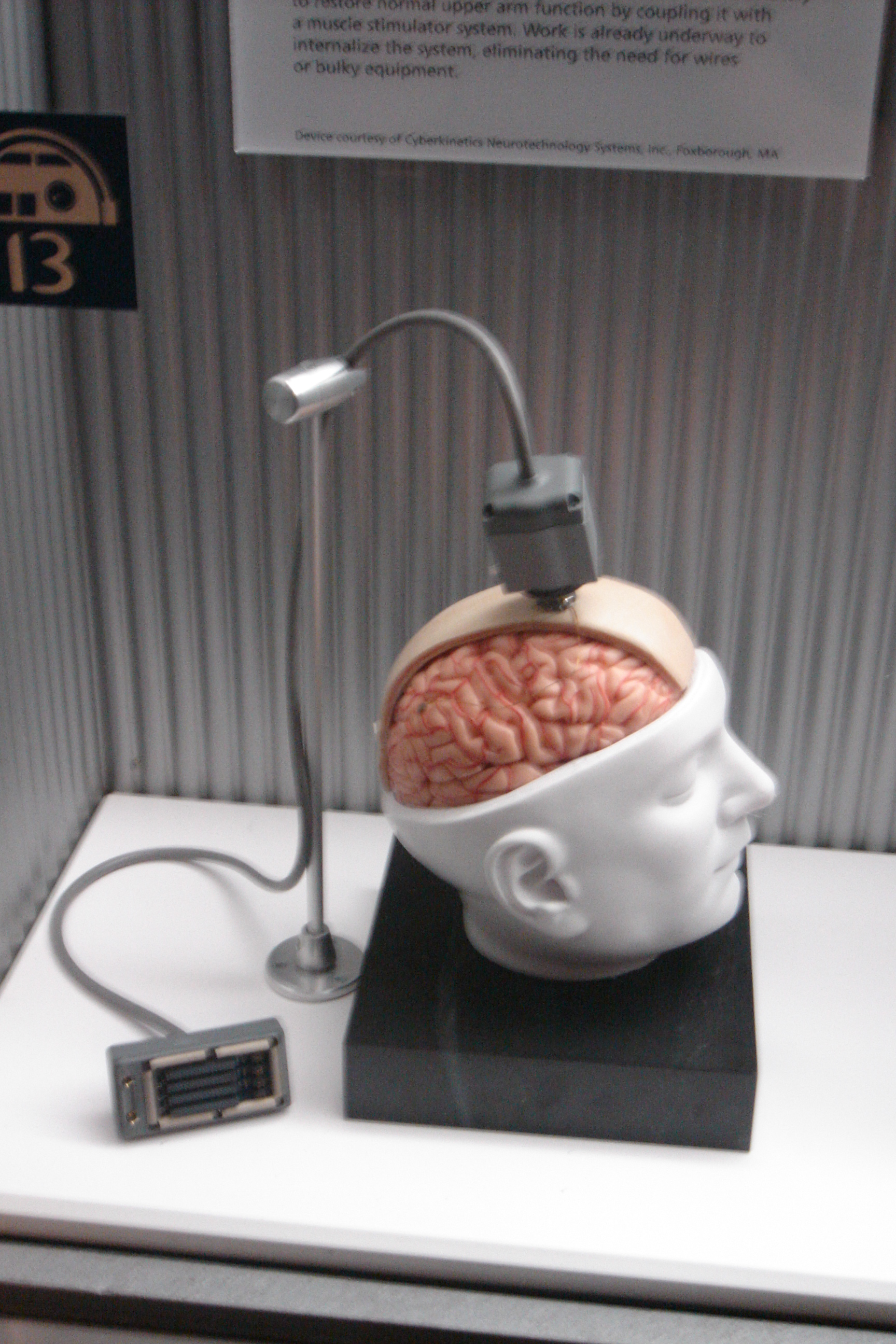
Can the brain be rewired to change spenders into savers? From Newsweek‘s new report on the intersection of consumer culture and neuroscience:

“As brain scientists plumb the neurology of an afternoon at the mall, they are discovering measurable differences between the brains of people who save and those who spend with abandon, particularly in areas of the brain that predict consequences, process the sense of reward, spur motivation, and control memory.

In fact, neuroscientists are mapping the brain’s saving and spending circuits so precisely that they have been able to rev up the saving and disable the spending in some people (in the lab, alas; not at the cash register). The result: people’s preferences switch from spending like a drunken sailor to saving like a child of the Depression. All told, the gray matter responsible for some of our most crucial decisions is finally revealing its secrets. Call it the ‘moneybrain.’

Psychologists and behavioral economists, meanwhile, are identifying the personality types and other traits that distinguish savers from spenders, showing that people who aren’t good savers are neither stupid nor irrational—but often simply don’t accurately foresee the consequences of not saving. Rewire the brain to find pleasure in future rewards, and you’re on the path to a future you really want.”

Hans Rosling, the Swedish doctor who did a great TED Talk about washing machines and democracy, returns to that forum to explain our world population in terms of Ikea products. (Thanks Open Culture.)

Tags:

Modern aeronauts capitalizing on the sun’s heat, aboard the Solar Ship. (Thanks Techling.)

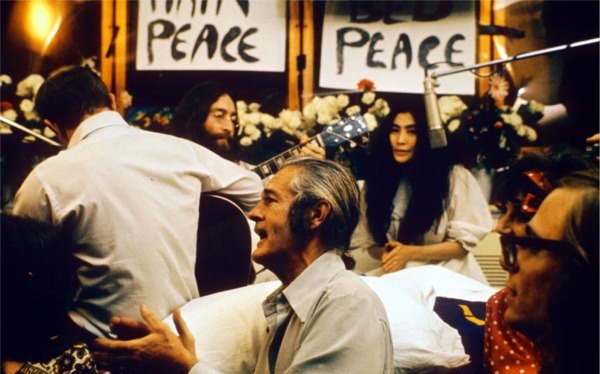
In the same 1966 Playboy Interview in which he opined that homosexuality could be “cured” by LSD, Timothy Leary predicts what college kids dropping acid would eventually do with their lives:

LEARY: Remember, it’s the college kids who are turning on — the smartest and most promising of the youngsters. What an exciting prospect: a generation of creative youngsters refusing to march in step, refusing to go to offices, refusing to sign up on the installment plan, refusing to climb aboard the treadmill.

PLAYBOY: What will they do?

LEARY: Don’t worry. Each one will work out his individual solution. Some will return to the establishment and inject their new ideas. Some will live under ground as self-employed artists, artisans and writers. Some are already forming small communities out of the country. Many are starting schools for children and adults who wish to learn the use of their sense organs. Psychedelic businesses are springing up: bookstores, art galleries. Psychedelic industries may involve more manpower in the future than the automobile industry has produced in the last 20 years. In our technological society of the future, the problem will be not to get people to work, but to develop graceful, fulfilling ways of living a more serene, beautiful and creative life. Psychedelics will help to point the way.”

••••••••••

“At Millbrook, children as young as nine were given LSD”:

Tags:

From Mike Elgan of Computerworld, a descrption of the “data spill” segments of the Microsoft 2019 video I posted last week:

“In one scene, two businesspeople each place a smart object on a smart table — a keychain fob and a flat phone or smartcard of some kind. From these devices, out spills their data, which can be manipulated on the table. The same thing happens at home, where a girl’s homework spills out onto the kitchen table, and cookbook instructions spill out onto the kitchen counter.

Data and documents can apparently be transferred from anything to anything else. One business-related example involves a drag-and-drop gesture from a desktop to a mobile device. In another scene, that same mobile device becomes a virtual keyboard for a desktop computer the user happens to be sitting at.

Another example shows a man ‘capturing’ with a kind of take-a-picture gesture using a clear-glass remote control then moving data from a wall-mounted device and dumping it out onto his e-newspaper.”

Tags:

From “Building a Better Future,” a WSJ profile by Richard D. Woodward of 37-year-old Danish architect Bjarke Ingels, who dreams large-scale urban dreams:

“The youthful face of Ingels, when framed and magnified by the tiny windows in this bold project or when talking in his video lectures on the Web, offers one of the most optimistic pictures of what the future of architecture might be. At the tender age of 37 he has gained a world-wide reputation for daring to think grandly about cities in the visionary manner of Le Corbusier, and for translating his hopeful philosophy of “pragmatic utopianism” into a thriving practice that has even caught the eye of bottom-line New York real-estate developers.

Robert A.M. Stern, dean of the Yale architecture school, describes Ingels and his ‘big-picture view,’ which he first encountered at a 2008 World Architecture Festival in Barcelona, as ‘back to the future.’ The startling scale of some of BIG’s ideas ‘flies in the face of current thinking,’ which favors small-scale urbanism rather than remaking the planet.”

••••••••••

Ingels holds forth at  TED, 2009:

Tags: ,

PetMan walks, does calisthenics. From the good people at Boston Dynamics.

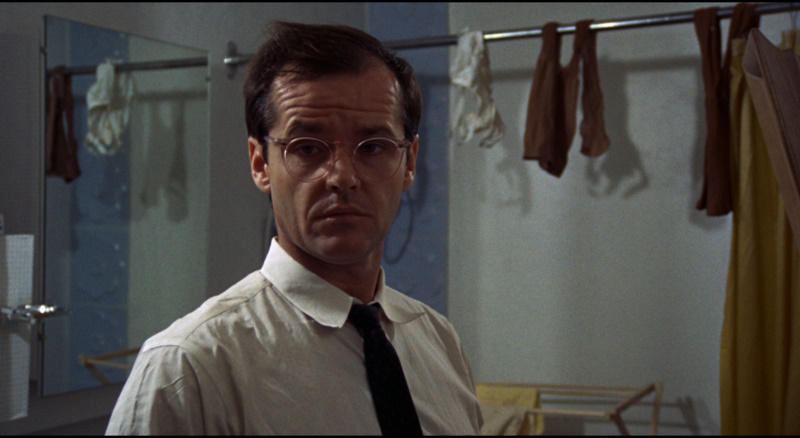
Jack Nicholson describes his first acid trip in a 1972 Playboy Interview:

Jack Nicholson:

I was one of the first people in the country to take acid; it was in laboratory experiments on the West Coast about nine or 10 years ago. At that time, I was a totally adventurous actor looking for experience to put in his mental filing cabinet for later contributions to art. I was very curious about LSD. Some of the people I knew were in therapy with it. I went to downtown LA and took it one afternoon. I spent five hours with a therapist and about five more at home in the later stages of it. I hallucinated a lot, primarily because of the way the therapist structured it. He put a blindfold on me, which makes you much more introspective, gives you more dreamlike imagery. Imagine what acid is like when you know nothing about it. You think it’s going to be like getting stoned on grass, which I had done. But all of your conceptual reality gets jerked away and there are things in your mind that have in no way been suggested to you: such as you’re going to see God; or watch sap streaming through the leaves of trees; or you’re going to feel the dissolving of certain bodily parts; you’re going to re-experience your own birth, which I did on my first acid trip; you’re going to be frightened that your prick might be cut off, because you have castration fears; you’re going to come mush-ass to face with your own homosexual fears. I just wasn’t ready for half this stuff.•

_____________________________

Nicholson invests in hydrogen cars, 1978:

Tags:

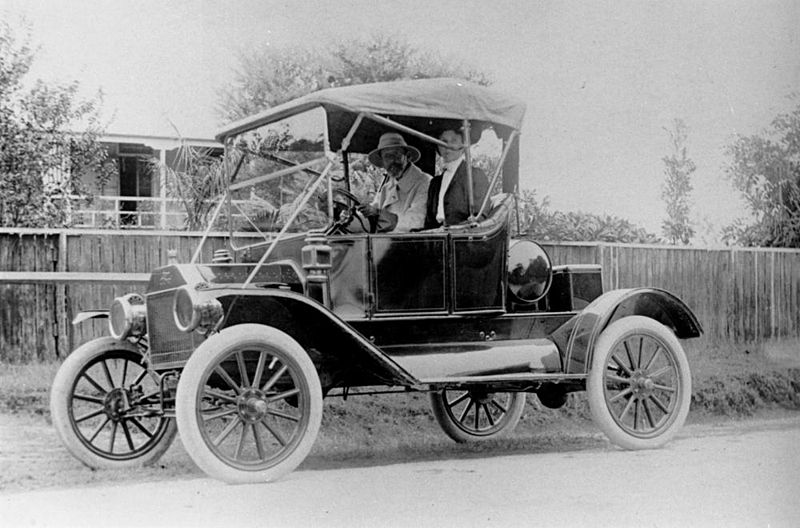
Great find by the Electric Typewriter in uncovering “Farewell, My Lovely!” E.B. White’s 1936 New Yorker paean to Henry Ford’s Model T, the car that made America a car country. The opening:

“I see by the new Sears Roebuck catalogue that it is still possible to buy an axle for a 1909 Model T Ford, but I am not deceived. The great days have faded, the end is in sight. Only one page in the current catalogue is devoted to parts and accessories for the Model T; yet everyone remembers springtimes when the Ford gadget section was larger than men’s clothing, almost as large as household furnishings. The last Model T was built in 1927, and the car is fading from what scholars call the American scene—which is an understatement, because to a few million people who grew up with it, the old Ford practically was the American scene.

It was the miracle God had wrought. And it was patently the sort of thing that could only happen once. Mechanically uncanny, it was like nothing that had ever come to the world before. Flourishing industries rose and fell with it. As a vehicle, it was hard-working, commonplace, heroic; and it often seemed to transmit those qualities to the persons who rode in it. My own generation identifies it with Youth, with its gaudy, irretrievable excitements; before it fades into the mist, I would like to pay it the tribute of the sigh that is not a sob, and set down random entries in a shape somewhat less cumbersome than a Sears Roebuck catalogue.”

••••••••••

Henry Ford’s funeral, 1947:

Tags: ,

Wireless charging for electric cars is the goal of automakers. From Scientific American:

“‘Almost universally, all the carmakers have learned…that consumers find plugging in a vehicle is inconvenient, and the carmakers have concluded they need to offer some type of wireless, hands-free charging,’ says David Schatz, director of business development and marketing for WiTricity Corp. in Watertown, Mass., which makes wireless chargers for phones and cars. With WiTricity’s system, a user would not have to park his or her car directly on a charging mat, let alone deal with wires. As long as the car is within range of the charging station, energy begins to flow into the battery.”

••••••••••

“Allows for efficient non-stop operation”:

Tags:

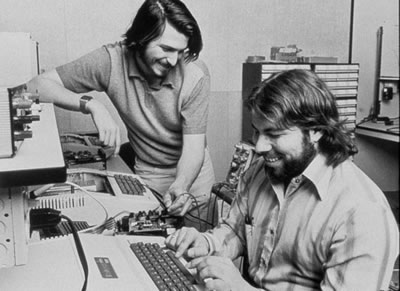
Walter Isaacson, a writer who can communicate complicated ideas lucidly, was the perfect biographer for Steve Jobs, a technologist who could make complex functions work simply. Steven Johnson offers up his thoughts on Isaacson’s Jobs bio immediately after reading it. An excerpt:

‘While Jobs historically had a reputation for being a nightmare to work with, in fact one of the defining patterns of his career was his capacity for deep and generative partnerships with one or two other (often very different) people. That, of course, is the story of Jobs and Woz in the early days of Apple, but it’s also the story of his collaboration with Lasseter at Pixar, and Jony Ive at Apple in the second act. (One interesting tidbit from the book is that Jobs would have lunch with Ive almost every day he was on the Apple campus.) In my experience, egomaniacal people who are nonetheless genuinely talented have a hard time establishing those kinds of collaborations, in part because it involves acknowledging that someone else has skills that you don’t possess. But for all his obnoxiousness with his colleagues (and the book has endless anecdotes documenting those traits), Jobs had a rich collaborative streak as well. He was enough of an egomaniac to think of himself as another John Lennon, but he was always looking for McCartneys to go along for the ride with him.’

Tags: , ,

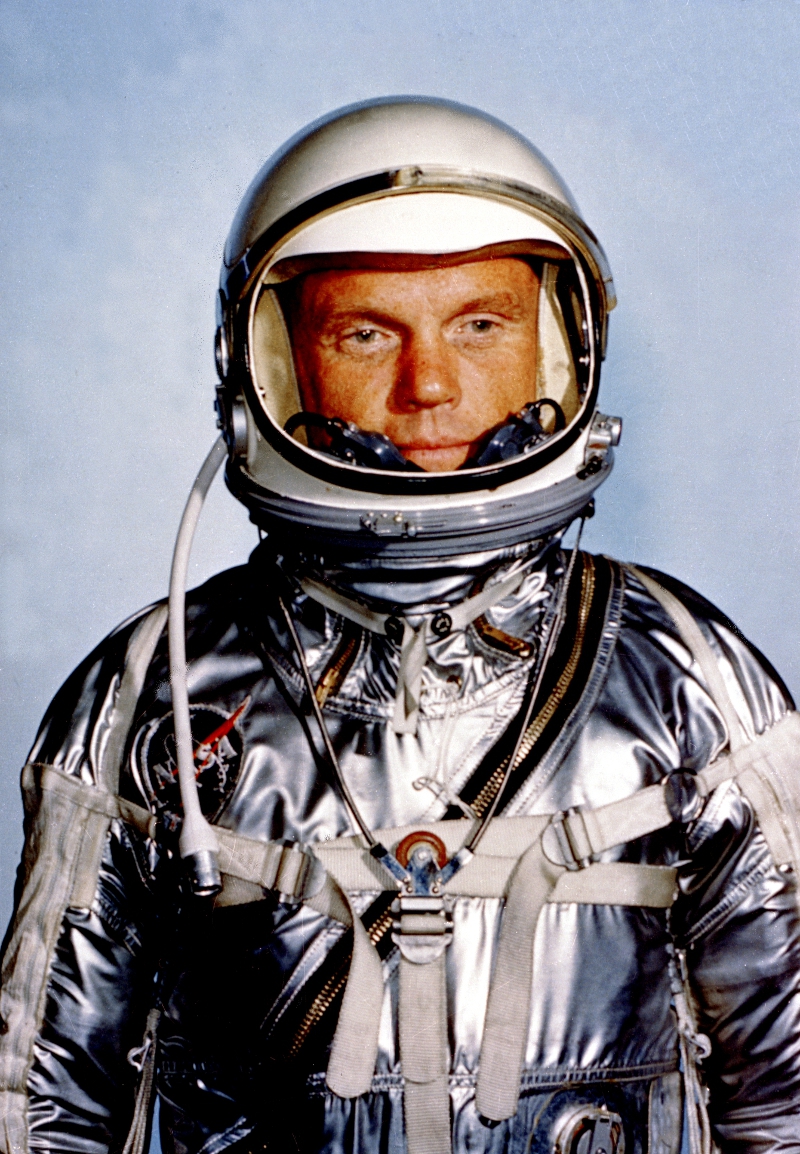
This classic 1962 NASA photograph shows American astronaut John Glenn suited up for Mercury 6, the first successful U.S. attempt to put a manned spaceship into orbit. Glenn, who was the pilot of that mission, explained his participation in the burgeoning space program in a March 3, 1961 Life cover story: “‘A lot of people ask,’ he reflected recently, ‘why a man is willing to risk hat, tail and gas mask on something like this. Well, we’ve got to do it. We’re going into an age of exploration that will be bigger than anything the world has ever seen. I guess I’m putting my family up against some risks. I could do other jobs which might increase my life expectancy. But this could help my kids, too. I want them to be better off than I was as a young man. With risks you gain.

‘I’ve got a theory about this,’ Glenn continued, speaking with great care. ‘People are afraid of the future, of the unknown. If a man faces up to it and takes the dare of the future, he can have some control over his destiny. That’s an exciting idea to me, better than waiting with everybody else to see what’s going to happen.”

••••••••••

“Godspeed, John Glenn”:

Tags:

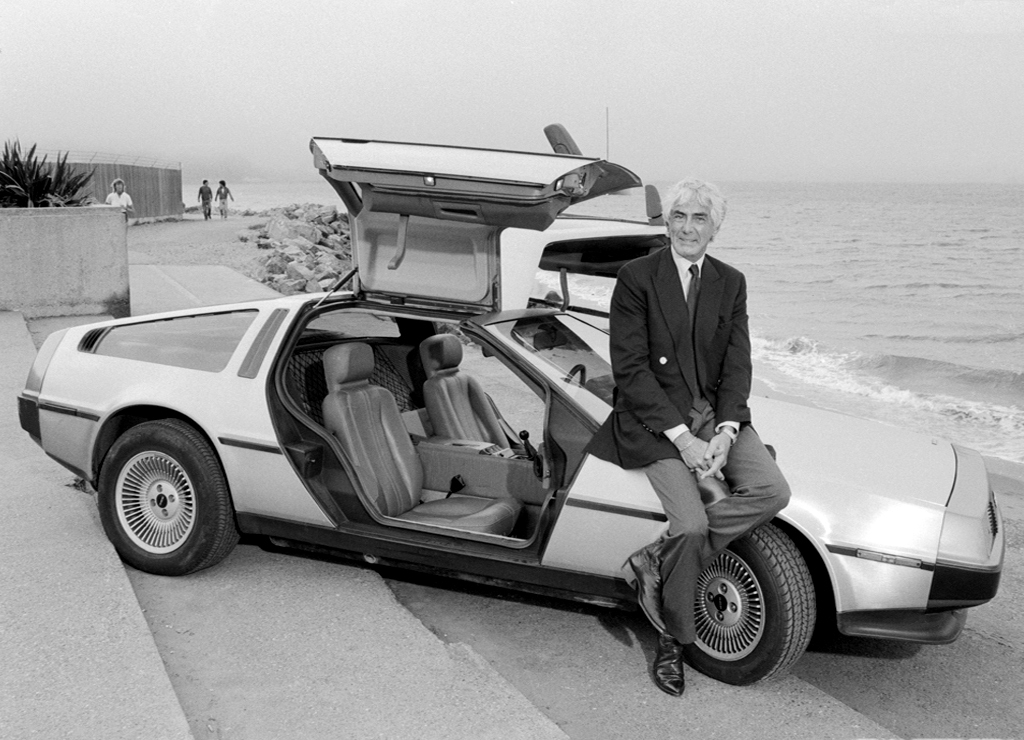
Haunting 1981 DeLorean doc by Pennebaker and Hegedus.

Tags: , ,

From Brook Larmer’s New York Times Magazine article about Chinese animator Pi San and the dangerous art of Internet political humor in modern China:

“No government in the world pours more resources into patrolling the Web than China’s, tracking down unwanted content and supposed miscreants among the online population of 500 million with an army of more than 50,000 censors and vast networks of advanced filtering software. Yet despite these restrictions — or precisely because of them — the Internet is flourishing as the wittiest space in China. ‘Censorship warps us in many ways, but it is also the mother of creativity,’ says Hu Yong, an Internet expert and associate professor at Peking University. ‘It forces people to invent indirect ways to get their meaning across, and humor works as a natural form of encryption.’

To slip past censors, Chinese bloggers have become masters of comic subterfuge, cloaking their messages in protective layers of irony and satire. This is not a new concept, but it has erupted so powerfully that it now defines the ethos of the Internet in China. Coded language has become part of mainstream culture, with the most contagious memes tapping into widely shared feelings about issues that cannot be openly discussed, from corruption and economic inequality to censorship itself. ‘Beyond its comic value, this humor shows where netizens are pushing against the boundaries of the state,’ says Xiao Qiang, an adjunct professor at the University of California, Berkeley, whose Web site, China Digital Times, maintains an entertaining lexicon of coded Internet terms. ‘Nothing else gives us a clearer view of the pressure points in Chinese society.'”

••••••••••

A Pi San animation:

Tags: , , ,

A post from TechnoAnthropology about employment in a time of increasing technological efficiency:

“The old Luddite fears seem to have been somewhat founded. Factories are making cars and needing less workers to do it. Brad McClenny (who sits in the office next to mine), armed with the internet, MS Word, machine translation, and digital phones, runs the international student program for our college in a way that it took a team of three people to do ten years ago (Kathy, Amanda, and that other girl).

As a starry-eyed libertarian, I try to believe that for every job that efficiency kills, we’ll get other ones, as all of the unemployed people begin to invent killer iPhone apps and musical masterpieces that we all can’t live without, and sell them to the people holding the remaining old-school jobs. It might be true. It would be cool.

Another thing that might be cool (in a starry-eyed not-libertarian way) would be transitioning into something like the Star Trek economy, where there is sufficient efficiency to guarantee everyone exactly the clothes and meals they want replicated, and we spend our time following our callings, quite aside from any need for money. This would take futuristic levels of automation and efficiency. It would also take redistribution. Some historical re-distributive plans in other countries got ugly. Americans are taught about these in school, and don’t like them. I don’t think that America will go for this kind of re-distribution anytime soon. Well, not if we know we’re going for it.”

The future of mobile commerce, as predicted by Bill Gates in a CD that came with his 1995 book, The Road Ahead.

Microsoft’s new video predicting the future of tech:

Tags:

« Older entries § Newer entries »