Politics

You are currently browsing the archive for the Politics category.

When a kid, I had a seemingly a priori dislike for two things: religion and magic. Not unrelated, right? Yet, I was still forced to go to church and coerced into a Broadway matinee of The Magic Show starring Doug Henning. Well, it usually starred Henning. The day I attended, the lead was his understudy, some dipstick who donned a Henning-esque wig and facial hair. Even dumber. Anyhow, I thought of it recently because Marc Maron had Ivan Reitman on WTF, and the now-famed Hollywood director discussed his involvement in launching the original version (called Spellbound) in Canada. Howard Shore and Paul Shaffer apparently got their start in show business working for Henning’s north-of-the-border stage shenanigans.

But magic wasn’t enough for Henning. He also founded a political organization, The Natural Law Party, which helped him lose elections very badly in both the UK and Canada. Sometimes democracy works.

Tags: , , , ,

I wonder if we were to do a historical hack of the American Revolution and supplied both sides, redcoats and turncoats, with the diffuse and interconnected technology of 2014, if it would have made the uprising’s stunning success more possible, less possible or impossible. It would be fun to reverse engineer that upheaval along modern tech standards.

On a related note, David Runciman of the Guardian wonders whether politics or technology will rule our future. I think it will be tougher and tougher for legislation to control too many things as we move forward, especially if the Internet of Things becomes a real thing. The opening of Runciman’s well-considered piece, which has some interesting thoughts about China’s technocratic rule:

“The most significant revolution of the 21st century so far is not political. It is the information technology revolution. Its transformative effects are everywhere. In many places, rapid technological change stands in stark contrast to the lack of political change. Take the United States. Its political system has hardly changed at all in the past 25 years. Even the moments of apparent transformation – such as the election of Obama in 2008 – have only reinforced how entrenched the established order is: once the excitement died away, Obama was left facing the same constrained political choices. American politics is stuck in a rut. But the lives of American citizens have been revolutionised over the same period. The birth of the web and the development of cheap and efficient devices through which to access it have completely altered the way people connect with each other. Networks of people with shared interests, tastes, concerns, fetishes, prejudices and fears have sprung up in limitless varieties. The information technology revolution has changed the way human beings befriend each other, how they meet, date, communicate, medicate, investigate, negotiate and decide who they want to be and what they want to do. Many aspects of our online world would be unrecognisable to someone who was transplanted here from any point in the 20th century. But the infighting and gridlock in Washington would be all too familiar.

This isn’t just an American story.”

Tags:

In 1979, Germaine Greer, part genius and part cuckoo clock, comments on creativity under various political systems.

Tags:

One unintended consequence to driverless cars and their growing ability to avoid traffic infractions is that the money from tickets often goes to fund law enforcement. Of course, fewer road accidents and, say, the decriminalization of drugs, would lead to less of a need for a large police budget. From Colin Neagle at Network World:

“Shortly after the state of Washington voted to legalize recreational marijuana late last year, opponents made a very interesting, if somewhat counterintuitive, argument against legalized pot – law enforcement would miss out on the huge revenue stream of seized assets, property, and cash from pot dealers in the state.

Justice Department data shows that seizures in marijuana-related cases nationwide totaled $1 billion from 2002 to 2012, out of the $6.5 billion total seized in all drug busts over that period. This money often goes directly into the budgets of the law enforcement agencies that seized it. One drug task force in Snohomish County, Washington, reduced its budget forecast by 15% after the state voted to legalize marijuana, the Wall Street Journal reported in January. In its most fruitful years, that lone task force had seen more than $1 million in additional funding through seizures from marijuana cases alone, according to the report.

Naturally, this dynamic is something law enforcement either is or should already be preparing for as driverless cars make their way onto the roads. Just as drug cops will lose the income they had seized from pot dealers, state and local governments will need to account for a drastic reduction in fines from traffic violations as autonomous cars stick to the speed limit.

Google’s driverless cars have now combined to drive more than 700,000 miles on public roads without receiving one citation, The Atlantic reported this week. While this raises a lot of questions about who is responsible to pay for a ticket issued to a speeding autonomous car – current California law would have the person in the driver’s seat responsible, while Google has said the company that designed the car should pay the fine – it also hints at a future where local and state governments will have to operate without a substantial source of revenue.”

Tags:

The opening question of an Ask Me Anything that Gawker’s Hamilton Nolan moderated with journalist Ken Silverstein, author of The Secret World of Oil:

Question:

Is the oil industry actually more corrupt than other major global industries? If so, why?

Ken Silverstein:

Yes, it actually is. The only industry that’s remotely as corrupt is weapons and partly for the same reason. If you’re selling widgets or paper towels or T-shirts, you make a relatively small amount of money on a lot of contracts. When you’re in the oil (or weapons) business, the stakes are a lot higher on individual deals. You may be chasing an energy concession worth tens of billions of dollars that could be generating revenue, and profits, for decades. That encourages you to use any tactic that will reel in that deal, and that often means paying off government officials. Keith Myers, a London-based consultant and former BP executive, told me, ‘Corruption isn’t endemic in the energy business because people in the industry are more corrupt or have lower morals but because you’re dealing with huge sums of capital. A million dollars here or there doesn’t make any difference to the overall economics of a project, but it can make a huge difference to the economics of a few individuals who can delay or stop or approve the project.’

A related reason is that a lot of the energy resources that we want to run our factories and heat our homes and fill our gas tanks is sitting in Third World countries headed by corrupt governments. Or as our illustrious former vice president and Halliburton exec, Dick Cheney, once put it, ‘The good Lord didn’t see fit to put oil and gas only where there are democratic regimes.'” 


Tags: , ,

From “Electric Avenue,” David M. Levison’s Foreign Affairs piece about how EVs can gain ground on cars powered by internal-combustion engines, a passage about the state’s potential role in reducing automobile emissions to zero:

“If technological progress is coupled with smart government policy, then these high-tech dreams could become everyday reality. When it comes to funding research on alternative-fuel vehicles, the United States has pursued the right strategy. The federal government has wisely avoided putting all its eggs in one basket, instead spreading research grants across a variety of technologies, most of which do not seem terribly promising but each of which has its partisans. Many small bets are more likely to find a winner than a few large ones; this is not the time for a new Manhattan Project or Apollo program.

As for consumer incentives, the U.S. government provides an infant-industry subsidy of $2,500 in tax credits for buyers of plug-in electric vehicles and has in the past provided other subsidies for buyers of fuel-efficient vehicles. Several U.S. states and some foreign countries provide additional subsidies.

A better, although more politically difficult, policy would be to charge those who burn gasoline and diesel fuel for the full economic and social cost of their decision. Right now, pollution is essentially free in the United States; drivers don’t pay anything for the emissions that come from their tailpipes, even if they’re driving a jalopy from the 1970s. If the government were to charge people for the health-damaging pollutants their cars emit and enact a carbon tax, the amount of pollution and carbon dioxide produced would fall. Consumers would drive less, retire their old clunkers, and be more likely to purchase electric vehicles. (An increase in oil prices — due to a lack of new discoveries, increasing demand in the developing world, or something else — would have the same effect.)

The United States already has a modest gas tax, which, although it was not designed for this purpose, does have the side effect of disincentivizing carbon emissions. But many economists favor a full-fledged carbon tax on fuels, the revenue of which could be used to fund environmental agencies’ efforts to mitigate damages from pollution and climate change. It could be offset by tax cuts elsewhere. Yet if raising taxes were politically easy, this would have been done long ago.

The government cannot rely on the gas tax forever. Since its 1919 debut, in Oregon, the tax has come to serve as the main source of road funding at the state and federal levels. Already, transportation funding is beginning to shrink due to improvements in fuel economy, and the Highway Trust Fund is teetering on the brink of insolvency. With the rise of alternative-fuel vehicles, the current funding arrangement will fail.

The immediate solution is for policymakers to take the politically unpopular step of raising the gas tax. In the long run, however, something else will need to be done. There is no reason to move away from the tax now, but as gasoline engines eventually lose market share, the government should think of and organize roads as a public utility, like electricity and natural gas. That would mean making drivers pay user fees, such as a per-mile charge that varied by the time of day and the type of vehicle used.”

Tags:

From “Weighing the Future,” an Economist piece about how the dismal science can frame the argument for sacrificing now to combat climate change when the worst effects might not be felt for centuries:

“But all of these changes will be felt most severely decades or centuries down the road: after our children, and our children’s children, are gone.

That is a nasty complication for economists trying to figure out the most appropriate way to respond to climate change. Some economists, like Martin Weitzman, reckon that significant investment may be justified now as a form of insurance. There is a risk that climate change will happen faster or be more costly than we anticipate, possibly threatening humanity’s very existence. Whether or not it makes sense to pay to cut emissions in order to enjoy the benefits of slower warming, it is worth taking action now in order to reduce the odds of a civilisation-ending outcome.

Though that argument makes quite a lot of sense, it does leave some economists unsatisfied. Surely the costs of warming are high enough that it’s worth cutting emissions to stop it, whether or not it threatens our very existence, right?

It seems like that ought to be the case. But to suss that out, we have to make an assumption about discount rates—that is, how much we, today, should value benefits received well down the line—in order to compare costs today to benefits tomorrow.

If one believes that humanity should take drastic action now even though it might slow economic growth, one has to assume that future costs will be very, very big or that people living today place significant value on benefits realised 50 or 100 or 500 years down the line. And that strikes many dismal scientists as implausible. It is easy enough to imagine that people living today care about benefits that might accrue to them in their old age, or that of their children or grandchildren. But look much beyond a century and the beneficiaries become too distant to count much in our mental calculus.”

Tags:

There’s probably something a little wrong with someone who would be a whistleblower, and a free society is usually richer for it. The question to ask about Edward Snowden and Glenn Greenwald is not whether they’re perfect people, whether they’re heroes, but if America is better off overall for their actions. From Geoff Dyer’s well-written Financial Times review of Greenwald’s new book:

“Ever since then Greenwald, who left the Guardian last October, has had a long line of reporters queueing outside his house in Rio de Janeiro to hear the story (I am one of the guilty parties). Yet he has somehow still managed to make the tale seem fresh. The first third of his book is a genuinely gripping account of his encounters with Snowden. Jason Bourne meets The Social Network: the film rights for this one will sell themselves.

Snowden instructed Greenwald to find the meeting room in his Kowloon hotel with a plastic alligator on the floor. He entered carrying a Rubik’s Cube (‘unsolved’) and responded to a prepared question about the hotel food. Back in Snowden’s room and with their mobile phones in the fridge to prevent prying ears, the former lawyer Greenwald questioned him for five hours. Snowden confessed that some of his political ideas had been gleaned from video games, which provided the lesson ‘that just one person, even the most powerless, can confront great injustice.’

The book adds little fresh material on the NSA but, by putting all the reporting in one place, Greenwald gives an effective sense of the sheer scope of information that is being hoovered up. In one particularly clumsy slide, the NSA brags that its goals include: ‘Sniff it All,’ ‘Know it All,’ ‘Exploit it All,’ ‘Collect it All.’

In selecting Greenwald as his main media interlocutor, Snowden chose well. Greenwald has pursued the story with passion, ensuring that the documents have achieved the widest possible impact. He has also been a tireless defender of Snowden, even after his recent disastrous appearance on a Vladimir Putin call-in show.

But that single-mindedness, mixed with self-regard, is also Greenwald’s great weakness. He lives in a world of black and white, where all government officials are venal and independent journalists are heroes. ‘There are, broadly speaking, two choices: obedience to institutional authority or radical dissent from it,’ he writes.”

Tags: , ,

With Russia announcing dubious plans for colonizing the moon by 2030, Noah Davis of Pacific Standard interviewed physicist Dr. Nadine G. Barlow about the pros, cons and costs of such an endeavor. An exchange about the dark side of the proposed mission:

Question:

Are there unintended consequences we might not be considering if we colonize the moon?

Dr. Nadine G. Barlow:

There are several concerns about human activities on the moon. The lunar day is about 29 Earth days long, which means most places on the lunar surface receive about two weeks of daylight followed by two weeks of night. This places strong constraints on possible energy sources (power by solar energy would not work without development of some very effective energy storage technologies) and will affect human circadian rhythms to a greater extent than we see even with shift workers here on Earth. The Apollo missions to the moon between 1969 and 1972 showed that the lunar dust is very abrasive, sticks to everything, and may be toxic to humans—machinery is likely to need constant maintenance and techniques will need to be developed to keep the astronauts from bringing dust into the habitats on their spacesuits after surface activities. Growing crops on the moon will present its own challenges between the long day/night cycles and the need to add nutrients/bacteria to the lunar soil. Surface activities will kick up dust from the surface, enhancing the thin veneer of particles that make up the lunar atmosphere and transporting the dust over larger distances to cause even more damage to machinery. The moon’s atmosphere is so thin that is provides no protection from micrometeorite bombardment or radiation—both of these issues will need to be addressed in habitat design and maintenance. Finally we know that astronauts living for extended periods of time in the microgravity environment of orbiting space stations often suffer physiological issues, particularly upon return to Earth. We don’t know if colonists living for extended periods of time in the 1/6 gravity of the moon will suffer similar physiological problems. And of course there is always the question of how humans will react psychologically to life in a confined habitat in such an alien environment.”

Tags: ,

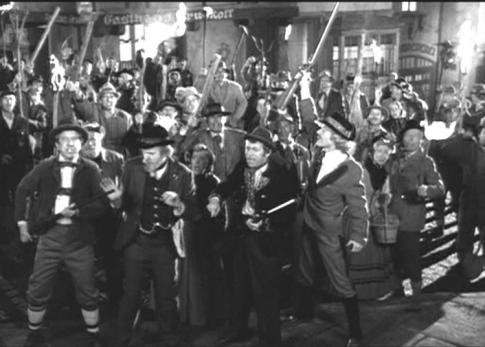
In the new Aeon essay, “The Intimacy of Crowds,” Michael Bond argues that riotous mobs are often actually quite rational and goal-oriented, despite the seeming disorder of the melee. The opening:

“There’s nothing like a riot to bring out the amateur psychologist in all of us. Consider what happened in August 2011, after police killed Mark Duggan, a 29-year-old man from the London suburb of Tottenham. Thousands took to the streets of London and other English towns in the UK’s worst outbreak of civil unrest in a generation. When police finally restored order after some six days of violence and vandalism, everyone from the Prime Minister David Cameron to newspaper columnists of every political persuasion denounced the mindless madness, incredulous that a single killing, horrific as it was, could spark the conflagration at hand. The most popular theory was that rioters had surrendered their self-awareness and rationality to the mentality of the crowd.

This has been the overriding view of crowd behaviour since the French Revolution and the storming of the Bastille. The 19th-century French criminologist Gabriel Tarde likened even the most civilised of crowds to ‘a monstrous worm whose sensibility is diffuse and who still acts with disordered movements according to the dictates of its head’. Tarde’s contemporary, the social psychologist Gustave Le Bon, tried to explain crowd behaviour as a paralysis of the brain; hypnotised by the group, the individual becomes the slave of unconscious impulses. ‘He is no longer himself, but has become an automaton who has ceased to be guided by his will,’ he wrote in 1895. ‘Isolated, he may be a cultivated individual; in a crowd, he is a barbarian… a grain of sand amid other grains of sand, which the wind stirs up at will.’

This is still the prevailing view of mob behaviour, but it turns out to be wrong.”

Tags:

Shadi Hamid, a Brookings Fellow and author of a new book about contemporary Middle Eastern Islamists, just did an Ask Me Anything at Reddit. A few exchanges follow.

____________________________

Question:

I’ve always wondered about what the popular perception of Sharia law is among ordinary muslims, like in Saudi Arabia. Is that actually the system that they want to live under, or it is more imposed by the ruling class?

Shadi Hamid:

Support for sharia is widespread across the Arab world, but to different degrees. A lot of interesting polling data on this. In a 2012 Pew poll, 61% of Egyptians said they preferred the “model of religion in government” of Saudi Arabia over just 17% for Turkey’s. And, somewhat remarkably, in the 2010 Arab Barometer, 62% of Jordanians said they would support “a system governed by Islamic law in which there are no political parties or elections.” In countries, like Tunisia, that have experienced [often forced] secularization, the numbers are lower. Of course, this provokes more than a few questions – it’s one thing to believe in Islamic law in theory and another thing to actually back in practice. How aspirational is this? Are these sentiments shaped by social pressure, a sense that good Muslims have to say they support Islamic law? That needs to be taken into account as well. But, it is fair to say that many of these societies deeply conservative and illiberal in how they view the role of religion in public life.

____________________________

Question:

When was the last time you were in Egypt? Has there been a noticeable change in peoples’ attitudes towards one another and towards democracy?

Shadi Hamid:

When I was in Egypt in August, just a few days before the Rabaa massacre actually, it was a pretty shocking, and dispiriting, experience. You know, you read about rise of fascism in Europe after WWI in grad school, but it’s really something to see a kind of bloodlust – the desire to kill your countrymen – up close, from people you know and even care about, your friends. I saw that in Egypt and it was clear then the scars would take not just years, but possibly decades to heal. It’s brother against brother. Mother against son. It’s sectarianism without the sects, which in a way is more frightening because you can’t clearly define who your enemy is. It’s a difficult question but a vital one – how did so many Egyptians lose their humanity, lose their ability to empathize with their fellow citizens? Where exactly did this desire for blood come from. That’s why I think looking at religion and ideology is crucial because it’s those sorts of raw, existential divides – about the nature and identity of the State – that lead people to suspend their humanity. Egyptians would tell me: hey, you Americans with all your democracy talk and “respecting democratic outcomes.” Screw your democracy. We’re the ones who have to live with the consequences of elections… And that’s why I spent a lot of time in the book talking not just about the political and structural factors that influence ideas, but taking the ideas, aspirations, and ambitions of Islamist movements as something real and deeply felt.

____________________________

Question:

Do you think that religious sentiments comes in waves? In the 50s, the arab world was much more secular, and since, it witnessed an increase in religious fervor (as the whole world is doing), to reach the today’s peak. Do you think religiosity will be decreasing in the future?

Shadi Hamid:

This is where I think the Arab world, or even “Islam,” may be a bit distinctive. I see the era of secular nationalism in the 1950s and 60s as an aberration, a kind of exception to the rule. If you look at the broader sweep of Islamic history (and, granted, that’s risky going in a short comment like this), you find that Islam and Islamic law have always been part of the public discourse. Yes, you often a separation between the Caliph, or the executive, on one hand and the religious clerics on the other, but never a separation of religion from politics. Unlike in Christianity, where you have a (debatable) tradition of “leave unto Caesar what is,” Prophet Mohamed was a politician, a theologian, and a warrior all wrapped into one. Muslims aren’t necessarily bound by history, but we can’t pretend it doesn’t matter.

Also, there have been any number of attempts to force secularization, most notably in Turkey and Tunisia. But that didn’t work either. Over time, religion-friendly parties and then Islamists and then neo-Islamists rose to power through democratic elections in Turkey. There was a popular desire to erode the constraints of an aggressively secular, or laic, state, and religiously-oriented movements drew on that. In Tunisia, decades of secularization didn’t stop an Islamist party, Ennahda, from rising to power within a year of the 2011 revolution. And that was after Ennahda being pretty much eradicated from Tunisian society. Which makes it all the more striking.•

Tags:

It’s not likely that legal issues regarding autonomous cars will be as much a hurdle as some think, but they will be somewhat of a story. In the New York Times article, “When Driverless Cars Break the Law,” Claire Cain Miller breaks down the potential future of civil and criminal culpability:

“In cases of parking or traffic tickets, the owner of the car would most likely be held responsible for paying the ticket, even if the car and not the owner broke the law.

In the case of a crash that injures or kills someone, many parties would be likely to sue one another, but ultimately the car’s manufacturer, like Google or BMW, would probably be held responsible, at least for civil penalties.

Product liability law, which holds manufacturers responsible for faulty products, tends to adapt well to new technologies, John Villasenor, a fellow at the Brookings Institution and a professor at U.C.L.A., wrote in a paper last month proposing guiding principles for driverless car legislation.

A manufacturer’s responsibility for problems discovered after a product is sold — like a faulty software update for a self-driving car — is less clear, Mr. Villasenor wrote. But there is legal precedent, particularly with cars, as anyone following the recent spate of recalls knows.

The cars could make reconstructing accidents and assigning blame in lawsuits more clear-cut because the car records video and other data about the drive, said Sebastian Thrun, an inventor of driverless cars.

‘I often joke that the big losers are going to be the trial lawyers,’ he said.

Insurance companies would also benefit from this data, and might even reward customers for using driverless cars, Mr. Villasenor wrote. Ryan Calo, who studies robotics law at the University of Washington School of Law, predicted a renaissance in no-fault car insurance, under which an insurer covers damages to its customer regardless of who is at fault.

Criminal penalties are a different story, for the simple reason that robots cannot be charged with a crime.”

Tags: , , ,

Cognitive enhancement, through electric stimulation or drugs or genetic manipulation, is certainly our future. While it’s a serious business, some of the early efforts have come dressed in leisure clothes: Gamers are using brain-stimulation devices to give them an edge. Ethicist Hannah Maslen of the Conversation thinks regulation should start with these early adopters, even if their high scores are essentially meaningless. An excerpt:

“Our recommendations are not at all motivated by a belief that access to cognitive enhancement devices should be restricted in general. Instead, we think that consumer freedom is optimised when the products that people buy in fact do what the manufacturers claim they do, and when people have the information they need to properly assess which risks they are willing to take.

For my colleague Julian Savulescu, cognitive enhancement devices are just the tip of the iceberg. We will start to see more and more technologies that are aimed at enhancing human performance so we need to strike the right balance now. If we fall prey to scaremongering, we run the risk of over regulating but public safety is vital. The key is to inform the public properly about these devices so they can live their lives as they choose, taking reasonable risks if they want to.

The best option would be to filter the most dangerous enhancement devices out of the market. No one wants to use a device that will definitely cause them great harm and this is especially true if there are ways to make the same or similar device safer. This would also leave individuals free to choose which small-to-moderate risks they want to take in pursuit of enhanced cognitive capacities, whether that be for learning languages, mastering maths or eliminating the enemy in Call of Duty.”

Tags:

“Isn’t it pretty to think so?” is the question that completes The Sun Also Rises, and it’s the one that comes to my mind when someone suggests that America or any other country or entity will be able to control machines that kill autonomously. It’s possible to largely keep a hood over nukes because of the rareness of the materials and expertise needed to create them, but that won’t be the way of drones, robots and other automatons of destruction. They’ll be easy, scarily easy, to make. And so inexpensive. That practically won’t cost a thing.

In her very well-written piece “The Case Against Killer Robots,” Denise Garcia of Foreign Affairs argues that it’s possible to halt “progress.” The opening:

“Wars fought by killer robots are no longer hypothetical. The technology is nearly here for all kinds of machines, from unmanned aerial vehicles to nanobots to humanoid Terminator-style robots. According to the U.S. Government Accountability Office, in 2012, 76 countries had some form of drones, and 16 countries possessed armed ones. In other words, existing drone technology is already proliferating, driven mostly by the commercial interests of defense contractors and governments, rather than by strategic calculations of potential risks. And innovation is picking up. Indeed, China, Israel, Russia, the United Kingdom, the United States, and 50 other states have plans to further develop their robotic arsenals, including killer robots. In the race to build such fully autonomous unmanned systems, China is moving faster than anyone; it exhibited 27 different armed drone models in 2012. One of these was an autonomous air-to-air supersonic combat aircraft.

Several countries have already deployed forerunners of killer robots. The Samsung Techwin security surveillance guard robots, which South Korea uses in the demilitarized zone it shares with North Korea, can detect targets through infrared sensors. Although they are currently operated by humans, the robots have an automatic feature that can detect body heat in the demilitarized zone and fire with an onboard machine gun without the need for human operators. The U.S. firm Northrop Grumman has developed an autonomous drone, the X-47B, which can travel on a preprogrammed flight path while being monitored by a pilot on a ship. It is expected to enter active naval service by 2019. Israel, meanwhile, is developing an armed drone known as the Harop that could select targets on its own with a special sensor, after loitering in the skies for hours.

Militaries insist that such hardware protects human life by taking soldiers and pilots out of harm’s way. But the risk of malfunctions from failed software or cyber attacks could result in new dangers altogether. Countries will have dissimilar computer programs that, when interacting with each other, may be erratic. Further, signal jamming and hacking become all the more attractive — and more dangerous — as armies increasingly rely on drones and other robotic weaponry. According to killer robot advocates, removing the human operator could actually solve some of those problems, since killer robots could ideally operate without touching communication networks and cyberspace. But that wouldn’t help if a killer robot were successfully hacked and turned against its home country.

The use of robots also raises an important moral question. As Noel Sharkey, a British robotics expert, has asked: ‘Are we losing our humanity by automating death?’ Killer robots would make war easier to pursue and declare, given the distance between combatants and, in some cases, their removal from the battlefield altogether. Automated warfare would reduce long-established thresholds for resorting to violence and the use of force, which the UN has carefully built over decades. Those norms have been paramount in ensuring global security, but they would be easier to break with killer robots, which would allow countries to declare war without having to worry about causing casualties on their own side.”

Tags:

The opening of “We Kill People Based on Metadata,” David Cole’s New York Review of Books piece which explains why the NSA collecting our contacts instead of our content shouldn’t assuage anxieties about spying:

“Supporters of the National Security Agency inevitably defend its sweeping collection of phone and Internet records on the ground that it is only collecting so-called ‘metadata’—who you call, when you call, how long you talk. Since this does not include the actual content of the communications, the threat to privacy is said to be negligible. That argument is profoundly misleading.

Of course knowing the content of a call can be crucial to establishing a particular threat. But metadata alone can provide an extremely detailed picture of a person’s most intimate associations and interests, and it’s actually much easier as a technological matter to search huge amounts of metadata than to listen to millions of phone calls. As NSA General Counsel Stewart Baker has said, ‘metadata absolutely tells you everything about somebody’s life. If you have enough metadata, you don’t really need content.’ When I quoted Baker at a recent debate at Johns Hopkins University, my opponent, General Michael Hayden, former director of the NSA and the CIA, called Baker’s comment ‘absolutely correct,’ and raised him one, asserting, ‘We kill people based on metadata.'”

Tags:

From Josh Eidelson’s new Salon interview with economist Thomas Piketty, an exchange about leveling wealth inequality with taxes and/or education:

Question:

David Leonhardt, in his New York Times Magazine essay on your book, writes that rather than a wealth tax, there’s ‘another, more politically plausible force that can disrupt [Piketty’s] first law of inequality: education. When a society becomes more educated, many of its less-wealthy citizens quickly acquire an ephemeral but nonetheless crucial form of capital — knowledge — that can bring enormous returns.’ Do you share that view?

Thomas Piketty:

I do share partly that view. As I say in the book, education and the diffusion of knowledge are the primary forces towards reduction in inequality…

The question is, is that going to be sufficient?

…You need education but you also need progressive taxation.

It’s not an all-or-nothing solution. I think a lot can be done at the national level. We do already have progressive taxation of income, progressive taxation of inherited wealth, at the national level. We also have annual taxation of wealth at the national level. For instance, in the U.S. you have a pretty big property tax… Technically, it is perfectly possible to transform it into a progressive tax on net wealth…

The main difficulty is not so much to make it a global tax. The main difficulty is not international tax competition. The main difficulty is more internal political [obstacles]… Right now the property tax is a local tax, and so the federal government cannot do anything. You know, it was the same with the income tax one century ago.

So I don’t share the pessimistic view that a progressive wealth tax will never happen.”

Tags: , ,

In an Aeon essay, Thomas Wells wonders how we can consider yet-born generations in political decisions that will impact them, suggesting “futuristic voting blocs” may be the answer. An excerpt:

While we might feel a sense of solidarity with past and future generations alike, time’s arrow means that we must relate to each other as members of a relay race team. This means that citizens downstream from us in time are doubly disadvantaged compared with the upstream generations. Our predecessors have imposed – unilaterally – the consequences of their political negotiations upon us: their economic regime, immigration policies, the national borders that they drew up. But they were also able to explain themselves to us, giving us not only the bare outcome of the US Constitution, for example, but also the records of the debates about the principles behind it, such as the Federalist Papers (1787-88). Such commentaries are a substantial source of our respect for our ancestors’ achievements, beyond their status as a fait accompli.

By contrast, future generations must accept whatever we choose to bequeath them, and they have no way of informing us of their values. In this, they are even more helpless than foreigners, on whom our political decisions about pollution, trade, war and so on are similarly imposed without consent. Disenfranchised as they are, such foreigners can at least petition their own governments to tell ours off, or engage with us directly by writing articles in our newspapers about the justice of their cause. The citizens of the future lack even this recourse.

The asymmetry between past and future is more than unfair. Our ancestors are beyond harm; they cannot know if we disappoint them. Yet the political decisions we make today will do more than just determine the burdens of citizenship for our grandchildren. They also concern existential dangers such as the likelihood of pandemics and environmental collapse. Without a presence in our political system, the plight of future citizens who might suffer or gain from our present political decisions cannot be properly weighed. We need to give them a voice.

How could we do that?•

Tags:

One wonders what conservative satirist Al Capp, enemy of hippies and scourge of campuses in the Vietnam Era, would have made of Rush Limbaugh, his far-less-witty creative descendant. I guess he would have generally approved. But what about the Tea Party? Would his allergy to collective extremism have driven him batty? Li’l Abner, after all, was a send-up of small-town white provincials with questionable intelligence. No, he probably would have rationalized it all in the name of party affiliation.

Capp was a genuinely talented writer who was very effective at mocking the micro excesses of the radical Left without seeming too bothered by the macro issues that was driving it from the center: a needless war, racism, sexism, etc. One day in 1970, when he wasn’t busy being rude at a bed-in or mocking a self-styled messiah, he made his way to the UCLA campus to raise a ruckus, which he loved doing. Audio only embedded below.

Tags:

D.A. Pennebaker, Shirley Clarke and Albert Maysles captured the Khrushchev-era exhibition of American consumer goods that was held in Moscow in 1959, the Iron Curtain briefly lifted. On display was the handiwork of Charles Eames, Buckminster Fuller and many others. The Kitchen Debates between Nixon and his Soviet counterpart took place during this event.

Tags: , , , , , ,

More on insta-famous economist Thomas Piketty, this time from Maxine Montaigne at the Conversation, who attempts to not argue the points of Capital in the Twenty-First Century but to explain the sensation. An excerpt:

“While almost everyone seems to agree that Piketty’s work is a valuable and timely contribution to the debate on inequality, there is a lingering sense of confusion about why this book in particular has grabbed the public’s attention. In order to understand this phenomenon, it might be helpful to look back a few hundred years, at the most famous dismal scientist of them all, T. R. Malthus.

Malthus was, and is still, famous for his slightly depressing comments on humanity’s inability to provide for a growing population. What is particularly interesting though is that despite these ideas not being hugely original or even very surprising, Malthus became something of a household name in the 19th century, at least more so than any other economist at that time.

One reason for Malthus’ unusual fame was simply good timing. At the beginning of the 19th century the British public were increasingly concerned with the overcrowding of Britain’s cities, and combined with decades of low agricultural wages and a damaging war with France it’s no surprise that Malthus’ pessimism struck a chord.

It’s easy to see the parallel with Thomas Piketty today, who many see as finally providing proof of capitalism’s inherent flaws as argued vocally by the Occupy movement. And once again the timing is everything; Piketty and his colleagues have been working on the World Top Incomes Database since well before the financial crisis and subsequent recessions, but his book now seems perfectly timed in response to growing public disenchantment with the theory of ‘trickle down’ economics.”

Tags: , ,

Drones don’t only depart by arrive also, something America hasn’t yet had to reckon with. But it’s only a matter of time until we have to wonder whether what’s being delivered is a book or a burrito or a bomb. From Patrick Tucker at Defense One:

“Virtually every country on Earth will be able to build or acquire drones capable of firing missiles within the next ten years. Armed aerial drones will be used for targeted killings, terrorism and the government suppression of civil unrest. What’s worse, say experts, it’s too late for the United States to do anything about it.

After the past decade’s explosive growth, it may seem that the U.S. is the only country with missile-carrying drones. In fact, the U.S. is losing interest in further developing armed drone technology. The military plans to spend $2.4 billion on unmanned aerial vehicles, or UAVs, in 2015. That’s down considerably from the $5.7 billion that the military requested in the 2013 budget. Other countries, conversely, have shown growing interest in making unmanned robot technology as deadly as possible.”

Tags:

In a Guardian article, that holy fool Slavoj Žižek argues that it’s the unwritten rules that make for a safe planet, and the new world order of the 21st century has torn that fabric, leaving a global village that’s disconnected on a social level. Hence, Russia invades Ukraine as the world tries to formulate a reaction to a former superpower trying to clumsily relive its past glory. An excerpt:

“The ‘American century’ is overand we have entered a period in which multiple centres of global capitalism have been forming. In the US, Europe, China and maybe Latin America, too, capitalist systems have developed with specific twists: the US stands for neoliberal capitalism, Europe for what remains of the welfare state, China for authoritarian capitalism, Latin America for populist capitalism. After the attempt by the US to impose itself as the sole superpower – the universal policeman – failed, there is now the need to establish the rules of interaction between these local centres as regards their conflicting interests.

This is why our times are potentially more dangerous than they may appear. During the cold war, the rules of international behaviour were clear, guaranteed by the Mad-ness – mutually assured destruction – of the superpowers. When the Soviet Union violated these unwritten rules by invading Afghanistan, it paid dearly for this infringement. The war in Afghanistan was the beginning of its end. Today, the old and new superpowers are testing each other, trying to impose their own version of global rules, experimenting with them through proxies – which are, of course, other, small nations and states.”

Tags:

Audio from two old-school UCLA talks by comedians.

________________________

On February 8, 1966, just six months before his fatal overdose, Lenny Bruce gave a rambling talk on campus, hitting on all the large topics he loved: law, church, state and free speech. He got off to a slow start, distracted as he was at the time with his own ongoing legal issues, but before finishing he’d argued with biting wit that churches were like fast-food franchises, science and technology polluted the justice system, Catholic rituals protected child molesters and “a country can only be strong by knowing about the bad things.”

________________________

Long before she was a self-centered Republican lady worried about buying and selling as much crap as possible, Joan Rivers was a great stand-up. (And despite any personal unpleasantness and crassness, she still is.) On November 15, 1972, Rivers did a Q&A with the students, being brazenly honest on varied topics (feminism, Bill Cosby, talk shows, etc. ) and asking rhetorically, “If I was normal, would I be doing comedy?” Very funny stuff.

Tags: ,

Paul Krugman is concerned that the Affordable Care Act has been damaged by a concerted conservative effort to defame it with lies. I wonder if this will end up being a long-term concern. The greatest benefit, I think, of a decentralized media is that while politicized bullshit still works, it has a pretty short shelf life. The Republican playbook, in which coded language could sway the masses, doesn’t have much of a lasting impact in the Information Age. That’s not to say that the GOP won’t do well in midterm elections–that’s usually the way for the party out of the Oval Office. But Obamacare isn’t going away, and the Republicans are going to have a steep uphill climb in the next national election. From Krugman’s “Inventing a Failure“:

“Now comes the latest claim — that many of the people who signed up for insurance aren’t actually paying their premiums. Obviously this claim is part of a continuing pattern. It also, however, involves a change in tactics. Previous attacks on Obamacare were pretty much fact-free; this time the claim was backed by an actual survey purporting to show that a third of enrollees hadn’t paid their first premium.

But the survey was rigged. (Are you surprised?) It asked insurers how many enrollees had paid their first premium; it ignored the fact that the first premium wasn’t even due for the millions of people who signed up for insurance after March 15.

And the fact that the survey was so transparently rigged is a smoking gun, proving that the attacks on Obamacare aren’t just bogus; they’re deliberately bogus. The staffers who set up that survey knew enough about the numbers to skew them, which meant that they have to have known that Obamacare is actually doing O.K.

So why are Republicans doing this? Sad to say, there’s method in their fraudulence.

First of all, it fires up the base. After this latest exercise in deception, we can be fairly sure that Republican leaders know perfectly well that Obamacare has failed to fail. But the party faithful don’t. Like anyone who writes about these issues, I get vast amounts of mail from people who know, just know, that insurance premiums are skyrocketing, that far more people have lost insurance because of Obummercare than have gained it, that all the horror stories are real, and that anyone who says otherwise is just a liberal shill.

Beyond that, the constant harping on alleged failure works as innuendo even if each individual claim collapses in the face of evidence. A recent poll by the Kaiser Family Foundation found that a majority of Americans know that more than eight million people enrolled in health exchanges; but it also found a majority of respondents believing that this was below expectations, and that the law was working badly.”

Tags:

American neocons were fixing to invade Iraq for a long spell, and Saddam Hussein often made things easy on them. In the dozen years after this 1991 To Tell the Truth episode, which featured electronics executive Jerry Kowalski, who is said to have foiled a Hussein plot to achieve atomic-weapon capacity, we went to war with the country twice, the second one waged under false pretenses which cost so many lives, a trillion dollars and our country’s reputation. In the lead up to Dubya’s folly, the right’s saber-rattling was enabled by Washington Democrats and poor reportage by largely liberal publications like the New York Times and the New Yorker. It was a widespread and profound failure of government, media, and of course, the rest of us.

Tags:

« Older entries § Newer entries »