
Muhammad Ali in 1972, after losing the “Fight of the Century” to Joe Frazier, on an Irish chat show hosted by Cathal O’Shannon. In Dublin to fight Alvin “Blue” Lewis, Ali was his usual mix of joking braggadocio and serious politics.

Ideas and technology and politics and journalism and history and humor and some other stuff.
You are currently browsing the archive for the Politics category.
Muhammad Ali in 1972, after losing the “Fight of the Century” to Joe Frazier, on an Irish chat show hosted by Cathal O’Shannon. In Dublin to fight Alvin “Blue” Lewis, Ali was his usual mix of joking braggadocio and serious politics.
Tags: Cathal O'Shannon, Muhammad Ali

Terrorism hasn’t ended traditional war, really, just expanded the “playing” field. But it certainly is now a standard part of the operating procedure, with a globalized, connected world full of cheap, tiny cameras able to be shaken by a single atrocity. From an interview with the late futurist Olaf Helmer in a 1981 Omni magazine:
Omni:
Is there any other area where we seem to have a blind spot?
Olaf Helmer:
Yes, in the military budget. There’s a lot of talk now about inflation and the military budget, and I think rightly so. But what is being overlooked is the very strong possibility that war in the conventional sense might be completely obsolete, and we’re preparing for the wrong thing.
Omni:
What do you mean?
Olaf Helmer:
It is possible that the new form of war will be terrorism, and I fear that we are inadequately prepared to deal with that kind of warfare. We were held up by the Iranians with the threat that some harm would come to the hostages unless we handed over billions of dollars. It doesn’t take much imagination to picture other variations on that theme, involving perhaps whole cities immobilized by credible terrorist threats. Then what, would the President do? We have thus far had no effective mechanism and firm policy for dealing with that kind of attack. I hope our military planning includes a shift in this direction.•
Tags: Olaf Helmer

In David Rothkopf’s recent Foreign Policy interview with Martin Indyk, two-time U.S. Ambassador to Israel, the diplomat predicted (accurately) the foundering of Benjamin Netanyahu’s popularity among Israelis and worried over the splintering of support for the country among Americans, especially young Jewish-Americans. Indyk also outlined the shifting political dynamics in the Middle East. An excerpt:
“Martin Indyk:
Few people noticed that the Indian government came out in support of Israel in this war; social media in China was pro-Israel. It has developed strategic relations with both countries, and with Russia as well, that led Israel to absent itself from the vote of the U.N. General Assembly condemning Russia’s annexation of Crimea. I think there’s a sense in Israel, particularly on the right, that they can afford to be defiant of the United States. Israelis also sense a potential for a new alignment with Gulf Arab states that didn’t exist before that is generated by their common interest in curbing Iran’s nuclear program and countering Iran’s efforts to dominate the region, opposing if not overthrowing Bashar al-Assad in Syria, and combating Hezbollah and the Muslim Brotherhood, with its stepchild Hamas in Gaza. Israel shares this array of enemies with the Sunni Arab monarchs and the Abdel Fattah al-Sisi regime in Egypt. You can see it in this Gaza crisis quite clearly, where the Saudis and the Egyptians in particular wanted Israel to take down Hamas.
So the combination of all of that leads Israelis to feel more independent of the United States, especially in the context of their sense that the United States is withdrawing from the region and therefore may be less reliable for Israel. These Arab states are also concerned about what they see as an American withdrawal and feel a greater need to cooperate under the table with Israel to help deal with the chaos and threats around them.”

I think there are some people so awful that they deserve to die for the things they’ve done, but it’s still impossible to support the death penalty and its arbitrariness. In America, someone with wealth will never face execution, while the poor are prone. African-Americans are much more likely to suffer the ultimate consequences for a crime than white people who’ve committed the same. Males are much more likely to die than females. And because of prejudice and incompetence, the wrong people are sometimes put to death, which is the most sickening abomination.
And those who have to carry out the killing of the condemned are no doubt scarred by the process. In “The Witness,” Pamela Colloff’s Texas Monthly feature, she profiles former Texas Department of Criminal Justice Public Information Director Michelle Lyons, whose job it was to record the final moments of executed prisoners, an occupation that unsurprisingly came with hazards. An excerpt:
“Michelle already had a sense of what to expect. Fifteen months earlier, while covering for an absent colleague, she had entered the Death House for the first time to witness the execution of a convicted murderer named Javier Cruz. Years later, she would remember very little about it—only that she had dressed more formally than usual and that she had been unsure, at the outset, how she would feel when it was all over. The facts of Cruz’s case did not engender much sympathy: he had murdered two San Antonio men, one of whom he had gagged and bound, beaten with a hammer, and then strangled with the belt of a bathrobe. Michelle had found that watching Cruz slip into unconsciousness did not evoke any powerful emotions; she had scribbled in her yellow legal pad, typed up her story, and gone home. Covering executions was certainly no worse, she decided, than being a war correspondent or any other journalist who sees suffering up close; in fact, the cold efficiency of lethal injection made hers the easier job. When her father called her into his office the next day to check on her, she told him she was fine. As she saw it, her duty as a journalist was to be dispassionate.
In the first year that Michelle served as the Item’s prison reporter, Texas executed forty inmates—the most people put to death in a single year, by one state, in American history. Governor Bush also happened to be making a run for the White House. This confluence of events caused hundreds of journalists to descend on Huntsville in the months leading up to the 2000 presidential election, mostly to issue withering assessments. On the night that Billy George Hughes, a man who had fatally shot a state trooper, was put to death, a TV show hosted by filmmaker-provocateur Michael Moore arranged for a pom-pom-waving cheerleading squad to stand outside the Walls and chant, ‘Texas, Texas, you’re so great, you kill more than any state!’ beside an illuminated execution scoreboard that read ‘George 117, Jeb 2.’ Rolling Stone published a blistering takedown of Huntsville in a piece called ‘Five Executions and a Barbecue.’ The media glare was relentless, transforming one execution that June—of an obscure Houston street criminal named Gary Graham, whose murder conviction had turned on the word of a single eyewitness—into an international cause célèbre. Riot police armed with tear gas stood outside the Walls on the night of his death while hooded Klansmen and rifle-toting members of the New Black Panther Party played to the cameras. At Graham’s invitation, the Reverend Jesse Jackson and Bianca Jagger served as witnesses.
During this time, Michelle kept a journal in which she recorded her own personal observations of the executions she witnessed, which had no place in the straightforward accounts she wrote for the Item. Rarely did she mention the media spectacle outside. Instead she cataloged the disquieting details that she noticed as she watched a succession of inmates be put to death. There was Betty Lou Beets, the second woman to be executed in Texas since the Civil War, who had shot not one but two of her husbands and buried them in her yard. (‘I couldn’t help but notice her tiny little feet,’ Michelle wrote. ‘She looked like somebody’s grandma—she was somebody’s grandma.’) There was Ponchai Wilkerson, who had once nearly managed to break out of death row, who stunned onlookers when he spit out a handcuff key as he lay on the gurney. (‘I felt sick,’ Michelle wrote the next day. ‘For a few seconds I had the crazy thought, ‘He’s going to get off that table and kill us.’ ’) And there was Robert Earl Carter, who had murdered six people, including his four-year-old son, and falsely implicated his friend Anthony Graves in the crime. (‘His last words were, ‘It was me and me alone. Anthony Graves had nothing to do with it,’ ’ Michelle wrote.) Carter’s admission on the gurney would later help exonerate his co-defendant, who was, at the time, awaiting his own execution date.
Throughout her journal, she made mention of the anguish felt by both the inmates’ and victims’ families, who stood in witness rooms adjacent to each other, looking into the death chamber.”
Tags: Michelle Lyons, Pamela Colloff

Remember when Al-Qaeda were the evildoers? Ah, the good old days. The opening of Samiha Shafy’s Spiegel interview with Brookings Institution fellow Charles Lister about the seemingly sudden rise of the Islamic State:
“Spiegel:
How do you explain the history of the Islamic State (IS) to people who are stunned by its seemingly sudden rise to power?
Charles Lister:
In 1999, the IS father figure Abu Musab al-Zarqawi established a training base for his group in Afghanistan. After the United States invaded Afghanistan in late 2001, the group fled through Iran and ended up in northern Iraq. By 2003, it had effectively become Iraq’s main jihadist resistance movement. During the US occupation of Iraq, Zarqawi made a name for himself and his group. It implemented sharia law to such an extreme level that the various tribal forces rose up and drove them out in a movement called the ‘Awakening.’ The group suffered significant losses at the time. When the US began initiating its withdrawal, it marked the beginning of an opportunity for a revival of Zarqawi’s group. From about mid-2009 onwards, it began establishing a sort of shadow influence. It launched an escalating level of attacks against security forces, a campaign of intimidation against local officials — within the military, police and local governments — and one of extreme violence. The extent of the campaign created significant leverage for the Islamic State. It also helps to explain why the IS was able to take Mosul so quickly.
Spiegel:
You’ve said that the Islamic State has succeeded in doing essentially everything al-Qaeda had previously done, only better, with the exception of carrying out a foreign attack. How do the two groups compare?
Charles Lister:
Both seek to establish an Islamic state governed by sharia law, but they have very different strategies. Al-Qaeda has adopted a much more patient and long-term approach to implementing social control and governance, focused on creating the socio-political conditions for such a reality. The IS is much less patient in terms of this objective. Both in the mid-2000s and now, IS has always immediately sought to implement sharia law and govern the population just as soon as it takes control of a territory. Syria offers the best comparison in terms of strategy. Al-Nusra, the Syrian al-Qaeda affiliate, has extensive influence across the country at a social level, but they did not choose to implement sharia directly until quite recently because they felt the social conditions weren’t ready and that they would be rejected if imposed too soon. They have instead considered the long view.
Spiegel:
Would you say al-Qaeda is somehow less extreme than IS?
Charles Lister:
Absolutely.”
Tags: Charles Lister, Samiha Shafy
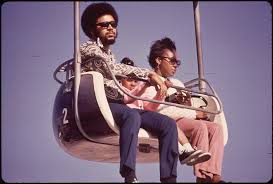
The Browser pointed me to “Saving Horatio Alger,” Richard Reeves’ excellent Brookings essay about American mobility, which is our national religion even though we currently trail Europe in this area by most measures. We boomed in our early days because of Manifest Destiny, busted once there was nowhere left to push our borders and had another rising-tide moment at the end of World War II. Great stuff like a tidy little explanation of how Alger would have made a poor character in his own books, since he was never ragged nor rich. An excerpt about the downward slope that set in starting in the 1970s:
“America’s decisive role in World War II and its subsequent emergence as a superpower gave rise to the Great Prosperity: a new surge of economic energy alongside sizeable government investments in infrastructure, the military, science, and Social Security, and a recommitment to education, not least through the G.I. Bill. Between 1950 and the mid-1970s, as the U.S. economy grew by an average of 4 percent a year, the economic expansion drove wages and employment up, and income and wealth gaps narrowed. High taxes—high by historical standards, anyway—were levied on those with the biggest incomes and greatest wealth, and the government provided more services and cash assistance to the poor as part of Lyndon Johnson’s vision for the ‘Great Society.’ Upward mobility may not have improved; but since standards of living were rising at about the same rate across the income distribution, most people were much better off than their parents had been, even if they remained on the same rung of the income ladder.
From the mid-1970s on, however, the mass prosperity machine began to grind to a halt; productivity stagnated and growth slowed as global competition intensified. Inequality trends returned to their pre-war trajectory, with those on the top rungs climbing ever further upward, helped along by Ronald Reagan’s tax cuts, while those at the bottom and in the middle lagged behind. George H.W. Bush broke his ‘no new taxes’ pledge, but did nothing to alter the growing fissure between the rich and the rest.
Bill Clinton’s electoral success presaged a period of strong economic growth and some restoration of the fortunes of the middle class. But U.S. politics soon veered to the right. With the election of George W. Bush as president and the emergence of a new strand of populism culminating in the muscular Tea Party movement, the rightward drift continued, and the carefully tied knots of financial regulation were quietly loosened, one by one. Mobility rates remained flat.
The election of Barack Obama fleetingly signaled a new, more optimistic mood, the promise of a more generous, post-partisan politics, and a renewed commitment to the upward mobility Americans believe in so fervently. Here was a president whose election seemed a testament to America’s progress, and whose personal story proved, so it seemed, that the Horatio Alger story could be rewritten for a multi-racial nation. The uplift was short-lived. Today, the nation is limping away from the economic car-crash of 2008. Politics remains deeply partisan. And yes, mobility rates are still flat.”
Tags: Horatio Alger, Richard Reeves

While Grover Norquist is baking his Libertarian ass at Burning Man, he’s simultaneously planning for Republicans to win back urban American by bogarting the Uber, riding the sharing economy to voting-booth victory. Of course, as Emily Badger pointed out last month in the Washington Post and Andrew Leonard expands on today in Salon, this economic disruption isn’t really staying within traditional Right and Left lanes. From Leonard’s piece:
“The semiotics of the announcement of David Plouffe’s hiring by Uber are fascinating. For example, consider how Plouffe used the word ‘inexorable’ in an interview with the New York Times.
‘We’re on an inexorable path of progress here,’ said Plouffe. Which translates as: Uber and the rest of Silicon Valley’s innovative disrupters are going to conquer us all in the long run, so we might as well just get used to it and stop throwing roadblocks in their way.
Beware! When a company with a name like ‘Uber’ is associated with ‘inexorable,’ resistance is obviously futile. And it’s worth recalling, this isn’t just about crushing existing taxi ‘cartels.’ Uber has made no secret of its ambitions to become a logistical hub that will compete with the likes of UPS and FedEx and Hertz, that will deliver groceries, as well as human beings, more efficiently than any other company. Uber’s algorithm is what’s inexorable. And an algorithm doesn’t boast any particular party identification: It’s just there to make consumers happy.
But fast on inexorability’s heels comes the issue of what the word ‘progressive’ really means. As Emily Badger reported, John Hickenlooper, the Democratic governor of Colorado, supported Uber’s hire by saying that Plouffe will bring the same ‘progressive approach’ to campaigning for Uber as has been demonstrated by Colorado’s ’embrace of innovation and disruptive technology.’
When you pull your phone out of your pocket, click a couple of buttons, send a signal that bounces off a satellite, and a car-for-hire magically appears in front of you in a few minutes, it certainly feels like we are living in an age of technological progress. But the jury is still out on whether this kind of innovation is truly socially progressive. A society that puts consumers first has obvious disadvantages for workers.”
Tags: Andrew Leonard, David Plouffe, Emily Badger, Grover Norquist

China remaining under authoritarian rule may be great for the environment. Seems odd, right? One of the government’s chief fears is that pollution caused by the nation’s hasty mass urbanization might lead to rebellion, so we’ll likely see large-scale green innovation until the situation is markedly improved. In the case of this one country, the world’s most populous, oppression may have an unintended positive consequence. Strange planet, isn’t it?
It’s still surprising that capitalism’s rise in China hasn’t been attended by a growth of democracy. From John Osburg’s Foreign Affairs review of the new book on the topic by Evan Osnos:
“Meanwhile, although growth has created a middle class of sorts and even an upper crust of very wealthy Chinese, neither group has followed the anticipated script. For the most part, the new middle class seems too preoccupied with the intense pressures of owning a home and raising a child in a hypercompetitive society to get involved in politics. As for the new rich, they have hardly pushed for a fairer and more representative government to protect their new prosperity. Instead, most of them have been co-opted by the Communist Party — or have simply emigrated to countries with more reliable legal systems.
Perhaps most telling, today young Chinese across the socioeconomic spectrum exhibit almost none of the political fervor that led thousands of students to take to the streets in 1989. China’s educational system has fed the country’s youth a steady diet of patriot-ism to ward off rebellious thoughts. But such measures appear almost redundant, since many young Chinese seem more interested in buying iPhones and Louis Vuitton products than in fighting for democratic change.
On the surface, then, the prediction that Chinese economic and political reform would go hand in hand seems not to have panned out. In truth, however, the story is more complicated. As Evan Osnos suggests in Age of Ambition, the optimistic view of China’s evolution wasn’t entirely wrong; it merely relied on a conception of politics too narrow to capture a number of subtle but profound shifts that have changed China in ways that are not always immediately visible. In his riveting profiles of entrepreneurs, journalists, artists, dissidents, and strivers, Osnos discovers the emergence in Chinese society of something even more fundamental than a desire for political representation: a search for dignity.”
Tags: Evan Osnos, John Osburg

Another reaction to the Pew Research Center report about labor and technology in the near-term, this one by Eric Reid at MSN Money, who focuses on one of the most essential questions: Will the Digital Age trump the patterns of the Industrial Age, whereby the rise of the machines lifted everyone, increasing production, creating new jobs and industries to replace the ones it disrupted? An excerpt:
“The traditional relationship between labor and technology has been a positive, if contentious, one. When new devices improve productivity, companies can maintain the same output with fewer people, so they lay some off. Although this leads to temporary unemployment, it also improves incomes for the remaining workers and management, who go out and spend their extra money. This creates jobs elsewhere, and the combined productivity of these new jobs along with the new technology means that the economy as a whole ends up both producing and consuming more overall.
In other words, the pie gets bigger and increases everyone’s slice with it. As Professor Donald Grimes, an economist with the University of Michigan, wrote:
‘Think of tractors and all of the other agricultural productivity gains. We are now producing far more output with a small fraction of the number of farmers that we used to have. Or of the productivity effect of the assembly line. And in terms of IT, think about how spreadsheet programs reduced the number of ‘book keepers.’ Or how the internet allowed people to buy their own airline tickets, thus eliminating lots of travel agency jobs.
‘In terms of the big picture these productivity gains raised the incomes of the people who continued to work in these professions, and/or made the owners of the machinery richer, or helped to make airline tickets cheaper. When people spent their extra money they created jobs in other industries and the people who lost their jobs were re-employed in new jobs. Over time these productivity gains raised our wages and our standard of living.’
This model makes two assumptions, however: First, that we all share in the profits of increasing productivity, and second, that laid-off workers will have other industries to move into. Both of these assumptions may be falling apart.”
Tags: Donald Grimes, Eric Reed

All my condolences got to the family of photojournalist James Foley, who was executed by ISIS. What a brave and decent person he was, right down to the final harsh seconds of his life. If only all of us possessed such strength.
When you see such utter brutality of ISIS in Iraq, you’re reminded that such a group gained power only because we destabilized that region with a needless war, just one of the bad decisions we made in the wake of 9/11. Another was torture. We lowered ourselves to the level of our inhumane attackers. We never needed to carry out a holocaust to defeat Hitler, and we don’t have to turn ourselves into terrorists to overcome them. Let’s face it: The world has already overcome them, modernity rendering them merely a dangerous anachronism. We don’t need to head back to the 13th century ourselves to win this ever-shifting war.
One of the key figures in allowing waterboarding and renditions was CIA lawyer John Rizzo, who has written a book of his experiences, Company Man: Thirty Years of Controversy and Crisis in the CIA. He just sat for an interview with Spiegel’s Holger Stark. An excerpt:
“Spiegel:
Just days after 9/11, you also wrote up a list of possible covert actions. What did you suggest?
John Rizzo:
I actually wrote the first list the day of 9/11, literally two hours after the attack. Like everyone else, I was in a state of shock and bewilderment, but I knew that we were going to undertake counteractions that were unprecedented in my career. I scribbled down on my yellow legal pad conceivable options, including lethal operations against al-Qaida — not just the al-Qaida elements who carried out the 9/11 attack, but also those who would be planning future attacks. The list included, for the first time in the history of the CIA, a program to detain and interrogate senior al-Qaida leaders.
Spiegel:
Would you describe yourself as the architect of the renditions program through which suspected al-Qaida members were secretly kidnapped and abused?
John Rizzo:
I was certainly an architect of the interrogation program, even if I didn’t originally come up with it. I was the legal architect of the proposed list of techniques and played the lead role in obtaining legal approval for their use.
Spiegel:
Who came up with the original idea?
John Rizzo:
Our people from the Counter Terrorism Center. One day they came to my office and listed all the enhanced interrogation techniques for me. I had never heard of waterboarding. Some techniques, such as waterboarding and sleep deprivation …
Spiegel:
… which kept those suspected by the CIA of terrorism awake for more than seven days non-stop …
John Rizzo:
… seemed harsh, even brutal to me. On the original list of proposed techniques was one which was even more chilling than waterboarding. It was never used.
Spiegel:
What technique was it?
John Rizzo:
I’m not allowed to specify it; it is still classified. I had no preparation when the counterterrorism people came to me, and so my first reaction was one of being rather stunned by what was being proposed.”
Tags: Holger Stark, James Foley, John Rizzo

Reddit pointed me to a post at economist Robin Hansen’s blog, in which he engages in some extreme speculation. Hansen looks at how the trends of longer lifespans and accelerated social change may lead to a multi-generational disconnect, which has encouraged some futurists to suggest governance by totalitarian computer, or Fascism by algorithm. They think it inevitable anyway, so they want to try to commandeer this brave new world to some extent. I don’t think we get that option should the computer apocalypse occur. An excerpt:
“In history we have seen change not only in technology and environments, but also in habits, cultures, attitudes, and preferences. New generations often act not just like the same people thrust into new situations, but like new kinds of people with new attitudes and preferences. This has often intensified intergenerational conflicts; generations have argued not only about who should consume and control what, but also about which generational values should dominate.
So far, this sort of intergenerational value conflict has been limited due to the relatively mild value changes that have so far appeared within individual lifetimes. But at least two robust trends suggest the future will have more value change, and thus more conflict:
These trends robustly suggest that toward the end of their lives future folk will more often look with disapproval at the attitudes and behaviors of younger generations, even as these older generations have a smaller proportional influence on the world. There will be more ‘Get off my lawn! Damn kids got no respect.’
The futurists who most worry about this problem tend to assume a worst possible case. (Supporting quotes below.) That is, without a regulatory solution we face the prospect of quickly sharing the world with daemon spawn of titanic power who share almost none of our values. Not only might they not like our kind of music, they might not like music. They might not even be conscious. One standard example is that they might want only to fill the universe with paperclips, and rip us apart to make more paperclip materials. Futurists’ key argument: the space of possible values is vast, with most points far from us.
This increased intergenerational conflict is the new problem that tempts some futurists today to consider a new regulatory solution. And their preferred solution: a complete totalitarian takeover of the world, and maybe the universe, by a new super-intelligent computer.
You heard that right.”
Tags: Robin Hanson

You can have a very low crime rate in a police state, provided you don’t count the crimes committed by the police.
******
I still remember when Rudolph Giuliani was mayor of New York, and he sent helicopters to break up a gathering of African-American youth in Harlem at the precise second the city said it had to end, because one of the adult speakers was a well-known bigot. What if one of the copters had malfunctioned and crashed into the children? Imagine that horror.
******
War is big business in America, and we seem to use every reason–War on Drugs, War on Terror, etc.–to arm ourselves to the teeth, often getting bitten ourselves in the end. Those drones and weapons developed during the travesty of the Iraq War have begun making their way to your local police departments. But the problem stretches back further than that. From the Economist:
“ON AUGUST 9th Darren Wilson, a police officer in Ferguson, Missouri, shot and killed Michael Brown, an 18-year-old unarmed black man. Two days after the shooting, tactical officers—paramilitary police generally referred to as SWAT (for Special Weapons and Tactics)—were called in to help clear protestors from in front of Ferguson’s police department. They arrived dressed for war, in riot gear and gas masks, bearing long truncheons and automatic weapons—despite the fact that aside from some ugly looting incidents the day after the shooting, Ferguson’s protests have largely been peaceful. In the days that followed, tactical officers have tear-gassed a news crew, aimed automatic weapons and sniper rifles at unarmed protestors and patrolled the streets of a small town in Missouri in vehicles that would not look out of place in Baghdad or Aleppo. The days of the beat cop walking the street with nothing more than a trusty old revolver seem distant indeed. How did America’s police forces get so well-armed?
In this as with so much else in American governance, it starts with federal cash. Every year Congress passes the National Defence Authorisation Act, which sets out the Defence Department’s budget and expenditures. The version passed in 1990, in the wake of a sharp rise in drug-related violence, allowed the Defence Department to transfer military gear and weapons to local police departments if they were deemed ‘suitable for use in counter-drug activities.’ Between 2002 and 2011 the Department of Homeland Security, established after the attacks of September 11th 2001, disbursed more than $35 billion in grants to state and local police forces. In addition the ‘1033 programme’ allows the Defence Department to distribute surplus equipment to local police departments for use in counter-terrorism and counter-drug activities. The American Civil Liberties Union found that the value of military equipment used by American police departments has risen from $1m in 1990 to nearly $450m in 2013.”
Tags: Darren Wilson, Michael Brown

Iran’s theocracy is one thing, and its people seem another altogether. It’s a strange state where the rules can be broken as long as everyone pretends otherwise. From an Economist report about a Middle Eastern Masters and Johnson-ish sex survey:
“An 82-page document recently issued by Iran’s parliamentary research department is stark in its findings. Not only are young adults sexually active, with 80% of unmarried females having boyfriends, but secondary-school pupils are, too. Illicit unions are not just between girls and boys; 17% of the 142,000 students who were surveyed said that they were homosexual.
In Tehran, the capital, long known for its underground sex scene, chastity is plainly becoming less common. The scope and pace of change are challenging the government and posing a headache for the clerics who dispense guidance at Friday prayers.
The report is also a rare official admission of the unspoken accord in Iran: people can do what they want so long as it takes place behind closed doors. Parliament’s researchers, on this occasion, were allowed to say the unsayable.
Their suggestion for stopping unsanctioned sex is remarkably liberal. Instead of seeking to cool the loins of the youngsters altogether, they should be allowed publicly to register their union by using sigheh, an ancient practice in Shia Islam that lets people marry temporarily. A legal but loose and much-deprecated arrangement, which can last from a few hours to decades, sigheh is often viewed as a cover for promiscuity or prostitution. Clerics themselves have long been suspected of being among its biggest beneficiaries, sometimes when they are on extended holy retreats in ancient religious cities such as Qom.”

Ferguson, Missouri, August 2014.
The Iraq War is one that keeps on giving–grief–and not only overseas. The fog of that war has clouded American neighborhoods as the weapons and tools used by soldiers there have come home to roost in a neighborhood near you. Militarized police forces have drones and AR-15s, a dubious dividend, and every officer can be a Robocop now. It’s overkill that leads to actual killing, especially when the ugliness of racism shows its teeth.
Some of these arms and armor might have happened eventually anyhow in our high-tech society, but the often-misguided War on Terror has rebounded furiously back at us with weaponry the way the mission to the moon brought us memory foam and freeze-dried food. We’re all on the moon now. A brief excerpt from Sadhbh Walshe in the Guardian:
“What is happening in Ferguson is exactly what opponents of the rise in military-style policing across America have long feared: when the feds arm white local cops with weapons of war and their superiors encourage them not to just play dress-up but to use their new war toys, it is inevitable that ordinary citizens – especially citizens of color – will get treated as the enemy. As we’ve seen in Ferguson, when military might comes to Main Street, ‘hands-up, don’t shoot‘ quickly turns into a quasi-declaration of war on a grieving community.
How the hell do we stop equipping and training suburban cops as warriors?”
Tags: Sadhbh Walshe

A couple of entries from one argument in the new Pew Research Center report, “AI, Robotics, and the Future of Labor,” which tries to divine how automation will alter the workforce by 2025.
_________________________
Argument #2: The consequences for income inequality will be profound
For those who expect AI and robotics to significantly displace human employment, these displacements seem certain to lead to an increase in income inequality, a continued hollowing out of the middle class, and even riots, social unrest, and/or the creation of a permanent, unemployable “underclass.”
Justin Reich, a fellow at Harvard University’s Berkman Center for Internet & Society, said, “Robots and AI will increasingly replace routine kinds of work—even the complex routines performed by artisans, factory workers, lawyers, and accountants. There will be a labor market in the service sector for non-routine tasks that can be performed interchangeably by just about anyone—and these will not pay a living wage—and there will be some new opportunities created for complex non-routine work, but the gains at this top of the labor market will not be offset by losses in the middle and gains of terrible jobs at the bottom. I’m not sure that jobs will disappear altogether, though that seems possible, but the jobs that are left will be lower paying and less secure than those that exist now. The middle is moving to the bottom.”
Stowe Boyd, lead researcher at GigaOM Research, said, “As just one aspect of the rise of robots and AI, widespread use of autonomous cars and trucks will be the immediate end of taxi drivers and truck drivers; truck driver is the number-one occupation for men in the U.S.. Just as importantly, autonomous cars will radically decrease car ownership, which will impact the automotive industry. Perhaps 70% of cars in urban areas would go away. Autonomous robots and systems could impact up to 50% of jobs, according to recent analysis by Frey and Osborne at Oxford, leaving only jobs that require the ‘application of heuristics’ or creativity…An increasing proportion of the world’s population will be outside of the world of work—either living on the dole, or benefiting from the dramatically decreased costs of goods to eke out a subsistence lifestyle. The central question of 2025 will be: What are people for in a world that does not need their labor, and where only a minority are needed to guide the ‘bot-based economy?”
Tags: Justin Reich, Stowe Boyd

The New Republic has republished “The Billion-Dollar Fight Over Who Owns the Sun,” a 1975 article by Peter Barnes about the city of Santa Clara working to ensure our brightest star would be a public utility. The opening:
“The city of Santa Clara lies 50 miles south of San Francisco in a robustly sunny valley. As in much of California, rain is concentrated in the winter months, leaving nearly 300 days a year of clear skies. Until now no one paid much attention to the economic value of all that sunshine. But things are changing. By July the city will have completed a new recreation building that will draw about 80 percent of its heating and cooling energy from solar collectors mounted on the roof. After that the city itself will plunge into the solar energy business. ‘What we see is a city-owned solar utility,’ says City Manager Donald Von Raesfeld. ‘The city will finance and install solar heating and cooling systems in new buildings. Consumers will pay a monthly fee to cover amortization and maintenance of the solar units. This will be done on a nonprofit basis, with the capital raised through municipal bonds.’
Santa Clara isn’t alone in its effort to convert sunshine into useful energy. A recent survey listed 68 US buildings, either completed or near completion, that are getting some or all of their energy from the sun. Dozens of corporations are involved in solar research. The federal government is pouring millions of dollars into solar research and development projects. And while the big commitment of government and industry is still to fossil fuels and nuclear fission, energy from the sun is no longer dismissed as farfetched or far off. According to a Westinghouse study funded by the National Science Foundation, solar heating and cooling of buildings will be economically competitive in most parts of the country by 1985-90, and are already almost competitive in sunny regions like California and Florida. By the end of the century, says the NSF, the sun could provide more than one-third of the energy we use to heat and cool buildings, plus 20 to 30 percent of our electricity needs. It could dramatically reduce peak demands for electricity—mainly for summer air-conditioning — and conserve fossil fuels for petro-chemical uses for which there are no ready substitutes. Congress is equally enthused. Last year it passed five laws dealing wholly or partly with solar energy research, spreading money somewhat chaotically among the NSF, NASA, HUD and a new energy research and development agency.
The attractions of solar energy are apparent. It doesn’t pollute or otherwise damage the environment. It creates no dangerous waste products such as plutonium. It won’t run out for a few billion years. It can’t be embargoed by Arabs or anyone else. It’s virtually inflation proof once the basic set-up costs are met, and would wondrously improve our balance of payments. The technology involved, while still not perfected, is much less complex than nuclear technology. And of all energy sources the sun is the least amenable to control by cartel-like energy industry.
Why then has it taken so long to discover the sun? One reason is that the energy contained in sunshine is diffuse and fickle compared to the concentrated energy found in fossil fuels. As long as fossil fuels were plentiful and fairly easy to get at, it was considerably more profitable to collect and sell these stored forms of solar energy than to capture the sun’s current energy emissions. Another reason is the massive commitment of dollars and scientists the US made after World War II to the development of nuclear energy, a commitment that in retrospect appears to have derived at least partly from guilt over having unleashed the atom for destructive purposes, (‘If sunbeams were weapons of war, we would have had solar energy centuries ago,’ chemist George Porter has observed,) Solar energy is finally looking attractive because fossil fuels are no longer cheap, and because the drawbacks of nuclear fission—its hazards, huge capital costs, and low gains in net energy terms (it takes enormous amounts of energy to build reactors and prepare their fuel)—are now more widely appreciated.”

Information may not want to be free from a financial standpoint, but it does want to be unfettered, with centralized, controlled data no longer a possibility in this connected age. That’s the reality made clear by the Edward Snowden leaks, even if his NSA revelations weren’t exactly a shocker to anyone with open eyes. In many cases this new normal will be a good thing and in some a bad one. But no legislation will really stop it.
Further complicating matters is that most Americans don’t seem to mind if their government snoops on them in the (supposed) name of protecting them. In these scary times, they want a big brother, even if it’s Big Brother.
From “The Most Wanted Man in the World,” James Bamford’s Wired cover article, a passage about a possible second leaker, which is likely though Snowden neither confirms nor denies:
“And there’s another prospect that further complicates matters: Some of the revelations attributed to Snowden may not in fact have come from him but from another leaker spilling secrets under Snowden’s name. Snowden himself adamantly refuses to address this possibility on the record. But independent of my visit to Snowden, I was given unrestricted access to his cache of documents in various locations. And going through this archive using a sophisticated digital search tool, I could not find some of the documents that have made their way into public view, leading me to conclude that there must be a second leaker somewhere. I’m not alone in reaching that conclusion. Both Greenwald and security expert Bruce Schneier—who have had extensive access to the cache—have publicly stated that they believe another whistle-blower is releasing secret documents to the media.
In fact, on the first day of my Moscow interview with Snowden, the German newsmagazine Der Spiegel comes out with a long story about the NSA’s operations in Germany and its cooperation with the German intelligence agency, BND. Among the documents the magazine releases is a top-secret ‘Memorandum of Agreement’ between the NSA and the BND from 2002. ‘It is not from Snowden’s material,’ the magazine notes.
Some have even raised doubts about whether the infamous revelation that the NSA was tapping German chancellor Angela Merkel’s cell phone, long attributed to Snowden, came from his trough. At the time of that revelation, Der Spiegel simply attributed the information to Snowden and other unnamed sources. If other leakers exist within the NSA, it would be more than another nightmare for the agency—it would underscore its inability to control its own information and might indicate that Snowden’s rogue protest of government overreach has inspired others within the intelligence community. ‘They still haven’t fixed their problems,’ Snowden says. ‘They still have negligent auditing, they still have things going for a walk, and they have no idea where they’re coming from and they have no idea where they’re going. And if that’s the case, how can we as the public trust the NSA with all of our information, with all of our private records, the permanent record of our lives?'”
Tags: Edward Snowden, James Bamford

From Kate Dailey at BBC, a recollection of the lifestyle of thousands U.S. citizens like John McCain who lived in the Panama Canal Zone, a stamp-sized America, yes, yet a dreamworld all its own:
“For almost 100 years, thousands of Americans lived a life of luxury in secluded tropical communities close to the Bay of Panama. Known as ‘Zonians,’ they maintained one of the world’s great engineering feats – the Panama Canal.
Established in 1903, the Panama Canal Zone constituted a home away from home for the Americans who built and maintained the Panama Canal and the workers who supported them.
The zone was an area of 533 square miles that ran the course of the canal and was controlled by the US. Families were given generous benefits, including subsidised housing, ample holiday time, well-stocked commissaries and attentive staff.
Its residents enjoyed the beautiful weather and more relaxed lifestyle of Panama, while also living in comfortable American-style housing, experiencing a top-notch American education and enjoying all the perks of US citizenship.
‘It was a strange kind of artificial place,’ says Michael Donoghue, author of Borderland on the Isthmus: Race, Culture, and the Struggle for the Canal Zone. His father travelled through the zone during World War Two, and compared it to ‘a small southern town transplanted into the middle of Central America.'”
Tags: Kate Dailey, Michael Donoghue

Jane Arraf, Al Jazeera’s Iraq correspondent, has more hope than most for a one-state solution for the exploding country and its warring factions. She just did an Ask Me Anything at Reddit. A few exchanges follow.
___________________________
Question:
How are the Sunni and Shiite Arabs in Iraq feeling about the U.S. air campaign against ISIS? Most of the media coverage so far has only focused on how the Kurds and Assyrian Christians feel.
Jane Arraf:
I think apart from Iraqi minorities under threat and perhaps the Kurds, very few Iraqis want a large US military presence here. They are though – particularly the Shiite – quite aware of how much of a threat IS fighters pose and when push comes to shove most people are quite happy with US air strikes if it helps restore some stability.
___________________________
Question:
Do you think ISIS has momentum and resource to become an established state, or is its success fleeting?
Jane Arraf:
Great question – it does have resources and certainly momentum but I think the momentum is being stopped. I think people have to look at the root causes of why they are getting support in some regions. The fact remains that in areas they have taken over they are not proving able to run a state that many people would want to live in.
___________________________
Question:
Do you think the Kurds can hold off ISIS much longer?
Jane Arraf:
Not without help no. I think their forced retreat has been a wake-up call. Some of the units that gave up cities in the Nineveh plains seem to have performed quite badly and there are indications that the lack of professionalism that has plagued Iraqi security forces, although to a lesser extent, was to blame. It’s been a long time since the Kurdish region was really threatened and now they are returning to their warrior roots – but they need help.
___________________________
Question:
Do you think peace might be achieved by some sort of neo-Westphalian agreement, in which each particular identity (Shia, Sunni, Kurd, Alawite, Christian, etc.) is given sovereignty over its own national/religious state?
Jane Arraf:
I like to think Iraq can still hold together – people revert to religious and tribal identities when they feel threatened and politicians do it when they have something to gain from it. Everyone now is very insecure and determined to hold on to whatever they have. Eventually there might well be separate Sunni and Kurdish states but I don’t think its inevitable.
___________________________
Question:
As a more broad question, do you think a unified single state solution in Iraq is possible, or is it untenable given the historical strife between different groups within the country (Kurds, Sunnis, Shiites, etc)?
Jane Arraf:
I think Saddam was the awful glue that kind of kept the country together but I would like to think the frequent Iraqi comment that Iraq needs a strong man doesn’t do the country justice. I think with good governance a lot is possible and I’m not sure Iraq has had that so far for a variety of reasons rather than the fault of any one politician.•
Tags: Jane Arraf
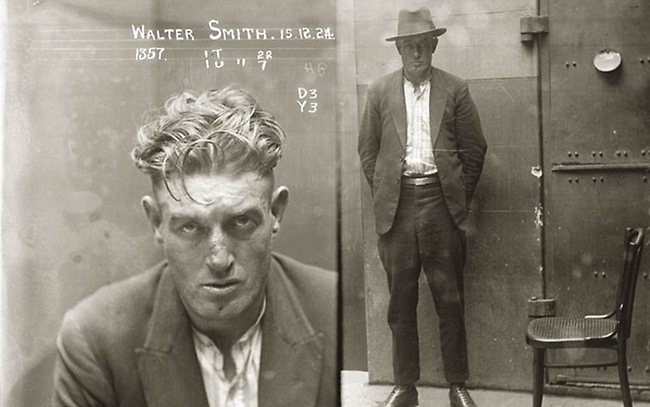
Here’s a scary development from our big-data reality: predictive sentencing for defendants based on statistics which suggest future-crime risk. The actual offense committed is only part of the equation, with much thornier things, like race and class, considered. It’s often referred to as “smart sentencing,” but you might not agree if you happen to fit into the wrong statistical quadrant. It’s math run amok. From Sonja B. Starr at the New York Times:
“ANN ARBOR, Mich. — IN a recent letter to the United States Sentencing Commission, Attorney General Eric H. Holder Jr. sharply criticized the growing trend of evidence-based sentencing, in which courts use data-driven predictions of defendants’ future crime risk to shape sentences. Mr. Holder is swimming against a powerful current. At least 20 states have implemented this practice, including some that require risk scores to be considered in every sentencing decision. Many more are considering it, as is Congress, in pending sentencing-reform bills.
Risk-assessment advocates say it’s a no-brainer: Who could oppose ‘smarter’ sentencing? But Mr. Holder is right to pick this fight. As currently used, the practice is deeply unfair, and almost certainly unconstitutional. It contravenes the principle that punishment should depend on what a defendant did, not on who he is or how much money he has.
The basic problem is that the risk scores are not based on the defendant’s crime. They are primarily or wholly based on prior characteristics: criminal history (a legitimate criterion), but also factors unrelated to conduct. Specifics vary across states, but common factors include unemployment, marital status, age, education, finances, neighborhood, and family background, including family members’ criminal history.”
Tags: Eric H. Holder, Sonja B. Starr

The dominant idea in space colonization today is that we’ll fill up the moon or Mars in a large-scale settlement of 4D cities, try to make it approximate another Earth, with all the comforts of home. But while something with such familiarity may appeal to the masses, Freeman Dyson has long dreamed of exploration on the margins, of something stranger, more diffuse and, perhaps, more dangerous: He wants pioneers to grow vegetables on asteroids.
In a 1978 interview with Omni’s Monte Davis about artificial biodomes and smart clouds, the physicist stood in contrast to his fellow Princeton professor Gerard K. O’Neill, who envisioned massive, standardized space habitats. Regardless of which schemes are superior, Dyson presciently realized at the time that the future of space settlements might be powered by private interests, and in 2014 those entrepreneurs favor O’Neill’s view over his. An excerpt:
“Freeman Dyson:
I’ve done some historical research on the costs of the Mayflower’s voyage, and on the Mormon’s emigration to Utah, and I think it’s possible to go into space on a much smaller scale. A cost on the order of $40,000 per person would be the target to shoot for; in terms of real wages that would make it comparable to the colonization of America. Unless it’s brought down to that level, it not really interesting to me, because otherwise it would be a luxury that only governments could afford.
Omni:
Where would your Mayflower-style colonists go?
Freeman Dyson:
I’d put my money on the asteroids. Dandridge Cole and others suggested using a solar mirror to melt and hollow out an iron asteroid, and in O’Neill’s book his homesteaders build their own shells from the minerals available out there. I wouldn’t accept either of those as the most sensible course: I think you should find an asteroid which is not iron or nickel, but some kind of soil you could grow things in.
Omni:
What do you mean by soil?
Freeman Dyson:
Well, we have specimens of meteoritic mineral called carbonaceous chondrite, which looks like soil–it’s black, crumbly stuff containing a good deal of water; it has enough carbon, nitrogen, oxygen so that there’s some hope you could grow vegetables in it, and it’s soft enough to dig without using dynamite.
Omni:
So you think it would be worth looking for an asteroid like that rather than trying to transform a raw stone or metal asteroid?
Freeman Dyson:
Yes, if it’s to be done on a pioneer basis, you’d jolly well better find a place where you can grow things right away. Otherwise it’s inevitably a much slower and more expensive job.
Omni:
Is the sunlight at a distance adequate to grow plants?
Freeman Dyson:
I think so. Plants are very flexible in their requirements, you know, and they could be genetically altered if it’s needed. After all, a lot of things grow very well even in England…
Omni:
What about colonizing the moon? Too much gravity?
Freeman Dyson:
That…and it’s simply too close to home. Too easy for the tax man to find you. And choosing a place to go is not just a question of freight charges. There have always been minorities who valued their differences and their independence enough to make very great sacrifices, and it seems obvious to me that it’s going to happen again.
Omni:
So you think we may not go in for the big O’Neill-type colonies after all?
Freeman Dyson:
We may not, but others may. I was in Russia two years ago for a conference on telescopes, and all that anyone there wanted to hear about was O’Neill’s ideas. They knew that he and I were both at Princeton, and assumed I could tell them everything about space colonies. The point is that in Russia, they have very little of our current mistrust of technology on the grand scale–in fact, it fits very well with their ideas about our relationship to nature. Thousands of engineers working on a giant framework floating in space, that’s a picture that excited them very much. I wouldn’t be surprised if they choose that.
If they do, the historical analogy becomes very strong: the Russians play the role of Spanish colonies in the New World, and people like me are more like the English, with smaller, scattered, decentralized colonies. Of course, it took the English much longer to get going, but when we did go we did a better job.”

From “Soccer in Oblivion,” a perfectly written Grantland piece by Brian Phillips, which examines the intersection of sports and war, one of which is just games and the other often mistaken for one:
“Fighting on the scale of the Great War is essentially incomprehensible, like the atom or the spaces between stars. Its extremity defeats the imagination. You can say ’16 million dead,’ but what’s 16 million? You can picture the lunar hell between the trenches, the broken trees and craters; you can try to fathom the misery of life in the armies, where rats outnumbered men. But these are conventional images. It may be that all you can do is to sift through fragments, to search for illumination in unexpected places. Sixty thousand men vaporized in an afternoon is inconceivable, but you can find a statistic that makes you catch your breath. This one is eloquent: In August 1914, a British recruit had to stand 5-foot-8 to be accepted into the army. In October, the limit was lowered to 5-foot-5. By November, it was set at 5-foot-3.
Or you can notice, say, the prevalence of soccer balls in group photos from the war. They’re everywhere. You’ll see the Isle of Wight Rifles, 8th Battalion Hampshire Regiment, posed around a cannon, jaunty and smiling, their hats on crooked — and a football tucked between the feet of the man in the center. The football is there because the men like football, of course. But there’s a deeper reason, which is that the men are trying to see war as a game.”
Tags: Brian Phillips

Former MTV VJ Kennedy, no less an accident of modern free-market capitalism than the Kardashians, is given the first word in Robert Draper’s New York Times Magazine article, “Has the ‘Libertarian Moment’ Finally Arrived?” Without thinking, as is her custom, the Fox political analyst unwittingly labels Sen. Rand Paul just right by identifying him as the “Pearl Jam” of the ideology. You know, because he’s overrated, his words are simplistic, and to paraphrase Portlandia, you liked him…in high school.
Libertarianism can be useful as can most belief systems in certain cases, but the thought of extreme isolationism overseas and an utter lack of collectivism domestically is beyond plausibility for most American adults.
Of course, the piece could have just as easily asked if Liberalism’s moment has finally arrived, since decriminalizing drugs, reducing the prison population, curtailing government snooping and marriage equality (the latter of which seems to escape Paul’s enthusiasm for liberty) have long been planks of that ideology. But perhaps that wouldn’t have made for as catchy a feature-article angle. The opening:
“Let’s say Ron Paul is Nirvana,” said Kennedy, the television personality and former MTV host, by way of explaining the sort of politician who excites libertarians like herself. ‘Like, the coolest, most amazing thing to come along in years, and the songs are nebulous but somehow meaningful, and the lead singer kills himself to preserve the band’s legacy.
“Then Rand Paul — he’s Pearl Jam. Comes from the same place, the songs are really catchy, can really pack the stadiums, though it’s not quite Nirvana.
“Ted Cruz? He’s Stone Temple Pilots. Tries really hard to sound like Pearl Jam, never gonna sound like Nirvana. Really good voice, great staying power — but the whole is not greater than the sum of its parts.”
I met Kennedy (a gabby 41-year-old whose actual name is Lisa Kennedy Montgomery) in Midtown Manhattan at Fox News headquarters, where she hosts a Fox Business Network program called The Independents. By cable TV standards, the show, which is shown four times a week, is jarringly nonpartisan, for the simple reason that she and her co-hosts — the Reason magazine editor in chief Matt Welch and the entrepreneur Kmele Foster — are openly contemptuous of both parties. Kennedy spent most of the Bill Clinton ‘90s as MTV’s most vocal Republican, but then she soured on the G.O.P., a political shift that solidified during the spending and warring and moralizing excesses of the George W. Bush years. Sometime after the elephant tattoo on her left hip ‘got infected and started looking more like a pig,’ Kennedy began thinking of herself as a libertarian instead. She, Welch and Foster take turns on the show bashing not only “Obamacare” but also the N.S.A., neoconservatives and social scolds. It’s not a hospitable forum for G.O.P. talking points. “There are some libertarian-leaning Republicans who are afraid to be on our show,” Kennedy told me. Libertarianism’s Nirvana, a k a the former congressman and former presidential candidate Ron Paul, has been on The Independents more than once. But Pearl Jam — a k a Ron Paul’s son Rand, a one-term Republican senator who may well run for the presidency in 2016 — has yet to appear.
A few weeks after our conversation, I saw Kennedy onstage in a hotel ballroom, wearing purple spandex, gyrating to the soundtrack of Flashdance and hollering into a microphone, “Are you hungry for more liberty?”•
Tags: Kennedy, Kmele Foster, Lisa Kennedy Montgomery, Matt Welch, Rand Paul

Israel has won the latest military battle with Hamas by a large body count, but it’s lost the public-relations war by an even wider margin. That’s the kind of thing that occurs when there’s one dominant force in a government that doesn’t have to answer to internal dissent. In the case of Israel, it’s the current hard-right wing. America displayed the same type of tone-deafness during the Iraq War, when neocons made us unpopular the world over. That’s not to say that some of the criticism of Israel hasn’t been commingled with anti-Semitism–there are sadly still a lot of those feelings in the world–but that Israel, like America, is a deeply polarized country, and the current regime is directing it in a path that’s injurious to others and itself. I mean, it’s made Hamas seem sympathetic to a lot of people!
From Julia Amalia Heyer’s Spiegel interview with Israeli sociologist Eva Illouz, an explanation of how Israel swung so far to the right:
“Spiegel:
Why is the right so strong at the moment even though there are far fewer terror attacks in Israel than there used to be?
Eva Illouz:
Entire generations have been raised with the territories, with Israel being a colonial power. They do not know anything else. You have the settlements which are highly ideological. They expanded and entered Israeli mainstream political life. Settlements were strengthened by systematic government policies: They got tax breaks; they had soldiers to protect them; they built roads and infrastructure which are much better than those inside the country. There are entire segments of the population that have never met a secular person and have been educated religiously. Some of these religious segments are also very nationalist. The reality we are faced with in Israel is that we must choose between liberalism and Jewishness, and if we choose Jewishness, we are condemned to become a religious Sparta which will not be sustainable. Whereas in the 1960s, you could be both socialist and Zionist, today it is not possible because of the policies and identity of Israel. Then you have the role which Jews who live outside Israel play in Israel. Many of these Jews have very right-wing views and contribute money to newspapers, think tanks and religious institutions inside Israel. Let’s face it: the right has been more systematic and more mobilized, both inside and outside Israel.”
Tags: Eva Illouz, Julia Amalia Heyer
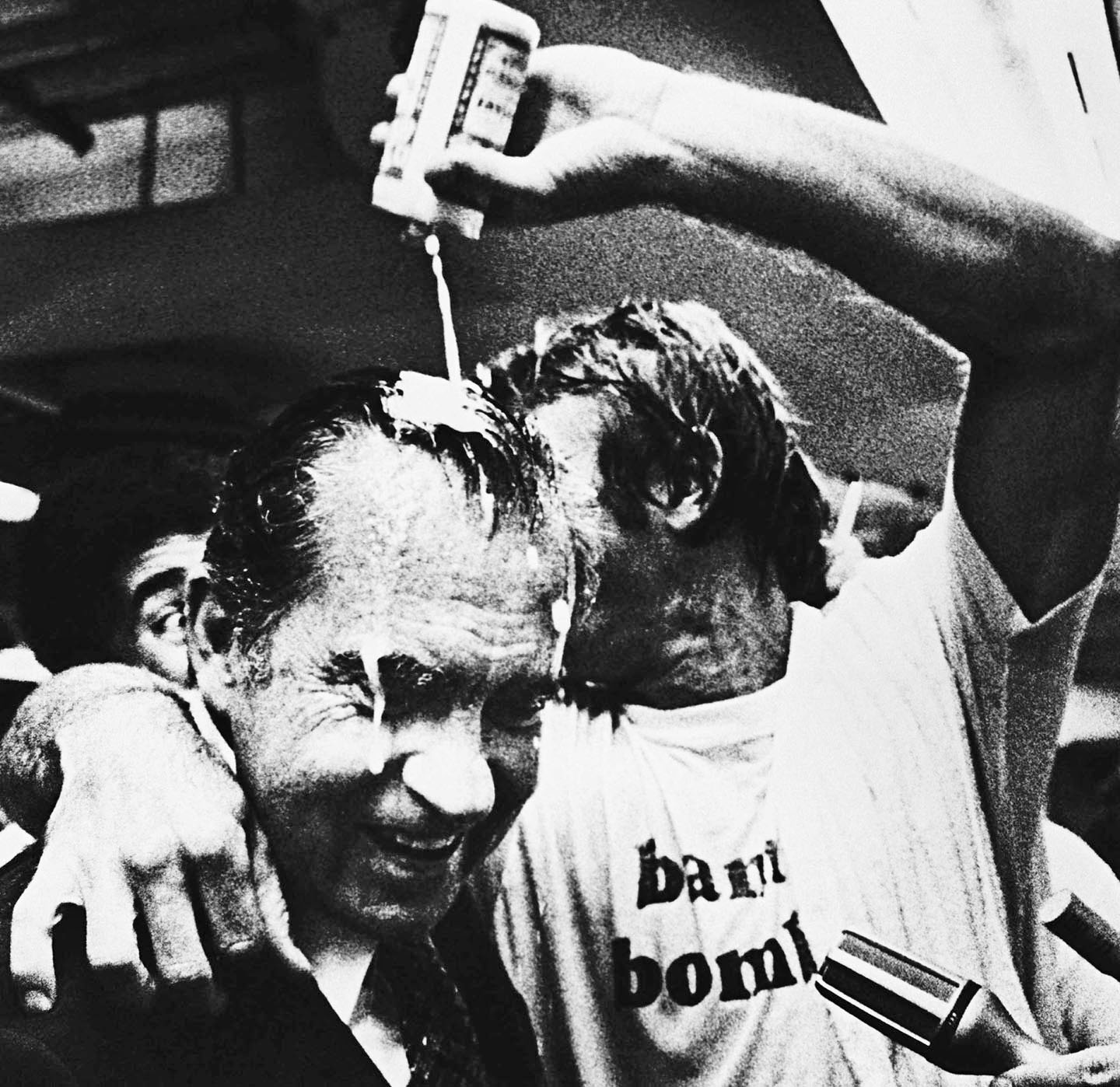
The Frost-Nixon interviews of 1977 were the final word on Watergate figuratively, though not literally. In 1983, Frank Gannon, a former Nixon aide who went on to work as a producer for David Letterman, recorded 30 hours of interviews with his old boss. The tapes, not erased but largely forgotten, have resurfaced on the 40th anniversary of America’s only Presidential resignation. From the Associated Press:
“The segments were culled from more than 30 hours of interviews that Nixon did with former aide Frank Gannon in 1983. The sections on Watergate aired publicly once, on CBS News, before gathering dust at the University of Georgia for more than 30 years.
‘This is as close to what anybody is going to experience to sitting down and having a beer with Nixon, sitting down with him in his living room,’ said Gannon, now a writer and historian in Washington DC.
‘Like him or not, whether you think that his resignation was a tragedy for the nation or that he got out of town one step ahead of the sheriff, he was a human being,’ he said.
Nixon, who died in 1994, had hoped that providing his own narrative would help temper America’s final judgment of him.
Perhaps with that in mind, he didn’t shy away from the tough questions, commenting on everything from the threat of impeachment to the so-called ‘smoking gun’ conversation that included evidence he participated in a Watergate cover-up.
‘This was the final blow, the final nail in the coffin. Although you don’t need another nail if you’re already in the coffin – which we were,’ Nixon said in a segment about the 23 June 1972 tape.
Nixon said when he decided to resign, he faced such strong resistance from his wife that he brought a transcript of the ‘smoking gun’ tape to a family meeting to show her how bad it was.
‘I’m a fighter, I just didn’t want to quit. Also I thought it would be an admission of guilt, which of course it was,’ he said. ‘And, also, I felt it would set a terribly bad precedent for the future.’
The tone of the tapes contrasts with the sometimes adversarial tone of the well-known series of Nixon interviews done in 1977 by British journalist David Frost.”
Tags: David Frost, Frank Gannon, Richard M. Nixon
