Politics

You are currently browsing the archive for the Politics category.

In a new Brookings paper, law professor Ryan Calo proposes that a federal robotics commission be formed to oversee the likely rapid expansion of automation and AI in America. It certainly sounds more useful than the FCC. An excerpt:

“Robotics stands poised to transform our society. This set of technologies has seen massive investment by the military and industry, as well as sustained attention by the media and other social, cultural, and economic institutions. Law is already responding: several states have laws governing driverless cars. Other states have laws concerning the use of drones. In Virginia, there is a law that requires insurance to cover the costs of telerobotic care.

The federal government is also dealing with robotics. There have been repeated hearings on drones and, recently, on high speed trading algorithms (market robots) and other topics on the Hill. Congress charged the Federal Aviation Administration with creating a plan to integrate drones into the national airspace by 2015. The Food and Drug Administration approved, and is actively monitoring, robotic surgery. And the NHTSA, in addition to dealing with software glitches in manned vehicles, has looked extensively at the issue of driverless cars and even promulgated guidance.

This activity is interesting and important, but hopelessly piecemeal: agencies, states, courts, and others are not in conversation with one another. Even the same government entities fail to draw links across similar technologies; drones come up little in discussions of driverless cars despite presenting similar issues of safety, privacy, and psychological unease.

Much is lost in this patchwork approach. Robotics and artificial intelligence produce a distinct set of challenges with considerable overlap—an insight that gets lost when you treat each robot separately. Specifically, robotics combines, for the first time, the promiscuity of data with physical embodiment—robots are software that can touch you. For better or for worse, we have been very tolerant of the harms that come from interconnectivity and disruptive innovation—including privacy, security, and hate speech. We will have to strike a new balance when bones are on the line in addition to bits.

Robotics increasingly display emergent behavior, meaning behavior that is useful but cannot be anticipated in advance by operators. The value of these systems is that they accomplish a task that we did not realize was important, or they accomplish a known goal in a way that we did not realize was possible. Kiva Systems does not organize Amazon’s warehouses the way a human would, which is precisely why Amazon engaged and later purchased the company. Yet criminal, tort, and other types of law rely on human intent and foreseeability to apportion blame when things go wrong.”

Tags:

Some are worried about alien encounters, while others long for them. From Kiveli Nikolaou’s Vice interview with political scientist Guillermo Almeyra about Posadaism, the belief among some Argentine socialists that UFOs will bring about Utopia: 

Question:

Do Posadists really believe in aliens?

Guillermo Almeyra:

The logic goes as follows: Since there are billions of galaxies with billions of planets in them, there is bound to be [intelligent life] elsewhere. These alien people are communists and want to communicate with more advanced communists—the Posadists.

Question:

And how will they bring about socialism?

Guillermo Almeyra:

According to this theory, it is only under socialist conditions that the technology for interplanetary travel can be developed. So the emergence of signs of alien life is connected to the existence of socialism on a different planet. The aliens will plan the revolution on Earth based on their experiences of communism in their planet. This is the absurdity that some of us resisted—some less educated individuals accepted it.

Question:

What is the new society that Posadists are fighting for going to look like?

Guillermo Almeyra:

Their vision is actually orthodox: The revolution will destroy the bourgeois state and replace it with a state that will be founded according to the decisions of its workers. The media will be rehabilitated, the economy will be well organized, and exports or trade between countries will be monopolized by the state, as was done in the Soviet Union.”

Tags: ,

Iraqi politician Ahmed Chalabi produced erroneous information for the United States in the run-up to the Iraq War, providing a justification for the disastrous invasion. He regrets nothing. Perhaps then we should be very circumspect about his intelligence regarding ISIS. There seems nothing out of line, however, about these two brief excerpts from Dieter Bednarz’s new Spiegel interview with Chalabi.

___________________________

Spiegel:

A senior American diplomat in Baghdad told us that Islamic State fighters are “sociopaths led by psychopaths.”

Ahmed Chalabi:

That may apply to the fighters from the West who feel excluded in Europe and come here for that reason. But the leaders are former officers in the Iraqi army or professors. They are not psychopaths, they know exactly what they are doing, are very well organized and have a strict hierarchy.

Spiegel:

What is so fascinating about Islamic State that hundreds of Sunnis are rushing to join?

Ahmed Chalabi:

Islamic State isn’t corrupt. That makes it very attractive in a country like Iraq. And of course many are attracted by its military success. For the first time, the Sunnis have an effective fighting force. For Sunnis, Islamic State has a function similar to that of Hezbollah for Shiites. Before they conquered Mosul, Islamic State had maybe 10,000 fighters, but now they have many more. Their recruitment rate is enormously high: Each month, some 2,000 men are trained. And their success radiates to Jordan, Libya and the Arabian Peninsula — even as far as Mali and Pakistan.

___________________________

Spiegel:

Where will the next battlefield be?

Ahmed Chalabi:

Islamic State is following a clear strategy. First, it wants to solidify its power in Iraq and Syria. Then, their fighters will try to advance to Syria’s Mediterranean coast. If they are successful, that will be seen as their next great triumph. And then, their target will be Jordan, where things will be easy for them. Already, Islamic State has broad support in many cities there. And when they get there, it will once again come as a great surprise to everybody.•

Tags: ,

When a piece of the Underground Economy is exposed to the light of day, what happens to those peddlers who were most adept when skirting the law was a part of the bargain? From Paul Hiebert’s Pacific-Standard profile of a pot dealer whose business model has been disrupted:

“RIGHT NOW, IT’S HARD to tell what the end of marijuana prohibition would mean for Raymond. The experiments in Colorado and Washington are still young. The Washington Post reports that Colorado’s black market is nowhere near dead because the illegal stuff remains cheaper since it isn’t taxed or subject to other regulatory costs. The New York Times reports similar price issues in Washington caused by a small amount of regulated supply in the face of huge demand.

Some, however, think that once more growers and dispensaries enter the legal market, prices will adjust accordingly. It also may simply take a while for loyal customers to sever relationships with their established dealers. In the long run, Mark Kleiman, a professor of public policy at the University of California-Los Angeles and renowned expert on the topic of drug legality, believes street-level dealers will disappear almost completely. ‘I think illegally growing marijuana in those states will become as common as illegally brewing whiskey,’ he told a reporter last July.

‘If this was happening and I was 23 with no college degree or work experience, I’d be losing my mind,’ Raymond says. ‘I’d be like, ‘What the fuck am I going to do?”

But Raymond has investments and well over a year’s worth of salary saved up. He knows a lawyer who wants to transform his operation into a legitimate business when the time is right, but he also seems like he’d be fine with just walking away.”

__________________________

3 webisodes from Katja Blichfeld and Ben Sinclair’s High Maintenance, currently one of the most miraculously written and acted shows in any format.

Tags: , , ,

From an Ask Me Anything at Reddit by Matt Wells, a Guardian editor who is Scottish, a brief exchange about his homeland’s potential break from the UK:

“Question:

What would independence mean for Scotland as it relates to their economy, EU membership, and future relations with Britain?

Matt Wells:

The economy: The ‘No’ campaign says the economy will be severely harmed by independence, pointing to Scotland’s ageing population, the finite nature of Scotland’s oil reserves, and the increased taxes that will be needed to plug the gap.

The ‘Yes’ camp points out that there are vast untapped reserves of oil, that Scotland’s GDP is 2,300GBP higher than that in the rest of the UK, which would make it the 14th richest country in the world.

The real answer is that no one really knows, because there is no precedent for this.

EU membership: Another scare tactic deployed by the No camp is that Scotland would not be able to re-enter the EU very easily. Most observers however think that the process could be quick. The EU doesn’t want instability.

Scotland in 50 years: Like everywhere else, much the same except a little warmer.”•

_________________________

Peter Sellers as a Scotsman:

Tags:

Julian Assange is an asshole, but so are a lot of useful people. Whistleblowers are vital in a free society, and I certainly don’t expect them to be perfect, but Assange is a messenger of such dubious character that it pollutes his message.

In today’s Gawker chat, Assange chose to not answer one of the best questions–“Given the collapse of your support since avoiding rape charges for several years, don’t you think that Wikileaks, as an organisation, would have been better served if you resigned?”–but he did respond to some others. A few exchanges follow.

____________________________

Question:

Dear Mr. Assange, through your efforts and that of Wikileaks as a whole, you have led to a new era of whistleblowing that has revealed the extent of America’s malfeasance across the globe. We have also seen the United States (and others) attempt to break down the safeguards that enabled individuals to leak information to you and others. Do you think after Manning and Snowden that leaks of such magnitude are still possible?

Julian Assange:

Not only are leaks of this magnitude still possible, they are an inevitability. And there’s more coming, not less. While Washington DC has tried to set general deterants, we’ve set general incentives. That’s why we beat them at their own game and got Snowden to safety. So he could keep his voice and through his example of relative freedom act as general incentive.

____________________________

Question:

Julian, do you think you have anything—anything at all—in common with Eric Schmidt?

Julian Assange:

Plenty – I discuss it a lot in the book, e.g.: “Schmidt’s dour appearance concealed a machinelike analyticity. His questions often skipped to the heart of the matter, betraying a powerful nonverbal structural intelligence. It was the same intellect that had abstracted software-engineering principles to scale Google into a megacorp, ensuring that the corporate infrastructure always met the rate of growth. This was a person who understood how to build and maintain systems: systems of information and systems of people. My world was new to him, but it was also a world of unfolding human processes, scale, and information flows.”

____________________________

Question:

I feel you’ve done a great service to humanity for pulling the curtains back on corruption and lies. Do you have any ideas, or see any ways that the human race can change our ways to create a path towards more transparency, truthfulness, and doing what’s right?

Julian Assange:

One thing you can do, which is quite simple, is treat companies like Google and Facebook as the corporations they are. Lots of people – especially on the left – are aware of the ways in which corporations are exploitative and harmful. But there is a disconnect when it comes to Silicon Valley. Lots of people refuse to buy Coca Cola, but they don’t see any problem with having a Gmail account. I think that is changing lately, but we need a movement to divest from these corporations – which destroy privacy – and to build an alternative internet that isn’t as actively harmful to human interests.

____________________________

Question:

There was a piece in Slate last year about Google, that I kept thinking about with respect to this book, about how Google’s internal culture and goals are bound up in Star Trek. For example: Amit Singhal, the head of Google’s search rankings team, told the South by Southwest Interactive Festival that “The destiny of [Google’s search engine] is to become that Star Trek computer, and that’s what we are building.”

It makes sense to me in that there’s a real Camelot-era liberal pro-statist ideal underlying Star Trek’s vision of the future, and I’m curious what your sense was as to whether or not Eric Schmidt really buys into that. AND/OR I am curious to know how your idealized vision of the future differs from that Google Star Trek model.

Julian Assange:

I hadn’t seen that piece. At a glance, it reminds me of the discovery that the NSA had had the bridge of the Enterprise recreated. In my experience it is more reliable and fairer to look at peoples interests and expenditure rather than try to diagnose their inner mental state, as the latter often lets people project their own biases. As I say in the book, I found Eric Schmidt to be, as you would expect, a very sharp operator. If you read The New Digital Age, the apolitical futurism of Star Trek seems to fit what Schmidt writes quite well. I also quite liked this summary of Google’s vision for the future: “Google’s vision of the future is pure atom-age 1960s Jetsons fantasy, bubble-dwelling spiritless sexists above a ruined earth.”

____________________________

Question:

Russian FSB. You didn’t release that information, and today, you and the Russians are downright chummy, with you reportedly assisting Edward Snowden in his “travels” there, in spite of Russia’s considerable human rights and surveillance abuses. How do you square your relationship with Russia and your government transparency/anti-authoritarian goals?

Julian Assange:

This is the usual attempt to attack the messager because the message is indisputable. The approach would already be invalid at that level, but it is also strictly false. Many things you may perceive to be true about an individual or a nation are helpful rhetorical positions that spread around through one group or another like a virus. In the end the collection of these thought-viruses, or memes, reflects the psychological and political contours of the group in which it inhabits. We have published more than 600,000 documents relating to Russia. The US stranded him in Russia by cancelling his passport. The US State Department just keeps kicking own goals. It is not my fault, or Edward Snowden’s fault that they’re so incompetent.•

Tags:

The Industrial and Technological Revolutions have, in many ways, been great. We’re not only richer (most of us) materially, but information is so much richer as well. It’s been a mixed victory, however, a Pyrrhic one even, when you factor in environmental damage. From Jeremy Caradonna in the Atlantic:

“But what if we rethink the narrative of progress? What if we believe that the inventions in and after the Industrial Revolution have made some things better and some things worse? What if we adopt a more critical and skeptical attitude toward the values we’ve inherited from the past? Moreover, what if we write environmental factors back in to the story of progress? Suddenly, things begin to seem less rosy. Indeed, in many ways, the ecological crisis of the present day has roots in the Industrial Revolution. 

For instance, consider the growth of greenhouse gases (GHGs) in the atmosphere since 1750. Every respectable body that studies climate science, including NASA, the National Atmospheric and Oceanic Administration, and the US Environmental Protection Agency (EPA), has been able to correlate GHG concentrations with the pollutants that machines have been spewing into the atmosphere since the late-18th century. These scientific bodies also correlate GHGs with other human activities, such as the clearing of forests (which releases a lot of carbon dioxide and removes a crucial carbon sink from the planet), and the breeding of methane-farting cows. But fossil fuels are the main culprit (coal, gas, and oil) and account for much of the increase in the parts per million of carbon dioxide in the atmosphere. The main GHGs, to be sure, are carbon dioxide (CO2), methane (CH4), nitrous oxide (N2O), and a few others, many of which can be charted over time by analyzing the chemistry of long-frozen ice cores. More recent GHG levels are identified from direct atmospheric measurements.

What we learn from these scientific analyses is that the Industrial Revolution ushered in a veritable Age of Pollution, which has resulted in filthy cities, toxic industrial sites (and human bodies), contaminated soils, polluted and acidified oceans, and a ‘blanket’ of air pollution that traps heat in the Earth’s atmosphere, which then destabilizes climate systems and ultimately heats the overall surface temperature of the planet.”

Tags:

Good history from the New York Times about the convergence of cars and computers, initially the unintended consequence of the battle over airbags.

I know I mock the Huffington Post gleefully and regularly for its insipid attempts to titillate, but it’s not so much the semi-profane fluff that bothers me. What the featherweight news organization did that truly angered me was to publish the anti-vaccination bullshit of that dangerous dimwit Jenny McCarthy. To compound the mistake, once her theories were even more thoroughly debunked, the site distanced itself from the poor judgement without acknowledging any wrongdoing. Not good. While I’m glad that the Huffington Post no longer traffics in this harmful stupidity, it still doesn’t seem to have learned its lesson. Two recent hires: medical blogger Dr. Phil, who is not a doctor, and national security writer Donte Stallworth, who is a 9/11 Truther. Perhaps the site will soon be pretending it never abetted these two geniuses. 

Gary Baum of the Hollywood Reporter just did an AMA at Reddit in regards to his reporting about the anti-inoculation issue. A few exchanges follow.

__________________________

Question:

Why is the anti-vaccine movement so strong and how can we educate them? 

Gary Baum:

Parents are naturally concerned about their children. They are looking for answers about whatever ails them, and vaccinations — based in a science that is not easy to understand, and backed by corporations which make a profit from their sale — are a ripe target for suspicion.

The anti-vaccine movement has thrived in an environment where respect for science has ebbed. The best way to educate those who are vaccine-skeptical is to remind them of their shared obligation to protect public health. Too often they say it’s simply their personal decision. In the case of immunization, no decision is strictly a personal one. It’s always part of a collective social contract.

__________________________

Question:

Why have we allowed celebrities to poison the minds of so many dim witted parents?

Gary Baum: 

In every community, there are those who speak louder than others, without any greater purchase on the truth. Mommy-and-me groups, online discussion boards and other intimate social spaces are where the larger vaccine battle is waged on a day-to-day basis.

As for celebrities, whether well or ill-informed, it’s true that due to their fame, they possess a particularly loud voice. Which is why Jenny McCarthy has had a tremendous and undeniable influence on public health, people on both sides of this issue agree. (In fact, it’s one of the few things that they do agree on.)

__________________________

Question:

At what point does a government decide that vaccinations as a public health matter trump the rights of the parents who refuse to vaccinate their children?

Gary Baum:

If children are actively infected and at risk of infecting others — and it’s a life-threatening and easily communicable disease, as with tuberculosis or ebola — governments such as the United States can take action. But more often, here in America, individuals’ personal right to do what they wish with their own body, and particularly their kids’ bodies, is held sacrosanct. It’s a complex, thorny issue.•

Tags: ,

In a WSJ essay, Peter Thiel expands on what he said in his recent AMA, that “capitalism and competition are opposites.” Thiel, who approves of monopolies, doesn’t believe they only benefit individual businesses but broader society as well, as they have the capital to care about workers and ethics and the environment. I disagree strongly, but I’ll acknowledge that we’ve all certainly benefited from Bell Labs, the moonshot division of a government-backed monopoly. An excerpt:

To an economist, every monopoly looks the same, whether it deviously eliminates rivals, secures a license from the state or innovates its way to the top. I’m not interested in illegal bullies or government favorites: By “monopoly,” I mean the kind of company that is so good at what it does that no other firm can offer a close substitute. Google is a good example of a company that went from 0 to 1: It hasn’t competed in search since the early 2000s, when it definitively distanced itself from Microsoft and Yahoo!

Americans mythologize competition and credit it with saving us from socialist bread lines. Actually, capitalism and competition are opposites. Capitalism is premised on the accumulation of capital, but under perfect competition, all profits get competed away. The lesson for entrepreneurs is clear: If you want to create and capture lasting value, don’t build an undifferentiated commodity business.

How much of the world is actually monopolistic? How much is truly competitive? It is hard to say because our common conversation about these matters is so confused. To the outside observer, all businesses can seem reasonably alike, so it is easy to perceive only small differences between them. But the reality is much more binary than that. There is an enormous difference between perfect competition and monopoly, and most businesses are much closer to one extreme than we commonly realize.

The confusion comes from a universal bias for describing market conditions in self-serving ways: Both monopolists and competitors are incentivized to bend the truth.•

Tags:

Peter Thiel, the contrarian Libertarian who would like to defeat death and taxes, just conducted one of his periodic Reddit AMAs. A few excerpts follow from his latest one, including an exchange about Uber, a company reviled by the Lyft investor.

____________________________

Question:

At Disrupt this week, you mentioned that “Uber was the most ethically challenged company in Silicon Valley.” However, if the power law holds true, isn’t it optimal strategy to do anything to win?

Peter Thiel:

Not optimal if you break the law to the point where the company gets shut down (think Napster). I’m not saying that will happen to Uber, but I think they’ve pushed the line really far.

____________________________

Question:

A lot of people on Reddit care about Net Neutrality, and also have a healthy distrust of government. The commonly proposed solution being suggested by the EFF and other pro-technology and net neutrality organizations is to classify broadband/internet service as a Title II common carrier (AKA as a ‘telecommunication service’ that can not discriminate data, instead of ‘information service’ which can). My main hesitation with this is that this would give the FCC even more control over ISPs, which may have unintended consequences on the freedom on the internet. What are your views on current net neutrality issues, and do you have any ideas on this or other solutions?

Peter Thiel:

We’ve had these debates about net neutrality for over 15 years. It hasn’t been necessary so far, and I’m not sure anything has changed to make it necessary right now.

And I don’t like government regulation: We need the US government to regulate the internet about as much as we need the EU to regulate Google — I suspect the cons greatly outweigh the pros, especially in practice.

____________________________

Question:

What is one thing you believe to be true that most do not?

Peter Thiel:

Most people believe that capitalism and competition are synonyms, and I think they are opposites. A capitalist accumulates capital, and in a world of perfect competition all the capital gets competed away: The restaurant industry in SF is very competitive and very non-capitalistic (e.g., very hard way to make money), whereas Google is very capitalistic and has had no serious competition since 2002.

____________________________

Question:

Why do you think more wealthy people don’t fund anti-aging research? What do you think could be done to encourage them to do more?

Peter Thiel:

Most people deal with aging by some strange combination of acceptance and denial. I think the psychological blocks to thinking about aging run very deep, and we need to think about it in order to really fight it.

____________________________

Question:

What did you think when you first met Elon Musk?

Peter Thiel:

Very smart, very charismatic, and incredibly driven — a very rare combination, since most people who have one of these traits learn to coast on the other two.

It was kind of scary to be competing against his startup in Palo Alto in Dec 1999-Mar 2000.

____________________________

Question:

What was your reaction to The Social Network movie?

Peter Thiel:

The zero-sum world it portrayed has nothing in common with the Silicon Valley I know, but I suspect it’s a pretty accurate portrayal of the dysfunctional relationships that dominate Hollywood.•

Tags: ,

Erich Follath of Spiegel interviewed Harvard Politics Professor and U.N. Advisor Michael Ignatieff about the capacity for destruction of the small-but-growing terrorist organization ISIS. An excerpt:

Spiegel:

As justifiably horrified as we are by the barbaric killing being committed by the terrorist group Islamic State, is there truly a threat of genocide? Aren’t the American air strikes already pushing back the radical Islamists?

Michael Ignatieff:

The advance of the Islamic State has not been stopped and the terrorists are regrouping. They control large amounts of territory, which makes them especially dangerous. We shouldn’t just judge the militant organization on the basis of the number of people being threatened in the region and on the question of genocide.

Spiegel:

What else should we judge them on?

Michael Ignatieff:

The Islamic State is an extremely dangerous force for all of the Middle East, and it could destroy its entire fragile structure of state order. If the Islamic State consolidates, the Persian Gulf will also be destabilized, which could jeopardize the global oil supply.

Spiegel:

So it’s more a question of geostrategic concerns than genocide?

Michael Ignatieff:

Both issues are at stake.”

Tags: ,

If memory serves, at the conclusion of the 2011 documentary Page One: Inside the New York Times, the young Media Desk reporter Tim Arango was off to Iraq to run the publication’s Baghdad bureau, which then seemed a sleepy-town beat. It awoke like a rough beast with ISIS, sadly, and Arango has done an insightful Ask Me Anything at Reddit about his experiences in the country we destabilized for no good reason. A few exchanges.

_________________________

Question:

Do you think our influence in Iraq with the Iraq War was negative?

Tim Arango:

Yes, there is no other way to see it. Everything that is occurring in Iraq today is related the American legacy there. The forerunner of ISIS was created to oppose the American occupation, and many of its leaders were in American detention facilities in Iraq. On the other side of the ledger, as it pertains to Iraqi politics, you see the American legacy. The U.S. basically chose Maliki, whose sectarian politics alienated many Sunnis, creating the fertile ground for ISIS to sweep in to these areas. And many of those Maliki policies that have pushed aside the Sunnis were started by the Americans. Excluding Sunnis from political life? that has its origins in the American De-Baathification policy. Maliki’s security policy of conducting mass arrests of Sunni men in the name of fighting terrorism? the U.S. did that too. So at every turn in the Iraq story now you see the American legacy at play.

_________________________

Question:

As a reporter, do you think your safety in Iraq or how you cover the country has changed since 2010?

Tim Arango:

It has changed a great deal. When I first arrived in 2010 the entire country was open to me. I could – and did – go to falluja for lunch, on a whim. Now most of the country is off limits. We can be in Baghdad, the south and the kurdish region in the north. Just about everything else is a no-go.

_________________________

Question:

Do you believe that there’s anything in particular about the muslim religion that drives people towards violence? I’m not saying it’s a toxic religion, or that religion can somehow turn people into terrorists, but why do you think it’s more common, nowadays, for terrorists to be somehow affiliated to muslim faiths, and not other religions?

Tim Arango:

No. Every religion has its extremists. Nearly every Iraqi I have ever met has been welcoming and hospitable to me, they are appalled by what is happening in their country.

_________________________

Question:

What will it actually take to restore Iraq to a suitable state again? It seems so far down the tunnel now!

Tim Arango:

That is going to be a long project. it’s going to take peace in syria, and within iraq the first step is for sunnis to push out ISIS from their communities. But more importantly, Iraq, if it is ever to achieve peace and prosperity, will need a serious reconciliation effort. There may be no more traumatized society in the world than Iraq, and it goes back decades. Iraqis will need to learn to forgive one another for the past if they are ever to move on.•

Tags:

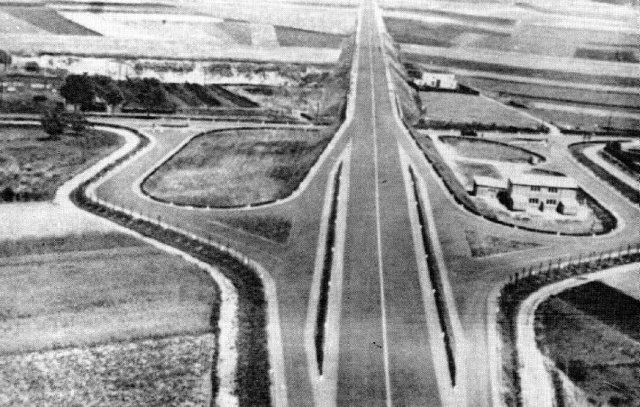
Fully autonomous cars may be further up the road, but smart, connected cars are something we could do right now if common standards were achieved and infrastructure updated. Some of the benefits from the Economist:

“Some parts of the transformation are already in place. Many new cars are already being fitted with equipment that lets them maintain their distance and stay in a motorway lane automatically at a range of speeds, and recognise a parking space and slot into it. They are also getting mobile-telecoms connections: soon, all new cars in Europe will have to be able to alert the emergency services if their on-board sensors detect a crash. Singapore has led the way with using variable tolls to smooth traffic flows during rush-hours; Britain is pioneering ‘smart motorways,’ whose speed limits vary constantly to achieve a similar effect. Combined, these innovations could create a much more efficient system in which cars and their drivers are constantly alerted to hazards and routed around blockages, traffic always flows at the optimum speed and vehicles can join up into ‘platoons’ on the motorways, travelling closer together, yet with less risk of crashing. …

If cars are to connect, new infrastructure will have to be built. Roads and parking spaces will need sensors to monitor them; motorways will need dedicated lanes for platooning. But this will not necessarily be expensive. Upgrading traffic signals so they can be controlled remotely by a central traffic-management system is a lot cheaper than building new roads.”

I didn’t need Slavoj Žižek’s New York Times op-ed to tell me that ISIS isn’t a group of commendable anti-colonialism freedom fighters but just a band of gutter-level losers–thanks for the 411, Doctor IQ–but the theorist does make a good point about the fugazi fundamentalism of the Rolex-wearing, new-media savvy savages. These beheaders aren’t emblematic of the roughly 1.5 billion Muslims who are peaceful, productive people all over the world, but are instead a perverted pastiche of the present and the past. From Zizek:

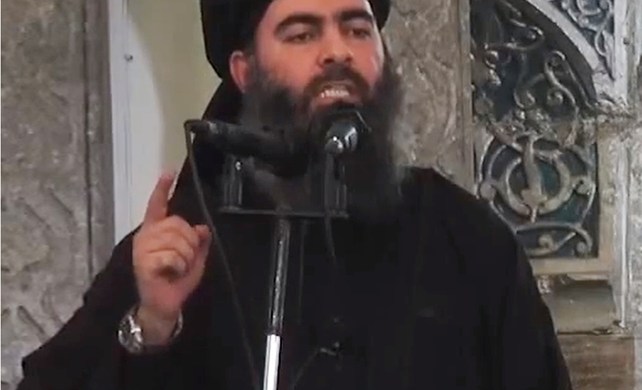
“The well-known photo of Abu Bakr al-Baghdadi, the ISIS leader, with an exquisite Swiss watch on his arm, is here emblematic: ISIS is well organized in web propaganda as well as financial dealings, although these ultra-modern practices are used to propagate and enforce an ideologico-political vision that is not so much conservative as a desperate move to fix clear hierarchic delimitations. However, we should not forget that even this image of a strictly disciplined and regulated fundamentalist organization is not without its ambiguities: is religious oppression not (more than) supplemented by the way local ISIS military units seem to function? While the official ISIS ideology rails against Western permissiveness, the daily practice of the ISIS gangs includes full-scale grotesque orgies, including robberies, gang rapes, torture and murder of infidels.”

Tags:

Chuck Todd, who grows irate, just did an Ask Me Anything at Reddit in advance of taking over Meet the Press. One exchange about the perception that President Obama has become emotionally disengaged:

Question:

Do you think the President has emotionally checked out of the White House already? Any chance you will ask him about his seemingly lackluster attitude lately and press him on how his personal struggles may negatively shape our Country’s future during such challenging times?

Chuck Todd:

I’ve heard this from a lot of Obama observers, not just from folks who don’t know him, but from folks who think they DO know him. That said, sometimes when the news is as horrid as it is right now, with his polls in the tank… folks end up assuming that all of this is impacting him more than maybe it is. Perhaps if we were in his shoes, we’d feel depressed or lackluster so we assume he must too… I always am leery of trying too hard to put a politician on the couch. But you aren’t alone in thinking this.”

Tags: ,

Just because you’ve made a lot of money, that doesn’t mean you have all the answers. In fact, when buffeted by wealth, you’re unlikely to even identify the right questions. Case in point: libertarian technologist Peter Thiel, who thinks a lack of innovation will doom humankind. We’re certainly at risk from climate change and those melting icebergs, but I don’t think we’ll perish from want of ambition. Such big-idea projects may currently be too out of balance in favor of the private sector, but moonshots abound. From Roger Parloff at Fortune:

“When people look into the future, Thiel explains to me, the consensus is that globalization will take its course, with the developing world coming to look like the developed world. But people don’t focus on the dark, Malthusian reality of what that will mean, absent major technological breakthroughs not currently in any pipeline.

‘If everyone in China has a gas-guzzling car, we’ll have oil at $10 per gallon and enormous pollution,’ he observes.

But that’s just the start, because without growth there will also be increasing political instability. Instability will lead to global conflict, and that in turn may lead to what in a 2007 essay he referred to as ‘secular apocalypse’—total extinction of the human race through either thermonuclear war, biological contagion, unchecked climate change, or an array of competing Armageddon scenarios.

‘That’s why,’ he says, with characteristic understatement and aplomb, ‘I think the stakes in this are not just, ‘Are we going to have some new gadgets?’”

Tags: ,

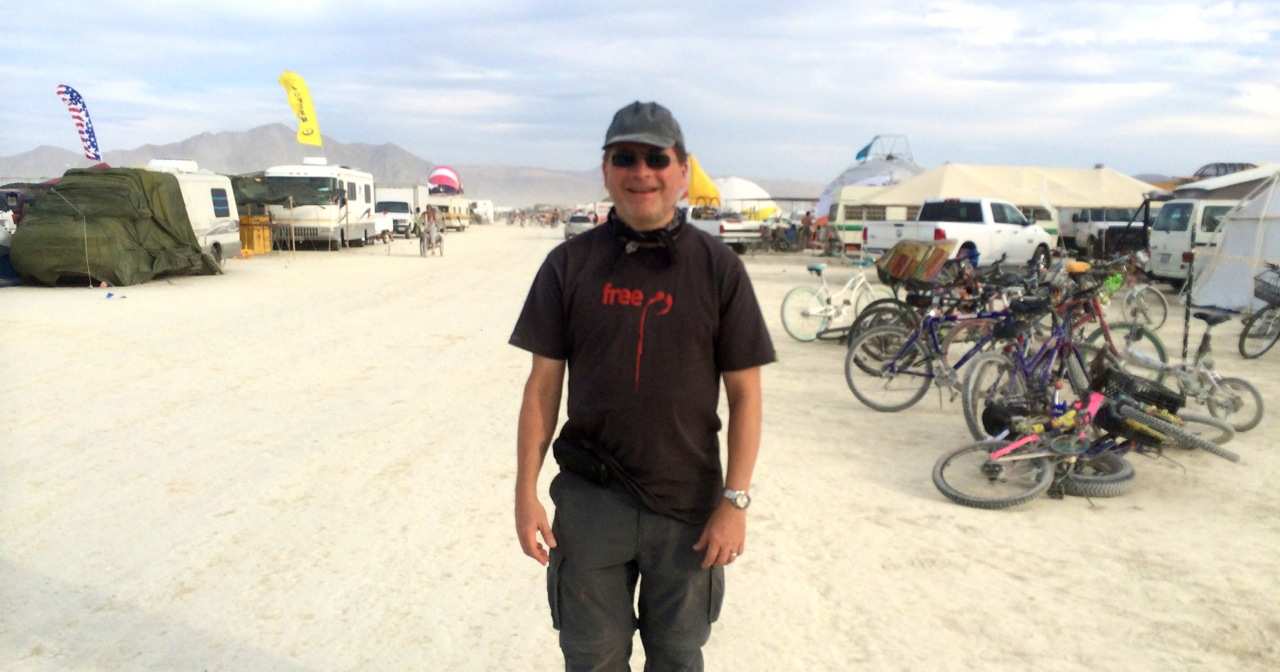
Libertarian overlord Grover Norquist, whose policies, if ever enacted fully, would lead to worse lifestyles and shorter lifespans for the majority of Americans, made his way to the government-less wonderland known as Burning Man, free finally from restrictions–and perhaps his pants. Norquist’s belief that the short-term settlement in the Nevada desert is representative of what the world could be every day is no less silly than considering Spring Break a template for successful marriage. He writes about his experiences in the Guardian. Maileresque, it is not. An excerpt:

“You hear that Burning Man is full of less-than-fully-clad folks and off-label pharmaceuticals. But that’s like saying Bohemian Grove is about peeing on trees or that Chicago is Al Capone territory. Burning Man is cleaner and greener than a rally for solar power. It has more camaraderie and sense of community than a church social. And for a week in the desert, I witnessed more individual expression, alternative lifestyles and imaginative fashion than …. anywhere.

The demand for self-reliance at Burning Man toughens everyone up. There are few fools, and no malingerers. People give of themselves – small gifts like lip balm or tiny flashlights. I brought Cuban cigars. Edgy, but not as exciting as some ‘gifts’ that would have interested the federal authorities.

I’m hoping to bring the kids next year.

On my last day of my first Burning Man, at the Reno airport, a shoeless man (he had lost his shoes in the desert) was accosted by another dust-covered Burner carrying sneakers: ‘Take these,’ he said. ‘They are my Burning Man shoes.’ The shoeless man accepted the gift with dignity.”•

Tags:

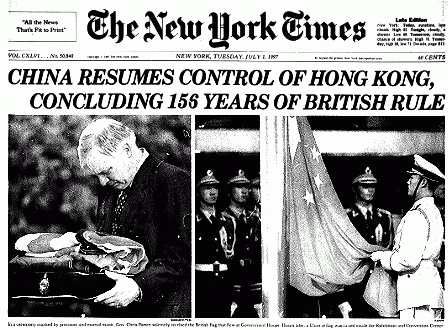
In 1997, when Hong Kong was passed from Britain to China, a brutal crackdown was feared but never materialized. But death by a thousand cuts now seems possible, with China refusing to allow free elections and acting to gradually compromise Hong Kong’s free-market might. From Rachel Lu at Foreign Policy:

“Hong Kong is losing its edge as a global financial and commercial center, and the territory’s economic clout will be overshadowed by China’s major cities by 2022. That’s the argument in an August 27 report released by Trigger Trend, an independent Chinese research firm based in the southern metropolis of Guangzhou. The report emerged just days before Beijing declared it would not countenance open nominations in the planned 2017 popular election for Hong Kong’s chief executive, and its findings are likely to stoke further anxiety about the former British colony’s economic and political future.

In the wake of Beijing’s decision, Hong Kong’s democracy advocates now face a hard choice between carrying out what some have called a ‘nuclear option’ to occupy the city’s Central financial district en masse, which could disrupt businesses, or swallowing what they call a ‘fake election’ for the Chief Executive, the head of Hong Kong’s government. Either way, Beijing says it does not plan to yield to acts of civil disobedience in the special administrative region, even if protests make investors or business owners jittery.”

Tags:

Attendant to the fall of the Soviet Union was the collapse of the country’s social safety nets. Gorbachev’s transitional government and Yeltsin’s reformist one couldn’t stem a great die-off and a low birth rate, as Russia depopulated by 5% between 1992 and 2009. The fall of Communism clearly was the cause, right? But the demographic disaster has deeper roots in earlier decades and high rates of cardiovascular disease and fatal accidents may have their origins in mental-health issues, argues Masha Gessen’s excellent New York Review of Books essay,The Dying Russians.” The opening:

“Sometime in 1993, after several trips to Russia, I noticed something bizarre and disturbing: people kept dying. I was used to losing friends to AIDS in the United States, but this was different. People in Russia were dying suddenly and violently, and their own friends and colleagues did not find these deaths shocking. Upon arriving in Moscow I called a friend with whom I had become close over the course of a year. ‘Vadim is no more,’ said his father, who picked up the phone. ‘He drowned.’ I showed up for a meeting with a newspaper reporter to have the receptionist say, ‘But he is dead, don’t you know?’ I didn’t. I’d seen the man a week earlier; he was thirty and apparently healthy. The receptionist seemed to think I was being dense. “A helicopter accident,” she finally said, in a tone that seemed to indicate I had no business being surprised.

The deaths kept piling up. People—men and women—were falling, or perhaps jumping, off trains and out of windows; asphyxiating in country houses with faulty wood stoves or in apartments with jammed front-door locks; getting hit by cars that sped through quiet courtyards or plowed down groups of people on a sidewalk; drowning as a result of diving drunk into a lake or ignoring sea-storm warnings or for no apparent reason; poisoning themselves with too much alcohol, counterfeit alcohol, alcohol substitutes, or drugs; and, finally, dropping dead at absurdly early ages from heart attacks and strokes.

Back in the United States after a trip to Russia, I cried on a friend’s shoulder. I was finding all this death not simply painful but impossible to process. ‘It’s not like there is a war on,’ I said.

‘But there is,’ said my friend, a somewhat older and much wiser reporter than I. ‘This is what civil war actually looks like. ‘It’s not when everybody starts running around with guns. It’s when everybody starts dying.’

My friend’s framing stood me in good stead for years. I realized the magazine stories I was writing then were the stories of destruction, casualties, survival, restoration, and the longing for peace. But useful as that way of thinking might be for a journalist, it cannot be employed by social scientists, who are still struggling to answer the question, Why are Russians dying in numbers, and at ages, and of causes never seen in any other country that is not, by any standard definition, at war?”

Tags:

Uber has just hit a speed bump in Germany, facing its first nation-wide ban (which it’s defying). Instead of getting giddy in interviews over the potential destruction of jobs, company CEO Travis Kalanick would do himself a big favor if he would instead focus on the ways the old system was flawed. Take my city of New York for instance: It’s always been difficult to get a taxi to the outer boroughs from Manhattan, African-Americans have had a hell of a time getting a ride anywhere and unwitting tourists have often been ripped off by predatory drivers. Uber can be viewed as an equalizer of sorts (provided it doesn’t fail in the same manner). From Jeevan Vasagar at the Financial Times:

“Uber is facing its biggest legal challenge so far after its most popular service was banned throughout Germany, marking the first time the disruptive taxi app has been hit with a country-wide restriction.

The temporary injunction imposed by Frankfurt’s Regional Court prohibits the fast-growing company, valued in a recent funding round at $17bn, from operating its Uber Pop ‘ride-sharing’ service, known as Uber X in other markets.

Uber said it would continue to operate in defiance of the injunction, but it faces fines of up to €250,000 ($328,000) per trip if it is caught violating the ban, which does not affect its higher-priced ‘Black’ limousine service.

The San Francisco-based start-up is one of a number of Silicon Valley firms, including Google and Facebook, to face a regulatory backlash in Europe, where authorities have led the way in questioning the practices of California’s leading technology companies.”

Tags: ,

A highly automated society will have to create good jobs in yet-to-exist fields or….what? I don’t think everyone can survive by renting out their couch on airbnb (though I think airbnb is a great idea). From Jordan Pearson at Vice Motherboard:

“Once robots take over society’s productive forces, people will have more free time than ever before, which will ‘redound to the benefit of emancipated labour, and is the condition of its emancipation,’ Marx wrote. Humans, once freed from the bonds of soul-crushing capitalist labour, will develop new means of social thought and cooperation outside of the wage relation that frames most of our interactions under capitalism. In short, Marx claimed that automation would bring about the end of capitalism.

It’s a familiar sentiment that  thanks to robots being in vogue, but we only have to look to the recent past to know that things didn’t exactly work out that way. Capitalism is very much alive and well, despite automation’s steady march towards ascendancy over the centuries. The reason is this: automation doesn’t disrupt capitalism. It’s an integral part of the system.”

Tags: ,

Andrew Leonard of Salon might be getting ahead of himself when he sees a triumphant Uber getting its comeuppance from regulators, not only because the ride-share leader hasn’t yet won, but because Amazon, which has won and rolled over many an industry in the process, has been able to avoid legal curtailment simply because it gives people what they want and is willing to absorb short- and mid-term losses to do so. For the foreseeable future–and perhaps permanently–convenience will rule the day. But in the very long run, Leonard’s scenario is possible. An excerpt:

“The real question we should be asking ourselves is this: What happens when a company with the DNA of Uber ends up winning it all? What happens when the local taxi companies are destroyed and Lyft is crushed? When Uber has dominant market position in every major city on the globe? ‘UberEverywhere’ isn’t a joke. It’s a mantra, a call to arms, a holy ideology.

What happens when Uber’s priorities turn to generating cash rather than spending it? What happens to labor — the Uber drivers — when they have no alternative but Uber? What happens when it rains and the surge-pricing spikes and there’s nowhere else to go? A company with the street-fighting ethos of Uber isn’t going to let drivers unionize, and it certainly isn’t going to pay them more than it is required to by the harsh laws of competition. It will also dump them entirely in a nanosecond when self-driving cars prove that they are cheaper and safer. Making the case that drivers are benefitting from the current recruitment wars starts to look like a pretty short-term play. The more powerful Uber gets, the more leverage it will have over labor.

So here’s what’s going to happen. Society is going to realize that power as great as Uber’s needs to be checked. Uber, by virtue of its own success, will demonstrate where the lines need to be drawn for the general good. When Uber is the only game in town, the necessity for comprehensive requirements for commercial insurance and background checks will be obvious. When Uber starts using its logistics clout and unlimited investment capital to go after UPS and Hertz and FedEx, regulators will start wondering about antitrust issues.”

Tags:

A follow-up post to the recent one about Google angling to outdo Amazon in the delivery-drone sector, this one about the regulatory issues involved. Even when navigational and battery challenges are worked through, the greater obstacle in the path may be governmental, at least in the near-term future. From Jack Nicas at the Wall Street Journal:

“Then there are the regulatory hurdles. There, the issue isn’t so much the Federal Aviation Administration’s current effective ban on commercial drones. The agency says it plans to propose rules for small drones in November, with the rules likely finalized one or two years later. That timeline jibes with Google’s and Amazon’s stated plans for delivery drones. Still, the FAA has missed several previous deadlines for the rules, and their importance means several big federal departments will have to weigh in, which could further delay things.

The devil is likely to be in the details of those rules. The FAA has said it will prohibit fully autonomous drone flights for the foreseeable future—even after the broader ban is lifted. Its five-year roadmap for drone integration, released last year,  says that a pilot will be required to fly each drone, or at least have ‘override authority to assume control at all times.’ Some have suggested one pilot could oversee many largely autonomous drones with the ability to jump into control if any device malfunctions, but the FAA roadmap explicitly states there must be one pilot per drone.

Depending on how this policy materializes in the final rule, it could create a big headache for Google’s and Amazon’s plans — and many other potential drone applications. Delivery drones would likely have to be autonomous to be cost efficient.”

Tags:

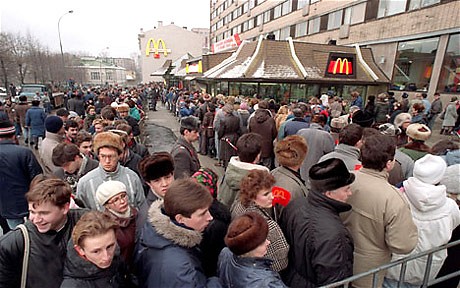
Russia’s field war with Ukraine and financial one with the West has led to a symbolic skirmish between Vladimir Putin and American-born fast-food franchises. This counter-glasnost at the McDonald’s counter will make the country a little healthier in one sense and much unhealthier in another. It’s a move stuck in the twentieth century, as is much of Putin’s leadership. From Masha Gessen at the New York Times:

“Last week, the Russian consumer authority announced that it would shut down several McDonald’s restaurants in Moscow, including that famous flagship. The authority cited health-code violations, but it has long been known to wield its power almost exclusively to political ends: It banned wine imports from Georgia when relations with Russia soured, and dairy products from Belarus when the normally pliant neighbor edged westward. Since those first McDonald’s closures in Moscow, the authorities have shut down the chain’s restaurants in several other Russian cities. The other 420-plus McDonald’s outlets in Russia may not be around much longer.

But with this, McDonald’s has reclaimed its symbolic role in Russia. A quarter century ago, the opening of its first branch in Moscow symbolized that Russia was taking down barriers between itself and the Western world. It also symbolized the end of four decades of enmity between the U.S.S.R. and the U.S.A. (no matter if the company that initially ran the Moscow restaurant was based in Canada rather than the United States). The same process is now occurring in reverse.

The Russian government is shutting down a symbol, not a business. Back in 1999, as soon as NATO planes started bombing Serbia, protesters stormed the McDonald’s in the center of Belgrade, breaking windows and looting the restaurant. The Russian state is following roughly the same logic today: Regardless of who owns it, McDonald’s serves as a symbol of America and the West, against which President Vladimir Putin has declared war.”

Tags: ,

« Older entries § Newer entries »