Politics

You are currently browsing the archive for the Politics category.

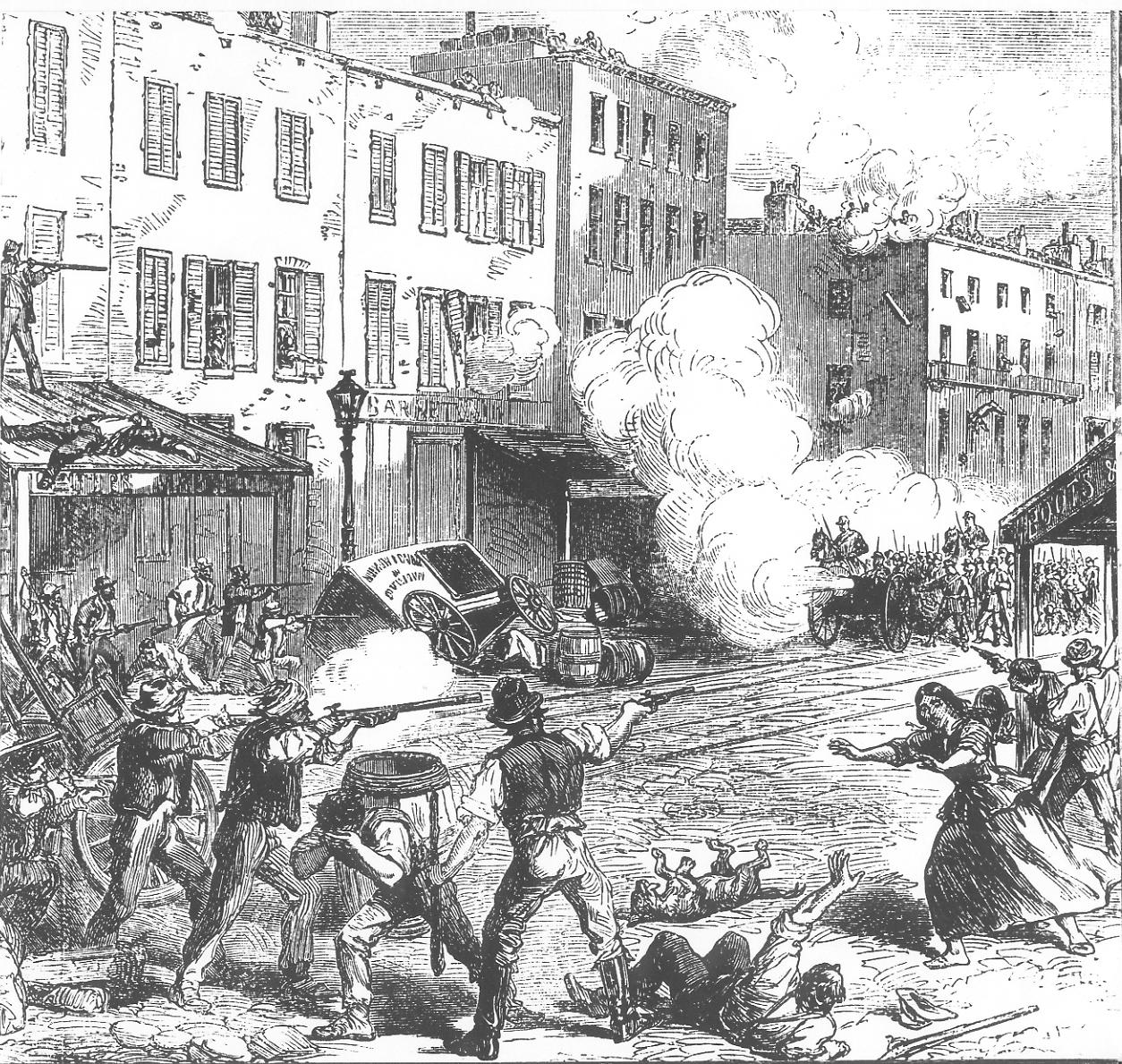
Women are present in this 1863 depiction of a New York City draft riot.

This old print article from the July 19, 1899 issue of the Brooklyn Daily Eagle is a special kind of chauvinistic crazy. New York in the 19th century was prone to riots of all kind (gang, labor, race, draft, drunken, etc.), and I guess this was some sort of op-ed warning to the fairer sex: Do not get involved or else! I would further have to assume one of the editors had an argument with his wife that morning. The piece in full:

“No man wishes to hurt a woman. No man will intentionally hurt one. But the kind of women who unsex themselves to mix with rioters and who throw stones and bottles at our motormen and passengers on our street cars incur danger to their lives. People who are assailed by overwhelming numbers do not and can not cooly select the enemies whom they will shoot or club, and if, in striking at random here and there, a policeman hits a woman’s head, the blame attaches to the woman, not the policeman.

During this strike in Brooklyn several harridans from the tenements have mixed with the loafers and the rowdies who have blocked the cars and attacked the passengers. They believe their skirts defend them. They have yelled profane and obscene epithets at the men who were trying to earn an honest living and have encouraged the disorderly element with voice and example.

When a woman debases herself to companion with drunkards, ruffians and dynamite sneaks, when she teaches her children to defy our ordinances and sets examples to them of disorder and brutality, the outraged law can hardly regard her as a woman at all. The same law sent one woman to the electric chair awhile ago for murder. Her case created a great deal of maudlinism though it deserved not a jot of it, for her crime was premeditated, cold-blooded and devilish. The same law may require harshness in its dealings with all rioters and would-be slayers of fellow creatures, whether they wear beards or not. The place for women in a time like this is at home.”
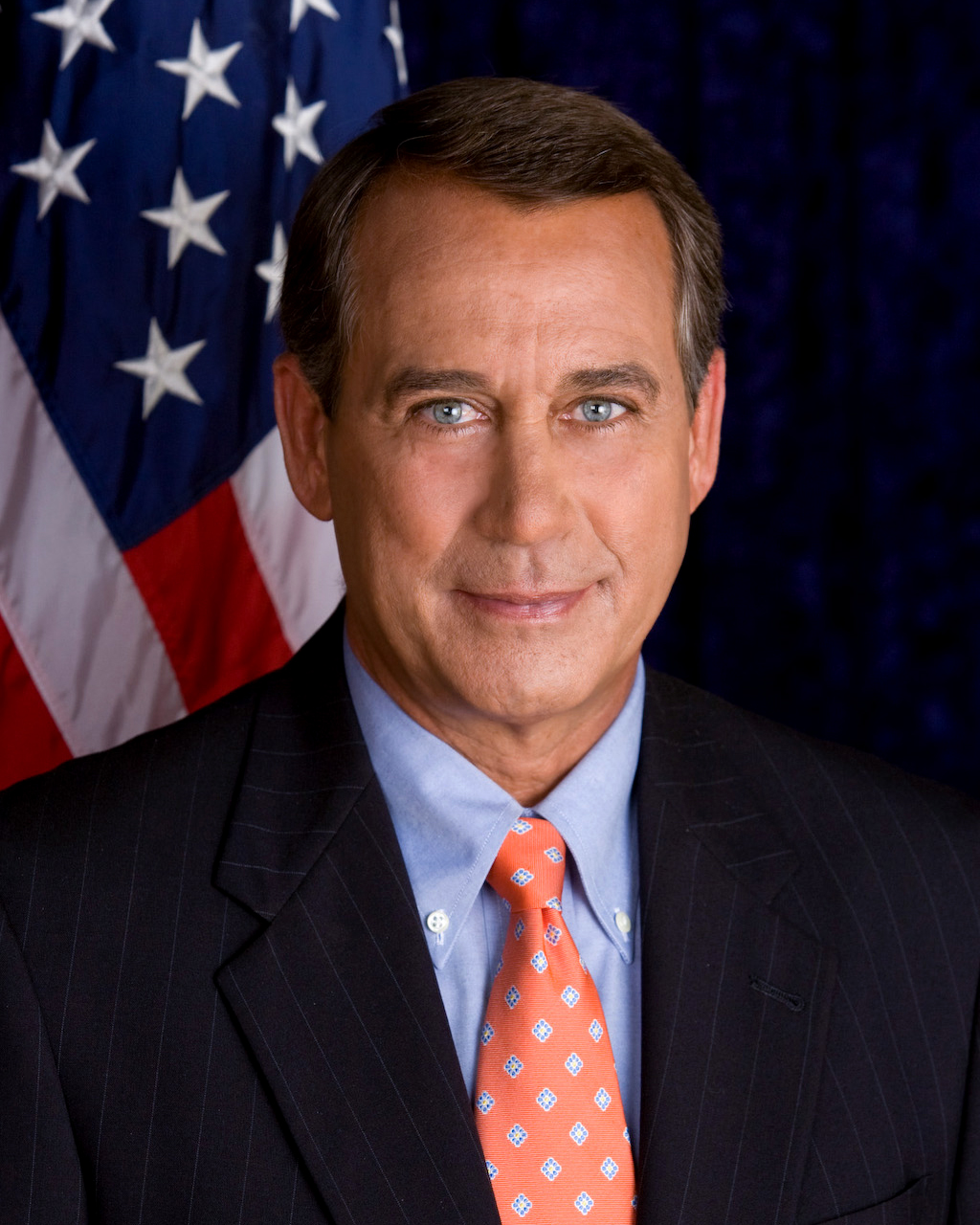

John Boehner: So angry that he is orange in the face.

John Boehner: Have you read the bill? Hell no, you haven’t!

Decoder: But you really probably should have. It was kind of a big deal, and it is sort of our job and all.

John Boehner: Can you go home and tell your constituents that this bill respects the sanctity of all human life?

Decoder: I know I couldn’t tell them that when I voted to authorize military action in Iraq, even though there were no terrorists or WMDs there. I knew that through no fault of our soldiers, thousands and thousands of civilians would die from unavoidable collateral damage, many of them children and infants.

John Boehner: I rise tonight with a sad and heavy heart.

Decoder: That’s just a metaphor. I’m not getting all Dick Cheney on you.

John Boehner: We have failed to reflect the will of our constituents

Decoder: You know, our constituents who lobby for the health-care and the pharmaceutical industries.

John Boehner: Millions of Americans lifted their voices [about the health-care issue].

Decoder: Oddly, I only heard the ones who agreed with me. The other ones were kind of nasal and whiny,

John Boehner: What [Americans] are seeing today frightens them.

Decoder: But there’s not much I can do about my big orange head. I went to a dermatologist. It is what it is.

John Boehner: Americans are struggling to build a better life for their kids.

Decoder: And now they’ll have to somehow accomplish that without a lack of health care.

John Boehner: Shame on each and every one of you who substitutes your will and your desires above those of your fellow countrymen.

Decoder: Well, either way you voted you would have been putting your will above some of your fellow countrymen, since people don’t agree on the issue.

John Boehner: I ask each of you to vow to never let this happen again.

Decoder: Again: I’m talking about my big orange head. Get me help. Do not let this continue to occur. I’m like a pumpkin.

John Boehner: It’s not too late to begin to restore the bonds of trust with our nation.

Decoder: Just follow my example. Like that time I handed out money from tobacco industry lobbyists on the floor of the House during a vote on tobacco subsidies. The strengthened the Congress’s bonds of trust with the people.

Read other Decoders.

Tags:

Harrisburg, Pennsylvania: Incorporated as a town in 1812.

In this time of economic calamity, why should only individual citizens be broke when entire towns can manage it collectively?

I came across this Economist story about Harrisburg, Pennsylvania, the Keystone State’s pretty and pretty much bankrupt capital city. The article, “A Burning Issue,” details how a huge investement in an incinerator system that doesn’t work properly and a bungling city council have left the quaint town of 47,000 on the brink of filing for bankruptcy protection, even though new Mayor Linda Thompson doesn’t want to consider it. An excerpt:

“‘It’s a long way to Heaven. It’s closer to Harrisburg,’ sings Josh Ritter, a contemporary singer-songwriter. But these days Harrisburg, Pennsylvania’s picturesque state capital, home to 47,000 people, would make a poor alternative to heaven. Mainly because of a crippling $288m loan guarantee for a trouble-plagued rubbish incinerator, the city is in a hellish financial state.

Its budget deficit over the next five years is projected to be $164m, including $68.7m of debt service due this year. Moody’s downgraded its bond rating last month. Some people, including Dan Miller, the city controller, are recommending that Harrisburg should seek protection in the bankruptcy courts. ‘It’s too late to do anything else,’ he says.”

Tags: , ,

I wrote about everything from the Scopes Monkey Trial to George Washington's weariness of the American people.

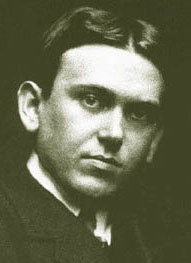
Mordant, contrarian, irrepressible, satirical wits like H.L. Mencken are always a source of strength in our country. In addition to being a distinctive prose stylist, the “Sage of Baltimore” was to his time what Stewart, Colbert and Maher are to theirs. His acute readings of American politics, race, class and gender in the first half of the twentieth century are still potent. I highly recommend Vintage Mencken if you’ve never read it.

In the 1948 piece I’m excerpting, Mencken distilled a conflict in which a mixed-race group of tennis players were arrested for attempting to have a match on a Baltimore public court. Mencken’s record as a progressive on civil rights and women’s rights is commendable, though his track record with Jewish people was less distinguished. He often decried the Jewish race, but he also did chastise FDR for not providing refuge for Jewish people after Hitler’s rise to power. Even great thinkers are a mixed-bag, I guess. An excerpt from the Baltimore Evening Sun piece:

“When, on July 11 last, a gang of so-called progressives, white and black, went to Druid Hill Park to stage an inter-racial tennis combat, and were collared and jugged by the cops, it became instantly impossible for anyone to discuss the matter in a newspaper, save, of course, to report impartially the proceedings in court….

But there remains an underlying question, and it deserves to be considered seriously and without any reference whatever to the cases lately at bar. It is this: Has the Park Board any right in law to forbid white and black citizens, if they are so inclined, to join in harmless games together on public playgrounds? Again: Is such a prohibition, even supposing that it is lawful, supported by anything to be found in common sense and common decency?

I do not undertake to answer the first question, for I am too ignorant of law, but my answer to the second is a loud and unequivocal No. A free citizen in a free state, it seems to me, has an inalienable right to play with whomsoever he will, so long as he does not disturb the general peace. If any other citizen, offended by the spectacle, makes a pother, then that other citizen, and not the man exercising his inalienable right, should be put down by the police.”

Tags:

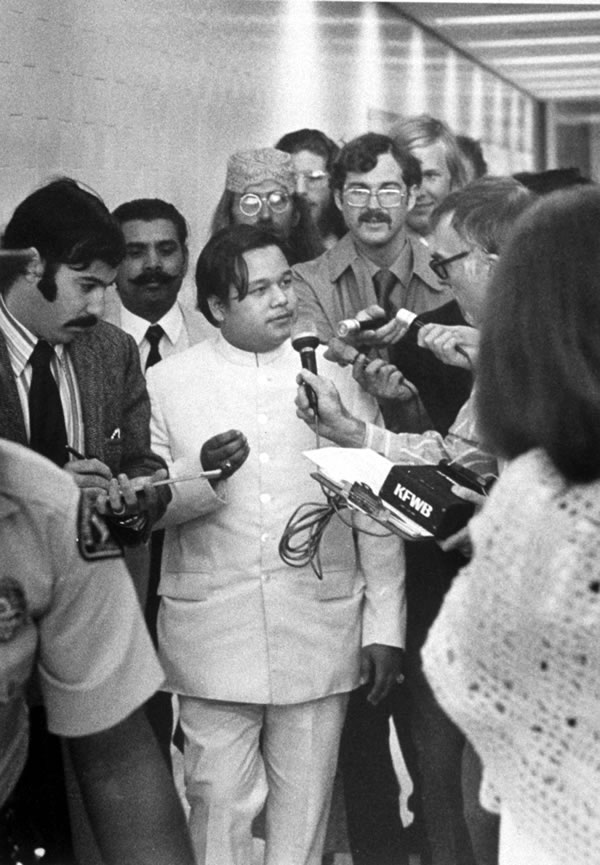
The world was strange in 1973, even stranger than it is today. That was the year of the three-day festival, Millennium ’73, when thousands of Vietnam War protestors gathered at the Houston Astrodome to hear the words of 15-year-old Shri Guru Maharaj Ji, who they believed was God. The attendees also thought that perhaps they could use their spiritual powers to levitate the stadium and make it fly, which would somehow stop the war.

i found a three-and-a-half-minute clip from the David Loxton documentary The Lord of the Universe, which captures some of the madness surrounding the teenage guru, who later changed his name to Prem Rawat. This segment particularly examines how the controversial event caused a deep rift between Chicago Seven member Rennie Davis and leaders of the Left, including Abbie Hoffman. 

Tags: , , , ,

\

Michele Bachmann: A dictionary might help.

Michele Bachmann: The American people aren’t going to take this lying down.

Decoder: Except for the sick ones who don’t have health insurance. They probably won’t be well enough to sit up or stand.

Michele Bachmann: We are not the indentured servants of Pelosi, Reid or Obama.

Decoder: I’m going to look up “indentured servant” in the dictionary later. I may not be using that correctly.

Michele Bachmann: They are spending us into a bondage we can never dig our way out of.

Decoder: Bondage is a type of restraint. It doesn’t really have anything to do with being buried. But perhaps we could use the sharp end of the shovel to break the locks on the bondage thingy.

Michele Bachmann: No Republican in the House or Senate will vote for this. Now it’s down to one-party rule.

Decoder: Actually, it’s still a two-party rule even if the two parties vote differently. In that case, the party with the most votes prevails. They represent the majority of Americans. While it’s unfortunate that there’s such a stark ideological split, such a divide doesn’t constitute a one-party rule.

Michele Bachmann: You wait until 2012. This is a one-term President.

Decoder: Scary wackos like me, Palin and Beck will make a calm, studious person like Obama look really inviting again.

Michele Bachmann: They took over Chrysler. They took over GM. They’re running these companies into the ground.

Decoder: Those companies were already in the ground.

Michele Bachmann: Then they gave 3,400 decent, viable car dealerships across the country pink slips.

Decoder: Many, many more jobs would have been lost if the government hadn’t taken over Chrysler and GM and those companies had gone bust.

Michele Bachmann: I think we need IQ tests before these people go to Washington.

Decoder: But not for me. I’m busy that day.

Michele Bachmann: The government is not working for us.

Decoder: I define “us” as a small group of resentment-filled white people with a shaky grasp of history who want to blame someone else for their jackass lives. Instead the government is working for the non-screeching majority.

Michele Bachmann: This is dictatorial what they are doing.

Decoder: When I look up “indentured servant” in the dictionary, I’m going to look up “dictator” as well.

Michele Bachmann: This bill could be the stone that ends up sinking this country forever into a sea of debt.

Decoder: It will drown the skeletons of our pastry chefs. It will drink the blood of our midwives. It will disembowel our crossing guards. Wow, I am an adult who sees everything in absolute black and white, just like a child–a really stupid child.

Read other Decoders.

Tags:

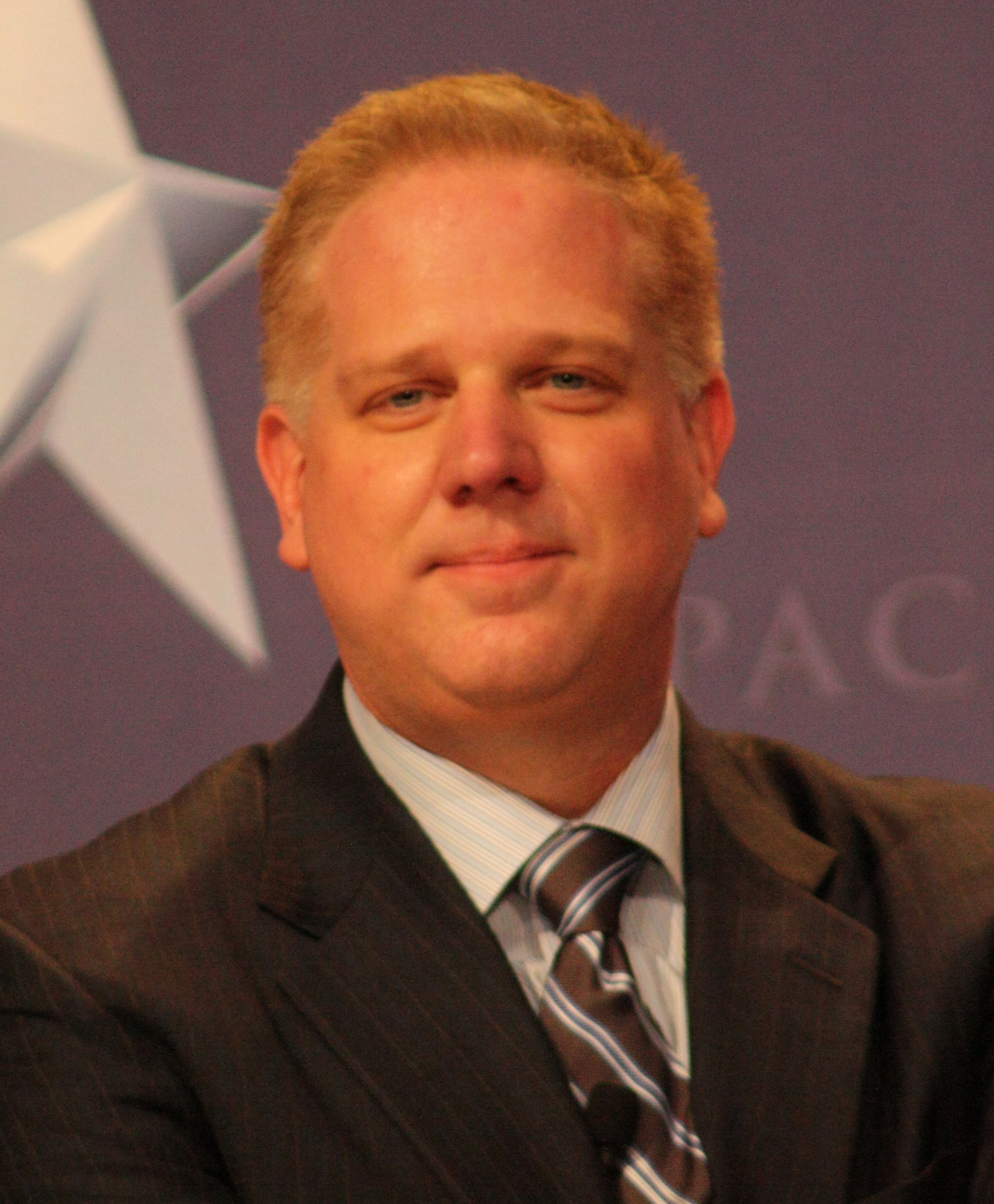
Glenn Beck: Confident and stupid. (Photo by Gage Skidmore.)

Steve King: I have a fair amount of anxiety about what’s happening to our liberty in America this week, Glenn, but other than that, I’m healthy.

Decoder: Though it doesn’t matter if I’m healthy or not, because every member of congress has wonderful health care thanks to the taxpayers.

Steve King: If tens of thousands pour into [Washington D.C.] again, like they have numerous times before, pack this capital, jam this capital, surround this place, don’t let anybody in or anybody out, they will have to capitulate.

Decoder: Okay, I didn’t realize how illegal that would sound. It sounds like we’re taking hostages. I mean, I want it to be a cool kind of hostage-taking. You know, like Denzel Washington in that hospital movie, John Q. Okay, bad example.

Steve King: Drop your plows and your hammers and get on a plane or a bus or drive your pickup truck. Come into Washington DC, fill this city up.

Decoder: Leave behind your covered wagons, your gas lamps and your charwoman. Come forth upon a chariot and a mighty wind. Or just take the Acela. It has wi-fi now.

Steve King: They intend to vote on the sabbath, during lent, to take away the liberty that we have right from God.

Decoder: The God-given freedom to drop dead without health care.

Glenn Beck: You know, I sense we’re talking to Congressman Steve King from Iowa, one of the good guys.

Decoder: One of the good guys who made derisive comments about the IRS right after a terrorist rammed a plane into an IRS building, killing a U.S. military veteran. One of the good guys who complained when deportation of Haitian illegal aliens was temporarily halted in the days after the earthquake. One of the good guys who said that the “optics” of someone who looked like Barack Obama winning the Presidency would please terrorists.

Glenn Beck: They’re going to vote for this damn thing on a Sunday, which is the sabbath, during lent. You couldn’t have said it better. Here is a group of people that have so perverted our faith and our hope and our charity that it is an affront to God.

Decoder: Even Fox is embarrassed of me.

Steve King: I don’t know how they can hole up and go into their private meetings in these secret formerly smoke filled rooms and with the guards on the outside of the door and put these things up and keep it a secret.

Rep. Steve King: Rated tickle-worthy by Eric Massa.

Decoder: The entire health care bill is online and available to the public. Just put down your plow and hammer for a second and log on.

Glenn Beck: You’re not a dirt bag, are you?

Decoder: Because that’s my act and bad enough I have to share it with Hannity.

Glenn Beck: How have we never met? I don’t know, Steve King, how we never brushed up against each other.

Decoder: That sounded gay. I didn’t mean for it to sound gay.

Steve King: In Czechoslovakia and Prague, people came to the town square and they just stood there and they held up their keys and shook their keys and the rattle of those keys was the rattle of the breath of liberty emerging in Czechoslovakia and there were so many of them and they came in such great numbers that in the end the communist government fell and freedom prevailed in Czechoslovakia and it prevails today.

Decoder: I know that all of our current leaders were freely elected. I just don’t like when they turn out to be non-white or try to do things I don’t agree with. When that happens, there should be a Velvet Revolution.

Read other Decoders.

Tags: , ,

Unlike many local residents, Mbombela Stadium will have electricity and indoor plumbing. (Image by Goldorak.)

Really good article by Barry Bearak in the New York Times about the South African provincial capital of Nelspruit spending $137 million dollars on a stadium that will host six hours of World Cup soccer this year, while a good number of its citizens live in dire poverty.

I get the idea. Build a stadium, show the world how modernized you are on a big stage and attract more investment. But just imagine how much infrastructure that amount of money could build in South Africa. An excerpt from “Cost of Stadium Reveals Tensions in South Africa“:

“Come June, soccer’s World Cup will be hosted by South Africa. Though only four of the 64 games are to be played here in Nelspruit, a $137 million stadium was built for the occasion. The arena’s 18 supporting pylons reach skyward in the shape of orange giraffes. At nightfall, their eyeballs blink with flashes of bewitching light.

The people who live nearby, proud as they are to host soccer’s greatest event, also wonder: How could there be money for a 46,000-seat stadium while many of them still fetch water from dirty puddles and live without electricity or toilets?”

Tags:

Woodrow: Screw you Jacob, Michael and Ethan!

  • 1912: #42 (most popular boy’s name in America.)
  • 1922: #210
  • 1932: #323
  • 1942: #274
  • 1952: #360
  • 1962: #557
  • 1972: #685
  • 1982: #967
  • 1992: Fell out of the top 1000; has not returned.

See other Listeria lists.

Tags:

Unintelligent, yet believes in intelligent design.

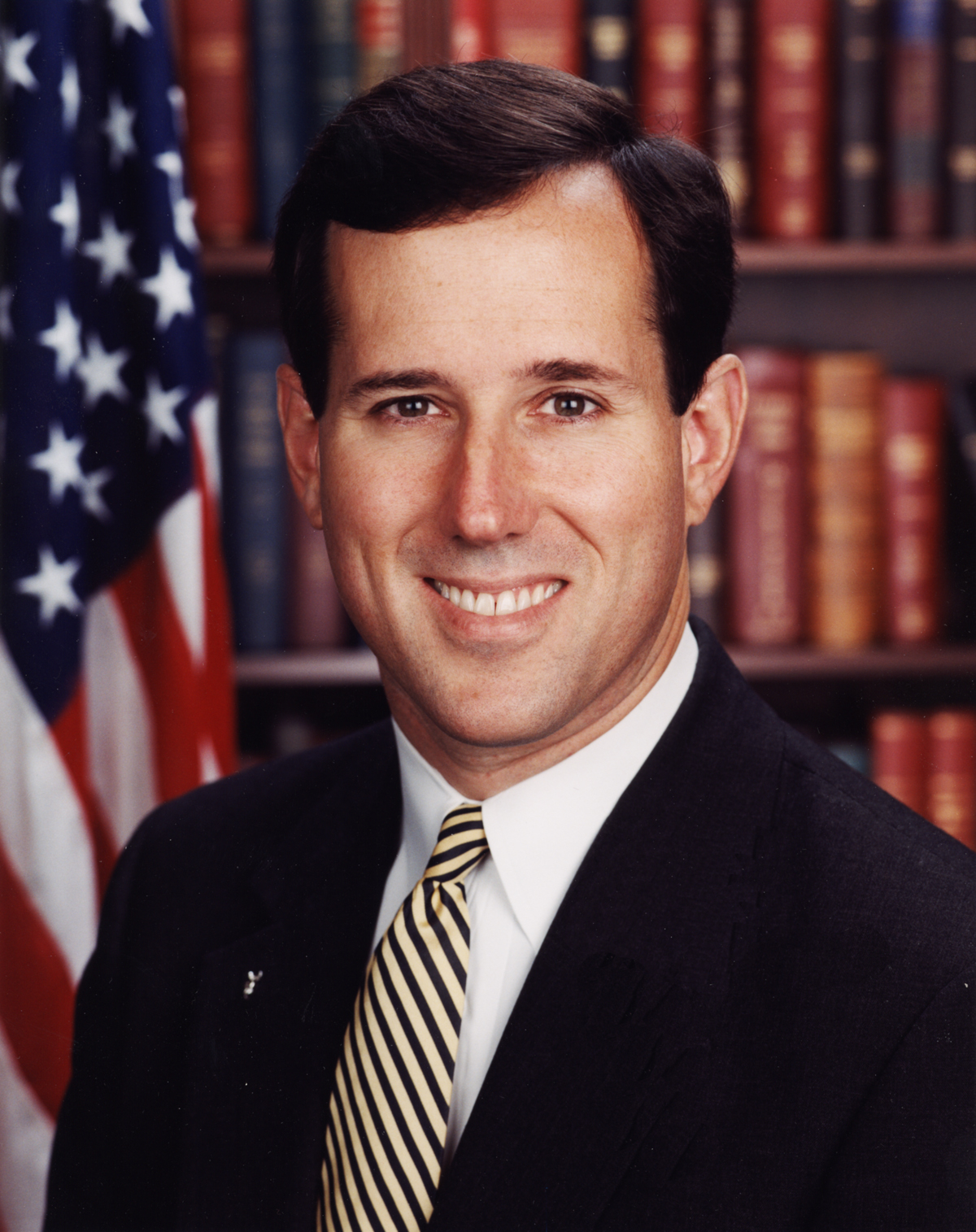
Rick Santorum: Ordinary people realize that what you’re talking about here is taking away choices from them about health care. And I remember one [woman who said] “You know, my father has very bad cancer and has a 15 percent survival. He’s at the Mayo Clinic. We may lose the farm. You know what? In Norway, you can’t get this drug. In Britain, you can’t get–it’s illegal in Canada. Because it’s an expensive drug. And there’s one thing worse than losing your farm, and that’s losing your dad!”

Decoder: Another good way to lose your dad: Let him be one of the tens of millions of Americans who can’t afford ridiculously high insurance premiums. If he gets cancer–even the kind with a good cure rate–you will lose him.

Rick Santorum: But if you’re saying things about what the President’s bill is about, and you’re in most cases, probably telling the truth, unlike what they are doing, you’re now going to be reported to the White House. That’s not good!

Decoder: What I just said is bullshit. Also: I hope no one remembers I supported the Patriot Act loosening restrictions on wiretapping Americans. I also voted to extend the wiretap provision.

Rick Santorum: There’s one part of Medicare, it’s called Medicare Advantage, that is private sector. It’s private sector-run. It’s a managed care program that is completely private sector experience in Medicare. [Obama] wants to shut it down.

Decoder: If I had been a Senator when Medicare was established, I would have voted against it and called all of it socialism.

Rick Santorum: Political correctness is reigning in the military right now.

Decoder: Despite the strain of two long-term wars and helping people victimized by natural disasters, our military is doing a tremendous job. Some of those soldiers doing the great work are gay. I want to prevent them from continuing their service to their country.

Rick Santorum: I am considering putting my name in for the 2012 presidential race.

Decoder: I’m also considering putting my name on my towels. “His” and “Hers” are pronouns and pronouns are the devil’s handiwork.

Read other Decoders.

Tags: , ,

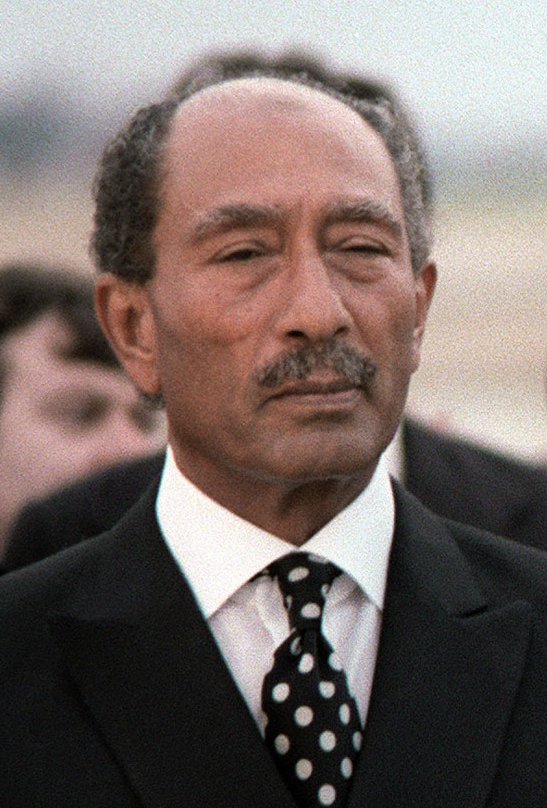
Anwar Sadat was assassinated by Islamic militants in 1981. Egypt hasn't enjoyed a prominent place in Middle Eastern and world politics since.

The always incredible Arts & Letters Daily pointed me in the direction of the excellent article “The Arab Tomorrow” on the Wilson Quarterly.

The title of the piece, written by David B. Ottaway, is almost a misnomer, since it deals with recent and current Arab history as much as the future of Arab states. But it’s an uncommonly cogent, lively examination of that region of the world. An excerpt:

“That world now stares at two sharply contrasting models of its future: the highly materialistic emirate state obsessed with visions of Western-style modernity, and the strict Islamic one fixed on resurrecting the Qur’an’s dictates espoused by fundamentalists and Al Qaeda.

The struggle between these two models for the hearts and minds of Arabs is intense, particularly among a questioning, restless youth. The lure of the new, shiny emirate cities remains powerful, but there is a soulless quality about these places that raises questions about their lasting appeal. On the other hand, Muslim terrorism unleashed against other Muslims has done nothing to enhance the call for an Islamic state.”

Tags: ,

We're all connected. (Image by Blake Burris.)

I don’t know yet how much of David Gelernter‘s essay on Edge, Time to Start Taking the Internet Seriously, I agree with, but it’s a must-read for anyone who wants to debate the present and future of our lives in the Internet Age. An excerpt:

“The Internet will never create a new economy based on voluntary instead of paid work–but it can help create the best economy in history, where new markets (a free market in education, for example) change the world. Good news!–the Net will destroy the university as we know it (except for a few unusually prestigious or beautiful campuses). The net will never become a mind, but can help us change our ways of thinking and change, for the better, the spirit of the age.

This moment is also dangerous: virtual universities are good but virtual nations, for example, are not. Virtual nations–whose members can live anywhere, united by the Internet–threaten to shatter mankind like glass into razor-sharp fragments that draw blood. We know what virtual nations can be like: Al Qaeda is one of the first.”

Tags:

It appears that Butterbean has written a book.

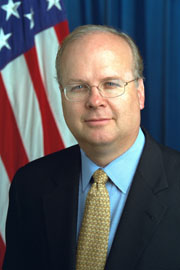
Karl Rove: But if [Obama] passes this health care reform, I think [the Democrats] lose the House of Representatives this fall.

Decoder: And I am something of an expert on how lose the House of Representatives.

Karl Rove: Embedded in that view is the belief that the American people can be easily manipulated by those kind of [smear] tactics. And frankly, I got greater respect for the voter than that.

Decoder: My career has proven time and again that I have zero respect for voters. I used to pander to the Christian conservative base even though I’m agnostic.

Karl Rove: If you’re going to attack somebody, it has to be seen as fair and appropriate and relevant and credible.

Decoder: I steadfastly defend the TV commercials that were used against former Georgia Senator Max Cleland, the ones that had footage of Saddam Hussein and Osama bin Laden and claimed Cleland didn’t have the courage to lead. You know, the Max Cleland who lost three limbs while fighting for our country in Vietnam, while I was doing everything possible to avoid the draft.

Karl Rove: Oh, I think the world of [Colin Powell]. I think he is a great leader and I think he was a terrific secretary of state. But I did get under his skin.

Decoder: He’s apparently allergic to doughy, lying pricks.

Karl Rove: Harry Reid and I share a common Nevada root. I tried to develop a cordial relationship with him but he was, as you will see in episodes in the book, breathtakingly political in his approach to virtually everything and unreliable even when he was with you.

Decoder: He’s almost as partisan as I am. I hate people like that.

Karl Rove: [Waterboarding] is not torture. But reasonable people can disagree.

Decoder: But if they do, I will torture them.

Tags: , , ,

Representing New York's slap-and-tickle district.

Eric Massa: I wasn’t forced out. I forced myself out. I failed. I didn’t live up to my own codes. I own this. I take full and complete responsibility for my misbehavior. And goodness only knows what allegations they are going to throw at me.

Decoder: I’ve done so much stuff even I can’t remember it all. God knows what they’ll find out.

Eric Massa: Now, they’re saying I groped a male staffer. Yes, I did. Not only did I grope him, I tickled him until he couldn’t breathe and four guys jumped on top of me.

Decoder: It was the best date ever.

Eric Massa: We all lived together, all the bachelors and me.

Decoder: Unfortunately, they weren’t confirmed bachelors.

Eric Massa: If somebody on my staff was offended, was uncomfortable, thought I was inappropriate–I own that. That’s why I resigned.

Decoder: I resigned for stuff much worse than that.

Eric Massa: Yes, I do believe in God.

Decoder: Especially his sexy, long-haired son, Jesus.

Eric Massa: I mean, I don’t know how else to put it. I own this misbehavior.

Decoder: I also own a lot of sex toys and pornos.

Eric Massa: At this point, people will be told to say anything about me.

Decoder: Mostly the truth. And that won’t make me look good.

Eric Massa: [Being a congressmen] literally for me is 120-hour workweek.

Decoder: Taking my pants off so frequently is time-consuming.

Eric Massa: Congressmen spend five to seven hours a day on the phone, begging for money.

Decoder: And for phone sex.

Eric Massa: And, by the way, when you are a freshman, you have to fill out sheets of everybody you call and how much money per hour, and they have coaches to teach how to get more money from each one of your phone calls and who to call and what data points they have on them to tickle them, to make them more apt to give you money.

Decoder: Wow, I can’t stop talking about tickling.

Eric Massa: I mean, people say that I’m making this stuff up. I’m just telling you what I learned in 14 months in the United States Congress–by the way, a Congress I deeply love.

Decoder: I want to love many congressman very, very deeply.

Read other Decoders.

Tags: ,

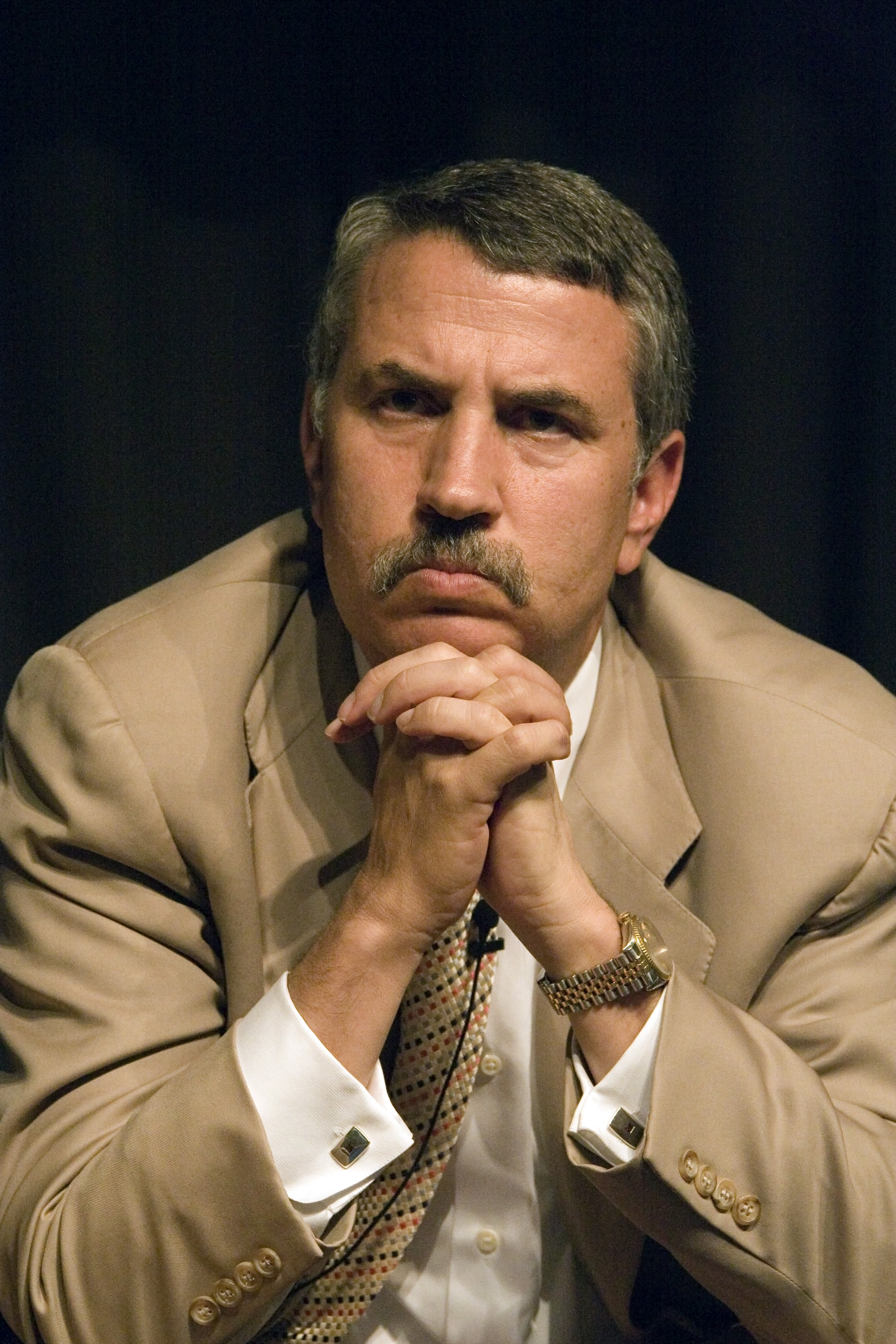
Either I start getting more oral sex or they'll be more wars. (Photo by Charles Haynes.)

There are those moments when you hear a talking head on TV say something so stupendously wrong-minded that it’s stunning. Since most of cable news is aimed at attention-grabbing shock, it’s not easy to stand out as colossal bonehead, but it happens occasionally.

I thought of one such occasion today when I read Thomas Friedman’s op-ed piece in the New York Times. He uses the column to try to convince readers that he was in favor of the Iraq War because he hoped it would bring about democracy in that nation, one that would be supported and sustained by Iraqis themselves.

But Friedman had a very different rationale in 2003 for his loud urging of an American invasion. That was when the columnist and best-selling author guested on the Charlie Rose Show to explain why the U.S. needed to go to war. The comments still stand out to me for their irrationality, immaturity and immorality. Every time Friedman tries to revise his reasons for being an Iraq War cheerleader, these statements should be brought up. An excerpt:

“We needed to go over there, basically take out a very big stick right in the heart of that world and burst that bubble, and there was only one way to do it.

What they needed to see was American boys and girls going house to house, from Basra to Baghdad and basically saying, ‘Which part of this sentence don’t you understand?’ You don’t think, you know, we care about our open society, you think this bubble fantasy, we’re just gonna to let it grow? Well, Suck. On. This.

We could have hit Saudi Arabia. It was part of that bubble. Could have hit Pakistan. We hit Iraq because we could. That’s the real truth.”

Tags: ,

President Obama has set aside $10 million in matching funds to replicate the Harlem Children's Zone in other areas. It's a good first step, but the amount is too paltry. (Photo by Steve Jurvetson.)

Some stories get covered a lot but can’t get covered enough. That’s the case with sociologist and educator Geoffrey Canada‘s amazing two-decade-old anti-poverty initiative, Harlem’s Children Zone, which has won plaudits from both sides of the political aisle.

More importantly, it’s working. Children enrolled in HCZ grow to be healthy, well-educated adults, whereas previous generations who grew up on their same blocks, often got lost in the system, their dreams deferred until they were all but lost.

Newsweek is the latest to shine a light on the HCZ (and other pioneering programs like it). An excerpt from Raina Kelley’s article “The Future of Black History“:

“What the HCZ does is first recognize that the amelioration of poverty does not begin and end with an excellent education, but also requires a full belly, parental education, safety, advocacy, and the expectation that every student will succeed.

‘We help parents and kids through the system,’ HCZ founder Geoffrey Canada says. ‘We get them past every hindrance put in their way, whether it be at home or with social services. We can advocate on a child’s behalf, whether it be at home or in the classroom or with the juvenile justice system.’

Indeed, the HCZ starts early: it provides new parents with a Baby College to teach parenting skills during the crucial first three years of a child’s life and a preschool Gems program, where kids learn not only French and Spanish but healthy eating habits to combat childhood obesity. The Zone also offers the HCZ Asthma Initiative to provide medical care and education to families, thus drastically cutting down on the number of school days missed by students suffering from asthma.

And it has a network of afterschool programs that teach media literacy, karate, and computer skills. It’s called the pipeline–once familes enter, it’s hoped that they’ll stay until their child graduates from college.”

Tags: , ,

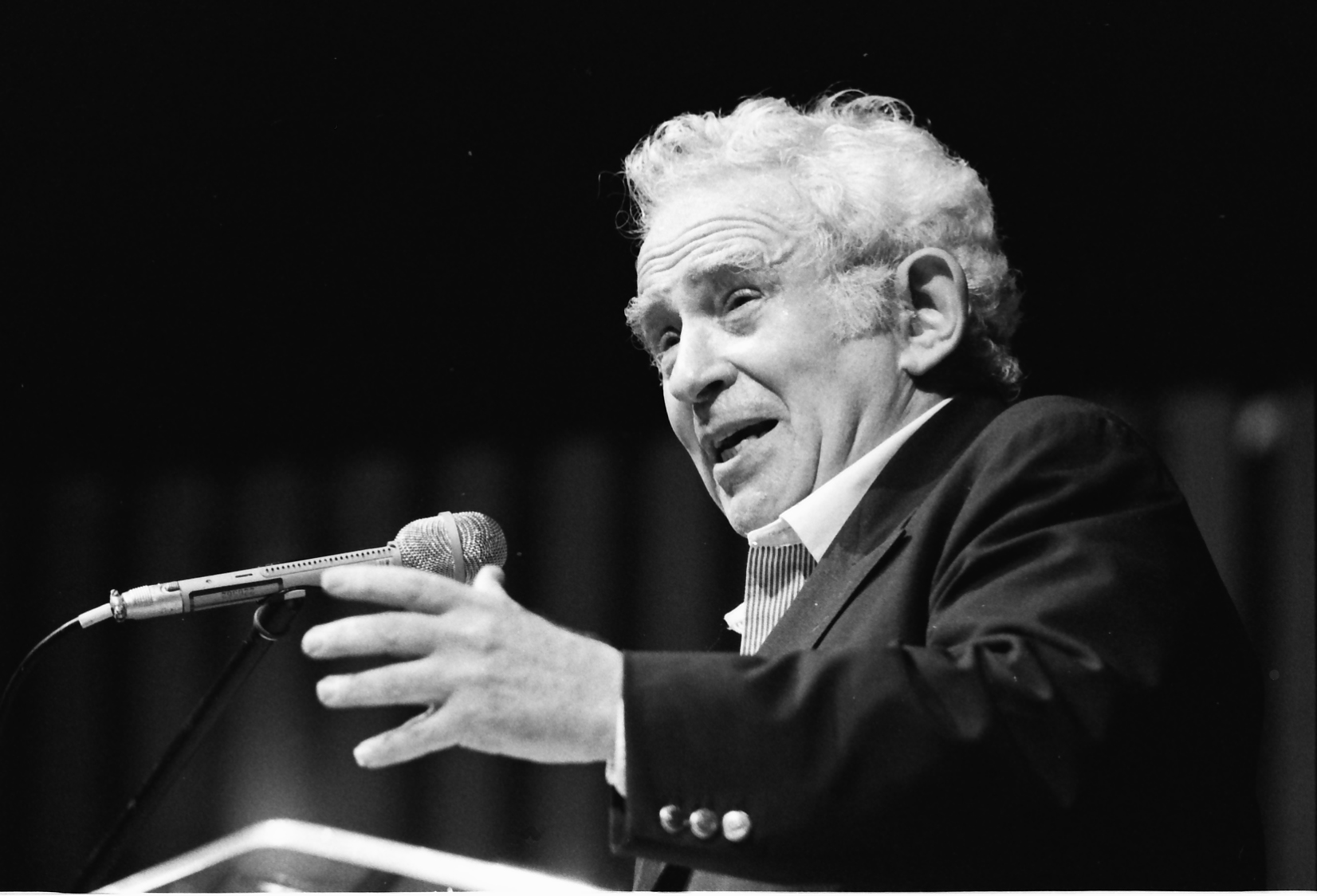
The same arrogance the made Mailer a great writer also made him sometimes do dumb things. (Image from MDC Archives.)

I think the first time in my childhood that I heard the name “Norman Mailer” was in connection with one of the worst things he ever did. Mailer agitated for the release of convict/writer Jack Henry Abbott, who had spent much of his life in prison. Mailer envisioned Abbott as an American Genet.

It was, of course, a stupendously stupid thing to do. Within six weeks of his 1981 release, Abbott murdered 22-year-old New York waiter/aspiring actor Richard Adan. Whether he was springing cons, running for mayor or seething at Gore Vidal, Mailer often acted out of incredible hubris. But he was a magnificent writer, especially when he was in full-on non-fiction mode.

Some of his best work is collected in Miami and the Siege of Chicago, his street-level examinations of the 1968 Republican and Democrat national conventions, in all their depressing and tumultuous infamy. An excerpt from The Siege of Chicago, which concerns a protest march that was halted with utter brutality:

“There, damned by police on three sides, and cut off from the wagons of the Poor People’s March, there, right beneath the windows of the Hilton that looked down on Grant Park and Michigan Avenue, the stationary march was abruptly attacked. The police attacked with tear gas, with Mace, and with clubs, they attacked like a chainsaw cutting into wood, the teeth of the saw the edge of their clubs, they attacked like a scythe through grass, lines of twenty or thirty policemen striking out in an arc, their clubs beating, demonstrators fleeing. Seen from overhead, from the nineteenth floor, it was like a wind blowing dust, or the edge of waves riding foam on the shore.”

Tags: , , ,

I seem less criminal-ish when I smile and dance.

Tom DeLay: I would have loved to be right in the middle of the health care reform fight.

Decoder: Health care industry lobbyists have tons of cash.

Tom DeLay: Dancing with the Stars was the best fun I ever had.

Decoder: Except for the time I posed for that mug shot. Dang, that was good times.

Tom DeLay: There is an argument to be made that these unemployment benefits keep people from going and finding jobs.

Decoder: The non-existent jobs that don’t exist.

Tom DeLay: There is a rage in this country–I’ve been sitting out of D.C. for a long time–that I have never seen before.

Decoder: Maybe there’d be less rage if I hadn’t turned the Republican Party into an ATM machine to be filled by K Street lobbyists and Russian oil barons. Man, I hope my senior aides convicted in the Abramoff scandal are having fun in prison.

Tom DeLay: The rage against Republicans is that they want to see Republicans stand on principles and fight for the principles.

Decoder: I am completely fucking unprincipled, but maybe one of the other Republicans can do it. Is that guy Herb around? Maybe he can give it a try.

Tom DeLay: We have budget considerations that are incredibly important now that Obama is spending monies we don’t even have.

Decoder: I helped Bush turn a budget surplus into a $600 billion deficit.

Tom DeLay: I am rooting for the Tea Party activists. I think it’s a great opportunity for the Republicans if they will take it.

Decoder: Other people see hatred, racism, paranoia and incoherence, but I see opportunity. Maybe other Republicans are put off by weirdos blaming the government for all the problems in their jackass lives, but not an unethical scumbag like me.

Tom DeLay: [Republicans] ought to be reaching out to [Tea Party activists], accommodating them.

Decoder: Pander to the dummies, throw them a bone. That’s what I was doing with the birther movement and the Terry Schiavo case. Use them like we used born-again Christians to get W. elected. Opportunists need zealots to carry the water.

Tom DeLay: You’re going to think I’m crazy, but I really don’t care. I am who I am and I did what I did. I’m proud of what I did.

Decoder: Yeah, I really am crazy. Maybe I’ll plead insanity if my Texas money-laundering case ever comes to trial.

Read other Decoders.

Tags:

During his 1970 gubernatorial race against Ronald Reagan in California, the philosopher, LSD guru and countercultural icon, Dr. Timothy Leary, was railroaded into a 20-year prison sentence for the dubious charge of possession of two joints. Leary escaped from the penitentiary, spent time in Algeria with Black Panther Eldridge Cleaver before the two had a falling out, and was finally recaptured at an airport in Afghanistan. He was returned to the states to continue his sentence at Folsom Prison.

During his stint there, Leary was able to film a 27-minute interview that his wife Joanna could use to stump for his release. Despite being made by Leary and his spouse and not an objective third party, it’s an interesting encounter.

California Governor Jerry Brown released Leary in 1976 and the controversial figure ended up focusing the last two decades of his life encouraging the construction of space colonies and being an early Internet enthusiast. Despite being right on many issues, Leary always seemed to me like a slickster with the gigantic ego of a small child. But you can decide for yourself while watching the video.

Structural damage in Fallujah may be the least of that city's problems.

The BBC has a very scary story about a reportedly high number of birth defects showing up in newborns in Fallujah. The Iraqi city was the site of some of the most intense fighting at the height of the ongoing American war there.

Some Iraqi medical researchers think that chemicals from sophisticated weapons are the cause, though the U.S, is saying it has yet to see any conclusive data proving a spike in birth defects in Fallujah. An excerpt:

“British-based Iraqi researcher Malik Hamdan told the BBC’s World Today program that doctors in Fallujah were witnessing a ‘massive unprecedented number’ of heart defects, and an increase in the number of nervous system defects.

She said that one doctor in the city had compared data about birth defects from before 2003–when she saw about one case every two months–with the situation now, when, she saw cases every day.

‘I’ve seen footage of babies born with an eye in the middle of the forehead, the nose on the forehead,’ she added.”

Tags:


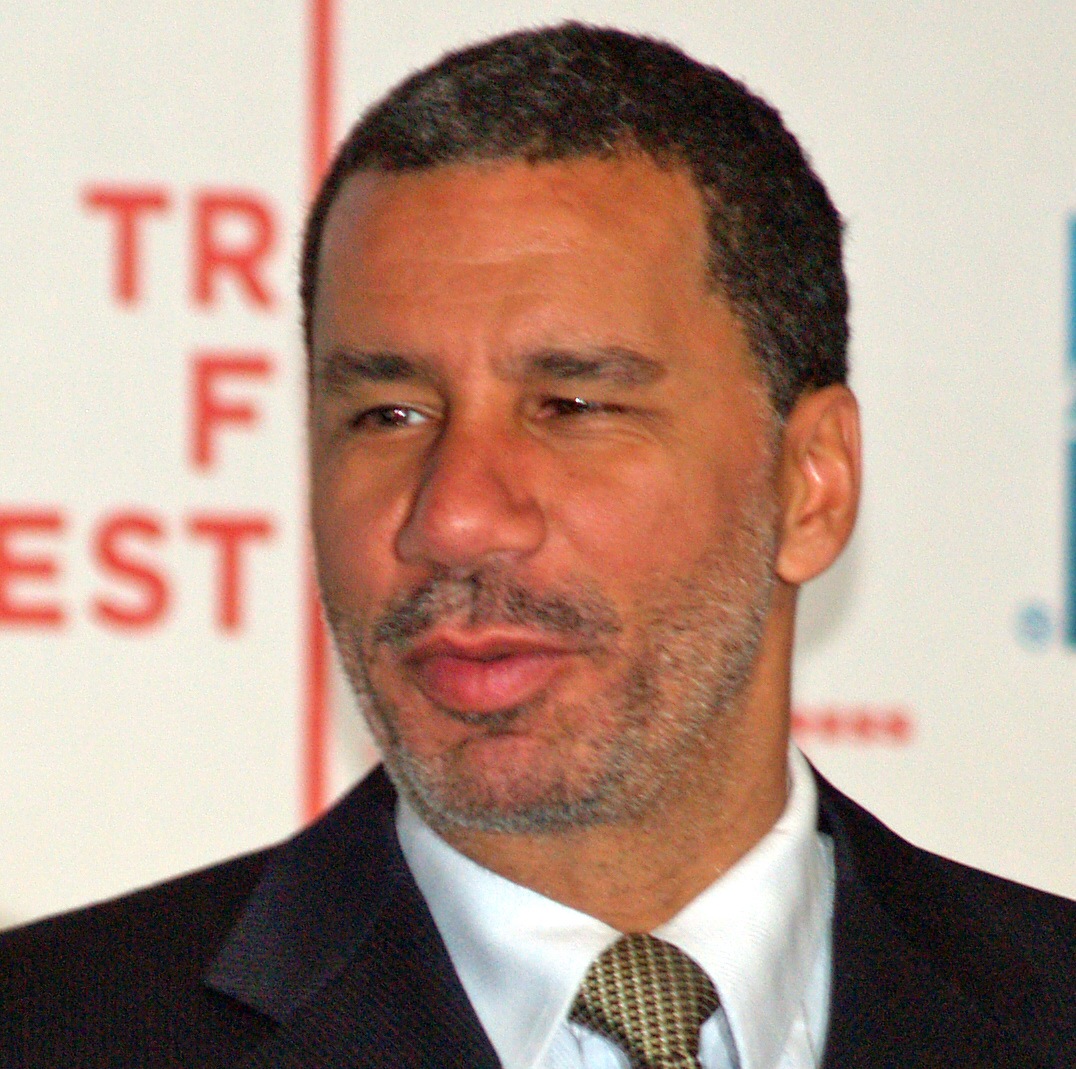
Governor Paterson: Bros before hos, allegedly.

Governor Paterson: For the past 25 years, it has been my highest privilege to serve the people of New York.

Decoder: Except for all the times I did blow. I felt even more privileged to be high those times.

Governor Paterson: All the while I have tried to improve the quality of lives of families and fought special interests.

Decoder: By “special interests,” I mean women who were allegedly trying to file complaints against my buddies for allegedly abusing them.

Governor Paterson: I have laid the foundation for our fiscal economic rescue.

Decoder: And many women who are not my wife. That’s how D-Patz swings, baby.

Governor Paterson: We have eradicated the Rockefeller Drug Laws.

Decoder: I’m like a one man Cheech & Chong. What did you expect?

Governor Paterson: I am ending my campaign for governor of the state of New York.

Decoder: My unwinnable, unwanted, vomit-inducing campaign.

Governor Paterson: It has become clear that I cannot run for office and manage the state’s business at the same time.

Decoder: Actually, I can’t do either one separately. Not competently.

Governor Paterson: I am looking forward to a full investigation into actions taken by myself and my administration.

Decoder: I am likewise looking forward to someone performing exploratory surgery on my groin with a pickaxe.

Governor Paterson: I believe when the facts are reviewed, the truth will prevail.

Decoder: But, oh god, I hope not.

Governor Paterson: There are 308 days left in my term. I will serve every one of them fighting for the people of the state of New York.

Decoder: Until I step down in the next couple of weeks. Get ready, Dick Ravitch. Tag, you’re it, bitch.

Governor Paterson: I would like to thank New Yorkers for the wonderful opportunity to serve them.

Decoder: Though no one actually voted for me to be in this office. I walked into it ass backwards when Governor Sexy Socks got tossed out on his jockstrap.

Governor Paterson: I hope that history will remember that I fought the good fight and did what was hard.

Decoder: Especially hard drugs and hard alcohol.

Read other Decoders.

Tags: , ,

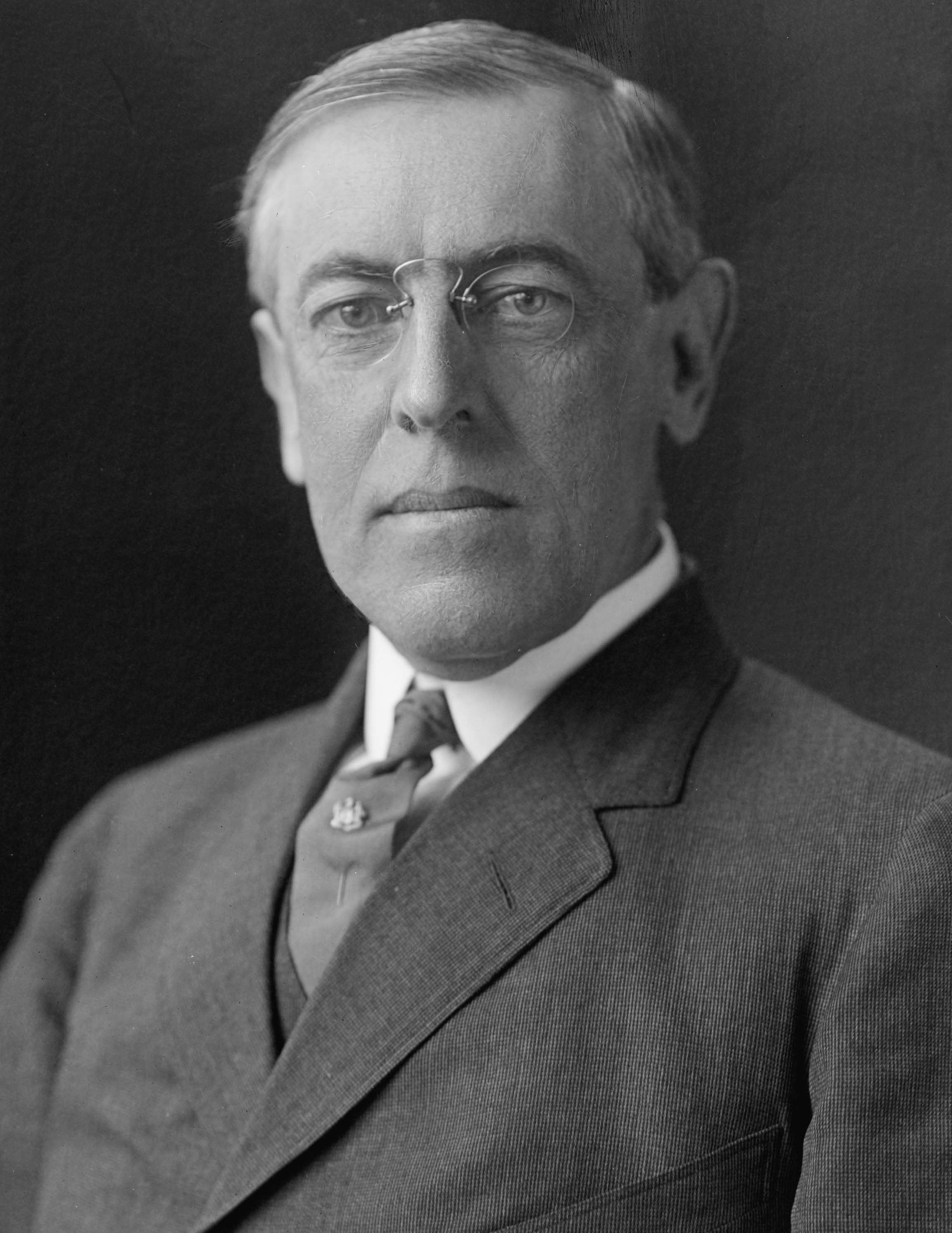
Are you too afraid to debate me, Woodrow Fucking Wilson? (Photo by Gage Skidmore.)

Glenn Beck: I have to tell you, I hate Woodrow Wilson with everything in me.

Decoder: I will dig up Woodrow Wilson’s grave and fuck his skeleton. Seriously, I’ll do it. I’m that nuts.

Glenn Beck: (Writes “Progressivism” on the chalkboard.) This is the disease. This is the disease in America.

Decoder: It caused an outbreak of Abolitionism, civil rights, workers’ rights, voting rights, women’s rights, gay rights, disability rights, Medicare, public education, public libraries, consumer protection, etc.

Glenn Beck: Somebody just sent this to me this week. (Holds up book.) It’s “Progress and Democracy for Rhode Island.” You can’t read the date here but it’s 1938.

Decoder: I’m going to read from an arcane book nobody read even back then and pretend it represents all contemporary progressives.

Glenn Beck: It is big government–it’s a socialist utopia. And we need to address it as if it is a cancer. It must be cut out of the system because they cannot co-exist. And you don’t cure cancer by–well, I’m just going to give you a little bit of cancer.

Decoder: Oh, crap. My colonoscopy is scheduled for Thursday afternoon. I might have to get Janet to have them move that.

Glenn Beck: (Reacts to a towel being placed at the podium by staff.) I’m like Elvis.

Decoder: I mean Old Elvis: bloated, senseless, weepy, embarrassing. I just need a karate outfit. I’ll ask Janet to order me one of those.

Glenn Beck: I’m a–I’m a recovering alcoholic. I’m a recovering alcoholic, and um, I screwed up my life six ways to Sunday,

Decoder: Tough to believe I ever had a drinking problem, huh?

Glenn Beck: I mean, you know, if drinking wasn’t causing me a problem in my life I’d be drunk right now.

Decoder: Instead of just acting drunk right now.

Glenn Beck: When the Republican Party says, wow, I’ve got a problem, please don’t say you’re just like me. Oh, and I’m just like you. No you’re not. Because I would never go to Washington. You will.

Decoder: And then you’ll have to deal with the realities of governing. You won’t be able to hop around on stage in front of a blackboard like a brainless demogogue. You’ll have to think and reason and compromise like adults. I would never stoop to that.

Glenn Beck: America is not a clown show. America is not a circus.

Decoder: Of course, that makes it tough to explain my success.

Glenn Beck: America is an idea. America is an idea that sets people free.

Decoder: Free to think just like me–or else.

Glenn Beck: (Attempts to erase blackboard but eraser doesn’t work well.) This isn’t going to work out well.

Decoder: I mean erasing the blackboard but my life also.

Glenn Beck: When did it become something of shame or ridicule to be a self-made man in America?

Decoder: It never did, but it sounds really populist to say that. Also: I have personal issues about my lack of academic credentials.

Glenn Beck: The Roaring Twenties–it was the largest expansion of the middle class ever. It–people started having telephones, and that evil electricity, and cars, and radios.

Decoder: I really believe electricity is evil. It silently mocks me.

Read other Decoders.

Tags: , ,

Not Rosie O'Donnell.

Tyler Kepner has a fun article in the Times, which is prosaically titled “Pirates’ Ross Ohlendorf Exercised Brain with Federal Internship.” The piece focuses on the middling Pittsburgh starter, who spent a couple months this offseason working as an intern for Agriculture Secretary Tom Vilsack.

It would seem that the rare professional athlete who is intellectual and well-rounded could have such opportunities for the taking. Ohlendorf wisely uses these open doors as learning experiences. An excerpt from the piece:

“Ohlendorf, 27, has the unusual combination of superior intelligence, athleticism, curiosity and drive. It helped him become a star at Princeton while earning a degree in operations research and financial engineering. It has helped him develop into a dependable major leaguer who was 11-10 with a 3.92 earned run average in 29 starts for Pittsburgh last season.

The internship was the product of a midsummer brainstorm, which can be rather powerful for a person with a 3.75 grade-point average in the Ivy League. Ohlendorf had spent a previous winter as an intern in the finance office of the University of Texas system.

He also helps his father manage a herd of longhorn at the family’s Rocking O Ranch near Austin, Texas.”

Tags: , ,

Let me handcuff you to a chair and slap you around. It's for national security purposes, of course.

Dick Cheney: The White House must stop dithering.

Decoder: Obama needs to quickly make bad decisions without thinking them through and stubbornly stick to them. That’s how it’s done.

Dick Cheney: I was and remain a strong proponent of our enhanced interrogation program.

Decoder: Americans are queasy about the word “torture,” so I’ve started referring to it as “an enhanced interrogation program.” Sounds classier.

Dick Cheney: I think the President made the right decision to send troops into Afghanistan. I thought it took him a while to get there.

Decoder: He paused to think. W. never gave me trouble like that. My incredible sense of arrogance tells me that I’m smarter than everyone else despite my unimpressive track record, so I think people should do what I want without question. Also: Bush and I never got around to focusing the military on terrorists in Afghanistan and Pakistan because we were too busy fighting an unnecessary war in Iraq, which was based on incorrect evidence about nonexistent WMDs.

Dick Cheney: But I do repeatedly see examples that there are key members in the administration, like Eric Holder, for example, the attorney general, who still insists on thinking of terror attacks against the United States as criminal acts as opposed to acts of war.

Decoder: Eric Holder has not ruled out prosecuting me, so he’s officially a meanie. I will try to paint him as an out-of-touch liberal despite the fact that he worked in the Reagan administration.

Dick Cheney: I believe very deeply in the proposition that what we did in Iraq was the right thing to do. We got rid of one of the worst dictators of the 20th century. We took down his government, a man who’d produced and used weapons of mass destruction.

Decoder: There were no weapons of mass destruction in Iraq in 2003 even though I insisted there were. So I’ll try to divert from that by mentioning that there were once weapons there. Worth a shot.

Dick Cheney: I think the–the proper way to–to deal with the Christmas Day bomber would have been to treat him as an enemy combatant. I think that was the right way to go.

Decoder: The Bush administration didn’t put shoe bomber Richard Reid into military custody, but that was nine years ago, so people probably forgot.

Dick Cheney: I was a big supporter of waterboarding. I was a big supporter of the enhanced interrogation techniques.

Decoder: I forgot to call it “enhanced interrogation techniques” the first time, but I quickly caught myself.

Dick Cheney: Twenty years ago, the military were strong advocates of “Don’t Ask, Don’t Tell.” I think things have changed significantly since then.

Decoder: Every now and again, I like to take another man to a quiet place on a ranch and give it to him in the face really hard.

Dick Cheney: The reason I’ve been outspoken is because there were some things being said, especially after we left office, about prosecuting CIA personnel that had carried out our counterterrorism policy or disbarring lawyers in the Justice Department who had helped us put those policies together.

Decoder: The reason I’ve been outspoken is because if my underlings get prosecuted, then it’s just a matter of time until they come for me. And Dick Cheney ain’t going to the Graybar Hotel.

Read other Decoders.

Tags: , , , ,

Hong Kong rose to great heights due in part to the unusual governing agreement between China and Britain.

The amazing Arts & Letters Daily referred me to an article in the British journal Prospect about a new and improved type of urban development in poor countries. The piece, “For Richer, For Poorer, authored by Stanford economist Paul Romer, is an in-depth look at the possibilities and perils of his pet project, Charter Cities.

Instead of richer countries sending aid down a sinkhole in poorly managed, impoverished cities. Romer contends that a charter be set up between a developed and underdeveloped country allowing the more prosperous nation to begin a new city with brand new rules on uninhabited land. Those who wish to migrate to the new city would be welcome to participate in the building of the urban environment.

I think the economist may be underestimating the will of many governments to keep their people poor and powerless to maintain their own positions, but it certainly can’t hurt to try. Perhaps a couple of successes will entice poor but basically benign societies to participate.

Romer uses the histories of Hong Kong and Mauritius for important lessons in how Charter Cities can succeed. An excerpt from his writing about Hong Kong:

“Hong Kong was a successful example of a special zone that could serve as a model for charter cities. In the 1950s and 1960s, it was the only place in China where Chinese workers could enter partnerships with foreign workers and companies. Many of the Chinese who moved to Hong Kong started in low-skill jobs, making toys or sewing shirts. But over time their wages grew along with the skills that they gained working with educated managers, and using modern technologies and working practices.

Over time they acquired the values and norms that sustain modern cities. As a result, Hong Kong enjoyed rapid economic growth.

Even if it had wanted to, the Chinese government acting alone could not have offered this opportunity. The credibility of rules developed over centuries by the British government was essential in attracting the foreign investment, companies and skilled workers that let these low-skill immigrants lift themselves out of poverty. As in Mauritius, authority rested ultimately with the British governor general, but most of the police and civil servants were Chinese. And the benefits demonstrated in Hong Kong became a model for reform-minded leaders in China itself.”

Tags:

« Older entries § Newer entries »