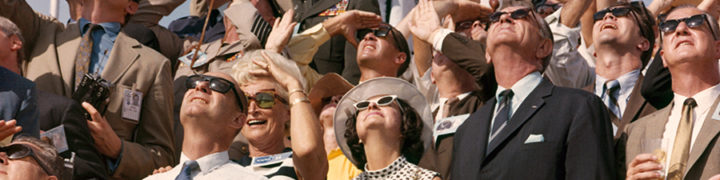
They lost.
You are currently browsing the archive for the Politics category.
Paul Romer’s recent TED Talk about the concept of charter cities.
Tags: Paul Romer
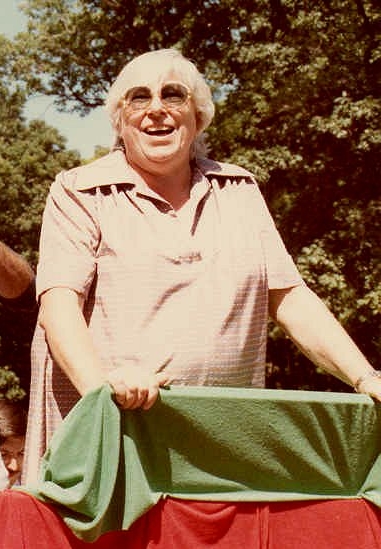
O’Hair was murdered in 1995 by a typesetter who worked for American Atheists. (Image by Alan Light.)
From the 1965 Playboy interview with Madalyn Murray O’Hair, the arch-atheist who sued to get prayer out of public schools and was dubbed “The Most Hated Woman in America” during her lifetime:
Playboy:
What led you to become an atheist?
Madalyn Murray O’Hair:
Well, it started when I was very young. People attain the age of intellectual discretion at different times in their lives — sometimes a little early and sometimes a little late. I was about 12 or 13 years old when I reached this period. It was then that I was introduced to the Bible. We were living in Akron and I wasn’t able to get to the library, so I had two things to read at home: a dictionary and a Bible. Well, I picked up the Bible and read it from cover to cover one weekend — just as if it were a novel — very rapidly, and I’ve never gotten over the shock of it. The miracles, the inconsistencies, the improbabilities, the impossibilities, the wretched history, the sordid sex, the sadism in it — the whole thing shocked me profoundly. I remember l looked in the kitchen at my mother and father and I thought: Can they really believe in all that? Of course, this was a superficial survey by a very young girl, but it left a traumatic impression. Later, when I started going to church, my first memories are of the minister getting up and accusing us of being full of sin, though he didn’t say why; then they would pass the collection plate, and I got it in my mind that this had to do with purification of the soul, that we were being invited to buy expiation from our sins. So I gave it all up. It was too nonsensical.•
______________________
“Madalyn,” a 30-minute film from the 1970s:
Tags: Madalyn Murray O'Hair
I wonder if the recent economic meltdown would have cooled any of Friedman’s free-market fervor. Doubtful.
Tags: Milton Firedman, Phil Donahue
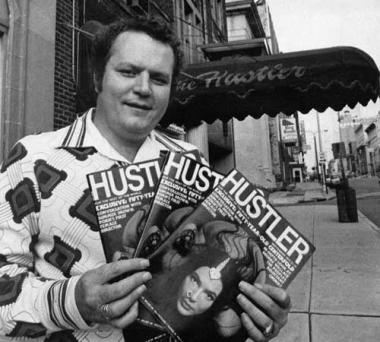
From “Larry Flynt at Home,” Jean Stein’s Los Angeles Review of Books recollection of the puke-inducing pornographer/Constitutional rights champion at the height of his powers in 1983, as he was planning a Presidential run. In this segment, screenwriter and novelist Terry Southern has been summoned to Flynt’s Los Angeles lair, by a wired Dennis Hopper, to work on a dubious film project about Jim Morrison:
“The next guy to arrive was Marjoe — you know, that guy who used to be a child evangelist. And the other person who was a permanent guest for the moment was Madalyn Murray. Madalyn Murray has devoted her entire life to trying to get the Bible outlawed in school. She’s a professional atheist, very courageous. For some reason Larry Flynt was interested in her cause. I think he wanted to fuck her … mind-fuck her I mean.
About 4:00 P.M. Larry Flynt comes in and says, ‘Sundowner time. Time for a sundowner.’ He’s in a wh
eelchair. His wheelchair is motorized and gold-plated, and it has little American flags like on an ambassador’s car. He’s wearing this big diaper he had made up from an American flag. ‘They treat me like a baby,’ he said, ‘so I’m going to behave like one. And if I poo-poo in my diaper, I’ll be poo-pooing on the American flag.’ He’s trying to explain this to this huge Indian — what the hell is his name? He’s a great Indian guy who’s about seven feet tall … Means, Russell Means. He’s there, and meanwhile I hear this shouting, and it sounds like a big argument, but it’s just Liddy and Tim Leary rehearsing their act, I mean their ‘debate.’ About time for dinner, Frank Zappa arrives, you know him. Quite a grand zany. So there’s this very long table of odd people.After dinner Larry said, ‘Come into my study, Terry, you’re going to need some money for the weekend.’ We went into his office and he said, ‘There’s a briefcase by the couch where you’re sitting. Put it on your lap and open it.’ So I did. It was full of packs of hundred-dollar bills. Larry said, ‘It’s a million dollars. I have this on hand to give validity to the offer.’ And he showed me this circular: A standing offer from Larry Flynt to the following women who are prepared to show gyno-pink. One million cash to Barbara Bach, Cathy Bach, Barbi Benton, Cheryl Tiegs … They were mostly kind of obscure, but there were one or two that were totally out of place, like Gloria Steinem and Jane Fonda. He was offering them a million dollars if they’d pose and do a gyno spread, what he called ‘flashing pink.’ And so he said, ‘Take whatever you think you’ll need for the weekend,” and he made a point of turning around to use the phone so I could take what I wanted. When he finished his call, he asked, ‘How much did you take?’
‘Two hundred dollars.’
‘You must be a fool — you could have taken more.’
I said, “I don’t think I need any more than that.’
‘Well, I like an honest man,’ he said.”•
_____________________________
Larry Flynt, the First Amendment champion:
Tags: Frank Zappa, G. Gordon Liddy, Jean Stein, Larry Flynt, Madalyn Murray O'Hair, Marjoe, Russell Means, Timothy Leary
Dennis Kucinich interviewed in a Cleveland diner in 1978 by that one-man windstorm Tom Snyder.
Tags: Dennis Kucinich, Tom Snyder

An uneasy synthesis of first and third worlds, Gurgaon, India, is a city with a booming economy and almost no basic services. Lacking both the benefits and encumbrances of central government, Gurgaon is a place with a couple dozen gleaming shopping malls and also one where citizens have to improvise their own means of trash disposal. It’s laissez-faire taken to its fullest expression. Jim Yardley has a great new article in the New York Times about the city where everyone is on their own. The opening:
“In this city that barely existed two decades ago, there are 26 shopping malls, seven golf courses and luxury shops selling Chanel and Louis Vuitton. Mercedes-Benzes and BMWs shimmer in automobile showrooms. Apartment towers are sprouting like concrete weeds, and a futuristic commercial hub called Cyber City houses many of the world’s most respected corporations.
Gurgaon, located about 15 miles south of the national capital, New Delhi, would seem to have everything, except consider what it does not have: a functioning citywide sewer or drainage system; reliable electricity or water; and public sidewalks, adequate parking, decent roads or any citywide system of public transportation. Garbage is still regularly tossed in empty lots by the side of the road.
With its shiny buildings and galloping economy, Gurgaon is often portrayed as a symbol of a rising ‘new’ India, yet it also represents a riddle at the heart of India’s rapid growth: how can a new city become an international economic engine without basic public services? How can a huge country flirt with double-digit growth despite widespread corruption, inefficiency and governmental dysfunction?”
Tags: Jim Yardley
Adam Curtis’ silicon-phobic BBC documentary series, which takes its title from Richard Brautigan’s great poem.
Tags: Adam Curtis, Richard Brautigan
In 1977, Hunter S. Thompson thought President Carter was a badass. That persona was subsumed in scenes of blindfolded American hostages being paraded around in Iran, a national embarrassment which played out nightly, endlessly on flickering screens.
Tags: Hunter S. Thompson, Jimmy Carter
Recent footage of the great writer-composer Gil Scott-Heron, who just died.
- Listen to “The Revolution Will Not Be Televised.”
- Listen to “Whitey on the Moon.”
Tags: Gil Scott-Heron
Ad for Hunter S. Thompson’s campaign for Sheriff of Aspen in 1970. (Thanks Bibliokept.)
From a 2005 Tahoe Daily Tribune article: “Thompson had been a resident of Pitkin County since the late 1960s. In a 1970 Rolling Stone article titled ‘Freak Power in the Rockies’ (also later published in the Thompson collection The Great Shark Hunt), he documented the rise of a new political generation of hippy activists in Aspen. In 1970, Thompson himself ran unsuccessfully for Pitkin County sheriff.
Thompson’s political legacy in Aspen and the surrounding area is far-reaching, even though his involvement dropped off in recent years. His bid for the sheriff’s post was a direct attack on the traditional, conservative style of policing in place at the time, and set the stage for the more tolerant, community-minded law enforcement that took root in the 1970s under Sheriff Dick Kienast.
Thompson’s activism also extended into the nuts and bolts of county government, and he helped pioneer the anti-development streak in local politics that survives to this day. He backed strict land-use controls and the candidates who were willing to impose them. Many of the land-use regulations still in place in Aspen and Pitkin County can be traced back to Thompson’s work as a growth-control activist.
‘The guy used to call me at 3 a.m. and talk about land use,’ said Pitkin County Commissioner Mick Ireland.'”
Tags: Hunter S. Thompson
For some reason in 1973, more Americans than usual imagined they were seeing UFOs. Maybe after trips to the moon, we thought we were due a visit of our own? Maybe the Vietnam-and-Watergate era was so surreal that everything felt alien anyway? Governor John Gilligan of Ohio, who thought he saw a saucer, is, of course, the father of Kathleen Sebilius, the current Secretary of Health and Human Services.
Tags: John Gilligan, Kathleen Sebilius, Walter, Walter Cronkite
Dropping acid, making pottery, surfing waves, studying Tarot, etc. A thoughtful look at California hippies, particularly one named Tom, in 1973.
Tags: Tom
Kentucky Fried Chicken was oddly allowed to briefly operate two restaurants in Russia during the frost of the Cold War in the 1960s.

"He thinks things are going in a bad direction."
From “The Elephant in the Green Room,” Gabriel Sherman’s just-published New York magazine piece about FOX News honcho Roger Ailes, a ghastly man whose face looks as if it should be attached the hull of a ship:
“So it must have been disturbing to Ailes when the wheels started to come off Fox’s presidential-circus caravan. (Coincidentally or not, this happened more or less when Donald Trump jumped on: ‘They like me on the network,’ Trump told me. ‘I get ratings.’) The problem wasn’t that ratings had been slipping that much—Beck’s show declined by 30 percent from record highs, but the ratings were still nearly double those from before he joined the network. It was that, with an actual presidential election on the horizon, the Fox candidates’ poll numbers remain dismally low (Sarah Palin is polling 12 percent; Newt Gingrich and Rick Santorum, 10 percent and 2 percent, respectively). Ailes’s candidates-in- waiting were coming up small. And, for all his programming genius, he was more interested in a real narrative than a television narrative—he wanted to elect a president. All he had to do was watch Fox’s May 5 debate in South Carolina to see what a mess the field was—a mess partly created by the loudmouths he’d given airtime to and a tea party he’d nurtured. And, not incidentally, a strong Republican candidate would be good for his business, too. A few months ago, Ailes called Chris Christie and encouraged him to jump into the race. Last summer, he’d invited Christie to dinner at his upstate compound along with Rush Limbaugh, and like much of the GOP Establishment, he fell hard for Christie, who nevertheless politely turned down Ailes’s calls to run. Ailes had also hoped that David Petraeus would run for president, but Petraeus too has decided to sit this election out, choosing to stay on the counterterrorism front lines as the head of Barack Obama’s CIA. The truth is, for all the antics that often appear on his network, there is a seriousness that underlies Ailes’s own politics. He still speaks almost daily with George H. W. Bush, one of the GOP’s last great moderates, and a war hero, which especially impresses Ailes.
All the 2012 candidates know that Ailes is a crucial constituency. ‘You can’t run for the Republican nomination without talking to Roger,’ one GOPer told me. ‘Every single candidate has consulted with Roger.’ But he hasn’t found any of them, including the adults in the room—Jon Huntsman, Mitch Daniels, Mitt Romney—compelling. ‘He finds flaws in every one,’ says a person familiar with his thinking.
‘He thinks things are going in a bad direction,’ another Republican close to Ailes told me. ‘Roger is worried about the future of the country. He thinks the election of Obama is a disaster. He thinks Palin is an idiot. He thinks she’s stupid. He helped boost her up. People like Sarah Palin haven’t elevated the conservative movement.'”
Tags: Domald Trump, Gabriel Sherman, Glenn Beck, Roger Ailes
During her final broadcast as anchor of the CBS Evening News, Katie Couric takes one more righteous jab at Sarah Palin. At the 2:00 mark.
Tags: Katie Couric, Sarah Palin
Oriana Fallaci was one of the people who overreacted after the tragedy of 9/11, seeming to believe that the West was at war with Islam rather than terrorism. But she was pretty spot-on in her assessment of Muammar el-Qaddafi when coversing with that shock jock Charlie Rose in 2003.
More Oriana Fallaci posts:
- Fallaci interviews Indira Gandhi (1972).
- Fallaci interviews Golda Meir (1972).
Tags: Charlie Rose, Muammar el-Qaddafi, Muammar Gaddafi, Oriana Fallaci
“A World for Women in Engineering” is an excellent 20-minute doc made by Bell Labs in 1975. It’s a look at a multicultural collection of women working for Bell during the age of feminist ascendancy and the push for the Equal Rights Amendment. A testament to the times as well as a love letter to science.
Tags: Bev Miles, Carol Latimer, Jerri Jackson, Sharon Fujitani, Tony Leach

A 2008 National Socialist Party rally in D.C.
The opening of Jesse McKinley’s well-written New York Times account of the strange murder of Riverside, California, resident Jeff Hall, a representative of the neo-Nazi National Socialist Party, who was recently shot to death by his tow-headed ten-year-old son:
“The day before he allegedly shot his father, the sandy-haired 10-year-old boy showed off a prized possession to a visitor. It was a thin leather belt emblazoned with a silver insignia of the Nazi SS.
‘Look what my dad got me,’ the boy said shyly, perched on the living room stairs, one of the few quiet spots in a house with five children.
A little more than 12 hours later, the police say, the boy stood near those stairs with a handgun and killed his father, Jeff Hall, as he lay on the living room couch. It was about 4 a.m. on May 1; paramedics declared Mr. Hall dead when they arrived.
The police say that the killing was intentional, but that the motives behind it are still not fully understood. But whatever the reason, it has cast fresh light on the fringe group to which Mr. Hall devoted his life: the National Socialist Movement, the nation’s largest neo-Nazi party, whose message stands in surreal juxtaposition to the suburban, workaday trappings of many of its members.”
••••••••••
Hall can be seen at this creepy 2009 anti-immigration rally. He’s the speaker with the shaved head who’s on camera early in the clip:
Tags: Jeff Hall, Jeffe McKinley
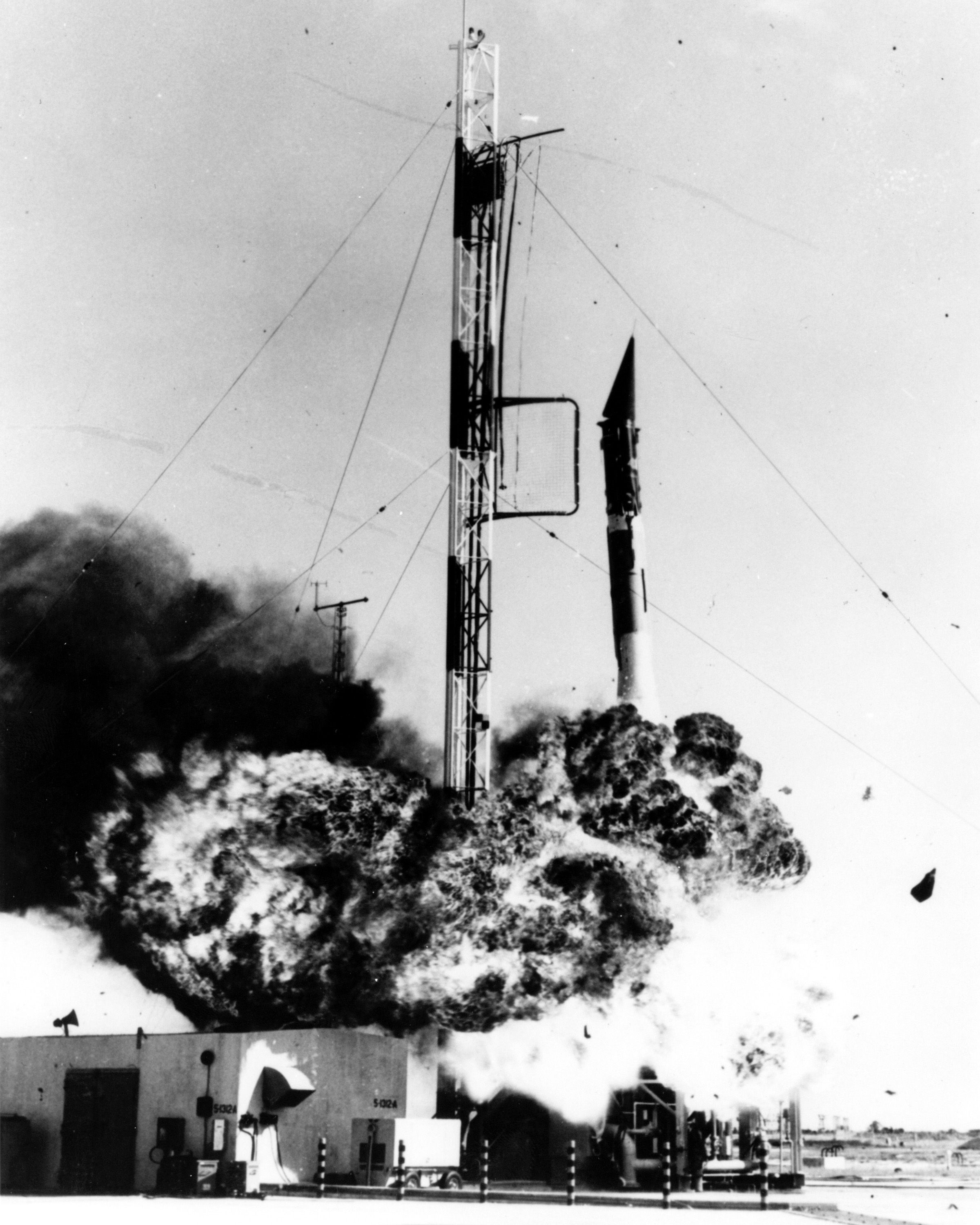
A failed launch during IGY saw the Vanguard malfunction in December 1957.
In 1957-58, 64 nations from both sides of a Cold War that would continue for three more decades came together to perform large-scale scientific research as part of an alliance known as International Geophysical Year. It was an unprecedented display of global information sharing, with satellites launched and knowledge of space travel gained. Life magazine covered the outset of the project with the article, “The World Studies the World.” An excerpt:
“Through the top of a strange sheet-metal shack at Ft. Churchill, Manitoba, a powerful research rocket last week streaked into the upper air to perform one of the first major experiments of the newly launched International Geophysical Year. While the rocket is radioing its data from 160 miles up, a team of seismologists deep in a Chilean tunnel were taking data from earthquake recorders. A pair of oceanographers on the remote Pacific island of Jarvis were collecting samples of ocean water. And in the South Pole Americans were observing the fluctuations of a rare red aurora.

Japanese stamp commemorating IGY.
In hundreds of other places and ways, 8,000 scientists of 64 nations were starting history’s most ambitious scientific research program. In the IGY, says Dr. Joseph Kaplan, chairman of U.S. IGY committee, ‘scientists of the world are going to take a long and special look at our earth –at its wrinkled crust, its hot heart, its deep seas, its envelope of air, its mighty magnetism, its relationship to outer space.’
IGY, which will last for 18 months through December 1958, will cost half a billion dollars. Its end results should be of extreme practical value; vastly improved communications, more accurate navigation for ships and planes, billions of dollars and many lives saved with improved weather forecasting, and further progress toward mastery of polar regions and outer space.”
••••••••••
Donald Fagen sings a hopeful 1982 song which he wrote from the vantage point of those involved in IGY: “Here at home we’ll play in the city / Powered by the sun / Perfect weather for a streamlined world / There’ll be spandex jackets, one for everyone.”
Tags: Donald fagen, Dr. Joseph Kapla
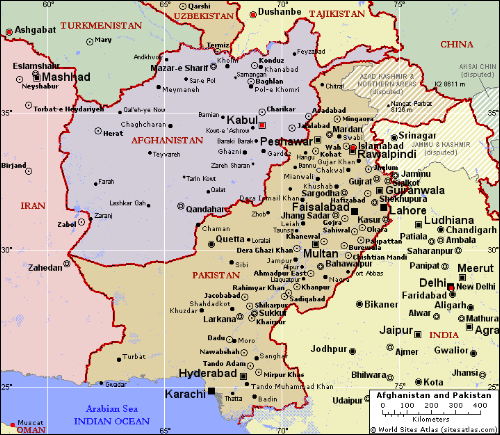 The perfect opening of “The Double Game,” a just-published New Yorker article about the best-laid post-war American plans for Pakistan and India, written by the resolutely excellent Lawrence Wright:
“It’s the end of the Second World War, and the United States is deciding what to do about two immense, poor, densely populated countries in Asia. America chooses one of the countries, becoming its benefactor. Over the decades, it pours billions of dollars into that country’s economy, training and equipping its military and its intelligence services. The stated goal is to create a reliable ally with strong institutions and a modern, vigorous democracy. The other country, meanwhile, is spurned because it forges alliances with America’s enemies.
The country not chosen was India, which ’tilted’” toward the Soviet Union during the Cold War. Pakistan became America’s protégé, firmly supporting its fight to contain Communism. The benefits that Pakistan accrued from this relationship were quickly apparent: in the nineteen-sixties, its economy was an exemplar. India, by contrast, was a byword for basket case. Fifty years then went by. What was the result of this social experiment?
India has become the state that we tried to create in Pakistan. It is a rising economic star, militarily powerful and democratic, and it shares American interests. Pakistan, however, is one of the most anti-American countries in the world, and a covert sponsor of terrorism. Politically and economically, it verges on being a failed state.”
Tags: Lawrence Wright
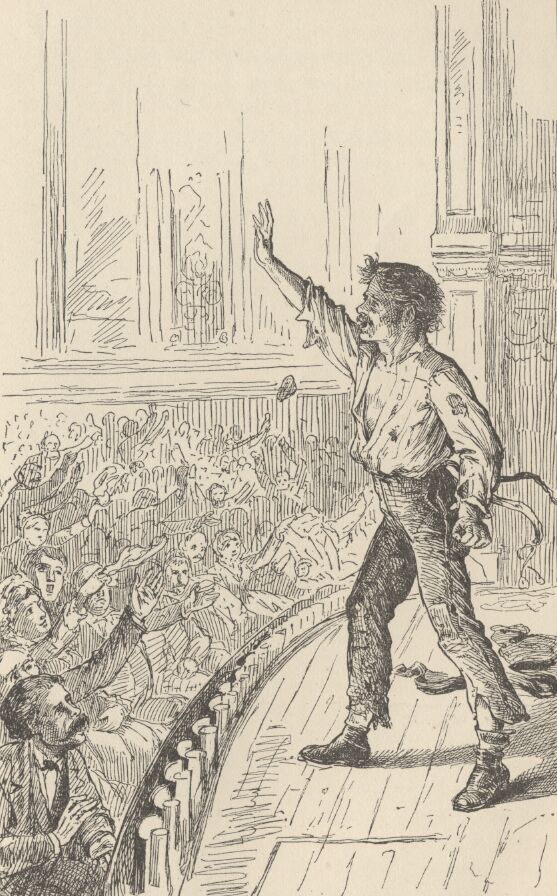
"His clothes differed in no respect from a 'wharf-rat's,' except that they were raggeder."
The nineteenth-century Pennsylvania-born preacher and orator Henry Clay Dean (not to be confused with the statesman Henry Clay) lived in roughly the same time frame as Horatio Alger, which made sense, since Dean was Algeresque, a poor and ragged lad who made his way in the world, though he never lost the raggedness.
Mark Twain, another contemporary, had this to say about Dean: “He began life poor and without education. But he educated himself – on the curbstones of Keokuk. He would sit down on a curbstone with his book, careless or unconscious of the clatter of commerce and the tramp of the passing crowds, and bury himself in his studies by the hour, never changing his position except to draw in his knees now and then to let a dray pass unobstructed; and when his book was finished, its contents, however abstruse, had been burned into his memory, and were his permanent possession. In this way he acquired a vast hoard of all sorts of learning, and had it pigeonholed in his head where he could put his intellectual hand on it whenever it was wanted. His clothes differed in no respect from a ‘wharf-rat’s,’ except that they were raggeder, more ill-assorted and inharmonious (and therefore more extravagantly picturesque), and several layers dirtier.”
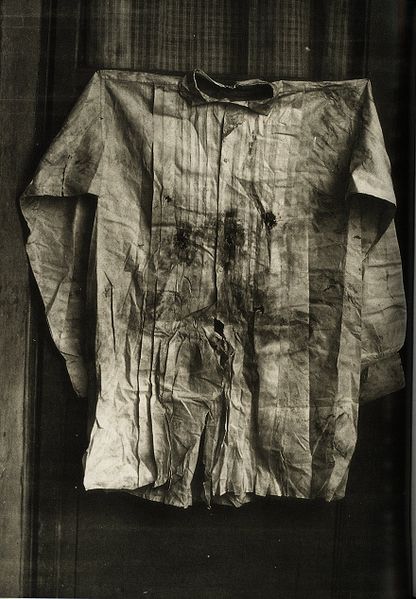
"He was a man who put on a clean shirt every New Year's Day and didn't take it off until the 31st of December."
The Brooklyn Daily Eagle took notice of Dean’s death with an article in its February 10, 1887 edition. An excerpt:
“Who was Henry Clay Dean? According to a legend familiar in every newspaper office at the mighty West he was a man who put on a clean shirt every New Year’s Day and didn’t take it off until the 31st of December. But that does not fully describe him. Mr. Dean had a useful and honorable career. In the first place he was a preacher of the Gospel and expounded the simple and beautiful truths of the Sermon on the Mount with an unction never surpassed. It was said of him by a Chicago admirer that his fervid eloquence ‘was enough to make the pin feathers of an heretical rooster quiver.’ In the second place he was a political orator whose addresses from the stump often recalled the extemporary speeches of Tom Benton. In the third place he was chaplain of the United States Senate at a time when Senators feared God more than they do to-day, and when their hearts and minds afforded a richer soil for the seeds of divine knowledge. Lastly, Mr. Dean was a Democrat, pure and undefiled–one of the ‘old timers,’ who believed that although Noah was justified in taking a Republican and Democrat into the ark, he ought to have thrown the former overboard before the waters subsided. He was a good man and true. Peace to his ashes.”
Tags: Henry Clay Dean, Horatio Alger, Mark Twain
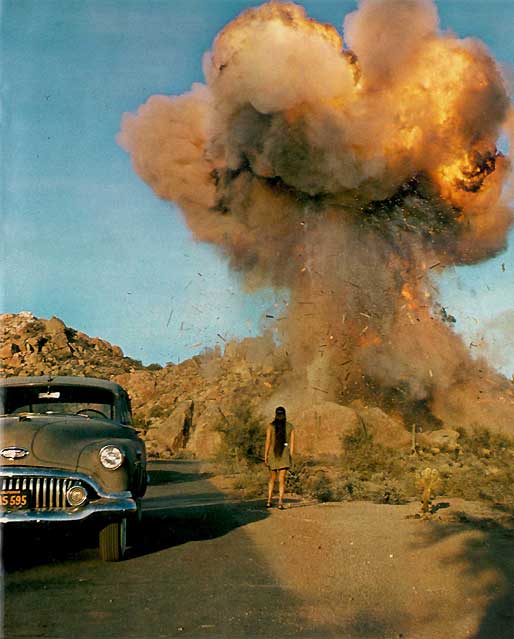 You hear the drumbeat from Tea Party activists and pandering politicians about how government is getting too much control of our lives, gaining too much power. Of course, the opposite is true. As technology continues personalizing and proliferating, government is going to have an increasingly harder time regulating business, communications and individuals. That implies both good and bad things. Personal liberties are paramount, but the ability to marshal the force of government is often crucial during crises.
In “City of Fear,” an excellent 2007 Vanity Fair article by the routinely great William Langewiesche, the writer looks at how a Brazilian prison gang used cell phones to coordinate the shutdown of a city, and what this implies for the future of central control in general. Subsequent uprisings in Middle Eastern countries have made this piece seem prophetic. The article’s opening:
“For seven days last May the city of São Paulo, Brazil, teetered on the edge of a feral zone where governments barely reach and countries lose their meaning. That zone is a wilderness inhabited already by large populations worldwide, but officially denied and rarely described. It is not a throwback to the Dark Ages, but an evolution toward something new—a companion to globalization, and an element in a fundamental reordering that may gradually render national boundaries obsolete. It is most obvious in the narco-lands of Colombia and Mexico, in the fractured swaths of Africa, in parts of Pakistan and Afghanistan, in much of Iraq. But it also exists beneath the surface in places where governments are believed to govern and countries still seem to be strong.”
••••••••••
William Langewiesche and Stephen Colbert discuss the spread of nukes:
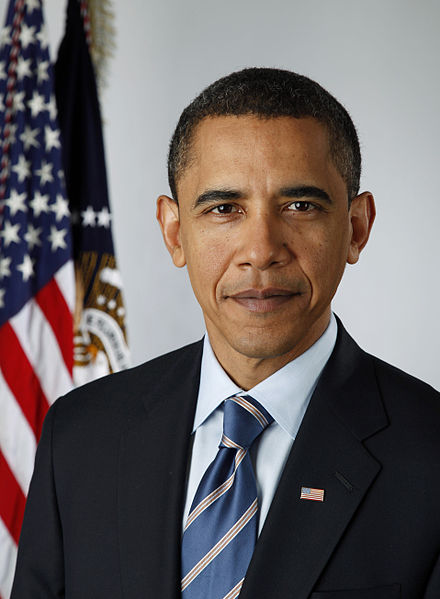
Damn, those Kenyans are good. (Image by Pete Souza.)
Economist Tyler Cowen’s instant reaction to the political ramifications of the raid that killed Osama bin Laden, posted at 11:30pm on May 1:
“My quick take is that that Obama will be re-elected (getting Osama is way more important than Iraq, or Saddam in the American mind, attacks on American soil, etc.), at this point the Republicans won’t try to beat him from the center and will thus nominate a more extreme candidate and lose badly, and the most important effects will be on Pakistan, not this country.”
Tags: Barack Obama, Osama bin Laden, Tyler Cowen
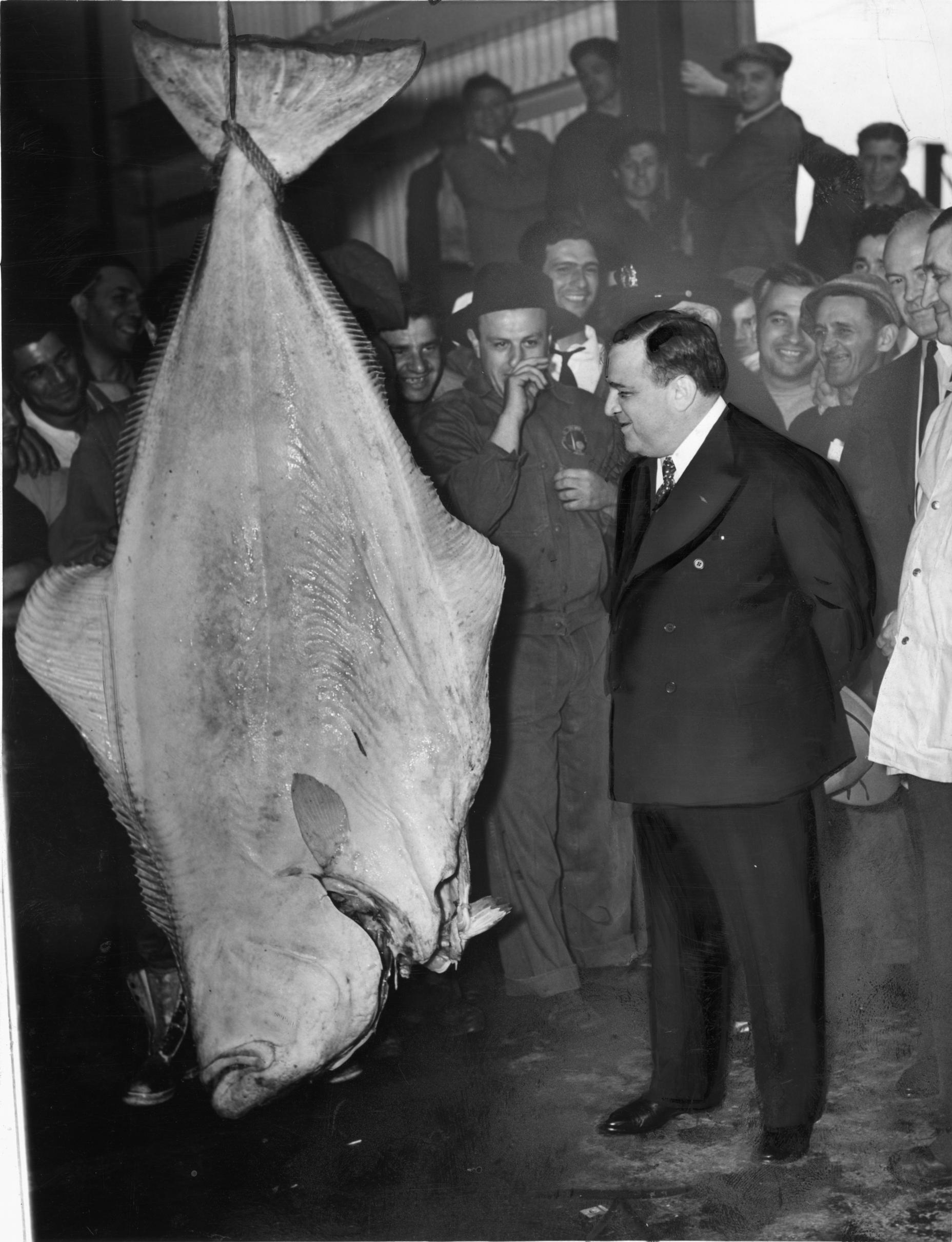
The "Little Flower," as the Mayor was known, with a big fish. (Image by C. M. Stieglitz.)
C.M Stieglitz of the long-defunct World Telegram took this classic 1939 photograph of New York’s Mayor Fiorello LaGuardia with a 300-pound halibut. LaGuardia, a commanding presence to say the least, was famous for everything from being one of Hitler’s earliest and most outspoken critics to reading comic strips to local children on the radio. He was also known to not be allergic to cameras. LaGuardia passed away from pancreatic cancer eight years after this photo was snapped. An exceprt from his New York Times obituary:
“A city of which he was as much a part as any of its public buildings awoke to find the little firebrand dead. Its people had laughed with him and at him, they had been entertained by his antics and they had been sobered by his warnings, and they found it difficult to believe that the voice he had raised in their behalf in the legislative halls of city and nation, on street corners and over the radio, was stilled forever.
Mayor O’Dwyer, his successor, expressed this feeling. Although Mr. La Guardia’s death was expected, the Mayor said, his passing brought with it ‘a shock of awful finality.’
‘In his death the people of the city, the State and nation have lost a great, patriotic American citizen,’ the Mayor said.”
••••••••••
Tags: C.M. Stieglitz, Fiorello LaGuardia