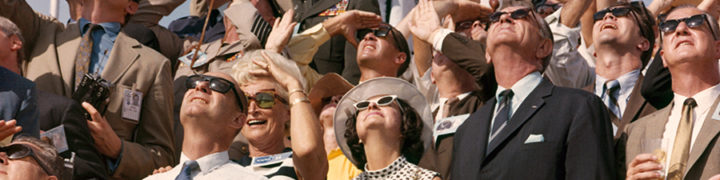
And so it ends, to some extent, in the same way. At long last.
You are currently browsing the archive for the Politics category.
Tags: Osama bin Ladden

Hillary Clinton gets the Marilyn Monroe treatment. (Image by "Spy.")
The entire run of satirical magazine Spy, which was to the ’80s and early ’90s as the Daily Show is to this dumb day, is now on Google Books. You can read any of its issues here. From the Google Books introduction of the magazine that Graydon Carter and Kurt Andersen made and which made them:
“Smart. Funny. Fearless. ‘It’s pretty safe to say that Spy was the most influential magazine of the 1980s. It might have remade New York’s cultural landscape; it definitely changed the whole tone of magazine journalism. It was cruel, brilliant, beautifully written and perfectly designed, and feared by all. There’s no magazine I know of that’s so continually referenced, held up as a benchmark, and whose demise is so lamented.’ –Dave Eggers. ‘It’s a piece of garbage’ —Donald Trump.”
••••••••••
Tags: Graydon Carter, Kurt Andersen
The Objectivist at Madison Square Garden with Phil Donahue in 1979.
Tags: Ayn Rand, Phil Donahue
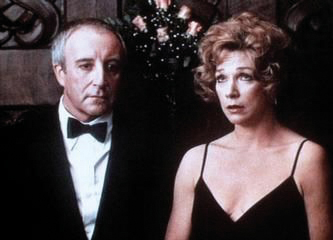 Not so long ago in America, when privacy was still an option and TV was the dominant medium, we feared that maybe this box could prove us idiots, that it could be used to dupe us at the highest levels, that Trilateral Commissions could fool us with Manchurian Candidates, that we could elect a President who was a propped-up simpleton or even an enemy among us. Now, of course, with the Internet’s constant flow of information and crowdsourcing vetting each candidate, all of those fears should be banished. But, of course, they’ve just been heightened. Hal Ashby’s picture-perfect realization of Jerzy Kosinski’s rich 1971 novella, Being There, written during the era when television was considered the problem with us, provides some clues to this phenomenon, though probably not the ones it intended.
Chance (Peter Sellers) is a mentally-challenged gardener who’s worked his entire life at the Washington D.C. home of man who has just passed away. Chance, who’s never left the grounds or learned to read or write, has learned all his life lessons from watching television. (“I like to watch,” he tells all he meets, often having has mantra to passivity misunderstood.) Since he’s not mentioned in the old man’s will, he’s evicted by lawyers. Forced into a spinning world he’s previously encountered only on the static tube, the bewildered man has unlikely good luck when he is hit by a limo carrying the wife of a political power broker. His injury is slight, but Eve (Shirley MacLaine) takes Chance in, and she and her sickly kingmaker husband (Melvyn Douglas) are enchanted by him, mistaking his opacity for wisdom, believing through a series of misunderstandings that he is a financial hotshot named “Chauncey Gardner.” Soon, Chance has met with the President (Jack Warden) and been quoted on TV by the beleaguered Commander in Chief. A lonely nation turns its eyes to Chance, and in addition to advising the President, he is soon being considered a potential candidate himself for the nation’s highest office.
George W. Bush was essentially the final TV candidate, so why have conspiracy theories been trumped up in an age when so little can be hidden? Perhaps if there is no unknown to fear we create it. Perhaps, like Chance, we like to watch, but what we really love is to see what we want to see.•
Tags: Hal Ashby, Jack Warden, Jerzy Kosinski, Melvyn Douglas, Peter Sellers, Shirley MacLaine
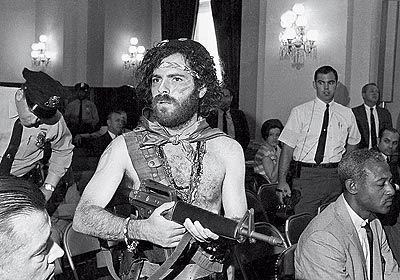
Jerry Rubin had morphed from Yippie to Yuppie by the time he was struck by a car and killed in 1994 while jaywalking near UCLA. Here he is in all his mad glory in 1970, sassing Phil Donahue.
Tags: Jerry Rubin, Phil Donahue

"Backing them up will be an all-star cast of freaks, every one of them stoned." (Image by HammondCast.)
Before moving to his longstanding homestead in Aspen, Colorado, Hunter S. Thompson lived in Berkeley and was eyewitness to the Hippie phenomenon. An excerpt from “The ‘Hashbury’ Is The Capital of the Hippies,” Thompson’s account from the front lines of flower power and its brutally quick commodification, which ran in the May 14, 1967 New York Times:
“Those hippies who don’t work can easily pick up a few dollars a day panhandling along Haight Street. The fresh influx of curiosity-seekers has proved a great boon to the legion of psychedelic beggars. During several days of roaming around the area, I was touched so often that I began to keep a supply of quarters in my pocket so I wouldn’t have to haggle for change. The panhandlers are usually barefoot, always young and never apologetic. They’ll share what they collect anyway, so it seems entirely reasonable that strangers should share with them.
The best show on Haight Street is usually on the sidewalk in front of the Drog Store, a new coffee bar at the corner of Masonic Street. The Drog Store features an all-hippy revue that runs day and night. The acts change sporadically, but nobody cares. There will always be at least one man with long hair and sunglasses playing a wooden pipe of some kind. He will be wearing wither a Dracula cape, a long Buddhist robe, or a Sioux Indian costume. There will also be a hairy blond fellow wearing a Black Bart cowboy hat and a spangled jacket that originally belonged to a drum major in the 1949 Rose Bowl parade. He will be playing the bongo drums. Next to the drummer will be a dazed-looking girl wearing a blouse (but no bra) and a plastic mini-skirt, slapping her thighs to the rhythm of it all.
These three will be the nucleus of the show. Backing them up will be an all-star cast of freaks, every one of them stoned. They will be stretched out on the sidewalk, twitching and babbling in time to the music. Now and then somebody will fall out of the audience and join the revue; perhaps a Hell’s Angel or some grubby, chain-draped impostor who never owned a motorcycle in his life. Or maybe a girl wrapped in gauze or a thin man with wild eyes who took an overdose of acid nine days ago and changed himself into a raven. For those on a quick tour of the Hashbury, the Drog Store revue is a must.” (Thanks Kevin Kelly.)
Tags: Hunter S. Thompson
“My art is cultural, it represents the diminishing humanity in today’s society.”
Tags: Liu Bolin
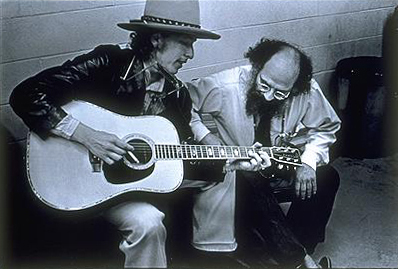
Bob Dylan and Allen Ginsberg get attuned in 1975. (Image by Elsa Dorfman.)
Great find by the Essayist, which uncovered an online version of “The Great Marijuana Hoax,” Allen Ginsberg’s 1966 Atlantic essay in defense of the illegal herb, which was then vilified to hysterical proportions. An excerpt:
“This essay, conceived by a mature middle-aged gentleman, the holder at present of a Guggenheim Fellowship for creative writing, a traveler on many continents with experience of customs and modes of different cultures, is dedicated to those who have not smoked marijuana, who don’t know exactly what it is but have been influenced by sloppy, or secondhand, or unscientific, or (as in the case of drug-control bureaucracies) definitely self-interested language used to describe the marijuana high pejoratively. I offer the pleasant suggestion that a negative approach to the whole issue (as presently obtains in what are aptly called square circles in the USA) is not necessarily the best, and that it is time to shift to a more positive attitude toward this specific experience. If one is not inclined to have the experience oneself, this is a free country and no one is obliged to have an experience merely because friends, family, or business acquaintances have had it and report themselves pleased. On the other hand, an equal respect and courtesy are required for the sensibilities of one’s familiars for whom the experience has not been closed off by the door of Choice.”
Tags: Allen Ginsberg
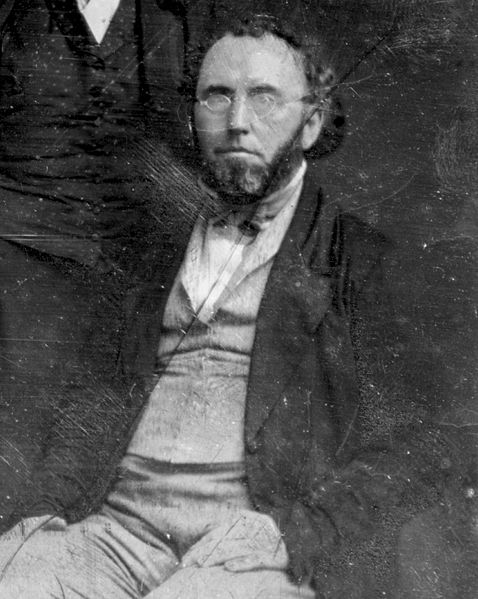
Transcendentalist and literary editor George Ripley founded Brook Farm in Massachusetts. It was no Utopia.
From “Utopia & Dystopia,” Paul La Farge’s excellent 2010 BookForum essay about the horrifying nature of Utopian settlements (both fictional and actual), from Sir Thomas More forward:
“The history of real-world utopias bears his observation out. One of America’s best-known utopian experiments was performed at Brook Farm, in Massachusetts, where members of the Transcendentalist intelligentsia, among them Nathaniel Hawthorne, tried their hands at a communal life inspired by the writings of Fourier. The Brook Farmers lacked the funds to live well and the skills to live cheaply; they went into debt and argued about doctrine, and when their half-built phalanstery burned down in the spring of 1846, the community went into a decline from which it did not recover. The most enduring monument to Brook Farm is Hawthorne’s novel The Blithedale Romance (1852), which, far from praising the experiment, describes a group of city folk going obstinately to seed, their minds numbed by work, their hearts ablaze with impractical and ultimately tragic romantic combinations.
The Brook Farmers’ misfortune was small compared with that of the Icarians. It’s hard to see how Cabet’s novel could have inspired anyone to serious activity; nevertheless, in 1848, sixty-nine French people, dressed in black velour uniforms, set sail from Le Havre for Texas, where they were to establish a colony. They settled on the Red River, where they caught yellow fever; by the time Cabet arrived with the second group of colonists, a year later, their society had fallen apart. The Icarians relocated to Nauvoo, Illinois, whence the Mormons had just been chased: Presumably the real estate came cheap. Fifteen hundred Icarians gathered in Nauvoo, but they accomplished little, aside from printing a tract in which Cabet described how nice a society he could make if someone were to give him half a million dollars. The group split; Cabet and his loyalists departed for Saint Louis, where Cabet died a few days later. The remainder of the group bought land in Iowa, which so depleted their resources that they lived for years in mud houses and walked around in wooden shoes. Their splendor was all in their ‘somewhat elaborate’ constitution, drafted by Cabet, ‘which lays down with great care the equality and brotherhood of mankind, and the duty of holding all things in common; abolishes servitude and service (or servants); commands marriage, under penalties; provides for education; and requires that the majority shall rule.’
Eventually the Icarians built a schoolhouse and a dining hall, but their society failed to enchant the outside world. Of the sixty-five members who moved to Iowa in 1856, thirty were gone by 1860; the last Icarians disbanded in 1898. Most utopian societies met similar ends: The Harmonists of Pennsylvania lost their money in a lawsuit; the Separatists of Zoar dwindled to nothing. The Oneida Perfectionists, notorious in their day for practicing institutionalized polyamory, fell into scandal and squabbling, then reformed themselves into a silverware company that left its members to form their own matched sets.” (Thanks Essayist.)

Alex Jones: This man is 37 years old! (Image by zcopley.)
The opening of Alexander Zaitchik’s recent Rolling Stone article about radio ranter Alex Jones, who is both insane and insanely popular:
“It’s just past 9 a.m. when Alex Jones pulls his Dodge Charger into a desolate parking lot in Austin. From the outside, the squat, single-story office complex that Jones calls his ‘command center’ resembles a moon base surrounded by fields of dying grass. But inside, blinking banks of high-tech recording gear fill the studio where he broadcasts The Alex Jones Show, a daily talk show that airs on 63 stations nationwide. Jones draws a bigger audience online than Rush Limbaugh and Glenn Beck combined — and his conspiracy-laced rants make the two hosts sound like tea-sipping NPR hosts on Zoloft.
A stocky 37-year-old with a flop of brown hair and a beer gut, Jones usually bounds into the studio, eager to launch into one of his trademark tirades against the ‘global Stasi Borg state’ — the corporate-surveillance prison planet that he believes is being secretly forged by an evil cabal of bankers, industrialists, politicians and generals. This morning, though, Jones looks deflated. Five days ago, a mentally disturbed 22-year-old named Jared Loughner opened fire on a crowd in Tucson, Arizona, killing six and seriously wounding Rep. Gabrielle Giffords. Loughner was reported to be a fan of Loose Change, a film Jones produced that has become the bible for those who believe 9/11 was an inside job.”
••••••••••
Alex Jones believes Magellan is way cooler than Justin Bieber, which is true:
Tags: Alex Jones, Alexander Zaitchik

Deng Xiaoping visits the Johnson Space Center in 1979.
Opening paragraph of Edward Chancellor’s new Wall Street Journal article about China’s booming yet precarious economy:
“In 1974, the future Chinese premier Deng Xiaoping led a large delegation to the United Nations in New York. Chinese officials discovered, as they prepared for the expensive trip, that the could muster only $38,000 in foreign cash. In those days there were no banks in China except the People’s Bank of China, then a department of the Ministry of Finance. Today China’s foreign-exchange reserves are fast approaching $3 trillion, and its banks are among the world’s most valuable companies. This remarkable success story has occurred against a background of more or less continuous worries about the stability of China’s financial system. Lately those concerns have been greater than ever.” (Thanks Marginal Revolution.)
Tags: Deng Xiaoping, Edward Chancellor
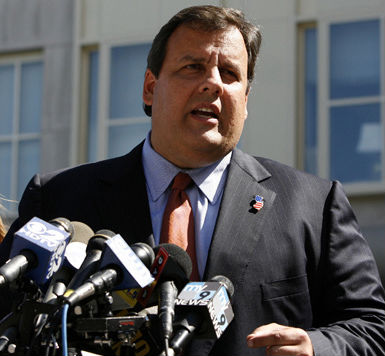
Governor Chris Christie: Outpolling Rick Santorum. (Image by Walter Burns.)
Inexplicable Republican boy wonder Chris Christie is far from the first politician to lie freely, but his Giuliani-like arrogance is fairly stunning. The governor gets a richly deserved, detailed takedown in “Christie’s Talk Is Blunt, But Not Alwats Straight,” Richard Perez-Pena’s piece in the New York Times. The article’s opening:
“New Jersey’s public-sector unions routinely pressure the State Legislature to give them what they fail to win in contract talks. Most government workers pay nothing for health insurance. Concessions by school employees would have prevented any cuts in school programs last year.
Statements like those are at the core of Gov. Chris Christie’s campaign to cut state spending by getting tougher on unions. They are not, however, accurate.
In fact, on the occasions when the Legislature granted the unions new benefits, it was for pensions, which were not subject to collective bargaining — and it has not happened in eight years. In reality, state employees have paid 1.5 percent of their salaries toward health insurance since 2007, in addition to co-payments and deductibles, and since last spring, many local government workers, including teachers, do as well. The few dozen school districts where employees agreed to concessions last year still saw layoffs and cuts in academic programs.”
Tags: Chris Christie

Chris Rock: "It actually feels like racism's almost over." (Image by dbking.)
From Scott Raab’s Esquire interview:
“Scott Raab: Like many nice Caucasians, I cried the night Barack Obama was elected. It was one of the high points in American history. And all that’s happened since the election is just a shitstorm of hatred. You want to weigh in on that?
Chris Rock: I actually like it, in the sense that — you got kids? Kids always act up the most before they go to sleep. And when I see the Tea Party and all this stuff, it actually feels like racism’s almost over. Because this is the last— this is the act up before the sleep. They’re going crazy. They’re insane. You want to get rid of them — and the next thing you know, they’re fucking knocked out. And that’s what’s going on in the country right now.”
Tags: Chris Rock, Scott Rabb
Batgirl ain’t having it. From 1974.
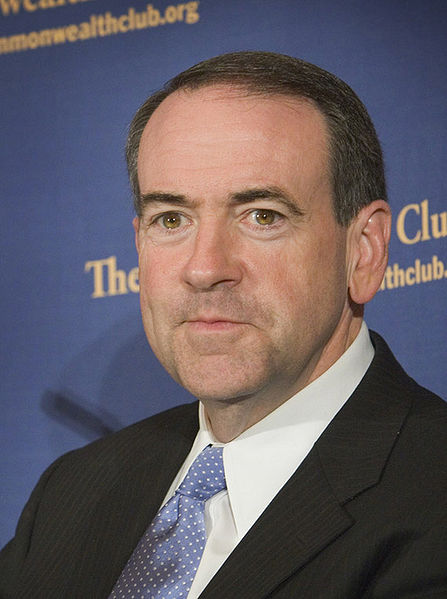
President Mike: Jesus rode a dinosaur. (Image by David Ball.)
…is having a former Presidential candidate and a talking head on a major cable outlet who believes that the Earth is 5,000 years old and that Creationism and not Evolution tells the story of humankind.

Monkey ancestor: But how can you deny evolutionary science? It's quite convincing.
Tags: Mike Huckabee
Not a single woman, sadly, but James Baldwin, Marlon Brando, Harry Belafonte, Charlton Heston, Joseph L. Mankiewicz and Sidney Poitier!!! (Thanks Open Culture.)
Tags: Charlton Heston, Harry Belafonte, james Baldwin, Joseph L. Mankiewicz and Sidney Poitier, Marlon Brando
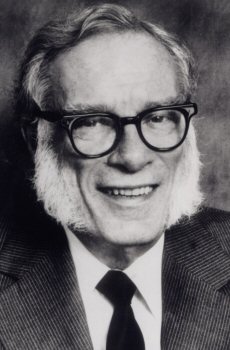
Still no explanation for the mutton chops.
From Goodreads.com: “Anti-intellectualism has been a constant thread winding its way through our political and cultural life, nurtured by the false notion that democracy means that ‘my ignorance is just as good as your knowledge.’“
Tags: Isaac Asimov
French psychoanalyst Jacques Lacan has his lecture interrupted by a member of the Situationist International, the Marxist political group with a flair for surreal spectacle. Great academic theater from roughly four decades ago. (Thanks to The Documentarian.)
Tags: Jacques Lacan

Sign: "Woman Voter Monthly Magazine 5 cts."
I posted once about a woman who opposed women’s suffrage, but how were men who supported female voting treated? The above classic photo shows the NYC headquarters of the Men’s League for Women’s Suffrage in 1915. Just two years earlier, an article in the New York Times provided coverage of the organization’s ill-fated attempt to spread its message of equality to London. An excerpt:
“Riotous scenes attended the attempt of the Men’s League for Women’s Suffrage to hold a meeting in Hyde Park this afternoon. The police gave the League permission to use a truck as a platform, and the overturning of this truck by the crowd ended the proceedings.

Laurence Housman, 1915. (Image by Bain News Service.)
The meeting, as usually, started in an orderly manner, but when Laurence Housman, the poet and playwright, attempted to address an audience of some 10,000 he was greeted with hisses and catcalls, and his speech was interrupted by a fire of heated comments from his hearers. Other speakers had even less success, the interruptions taking the form of clods of earth and other missiles. One youth had an ingenious idea for annoying the speakers. By means of a piece of a mirror he reflected the sun’s rays upon their faces, causing such discomfiture that they were obliged to turn around and address another section of the crowd.
Later one speaker made an allusion to ‘ignorant hooligans.’ The crowd took this as a direct application to themselves. Angry cries were raised, and an ugly rush was made for the truck. The police made valiant efforts to keep back the excited crowd but were practically powerless. The speakers made hasty exits from the vehicle, but one of them had not left it when the truck was captured. He took a flying leap just in time, for a half second later the wagon was completely overturned after a desperate heave by the protesting audience.”
Tags: Laurence Housman
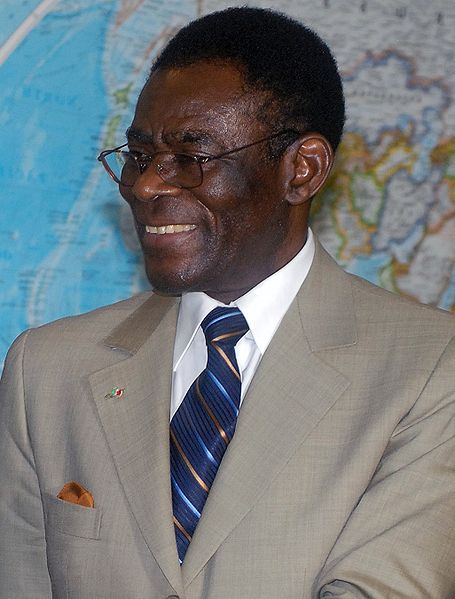
"His wardrobe was picked from the racks of Versace, Gucci, and Dolce & Gabbana, and he spared no expense on himself." (Image by Rodrigues Pozzebom.)
Someday Teodoro Nguema Obiang is likely to become dictator of oil-rich Equitorial Guinea, but for now he makes do in a $30 million Malibu compound stocked with Playboy bunnies. Considered the heir to his father, Teodoro Obiang Nguema Mbasogo, the nation’s current dictator who’s suffering from prostate cancer, Teodorin, as he is nicknamed, rules the sub-Saharan African nation’s media remotely, while spending lavishly and awaiting his iron throne. The opening of “Teodorin’s World,” Ken Silverstein’s fascinating article in the current Foreign Policy:
“The owner of the estate at 3620 Sweetwater Mesa Road, which sits high above Malibu, California, calls himself a prince, and he certainly lives like one. A long, tree-lined driveway runs from the estate’s main gate past a motor court with fountains and down to a 15,000-square-foot mansion with eight bathrooms and an equal number of fireplaces. The grounds overlook the Pacific Ocean, complete with swimming pool, tennis court, four-hole golf course, and Hollywood stars Mel Gibson, Britney Spears, and Kelsey Grammer for neighbors.
With his short, stocky build, slicked-back hair, and Coke-bottle glasses, the prince hardly presents an image of royal elegance. But his wardrobe was picked from the racks of Versace, Gucci, and Dolce & Gabbana, and he spared no expense on himself, from the $30 million in cash he paid for the estate to what Senate investigators later reported were vast sums for household furnishings: $59,850 for rugs, $58,000 for a home theater, even $1,734.17 for a pair of wine glasses. When he arrived back home — usually in the back seat of a chauffeur-driven Rolls-Royce or one of his other several dozen cars — his employees were instructed to stand in a receiving line to greet the prince. And then they lined up to do the same when he left.
The prince, though, was a phony, a descendant of rulers but not of royals. His full name is Teodoro Nguema Obiang Mangue — Teodorin to friends — and he is the son of the dictator of Equatorial Guinea, a country about the size of Maryland on the western coast of Africa. A postage stamp of a country with a population of a mere 650,000 souls, Equatorial Guinea would be of little international consequence if it didn’t have one thing: oil, and plenty of it. The country is sub-Saharan Africa’s third-largest producer of oil after Nigeria and Angola, pumping around 346,000 barrels per day, and is both a major supplier to and reliable supporter of the United States. Over the past 15 years, ExxonMobil, Hess Corp., and other American firms have collectively invested several billion dollars in Equatorial Guinea, which exports more of its crude to the U.S. market than any other country.” (Thanks Longform.)
Tags: Ken Silverstein, Teodoro Nguema Obiang, Teodoro Obiang Nguema Mbasogo

Check your watch, smiley. Time's growing short. (Image by Marcello Casal Jr.)
Marginal Revolution pointed me to a blog post on the Monkey Cage by Graeme Robertson that wonders why protests can usurp the grip of authoritarian regimes. I think the points here are good, but I wonder if it applies to North Korea, or if that nation is just too much of an outlier? An excerpt:
“The key to answer this question, I think, is to understand the basic nature of authoritarian rule. While the news media focus on ‘the dictator’, almost all authoritarian regimes are really coalitions involving a range of players with different resources, including incumbent politicians but also other elites like businessmen, bureaucrats, leaders of mass organizations like labor unions and political parties, and, of course, specialists in coercion like the military or the security forces. These elites are pivotal in deciding the fate of the regime and as long as they continue to ally themselves with the incumbent leadership, the regime is likely to remain stable. By contrast, when these elites split and some defect and decide to throw in their lot with the opposition, then the incumbents are in danger.
So where do protests come in? The problem is that in authoritarian regimes there are few sources of reliable information that can help these pivotal elites decide whom to back. Restrictions on media freedom and civil and political rights limit the amount and quality of information that is available on both the incumbents and the opposition. Moreover, the powerful incentives to pay lip service to incumbent rulers make it hard to know what to make of what information there is. Rumor and innuendo thus play a huge role in all authoritarian regimes.
In this context, protests are excellent opportunities for communication. Broadly, there are two types of messages being sent. The one that gets the most scholarly attention is at the level of protesters trying to convince other citizens that “people like them” hate the incumbents and are willing to act.”
Tags: Graeme Robertson
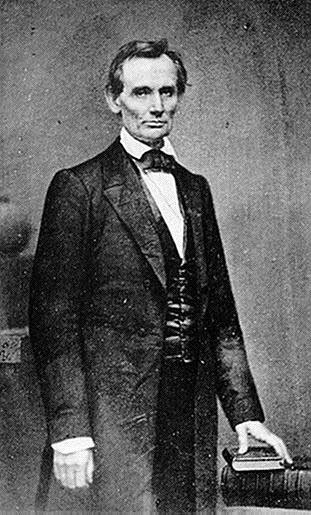
Thanks for ruining the ceiling, jackass. (Image by Mathew Brady.)
I recently posted about Abraham Lincoln’s less-than-graceful youth, using examples from Carl Sandburg’s great biography, The Prairie Years. Here’s another brief tale of Lincoln’s boorish behavior from that tome:
“He put barefoot boys to wading in a mud puddle near the home trough, pulled them up one by one, carried them to the house upside down, and walked their muddy feet across the ceiling. The stepmother came in, laughed at their foot tracks, told Abe he ought to be spanked–and he cleaned the ceiling so that it looked new.”

Tags: Abraham Lincoln

Some Facebook, lots of porn.
In addition to slaughtering his own people, how is longtime nutbag Muammar el-Qaddafi spending his time during the Libyan revolution? An excerpt from an May 2010 Q&A in the German publication Spiegel provides a hint:
“Spiegel: Where do you get your facts? Do you watch television? Do you read books?
Qaddafii: I get most of them from the Internet. I constantly sit at my computer. I read in Arabic, but now it is of course also possible to immediately get translations from English.”
In “North Korea: Cinema of Dreams,” Al Jazeera English takes a look inside Pyongyang’s University of Cinematic and Dramatic Arts, the heart of Kim Jong–il’s propaganda machine. The delusional “Dear Leader” is convinced that he’s a genius of cinema, theater and the circus. The circus part I believe.
Tags: Kim Jong-il

A really strange artifact from 1975, this 30-minute documentary directed by Theo Kamecke and adapted from the book of the same name attempts to make Libertarianism sexy. The film’s writers (who appear onscreen as themselves) are six young, long-haired, hip proponents of the philosophy whose very presence sends the message that youth culture and free markets are not mutually exclusive. An incredible oversimplification of complex political and economic issues, the film contains the type of jaw-dropping anti-government propaganda that would give Ayn Rand a huge boner. But it’s still an odd and interesting remnant.
Tags: Ayn Rand, Theo Kamecke