I didn’t know there were Flappers in Moscow, Idaho, in 1922, but this classic photograph is proof positive. As is often the case with fashions that shock, there was an underlying message of social rebellion woven into the fabric of the style. In this case, the risqué clothes were about women trying to establish an identity that didn’t require being housebound in a housecaot. An excerpt from a 1922 New York Times article about the Flapper craze that looks at how one young woman didn’t really care if hemlines grew longer as long as she could work:
“One of the emancipated ones, with a Knickerbocker grandmother and much family oposition behind her ‘adventures into the open,’ in telling of her struggle for freedom, said:
‘I worked during the war, of course–every one did. And I decided then that never again would I be content to sit at home and do nothing but go to parties. It was hard work at first to get my people to understand how I felt about it. But I finally succeeded. I’ve been here two years. Now I want a better job. I want more money and I think I’m worth it. Jobs are awfully hard to get, though. I do not want my friends to help me if I can manage to get a better position without their assistance.
‘Several of my friends have gone to work because they were so bored at home. One of them is a saleswoman in a smart costume shop. She’s been having lots of fun with some of the snobbish friends of her rich family connections. These snobbish ones haven’t gotten used to the ‘working girl’ idea yet.
‘No, I don’t think I shall give up working when I marry. It seems to me that you understand the ‘tired business man’ much better when you have been a ‘tired business woman.’ It’s not very easy being at a desk all day. I certainly wouldn’t expect my husband to take me to late parties every night, which seems to be what wives who have never worked seem to expect.'”
••••••••••
A trip to the inventors’ convention with that flapper, Betty Boop:
"No President in history has ever gotten a shoe thrown at him."
george bush matrix the shoe (man,queens,bk)
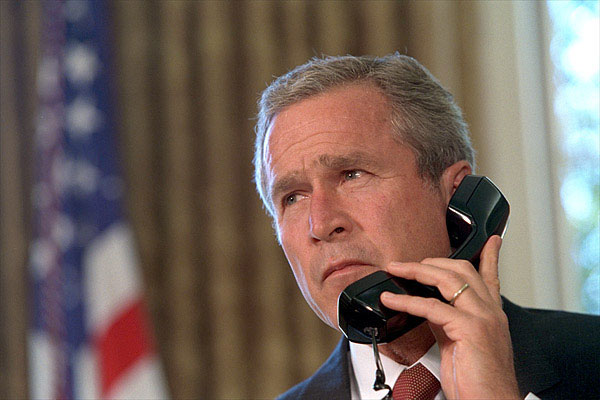
I have the original Newspaper of George bush getting a shoe thrown at him from an angry Iraqi. I have this with both New York Daily news and post. Great collectors item. No President in history has ever gotten a shoe thrown at him. LIMITED TIME OFFER!! MUST BUY NOW!!
In “10 Technologies That Will Change The World In The Next 10 Years,” an article by Julie Bort on CIO, one number jumped out at me. Is it really possible that a city with one million inhabitants will be built somewhere in the world every month over the next two decades? Seems high, but I could be wrong. In any event, we should be expanding our use of solar power as fast as possible. An excerpt:
“No. 6: The power of power
The human population also continues to grow, and [Cisco’s Chief Futurist Dave] Evans estimates that a city with 1 million inhabitants will be built every month over the next two decades. More efficient methods to power those cities are becoming a necessity, particularly solar energy.
‘Solar alone can meet our energy needs. In fact, to address today’s global demand for energy, 25 solar super sites — each consisting of 36 square miles — could be erected. Compare this to the 170,000 square kilometers of forest area destroyed each year,’ says Evans. Such a solar farm could be completed in just three years.
Technologies to make this more economically pragmatic are on their way. In June, Oregon State University researchers showed off a novel, relatively affordable, low-impact method to ‘print’ solar cells using an inkjet printer.”
Ivan Illich was a radical priest, who, during the ’60s and ’70s, was embraced by liberals and conservatives alike, each group able to read their ideology into his sharp critiques of institutional education. Illich didn’t always seem to know what he wanted by way of an alternative, but he knew what he didn’t like. Apart from rigidly structured education, Illich also had his doubts about technology, concerned that we would interpret the world around us first and foremost through tools. In that sense, he was certainly prescient. Largely forgotten by the time ofhis death in 2002, Illich was eulogized by longtime friend Jerry Brown, former and future California Governor, in the Whole Earth Catalog. An excerpt:
“In the Seventies, facing sharp criticism from the Vatican, Illich withdrew from the active priesthood and refrained from speaking ever again as a Catholic theologian. Instead, he focused on the nature of technology and modern institutions and their capacity for destroying common sense and the proper scale for human activity. Illich identified the ‘ethos of non-satiety’ as ‘at the root of physical depredation, social polarization, and psychological passivity.’ Instead of welfare economics and environmental management, Illich emphasized friendship and self-limitation.”
Marshall McLuhan was born on July 21, 1911, and to celebrate his century mark I present the following excerpt from Jane Howard’s 1966 Life magazine article, “Oracle of the Electric Age“:
No people in the history of humanity, McLuhan insists, ever faced demands as grueling as those that confront us. We are witnessing simultaneously the end of what he calls the Mechanical, or Gutenberg, Era, dominated by movable type and later mechanical forms, and the birth pangs of the new and entirely different Electric Age, which he sometimes calls the Age of Circuitry, or of Information. As his books The Gutenberg Galaxy and Understanding Media explain, the change is the most traumatic since the transition 9,000 years ago, from the paleolithic culture to the neolithic, from hunting to agriculture.
The change, says McLuhan, is making movable type obsolete and with it books, newspapers, magazines–in fact all kinds of printed matter, including the sentence you are now reading. We will also have to junk the by-products of the Gutenberg invention which, says, McLuhan, have created our culture’s visual, literary, detached, linear approach to life. This dooms a lot more linear by-products than you might think, including railways, clotheslines, stocking seams, the grid system in city planning and stag lines at dances. Even points of view must go–“because it’s no longer possible to take a fixed position for more than a single moment.” So must jobs, which are fragmentary in nature and do not suit the new age in which people crave roles with depth involvement.•
The opening of Tom Junod’s excellent 1994 GQ article, “The Abortionist,” a profile of Dr. John Bayard Britton, who was murdered several months after this piece was published:
“The abortionist makes house calls. The abortionist’s patient, Mr. Beazley, is dying, and the abortionist has made a habit of visiting his house after work, to steer him to his end. Mr. Beazley is an old man, dying in his bed. He is beyond speech, beyond seeing and hearing. His lips are blue, and his gray tongue hangs out of his mouth. His wife and daughters stroke his arm, his leg. A drip bag, suspended over his bed, feeds him. The abortionist adjusts the rate of the drip. There is nothing else he can do. He cannot save Mr. Beazley. He cannot do anything but deaden his pain and console his family, and for this the Beazleys love him. ‘Oh, Doc, I can’t tell you how much we brag on you,’ Mrs. Beazley says to him in her weary smoker’s voice, and every few minutes a little blonde girl in an orange skirt -Mr. Beazley’s granddaughter-hands him, with a curtsy, a fresh drawing of the sun. The abortionist puts the drawings in his pocket and bows. The abortionist has a weakness for children. Some years ago, he delivered babies. The abortionist is a family doctor, and he understands that what he is doing -drawing out Mr. Beazley’s death- is simply a gesture for the family’s sake: an exercise that enables the Beazleys to believe they have done all they can, and to get a head start on their grief. The abortionist would rather let Mr. Beazley go. He is not, as he says, ‘sentimental,’ and he is ready to withhold the medicines that allow Mr. Beazley his scant purchase on existence. As a physician, he has decided that Mr. Beazley is already gone, and it is this-his willingness to make decisions, to answer questions of life and death-that permits Dr. John Bayard Britton to believe that one day, should his enemies come to kill him, he will find the courage to kill them first.”
In a1993 Wired interviewconducted by Gary Wolf, Steve Jobs, who was then doing his walkabout at NeXT, spoke cautiously about the World Wide Web. He thought it would be great for commerce but maybe not landscape-altering in essential ways. He was right in that all the connectivity and information hasn’t stopped wars or thinned the ranks of ignorant politicians.
One interesting thing that Jobs said was that the Web wouldn’t have the same awesome immediate impact that radio and TV had, that it would creep up on people. I think that’s true. Because the Web is controlled to a good extent by users, its wow factor is revealed incrementally, as people continue to tinker with it and grow it out. Ultimately, it will have much greater consequence for change than earlier technologies that made a bigger initial splash but were hampered by central control. An excerpt from the Q&A:
“What’s the biggest surprise this technology will deliver?
Steve Jobs: The problem is I’m older now, I’m 40 years old, and this stuff doesn’t change the world. It really doesn’t.
That’s going to break people’s hearts.
Steve Jobs: I’m sorry, it’s true. Having children really changes your view on these things. We’re born, we live for a brief instant, and we die. It’s been happening for a long time. Technology is not changing it much – if at all.
These technologies can make life easier, can let us touch people we might not otherwise. You may have a child with a birth defect and be able to get in touch with other parents and support groups, get medical information, the latest experimental drugs. These things can profoundly influence life. I’m not downplaying that. But it’s a disservice to constantly put things in this radical new light – that it’s going to change everything. Things don’t have to change the world to be important.
The Web is going to be very important. Is it going to be a life-changing event for millions of people? No. I mean, maybe. But it’s not an assured Yes at this point. And it’ll probably creep up on people.
It’s certainly not going to be like the first time somebody saw a television. It’s certainly not going to be as profound as when someone in Nebraska first heard a radio broadcast. It’s not going to be that profound.
Then how will the Web impact our society?
Steve Jobs: We live in an information economy, but I don’t believe we live in an information society. People are thinking less than they used to. It’s primarily because of television. People are reading less and they’re certainly thinking less. So, I don’t see most people using the Web to get more information. We’re already in information overload. No matter how much information the Web can dish out, most people get far more information than they can assimilate anyway.”
••••••••••
The William Morris Agency gets NeXT computers in 1990:
A passage about the nature of prisons from Bill James’ new book, Popular Crime, which I previously posted about:
“Build smaller prisons.
… Large prisons become ‘violentocracies’ — places ruled by violence and by the threat of violence. In a violentocracy, the most violent people rise to the top.
In any prison of any size, the prisoners are going to be pushed toward the level of the most violent persons in the facility. … In a prison 3,000 people, the entire prison is pushed toward the level of violence created by the five most violent people in the joint. The most violent person finds the second-most violent person and the third-most violent person, and they form an alliance to exploit the weak. Everyone else is compelled to avoid looking weak. …
Large prisons promote paranoia in the prisoners. You never know who in here is waiting for you with a homemade knife.
… A prison of 20 people is, by its very nature, extremely different. You know who is in there with you; you know who you have to stay away from. … Plus, if you have many small prisons, you can contain the violent people in a limited number of those prisons, the preventing their violent tendencies from infecting the rest of the prison population.
… What you would do, with a network of small prisons, would be to place each prisoner in a facility that is appropriate to the threat that he represents. You grade the prisoners on the threat of violence that they represent, one through ten. You put the tens with the tens and the ones with the ones.
Plus, when you move to a system in which some prisoners have more rights and live in more humane conditions, you create a powerful incentive to get into one of the less restrictive prisons..
In a large and horrible prison, the new prisoner thinks ‘I’ve got to show everybody here how tough and vicious I really am, so that nobody will mess with me.’ But when you put a new prisoner in a 24-man prison with 23 other tough guys, and he knows that there are other prisons that are not like this, his natural thought is ‘I’ve got to get out of here. I’ve got to show these people that I am not a crazy, vicious sociopath, so they will move me to some other facility that is not populated by crazy, vicious sociopaths.'” (Thanks iSteve and Marginal Revolution.)
Making any economic system work is trouble enough, but creating a socialist collective that produces great wealth is particularly elusive. The Chinese village of Huaxi is an exception, however, with its shared wealth and opulent new skyscrapers. Every villager owns a house worth at least $150,000 and at least one car. An excerpt from Michael Wines’ New York Times pieceabout a tower soon to open in Huaxi:
“Huaxi’s so-called New Village in the Sky — at 1,076 feet, a bit taller than the Chrysler Building in Manhattan — is getting finishing touches this summer in preparation for an October opening. Among other attractions, it will have a five-star hotel, a gold-leaf-embellished concert hall, an upscale shopping mall and what is billed as Asia’s largest revolving restaurant. Also, it will have five life-size statues of a water buffalo, Huaxi’s symbol, on every 12th floor or so.
That this half-billion-dollar edifice is a good 40-minute drive from a city of any size is part of the plan. For though not many foreigners have heard of Huaxi, Chinese far and wide know it as the socialist collective that works — the village where public ownership of the means of production has not just made everyone equal, but rich, too.
Two million tourists come annually to view the Huaxi marvel, no small number of them officials from other villages who yearn to know how Huaxi did it. The enormous skyscraper, topped with a gigantic gold sphere, will never win architectural awards. But it will add to Huaxi’s allure, the village fathers confidently predict — and soak up tourist money as well.
‘We call it the three-increase building,’ said Wu Renbao, 84, the town’s revered patriarch, meaning that it will increase Huaxi’s acreage (by half), increase its work force (by 3,000) and, hardly least of all, increase its wealth.
If he is right, all 2,000 villagers will get a little richer. They all own a piece of the building — just as they own the town’s steel mill, textile factory, greenhouse complex, ocean shipping company and other ventures. That is Huaxi’s carefully curated narrative: by rigidly adhering to socialism with Chinese characteristics, the citizens of this little village have created an oasis of prosperity and comfort that is the envy of the world.”
Former major leaguer Bernie Williams played abeautiful renditionof the National Anthem on guitar over the weekend in Phoenix for the minor league Futures Game. The first time an American artist played a personal version of the Star-Spangled Banner, before Hendrix or Gaye or anyone, it was also at a baseball game. At the 1966 World Series in Detroit, Joes Feliciano turned out a gorgeous, touching take on the song–and his career was nearly ruined.
••••••••••
Jose Feliciano has no idea at the time that his reading of the National Anthem will cause a furor in Vietnam-era America:
The full version of Feliciano’s soulful 1968 song:
Walter Cronkite anchors a look at the first Earth Day in 1970, with this segment focusing on New York, Boston, Chicago and Los Angeles. As Cronkite says, cities were thought of at the time as “major population and pollution centers,” when, in fact, populous cities are now known to bevery green.
For all the attention that illegal immigrants from Mexico receive, one important factor has been missed: The flow of illegals from our Southern neighbor has markedly decreased–and probably not mostly because of tougher border enforcement. According census figures, more than half a million Mexicans were coming into the U.S. illegally as recently as 2004; the number has shrunk to around 100,000 today. Shifts in Mexico’s demographics, economy and education system seem the likely reasons. So the good news is that there will be a lot more jobs in American rendering plants for natural-born citizens. The opening ofDamien Cave’s New York Times articleon the topic:
“The extraordinary Mexican migration that delivered millions of illegal immigrants to the United States over the past 30 years has sputtered to a trickle, and research points to a surprising cause: unheralded changes in Mexico that have made staying home more attractive.
A growing body of evidence suggests that a mix of developments — expanding economic and educational opportunities, rising border crime and shrinking families — are suppressing illegal traffic as much as economic slowdowns or immigrant crackdowns in the United States.
Here in the red-earth highlands of Jalisco, one of Mexico’s top three states for emigration over the past century, a new dynamic has emerged. For a typical rural family like the Orozcos, heading to El Norte without papers is no longer an inevitable rite of passage. Instead, their homes are filling up with returning relatives; older brothers who once crossed illegally are awaiting visas; and the youngest Orozcos are staying put.
‘I’m not going to go to the States because I’m more concerned with my studies,’ said Angel Orozco, 18. Indeed, at the new technological institute where he is earning a degree in industrial engineering, all the students in a recent class said they were better educated than their parents — and that they planned to stay in Mexico rather than go to the United States.” (ThanksMarginal Revolution.)
There have long been rumors that in 1973Jackie Gleason accompanied President Richard Nixonto Homestead Airforce Base in Florida and was shown what were supposedly the pickled bodies of extraterrestrials who had reached Earth. Perhaps it was a payoff for Gleason supporting Nixon in 1968.
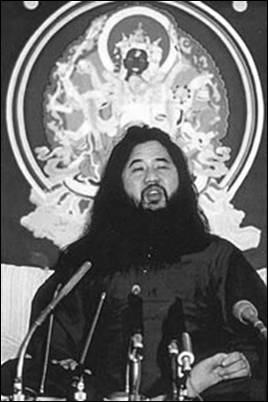
A passage from the April 3, 1995 edition of Time magazine about the scary rise to prominence of Shoko Asahara, the nearly blind cult leader who poisoned Tokyo subways with Sarin gas in 1995 and currently awaits execution:
“By 1984, though, the future ‘savior’ began to find his niche. He set up a yoga school that proved to be quite successful. Even if a former student recalls that in those days ‘we were not followers but members,” the time was ripe for gurus. Japan’s galloping economic miracle in the 1970s and ’80s also spawned a boom in ‘new religions’ offering spiritual refuge to Japanese alienated by materialism. Asahara’s messianic self-image expanded to help fill this void. After a visit to a Himalayan retreat, he boasted of having achieved satori, the Japanese term for nirvana or enlightenment. At this point he also claimed his first success at self-levitation.
Asahara established his Aum Shinrikyo religion in 1987, and the movement even put up a number of candidates in the 1990 Lower House Diet elections; all of them lost. Not much later he began conferring on himself such titles as ‘Today’s Christ’ and ‘the Savior of This Century.’ His community branched out rapidly in Japan. Soon it had established some beachheads overseas–including the U.S. and Germany but notably Russia. Asahara once preached before a crowd of 15,000 in a Moscow sports stadium.
As his fortunes prospered, Asahara seems to have grown more reclusive and obsessed with danger. The religion, nominally Buddhist but really a hodgepodge of ascetic disciplines and New Age occultism, focused on supposed threats from the U.S., which he portrayed as a creature of Freemasons and Jews bent on destroying Japan. The conspiracy’s weapons: sex and junk food. The guru’s sermons predicted the end of the world sometime between 1997 and 2000, and began citing the specific peril of poison-gas attacks.”
••••••••••
“Someone or some group mounted a devastating posion gas attack this morning”:
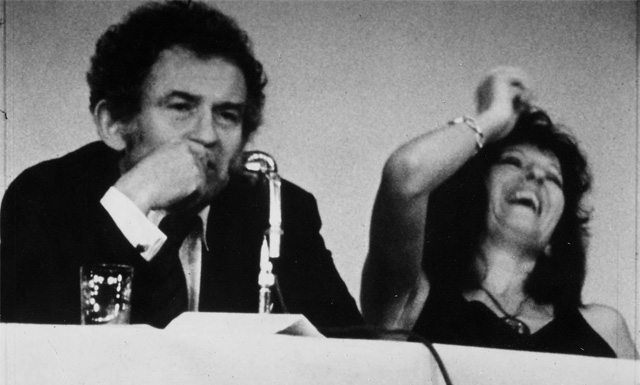
Mailer joined Germaine Greer and other feminist advocates for a raucous panel discussion about women’s liberation at NYC’s Town Hall in 1971. D.A. Pennebaker was on hand to capture all the madness; the footage was edited years later into movie form by his wife, Chris Hegedus.
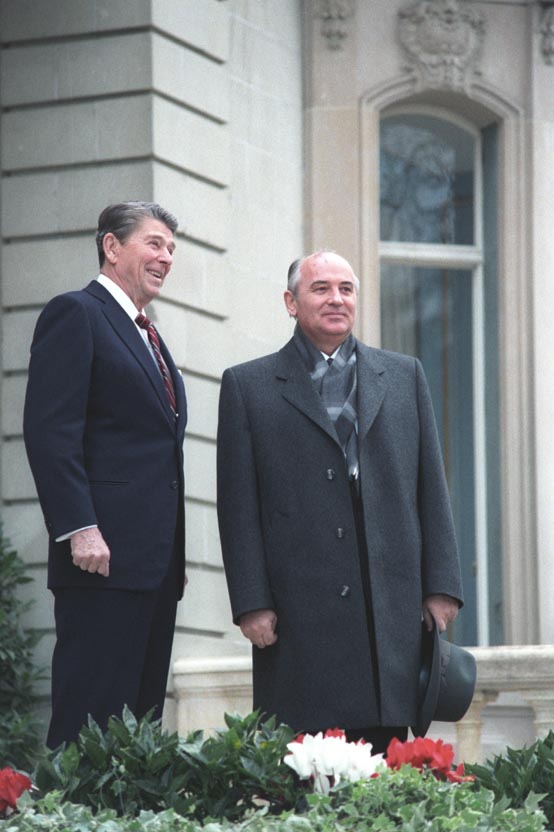
From David Remnick’s excellent 1991 Washington Post coverage of Mikhail Gorbachev’s ignominious ouster from the Kremlin, which occurred after he dismantled the Cold War Soviet machinery, leaving the former superpower less a danger to the rest of the world but seemingly no less a danger to itself:
“Mikhail Sergeyevich Gorbachev, whose battle to reform socialism has ended with the collapse of Leninist ideology and the Soviet Union, left the Kremlin tonight an exhausted and bitter man.
In his final days, Gorbachev told aides that he felt ‘balanced’ and ‘at peace’ with his choices, his place in history. But as he sat in the eerie quiet of his office last weekend receiving visitors and watching news reports on television, he learned that the presidents of the former Soviet republics, who had met to form the new Commonwealth of Independent States, had discussed not only an end to the Soviet Union but, with unconcealed relish, the details of his pension. Down the hall, members of President Boris Yeltsin’s Russian government were already taking measurements and inventory for their imminent move into the Kremlin.
‘For me, they have poisoned the air,’ Gorbachev confided to one reporter. ‘They have humiliated me.’
Gorbachev has tried hard to conceal his emotions, to cover them over with pride and the language of political euphemism. Yet his sense of rejection and betrayal from all sides seems no less profound for him than it was for Soviet leader Nikita Khrushchev, who was ousted in 1964, or for Winston Churchill when he was summarily voted out of 10 Downing St. after leading Britain to victory in World War II. Four months ago, Gorbachev’s closest aides in the Communist Party, the military and the KGB arrested him and made clear an implicit threat of murder. Once back in Moscow, Yeltsin and other republics’ leaders leached him of all authority, making him look hollow and weak.”
••••••••••
In 1996, Gorbachev is interviewed by noted male impersonator, Rosie Charles:
If you’d like, they can stuff the crust with cheese, comrade:
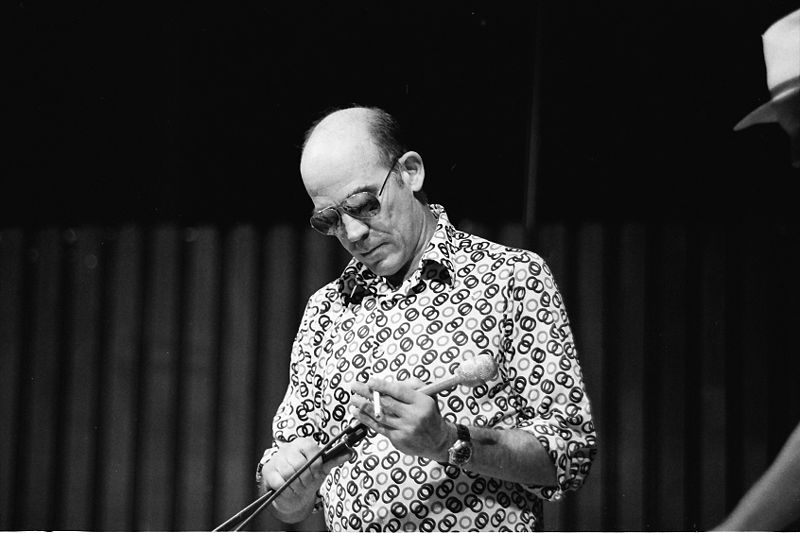
From Hunter S, Thompson’s essay, “The Hippies,” which was originally published in the Collier’s Encyclopedia 1968 Yearbook:
Everyone seems to agree that hippies have some kind of widespread appeal, but nobody can say exactly what they stand for. Not even the hippies seem to know, although some can be very articulate when it comes to details.
“I love the whole world,” said a 23-year-old girl in San Francisco’s Haight-Ashbury district, the hippies’ world capital. “I am the divine mother, part of Buddha, part of God, part of everything.
“I live from meal to meal. I have no money, no possessions. Money is beautiful only when it’s flowing; when it piles up, it’s a hang-up. We take care of each other. There’s always something to buy beans and rice for the group, and someone always sees that I get “grass” [marijuana] or “acid” [LSD]. I was in a mental hospital once because I tried to conform and play the game. But now I’m free and happy.”
She was then asked whether she used drugs often.
“Fairly,” she replied. “When I find myself becoming confused I drop out and take a dose of acid. It’s a short cut to reality; it throws you right into it. Everyone should take it, even children. Why shouldn’t they be enlightened early, instead of waiting till they’re old? Human beings need total freedom.
“That’s where God is at. We need to shed hypocrisy, dishonesty, and phoniness and go back to the purity of our childhood values.”
The next question was “Do you ever pray?”
“Oh yes,” she said. “I pray in the morning sun. It nourishes me with its energy so I can spread my love and beauty and nourish others.”•
Time magazine heralded the advent of the Digital Age in its March 1, 1995 issue, which included an essay by Stewart Brand called “We Owe It All to the Hippies.” The piece argued, quite rightly, that the impetus for our booming tech sector came from the counterculture, courtesy of dropouts, phreaks, and hackers. An excerpt:
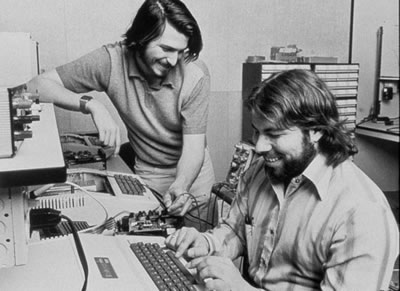
“In the 1960s and early ’70s, the first generation of hackers emerged in university computer-science departments. They transformed mainframes into virtual personal computers, using a technique called time sharing that provided widespread access to computers. Then in the late ’70s, the second generation invented and manufactured the personal computer. These nonacademic hackers were hard-core counterculture types — like Steve Jobs, a Beatle- haired hippie who had dropped out of Reed College, and Steve Wozniak, a Hewlett-Packard engineer. Before their success with Apple, both Steves developed and sold ‘blue boxes,’ outlaw devices for making free telephone calls. Their contemporary and early collaborator, Lee Felsenstein, who designed the first portable computer, known as the Osborne 1, was a New Left radical who wrote for the renowned underground paper the Berkeley Barb.
As they followed the mantra ‘Turn on, tune in and drop out,’ college students of the ’60s also dropped academia’s traditional disdain for business. ‘Do your own thing’ easily translated into ‘Start your own business.’ Reviled by the broader social establishment, hippies found ready acceptance in the world of small business. They brought an honesty and a dedication to service that was attractive to vendors and customers alike. Success in business made them disinclined to ‘grow out of’ their countercultural values, and it made a number of them wealthy and powerful at a young age.
The third generation of revolutionaries, the software hackers of the early ’80s, created the application, education and entertainment programs for personal computers. Typical was Mitch Kapor, a former transcendental-meditation teacher, who gave us the spreadsheet program Lotus 1-2-3, which ensured the success of IBM’s Apple-imitating PC. Like most computer pioneers, Kapor is still active. His Electronic Frontier Foundation, which he co- founded with a lyricist for the Grateful Dead, lobbies successfully in Washington for civil rights in cyberspace. In the years since Levy’s book, a fourth generation of revolutionaries has come to power. Still abiding by the Hacker Ethic, these tens of thousands of netheads have created myriad computer bulletin boards and a nonhierarchical linking system called Usenet. At the same time, they have transformed the Defense Department-sponsored ARPAnet into what has become the global digital epidemic known as the Internet. The average age of today’s Internet users, who number in the tens of millions, is about 30 years. Just as personal computers transformed the ’80s, this latest generation knows that the Net is going to transform the ’90s. With the same ethic that has guided previous generations, today’s users are leading the way with tools created initially as ‘freeware’ or ‘shareware,’ available to anyone who wants them. Of course, not everyone on the electronic frontier identifies with the countercultural roots of the ’60s. One would hardly call Nicholas Negroponte, the patrician head of M.I.T.’s Media Lab, or Microsoft magnate Bill Gates ‘hippies.’ Yet creative forces continue to emanate from that period. Virtual reality — computerized sensory immersion — was named, largely inspired and partly equipped by Jaron Lanier, who grew up under a geodesic dome in New Mexico, once played clarinet in the New York City subway and still sports dreadlocks halfway down his back. The latest generation of supercomputers, utilizing massive parallel processing, was invented, developed and manufactured by Danny Hillis, a genial longhair who set out to build ‘a machine that could be proud of us.’ Public-key encryption, which can ensure unbreakable privacy for anyone, is the brainchild of Whitfield Diffie, a lifelong peacenik and privacy advocate who declared in a recent interview, ‘I have always believed the thesis that one’s politics and the character of one’s intellectual work are inseparable.’ Our generation proved in cyberspace that where self-reliance leads, resilience follows, and where generosity leads, prosperity follows. If that dynamic continues, and everything so far suggests that it will, then the information age will bear the distinctive mark of the countercultural ’60s well into the new millennium.”
••••••••••
As mentioned in the article, the Osborne I, the first portable computer:
Norman Mailer’s book Of a Fire on the Moon, about American space exploration during the 1960s, was originally published as three long and personal articles for Life magazine in 1969: “A Fire on the Moon,” “The Psychology of Astronauts,” and “A Dream of the Future’s Face.” Mailer used space travel to examine America’s conflicted and tattered existence–and his own as well. In one segment, he reports on a banquet in which Wernher von Braun, the former Nazi rocket engineer who became a guiding light at NASA, meets with American businessmen on the eve of the Apollo 11 launch. An excerpt:
Therefore, the audience was not to be at ease during his introduction, for the new speaker, who described himself as a “backup publisher,” went into a little too much historical detail. “During the Thirties he was employed by the Ordinance Department of the German government developing liquid fuel rockets. During World War II he made very significant developments in rocketry for his government.”
A tension spread in this audience of corporation presidents and high executives, of astronauts, a few at any rate, and their families. There was an uneasy silence, an embarrassed pall at the unmentioned word of Nazi–it was the shoe which did not drop to the floor. So no more than a pitter-patter of clapping was aroused when the speaker went quickly on to say: “In 1955 he became an American citizen himself.” It was only when Von Braun stood up at the end that the mood felt secure enough to shift. A particularly hearty and enthusiastic hand of applause swelled into a standing ovation. Nearly everybody stood up. Aquarius, who finally cast his vote by remaining seated, felt pressure not unrelated to refusing to stand up for The Star-Spangled Banner. It was as if the crowd with true American enthusiasm had finally declared, “Ah don’ care if he is some kind of ex-Nazi, he’s a good loyal patriotic American.”
Von Braun was. If patriotism is the ability to improve a nation’s morale, then Von Braun was a patriot. It was plain that some of these corporate executives loved him. In fact, they revered him. He was the high priest of their precise art–manufacture. If many too many an American product was accelerating into shoddy these years since the war, if planned obsolescence had all too often become a euphemism for sloppy workmanship, cynical cost-cutting, swollen advertising budgets, inefficiency and general indifference, then in one place at least, and for certain, America could be proud of a product. It was high as a castle and tooled more finely than the most exquisite watch.
Now the real and true tasty beef of capitalism got up to speak, the grease and guts of it, the veritable brawn, and spoke with fulsome language in his small and well-considered voice. He was with friends on this occasion, and so a savory and gravy of redolence came into his tone, his voice was not unmusical, it had overtones which hinted of angelic super-possibilities one could not otherwise lay on the line. He was when all was said like the head waiter of the largest hofbrau in heaven. “Honored guests, ladies and gentlemen,” Von Braun began, “it is with a great deal of respect tonight that I meet you, the leaders, and the captains in the mainstream of American industry and life. Without your success in building and maintaining the economic foundations of this nation, the resources for mounting tomorrow’s expedition to the moon would never have been committed…. Tomorrow’s historic launch belongs to you and to the men and women who sit behind the desks and administer your companies’ activities, to the men who sweep the floor in your office buildings and to every American who walks the street of this productive land. It is an American triumph. Many times I have thanked God for allowing me to be a part of the history that will be made here today and tomorrow and in the next few days. Tonight I want to offer my gratitude to you and all Americans who have created the most fantastically progressive nation yet conceived and developed,” He went on to talk of space as “the key to our future on earth,” and echoes of his vision drifted through the stale tropical air of a banquet room after coffee–perhaps he was hinting at the discords and nihilism traveling in bands and brigands across the earth. “The key to our future on earth. I think we should see clearly from this statement that the Apollo 11 moon trip even from its inception was not intended as a one-time trip that would rest alone on the merits of a single journey. If our intention had been merely to bring back a handful of soil and rocks from the lunar gravel pit and then forget the whole thing”–he spoke almost with contempt of the meager resources of the moon–“we would certainly be history’s biggest fools. But that is not our intention now–it never will be. What we are seeking in tomorrow’s trip is indeed that key to our future on earth. We are expanding the mind of man. We are extending this God-given brain and these God-given hands to their outermost limits and in so doing all mankind will benefit. All mankind will reap the harvest…. What we will have attained when Neil Armstrong steps down upon the moon is a completely new step in the evolution of man.”•
Sally Ride became the first American female to travel into space in 1983, and those enlightened designers at Mattel’s Barbie division were ready to pay tribute to the progress of women–well, to a point. Astronaut Barbie was a trailblazer in outer space, but she also enjoyed dancing in high heels under a disco ball. Seemingly intended for young girls with serious cocaine problems.