
Politics

You are currently browsing the archive for the Politics category.

Ben Ehrenreich, a brilliant guy who is consumed by death, looked at the end of print in an electric age in his great 2011 essay, “The Death of the Book,” at the Los Angeles Review of Books. An excerpt:

“In 1962, Marshall McLuhan had published an almost spookily prescient book titled The Gutenberg Galaxy. It was, among other things, an extended critique of the culture of print. Technology shapes our consciousness, McLuhan argued, and the development of the printed book in the mid-fifteenth century had inaugurated a reorientation of human experience towards the visual, the regimented, the uniform and instrumental. Language, which had once been a wild, uncontainable affair between the oral and aural (think whisper, shout, and song, the playful market-square dynamism of dialect and argot) was silenced, flattened, squeezed into lines evenly arrayed across the rectilinear space between the margins. Spellings were standardized, vernaculars frozen into national languages policed by strict academies. Print, for McLuhan, was the driver behind all that we now recognize as modern. Through it nationalisms arose, and other horrors: capitalism, individualism, alienation. Time itself was emptied out—reduced, like the words on each page, to a linear sequence of homogeneous moments. Print had stolen something. Books had shrunk us. They had ‘denuded’ conscious life. ‘All experience is segmented and must be processed sequentially,’ McLuhan mourned. ‘Rich experience eludes the wretched mesh or sieve of our attention.’

An end was in sight. We had already entered a ‘new electric age’ characterized by interdependence rather than segmentation. ‘The world has become a computer,’ McLuhan wrote, ‘an electronic brain, exactly as in an infantile piece of science fiction.’ The Internet was still a Cold-War fantasy, but for McLuhan print’s corpse was already growing cold. (He dated the collapse of the Gutenberg Galaxy to 1905 and Einstein’s early work on relativity.) This was not necessarily cause for optimism. McLuhan coined the phrase ‘global village’ to describe the hyper-networked world that was already taking shape. He had no illusions, though, about the nobility of village life. Our newly TV-, telephone-, and radio-enwebbed multiverse could just as easily be ruled by ‘panic terrors … befitting a world of tribal drums’ as by any bright pastoral harmony. And so it was and is.”

In 1967, when Jacques Derrida took up the theme of ‘the end of the book’ in Of Grammatology, McLuhan’s ideas were still sufficiently in the air that the philosopher could refer to ‘this death of the civilization of the book of which so much is said’ without need for further explanation. But the ‘civilization of the book,’ for Derrida, meant more than the era of moveable type. It preceded Gutenberg, and even the medieval rationalists who wrote of ‘the book of nature’ and via that metaphor understood the material world as revelation analogous to scripture. The book for Derrida stood in for an entire metaphysics that reached back through all of Western thought: a conception of existence as a text that could be deciphered, a text with a stable meaning lodged somewhere outside of language. ‘The idea of the book is the idea of a totality,’ he wrote. ‘It is the encyclopedic protection of theology and of logocentrism against the disruption of writing, against its aphoristic energy and … against difference in general.’ Those, in case you couldn’t tell, are fighting words.”

••••••••••

Dylan goes electric, Newport, 1965:
Tags: ,

William F. Buckley and B.F. Skinner, in 1973, discussing moral development.

See also:

Tags: ,

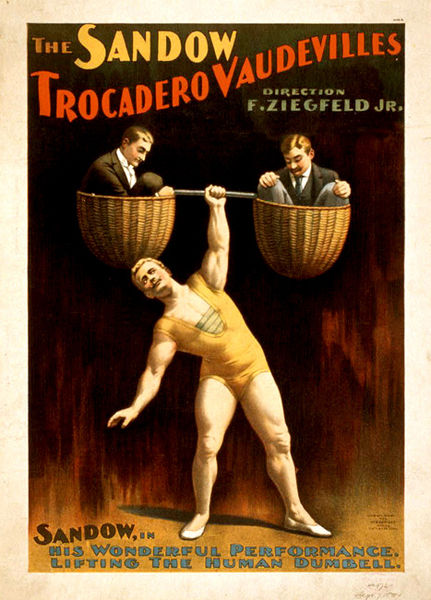
From a typically eccentric Adam Curtis essay, “Bodybuilding and Nation-Building,” a look at how developing muscles was begun as a riposte to industrialization:

“At the end of the nineteenth century a fanatical craze for physical fitness swept through Britain. Millions of men and women took up gymnastics, body building and other physical exercises.

Such a thing had never happened before – and it was given a name – Physical Culture.

The craze had an almost religious intensity because those who promoted it said that it was the only way to prevent the British nation – and its Empire – from collapsing. Behind this was a powerful belief that the modern world of the 1890s – the teeming cities with their slums and giant factories – was leading to a ‘physical degeneracy’ in millions of people.

It was a fear that had started with the elite who ran Britain’s public schools. Matthew Arnold warned of ‘the strange disease of modern life’ with its ‘sick hurry’ and ‘divided aims.’ Out of that came a movement called ‘Muscular Christianity’ which wanted to recreate the kind of heroic human being that existed before industry and the modern world came along and corroded everything.

It was a vision of a restored physical and moral perfection in the young men who were going to run the empire. And it involved doing lots of exercises in new things called Gymnasiums. Then liberal reformers got worried about the working classes –  convinced that the slums were leading to a ‘physical degeneracy.’ So they persuaded lots more people to do exercises.

Then a figure rose up who united all of this dramatically into a mass movement. He was called Eugen Sandow.

Sandow came from Prussia, he started as a circus and music-hall performer. But then in the late 1890s he invented something he called ‘body-building.’ It caused a sensation throughout Europe and America – and he became a massive celebrity because he was seen as the leader of a crusade of Physical Culture that was going to stop the degeneracy that was plaguing Britain.” (The Browser.)

Tags: ,

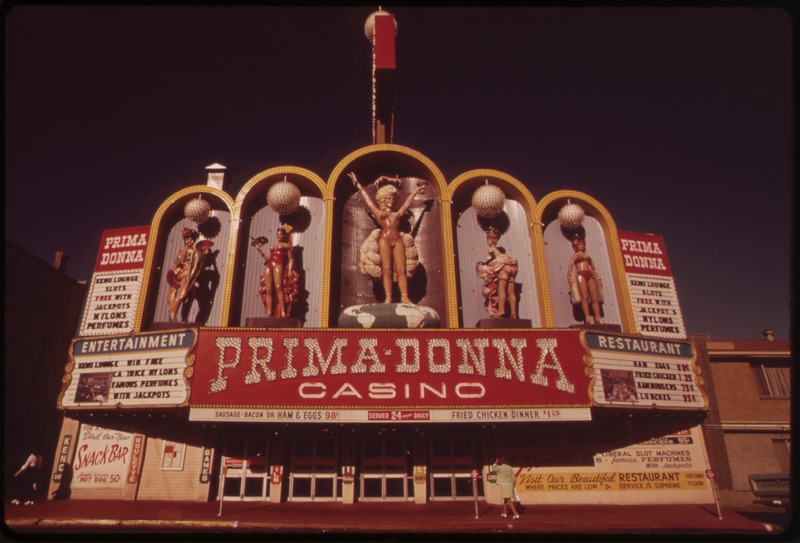
I don’t believe in the prohibition of gambling or pretty much anything consenting adults want to do, but that doesn’t mean I don’t recognize casinos for what they are: predatory pits where the deck is stacked, an attraction that draws people in and spits them out, places without clocks that steal your time. From Edward Luce’s excellent Financial Times essay about the serious economic and political challenges currently facing America, a segment about the false hope of glitzy gambling parlors in former manufacturing centers:

“From Florida to California, and numerous Native American reservations in between, the impact of gambling varies, according to a welter of studies. Some show that the effect on the people around the casinos is a net negative. It can also be bad for tax revenues. One study estimated that for every dollar a gaming house invests in an area, three are subtracted by the costs of dealing with its social effects. Casinos may be a way of replacing some of the manufacturing jobs lost to China, Brazil and elsewhere. But they are also a magnet for racketeers, pimps, drugs and those living on the margins.

In a world where the economic centre of gravity is shifting from west to east, the continued faith in casinos, and other forms of gaming, epitomises a certain bankruptcy of thinking among America’s policy makers. On the charts they show up as service jobs, which economists instinctively treat as superior to jobs that involve making things. Much like the shift from farming to manufacturing a century ago, America is now climbing up the value-added chain to the more cerebral world of service industries. Brain power is America’s future.

It doesn’t always appear too cerebral in practice. Too large a share of the new service jobs are dead-end and enforced part-time positions that enable the employer to wriggle out of providing healthcare insurance. In the past decade, the number of Americans insured by their employers has fallen from two-thirds to barely half. Only the senior managerial slots offer any real security and they are mostly taken by outsiders. Much the same could be said of the armies of food preparers, domestic carers and data-entry workers who account for so many of the new service jobs America is creating.

‘We are on track to becoming a country where the top tier remains wealthy beyond imagination, and the remainder, in one way or another, are working in jobs that help make the lives of the elites more comfortable,’ says Harvard’s Lawrence Katz, one of America’s foremost labour economists. ‘They will be taking care of them in old age, fixing their home WiFi, or their air-conditioning, teaching or helping with their kids and serving them their food. It is not a very elegant prospect.'” (Thanks Browser.)

Tags: ,

Before the trickle-down voodoo, the GOP cared about the working class.

Tags:

Saul Alinsky, the community organizer who’s been burned in effigy repeatedly by the GOP, predicted the rise of Reagan’s faux nostalgia years before it became reality. Here he meets with William F. Buckley, Jr. in 1967.

Tags: , ,

Before the Waldheim Affair became an international fiasco during the 1980s and he was banned from the United States, Kurt Waldheim, the future Austrian president with the Nazi past, spoke with PBS talk show host James Day in New York in 1973.

Tags: ,

At the Browser, John Gray decries the idea of Utopia, which was considered extremist in the days of George Ripley’s failed Brook Farm experiment, but has become more centrist in our age, resulting in tortured nation-building experiments in the Middle East. An excerpt:

Q: If utopias are unreachable – you could say that in Thomas More’s 1516 book Utopia, which coined the term, that’s the whole point – why does that make the striving for them pernicious?

John Gray: There are those who say that utopian projects, while they can never be achieved, are valuable because they spur human advance. That’s not my view. My view is that the attempt to achieve the impossible very often – if not always – has huge costs. Even if a project has good intent, its colossal cost always outweighs its reasonability, as we saw inIraq. What is distinctive about utopianism at the end of the 20th century and start of the 21st is that it has become centrist. In other words, for the first half of the 20th century utopianism was extremist, but now we have the utopian idea of building democracy inLibya or Afghanistan. So the utopian impulse – the impulse to achieve what rational thought tells us is impossible – has migrated to the centre of politics. That is connected with humanism and the idea of progress.”

Tags:

A book that was seemingly written specifically for me (and anyone else who spends way too much time thinking about airports), Aerotropolis: The Way We’ll Live Next, by John Kasarda and Greg Lindsay, predicts that airport-centric insta-cities will be the next wave. Probably not going to happen outside of a few autocratic states, but it’s still a fun thought project. From the introduction of an interview with Lindsay at BLDG:

“If Atlanta’s Hartsfield-Jackson International Airport were to become its own country, its annual workforce and user base would make it ‘the twelfth most populous nation on Earth,’ as John Kasarda and Greg Lindsay explain in Aerotropolis; even today, it is the largest employer in the state of Georgia. 

As J.G. Ballard once wrote, and as is quoted on the frontispiece of Aerotropolis:

I suspect that the airport will be the true city of the 21st century. The great airports are already the suburbs of an invisible world capital, a virtual metropolis whose fauborgs are named Heathrow, Kennedy, Charles de Gaulle, Nagoya, a centripetal city whose population forever circles its notional center, and will never need to gain access to its dark heart.

The remarkable claims of John Kasarda’s and Greg Lindsay’s new book are made evident by its subtitle: the aerotropolis, or airport-city, is nothing less than ‘the way we’ll live next.’ It is a new kind of human settlement, they suggest, one that ‘represents the logic of globalization made flesh in the form of cities.’ Through a kind of spatial transubstantiation, the aerotropolis turns abstract economic flows—disembodied currents of raw capital—into the shining city form of tomorrow.

The world of the aerotropolis is a world of instant cities—urbanization-on-demand—where nations like China and Saudi Arabia can simply ‘roll out cities’ one after the other. ‘Each will be built faster, better, and more cheaply than the ones that came before,’ Aerotropolis suggests: whole cities created by the warehousing demands of international shipping firms. In fact, they are “cities that shipping and handling built,’ Lindsay and Kasarda quip—urbanism in the age of Amazon Prime.” 

_________________

Tags: , ,

The Hillary Clinton portion of the famous campaign appearance that Bubba made with Arsenio Hall in 1992, when the future President played sax.

I think if you look at their first terms side by side, President Obama has been a far more sure-handed leader than Bill Clinton with far fewer miscues–and during a much more challenging time. Hillary herself, as Secretary of State, has been more commanding than her husband was in foreign affairs. But during this appearance, she was in a supporting role.

I often think of how different relations between the sexes would be in America if at this point in our nation’s history roughly half the Presidents had been men and half women. Men are from Mars and women are from Venus, I know, but I don’t think the disconnect is merely because of some celestial difference. I think when you live in an unequal society, things become weird for all involved.

Tags: , ,

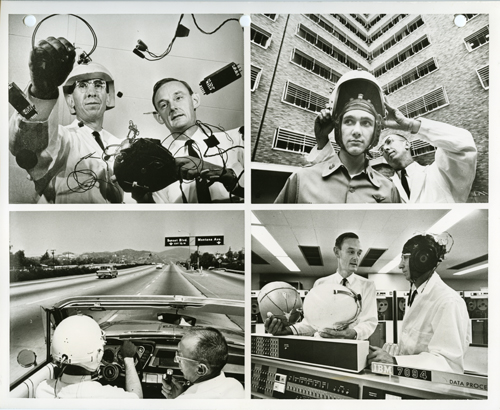
Shaun Randol of the L.A. Review of Books writing about the numbing intersection of warfare and software:

“As Paul Virilio has noted, with the filming of the 1990-91 Gulf War, most notably by CNN, the American public was encouraged to see war as a technological process and a media event. The ubiquitous green and grainy images of anti-aircraft fire over Baghdad, or black-and-white videos of missiles slamming into boxy structures from projectile-mounted cameras were so bereft of the realities of warfare — blood, guts, screams, and mangled bodies — that they were shown in prime-time news broadcasts. Much of the public enthusiastically embraced this antiseptic projection of war. Now, many soldiers and their civilian leaders see war through the same technological lens. 

American military training and planning increasingly uses video games and virtual reality (for pre-deployment and decompressing) and autonomous robots (for actual fighting). Peter Finn surmises that ‘the successful exercise in autonomous robotics could presage the future of the American way of war: a day when drones hunt, identify and kill the enemy based on calculations made by software, not decisions made by humans.’ Peter W. Singer of the Brookings Institution has written extensively on how the increase in military research into robots, be it nanotechnology or outsized pilotless aircraft that can — theoretically — stay adrift indefinitely, indicates the direction of the U.S.’s fighting strategy.”

Tags: , ,

I’m always stunned that water technology hasn’t grown more sophisticated, that we haven’t figured out a better way–or several. What economics are working against securing our most necessary solution? The opening of Karen DeYoung’s recent Washington Post report about the fears U.S. Intelligence experts have about water access being used as a weapon:

“Fresh-water shortages and more droughts and floods will increase the likelihood that water will be used as a weapon between states or to further terrorist aims in key strategic areas, including the Middle East, South Asia and North Africa, a U.S. intelligence assessment released Thursday said.

Although ‘water-related state conflict’ is unlikely in the next 10 years, the assessment said, continued shortages after that might begin to affect U.S. national security interests.

The assessment is drawn from a classified National Intelligence Estimate distributed to policymakers in October. Although the unclassified version does not mention problems in specific countries, it describes “strategically important water basins” tied to rivers in several regions. These include the Nile, which runs through 10 countries in central and northeastern Africa before traveling through Egypt into the Mediterranean Sea; the Tigris-Euphrates in Turkey, Syria and Iraq; the Jordan, long the subject of dispute among Israel, Jordan and the Palestinians; and the Indus, whose catchment area includes Afghanistan, Pakistan, India and Tibet.

‘As water problems become more acute, the likelihood . . . is that states will use them as leverage,’ said a senior U.S. intelligence official who briefed reporters on the condition of anonymity. As the midpoint of the century nears, he said, there is an increasing likelihood that water will be ‘potentially used as a weapon, where one state denies access to another.'”

••••••••••

“Either you bring the water to L.A., or you bring L.A. to the water”:

Read also:

Tags:

The opening of “Operation Midnight Climax,” Troy Hooper’s San Francisco Weekly story about CIA experiments with LSD in the 1950s-60s, in which Americans in the Bay Area and New York were unwittingly dosed with the hallucinogenic:

It’s been over 50 years, but Wayne Ritchie says he can still remember how it felt to be dosed with acid.

He was drinking bourbon and soda with other federal officers at a holiday party in 1957 at the U.S. Post Office Building on Seventh and Mission streets. They were cracking jokes and swapping stories when, suddenly, the room began to spin. The red and green lights on the Christmas tree in the corner spiraled wildly. Ritchie’s body temperature rose. His gaze fixed on the dizzying colors around him.

The deputy U.S. marshal excused himself and went upstairs to his office, where he sat down and drank a glass of water. He needed to compose himself. But instead he came unglued. Ritchie feared the other marshals didn’t want him around anymore. Then he obsessed about the probation officers across the hall and how they didn’t like him, either.Everyone was out to get him. Ritchie felt he had to escape.

He fled to his apartment and sought comfort from his live-in girlfriend. It didn’t go as planned. His girlfriend was there, but an argument erupted. She told him she was growing tired of San Francisco and wanted to return to New York City. Ritchie couldn’t handle the situation. Frantic, he ran away again, this time to the Vagabond Bar where he threw back more bourbon and sodas. From there, he hit a few more bars, further cranking up his buzz. As he drank his way back to Seventh and Mission, Ritchie concocted a plan that would change his life.” (Thanks Browser.)

Tags: ,

A 1967 urban planning propaganda film touting I.M. Pei’s top-down vision for Oklahoma City’s downtown. Never fully realized, the project was something of a fiasco which resulted in the demolition of some really cool historic buildings. Even though contemporary China does it at will, imposing order from on high onto cities doesn’t really work in America. Sometimes viral is mistaken for toxic.

Tags:

In “Prisoner’s Dilemma,” a discursive, funny and sort of nutty Grantland article, stats guru Bill James explains why crowd decorum at baseball games has improved while inmate behavior in penitentiaries has deteriorated. An excerpt:

“In his 1929 book 20,000 Years in Sing Sing, Warden Lewis E. Lawes says that his young daughter, who was born inside the prison, knew all of the prisoners and was allowed to wander freely around the prison, with a few obvious out-of-bounds penalties. Think about what a different world that is from a modern prison. If I could divert your attention for just a second with a serious question: How did we slip backward like that? How did prisons become these violent hellholes that they now are, so that it is unimaginable to have an 8-year-old girl wandering the hallways of a maximum-security lockup?”

Read also:

Tags: ,

The participant tries to usurp the routine and turn the workaday world into upsetting, absurd art. No discrete stage required, none wanted.

Something I think about a lot, not only in the aftermath of the shocking murders by a U.S. soldier in Afghanistan, is the hidden cost of not having a military draft in America. I know most economists will tell you that our current system is more efficient, that it makes more sense militarily. But perhaps there is not only human value but financial value in not allowing most of the burdens of war to be absorbed by a warrior class with the rest outsourced to corporate security firms. The draft was used initially merely to call young men to war, but it eventually was becoming something of a threshold that might have kept politicians from going to needless wars because the fallout and resistance would be too great. I know, I know: That’s no way to run a war, and maybe that’s the point.

I would think that advances in robotics and drones and such will greatly reduce our need  for ground troops, and that’s a good thing. But, of course, that technology will result in other costs of war being even further hidden.

Not so long ago, both sides of the aisle agreed that America was going to grow ill and poor if we didn’t have comprehensive health-care reform. Now because of politics, lobbyists and ignorance, the Affordable Care Act, a reasonable first step in reform, is under constant attack. From Krugman:

“For now, however, most of the disinformation involves claims about costs. Each new report from the Congressional Budget Office is touted as proof that the true cost of Obamacare is exploding, even when — as was the case with the latest report — the document says on its very first page that projected costs have actually fallen slightly. Nor are we talking about random pundits making these false claims. We are, instead, talking about people like the chairman of the House Republican Policy Committee, who issued a completely fraudulent press release after the latest budget office report.

Because the truth does not, sad to say, always prevail, there is a real chance that these lies will succeed in killing health reform before it really gets started. And that would be an immense tragedy for America, because this health reform is coming just in time.

As I said, the reform is mainly aimed at Americans who fall through the cracks in our current system — an important goal in its own right. But what makes reform truly urgent is the fact that the cracks are rapidly getting wider, because fewer and fewer jobs come with health benefits; employment-based coverage actually declined even during the ‘Bush boom’ of 2003 to 2007, and has plunged since.

What this means is that the Affordable Care Act is the only thing protecting us from an imminent surge in the number of Americans who can’t afford essential care. So this reform had better survive — because if it doesn’t, many Americans who need health care won’t.”


Tags:

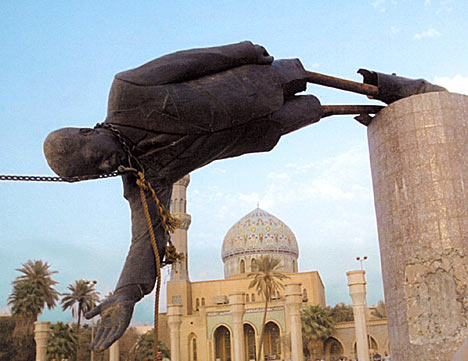
From “Why Countries Go Bust,” Adam Davidson’s New York Times Magazine piece about the poverty-reduction theories of superstar economist Daron Acemoglu, an explanation of how we managed to screw up even the post-Hussein Internet access market in Baghdad:

“On April 9, 2003, the day the city was captured, one of the world’s most tightly controlled economies suddenly became a free-for-all. Amid the chaos, many former state functionaries turned into entrepreneurs. Nearly every engineer from the ministry of housing, it seemed, had opened his own construction company. Satellite TVs, once illegal to all but a very small elite, were sold on every major street. Under Hussein, only one company (widely rumored to be monitored by the intelligence service) offered Internet access, and it was incredibly bad and expensive. After it was gone, there were so many new Internet companies that I had far more access options then than I do today in Brooklyn.

Yet the American authorities, who had not planned for this budding free market, all but destroyed it when they gave the bulk of new contracts to large companies outside the country. Often, these outsiders subcontracted to Iraqi firms with close ties to the state’s new political establishment. By the anniversary of the United States invasion, it was clear that economic success would again come from connections and corruption rather than talent and hard work. Today, Transparency International ranks Iraq as one of the most corrupt nations on earth. An Iraqi friend once told me that he had hoped we would teach the Iraqis how to be Americans. Instead, the Americans learned how to be Iraqi.”

Tags: ,

"In a society where everything is for sale, life is harder for those of modest means." (Image by flyingpurplemonkeys.)

In a highly connected world full of extreme economies, desire and desperation ensure that everything can be bought or sold somewhere in the global village. FromWhat Isn’t For Sale?Michael J. Sandel’s new Atlantic article:

“Why worry that we are moving toward a society in which everything is up for sale?

For two reasons. One is about inequality, the other about corruption. First, consider inequality. In a society where everything is for sale, life is harder for those of modest means. The more money can buy, the more affluence—or the lack of it—matters. If the only advantage of affluence were the ability to afford yachts, sports cars, and fancy vacations, inequalities of income and wealth would matter less than they do today. But as money comes to buy more and more, the distribution of income and wealth looms larger.

The second reason we should hesitate to put everything up for sale is more difficult to describe. It is not about inequality and fairness but about the corrosive tendency of markets. Putting a price on the good things in life can corrupt them. That’s because markets don’t only allocate goods; they express and promote certain attitudes toward the goods being exchanged. Paying kids to read books might get them to read more, but might also teach them to regard reading as a chore rather than a source of intrinsic satisfaction. Hiring foreign mercenaries to fight our wars might spare the lives of our citizens, but might also corrupt the meaning of citizenship.

Economists often assume that markets are inert, that they do not affect the goods being exchanged. But this is untrue. Markets leave their mark. Sometimes, market values crowd out nonmarket values worth caring about.”

Tags:

President Obama has been criticized for not communicating his message well enough to the American people during his first term, but perhaps that effort would have been time wasted. There are probably moments when an American President can define the narrative, but usually they’re just being led by it, at best framing it. You’ve probably already readThe Unpersuaded,” Ezra Klein’s smart New Yorker piece on the topic, but here’s an excerpt: 

“No President worked harder to persuade the public, Edwards says, than Bill Clinton. Between his first inauguration, in January, 1993, and his first midterm election, in November, 1994, he travelled to nearly two hundred cities and towns, and made more than two hundred appearances, to sell his Presidency, his legislative initiatives (notably his health-care bill), and his party. But his poll numbers fell, the health-care bill failed, and, in the next election, the Republicans took control of the House of Representatives for the first time in more than forty years. Yet Clinton never gave up on the idea that all he needed was a few more speeches, or a slightly better message. ‘I’ve got to . . . spend more time communicating with the American people,’ the President said in a 1994 interview. Edwards notes, ‘It seems never to have occurred to him or his staff that his basic strategy may have been inherently flawed.'”

Tags: , ,

"America’s problem isn’t a breakdown in private morality." (Image by Gage Skidmore.)

From Robert Reich’s sober assessment of election year moralizing of condom-condemning Republicans:

“But America’s problem isn’t a breakdown in private morality. It’s a breakdown in public morality. What Americans do in their bedrooms is their own business. What corporate executives and Wall Street financiers do in boardrooms and executive suites affects all of us.

There is moral rot in America but it’s not found in the private behavior of ordinary people. It’s located in the public behavior of people who control our economy and are turning our democracy into a financial slush pump. It’s found in Wall Street fraud, exorbitant pay of top executives, financial conflicts of interest, insider trading, and the outright bribery of public officials through unlimited campaign ‘donations.’

Political scientist James Q. Wilson, who died last week, noted that a broken window left unattended signals that no one cares if windows are broken. It becomes an ongoing invitation to throw more stones at more windows, ultimately undermining moral standards of the entire community

The windows Wall Street broke in the years leading up to the crash of 2008 remain broken. Despite financial fraud on a scale not seen in this country for more than eighty years, not a single executive of a major Wall Street bank has been charged with a crime.” (Thanks Browser.)

•••••••••••

Robert Reich, buddy cop:

Tags:

The Carpenters perform for President Nixon at the White House, May of 1973, fifteen months before he resigned.

Tags: , ,

An early expression of globalization, from a speech in Network, 1976.

“You have meddled with the primal forces of nature, Mr. Beale, and I won’t have it! Is that clear? You think you’ve merely stopped a business deal. That is not the case! The Arabs have taken billions of dollars out of this country, and now they must put it back! It is ebb and flow, tidal gravity! It is ecological balance! You are an old man who thinks in terms of nations and peoples. There are no nations. There are no peoples. There are no Russians. There are no Arabs. There are no third worlds. There is no West. There is only one holistic system of systems, one vast and immane, interwoven, interacting, multivariate, multinational dominion of dollars. Petro-dollars, electro-dollars, multi-dollars, reichmarks, rins, rubles, pounds, and shekels. It is the international system of currency which determines the totality of life on this planet. That is the natural order of things today. That is the atomic and subatomic and galactic structure of things today! And YOU have meddled with the primal forces of nature, and YOU… WILL… ATONE! Am I getting through to you, Mr. Beale? You get up on your little twenty-one inch screen and howl about America and democracy. There is no America. There is no democracy. There is only IBM, and ITT, and AT&T, and DuPont, Dow, Union Carbide, and Exxon. Those are the nations of the world today. What do you think the Russians talk about in their councils of state, Karl Marx? They get out their linear programming charts, statistical decision theories, minimax solutions, and compute the price-cost probabilities of their transactions and investments, just like we do. We no longer live in a world of nations and ideologies, Mr. Beale. The world is a college of corporations, inexorably determined by the immutable bylaws of business. The world is a business, Mr. Beale. It has been since man crawled out of the slime. And our children will live, Mr. Beale, to see that… perfect world… in which there’s no war or famine, oppression or brutality. One vast and ecumenical holding company, for whom all men will work to serve a common profit, in which all men will hold a share of stock. All necessities provided, all anxieties tranquilized, all boredom amused.”

••••••••••

Siskel (with mustache!) and Ebert praise their “favorite Christmas picture”:

"Thirty years ago, almost all of contemporary Dubai was desert." (Image by Titoni Thomas.)

From “The Dark Side of Dubai,” Johann Hari’s excellent 2009 Independent article, a tidy telling of the city state’s birth and amazing growth spurt:

“Thirty years ago, almost all of contemporary Dubai was desert, inhabited only by cactuses and tumbleweed and scorpions. But downtown there are traces of the town that once was, buried amidst the metal and glass. In the dusty fort of the Dubai Museum, a sanitised version of this story is told.

In the mid-18th century, a small village was built here, in the lower Persian Gulf, where people would dive for pearls off the coast. It soon began to accumulate a cosmopolitan population washing up from Persia, the Indian subcontinent, and other Arab countries, all hoping to make their fortune. They named it after a local locust, the daba, who consumed everything before it. The town was soon seized by the gunships of the British Empire, who held it by the throat as late as 1971. As they scuttled away, Dubai decided to ally with the six surrounding states and make up the United Arab Emirates (UAE).

The British quit, exhausted, just as oil was being discovered, and the sheikhs who suddenly found themselves in charge faced a remarkable dilemma. They were largely illiterate nomads who spent their lives driving camels through the desert – yet now they had a vast pot of gold. What should they do with it?

Dubai only had a dribble of oil compared to neighbouring Abu Dhabi – so Sheikh Maktoum decided to use the revenues to build something that would last. Israel used to boast it made the desert bloom; Sheikh Maktoum resolved to make the desert boom.” (Thanks TETW.)

Tags:

« Older entries § Newer entries »