Excerpts

You are currently browsing the archive for the Excerpts category.

"Hewlett-Packard introduced the first programmable desktop calculator."

In Paul Allen’s forthcoming memoir, Idea Man, which is excerpted in the new Vanity Fair, the Microsoft co-founder pinpoints ten months when the technology we know today first became possible:

“That year, 1968, would be a watershed in matters digital. In March, Hewlett-Packard introduced the first programmable desktop calculator. In June, Robert Dennard won a patent for a one-transistor cell of dynamic random-access memory, or DRAM, a new and cheaper method of temporary data storage. In July, Robert Noyce and Gordon Moore co-founded Intel Corporation. In December, at the legendary ‘mother of all demos’ in San Francisco, the Stanford Research Institute’s Douglas Engelbart showed off his original versions of a mouse, a word processor, e-mail, and hypertext. Of all the epochal changes in store over the next two decades, a remarkable number were seeded over those 10 months: cheap and reliable memory, a graphical user interface, a ‘killer’ application, and more.”

Tags: , , , ,

Quarantine: The detention of a ship or crew supposed to be infected with pestilence until the peril is over. Before science had ascertained periods of incubation it was made 40 days, which was unreasonably long. The period now observed in the United States is 10 to 15 days for plague, with disinfection and fumigation of all suspected goods, as fleas introduce it; for yellow fever 5 to 7 days, for cholera 5. The great immigration from Europe renders precaution especially needful in New York. Every vessel must bring a clean or foul bill from the last port’s health authorities, and outbreaks in a foreign city are known at once by cable the world over. Russia, from its proximity to Asia and the unsanitary conditions of its own population, is rigidly guarded at the German and Austrian frontiers. Venice was the first to institute quarantine in 1403; Genoa followed in 1467. Austria tried to drive back Turkish pestilences with cordons of troops. In the United States the word quarantine is also applied to the isolating and placarding of a house in which contagious disease exists, until its final disinfection. Sanitation has nearly doubled the average of human life in a century, and we cannot imagine former conditions. Quarantine overrides ordinary rules of Law. No action can be brought for delay or destruction of goods against a sanitary agent who has acted in good faith, even if he be mistaken.

Quicksand: Sand with water-worn granules, which have no friction, do not pack, and when wet resemble a liquid. A locomotive which fell into such a sand was sounded for in vain to a depth of fifty feet.

•Taken from the 1912 Standard Illustrated Book of Facts.

See also


"He saw that his pants were torn and blood was running down his leg."

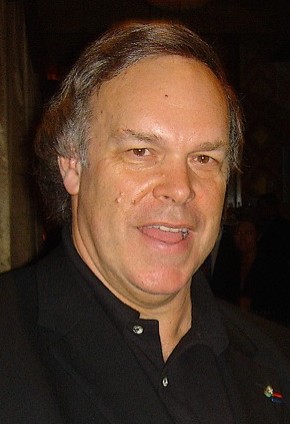
An excerpt from “The Million-Dollar Nose,” William Langewiesche’s 2000 Atlantic article about the sometimes-perilous life of oenophile Robert Parker, who holds great sway among the grape-squashing set:

“Parker was in his hotel room in Bordeaux one night, working on the day’s notes, when he got a phone call from Jacques Hébrard, the family manager of a famous chateau called Cheval Blanc,whose recent vintage Parker had described as a disappointment. Because Hébrard was very angry, Parker agreed to visit the chateau the following night, after his regular schedule of work, in order to retaste the wine. At the agreed-upon time he knocked on the chateau door. When it opened, a snarling schnauzer came out, leaped into the air, and clamped onto Parker’s leg. Hébrard stood in the doorway, staring into Parker’s face and making no attempt to intervene. After several attempts Parker managed to shake off the dog, which went tumbling into the night. Parker followed Hébrard into an office, where he saw that his pants were torn and blood was running down his leg. He asked Hébrard for a bandage. Hébrard came across the room and glanced disdainfully at the wound. Without saying a word, he went to the far side of a desk, pulled out a copy of The Wine Advocate, and slammed it down hard. He said, ‘This is what you wrote about my wine!’

In his simplified French, Parker said, ‘That’s why I’m here. To retaste it. Because you think I’m wrong.’

‘Well, I’m not going to let you retaste it.’

Parker got as belligerent as he gets. He said, ‘Look. I came here at the end of the day. You said I could taste your wine. I’ve been bitten by your dog. If I was wrong about this wine, I will be the first to say so.'”

•••••••••

Parker queried in 2003 by Charlie Rose, who seems fairly fermented himself.

Tags: , , ,

dylan

D.A. Pennebaker interviewed about his landmark 1966 Bob Dylan doc, Don’t Look Back, by the legendary music and culture journo Greil Marcus.

From a 1967 Life magazine review of the movie:

Technically, Don’t Look Back is not much above a home movie. Pennebaker uses available light and his sound pick-up equipment seems to be immersed in potato salad, which loses him a lot of dialogue. But Dylan emerges as a human being. He checks himself in the mirror a couple of times, puncturing forever the theory that he is groomed by a Waring blender. He loses his temper. He reads articles about Bob Dylan and giggles. Fans pursue him, a drunk incites him to violent cursing, friends relax him, a pre-concert wait creates tension. He is alone early on stage (the tour antedated the electric accompaniment he uses today), where his voice and soulful images have the power and the beauty to transfix an audience of thousands.•

Tags: , ,

"These days I play video games in the morning, play video games in the afternoon and spend my evenings playing video games."

The opening of journalist Tom Bissell’s account in the Guardian of how he has willfully pissed away several years of his life on twin addictions to Grand Theft Auto IV and cocaine:

“Once upon a time I wrote in the morning, jogged in the late afternoon and spent most of my evenings reading. Once upon a time I wrote off as unproductive those days in which I had managed to put down ‘only’ a thousand words. Once upon a time I played video games almost exclusively with friends. Once upon a time I did occasionally binge on games, but these binges rarely had less than a fortnight between them. Once upon a time I was, more or less, content.

‘Once upon a time’ refers to relatively recent years (2001-2006), during which I wrote several books and published more than 50 pieces of magazine journalism and criticism – a total output of, give or take, 4,500 manuscript pages. I rarely felt very disciplined during this half decade, though I realise this admission invites accusations of disingenuousness. Obviously I was disciplined. These days I have read from start to finish exactly two works of fiction – excepting those I was also reviewing – in the last year. These days I play video games in the morning, play video games in the afternoon and spend my evenings playing video games. These days I still manage to write, but the times I am able to do so for more than three sustained hours have the temporal periodicity of comets with near-earth trajectories.” (Thanks Longreads.)


Tags:

"The fact is, they know very little about him. He has had no baseball career." (Image by "Sports Illustrated.")

As April Fools’ Day and baseball season approach, it’s time to look back at one of the greatest pranks ever pulled, a George Plimpton article in Sports Illustrated entitled “The Curious Case of Sidd Finch,” which was published on April 1, 1985. The piece, about a newly discovered, larger-than-life baseball player who could supposedly throw a fastball 168 miles per hour, was presented as fact by the mag and fooled people across the nation for several days. Outside of War of the Worlds, it may be the best large-scale hoax in American history.

And it’s unlikely to be surpassed. You see some person or another tricked occasionally on April Fools’ Day now, but a mass prank that permeates through the culture over the course of a week is only really possible in a world where communication is limited, information imperfect and a sense of wonder prevalent. The information explosion has passed April Fools’ Day into obsolescence. In our time, it’s much easier to be shocked by truths than tricks. An excerpt from the article:

“The phenomenon the three young batters faced, and about whom only Reynolds, Stottlemyre and a few members of the Mets’ front office know, is a 28-year-old, somewhat eccentric mystic named Hayden (Sidd) Finch. He may well change the course of baseball history. On St. Patrick’s Day, to make sure they were not all victims of a crazy hallucination, the Mets brought in a radar gun to measure the speed of Finch’s fastball. The model used was a JUGS Supergun II. It looks like a black space gun with a big snout, weighs about five pounds and is usually pointed at the pitcher from behind the catcher. A glass plate in the back of the gun shows the pitch’s velocity — accurate, so the manufacturer claims, to within plus or minus 1 mph. The figure at the top of the gauge is 200 mph. The fastest projectile ever measured by the JUGS (which is named after the oldtimer’s descriptive — the ‘jug-handled’curveball) was a Roscoe Tanner serve that registered 153 mph. The highest number that the JUGS had ever turned for a baseball was 103 mph, which it did, curiously, twice on one day, July 11, at the 1978 All-Star game when both Goose Gossage and Nolan Ryan threw the ball at that speed. On March 17, the gun was handled by Stottlemyre. He heard the pop of the ball in Reynolds’s mitt and the little squeak of pain from the catcher. Then the astonishing figure 168 appeared on the glass plate. Stottlemyre remembers whistling in amazement, and then he heard Reynolds say, ‘Don’t tell me, Mel, I don’t want to know. . . ‘

The Met front office is reluctant to talk about Finch. The fact is, they know very little about him. He has had no baseball career. Most of his life has been spent abroad, except for a short period at Harvard University.”

Tags: ,

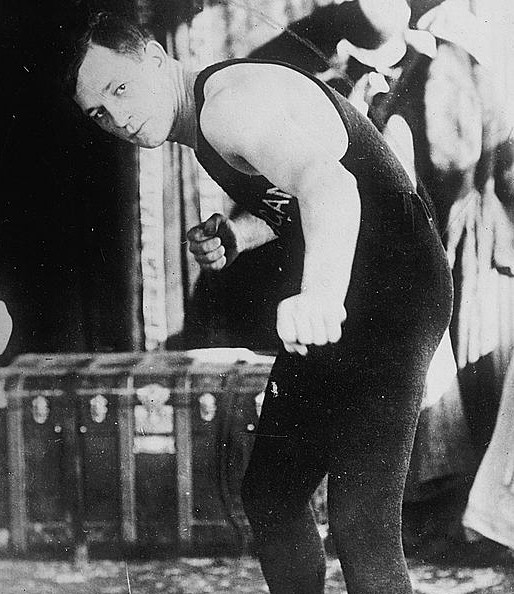
Ketchel killer's were captured and convicted to life sentences, though both were eventually paroled.

John Lardner was a New Yorker writer in the 1930s-50s, a superlative scribe on all topics, best known for his boxing stories. He died before turning 50 and his name has largely fallen into disuse except among the dwindling legions of boxing enthusiasts, a graying and nostalgic crew. When he is remembered it’s usually for a single sentence he wrote among thousands. In a piece called the “Down the Great Purple Valley,’ an account of the 1910 murder of famous boxer Stanley Ketchel, which was published in 1954 in the long-defunct True: The Men’s Magazine, Lardner delivered what is thought of as one of the greatest leads in journalism history, an eloquent line that sets up the whole piece. Here it is:

“Stanley Ketchel was 24 years old when he was fatally shot in the back by the common-law husband of the lady who was cooking his breakfast.”

••••••••••

In the year before he was slain, middleweight Ketchel fights valiantly but is clearly over-matched by the great heavyweight champion, Jack Johnson, in a bout in Colma, California.

Parachute: An apparatus like an umbrella, used by aeronauts when their balloon is in danger. In recent years many descents from balloons have been made by means of parachutes for the amusement of the public, and some fatalities have attended these exhibitions.

Pedestrianism: The best and the most beneficial form of exercise. The alternate forward motion of the legs and feet procures progression, but every limb is called into play by pedestrianism, and the circulation of the blood stimulated throughout the system. Even prolonged walking in good air, beyond the tiring point, is salutary, but for the ordinary purposes and convenience of present-day life, it is not often necessary except for observation purposes. One should, however, be capable of long and quick walking, though there is no occasion to aim at emulating the speed or endurance of such pedestrians, as P.P. Murray, who walked a mile in 6 minutes, 29 2/3 seconds, at New York, October 27, 1883, or S.S. Morill, who walked 8 miles at Boston in 1 hour, 2 minutes, 8 1/2 seconds. On September 12, 1908, T.E. Hammond walked 131 miles, 800 yards in 24 hours, over the public roads in England. Captain Barclay of Ury in Britain, was the first to walk a thousand consecutive miles in a thousand consecutive hours. Daniel Weston, the veteran American pedestrian, walked from the Pacific to the Atlantic, a distance of 3.500 miles, in exactly 77 days. On October 23, 1910, Herr Hanslian was reported to have reached Zurich after a journey of 40,000 miles on foot around the world. He left Vienna seven years previously, with his wife, who had since died, and his little daughter, and proceeded to Vienna to claim a wager, which he expected to win with his walk.

Pessimism: The theory, as taught by Schopenhauer that this is the worst of all worlds, and that it is better to sleep than wake, and to die than sleep.

Pillory: An instrument of public punishment of offenders, disused in England since 1837. It consisted (essentially) of an upright plank to which two transverse planks were attached. In the upper one there was a hole for the neck and in the lower were two holes in which the hands were inserted. Unpopular offenders, like perjurers, forgers and the like were severely pelted with eggs, mud, etc.; but for those with whom the people sided, the pillory was a slight punishment.

Prison: A place of confinement for criminals, debtors, or political suspects. Lack of means and organization made imprisonment a difficult matter is early ages, and they were generally outlawed, banished, enslaved or put to death. The Greek mode was to deny them use of water and fire in their own land. The early Germans proclaimed them wolves, giving every man the right to plunder, injure or kill them. As castles developed in the Middle Ages, their dungeons became terrible places of detention and were used without form of law. The English, in the eighteenth century, inflicted death for stealing bread, or a yard of linen, or a few turnips, as there was no provision for imprisonment. Branding, flogging and the stocks were also generally in use. The country prisons, huddling together debtors and criminals, became dens of jail- and putrid-fever. The Russian system, combined with its Siberian exile, is still the disgrace of Europe. All other civilized countries have made diligent efforts toward combining justice and reformation; the most important objects being to build sanitary prisons, to provide entirely separate criminal systems for children and lads, with every possible effort toward reformation. The expense to the state is less important than the reformatory effect of teaching a trade.

•Taken from the 1912 Standard Illustrated Book of Facts.

See also

 

"Rodrigo Rosenberg knew that he was about to die."

The first two crisp paragraphs from “A Murder Foretold,” a new New Yorker article about a mysterious killing in Guatemala, penned by the excellent writer David Grann:

“Rodrigo Rosenberg knew that he was about to die. It wasn’t because he was approaching old age—he was only forty-eight. Nor had he been diagnosed with a fatal illness; an avid bike rider, he was in perfect health. Rather, Rosenberg, a highly respected corporate attorney in Guatemala, was certain that he was going to be assassinated.

Before he began, in the spring of 2009, to prophesy his own murder, there was little to suggest that he might meet a violent end. Rosenberg, who had four children, was an affectionate father. The head of his own flourishing practice, he had a reputation as an indefatigable and charismatic lawyer who had a gift for leading other people where he wanted them to go. He was lithe and handsome, though his shiny black hair had fallen out on top, leaving an immaculate ring on the sides. Words were his way of ordering the jostle of life. He spoke in eloquent bursts, using his voice like an instrument, his hands and eyebrows rising and falling to accentuate each note. (It didn’t matter if he was advocating the virtues of the Guatemalan constitution or of his favorite band, Santana.) Ferociously intelligent, he had earned master’s degrees in law from both Harvard University and Cambridge University.”

••••••••••

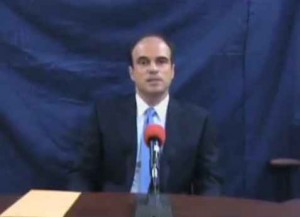
“Good afternoon, my name is Rodrigo Rosenberg Marzano, and regrettably if you are watching or listening to this message, it’s because I was murdered by President Alvaro Colom.”

Tags: ,

Ocelot: Usually called the leopard cat, is common in the more southern parts of the United States, in Mexico and Brazil. It is about four feet in length, including tail, and of a gray or tawny color, and spotted. It is very destructive to weaker animals, but does not devour them, contenting itself with sucking their blood.

Octopus: The Devil Fish, a marine cephalopod, differing from squid and cuttle-fish in having eight instead of ten arms, extending from the hideous, one-eyed head.

Optical Illusions: These are frequently occasioned by a disordered condition of the nervous system. They are indicative of brain disturbance. Also optical illusions occur in delirium, caused by alcoholic excesses, fever, or injury. They are the outward sign of inward mischief, which needs very serious attention. Morbid affections of this kind have received much attention by specialists in our day, and much more enlightened methods of treatment are employed now than formerly.

Ostracism: A right exercised by the Athenians of banishing for a time any citizen whose services, rank or wealth appeared to be dangerous to the general good.

Otis, James: (1724-1783) An American Revolutionary patriot, famous for his oratory, and especially celebrated for his speech at Boston, in 1761, in opposition to the so-called “Writs of Assistance.” He was waylaid by Tories and a blow on his head destroyed his reason. He was killed by a stroke of lightning.

•Taken from the 1912 Standard Illustrated Book of Facts.

See also

 

In praise of idleness, from Mark Slouka’s 2004 Harper’s essay, “Quitting the Paint Factory“:

“Idleness is not just a psychological necessity, requisite to the construction of a complete human being; it constitutes as well a kind of political space, a space as necessary to the workings of an actual democracy as, say, a free press. How does it do this? By allowing us time to figure out who we are, and what we believe; by allowing us time to consider what is unjust, and what we might do about it. By giving the inner life (in whose precincts we are most ourselves) its due. Which is precisely what makes idleness dangerous. All manner of things can grow out of that fallow soil. Not for nothing did our mothers grow suspicious when we had ‘too much time on our hands.’ They knew we might be up to something. And not for nothing did we whisper to each other, when we were up to something, ‘Quick, look busy.’

Mother knew instinctively what the keepers of the castles have always known: that trouble – the kind that might threaten the symmetry of a well-ordered garden – needs time to take root. Take away the time, therefore, and you choke off the problem before it begins. Obedience reigns, the plow stays in the furrow; things proceed as they must. Which raises an uncomfortable question: Could the Church of Work – which today has Americans aspir ing to sleep deprivation the way they once aspired to a personal knowledge of God – be, at base, an anti-democratic force? Well, yes. James Russell Lowell, that nineteenth-century workhorse, summed it all up quite neatly: ‘There is no better ballast for keeping the mind steady on its keel, and sav ing it from all risk of crankiness, than business.'”

Guay's post is entitled, "iPad: The Microwave Oven of Computing."

Matthew Guay of Techinch recalls the introduction of the microwave oven, which became wildly successful despite being an in-between product, just like tablet computer is in its sector:

“In 1967, American consumers were introduced to the new, must have item for their kitchens: the microwave oven. This device, manufactured mainly by defense contractors such as Raytheon due to their expertise with magnetron, the device that generates microwaves in a radar system or microwave oven, was now supposed to be a fixture in every home, restaurant, and more. It could heat food faster, use less energy, and be less likely to burn your house down than a traditional oven. And it cost just under $500. What more could you ask?

Actually, there was a lot customers could ask. First, why in the world do you need yet another way to heat food? Kitchens already have an oven and range, plus perhaps a toaster, waffle iron, or a grill on the back porch. And the coffee pot can keep coffee hot anyhow. Do you really need another oven? Plus, surely it won’t work quite like an oven, or quite like a stove. It’s like something in the middle. How could we need that?”

Tags:

"Short breaths help you to cry. Tightening the throat helps."

The opening of “Hollywood Elementary,” Adrian Nicole LeBlanc’s 2006 New York Times article about children training for a career in show business:

“Nine-year-old Jaysha Patel doesn’t cry easily, but on a recent morning, she was ready to weep. She took a chair facing her fellow actors in a bland conference room. The mothers, who sat in the back, seemed oblivious: one knitted; another placed stamps on a pile of picture postcards of her son, which would alert casting directors to the air date of his latest show. Meanwhile, Trisha Simmons, the children’s very pretty teacher, offered her aspiring students a couple of tips: ‘Short breaths help you to cry. Tightening the throat helps.’ Simmons looked resplendent in a bright purple hooded jacket and a rhinestone belt, circulating among her charges, some as young as 5. ‘Take your finger out of your nose,’ she chided one, then stopped to squint at a boy. ‘What’s that on your lips?’ she asked.

‘Powdered doughnut,’ he admitted.

The workshop, Crying on Cue, was taking place at the Oakwood Toluca Hills, a vast complex of temporary rental apartments in Los Angeles that caters to families actively pursuing a Hollywood career. In addition to housing, the Oakwood offers the Child Actor Program, which brings industry professionals, like Simmons, onto the premises and has made the Oakwood a much-sought-after residence for aspiring child actors. Simmons and others teach specialized, marketable skills: ‘If you’re a kid, and you can cry, you’re going to have a long road ahead of you — lots of work,’ Simmons says. She’s a working actor whose résumé includes roles in Desperate Housewives and Will and Grace.


Tags: , ,

Naturalization: The process by which an alien acquires citizenship. A naturalized citizen in the United States has all the rights except that he cannot become president or vice-president. By the law of 1906, every alien, on his arrival in the United States is registered, and certificate of registration given him in case he should desire to apply for citizenship. No less than two nor more than seven years after filing this declaration the alien must make petition to a competent court, rehearsing these facts, stating that he is not an anarchist, and that he wishes to be naturalized. He must have two credible witnesses, citizens themselves, who confirm his statement, assert that he has been a resident of the United States for five years and of the state for one, and that he is of good moral character. The petitioner must be able to speak English unless he is naturally dumb, or has a homestead entry on public land. Foreign Africans can be naturalized but not Chinese.

New Surgery: This promises remarkable achievements in the future–even “sight to the blind” and “new life to the heart.” An enumeration of some of the feats already accomplished include: insanity cured, due to neuralgic pain by trephining the skull and taking out the “fifth” nerve; criminals restored to normal life by relieving a certain pressure on the brain: “new” bones formed by transplanting dead or living bones to living bodies; whole joints removed and others put in new places; kidneys transplanted from one animal to another; skin transplanted from the body of one person to another; skin removed from dead or living bodies kept “alive” in the laboratory by chemical means and made to grow; broken backs mended, skulls repaired with bones from some other parts of the body, new faces made, dead nerves supplemented with nerves of animals, useless lungs, kidneys, spleens and stomachs removed; injured hearts, livers and other organs stitched; paralysis and brain failure cured by draining the spine or brain, brittle arteries reinforced with gold wire. By means of electric bulbs and mirrors the interior of the throat and lungs is examined. The New Surgery also provides measures for the amelioration not only of the individual condition, as in the removal of the tonsils and the appendix to prevent serious dangers, but also for the actual betterment of the race itself by the prevention through simple surgical means, of the production of offspring by criminals, as well as by others, who might transmit hereditary physical or other defects. The Rentoul operation for severing the tube conveying the seminal fluid of the male, one that involves merely nominal risk, has been adopted in regard to criminals in this country as, for instance, in Connecticut, and might be adopted by those who, afflicted with hereditary troubles, yet also appreciate the dire effects of tainted heredity upon the race generally. Real relief would come by the instruction of children, in family and school, in the nature of the human body, and the terrible results of vice.

New York City: The greatest city of America and the second greatest of the world. It was founded by the Dutch on Manhattan Island (1613) with a few trading huts. Regular colonization began in 1622. New Amsterdam, as it was called, passed into English hands and became New York (1664), but the Dutch policy of patroonships, or large land holdings with tenant farmers, kept town and colony behind New England and Pennsylvania, until after the Revolution, when the genius of Hamilton, the Clintons, Morris and Livingston laid the foundation for its unparalleled prosperity. Its peculiarity of narrowness and immense length, of crowded population and high land values, developed by unbounded wealth and the possibilities of modern steel construction, have produced on Manhattan Island a new architecture, with towering office buildings and palatial apartment houses, ten to fifty stories high. They darken the densely crowded streets, but have a strange and startling effect of grandeur. Cathedrals and pyramids dwindle at their side. Nowhere is the terrible force of modern civilization so impressed on the daily unconscious thought of man by his inherent necessities. It is a gorgeous, crashing, magic city, robbed of weirdness and grotesqueness by the skill of a modern school of architects, whose variety in design, color and decoration, added to modern resources in building-stone, tinted brick and concrete, never wearies the eye and produces a skyline of impressive splendor. The communications and transportation of the thronging myriads are effected by every device of subway, elevated roads, electric and cable lines; organized ability and achievement, aided by the acquired good sense and good nature of a people accustomed from childhood to its imperial wonders.

Nose: The organ of smell, so placed above the mouth that the odor of whatever is placed therein must be immediately perceived.

Nostalgia: A longing for the old home and friends which in sensitive natures produces melancholia and even death. It appears to be most frequent among mountaineers, including the Swiss, Trolese, Norwegians and Dalmatians.

•Taken from the 1912 Standard Illustrated Book of Facts.

See also

 

Transcendentalist and literary editor George Ripley founded Brook Farm in Massachusetts. It was no Utopia.

From “Utopia & Dystopia,” Paul La Farge’s excellent 2010 BookForum essay about the horrifying nature of Utopian settlements (both fictional and actual), from Sir Thomas More forward:

“The history of real-world utopias bears his observation out. One of America’s best-known utopian experiments was performed at Brook Farm, in Massachusetts, where members of the Transcendentalist intelligentsia, among them Nathaniel Hawthorne, tried their hands at a communal life inspired by the writings of Fourier. The Brook Farmers lacked the funds to live well and the skills to live cheaply; they went into debt and argued about doctrine, and when their half-built phalanstery burned down in the spring of 1846, the community went into a decline from which it did not recover. The most enduring monument to Brook Farm is Hawthorne’s novel The Blithedale Romance (1852), which, far from praising the experiment, describes a group of city folk going obstinately to seed, their minds numbed by work, their hearts ablaze with impractical and ultimately tragic romantic combinations.

The Brook Farmers’ misfortune was small compared with that of the Icarians. It’s hard to see how Cabet’s novel could have inspired anyone to serious activity; nevertheless, in 1848, sixty-nine French people, dressed in black velour uniforms, set sail from Le Havre for Texas, where they were to establish a colony. They settled on the Red River, where they caught yellow fever; by the time Cabet arrived with the second group of colonists, a year later, their society had fallen apart. The Icarians relocated to Nauvoo, Illinois, whence the Mormons had just been chased: Presumably the real estate came cheap. Fifteen hundred Icarians gathered in Nauvoo, but they accomplished little, aside from printing a tract in which Cabet described how nice a society he could make if someone were to give him half a million dollars. The group split; Cabet and his loyalists departed for Saint Louis, where Cabet died a few days later. The remainder of the group bought land in Iowa, which so depleted their resources that they lived for years in mud houses and walked around in wooden shoes. Their splendor was all in their ‘somewhat elaborate’ constitution, drafted by Cabet, ‘which lays down with great care the equality and brotherhood of mankind, and the duty of holding all things in common; abolishes servitude and service (or servants); commands marriage, under penalties; provides for education; and requires that the majority shall rule.’

Eventually the Icarians built a schoolhouse and a dining hall, but their society failed to enchant the outside world. Of the sixty-five members who moved to Iowa in 1856, thirty were gone by 1860; the last Icarians disbanded in 1898. Most utopian societies met similar ends: The Harmonists of Pennsylvania lost their money in a lawsuit; the Separatists of Zoar dwindled to nothing. The Oneida Perfectionists, notorious in their day for practicing institutionalized polyamory, fell into scandal and squabbling, then reformed themselves into a silverware company that left its members to form their own matched sets.” (Thanks Essayist.)

Tags: , ,


An April 4, 1898 letter from a reader to the Brooklyn Daily Eagle:

“To the Editor of the Brooklyn Eagle:

Some time ago I wrote to the Eagle asking what could be done in regard to the scissor grinder who insists upon blowing a trumpet each and every day in front of my home. It startles me most awfully. As to my baby I fear it may be the means of throwing her into convulsions.

K.D. McNeill”

Tags:

Marriage: In law, a civil contract establishing the status of a man and a woman united in lawful wedlock; the relation of husband and wife. In its ethical sense, it is, in all Christian countries, a mutual compact, based on regard and affection, to live together as husband and wife, until death. Its purpose is to perpetuate the family and the race, to preserve moral and social purity, and to properly rear the young. The marriageable age is especially regulated by statute in the various States; under the common law it is 14 years in the male, and 12 in the female.

Mixed Races: The subject of mixed races is intimately connected with the study of both ethnology and atavism. It involves a consideration of the phenomena attendant upon the sexual union of individuals belonging to different varieties of the human race. Two phases of mixing of races are particularly interesting to North Americans, the result of the mixing of white and negro blood, and the amalgamation of various white races, belonging to every strata of society, from the descendants of generations of oppressed peasants, to scions of high nobility in what has been termed the “American Melting Pot.” The mingling of European nations seems to produce a strong and thoughtful race, combining the finest elements of those who are, from the struggle to emigrate, the best physical specimens of their people, and now the United States is increasing the difficulty of admission, thus aiding the natural principle of selection. The result of amalgamation among more distant races, as exemplified in the population of Central and Southern America and the Eurasians of India, have not commended themselves to the American mind, and there is a strong opposition to the admission of Chinese and Japanese, the finest of non-Caucasian races.

Morgue: Originally a prison court for the identification of prisoners in France, then applied to a building on the Seine behind the cathedral of Notre Dame, Paris, where the bodies of the drowned and other unknown dead are exposed for identification and police inspection. This practice is now usual in all large cities. The period of exposure is usually 72 hours, and the unidentified bodies are then buried by the city or given to anatomists. To avoid morbid curiosity, only adults with an interest in identification are admitted, and a careful record is preserved of physical appearance and peculiarities.

Moving Pictures: About 1903 the stock of films in existence had gradually become sufficiently numerous to enable the establishment of small theaters with frequent changes of views. They became very popular and by 1905 had driven the traveling exhibitors of moving pictures practically out of business. There are now upwards of 10,000 such theaters in the United States alone, and they are proportionately numerous all over the civilized world. Receipts of such theaters range from $200 to $5,000 weekly according to size and location. Over fifty reels (lengths of 1,000 feet) are now produced weekly so that one person could spend two or three hours daily and never see a repeated picture. The business of the ordinary theater has been seriously affected, and the lower class of melodramas has been entirely eliminated. Moving pictures are of course liable to great abuse, as vulgar and vicious films have sensational interest, but the manufacturers have voluntarily submitted their products to a respectable censorship, and they have become the best, cheapest and most instructive amusement. In its far-reaching effects, the invention of moving pictures is one of the greatest in the history of science.

Murder: The crime of killing a human being with malice aforethought; an idiot is irresponsible; an infant under fourteen goes to the reformatory. Killing in hot-blooded quarrel without premeditation is manslaughter, punishable with imprisonment, not death; and killing in self-defense, or when a house is broken into at night is justifiable. But if a man shoots at one and kills another, or kills, even in self-defense, when caught in burglary, it is murder. Intoxication is not an excuse, nor provocation, when it does not give absolute necessity of self-defense. Most American states punish murder by death, but a mawkishness of juries, and the technicalities of evidence and specialist arguments for insanity of criminals often defeat justice. European practice is stricter.

•Taken from the 1912 Standard Illustrated Book of Facts.

See also
 

(Image by Lenore Edman.)

Liberal: A political term meaning, where used, those who take advanced views, and welcome changes that promise betterment in public affairs, in contradistinction to the Conservative who usually favors letting well enough alone.

Lincoln, Abraham: The great president of the United States during the Civil War. He was the son of Thomas and Nancy Hanks Lincoln, born in Hardin County, Kentucky, of English-Quaker stock, and passed his youth amid the then rough frontier environment of the middle west, where anti-slavery sentiment prevailed. His early education was self-acquired, mostly by voracious reading; and his first business training was secured while serving as a clerk in a general store, where, by fair dealing, he earned the nickname of “Honest Abe.” In 1846 he was elected to Congress and in 1860 was nominated for the Presidency. In 1861 Lincoln was elected after a spirited campaign. He came to office at a time when the country was torn with the anti-slavery agitation, when the Civil War, long impending, was breaking out, and throughout the four year struggle he stood, often alone, firmly contending for the abolition of slavery and the preservation of the Union, strong in the faith that ultimately the nation would emerge from the period of stress and strain, greater and more prosperous than ever. He brought the country successfully out if its travail, and by the weight of the burden, “Honest Abe,” became the “Man of Sorrows.” For the service to the nation he paid with his life; he was assassinated by John Wilkes Booth, an actor, while witnessing a play in the box at Ford’s Theatre, Washington D.C., on the night of April 14, 1865, one month after his second inauguration. In personal appearance, Lincoln was very tall with legs out of all proportion to his body. He stood 6 feet, 4 inches in height and weighed about 180 lbs. When he sat, he usually crossed his legs or rested them on the arm of his chair; standing, he stooped slightly, and had the general appearance of a consumptive. His facial expression stamped him a man of long cherished sorrow, yet his sense of humor was exceptionally keen and he possessed a never-failing fund of witty stories. As an orator he is conceded one of the greatest America ever produced.

Literature, American: It may be well to admit at the outset that America has never produced a world writer. The nearest approach to it, in poetry in Longfellow and, in prose, Emerson.

Lottery: A game of hazard in which prizes are drawn by lot. Lotteries are said to have been first employed by the Genoese government for the purpose of increasing its revenue. The first lottery in England seems to have been in the year of 1569 and the profits went to the repair of rivers and harbors. They were long tolerated both in England and the United States, though from 1830 onward until they were abolished there was an ever-growing sentiment against them. The most notorious ever was the Louisiana lottery at New Orleans. It went out of existence in 1890.

Love-apple: An old name for the tomato.

•Taken from the 1912 Standard Illustrated Book of Facts.

See also

 

Girl in Maui with "surfer hair." (Image by Rachel Amarette.)

The opening of “Life’s Swell,” Susan Orlean’s excellent 1998 Outside article about Maui surfer girls:

“The Maui surfer girls love each other’s hair. It is awesome hair, long and bleached by the sun, and it falls over their shoulders straight, like water, or in squiggles, like seaweed, or in waves. They are forever playing with it — yanking it up into ponytails, or twisting handfuls and securing them with chopsticks or pencils, or dividing it as carefully as you would divide a pile of coins and then weaving it into tight yellow plaits. Not long ago I was on the beach in Maui watching the surfer girls surf, and when they came out of the water they sat in a row facing the ocean, and each girl took the hair of the girl in front of her and combed it with her fingers and crisscrossed it into braids. The Maui surfer girls even love the kind of hair that I dreaded when I was their age, 14 or so — they love that wild, knotty, bright hair, as big and stiff as carpet, the most un-straight, un-sleek, un-ordinary hair you could imagine, and they can love it, I suppose, because when you are young and on top of the world you can love anything you want, and just the fact that you love it makes it cool and fabulous. A Maui surfer girl named Gloria Madden has that kind of hair — thick red corkscrews striped orange and silver from the sun, hair that if you weren’t beautiful and fearless you’d consider an affliction that you would try to iron flat or stuff under a hat. One afternoon I was driving two of the girls to Blockbuster Video in Kahului. It was the day before a surfing competition, and the girls were going to spend the night at their coach’s house up the coast so they’d be ready for the contest at dawn. On contest nights, they fill their time by eating a lot of food and watching hours of surf videos, but on this particular occasion they decided they needed to rent a movie, too, in case they found themselves with 10 or 20 seconds of unoccupied time. On our way to the video store, the girls told me they admired my rental car and said that they thought rental cars totally ripped and that they each wanted to get one. My car, which until then I had sort of hated, suddenly took on a glow. I asked what else they would have if they could have anything in the world. They thought for a moment, and then the girl in the backseat said, ‘A moped and thousands of new clothes. You know, stuff like thousands of bathing suits and thousands of new board shorts.'” (Thanks Longform.)

Tags: ,

Kidnapping: The stealing or abduction or carrying off forcibly of any human being whether man, or woman or child, but in common use the term applies to the stealing of a child, as abduction specifically refers to the carrying off of a maid. It was the practice formerly for gypsies and traveling mountebanks to steal young children and initiate them in their arts, and the tradition that they do so still persists.

Kissing Bug: An insect that stings people upon the lips causing swelling and great suffering. The kissing bugs are about an inch in length, dark brown, with wings of a light red color. They fly with great rapidity and are all seldom seen in places where there is a bright light. In stinging they give warning by making a sharp shrill sound. By dodging one may escape the bug.

Know Nothing: The colloquial name of the political party, the so called American Party, in the United States before the Civil War, organized for the purpose of withholding naturalization and the privilege of the franchise from foreigners. It lasted only a short time but was the cause of considerable disorder.

Knuckle-Duster: A formidable apparatus contrived for the purpose of protecting the knuckles and to add force to their use. It is frequently employed by garrotters and other lawless ruffians.

Kuatau: A Japanese method of restoring the apparently lifeless, by concussive or mechanical means. Kuatasu is homeopathic in principle–the concussion of one vital spot renders one unconscious, that of another spot quickly restores the sufferer. It is affected by a stimulation of the accelerator nerves that quickens the heart action and which is best attained by concussing over the region of the seventh cervical vertebra.

•Taken from the 1912 Standard Illustrated Book of Facts.

See also


Eccentric puzzle master Henry Hook likes to tease, torment and torture. Before people like Hook and Will Shortz came along, the crossword puzzle, which was created in 1913, was an academic thing, far from being the pun-happy, pop culture paradise it is today. In his 2002 New Yorker article, “The Riddler,” Burkhard Bilger describes Hook’s unorthodox puzzle-creating routine:

“He lives and works in Brooklyn now, not far from Prospect Park, in a small wooden house so barricaded to guests that he barely lets the cable man in. ‘I’m the guy that inspired the phrase ‘Doesn’t play well with others,’’ he says. On most days, he wakes up by seven, does a word search to get his eyes focussed, and then spends the day shuttling between his crossword grids, his reference books, and the television. More and more crossword constructors are relying on computer programs and data bases of common clues. Hook uses only a pencil (‘A computer looks really stupid tucked behind your ear’), yet he has been known to come up with twenty-four crosswords and write more than fifteen hundred clues in three days. In addition to constructing a crossword for the Sunday BostonGlobe every other week, he writes two puzzle books a year for Random House and hundreds of puzzles that are syndicated for smaller publications.

Then again, there is very little to distract him. Once a week, Hook used to get dressed up, walk to a karaoke bar several blocks away, and belt out a few Sinatra or Elvis tunes. But, he says, he got bored with the same old crowd, and he gave up his membership in the National Puzzlers’ League long ago—’logophilia in the extreme.’ He says he dreams of being a former crossword constructor, but it’s not clear what else he would do.”

Tags: ,

A new Daily Mail article by Rob Waugh guesses that Apple design guru Johnathan Ive won’t be leaving the company, as has been rumored, to move back to his native England. It also provides an account of the lengths Ive will go to make his designs sleeker. An excerpt:

“Few Westerners have ever seen the forging of a Japanese samurai sword. It’s considered a sacred practice in Japan; one of the few traditional arts that has yet to be bettered by modern science. Japanese smiths work through the night (better to judge the heat of metal by eye) hammering, melting and forging by hand to produce the finest blades in the world.

The steel is folded and refolded thousands of times to create a hard outer layer and a softer inner core resulting in a singular blade: terrifyingly sharp but far less prone to breaking than any sword forged in the West.

Once the blade is complete it is polished to a mirror finish, an elaborate procedure that itself can take weeks. The long and laborious process pushes metal to its absolute limit – which is precisely why Jonathan Ive wanted to see it first hand.

Ive endlessly seeks crucial knowledge that can help him to make the thinnest computing devices in the world, so it surprised no one at Apple that their obsessive design genius would take a 14-hour flight for a meeting with one of Japan’s leading makers of katana.

Afterwards Ive, shaven-headed, heavily muscled, in his trademark T-shirt and jeans, watched intently as the man went about his nocturnal labour.

This month Apple, the fabulously successful technology company – indeed, now the world’s biggest, having surpassed Microsoft – launched its latest piece of technology, the iPad 2. The machine was the result of this sort of research, and Ive’s preferred process of making the same product over and over again; in this case, carving metal and silicon until the product was one-third thinner and 0.2lb lighter than its predecessor.”

Ive in the documentary, Objectified:

Tags: ,

I represent the letter "J," Mavis.

Japanese Question: An important issue in the Pacific States and Western Canada, caused by the anti-Oriental feeling of the population of these regions, especially expressed (1906), when the Board of Education of San Francisco barred Japanese pupils from the public schools for whites; and having received its culmination in the disturbances  of 1907, during which a number of Japanese eating-houses and shops were wrecked and pillaged. The question became so acute that President Roosevelt sent Secretary of the Navy Metcalf to investigate the situation, the result being a presidential message to Congress, and long negotiations with Japan concerning the exclusion of Japanese laborers. This culminated in the treaty of 1911 with Japan, according to which no Japanese subjects may be excluded from the United States for other than reasons applying to every nation, while the Government of the Mikado promises not to give passports to Japanese of the laboring class.

Joe-Miller: An old jest, a stale joke; derived from Joe or Joseph Miller, a comic actor of the early part of the eighteenth century. His name was attached to a jest-book which was published in 1739, the year after his death, and which became very popular.

John Bull: A humorous impersonation of the English people, conceived of as well fed, good natured, honest hearted, justice loving, and plain spoken.

Jugglers: A term now almost synonymous with conjurer was formerly applied to the professional musicians who accompanied the wandering poets, the Troubadours and the Trouveres of France. These musicians soon came to be employed by kings and princes as minstrels. The professions gradually lost respectability. The Romans had their wonder-workers but the greatest of all jugglers are the Hindu, the famous “basket” trick and the trick of causing almost instant vegetation, the seed being planted, and the tree growing to maturity, budding, blossoming and coming to fruit under the eye of the spectator, are peculiar to the Hindus. Reginald Scot, a juggler and conjurer of 1854 enumerates the trick of his day. They are much the same as now, except for the additions and improvements modern mechanism and science have made. Conus and Boseo were clever conjurers of the eighteenth century. To Robert Houdin (1805-1871) belongs the credit for devising and introducing some very ingenious apparatus including the drum that beat itself, and the chest that was light or heavy at command. He understood, it would seem, the application of electro-magnetism. The modern conjurers, like Hartz and Hermann, aim generally at producing their effects with the minimum of accessories and apparatus.

Jumpers: Religious sects or bodies who make jumping or dancing a part of their ceremony of worship. Certain Methodists of Wales, some Irvingites, the Shakers of America, and a Russian sect have adopted the practice of some extent.

•Taken from the 1912 Standard Illustrated Book of Facts.

See also

 

"'The way I met Daniel was that he stole my classroom VCR,' recalls Randy Flanagan, one of Blanchard’s teachers."

ATMs and art museums are just two of the well-guarded depositories of wealth that were no match for Gerald Daniel Blanchard, a dyslexic international master thief based in Canada who could rig and rewire almost anything with his nimble hands and quick mind. Before his 2007 arrest, Blanchard eluded law enforcement for almost a decade despite his bold robberies. He was profiled by Joshuah Bearman in Wired in 2010. An excerpt about the criminal’s formative years:

“Blanchard pulled off his first heist when he was a 6-year-old living with his single mother in Winnipeg. The family couldn’t afford milk, and one day, after a long stretch of dry cereal, the boy spotted some recently delivered bottles on a neighbor’s porch. ‘I snuck over there between cars like I was on some kind of mission,’ he says. ‘And no one saw me take it.’ His heart was pounding, and the milk was somehow sweeter than usual. ‘After that,’ he says, ‘I was hooked.’

Blanchard moved to Nebraska, started going by his middle name, Daniel, and became an accomplished thief. He didn’t look the part — slim, short, and bespectacled, he resembled a young Bill Gates — but he certainly played it, getting into enough trouble to land in reform school. ‘The way I met Daniel was that he stole my classroom VCR,’ recalls Randy Flanagan, one of Blanchard’s teachers. Flanagan thought he might be able to straighten out the soft-spoken and polite kid, so he took Blanchard under his wing in his home-mechanics class.

‘He was a real natural in there,’ Flanagan says. Blanchard’s mother remembers that even as a toddler he could take anything apart. Despite severe dyslexia and a speech impediment, Blanchard ‘was an absolute genius with his hands,’ the teacher recalls. In Flanagan’s class, Blanchard learned construction, woodworking, model building, and automotive mechanics. The two bonded, and Flanagan became a father figure to Blanchard, driving him to and from school and looking out for him. ‘He could see that I had talent,’ Blanchard says. ‘And he wanted me to put it to good use.’

Flanagan had seen many hopeless kids straighten out — ‘You never know when something’s going to change forever for someone,’ he says — and he still hoped that would happen to Blanchard. ‘But Daniel was the type of kid who would spend more time trying to cheat on a test than it would have taken to study for it,’ Flanagan says with a laugh.”

Tags: , ,

Google’s ambition knows few bounds. A note about Google’s goals from a new Fast Company article at the moment when Larry Page assumes leadership of the company:

“Google is not always easily categorized. You can’t shorthand it the way you can with, say, Apple (a consumer electronics company) or Microsoft (a software company). While minimizing the world-changing visions of Steve Jobs and Bill Gates seems unwise, making computers a utility and transforming their power into desirable objects cannot compare with the ambitions of Google’s founders. Page and Brin’s stated mission has been to catalog and analyze all of the world’s information, and their larger, unstated aim is to reform all of the globe’s inefficiencies. In addition to translation and speech recognition, the founders are obsessed with image recognition (Google Goggles), advanced energy solutions (Google Energy), and robotics (check out its self-driving car).

Page and Brin’s big bets don’t always work. Google has had to back off reinventing TV-, radio-, and print-advertising sales; its book-digitization project has become a protracted mess; and its initiatives to make wireless networks more open and to change the way cell-phone carriers sell their plans have failed.

Focus on the misses, though, and you risk overlooking its remarkable successes. Google persists in reforming modern communications networks. Google Voice has taken off. Indeed, in 10 years, we might look back on this moment in Google’s history with surprise. While tech wags slagged Google for losing to Facebook, almost none of us saw it turning into the world’s largest phone company.

That’s what’s thrilling about Page taking the helm at Google right now. You get the sense that under his leadership, Google could try its hand at anything. More than anything else during my interviews with people who know Page, one comment stands out: ‘I don’t care what you put in the article,’ says David Lawee, Google’s head of acquisitions. ‘To me, this is the real story: Larry is a truly awesome inventor-entrepreneur. My aspiration for him is that he becomes one of the greatest inventors-entrepreneurs in history, in the realm of the Thomas Edisons of the world.'”

Tags: , ,

« Older entries § Newer entries »