Excerpts

You are currently browsing the archive for the Excerpts category.

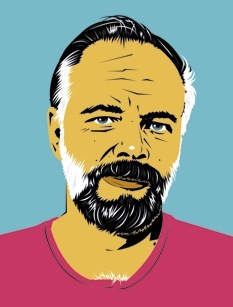
"As an adolescent, not only was Dick asthmatic and overweight, he suffered from eczema and heart palpitations." (Image by Pete Welsch.)

The opening of  Joshua Glenn’s 2000 Hermenaut piece about Philip K. Dick:

“Philip Kindred Dick and his twin sister Jane were born in Chicago-six weeks prematurely, on December 16, 1928-to Edgar Dick, a livestock inspector for the U.S. Department of Agriculture, and his wife Dorothy. Jane died a few weeks later. Edgar was transferred to San Francisco the following year, but when he was transferred again in 1933, his wife Dorothy—a feminist and pacifist who felt at home in Berkeley—divorced him. Dick rarely saw his father (who went on to host a radio show in Los Angeles called This Is Your Government) again, and although throughout his life he was financially and emotionally dependent on his mother, he also deeply resented her… and was convinced she wanted to kill him.

As an adolescent, not only was Dick asthmatic and overweight, he suffered from eczema and heart palpitations. His physical condition may help account for his early discovery within himself—while torturing a beetle, in the third grade—of a powerful capacity for empathy: with insects and animals at first, and eventually with weak and powerless human beings, too. He also immersed himself in the fantasy worlds of opera music, L. Frank Baum’s Oz books, and science fiction. (Although pseudo-scientific adventure stories had existed at least since Verne and Wells, the term ‘science fiction’ was coined shortly before Dick was born by Hugo Gernsback, founder of Amazing Stories, the first sf pulp magazine.) Determined to be a writer, at nine Dick wrote, edited, published, and drew cartoons for a short-lived broadside entitled The Daily Dick; at twelve he taught himself to type (he was eventually able to output 120 words per minute); and at fifteen he got his hands on a printing press and published a newspaper called The Truth. But he did not do well in high school: a self-diagnosed agoraphobic and ‘schizoid personality,’ Dick suffered attacks of vertigo, and dropped out in 1947.”


Tags: ,

"The correlation between growth rates in one decade and growth rates in the next decade is remarkably low." (Image by World Economic Forum.)

Larry Summers isn’t the most popular guy, but I think his comments on China make a lot of sense. An excerpt from an exit interview he did with International Economy:

International Economy: Let’s start with China. The Chinese governmentv is hinting that it plans to spend another $1.5 billion on new technologies. Housing and retail spending, the preoccupations in the United States, are not part of that spending. In the meantime, China’s military has been engaged in a lot of bravado. How do you size up this brave new world?

Larry Summers: President John Kennedy died believing that Russia would be richer than the United States by 1985. Every issue of the Harvard Business Review in the early 1990s contained some joke or allusion to the effect that the Cold War has ended and Japan and Germany have won. Ezra Vogel’s 1979 book Japan as Number One was a bestseller. But none of these prophecies proved to be correct. In fact, looking at the history of growth rates in all countries, the correlation between growth rates in one decade and growth rates in the next decade is remarkably low. Extrapolative forecasting is perilous.

If concern about China leads the United States to strengthen our education system, invest more heavily in research and development, and contain our borrowing, then it could be very constructive. At the same time, it is easy to exaggerate what is happening in China. The average Chinese citizen is not nearly as rich as an average American was even two or three generations ago. The Chinese government is riding a tiger given all of the changes that are underway in that society.” (Thanks Marginal Revolution.)

Tags:


(Image by Glenn Fleishman.)

Ice Stove: A device shown to be practical by Dr. Alexander Graham Bell to furnish cool air for households, etc. Into a large box 200 pounds of ice are fed twice every week. Air pipes lead from the ice box and convey the chilled air to where it is needed, the flow being regulated by an electric fan.

Iconoclasts: Originally, an Eastern sect of the eighth and ninth centuries, whose object was to prevent the worship of, and to destroy, images used in religious rites. The term has been applied in modern times to enemies of religious beliefs generally.

Inebriety, Board of: Created September, 1911, in New York City, to undertake a reform of dealing with drink victims, the first of the kind ever created. Its method consists of “moral suasion” and providing proper environment, instead of inflicting punitive measures. A distinction is made between between first and second offenders–the former being put on probation, the latter being sent to a farm. The cost to the city will be $875,000 annually, with $200,000 for maintenance.

Infant Schools: Pestalozzi was the first teacher of modern times who systematized infant instruction, and in the early part of the present century his system, improved and developed by alter writers, reached its culmination. Infant schools were established throughout Europe, but were abandoned after a few years, as they were found to do more injury than good. In 1837, Frederick Froebel introduced a new method of infant training called the Kindergarten (children’s garden).

Insanity: Disordered or defective reason, arising from heredity, malformation of the skull, imprudence, intemperance, or sudden shock. It is classed as Melancholia, with or without delusions and excitement; Mania, often accompanied by frenzy; Ecstasy or religious excitement; Stupor, dullness, dementia; Degeneration of brain and nerve, with weakened moral sense, impulsive and unreasonable action, and hysteria; Weakness of brain caused by generative excess, syphilis, alcohol and old age, Constitutional Imbecility and idiocy. Insanity, in some of its forms, is the most agonizing of maladies, and cause the greatest distress to the family. It is relieved slowly, if at all, by wholesome food, cleanliness, sleep, mental and physical occupation, moderate exercise and wholesome amusement. The total annual cost of caring the insane in the United States is in the neighborhood of $50,000,000 per year. Insanity rates for various industrial occupations show that the rate per cent for shipwrights was 5.8, watchmakers 8.9, builders 7.7, tailors 11, bootmakers 10.5, bakers 6.8, tobacconists 6.0, brewers 6.1, inn-keepers 19.1. Brokers, agents, etc., have a rate of 12.4, bankers 9.3. commercial travelers 15.5, and warehousemen 17.1. Railroad men suffer much less from insanity than seamen. Their rate is 6.9, that of seamen 16.0. General laborers have the high rate of 39.1.

•Taken from the 1912 Standard Illustrated Book of Facts.

See also

Alex Jones: This man is 37 years old! (Image by zcopley.)

The opening of Alexander Zaitchik’s recent Rolling Stone article about radio ranter Alex Jones, who is both insane and insanely popular:

“It’s just past 9 a.m. when Alex Jones pulls his Dodge Charger into a desolate parking lot in Austin. From the outside, the squat, single-story office complex that Jones calls his ‘command center’ resembles a moon base surrounded by fields of dying grass. But inside, blinking banks of high-tech recording gear fill the studio where he broadcasts The Alex Jones Show, a daily talk show that airs on 63 stations nationwide. Jones draws a bigger audience online than Rush Limbaugh and Glenn Beck combined — and his conspiracy-laced rants make the two hosts sound like tea-sipping NPR hosts on Zoloft.

A stocky 37-year-old with a flop of brown hair and a beer gut, Jones usually bounds into the studio, eager to launch into one of his trademark tirades against the ‘global Stasi Borg state’ — the corporate-surveillance prison planet that he believes is being secretly forged by an evil cabal of bankers, industrialists, politicians and generals. This morning, though, Jones looks deflated. Five days ago, a mentally disturbed 22-year-old named Jared Loughner opened fire on a crowd in Tucson, Arizona, killing six and seriously wounding Rep. Gabrielle Giffords. Loughner was reported to be a fan of Loose Change, a film Jones produced that has become the bible for those who believe 9/11 was an inside job.”

••••••••••

Alex Jones believes Magellan is way cooler than Justin Bieber, which is true:

Tags: ,

"Nun of Amherst"


I NEVER LOST AS MUCH BUT TWICE

I NEVER lost as much but twice,
And that was in the sod;
Twice have I stood a beggar
Before the door of God!

Angels, twice descending,
Reimbursed my store.
Burglar, banker, father,
I am poor once more!

•••••••••• 

Carla Bruni sings Emily Dickinson’s “I went to heaven”:

Tags: ,

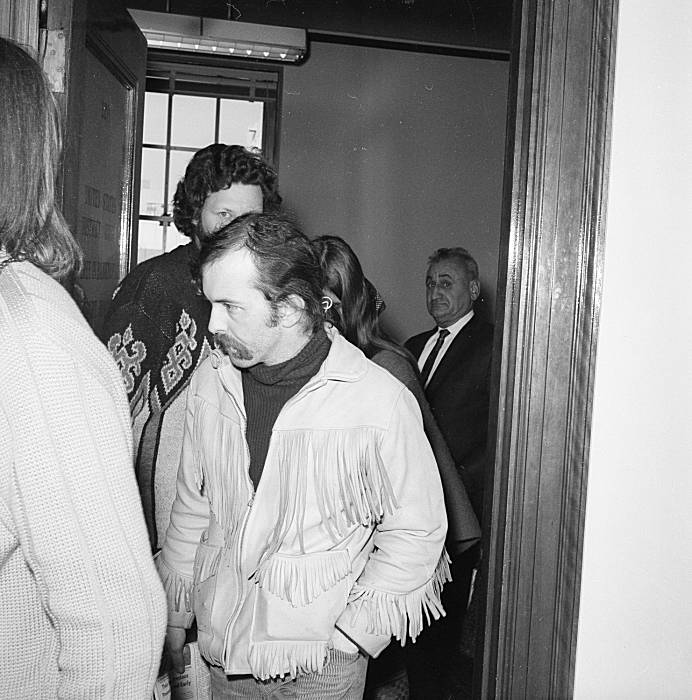
Owsley Stanley, 1967, San Francisco. (Image by the "San Francisco Chronicle."

Owsley Stanley was the “King of LSD” in the Bay Area during the Summer of Love, dealing a decidedly potent mind-altering mix. He died this past Saturday, after having spent much of the last few decades in seclusion in remote Australia. An excerpt from a Rolling Stone piece about his life:

“When he was fifteen, Owsley spent fifteen months as a voluntary patient in St. Elizabeths Hospital in Washington, D.C., where the poet Ezra Pound was also confined. ‘I was just a neurotic kid,’ he says. ‘My mother died a few months into the experience, but it was there I sorted out my guilt problems about not being able to love my parents, and I came out of it pretty clear.’ After leaving the public high school, where his physics teacher gave him a D for pointing out that she had contradicted the textbook, he attended the University of Virginia for a year. ‘I never took notes when I was in college,’ he says. ‘During the first week of the course, I’d buy my textbooks and read them all through. Then I’d sell them all back to the bookstore at full price as if I’d changed classes, because I never needed to look at them again.’

Over the course of the next fourteen years, Owsley — known to his friends as ‘Bear’ because of his prematurely hairy chest as a teenager — enlisted in the Air Force, became a ham- radio operator, obtained a first-class radiotelephone operator’s license, worked at the Jet Propulsion Laboratory in Pasadena, California, and served as a summer-relief broadcast engineer at TV and radio stations in Los Angeles. He married and divorced twice, fathered two children and got himself arrested on a variety of charges. He also studied ballet, Russian and French.

In 1963, Owsley moved to Berkeley so he could take classes at the university, where the student protest movement was growing. A year later, Mario Savio made his historic Free Speech Movement address from atop a police car to student protesters gathered outside Sproul Hall. In Berkeley, as well as across the bay in Palo Alto, young people seeking a new way to live had begun using LSD to break down conventional social barriers. Until then, the drug had been available in America only to those conducting serious medical research. In 1959, the poet Allen Ginsberg took LSD for the first time, at the Mental Research Institute in Palo Alto. A year later, the novelist Ken Kesey was given acid at the Veterans Hospital in Menlo Park as part of a federally funded program in which volunteers were paid twenty dollars a session to ingest hallucinogens. Taking acid soon became the watermark. Until you had tripped, you were not part of the new culture. But before Owsley came along, no one could be sure that what they were taking was really even LSD.”

••••••••••

Tags:

Hallucinations: Morbid conditions of the mind in which an object is perceived which is not presented to the senses. They are either persistent, as in some forms of insanity, or occasional. Almost every one has had the experience of hearing one’s name called, for instance, when there was no sound. Their occurrence is often the result of anxiety or overwork.

Hats: Head coverings, distinguished from caps by the brim. The manufacture of fur and beaver hats was an important one in the colonies and early United States. The high silk hat was invented in Florence, 150 years ago. The United States manufactures $27, 811, 187 of hats annually, chiefly felt, wool and straw.

Hospitals: The name is derived from the medieval “hospitia,” or places, where lepers and other sufferers from pestiferous maladies were received. To-day hospitals have been devoted to every kind of disease or injury; and in some countries no part of public benefaction is better organized; in France especially such provisions being made that no patient is ever refused admission, there being no charges or formality of any kind. In the United States hospitals are either private or of a semi-public nature, the latter being endowed by funds supplied by state or municipality, subsequent needs being covered by subscriptions in exchange for so-called free beds. In recent years, the art of building and installing hospitals has made great progress, modern institutions combining absolute sanitation with those pleasant surroundings and comforts which contribute so much to convalescence in the patient.

Hygiene: The science of health, also called sanitary science. Personal hygiene consists in the care of the body, bathing, diet, care of teeth, hair, nails, etc., public hygiene in preventative measures for promotion of health of communities by cleanliness of streets, removal or destruction for breeding places of infection, drainage, pure air and good water supply. Moral hygiene includes those measures taken to secure the moral well-being of communities–includes purity of life, the suppression and regulation of vice and crime, in elevation of the world-standard of people at large, cure and prevention of diseases that arise from an evil life. Individual hygiene or sexual purity is one of the most important subjects and should be more thoroughly taught and inculcated into the minds of the youth, and judicious means taken to promote its practice for the general human welfare.

Hysteria: A morbid condition indicated by flatulency and the feeling of a lump or ball in the throat causing a sense of choking or suffocation. Involuntary laughing and crying precede the hysterical fit, in which the patient tosses about violently, and is liable to self-injury. A fit of hysteria often ends in the sufferer going off into stupor or coma , and sometimes this state is reached without preliminary signs. Hysteria is a curious ailment to deal with, being a nervous affection which feeds upon itself, and simulates many diseases. It is always best to exhibit no sympathy with the patient., who is generally a female, but to throw cold water upon her face, apply ammonia to her nostrils, and administer anti-spasmodics.

•Taken from the 1912 Standard Illustrated Book of Facts.

See also

From “Meet the Shaggs,” Susan Orlean’s 1999 New Yorker profile of a polarizing sibling music group which hailed from New Hampshire and was either woeful or wonderful, depending on who was listening:

“The Shaggs were three sisters, Helen, Betty, and Dorothy (Dot) Wiggin, from Fremont, New Hampshire. They were managed by their father, Austin Wiggin, Jr., and were sometimes accompanied by another sister, Rachel. They performed almost exclusively at the Fremont town hall and at a local nursing home, beginning in 1968 and ending in 1973. Many people in Fremont thought the band stank. Austin Wiggin did not. He believed his girls were going to be big stars, and in 1969 he took most of his savings and paid to record an album of their music. Nine hundred of the original thousand copies of Philosophy of the World vanished right after being pressed, along with the record’s shady producer. Even so, the album has endured for thirty years. Music collectors got hold of the remaining copies of Philosophy of the World and started a small Shaggs cult. In the mid-seventies, WBCN-FM, in Boston, began playing a few cuts from the record. In 1988, the songs were repackaged and re-released on compact disk and became celebrated by outsider-music mavens, who were taken with the Shaggs’ artless style. Now the Shaggs are entering their third life: Philosophy of the World was reissued last spring by RCA Victor and will be released in Germany this winter. The new CD of Philosophy of the World has the same cover as the original 1969 album’s photograph of the Wiggin girls posed in front of a dark-green curtain. In the picture, Helen is twenty-two, Dot is twenty-one, and Betty is eighteen. They have long blond hair and long blond bangs and stiff, quizzical half-smiles. Helen, sitting behind her drum set, is wearing flowered trousers and a white Nehru shirt; Betty and Dot, clutching their guitars, are wearing matching floral tunics, pleated plaid skirts, and square-heeled white pumps. There is nothing playful about the picture; it is melancholy, foreboding, with black shadows and the queer, depthless quality of an aquarium. Which leaves you with even more things to wonder about the Shaggs.”

••••••••••

Tags: , , , , ,

Opening of John Donvan and Caren Zucker’s excellent 2010 Atlantic article about 77-year-old Donald Gray Triplett, the first person to ever be diagnosed with autism:

“IN 1951, A Hungarian-born psychologist, mind reader, and hypnotist named Franz Polgar was booked for a single night’s performance in a town called Forest, Mississippi, at the time a community of some 3,000 people and no hotel accommodations. Perhaps because of his social position—he went by Dr. Polgar, had appeared in Life magazine, and claimed (falsely) to have been Sigmund Freud’s ‘medical hypnotist’—Polgar was lodged at the home of one of Forest’s wealthiest and best-educated couples, who treated the esteemed mentalist as their personal guest.

Polgar’s all-knowing, all-seeing act had been mesmerizing audiences in American towns large and small for several years. But that night it was his turn to be dazzled, when he met the couple’s older son, Donald, who was then 18. Oddly distant, uninterested in conversation, and awkward in his movements, Donald nevertheless possessed a few advanced faculties of his own, including a flawless ability to name musical notes as they were played on a piano and a genius for multiplying numbers in his head. Polgar tossed out ’87 times 23,’ and Donald, with his eyes closed and not a hint of hesitation, correctly answered ‘2,001.’

Indeed, Donald was something of a local legend. Even people in neighboring towns had heard of the Forest teenager who’d calculated the number of bricks in the facade of the high school—the very building in which Polgar would be performing—merely by glancing at it.” (Thanks Longform.)

••••••••••

Tags: , , ,

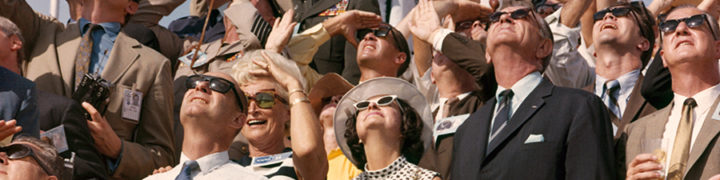
Deng Xiaoping visits the Johnson Space Center in 1979.

Opening paragraph of Edward Chancellor’s new Wall Street Journal article about China’s booming yet precarious economy:

“In 1974, the future Chinese premier Deng Xiaoping led a large delegation to the United Nations in New York. Chinese officials discovered, as they prepared for the expensive trip, that the could muster only $38,000 in foreign cash. In those days there were no banks in China except the People’s Bank of China, then a department of the Ministry of Finance. Today China’s foreign-exchange reserves are fast approaching $3 trillion, and its banks are among the world’s most valuable companies. This remarkable success story has occurred against a background of more or less continuous worries about the stability of China’s financial system. Lately those concerns have been greater than ever.” (Thanks Marginal Revolution.)

Tags: ,

Gangrene: Instant mortification, a term applied to the death of tissues, following disease of the part, which becomes black and void of sensation. Amputation beyond the seat of mischief is nearly always essential.

Giants: The greatest known giants of the nineteenth century were a Finlander, 112 inches tall; an Australian, 103 inches, a Kalmuck and an Irishman, each 100. The greatest racial averages are the Scotch of Galloway, 71 inch; Scotch, 69.5 inch; Patagonian, Cheyennes, Fulahs, Sikh, 69 inch.

Gloves: An article of luxury in warm countries, of necessity, in protection of the hand, for laborers and drivers in the far north. They are universal among Eskimos, and were used by the cave-men. They were an article of magnificence in the Middle Ages. Gloves are made of kid or lamb-skin (hard to distinguish); doeskin, dogskin, buckskin. The nineteen pieces of a good glove are sewed by machine. Cutting is difficult, and descends in families. Out of 409 manufacturers in the United States 166 center around Gloversville, N.Y., where the trade was introduced by Sir Wm. Johnson, 1760.

Golf: A golf field or links is a tract of flat or rolling turf of 3 to 5 miles. There are 18 holes, 4 1/2 inches in diameter, at distances of 100 to 500 yards, each surrounded by a smooth putting green, 60 ft. square. Each player has a putting ball, and an assortment of of beech or hickory golf-sticks, often shod with iron. The competitors play in turn until one drives his ball in the first hole. Then they all begin again for the second, and the one who makes most holes wins. President Taft says: “If men over fifty, who are in need of something and do not know what, will organize a golf-club and chase balls around 6,000 yards every afternoon, they will grow a great deal more contented with life.”

Gypsies: A wandering Hindu tribe, as can be proved by their language, who roamed into Eastern Europe with the Tartars in the fourteenth century, and have remained a rambling, tinkering, horse-trading and shoeing, poaching, fortune-telling race in every land. The French called them Bohemians, the English, The Egyptians or Gypsies.

•Taken from the 1912 Standard Illustrated Book of Facts.

See also


One of the most shocking episodes in the upside-down decade of the ’70s–or any decade in American history, really–was the kidnapping of heiress Patty Hearst by the Symbionese Liberation Army, a violent and radical outgrowth of the tortured anti-war movement of the ’60s. The nation shuddered for the shanghaied scion, but soon Hearst was a full-fledged member of the SLA, knocking over banks, cursing the “pigs” and being pursued by the FBI along with her new “friends.” Was she brainwashed? Was she a traitor? Was she a rich girl acting out? Rolling Stone looked for answers in a cover story for its October 23, 1975 issue. An excerpt:

“The next day Patty ate her meals in the car. Even standing in line at a McDonalds was a risk. Millions had seen her picture on the evening news and the cover of Newsweek or heard her soft, distinctive voice on radio broadcasts of the S.L.A. communiqués.

For most of the previous four months she had been cooped up inside. Her excursions outside twice had ended in gunfire. Now she was driving across country through an FBI dragnet that already had employed more agents than any other civilian case.

The strain of the past months was showing. To Patty the passing world was populated by an army of undercover agents. Once, as Jack showed up to ease past a construction site, she ducked and whispered in a half shriek: ‘did you see that guy? I know he’s a pig.’

‘C’mon, he’s a highway flagman. Don’t be so uptight.’

When Jack pulled in for gas she frequently demanded he speed away as an attendant approached. ‘I don’t like the way he looks,’ she’d explain. ‘He looks like a pig.’

Patty’s repeated reviling of ‘pigs’ soon lead to a discussion about the political criterion for such a classification. Patty took the position that a pig was anyone who did not give wholehearted support to the S.L.A. Jane Fonda and Tom Hayden, for instance, were pigs because they’d criticized the S.L.A. tactics. Patty sounded like what she was — a new convert to radical thinking,”

••••••••••

The trailer for the great documentary, Guerrilla: The Taking of Patty Hearst:

Tags:

I like Bill Gates the philanthropist, though Bill Gates the extrepreneur was a real a-hole. Longreads put up a link to a Fortune profile about Bill Gates from 1986, when the 30-year-old tech titan was about to take Microsoft public. Here’s how writer Bro Uttal described Gates at the time:

“Money has never been paramount to this unmarried scion of a leading Seattle family, whose father is a partner in a top Seattle law firm and whose mother is a regent of the University of Washington and a director of Pacific Northwest Bell. Gates, a gawky, washed-out blond, confesses to being a ‘wonk,’ a bookish nerd, who focuses singlemindedly on the computer business though he masters all sorts of knowledge with astounding facility. Oddly, Gates is something of a ladies’ man and a fiendishly fast driver who has racked up speeding tickets even in the sluggish Mercedes diesel he bought to restrain himself. Gates left Harvard after his sophomore year to sell personal computer makers on using a version of the Basic computer language that he had written with Paul Allen, the co-founder of Microsoft. Intensely competitive and often aloof and sarcastic, Gates threw himself into building a company dedicated to technical excellence. ‘All Bill’s ego goes into Microsoft,’ says a friend. ‘It’s his firstborn child.””

••••••••••

Microsoft in 1986:


Tags: ,

(Image by Mgregoro.)

Fairies: Supernatural beings, generally diminutive in size, a belief in whom is one of the most popular forms of superstition. It is confined to modern Europe (and of course America) and the character of the fairies depends upon the country they inhabit, thus the English fairies are simple and comely, the Scandinavian are harsh and often traitorous. According to the Irish as well as Scottish fairy lore, the elves, though in the main harmless or at most mischief loving, have the bad reputation of stealing away little children from their cradles and leaving a changeling in their place who never thrives.

Fire Alarm: A system of telegraphic wires connecting a central office with convenient signal boxes in every neighborhood. The keys are held by the police or a neighboring house-holder, but sometimes the boxes open freely and are trusted to the public. The circuit is closed by a crank or hook. An automatic alarm in a building operates whenever influenced by heat.

Flagellants: A fanatical sect which sprang into notice at Pérouse in the thirteenth century during a time of plague. They held processions and flogged themselves as they walked naked about the streets until they bled. They declared that sins could not be remitted without such practices. The sect continued down to the sixteenth century, in spite of their being declared heretics by Pope Clement VI, and ninety of them were burnt at the stake.

Flying Machines: Heavier than air. The invention of the flying machine for so many centuries the goal of succesive inventors, marks an epoch of human progress, inspiring and conclusive. The spectacle of men venturing into the skies beyond the range of vision, of darting through space at terrific speeds; lifting over mountains with the ease of the eagle and crossing seas in veritable flocks, are triumphs which stir the emotions and inspire new ambitions in the entire race. But the triumphs of to-day have been won only after centuries of endeavors. As early as 400 B.C., Archtyas, an early philosopher of Tarenium is said to have devised a wooden bird. Leonardo da Vinci, the famous artist (1452-1519) built what was probably a successful gilder, and Henson, in England in the early forties, constructed an “Aerial Steam Carriage” remarkably like the dirigible of Count Zeppelin. Numberless inventors continued working on the problem, and finally the experiments and scientific work of Prof. Langley, Sir Hiram S. Maxim, Otto Lilienthal, Clement Ader, Octave Chanute and others proved that flight was at hand.

Friday: The sixth day of the week, named after Friggs, with wife of Odin. It is the Mohammedan Sabbath, and is a general fast day of the Roman Catholic Church. According to popular superstition, Friday was an unlucky day, and even now there is a general disinclination amongst old-fashioned seafarers to set forth on a voyage on a Friday.

•Taken from the 1912 Standard Illustrated Book of Facts.

See also

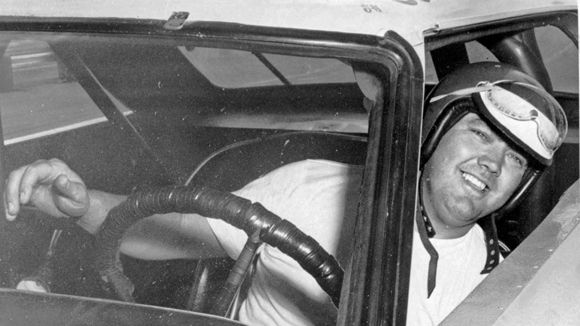
Tom Wolfe’s great 1965 Esquire piece about a moonshiner-cum-NASCAR pioneer (“The Last American Hero Is Junior Johnson. Yes!“) married New Journalism to the New South. An excerpt:

The legend of Junior Johnson! In this legend, here is a country boy, Junior Johnson, who learns to drive by running whiskey for his father, Johnson, Senior, one of the biggest copper still operators of all times, up in Ingle Hollow, near North Wilkesboro, in northwestern North Carolina, and grows up to be a famous stock-car racing driver, rich, grossing $100,000 in 1963, for example, respected, solid, idolized in his hometown and throughout the rural South, for that matter. There is all this about how good old boys would wake up in the middle of the night in the apple shacks and hear an overcharged engine roaring over Brushy Mountain and say, “Listen at him — there he goes!”, although that part is doubtful, since some nights there were so many good old boys taking off down the road in supercharged automobiles out of Wilkes County, and running loads to Charlotte, Salisbury, Greensboro, Winston-Salem, High Point, or wherever, it would be pretty hard to pick out one. It was Junior Johnson specifically, however, who was famous for the “bootleg turn” or “about-face,” in which, if the Alcohol Tax agents had a roadblock up for you or were too close behind, you threw the car into second gear, cocked the wheel, stepped on the accelerator and made the car’s rear end skid around in a complete 180-degree arc, a complete about-face, and tore on back up the road exactly the way you came from. God! The Alcohol Tax agents used to burn over Junior Johnson. Practically every good old boy in town in Wilkesboro, the county seat, got to know the agents by sight in a very short time. They would rag them practically to their faces on the subject of Junior Johnson, so that it got to be an obsession. Finally, one night they had Junior trapped on the road up toward the bridge around Millersville, there’s no way out of there, they had the barricades up and they could hear this souped-up car roaring around the bend, and here it comes — but suddenly they can hear a siren and see a red light flashing in the grille, so they think it’s another agent, and boy, they run out like ants and pull those barrels and boards and sawhorses out of the way, and then — Ggghhzzzzzzzhhhhhggggggzzzzzzzeeeeeong! — gawdam! there he goes again, it was him, Junior Johnson!, with a gawdam agent’s si-reen and a red light in his grille!•

____________________________

Junior Johnson on a dirt track, 1964, Ascot Park, California.

Tags: ,

"'Weirdo,' about the breeding of a giant chicken." (Image by Daniel Postellon.)

From Mark Singer’s 1989 New Yorker profile of the documentarian:

“Among the nonfiction movies that Errol Morris has at one time or another been eager to make but has temporarily abandoned for lack of investor enthusiasm are Ablaze! (or Fire from Heaven), an examination of the phenomenon of spontaneous human combustion; Whatever Happened to Einstein’s Brain? (portions of the cerebellum and the cerebral cortex are thought to be in the possession of a doctor in North Carolina, other parts are floating around here and there); Road, the story of one man’s attempt to build across northern Minnesota an interstate highway that no one else wanted; Insanity Inside Out, based on the book of the same tide, by Kenneth Donaldson, a man who, in his forties, was wrongly committed by his parents to a mental hospital and got stuck there for fifteen years; Weirdo, about the breeding of a giant chicken; The Wizard of Wendover, about Robert K. Golka and his laser-induced fireball experiments in Utah; and a perusal of Yap, a South Pacific island where stone money is the traditional currency.” (Thanks Longform.)

Tags: ,

Ear-ring: A very ancient form of personal adornment worn by both sexes in Oriental nations. In Anglo-Saxon times ear-rings were worn in Britain, but from the tenth to the fifteenth century were out of fashion. In Elizabethan days they were revived, and have since continued to be used, more or less. In early Victorian days they were common, then they fell out of fashion again; but there has been a revival of them to some extent in recent years.

Edison, Thomas Alva: One of the greatest inventors of our age. His mother was Scotch, his father Dutch; his education was acquired mostly by persistent reading. He early developed a passion for chemistry, and being then a newsboy on the Grand Trunk Railroad, established his first laboratory in an empty car. He became an expert telegraph operator and finally an inventor with an experiment station at Menlo Park and a laboratory at Orange, New Jersey. His inventions are all of practical utility, and number something over 700. Among the most important are the phonograph, electric fire-alarm, megaphone, the kinescope, vitascope and incandescent electric lamp. His latest achievement is the storage battery for the propulsion of street cars and auto-vehicles.

Education: The word implies eliciting the highest ability of the individual; aiming to make the best and not the worst of him, this is the highest duty and ambition of family and State. It is entirely different from memorizing or instruction. Plato said, “Good education is that which gives to the body and the soul all the perfection of which they are capable.” The Greek had no printing and few books, but he knew his notes, sang national noble hymns in inspired chorus; men and women danced gracefully, proudly, in honor of gods and heroes. Eyes were trained by the most perfect forms and colors of art; only beauty was allowed in the presence of a pregnant woman. Every child knew the resounding majesty of Homer, the lyric praise of noble ancestors, the tragedies which told the duty of man, and the destiny and hope of mankind; he heard the philosophy which spoke of the dignity of the soul. The great study of the Roman was oratory and law; the power of swaying the minds and will and lives of others, of advancing the destiny of eternal Rome. Modern education prepares for healthful and happy life, respect of God and man; the greatest good of the greatest number. It teaches self-denial, forethought, duty, loyalty, devotion, temperance, the laws of the seen and the unseen, the possibilities of the race. It develops health, mirth, song, strength, temperance, self-reliance, filial, parental and social obligation. It teaches the practical, finds the most natural and useful sphere of life, and should prepare hand, eye, thought for a life of usefulness.

Evil-eye: A faculty attributed by the superstitious and ignorant to certain persons, the cross-eyed particularly, who inflict injury or bring ill-luck, it is believed, to those they look upon. The sign of the cross with the fingers is supposed to ward it off.

Exhilarating gas: Laughing gas.

•Taken from the 1912 Standard Illustrated Book of Facts.

See also

"Dubai suffers from gigantism—a national inferiority complex that has to make everything bigger and biggest." (Image by David Pin.)

Great opening fromDubai on Empty,” A.A. Gill’s sharp new Vanity Fair account of a sand-castle nation at high tide:

“The only way to make sense of Dubai is to never forget that it isn’t real. It’s a fable, a fairy tale, like The Arabian Nights. More correctly, it’s a cautionary tale. Dubai is the story of the three wishes, where, as every kid knows, with the third wish you demand three more wishes. And as every genie knows, more wishes lead to more greed, more misery, more bad credit, and much, much, much more bad taste. Dubai is Las Vegas without the showgirls, the gambling, or Elvis. Dubai is a financial Disneyland without the fun. It’s a holiday resort with the worst climate in the world. It boils. It’s humid. And the constant wind is full of sand. The first thing you see when you arrive is the airport, with its echoing marble halls. It’s big enough to be the hub of a continent. Dubai suffers from gigantism—a national inferiority complex that has to make everything bigger and biggest. This includes their financial crisis.”

Tags:

"Prohibited Nursing," "Maniac Training of Lolitas," "Forbidden Elderly Care," etc.

A man who came to his calling later in life, former travel agent Shigeo Tokuda entered his golden years and the porn industry at the same time. After more than 350 blue films, the 76-year-old is known as the “king of elder-porn,” a sub-genre of Japanese X-rated films in which seniors sex their youthful counterparts. John M. Glionna of the Los Angeles Times reports:

“Recently, Tokuda sat down at the offices of an adult film company to discuss life as one of Japan’s most veteran porn stars. Dressed in a blazer and casual shirt, he’s a slight man — about 5-foot-3, 140 pounds — who wears dentures and has a small but meandering Mikhail Gorbachev-type scar atop his balding head.

The Tokyo native was working in the travel promotion industry when he became a fan of order-in room porn flicks. Too shy to frequent adult movie stores, he tracked down the producers of his favorite DVDs. ‘At 59, I secretly hoped they would offer me some sort of senior discount,’ he recalls.

Tokuda befriended the firm’s producers, one of whom made him a proposition over drinks: Tokuda had a ‘lascivious’ face and was invited to try his hand at adult films.

In his first scene, filmmakers reduced the number of extras so Tokuda would feel less uncomfortable getting naked. His shyness quickly vanished along with his clothes, and he began slipping away from out-of-office travel company meetings to play porn actor. But after a 2005 stroke (not on the set, he says), he was moved to a desk job by his travel agency.

With no opportunity to slip out unnoticed, he retired — not from porn but from the travel industry. The rest, as they say, is Japanese porn history. Tokuda is now a brand name, with many projects bearing the Shigeo Tokuda moniker. A recent installment in his Forbidden Elderly Care series has been advertised with such slogans as ‘Don’t Be Ashamed of Getting Old!’ and ‘Lust Is Medicine.'” (Thanks Maginal Revolution.)

Tags: ,

Dancing: In a general way, dancing may be defined as the expression of inward feelings by means of rhythmical movement of the body, especially of the lower limbs, usually accompanied by music. It may be said to be almost as old as humanity, prevailing among savages as well as among the most highly civilized nations. It was originally a constituent of religious rites. Among the Romans, dancing at a private entertainment was restricted to professional dancers, and this is still the custom in the East. With us it is a favorite form of entertainment, especially among young people. It is doubtless liable to abuse but not more so than other forms of social intercourse.

Drowning: Life often exists after apparent death, and no efforts toward resuscitation should be neglected. Turn the body on the face, life the stomach and gently shake water from the mouth; or roll on a barrel. Lay on the back, gently draw the tongue forward. Imitate breathing by lifting the lower ribs every few seconds, while raising and lowering the arms. Repeat this for hours. Rub hands. Apply hot water bags or bricks to stomach and feet and between thighs. If symptoms of life appear lay in a warm bed with plenty of air. Give teaspoons of brandy, and allow repose.

Drunkenness: In law drunkenness cannot be pleaded to avoid a contract. Coke held that the drunkard had invited the devil which possessed him, and was responsible for its consequences. In criminal law it is no justification for battery, trespass or defamation; if burglary is charged it may be shown that the premises were entered without intent to steal.

Ducking-Stool: The name of an old English instrument of punishment, consisting of a chair suspended by a pole over a sheet of water. It was used for “common-scolds,” the virago being tied in the chair and dipped in the water.

Dwarfs: These deformed creatures were mentioned in Libya by Herodotus and were discovered by Du Chailu (1858), and Stanley (1888). They are small, wild, shy, cunning, hunted by stronger races into the deepest forests, living almost like animals, as the wreckage of a prehistoric race in arrested development, The Bushmen of the Kalahari Desert are also stunted. The dwarf races are found in the Andaman Islands, Malacca, and the Philippines, where the United States government is trying to develop them. Abnormal dwarfs among well formed nations exhibit a defect in the development of the bones, such as is found in rickets. Giants are slow and stupid, dwarfs sensitive, suspicious, jealous, shrewd and observant. A dwarf 21 inches high, 25 years of age, was presented to Henrietta of France in a pie, and this was the height of Francis Flynn at 16; the woman, Hilamy Agyba of Sinai is 15 inches high.

•Taken from the 1912 Standard Illustrated Book of Facts.

See also:


"He was as calm under questioning as he was during the twenty minutes that he was shooting men, women and children."

A furious ten hours of researching and writing about a 1949 mass murder in New Jersey won legendary New York Times reporter Meyer Berger the Pulitzer. An excerpt:

“CAMDEN, N.J., Sept.6–Howard B. Unruh, 28 years old, a mild, soft-spoken veteran of many armored artillery battles in Italy, France, Austria, Belgium and Germany, killed twelve persons with a war souvenir Luger pistol in his home block in East Camden this morning. He wounded four others.

Unruh, a slender, hollow-cheeked six-footer paradoxically devoted to scripture reading and to constant practice with firearms, had no previous history of mental illness but specialists indicated tonight that there was no doubt that he was a psychiatric case, and that he had secretly nursed a persecution complex for two years or more.

The veteran was shot in the left thigh by a local tavern keeper but he  kept that fact secret, too, while policemen and Mitchell Cohen, Camden  County prosecutor, questioned him at police headquarters for more than  two hours immediately after tear gas bombs had forced him out of his bedroom to surrender.

Blood Betrays His Wound

The blood stain he left on the seat he occupied during the questioning  betrayed his wound. When it was discovered he was taken to Cooper Hospital in Camden, a prisoner charged with murder.

He was as calm under questioning as he was during the twenty minutes that he was shooting men, women and children. Only occasionally excessive brightness of his dark eyes indicated that he was anything other than normal.

He told the prosecutor that he had been building up resentment against neighbors and neighborhood shopkeepers for a long time. ‘They have been
making derogatory remarks about my character,’ he said. His resentment seemed most strongly concentrated against Mr. and Mrs. Maurice Cohen who
lived next door to him. They are among the dead.”

Read the whole article.

Tags: , ,

Good for when you want to watch your stories.

What amazing sights you’ll be able to see!

From Inhabitat: “Samsung just unveiled an amazing new solar-powered LCD television that can operate completely free from the power grid! The 46″ prototype TV, shown at CeBit in Germany, includes solar panels that produce energy from the ambient light in a room – because it was engineered to use very little energy, no additional power sources are needed. Another major breakthrough behind the concept is that the thin screen can display images and information while allowing objects behind it to be visible – this means that it has applications ranging from car windshield HUDs to storefront displays and digital window blinds.”

Capital Punishment: The legal infliction of death for crime. In early ages, for want of public organization, it was conducted as a bloodfeud by the family wronged, and could be compounded, under the Saxons, by regulated payments. In later Europe, with organized states, but with lack of prisons and police and dread of violence, it was very common, being the penalty for petty thefts. It is now practically inflicted only for murder, and the sentimentality of American juries with an exaggerated exactness in rules of evidence, has made it much rarer than in England. There is a tendency in Southern Europe to change all capital punishment into life imprisonment, but much stricter and more hopeless than in the United States. Death is inflicted by hanging, electrocution, the guillotine or garrote, and no longer in public.

Chewing gum: A tough flavored gum, used for taste and nervous relief in the United States.

Child Sanitation: The larger cities of the United States are now following the German system of regular free medical and dental inspection and treatment of school children, followed, where necessary, by visits at home. Careful attention to imperfect eyes, prescription of glasses, and removal of adenoids, have great influence in the development of future citizens. Free parks and playgrounds are introduced wherever possible; the school and school-grounds employed out of hours and in vacation time, for voluntary classes; amusements and calisthenics, singing, dancing, and games are taught, and a system of school teams and friendly competition fostered. Roof-gardens, amusement piers, free-baths, and excursions are beneficial in crowded neighborhoods.

Clitoris: A small muscular organ, the most sensitive part of the genitals of the female mammal, very much subject to a diseased condition caused by malpractices.

Colic: A spasmodic and painful affection of the bowels, more especially of the colon, known to exist in several forms–the nervous, hysteric, bilious, hepatic, etc. A considerable accumulation of wind, neglected constipation and also the contrary, the action of powerful purgatives, also exposure to cold, are some of the causes of colic. The paroxysmal pain is often relieved by pressure or massage over the pained part, usually in the region of the navel. When flatulence is accountable for colic, it is often relieved by warm water injections. Narcotics and anodynes should never be used without the order of a physician as they often do more harm than good.

•Taken from the 1912 Standard Illustrated Book of Facts.

See also:

Governor Chris Christie: Outpolling Rick Santorum. (Image by Walter Burns.)

Inexplicable Republican boy wonder Chris Christie is far from the first politician to lie freely, but his Giuliani-like arrogance is fairly stunning. The governor gets a richly deserved, detailed takedown in “Christie’s Talk Is Blunt, But Not Alwats Straight,” Richard Perez-Pena’s piece in the New York Times. The article’s opening:

“New Jersey’s public-sector unions routinely pressure the State Legislature to give them what they fail to win in contract talks. Most government workers pay nothing for health insurance. Concessions by school employees would have prevented any cuts in school programs last year.

Statements like those are at the core of Gov. Chris Christie’s campaign to cut state spending by getting tougher on unions. They are not, however, accurate.

In fact, on the occasions when the Legislature granted the unions new benefits, it was for pensions, which were not subject to collective bargaining — and it has not happened in eight years. In reality, state employees have paid 1.5 percent of their salaries toward health insurance since 2007, in addition to co-payments and deductibles, and since last spring, many local government workers, including teachers, do as well. The few dozen school districts where employees agreed to concessions last year still saw layoffs and cuts in academic programs.”

Tags:

"He sold trash bags door to door at age 12, and later earned $25 an hour teaching disco moves at a sorority house." (Image by James Duncan Davidson/O'Reilly Media, Inc.)

From “Dan Rather: Inside Mark Cuban’s Gilded Cage,” Jim Rendon’s excellent new Mother Jones article:

“He grew up in a middle-class Pittsburgh suburb, where he sold trash bags door to door at age 12, and later earned $25 an hour teaching disco moves at a sorority house. During college at Indiana University, he opened a bar, and upon graduating he followed his school buddies in pursuit of ‘fun, sun, money, and women’ to Dallas, where he taught himself to write code. In 1990, Cuban sold his first real business play, a computer consulting firm, for $6 million. He also launched and sold a hedge fund and relocated to Los Angeles, where, with less success, he tried his hand at acting. (Some recent cameos on HBO’s Entourage compelled the Wall Street Journal to jeer that Mark Cuban wasn’t even believable as Mark Cuban.)

In 1995, Cuban and his friend Todd Wagner launched Broadcast.com, which put audio and video of sports online. Four years later, at the height of dot-com mania, they sold it to Yahoo for $5.7 billion in stock—Cuban pocketed more than $1 billion. ‘I am the luckiest motherfucker in the world,’ he says. ‘It’s like I tell people, ‘When I die, I want to come back as me.'”

••••••••••

Tags: , , ,

« Older entries § Newer entries »