Books

You are currently browsing the archive for the Books category.

"After earning her master's degree in library science, Klausner moved around the United States with her husband, a palm reader." (Image by Olaf Simons.)

Reviewing books on Amazon is even more ridiculous than spending time writing a blog. I don’t mean putting in a good word for a friend who’s published a book. I’m talking about people who relentlessly post reviews and ratings for thousands of books (and other products). Nicholas Jackson has an interesting piece about these obsessives in an Atlantic story titled “What Motivates Amazon’s Hardcore Readers?” A couple of excerpts about the most prolific reviewer of all, a Bronx native:

Harriet Klausner is a speed reader. It’s a gift she was born with, according to her Amazon.com profile, where she also claims to go through two books a day. Even at that speed it would take more than 31 years to read the 22,824 novels Klausner had reviewed as of this writing. But why does she do it?

After earning her master’s degree in library science, Klausner moved around the United States with her husband, a palm reader. This, according to a personal website she maintains with a complete archive of her reviews. (Klausner didn’t respond to an interview request.) ‘I also watched my book reviewing career begin to take shape,’ she writes, noting that, with each city she moved to, she always found work with a library or bookstore. ‘I take immense pleasure informing other readers about newcomers or unknown authors who have written superb novels.’

It’s even been suggested that Klausner doesn’t exist, or that the profile exists as a means of self promotion for publishers. But “Our Lady of the Infinite Reviews” has been profiled everywhere from Wired to Time, where Lev Grossman wrote that ‘online critics have a kind of just-plain-folks authenticity that the professionals just can’t match.'”

Tags: ,

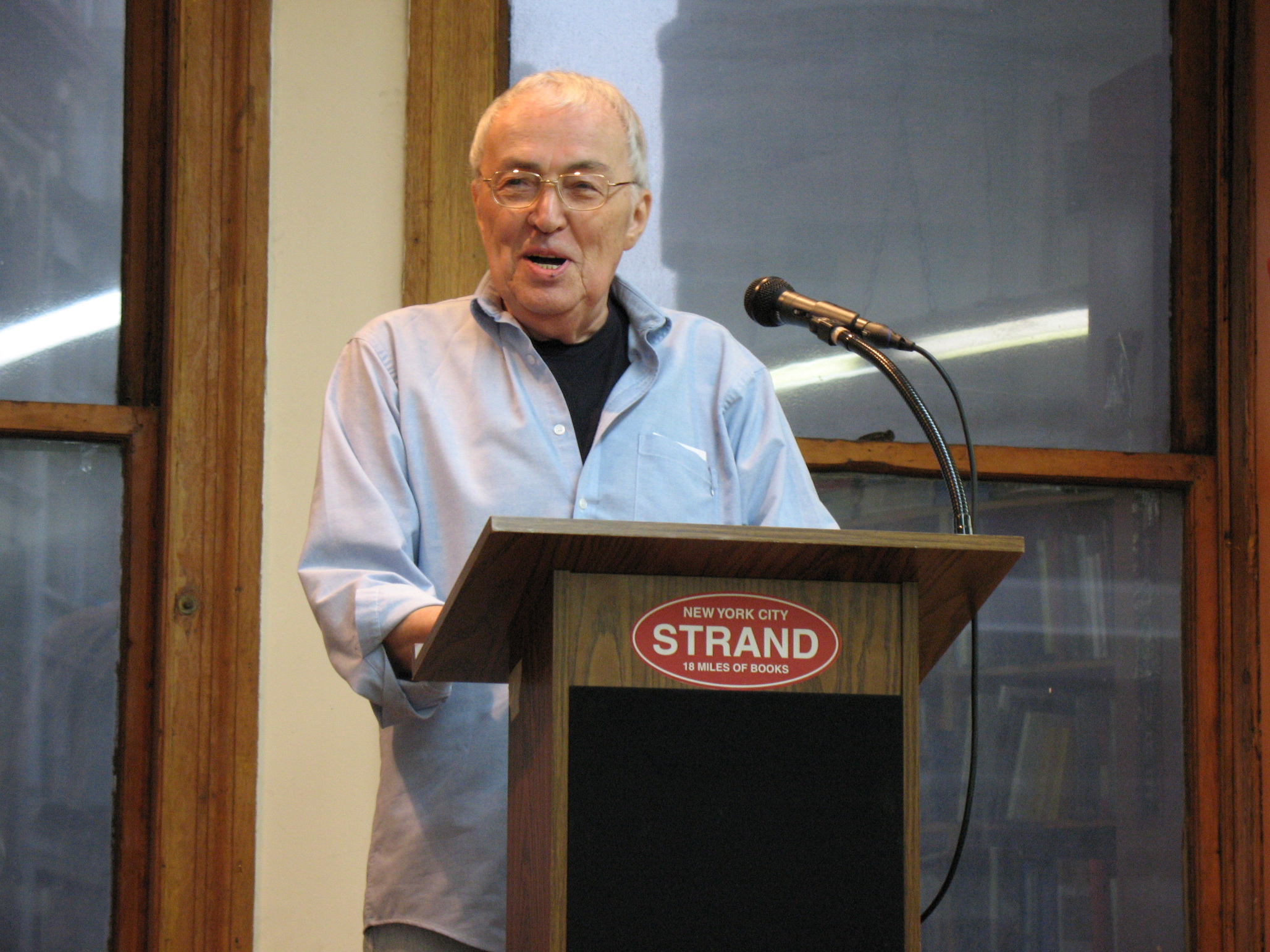
The late novelist David Markson gives a reading at the Strand bookstore in 2007. His personal library was sold to the Strand after his death. An Internet sensation ensued. (Image by Sleepyrobot.)

David Markson, the stubbornly inventive novelist who wrote the brilliant and challenging book, Wittgenstein’s Mistress, sadly passed away in June of this year. Eulogies were written by friends and admirers, but as can happen in our contemporary media landscape where everyone is seemingly connected, Markson has quickly had an unusual posthumous second act.

Markson’s personal library of 2,500 books was sold to the Strand bookstore in Manhattan, where they are being sold separately to individual customers. But one shopper noticed the name “David Markson” written inside the cover of a copy of Don DeLillo’s White Noise (also a great novel) and researched him. When she subsequently put his amusing notes from inside the book online, it mobilized an online community of book lovers who descended on the Strand to try to snare and share Markson’s other books and notes. Craig Fehrman of Boston.com provides the story:

A few weeks ago, Annecy Liddell was flipping through a used copy of Don DeLillo’s White Noise when she saw that the previous owner had written his name inside the cover: David Markson. Liddell bought the novel anyway and, when she got home, looked the name up on Wikipedia.

Markson, she discovered, was an important novelist himself–an experimental writer with a cult following in the literary world. David Foster Wallace considered Markson’s Wittgenstein’s Mistress–a novel that had been rejected by 54 publishers–‘pretty much the high point of experimental fiction in this country.’ When it turned out that Markson had written notes throughout Liddell’s copy of White Noise, she posted a Facebook update about her find. ”i wanted to call him up and tell him his notes are funny, but then i realized he DIED A MONTH AGO. bummer.”

The news of Liddell’s discovery quickly spread through Facebook and Twitter’s literary districts, and Markson’s fans realized that his personal library, about 2,500 books in all, had been sold off and was now anonymously scattered throughout The Strand, the vast Manhattan bookstore where Liddell had bought her book. And that’s when something remarkable happened: Markson’s fans began trying to reassemble his books. They used the Internet to coordinate trips to The Strand, to compile a list of their purchases, to swap scanned images of his notes, and to share tips. (The easiest way to spot a Markson book, they found, was to look for the high-quality hardcovers.) Markson’s fans told stories about watching strangers buy his books without understanding their origin, even after Strand clerks pointed out Markson’s signature. They also started asking questions, each one a variation on this: How could the books of one of this generation’s most interesting novelists end up on a bookstore’s dollar clearance carts?”


Tags: , ,

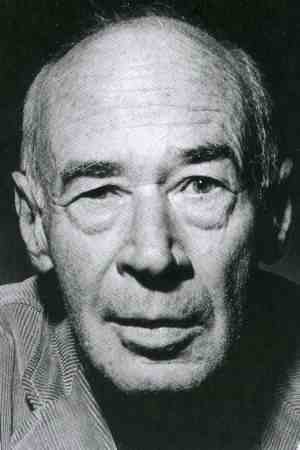
Henry Miller: "I may die with a pen in my hands, but I would rather die with my arms folded and a seraphic smile."

Richard Young directed this 30-minute documentary in which infamous author Henry Miller shares a meal and conversation with actress Brenda Venus. The pair discuss taxes, the Nobel Prize, wine, the American worker, writers Blaise Cendrars and Marcel Proust and the beer drinking habits of various ethnic groups. Miller was 88 at the time the film was made and died the following year. The movie looks like crap, but it’s still worth watching. See it here.

More Featured Videos:

Tags: , , , ,

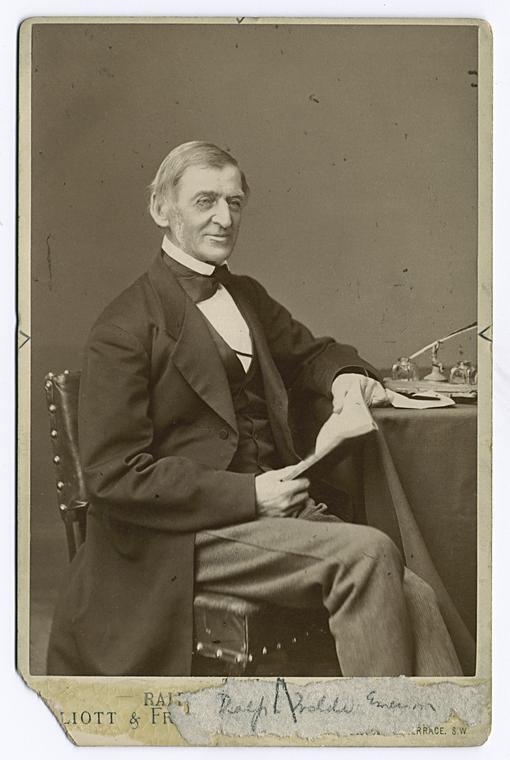
Ralph Waldo Emerson: "A foolish consistency is the hobgoblin of little minds."

The New York Times profiles the young, latter-day hippie couple, Taylor Bemis and Andrea Lieberg, who are currently caretakers of the Ralph Waldo Emerson House in Concord, Massachusetts. They’re 27, very sweet and a little clueless about the celebrated Transcendentalist, even though they seem like the type of people who would embrace his philosophy about individualism.

At any rate, here’s a brief description of the house’s history from Paige Williams’ article:

“Emerson and his second wife, Lidian, moved into the home in 1835. Over the next 47 years, they hosted a stream of distinguished guests at the house, fulfilling Emerson’s hope to ‘crowd so many books and papers and, if possible, wise friends, into it that it shall have as much wit as it can carry.’ Margaret Fuller, a pioneering feminist, spent hours talking with Emerson in his study. Louisa May Alcott practiced painting by copying the pictures that still hang on the Emersons’ walls. Henry David Thoreau lived with the family off and on for years and is believed to have stayed in what is now Ms. Lieberg and Mr. Bemis’s guest bedroom.

‘The ornament of a house is the friends who frequent it,’ Emerson wrote.”

Tags: , , ,

A photo of Didion 30 years after this interview. (Image by David Shankbone.)

This 1978 Paris Review Q&A with Joan Didion had a sad coda when the interviewer Linda Kuehl died soon after the tapes were transcribed. From what I can gather online, Kuehl, who was writing a book about Billie Holiday at the time, committed suicide by jumping from a hotel window. Didion, who’s written so elegantly on the topic of death before and since, filled in for the late interviewer and wrote the opening paragraphs, crediting Kuehl’s intelligence for making her at ease, not something easily done. A few excerpts from the Q&A.

__________

Paris Review: You have said that writing is a hostile act; I have always wanted to ask you why.

Joan Didion: It’s hostile in that you’re trying to make somebody see something that way you see it, trying to impose your idea, your picture. It’s hostile to try to wrench around someone else’s mind that way. Quite often you want to tell somebody your dream, your nightmare. Well, nobody wants to hear about someone else’s dream, good or bad; nobody wants to walk around with it. The writer is always tricking the reader into listening to the dream.

__________

Paris Review: When did you know you wanted to write?

Joan Didion: I wrote stories from the time I was a little girl, but I didn’t want to be a writer. I wanted to be an actress. I didn’t realize then that it’s the same impulse. It’s make-believe. It’s performance. The only difference being that a writer can do it all alone. I was struck a few years ago when a friend of ours–an actress–was having dinner here with us and a couple of other writers. It suddenly occurred to me that she was the only person in the room who couldn’t plan what she was going to do. She had to wait  for someone to ask her, which is a strange way to live.

___________

Paris Review: What are the disadvantages, if any, of being a woman writer?

Joan Didion: When I was starting to write–in the late fifties, early sixties–there was a kind of social tradition in which male novelists could operate. Hard drinkers, bad livers. Wives, wars, big fish, Africa, Paris, no second acts. A man who wrote novels had a role in the world, and he could play that role and do whatever he wanted behind it. A woman who wrote novels had no particular role. Women who wrote novels were quite often perceived as invalids. Carson McCullers, Jane Bowles, Flannery O’ Connor, of course. Novels by women tended to be described, even by their publishers, as sensitive. I’m not sure this is true anymore, but it certainly was at the time, and I didn’t much like it. I dealt with it the same way I deal with everything. I just tended my own garden, didn’t pay much attention, behaved–I suppose–deviously. I mean I didn’t actually let too many people know what I was doing.


Tags: ,

"Stella Bugbee" is inscribed on the inside flap. The previous owner, I suppose. There's a designer by that name, but I don't know if it's the same person.

I gleaned this book a few blocks from my Brooklyn apartment just yesterday. It’s a beat-up hardback copy (sans dust jacket) of a Playboy compilation of interviews, fiction, reportage and humor from the era when Hefner put out a great publication that attracted the best writers. This collection features work from Woody Allen, Murray Kempton, Joyce Carol Oates and Vladimir Nabokov.

One brief, interesting piece from 1971, “World 42-Freaks 0,” recounts conservative author Garry Willis’ visit to a Canadian commune, where he mostly found “dope, dirt and self-indulgence.” An excerpt about a drug deal gone awry:

“A car door slams–Tony, back from taking Dani to the city. His hair is short, the Army crew cut still growing out: his tanned, thin arms are scribbled over with ‘good ole boy’ unsophisticated tattoos. His eyes light up at the sight of two motorcycles, and he kicks one off into the field, wheels slipping as he bangs off thin deciduous trees, then races halfway up the incline till the loose grass and leaves throw him, laughing crazily. the motor kicks and coughs itself to rest on the ground.

‘Bombed out of his head,’ Al mutters. ‘He was supposed to deal some dope in the city, but he got high on the first batch. Well, it always happens. When people first come over the border, they have to stay high for a couple of weeks before they can get themselves together.’ Tony deserted last week, when his company was preparing to ship out for Vietnam. ‘That mean we’ll have nothing but rice and salad for dinner tonight.'”

More Gleanings:

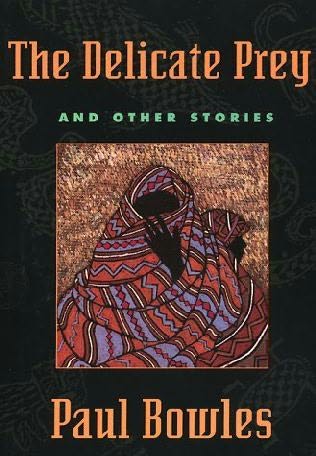
One of the best English-language short-story collections ever written.

In 1981, Paul Bowles sat for a wide-ranging interview with the Paris Review, discussing his life and career. During the Q&A, the great writer spoke about the effect he felt television had on storytelling. I don’t agree with him, but it’s a point that’s long been debated. An excerpt:

“Paris Review: Are you still taping storytellers you meet in cafés [in Morocco]?

Paul Bowles: There aren’t any more. All that’s completely changed. There’s a big difference just between the sixties and seventies. For instance, in the sixties people still sat in cafés with a sebsi [pipe] and told stories and occasionally plucked an oud or a guimbri. Now practically every café has a television. The seats are arranged differently and no one tells any stories. They can’t because the television is going. No one thinks of stories. If the eye is going to be occupied by a flickering image, the brain doesn’t feel a lack. It’s a great cultural loss. It’s done away with both the oral tradition of storytelling and whatever café music there was.”

Tags:

"Steve Jobs starts with a vision rather than a list of features." (Image by Carola Lauber of SD&M.)

Pioneering computer scientist Fred Brooks is the subject of an interesting Wired Q&A conducted by Kevin Kelly. Brooks became famous in the computer world–and beyond–for his book, The Mythical Man-Month, which gave lie to the idea that increased manpower translated into faster progress. The theory became known as Brooks’ Law.

Brooks has written a new book called The Design of Design: Essays From a Computer Scientist, which occasioned the interview. A few excerpts below:

•••••

Wired: How does a guy who grew up in the 1940s among North Carolina tobacco farmers get into computers?

Fred Brooks: I collected maps as a kid. I had tried all kinds of ways to index my map collection, which got me interested in the notion of automatic data retrieval. In 1944, when I was 13, I read about the Harvard Mark 1 computer in a magazine, and I knew then that computers was what I wanted to do.

•••••

Wired: You’re a Mac user. What have you learned from the design of Apple products?

Fred Brooks: Edwin Land, inventor of the Polaroid camera, once said that his method of design was to start with a vision of what you want and then, one by one, remove the technical obstacles until you have it. I think that’s what Steve Jobs does. He starts with a vision rather than a list of features.

•••••

Wired: You say that the Job Control Language you developed for the IBM 360 OS was “the worst computer programming language ever devised by anybody, anywhere.” Have you always been so frank with yourself?

Fred Brooks: You can learn more from failure than success. In failure you’re forced to find out what part did not work. But in success you can believe everything you did was great, when in fact some parts may not have worked at all. Failure forces you to face reality.

Tags: ,

"Dont Eving Thank Off It" sign in New Orleans. (Image by Karen Apricot.)

Jeff Deck is a college grad in his 20s who drove around America in search of typos on public signage. When he found particularly egregious errors, he would use markers and correction fluid to fix mistakes or he would confront the mistaken. Deck was arrested only once and somehow wasn’t repeatedly punched in the face. He did, however, open a Pandora’s box about teaching, race, class, the Internet and the ever-changing English language. Salon’s Thomas Rogers interviewed Deck about his spellchecking sojourn and The Great Typo Hunt, a book about the experience that he co-authored with Benjamin Herson. An excerpt from the Salon Q&A:

Salon: Spelling mistakes are a big part of the way the English language has evolved–and been so successful on the global stage. Aren’t you also holding back language?

Jeff Deck: We came under criticism from people at two different ends of the language philosophy spectrum. In our book we refer to it as the hawk versus hippie dilemma. You have grammar hawks who are ready to jump on anything that has the risk of being non-standard and call it a mistake, and, on the other hand, you have descriptivists who basically have a free-for-all approach. At its most extreme, descriptivism argues that most of these typos aren’t mistakes, it’s language change in motion. We tried to strike a middle ground and say, OK, we’re going to recognize that English is a constantly evolving organism and that the spellings of some things are going to change over time. I’m not going to go around to every instance of the word ‘donut’ and add in the ‘ugh.’

On the other hand, if you look at certain errors on an individual level, where someone accidentally throws a ‘V’ into the word ‘entertainment,’ like we saw on one sign in Atlanta, or a sign we saw in Vegas that offered ‘horsebacking riding’ instead of ‘horseback riding,’ these are not pieces of evidence of some growing consensus; these are just individual errors. They’re something that I think you can in pretty good faith go after.”

Tags: , ,

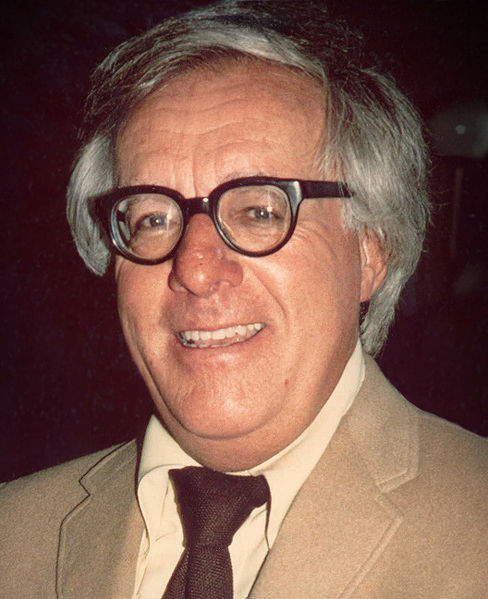
In this excerpt from a Paris Review interview, Ray Bradbury discusses being an autodidact and disses John Irving. An excerpt:

Paris Review: You’re self-educated, aren’t you?

Ray Bradbury: Yes, I am. I’m completely library educated. I’ve never been to college. I went down to the library when I was in grade school in Waukegan, and in high school in Los Angeles, and spent long days every summer in the library. I used to steal magazines from a store on Genesee Street, in Waukegan, and read them and then steal them back on the racks again. That way I took the print off with my eyeballs and stayed honest. I didn’t want to be a permanent thief, and I was very careful to wash my hands before I read them. But with the library, it’s like catnip, I suppose: you begin to run in circles because there’s so much to look at and read. And it’s far more fun than going to school, simply because you make up your own list and you don’t have to listen to anyone. When I would see some of the books my kids were forced to bring home and read by some of their teachers, and were graded on—well, what if you don’t like those books?

I am a librarian. I discovered me in the library. I went to find me in the library. Before I fell in love with libraries, I was just a six-year-old boy. The library fueled all of my curiosities, from dinosaurs to ancient Egypt. When I graduated from high school in 1938, I began going to the library three nights a week. I did this every week for almost ten years and finally, in 1947, around the time I got married, I figured I was done. So I graduated from the library when I was twenty-seven. I discovered that the library is the real school.

Paris Review: You have said that you don’t believe in going to college to learn to write. Why is that?

Ray Bradbury: You can’t learn to write in college. It’s a very bad place for writers because the teachers always think they know more than you do—and they don’t. They have prejudices. They may like Henry James, but what if you don’t want to write like Henry James? They may like John Irving, for instance, who’s the bore of all time. A lot of the people whose work they’ve taught in the schools for the last thirty years, I can’t understand why people read them and why they are taught. The library, on the other hand, has no biases. The information is all there for you to interpret. You don’t have someone telling you what to think. You discover it for yourself.”

Tags: ,

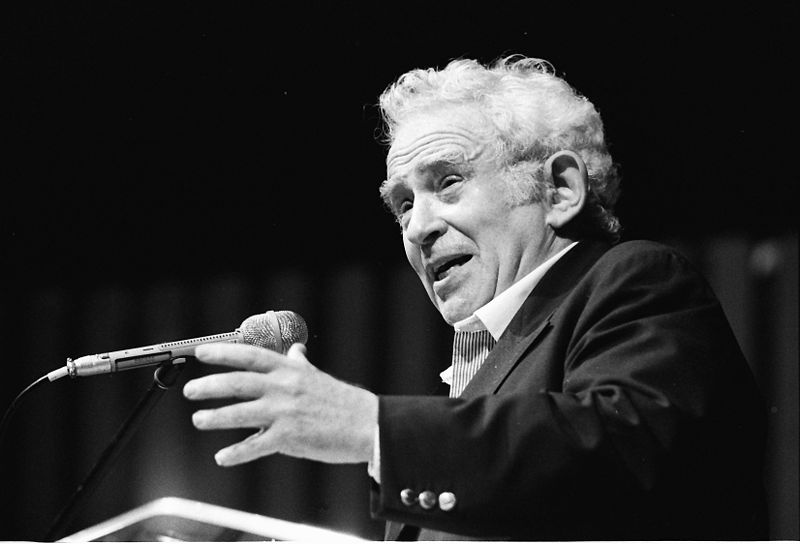
According to this Q&A, Mailer never interviewed Gary Gilmore for "The Executioner's Song." He worked from Schiller's extensive interviews. (Image from MDCarchives.)

For someone so accomplished, Lawrence Schiller isn’t exactly a household name. A photographer, a filmmaker, a writer and an interviewer extraordinaire, Schiller has been a Playboy shutterbug, an Oscar winner in the Documentary category, a collaborator with Norman Mailer and other literary lights and an author of books about O.J. and JonBenet. The Believer‘s Suzanne Snider has outdone herself with an outstanding interview with Schiller. You should read the whole thing, but I present you with an excerpt about how Schiller became an acclaimed photographer at a young age:

The Believer: But then you became a photographer….

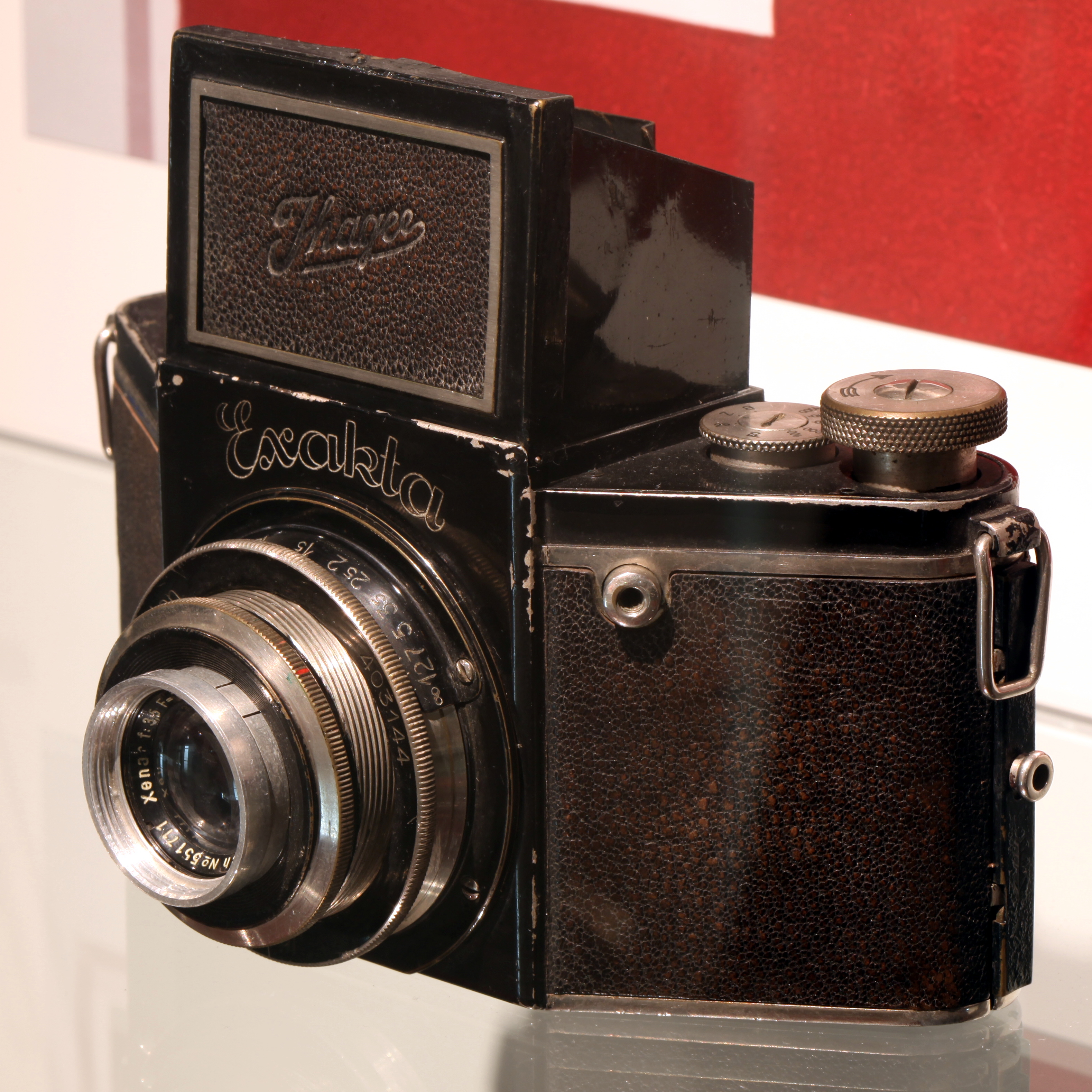
Lawrence Schiller: But that was because I couldn’t read. I grew up not knowing I was very seriously dyslexic (I grew out of it a little bit). I was unable to read properly as a young child. I was unable to read at all. I ran away from classes because I didn’t want to be embarrassed. At the same time, my father was in the retail end of selling sporting goods, appliances, and cameras. He was a portrait photographer prior to that, during World War II. So about the tenth grade, he gave me an East German camera called an Exakta.

Exakta camera. (Image by Rama.)

My brother and I were accomplished tennis players at a very young age (I was skinny at the time). When my brother beat me in the eleven-and-unders, I gave up sports (he went on to be a nationally ranked tennis player). I went toward photography, and I became an accomplished sports photographer at a very young age.

I was self-taught. By the age of fourteen I had won second, third, fourth, and fifth in the national Graflex Awards, which allowed me to work in summer of eleventh grade with Andy Lopez of the Acme News Service.

I took some pictures at the death march of Julius and Ethel Rosenberg from Union Square to Knickerbocker Village and I started to publish at a young age through high school and college.… I started to get a big head and a very big ego. I hid my age from all the big magazines around the world. Jacob Deschin, a writer for the New York Times, called me a “pro at sixteen,” when I was still in high school. By the time I graduated from college I won the National Press Photographers Picture of the Year award.

The Believer: What was the photograph?

Lawrence Schiller: It was Nixon losing to Kennedy with a teardrop in his wife’s eye. I never considered myself a good photographer. I still don’t. I thought of myself as a hard worker. My camera was a sponge and I had an instinct that athletes have—anticipation. Photography really represents an enormous amount of anticipation—understanding what might be there the next moment and being prepared for it.”

Tags: , , , , , ,

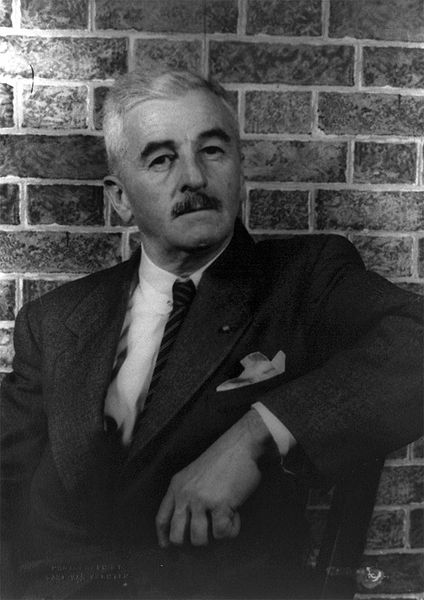
William Faulkner: "And the Madam had literary aspirations and the three of us would sit in the courtyard and she would supply the whiskey..." (Image by Carl Van Vechten.)

In 1957-58, William Faulkner was the University of Virginia’s first writer-in-residence. The University has done a great thing by putting its many hours of Faulkner audio archives online. You can listen to entire lectures or search for pieces of audio by keyword. Once you start playing around with it, time slips away.

In one segment, Faulkner describes the unusual events that led to his first novel being published. It seems like it could be partly a tall tale, but who knows? (Oddly, it’s not the first time this site has mentioned Faulkner and brothels in a post.) A transcript of his amusing story:

“I was running a launch for a New Orleans bootlegger then down across Pontratrain down Industrial Canal into the Gulf to an island where we would pick up the sugar cane alcohol that came up from the Caribbean and bring that back to his kitchen and he would turn it  into scotch and gin and bourbon, whatever he wanted.

Sherwood Anderson in Central Park in NYC in 1939. (Image by Carl Van Vechten.)

I met Sherwood Anderson who lived in New Orleans at the time and I liked him very much just as you meet a man and you know that you’ll get along with him. We would meet in afternoons and sit in parks and he would talk and I would listen. We would meet again in the evening and go to a well-known, very elegant brothel then. And the Madam had literary aspirations and the three of us would sit in the courtyard and she would supply the whiskey and we would drink and he would talk and she would talk and I would listen. And the next morning I went to see him. He was in seclusion working.

That would go on day after day, afternoons and evenings, he would sit over whiskey and talk and I would listen. I thought that if that was the life it took to be a writer that was the life for me. And so I wrote my first book and when I finished, Mr. Anderson said, ‘I’ll make a trade with you. If I don’t have to read it, I’ll tell my publisher to take it.’ So I said ‘done’ and he told his publisher to take it.”

Tags: ,

Thanks to the great Kottke.org for pointing me toward this incredibly rare footage of Sir Arthur Conan Doyle, sitting for an interview and explaining how and why he created the most famous detective of them all, Sherlock Holmes.

More Featured Videos:

Tags:

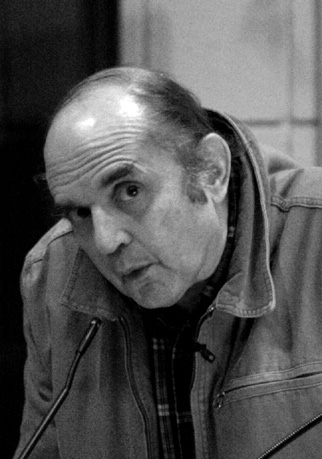
Harvey Pekar: "I've always been a fiend for one thing or another, either sports or comix or, you know... jazz, different kinds of literature." (Image by Davidkphoto.)

A fond farewell to the dyspeptic and brilliant graphic comics writer and Letterman foil, Harvey Pekar, who passed away in his Cleveland home yesterday at 70. If you’re not familiar with his work, Pekar’s autobiographical writing brought a realism to comics, focusing on his sad-sack life as an Ohio file clerk rather than superheroes. He collaborated with the artist R. Crumb, among others.

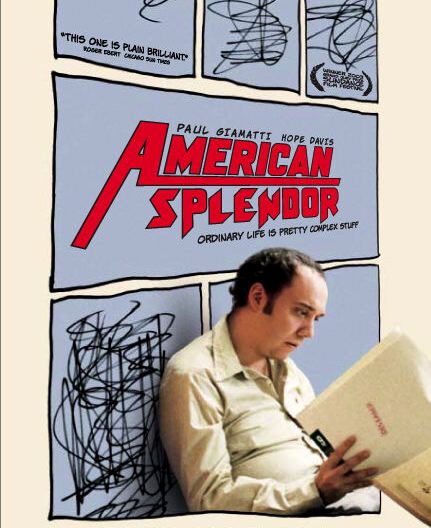
If you’ve never seen the excellent movie based on his life, American Splendor, you should definitely check it out. I interviewed the directors, Shari Springer Berman and Robert Pulcini, right before the film was released, and they are really talented and generous people.

I present you with an excerpt from an interview Pekar did with Walrus Comix (the images on the page are broken, but the Q&A is really good). An excerpt from the section in which Pekar recalls his first meeting with R. Crumb and how he developed his aesthetic:

“So in ’62, Robert Crumb moved to Cleveland from Philadelphia, and he lived about a block and a half from me and he’s the guy that sort of — he and his roommate — hipped me to the underground scene, you know… and he stayed in Cleveland… he worked for the American Greeting Card company for about four years and then I guess he figured he went as far as he could go here and then moved out to San Francisco in the Winter of ‘66 or ’67… But by that time — see I was really into underground comix and I was mainly doing jazz criticism then — I started thinking that comix were generally… you know especially in those days, people looked down on comix, if you said something was like a comic book you know, you were putting it down…. But I saw there was no reason to think that they were intrinsically a limited form… ‘Cause you could choose ANY word that was in the dictionary… You got the same choice of words as SHAKESPEARE… and you got a huge variety of art styles that you could use. Comix are WORDS and PICTURES… WORDS AND PICTURES… you can do ANYTHING with WORDS and PICTURES…

So I just realized that comix at that point had never got beyond the superhero stuff mainly because of the publishers. They were just in it to make a buck and this is what sold and they didn’t want to get away from that formula. Which, I guess, if you’re a businessman and you don’t care about art too much then that’s what you can expect.

So anyway, I started thinking about ways that comix could expand and one thing I thought about was more REALISM… ‘Cause comix never had a realist movement like just about all other art forms had. So I figured if I could do some realistic comix, even if people don’t like ‘em , then maybe I would’ve gained a footnote in history… and so then I thought about doing stuff about the QUOTIDIAN LIFE… you know, ‘every day’ life… because, for one thing, that’s all I knew… I always had a flunky job and lived in these little cramped apartments and was UNRELIEVED at that life.”

Tags: , ,

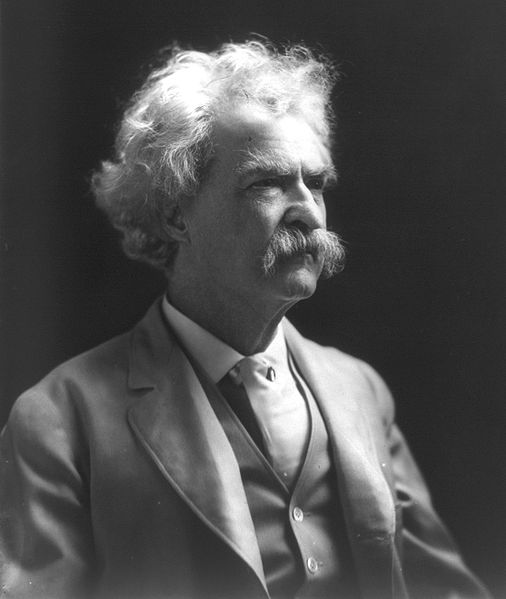
Mark Twain: "The interview was not a happy invention."

A hundred years after his death, Mark Twain’s three-volume autobiography will finally be published later this year. It’s pretty much Mark Twain fever everywhere all the time now. Can you feel it? No?!? But I can feel it. Aw, forget it. I give up with you.

They have the fever over at that PBS site, where a previously unpublished Twain essay (screed) called “Concerning the Interview” is online. You have to think Twain sat for some pretty excruciating interviews in his day. An excerpt:

“No one likes to be interviewed, and yet no one likes to say no; for interviewers are courteous and gentle-mannered, even when they come to destroy. I must not be understood to mean that they ever come consciously to destroy or are aware afterward that they have destroyed; no, I think their attitude is more that of the cyclone, which comes with the gracious purpose of cooling off a sweltering village, and is not aware, afterward, that it has done that village anything but a favor. The interviewer scatters you all over creation, but he does not conceive that you can look upon that as a disadvantage. People who blame a cyclone, do it because they do not reflect that compact masses are not a cyclone’s idea of symmetry. People who find fault with the interviewer, do it because they do not reflect that he is but a cyclone, after all, though disguised in the image of God, like the rest of us; that he is not conscious of harm even when he is dusting a continent with your remains, but only thinks he is making things pleasant for you; and that therefore the just way to judge him is by his intentions, not his works.”

Tags:

Three Card Monte. (Image by ZioDave.)

According to David W. Mauer’s The Big Con.

  • The Big Alabama Kid
  • The Clinic Kid
  • Devil’s Island Eddie
  • Fifth Avenue Fred
  • The High Ass Kid
  • The Honey Grove Kid
  • The Indiana Wonder
  • John Henry Strosnider
  • The Leatherhead Kid
  • Lilly the Roper
  • Little Chappie Lohr
  • Plunk Drucker
  • The Postal Kid
  • Red Lager
  • Slobbering Bob
  • The Square Faced Kid
  • Tear-off Arthur
  • The Yellow Kid Weil

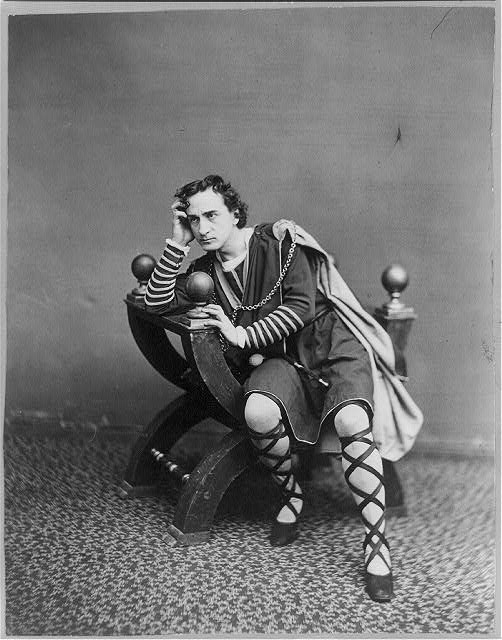
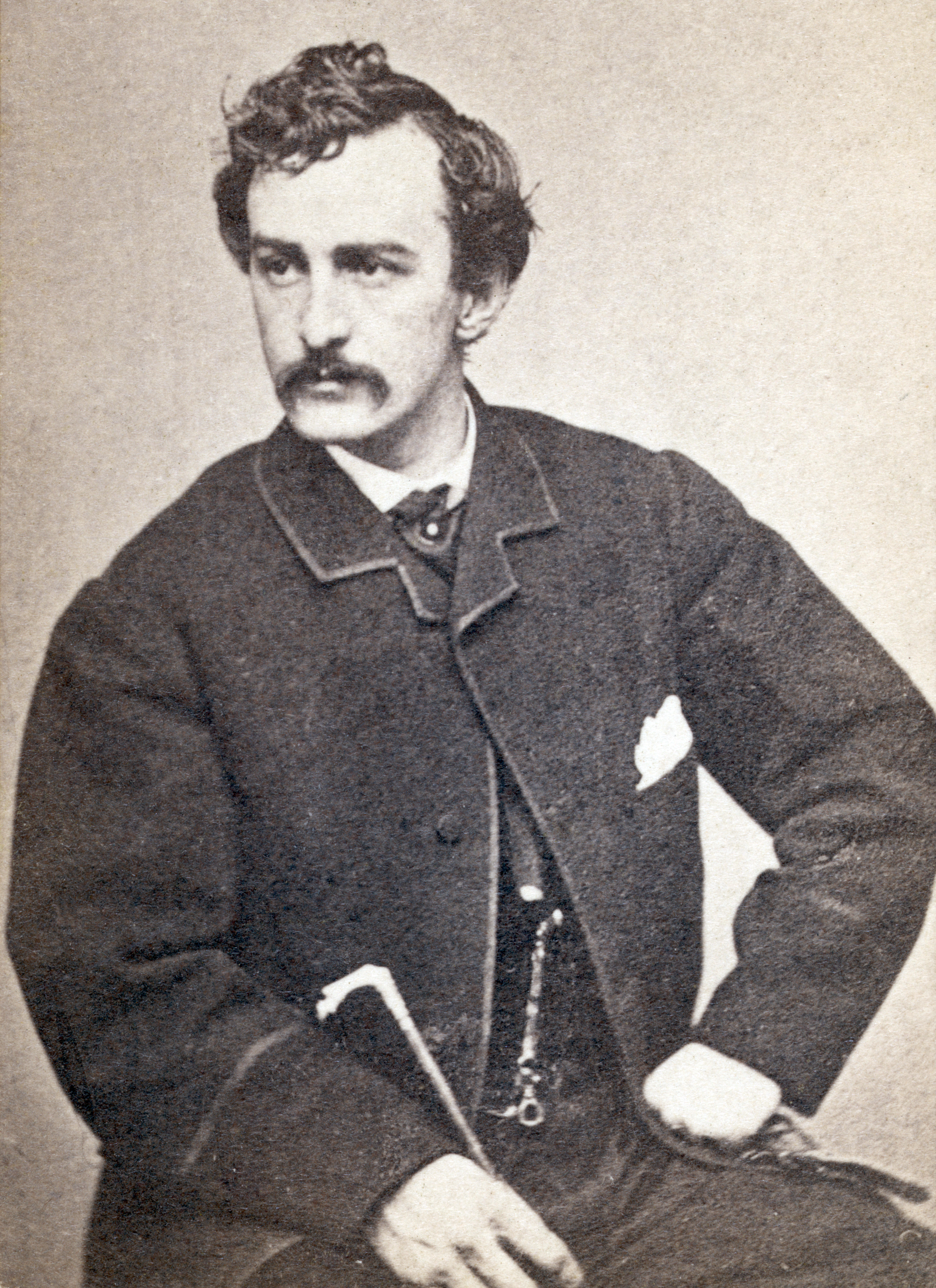
Edwin Booth in his Hamlet costume five years after his brother assassinated Lincoln. (Image by J. Gurney & Son.)

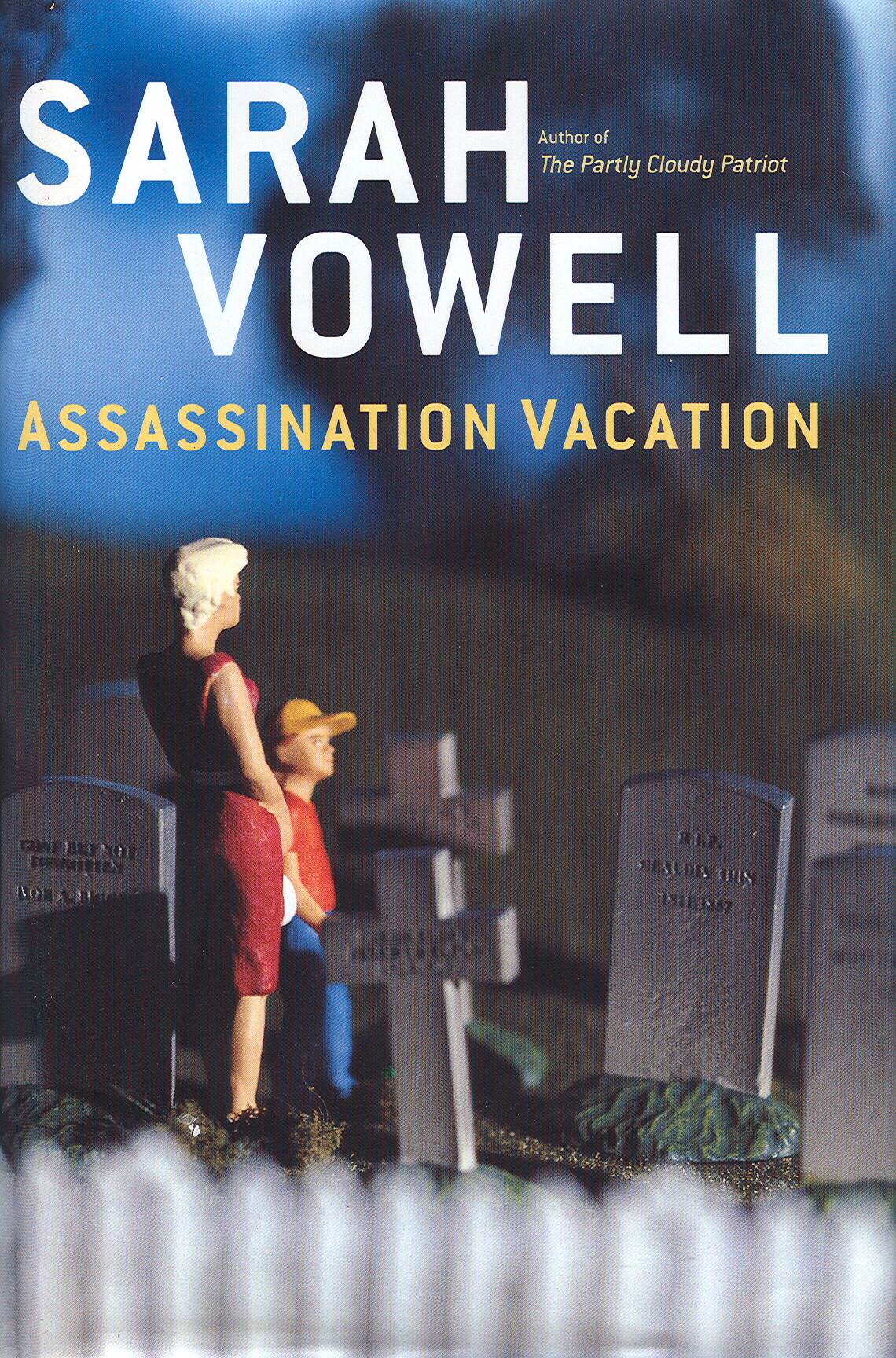
Sarah Vowell’s Assassination Vacation relates the author’s road trip to those sad places where American political murder has occurred. I think just about everyone knows that Abraham Lincoln’s assassin, John Wilkes Booth, came from a famous theatrical family, but Vowell zeroes in on an interesting sidebar: the life and career of the celebrated Shakespearean performer Edwin Booth, the killer’s brother, after the horror of the murder. A passage in which the writer explains to a friend who Edwin was:

“I tell him how Edwin was known as the Hamlet of his day, how his father, Junius Brutus was the greatest Shakespearean actor in England, until 1821, when he emigrated to Maryland, at which point he became the greatest Shakespearean actor in America; how three of Junius’ s children became actors themselves–Edwin, John Wilkes and Junius Brutus Jr.; how the three brothers appeared onstage together only once, in Julius Caesar here in New York in 1864 as a benefit performance for the Shakespeare statue in Central Park;

how their performance was interrupted because that was the night that Confederate terrorists set fires in hotels up and down Broadway and Edwin, who was playing Brutus, interrupted the play to reassure the audience; how the next morning Edwin informed John at breakfast that he had voted for Lincoln’s reelection and they got into one of the arguments they were always having about North versus South; how Edwin retired from acting out of shame when he heard his brother was the president’s assassin, but that nine months later, broke, he returned to the stage here in New York, as Hamlet, to a standing ovation; how he bought the house on Gramercy Park South and turned it into the Players Club, a social club for his fellow thespians and others, including Mark Twain and General Sherman; how he built his own theater, the Booth, on Twenty-third and Sixth, where Sarah Bernhardt made her American debut; and how, in the middle of the Civil War, on a train platform in Jersey City, he rescued a young man who had fallen on to the tracks and that man was Robert Todd Lincoln, the president’s son, so he’s the Booth who saved a Lincoln’s life.”

Tags: , , , , ,

Stop fishing through the garbage for books about con artists, stupid Afflictor.

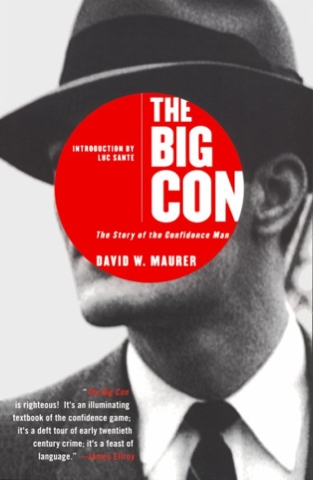
I gleaned a really nice book this morning just two brownstones away from my apartment. It’s a copy of The Big Con by David W. Mauer. The author was a linguist and academic with a taste for the raffish. In this book, originally published in 1940, he catalogued the lexicon of cons spoken by Americans with names like Slobbering Bob, The Hash House Kid and Lilly the Roper.

The classic, which was reissued in 1999, had somehow gone out of print for quite a while. The great Luc Sante wrote an intro for the new edition, in which he pointed out that Mauer studied “carnies, junkies, safe-crackers, forgers, pot smokers, faro-bank players, shell-game hustlers, race-track touts, pickpockets, moonshiners, prostitutes, and pimps, but his interest in the language of confidence men was a case apart.”

I think con men get too much of the glory. You can’t run a proper confidence game without a good pigeon. So I present an excerpt from a chapter called “The Mark”:

“People who read of good con touches in the newspaper are often wont to remark: ‘That bird must be stupid to fall for a game like that. Why, anybody should have known better than to do what he did…’ In other words, there is a widespread feeling among legitimate folk that anyone who is the victim of a confidence game is a numskull.

But it should not be assumed that the victims of confidence games are all blockheads. Very much to the contrary, the higher a mark’s intelligence, the quicker he sees through the deal to his own advantage. To expect a mark to enter into a con game, take the bait, and then, by sheer reason, analyze the situation and see it as a swindle is simply asking too much. The mark is thrown into an unreal world which very closely resembles real life, like the spectator regarding the life groups in a museum of natural history, he cannot tell where the real scene merges into the background.”

Tags: , , , ,

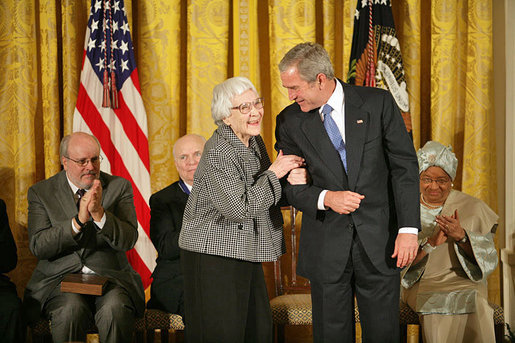
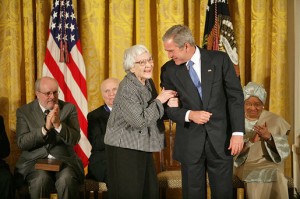
Harper Lee reunites with Boo Radley in 2007. (Image by Eric Draper.)

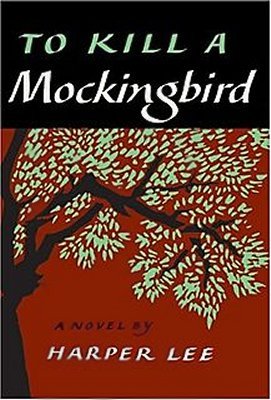
With the 50th anniversary of the publication of To Kill a Mockingbird upon us, some brainiac from the Daily Mail thought it was a good idea to show up unannounced and bother novelist Harper Lee for an interview, even though Lee hasn’t been interested in doing that kind of thing for more than 45 years. The reporter was politely rebuffed. Good for Lee. Back when she was open to discussing her work, Lee  sat down with Roy Newquist in 1964 and covered many topics, including the then-state of contemporary writing. An excerpt:

“Roy Newquist: When you look at American writing today, perhaps American theatre too, what do you find that you most admire? And, conversely, what do you most deplore?

Harper Lee: Let me see if I can take that backward and work into it. I think the thing that I most deplore about American writing, and especially in the American theatre, is a lack of craftsmanship. It comes right down to this—the lack of absolute love for language, the lack of sitting down and working a good idea into a gem of an idea. It takes time and patience and effort to turn out a work of art, and few people seem willing to go all the way.

I see a great deal of sloppiness and I deplore it. I suppose the reason I’m so down on it is because I see tendencies in myself to be sloppy, to be satisfied with something that’s not quite good enough. I think writers today are too easily pleased with their work. This is sad. I think the sloppiness and haste carry over into painting. The search, such as it is, is on canvas, not in the mind.

But back to writing. There’s no substitute for the love of language, for the beauty of an English sentence. There’s no substitute for struggling, if a struggle is needed, to make an English sentence as beautiful as it should be.

Mockingbird: I don't care for the title. (Image by Eurico Zimbres.)

Now, as to what I think is good about writing. I think that right now, especially in the United States, we’re having a renaissance of the novel. I think that the novel has come into its own, that it has been pushed into its own by American writers. They have widened the scope of the art form. They have more or less opened it up.

Our writers, Faulkner, for instance, turned the novel into something Wolfe was trying to do. (They were contemporaries in a way, but Faulkner really carried out the mission.) It was a vision of enlargement, of using the novel form to encompass something much broader than our friends across the sea have done. I think this is something that’s been handed to us by Faulkner, Wolfe, and possibly (strangely enough) Theodore Dreiser.

Dreiser is a forgotten man, almost, but if you go back you can see what he was trying to do with the novel. He didn’t succeed because I think he imposed his own limitations.

All this is something that has been handed to us as writers today. We don’t have to fight for it, work for it; we have this wonderful literary heritage, and when I say “we” I speak in terms of my contemporaries.

There’s probably no better writer in this country today than Truman Capote. He is growing all the time. The next thing coming from Capote is not a novel—it’s a long piece of reportage, and I think it is going to make him bust loose as a novelist. He’s going to have even deeper dimension to his work. Capote, I think, is the greatest craftsman we have going.
Of course, there’s Mary McCarthy. You may not like her work, but she knows how to write. She knows how to put a novel together. Then there’s John Cheever—his Wapshot novels are absolutely first-rate. And in the southern family there’s Flannery O’Connor.

You can’t leave out John Updike—he’s so happily gifted in that he can create living human beings. At the same time he has a great respect for his language, for the tongue that gives him voice. And Peter De Vries, as far as I’m concerned, is the Evelyn Waugh of our time. I can’t pay anybody a greater compliment because Waugh is the living master, the baron of style.

These writers, these great ones, are doing something fresh and wonderful and powerful: they are exploring character in ways in which character has never been explored. They are not structured in the old patterns of hanging characters on a plot. Characters make their own plot. The dimensions of the characters determine the action of the novel.”
Tags: , , , , , , , , , , ,

Michael Silverblatt: “Joan, please pardon me if I cry during this interview." (Image by David Shankbone.)

Michael Silverblatt, host of KCRW’s Bookworm program, is interviewed in the latest issue of The Believer about the many writers he’s conversed with over the years. It’s a fun read. A couple of excerpts follow.

•••••

Michael Silverblatt: I was really, really afraid of Joan Didion, simply because she’s a no-nonsense type. She has a mind that aggressively finds the flaws in an argument and the places where you’re trying to burnish your weakness with pretty words. And her attitude is “Everybody’s lying and life is the story we’re telling ourselves in order to stay alive. And an artist sees through the story. Sees through the fakeness of the story to the very bare and difficult impossibilities of the coping mechanism functioning in a true situation of devastation.” I was very scared, and that fear did not lessen, as it usually does with subsequent interviews. In fact, when The Year of Magical Thinking came out, about her husband’s death—that was a really hard interview to do! To talk to someone about the book about the death of her husband just after her daughter had died as well? And she had been talking about it all around the country, giving public readings. I’m in the position of someone extending meaningless condolence. If I don’t extend it, I seem like a jerk, but if I ask tough questions I also seem like a jerk. How was I going to do this interview? I was scared of her subject. Also of having at that time my own parents dealing with illnesses. I said to her, “Joan, please pardon me if I cry during this interview. And I’m very nervous about being unable to speak, because this is a subject that you’ve been handling that I don’t handle very well.” And she took my hand and she said, “I’ll get you through it.”
•••••

The Believer: Do you ever become friends with your guests?

Michael Silverblatt: Kurt [Vonnegut] didn’t sign books, he didn’t stay on, he was escorted into a car immediately through a back door, but he said, “Give me your book,” and drew a picture of himself and a bubble coming out of his mouth saying, “Would you be my friend?” and gave me his phone number and he looked at me and said, “I’m so lonely.” I had started reading him before he was discovered, around the time of Mother Night. He meant a lot to me. I had a hunger verging on addiction to enjoy how funny and inventive he was. He wasn’t Pynchon, he wasn’t Barth, he wasn’t Barthelme, he wasn’t the writers he was grouped with, but he had his finger on an American zaniness that hadn’t really been seen since Mark Twain. We began a phone relationship and saw each other several more times before his death.

Tags: , ,

In his collection A Roomful of Hovings and Other Profiles, the great New Yorker writer John McPhee included an impressive profile he wrote about the outdoorsman and naturalist Euell Gibbons. A very well-known public figure during the ’60s and ’70s, Gibbons guested on the Tonight Show and starred in TV commercialsbut he isn’t exactly a household name today. Gibbons, who was at different times in his life a Quaker, a tramp and a communist, wrote several food books and came to prominence for advocating the use the natural foods that grow wild all around us, whether it was weeds in a vacant lot or flowers from a box at Rockefeller Center.

The piece by McPhee was originally written for the April 8, 1968 issue of the New Yorker (paywalled here). In it, the two men spend a week together, living off the land in Pennsylvania. An excerpt:

“Gibbons interest in wild food suggests but does not actually approach madness. He eats acorns because he likes them. He is neither an ascetic nor an obsessed nutritionist. He is not trying to prove that wild food is better than tame food, or that he can survive without the assistance of a grocer. He is apparently not trying to prove anything at all except that there is a marvelous variety of good food in the world and that only a modest part of the whole can be found in even the most super of supermarkets. He is a gourmet with wild predilections. Inadvertently, the knowledge that he has acquired through years of studying edible wild plants has made him an expert on the nourishment aspects of survival in the wilderness, but the subject holds no great interest for him and in some ways he finds it repellent, since survival is usually taught by the military and he is a conscientious objector. Nonetheless, he is given his time to assist, in an unofficial way, at the United States Navy’s survival school in Brunswick, Maine. He has also taught survival techniques at the Hurricane Island Outward Bound School, off the Maine coast. It was in Maine that I first met him–in summer and only briefly–and not long thereafter I wrote to him and asked if he would like to take a week or so and make a late-fall trip to central Pennsylvania living off the land. I apologized that I would not be able to make such a trip sooner than November, and I asked him if he thought we can find enough to eat at that time. His response was that we could stuff ourselves, if we wanted to, right up until the time of the first heavy snowfall.”•

_________________________

Euell Gibbons is mentioned on Match Game in 1975:

Tags: ,

I presented an excerpt some time back from Slouching Towards Bethlehem, Joan Didion’s great collection of reportage about life in California during the 1960s and 1970s. Now I offer a passage from The White Album, her other incisive non-fiction book about that place and time. From the title piece, this excerpt concerns the Tate-LaBianca murders perpetrated by the Manson Family in 1969, which caused the L.A.’s open minds and open doors to be locked shut. To read Didion tell it, those horrific killings were an almost inevitable shattering of a city of glass. An excerpt:

“We play ‘Lay Lady Lay’ on the record player, and ‘Suzanne.’ We went down to Melrose Avenue to see the Flying Burritos. There was a jasmine vine grown over the verandah of the big house in Franklin Avenue, and in the evenings the smell of jasmine came in through all the open doors and windows. I made a bouillabaisse for people who did not eat meat. I imagined that my own life was simple and sweet, and sometimes it was, but there were odd things going around town. There were rumors. There were stories. Everything was unmentionable but nothing was unimaginable. The mystical flirtation with the idea of  ‘sin’–this sense that it was possible to go ‘too far,’ and that many people were doing it–was very much with us in Los Angeles in 1968 and 1969. A demented and seductive vortical tension was building in the community. The jitters were setting in. I recall a time when the dogs barked every night and the moon was always full. On August 9, 1969, I was sitting in the shallow end of my sister-in-law’s swimming pool in Beverly Hills when she received a telephone call from a friend who had just heard about the murders at Sharon Tate Polanski’s house on Cielo Drive. The phone rang many times during the next hour. These early reports were garbled and contradictory. One caller would say hoods, the next would say chains. There were twenty dead, no, twelve, ten, eighteen. Black masses were imagined, and bad trips were blamed. I remember all of the day’s misinformation very clearly, and I also remember this, and wish I did not: I remember that no one was surprised.”

Tags: ,

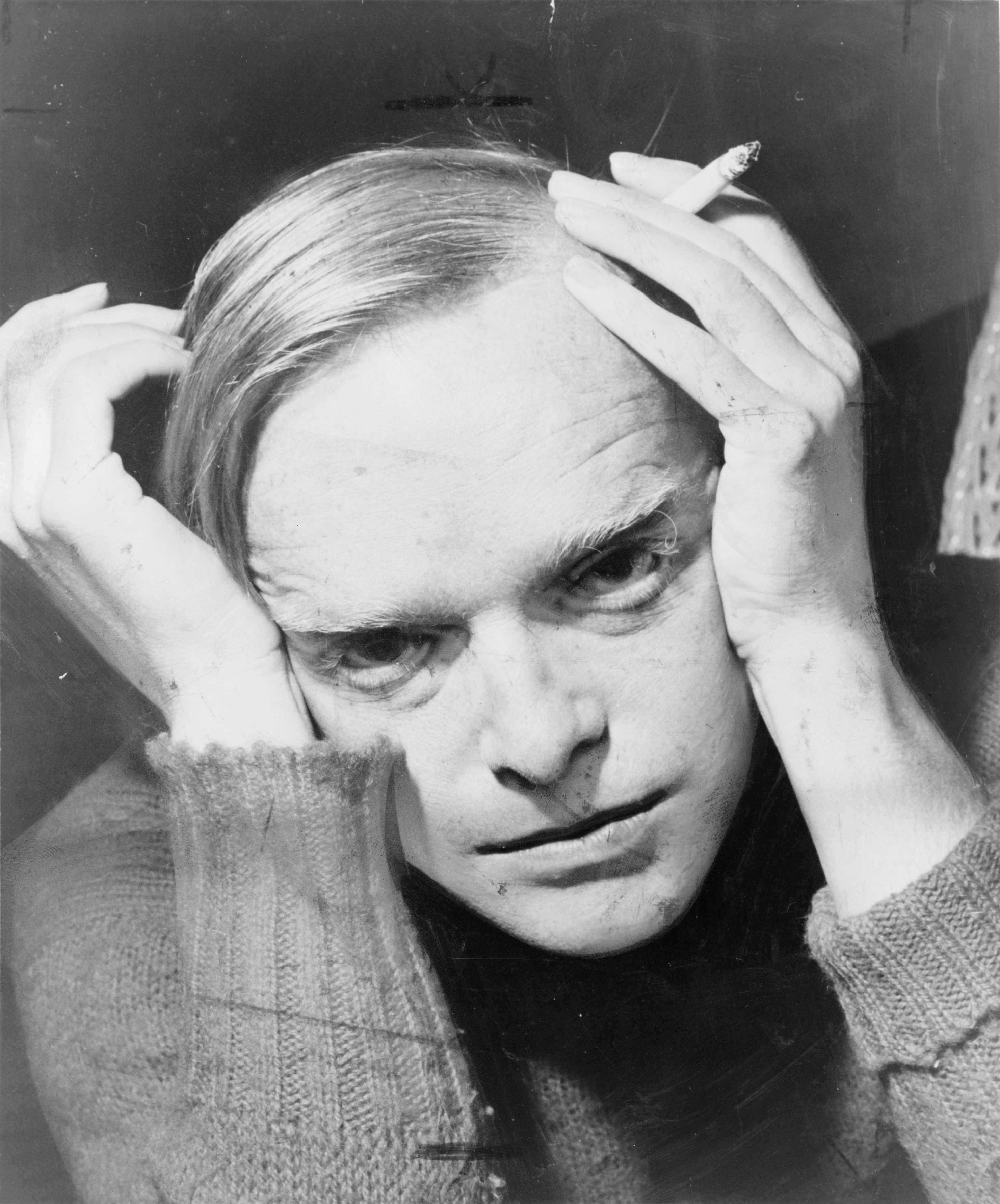
When I was a kid, I saw a really wasted Capote in the Port Authority, trying to get an indifferent homeless woman to talk to him. He was wearing a straw hat. (Image by Roger Higgins.)

In a 1957 interview with the Paris Review, Truman Capote described how he created a comfort zone for himself when writing:

Paris Review: What are some of your writing habits? Do you use a desk? Do you write on a machine?

Truman Capote: I am a completely horizontal author. I can’t think unless I am lying down, either in bed or stretched on a couch lying down and with a cigarette and coffee handy. I’ve got be puffing and sipping. As the afternoon wears on, I shift from coffee to mint tea to sherry to martinis. No, I don’t use a typewriter. Not in the beginning, I write my first version in longhand (pencil). Then I do a complete revision, also in longhand. Essentially, I think of myself as a stylist, and stylists can become enormously obsessed with the placing of a comma, the weight of a semicolon. Obsessions of this sort, and the time I take over them, irritate me beyond endurance.”

Tags:

Henry Miller, who looked pretty shitty himself, dissing NYC.

Tags:

Internet cafes will not make you dumber. (Image by Phallus Nocturne.)

When I was growing up in my working-class neighborhood in Queens, there wasn’t a single bookstore in the community during my entire childhood. Not one. There were candy stores where you could get a paper or a magazine and a couple of small, semi-stocked libraries, but it was difficult for a kid with a curious mind to grow up in that environment. You had to take a train to Manhattan just to get a hold of something with hard covers to read. I always felt like there was information somewhere, but I didn’t know where it was.

You know what would have leveled the playing field? The Internet. It didn’t exist then, but it does now, and it has the potential to connect any reader in the world to any book they want. You can find out about any university, look up any word and read an incredible array of great writing wherever there’s a wi-fi connection. That doesn’t mean everyone will use the medium to improve themselves, but it’s pretty hard to avoid doing so. The Internet is democratizing and despite what the hand-wringers say, it’s made our knowledge deeper and stronger.

That’s why I bristle when I hear how the Internet is destroying the literary mind and damaging our memories. If it seems like our memories are failing more often than they used to, that’s because we have so much more information at our fingertips. Ultimately, that’s a good thing.

One person who agrees with me is Steven Pinker. Pinker is a psychology professor at Harvard who’s best known for his book, The Stuff of Thought. In an article on Edge, he addresses concerns about what the Internet is doing to our brains. An excerpt:

New forms of media have always caused moral panics: the printing press, newspapers, paperbacks and television were all once denounced as threats to their consumers’ brainpower and moral fiber.

So too with electronic technologies. PowerPoint, we’re told, is reducing discourse to bullet points. Search engines lower our intelligence, encouraging us to skim on the surface of knowledge rather than dive to its depths. Twitter is shrinking our attention spans.

But such panics often fail basic reality checks. When comic books were accused of turning juveniles into delinquents in the 1950s, crime was falling to record lows, just as the denunciations of video games in the 1990s coincided with the great American crime decline. The decades of television, transistor radios and rock videos were also decades in which I.Q. scores rose continuously.

For a reality check today, take the state of science, which demands high levels of brainwork and is measured by clear benchmarks of discovery. These days scientists are never far from their e-mail, rarely touch paper and cannot lecture without PowerPoint. If electronic media were hazardous to intelligence, the quality of science would be plummeting. Yet discoveries are multiplying like fruit flies, and progress is dizzying.”

Tags:

« Older entries § Newer entries »