A Michael Matas TED Talk about the coming evolution of e-books. The Kindle probably needs to be free and ubiquitous really soon in order to have a future. (Thanks Open Culture.)
You are currently browsing the archive for the Books category.
Tags: Micahel Matas
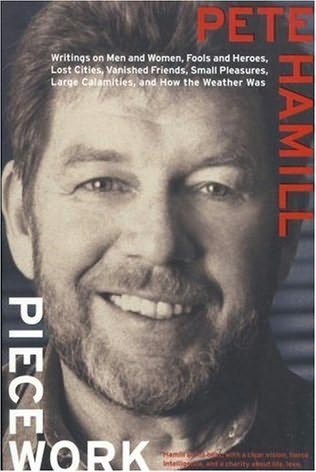
The opening of “Cities of New York,” from Pete Hamill’s excellent collection, Piecework, in which the writer recalls NYC’s mid-twentieth century decline, which didn’t reverse until new media technology businesses began to take root in the city in the 1990s:
“If I’d grown up in another city, I almost certainly would have become another kind of writer. Or I might not have become a writer at all. But I grew up in New York in the 1940s, when New York was a great big optimistic town. The war was over and the Great Depression was a permanent part of the past; now we would all begin to live. To a kid (and to millions of adults) everything seemed possible. If you wanted to be a scientist or a left-fielder for the Dodgers, a lawyer or a drummer with Count Basie: well, why not? This was New York. You could even be an artist. Or a writer.
As a man and a writer, I’ve been cursed by the memory of that New York. Across five decades, I saw the city change and its optimism wane. The factories began closing in the late 1950s, moving to the South, or driven out of business by changing styles or tastes or means of production. When the factories died, so did more than a million manufacturing jobs. Those vanished jobs had allowed thousands of men like my father (an Irish immigrant with an eighth-grade education) to raise families in the richest city on earth. They joined unions. They proudly voted for the Democratic ticket. The put paychecks on kitchen tables, asked their kids if they’d finished their homework, went off to night games at the Polo Grounds or Ebbets Field, and were able to walk in the world with pride. Then the great change happened. The manufacturing jobs were replaced with service work. Or with welfare. One statistic tells the story: In 1955, there were 150,000 New Yorkers on welfare; in 1995, there were 1.3 million.
With the jobs gone, the combined American plagues of drugs and guns came to the neighborhoods.”
••••••••••
Pete Hamill discusses the legacy of Frank Sinatra on local NYC news:
Tags: Frank Sinatra, Pete Hamill
You remember Ayn Rand. She was that novelist who believed a woman should not be President. Mike Wallace interviews her in 1959. (Thanks Open Culture.)
Tags: Ayn Rand, Mike Wallace
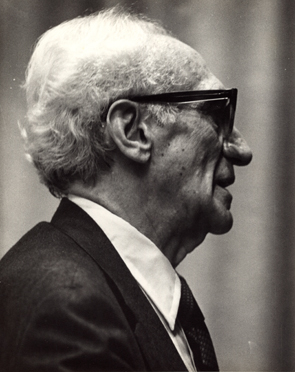
Immanuel Velikovsky’s theories about our planet’s history, which came into vogue during the 1970s, are catastrophist nonsense but a whole lot of fun if you recognize they’re fictional. Philip Kaufman realized this and used them to forward the plot of his excellent version of Invasion of the Bodysnatchers, which was released in 1978, the year before the scientist died at age 84. Below is an amusing 1972 BBC doc about the Velikovsky phenomenon.
A 1950 Popular Science note about Velikovsky: “Astronomers at Harvard consider the sensational theory of Dr. Immanuel Velikovsky that the earth stood still a couple of times in Biblical days sheer nonsense.”
The best science book I read during the aughts was Alan Weisman’s 2007 theoretical tome, The World Without Us. Weisman, a journalist not a scientist, imagines what would happen to all we’ve built if human beings suddenly disappeared from the face of the Earth. What would become of oil wells and subways and bridges and apartment buildings if they were untended? Weisman’s findings are fascinating.
mmmmm
An excerpt about New York City sans people from the book: “In the first few years with no heat, pipes burst all over town, the freeze-thaw cycles move indoors, and things start to seriously deteriorate. Buildings groan as their innards expand and contract; joints between walls and rooflines separate. Where they do, rain leaks in, bolts rust, and facing pops off, exposing insulation. If the city hasn’t burned yet, it will now. Collectively, New York architecture isn’t as combustible as, say, San Francisco’s incendiary rows of clapboard Victorians. But with no firemen to answer the call, a dry lightning strike that ignites a decade of dead branches and leaves piling up in Central Park will spread flames through the streets. Within two decades, lightning rods have begun to rust and snap, and roof fires leap among buildings, entering panel offices, filled with paper fuel. Gas lines ignite with a rush of flames that blows out windows. Rain and snow blow in, and soon even poured concrete floors are freezing, thawing, and starting to buckle. Burnt insulation and charred wood add nutrients to Manhattan’s growing soil cap. Native Virginia creeper and poison ivy claw at walls covered with lichens, which thrive in the absence of air pollution. Red-tailed hawks and peregrine falcons nest in increasingly skeletal high-rise structures.”
Tags: Alan Weisman, Jon Stewart

Millard Kaufman's first novel.
From “First at Ninety,” a 2007 New Yorker article about the debut novel of nonagenarian Millard Kaufman, by the always excellent Rebecca Mead:
“Kaufman grew up in Baltimore. After graduating from Johns Hopkins, he moved to New York and became a copyboy at the Daily News for thirteen dollars and seventy cents a week. When the Second World War broke out, he enlisted in the Marines, with whom he participated in the campaign to win Guadalcanal and landed at Guam and Okinawa. ‘I weighed a hundred and eighty-two pounds when I went overseas, and when my wife met me afterward she didn’t recognize me—I weighed a hundred and twenty-eight,’ Kaufman said. ‘I had dengue fever and malaria, and I didn’t really feel like I could spend the heat of the summer or the cold of the winter in New York anymore.’
He moved to California, where he took up screenwriting, winning an Oscar nomination in 1953 for a movie called Take the High Ground. (He was nominated again two years later, for Bad Day at Black Rock.) He lent his name to Dalton Trumbo, who had been blacklisted, for a movie called Gun Crazy. ‘The only time I ever met him was at a meeting of the Writers Guild,’ Kaufman said. ‘It was such a bore, and I left and went into a bar at the hotel, and Trumbo was there. We met because some guy was standing between us who was fairly drunk, and he said, ‘What’s all that noise?’ One of us said, ‘It’s a writers’ meeting.’ He said, ‘What do they write?’ and we said, ‘Movies.’ He looked aghast and said, ‘You mean they write that stuff?” Kaufman’s most enduring contribution to entertainment, at least thus far in his career, is as co-creator of Mr. Magoo, whom he modelled in part on an uncle. ‘That is what we thought the character was based on until, twenty years later, we were accused of being nasty about people with bad eyesight,’ he said.
Kaufman began the novel after his most recent screenplay, which he undertook at the age of eighty-six, came to nothing. His alliance with McSweeney’s was a product of circumstance. ‘My literary agent, who was younger than me, had died suddenly, and I had nobody,’ Kaufman said. He is now writing a second novel. ‘Years ago, I was working in Italy, and Charlie Chaplin and his family came from Switzerland,’ he recalled. ‘We were at a beach north of Rome, and it was a very foggy day and the beach was lousy. At about three o’clock it cleared up, and Chaplin said, ‘I’m going back to the hotel. Unless I write every day, I don’t feel I deserve my dinner.’ That made an impression on me.’
Kaufman writes longhand and has a secretary type up his work. ‘The only promise to myself that I have ever kept was no more typewriters,’ he said. ‘I hate the damn thing.’ (When it was suggested to Kaufman that he might want to check his Amazon ratings after Bowl of Cherries comes out, he said that he wasn’t sure what Amazon ratings were.)”
••••••••••
Mr. Kaufman:
Mr. Magoo:
Tags: Dalton Trumbo, Millard Kaufman, Rebecca Mead

"So much depends upon..." (Image by Jared and Corin.)
“The Red Wheelbarrow”
so much depends
upon
a red wheel
barrow
glazed with rain
water
beside the white
chickens.
Tags: William Carlos Williams
Open Culture dug up this cool, brief clip of Vladimir Nabokov perusing covers of various editions of Lolita. Has there ever been a better written novel than Lolita? Maybe Madame Bovary? I don’t know.
Tags: Vladimir Nabokov
Italian journalist Fernanda Pivano conducted this interview with the Beat writer. He died three years after the segment was recorded. Cause of death was cirrhosis, unsurprisingly. Pivano passed away at age 92 in 2009.
Tags: Fernanda Pivano, Jack Kerouac
As paperbacks become increasingly paperless, libraries have begun loaning e-books. From Singularity Hub: “Amazon recently announced that their new Kindle Lending Library feature will be arriving ‘later this year.’ The Kindle Lending Library will allow over 11,000 public libraries in the US to lend copies of digital books to Kindle users for short periods of time (probably 7-14 days).”

"I have no idea what this building is about."
As we fly headlong into a Gutenberg-free future, with tree-based books facing the ax, U.S. libraries are beginning to consider going book-less and reinventing themselves as community centers. But the national library in Brazil, the Biblioteca Nacional de Brasília, has already arrived at this point. There are hardly any books on the shelves, but Internet access and massage chairs are available. See photos of the library’s interior at the Longest Journey blog. An excerpt from the post:
“Biblioteca National de Brasilia Do take the offer of a tour… else you will end up completely baffled (like me). I have no idea what this building is about. It is very pretty… but a national library without books? It is all very Zen (well… there are a couple shelves of books but probably less than your local library…)” (Thanks Marginal Revolution.)
A fun 1963 profile of writer Ray Bradbury, then 43, which was made during the early days of the Space Race. Things on display that are going or gone: crowded bookstores, typewriters, filing cabinets.
Tags: Ray Bradbury
I would guess that Hell’s Angels: A Strange and Terrible Saga is the most factual book that Hunter S. Thompson ever wrote. It’s amusing to see Gonzo look so intimidated, but, you know, you buy the ticket, you take the ride. (Thanks Documentarian.)
“The Angels don’t like to be called losers, but they have learned to live with it. ‘Yeah, I guess I am,’ said one. ‘But you’re looking at one loser who’s going to make a hell of a scene on the way out.'”
Tags: Hunter S. Thompson
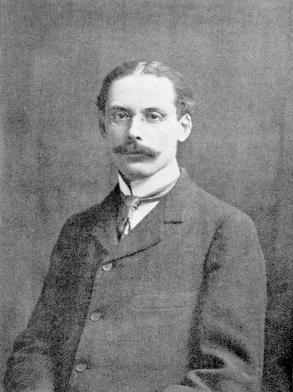
Poem published in 1897.
RICHARD CORY:
Whenever Richard Cory went downtown,
We people on the pavement looked at him:
He was a gentleman from sole to crown,
Clean favored, and imperially slim.
And he was always quietly arrayed,
And he was always human when he talked;
But still he fluttered pulses when he said,
“Good morning,” and he glittered when he walked.
And he was rich — yes, richer than a king,
And admirably schooled in every grace:
In fine, we thought that he was everything
To make us wish that we were in his place.
So on we worked, and waited for the light,
And went without the meat, and cursed the bread,
And Richard Cory, one calm summer night,
Went home and put a bullet through his head.
••••••••••
As reimagined by Simon & Garfunkel in 1966:
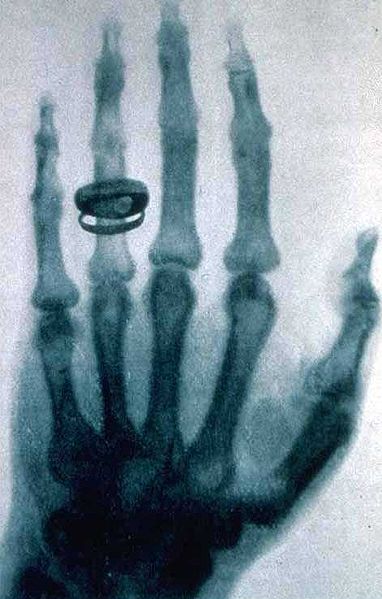
X-ray.
Xanthippe: The irascible wife of the Greek philosopher, Socrates, and the type of the scolding wife. Allowance must be made for a woman whose husband brought home company for dinner and nothing else. She mourned sincerely for him at his death.
Yard: A standard measure of 36 inches, the word being derived from the Saxon gyrd, or rod. The yard was anciently regarded as the circumference of the body, but Henry I decided it should be the length of his arm.
Yawning: Deep inspiration of breath with widely opened mouth, a natural effort for nervous relief when exhausted.
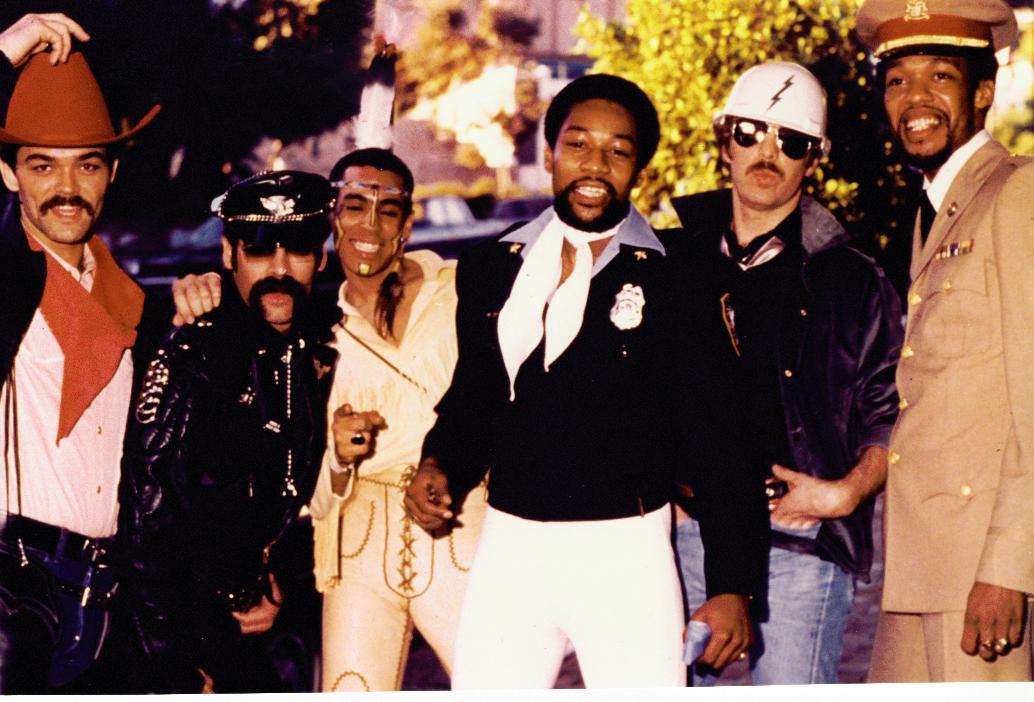
"Y-M-C-A" (Image by Cod.)
Young, Brigham: The famous Mormon leader, and the head of the Latter Day Saints of Salt Lake City. He was the Governor of the Territory, a position from which he was removed by President Buchanan, but not convicted. At his death he had seventeen wives. He was originally a house-builder’s workman in New York State, but embraced Mormonism in 1831 and became first elder, then apostle, amid finally president in 1844, in succession to Joseph Smith.

Zzzzzzzzzzzzzz...
Zenana: The portion of a dwelling in India where the female members of the family are kept, and to which strangers are not admitted.
•Taken from the 1912 Standard Illustrated Book of Facts.
See also:

Ewe. (Image by Don Crowley.)
Umbilicus: The navel. During pregnancy a mass of vessels called placenta or afterbirth (as it is ejected after the birth of the child), is formed on the inner surface of the womb, and conveys the mother’s blood to the child by an artery in the umbilical cord which enters the child by the navel and maintains a circulation, the venous blood returning to the mother by another blood vessel. As soon as the child is born respiration establishes itself, the umbilical cord is cut (it contains no nerves) and the navel bandaged. Children born after seven months of pregnancy are capable of life. With animals the mother usually devours the afterbirth.
Vaudeville: A form of theatrical entertainment extremely popular in the United States and Europe. Large circuits of theatres are devoted to it, and a great number of small theatres showing moving pictures give vaudeville acts also. Vaudeville originated in France and described a short play; but the word in the United States has superseded the word “variety” as a means of indicating a theatrical show composed of various features. In vaudeville, the acts, each lasting from ten to thirty minutes, but mostly twenty minutes, are of all kinds; short plays, farces, operettas, protean plays. sketches, singers, teams of comedians who dance, sing and tell jokes, sister teams, all sorts of players on musical instruments; an endless number of athletic feats, such as bicycle riding, juggling, tight rope walking, skating, and bag punching; sleight-of-hand performers; performing animals; appearances of persons temporarily notorious; all kinds of spectacular and trick dancing; lightning changes of costume, lightning pictorial and plastic artists, thought-reading, hypnotism, in fact everything of any possible interest. As a form of amusement, it is not regarded highly, and is chiefly patronized by “the general public”–those looking for amusement only.
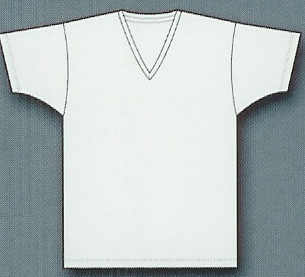
V-Neck.
Warfare in the Air: A subject which has developed to the point of international discussion, and by many it is prophesied that the next great war will see the aeroplane fleet an important adjunct of the opposing forces. By means of these commanders of hostile armies can inform themselves of each other’s movements, and shells dropped from an aeroplane can do most effective damage; whereas it is difficult for the enemy to secure an accurate range on an aeroplane because a shot “wild” in the air gives no indication of how far it went wild as on land or water. Besides an aeroplane only 1,000 feet in the air is an inconspicuous object and can only be hit by accident. Some progress toward warfare in the air has already been made. The Germans have done considerable work in perfecting aeroplane guns, but only practical experience will show their efficacy and aviators do not at present look for great results from them. Aerial warfare is the most uncertain of all developments; and the probabilities are that the very proportions to which the subject will advance will operate to put an end to international wars altogether.

W. (Image by Eric Draper.)
Werewolf: According to an Old World superstition, a human being changed into a wolf, but preserving its original intelligence. Numerous men charged in the Middle Ages with crimes were deemed of the Werewolf category. The superstition prevailed in many parts of Europe to a comparatively recent time, and some such belief is prevalent amongst the most savage races at the present day.
Windows: Originally apertures for the admission of the wind into dwellings, began to be made of glass and used only for the admission of light in very early times. There is evidence of glass windows having been used at Pompeii, but they did not become common in England before the twelfth century. A window tax was imposed in 1695, and again at later dates for special revenue purposes. As late as 1850, the sum of over $9,000,000 was obtained from the tax. It was repealed in 1851.
See also:
Tarantula: A large hairy kind of spider common in some parts of Italy, Southern California, Texas, and Mexico and other sub-tropical countries, and at one point thought to be poisonous and perhaps are occasionally so. Music was supposed to be the only cure for its sting, which superstition gave the Tarantula dance, an ancient Bacchanalian amusement. The Church banned it, and it was ascribed to the hateful spider.
Tattooing: The practice of pricking patterns or designs in the skin, with indelible pigments. It is in vogue among the brown and yellow races and sailors the world over. Among savages a matter of primitive taste and custom, or means of identification. It is a habit, says Lombroso, distinguishing the criminal type.
Taximeter: An ingenious contrivance by which the strictly legal fare chargeable for a cab journey is indicated. It is only recently that it has been adopted on a large scale in London and New York, although in Berlin and Paris it has been successfully working for many years. It is now in use extensively in this country both for motor cabs and ordinary cabs. It gives its name to the Taxicab, in which the number of wheel revolutions and consequently distance traveled and fare due, are automatically recorded on the dial of the taximeter, to avoid disputes.
Thugs: A secret organization of Indian fanatical assassins. They strangled their victims, and buried their bodies with a consecrated pick-axe, and set apart one-third of their plunder to the goddess Kali. These assassins were difficult to suppress, but vigorous measures ultimately, after twenty years’ effort, secured their extermination in about 1830.
Trance: An abnormal psychical state. In waking trance the thoughts are fixed on one subject, often religion, and other perception ceases. In trance coma and death trance pulsation, respiration and vitality appear to cease, all the nature being concentrated on interior thought or vision. It can be distinguished from death only by absence of decay and may last for weeks.
•Taken from the 1912 Standard Illustrated Book of Facts.
See also
A five-minute writing lesson from Kurt Vonnegut, the Mark Twain of our lifetimes. So it goes. (Thanks Open Culture.)
A 1970 Vonnegut commencement address, as covered by Time magazine:
“Like his novels, Kurt Vonnegut Jr.’s message to the graduating class of Bennington College was by turns desolately winsome, merely bleak and utterly but almost gaily despondent. Confessing to congenital pessimism, Vonnegut told the graduates: ‘Everything is going to become unimaginably worse and never get better again.’
Still, Vonnegut had some suggestions: ‘We would be a lot safer if the Government would take its money out of science and put it into astrology and the reading of palms. I used to think that science would save us. But only in superstition is there hope. I beg you to believe in the most ridiculous superstition of all: that humanity is at the center of the universe, the fulfiller or the frustrater of the grandest dreams of God Almighty. If you can believe that and make others believe it, human beings might stop treating each other like garbage.’
Vonnegut also asked the graduates to take advantage of some of youth’s prerogatives. A ‘great swindle of our time,’ he said, ‘is that people your age are supposed to save the world. I was a graduation speaker at a little preparatory school for girls on Cape Cod a couple of weeks ago. I told the girls that they were much too young to save the world and that after they got their diplomas, they should go swimming and sailing and walking, and just fool around.'”
Tags: Kurt Vonnegut

Sea-sickness: Disturbance of the nerves and stomach produced by the pitching of a ship at sea, resulting in pallor, cold sweat, vomiting, exhaustion, and, in exceptional cases, in death. It varies greatly in individuals, may be either annoyance or wretchedness, and usually passes away after a few hours or days. It is constitutional, runs in families, and seems dependent on the brain’s inability to balance and accommodate itself to the new condition, communicated through the spine and the solar plexus. Those who suffer from car-sickness are sure to have it. It is nervousness, for women are more subject than men, and young children, without rigidity of nerve, rarely suffer. It is well to keep on deck, recumbent if possible, and live sparingly on shipbread while it lasts. If the patient takes to the berth, mustard plasters on the stomach, cocaine in the mouth and bromo-caffein afford relief. Shutting the eyes to avoid the sight of moving objects is sensible, and sleep is the best of all.
Seldel, Emil: A Socialist mayor of Milwaukee, distinguished as the first of his party to be elected to such an office (April, 1909). His victory was due in part to the popular discontent with the open corruption of previous administrations, and partly to the fact that other Socialist officials before him, in minor offices, had made excellent records. Nearly all the candidates with him were workingmen. He himself is a pattern-maker by trade and can show evidences of the handiwork in the public places of the city. He was born in Germany, but has long been a resident of Milwaukee.
Shakers and Euthanasia: The Kissimmee Colony of Shakers, founded 1894, near Aston, Florida, acquired notoriety, September 1911, through the giving of a “quieting medicine,” to Sister Sadie Elizabeth Sears. When questioned, the administrators of the drug said that “whatever was done, was done to alleviate her sufferings, and to make it easy for her to pass out of the body without severe pain, not to take life.” The event shocked the whole country and a wide discussion on “Euthanasia” followed. The subject was revived a short time later, when the physicians of the County Hospital, Chicago, announced that they had chloroformed a seven-year-old victim of hydrophobia. They said, “They would not kill him, but they would do nothing to prolong his life of suffering.” The child was placed under an anaesthetic; not to be permitted to come from under its influence and “was put to sleep from which he would not wake.”
Shoes: As coverings for the human foot they have been worn from the earliest times. They are referred to in the Bible and early historical records. The shoes of the Jews were made of wood, rush, linen or leather. Pythagoras directed his followers to wear shoes made from the bark of trees. The Romans were the first to set the example of costly shoes, and introduced various decorative adornments of ivory and precious stones. In the Middle Ages fashion played some fantastic tricks with shoes, and in England, about the middle of the fifteenth century, shoes with such long points were worn that they had to be tied to the knees for convenience in walking, the dandies using silver chains for the purpose. It was about 1633 when shoes of the present form were introduced, and in 1668 the buckle came into use as an ornament. These continued in vogue up to the nineteenth century, before which period shoes were not made “rights” and “lefts.”
Swimming: The art of floating upon or in the water, and of progressing therein; a very desirable accomplishment indeed, as well as a pleasant and healthful pastime.
•Taken from the 1912 Standard Illustrated Book of Facts.
See also
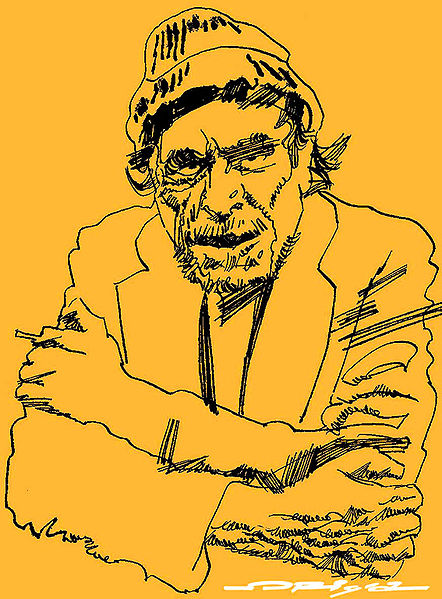
THE LAUGHING HEART
your life is your life
don’t let it be clubbed into dank submission.
be on the watch.
there are ways out.
there is a light somewhere.
it may not be much light but
it beats the darkness.
be on the watch.
the gods will offer you chances.
know them.
take them.
you can’t beat death but
you can beat death in life, sometimes.
and the more often you learn to do it,
the more light there will be.
your life is your life.
know it while you have it.
you are marvelous
the gods wait to delight
in you.
•••••••••
“You are marvelous…the gods wait to delight in you.”
Tags: Charles Bukowski, Tom Waits

Raccoon: A plantigrade carnivorous mammal, common to the American continent. Is about two feet long, with a bushy ringed tail, and sharp snout. Its skin is valuable. The raccoon has the peculiar habit of dipping its food in water before eating it.
Race Suicide: A term that came into popular use, referring to the view of Ex-President Roosevelt and others in regard to the willful limitation of offspring by married couples, which has been denounced as a great crime against the nation. Ex-President Roosevelt asserts that the average family should consist of four children, while others have demanded that the mother should produce, during her natural maternal period, eight children. Those who inveigh against race suicide, however, make no allowance for the necessity of limiting the human product to those who are fitted for the perpetuation of normal specimens of the race–which is the real crux of the whole question of raising the desirable citizens and so conserving the nation’s most valuable natural asset in its infant product.
Rachel: Properly Elise Rachel Félix (1820-1858), she is a celebrated French tragic actress of Jewish birth. Singing for coppers on the streets of Paris, when ten years old, she attracted attention, was educated, and became queen of the tragic stage. In character, she was neither exemplary nor amiable. Her immense popularity enabled her to dictate her own terms to managers and she used this power without scruple. Many stories are told of her greed and rapacity, nor was she ever known to make a present that she did not afterwards take back.

Rowing: A popular sport and useful art. One of its chief advantages is that it affords uniform exercise to the entire muscular system. Those who have access to a suitable boat on any safe water should cultivate it, for good oarsmanship not only affords much gratification but brings much physical benefit.
Rinks, Roller Skating: They began to be popular in 1875, and in the course of the next ten years many rinks were started all over the country, but died down after a few years, to witness a revival, more recently.
•Taken from the 1912 Standard Illustrated Book of Facts.
See also

Quarantine: The detention of a ship or crew supposed to be infected with pestilence until the peril is over. Before science had ascertained periods of incubation it was made 40 days, which was unreasonably long. The period now observed in the United States is 10 to 15 days for plague, with disinfection and fumigation of all suspected goods, as fleas introduce it; for yellow fever 5 to 7 days, for cholera 5. The great immigration from Europe renders precaution especially needful in New York. Every vessel must bring a clean or foul bill from the last port’s health authorities, and outbreaks in a foreign city are known at once by cable the world over. Russia, from its proximity to Asia and the unsanitary conditions of its own population, is rigidly guarded at the German and Austrian frontiers. Venice was the first to institute quarantine in 1403; Genoa followed in 1467. Austria tried to drive back Turkish pestilences with cordons of troops. In the United States the word quarantine is also applied to the isolating and placarding of a house in which contagious disease exists, until its final disinfection. Sanitation has nearly doubled the average of human life in a century, and we cannot imagine former conditions. Quarantine overrides ordinary rules of Law. No action can be brought for delay or destruction of goods against a sanitary agent who has acted in good faith, even if he be mistaken.
Quicksand: Sand with water-worn granules, which have no friction, do not pack, and when wet resemble a liquid. A locomotive which fell into such a sand was sounded for in vain to a depth of fifty feet.
•Taken from the 1912 Standard Illustrated Book of Facts.
See also
Parachute: An apparatus like an umbrella, used by aeronauts when their balloon is in danger. In recent years many descents from balloons have been made by means of parachutes for the amusement of the public, and some fatalities have attended these exhibitions.
Pedestrianism: The best and the most beneficial form of exercise. The alternate forward motion of the legs and feet procures progression, but every limb is called into play by pedestrianism, and the circulation of the blood stimulated throughout the system. Even prolonged walking in good air, beyond the tiring point, is salutary, but for the ordinary purposes and convenience of present-day life, it is not often necessary except for observation purposes. One should, however, be capable of long and quick walking, though there is no occasion to aim at emulating the speed or endurance of such pedestrians, as P.P. Murray, who walked a mile in 6 minutes, 29 2/3 seconds, at New York, October 27, 1883, or S.S. Morill, who walked 8 miles at Boston in 1 hour, 2 minutes, 8 1/2 seconds. On September 12, 1908, T.E. Hammond walked 131 miles, 800 yards in 24 hours, over the public roads in England. Captain Barclay of Ury in Britain, was the first to walk a thousand consecutive miles in a thousand consecutive hours. Daniel Weston, the veteran American pedestrian, walked from the Pacific to the Atlantic, a distance of 3.500 miles, in exactly 77 days. On October 23, 1910, Herr Hanslian was reported to have reached Zurich after a journey of 40,000 miles on foot around the world. He left Vienna seven years previously, with his wife, who had since died, and his little daughter, and proceeded to Vienna to claim a wager, which he expected to win with his walk.
Pessimism: The theory, as taught by Schopenhauer that this is the worst of all worlds, and that it is better to sleep than wake, and to die than sleep.
Pillory: An instrument of public punishment of offenders, disused in England since 1837. It consisted (essentially) of an upright plank to which two transverse planks were attached. In the upper one there was a hole for the neck and in the lower were two holes in which the hands were inserted. Unpopular offenders, like perjurers, forgers and the like were severely pelted with eggs, mud, etc.; but for those with whom the people sided, the pillory was a slight punishment.
Prison: A place of confinement for criminals, debtors, or political suspects. Lack of means and organization made imprisonment a difficult matter is early ages, and they were generally outlawed, banished, enslaved or put to death. The Greek mode was to deny them use of water and fire in their own land. The early Germans proclaimed them wolves, giving every man the right to plunder, injure or kill them. As castles developed in the Middle Ages, their dungeons became terrible places of detention and were used without form of law. The English, in the eighteenth century, inflicted death for stealing bread, or a yard of linen, or a few turnips, as there was no provision for imprisonment. Branding, flogging and the stocks were also generally in use. The country prisons, huddling together debtors and criminals, became dens of jail- and putrid-fever. The Russian system, combined with its Siberian exile, is still the disgrace of Europe. All other civilized countries have made diligent efforts toward combining justice and reformation; the most important objects being to build sanitary prisons, to provide entirely separate criminal systems for children and lads, with every possible effort toward reformation. The expense to the state is less important than the reformatory effect of teaching a trade.
•Taken from the 1912 Standard Illustrated Book of Facts.
See also

Ocelot: Usually called the leopard cat, is common in the more southern parts of the United States, in Mexico and Brazil. It is about four feet in length, including tail, and of a gray or tawny color, and spotted. It is very destructive to weaker animals, but does not devour them, contenting itself with sucking their blood.
Octopus: The Devil Fish, a marine cephalopod, differing from squid and cuttle-fish in having eight instead of ten arms, extending from the hideous, one-eyed head.
Optical Illusions: These are frequently occasioned by a disordered condition of the nervous system. They are indicative of brain disturbance. Also optical illusions occur in delirium, caused by alcoholic excesses, fever, or injury. They are the outward sign of inward mischief, which needs very serious attention. Morbid affections of this kind have received much attention by specialists in our day, and much more enlightened methods of treatment are employed now than formerly.
Ostracism: A right exercised by the Athenians of banishing for a time any citizen whose services, rank or wealth appeared to be dangerous to the general good.
Otis, James: (1724-1783) An American Revolutionary patriot, famous for his oratory, and especially celebrated for his speech at Boston, in 1761, in opposition to the so-called “Writs of Assistance.” He was waylaid by Tories and a blow on his head destroyed his reason. He was killed by a stroke of lightning.
•Taken from the 1912 Standard Illustrated Book of Facts.
See also
Naturalization: The process by which an alien acquires citizenship. A naturalized citizen in the United States has all the rights except that he cannot become president or vice-president. By the law of 1906, every alien, on his arrival in the United States is registered, and certificate of registration given him in case he should desire to apply for citizenship. No less than two nor more than seven years after filing this declaration the alien must make petition to a competent court, rehearsing these facts, stating that he is not an anarchist, and that he wishes to be naturalized. He must have two credible witnesses, citizens themselves, who confirm his statement, assert that he has been a resident of the United States for five years and of the state for one, and that he is of good moral character. The petitioner must be able to speak English unless he is naturally dumb, or has a homestead entry on public land. Foreign Africans can be naturalized but not Chinese.
New Surgery: This promises remarkable achievements in the future–even “sight to the blind” and “new life to the heart.” An enumeration of some of the feats already accomplished include: insanity cured, due to neuralgic pain by trephining the skull and taking out the “fifth” nerve; criminals restored to normal life by relieving a certain pressure on the brain: “new” bones formed by transplanting dead or living bones to living bodies; whole joints removed and others put in new places; kidneys transplanted from one animal to another; skin transplanted from the body of one person to another; skin removed from dead or living bodies kept “alive” in the laboratory by chemical means and made to grow; broken backs mended, skulls repaired with bones from some other parts of the body, new faces made, dead nerves supplemented with nerves of animals, useless lungs, kidneys, spleens and stomachs removed; injured hearts, livers and other organs stitched; paralysis and brain failure cured by draining the spine or brain, brittle arteries reinforced with gold wire. By means of electric bulbs and mirrors the interior of the throat and lungs is examined. The New Surgery also provides measures for the amelioration not only of the individual condition, as in the removal of the tonsils and the appendix to prevent serious dangers, but also for the actual betterment of the race itself by the prevention through simple surgical means, of the production of offspring by criminals, as well as by others, who might transmit hereditary physical or other defects. The Rentoul operation for severing the tube conveying the seminal fluid of the male, one that involves merely nominal risk, has been adopted in regard to criminals in this country as, for instance, in Connecticut, and might be adopted by those who, afflicted with hereditary troubles, yet also appreciate the dire effects of tainted heredity upon the race generally. Real relief would come by the instruction of children, in family and school, in the nature of the human body, and the terrible results of vice.
New York City: The greatest city of America and the second greatest of the world. It was founded by the Dutch on Manhattan Island (1613) with a few trading huts. Regular colonization began in 1622. New Amsterdam, as it was called, passed into English hands and became New York (1664), but the Dutch policy of patroonships, or large land holdings with tenant farmers, kept town and colony behind New England and Pennsylvania, until after the Revolution, when the genius of Hamilton, the Clintons, Morris and Livingston laid the foundation for its unparalleled prosperity. Its peculiarity of narrowness and immense length, of crowded population and high land values, developed by unbounded wealth and the possibilities of modern steel construction, have produced on Manhattan Island a new architecture, with towering office buildings and palatial apartment houses, ten to fifty stories high. They darken the densely crowded streets, but have a strange and startling effect of grandeur. Cathedrals and pyramids dwindle at their side. Nowhere is the terrible force of modern civilization so impressed on the daily unconscious thought of man by his inherent necessities. It is a gorgeous, crashing, magic city, robbed of weirdness and grotesqueness by the skill of a modern school of architects, whose variety in design, color and decoration, added to modern resources in building-stone, tinted brick and concrete, never wearies the eye and produces a skyline of impressive splendor. The communications and transportation of the thronging myriads are effected by every device of subway, elevated roads, electric and cable lines; organized ability and achievement, aided by the acquired good sense and good nature of a people accustomed from childhood to its imperial wonders.
Nose: The organ of smell, so placed above the mouth that the odor of whatever is placed therein must be immediately perceived.
Nostalgia: A longing for the old home and friends which in sensitive natures produces melancholia and even death. It appears to be most frequent among mountaineers, including the Swiss, Trolese, Norwegians and Dalmatians.
•Taken from the 1912 Standard Illustrated Book of Facts.
See also