Books

You are currently browsing the archive for the Books category.

There are corresponding pieces in Wired and Businessweek about authoritarian rulers in the Internet Age, trying to defend their their regimes from wired dissidents by using new media tools and aggressive PR tactics.

“But like [Ghaida al-] Tawati, these activists would suffer greatly at the hands of Gadhafi’s spy service, whose own capabilities had been heightened by 21st-century technology. By now, it’s well known that the Arab Spring showed the promise of the Internet as a crucible for democratic activism. But, in the shadows, a second narrative unfolded, one that demonstrated the Internet’s equal potential for government surveillance and repression on a scale unimaginable with the old analog techniques of phone taps and informants. Today, with Gadhafi dead and a provisional government of former rebels in charge, we can begin to uncover the secret, high tech spying machine that helped the dictator and his regime cling to power.

The regime had been following Tawati online for years, and the harassment of her was mostly orchestrated by a group that came to be called the Electronic Army. According to former members, this loose organization was founded several years ago when Mutassim Gadhafi, one of the dictator’s playboy sons, had been enraged after videos of him attending a nude beach party on New Year’s Eve were posted online. Mutassim, who chaired Libya’s National Security Council, created a group of Internet users, some paid, some volunteer, to try to take down those videos and other anti-Gadhafi material posted online. They bombarded YouTube with flags for copyright infringement and inappropriate content; they waged a constant back-and-forth battle with critics of the regime, whom they would barrage with emails and offensive comments.

After all the cruelties she had endured as a child, Tawati could deal with the insults directed at her. But it stunned her when, in August 2010, some of her private email exchanges with other dissidents somehow got leaked to Hala Misrati, a notorious TV propagandist and one of the Electronic Army’s apparent leaders. How had her accounts been compromised, she wondered?

The answer, though she would not know it until after the regime fell, lay in a secret deal Gadhafi had made with a company called Amesys—a subsidiary of the French defense firm Bull SA—for technology that would allow his spy services to access all the data flowing through Libya’s Internet system. In a proposal to the regime dated November 11, 2006, Amesys (then called i2e Technologies) laid out the specifications for its comprehensive Homeland Security Program. It included encrypted communications systems, bugged cell phones (with sample phones included), and, at the plan’s heart, a proprietary system called Eagle for monitoring the country’s Internet traffic.”

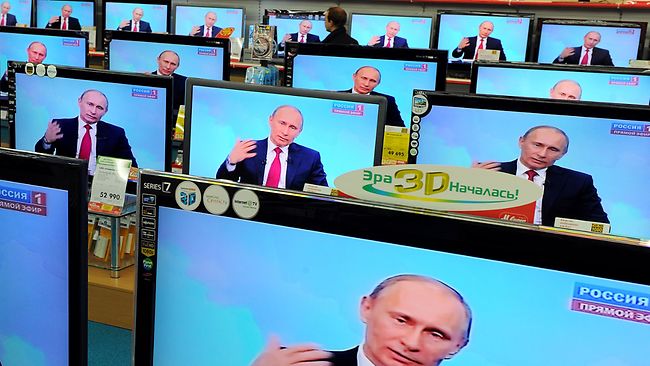
“These New Age autocrats, he says, can no longer rule by brute force. Instead, they use ‘more subtle forms of coercion’ while investing heavily in maintaining the appearance of rights, law, and elections, and keeping their borders open so that opponents can always leave. ‘Modern dictators,’ he contends, ‘understand it is better to appear to win a contested election than to openly steal it.’ He points to Chavez, who altered legislation to boost his chances of electoral victory, then, after winning, used his poll victory to eviscerate opponents—never accepting the idea, crucial to democracy, of legitimate differences between parties. Then there’s Putin, who maintains the façade of a constitution while working in what Dobson calls the ‘seams of the political system’ to centralize power, using proxies to take over leading companies and key media outlets. Putin has created government-dominated NGOs that mimic free speech but make it harder for activists to get their voices heard.

Today’s smartest dictators, such as the Chinese Communist Party, adopt many of the technocratic methods of the most successful modern businesses, justifying their rule with their economic success. The CCP operates by consensus at the highest levels, while tailoring the government, at local levels, to enhance the delivery of services without actually opening up the political system. The party also normally keeps its internal debates internal, presenting a uniform face to citizens.”
Tags: , , ,

Before we realized that crowds might have wisdom, demographers worried mightily about overpopulation. The recent renaissance in demography has seen a shift in focus. From the Economist:

The main concern of demographers in their heyday (the 1970s and 1980s) was high fertility and the total number of the world’s people. This was the period of The Population Bomb, a bestseller by a biologist, Paul Ehrlich, which argued that the world could not feed itself. An international family-planning movement sprang up. Top-down programmes attempted to control the total size of national populations. China’s one-child policy is the best known and most extreme of these.

Now though, as John May, formerly of the World Bank and now Georgetown University, shows in World Population Policies, the focus of demographers has switched from the overall size of populations to their composition—that is, to age groups and their relation to one another. Instead of high fertility rates, demographers study ageing, dependency ratios, the ‘demographic dividend’ (a bulge of working-age adults) and distorted sex ratios, which result when millions of parents choose the sex of their children, often by aborting baby daughters.

The result, suggests Mr May, is that demography is more complex, if less dramatic, than it used to be.”

••••••••••

A 1972 UN film about threats to our environment, which features Paul Ehrlich. Also on hand: Indira Gandhi, Kurt Waldheim, Robert S. McNamara, etc.

Tags:

To H.G. Wells, Utopia wasn’t a perfectly pastoral or wholesome place, but one that was wise enough to separate the industrial and the green and adult entertainment from family fare. An excerpt from “A Modern Utopia,” 1905:

“But in Utopia there will be wide stretches of cheerless or unhealthy or toilsome or dangerous land with never a household; there will be regions of mining and smelting, black with the smoke of furnaces and gashed and desolated by mines, with a sort of weird inhospitable grandeur of industrial desolation, and the men will come thither and work for a spell and return to civilisation again, washing and changing their attire in the swift gliding train. And by way of compensation there will be beautiful regions of the earth specially set apart and favoured for children; in them the presence of children will remit taxation, while in other less wholesome places the presence of children will be taxed.”

Tags:

One more post about Jacqueline Susann and then I promise I’ll stop. This 1967 appearance by Susann on What’s My Line? isn’t particularly riveting, even though it was made in the wake of her jaw-dropping success as a debut novelist with Valley of the Dolls. What’s amusing is the cultural earthquake quietly occurring during this short segment. This brainy program had just been cancelled, a victim of a country’s changing mores. Susann was representative of a new America, a post-Pill society, one that was leaving literate panel shows in its wake. The “barbarians” had crashed the gate. It might seem like the trashy author’s rise and the classy show’s demise was a sad commentary on our nation, but it was really a sign of an improving America, one that was more open, more democratic, more inclusive and more honest. Sometimes I get weary of our in-your-face culture, but I’ll always opt for oversharing instead of no sharing, for too much information rather than not enough.

Tags:

The opening of a 1994 New Scientist interview with well-compensated prognosticator Alvin Toffler, still best known for his incredibly popular 1970 book, Future Shock:

What led you to write Future Shock? While covering Congress, it occurred to us that big technological and social changes were occurring in the United States, but that the political system seemed totally blind to their existence. Between 1955 and 1960, the birth control pill was introduced, television became universalized [sic], commercial jet travel came into being and a whole raft of other technological events occurred. Having spent several years watching the political process, we came away feeling that 99 per cent of what politicians do is keep systems running that were laid in place by previous generations of politicians.

Our ideas came together in 1965 in an article called ‘The future as a way of life,’ which argued that change was going to accelerate and that the speed of change could induce disorientation in lots of people. We coined the phrase ‘future shock’ as an analogy to the concept of culture shock. With future shock you stay in one place but your own culture changes so rapidly that it has the same disorienting effect as going to another culture.

Were you surprised by the reaction to the book? I think that it touched a nerve. Remember we were coming out of the Sixties, countries were being torn apart, change was almost out of control for a period. It touched a nerve, it gave a language, it introduced a metaphor that people could use to describe their own experience.

Looking back to 1970 when the book came out, how would you have done it differently? The great weakness was the book wasn’t radical enough, although everybody said it was a very radical book. The reason for that is that we introduced the concept of the general crisis of industrialism. Marx had talked about the general crisis of capitalism and the argument of the left was always that capitalism would collapse upon itself and socialism would triumph. We argued that both capitalism and socialism would collapse eventually because both were the offspring of industrial civilization, and that we were on the edge of a new way of life, a new civilization. Had we understood more deeply the consequences of that idea we would not have accepted as naively as we did the forecasts of the economists. If you think that economists are arrogant now, in the Sixties they were really riding high. They claimed we would never have another recession, and the reason was that we understand how the economy works, and ‘all we have to do is fine-tune it” as one economist told us. We were young and naive and we bought that notion. We should have anticipated that the revolution we were talking about would have hit the economy in a much deeper way.”

See also:

Tags:

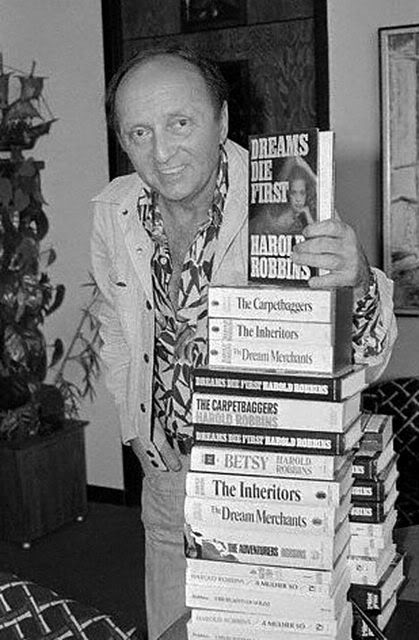
All this stuff about Jacqueline Susann got me thinking about another author of popular trash from before my time, Harold Robbins, who was the best-selling novelist in the world about 40 years ago, specializing in literature that was most suitable for the beach or masturbation, though preferably not both at the same time. From 1971, a really fun portrait of the wet-dream merchant.

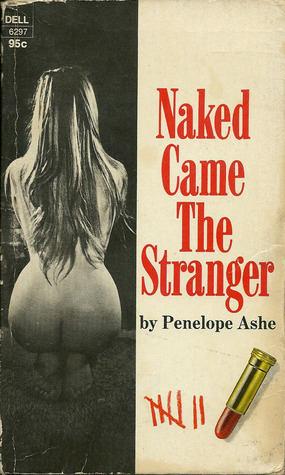
Mike McGrady, an ink-stained wretch from an era when it seemed like newsprint would flow forever, just passed away. More than his journalistic career, McGrady, to his horror, was best known for Naked Came the Stranger, a trashy 1969 hoax novel that he co-wrote with a couple dozen other Newsday reporters and editors. Meant as a satire of Jacqueline Susann and similar popular writers of the day, it was initially published earnestly under a nom de plume and sold quite well. From Margalit Fox’s New York Times obituary of the late scribe:

“Intended to be a work of no redeeming social value and even less literary value, Naked Came the Stranger by all appearances succeeded estimably on both counts.

Originally issued by Lyle Stuart, an independent publisher known for subversive titles, the novel was a no-holds-barred chronicle of a suburban woman’s sexual liaisons, with each chapter recounting a different escapade:

She has sex with a mobster and sex with a rabbi. She has sex with a hippie and sex with at least one accountant. There is a scene involving a tollbooth, another involving ice cubes and still another featuring a Shetland pony.

The book’s cover — a nude woman seen from behind — left little to the imagination, as, in its way, did its prose:

‘Ernie found what Cervantes and Milton had only sought. He thought the fillings in his teeth would melt.’

The purported author was Penelope Ashe, who as the jacket copy told it was a ‘demure Long Island housewife.’ In reality, Mr. McGrady had dreamed up the book as ironic commentary on the public’s appetite for Jacqueline Susann and her ilk.”

••••••••••

A 1975 adaptation from the director of The Opening of Misty Beethoven:

Tags: , , ,

Priggish Canadian interviewer Barbara Frum and pills-and-vulvae novelist Jacqueline Susann insult and irritate each other during the mid-1960s.

Tags: , ,

It wasn’t her most unusual assignment, but Oriana Fallaci spent a year focused on NASA in the mid-60s when the space race was in high gear. The result was If the Sun Dies, a book-length mélange of reportage and personal impressions about humans hurtling into the future. Fallaci was known for her ferocious Q&A interviews, but she was also a brilliant prose writer. A bigoted ass at times, but really brilliant. Here are the first three paragraphs from her book about life among the boldest rocketeers the world has ever known, in which she travels to Los Angeles to do research and finds the city to be odd and denatured:

“You couldn’t see the stone, so thick and lush was the grass. I tripped over it and fell flat, alongside the road. Nobody came to help me. But then who could? There was nobody walking along the road, nobody along the roads of the whole city. Nobody existed, nobody with feet and legs, with a body on his legs, a head on his body. Only automobiles existed, sliding by, smooth, controlled, always at the same speed, at the same distance, never a man inside, nor a woman. There were human forms behind the steering wheels, yes, but so straight they were, and still, that they could not be men or women; they were automatons, robots. Isn’t modern technology perfectly able to make robots identical to ourselves? Isn’t the first rule for robots ‘remember that you must not interfere with the actions of humans unless they ask you to’? And was I asking anyone to intervene? On the contrary. Stretched out on the grass by the roadside, my cheeks burning with embarrassment, I was only hoping that they wouldn’t notice me and laugh at me. And the robots obeyed, sliding by, smooth and controlled, always at the same speed, at the same distance, not even asking their computers whether the woman lying there was dead or alive and if she was alive why she wasn’t getting up. I wasn’t getting up because I had noticed something absurd. The grass didn’t smell like grass.

I stuck my nose into it and sniffed. No, it didn’t smell like grass, it had no smell at all. I grasped a blade and tugged. No, it didn’t come out and it didn’t break. I scrabbled underneath with my fingernail, looking for a speck of earth. No, you couldn’t even get hold of a speck of earth. How odd. Yes, it was the color of earth, it had the consistency of earth. And the grass that was planted in it was the same color as grass, it had the consistency of supple fresh grass, even watered with an ingenious sprinkler system to keep it green and make it grow; my God, I couldn’t be delirious, dreaming, the grass was grass, yes, of course it…Was it grass? I sniffed it again. Again I grasped a blade between my thumb and forefinger and tugged. Again I scrabbled underneath with my fingernail, looking for a speck of earth, and like a dagger-thrust in my brain the doubt became certainty. The grass was plastic. Yes, and perhaps all the grass I’d seen there, the grass plots along the avenues, along the highways, in front of the houses, the churches, the schools, looked after by gardeners, watered, treated like real grass, grass that grows and dies, was all plastic. A huge shroud of plastic, of grass that never grows or dies, a mockery.

I jumped up as if I’d been stung by a thousand wasps, hurried back to my hotel, flung open my door of my suite and almost fell over the cactus plant that adorned the living room. It was a big cactus, green, lush, bristling with thorns, and on top there was a flower. I felt the flower, I bent it and twisted it. It remained intact. I poked my finger between the thorns, squeezed the fleshy part, hoping for a drop of liquid. I felt only the sponginess of rubber. I squeezed the thorns with both hands, desperately praying that they would prick me, that they would tell me I’d made a mistake. They only tickled me gently, the thorns were made of aluminum and rounded points. And the plant in the corridor? False, too. And the hedge in the garden? False of course. And probably those trees too around which there were never any flies or birds, every blade of grass, every branch, every leaf was false in this city where nothing green sprouted and grew and died. The daisies, the azaleas, the rhododendrons, the rose in that vase…The vase was on the TV and I approached it without hope. I gently removed a rose, raised it to my face, let it drop, and the rose went crack; it shattered on the floor in a thousand splinters of glass. On the floor a cold frost, a spark of light remained. I had reached Los Angeles, first stage of my journey into the future and into myself.”

Tags:

From Evgeny Morozov on the Browser, a passage about Lewis Mumford’s feelings about technology, especially the invention of clocks:

“Technology became something of a subject, I guess, in the late 1860s/70s but it only really emerged as a field for academic study in the late 1930s. The most influential early book aimed at a popular audience was Technics and Civilization by Lewis Mumford, published in 1934. It touched the worlds of history and economics and, to an extent, political philosophy. Mumford tried to look back as far as he could and study how human societies incorporated various technologies, but also how they made choices about which technologies to take on, how to regulate them, and how those decisions ended up shaping societies themselves.

The most famous example he evoked was the invention and wide acceptance of the clock. Mumford thought that the clock was one of the technologies that allowed capitalism to emerge because it provided for synchronisation and for people to cooperate. But I think this was also one of the first texts that critically engaged with the potentially negative side effects of technology. Mumford actually looked at how some technologies were authoritarian – that was his term – how some led to centralisation and establishment of control over human subjects and how some of them were driven by a completely different ethos.

Tags: ,

Charles Fishman, author of The Big Thirst, nominates Las Vegas as the most water savvy area of the United States. It seems counterintuitive that a piece of desert crammed with swimming pools and gargantuan fountains could be considered water smart, but the city consistently makes it work despite meagre natural resources. An excerpt from his book at Marketplace:

“There is no two-mile stretch of ground anywhere in the United States that has such a density of water features, water attractions, and sheer water exuberance. Las Vegas, which can invest something as routine as breakfast with outlandish extravagance, has taken our most unassuming substance and unleashed it as the embodiment of glamour, mystery, power, and allure. In the way that only Las Vegas can, it has created a whole new category–ostentatious water.

The Las Vegas Strip is a demonstration of water imagination, of water mastery, and also of absolute water confidence.

It’s all the more remarkable because Las Vegas is the driest city in the United States. Of the 280 cities in the United States with at least 100,000 people, Las Vegas is No. 280 in precipitation and No. 280 in number of days each year that it rains. Las Vegas gets 4.49 inches of precipitation a year. And it rains or snows, on average, just nineteen days a year.

A metropolis with 2 million residents and 36 million visitors a year, Las Vegas gets ninety percent of its water from a single source, Lake Mead, the spectacular, man-made reservoir created on the Colorado River by Hoover Dam. When Lake Mead is full, it holds a sixty-year supply of water for Las Vegas.

But Las Vegas is legally allowed to take only a tiny sliver of Lake Mead water — 300,000 acre-feet a year, 98 billion gallons. All the water Las Vegas is allowed lowers the lake between two and three feet. Las Vegas’s allocation is about 4 percent of what everybody else gets to take from Lake Mead — 96 percent of the water people use from Lake Mead goes to either California or Arizona. And Las Vegas’s allocation is fixed in law, just as the allocations of California and Arizona are fixed — so the amount of water Las Vegas has access to hasn’t changed even as Las Vegas’s population has doubled, and doubled again, even as the city has added 100,000 new hotel rooms, along with fountains and waterfalls, swimming pools and shark tanks.”

••••••••••

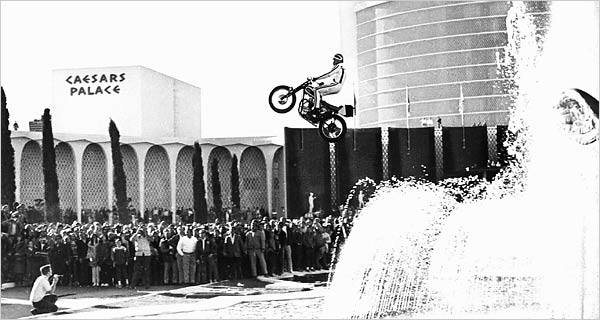
Evel Knievel’s failed attempt at jumping the fountains at Caesars Palace, 1967:

Tags: ,

In his new Slate article, “What Will Become of the Paper Book?” Michael Argesta predicts that while printed books will soon be a thing of the past for the masses, specialized, elaborately designed volumes will continue to be published for those with disposable income. An excerpt:

“Who will buy these new, well-made paper books? One likely result of the transition to e-books is that paper book culture will move further out of reach for those without disposable income. Debt-ridden college students, underemployed autodidacts, and the everyday mass of bargain-hunters will find better deals on the digital side of the divide. (Netflix for books, anyone?)

As paper books become more unusual, some will continue to buy them as collectors’ items, others for the superior sensory experience they afford. There’s reason to think this is happening already: Carl Jung’s Red Book, a facsimile edition featuring hand-painted text and illustrations, sold well in America in 2010 despite its $195 price tag. When readers believe that a book is special in itself, as an object, they can be persuaded to pay more.

Bookshelves will survive in the homes of serious digital-age readers, but their contents will be much more judiciously curated. The next generation of paper books will likely rival the art hanging beside them on the walls for beauty, expense, and ‘aura’—for better or for worse.”

Tags:

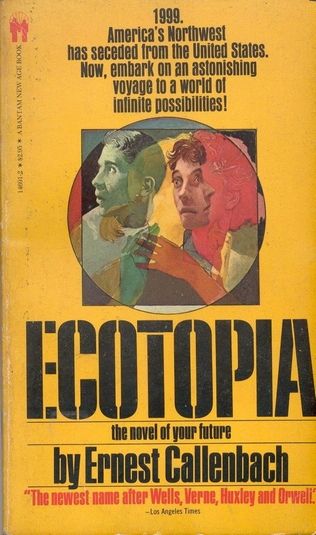
Mark Bittman at the New York Times mentions Ernest Callenbach’s 1975 futuristic novel, Ecotopia, in his most recent column. Callenbach, who also founded Film Quarterly, recently passed away. The book fantasizes that Northern California, Washington and Oregon secede to create a green paradise in which fossil fuels are banned. I’ve always meant to read it but never have. I must correct this. From a TomDispatch post about the late writer:

Callenbach once called that book ‘my bet with the future,’ and in publishing terms it would prove a pure winner. To date it has sold nearly a million copies and been translated into many languages. On second look, it proved to be a book not only ahead of its time but (sadly) of ours as well. For me, it was a unique rereading experience, in part because every page of that original edition came off in my hands as I turned it. How appropriate to finish Ecotopia with a loose-leaf pile of paper in a New York City where paper can now be recycled and so returned to the elements.

Callenbach would have appreciated that. After all, his novel, about how Washington, Oregon, and Northern California seceded from the union in 1979 in the midst of a terrible economic crisis, creating an environmentally sound, stable-state, eco-sustainable country, hasn’t stumbled at all. It’s we who have stumbled.  His vision of a land that banned the internal combustion engine and the car culture that went with it, turned in oil for solar power (and other inventive forms of alternative energy), recycled everything, grew its food locally and cleanly, and in the process created clean skies, rivers, and forests (as well as a host of new relationships, political, social, and sexual) remains amazingly lively, and somehow almost imaginable — an approximation, that is, of the country we don’t have but should or even could have.

Callenbach’s imagination was prodigious. Back in 1975, he conjured up something like C-SPAN and something like the cell phone, among many ingenious inventions on the page. Ecotopia remains a thoroughly winning book and a remarkable feat of the imagination, even if, in the present American context, the author also dreamed of certain things that do now seem painfully utopian, like a society with relative income equality.”

••••••••••

Callenbach discussing Ecotopia in 1982:

Tags: ,

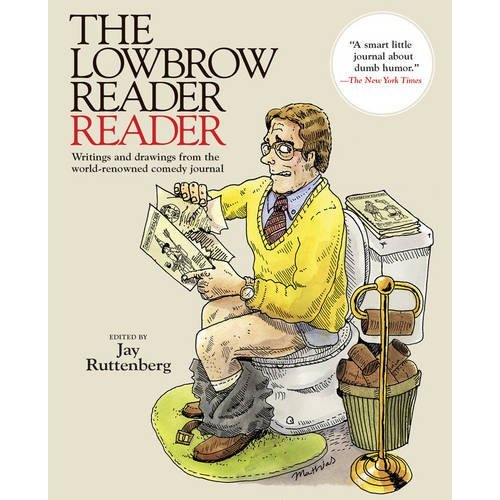
If the New Yorker and Mad magazine had really bad and degrading sex, the resulting offspring might look a lot like the Lowbrow Reader. Edited by Jay Ruttenberg, who’s apparently unaware of the existence of computers, the Lowbrow Reader is a witty, wise and wonderful zine about comedy. (Yes, a printed zine in 2012!) The publication’s best writing and art from the past decade have been collected in The Lowbrow Reader Reader, a handsome bound edition. (Yes, a physical book in 2012!) Amazon.com normally doesn’t sell books, but this is such a special volume that Jeff Bezos made an exception. You can order it here beginning May 22(Or you can pre-order it now directly from the publisher.) You’ll laugh your ass off while reading this book, and within days it will make a really crappy Frisbee.

An example of what you can expect from the Lowbrow Reader Reader is a piece by complete wiseass Margeaux Watson in which she recalls her visit to the Brooklyn home of the late, great rap star Ol’ Dirty Bastard. An excerpt:

"It was the smell of Newport cigarettes, feet, ass, food and unbrushed teeth. Just all-around funk. A bouquet of stink.”

Lowbrow Reader: You’re probably one of the few women who has been inside Ol’ Dirty Bastard’s house and hasn’t returned with a venereal disease.

Margeaux Watson: Or a child.

Lowbrow Reader: Where does he live?

Margeaux Watson: He lives in Brooklyn. It’s an odd location–it’s not ghetto-ish, but it’s also not where you’d expect a star to live. In Brooklyn, most stars live in Brooklyn Heights, Williamsburg or Fort Greene. But he’s in more of a working-class, family neighborhood. A lot of brownstones and row houses; it’s not near a subway or an urban center.

Lowbrow Reader: What’s his house like?

Margeaux Watson: He lives in a brownstone. It’s been renovated, so it’s modern on the inside. It’s a narrow apartment, with white walls and hardwood floors. It’s surprisingly well-kept and pretty neat–except for its smell. It smelled bad.

Lowbrow Reader: Can you describe the odor?

Margeaux Watson: It was the smell of Newport cigarettes, feet, ass, food and unbrushed teeth. Just all-around funk. A bouquet of stink.”

Margeaux Watson: He lives in a brownstone. It’s been renovated, so it’s modern on the inside. It’s a narrow apartment, with white walls and hardwood floors. It’s surprisingly well-kept and pretty neat–except for its smell. It smelled bad.

Lowbrow Reader: Can you describe the odor?

Margeaux Watson: It was the smell of Newport cigarettes, feet, ass, food and unbrushed teeth. Just all-around funk. A bouquet of stink.”•

Jay Ruttenberg: Waiting for Irwin Corey to pass so that they'll be an opening for him.

Professor Irwin Corey (1914- )

Tags:

From Jonah Lehrer’s smart new Wired interview with fellow neuroscientist Eric Kandel, a passage about the diffuse influence of 19th-century pathologist Carl von Rokitansky;

Lehrer: One of the heroes in The Age of Insight is Carl von Rokitansky, the founder of the Second Vienna School of Medicine. You argue that he inspired, at least in part, the work of modernist artists such as Gustav Klimt, Oskar Kokoschka and Egon Schiele. How did he exert this influence?

Kandel: Rokitansky is the founder of what is now considered the second Vienna School of Medicine, which began around 1846. He was the head pathologist of the Vienna General Hospital, called the Allgemeines Krankenhaus, and then became Dean of the Medical School at the University of Vienna. Rokitansky contributed importantly – I would say, seminally – to the development of modern scientific medicine. He realized that when one examines the patient, one essentially relies on two pieces of information: the patient’s history, and an examination of the patient – listening to the heart and the chest with a stethoscope. But in the 1840s, one did not have any deep insight into what the sounds of the heart meant, for example. No one knew what we now know to be the difference between the sound of a normal valve opening and closing, and the sound of a diseased valve opening and closing. So what Rokitansky realized was that one needed to correlate what one sees of the patient at the bedside, with the examination of the patient’s body at autopsy. Fortunately, Vienna was an absolutely ideal place to do this.

The Vienna General Hospital had two rules that were unique in Europe. One is – every patient who died was autopsied, and two – all the autopsies were done by one person: Rokitansky, the head of Pathology. In other hospitals in Europe, the autopsy was done by whichever physician was is in charge of the patient. So Rokitansky had a huge amount of clinical material to work with. He collaborated with an outstanding clinician, Josef Skoda, who took very careful notes both of what the patient told him, and of what he found on physical examination, and he correlated that with Rokitansky’s autopsy. This allowed Skoda and Rokistansky to define what various heart sounds meant in normal physiology and in diseases of the valve. It also led Rokitansky to enunciate a major principle that had a huge influence – not only on medicine – but also on the cultural community at large, because Rokitansky was not simply a pathologist and Dean of the School of Medicine; he was elected to Parliament, became a spokesman of science, and had an enormous influence on popular culture. He said, ‘The truth is often hidden below the surface. One has to go deep below the skin to find it.’ This Rokitanskian principle had an enormous impact on Freud and on Schnitzler, who were students at the Vienna School of Medicine. In fact, Freud was a student in the last several years of Rokitansky’s Deanship. Rokitansky attended the first two scientific talks that Freud gave, and Freud attended Rokitansky’s funeral. He clearly had a significant impact on Freud’s thinking.” (Thanks Browser.)

Tags: , ,

From Culture and Value, Ludwig Wittgenstein on technology:

The truly apocalyptic view of the world is that things do not repeat themselves. It is not e.g. absurd to believe that the scientific & technological age is the beginning of the end for humanity, that the idea of Great Progress is a bedazzlement, along with the idea that the truth will ultimately be known; that there is nothing good or desirable about scientific knowledge & that humanity, in seeking it, is falling into a trap. It is by no means clear that this is not how things are.•

___________________________

Karl Johnson as the philosopher in Derek Jarman’s 1993 biopic:

Tags: , ,

A book that was seemingly written specifically for me (and anyone else who spends way too much time thinking about airports), Aerotropolis: The Way We’ll Live Next, by John Kasarda and Greg Lindsay, predicts that airport-centric insta-cities will be the next wave. Probably not going to happen outside of a few autocratic states, but it’s still a fun thought project. From the introduction of an interview with Lindsay at BLDG:

“If Atlanta’s Hartsfield-Jackson International Airport were to become its own country, its annual workforce and user base would make it ‘the twelfth most populous nation on Earth,’ as John Kasarda and Greg Lindsay explain in Aerotropolis; even today, it is the largest employer in the state of Georgia. 

As J.G. Ballard once wrote, and as is quoted on the frontispiece of Aerotropolis:

I suspect that the airport will be the true city of the 21st century. The great airports are already the suburbs of an invisible world capital, a virtual metropolis whose fauborgs are named Heathrow, Kennedy, Charles de Gaulle, Nagoya, a centripetal city whose population forever circles its notional center, and will never need to gain access to its dark heart.

The remarkable claims of John Kasarda’s and Greg Lindsay’s new book are made evident by its subtitle: the aerotropolis, or airport-city, is nothing less than ‘the way we’ll live next.’ It is a new kind of human settlement, they suggest, one that ‘represents the logic of globalization made flesh in the form of cities.’ Through a kind of spatial transubstantiation, the aerotropolis turns abstract economic flows—disembodied currents of raw capital—into the shining city form of tomorrow.

The world of the aerotropolis is a world of instant cities—urbanization-on-demand—where nations like China and Saudi Arabia can simply ‘roll out cities’ one after the other. ‘Each will be built faster, better, and more cheaply than the ones that came before,’ Aerotropolis suggests: whole cities created by the warehousing demands of international shipping firms. In fact, they are “cities that shipping and handling built,’ Lindsay and Kasarda quip—urbanism in the age of Amazon Prime.” 

_________________

Tags: , ,

James Day talking to sci-fi legend Ray Bradbury in Los Angeles, 1974.

Tags: ,

Salon has a provocative excerpt from Dick Teresi’s new book, The Undead, which examines the difficulty of establishing when life has truly ceased, an issue that will only become infinitely thornier in the coming decades. The opening of “The Evolution of Death“:

“Michael DeVita of the University of Pittsburgh recalls making the rounds at a student teaching hospital with his interns in tow when he remembered that he had a patient upstairs who was near death. He sent a few of the young doctors ‘to check on Mr. Smith’ in Room 301 and to report back on whether he was dead yet. DeVita continued rounds with the remainder of the interns, but after some time had passed he wondered what happened to his emissaries of death. Trotting up to Mr. Smith’s room, he found them all paging through ‘The Washington Manual,’ the traditional handbook given to interns. But there is nothing in the manual that tells new doctors how to determine which patients are alive and which are dead.

Most of us would agree that King Tut and the other mummified ancient Egyptians are dead, and that you and I are alive. Somewhere in between these two states lies the moment of death. But where is that? The old standby — and not such a bad standard — is the stopping of the heart. But the stopping of a heart is anything but irreversible. We’ve seen hearts start up again on their own inside the body, outside the body, even in someone else’s body. Christian Barnard was the first to show us that a heart could stop in one body and be fired up in another. Due to the mountain of evidence to the contrary, it is comical to consider that “brain death” marks the moment of legal death in all fifty states.

The search for the moment of death continues, though hampered by the considerable legal apparatus that insists that it has already been found.”

••••••••••

Bernie, reborn, doing conga:

Read also:

Tags: ,

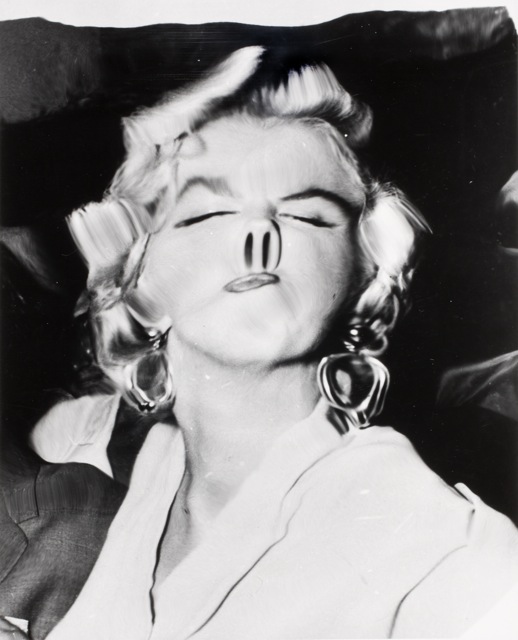
"Violent images are used to illustrate commonplace events." (Image by Weegee.)

Even in the 1930s, Nathanael West could see that media was becoming mass, that the Horatio Alger myth, a cruel hoax that pretended the exception was the rule, would soon be oppressively disseminated to all of America–to all of the world. FromHe Foresaw History,” David Ulin’s 1997 Los Angeles Times article about West’s prescient prose:

“For West, the very substance of modern life exists in the place where the medium and the audience connect. His aesthetic was firmly rooted in the idea of mass communication, which by the 1930s, he recognized, had begun to change American culture in unpredictable ways. It’s one of the things that sets him apart from his contemporaries, and, as such, may have contributed to his marginal status.

‘In the 1930s,’ Veitch suggests, ‘American literature was dominated by icons of the left, like Ma Joad, but West wrote against that; he was a writer on the left who didn’t write about leftist themes. Instead, he wrote about consumerism. He wrote about the America that was emerging, the America of mass culture. At a time when the left had disdain for that, West homed in on it, using cliches, cartoons, comics, Tin Pan Alley songs. Miss Lonelyhearts is a slap in the face to the left’s fascination with folk culture, as is The Day of the Locust.”

His take on popular culture emerges not just in the substance of his writing, but in its style. Miss Lonelyhearts, for instance, was conceived as a ‘novel in the form of a comic strip’; ‘I abandoned this idea,’ West wrote in 1933, ‘but retained some of the comic strip technique: Each chapter, instead of going forward in time, also goes backward, forward, up and down in space like a picture. Violent images are used to illustrate commonplace events.’

Writing in a voice that is deliberately flat, West portrays a newspaper advice columnist, caught between the cynicism of his editor, Shrike, and the despair of his readers, who, in a society where God has been replaced by the manufactured images of mass imagination, have nowhere else to turn for meaning. As Shrike declares, ‘The Miss Lonelyhearts are the priests of 20th century America.’ Miss Lonelyhearts becomes a counterpart for Christ, and his column a modern source of communion.

The Day of the Locust focuses the same perspective on the desperate dreams of Hollywood. And A Cool Million--a broad farce that, in tracing the disasters that befall a young man named Lemuel Pitkin when he sets out to seek his fortune, turns the Horatio Alger formula on its ear–touches on this issue. What these books have in common is a sense of mass illusion, of image somehow substituted for reality until there is little difference between the two.

‘West’s subject,’ says Library of America Publisher Max Rudin, ‘is the selling of mass fantasy, the American business of dreams.’

Elaborates Bercovitch: “There’s a sense in West of public life having a stage set quality, of the marketplace as a giant betrayal not just of America but of all human dreams. Yet while he understands this, he remains susceptible to the pathos of human need.'”

••••••••••

“Isn’t it romantic?”:

Tags: ,

Science has proven that reading novels, unsurprisingly, makes us more empathetic people, but it’s a little startling that the brain apparently makes no distinction between actual experience and the experiences we read about in a novel. From Annie Murphy Paul in the NYT:

“The brain, it seems, does not make much of a distinction between reading about an experience and encountering it in real life; in each case, the same neurological regions are stimulated. Keith Oatley, an emeritus professor of cognitive psychology at the University of Toronto (and a published novelist), has proposed that reading produces a vivid simulation of reality, one that ‘runs on minds of readers just as computer simulations run on computers.’ Fiction — with its redolent details, imaginative metaphors and attentive descriptions of people and their actions — offers an especially rich replica. Indeed, in one respect novels go beyond simulating reality to give readers an experience unavailable off the page: the opportunity to enter fully into other people’s thoughts and feelings.”

••••••••

Novelist Henry Miller takes a swim:

Tags: ,

Collecting will change over time but never vanish. People, to varying degrees, need to own stuff. But technology has had a profound effect on the nature of collecting, reducing its tactile nature, making trash of artifacts. From USA Today:

“Spencer Haley, 33, who works at fabled Powell’s Books in Portland, Ore., once proudly displayed 3,000 hardcovers in his home. But since a Kindle joined the family, he and his wife are down to a few hundred. ‘As long as the content hits my visual cortex, it doesn’t matter what form it comes in,’ he says.

For Haley, collecting still means adding to those prized first-editions on his shelves. But it also refers to the list of e-books on his tablet, the book reviews he has amassed online and the friends who follow his recommendations via social networking.

‘I missed flipping pages for about a day,’ Haley says. ‘I don’t have CD or DVD racks anymore. Having things stored in the cloud just fits my lifestyle.'”

Tags:

Self-help books are usually so much slop, but I’m not opposed to them provided they’re not injurious–maybe some morsel of enlightenment will reach someone. Perhaps it will be a lesson that seems obvious to some, but different people have different blind spots. And before the Internet and its overflow of information recently arrived, there was a real dearth of accessible knowledge.

Cosmetic surgeon/self-help guru Maxwell Maltz’s 1960 book, Psycho-Cybernetics: A New Way To Get More Living Out of Life, was power-of-positive-thinking hooey, although it was important that the doctor stressed that getting noses altered or butts lifted wouldn’t necessarily improve anyone’s self-image.

An ur-infomercial for Psycho-Cybernetics:

Tags:

I was thinking of Doris Lessing’s short novel about a ghastly offspring, The Fifth Child, for no real reason yesterday, so “Was Frankenstein Really About Childbirth?,” Ruth Franklin’s excellent New Republic article, seems particularly resonant to me today. The opening:

“I have no doubt of seeing the animal today,” Mary Wollstonecraft wrote hastily to her husband, William Godwin, on August 30, 1797, as she waited for the midwife who would help her deliver the couple’s first child. The “animal” was Mary Wollstonecraft Godwin, who would grow up to be Mary Shelley, wife of the Romantic poet Percy Bysshe Shelley and author of Frankenstein, one of the most enduring and influential novels of the nineteenth century. But Wollstonecraft would not live to see her daughter’s fame: She died of an infection days after giving birth.

The last notes that Wollstonecraft wrote to Godwin are included in the exhibition “Shelley’s Ghost: The Afterlife of a Poet,” which began last year at the Bodleian Library in Oxford and has now come to the New York Public Library. On display are numerous artifacts both personal and literary from the lives of the Shelleys, including manuscript pages from the notebook in which Mary wrote Frankenstein (with editing in the margins by her husband), which have never before been shown publicly in the United States. But it was Wollstonecraft’s scribbled note, in which she referred to her baby as “the animal”— the same word that the scientist in Frankenstein would use to describe his own notorious creation—that gave me pause. Could the novel—commonly understood as a fable of masculine reproduction, in which a man creates life asexually—also be a story about pregnancy?•

Tags: , ,

Harpo Marx, who was plugging his new book, appeared on I’ve Got a Secret, 1961. Johnny Carson on the panel.

From the 1983 New York Times obituary of Mildred Dilling, who taught Harpo how to play his musical instrument and was profiled in the New Yorker in 1940 (subscription required):

Mildred Dilling, a concert harpist who performed for five Presidents, taught Harpo Marx and owned the world’s largest private collection of harps, died in her Manhattan home last Thursday. She was 88 years old.

Miss Dilling performed throughout North and South America, the Orient and Europe. At the peak of her career, she gave 85 concerts and traveled 30,000 miles a year. In her early 80’s, Miss Dilling was still performing 10 concerts a year. She also conducted harp workshops at colleges and universities, giving master classes at the University of California, Los Angeles.”

Tags: , ,

« Older entries § Newer entries »