Yesterday I mentioned the way the future of print media was imagined in Ernest Callenbach’s fun 1974 speculative novel, Ecotopia. The author also broached the idea of environmentally friendly product packaging, conjuring a type of high-tech plastic that could “expire” (or biodegrade) the way its perishable contents would. In that vein, designer Aaron Mickelson has invented the Disappearing Package. From Tim Maly at Wired:
“Designer Aaron Mickelson wants to solve the problem of excess packaging, by creating products that have no packaging at all.
Every year, Americans generate a lot of solid waste. In 2010, 250 million tons, according to the EPA. A full 30 percent of that (about 76 million tons) comes from packaging — it’s the biggest culprit.
As awareness grows about this problem, many companies and designers are looking for solutions to green their packaging by either making it more recyclable, or reducing the amount. Mickelson wants to take that initiative all the way to its furthest extent and eliminate packaging waste entirely. His Pratt University master’s thesis, called The Disappearing Package, is a proposal for how that might happen. ‘On a whim, I started thinking about applying the functions of packaging to the product itself,’ says Mickelson. ‘I was immediately struck by the green potential for an idea like this, if it could be applied across several product types.'”
Ernest Callenbach’s speculative 1974 novel, Ecotopia, is a fun read if you get the chance. It imagines a future world in which much of the American Northwest secedes from the union and creates an environmentally conscious, car-free nation, though one that doesn’t shy from the powers of technology. The author tries to pinpoint what printed media would become in this brave new world, rightly envisioning computer connectivity and self-publishing book machines, though not the Internet’s paperless reality. Callenbach also didn’t get caught up in the type of thorny copyright issues that face something like Google Books. An excerpt:
The newspapers, which are even smaller than our tabloids, are actually sold through electronic print-out terminals in the street kiosks, in libraries, and at other points; and these terminals are connected to central computer banks, whose facilities are ‘rented’ by other publications. Two print-out inks are available, by the way; one lasts indefinitely, the other fades away in a few weeks so the paper can be immediately re-used.
This system is integrated with book publishing as well. Although many popular books are printed normally, and sold in kiosks and bookstores, more specialized titles must be obtained through a special print-out connection. You look the book’s number up in the catalogue, punch the number on a juke-box-like keyboard, study the blurb, sample paragraphs, and price displayed on a videoscreen, and deposit the proper number of coins if you wish to buy a copy. In a few minutes a print-out of the volume appears in a slot. These terminals, I am told, are not much used by city dwellers, who prefer the more readable printed books; but they exist in every corner of the country and can thus be used by citizens in rural areas to procure copies of both currently popular and specialized books. All of the 60,000-odd books published in Ecotopia since independence are available, and about 50,000 earlier volumes. It is planned to increase this gradually to about 150,000. Special orders may also be placed, at higher costs, to scan and transmit any volume in the enormous national library at Berkeley.•
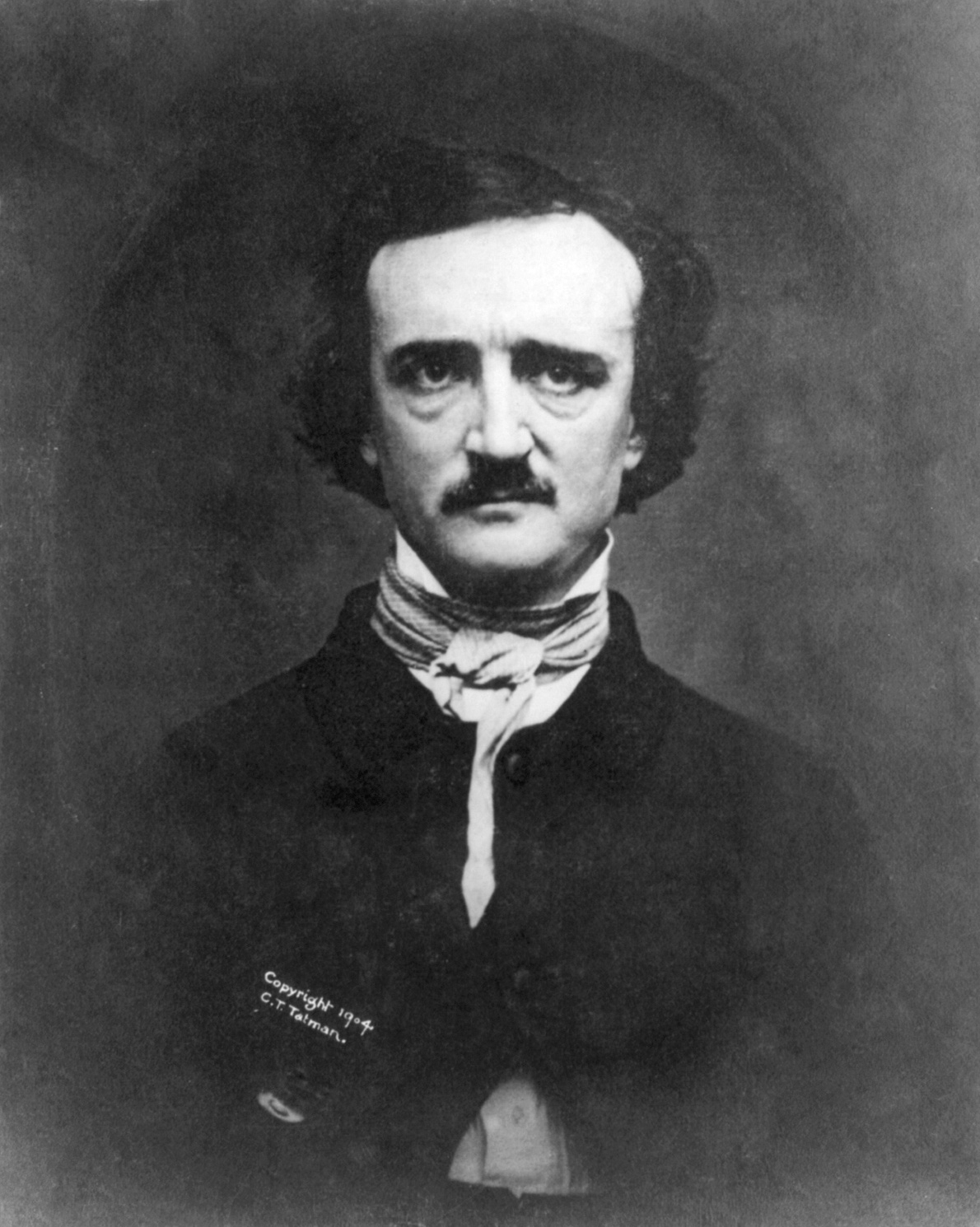
Fittingly, Edgar Allan Poe’s death was a mysterious one. The haunting author, the first American to try to make his living solely as a writer, was found disoriented, ranting and ragged on the streets of Baltimore on an autumn day in 1849. Nobody could tell what had put him in such a state at age 40, and he was taken to a hospital where he died a few days later. Was his puzzling death the result of drunkenness or rabies or murder? No one still knows for sure. Muddling matters even further was that Poe’s enemy, the editor Rufus Wilmot Griswold, somehow became the executor of his estate and did his best to sully the writer’s reputation, suggesting his end resulted from a dissolute lifestyle.
A January 20, 1907 New York Times article promised to make sense of the puzzle nearly six decades after the Poe’s tragic demise, asserting that scientific breakthroughs had made it possible to understand what killed the poet and short-story writer. The paper called on one of the finest alienists of the era to undertake the mission, though great clarity didn’t exactly result from the enterprise. The opening of “Edgar Allan Poe’s Tragic Death Explained“:
Edgar Allan Poe, the author of “The Raven,” “The Gold Bug,” and “The Murders of the Rue Morgue”–to name merely the most popular of his works–the writer whose power startled Dickens and excited the admiration of Irving, Lowell, and Browning, and whom Tennyson called “the most original genius that America has produced,” was found in the streets of Baltimore on Oct. 3, 1847 [sic], dazed, in rags, a physical and mental wreck. He lay for days unconscious or raving like a madman, then sank to death. His condition was ascribed to a debauch or drugs, or both, his pitiful end to mania-a-potu.
In his lifetime and since his death, Poe’s personal habits and the circumstance of his end have been the topics of endless discussion, in which vituperation has been mingled with vehement defense. He has been pictured as a transcendent genius and a drunkard, a polished gentleman and a surly misanthrope.
Within the last few weeks, the whole topic has been reopened by the approaching dedication of a monument to Poe in Richmond, Va. To the existing mass of contradictory testimony and discussion has been added much new material on the subject. Some of this, including letters, accounts of personal experiences, and the first article dealing with Poe’s case purely from the medical standpoint, has been published very recently. Taken as a whole, however, the evidence leaves the layman as much puzzled as ever regarding Poe’s complex personality and the circumstances of his death.
To arrive at the truth of the matter and to clear Poe’s name of injustice, if such existed, the New York Times has gathered all the evidence relating to the subject, particularly the letters and accounts recently printed, and submitted them to an alienist who ranks high as an authority on such matters in this city, and a physician whose practice particularly fits him to deal with the subject. This specialist undertook to review all of this evidence and to draw therefrom his conclusions regarding Poe as a man and his fatal malady.
The expert offered a surprising opinion. It contradicts the contention that Poe died of mania-a-potu. His death is traced to cerebral oedema, or “water on the brain” or “wet brain,” a disease unknown in the author’s day, but now well recognized with the advance of medical science. The more recent theories that Poe suffered from psychic epilepsy or paresis are discounted. Moreover the physician’s study of the case has resulted in the belief that the psychopathic phases of Poe’s case were so unusual that his mental responsibility is to be seriously questioned. His opinion follows:
“In reviewing the case of a man of undoubted genius, like Edgar Allan Poe, we must remember that Nature, while developing certain brain centres to an unusual degree, has neglected other mental attributes, so that they are far below those found in the average man. Thus Poe’s powers of imagination were abnormal at the expense of his will power, his ability to resist temptation, and his recuperation in case of misfortune. Such facts do not apply to men of exceptional abilities like Washington–abilities often confounded with genius–but to men of very exceptional gifts in only one direction. Lord Byron furnished an example of this condition. Its presence marked Poe as a weak man. His inherited characteristics were bad. His nervous system was constitutionally deranged; he was abnormal to a degree that leads one to seriously doubt his mental or moral responsibility. Add to these elements his reckless youth, the ease with which he was surrounded early in his life, and the years of poverty and misfortune which followed, and his tragic end is already foreshadowed.”•
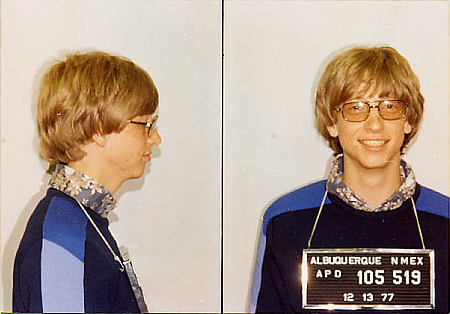
A few exchanges follow from the new Bill Gates Ask Me Anything on Reddit.
_______________________
Question:
Bill Gates:
Bill Gates:
Robots, pervasive screens, speech interaction will all change the way we look at “computers.” Once seeing, hearing, and reading (including handwriting) work very well you will interact in new ways.
_______________________
If Microsoft didn’t take off, what would you have done and be doing instead?
Bill Gates:
If the microprocessor had NOT come along I am not sure what I would have done. Maybe medicine or theoretical math but it is hard to say.
David Rorvik was a medical reporter for Time and the New York Times who dreamed of being another Asimov–a writer who could readily shift from nonfiction to fiction and back. In 1978, he seemingly combined both genres, writing the book In His Image: The Cloning of a Man, which purported to tell the true story of how he traded on his science journalism bona fides to organize the actual cloning of a 67-year-old man he called “Max.” It didn’t pass the smell test nor more rigorous medical probings, but for awhile Rorvik got the attention he desired. People magazine even felt the need to runan interview with Nobel Prize winner James D. Watson to dispel the sensation. An excerpt:
“People:
Have you done any cloning?
Watson:
Not exactly. Here at the Cold Spring Harbor Laboratory we have genetically rearranged various viruses and bacteria as part of our medical research. In fact, we have been able to create entirely new types of DNA molecules by splicing together the genetic information from different organisms—recombinant DNA. This will lead, among other things, to the manufacture of human insulin, a major medical breakthrough.
People:
In your opinion, has a human being been cloned?
Watson:
Absolutely not. This is pure science fiction silliness.
People:
When might we see the cloning of a man?
Watson:
Certainly not in any of our lifetimes. I wouldn’t be able to predict when we might see the cloning of a mouse, much less a man.
People:
Is David Rorvik a fraud?
Watson:
Let’s just say that he proposed a pornographic book on cloning to a New York publisher back in 1970. There are elements of that novel in his supposedly nonfiction book, In His Image.
People:
Could the experiments on human cloning described in Rorvik’s book take place without the knowledge of the scientific community?
Watson:
There are just too many problems, too many major obstacles to be overcome before we clone a man. Each time there was such an advance, it would be big news. Science moves ahead by rather discrete steps, but even when small progress is made, we generally hear about it.
People:
How far along has the technology of cloning progressed?
Watson:
Well, we’ve been successfully cloning frogs for about 25 years. The unfertilized frog egg is removed, then the nucleus is destroyed by ultraviolet radiation. A cell is taken from a tadpole and surgically inserted into the nucleus, using a pipette. The cell begins dividing to form a blastula—a hollow sphere made out of a single layer of cells—which eventually becomes a frog genetically identical to the original.
People:
Has any life form higher than a frog been successfully cloned?
Watson:
Not to my knowledge. Cloning mammals is a long, long way off.”
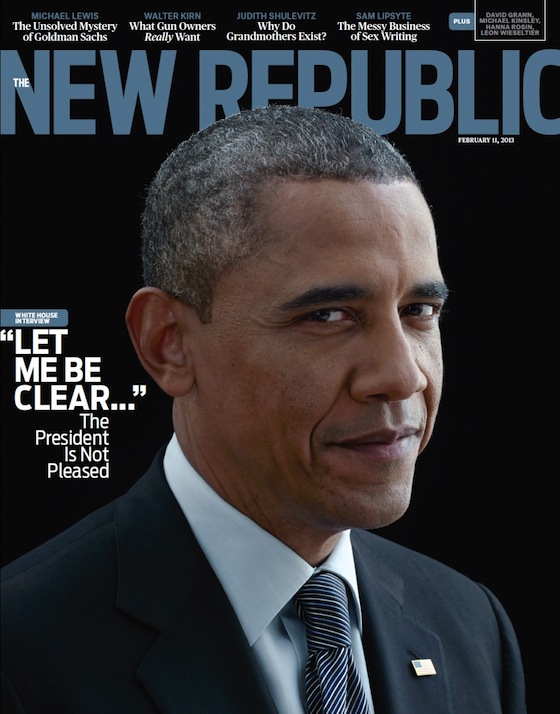
Odd that Facebook co-founder and initial Obama online guru Chris Hughes has made the move to print, purchasing a controlling interest in the New Republic and naming himself Editor-in-Chief. Certainly it won’t be a print product much longer, though that hardly matters if Hughes is able to turn out the great reportage he plans. From a new Financial Times interviewwith him conducted by Anna Fifield:
“Then almost a year ago, Hughes moved on to The New Republic and took a majority stake for an undisclosed amount. Like many other magazines, it was hemorrhaging readers, owners, editors and money. Its circulation had fallen to 34,000 from a peak of more than 100,000 two decades ago.
In an age when it can seem that journalism is increasingly conducted in 140 characters, it seemed like a counter-cultural step: here was a new-media sensation moving to a traditional magazine committed to publishing 10,000-word essays on paper and delivered to readers by post.
While admitting that Zuckerberg ‘absolutely’ thinks it’s weird that he’s moving into old media, Hughes argues that people of his age in this Twitter era are still readers. ‘A Pew [Research Center] report recently found that people under 30 are reading more books than they were 10 years ago – not much more, but more – and are as likely to have read them on their phone as in print,’ he says. ‘It’s crazy.’
He should know. He admits that he has read whole chapters of War and Peace on his iPhone, although he also read parts on old-fashioned paper. (Over Christmas, he tells me, he read DH Lawrence’s Sons and Lovers, and he is now reading George Saunders’ new collection of short stories on his iPad.)”
I recall Russell Baker, who can craft a sentence as well as anyone, once saying that the old, rigid copy-editing policies at the New York Times in his day used to make him drink and cry. Something like that. In his New York Review of Books piece on Jim Sterba’s Nature Wars, Baker writes about how technology and policy have led to a remarkable resurgence in forests and wildlife in America, one which may have gone too far. An excerpt:
“During America’s first 250 years, early settlers cleared away some 250 million acres of forest. Yet the forest comes back fast. By the 1950s, one half to two thirds of the landscape was reforested. Most of us now ‘live in the woods,’ Sterba writes. ‘We are essentially forest dwellers.’ The new forests ‘grew back right under the noses of several generations of Americans. The regrowth began in such fits and starts that most people didn’t see it happening.’
Why did it happen? For one thing, because oil, gas, and coal replaced wood as the major fuel for heating and cooking. Because new building techniques and materials reduced wood’s importance to the construction trades. And because the family farm began to vanish, leaving the abandoned acreage to follow earth’s natural impulse, which is to produce wild grasses, weeds, bushes, shrubs, and small trees that turn into big trees.
Then, of course, even the bleakest urban areas may yield to a civic impulse to primp a bit with touches of greenery, as in New York where 24 percent of the city’s area is now covered by a canopy of 5.2 million trees. Nationally, Sterba reports, tree canopy covers about 27 percent of the urban landscape.”
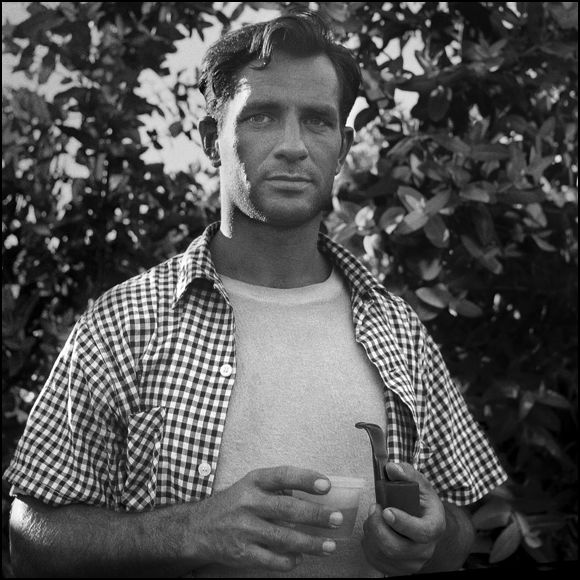
I think I could have put up with being in Jack Kerouac’s presence for about five minutes without screaming, but this 1959 clip of him on Steve Allen’s show is fun. The Beat writer even interrupts his discomfort and self-mythologizing, bullshit answers to read from On the Road.
From John Clellon Holmes’ 1952 New York Times Magazine piece, “This Is the Beat Generation,” which introduced the movement to the masses: “Any attempt to label an entire generation is unrewarding, and yet the generation which went through the last war, or at least could get a drink easily once it was over, seems to possess a uniform, general quality which demands an adjective … The origins of the word ‘beat’ are obscure, but the meaning is only too clear to most Americans. More than mere weariness, it implies the feeling of having been used, of being raw. It involves a sort of nakedness of mind, and, ultimately, of soul; a feeling of being reduced to the bedrock of consciousness. In short, it means being undramatically pushed up against the wall of oneself. A man is beat whenever he goes for broke and wagers the sum of his resources on a single number; and the young generation has done that continually from early youth.
Its members have an instinctive individuality, needing no bohemianism or imposed eccentricity to express it. Brought up during the collective bad circumstances of a dreary depression, weaned during the collective uprooting of a global war, they distrust collectivity. But they have never been able to keep the world out of their dreams. The fancies of their childhood inhabited the half-light of Munich, the Nazi-Soviet pact, and the eventual blackout. Their adolescence was spent in a topsy-turvy world of war bonds, swing shifts, and troop movements. They grew to independent mind on beachheads, in gin mills and USO’s, in past-midnight arrivals and pre-dawn departures. Their brothers, husbands, fathers or boy friends turned up dead one day at the other end of a telegram. At the four trembling corners of the world, or in the home town invaded by factories or lonely servicemen, they had intimate experience with the nadir and the zenith of human conduct, and little time for much that came between. The peace they inherited was only as secure as the next headline. It was a cold peace. Their own lust for freedon, and the ability to live at a pace that kills (to which the war had adjusted them), led to black markets, bebop, narcotics, sexual promiscuity, hucksterism, and Jean-Paul Sartre. The beatness set in later.
It is a postwar generation, and, in a world which seems to mark its cycles by its wars, it is already being compared to that other postwar generation, which dubbed itself ‘lost’. The Roaring Twenties, and the generation that made them roar, are going through a sentimental revival, and the comparison is valuable. The Lost Generation was discovered in a roadster, laughing hysterically because nothing meant anything anymore. It migrated to Europe, unsure whether it was looking for the ‘orgiastic future’ or escaping from the ‘puritanical past.’ Its symbols were the flapper, the flask of bootleg whiskey, and an attitude of desperate frivolity best expressed by the line: ‘Tennis, anyone?’ It was caught up in the romance of disillusionment, until even that became an illusion. Every act in its drama of lostness was a tragic or ironic third act, and T.S. Eliot’s The Waste Land was more than the dead-end statement of a perceptive poet. The pervading atmosphere of that poem was an almost objectless sense of loss, through which the reader felt immediately that the cohesion of things had disappeared. It was, for an entire generation, an image which expressed, with dreadful accuracy, its own spiritual condition.
But the wild boys of today are not lost. Their flushed, often scoffing, always intent faces elude the word, and it would sound phony to them. For this generation lacks that eloquent air of bereavement which made so many of the exploits of the Lost Generation symbolic actions. Furthermore, the repeated inventory of shattered ideals, and the laments about the mud in moral currents, which so obsessed the Lost Generation, do not concern young people today. They take these things frighteningly for granted. They were brought up in these ruins and no longer notice them. They drink to ‘come down’ or to ‘get high,’ not to illustrate anything. Their excursions into drugs or promiscuity come out of curiousity, not disillusionment.”
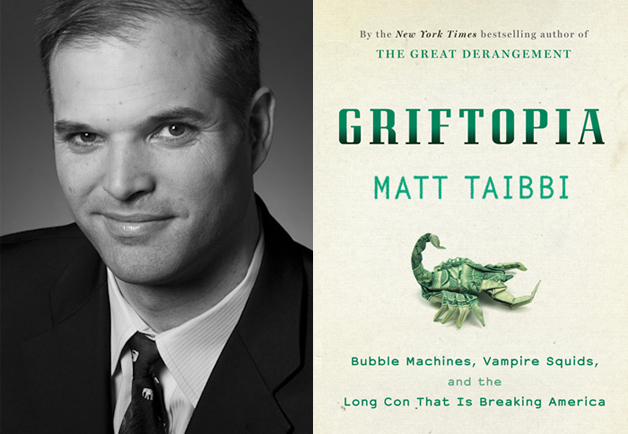
Matt, a line of yours is lodged in my head: “Organized greed always defeats disorganized democracy.” Unfortunately, while the animosity of Occupy Wall Street is still strong in early 2013, the disorganization of the movement might be even stronger.
So, if you were in charge of Occupy Wall Street, what single achievable goal would you (re)organize the movement around?
Answer:
Again, to repeat, breaking up the banks is the big thing. That should be the Holy Grail of activist goals. Everything flows from the Too Big To Fail problem. If that can be accomplished, we’re off and running. And it’s not far-fetched. There are a lot of people even in DC coming around to the idea.
____________________________
Question:
Matt, you lived in Russia for a while and wrote about and did a lot of interesting and intense things, like messing with the mob, checking out Siberian prisons, and partying pretty hard. Russia is a place where they kill journalists for merely existing, so my question is: how did you not die?
Answer:
Purely by accident. Honestly, there were some close calls. A lot of bad decisions while I was there, many of them under the influence. One very funny story I’ve never told: I once worked with a Russian paper called “Stringer” to wiretap Alexander Voloshin, Putin’s chief of staff. We published a week of his phone calls. I was so afraid of the consequences, I stayed out of the country when we published. Upon my return I was detained at the airport for 10 hours. I thought I was going to jail for life. In fact, the Russians were simply concerned that the lamination on my passport was coming up in one corner. They thought my passport was fake. Once they reached the embassy, they let me go. But that was one scary 10 hours.
____________________________
Question:
Did you ever meet Hunter S. Thompson?
Answer:
Years ago, when I was in my twenties, I was asked by a book publishing company to edit an anthology of “Gonzo Journalism.” Not long into the project I realized there was no such thing as “Gonzo Journalism” as a genre per se, it just meant “written by Hunter Thompson.” But I was broke and needed the job. So I called Hunter to ask him what he thought. He said, “That’s a shitty assignment.” I told him I probably agreed. He said, “How badly do you need the money?” I said, “Badly.” He said, “Well, good luck, but I’m not going to help you with it. No offense.” I said none taken and that was it. That was the only time I ever talked to Hunter. It was a funny call, though.
____________________________
Question:
Did you really throw your coffee at Vanity Fair’s James Verini when he said he didn’t like your book?
Answer:
I absolutely did throw coffee at James Verini, and it had nothing to do with him not liking my book. Let’s leave it at that for now. I’ll tell the full story someday.
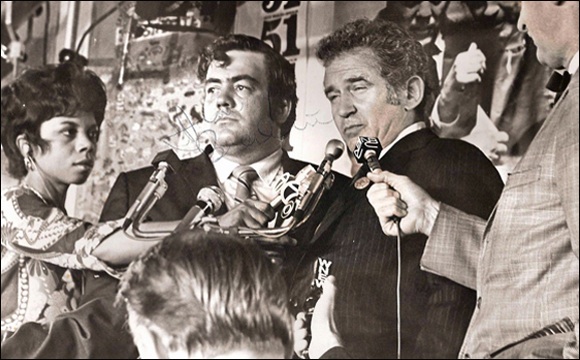
A little-seen Swedish-produced (though English-language) 1966 documentary about Norman Mailer, who trashes all things American, including its architecture and auto design and politics and drug culture and embrace of science.
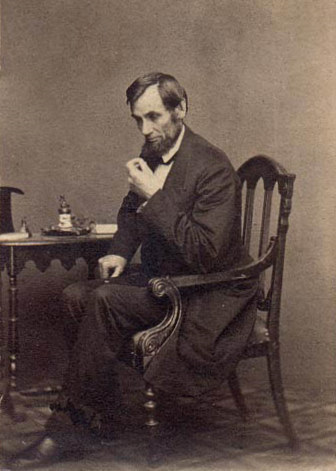
Abraham Lincoln and Walt Whitman, two great figures of their age, never shook hands or spoke despite their often close proximity, which was made all the closer as a result of the poet volunteering as a nurse during the Civil War. From Jamie Stiehm at the New York Times’ Disunion blog, a passage about their “relationship”:
“Above all, Whitman studied the stars and waves of Lincoln’s mercurial character the way a great sculptor might gaze at his craggy countenance or larger-than-life hands. The poet came to know the routes of the president’s carriage. When he saw it passing by, he stood with hat in hand. He kept a lookout in the summer months, when Lincoln rode daily along Seventh Street out to a peaceful family retreat at the Soldiers Home, three miles away from crush of his callers. Whitman was once inside the executive mansion to see John Hay, the president’s secretary. He was standing close to Lincoln, who was animatedly engaged in another conversation, but went on his way, loath to interrupt him.
As Whitman later recounted, he exchanged nods, bows and waves with Lincoln several times over a few years and saw the president shake hundreds, if not thousands, of hands at a party. But not Whitman’s. In one of American history’s closest calls, the two never spoke a word to each other. (Though it is believed that Lincoln, 10 years older, read some of the poet’s work aloud back in Springfield, Ill.)
Whitman nevertheless felt he got a good fix on Lincoln. ‘I love the president personally,’ he declared. Well he might, because years earlier he had imagined a bearded president from the prairie, the West who was ‘heroic, shrewd, fully informed.’ Lincoln was nothing if not a shrewd, strong outsider, which helped make him the one man alive capable of settling the old sectional divide sundering the nation.”
You mention how we’re not going to have policing in public spaces anytime soon —
Paul Barrett:
I said a ‘police state.’ We, of course, have plenty of policing of public spaces. We have public spaces that are basically locked down. You can’t get into a federal courthouse without getting thoroughly searched. It would be very, very difficult to get in there with a firearm. You can’t get past security in an American airport without being pretty thoroughly searched. We have lots of security in lots of situations.
I think that security does deter crime in general and mass killings in particular. With this debate about what we do about schools, the proposal [by NRA Executive Vice President Wayne LaPierre] that has been lampooned by a lot of people, I personally think is a very reasonable proposal.
Shaun Randol:
Please elaborate.
Paul Barrett:
I’ve written about this for Businessweek. We have grown accustomed, in this country, to having a fair amount of security in many kinds of public and private venues where a lot of people gather. There is security in the building that you and I are sitting in right now. Not just anyone can walk in.
When you go to Yankee Stadium to see a baseball game, you can’t just walk into Yankee Stadium. They channel you through certain entranceways and, if you’re carrying a bag, they’re going to search your bag. The guys who take your tickets are there to also look you over, and there’s both uniformed and plainclothes security throughout the stadium.
I think all of those steps are rational steps. I don’t think they’re perfect, but I do think they do deter crime and they would deter a mass suicide-killing episode in those venues. Therefore, if you are truly anxious about securing schools, I can’t see the serious argument against having armed security at schools. It doesn’t seem to me to be a distraction. It doesn’t seem to me to be a panacea, either. It’s not perfect, but few social policies are perfect.”
Drones are scary as hell, but they do keep boots off the ground, which is what leads to quagmires and tens of thousands of deaths. Still, it’s a scary precedent we’re setting.
In a wide-ranging Geuernica interview, Martin Amis offers his take on drones as well as health care and the history of American slavery. An excerpt:
“Guernica:
In May 2009, in an interview with Prospect magazine, you discussed your enthusiasm for the possibilities of the Obama presidency. What are your thoughts on his first term and on what might come in the next four years?
Martin Amis:
It’s often said of American politics that it’s a huge juggernaut and the president can change the direction by two or three degrees in either direction, but not much more. In fact, I think the president’s power is limited, much more than the prime minister in England. So, I’m not too disappointed, although I didn’t like his deportations, and I’m not sure about the drones. It’s very aggressive. I’m not sure that if Bush Jr. were doing it I would say the same. It’s better than having troops on the ground, and it’s horrifying for the terrorists. I mean they’re all sitting there waiting.
I haven’t liked him during the campaign. He hasn’t been above the fray. I guess you can’t afford to do it. If you are going to get reelected you have to make some of the usual noises: You don’t talk about global warming, and you don’t talk about gun control. He hasn’t been the great exception.
I also think there’s been another resurgence of racism. All that rejection from Republicans has a bit of a racist element. It was very necessary to have a black president, and it’s been a great thing. It will help, in the end, to ease the trauma of slavery and civil war. The war against slavery cost almost 800,000 American lives—that’s how strongly they felt about it. And it’s not going to go away in a century.
Obama will have a bit of capital for a year or two. Even his imperfect health reform was a tremendous step in the right direction—the direction of sanity and equity. Just to give up this enterprise health system and adopt government health care like in Canada is cheaper and fairer. But the key part about that is that no American will accept that some of his tax money is going to pay for people who smoke. It’s horrible for them: ‘Some low-life bum taking advantage of the state.’ They just have to get over it.”
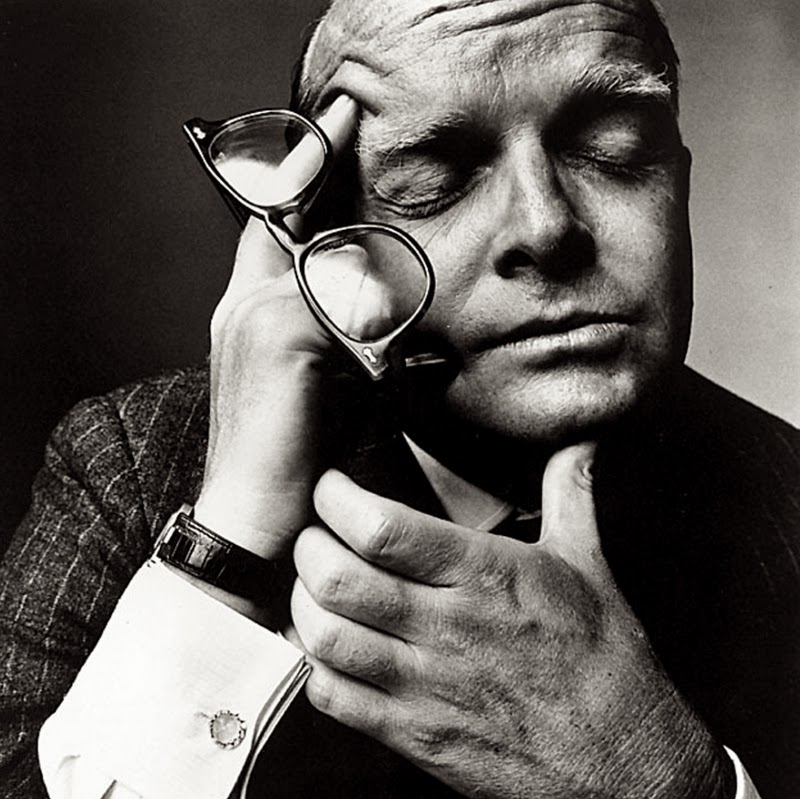
Truman Capote’s final, uncompleted novel, Answered Prayers, the one that was excerpted in Esquire in the 1970s and destroyed his social life, was never published in full. No one is totally sure where the hundreds of pages reside, but it’s believed they’re languishing in an unknown California bank security-deposit box, waiting to be found. At least that’s the theory put forth in Sam Kashner’s recent Vanity Fair piece, “Capote’s Swan Dive“:
“After Capote’s death, on August 25, 1984, just a month shy of his 60th birthday, Alan Schwartz (his lawyer and literary executor), Gerald Clarke (his friend and biographer), and Joe Fox (his Random House editor) searched for the manuscript of the unfinished novel. Random House wanted to recoup something of the advances it had paid Truman—even if that involved publishing an incomplete manuscript. (In 1966, Truman and Random House had signed a contract for Answered Prayers for an advance of $25,000, with a delivery date of January 1, 1968. Three years later, they renegotiated to a three-book contract for an advance of $750,000, with delivery by September 1973. The contract was amended three more times, with a final agreement of $1 million for delivery by March 1, 1981. That deadline passed like all the others with no manuscript being delivered.)
Following Capote’s death, Schwartz, Clarke, and Fox searched Truman’s apartment, on the 22nd floor of the U.N. Plaza, with its panoramic view of Manhattan and the United Nations. It had been bought by Truman in 1965 for $62,000 with his royalties from In Cold Blood. (A friend, the set designer Oliver Smith, noted that the U.N. Plaza building was ‘glamorous, the place to live in Manhattan’ in the 1960s.) The three men looked among the stacks of art and fashion books in Capote’s cluttered Victorian sitting room and pored over his bookshelf, which contained various translations and editions of his works. They poked among the Tiffany lamps, his collection of paperweights (including the white rose paperweight given to him by Colette in 1948), and the dying geraniums that lined one window (‘bachelor’s plants,’ as writer Edmund White described them). They looked through drawers and closets and desks, avoiding the three taxidermic snakes Truman kept in the apartment, one of them, a cobra, rearing to strike.
The men scoured the guest bedroom, at the end of the hallway—a tiny, peach-colored room with a daybed, a desk, a phone, and lavender taffeta curtains. Then they descended 15 floors to the former maid’s studio, where Truman had often written by hand on yellow legal pads.
‘We found nothing,’ Schwartz toldVanity Fair.Joanne Carson claims that Truman had confided to her that the manuscript was tucked away in a safe-deposit box in a bank in California—maybe Wells Fargo—and that he had handed her a key to it the morning before his death. But he declined to tell her which bank held the box. ‘The novel will be found when it wants to be found,’ he told her cryptically.”
From Oliver Sacks’ new article in the New York Review of Books about memory distortion, a passage about Ronald Reagan “misremembering”:
“Daniel Schacter has written extensively on distortions of memory and the ‘source confusions’ that go with them, and in his book Searching for Memoryrecounts a well-known story about Ronald Reagan:
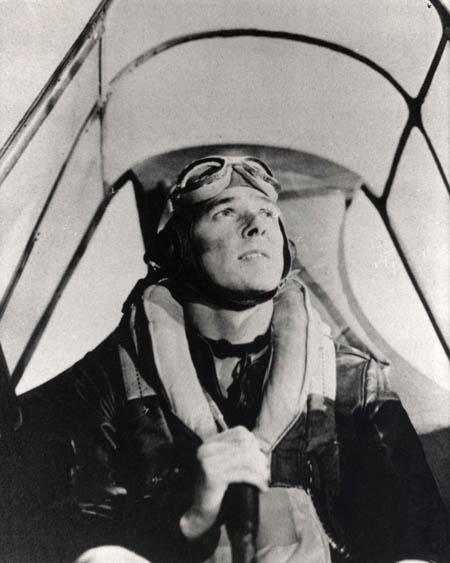
In the 1980 presidential campaign, Ronald Reagan repeatedly told a heartbreaking story of a World War II bomber pilot who ordered his crew to bail out after his plane had been seriously damaged by an enemy hit. His young belly gunner was wounded so seriously that he was unable to evacuate the bomber. Reagan could barely hold back his tears as he uttered the pilot’s heroic response: ‘Never mind. We’ll ride it down together.’ The press soon realized that this story was an almost exact duplicate of a scene in the 1944 film A Wing and a Prayer. Reagan had apparently retained the facts but forgotten their source.
Reagan was a vigorous sixty-nine-year-old at the time, was to be president for eight years, and only developed unmistakable dementia in the 1990s. But he had been given to acting and make-believe throughout his life, and he had displayed a vein of romantic fantasy and histrionism since he was young. Reagan was not simulating emotion when he recounted this story—his story, his reality, as he believed it to be—and had he taken a lie detector test (functional brain imaging had not yet been invented at the time), there would have been none of the telltale reactions that go with conscious falsehood.
It is startling to realize that some of our most cherished memories may never have happened—or may have happened to someone else. I suspect that many of my enthusiasms and impulses, which seem entirely my own, have arisen from others’ suggestions, which have powerfully influenced me, consciously or unconsciously, and then been forgotten.”
Just read Chip Brown’s New York Times Magazine piece about the boomtown that North Dakota has become thanks to its massive oil reserves in this post-peak age, which reminded of this classic photograph of Upton Sinclair selling bowdlerized copies (the so-called fig-leaf edition) of his novel Oil! on a street in Boston, where the book was banned. (This novel is the basis for Paul Thomas Anderson’s great film There Will Be Blood.) The Beantown controversy helped boost Oil! to bestseller status. Sinclair, a radical firebrand, was no stranger to such public contretemps, whether running for the office of governor or hatching plans for a commune near the Palisades in New Jersey. On the latter topic, here’s a passage from a 1906 New York Times article about the formation that year of Sinclair’s techno-Socialist collective, Helicon Home Colony, which burned to the ground the year after its establishment:
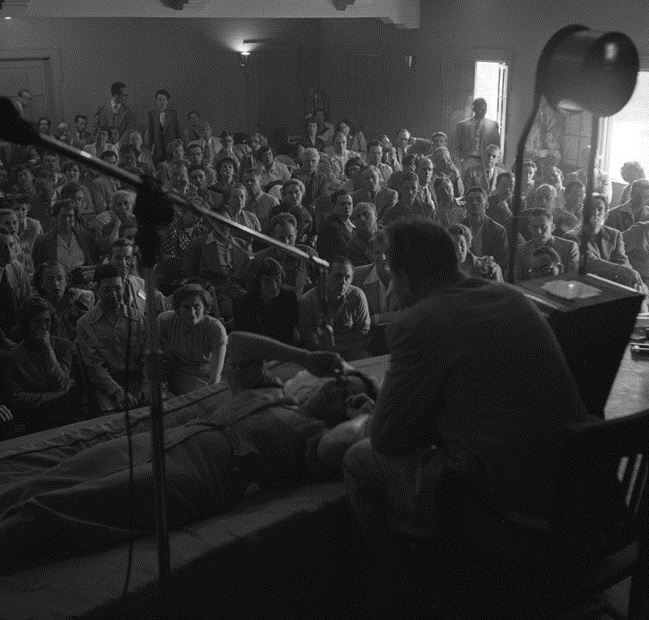
“Not less than 300 persons answered Upton Sinclair’s call for a preliminary meeting at the Berkeley Lyceum last night of all those who are interested in a home colony to be organized for the purpose of applying machinery to domestic processes, and incidentally to solve the servant problem. The idea of the proposed colony is to syndicate the management of children and other home worries, such as laundering, gardening, and milking cows.
The response to Mr. Sinclair’s call gratified him immensely. When he went on the stage he was smiling almost ecstatically. The audience applauded him and then began to mop their faces, for the little Lyceum was almost filled, and some one had to shut the front doors.
The audience was made up almost equally of men and women. A large proportion seemed to be of foreign birth. Many of them were Socialists, judging from their manifestations of sympathy for Socialistic doctrines. The mentioning of two newspapers which disapprove of Socialism on their editorial pages was hissed. Mr. Sinclair himself said that he had thought of asking a Socialist to act as temporary Chairman, but that his man had thought that two Socialists on the stage at the same time would frighten the more conservative members.
The meeting lasted about two hours. Mr. Sinclair, at various times, had the floor about an hour and a half. Now and then the arguments caused a high pitch for excitement, and more than once four people were trying to talk at the same time. In the end always, however, what Mr. Sinclair suggested was accepted, including the appointment of committees and other preliminaries of organization.
For Mr. Sinclair is certain that his home colony is to come about. He said in his introductions that he had about a dozen people who had agreed to go in with him, whether anybody else did or not. But last night’s meeting indicated, in Mr. Sinclair’s opinion, that a home colony of at least 100 families could easily be organized.”
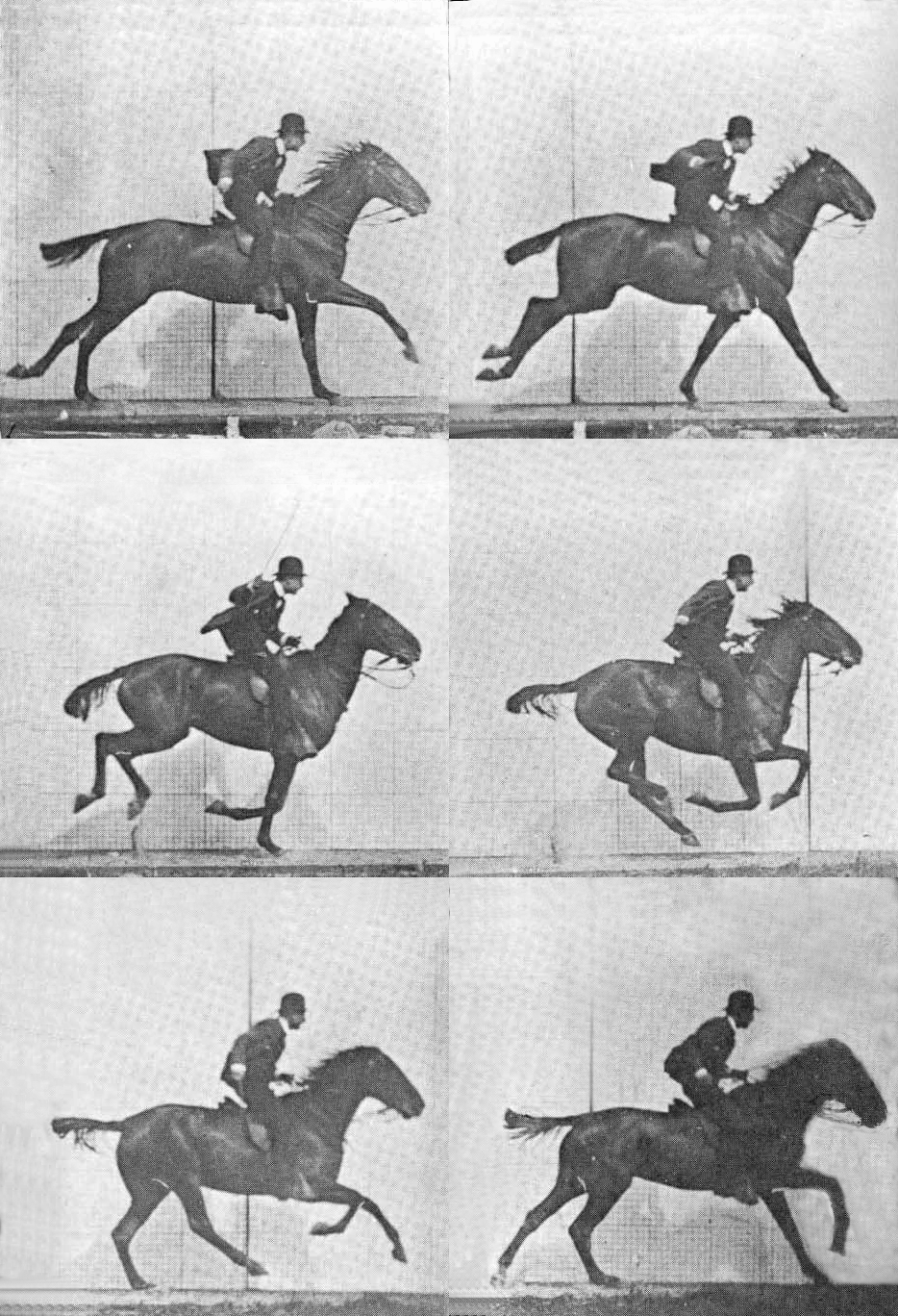
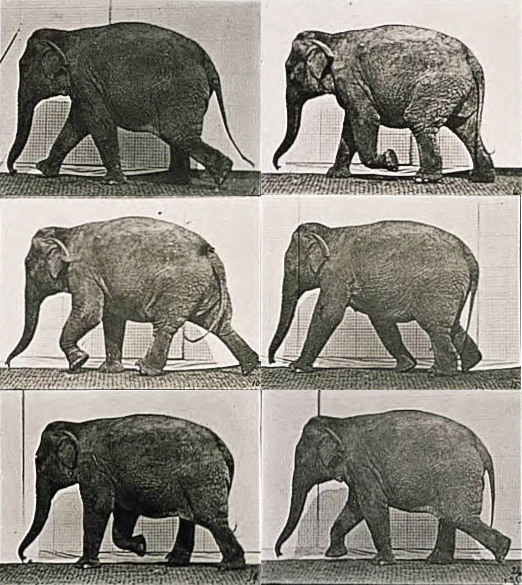
“Genius, it seems, is almost always accompanied by eccentricity, if not madness. Those rare instances of genuine brilliance that we find scattered throughout history — in the music of Ludwig van Beethoven, the paintings of Vincent van Gogh, the mathematical equations of John Nash — often appear to have come at great cost to the minds that produced them. The work of Eadweard Muybridge is no exception.
While Muybridge’s photographs are widely known, his personal life has been largely neglected, which seems incredible now that, in Edward Ball’s engrossing book, The Inventor and the Tycoon, we have the whole fascinating story, full of strange and surprising details. At the height of his genius, Muybridge, a British immigrant whose stunning advancements in photography in the mid-to-late 1800s astonished the world and gave rise to the motion picture industry, looked and generally lived like a vagabond. He dressed in clothing so tattered that his uncombed, usually unwashed, hair poked out of holes in his hat, and his pants threatened to fall off in pieces as he walked. He ate cheese flies, tiny insects that hover around the tops of old cheese and that he used to gather up into packages and snack on as he brooded over his photographs. Then there was the small matter of the murder.
In 1874, just a year after one of his most important breakthroughs, when he was well into the work that would make him famous, Muybridge killed a man.”
The opening of a 1977 People article about Ludlum: “‘I start every book with something that outrages me,’ says novelist Robert Ludlum. ‘I’m outraged by the FBI, the CIA and computers that seem to have catalogued our lives. Power too often is accompanied by irresponsibility.’
Ludlum, a former actor and producer, has managed to turn his fury into six best-selling thrillers since 1969. To date his books have sold over 10 million copies in 22 countries. ‘sit in total awe,’ he says. ‘I don’t understand it. I’m just grateful.’
His current hit, The Chancellor Manuscript, which fictionalizes the death of J. Edgar Hoover as part of a conspiracy, is in its fourth printing. The Gemini Contenders (twin brothers search for a religious document that would alter Christianity) is a paperback best-seller, and The Rhinemann Exchange (covert trade of diamonds for gyroscopes between the U.S. and Nazi Germany during WW II) reappeared on the paperback list after an NBC-TV miniseries in March.
Ludlum readers often take his fictionalized version of history seriously. ‘They all have a conspiracy they want to talk about,’ he says. ‘Unfortunately, they want to talk at 3 a.m.’ The Ludlums now have an unlisted phone in their Leonia, N.J. home.
He also has a special following within the intelligence community—and some private complaints from one federal agency he won’t identify. “They have said, in effect: ‘We’re very displeased with you. Your nonsense is becoming offensive.’ My answer is: ‘Dreadfully sorry, old chap. I’m just a storyteller.’ But his fiction has come very close to truth. The Osterman Weekend, for example, about domestic CIA operations, was published two and a half years before the agency’s illegal wiretaps were exposed.”
There’s always this odd little question mark attached to Michael Kinsley’s distinguished journalism career because of the cloudy circumstances of how he came to miss out on the New Yorker editor slot that subsequently went to David Remnick, but I always stop and read anything attached to his byline. You’ve probably already read his New York Times Book Review piece about Lawrence Wright’s just-released Scientology exposé, Going Clear, but in case you missed it here’s a segment that takes aim at the long-delayed apostasy of filmmaker Paul Haggis, whom Kinsley doesn’t completely absolve:
“The fish that got away, Scientologists believed, was Steven Spielberg. He told Haggis that Scientologists ‘seem like the nicest people,’ and Haggis responded that ‘we keep all the evil ones in the closet,’ which was close enough to being true that Haggis was in hot water with the Scientology powers-that-be. But he didn’t quit.
Haggis joined Scientology in 1975, when he was 21. Wright assures us that Haggis ‘never lost his skepticism,’ but he must have misplaced it for a few decades. He remained a member and rose to be a top thetan among Scientologists through the death of L. Ron Hubbard and the rise of his successor, David Miscavige, who has often been described as sadistic. Then he read on the Internet about children ’10, 12 years old, signing billion-year contracts, . . . and they work morning, noon and night. . . . Scrubbing pots, manual labor — that so deeply touched me. My God, it horrified me.’ Still, he didn’t quit. Once again like American Communists on the eve of World War II, a few ‘useful idiots’ like Haggis held on through every moment of doubt and twist in the story. What finally pushed him over the edge, away from Scientology and out into the real world, was the church’s refusal to endorse gay marriage. Now, I’m for gay marriage. And Haggis has two gay daughters, so it’s understandable that he should feel particularly strongly about this issue. But some perspective, please: it’s like hanging on through the Moscow trials and then quitting the Communist Party because it won’t endorse . . . oh, I dunno — well, gay marriage.”
In a number of these (and your previous) stories, characters find themselves grappling with strange technological ‘innovations.’ Does technology disturb you? Do you avoid computers and gadgets?
George Saunders:
No, not at all. I like technology. I just think it’s complicated and funny, I guess — the way our basic neuroses are always seeking a home, and whenever we invent something new, our neuroses rush over there and get writ large. Before there were cellphones and Twitter and Facebook were people narcissistic? Ha. But those are beautiful ways of heightening our narcissism and putting a big old spotlight on it. And really — as above — my experience has been that I don’t choose a topic or theme or anything like that, but just sort of wade in and see if I can get any magic going on the sentence level — and then ‘story’ comes out of that, as do ‘meaning’and ‘theme’ and all of that, and occasionally a weird new technology. The main job is to make some forward momentum and language-level engagement, I think — and then the rest of the stuff, meaning, theme, etc., has to — and will – take care of itself.
Or to put it another way: if the writer comes up with some strange device, and then lets people play with it, we are going to find out about people. If we have a device that lets us look into other people’s thoughts, we are going to find out about, say, humans’ need for attention and their pride and so on. ‘What does she think when she first catches sight of me? What? A big nose? I do not have a big nose!’ So that story isn’t really about that device, or about technology — but about, say, pride, or self-regard. So the technology or sci-fi aspects are, I guess, means to an (old, classic, traditional) end: hold a mirror up to human foibles and tendencies.
Casey Burchby:
Several stories in the book — ‘The Semplica Girl Diaries’and ‘Escape from Spiderhead’ particularly — revolve around forms of technology that characters aren’t able or willing to engage because of moral or other ramifications. Does technological gimmickry start to endanger people beyond a certain point?
George Saunders:
That’s a big question, and I guess I’d just have to say sure it does, sometimes. (Witness the atom bomb or that 1970s craze of ‘Asbestos Underwear.’) But as I mentioned above — the devices used in those stories are there mostly as tools — tools to get the moral-ethical wheels turning a bit and turn up the volume. And to be a degree more honest — on ‘The Semplica Girl Diaries,’ the whole thing came out of a dream I had. And when I woke up the dream didn’t seem insane, but weirdly charged — and I felt excited to try and flesh that world out. And the basic weird tech idea in the story was in the dream. So whatever was happening, it was my sub-conscious supplying the root material. And the only thing I ‘decided’was to go ahead and try it and see if I could make it stand up on its feet as a story. Very mysterious, really — I think sometimes we forget that art is really coming from somewhere other than our intention or decisions — it’s a gift from somewhere kind of unknown to us, except in glimpses…”
Michael Crichton pushed his book Electronic Life: How To Think About Computers while visiting Merv Griffin in 1983. The personal computing revolution was upon us, but the Macintosh had yet to reach the market, so it still seemed so far away, especially to the tech-challenged host.
…The Three Christs of Ypsilanti.Easily. Psychiatrist Milton Rokeach’s 1964 account of his group treatment of three delusional men who believed they were God doesn’t only have great insights into human nature, how we protect and harm ourselves at once, but it’s also one of the richest pieces of literature I’ve ever encountered. And that includes every piece of fiction. If you haven’t read it and decide to go for it, get the New York Review of Books edition with an introduction by Rick Moody. He sets it up nicely. Anything you read directly after this book will seem pale, no matter how good it is.
Best re-reading:If the Sun Dies,Oriana Fallaci’s 1966 exploration of NASA and the men who lived our wildest dreams in the stratosphere. I rarely read anything twice, but this book was worth it. Lyrical and great reportage.
What I read while the blog was on hiatus:
The Mind of a Mnemonist,A.J. Luria’s case study about a Russian man with a remarkably elastic memory. Glad I read it, though kind of disappointed overall, the way I am sometimes with long-deferred readings. Luria researched this case for decades beginning in the 1920s and pretty much birthed the modern medical oddity genre later developed by Oliver Sacks and others. I guess I was hoping the narrative would be as good as the research.
The Best Short Stories of J.G. Ballard. I’m not much for sci-fi, but Ballard is obviously several grades above the average. My favorite story of this 1979 collection is “Thirteen for Centaurus,” which is ostensibly about a far-flung journey but is really a meditation on how we go along with value systems we don’t actually believe in.
The Loser,the short novel by Joseph Bernhard about two of Glenn Gould’s less-talented classmates. Well-written and all, but 160 pages about suicidal narcissism was all I could handle. Still want to read some of Bernhard’s stage satires.
Obedience to Authority,Stanley Milgram’s 1974 book about his controversial experiments in which he asked average citizens to administer electrical shocks to other human beings in the “name of science.” I’m still not wholly convinced about the banality of evil, but Milgram makes quite a compelling case. A discomfiting and worthwhile read.
You know, if I didn’t spend every waking hour mocking Donald Trump, I could read LOTS more books. But it’s a sacrifice I’m willing to make.
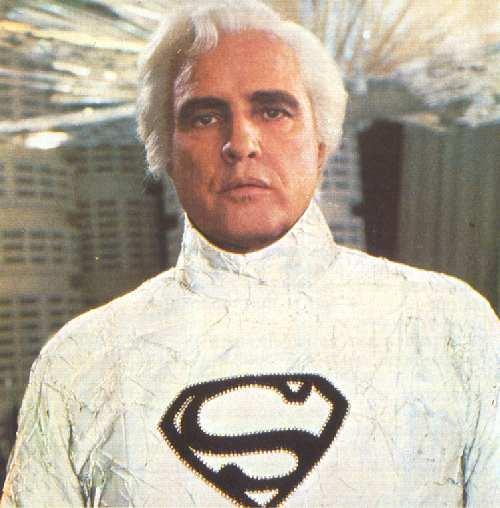
Before world culture was saturated with American comic books via film, it was a niche market and considered by most to be shameful and lowbrow. By the late 1970s, when Marlon Brando was getting millions for doing a few minutes of screen time as Superman’s dad, people thought that the form had reached its zenith. But we hadn’t seen nothing yet. As Hollywood special effects prowess grew and a post-Cold War age opened global markets yearning for entertainments not bogged down by a specific language, comics became king.
I miss how movies used to be vehicles of adult expression and would rather rewatchThe Passengerany day than see the latest superhero vehicle, though I acknowledge the greatness of this art form in panels even if it’s not my particular thing. In 1977, Mike Douglas, co-host Jamie Farr and, um, a flamboyant panel, welcomed members of the pre-Comic-Con culture. Collector Phil Seuling shows off an original Superman, which was then valued at $1,500. The audience gasped at the price, but today a pristine copy goes for more than $2 million. That’s as good an indicator as any of the value of this source material in our age.