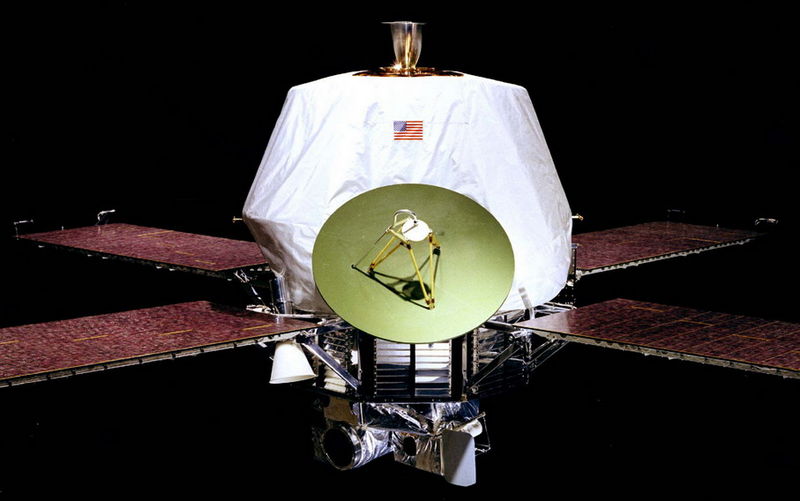
Ray Bradbury, sage of the Space Age, sharing his feelings through poem about exploration of the stratosphere on November 12, 1971, the eve of Mariner 9 going into orbit at Mars. He was part of a symposium at Cal Tech, which also included Arthur C. Clarke and Carl Sagan.
You are currently browsing the yearly archive for 2013.
Tags: Ray Bradbury
The choice for the best word of 2012 from the committee at the Australian dictionary, the Macquarie:
phantom vibration syndrome
noun a syndrome characterised by constant anxiety in relation to one’s mobile phone and an obsessional conviction that the phone has vibrated in response to an incoming call when in fact it hasn’t.
_____________________________
And the people’s choice:
First World problem
noun a problem that relates to the affluent lifestyle associated with the First World, and that would never arise in the poverty-stricken circumstances of the Third World, as having to settle for plunger coffee when one’s espresso machine is not functioning.
Donald Trump is completely full of shit, yet there’s still a void within him. He will do anything for attention, even filing frivolous lawsuits. He recently threatened to sue the rapper Mac Miller, who recorded a song called “Donald Trump,” seemingly irked because the performer made critical but not slanderous remarks about him.
_____________________________
Donald J. Trump @realDonaldTrump
Little @MacMiller, I’m now going to teach you a big boy lesson about lawsuits and finance. You ungrateful dog!
Donald J. Trump @realDonaldTrump
Little @MacMiller, you illegally used my name for your song “Donald Trump” which now has over 75 million hits.
_____________________________
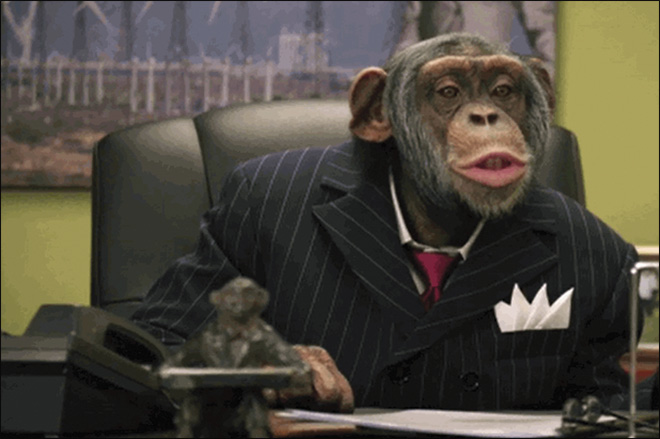
Like the rest of Donald Trump’s existence, it is a stupid waste of everybody’s time. But he went even further with comedian Bill Maher, who jokingly promised to pay Donald Trump $5 million if the miserable mogul could prove that he wasn’t fathered by an orangutan. Even though there’s no legitimate basis for a suit, Donald Trump has indeed filed one.
_____________________________
Donald J. Trump @realDonaldTrump
@BillMaher didn’t come through with his promised $5 million for chairty so today I will sue him.
_____________________________
It’s easy to see where the legal proceedings are heading.

I’ve been robbed! This never would have happened if Judge Judy was handling the case. She has a lot of money, so she’s a winner.
More recent fake comedy crap:
Tags: Bill Maher, Donald Trump, Donald Trump Is A Moron, Mac Miller
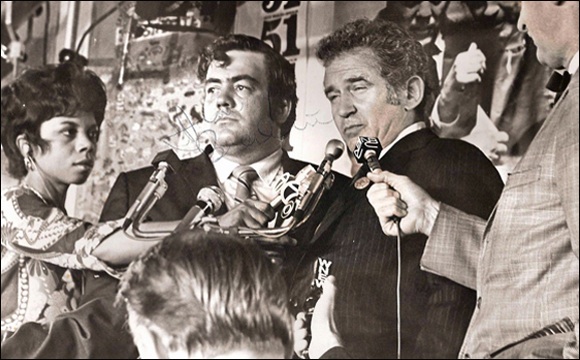
A little-seen Swedish-produced (though English-language) 1966 documentary about Norman Mailer, who trashes all things American, including its architecture and auto design and politics and drug culture and embrace of science.
Tags: Norman Mailer
PARTNER WANTED – I’ll Make You Famous (Financial District)
– A desire to be an Internationally Known Business Mogul;
– A desire to be one of the Founders of one of the Most Innovative Products in Your Time (One of the Best Kept Secret to Date);
– At Least $25,000.00 to invest in this venture;
– A Bullet Proof Credit Rating;
– An Entrepreneurial Mindset;
– Nerves of Steel;
– A Never Say Die Attitude
Then keep on reading!
Twelve years ago, I developed a product that I and thousands of people thought was going to revolutionize
not only the multi-billion dollar industry which it is in, but the world as we know it today!
I began the mission to produce and perfect this product over a 6 year period. I utilized 3 top engineers from the Ford Motor Company to assist on this project.
I even used manufacturers from the very industry that this product was being designed to change.
Prototype after prototype was built, each one better than the last, but still we could not attain the standards which I set at the very beginning of this project.
After thousands of man-hours and millions of dollars spent on this mission, many of those involved gave up.
The project was shelved and deemed ahead of its time.
Seven years later, it came to me like a massive tsunami. This idea, if it could be proven would answer all that was missing on the product from our original project.
Thinking outside the industry changed my thought process and produced an innovative way to build this product
which will NOW change one of the most prolific industries in the world forever.
I am the inventor, engineer, designer, and manufacturer of this product. I’ve built the perfect model and tested it for 12 months.
I currently hold all rights to it and am the only one who knows how it works.
There are at least 3-4 patentable components and I have already one patent pending.
I have been a very successful businessman for over 25 years and until my stalemate with this project in 2006 have never failed.
Well I don’t intend on failing with this and in fact plan on changing the world and all of those who are involved with this project in the beginning.
I AM LOOKING FOR A FINANCIAL PARTNER PASSIVE OR ACTIVE!
This isn’t a “Could Change Your Life” proposition. This is a “WILL Change You and Your Future Grandchildren’s Lives” Proposition.
I guarantee… you will never, ever come across an opportunity like this again!
I seriously compromised my credit and financial situation with this venture, (didn’t file BK though) however, I still have the most important ingredient to success… MY MIND, Vendors, and product and a bullet-proof working PROTOTYPE!
I NEED ONE MORE PARTNER!
Are you the one? Or should I say is this the one for you?
If you are ready to get involved with a global product launch, I have the product and business plan. I need a little more money and credit to build and market this venture.
I will make you a founder and a huge equity partner.
I already have a company willing to take us public in 4 to 6 months to raise $20-$50 million dollars once we get the machines running,
and that’s just based on our business plan and product concept.
This could be huge for you!
Contact me via email and tell me why you and how you could help move this project. I will call you and send you all of the info on this venture.
Thanks for reading and Let’s Do Something Great Together!
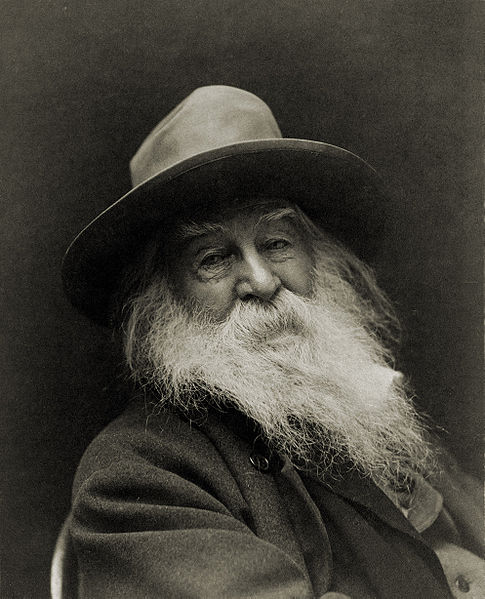
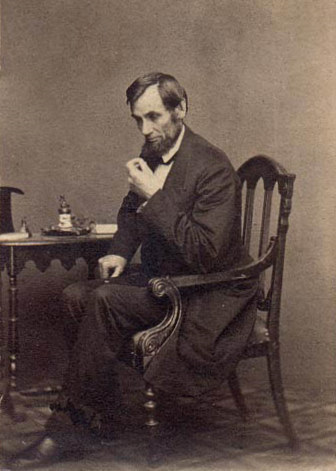
Abraham Lincoln and Walt Whitman, two great figures of their age, never shook hands or spoke despite their often close proximity, which was made all the closer as a result of the poet volunteering as a nurse during the Civil War. From Jamie Stiehm at the New York Times’ Disunion blog, a passage about their “relationship”:
“Above all, Whitman studied the stars and waves of Lincoln’s mercurial character the way a great sculptor might gaze at his craggy countenance or larger-than-life hands. The poet came to know the routes of the president’s carriage. When he saw it passing by, he stood with hat in hand. He kept a lookout in the summer months, when Lincoln rode daily along Seventh Street out to a peaceful family retreat at the Soldiers Home, three miles away from crush of his callers. Whitman was once inside the executive mansion to see John Hay, the president’s secretary. He was standing close to Lincoln, who was animatedly engaged in another conversation, but went on his way, loath to interrupt him.
As Whitman later recounted, he exchanged nods, bows and waves with Lincoln several times over a few years and saw the president shake hundreds, if not thousands, of hands at a party. But not Whitman’s. In one of American history’s closest calls, the two never spoke a word to each other. (Though it is believed that Lincoln, 10 years older, read some of the poet’s work aloud back in Springfield, Ill.)
Whitman nevertheless felt he got a good fix on Lincoln. ‘I love the president personally,’ he declared. Well he might, because years earlier he had imagined a bearded president from the prairie, the West who was ‘heroic, shrewd, fully informed.’ Lincoln was nothing if not a shrewd, strong outsider, which helped make him the one man alive capable of settling the old sectional divide sundering the nation.”
Tags: Abraham Lincoln, Jamie Stiehm, Walt Whitman
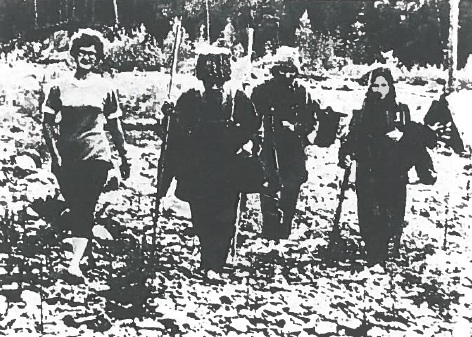
In 1978, Soviet geologists were stunned while exploring the remote Siberian taiga when they happened across a deeply religious family that had retreated 40 years earlier from their country’s attempts at modernization, as well as all outside human contact and communication. They were so isolated that they were blissfully unaware of that horror known as World War II. From Mike Dash at the Smithsonian site:
“Slowly, over several visits, the full story of the family emerged. The old man’s name was Karp Lykov, and he was an Old Believer—a member of a fundamentalist Russian Orthodox sect, worshiping in a style unchanged since the 17th century. Old Believers had been persecuted since the days of Peter the Great, and Lykov talked about it as though it had happened only yesterday; for him, Peter was a personal enemy and ‘the anti-Christ in human form’—a point he insisted had been amply proved by Tsar’s campaign to modernize Russia by forcibly ‘chopping off the beards of Christians.’ But these centuries-old hatreds were conflated with more recent grievances; Karp was prone to complain in the same breath about a merchant who had refused to make a gift of 26 poods [940 pounds] of potatoes to the Old Believers sometime around 1900.
Things had only got worse for the Lykov family when the atheist Bolsheviks took power. Under the Soviets, isolated Old Believer communities that had fled to Siberia to escape persecution began to retreat ever further from civilization. During the purges of the 1930s, with Christianity itself under assault, a Communist patrol had shot Lykov’s brother on the outskirts of their village while Lykov knelt working beside him. He had responded by scooping up his family and bolting into forest.
Peter the Great’s attempts to modernize the Russia of the early 18th century found a focal point in a campaign to end the wearing of beards. Facial hair was taxed and non-payers were compulsorily shaved—anathema to Karp Lykov and the Old Believers.
That was in 1936, and there were only four Lykovs then—Karp; his wife, Akulina; a son named Savin, 9 years old, and Natalia, a daughter who was only 2. Taking their possessions and some seeds, they had retreated ever deeper into the taiga, building themselves a succession of crude dwelling places, until at last they had fetched up in this desolate spot. Two more children had been born in the wild—Dmitry in 1940 and Agafia in 1943—and neither of the youngest Lykov children had ever seen a human being who was not a member of their family. All that Agafia and Dmitry knew of the outside world they learned entirely from their parents’ stories. The family’s principal entertainment, the Russian journalist Vasily Peskov noted, ‘was for everyone to recount their dreams.'”
Tags: Karp Lykov, Mike Dash
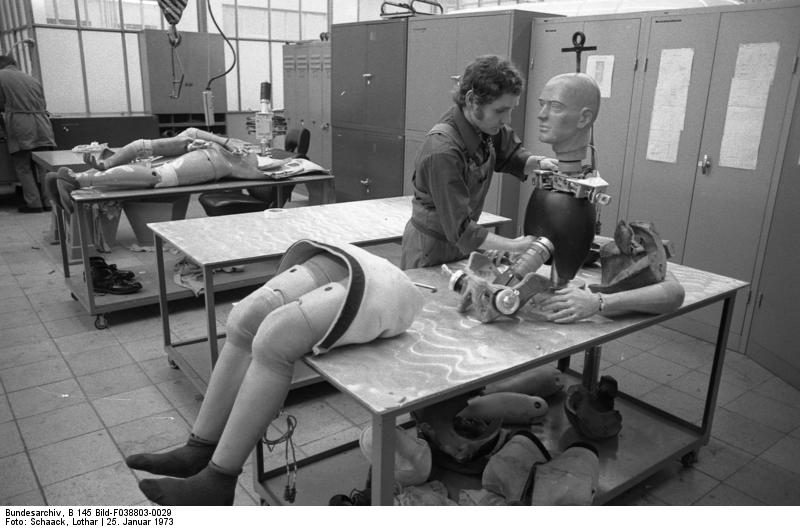
Via the BBC, a video of a “bionic man,” replete with artificial organs and synthetic blood. It seems like a prank, but it’s not a prank, is it?
From the July 6, 1868 Brooklyn Daily Eagle:
“The steamboat Allison, yesterday at three o’clock, left for the Coney Island from Fulton Ferry with as large a load of thieves, gamblers, strikers, pimps, roughs and prostitutes, as it were ever the misfortune for one boat to carry. Scarcely had the boat left the wharf, when the thieves commenced to sing vulgar and obscene songs in the ladies’ cabins. Captain Wilson, who was in command of the boat, ordered them to stop, whereupon they commenced to assault and maltreat him.”
Tags: Captain Wilson
An ingenious learning tool, the Lernstift pen vibrates when the user misspells a word or makes a grammatical error. If only we still used pens! From Wired UK:
“Currently a test prototype, the electronic pen is programmed to recognise movements associated with each letter form. In calligraphy mode it can buzz the user when the letter shape is being created oddly, while in orthography mode it can be used to pick up spelling or grammar mistakes — one buzz for spelling errors and two for grammar.
Creators Falk and Mandy Wolsky (an inventor and an education specialist, respectively) explain on their website that the invention was inspired by their son’s early writing attempts –‘From the very first words there were errors.’
By issuing corrections without a time delay and without the need for an instructor to be present at all times, the learning pen could cut down on the time taken to learn to write.”
Tags: Falk Wolsky, Mandy Wolsky
At the Smithsonian site, Joseph Stromberg interviews Dave Zirin, author of the new book, Game Over: How Politics Has Turned the Sports World Upside Down. The two discuss the biggest changes in sports in the past five years, including the impact of concussions on the NFL. An excerpt:
“Question:
The other day, Baltimore Ravens safety Bernard Pollard said he doesn’t think the NFL will exist in 30 years due to these sorts of problems. What do you see happening?
Dave Zirin:
I disagree with Bernard Pollard—I don’t think the game will be appreciably different than it is now. But I think it will be less popular, the same way that boxing is much less popular today. Fifty years ago, if you were the heavyweight champ, you were the most famous athlete in the United States. Now, I bet the overwhelming majority of sports fans couldn’t name who the champion is. It’s just not as popular.
So I think it’ll be less popular, and I also think that the talent pool is going to shrink as more parents keep their kids out of playing. You’ll see the NFL invest millions of dollars in urban infrastructure and youth football leagues, and it’s going to be the poorest kids playing football as a ticket out of poverty. This year, the four best young quarterbacks—Andrew Luck, RGIII, Russell Wilson, and Colin Kaepernick—all four of them excelled at multiple sports and came from stable, middle-class homes. Those are exactly the kind of players who won’t be playing football in 30 years.”
Tags: Dave Zirin, Joseph Stromberg
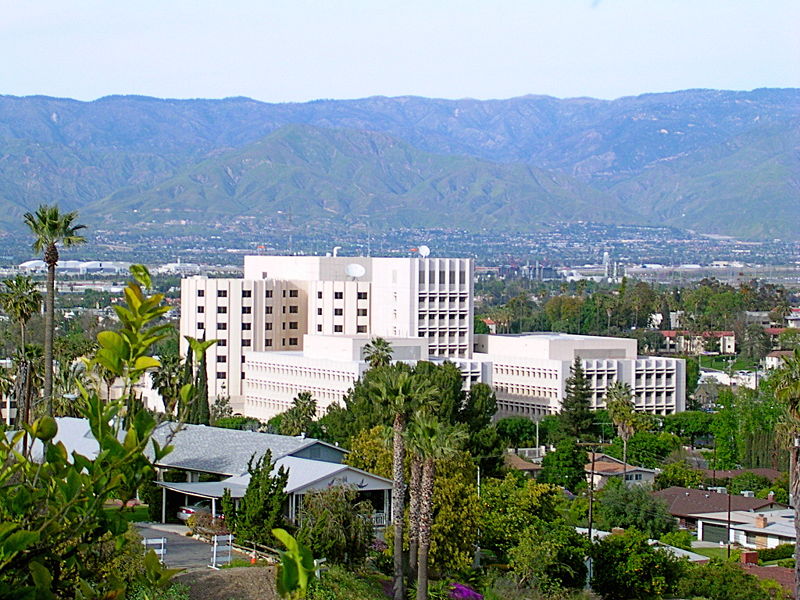
From Emily Esfahani Smith’s new Atlantic article, “The Lovely Hill: Where People Live Longer and Happier,” a passage about the healthy lifestyle of one of the long-lived residents of Loma Linda, California, the 98-year-old surgeon Ellsworth Wareham:
“As a middle-aged man, Wareham spent a lot of time in the operating room cutting into one patient after another who had heart problems. There, he noticed something: patients who were vegetarian mostly had much cleaner and smoother arteries than those who ate meat. The arteries of meat-eaters tended to be full of calcium and plaque.
So he made a choice. He decided to become a vegan. That decision was not too hard to make given the fact that many of the inhabitants of his southern Californian community were already very health conscious. Consider: there is no meat sold at one of the largest grocery stores in town. In fact, as recently as a generation ago, meat was difficult to find in the grocery stores of Loma Linda, as the New York Times reports. On top of that, smoking is banned in the town; alcohol is scarcely available; and fast food restaurants are hard to come by.
But make no mistake: Loma Linda is not some bohemian enclave of free-spirited vegans. Rather, what makes the community remarkable — and remarkably health conscious — is that it is home to one of the largest concentrations of Seventh-Day Adventists in the world. A conservative denomination of Christianity founded during this country’s Second Great Awakening in the mid-1800s, the religion advocates a healthy lifestyle as a main tenet of the faith. This is a major reason why Wareham, a Seventh-Day Adventist, takes his health so seriously.”
David Gelernter, a computer genius with perplexing, reductive politics, believes the next wave of our online interconnectedness will see streams largely replace searches, something that has happened already to a certain extent. From his new Wired article, “The End of the Web, Search and Computer As We Know It“:
“Today’s operating systems and browsers — and search models — become obsolete, because people no longer want to be connected to computers or ‘sites’ (they probably never did).
What people really want is to tune in to information. Since many millions of separate lifestreams will exist in the cybersphere soon, our basic software will be the stream-browser: like today’s browsers, but designed to add, subtract, and navigate streams.
Searching content in a time stream is a matter of stream algebra, which is easier than the algebra of space-based structures like today’s web. Add two timestreams and get a third (simply merge the AP news feed and my friend Freeman’s blog streams into time-order); and content search is a matter of stream subtraction (simply subtract all entries that don’t mention ‘cranberries’ to yield all the entries that do). The simple, practical features of stream algebra have one huge benefit: giving us made-to-order information.
Every news source is a lifestream. Stream-browsers will help us tune in to the information we want by implementing a type of custom-coffee blender: We’re offered thousands of different stream ‘flavors,’ we choose the flavors we want, and the blender mixes our streams to order.
Every site’s content is liberated from the confines of space. It becomes part of a universal timestream. Instead of relying on Amazon the site to notify me if there’s a new Cynthia Ozick book or new books on the city of Florence, I can blend together several booksellers’ lifestreams and then apply my search since stream algebra allows any streams to be added (new and used books) and content (Florence, Ozick) to be subtracted.
E-commerce changes drastically. We shouldn’t have to work to find what’s new, yet the way the web is currently architected it’s no different logically than having to visit a thousand separate physical shops. The time-based worldstream lets us sit back instead and watch a single, customized fashion show across sites.”
Tags: David Gelernter
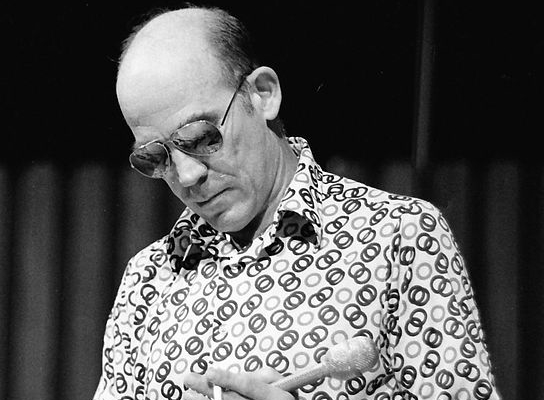
Hunter S. Thompson brought a rifle with him on a commercial flight to New York when visiting David Letterman in 1988. Such an innocent time.
Are the subway cars crashing anyone else?
I’ve noticed with the newer subway cars on the track, it sends out a strange beeping noise just before it passes by. This noise actually happens at just about the same time my computer crashes or the TV freezes. I was wondering if anyone else has noticed this intrusion of the MTA equipment.
Drones will be used in the U.S. to deliver goods and aid police, but someday soon we might not be worried about a plane flying into a tower but instead a bird–wait, that is a bird, right? From a really good Time article by Lev Grossman about drones proliferating in the private sector:
“Drones are learning to think for themselves. Those University of Pennsylvania drones are already semiautonomous: you can toss a hoop in the air and they’ll plot a trajectory and fly right through it. (Whether or not you count Google’s self-driving cars as people-carrying, highway-borne drones seems like a question of semantics.) They’re also gaining endurance. In June, Boeing tested a liquid-hydrogen-powered drone called the Phantom Eye that’s designed to cruise at 65,000 ft. for four days at a time. Boeing’s Solar Eagle, which has a 400-ft. wingspan, is scheduled for testing in 2014. Its flights will last for five years.
This technology will inevitably flow from the military sphere into the civilian, and it’s very hard to say what the consequences will be, except that they’ll be unexpected. Drones will carry pizzas across towns and drugs across borders. They’ll spot criminals on the run and naked celebrities in their homes. They’ll get cheaper to buy and easier to use. What will the country look like when anybody with $50 and an iPhone can run a surveillance drone? Last fall the law schools at Stanford and NYU issued a report, ‘Life Under Drones,’ which was based on 130 interviews with Pakistanis. It makes for unsettling reading. ‘Drones are always on my mind,’ said a man from Islamabad. ‘It makes it difficult to sleep. They are like a mosquito. Even when you don’t see them, you can hear them. You know they are there.’
Right now the U.S. is the only nation that operates drones on a large scale, but that will change: flying drones is hard, but it’s not that hard. Singer estimates that there are 76 other countries either developing drones or shopping for them; both Hizballah and Hamas have flown drones already. In November, a Massachusetts man was sentenced to 17 years for plotting to attack the Pentagon and the Capitol with remote-controlled planes. (The drone equivalent of the Newtown, Conn., atrocity is simply beyond contemplation.) The moral ambiguity of covert drone strikes will clarify itself very quickly if another country claims the right under international law to strike its enemies in the U.S. There may come a day when the U.S. bitterly regrets the precedents it has set.”
Tags: Lev Grossman
Technological innovation leads to great wealth for a few but the struggle with creative disruption can last for most people for decades–until, at long last, hopefully, prosperity arrives. But until then–wow–painful! From a new Business Insider interview with Paul Krugman about the rise of the machines:
“Whereas from about 1980 to 2000, the discussion about inequality was mostly seen as labor vs. labor (high-paid, high-skilled workers vs low-paid, low-skilled workers) the new story is about labor vs. capital a topic that is more taboo.
[Krugman] notes that there have been periods before where workers went several decades without reaping the benefits of capital-favoring technologies (the industrial revolution), and it’s possible that we’re in a period like that now, which unfortunately means that easy answers like ‘skills training’ won’t necessarily help much.’
As for the specific technologies that he’s intrigued by right now, he mentioned driverless cars and speech recognition, both of which use ‘big data’ to accomplish something that we previously thought required human intelligence.”
Tags: Paul Krugman
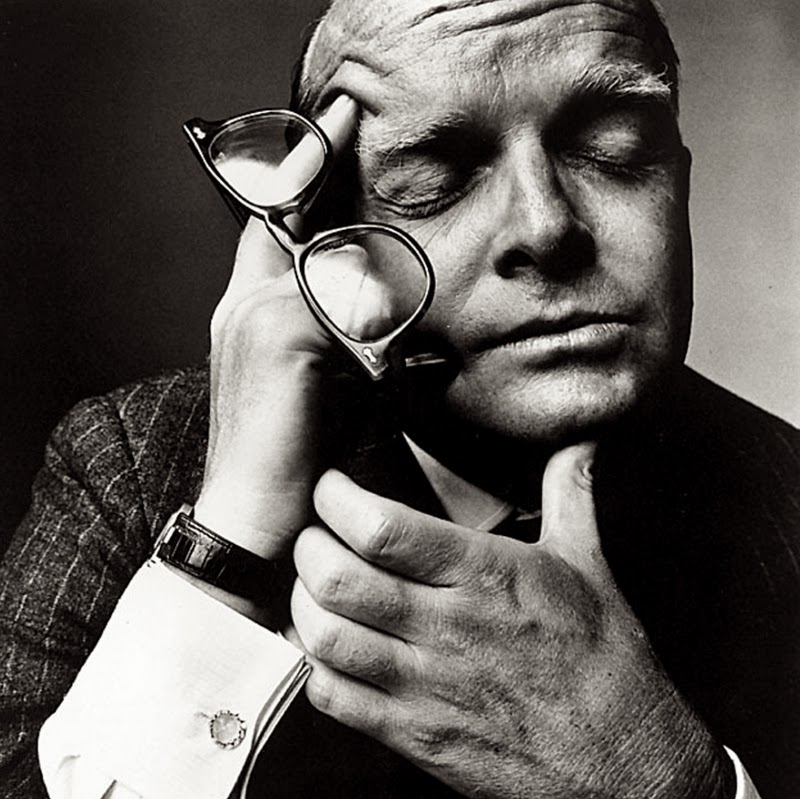
Truman Capote’s final, uncompleted novel, Answered Prayers, the one that was excerpted in Esquire in the 1970s and destroyed his social life, was never published in full. No one is totally sure where the hundreds of pages reside, but it’s believed they’re languishing in an unknown California bank security-deposit box, waiting to be found. At least that’s the theory put forth in Sam Kashner’s recent Vanity Fair piece, “Capote’s Swan Dive“:
“After Capote’s death, on August 25, 1984, just a month shy of his 60th birthday, Alan Schwartz (his lawyer and literary executor), Gerald Clarke (his friend and biographer), and Joe Fox (his Random House editor) searched for the manuscript of the unfinished novel. Random House wanted to recoup something of the advances it had paid Truman—even if that involved publishing an incomplete manuscript. (In 1966, Truman and Random House had signed a contract for Answered Prayers for an advance of $25,000, with a delivery date of January 1, 1968. Three years later, they renegotiated to a three-book contract for an advance of $750,000, with delivery by September 1973. The contract was amended three more times, with a final agreement of $1 million for delivery by March 1, 1981. That deadline passed like all the others with no manuscript being delivered.)
Following Capote’s death, Schwartz, Clarke, and Fox searched Truman’s apartment, on the 22nd floor of the U.N. Plaza, with its panoramic view of Manhattan and the United Nations. It had been bought by Truman in 1965 for $62,000 with his royalties from In Cold Blood. (A friend, the set designer Oliver Smith, noted that the U.N. Plaza building was ‘glamorous, the place to live in Manhattan’ in the 1960s.) The three men looked among the stacks of art and fashion books in Capote’s cluttered Victorian sitting room and pored over his bookshelf, which contained various translations and editions of his works. They poked among the Tiffany lamps, his collection of paperweights (including the white rose paperweight given to him by Colette in 1948), and the dying geraniums that lined one window (‘bachelor’s plants,’ as writer Edmund White described them). They looked through drawers and closets and desks, avoiding the three taxidermic snakes Truman kept in the apartment, one of them, a cobra, rearing to strike.
The men scoured the guest bedroom, at the end of the hallway—a tiny, peach-colored room with a daybed, a desk, a phone, and lavender taffeta curtains. Then they descended 15 floors to the former maid’s studio, where Truman had often written by hand on yellow legal pads.
‘We found nothing,’ Schwartz told Vanity Fair. Joanne Carson claims that Truman had confided to her that the manuscript was tucked away in a safe-deposit box in a bank in California—maybe Wells Fargo—and that he had handed her a key to it the morning before his death. But he declined to tell her which bank held the box. ‘The novel will be found when it wants to be found,’ he told her cryptically.”
Tags: Alan Schwartz, Joanne Carson, Joe Fox, Oliver Smith, Sam Kashner, Truman Capote
From the August 31, 1847 Brooklyn Daily Eagle:
“A very melancholy affair occurred at Mount Pleasant, near Sing Sing, on Sunday last, the facts of which case have been furnished by a gentleman who came down from the place yesterday morning. A man named Amos Northrup, aged 45 years, a native of Newcastle, had been for some time engaged to marry Miss Mary Goodheart, a young woman 15 years of age. But from recent exhibitions he made of violent and ungovernable temper, she felt it her duty to break off the match, and so stated to him Sunday last, at the residence of her sister. On hearing this he immediately stabbed her, when she cried out to her sister, ‘He is murdering me!’ and ‘Jump out the window!’ Both young women then jumped out of the window together and fell upon the ground, uninjured by the fall. Mary was mortally wounded and died in a few minutes. Her sister states that she saw the handle of the dirk, as Northrup plunged it into her breast. The murderer escaped while the brother and sister were carrying the body into the house. Parties of citizens assembled and commenced searching the country for him, but he had not been taken at the last accounts. He is six feet high, stout built, rather bony. Has light hair and complexion, down cast look. He may have escaped to N.Y. city.”
Tags: Amos Northrup, Miss Mary Goodheart
Bill Gates grew up in Seattle near an early computer center and Steve Jobs in Silicon Valley. Would they have chosen different paths in life if they were raised in Idaho or Kansas? How much does the place where we’re raised have to do with who we become? How much of it is chance and how much of it is hardwired?
David Fincher spent his formative years in the shadow of Northern California filmmakers like Francis Ford Coppola and George Lucas and believes that explains to a good extent why he’s a filmmaker. From a really good Financial Times piece about Fincher by Matthew Garrahan:
“Though Fincher’s childhood experience of Rear Window convinced him that he wanted to work in Hollywood, there was already plenty of film-making taking place around him in Marin County. He grew up in a middle-class family but their neighbors were some of Hollywood’s biggest names. ‘George Lucas was my neighbor, Francis Coppola was shooting The Godfather [nearby] in Shady Lane. There was a lot of film around.’
Lucas, who had not yet made Star Wars, was then embarking on his film career. ‘I was walking down the street one day with a friend of mine and saw a crew setting up lights for American Graffiti. We saw these old [Ford] Thunderbirds driving around. And then the movie came out. They found a part of a street in Petaluma that looked 10 years old and were able to transport an audience back in time with wardrobe, the hairstyles. To see that happen … was unbelievable.’ And fortunate, I say. Imagine if he had been raised in Idaho instead of Marin County. ‘I’d be a rancher. I’d be delivering calves now.’
When he was 14 his parents moved to Oregon but three years later the 17-year-old Fincher returned to California, where he stayed with a friend and his mother, and, unusually for a film director of his generation, did not attend film school. Within two years, however, he had found himself a job working for Lucas’s Industrial Light and Magic, where he was part of the crew that made Return of the Jedi.”
Tags: David Fincher, Francis Ford Coppola, George Lucas, Matthew Garrahan
Do you remember when astronauts recited the Pledge of Allegiance before the Super Bowl and the Halftime Show was a college marching band? Me neither.
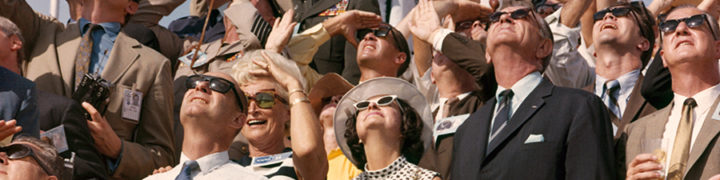
Before the game was sold as a global event, it was a national one. At Super Bowl III in the Orange Bowl in 1969, a trio of Apollo 8 astronauts led the crowd–which included Joe and Ted Kennedy, Bob Hope and Spiro Agnew–in pledging allegiance to the U.S. flag. The Florida A&M University marching band entertained between halves.
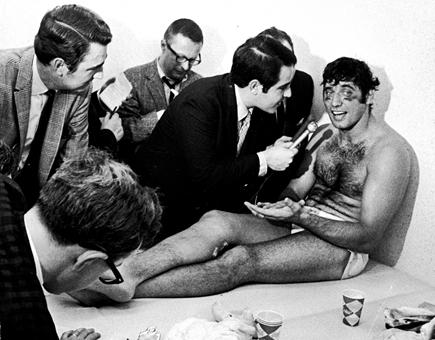
The Jets became the first AFL team to win the game, defeating the heavily favored Colts, solidifying the planned NFL-AFL merger. Joe Namath became a national sensation, having boldly predicted the upset. A very gifted and confident quarterback who threw tons of interceptions, Namath was a very good player who would forever be overrated as great because of this game.
10 search-engine keyphrases bringing traffic to Afflictor this week:
- donald trump cologne
- charlie smith at the age of 135
- the first person to live to 150
- frank borman carl sagan feud
- jimmy breslin s most famous article
- bobby fischer as a child
- where can i buy pregnant chick s urine?
- john denver interviews werner erhard
- george francis train the inspiration for around the world in eighty days
- mark singer article about ricky jay
- Even more proof that Donald Trump is a complete moron.
- Old Print Articles: General Lew Wallace dies at Indiana home (1905) + Poor man sells mustache (1893).
- Classic Photograph: Upton Sinclair, Pumping Oil! (1927)
- Featured Videos: Bill Boggs interviews Billy Carter and John Dean + William F. Buckley, Hank Aaron and Louis C.K. join Conan O’Brien for a sketch (1993) + Mike Wallace reporting on the Rebirthing trend (1981) + David Frost interviews football coach Brian Clough in 1974 (both of whom would be portrayed decades later by Michael Sheen).
- Recently Posted on NYC’s Craigslist: How Ron Paul got started + Please visit me at my house of horrors + I’d also like to sample the drugs in you medicine cabinet.
- Chucklehead Joe Scarborough will, perhaps, someday be right.
- Cinema pioneer Eadweard Muybridge is the subject of a new book.
- John Demjanjuk wasn’t the only former Nazi to move to America.
- David Mamet really wants armed guards in American schools.
- Should we use an extreme method to stop cats from harming biodiversity?
- A man who injects himself with snake venom did an Ask Me Anything .
- We may be close to enjoying sprayable Wi-Fi.
- Imagining architecture that can repel drones.
- Researchers mine newspaper archives to predict the future.
- The Milgram Experiment reimagined for the Digital Age.
- American kids can’t drive or go to a comedy club, but they can fire guns.
- Oliver Sacks explains that our memories are sometimes imagined.
- 3 things that can accelerate the presence of driverless cars.
- Bruce Nussbaum examines Apple’s fading aura.
- Without the U.S. Postal Service, life would be different.
- A passage from Walter Benjamin’s 1936 essay about art in the machine age.
- A pen attachment can instantly scan and translate text.
- A brief note from 1902 about a bad patient.
- A brief note from 1858 about a boating trip.
- Afflictor Nation: Great Britain rules in January.
- This week’s Afflictor keyphrase searches.