Hopefully the earth stays quiet today.
More earthquake posts:
Ideas and technology and politics and journalism and history and humor and some other stuff.
Hopefully the earth stays quiet today.
More earthquake posts:
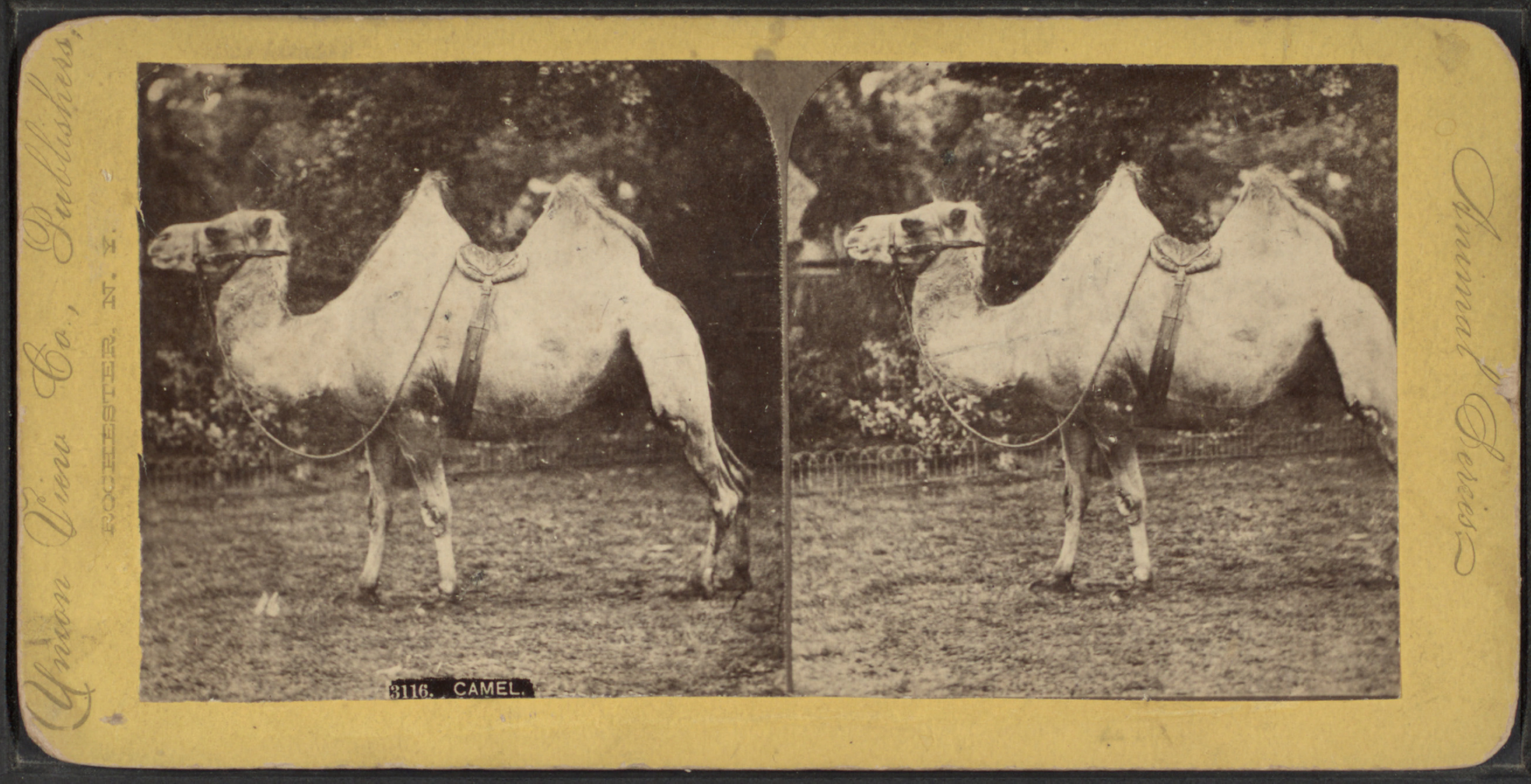
Camels didn’t always thrive in 19th-century America, but people kept trying to integrate them into life in the U.S. In fact, according to the first of the three stories below from the Brooklyn Daily Eagle, the beasts were used by the United States Postal Service in the 1850s to deliver mail on the Great Plains.
•••••••••••
“The Camels Are Coming” (April 2, 1856): “The camel experiment over the plains (for mail and other transport), for which Congress made appropriation two years ago, will soon be tried. The camels are now en route from Asia Minor. The whole number is 33, viz: 9 male and 15 female camels; 4 male and 5 female dromedaries. The vessel and this cargo is expected to arrive in Texas about that time. Several of the animals are presents from the Viceroy of Egypt.”
•••••••••••
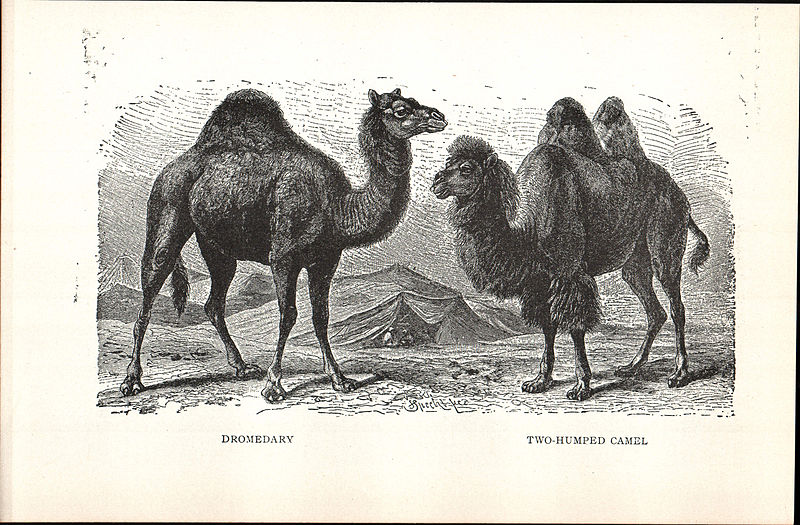 “Three Camels on the Bridge” (July 26, 1883): “This morning about four o’clock, three camels, on their way from Coney Island to Central Park, were being driven across the bridge by three young lads. When near the New York tower the camels got frightened and ran away, but Officer Dooley, who was stationed at the New York entrance, seeing the animals approach at a furious rate, closed the gates and thus captured them. One of the boys was knocked down and kicked by one of the animals, but his injuries did not prevent him from proceeding on his journey. These are the first camels that have crossed the bridge, and it seems rather unfortunate that their initial trip should have been attended with this little accident. Officer Dooley says that as long as he lives he should never forget the sight that these beasts presented as they ran at full speed toward him. It had been such a long time since he saw a camel and it being the last beast on earth that he expected to meet on the bridge, he said that they almost scared him out of his senses.”
•••••••••••
“Baby Camel Wears Boots” (July 23, 1902): “The baby camel born in Central Park several months ago was provided with a new pair of leather boots this morning by Superintendent Smith. The camel of of the double hump species, and is one of three of the species in the Park menagerie. When it was born Superintendent Smith discovered that the animal’s forelegs were very weak–so weak, in fact, that the camel was unable to stand up unless it stood on the ankle joints.”
•••••••••••
Camel ride, Luna Park, Coney Island, 1903:

"They lack the ability to process all that information in real time and then intelligently act on the results." (Image by Bin im Garten.)
From “Autonomous Robots in the Fog of War,” Lori G. Weiss’ new IEEE Spectrum report about the future of robotic warfare, which may be more in the distance than in the offing:
“So why haven’t we seen a fully autonomous robot that can sense for itself, decide for itself, and seamlessly interact with people and other machines? Unmanned systems still fall short in three key areas: sensing, testing, and interoperability. Although the most advanced robots these days may gather data from an expansive array of cameras, microphones, and other sensors, they lack the ability to process all that information in real time and then intelligently act on the results. Likewise, testing poses a problem, because there is no accepted way to subject an autonomous system to every conceivable situation it might encounter in the real world. And interoperability becomes an issue when robots of different types must interact; even more difficult is getting manned and unmanned systems to interact.
To appreciate the enormous challenge of robotic sensing, consider this factoid, reported last year in The Economist: ‘During 2009, American drone aircraft…sent back 24 years’ worth of video footage. New models…will provide ten times as many data streams…and those in 2011 will produce 30 times as many.’ It’s statistics such as those that once prompted colleagues of mine to print up lanyards that read ‘It’s the Sensor, Stupid.'”
••••••••••
BigDog, from the good people at Boston Dynamics:
Tags: Lori G. Weiss

"Once inside the stomach, the tapeworm egg hatches, travels through the bloodstream and ends up in the muscles, brain or eyes."
Increasing in Mexico and bordering southwestern states
Tapeworm infections of the brain, which can cause epileptic seizures, appear to be increasing in Mexico and bordering southwestern states, Loyola University Health System researchers report.
In Mexico, up to 10 percent of the population may have the infection, neurocysticercosis. While many people never develop symptoms, neurocysticercosis nevertheless “remains a serious health concern, especially among the poor,” Loyola researchers wrote in the April issue of the journal Neurological Research.
Their article, “Management of Neurocysticercosis,” is among several articles in the April issue of Neurological Research that describe neurological infections in Latin America. Guest editor is Dr. Jaime Belmares, assistant professor in the Division of Infectious Diseases, Loyola University Chicago Stritch School of Medicine.
Neurocysticercosis is caused by a tapeworm found in pigs called Taenia solium. A person can get infected with the parasite by eating undercooked pork. That person then can excrete tapeworm eggs. The contamination spreads through food, water or surfaces contaminated with feces. A person can become infected, for example, by drinking contaminated water or putting contaminated fingers in the mouth.
Neurocysticercosis is most common in poor rural communities in developing countries with poor sanitation and hygiene and where pigs are allowed to roam freely and eat human feces.
Once inside the stomach, the tapeworm egg hatches, travels through the bloodstream and ends up in the muscles, brain or eyes. The worm, which can grow to more than one-half inch long, becomes enveloped in a fluid-filled cyst. Cysts in the muscles generally don’t cause symptoms. But cysts in the eyes can cause blurry vision, while cysts in the brain can cause headaches, encephalitis and seizures. Less common symptoms include confusion and difficulty with balance.
Seizures occur in up to 70 percent of patients. “They’re pretty dramatic,” Belmares said. “Every seizure needs to be properly evaluated.”
The article on neurocysticercosis was written by Dr. Adolfo Ramirez-Zamora, a former resident at Loyola now at the University of California at San Francisco and Tomas Alarcon, who did a rotation at Loyola during medical school.
Other articles in the April issue of Neurological Research describe other neurological infections in Latin America, including Chagas disease, hydatid disease of the central nervous system, neuroschistosomiasis, meningococcal disease and rabies.
Tom Snyder studies Howard Hughes’ Spruce Goose in 1979.
Tags: Howard Hughes, Tom Snyder

"The algorithms used by Amazon to set and update prices started outbidding each other." (Image by J.J. Harrison.)
Algorithms increasingly run many aspect of our lives, but sometimes this computer-generated math we can barely comprehend runs amok. An excerpt from a cautionary tale about algorithms by Jane Wakefield at the BBC:
“At last month’s TEDGlobal conference, algorithm expert Kevin Slavin delivered one of the tech show’s most ‘sit up and take notice’ speeches where he warned that the ‘maths that computers use to decide stuff’ was infiltrating every aspect of our lives.
Among the examples he cited were a robo-cleaner that maps out the best way to do housework, and the online trading algorithms that are increasingly controlling Wall Street.
‘We are writing these things that we can no longer read,’ warned Mr Slavin.
‘We’ve rendered something illegible. And we’ve lost the sense of what’s actually happening in this world we’ve made.’
Algorithms may be cleverer than humans but they don’t necessarily have our sense of perspective – a failing that became evident when Amazon’s price-setting code went to war with itself earlier this year.
The Making of a Fly – a book about the molecular biology of a fly from egg to fully-fledged insect – may have been a riveting read but it almost certainly didn’t deserve a price tag of $23.6m (£14.3m).
It hit that figure briefly on the site after the algorithms used by Amazon to set and update prices started outbidding each other.
It is a small taste of the chaos that can be caused when code gets smart enough to operate without human intervention, thinks Mr Slavin.
‘This is algorithms in conflict without any adult supervision,’ he said.”
••••••••••
Slavin’s TED Talk about algorithms infiltrating our lives:
Tags: Jane Wakefield, Kevin Slavin
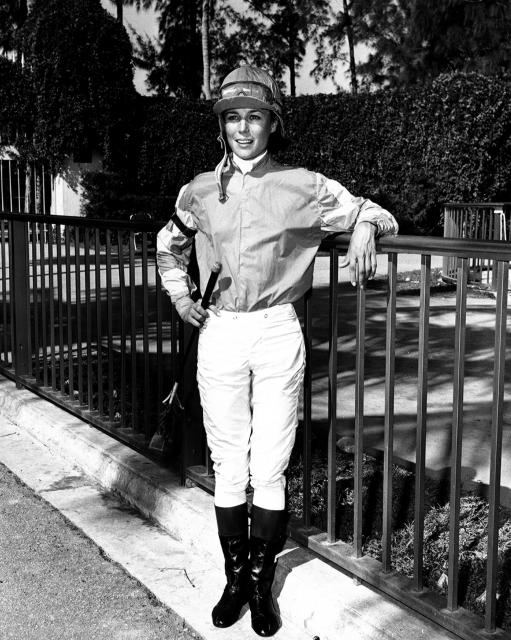
Jockey Robyn Smith’s remarkably quick journey from aspiring Hollywood starlet to respected professional athlete was the basis of a 1972 Sports Illustrated story by scribe Frank Deford. But her greatest fame was still in the distance, occurring by virtue of an unlikely 1980 marriage to legendary film dancer Fred Astaire. An excerpt from the SI profile of Smith, who was given to telling tall tales about herself:
As a kid she played boys’ games, and certainly jockeys don’t intimidate her because she is, after all, taller than everybody she rides against. “The men jockeys have treated me terrific,” she says, “but then, all my friends have always been men. I resented being called a tomboy, though, because I wouldn’t want to be a man. I like them too much. I just get along with them, period. Women resent this for some reason. My mother used to resent this. Like when she and my father would have people over, I’d hang around with the men.” Robyn always addresses married couples as “you guys.”
She exercises every morning, runs religiously, and indulges herself only in a little wine and brandy. She is a fine golfer, long off the tee, and picks up any sporting activity easily. Ransohoff, the film producer, took her deep-sea fishing. “We hit a school of albacore,” he says, “and I mean they were rolling. Robyn hung more albacore in that hour than any man on board.”
“I’m thin, but I’m strong,” Robyn explains clinically, getting set to flex again. “I always had good muscles. I’m a rare physical individual—and I’m not trying to be narcissistic about it. It’s just that I’m very unusual in that way.”
Yet Robyn has taken off so much weight that she appears to have no emotional reservoir to sustain her. Her system is littered with the residual effects of weight pills, water pills, hormone pills, big pills, little pills, pill pills that she gobbles indiscriminately. Even when she was a world-beater at the spring meeting, she was constantly at a temperamental flood tide. She breaks into tears regularly, not only over losing a race but, say, while watching some banal TV drama. The least aggravation unnerves her. People fall out of her favor upon the smallest alleged slight, only to return just as whimsically to her good graces. Her fetish for freedom borders now on mania; it is easier to schedule an appointment with the Dalai Lama than Robyn Smith. She has become less receptive to criticism, and woe to the most well-intentioned innocent who forgets and idly tells her the same thing twice.•
_______________________________
Smith profiled in 1985.
Tags: Frank Deford, Fred Astaire, Robyn Smith

From “Swamp Dreams,” a great New York piece by Robert Sullivan about a shopping colossus rising (perhaps) in the Meadowlands, in what’s supposedly a post-mall America:
“If you disregard military bases and airports, and maybe the dam the Chinese government is beginning to regret it built on the Yangtze, the mall currently under construction at the Meadowlands will be one of the biggest feats of construction in history: the world’s largest commercial space, with at least six zeros attached to all the calculations. There is to be an astonishing 7.5 million square feet of retail space. Every year, the mall’s developers expect 55 million people—almost the population of Italy—to show up for, say, breakfast and some jeans and maybe a luxury item, as well as a show or a fighter-jet flight simulation or a grande decaf latte beneath a TV screen that will make Times Square seem like a rec room from the seventies. There will be the first indoor ski slope in North America: 800 feet long, sixteen stories high, with fresh snow made daily. There will be a skating rink the size of a small lake. And in the water-themed part of the structure, there will be a gigantic room modeled after Hawaii, with a tropical climate, a pool featuring six-foot waves, and possibly some kind of whale or unusual fish, explained to shoppers by sea-life educators.”
••••••••••
“It was known as Xanadu…now the American Dream.”
Tags: Robert Sullivan
Electric fingers, from the fine people at Advanced Arm Dynamics. Or perhaps you would prefer a hand transplant at UCLA.

"Fear of leaving present location and experiencing adverse effects of sudden withdrawal." (Image by Frank C. Müller.)
does anyone know of a specific type of blood test that will indicate the presence of pharmaceutical substances? i get the feeling (or rather, possibly side effects) that i’m being slipped a pharma-mickey here and there, probably by some SOMA-ite. Makes brainwashing and coersive-Group-evangelism seem much less difficult, i’m pretty sure. I’m really sorry for the possesors’ (pun intended) over-active third eye, but i’m not trying to chemically alter them because of the way they were made.
Side effects include:
Thanks for any names of specific tests a person can order via clinic, facility, or doctor.
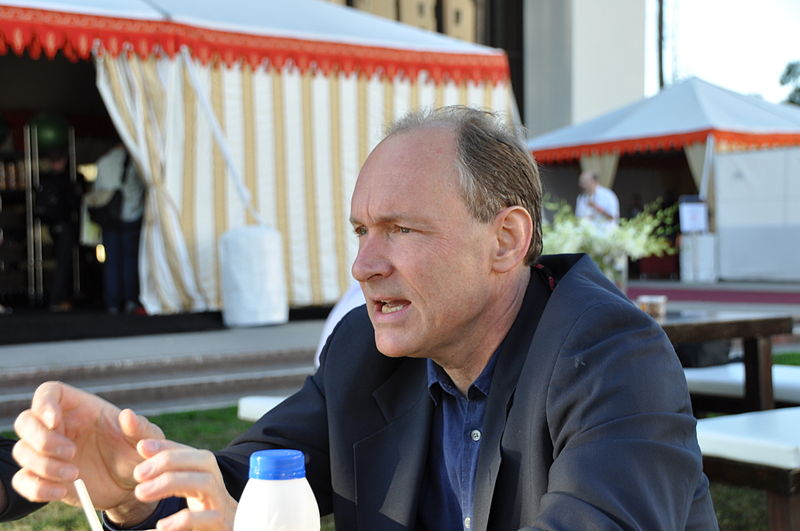 From John Naish’s New Statesman profile of World Wide Web creator, Tim Berners-Lee, who gave away his invaluable creation and wants it to remain open and unfettered:
“Berners-Lee formally introduced his hobby-built system to the world on 6 August 1991 by posting a message on an internet bulletin board for fellow hypertext program developers. That day, he put the world’s first proper website online. It explained what a website was and gave details of how to create one. Neither initiative caused any immediate interest.
It feels odd to picture him struggling to convince people of the web’s potential. ‘It was just a load of hard work,’ he says – ‘getting up in the morning and thinking, ‘What the hell will I do today? Should I ask people at Cern to instal browsers? Should I get more servers running, write more code for browsers, or should I talk at a conference? Or should I do my own website as an example for other people?'” (Thanks Broswer.)
••••••••••
Eugene Mirman interviews Sir Tim Berners-Lee:
Tags: John Naish, Tim Berners-Lee
Neil Armstrong interviewed on the Beeb in 1970.
Tags: Neil Armstrong
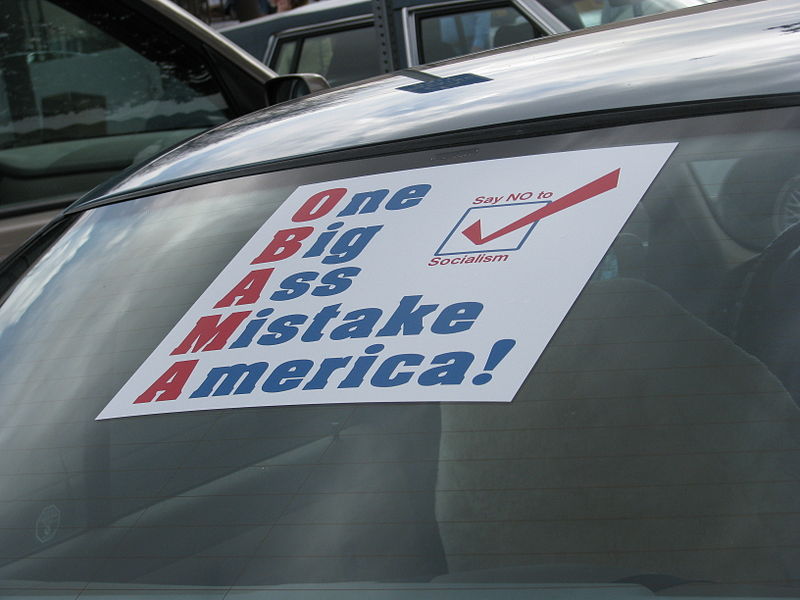
In “What Would Hillary Clinton Have Done?” Rebecca Traister’s smart piece in this week’s New York Times Magazine, the writer offhandedly raises a provocative question in the margins: Would there be a Tea Party if Barack Obama wasn’t President and a white Democrat was? I suppose my answer is “yes.”
The Tea Party is ostensibly a reaction to our financial sector’s gross malfeasance (which does indeed exist), a greater government interference in our lives (which does not) and a rising budgetary deficit (which didn’t seem to bother them while W. was creating it). But you don’t have to look too closely to see the racism barely below the surface.
The biggest tell is the Birther movement. Obama is not the same color as us and has a name that is different than ours, so he is Other. And “non-American” is, of course, just a code word for “non-white.” And the incivility directed at Obama from elected officials and a Supreme Court justice is a disrespect that seems to be driven by feelings of entitlement, perhaps the racial kind.
But let’s recall Bill Clinton’s Presidency and the viciousness directed at him. In Clinton’s case he was labeled “Liberal,” which in many ways was about as accurate as calling Obama “Kenyan.” The Christian Conservative movement that fueled the Reagan ascendancy came up against the first President who wasn’t its choice, and things got ugly in a hurry. Hillary Clinton was likewise smeared, in a sexist way. There was no organized Tea Party, but the same anti-progress strain was driving the movement.
Chris Rock has referred to the Birther Movement in particular and the Tea Party in general as the last angry vestiges of racism, the scary loudness being nothing more than a death rattle. That may be true when it comes to the racial element. But can’t anyone be demonized by this segment of our society if its greatest fear isn’t of a black planet but simply of the future?•
Tags: Rebecca Traister
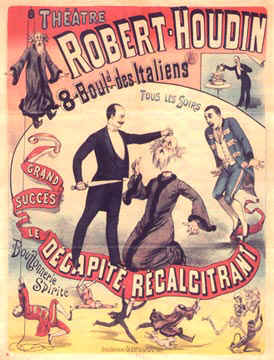
Magicians used to take the name of a famous predecessor, bastardize it slightly, and pay homage to their forebearer while placing themselves in a continuum. Harry Houdini, born Ehrich Weiss, took his name from the famed French magus Jean Eugène Robert-Houdin. At one point, the Frenchman was supposedly assigned by his government the odd task of traveling to Algeria and using his hocus-pocus to influence so-called Arab tribes away from the guidance of Islamic leaders (or “marabouts,” as they are referred to in the piece.) An excerpt about this deeply ethnocentric (and largely fictional) story from an awkwardly written piece in the November 7, 1857 Brooklyn Daily Eagle, which originally appeared in the London Times:
“Every one has seen or heard speak of Robert Houdin. Besides being the prince of conjurers he is an able mathematician and mechanician, and his electric clock, made for the Hotel de Ville of his native town of Blois, obtained a medal of the Paris exhibition. It is not generally known that he was sent to Algeria by the French Government, on a mission connected with the Black Art–probably the first time that a conjurer has been called upon to exercise his profession in government employ. Some details of his expedition have been published. Its object was to destroy the influence exercised among the Arab tribes by the marabouts–an influence often mischievously applied. By a few clumsy tricks and impostures these marabouts pass themselves off as sorcerers; no one it was thought, was better able to eclipse their skill and discredit their science than the man of inexhaustible bottles.
One of the greatest pretensions of the marabouts was to invulnerability. At the moment that a loaded musket was fired at him, amd the trigger pulled, he pronounced a few cabalistic words, and the weapon did not go off. Houdin detected the trick, and showed that the touchhole was plugged. The Arab wizard was furious and abused the French rival.
‘You may revenge yourself,’ quietly remarked Houdin, ‘take a pistol, load it yourself; here are bullets, put one in the barrel, but before doing so mark it with your knife.’ The Arab did as he was told.

"A fanatical marabout had agreed to give himself up to the sorcerer."
‘You are quite certain, now,’ said Houdin, ‘that the pistol is loaded and will go off. Tell me, do you feel no remorse in killing me thus, notwithstanding that I authorize!’
‘You are my enemy,’ cooly replied the Arab, ‘I will kill you.’ Without replying, Houdin struck an apple on the point of a knife, and calmly gave the word to fire.
The pistol was discharged, the apple flew far away, and there appeared in its place, stuck on the point of the knife, the bullet the marabout had marked.
The spectators remained mute from stupefaction; the marabout bowed before his superior; ‘Allah is great,’ he said, ‘I am vanquished.’ Instead of the bottle from which, in Europe, Robert Houdin pours an endless stream of every description of wine and liquor, he called for an empty bowl, which he kept continually full of boiling coffee, but few of the Arabs would taste it, for they made sure that they came from the devil’s own coffee pot. He told them that it was in his power to deprive them of all strength and to restore it to them at will, and he produced a small box, so light that a little child could lift it with its finger; but it suddenly became so heavy that the strongest man present could not life it, and the Arabs, who prize physical strength above everything. looked with terror at the great magician who, they doubted not, could annihilate them by the mere exertion of his will. They expressed this belief; Houdin confirmed them in it, and promised that on a day appointed, he would convert one of them into smoke. The day came; the throng was prodigious; a fanatical marabout had agreed to give himself up to the sorcerer. They made him stand upon a table and covered him with a transparent gause; then Houdin and another person lifted the table by the two ends, and the Arab disappeared in the cloud of smoke.
The terror of the spectators was indescribable; they rushed out of the place and run a long distance before some of the boldest thought of returning to look after the marabout. They found him near the place where he had been evaporated; but he could tell them nothing, and was like a drunken man, ignorant of what had happened to him. Thenceforward Houdin was venerated and the marabouts despised; the object of the French Government was completely attained.”
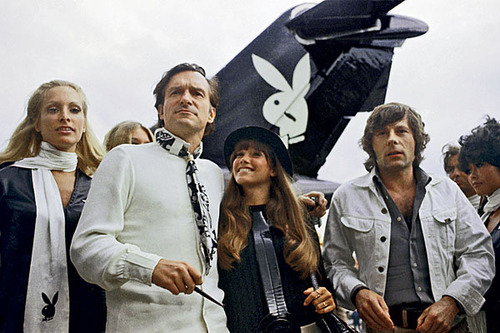
Roman Polanski and Sharon Tate discussing shifting mores with Hugh Hefner on Playboy After Dark, July 1968.
Tags: Hugh Hefner, Roman Polanski, Sharon Tate

From “Marrying Absurd,” Joan Didion’s 1967 essay about getting hitched in Las Vegas, a garish man-made oasis that shouldn’t logically exist, but does so stubbornly, spectacularly, almost mythically:
“What people who get married in Las Vegas actually do expect–what, in the largest sense, their ‘expectations’ are– strikes one as a curious and self-contradictory business. Las Vegas is the most extreme and allegorical of American settlements, bizarre and beautiful in its venality and in its devotion to immediate gratification, a place the tone of which is set by mobsters and call girls and ladies’ room attendants with amyl nitrite poppers in their uniform pockets. Almost everyone notes that there is no ‘time’ in Las Vegas, no night and no day and no past and no future (no Las Vegas casino, however, has taken the obliteration of the ordinary time sense quite so far as Harold’s Club in Reno, which for a while issued, at odd intervals in the day and night, mimeographed ‘bulletins’ carrying news from the world outside); neither is there any logical sense of where one is. One is standing on a highway in the middle of a vast hostile desert looking at an eighty-foot sign which blinks ‘STARDUST’ or ‘CAESAR’S PALACE.’ Yes, but what does that explain? This geographical implausibility reinforces the sense that what happens there has no connection with ‘real’ life; Nevada cities like Reno and Carson are ranch towns, Western towns, places behind which there is some historical imperative. But Las Vegas seems to exist only in the eye of beholder all of which makes it an extraordinary and interesting place, but an odd one in which to want to wear a candlelight satin Priscilla of Boston wedding dress with Chantilly lace insets, tapered sleeves and a detachable modified train.” (Thanks TETW.)
••••••••••
Elvis marries Priscilla, Las Vegas, 1967:
More Joan Didion posts:
Tags: Joan Didion
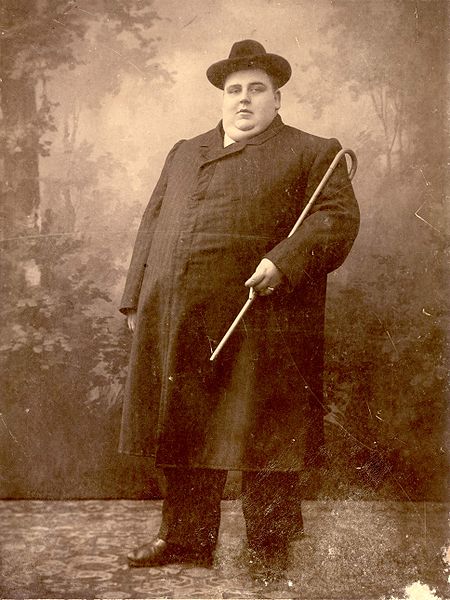
"No counting calories."
And Very Happy! no counting calories. I’m about to eat some steak with fries that my fat wife is cooking. I’m rubbing my feet together because I’m so Excited!!!! OHH BABED!!!!
Newsreel footage from 1930 of Helen Keller and Anne Sullivan.
Tags: Anne Sullivan, Helen Keller
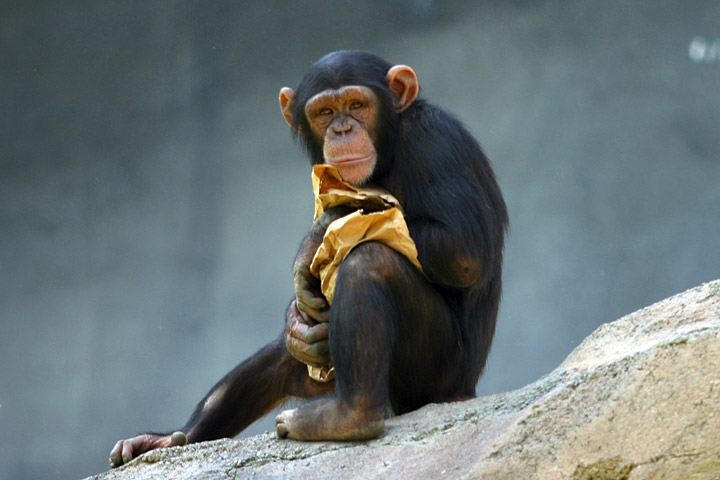
From a piece about the highly developed social behaviors of animals by Alexandra Horowitz and Ammon Shea in the Sunday Review of the New York Times:
“You’re at a dinner party. Your hostess regales you with a long, meandering tale of her recent back surgery. It ends with attempted humor: she laughs and glances at you. You laugh in response, trying to convey an appreciation for her humor that you don’t actually feel. Congratulations: you are now at the level of social politeness of chimpanzees.
In this study, the laughs of 59 chimps (yes, they do laugh) were recorded and the sounds analyzed. The researchers discovered that when one chimp laughed others sometimes engaged in “laugh replications” that lacked the full acoustic structure of spontaneous laughter. In other words, they were fake-laughing.”
••••••••••
They’re humoring us until they’re smart enough to make it their planet:
More simian posts:
Tags: Alexandra Horowitz, Ammon Shea
Some search-engine keyphrases bringing traffic to Afflictor this week:

Afflictor: Thinking Blue Man Group has hit the skids, since 2009. (Image by blchin.)

The opening of “The True Stories of Philip K. Dick,” a 1975 Paul Williams Rolling Stone article about the visionary sci-fi writer, who lived on speed and saw the future, died young and mostly a cult figure, and posthumously became the king of Hollywood:
“November 17, 1971. Philip K. Dick, a brilliant novelist well known in science fiction circles, unlocked the front door of his house in San Rafael, California, and turned on the living-room lights. His stereo was gone. The floor was covered with water and pieces of asbestos. The fireproof, 1100-pound asbestos-and-steel file cabinet that protected his precious manuscripts had been blown apart by powerful explosives.
‘Thank God,’ he thought to himself. ‘Thank God! I guess I’m not crazy after all.’
There’s something about ordinary reality that causes it to go all shimmery in the presence of Philip K. Dick. Phil Dick is a science fiction writer, has been for 24 years, and the common theme that runs through all his stories is, ‘Things are seldom what they seem’–a line Phil repeated several times during my three-day stay at his house last year. His lives in Fullerton, Orange County, California, obviously the natural place for a brilliant writer to go after being driven out of semi-suburban San Rafael by forces beyond his comprehension. The new house is less than ten miles from Disneyland.
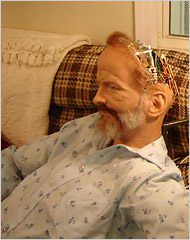 Philip K. Dick is unknown in America outside the science fiction subculture, but in Europe and especially France, he is widely regarded as one of the greatest living American novelists. Most of his 36 books are constantly in print in Germany, France and Britain, and Jean-Pierre Gorin, a respected French film director, is trying to raise money for a major Hollywood movie of a Phil Dick novel titled Ubik.
Perhaps Phil’s vision of America is just too accurate to be fully appreciated here. But Dick fans believe it’s a matter of timing. Most of them think Dick is now on the edge of a popularity surge similar to what happened to Kurt Vonnegut in the late Sixties. If so, a whirlwind of doubt, horror and laughter is stalking America, ready to blow off the pages of some of the most peculiar and loving books ever written in this country.”
Tags: Paul Williams, Philip K. Dick
For the relief of stomach pains and such.
Tags: Salvador Dali

Harold Bloom on the Tea Party, via the Browser:
“What are the rewards of reading, and of literary scholarship?
Harold Bloom: One must read, try to possess by memory, and be possessed by the very best that has been imagined, cognitively apprehended and expressed powerfully. Thinking clearly and well is based upon memory. Unless you have read and absorbed the best that can be read and absorbed, you will not think clearly or well, and democracy will not survive.
We have this horrible contemporary phenomenon in the Tea Party – a real menace not only to America but to the world. Because if it goes on like this, they will destroy our economy and they will destroy America. They have no democratic vision, and I don’t mean with a capital ‘D’, I mean with a small ‘d’. They frighten me. They’re like the early followers of Adolf Hitler, and I’m willing to be quoted on that. They are a sickening phenomenon. That is because they have not read deeply and widely enough. But then maybe they’re not to blame, because American education – even in elite universities – has become a scandal in my opinion. It has committed suicide.”
Tags: Harold Bloom

As the perceptive Rob Walker notes in the Atlantic, the speed of product alterations has caused planned obsolesence to actually be craved by consumers:
“We’re all familiar with the sinister idea of ‘planned obsolescence,’ a corporate strategy of supplying the market with products specifically built not to last. Consumer-culture critic Annie Leonard describes such items as “designed for the dump”; she recounts reading industrial-design journals from the 1950s in which designers ‘actually discuss how fast can they make stuff break’ and still leave consumers with ‘enough faith in the product to go out and buy another one.’ When that doesn’t work, she says, the market suckers us with aesthetic tweaks that have no impact on functionality: the taller tail fins and shorter skirts of ‘perceived obsolescence.’
But the emerging prevalence—anecdotally, at least—of the gadget death wish suggests an intriguing possibility: where electronic gizmos are concerned, product obsolescence is becoming a demand-side phenomenon.”
••••••••••
iPad that was run over in the street:
More Rob Walker posts:
Tags: Rob Walker