Very experimental, neurology-centric Jim Henson bit from the Tonight Show in 1974. Johnny, who may have had a few belts before the show, introduces his guest as “Jim Jenson.” Jack Benny is seated next to Henson in the latter part of the video.
Ideas and technology and politics and journalism and history and humor and some other stuff.
Very experimental, neurology-centric Jim Henson bit from the Tonight Show in 1974. Johnny, who may have had a few belts before the show, introduces his guest as “Jim Jenson.” Jack Benny is seated next to Henson in the latter part of the video.
Tags: Jack Benny, Jim Henson, Johnny Carson
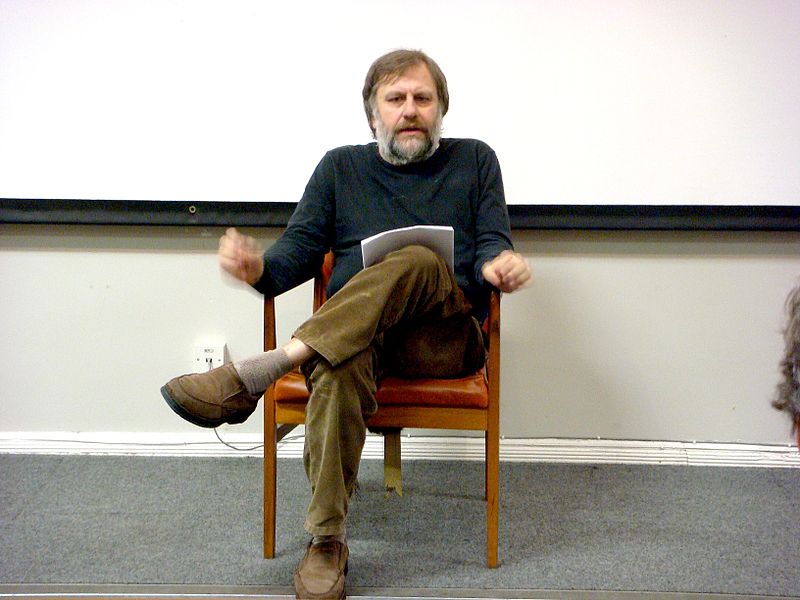
Slavoj Žižek, that provocateur and performance artist, gave a speech at Occupy Wall Street. Thankfully, his rhetoric was short on his usual bullshit (smirking apologias for Stalin, for example) and long on common sense. The speech’s opening from the full transcript provided by Sarah Shin at Verso:
“Don’t fall in love with yourselves, with the nice time we are having here. Carnivals come cheap—the true test of their worth is what remains the day after, how our normal daily life will be changed. Fall in love with hard and patient work—we are the beginning, not the end. Our basic message is: the taboo is broken, we do not live in the best possible world, we are allowed and obliged even to think about alternatives. There is a long road ahead, and soon we will have to address the truly difficult questions—questions not about what we do not want, but about what we DO want. What social organization can replace the existing capitalism? What type of new leaders we need? The XXth century alternatives obviously did not work.
So do not blame people and their attitudes: the problem is not corruption or greed, the problem is the system that pushes you to be corrupt. The solution is not ‘Main Street, not Wall Street,’ but to change the system where main street cannot function without Wall street. Beware not only of enemies, but also of false friends who pretend to support us, but are already working hard to dilute our protest. In the same way we get coffee without caffeine, beer without alcohol, ice-cream without fat, they will try to make us into a harmless moral protest. But the reason we are here is that we had enough of the world where to recycle your Coke cans, to give a couple of dollars for charity, or to buy Starbucks cappuccino where 1% goes for the Third World troubles is enough to make us feel good. After outsourcing work and torture, after the marriage agencies started to outsource even our dating, we see that for a long time we were allowing our political engagements also to be outsourced—we want them back.
They will tell us we are un-American. But when conservative fundamentalists tell you that America is a Christian nation, remember what Christianity is: the Holy Spirit, the free egalitarian community of believers united by love. We here are the Holy Spirit, while on Wall Street they are pagans worshipping false idols.
They will tell us we are violent, that our very language is violent: occupation, and so on. Yes we are violent, but only in the sense in which Mahathma Gandhi was violent. We are violent because we want to put a stop on the way things go—but what is this purely symbolic violence compared to the violence needed to sustain the smooth functioning of the global capitalist system?”
••••••••••
Žižek at Occupy Wall Street:
Žižek holding forth in a garbage dump, in Astra Taylor’s Examined Life:
Tags: Astra Taylor, Sarah Shin, Slavoj Žižek
They move clockwise.
Tags: Sanford Porter

I’ve never fully comprehended people who reject the idea of genetically modified food. I’m not speaking of concerns about corporations producing the food safely or the FDA’s reluctance to have such food labeled–those concerns I understand. I’m talking more about people who out of hand reject the notion that we should be using biotechnology when it comes to our diet. The weather patterns we currently enjoy, which allow for our agrarian culture, have existed for only about 10,000 years. Even if we were treating our environment well, which we’re most definitely not, those weather patterns will eventually shift, and we’ll need new ways to prevent famine. There seems to be a dogged belief that anything natural is good and anything engineered by humans is somehow tainted. But there are plenty of lethal plants which exist in nature. At Singularity Hub, Aaron Saenz brings common sense to the argument over the labeling genetically modified foods:
“We should label GMOs. I don’t see why the FDA and GMO developers are fighting this. I believe in GMO technology. I think it’s one of the most likely paths to cheaply and securely feeding the world. While current incarnations of the technology are still far from perfect, a mature GMO industry may be able to design humanity with the organisms it needs to survive in the 21st Century.
But I still think GMOs should be labeled.
Why the hell not? Let consumers see the benefits of GM crops. Sure, some will definitely switch to competitors products because they are adverse to consuming new forms of food. That’s fine. If GM foods really are cheaper then many more consumers will choose them to save money. If GM foods aren’t cheap enough to compete with non-GMO foods, then their developers should go back to the drawing board and make GMOs that can compete. By keeping consumers in the dark we’re artificially stalling GMO science.”
••••••••••
Bill Gates in Davos, 2010:
Tags: Aaron Saenz
This 1978 NBC News promo is a real time warp. It’s anchored by the late Jessica Savitch, who was, fleetingly, the golden girl of broadcast journalism, and died young and mysteriously five years after this clip. Following the news brief are an American Express commercial featuring the great tennis player Virginia Wade and a promo for Headliners with David Frost, that show’s star being one of the biggest names in America after going mano-a-mano with disgraced former President Richard Nixon.
Tags: David Frost, Jessica Savitch, Richard M. Nixon, Virginia Wade
Santa Claus: Wall Street fat cat.
Word has arrived already that there will be no Christmas this year because Santa Claus got a job at Goldman Sachs and is involved in all sorts of dishonest shit. It was time for him to look out for number one, and now he’s insanely wealthy. The only snow he’ll see this season will be the lines of coke he does off a ho ho ho’s belly. You’re not getting gifts from him, so fuck your needy kids and your filthy fucking chimney. Oh, and he’s raising your credit card rates, you filthbags.

Don't cry, Abigail. You would have gotten tired of that new dollie after a few years anyway. Oh, and did I mention that Grandma passed? (Image by Sharon Pruitt.)

Nana (1935-2011)

Nanotechnology may be able to transform air expelled through the nose during respiration into a source of power which could in turn provide the energy for medical devices implanted in the human head. An excerpt from a Science Daily report:
“‘Basically, we are harvesting mechanical energy from biological systems. The airflow of normal human respiration is typically below about two meters per second,’ says Wang. ‘We calculated that if we could make this material thin enough, small vibrations could produce a microwatt of electrical energy that could be useful for sensors or other devices implanted in the face.’
Researchers are taking advantage of advances in nanotechnology and miniaturized electronics to develop a host of biomedical devices that could monitor blood glucose for diabetics or keep a pacemaker battery charged so that it would not need replacing. What’s needed to run these tiny devices is a miniscule power supply. Waste energy in the form or blood flow, motion, heat, or in this case respiration, offers a consistent source of power.”

“A syringe, previously heated, was filled with blood drawn from the jugular vein of a goat.”
Medicine wasn’t quite as advanced 160 years ago as it is today, so sometimes doctors would just inject goat blood into a sick person to see if that voodoo would work. One such example can be gleaned from the following article published in the February 1, 1843 edition of the Brooklyn Daily Eagle:
“A man 38 years of age, says a late member of the Edinburgh Medical and Surgical Journal was seized with haemhptysis, which continued so long, and so violent, that the only means of saving his life appeared to be by supplying the loss of blood by transfusion. On the fifth day after the attack a cannula was introduced into the median vein of his left arm; a syringe, previously heated, was filled with blood drawn from the jugular vein of a goat and about five ounces were injected into the vein of the man. Immediately he complained of a feeling of oppression; but this soon afterwards went off. An attack of phlebitis came on the next day, but was subdued in eight days by means of cold applications alone. His strength from this day returned, and at the end of three months he was able to resume his usual occupation. It is remarked, as the interesting point of this case, that it proves that the injection of the blood of one animal into the veins of another is not necessarily fatal.”

"My gift."
Actually all over NYC, as I walk at least once a day I pick up all kinds of different energies. Ranging from suddenly feeling drawn to looking up at random windows, to feeling presences.
I used to be my own worst skeptic until coming to NYC. San Diego(home) is very new in comparison.
But thats what I love about here learned more about my gift.
I may sound crazy but I don’t see dead people, nor do I hear voices lol. I just pic up energies that turn into mental images.
Having said that if you think you have something going on in your home, and want confirmation let me know. Will visit for free.
BTW not into personal psychic readings. Just deal with spirits unless I see mortal danger ahead. Please feel free to contact me and share stories.

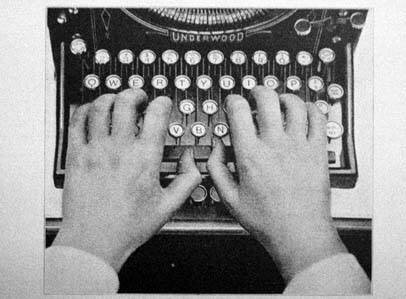
This month marks the 40th anniversary of the first ARPANET email, which was sent by Ray Tomlinson. A remembrance of that leap forward in communications, via The Next Web:
“As Tomlinson told the Times in 2008, he doesn’t remember what that first email actually said – perhaps ‘QWERTY’ or another string of characters, but whatever it was, it traveled a distance of one meter between two separate computers. One small step for a message, one giant leap for mankind.
Besides inventing email, Tomlinson is also the man to thank for the popularity of the ‘@’ symbol. He established the convention of an email ‘address’ in order to identify the recipient and the computer or network that they were using. To separate these two pieces of information, he chose ‘@’. He told The Times, ‘It conveyed a sense of place, which seemed to suit.'”
Tags: Ray Tomlinson

Polaroid has faltered badly in the digital age, but that company’s genius inventor Edwin H. Land was to his time what Steve Jobs was to ours, and, yet, his name is probably unfamiliar to most people just two decades after his death. Christopher Bonanos has an excellent piece in the New York Times about the Land-Jobs link. An excerpt:
“Most of all, Land believed in the power of the scientific demonstration. Starting in the 60s, he began to turn Polaroid’s shareholders’ meetings into dramatic showcases for whatever line the company was about to introduce. In a perfectly art-directed setting, sometimes with live music between segments, he would take the stage, slides projected behind him, the new product in hand, and instead of deploying snake-oil salesmanship would draw you into Land’s World. By the end of the afternoon, you probably wanted to stay there.
Three decades later, Jobs would do exactly the same thing, except in a black turtleneck and jeans. His admiration for Land was open and unabashed. In 1985, he told an interviewer, ‘The man is a national treasure. I don’t understand why people like that can’t be held up as models: This is the most incredible thing to be — not an astronaut, not a football player — but this.'”
••••••••••
Land demonstrates the Polaroid instant camera, 1948:
Martin Scorsese’s documentary about George Harrison aired on HBO this past week. Here’s a look back at what’s likely Harrison’s most famous post-Beatles interview, with Dick Cavett in 1971. He was not on good terms with John and Yoko at the time.
Tags: Dick Cavett, George Harrison

Swashbuckling Raiders owner Al Davis just passed away. A person with tremendous capacity for both good and bad, Davis was one of the people most responsible for the NFL-AFL merger which created the modern NFL, even though he didn’t want his upstart AFL to merge with the more established league–he wanted to kick its ass. From a 1981 People article about the take-no-prisoners football executive, who made the Raiders an outfit for social misfits, on the eve of his team winning Superbowl XV:
“No one kicks the hell out of Davis for long—his competitive instinct is too finely honed. According to an instructive popular myth, former San Diego Coach Harland Svare is said to have approached a light fixture in the visitors’ locker room at Oakland once, yelling, ‘Damn you, Al Davis, I know you’re up there.’ Asked later if he had indeed bugged the Chargers, Davis would say only, ‘The thing wasn’t in the light fixture, I’ll tell you that.’
Davis’ father, Lou, was a successful children’s clothing manufacturer who moved the family to the Crown Heights section of Brooklyn when Al was 5. Strictly second-string as an athlete, Davis had the time and inclination to contemplate strategy. After graduating from Syracuse (in English) in 1950, he became assistant football coach at Adelphi University, then took a series of college jobs before becoming an assistant with the Chargers in 1960.
When Davis joined the Raiders, they had won only one game the season before. The following year he led them to a 10-4 mark. Though he owns only 25 percent of the team’s stock and there are 14 other partners, nothing happens in the franchise without Al Davis’ approval. It was his decision to choose little-known punter Ray Guy in the first round of the 1973 college draft, and to pick a widely belittled defensive back named Lester Hayes in 1977. Both rewarded him by becoming All-Pro performers. Equally decisive in matters of style, Davis also selected the team’s distinctive colors, silver and black. ‘I used to be color-blind,’ he explains.”
••••••••••
Part of the dark side of those macho, lawless 1980s Raiders teams is that drug use was rampant and Lyle Alzado, John Matuszak and numerous others died young. Alzado believed that steroid abuse was behind the brain cancer that killed him at age 43 in 1992. Alzado gets his pump on in 1984 with the aid of a couple of gallons of milk:
Tags: Al Davis, John Matuszak, Lyle Alzado
Here are some search-engine keyphrases bringing traffic to Afflictor this week:

Afflictor Pointing out huge douches since 2009.

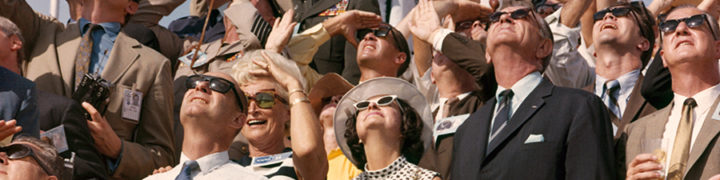
This classic 1971 photograph of the crescent Earth was taken by astronaut Alan Shepard, while he was aboard Apollo 14, exactly a decade after he became the first American in space. From Shepard’s 1998 New York Times obituary: “On the morning of May 5, 1961, Mr. Shepard became an immediate American hero. A lean, crew-cut former Navy test pilot, then 37, he began the day lying on his back in a cramped Mercury capsule atop a seven-story Redstone rocket filled with explosive fuel. After four tense hours of weather and mechanical delays, he was shot into the sky on a 15-minute flight that grazed the fringes of space, at an altitude of 115 miles, and ended in a splashdown in the Atlantic Ocean 302 miles downrange from Cape Canaveral, Fla.
Though not much by today’s standards, the brief suborbital flight had stopped a whole country in its tracks, waiting anxiously at radios and television sets. When the message of success came through — with a phrase that would enter the idiom, ‘Everything is A-O.K.!’– everyone seemed to let out a collective sigh of relief.
Yuri Gagarin of the Soviet Union may have been first into space, 23 days before, and have flown a full orbit, but with Mr. Shepard’s flight the United States finally had reason to cheer. In fact, Mr. Shepard’s success is credited with giving President John F. Kennedy the confidence to commit the nation to the goal of landing men on the Moon within the decade.”
Tags: Alan Shepard
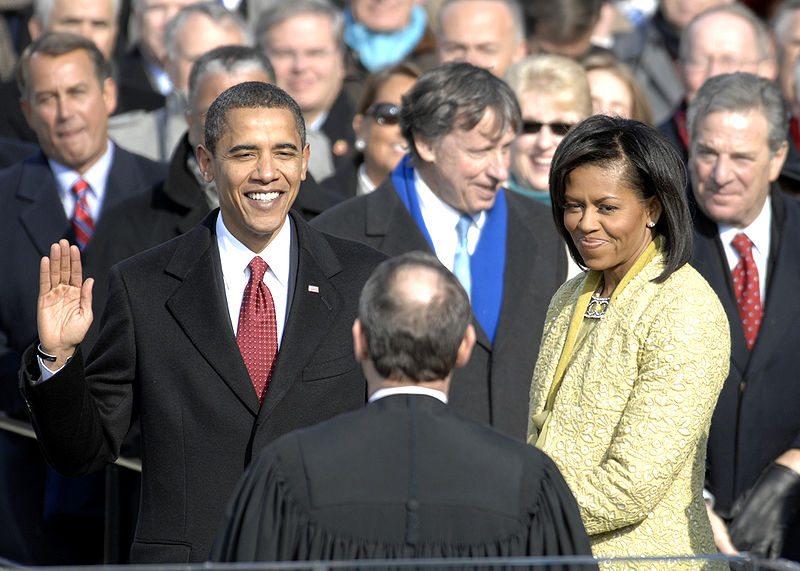
At Slate, James Verini examines “The Obama Effect,” a theory gaining traction which states that dwindling violent-crime rates in predominantly African-American neighborhoods in the past three years, even during this bruising recession, is the result of a more positive outlook among blacks since the election of the first African-American President. An excerpt:
“One unlikely explanation that is gaining credence among experts, including some of the biggest names in the field, is a phenomenon tentatively dubbed ‘the Obama Effect.’ Simply put, it holds that the election of the first black president has provided such collective inspiration that it has changed the thinking or behavior of would-be or one-time criminals. The effect is not yet quantifiable, but some very numbers-driven researchers believe it may exist.
Rick Rosenfeld, the president of the American Society of Criminology, studies the relationship between consumer sentiment and crime rates, which appear to track closely. Despite the recession, Rosenfeld has found, black Americans are remarkably confident about their economic futures. In 2009, despite being in the midst of the worst economic downturn since the Great Depression, 39 percent of black people surveyed said they were better off than they’d been five years before, as opposed to just 20 percent who answered that question in the affirmative in 2007. In the same survey, there was a 14 percent increase among blacks who said they thought the standard of living gap between themselves and whites was diminishing, and a 9 percent increase in blacks who believed that the future for black people will be better.
‘I think there’s little question the election had the effect of improving the general outlook of blacks and especially their economic outlook,’ Rosenfeld told me. ‘Normally, blacks tend to be more pessimistic about economic prospects, even in good economic times.'”
Tags: Barack Obama, James Verini, Rick Rosenfeld
Woody Allen with Jack Paar, 1962.
Allen, who mentions Allen Funt in the above stand-up act, once appeared in a gag on Candid Camera:
Tags: Jack Paar, Woody Allen

The sci-fi thriller Limitless asks questions about the type of neutrino-speed performance enhancement for humans that seems possible in the not-too-distant future, but it doesn’t ask the best and most important ones. Neil Burger’s movie is concerned with the complications that arise when a wonder drug that bestows superhuman abilities turns out to be less than wonderful, attended by side effects, glitches and downsides. The better questions to ask are: What will we do when such pills and (microchips) have no side effects at all? In which direction will we head when all signs are pointing up, and we can get there through no effort of our own? Will we see a pain-free ability to realize our human potential as something less than human?
Eddie (Bradley Cooper) is a depressed novelist with writer’s block and a broken heart. Kicked to the curb by his disappointed girlfriend (Abbie Cornish), he drinks and frets and dodges anyone he owes money to. But then the previously married author has a chance encounter with his erstwhile brother-in-law (Johnny Whitworth), a former coke dealer who claims to now be pushing FDA-approved wonder drugs for Big Pharma. He hands Eddie a bright, clear pill not yet available to the public, and it quickly changes the writer’s life. Eddie not only finishes his stalled novel in four days, but learns languages in a matter of minutes and becomes a wealthy titan on Wall Street. The world is suddenly wide open.
But there are extreme side effects for those who try to taper off, as Eddie learns when his stash begins to grow low. But what if the supply was as limitless as the capacity it allowed? When we have the ability to improve neurons, nerves and muscles at a whim, will the choice be obvious? Will some decide to stay behind? Will the change be so gradual that we won’t really notice the transformation? Those are the questions we should be asking.•
Tags: Abbie Cornish, Bradley Cooper, Johnny Whitworth, Neil Burger
 The following story from the September 1, 1890 edition of the Brooklyn Daily Eagle is about an oyster saloon owner whose reported death was greatly exaggerated. I tend to think only about 83% of this article was made up. An excerpt:
“Val Steiniger keeps an osyter saloon in the basement of the tenement 104 East Fourth Street, New York. He is fat and prosperous and fond of a joke. It was entirely in keeping with the man and his ways that he should be fast asleep in his bed this morning at an hour when the police had him down in the blotter at the Thirteenth Precinct as dead. This is a copy of the record telegraphed to police headquarters at daybreak:
‘Valentine Steiniger, of 104 East Fourth Street, jumped off a Houston Street ferryboat at 2:35 a.m. and was drowned. Body not recovered.’
About the hour this dispatch was wired there came a thumping rap on the Steinigers’ door. A policeman stood there with the message that Val Steiniger’s friends were wanted at the station. Steininger himself, after a turn or two in bed, got up and went along, thinking that someone was in trouble and wanted to help him out.
‘Well,’ he said to the sergeant, ‘what is wanted?’
‘Val Steiniger is drowned,’ said that official, briefly.
‘The dickens he is,’ gasped the oysterman. ‘He was just in his bed, sleeping.’
‘I can’t help that,’ said the sergeant. ‘He is dead. Here is the note.’ And he produced a policy slip upon which was scratched, with a pencil:
‘MY DEAR WIFE–I am sorry it has come to this.–Val Steiniger.’
‘Where was the note found?’ asked Steiniger.
The sergeant told him in the pocket of a pair of trousers found along with a pair of old shoes on a Houston Street ferryboat when it was halfway across to Brooklyn, between 2 and 3 o’clock this morning. It was as plain as the nose on a man’s face that Steiniger had left them there when he jumped overboard. The oysterman recognized in the trousers an old and patched pair he had worn Saturday night on the sloop. Joe Martin, an inveterate joker, had dared him to take them off where he stood and sell them to him for $1, and he had turned the joke on him by pulling them off and handing them over on the spot. Evidently the thought of having some fun at Steiniger’s expense had occurred to Martin, with the result of all this commotion. It was all clear to Steiniger in a moment.
‘Well, nobody is dead,’ he said, handing back the slip.
‘I just informed you,’ said the official at the desk, stiffly, ‘that Val Steiniger has drowned himself. It is here on this blotter. What more do you want?’
“But I am Val Steiniger,’ said the oysterman, ‘and I am not dead.’
‘Then,’ said the sergeant, promptly, ‘it must be your brother. Have you one?’
‘I have six,’ said Steiniger.
“Any of them married?’
‘Yes, two of them are married, but one went to Syracuse yesterday and the other is alive and well. Somebody has been a-fooling you, sergeant.’
And Mr. Steiniger went home to sleep, while the sergeant gravely entered on his returns to headquarters that he was dead.”•
Tags: Joe Martin, Valentine Steiniger

'You see I was in a curious position in New York: it never occurred to me that I was living a real life there.' (image by John Atherton.)
From “Goodbye To All That,” Joan Didion’s famous 1967 essay in which she said farewell to New York City not forever but for a long spell:
“Nothing was irrevocable; everything was within reach. Just around every corner lay something curious and interesting, something I had never before seen or done or known about. I could go to a party and meet someone who called himself Mr. Emotional Appeal and ran The Emotional Appeal Institute or Tina Onassis Blandford or a Florida cracker who was then a regular on what the called ‘the Big C,’ the Southampton-El Morocco circuit (‘I’m well connected on the Big C, honey,’ he would tell me over collard greens on his vast borrowed terrace), or the widow of the celery king of the Harlem market or a piano salesman from Bonne Terre, Missouri, or someone who had already made and list two fortunes in Midland, Texas. I could make promises to myself and to other people and there would be all the time in the world to keep them. I could stay up all night and make mistakes, and none of them would count.
You see I was in a curious position in New York: it never occurred to me that I was living a real life there. In my imagination I was always there for just another few months, just until Christmas or Easter or the first warm day in May.”
Tags: Joan Didion
And then maybe, after all that time, there was clarity. For 30 years, they’ve come, often wearing flags and crosses, with promises that only divided, and they were after just one thing: money. Then, maybe, just maybe, it became apparent to the 99% that they were the ones who were paying, that they were the ones not using their power, that they were one.
Tags: George Carlin

"Like rotting flesh." (Image by Amber Ragland .)
I am periodically smelling a foul odor that appears to be coming from my nasal like rotting flesh! Of course, I am concerned and I hoped that someone could offer some guidance in rectifying this matter. I also would like to add that I have been a frequent user of Afrin nasal spray for many many years. Any assistance that you may offer would be greatly appreciated.

"Now the scope of the protests are even wider, more global." (Image by David Shankbone.)
From a post on Kevin Kelly’s Technium blog, in which he meditates on the ever-decreasing centralization of political power in the Digital Age:
“There seems to be a global-scale protest underway. People, mostly young people, are bypassing the institutional voting system to try to force change through decentralized adhocracy and anarchy. The world saw something similar in the 1960s when student protests erupted in Europe and the US and the Americas all at the same time. Now the scope of the protests are even wider, more global, reaching from Arab Africa, to the Mid East, to East Asia, to the the heartland of Europe and the US.
In a clear-headed front-page article in the New York Times today, one factor in this global unrest is assigned to technology. In particular common communication technology is seen as enabling this protest to blossom (although not causes the protest).
I agree with the Times that more important than the technology which is embraced are the mind-habits, the framework, the ideology of the technology, which the protesters are trying to migrate into non-electronic situations.
Here is a bit from the middle of the article:
The critical mass of wiki and mapping tools, video and social networking sites, the communal news wire of Twitter and the ease of donations afforded by sites like PayPal makes coalitions of like-minded individuals instantly viable.‘You’re looking at a generation of 20- and 30-year-olds who are used to self-organizing,’ said Yochai Benkler, a director of the Berkman Center for Internet and Society at Harvard University. ‘They believe life can be more participatory, more decentralized, less dependent on the traditional models of organization, either in the state or the big company. Those were the dominant ways of doing things in the industrial economy, and they aren’t anymore.'”
Tags: Kevin Kelly, Yochai Benkler
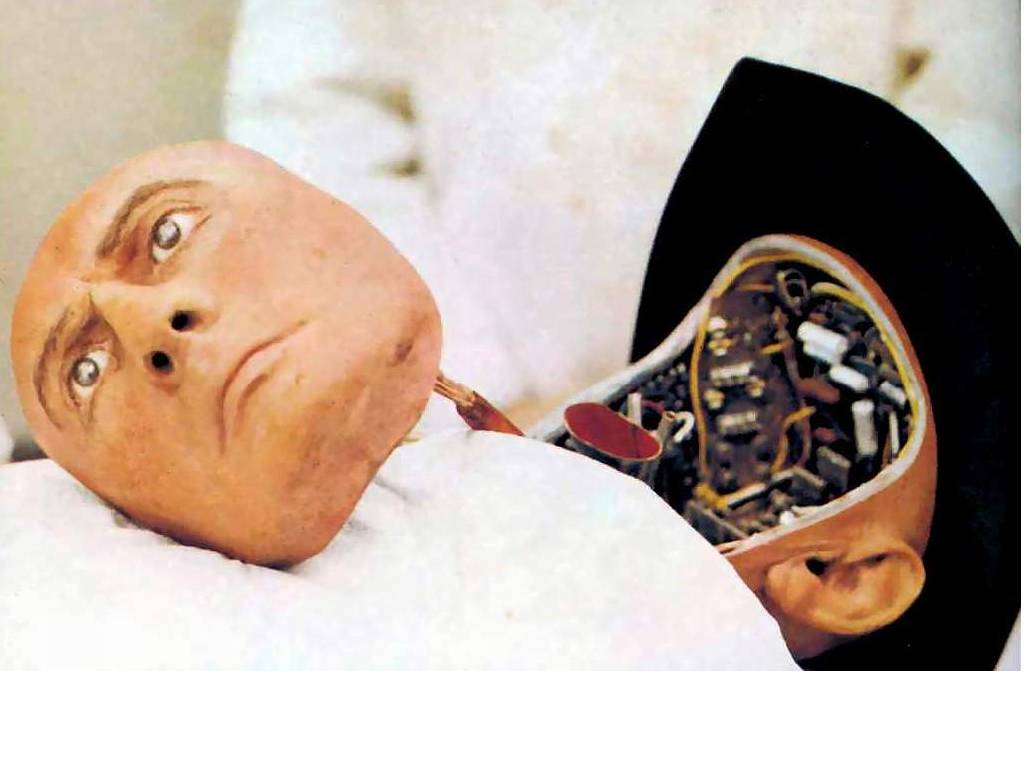
In “The End of the Future” at the National Review, Peter Thiel argues that technological progress is starting to run aground. The opening:
“Modern Western civilization stands on the twin plinths of science and technology. Taken together, these two interrelated domains reassure us that the 19th-century story of never-ending progress remains intact. Without them, the arguments that we are undergoing cultural decay — ranging from the collapse of art and literature after 1945 to the soft totalitarianism of political correctness in media and academia to the sordid worlds of reality television and popular entertainment — would gather far more force. Liberals often assert that science and technology remain essentially healthy; conservatives sometimes counter that these are false utopias; but the two sides of the culture wars silently agree that the accelerating development and application of the natural sciences continues apace.
Yet during the Great Recession, which began in 2008 and has no end in sight, these great expectations have been supplemented by a desperate necessity. We need high-paying jobs to avoid thinking about how to compete with China and India for low-paying jobs. We need rapid growth to meet the wishful expectations of our retirement plans and our runaway welfare states. We need science and technology to dig us out of our deep economic and financial hole, even though most of us cannot separate science from superstition or technology from magic. In our hearts and minds, we know that desperate optimism will not save us. Progress is neither automatic nor mechanistic; it is rare. Indeed, the unique history of the West proves the exception to the rule that most human beings through the millennia have existed in a naturally brutal, unchanging, and impoverished state. But there is no law that the exceptional rise of the West must continue. So we could do worse than to inquire into the widely held opinion that America is on the wrong track (and has been for some time), to wonder whether Progress is not doing as well as advertised, and perhaps to take exceptional measures to arrest and reverse any decline.” (Thanks Browser.)
Tags: Peter Thiel