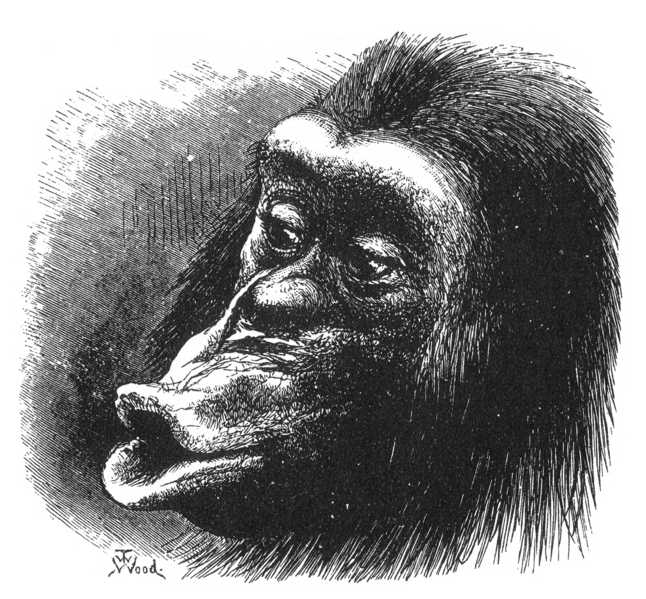
"It is in a big jar."
MUMMIFIED MONKEY – $8000 (hardyston)
I have an authentic mummified money that is 75 years old available for sale. It looks just as it did when it passed. It is in a big jar but the glass is a bit cloudy. Rare piece.
Ideas and technology and politics and journalism and history and humor and some other stuff.
"It is in a big jar."
I have an authentic mummified money that is 75 years old available for sale. It looks just as it did when it passed. It is in a big jar but the glass is a bit cloudy. Rare piece.

The opening of “The Xinjiang Procedure,” Ethan Gutmann’s alarming Weekly Standard article about the organ market that surrounds executions of China’s political prisoners:
“To figure out what is taking place today in a closed society such as northwest China, sometimes you have to go back a decade, sometimes more.
One clue might be found on a hilltop near southern Guangzhou, on a partly cloudy autumn day in 1991. A small medical team and a young doctor starting a practice in internal medicine had driven up from Sun Yat-sen Medical University in a van modified for surgery. Pulling in on bulldozed earth, they found a small fleet of similar vehicles—clean, white, with smoked glass windows and prominent red crosses on the side. The police had ordered the medical team to stay inside for their safety. Indeed, the view from the side window of lines of ditches—some filled in, others freshly dug—suggested that the hilltop had served as a killing ground for years.
Thirty-six scheduled executions would translate into 72 kidneys and corneas divided among the regional hospitals. Every van contained surgeons who could work fast: 15-30 minutes to extract. Drive back to the hospital. Transplant within six hours. Nothing fancy or experimental; execution would probably ruin the heart.” (Thanks Longform.)
••••••••••
“Patients are suspended by wires through long bones”:
Tags: Ethan Gutmann
Peter Lorre on What’s My Line?, 1960, promoting a film which was made in Scent-o-Vision, during the dying days of the Studio System.
Tags: Peter Lorre
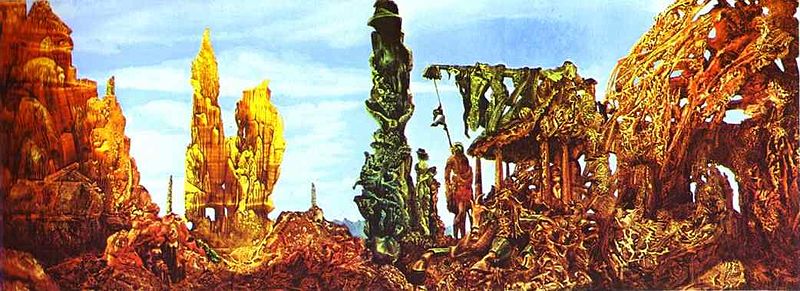
The opening of “The Real Cape Kennedy Is Inside Your Head,” a Dylan Trigg meditation in 3:AM Magazine about J.G. Ballard’s “Cape Canaveral” stories:
Against a saturated blue sky, a landscape is in a state of decomposition. Semi-gelatinous material entwines with desiccated chunks of a destroyed world. Towering shafts of ruined debris shoot haphazardly into the sky, forming a monolithic domelike structure in the process. A cow—or its head—appears trapped in the rubble, its body colonised by the ruins. Into this zone of mutilation, two figures, a man and a woman, stand adrift. They enter the field of our horizon and then remain motionless in the ruins. The woman is dressed elegantly, her back turned to the viewer, her body in motion. Turning toward her, a man with the skull of a bird looks on passively. Whether or not they were caught in the destruction or have returned to survey the remains, the viewer cannot be sure. In each case, they are no longer recognisable as “human” and instead have begun assuming the physiognomic characteristics of the landscape. Like the cow, their bodies are in a state of atrophy, their tones now mirroring the colouring of the landscape. Everywhere, borders collapse. What looks like the remains of a civilization may also be the inception of a new world. Similarly, if there are humans in the ruins, then they might just as easily be a new species of life, composed from both the organic and synthetic waste left behind. In the rot and the ruin, there is also life and vitality, a bewildering fusion of different orders of space and time colliding in the same sphere.
We are in the world of Max Ernst’s celebrated painting, Europe After the Rain II. Painted between 1940-1942, the work has become canonised as a masterpiece in the surrealist tradition. For J.G. Ballard, the landscapes of Max Ernst assumed a particular importance in his own thinking and writing. Above all else, what Ballard was able to discover in Ernst’s visions was a symbiosis of the natural and the supernatural, the banal and the uncanny, all of which begin not in the objective features of the landscape, but in the pathology of inner space. In his words, Ernst’s world took the form of “self-devouring phantasmagoric jungles [which] screamed silently to itself, like the sump of some insane unconscious.” Like the German romantics who influenced him, Ernst’s eerie forests and organic cities are emblems of the inner working of the deep unconscious manifest—as though by accident—on the canvas of the work. In Ballard, the same process of alchemically distilling disjoined images from the prima materia of everyday life finds its strange expression in his repetition of motifs. Abandoned parking lots, empty swimming pools, and neon nightclubs glowing in the thick forests of night all assume a level of spectral significance made possible thanks to the conjunction of inner and outer space.
Nowhere is this strange union between inner and outer space clearer than in Ballard’s “Cape Canaveral” stories, which are scattered through his writing from the early 1960s to the 1990s. In these stories, Ballard plays with themes of spatio-temporal distortion resulting from the flight into cosmic space. At once a warning against cosmic misadventures, the stories can also be read as an affirmation of humanity’s transformation the misadventures entail, as he states:
By leaving his planet and setting off into outer space man had committed an evolutionary crime, a breach of the rules governing his tenancy of the universe, and of the laws of time and space. Perhaps the right to travel through space belonged to another order of beings, but his crime was being punished just as surely as would be any attempt to ignore the laws of gravity.•

Tags: Dylan Trigg, J.G. Ballard
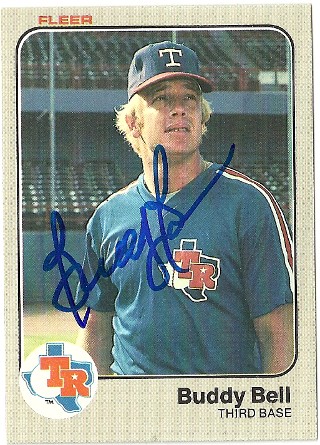
By far, the worst moment of the 2011 MLB season was when Texas Rangers’ fan Shannon Stone reached for a thrown baseball from the stands in Arlington, hoping to nab a souvenir for his six-year-old son, but instead plunged to his death. In the Sunday Times Magazine, Lisa Pollak of This American Life tells Stone’s story, with the help of the late man’s parents. SuZann and Al Stone. An excerpt:
“SuZann: Well, at that time the Rangers had a third-base player named Buddy Bell. And that was Shannon’s very favorite player, just as Josh Hamilton is Cooper’s player. We were pretty close behind home plate, if I’m not mistaken. Where we were sitting, Buddy Bell hit a foul ball, and it came back over —
Al: There was an upper deck just above us. I remember seeing this foul ball. The wind carried it. The ball went out of sight as it went up above that other deck, and then the wind caught it and blew it back.
SuZann: And it just almost fell right into Al’s lap. Shannon was so excited that he got that ball.
Al: Getting a ball is kind of like the holy grail of baseball. It’s one of the reasons you go, is hoping to get a souvenir of the game, a ball. To be able to catch one from Buddy Bell just made it so much more important.
SuZann: Shannon always kept it on a shelf. He loved baseball. And then it just seemed like when Cooper came along, he just kind of passed that on to Cooper.
Al: They were inseparable.
SuZann: They always sat in the same place, because Josh Hamilton played left field. So they always sat so they could be out where Josh Hamilton was. That’s why they sat there, hoping they could catch a ball. And Shannon was always one of these people that thought he was 10 feet tall and bulletproof. There wasn’t anything he couldn’t do. I’m sure he thought, I can reach out there, I can get it, I can just stretch a little bit farther.”
Tags: Al Stone, Shannon Stone, SuZann Stone
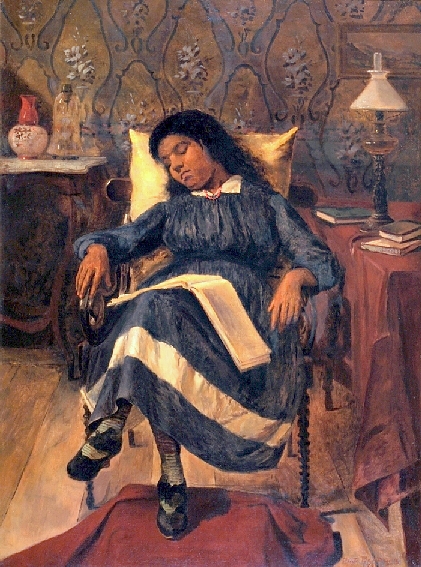
"In two hours the invalid was pronounced dead by the ladies in the boarding house." (Image by Antônio Rafael Pinto Bandeira.)
The following article from the June 16, 1889 edition of the Brooklyn Daily Eagle, originally published in the San Francisco Chronicle, concerns an unusual Bay Area couple, and has echoes of Nathaniel Hawthorne at his most fantastic. The piece in full:
“The question of being buried alive and the recent case of Washington Irving Bishop were matters discussed by a party of gentlemen at the Bohemian Club the other night. A journalist who was present told the following story of local interest: Living in San Francisco to-day are two persons whose strange experiments have long been a mystery to me. Two years ago a Boston gentlemen came out to the coast. He brought with him his companion, a young woman in the last stages of consumption. She was pretty and talented and ten years younger than her escort. I am of the opinion that a sort of Platonic love existed between them. Three times in my own knowledge the young woman has apparently passed out of this life into the other world and twice preparations have been made for her burial. On one occasion her companion was out of the city when she was taken suddenly with a sinking spell and the landlady became greatly alarmed. In two hours the invalid was pronounced dead by the ladies in the boarding house who were in attendance upon her. As the day advanced the landlady, seeing no signs of the gentleman’s return, visited an undertaker near by and preparations were made for laying out the corpse. The body was cold and stiff when the undertaker arrived. He viewed the corpse and went back to his shop for his assistant.
During his absence the missing companion of the dead young woman arrived upon the scene. It was now about 4 o’clock in the afternoon. Upon being informed of her death some five hours before, the gentleman uttered an exclamation of surprise. Then, rushing up to the room where the body lay, he closed the door behind him and turned the key. When the undertaker returned he was refused admission. Two hours later the gentleman emerged from the room and ordered two suppers sent to the apartment. Later the young lady was seen sitting upright in bed, eating heartily. Her companion had brought her back to life by a method of rubbing and physical manipulation known only to himself. Twice after this he repeated the performance. Three times, to my knowledge, has the man brought the young woman back from the dead. She lives here today, still and invalid, and is liable to die again at almost any moment.”
Georgia Governor Jimmy Carter, completely unknown on the national stage in 1974, appears on What’s My Line? a mere two years before becoming President of the free world’s most powerful country.
Tags: Jimmy Carter

"The evolving role of digital storage in facilitating truly pervasive surveillance is less widely recognized." (Image by Bob Blaylock.)
The opening of John Villasenor’s new cautionary article, “Recording Everything: Digital Storage as an Enabler of Authoritarian Governments“:
“Within the next few years an important threshold will be crossed: For the first time ever, it will become technologically and financially feasible for authoritarian governments to record nearly everything that is said or done within their borders – every phone conversation, electronic message, social media interaction, the movements of nearly every person and vehicle, and video from every street corner. Governments with a history of using all of the tools at their disposal to track and monitor their citizens will undoubtedly make full use of this capability once it becomes available.
The Arab Spring of 2011, which saw regimes toppled by protesters organized via Twitter and Facebook, was heralded in much of the world as signifying a new era in which information technology alters the balance of power in favor of the repressed. However, within the world’s many remaining authoritarian regimes it was undoubtedly viewed very differently. For those governments, the Arab Spring likely underscored the perils of failing to exercise sufficient control of digital communications and highlighted the need to redouble their efforts to increase the monitoring of their citizenry.
Technology trends are making such monitoring easier to perform. While the domestic surveillance programs of countries including Syria, Iran, China, Burma, and Libya under Gadhafi have been extensively reported, the evolving role of digital storage in facilitating truly pervasive surveillance is less widely recognized. Plummeting digital storage costs will soon make it possible for authoritarian regimes to not only monitor known dissidents, but to also store the complete set of digital data associated with everyone within their borders. These enormous databases of captured information will create what amounts to a surveillance time machine, enabling state security services to retroactively eavesdrop on people in the months and years before they were designated as surveillance targets. This will fundamentally change the dynamics of dissent, insurgency and revolution.”
••••••••••
“Soon the ultimate tool will become the ultimate weapon”:
Tags: John Villasenor
Two short films Ray and Charles Eames made for IBM during the 1950s:
“A Communications Primer,” 1953.
“The Information Machine,” 1956.
See also:
Tags: Charles Eames, Ray Eames

Scanning the Browser‘s list of the best 2011 articles reminded me of two more of my favorite pieces from this year: Economist Joseph Stiglitz’s Vanity Fair essay from May, which I blogged about at the time, was ahead of the curve in its crystallization of wealth inequality; and Peter Hessler’s excellent September New Yorker profile looked at the workaday life of a small-town Colorado chemist and the amazing way the past revisits him.
••••••••••
From “Of the 1%, by the 1%, for the 1%“:
“It’s no use pretending that what has obviously happened has not in fact happened. The upper 1 percent of Americans are now taking in nearly a quarter of the nation’s income every year. In terms of wealth rather than income, the top 1 percent control 40 percent. Their lot in life has improved considerably. Twenty-five years ago, the corresponding figures were 12 percent and 33 percent. One response might be to celebrate the ingenuity and drive that brought good fortune to these people, and to contend that a rising tide lifts all boats. That response would be misguided. While the top 1 percent have seen their incomes rise 18 percent over the past decade, those in the middle have actually seen their incomes fall. For men with only high-school degrees, the decline has been precipitous—12 percent in the last quarter-century alone. All the growth in recent decades—and more—has gone to those at the top. In terms of income equality, America lags behind any country in the old, ossified Europe that President George W. Bush used to deride. Among our closest counterparts are Russia with its oligarchs and Iran. While many of the old centers of inequality in Latin America, such as Brazil, have been striving in recent years, rather successfully, to improve the plight of the poor and reduce gaps in income, America has allowed inequality to grow.”
••••••••••
From “Dr. Don“:
“When outsiders come to town—loners, drifters—they often find their way to Don. A number of years ago, a man in his seventies named Tim Brick moved to Naturita and rented a mobile home. He placed special orders at the Apothecary Shoppe: echinacea, goldenseal, chamomile teas. He distrusted doctors, and often had Don check his blood pressure. It was high, and eventually Don persuaded him to get on regular medication. Soon, he was visiting every four or five days, mostly to talk.
Don referred to him as Mr. Brick. He had no other local friends, and he was cagey about his past, although certain details emerged over time. His birth name had been Penrose Brick—he was a descendant of the Penrose family, which came from Philadelphia and had made a fortune from mining claims around Cripple Creek. But for some reason Mr. Brick had been estranged from all his relatives for decades. He had changed his first name, and he had spent most of his working life as an auto mechanic.
One day, his mobile home was broken into, and thieves made off with some stock certificates. Mr. Brick had never used a broker—to him, they were just as untrustworthy as doctors—so he went to the Apothecary Shoppe for help. Before long, Don was making dozens of trips across Disappointment Valley, driving two hours each way, in order to get documents certified at the bank in Cortez, Colorado. Eventually, he sorted out Mr. Brick’s finances, but then the older man’s health began to decline. Don managed his care, helping him move out of various residences; on a couple of occasions, Mr. Brick lived at Don’s house for an extended stretch. At the age of ninety-one, Mr. Brick became seriously ill and went to see a doctor in Montrose. The doctor said that prostate cancer had spread to his stomach; with surgery, he might live another six months. Mr. Brick said he had never had surgery and he wasn’t going to start now.
Don spent the next night at the old man’s bedside. At one point in the evening, Mr. Brick was lucid enough to have a conversation. ‘I think you’re dying,’ Don said.
‘I’m not dying,’ Mr. Brick said. ‘I’m just going to pray now.’
‘Well, you better pray pretty hard,’ Don said. ‘But I think you’re dying.'”
Tags: Joseph Stiglitz, Peter Hessler
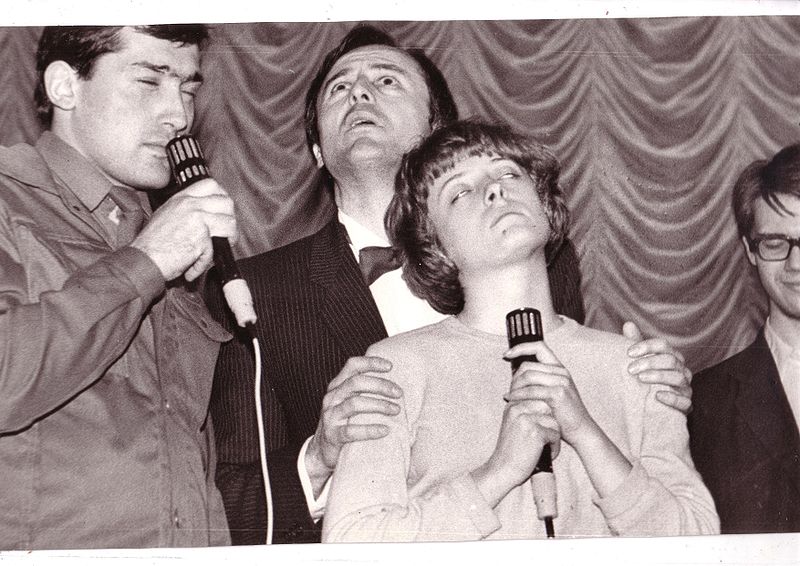
Do you remember the hypnotist show coming in to the school auditorium? Did you volunteer?
Early global television broadcast, 1967, which features media seer Marshall McLuhan as a guest. “It’s a real humming, buzzing confusion,” he says, referring to the crowded control room, but also predicting the nature of the more connected, interactive media to come.
Tags: Marshall McLuhan

Just as the cash register is being placed in our pockets more and more, we are also increasingly products ourselves, handing over what’s in our hearts and minds in exchange for “free” products. From a Daily Beast piece by Dan Lyons, the erstwhile Fake Steve Jobs, about the true cost of doing business today:
“The truth is, we have no interest in protecting your privacy, and if you still believe that we do, then you are stupider than we thought, and believe me, we already thought you were pretty stupid. Think about it. The only way our business works is if we can track what you do and sell that information to advertisers. Did you honestly not realize that?
You are not our customer. You are the product that we sell. For us to say we’re going to protect you is like the poultry industry promising to create more humane living conditions for chickens. Sure, they say that. But you know they don’t mean it.”
••••••••••
Maggie gets scanned, quantified:
Tags: Dan Lyons, Mark Zuckerberg
Santa Claus: Fuck you, 99%.
Word has arrived that there will be no Christmas this year because Santa Claus got a job at Goldman Sachs and is involved in all sorts of dishonest shit. It was time for him to look out for number one, and now he’s insanely wealthy. The only snow Santa will see this season will be the lines of coke he does off a ho ho ho’s belly. You’re not getting gifts from him, so fuck your needy kids and your filthy fucking chimney. If you’d worked harder, you’d be able to buy your own. If Santa drops by your house at all on Christmas, it will be to raise your credit card rates. But he’ll probably just go directly to Hooters and check out the tail. Occupy that, bitches.

Don't cry, Abigail. You would have gotten tired of that new dollie after a few years anyway. Oh, and did I mention that Grandma passed? (Image by Sharon Pruitt.)

Nana (1935-2011)

Kris, checking out the local talent.
• • • • • • • • • •

Happy holidays to all of you, no matter what bullshit religion or culture you subscribe to. They’re all stupid and none of it makes you any better than anyone else, so get over yourself. And if you’re the kind of twat who has some sort of personal sense of exceptionalism, if you believe that life is a perfect meritocracy and people get what they truly deserve, remember to stand under the mistletoe and bite yourself really hard. Oh, and a special “fuck you” to anyone who buys magazines that fetishize food when there are starving people in the world. I mean, you should be ashamed. Enjoy the holidays!
The Star Wars Holiday Special, from 1978. Simply the biggest piece of crap I have ever seen.
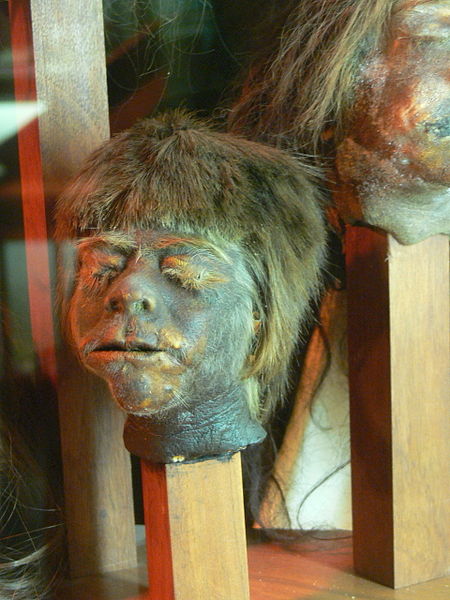
Mary Roach has never met a dead man she didn’t like, so it’s no surprise Outside sent her to investigate a true-life tale of head shrinking. An excerpt:
“Thirteen inches from heel to crown, the specimen is mounted on a mahogany stand that could serve as a paper-towel holder. The first thing you notice is the skin color. The Shuar believed that killing a man created an avenging soul that would leave the corpse via the mouth and come after the perpetrator. Lips were sewn shut to prevent this, and true ceremonial tsantsas have blackened skin, the result of the killer having rubbed it with charcoal to prevent the victim’s spirit from ‘seeing’ out. This child’s skin is the buff color and rough texture of a dried kalamata fig. Based on its proportions—the plump bowed legs, the nubbin of a penis, the fat cheeks—it looks more like a mummified infant than a shrunken boy. In fact, the inventory lists it as ‘stillborn.’
‘Gustav told us it had been given to him by the Shuar and that he carried it out when he escaped,’ Brown says. ‘He never told us that he himself shrunk humans.’
Brown has his laptop open and has been clicking through images from his family’s photo albums. He shows me a 1955 shot of Gus and Gert—as American friends sometimes called them—seated at a restaurant table for a family dinner in Los Angeles. Bowls and spoons are set before them. Struve looks at the camera with the mild peevishness of an old guy who wants to have his soup. He wears dress suspenders over a short-sleeved button-down shirt and sports the pencil-thin mustache he wore most of his adult life. I remark to Brown that it’s hard to picture this natty gentleman flaying bodies and boiling skins.
‘Check the pattern on the shirt,’ he says. I lean in closer. The shirt is decorated with a row of tsantsas, life-size and garish, with lips sewn shut and flowing Wonder Woman hair.
‘So he was a bit of an odd one,’ I say.
‘Well, bear in mind,’ Brown says quickly, ‘America was in the midst of a shrunken-head craze.’ He calls up a 1960s TV ad for a toy Witch Dr. Head Shrinkers Kit (‘Shrunken heads for all occasions!’) featuring a pith-helmeted actor hacking his way through what looks like a Kansas wheat field.”
••••••••••
Witch Dr. Head Shrinkers Kit ad:
Tags: Mary Roach

From “Computational Periodics,” a 1975 essay by the Pasadena-born computer-animation pioneer John Whitney:
“Also from the point of view that this Century is but an episode in the life of human culture, it is clear that more paraphernalia of this epoch may be castoff than will survive into the next. Yet surely the computer will not. A solid state image storage system will replace the silver chemical ribbon and cinema will eventually be interred in the archival museum. But computer and computer graphics bring to mind the kind of tools that may characterize an age succeeding this century’s age of the machine.”
••••••••••
“Catalog” (1961):
“Per•mu•ta•tion” (1966):
“Arabesque” (1975):
Tags: John Whitney
Sheila Nirenberg gives a TED Talk about the cutting edge of ocular prosthetics.
Tags: Sheila Nirenberg
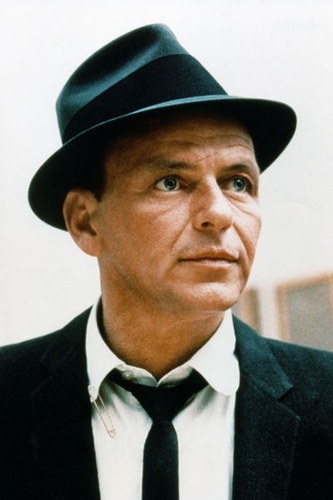
From the Harlan Ellison segment of the most famous magazine article of the last 50 years, Gay Talese’s 1965 Esquire piece, “Frank Sinatra Has a Cold“:
“The younger men in the room, accustomed to seeing Sinatra at this club, treated him without deference, although they said nothing offensive. They were a cool young group, very California-cool and casual, and one of the coolest seemed to be a little guy, very quick of movement, who had a sharp profile, pale blue eyes, blondish hair, and squared eyeglasses. He wore a pair of brown corduroy slacks, a green shaggy-dog Shetland sweater, a tan suede jacket, and Game Warden boots, for which he had recently paid $60.
Frank Sinatra, leaning against the stool, sniffling a bit from his cold, could not take his eyes off the Game Warden boots. Once, after gazing at them for a few moments, he turned away; but now he was focused on them again. The owner of the boots, who was just standing in them watching the pool game, was named Harlan Ellison, a writer who had just completed work on a screenplay, The Oscar.
Finally Sinatra could not contain himself.
‘Hey,’ he yelled in his slightly harsh voice that still had a soft, sharp edge. ‘Those Italian boots?’
“No,” Ellison said.
‘Spanish?’
‘No.’
‘Are they English boots?’
‘Look, I donno, man,’ Ellison shot back, frowning at Sinatra, then turning away again.
Now the poolroom was suddenly silent. Leo Durocher who had been poised behind his cue stick and was bent low just froze in that position for a second. Nobody moved. Then Sinatra moved away from the stool and walked with that slow, arrogant swagger of his toward Ellison, the hard tap of Sinatra’s shoes the only sound in the room. Then, looking down at Ellison with a slightly raised eyebrow and a tricky little smile, Sinatra asked: ‘You expecting a storm?’
Harlan Ellison moved a step to the side. ‘Look, is there any reason why you’re talking to me?’
‘I don’t like the way you’re dressed,’ Sinatra said.
‘Hate to shake you up,’ Ellison said, ‘but I dress to suit myself.’
Now there was some rumbling in the room, and somebody said, ‘Com’on, Harlan, let’s get out of here,’ and Leo Durocher made his pool shot and said, ‘Yeah, com’on.’
But Ellison stood his ground.
Sinatra said, ‘What do you do?’
‘I’m a plumber,’ Ellison said.
‘No, no, he’s not,” another young man quickly yelled from across the table. ‘He wrote The Oscar.’
‘Oh, yeah,’ Sinatra said, ‘well I’ve seen it, and it’s a piece of crap.’
‘That’s strange,’ Ellison said, ‘because they haven’t even released it yet.’
‘Well, I’ve seen it,’ Sinatra repeated, ‘and it’s a piece of crap.’
Now Brad Dexter, very anxious, very big opposite the small figure of Ellison, said, ‘Com’on, kid, I don’t want you in this room.’
‘Hey,” Sinatra interrupted Dexter, “can’t you see I’m talking to this guy?’
Dexter was confused. Then his whole attitude changed, and his voice went soft and he said to Ellison, almost with a plea, ‘Why do you persist in tormenting me?’
The whole scene was becoming ridiculous, and it seemed that Sinatra was only half-serious, perhaps just reacting out of sheer boredom or inner despair; at any rate, after a few more exchanges Harlan Ellison left the room. By this time the word had gotten out to those on the dance floor about the Sinatra-Ellison exchange, and somebody went to look for the manager of the club. But somebody else said that the manager had already heard about it — and had quickly gone out the door, hopped in his car and drove home. So the assistant manager went into the poolroom.
‘I don’t want anybody in here without coats and ties,’ Sinatra snapped.
The assistant manager nodded, and walked back to his office.”
_____________________________
The young, cool Ellison who irked Sinatra so much:
See also:
Tags: Gay Talese, Harlan Ellison
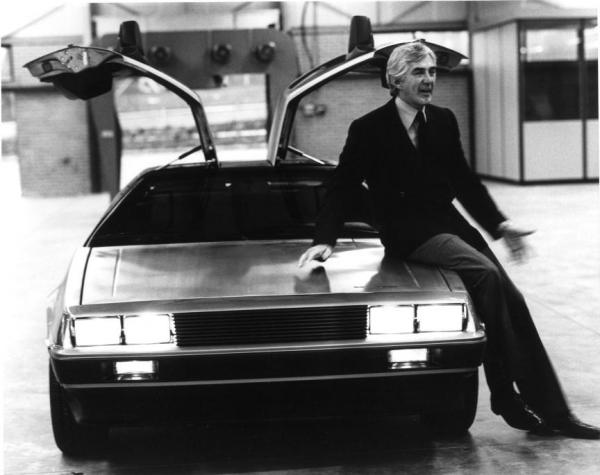
Before he was crushed beneath the wheel of his dreams. John Z. DeLorean had as much ambition as anyone in the history of American commerce. From a 1980 People article by Martha Smilgis about the automaker, when all roads still seemed wide open and endless:
“Six years ago John Z. (for Zachary) DeLorean was earning $650,000 a year as a General Motors vice-president—with a passably clear track to the presidency—when he stunned Detroit by abruptly quitting. Two months ago he rocked Motor City again, this time because of a book that attacks his old company for waste, corruption, neglect of consumers and corporate amorality. Among some cringing auto company men, the book has made him a hero—’He’s the only man who ever fired General Motors,’ as one admirer puts it. Now DeLorean, who will be 55 this week, is about to go that one better. Next fall he will market a new sports car of his own design and production, and he has convinced some GM dealers to distribute it. ‘Don’t people believe you can start a business these days?’ DeLorean asks skeptics. ‘I’d like to show that a bunch of little guys can make it.’
The humility is attractive but a bit disingenuous. DeLorean Motor Company is a $200 million operation backed by a consortium of investors in the U.S. and Europe (Johnny Carson among them). DeLorean himself is hardly the average internal-combustion tinkerer. A twice-divorced bon vivant whose romantic life has been as prodigious as his business career, DeLorean fled Detroit in part, he says, because he was bored with it.
The disenchantment is plain in his book, On a Clear Day You Can See General Motors. Written by the former Detroit bureau chief of Business Week, J. Patrick Wright, and billed as DeLorean’s ‘own story,’ the book charges GM with official nonchalance toward the Corvair (a car that inspired Ralph Nader’s Unsafe at Any Speed). It ridicules numbing, time-wasting rituals of paper-shuffling in the executive suites and waxes outraged at the perks demanded by top GM brass. (To provide a traveling sales executive with his customary midnight snack, the book charges, GM took out a window in his hotel suite and lowered in a fully stocked refrigerator by crane.) After giving Wright all his ammunition, DeLorean pulled out of their publishing agreement—thereby saving his skin with GM—but Wright published the book anyway. ‘It came out a lot tougher than was my intention,’ DeLorean says. ‘I wanted it to be constructive.’ Then he smiles and adds, ‘GM hasn’t retaliated. In fact they’ve offered me an opportunity to merge with their Iranian subsidiary.’ A Ford factory worker’s son who paid his own way through college and earned master’s degrees in automotive engineering and business at night, DeLorean insists he has goodwill toward his old company: ‘GM was very good to me. I was an unsophisticated transmission engineer who was given many opportunities.’
What GM never appreciated, he says, was his life-style. Six-foot-four with movie star good looks, DeLorean is a physical fitness zealot who works out three times a week and is as proud of his 30-inch waist as of his latest marketing coup. Between his three marriages, he squired the likes of Ursula Andress, Joey Heatherton, Candice Bergen and Nancy Sinatra. Such glamorous escorts, along with his modishly long hair and turtleneck sweaters, scandalized automotive society. In 1973 he married fashion model Cristina Ferrare—she had lived with him for three months before saying, ‘Either we marry or I am leaving.’ The clatter of tongues grew louder. He was 48, she was 23. ‘I consider myself young for my age, so that wasn’t a problem for us,” he says. ‘But Cristina wasn’t accepted into Detroit society, and I didn’t want to subject her to that kind of vindictiveness. When I told her I wanted to leave, she supported me 100 percent.'”
••••••••••
A year before the People article was published, Gary Numan showed appreciation for automobiles:
More DeLorean posts:
Tags: J. Patrick Wright, John DeLorean, Martha Smilgis, Ralph Nader

"Some 420 wouldn't hurt either." (Image by T-bone.)
Hey as the title says I need some booze I’m really stressed and broke I havnt drank in about a year not that I’m recovering alcoholic I just havnt had the need but now I’m stressed and broke and before I do something stupid thought I would get drunk and jus take a break from all the craziness in my life so if you have any booze you don’t want hit me up if your not to far I’ll come by and pick it up.
Some 420 wouldn’t hurt either.
Thanks for reading and thanks on advance.
A 1972 film about Arpanet, the Internet precursor. An amazing document.
Fab 5 Freddy, who once told me everybody’s fly, talks electronic mail, 1994:
Tags: Fab 5 Freddy

Here’s a topic I never would have considered on my own because I’m too busy analyzing Abbott & Costello: How much free will do pedestrians have when walking down the street, and how much are we influenced by the crowd and history of decisions made by previous crowds. From the Economist:
“Imagine that you are French. You are walking along a busy pavement in Paris and another pedestrian is approaching from the opposite direction. A collision will occur unless you each move out of the other’s way. Which way do you step?
The answer is almost certainly to the right. Replay the same scene in many parts of Asia, however, and you would probably move to the left. It is not obvious why. There is no instruction to head in a specific direction (South Korea, where there is a campaign to get people to walk on the right, is an exception). There is no simple correlation with the side of the road on which people drive: Londoners funnel to the right on pavements, for example.
Instead, says Mehdi Moussaid of the Max Planck Institute in Berlin, this is a behaviour brought about by probabilities. If two opposing people guess each other’s intentions correctly, each moving to one side and allowing the other past, then they are likely to choose to move the same way the next time they need to avoid a collision. The probability of a successful manoeuvre increases as more and more people adopt a bias in one direction, until the tendency sticks. Whether it’s right or left does not matter; what does is that it is the unspoken will of the majority.
That is at odds with most people’s idea of being a pedestrian. More than any other way of getting around—such as being crushed into a train or stuck in a traffic jam—walking appears to offer freedom of choice. Reality is more complicated. Whether stepping aside to avoid a collision, following the person in front through a crowd or navigating busy streets, pedestrians are autonomous yet constrained by others. They are both highly mobile and very predictable. ‘These are particles with a will,’ says Dirk Helbing of ETH Zurich, a technology-focused university.”
••••••••••
“Hey, say! You are blocking my path, you are right in my way”:
Tags: Dirk Helbing, Mehdi Moussaid