This is tremendous. During the 1970s, at the height of prog rock popularity, Schaefer Beer had multitalented musician Edd Kalehoff make a commercial in which he played the company’s jingle on a Moog synthesizer. Kalehoff is a legend in the TV biz, having created the cues for The Price Is Right and the Monday Night Football theme song. But here he rocked at his most progressive.
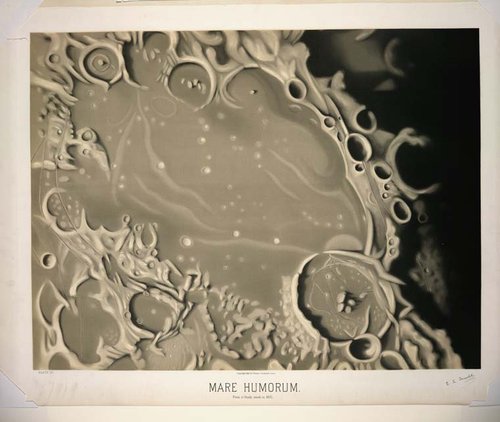
Thanks toRebecca J. Rosen of the Atlanticfor pointing out that some 19th-century drawings of space by French astronomer Étienne Léopold Trouvelot have been digitized. Trouvelot is infamous for accidentally introducing the gypsy moth into America when he emigrated in 1851.
From Kevn Kelly’s comments on the Technium about copyright law and the public commons:
“It is in the interest of culture to have a large and dynamic public domain. The greatest classics of Disney were all based on stories in the public domain, and Walt Disney showed how public domain ideas and characters could be leveraged by others to bring enjoyment and money. But ironically, after Walt died, the Disney corporation became the major backer of the extended copyright laws, in order to keep the very few original ideas they had — like Mickey Mouse — from going into the public domain. Also ironically, just as Disney was smothering the public domain, their own great fortunes waned because they were strangling the main source of their own creativity, which was public domain material. They were unable to generate their own new material, so they had to buy Pixar.
A tragedy of the commons occurs when members behave selfishly and deny the commons what is due. As Disney shows, when members keep their creations out of the common pool for others to exploit, their gain is only short lived. Mickey Mouse, Superman, and eventually Darth Vader and Luke Skywalker all belong in the commons. The world will be a better place when they are.
We should repeal unreasonable intellectual property laws, to keep the incentives for a period no longer than the life of its creators (how can you be invented if you are dead?). But in the meantime, imagine what the creative public could do with these works, and weep — because nothing like that will happen for a very long time.”
"Such uncertainty was once unthinkable at Kodak." (Image by Doug Coldwell.)
A former blue-chip bleeding red, Kodak is preparing to file bankruptcy. From a WSJ piece about the fall of a giant, by Mike Spector and Dana Mattioli:
“That Kodak is even contemplating a bankruptcy filing represents a final reversal of fortune for a company that once dominated its industry, drawing engineering talent from around the country to its Rochester, N.Y., headquarters and plowing money into research that produced thousands of breakthroughs in imaging and other technologies.
The company, for instance, invented the digital camera—in 1975—but never managed to capitalize on the new technology.
Casting about for alternatives to its lucrative but shrinking film business, Kodak toyed with chemicals, bathroom cleaners and medical-testing devices in the 1980s and 1990s, before deciding to focus on consumer and commercial printers in the past half-decade under Chief Executive Antonio Perez.
None of the new pursuits generated the cash needed to fund the change in course and cover the company’s big obligations to its retirees. A Chapter 11 filing could help Kodak shed some of those obligations, but the viability of the company’s printer strategy has yet to be demonstrated, raising questions about the fate of the company’s 19,000 employees.
Such uncertainty was once unthinkable at Kodak, whose near-monopoly on film produced high margins that the company shared with its workers. On ‘wage dividend days,’ a tradition started by Kodak founder George Eastman, the company would pay out bonuses to all workers based on its results, and employees would use the checks to buy cars and celebrate at fancy restaurants.
Former employees say the company was the Apple Inc. or Google Inc. of its time.”
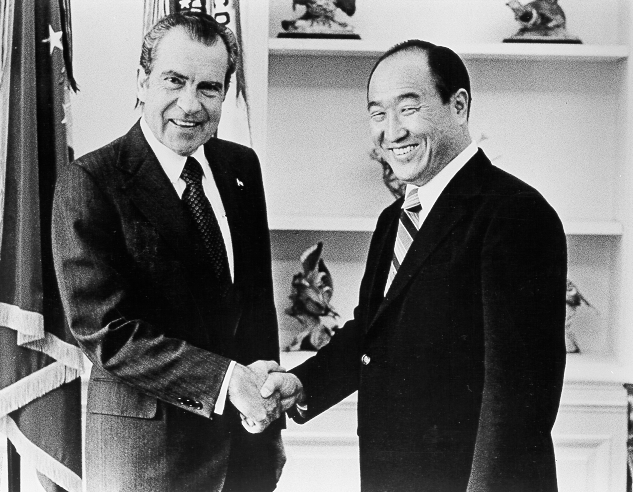
As much as conservative cartoonist Al Capp hated Rev. Sun Myung Moon, he deplored John Lennon and Yoko Ono even more. From Capp’s brief, belligerent visit to the Bed-In for Peace in Montreal in 1969.
The opening of Joan Didion’s writing about the sad and torturous Terri Schiavo case, in the New York Review of Books in 2005:
“Theresa Marie Schindler was born on December 3, 1963, to prosperous and devoutly Catholic parents, Robert and Mary Schindler, in a Philadelphia suburb, Huntingdon Valley. Robert Schindler was a dealer in industrial supplies. Mary Schindler was a full-time wife and mother. They named their first child for Saint Teresa of Avila, the Spanish mystic who believed the Carmelites insufficiently reclusive and so founded a more restrictive order. We have only snapshots of Theresa Marie Schindler’s life before the series of events that interrupted and eventually ended it. According to newspaper accounts published in the wake of those events, there had been the four-bedroom colonial on the leafy street called Red Wing Lane. There had been the day the yellow Labrador retriever, Bucky, collapsed of old age in the driveway and Theresa Marie tried in vain to resuscitate him. There had been the many occasions on which her two gerbils, named after the television characters Starsky and Hutch, got loose and into the air-conditioning unit in the basement.
She gained more weight than she wanted to. The summer she graduated from high school she went on a NutriSystem diet and began to lose the weight. Until then she hung out at the mall. She did not date. She bought her little brother Bobby his first Bruce Springsteen album. She pasted birthday cards into a scrapbook. She read Danielle Steel novels. She saw An Officer and a Gentleman with Richard Gere and Debra Winger four times in one day. She went to a Catholic grade school and a Catholic high school, where the single activity listed in her yearbook entry was ‘Library Aide,’ an extracurricular effort on which she and a friend had settled for the express purpose of having something besides their names in the yearbook. The college application process, in the sense of the crucial competition that it was for many in her generation, an exercise in the marshaling and burnishing of deployable accomplishments, seems not to have entered the picture.
She enrolled in the two-year program at Bucks County Community College, where, in a psychology class during her second semester, she met Michael Schiavo. He was from Levittown. He is said to have been the first person she had ever kissed. At the time they married two years later, in 1984, she was just under twenty-one; he was eight months older. After a honeymoon at Disney World, they moved in with her parents in Huntingdon Valley, then, when the Schindlers decided two years later to move to Florida, preceded them there. They lived first in a condominium the Schindlers had in St. Petersburg. Theresa Schindler Schiavo clerked at the Prudential Insurance Company. She dyed her hair blonde. She lay out by the pool and drank several quarts of iced tea a day. Michael Schiavo, who after his wife’s cardiac arrest would begin and eventually complete studies in nursing and respiratory therapy at St. Petersburg Junior College, took restaurant jobs.”
“If the wives relapse into their former mode of life, they are at once placed under the survey of the police.”
French society ladies arranging marriages between female prostitutes and male convicts–what could possibly go wrong? A brief article about these special nuptials from the February 5, 1869 Brooklyn Daily Eagle:
“One thousand prostitutes are at a St. Lazaire prison, near Paris. A novel plan for making good members of society is being tried lately with considerable success. A benevolent society of French ladies, with considerable means at its disposal, ascertains the dates at which unmarried male prisoners at Mans will be discharged; they ask them if they will be willing to marry one of the St. Lazaire prisons whose term expires at the same time, if a dower of 300 francs were given to the latter. This sum is amply sufficient for a young couple to commence housekeeping in France, and many prisoners are only too glad to avail themselves of the offer. If the wives relapse into their former mode of life, they are at once placed under the survey of the police, and may be imprisoned at any moment. The plan is said to work remarkably well. No complaints whatever have been made about the conduct of the thirty-five couples whose unions were brought about in this manner.”
Hi, I can and will help you with all problems I am gifted with the ability to see what is to come for others. If you feel lost hurt or confused call me for help and answers. If there is something or someone on your mind I will be glad to to help. Don’t wait any longer.
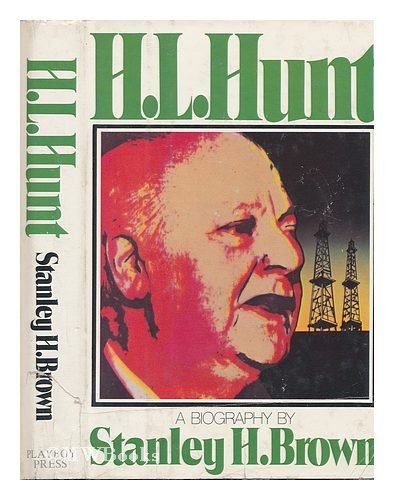
When you possess $5 billion and several families full of highly ambitious people, you bequeath a great deal of drama along with great wealth when you die. H.L. Hunt, an oilman with a backstory as large as Texas itself, left just that sort of a messy arrangement in 1974 when he succumbed to cancer. His descendants behaved in such a manner that they reputedly were the inspiration for the melodramatic TV series, Dallas. From a1974 People:
“Haroldson Lafayette Hunt was 32 and broke when he sat down to a game of five-card stud in the Arkansas boom town of El Dorado and won his first oil well. By the time he died of cancer two weeks ago at age 85, H.L. Hunt had pyramided his poker winnings into a global oil empire that made him one of the world’s half-dozen wealthiest men. Long before ‘Popsie’ Hunt’s death, however, an ugly struggle had already begun within his family over the disposition of the Texas tycoon’s personal fortune, estimated at $5 billion.
The issue is between Hunt’s children by his first wife and those of his second. His first marriage to Lyda Bunker Hunt produced four sons and two daughters—Mrs. Al Hill, 59, H.L. Jr., 57, Mrs. Hugo W. Schoellkopf Jr., 52, Nelson Bunker, 48, Herbert, 46, and Lamar, 42. Hunt’s second wife was Ruth Ray Wright, a former Hunt company secretary, who married H.L. two years after Lyda’s death in 1955. She had four children, whom H.L. immediately adopted: Ray, 30, June, 29, Helen, 26, and Swanee, 23. (Friends say members of the family have told them H.L. was their actual as well as adoptive father.)
The internecine intrigue began, H.L. confidant Paul Rothermel told a federal grand jury, when he convinced the patriarch in 1969 to leave 51% of Hunt Oil to the ‘second family.’ The first six children, recalled Rothermel, had already amassed many millions of their own. However, the other four children had ‘only’ about $3 million all-told in trust funds. Two years later, private detectives working for Nelson Bunker and Herbert were convicted of tapping the phones of Rothermel and four other Hunt Oil executives believed sympathetic to the younger set of Hunts. Themselves now under federal indictment for ordering the wiretaps, Nelson Bunker and Herbert have pleaded not guilty, arguing that they simply wanted to investigate unaccountable company losses of $62 million over two years. Should the two Hunts be convicted, they could be fined up to $10,000 or be sentenced to five years, or both. For his part, Rothermel has come to an undisclosed out-of-court settlement with the Hunts over the wiretap. “
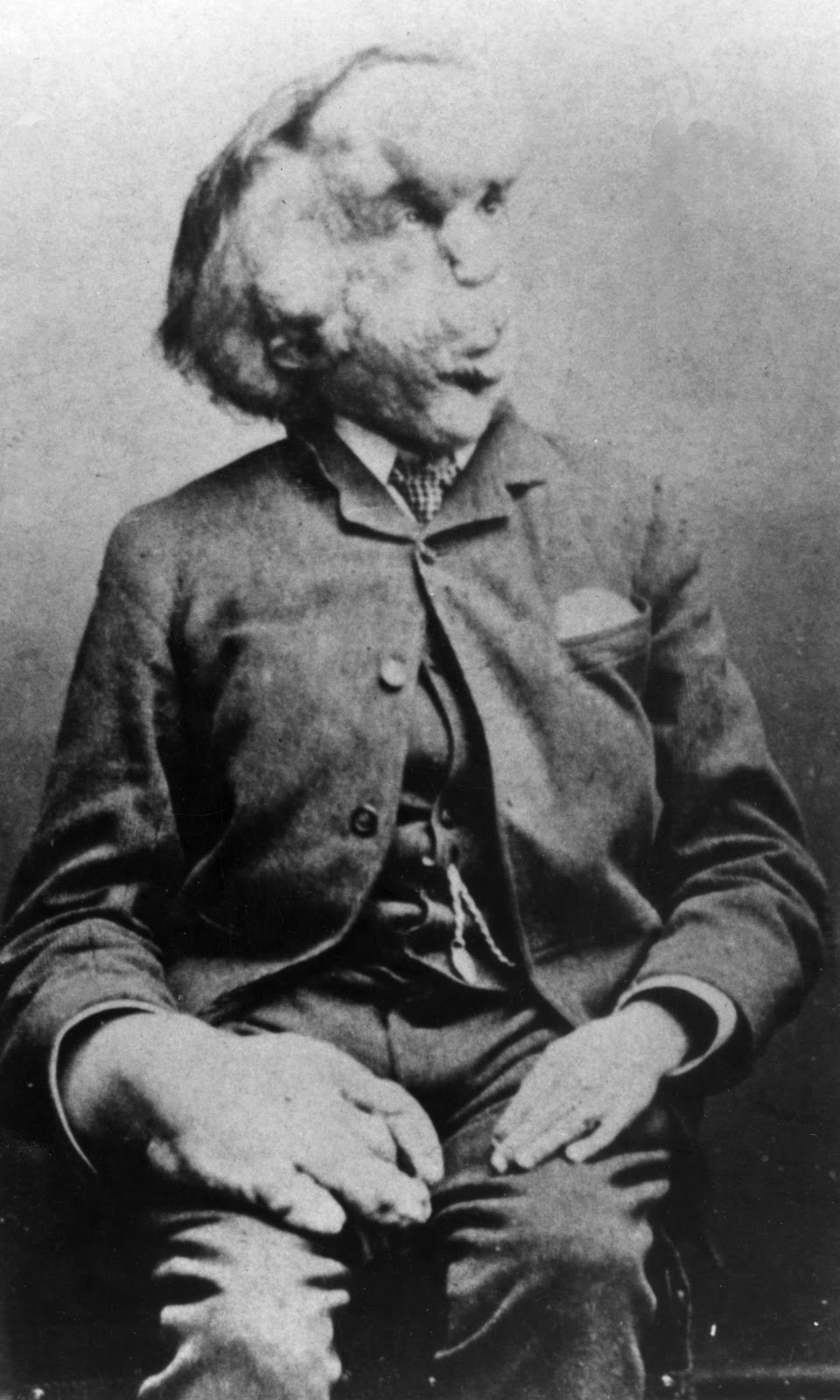
How cool. The first part of a 1980 episode of Friday Night…Saturday Morning featuring an interview with David Bowie, who was giving a stunning performance on Broadway in The Elephant Man at the time. Embedding is disabled on Youtube, but go here:
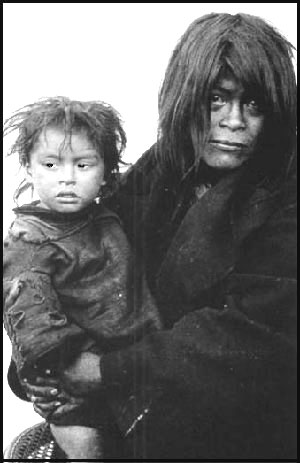
From “Say No More,” Jack Hitt’s 2004 New York Times Magazine piece about language death, a segment about the Kawésqar tongue of Chile:
“”The Kawesqar are famous for their adaptation to this cold, rainy world of islands and channels. The first Europeans were stunned. The Kawesqar and the other natives of the region traveled in canoes, naked, oiled with blubber, occasionally wearing an animal skin. The men sat at the front and hunted sea lions with spears. The women paddled. The children stayed in the sanctuary between their parents, maintaining fire in a sand pit built in the middle of the canoe. Keeping fire going in a land of water was the most critical and singular adaptation of the Kawesqar. As a result, fire blazed continuously in canoes and at the occasional landfall. The first European explorers marveled at the sight of so much fire in a wet and cold climate, and the Spanish named the southernmost archipelago the land of fire, Tierra del Fuego.
When Charles Darwin first encountered the Kawesqar and the Yaghans, years before he wrote The Origin of Species, he is said to have realized that man was just another animal cunningly adapting to local environmental conditions. But that contact and the centuries to follow diminished the Kawesqar, in the 20th century, to a few dozen individuals. In the 1930’s, the remaining Kawesqar settled near a remote military installation — Puerto Eden, now inhabited mostly by about 200 Chileans from the mainland who moved here to fish.
The pathology of a dying language shifts to another stage once the language has retreated to the living room. You can almost hear it disappearing. There is Grandma, fluent in the old tongue. Her son might understand her, but he also learned Spanish and grew up in it. The grandchildren all learn Spanish exclusively and giggle at Grandma’s funny chatter.
In two generations, a healthy language — even one with hundreds of thousands of speakers — can collapse entirely, sometimes without anyone noticing. This process is happening everywhere. In North America, the arrival of Columbus and the Europeans who followed him whittled down the roughly 300 native languages to only about 170 in the 20th century. According to Marianne Mithun, a linguist at the University of California at Santa Barbara, the recent evolution of English as a global language has taken an even greater toll. ‘Only one of those 170 languages is not officially endangered today,” Mithun said. ‘Greenlandic Eskimo.'” (Thanks TETW.)
If we lived to 200 or 300 years old, would the world be less noisy? Would a lack of urgency give humanity a quietist nature? I doubt it, but Douglas Coupland thinks so.
"As announced in 'The Seattle Daily Times' on February 14, 1909, 'The baby incubators will be seen at The Exposition, as well as W. H. Barnes with Princess Trixie, the educated horse.'"
These classic 1909 photographs, showing a baby incubator exhibition, were taken at the Alaska Yukon Pacific Exposition. Such sideshows were common at the time. From an historical article about the exhibit:
“Baby incubator exhibits were an expected feature on exposition midways from the 1896 Berlin Exposition on. Visitors to Omaha’s Trans-Mississippi and International Exposition in 1898, Buffalo’s Pan-American Exposition in 1901, St. Louis’s Louisiana Purchase Exposition in 1904, and Portland’s Lewis and Clark Exposition in 1905 experienced a similar concession. (At most of these, including the Lewis and Clark Exposition, the Baby Incubator Exhibit was managed by Dr. Martin Couney, the foremost promoter of the baby incubator sideshows at expositions. Couney’s Baby Incubator Exhibit at Luna Park in New York’s Coney Island ran from 1903 to 1943. Although A-Y-P’s Baby Incubator Exhibit bears a strikingly similar physical resemblance to Couney’s baby incubator shows, no connection between Couney and the A-Y-P has yet been discovered.)
As announced in The Seattle Daily Times on February 14, 1909, ‘The baby incubators will be seen at The Exposition, as well as W. H. Barnes with Princess Trixie, the educated horse.’ The display of human infants on the Pay Streak midway apparently elicited no protest from fairgoers (includingvisiting physicians), or from the local medical community.
Seattle already had a permanent (or at least seasonal) baby incubator exhibit: the Infant Electrobator concession at Luna Park in West Seattle. (An electrobator was an incubator heated by electricity.) Further details about this concession, where infants must have been rattled by the clatter of the wooden roller coaster and soothed by calliope music from the nearby carousel, appear to have vanished. It is possible that the A-Y-P exhibit and that at Luna Park were in some way connected.
French physician Alexandre Lion’s incubator, patented in 1889, was commonly used in baby incubator exhibits at expositions. These incubators varied greatly from the infant incubators utilized in modern neonatal intensive care units. The A-Y-P’s incubators regulated the temperature inside the unit and pulled in outside air for ventilation, nothing more. They would have been beneficial to well preemies needing no special care beyond steady warmth. The incubators exhibited at fairs and expositions had no ability to aid babies who could not breathe on their own, and there was at the time (and for many subsequent decades) no therapy for such children.
The A-Y-P Baby Incubator Exhibit apparently experienced no deaths, and it is unlikely that babies who lacked a very good prognosis would have been put on display for fear of negative public relations should they not survive, if for no other reason.”
I got the flu a number of years ago while reading Gina Kolata’s excellent book about the 1918 influenza pandemic, but I’m not pointing fingers. The opening of “Power in Numbers,” her new New York Times profile of Eric Lander, a brilliant mathematician who made the unlikely career switch to genome-mapping without the benefit of a biology background:
“His Ph.D. is in pure mathematics, in a subfield so esoteric and specialized that even if someone gets a great result, it can be appreciated by only a few dozen people in the entire world. But he left that world behind and, with no formal training, entered another: the world of molecular biology, medicine and genomics.ounding director of the Broad Institute of Harvard and M.I.T., he heads a biology empire and raises money from billionaires. He also teaches freshman biology (a course he never took) at M.I.T., advises President Obama on science and runs a lab.
Eric Lander — as a friend, Prof. David Botstein of Princeton, put it — knows how to spot and seize an opportunity when one arises. And he has another quality, says his high school friend Paul Zeitz: bravery combined with optimism.
‘He was super smart, but so what?’ said Dr. Zeitz, now a mathematics professor at the University of San Francisco. ‘Pure intellectual heft is like someone who can bench-press a thousand pounds. But so what, if you don’t know what to do with it?’
Eric Lander, he added, knew what to do. And he knew how to carry out strong ideas about where progress in medicine will come from — large interdisciplinary teams collaborating rather than single researchers burrowed in their labs.
So how did he end up at the Broad Institute, going from the most solitary of sciences to forging new sorts of collaborations in a field he never formally studied? What sort of person can make that journey?
Dr. Lander’s story can be told as a linear narrative of lucky breaks and perfect opportunities. But he doesn’t subscribe to that sort of magical thinking. To him, biography is something of a confection: ‘You live your life prospectively and tell your story retrospectively, so it looks like everything is converging.'”
••••••••••
Back to the 1918 flu pandemic for a moment: “Grotesque and ugly in their influenza masks, the people of San Francisco celebrate.”
It would have been hugely satisfying if even one journalist had the temerity to ask Newt Gingrich the most obvious question when he was in mid-whine over Mitt Romney’s negative ads in Iowa: Didn’t you behave far more shamelessly when you pilloried Bill Clinton over his marital infidelities while you yourself were philandering? That nobody called him out on the ridiculousness of his indignation and late-life conversion to fair play is really sad.
Rolltop, the laptop you can roll up. Just a concept at this point. Now if they can just teach the guy in the video how to remove the stick from his ass.
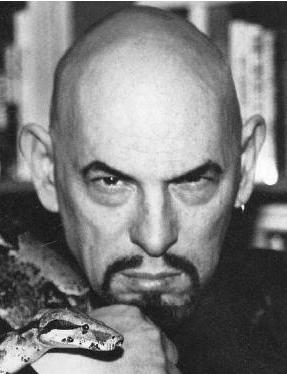
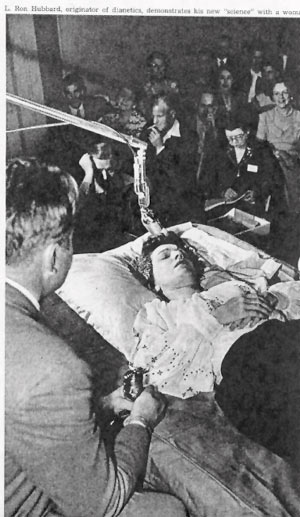
Before we fully descended into the Age of Celebrity, People magazine used to do hard-hitting journalism along with its fluff and risk all sorts of legal hazards in the process. From the 1978 article, “The Bizarre Cult of Scientology“:
“Perhaps no critic of the church has suffered more than New York free-lance writer Paulette Cooper, author of a 1971 book titled The Scandal of Scientology–and the target of the church operation code-named ‘Freak Out.’ Her publisher withdrew Scandal and destroyed most copies almost as soon as it was printed–in the face of defamation suits in five countries seeking $15 million damages. But according to a suit Cooper plans to file after the federal indictments are announced, the church continued for years afterward to press a smear campaign bent on putting her ‘in a mental institution [or] in jail.’ To that end, she charges, that church members followed her, stole her diary, threatened her with a gun, lifted files for her psychiatrist and her lawyer, wrote anonymous ‘Dear Fellow Tenant’ letters saying she was a sexual deviant with venereal disease–and framed her on federal charges of making bomb threats against the church. (They wrote the threats themselves on her stationery, which they had stolen.) Charges were eventually dropped when she passed a seven-hour sodium-pentothal test, but she had to spend $28,000 to defend herself and $4,000 on psychotherapy to cope with the stress. ‘At one point I was down to 83 pounds,’ she remembers. The recently seized church documents may well support her latest suit against the church–for $40 million damages–but she still lives like a fugitive, using the service elevator in her New York apartment and wearing dark sunglasses and disguises.”
Tom Schiller and Albert Brooks were among those who created short films and videos for SNL in the early days. I’ve had a couple of chance meetings with Schiller, who also directed anamazing documentary about Henry Miller. For some reason, he spoke with an incredibly fake Russian accent on both occasions. I guess he was just screwing with the world because he wasn’t crazy about the way it was. And who could blame him? Here’s “Java Junkie,” Schiller’s 1979 SNL short about caffeine madness.
I’ve never met Brooks, that standoffish jerk. Here’s his 1976 SNL film, “The Famous Comedians School”: