
Paul Krugman is the subject of a new Playboy Interview conducted by Jonathan Tasini. Because a monthly magazine covering current events is completely crazy at this point, the two mostly stick to more general policy questions, and there’s some good stuff there. (If you click the link at work, be advised that there are bare boobs and butts all over the page, though none belong to Krugman.) An excerpt:

KRUGMAN: The point is there’s a tremendous amount of suffering. A lot of America is much worse off than it was four years ago. I think the main reason you should be angry about it is that it’s gratuitous. This doesn’t have to be happening. We actually have the tools to make most of this go away. If we could throw aside the political prejudices and bad ideas that are crippling us, in 18 months we could be back to something that feels like a much better economy.

PLAYBOY: So people in America today are suffering when they don’t have to be because of policy makers who won’t do the right thing?

KRUGMAN: That’s right. I’ve gotten some grief for my remark that if it were announced that we faced a threat from space aliens and needed to build up to defend ourselves, we’d have full employment in a year and a half. But that’s true. Why couldn’t we do that to repair our sewer systems and put an extra tunnel under the Hudson instead of to fight imaginary space aliens? Everybody in the world except us is doing a lot of investment in infrastructure and education. This is the country of the Erie Canal and the Interstate Highway System. The Erie Canal was a huge public infrastructure project financed with no private or public-private partnership. Can you imagine doing that in 21st century America? We really have slid backward for the past 200 years from the kinds of things we used to understand needed to be done now and then. And all of that because we are shackled to the wrong ideas.”

Tags: ,

How disgraceful!

I would never mock an American hero, Mavis.

Tags: ,

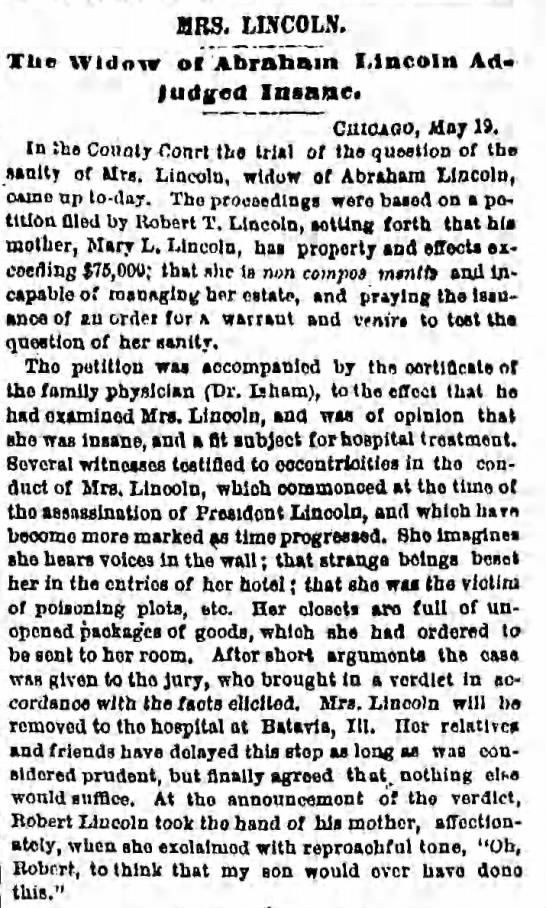
“She imagines she hears voices in the wall.”

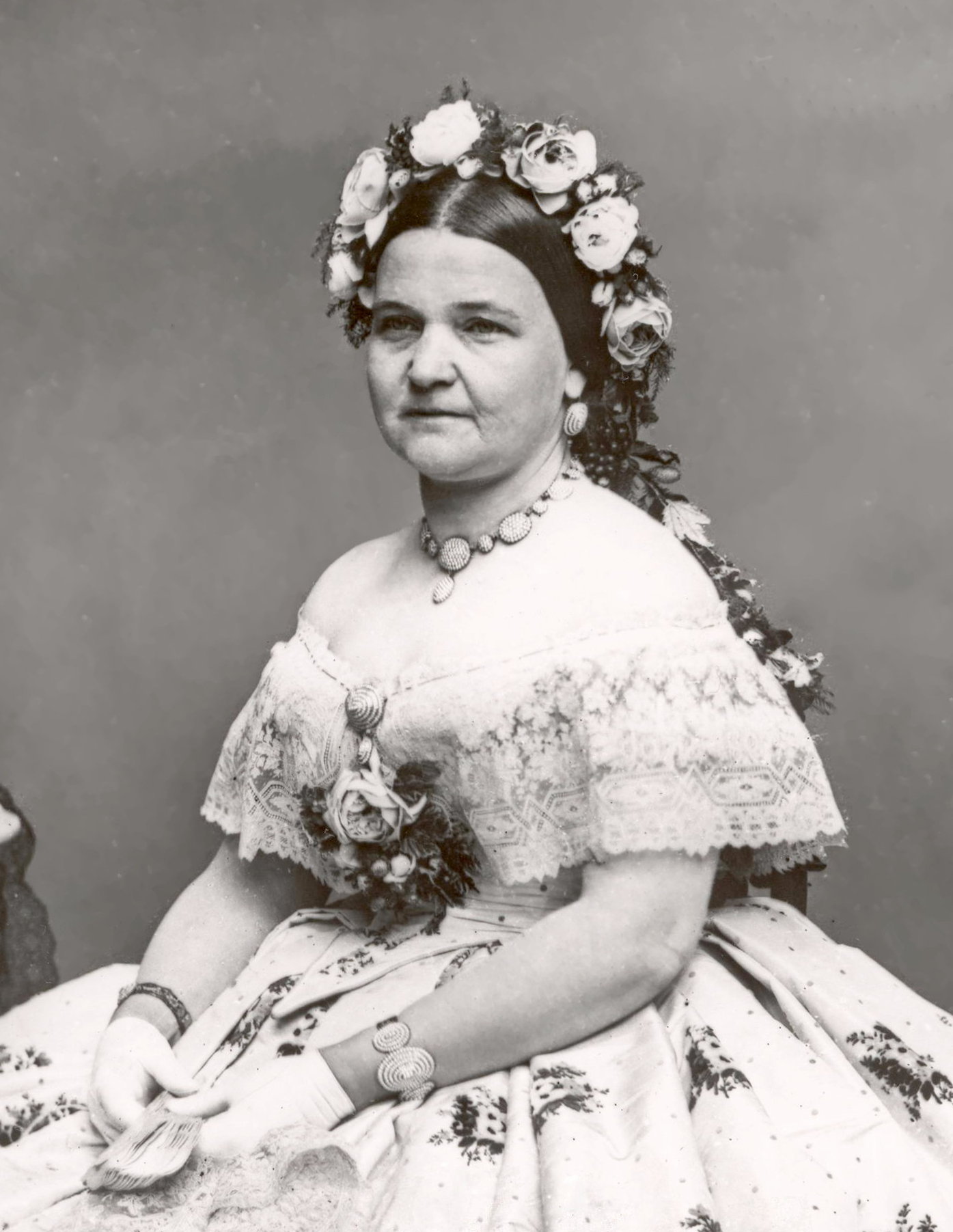
A decade after President Lincoln was assassinated, his wife, Mary Todd Lincoln, who struggled emotionally from the death of not only her husband but three sons as well, was declared insane at the request of her only surviving son, Robert. A report follows from the May 20, 1875 Brooklyn Daily Eagle.

Tags: , , ,

A section from “Choice,” a 1964 campaign film for Barry Goldwater, the template for all culture warriors to follow.

Tags:

"Copper wires might be ok, but they’ll never deliver a gig." (Image by Thomas Lehmann.)

As Craig Settles points out on a telling piece at Gigaom, today’s telecommunication companies are trying to use legislation to ensure their slow, outdated broadband networks are given preference over faster fiber networks. And that happens to the detriment of us all, especially to people living outside of cities. An excerpt:

“Around 1940, the railroads were in their heyday. They had made America great, railroads still basked in the glow of their role helping to conquer the West, they had nationwide infrastructure, ushered in innovations, and railroad barons carried clout in D.C. and beyond.

Post-World War II, airplanes were evolving into serious transportation vehicles that moved lots of people, mail and packages much faster than trains did. While railroads tried to make trains faster, more comfortable, etc., airlines made greater technological advances AND market advances. No matter what improvements railroads could make, those trains would never fly. Planes, however, got bigger, faster, and more popular.

Today’s telcos are the railroads. They’ve spent money to build infrastructure to a lot of places. But local governments, co-ops and nonprofits are building supersonic jetliners. Chattanooga, Tenn.; Santa Monica, Calif.; Wilson, N.C.; Lafayette, La. and dozens of cities and counties have fiber networks that kick telcos’ assets.

Copper wires might be ok, but they’ll never deliver a gig. That’s what cities and counties are delivering. Nor will the big corporations go to the places that need broadband the most. AT&T basically just told rural America ‘you’re on your own.’ Verizon FiOS? If you don’t have it by now, you probably aren’t getting it.

So incumbents have flocked to the last refuge of a corporate scoundrel, the legislatures where their money can buy what they can’t do easily in a truly competitive market – bills that kill municipal broadband. In Georgia, they have an anti-muni bill in the state senate (SB 313) that defines broadband as 200 kbps!”

Tags:

Finally got around to reading “The Delivery Guy Who Saw Jeremy Lin Coming,” Jason Gay’s fun WSJ piece about an amateur numbers-cruncher who predicted the unlikely rise of the NBA’s newest superstar. An excerpt:

“In May 2010, an unsung numbers hobbyist named Ed Weiland wrote a long-term forecast of Jeremy Lin for the basketball website Hoops Analyst. At the time, Lin was a lightly regarded, semi-known point guard who had completed his final season at Harvard. But Weiland saw NBA material. He emphasized how well Lin played in three nonconference games against big schools: Connecticut, Boston College and Georgetown. He noted how Lin’s performance in two unsexy statistical categories—two-point field-goal percentage (a barometer of inside scoring ability) and RSB40 (rebounds, steals and blocks per 40 minutes) compared favorably with college numbers put up by marquee NBA guards like Allen Iverson and Gary Payton. Weiland concluded that Lin had to improve on his passing and leadership at the point, but argued that if he did, ‘Jeremy Lin is a good enough player to start in the NBA and possibly star.’

Read also: 

Tags: , ,

"AND BRAIN EYES."

ROBOT CLAWS – $280 (NY)

THESE ARE A SET OF CLAWS WE TRIED TO MAKE. THESE ARE A GOOD START. LET US KNOW WE CAN MAKE YOU A SET IF YOU NEED. 

WE ALSO HAVE TORSO HOOKS FOR THE SAME ROBOT. 

AND BRAIN EYES.

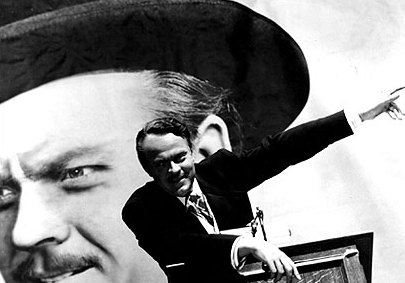
Orson Welles in a 1967 Playboy Interview, conducted by Kenneth Tynan, recalled working as a fortuneteller (or so he claimed):

Playboy: Another prevalent rumor is that you have the power of clairvoyance. Is that true?

Welles: Well, if it exists, I sure as hell have it; if it doesn’t exist, I have the thing that’s mistaken for it. I’ve told people their futures in a terrifying way sometimes–and please understand that I hate fortunetelling. It’s meddlesome, dangerous and a mockery of free will–the most important doctrine man has invented. But I was a fortuneteller once in Kansas City, when I was playing a week’s stand there in the theater. As a part-time magician, I’d met a lot of semi-magician racketeers and learned the tricks of the professional seers. I took an apartment in a cheap district and put up a sign–$2 READINGS–and every day I went there, put on a turban and told fortunes. At first I used what are called ‘cold readings’; that’s a technical term for things you say to people that are bound to impress them and put them off their guard so that they start telling you things about themselves. A typical cold reading is to say that you have a scar on your knee. Everybody has a scar on their knee, because everybody fell down as a child. Another one is to say that a big change took place in your attitude toward life between the ages of 12 and 14. But in the last two or three days, I stopped doing the tricks and just talked. A woman came in wearing a bright dress. As soon as she sat down, I said, ‘You’ve just lost your husband’; and she burst into tears. I believe that I saw and deduced things that my conscious mind did not record. But consciously, I just said the first thing that came into my head, and it was true. So I was well on the way to contracting the fortune-teller’s occupational disease, which is to start believing in yourself; to become what they call a ‘shut-eye.’ And that’s dangerous.”

Tags: ,

The Harvard Monolithic Bee is a tiny winged insect created with a pop-up manufacturing process.

In the wake of the recent budget-limit travesty, Bill Clinton opined that if President Obama was in a position to be stubborn and let the government close down, perhaps that would have been the GOP’s waterloo moment. Maybe instead the 2012 Presidential election will be the ultimate cratering of the Republicans, the final bottoming out before it can return to sanity and stop treating politics like a zero-sum game. If its Presidential campaign is a culture war and contraception is a centerpiece, the GOP will suffer a devastating loss. Maybe it can rise from that wreckage and become a party worthy of governance again.

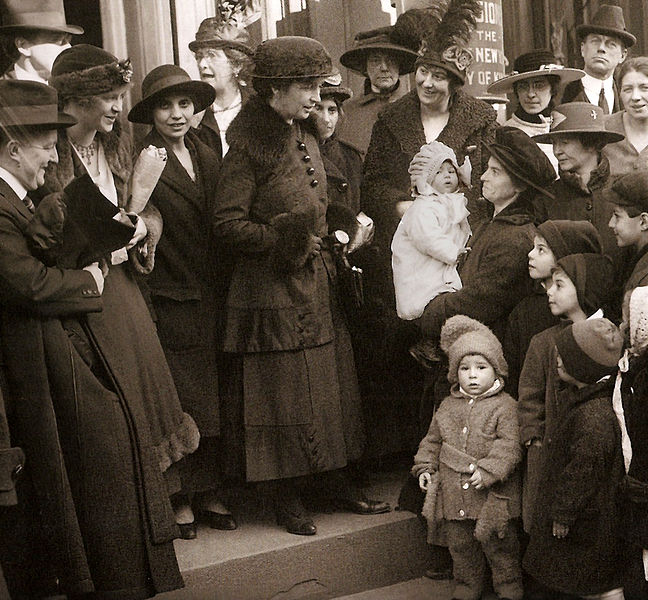
The term birth control was coined by New York nurse Margaret Sanger, who is pictured above in a classic photo exiting a Brooklyn courthouse on January 8, 1917. She was on trial for opening a birth-control clinic the previous year, and she was guilty as charged. In 1921, Sanger founded the American Birth Control League, which eventually became Planned Parenthood. Sanger wasn’t completely enlightened herself, embodying some of the biased views of her time regarding race and eugenics. But she did shine a light on the important area of women’s health. From a 1957 interview which Mike Wallace conducted with Sanger:

WALLACE: Well let’s look at the official Catholic position…opposition to Birth-Control. I read now from a church publication called ‘The Question Box’ in forbidding Birth Control it says the following: It says the immediate purpose and primary end of marriage is the begetting of children, when the marital relation is so used as to render the fulfillment of its purposes impossible–that is by Birth Control–it is used unethically and unnaturally. Now what’s wrong with that position?

SANGER: Well, it’s very wrong, it’s not normal it’s — it has the wrong attitude towards marriage, toward love, toward the relationships between men and women.

WALLACE: Well the natural law they say is that first of all the primary function of sex in marriage is to beget children. Do you disagree with that?

SANGER: I disagree with that a hundred percent.

WALLACE: Your feeling is what then?

SANGER: My feeling is that love and attraction between men and women, in many cases the very finest relationship has nothing to do with bearing a child. It’s secondary. Many, many times and we know that –you see your birth rates and you can talk to people who have very happy marriages and they’re not having babies every year.”

Tags: ,

Brief clip of Che Guevara on Face the Nation, 1964. Castro, Guevara and their fellow revolutionaries had a righteous cause, but ended up making things far worse, entrapping Cuban people in poverty for decades.

Tags:

Sony founder Akio Morita dreamed of lifting Japan from the ashes of WWII by selling the best consumer electronics in the world, and he made it happen. By 1985, when he filmed this American Express commercial, he was legend all over the world.

Tags:

New York Times reporter Charles Duhigg, who’s done some brilliant work recently co-authoring articles about the Foxconn factories in China, has just filed “How Companies Learn Your Secrets,” an excellent piece in the Magazine about a big-box store collecting (and using) every little detail of your life. An excerpt:

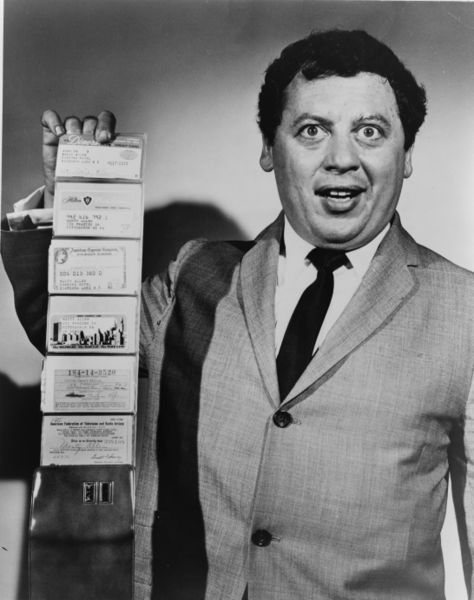
“The desire to collect information on customers is not new for Target or any other large retailer, of course. For decades, Target has collected vast amounts of data on every person who regularly walks into one of its stores. Whenever possible, Target assigns each shopper a unique code — known internally as the Guest ID number — that keeps tabs on everything they buy. ‘If you use a credit card or a coupon, or fill out a survey, or mail in a refund, or call the customer help line, or open an e-mail we’ve sent you or visit our Web site, we’ll record it and link it to your Guest ID’ [Andrew] Pole said. ‘We want to know everything we can.’

Also linked to your Guest ID is demographic information like your age, whether you are married and have kids, which part of town you live in, how long it takes you to drive to the store, your estimated salary, whether you’ve moved recently, what credit cards you carry in your wallet and what Web sites you visit. Target can buy data about your ethnicity, job history, the magazines you read, if you’ve ever declared bankruptcy or got divorced, the year you bought (or lost) your house, where you went to college, what kinds of topics you talk about online, whether you prefer certain brands of coffee, paper towels, cereal or applesauce, your political leanings, reading habits, charitable giving and the number of cars you own. (In a statement, Target declined to identify what demographic information it collects or purchases.) All that information is meaningless, however, without someone to analyze and make sense of it. That’s where Andrew Pole and the dozens of other members of Target’s Guest Marketing Analytics department come in.”

Tags: ,


Some search-engine keyphrases bringing traffic to Afflictor this week:

Afflictor: Thinking the GOP position on contraception may complicate pony rides.

  • Jon Voight may not truly understand his feelings about race.
  • How to transfer data from one computer to another with just a touch.
  • Nick Kristoff finds common ground with social theorist Charles Murray.

A consequence of our information-rich world is that we forget a lot more than we used to, though that doesn’t mean our memories have grown worse. We likely also remember as much as ever–it’s just that the information we possess at any given time shifts more now. The Internet is a “brain” outside of our brain, and some people worry about that the way Socrates was concerned that the written word was an affront to oral tradition. He was right to think that writing would alter who we are, but that’s probably just a natural part of the evolution of the species. From Evan Selinger’s new Slate article about technology-enhanced memory:

“Ubiquitous information and communication technology is a major player in the memory enhancement game. I’m not alluding to products that target impairments, like the iPhone app for combating dementia. Rather, I mean commonplace software that people use to make recall less taxing, more extensive, or easier to visualize.   

For instance, Wikipedia’s anti-SOPA protest made 162 million users, accustomed to turning to the site for those idle questions that crop up every day, feel absent-minded. Nobody messed with my hippocampus or your prefrontal cortex. Rather, Wikipedia’s actions were jarring because Internet use affects transactive memory, which is ‘the capacity to remember who knows what.’ If we know information is available online, we’re inclined to remember where it can be found, rather than struggle to retain the facts. This evolutionary tendency to off-load taxing aspects of cognition into the environment—natural or built—extends beyond using devices to recall information we’re already familiar with.

This is called ‘extended cognition,’ and it plays a crucial role in a controversial view called the ‘extended mind’ thesis. Advocates argue that data-management technologies, from low-tech pads to high-tech computers, don’t always function as mere memory-prompting tools. Sometimes, they deserve to be understood as parts of our mind. “

••••••••••

“What would it mean to have no place in time?”:

Tags:

"I want to live and take care of them both."

I love two woman

I am married to a wonderful woman in an open marriage for 20 years i recently realized i am falling in love with her sister inlaw.I want to live and take care of them both my wife is perfectly fine with this arrangement i hope this works because i truly love them both equally. 

Pan Am began the “First Moon Flight’s Club” in 1968, a waiting list for civilian space travel before we even landed a man on the moon. It wasn’t just a gimmick–it was something that the airline’s founder Juan Trippe believed would happen in the near future. From Cosmos:

“IT WAS CHRISTMAS EVE 1968. Three men — Frank Borman, James Lovell and William Anders — were coasting 100 km above the Moon, the first astronauts to ever circle it. From inside their tiny Apollo 8 command capsule, they pointed a TV camera toward Earth, showing millions of viewers back home what no one had ever seen before. They snapped a famous picture — Earthrise — of our blue world ascending above the lunar horizon. And then they read aloud the story of creation according to the Book of Genesis.

Back home, a record TV audience was watching. When transmission ended 17 minutes later, an announcer broke the reverie to breathlessly report that Juan Trippe, the founder of Pan American — one of the world’s largest airlines at the time — had announced that Pan Am would start taking reservations for commercial passenger flights to the Moon.

The next day, The New York Times reported that Pan Am had been deluged with inquiries and had established a First Moon Flights Club — effectively, a glorified waiting list for space tourists. Within days, Trans-World Airlines followed suit.”

••••••••••

“In the beginning…”:

“I’m so tired and I wish I was the moon tonight”:

Tags:

Dialogue about solar energy from You Can’t Take It With You, 1938.

It took two weeks for the whole country to fall in love with the NBA’s first Taiwanese-American player. As polls repeatedly show, most Americans, even those who disagree with his politics, genuinely like our first African-American President. Polls also show that the majority of Americans support marriage for gay people. Most Americans don’t want illegal aliens who’ve obeyed the law rounded up and deported by the millions. The majority of us want safe and free access to contracepetion and reproductive health care for women. Whether it’s shifting demographics or a more enlightened populace, whether our faces have changed or our hearts, the question is: Are wedge issues, used so often and so successfully by Conservatives in recent decades, a thing of the past? Is the exploiting of social issues a losing gambit now?•

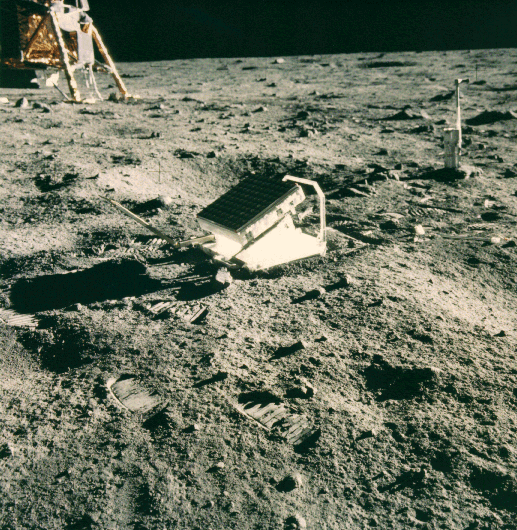
From “What Neil & Buzz Left on the Moon,” on NASA’s official site:

The most famous thing Neil Armstrong left on the moon 35 years ago is a footprint, a boot-shaped depression in the gray moondust. Millions of people have seen pictures of it, and one day, years from now, lunar tourists will flock to the Sea of Tranquility to see it in person. Peering over the rails … “hey, mom, is that the first one?”

Will anyone notice, 100 feet away, something else Armstrong left behind?

Ringed by footprints, sitting in the moondust, lies a 2-foot wide panel studded with 100 mirrors pointing at Earth: the ‘lunar laser ranging retroreflector array.’ Apollo 11 astronauts Buzz Aldrin and Neil Armstrong put it there on July 21, 1969, about an hour before the end of their final moonwalk. Thirty-five years later, it’s the only Apollo science experiment still running.

University of Maryland physics professor Carroll Alley was the project’s principal investigator during the Apollo years, and he follows its progress today. ‘Using these mirrors,’ explains Alley, ‘we can ‘ping’ the moon with laser pulses and measure the Earth-moon distance very precisely. This is a wonderful way to learn about the moon’s orbit and to test theories of gravity.’

Here’s how it works: A laser pulse shoots out of a telescope on Earth, crosses the Earth-moon divide, and hits the array. Because the mirrors are ‘corner-cube reflectors,’ they send the pulse straight back where it came from. ‘It’s like hitting a ball into the corner of a squash court,’ explains Alley. Back on Earth, telescopes intercept the returning pulse–‘usually just a single photon,’ he marvels.”

Tags: ,

Bob Dylan and Joan Baez at the March on Washington, August 28, 1963.

Tags: ,

"While the two heads were fairly well formed one of them had only one eye." (Image by law_keven@Wikipedia.)

From the January 17, 1897 Brooklyn Daily Eagle:

“There was a two headed cat at Bellevue hospital, New York, yesterday afternoon. It was dead and in a bottle of alcohol. H.M. Vanderbilt of 249 Jefferson Avenue, this city, took the curiosity to the hospital to show the physicians. The cat was born in his cellar, he said, and lived only a few minutes. While the two heads were fairly well formed one of them had only one eye. The physicians at Bellevue were anxious to have the curiosity left at the hospital, but after exhibiting it, Mr. Vanderbilt brought it back to this city.”

Tags:

Sparsh, the brainchild of Pranav Mistry at MIT Labs, allows you to transfer data through touch. No cutting, no pasting, no mouse, no keystrokes, no nothing.

Tags:

The opening of “The Mobility Myth,” Timothy Noah’s New Republic piece which argues that opportunity for upward mobility in America has narrowed as the economic divide has widened:

“When Americans express indifference about the problem of unequal incomes, it’s usually because they see the United States as a land of boundless opportunity. Sure, you’ll hear it said, our country has pretty big income disparities compared with Western Europe. And sure, those disparities have been widening in recent decades. But stark economic inequality is the price we pay for living in a dynamic economy with avenues to advancement that the class-bound Old World can only dream about. We may have less equality of economic outcomes, but we have a lot more equality of economic opportunity.

The problem is, this isn’t true. Most of Western Europe today is both more equal in incomes and more economically mobile than the United States. And it isn’t just Western Europe. Countries as varied as Japan, New Zealand, Singapore, and Pakistan all have higher degrees of income mobility than we do. A nation that prides itself on its lack of class rigidity has, in short, become significantly more economically rigid than many other developed countries. How did our perception of ourselves end up so far out of sync with reality?” (Thanks Browser.)

Tags:

« Older entries § Newer entries »