Hunter S. Thompson’s campus tour during the Gipper administration.
More Hunter S. Thompson posts:
- Hunter S. Thompson political ad. (1970)
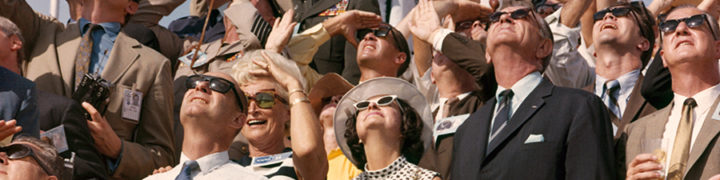
Ideas and technology and politics and journalism and history and humor and some other stuff.
You are currently browsing the archive for the Videos category.
Hunter S. Thompson’s campus tour during the Gipper administration.
More Hunter S. Thompson posts:
Tags: Hunter S. Thompson, Ronald Reagan
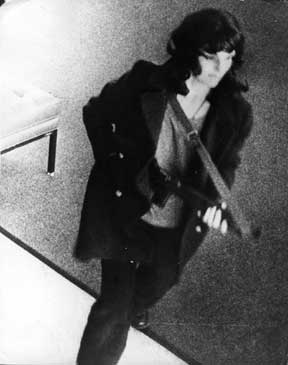
"Hunter insisted on meeting an imprisoned Hearst, the granddaughter of newspaper publisher William Randolph Hearst."
On Grantland, Jonathan Abrams profiles current NBA players’ union executive director Billy Hunter, who enjoyed a fascinating legal career even before being at loggerheads with league commisioner David Stern:
“President Jimmy Carter appointed Hunter as the U.S. Attorney for Northern California in 1977. He was one of the youngest lawyers to ever hold the position and became entangled in several historic moments. He brought the first major federal cases against the Hells Angels and Black Panther Party.
Hunter also prosecuted the surviving members who aided Jim Jones’ cult after the mass suicide of more than 900 people in Jonestown, Guyana, in 1978. Hunter visited Jonestown following the assassination of U.S. Rep. Leo Ryan.
‘We got there just on the eve of the Guyanese Army evacuating all the bodies,’ Hunter said. ‘The bodies had blown up because of the heat and all the bodies up there. It’s hot as hell there.’
Hunter also recommended Patty Hearst’s sentence be commuted and visited Hearst while she was imprisoned. At first, Hunter perceived that his bosses simply wanted him to sign off on the decision. Hunter insisted on meeting an imprisoned Hearst, the granddaughter of newspaper publisher William Randolph Hearst, who was first kidnapped by the Symbionese Liberation Army and later sympathized with the militant group.
They talked about life, and Hunter noted the irony of how he, a poor kid from New Jersey, was holding the key to the freedom of one of the country’s most wealthy heiresses. At the end of the three-hour conversation, Hearst plainly asked Hunter of his intentions. ‘I told her that I would recommend getting her out of here.'”
••••••••••
The SLA has a gunfight with the LAPD the year before Hearst’s arrest:
Tags: Billy Hunter, Patty Hearst
What did Sandra Bullock and Coolio and Newt Gingrich think? (Thanks Reddit.)

In a new article in Wired, Clive Thompson interviews Microsoft’s principal researcher, Bill Buxton, about the “long nose” theory, which holds forth that innovations that seemingly come out of nowhere are actually incubated for a long time. At the piece’s conclusion, Thompson predicts which technology is ready to dominate in the next decade. An excerpt:
“Using a ‘long nose’ analysis, I have a prediction of my own. I bet electric vehicles are going to become huge—specifically, electric bicycles. Battery technology has been improving for decades, and the planet is urbanizing rapidly. The nose is already poking out: Electric bikes are incredibly popular in China and becoming common in the US among takeout/delivery people, who haul them inside their shops each night to plug them in. (Pennies per charge, and no complicated rewiring of the grid necessary.) I predict a design firm will introduce the iPhone of electric bikes and whoa: It’ll seem revolutionary!”
••••••••••
Prodeco Technologies introduces the next generation of electric bikes:
Tags: Bill Buxton, Clive Thompson
As the narrative goes, postwar Japan rebuilt itself through discipline and transistors. That’s largely true–apart from the motorcycle gangs and brawling. From 1976. (Thanks Documentarian.)
Tags: Mitsuo Yanagimachi

"Exclusive blend of white cement and USG casting plaster."
A life mask is taken when the person is alive. What you see is their actual face, life size, with every detail, just as it was the day they sat for the life mask.
These are original, limited edition casts and will make a prized addition to any home theater, media room, or memorabilia collection. In 2000 these life masks officially became museum quality.
Casts measures approximately 13″ high x 5″ wide x 4″ deep
Each cast is from a Limited Edition and is numbered.
Mask is cast in UltraStone (an exclusive blend of white cement and USG casting plaster) with a sturdy wire hanger on the back for secure wall mounting.
Finished with an exclusive 5 color coat process by a retired prop builder with over 50 years experience, this original system is often imitated, but never duplicated. Each mask is sealed, multistage painted, then sealed again to last a lifetime
Each life mask is a unique, single and original work of fine art, not to be confused with mass produced imitations.
ALFRED HITCHCOCK (very famous profile)
JACK NICHOLSON (SOLD)
GEORGE REEVES (the original Superman from the 1950’s TV show)
CLARK GABLE (Gone with the Wind)
••••••••••
“Liz Learmont, Life Mask Sculptor”:

Even before his steep fall from grace, John Edwards always seemed a mealymouthed charlatan who had all the slickness of Bill Clinton without any of the prodigious political talent. But even the best and brightest can sometimes look at a situation and completely misread it. I was looking up some articles by Barbara Ehrenreich and was reminded of this:
“For my money, John Edwards is the best candidate out there. Clinton has Iraqi and American blood on her hands; Obama has yet to lay out clear economic alternatives; and, although they might once have been Republican moderates, McCain and Giuliani are shamelessly snuggling up to the Christianist Right. I like Edwards because he’s taken up the banner of the little guy and gal in America’s grossly one-sided class war. He’s laid out a plan for universal health insurance; he wants to repeal Bush’s tax cuts for the rich; he shows up at workers’ picket lines.”
—Barbara Ehrenreich
José Contreras-Vidal demonstrates his brain-cap technology.

Not Modesto, but possessing a stunning likeness. (Image by Hans Hillewaert.)
Ciudad Juarez in Mexico has been a hyperviolent hotbed of crime and murder for so long that locals have been forced to remain inside as much as possible, which, of course, makes those who do venture out even more unsafe. Could an increasing number of people visiting a park to see a giraffe be a sign that things are changing? From Damien Cave’s well-written article about the significance of Modesto the Giraffe in the New York Times:
” Oblivious to crime, nearly 20 feet tall and tough enough to withstand wild temperature swings, Modesto the giraffe has become more than just another oddity in this bizarre borderopolis of malls and murders. He has become a magnet for people trying to escape fear and the cooped-up life caused by violence.
‘We need places that are peaceful,’ said Eduardo Ponce, 44, an elementary school teacher whose 2-year-old son was entranced by Modesto on a recent afternoon. ‘I try to think positive.’
That seems to be a little more common these days. Several parks here in Ciudad Juárez have been attracting crowds again, residents say, because of a desire that often emerges after several years of war or widespread crime — a desire to get out, to stop hunkering down, to believe that things are better, or will be.
It is far from clear that this hope is yet realized. Murders in Ciudad Juárez appear to be down compared with last year, but the past few weeks have been especially bloody, with 21 people killed in a single day this month. No one here seems to think the struggle against the city’s rampant drug violence is over. Many are just tired of letting it rule their lives.”
••••••••••
Modesto la jirafa:
Tags: Damien Cave, Eduardo Ponce, Modesto
From 1967.
Tags: Groucho Marx, William F. Buckley
Frank Sinatra, that erstwhile Liberal Democrat, supporting his Hollywood buddy Ronald Reagan at the 1980 Republican Convention. Chris Wallace and Lynn Sherr do the honors. Lousy audio, but still worth it.
Another post about a celebrity political endorsement:
Tags: Frank Sinatra, Ronald Reagan

It’s always curious to me that negotiators, whether politicians or the opposing sides of sports leagues, so often delay working on an agreement in earnest until they place themselves under severe time constraints, which would seem to be the worst time for those in disagreement to reach a compromise. The reliably lucid James Surowiecki explains why negotiations go bonkers under time pressure, in his article on the debt-ceiling debacle in the New Yorker.
“You might think that there are benefits to putting negotiators under the gun. But, as the Dutch psychologist Carsten de Dreu has shown, time pressure tends to close minds, not open them. Under time pressure, negotiators tend to rely more on stereotypes and cognitive shortcuts. They don’t consider as wide a range of alternatives, and are more likely to jump to conclusions based on scanty evidence. Time pressure also reduces the chances that an agreement will be what psychologists call ‘integrative’—taking everyone’s interests and values into account.
In fact, by turning dealmaking into a game of chicken, the debt ceiling favors fanaticism. As the economist Thomas Schelling showed many years ago, ‘It does not always help to be, or to be believed to be, fully rational, coolheaded, and in control of oneself’ when it comes to brinksmanship.”
••••••••••
A dramatic interpretation of the American economy, with Slim Pickens in the role of John Boehner:
Tags: Carsten de Dreu, James Surowiecki
That’s a lot of lost luggage. (Thanks Reddit.)

I didn’t know there were Flappers in Moscow, Idaho, in 1922, but this classic photograph is proof positive. As is often the case with fashions that shock, there was an underlying message of social rebellion woven into the fabric of the style. In this case, the risqué clothes were about women trying to establish an identity that didn’t require being housebound in a housecaot. An excerpt from a 1922 New York Times article about the Flapper craze that looks at how one young woman didn’t really care if hemlines grew longer as long as she could work:
“One of the emancipated ones, with a Knickerbocker grandmother and much family oposition behind her ‘adventures into the open,’ in telling of her struggle for freedom, said:
‘I worked during the war, of course–every one did. And I decided then that never again would I be content to sit at home and do nothing but go to parties. It was hard work at first to get my people to understand how I felt about it. But I finally succeeded. I’ve been here two years. Now I want a better job. I want more money and I think I’m worth it. Jobs are awfully hard to get, though. I do not want my friends to help me if I can manage to get a better position without their assistance.
‘Several of my friends have gone to work because they were so bored at home. One of them is a saleswoman in a smart costume shop. She’s been having lots of fun with some of the snobbish friends of her rich family connections. These snobbish ones haven’t gotten used to the ‘working girl’ idea yet.
‘No, I don’t think I shall give up working when I marry. It seems to me that you understand the ‘tired business man’ much better when you have been a ‘tired business woman.’ It’s not very easy being at a desk all day. I certainly wouldn’t expect my husband to take me to late parties every night, which seems to be what wives who have never worked seem to expect.'”
••••••••••
A trip to the inventors’ convention with that flapper, Betty Boop:
Just before assuming control of the News of the World, which recently assumed control of him.
Tags: Rupert Murdoch
U.S. military testing nukes in Nevada in 1951. Silence makes it more chilling.
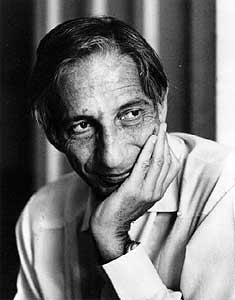 Ivan Illich was a radical priest, who, during the ’60s and ’70s, was embraced by liberals and conservatives alike, each group able to read their ideology into his sharp critiques of institutional education. Illich didn’t always seem to know what he wanted by way of an alternative, but he knew what he didn’t like. Apart from rigidly structured education, Illich also had his doubts about technology, concerned that we would interpret the world around us first and foremost through tools. In that sense, he was certainly prescient. Largely forgotten by the time of his death in 2002, Illich was eulogized by longtime friend Jerry Brown, former and future California Governor, in the Whole Earth Catalog. An excerpt:
“In the Seventies, facing sharp criticism from the Vatican, Illich withdrew from the active priesthood and refrained from speaking ever again as a Catholic theologian. Instead, he focused on the nature of technology and modern institutions and their capacity for destroying common sense and the proper scale for human activity. Illich identified the ‘ethos of non-satiety’ as ‘at the root of physical depredation, social polarization, and psychological passivity.’ Instead of welfare economics and environmental management, Illich emphasized friendship and self-limitation.”
Tags: Ivan Illich, Jerry Brown
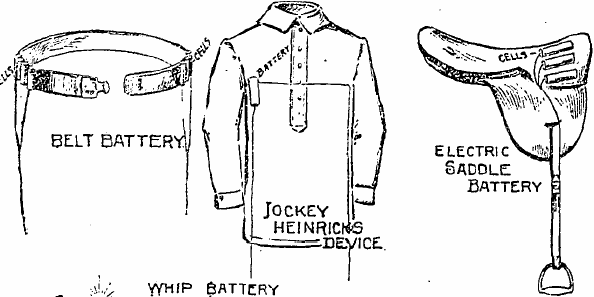
Horse trainers in the nineteenth century would try to win races by hook or by crook, even if it involved giving cocaine to their steeds or attaching electric currents to spurs and saddles. An inside look at the tricks of the trade was provided by an article in the December 18, 1900 edition of the Brooklyn Daily Eagle. An excerpt:
“The use of drugs, opiates or mechanical appliances to accelerate or deaden the speed of horses has been a common practice on our race tracks for many years, but in England these practices were totally unknown until the advent of the American trainer, who brought with him the modern methods. So, it is little wonder that our English cousins threw up their hands in amazement when they saw the sudden improvement worked by the mysterious methods of the Yankees. Ordinary selling platers of the commonest types became good handicap horses, while those of the latter division suddenly blossomed forth as stake horses. For a time they marveled. Then they began to suspect that the sudden improvement was due to other than ordinary training methods. While admitting that the superiority of the American style of riding had some bearing on this change of form, the Englishmen could not comprehend how horses purchased at a small price–horses which had never shown enough speed to get out of their own way–in the hands of the American trainers, developed wonderful speed, while these same horses, when sold by the shrewd Americans for a fancy price, as rapidly deteriorated to their pristine form and became utterly unable to win purses.
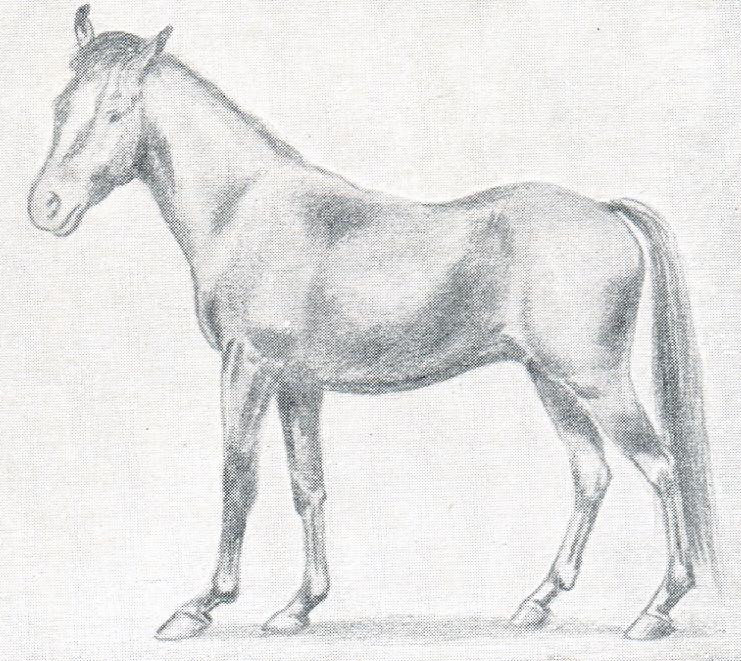
It is related that one inquisitive English trainer asked Lester Rieff one day at Newmarket what Wishard gave his horses to cause them to break away from the post so quickly and get into their stride at the very beginning of the race. ‘Feed them on pineapples,’ replied the jockey, confidingly. The trainer at once put his horses on a pineapple diet, with the result that he very nearly ruined his whole string.
The prevailing opinion that it is necessary for a jockey to pull his horse in order to lose a race is an entirely erroneous one. To the astute trainer there are a legion of ways by which he can increase or diminish the speed of a horse, and that without fear of detection. Ever since the shrewd American trainer began to cast about him for means by which he might gain an advantage over his rivals, the use of electricity has played an important part. The first known use of an electric battery in racing was with a mare named Marie Lovell, at the Gloucester track, over a decade ago. The battery used was the invention of a man named Tobin and was a rather primitive affair. It consisted of a leather belt, strapped around the jockey’s body, next to the skin, and containing eight cells, four on a side, and located under the armpits. Insulated wires ran down the inside of the boot and connected with the spurs. The horse above mentioned was at long price in the betting and won easily, to the great surprise of all those who were not in the game.
This battery was operated throughout the season without detection, one of its greatest successes being pulled off on the mare Gyda, at Guttenberg. This horse was at 100 to 1 in the betting and won handily. Before the race, the report was circulated that Gyda had run away, collided with an ice wagon and injured herself badly. In consequence of this report, and despite some desultory play on the mare, her price remained at the same high figure. The promoters of the scheme cleaned up at a fat winning on her race.
There were soon many improvements on the old body battery, the saddle battery attaining the most success. In this, the cells were concealed in the under part of the saddle. The wires ran down the stirrup leathers and connected with the stirrup irons. A steel plate, under the instep of the jockey, made the connection with the spurs. From this style of battery a very powerful flow of electricity could be obtained and it proved particularly magical in its effect on sulkers.
Another form of electric battery was concealed in the boot; another in the pockets, where the lead pads were kept, while still another was held in the hand and thrown away after the jockey had won the race and before he returned to the scales. Then there was the whip battery, which caused the horses to swerve badly, and was never a success.
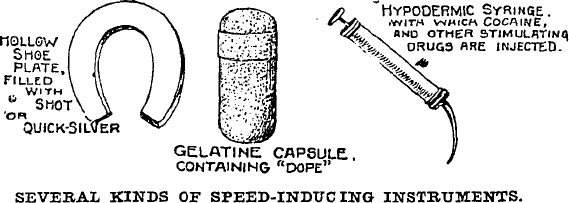
After a time, it became extremely difficult to use an electric apparatus without fear of detection. The use of drugs, either hypodermically injected into the veins or else administered in a capsule, then came in vogue. Cocaine and other stimulating drugs were used and drenching, which consists of giving a horse exhilarating and courage-increasing drugs in a liquid form, also came into practice. On the outlaw tracks fully one-half the horses became ‘dope’ horses.”
•••••••••
Horse racing in 1897 at Sheepshead Bay, Brooklyn:
Marlon Brando at a NYC press conference in 1965. Already hating the game but still playing to some extent.
Tags: Marlon Brando

I’m not a gamer, but Dwarf Fortress seems fascinating. The most complex and organic video game ever created, it’s the work of brothers Zach and Tarn Adams, who plan on continually and gradually improving it, like painters who expand on a single mural their whole lives. An excerpt from Jonah Weiner’s New York Times Magazine article about the game designers and their creation:
“Dwarf Fortress may not look real, but once you’re hooked, it feels vast, enveloping, alive. To control your world, you toggle between multiple menus of text commands; seemingly simple acts like planting crops and forging weapons require involved choices about soil and season and smelting and ores. A micromanager’s dream, the game gleefully blurs the distinction between painstaking labor and creative thrill.
‘Playing Dwarf Fortress is like taking the controls of a plane right as it’s taking off,’ says Chris Dahlen, editor in chief of the gaming magazine Kill Screen. And, he added, ‘flying a jet is a lot more interesting than just riding in a jet.’
Dwarf Fortress is too willfully noncommercial to have any discernible influence on gaming at large, but it is widely admired by game designers. Programmers behind The Sims 3 reportedly played Dwarf Fortress when they were making their game, and several homages to Dwarf Fortress appear in the blockbuster fantasy game World of Warcraft. Richard Garfield, who created the hit card game Magic: The Gathering, once attended a Dwarf Fortress fan meet in Seattle to introduce himself to Tarn. ‘I told him there’s nothing out there quite like it,’ Garfield recalled. He suggested ways of broadening the game’s appeal, but ‘that stuff didn’t matter to Tarn. The charm of it is that he’s making exactly the game he wants to make.’
After nine years of development, Dwarf Fortress is, from the perspective of game play, perhaps the most complex video game ever made. And yet it is still only in ‘alpha’ — the most recent release is version 0.31. By version 1.0, Tarn says, the game will include military campaigns and magic, along with scores of other additions. He showed me a four-inch stack of index cards, color-coded and arranged into umbrella categories, to keep track of his goals. ‘I like being able to hold the game in my hands,’ he says.
I asked Tarn when he thought he and Zach would reach version 1.0. ‘Twenty years from now,’ he replied. ‘That’s the number we talk about.’ He chuckled at the prospect, adding that even when that milestone arrived, Dwarf Fortress would keep growing. ‘This is going to be my life’s work.'”
••••••••••
Let’s play Dwarf Fortress:
Tags: Jonah Weiner, Tarn Adams, Zach Adams
TED Talk by Markus Fischer of Festo.
Tags: Markus Fischer
Mmm…
“The sun is zooming in / Engines stop running / And the wheat is growing thin.”
No one gets murdered, shockingly. (Thanks Reddit.)
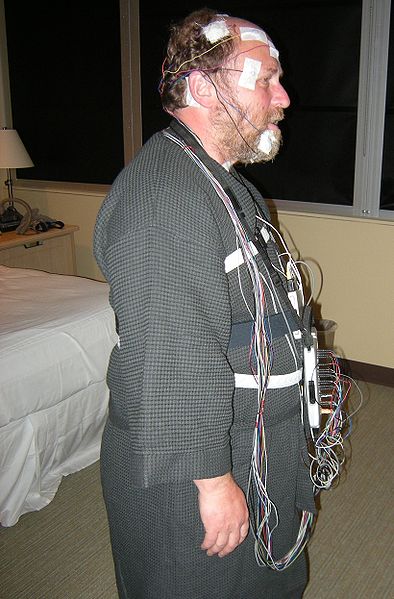
On Boing Boing, neurobiologist David J. Linden pushes back on futurist Ray Kurzweil’s vision of nanobots being introduced into our brains in the near term, making it possible for us to communicate with external hardware and extend our memory and intellect almost infinitely. An excerpt:
“Don’t get me wrong. I do believe that the fundamental and long-standing mysteries of the brain will ultimately be solved. I don’t hold with those pessimists who claim that we can never understand our minds by using our brains. I also share Kurzweil’s belief that technological advancement will be central to unlocking the enduring mysteries of brain function. But while I see an exponential trajectory in the amount of neurobiological data collected to date, the ploddingly linear increase in our understanding of neural function means that an idea like mind-uploading to machines being usefully deployed by the 2020s or even the 2030s seems overly optimistic.” (Thanks Browser.)
Kurzweil’s take:
“Still not within the nervous system, you got 20 years, 25 years, these nanobots, these blood cell size devices will be going in our bodies keeping us healthy from inside. We’ll have some go inside our brains to the capillaries not invasively, there would be interacting with our biological neurons so it’ll extends our memory, our decision making faculties, put our brains on the internet and they also enable us to enter virtual reality environment from within the nervous system.
So, for on to go in the virtual reality environment, the nanobots will shut down the signals coming from I realize in my real skin and create the signals that will be appropriate for the virtual environment and that will feel like I’m in that environment and I’ll have a virtual body and those environment could be the same body I have in real reality, it could be a different body, a couple could become each other, experience relationship from the others perspective, teacher could design a student to become Ben Franklin in the virtual constitutional congress not just dress up as him but become that character and this virtual environments would be like websites, you’ll have millions to choose from and some will be recreations are beautiful earthly environments like the Taj Mahal or the Mediterranean Beach.”
Tags: David J. Linden, Ray Kurzweil