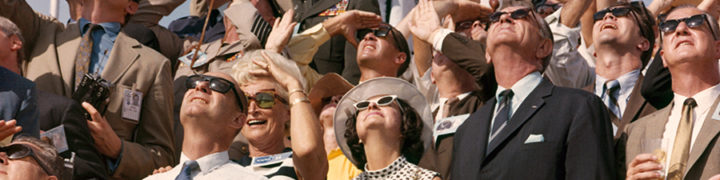
Furby taunts Siri.
You are currently browsing the archive for the Videos category.
Carl Sagan’s eloquent meditation on the moon landing’s significance.
Tags: Carl Sagan

From a new Paris Review interview with William Gibson:
“Paris Review: You’ve written that science fiction is never about the future, that it is always instead a treatment of the present.
William Gibson: There are dedicated futurists who feel very seriously that they are extrapolating a future history. My position is that you can’t do that without having the present to stand on. Nobody can know the real future. And novels set in imaginary futures are necessarily about the moment in which they are written. As soon as a work is complete, it will begin to acquire a patina of anachronism. I know that from the moment I add the final period, the text is moving steadily forward into the real future.
There was an effort in the seventies to lose the usage science fiction and champion speculative fiction. Of course, all fiction is speculative, and all history, too—endlessly subject to revision. Particularly given all of the emerging technology today, in a hundred years the long span of human history will look fabulously different from the version we have now. If things go on the way they’re going, and technology keeps emerging, we’ll eventually have a near-total sorting of humanity’s attic.
In my lifetime I’ve been able to watch completely different narratives of history emerge. The history now of what World War II was about and how it actually took place is radically different from the history I was taught in elementary school. If you read the Victorians writing about themselves, they’re describing something that never existed. The Victorians didn’t think of themselves as sexually repressed, and they didn’t think of themselves as racist. They didn’t think of themselves as colonialists. They thought of themselves as the crown of creation.
Of course, we might be Victorians, too.”
•••••••••••
“Just for a minute, it struck me as miraculous”:
Tags: William Gibson
As the U.S. postal system continues its uncomfortable passage into obsolescence, a look back at Charles Kuralt’s 1981 report about a Gap, Pennsylvania, postal worker with a challenging route.
About Kuralt’s shocking secret life, which surfaced after his death, from Salon: “Charles Kuralt, CBS’s folksy ‘On the Road’ correspondent, spent years exploring America’s out-of-the-way places in search of oddball stories. But the best story may have been the one he never told.
For 29 years, until his death in 1997, he apparently kept a mistress and maintained a second family. The celebrated journalist was, in effect, husband and father to them, as well as breadwinner, friend and hero.
While his wife remained at their home in the concrete canyons of New York City, he nurtured his secret life along a rushing trout stream in Montana.
None of this would come out, however, until after his death, when his mistress, Patricia Elizabeth Shannon, sued to get a Montana retreat he promised her. Montana’s Supreme Court ruled last month that the woman is entitled to a trial on her claim.”
Tags: Charles Kuralt
Neil Postman on the creation of information junkies. From 1995.
Tags: Neil Postman
Marshall McLuhan fretting about information overload, back in 1977, when there was a lot less information to be loaded.
Tags: Marchall McLuhan
A spectacularly bad psychic, the son of an undertaker and an Ed Wood actor, the Amazing Criswell rose from his coffin to lend his slack skills to the Tonight Show on New Year’s Eve in 1965.
Tags: Amazing Criswell
Hans Rosling, the Swedish doctor who did a great TED Talk about washing machines and democracy, returns to that forum to explain our world population in terms of Ikea products. (Thanks Open Culture.)
Tags: Hans Rosling
Modern aeronauts capitalizing on the sun’s heat, aboard the Solar Ship. (Thanks Techling.)
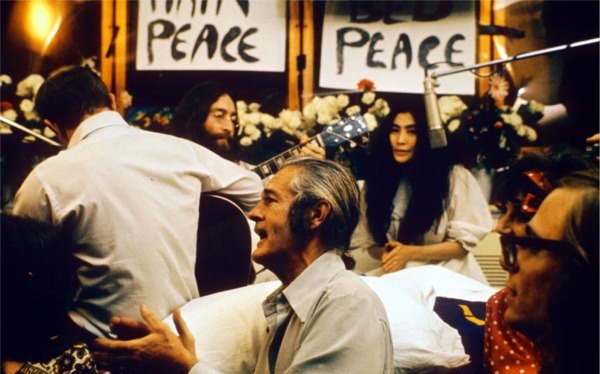
In the same 1966 Playboy Interview in which he opined that homosexuality could be “cured” by LSD, Timothy Leary predicts what college kids dropping acid would eventually do with their lives:
“LEARY: Remember, it’s the college kids who are turning on — the smartest and most promising of the youngsters. What an exciting prospect: a generation of creative youngsters refusing to march in step, refusing to go to offices, refusing to sign up on the installment plan, refusing to climb aboard the treadmill.
PLAYBOY: What will they do?
LEARY: Don’t worry. Each one will work out his individual solution. Some will return to the establishment and inject their new ideas. Some will live under ground as self-employed artists, artisans and writers. Some are already forming small communities out of the country. Many are starting schools for children and adults who wish to learn the use of their sense organs. Psychedelic businesses are springing up: bookstores, art galleries. Psychedelic industries may involve more manpower in the future than the automobile industry has produced in the last 20 years. In our technological society of the future, the problem will be not to get people to work, but to develop graceful, fulfilling ways of living a more serene, beautiful and creative life. Psychedelics will help to point the way.”
••••••••••
“At Millbrook, children as young as nine were given LSD”:
Tags: Timothy Leary

From Mike Elgan of Computerworld, a descrption of the “data spill” segments of the Microsoft 2019 video I posted last week:
“In one scene, two businesspeople each place a smart object on a smart table — a keychain fob and a flat phone or smartcard of some kind. From these devices, out spills their data, which can be manipulated on the table. The same thing happens at home, where a girl’s homework spills out onto the kitchen table, and cookbook instructions spill out onto the kitchen counter.
Data and documents can apparently be transferred from anything to anything else. One business-related example involves a drag-and-drop gesture from a desktop to a mobile device. In another scene, that same mobile device becomes a virtual keyboard for a desktop computer the user happens to be sitting at.
Another example shows a man ‘capturing’ with a kind of take-a-picture gesture using a clear-glass remote control then moving data from a wall-mounted device and dumping it out onto his e-newspaper.”
Tags: Mike Elgan
Everyone at CBS News was apparently drunk one night in 1972 as Walter Cronkite worked blue, using double entendres, and Charles Kuralt got unduly exicted about insulting and impersonating turkeys.
Tags: Charles Kuralt, Walter Cronkite

From “Building a Better Future,” a WSJ profile by Richard D. Woodward of 37-year-old Danish architect Bjarke Ingels, who dreams large-scale urban dreams:
“The youthful face of Ingels, when framed and magnified by the tiny windows in this bold project or when talking in his video lectures on the Web, offers one of the most optimistic pictures of what the future of architecture might be. At the tender age of 37 he has gained a world-wide reputation for daring to think grandly about cities in the visionary manner of Le Corbusier, and for translating his hopeful philosophy of “pragmatic utopianism” into a thriving practice that has even caught the eye of bottom-line New York real-estate developers.
Robert A.M. Stern, dean of the Yale architecture school, describes Ingels and his ‘big-picture view,’ which he first encountered at a 2008 World Architecture Festival in Barcelona, as ‘back to the future.’ The startling scale of some of BIG’s ideas ‘flies in the face of current thinking,’ which favors small-scale urbanism rather than remaking the planet.”
••••••••••
Ingels holds forth at TED, 2009:
Tags: Bjarke Ingels, Richard D. Woodward
PetMan walks, does calisthenics. From the good people at Boston Dynamics.
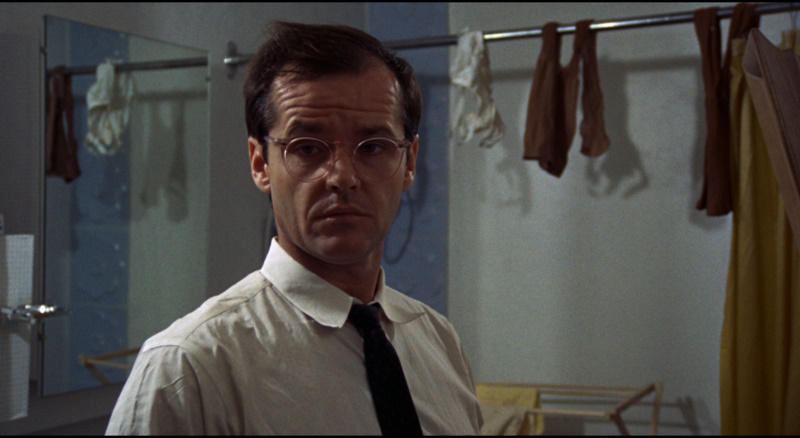
Jack Nicholson describes his first acid trip in a 1972 Playboy Interview:
Jack Nicholson:
I was one of the first people in the country to take acid; it was in laboratory experiments on the West Coast about nine or 10 years ago. At that time, I was a totally adventurous actor looking for experience to put in his mental filing cabinet for later contributions to art. I was very curious about LSD. Some of the people I knew were in therapy with it. I went to downtown LA and took it one afternoon. I spent five hours with a therapist and about five more at home in the later stages of it. I hallucinated a lot, primarily because of the way the therapist structured it. He put a blindfold on me, which makes you much more introspective, gives you more dreamlike imagery. Imagine what acid is like when you know nothing about it. You think it’s going to be like getting stoned on grass, which I had done. But all of your conceptual reality gets jerked away and there are things in your mind that have in no way been suggested to you: such as you’re going to see God; or watch sap streaming through the leaves of trees; or you’re going to feel the dissolving of certain bodily parts; you’re going to re-experience your own birth, which I did on my first acid trip; you’re going to be frightened that your prick might be cut off, because you have castration fears; you’re going to come mush-ass to face with your own homosexual fears. I just wasn’t ready for half this stuff.•
_____________________________
Nicholson invests in hydrogen cars, 1978:
Tags: Jack Nicholson
A year after Woody Allen interviewed Billy Graham, he guest hosted a 1971 Tonight Show for Johnny Carson. No monologue but Ed McMahon is there as well as guests Bob Hope and James Coco. Hope was Allen’s favorite comic. The final part of the show doesn’t seem to be online.
Tags: Bob Hope, James Coco, Johnny Carson, Woody Allen
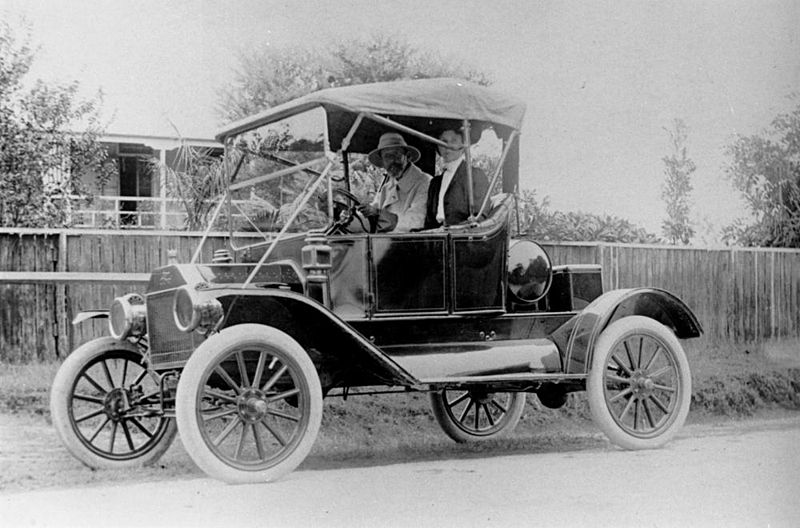
Great find by the Electric Typewriter in uncovering “Farewell, My Lovely!” E.B. White’s 1936 New Yorker paean to Henry Ford’s Model T, the car that made America a car country. The opening:
“I see by the new Sears Roebuck catalogue that it is still possible to buy an axle for a 1909 Model T Ford, but I am not deceived. The great days have faded, the end is in sight. Only one page in the current catalogue is devoted to parts and accessories for the Model T; yet everyone remembers springtimes when the Ford gadget section was larger than men’s clothing, almost as large as household furnishings. The last Model T was built in 1927, and the car is fading from what scholars call the American scene—which is an understatement, because to a few million people who grew up with it, the old Ford practically was the American scene.
It was the miracle God had wrought. And it was patently the sort of thing that could only happen once. Mechanically uncanny, it was like nothing that had ever come to the world before. Flourishing industries rose and fell with it. As a vehicle, it was hard-working, commonplace, heroic; and it often seemed to transmit those qualities to the persons who rode in it. My own generation identifies it with Youth, with its gaudy, irretrievable excitements; before it fades into the mist, I would like to pay it the tribute of the sigh that is not a sob, and set down random entries in a shape somewhat less cumbersome than a Sears Roebuck catalogue.”
••••••••••
Henry Ford’s funeral, 1947:
Tags: E.B. White, Henry Ford
Woody Allen interviews Rev. Billy Graham, 1970.
Tags: Billy Graham, Woody Allen
CBS News is bringing back it’s “On the Road” segments, which were helmed with distinction by Charles Kuralt. Here’s a great 1976 report about the 1847 massacre of the Whitman missionary family in Washington state.
1976 Charles Kuralt “On the Road” Segment on the Whitmans. from Larry Cebula on Vimeo.
Tags: Charles Kuralt, Narcissa Whitman
Peter Sellers goofing around during a rare talk-show appearances, 1970.
Sellers works broad with Dean Martin, 1973:
More Peter Sellers posts:
- Sellers stars in Being There. (1979)
Tags: Dean Martin, Peter Sellers
Tags: Harry Reasoner, Johnny Cash
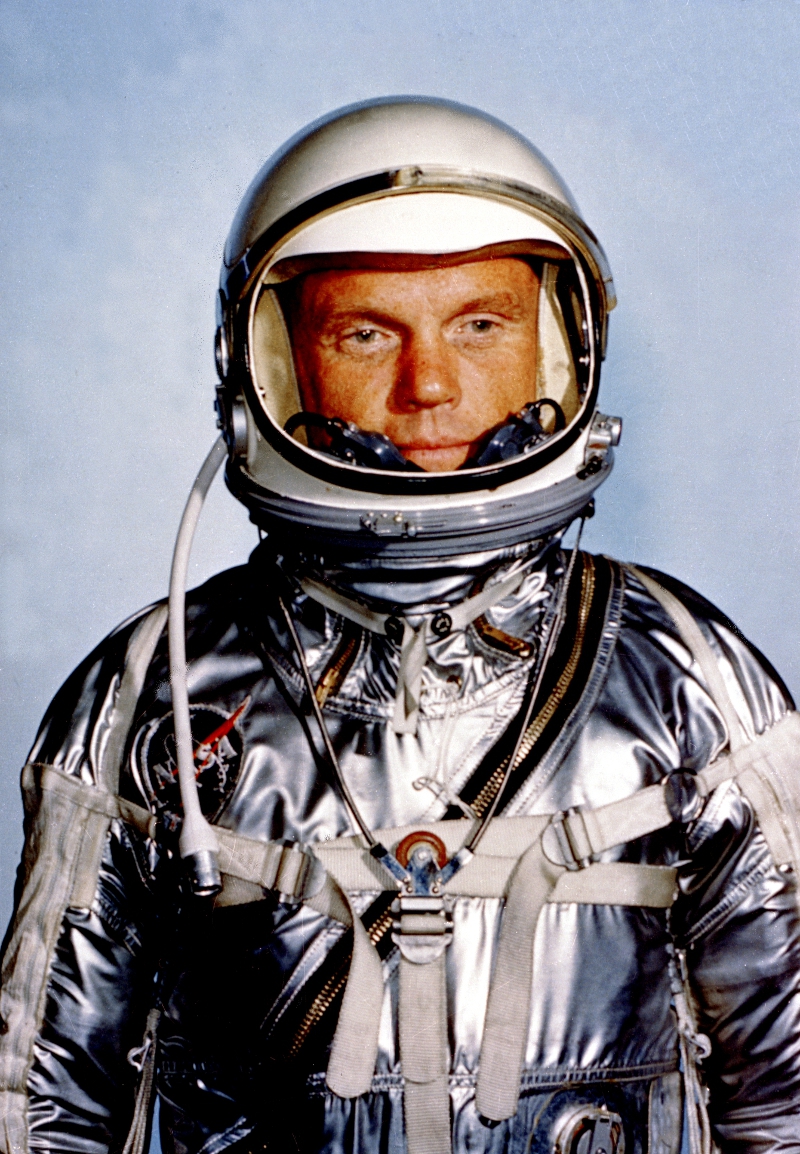
This classic 1962 NASA photograph shows American astronaut John Glenn suited up for Mercury 6, the first successful U.S. attempt to put a manned spaceship into orbit. Glenn, who was the pilot of that mission, explained his participation in the burgeoning space program in a March 3, 1961 Life cover story: “‘A lot of people ask,’ he reflected recently, ‘why a man is willing to risk hat, tail and gas mask on something like this. Well, we’ve got to do it. We’re going into an age of exploration that will be bigger than anything the world has ever seen. I guess I’m putting my family up against some risks. I could do other jobs which might increase my life expectancy. But this could help my kids, too. I want them to be better off than I was as a young man. With risks you gain.
‘I’ve got a theory about this,’ Glenn continued, speaking with great care. ‘People are afraid of the future, of the unknown. If a man faces up to it and takes the dare of the future, he can have some control over his destiny. That’s an exciting idea to me, better than waiting with everybody else to see what’s going to happen.”
••••••••••
“Godspeed, John Glenn”:
Tags: John Glenn
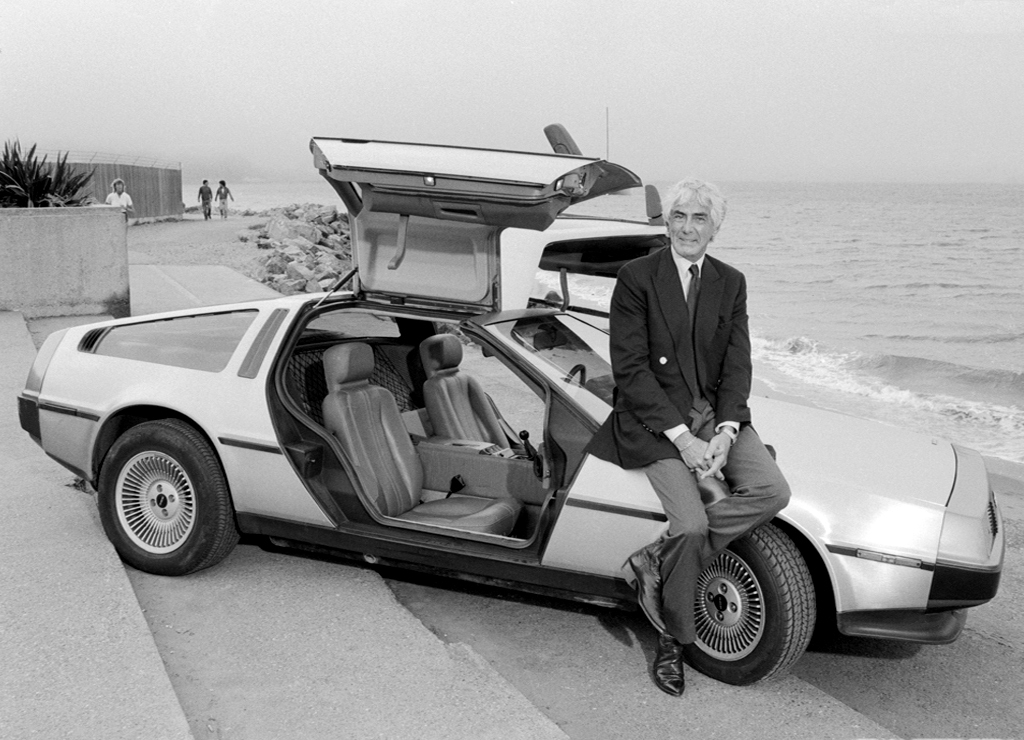
Haunting 1981 DeLorean doc by Pennebaker and Hegedus.

From Brook Larmer’s New York Times Magazine article about Chinese animator Pi San and the dangerous art of Internet political humor in modern China:
“No government in the world pours more resources into patrolling the Web than China’s, tracking down unwanted content and supposed miscreants among the online population of 500 million with an army of more than 50,000 censors and vast networks of advanced filtering software. Yet despite these restrictions — or precisely because of them — the Internet is flourishing as the wittiest space in China. ‘Censorship warps us in many ways, but it is also the mother of creativity,’ says Hu Yong, an Internet expert and associate professor at Peking University. ‘It forces people to invent indirect ways to get their meaning across, and humor works as a natural form of encryption.’
To slip past censors, Chinese bloggers have become masters of comic subterfuge, cloaking their messages in protective layers of irony and satire. This is not a new concept, but it has erupted so powerfully that it now defines the ethos of the Internet in China. Coded language has become part of mainstream culture, with the most contagious memes tapping into widely shared feelings about issues that cannot be openly discussed, from corruption and economic inequality to censorship itself. ‘Beyond its comic value, this humor shows where netizens are pushing against the boundaries of the state,’ says Xiao Qiang, an adjunct professor at the University of California, Berkeley, whose Web site, China Digital Times, maintains an entertaining lexicon of coded Internet terms. ‘Nothing else gives us a clearer view of the pressure points in Chinese society.'”
••••••••••
A Pi San animation:
Tags: Brook Larmer, Hu Yong, Pi San, Xiao Qiang
The future of mobile commerce, as predicted by Bill Gates in a CD that came with his 1995 book, The Road Ahead.
Microsoft’s new video predicting the future of tech:
Tags: Bill Gates