Videos

You are currently browsing the archive for the Videos category.

Huntington Hartford was heir to the A&P grocery fortune and at one point one of the richest people in the world. Every bit the eccentric, he lost most of the money during his 97 years to failed marriages, quixotic arts and real estate projects and a handwriting institute.

Hartford tells David Frost about the Bahamian island he purchased:

From Hartford’s 2008 New York Times obit“Huntington Hartford II, who inherited a fortune from the A. & P. grocery business and lost most of it chasing his dreams as an entrepreneur and arts patron, died Monday at his home in Lyford Cay, Nassau, in the Bahamas, where he had lived since 2004. He was 97.

His death was announced by his daughter, Juliet Hartford.

As a boy Huntington Hartford was treated like a prince, indulged by his mother and a staff of servants and provided with a living of $1.5 million a year. Not content merely to be rich, he longed to be a writer and, more than that, an arbiter of culture and a master builder. But his ambitions were far greater than his reach.

A famous example was the Huntington Hartford Museum, also known as the Gallery of Modern Art, at 2 Columbus Circle in Manhattan. Mr. Hartford opened it in 1964 as a showcase for 19th- and 20th-century work that went against the prevailing current of abstract expressionism, which he detested. The building, designed by Edward Durell Stone, was considered a folly or worse: ‘a die-cut Venetian palazzo on lollipops,’ wrote Ada Louise Huxtable, then the architecture critic of The New York Times.

The art within was generally unremarkable. And far from becoming the self-sustaining museum that Mr. Hartford had envisioned, it cost him $7.4 million before he abandoned the building to a rocky fate. It was occupied for many years by the city’s Department of Cultural Affairs and the Convention and Visitors Bureau and is now undergoing an extensive redesign as the future home of the Museum of Arts and Design (formerly known as the American Craft Museum).

Costlier still was Mr. Hartford’s makeover of Hog Island, in the Bahamas. After buying four-fifths of the place in 1959 and having it renamed Paradise Island, he set about developing a resort with the construction of the Ocean Club and other expensive amenities. Advisers persuaded him to stop short of exotic attractions like chariot races, but, over-extended and unable to get a gambling license, he ultimately lost an estimated $25 million to $30 million on the project.

Then there was the automated parking garage in Manhattan, the handwriting institute, the modeling agency, and his own disastrous stage adaptation of Jane Eyre, among the many lesser ventures that either bombed or fizzled.”

Tags: ,

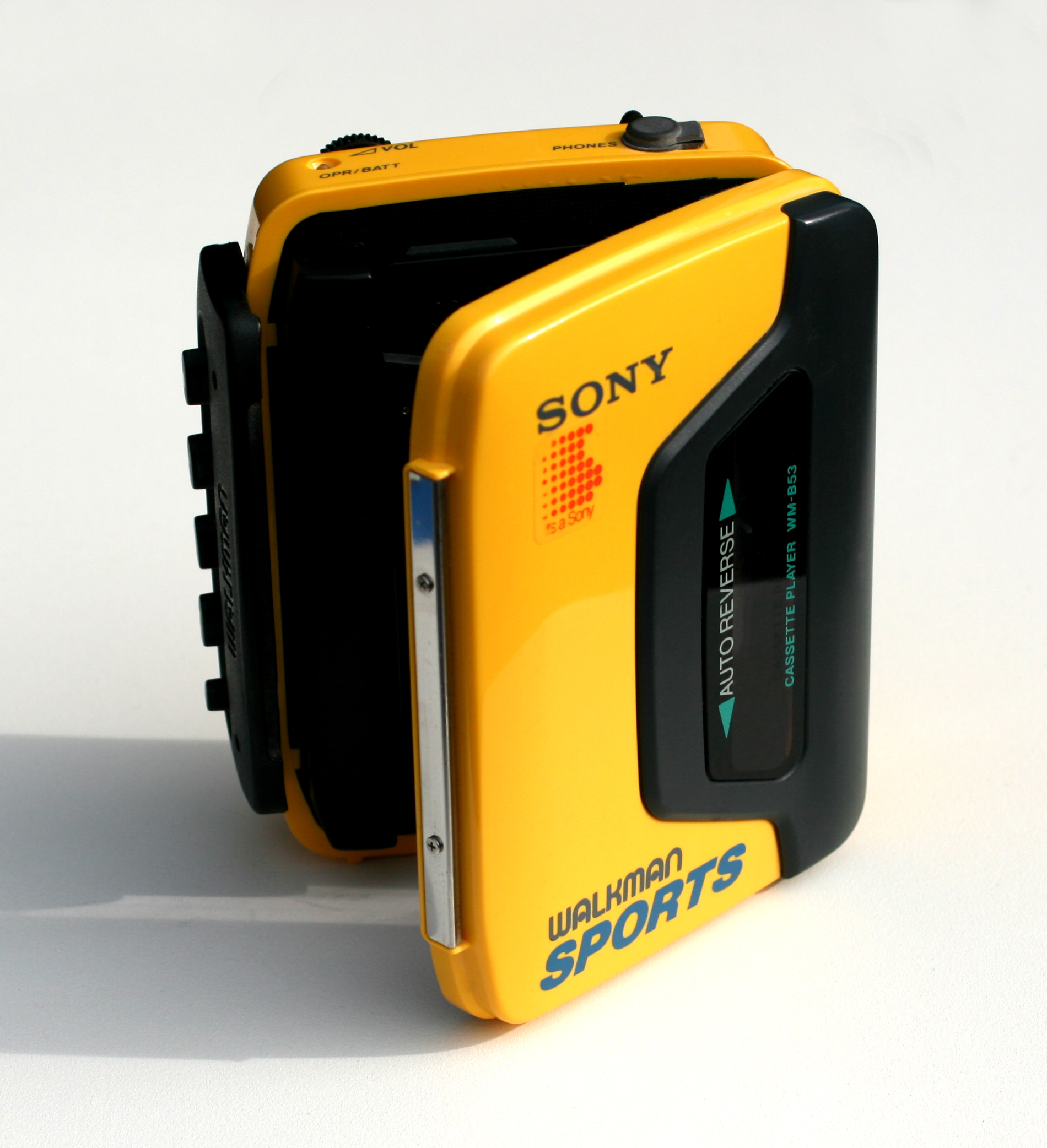
Akio Morita envisioned Sony as a way to lift Japan from the rubble of two atom bombs to world business dominance, and he pulled off the unlikely feat. Morita was as important to his company as Steve Jobs was to Apple, but Sony has not been a player in the Internet Age. An excerpt from Bryan Gruley’s smart Businessweek article on the topic:

“There’s more to Sony’s problems than acts of God and currency traders. The maker of the Walkman and the Trinitron hasn’t driven pop culture for years. Sony thrived in an era of stand-alone electronics. When the Internet arose and digital began to mean connected, iPods became the center of people’s entertainment lives, then smartphones and tablets—which Sony was late to produce. Even the quintessential Sony product—the TV set—has become a millstone. Sony has lost nearly $8.5 billion on TVs over eight years and expects to keep losing at least into 2013. Samsung, Vizio, and other upstarts have driven prices so low that one Sony executive says the company charges less for some TVs than it cost to ship them a few years ago.

Sony has been trying to adapt to the Internet Age for at least a decade, yet remains a gargantuan and unwieldy manufacturer, with 168,200 employees, 41 factories, and more than 2,000 products from headphones to medical printers to Hollywood-grade 3D movie production equipment. Jeff Loff, a senior analyst with Macquarie Capital Securities in Tokyo, points out that Sony sells nine different 46-inch TV models in the U.S. and its mobile-phone joint venture with Ericsson offers more than 40 handsets. ‘Can you imagine how dilutive that is to your R&D?’ he says. A Sony spokesman says the number of phones is being reduced, and notes that Samsung has 15 different 46-inch TVs.

•••••••••••

Ted Koppel interviews Akio Morita about Japan’s tech dominance, in 1990, just a few years before Sony was to be eclipsed by U.S. companies:

Tags: ,

Orson Welles defending himself, in 1965. You have to assume the interviewer had never seen Touch of Evil.


Tags:

Roy Andersson’s millennial absurdist comedy, made amid the manufactured fears about Y2K, seems more suited to our desperate times. Not actually about the end of the world, but the end of the world as we know it, Songs From the Second Floor looks at the diminishing returns of the Industrial Revolution, the faltering of belief systems, the collapsing of structures that sustained us. As one character frankly states about the era’s closing: “The pyramids had their day…the steam engines had their day.”

In dark and deadpan scenes that are sometimes connected by storyline but always by a comically lethargic tone, sad-sacks of every type suffer through inescapable lives. Through these vignettes, we gradually learn that the stock market has collapsed, massive layoffs have occurred, religion has provided no succor and everyone is fleeing cities by car without anywhere to go, halted anyway by massive traffic jams.

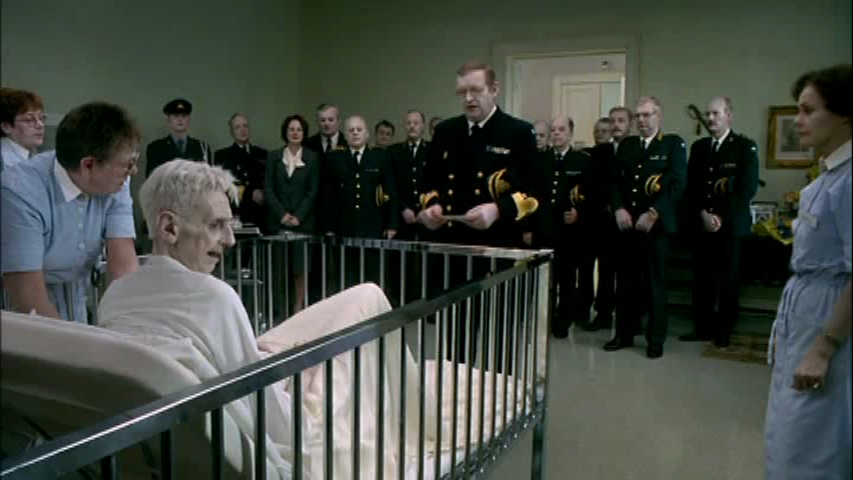
Against this backdrop we see a misbegotten magician do a trick in which he saws a man in half, unintentionally making serrated metal meet flesh. A crucifix salesman, who has gone belly up, tosses his inventory into a garbage dump. A senile plutocrat–with a very questionable political past–sits in a crib like a baby. Even the ritual sacrifice of a child, as organized religion reverts to its primal, pagan origins, is done with a perfunctory and mechanical air. Everyone knows the jig is up but no one can quite stop shuffling their feet.

Andersson, a veteran commercial director, used many of the same actors from his automobile ads in the film, and here he’s not selling internal combustion engines, but the demise of a society that can no longer survive on such contraptions. When one of his many hapless characters is cautioned that he must accept that a new dawn has arrived and changes will be drastic, he responds warily, “That will be a disaster for a lot of people.”•

Tags:

I’m not a part of Occupy Wall Street, and I certainly recognize it as a flawed movement, but movements for real change always are. When you search, you make false starts and have to retrace your steps and begin again. Martin Luther King, Jr. led some protests that were utter failures, but his constancy of vision sustained the Civil Rights Movement despite its missteps. My guess is that OWS won’t ultimately change much, whether it be tax codes or politicians using Congress as a cash register, though I hope I’m wrong. I know a lot of forces in the late 19th-century came together in America to cause real economic change, but something like that is the exception and not the rule. However, this incredibly condescending Daily Show piece, which obliviously accuses OWS organizers of being condescending, is too smug to be believed.

I’ll say one thing for Occupy Wall Street: It’s far better than Jon Stewart’s March for Nothing on Washington from last October, which allowed the Daily Show host to practice an inane brand of moral equivalency and spew a few platitudes, before everyone returned to their comfortable homes feeling better about themselves, without having had to confront the complexity of actual social responsibility. Nice and neat, with no chance of progress.

Tags:

Currency gone plastic.

A brief film about several decades of BMW Art Cars, which began in 1975 with Alexander Calder.

Remarkably creepy. Thank you, Japan.

In HiLoBrow, Peggy Nelson conducts an excellent interview with media ecologist Douglas Rushkoff, which covers currency, corporations and how the word “home” was gradually redefined to have an isolating effect. An excerpt:

Rushkoff: From the 1920s to the 1970s an iconography was developed that turned corporations into our heroes. Instead of me buying stuff from people I know, I actually trust the Quaker Oat Man more than you. This is the result of public relations campaigns, and the development of public relations as a profession.

Nelson: Did the rise of PR just happen, or did they have to do that in order to prevent things from getting out of control?

Rushkoff: They had to do that in order to prevent things from getting out of control. The significant points in the development of public relations were all at crisis moments. For example, labor movements; it’s not just that labor was revolting but that people were seeing that labor was revolting. There was a need to re-fashion the stories so that people would think that labor activists were bad scary people, so that people would think they should move to the suburbs and insulate themselves from these throngs of laborers, from  ‘the masses.’ Or to return to the Quaker Oats example, people used to look at long-distance-shipped factory products with distrust. Here’s a plain brown box, it’s being shipped from far away, why am I supposed to buy this instead of something from a person I’ve known all my life? A mass media is necessary to make you distrust your neighbor and transfer your trust to an abstract entity, the corporation, and believe it will usher in a better tomorrow and all that.

It got the most crafty after WWII when all the soldiers were coming home. FDR was in cahoots with the PR people. Traumatized vets were coming back from WWII, and everyone knew these guys were freaked out and fucked up. We had enough psychology and psychiatry by then to know that these guys were badly off, they knew how to use weapons, and — this was bad! If the vets came back into the same labor movement that they left before WWII, it would have been all over. So the idea was that we should provide houses for these guys, make them feel good, and we get the creation of Levittown and other carefully planned developments designed with psychologists and social scientists. Let’s put these vets in a house, let’s celebrate the nuclear family.

Nelson: So home becomes a thing, rather than a series of relationships?

Rushkoff: The definition of home as people use the word now means ‘my house,’ rather than what it had been previously, which was ‘where I’m from.’My home’s New York, what’s your home?’

Nelson: Right, my town.

Rushkoff: Where are you from? Not that ‘structure.’ But they had to redefine home, and they used a lot of government money to do it. They created houses in neighborhoods specifically designed to isolate people from one another, and prevent men in particular from congregating and organizing — there are no social halls, no beer halls in these developments. They wanted men to be busy with their front lawns, with three fruit trees in every garden, with home fix-it-up projects; for the women, the kitchen will be in the back where they can see the kids playing in the back yard.

Nelson: So you don’t see the neighbors going by. No front porch.

Rushkoff: Everything’s got to be individual, this was all planned! Any man that has a mortgage to pay is not going to be a revolutionary. With that amount to pay back, he’s got a stake in the system. True, he’s on the short end of the stick of the interest economy, but in 30 years he could own his own home.” (Thanks Longform.)

••••••••••

“And now my bags are packed for travelin’ / Glass, concrete, and stone / It’s just a house, not a home”:

“Here’s your ticket, pack your bag / Time for jumpin’ overboard / Transportation is here / Burning down the house”:

Tags: , ,

Dr. Bonassar of Cornell prints human ears.

Tags:

Yves Rossy is Jetman, strapped to a jet-powered wing. His TED talk.

Tags:

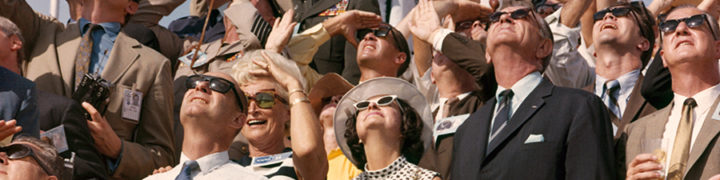
For numerous reasons, it seems increasingly unlikely that the U.S. will be at the center of future space exploration. Perhaps China will colonize Mars? Godspeed, Zhai Zhigang. From Dennis Overbye’s New York Times article about the new Museum of Natural History exhibit which imagines the next wave of space missions:

“The idea of the exhibition is to look forward 50 or 100 years, not back, said Michael Shara, the curator of the show. ‘We’re at a crossroads,’ he said. ‘We have to decide what to do when we grow up. Where is the vision?’

In this case, the vision is solely Dr. Shara’s, he admitted, arrived at by picking the brains of space experts. Lest you get too excited, it does not yet represent the official agenda of NASA or any other agency.

The world sorely needs some kind of cosmic blueprint going forward, if indeed we are to go forward and outward, and though one can quibble with many details, this one is as good as any. One can fantasize that this show could have the same long-range impact on shaping public expectations in space as magazine articles and television shows did in the 1950s. In that case, I hope it travels to the other countries that are now flexing their space muscles, like China.

Those who think that human spaceflight is ridiculously expensive, wasteful, dangerous and unscientific — a group that includes a lot of scientists I know — might want to stop reading right here. The exhibition plays shamelessly to those of us who were captivated long ago by science fiction dreams and the notion that humanity’s destiny is somehow tied to the stars. For the most part these plans don’t come with price tags attached nor, for that matter, any indication of what currency the price should be denominated in.

‘Somebody will do these things,’ Dr. Shara said. ‘Maybe not the U.S.””

Tags: ,

Asimo, already good at serving beer, can now alter his walking patterns so as not to bump into others. Still walks like he has to take a leak, though. (Thanks Singularity Hub.)

When I was recently looking for clips of Smokin’ Joe Frazier to pay my respects to the late, great boxer, I came across a 1973 segment of the show Superstars. That program pitted athletes from different sports against one another in a variety of competitions to judge who was the finest overall athlete. It was back in the day before sports stars were routinely millionaires and didn’t mind picking an extra paycheck for a lesser event. Even though it was just weekend network time filler, Superstars was lended gravitas in its inaugural season by Jim McKay, who was just months removed from anchoring the coverage of the 1972 Munich Olympics massacre.

One of Frazier’s fellow competitors who did not need to make some extra money was race car driver Peter Revson. Revson was nephew of Charles Revson, founder of Revlon, and was heir to a billion dollar fortune. Not surprisingly, he was a dapper guy and something of a New York playboy. I had never previously heard of him and wondered why. It turns out, shortly after this program was broadcast, Revson was killed in an accident during a practice run at the 1974 South African Grand Prix. His brother, Douglas, also a racer, had been killed seven years earlier in a crash.

•••••••••••

“Many times mentioned as the most eligible bachleor in New York”:

Tags: ,

The great Karl Pilkington isn’t sure what science is, but he loves it.

Tags: , ,

Predictions about the year 2000 from 1957 Germany.

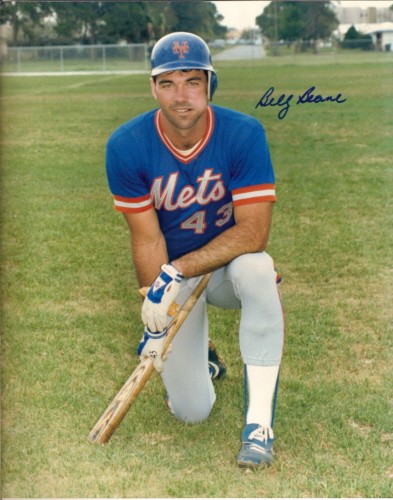
To the avid baseball fan, it would seem Billy Beane has ceased being an elite GM, the architect of Moneyball who could outsmart his peers, mostly because his interests are too broad. Among other things, he’s involved professionally with major-league soccer, computer software and finance. Beane’s restless mind stems in part from being a working-class kid who grudgingly passed on a Stanford scholarship he dearly wanted to accept in order to pocket a signing bonus from the Mets. Simon Kuper of the Financial Times was on hand recently when Beane caught up with author Michael Lewis, the two forever linked by baseball statistics, market inefficiencies and Brad Pitt. An excerpt:

“And so Moneyball became in large part the drama of Billy Beane: the autodidact who gave himself an education. When Beane was 18 years old, Stanford University had offered him a football and baseball scholarship. He and his parents – bright people without much money who had married young and joined the military middle class – were ecstatic. A good college was everything they wanted. But then the New York Mets offered Beane $125,000 to play baseball instead, and he felt he ought to do it. The movie shows the teenager, around the kitchen table with his parents in the simple family home, making the fateful decision. The filmmakers catch the scene well, but, as Beane says, ‘I’m not sure they could capture the complete horror.’

‘Listen,’ he adds, ‘I’m trying not to talk about myself here. I don’t look at life as a bunch of hindsight reviews of your decisions. But that’s exactly what I wanted to do, to attend Stanford University.’

Billy Beane was 18 when Stanford University offered him a football and baseball scholarship, but he went to play or the New York Mets instead

Beane’s life since – his compulsive reading, his discovery of the Moneyball system, his later discovery of soccer – is a long attempt to give himself the university education he never had. Just as Sergey Brin and Larry Page created Google partly because they went to Stanford, Beane created Moneyball partly because he didn’t.”

Tags: , ,

The Carpenters before they were fully the Carpenters, in 1968. Lousy video quality, but still worth it.

See also:

Tags: ,

From Natasha Singer’s smart and scary New York Times article about advances in face-recognition technology:

“FACIAL recognition technology is a staple of sci-fi thrillers like Minority Report.

But of bars in Chicago?

SceneTap, a new app for smart phones, uses cameras with facial detection software to scout bar scenes. Without identifying specific bar patrons, it posts information like the average age of a crowd and the ratio of men to women, helping bar-hoppers decide where to go. More than 50 bars in Chicago participate.

As SceneTap suggests, techniques like facial detection, which perceives human faces but does not identify specific individuals, and facial recognition, which does identify individuals, are poised to become the next big thing for personalized marketing and smart phones. That is great news for companies that want to tailor services to customers, and not so great news for people who cherish their privacy. The spread of such technology — essentially, the democratization of surveillance — may herald the end of anonymity.”

Tags:

A 1979 TV commercial for Star magazine’s coverage of Patty Hearst’s wedding.

Tags:

In his smart Awl article which explains why the utterly gross McRib sandwich likely only makes occasional appearances on the McDonald’s menu, Willy Staley also recalls why the sandwich originally came to be. An excerpt:

“The McRib was, at least in part, born out of the brute force that McDonald’s is capable of exerting on commodities markets. According to this history of the sandwich, Chef Arend created the McRib because McDonald’s simply could not find enough chickens to turn into the McNuggets for which their franchises were clamoring. Chef Arend invented something so popular that his employer could not even find the raw materials to produce it, because it was so popular. ‘There wasn’t a system to supply enough chicken,’ he told Maxim. Well, Chef Arend had recently been to the Carolinas, and was so inspired by the pulled pork barbecue in the Low Country that he decided to create a pork sandwich for McDonald’s to placate the frustrated franchisees.” (Thanks Longform.)

••••••••••

McNugget rage surveillance video, 2010:

Ray Kroc explains why the chain is called “McDonald’s”:

Tags: ,

I’ve never played the video game Tetris even once in my life, but this new doc looks interesting. (Thanks Ars Technica.)

It’s easy to get robots to walk, but difficult to get them to walk like humans. An excerpt from Physorg.com:

“AIST researchers, like other scientific groups dedicated to robotics, have been working hard to create the ‘perfect’ walking robot and to design walking technologies that can make their robots most closely resemble the way humans walk.

This has not been easy. Developing a robot to walk like a human has been a challenge for engineers, but that has only motivated more work toward this end in robotics.

The AIST researchers focused on a few key areas of the robot to improve results. The robot’s toes now support the legs better during each stride, and the legs straighten out more.

Details about how they got ‘Miim’ to walk in a more human fashion than in previous iterations are in the paper, ‘Human-Like Walking with Toe Supporting for Humanoids,’ by Kanako Miura, Mitsuharu Morisawa, Fumio Kanehiro, Shuuji Kajita, Kenji Kaneko, and Kazuhito Yokoi.”

William F. Buckley and the In Cold Blood author on capital punishment, in 1968.

Trailer for Into the Abyss, Werner Herzog’s new film about capital punishment:

Tags: , ,

Made by Honda. (Thanks Techcrunch.)

« Older entries § Newer entries »