
Videos

You are currently browsing the archive for the Videos category.

From John Turner’s ArsTechnica piece about the development of boneless bots:

“The design of many robots has been inspired by living creatures, from the humanoid machines that have appeared in science fiction for decades to the mechanical cockroaches that scurry around some research labs. There has even been a robotic tuna used to explore the ocean. But our reliance on the mechanical has left a very large area of the animal kingdom left out: soft bodied creatures with neither skeletons nor shells. In a paper that will be released by PNAS, researchers describe a soft-bodied robot that can crawl around lab, powered by compressed air.

The limits in robot design have been very practical. We don’t yet have something that will mimic muscles well, which leaves our creations articulating their joints with things like gears and engines, which require a fairly rigid support structure. But the creators of this new robot were inspired by squid, which perform impressive feats of flexibility using a soft body that’s supported by the ocean’s buoyancy.”
Tags:

Ziggy Stardust, 1973.

Tags:

Carl Zimmer has a really good New York Times profile of pugnacious evolutionary psychologist Steven Pinker, who believes that the world has gotten markedly less violent. An excerpt:

“Dr. Pinker finds an explanation for the overall decline of violence in the interplay of history with our evolved minds. Our ancestors had a capacity for violence, but this was just one capacity among many. ‘Human nature is complex,’ he said. ‘Even if we do have inclinations toward violence, we also have inclination to empathy, to cooperation, to self-control.’

Which inclinations come to the fore depends on our social surroundings. In early society, the lack of a state spurred violence. A thirst for justice could be satisfied only with revenge. Psychological studies show that people overestimate their own grievances and underestimate those of others; this cognitive quirk fueled spiraling cycles of bloodshed.

But as the rise of civilization gradually changed the ground rules of society, violence began to ebb. The earliest states were brutal and despotic, but they did manage to take away opportunities for runaway vendettas.

More recently, the invention of movable type radically changed our social environment. When people used their powers of language to generate new ideas, those ideas could spread. ‘If you give people literacy, bad ideas can be attacked and experiments tried, and lessons will accumulate,’ Dr. Pinker said. ‘That pulls you away from what human nature would consign you on its own.'”

••••••••••

Pinker in discussion with Bill Faux’Reilly:

Tags: ,

The World Wide Web of the ’90s and the social-network revolution that followed had its roots, of course, in earlier decades. People were just waiting for the technology to catch up to their desires–or maybe define their desires. Three videos from 1986.

AOL forerunner Quantum Link:

Make your calls near a Phone Point because billions of dollars of infrastructure don’t yet exist:

Millions of American strangers “friend” one another:

Emilio Pucci designed the NASA-ish unis in 1965 for Braniff Airlines attendants.

An excerpt from Pucci’s 1992 New York Times obituary: “Mr. Pucci, who was the Marchese di Barsento, was born in Naples, into an aristocratic Italian family. He lived and worked in the Pucci Palace in Florence.

An enthusiastic sportsman who was on the Italian Olympic ski team in 1932, he also raced cars and excelled in swimming, tennis and fencing. His emergence as a fashion designer happened somewhat accidentally.

He was an Italian bomber pilot in World War II and he continued in the air force after the war, holding the rank of captain. On leave in Switzerland in 1947, he was spotted on the ski slopes by Toni Frissel, a photographer, who was impressed by the snugness of his ski garb, which was custom made of stretch fabrics.

When photographs of Mr. Pucci in his skisuit appeared in Harper’s Bazaar, he was besieged by American manufacturers who wanted to produce it. He decided instead to market the ski clothes himself. They were among the first styles made of stretch fabrics, and Lord & Taylor was among the first to promote them.

By 1950, Mr. Pucci was at the forefront of the fledgling Italian fashion industry. His forte in the beginning was sports clothes, but he soon moved into other fashions, including brilliantly patterned silk scarves. Encouraged by Stanley Marcus, one of the owners of Neiman-Marcus, he began making blouses and then dresses of the patterned material.”

Tags:

Mark David Chapman was the last troubled person to loiter outside John Lennon’s home, but not the first. From 1971.

Tags: ,

Animal-free, factory-grown meat isn’t practical to produce yet, but it is coming. An excerpt from David Szondy’s new Gizmag article on the topic:

Dr. Mark Post, a vascular biologist at the University of Maastricht in the Netherlands, is one of a handful of scientists around the world working on the problem ofcultivating meat artificially in a laboratory. The idea is to find a way to create the meat without the animal by growing it directly. Speaking to the Reuters news agency, Dr. Post estimates that, if he succeeds, his first burger will cost a staggering $345,000, but when the technique is perfected and scaled up to industrial levels, economies of scale should kick in and make lab-grown beef (or pork or chicken or fish) as cheap, if not cheaper, than its four-legged counterpart. He also believes that the advantages of in vitro meat, as it is called, are such that it will go a long way toward alleviating world hunger and saving the environment.”

Tags: ,

Howard Hughes didn’t die instantly in a 1946 plane crash but instead succumbed slowly to a wreck of his own making.

See also:

Tags: ,

Harvard’s Kilobots are now being offered commercially for all your personal swarmbot needs. (Thanks  Gizmag.)

In his speech, “Libraries: Where It All Went Wrong,” Nat Torkington (not to be confused with Karl Pilkington) draws a parallel between how book-lending facilities were destabilized by the Internet in much the same way Microsoft was. I think Bill Gates had more of an idea of the Internet’s potential power than Torkington gives him credit for, but it’s still an interesting speech. An excerpt: 

“Bill Gates wrote a bestseller in 1995.  He was on a roll: Microsoft Windows had finally crushed its old foe the Macintosh computer from Apple, Microsoft was minting money hand over fist, and he was hugely respected in the industry he had helped start. He roped in other big brains from Microsoft to write a book to answer the question, ‘what next?’  The Road Ahead talked about the implications of everyone having a computer and how they would use the great Information Superhighway that was going to happen.

The World Wide Web appears in the index to The Road Ahead precisely four times.  Bill Gates didn’t think the Internet would be big.  The Information Superhighway of Gates’s fantasies would have more structure than the Internet, be better controlled than the Internet, in short it would be more the sort of thing that a company like Microsoft would make.

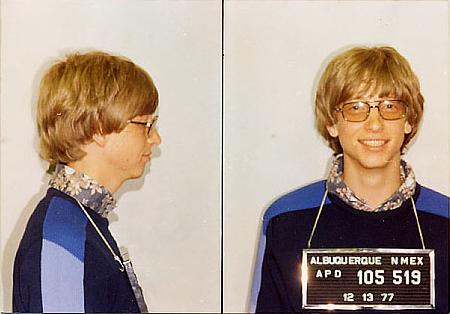
Bill Gates and Microsoft were caught flat-footed by the take-up of the Internet. They had built an incredibly profitable and strong company which treated computers as disconnected islands: Microsoft software ran on the computers, but didn’t help connect them.  Gates and Microsoft soon realized the Internet was here to stay and rushed to fix Windows to deal with it, but they never made up for that initial wrong-footing.

At least part of the reason for this was because they had this fantastic cash cow in Windows, the island software.  They were victims of what Clayton Christenson calls the Innovator’s Dilemma: they couldn’t think past their own successes to build the next big thing, the thing that’d eat their lunch.  They still haven’t got there: Bing, their rival to Google, has eaten $5.5B since 2009 and it isn’t profitable yet.” (Thanks Browser.)

••••••••••

Bill Gates enters the world of Doom, 1995:

Tags: ,

Terry Gilliam, trying to ensure he never works in Hollywood again, explains the difference between Spielberg and Kubrick. (Thanks Open Culture.)

Tags: , ,

Drunks, criminals and terrorists aren’t the only ones who dine at the ubiquitous Southern comfort-food chain, Waffle House, but they certainly make their presence felt.  An excerpt from Robbie Brown’s New York Times article :

“When four elderly men were arrested in northern Georgia this month on charges of planning terrorist attacks in Atlanta and along the East Coast, F.B.I. surveillance tapes revealed where they had met to hatch their plot — a Waffle House. Bloggers and television reporters quickly dubbed them the Waffle House Terrorists.

Last month, when a Florida state representative was ridiculed for proposing that death row inmates be killed by electrocution or firing squad, he said the idea had come from a constituent he met at — you guessed it — a Waffle House.

In Georgia, there have been other less-noted incidents: after nearly 17 years on the run, a fugitive was caught this month at a Waffle House in Augusta, and a cross-dressing bank robber in Marietta has evaded the police but was spotted on surveillance video this month eating at a Waffle House.

In Cobb County, where some of the robberies occurred, Sgt. Dana Pierce said the police were paying extra attention to all 24-hour diners, but especially Waffle Houses. It is easy to see why they can become targets for criminals, he said. ‘They are cash-driven,’ he said. ‘They are near Interstate exits. And they are open 24 hours, when people aren’t necessarily in a sober state of mind.'”

••••••••••

Waffle House employee allows himself to be tazed:

Tags:

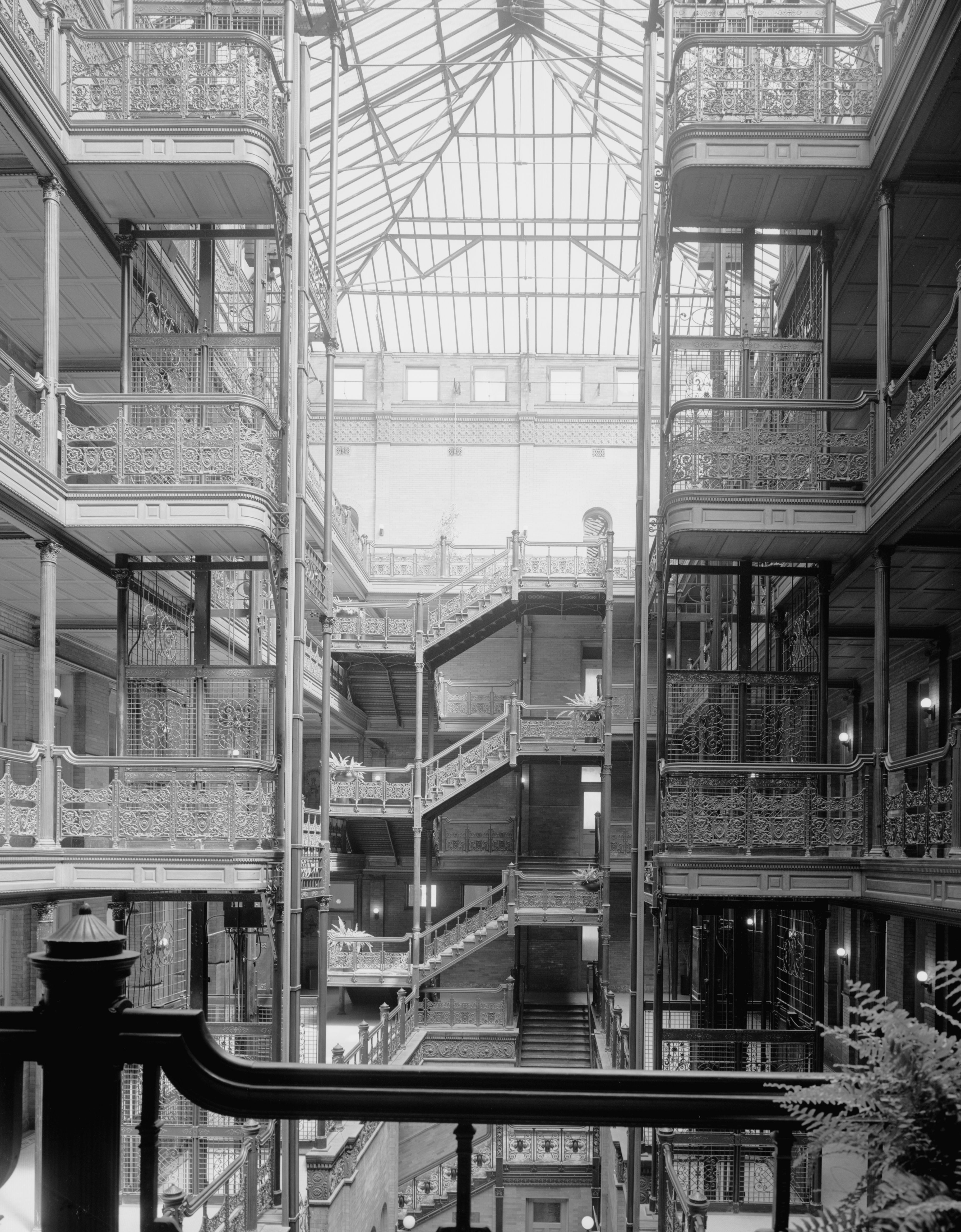
This classic 1960 picture, which was taken by longtime National Parks Service photographer Jack E. Boucher, depicts the interior of L.A.’s Bradbury Building, one of the most filmed and photographed pieces of architecture in the world. The setting for numerous films and music videos, the downtown Los Angeles structure is perhaps best known for its appearance in Blade Runner. Built in 1893 by George Wyman for the visionary mining millionaire Lewis L. Bradbury, the building was completed a year after its namesake’s death. Wyman purportedly consulted a Ouija board before accepting the assignment.

A brief history about the project from the Pacific Coast Architecture Database:

Sumner P. Hunt began a five-story design for the mining magnate, Lewis Leonard Bradbury (1823-1892), in 1891; Bradbury wanted an office building that he could walk to from his house on Bunker Hill in Los Angeles; Hunt had previously designed a warehouse for Bradbury in Mazatlan, Mexico; Hunt had completed plans for the new office building by March 1893 at the latest; Bradbury died in July 1892, and there were legal disputes over his estate; in this contentious context, it is possible that the Bradbury Estate may have wanted to finish the Bradbury Building as inexpensively as possible; in 1892 or 1893, George Herbert Wyman, a draftsman in Hunt’s office, entered the picture, as a project supervisor, taking control from Hunt. According to Cecilia Rasmussen writing in the Los Angeles Times, modern research on the history of the Bradbury Block derived from a story done by the noted architectural critic and historian, Esther McCoy (1904-1989), in Arts and Architecture magazine in 1953. Rasmussen stated: “Esther McCoy interviewed Wyman’s two daughters, Louise Hammell and Carroll Wyman. McCoy’s story…reports that Wyman’s daughters told her that Bradbury found Hunt’s design uninspiring and promptly offered the job of redesigning the building to their father. They told McCoy that their father incorporated ideas for his design from Edward Bellamy’s 1887 novel, Looking Backward, which described a utopian civilization of the year 2000. Wyman, the daughters told McCoy, originally turned down the offer, judging acceptance as unethical. But that weekend, while using a Ouija board with his wife, he received a message from his 8-year-old dead brother Mark: ‘Take the Bradbury assignment. It will make you successful.'”•

Tags: , , ,

Airport security minus pat downs.

Muhammad Ali sassing Dick Cavett in a boxing gym, 1973.

More Muhammad Ali posts:

Tags: ,

I originally read Daniel Zalewski’s excellent New Yorker profile of filmmaker Guillermo del Toro in the print version and never realized until now that it’s online for free. Even if you’re not a fan of Del Toro’s work, you’ll probably enjoy it since the article is pretty much perfect. The opening:

In 1926, Forrest Ackerman, a nine-year-old misfit in Los Angeles, visited a newsstand and bought a copy of Amazing Stories—a new magazine about aliens, monsters, and other oddities. By the time he reached the final page, he had become America’s first fanboy. He started a group called the Boys’ Scientifiction Club; in 1939, he wore an outer-space outfit to a convention for fantasy aficionados, establishing a costuming ritual still followed by the hordes at Comic-Con. Ackerman founded a cult magazine, Famous Monsters of Filmland, and, more lucratively, became an agent for horror and science-fiction writers. He crammed an eighteen-room house in Los Feliz with genre memorabilia, including a vampire cape worn by Bela Lugosi and a model of the pteranodon that tried to abscond with Fay Wray in King Kong. Ackerman eventually sold off his collection to pay medical bills, and in 2008 he died. He had no children.

But he had an heir. In 1971, Guillermo del Toro, the film director, was a seven-year-old misfit in Guadalajara, Mexico. He liked to troll the city sewers and dissolve slugs with salt. One day, in the magazine aisle of a supermarket, he came upon a copy of Famous Monsters of Filmland. He bought it, and was so determined to decode Ackerman’s pun-strewed prose—the letters section was called Fang Mail—that he quickly became bilingual.

Del Toro was a playfully morbid child. One of his first toys, which he still owns, was a plush werewolf that he sewed together with the help of a great-aunt. In a tape recording made when he was five, he can be heard requesting a Christmas present of a mandrake root, for the purpose of black magic. His mother, Guadalupe, an amateur poet who read tarot cards, was charmed; his father, Federico, a businessman whom del Toro describes, fondly, as “the most unimaginative person on earth,” was confounded. Confounding his father became a lifelong project.

Before del Toro started school, his father won the Mexican national lottery. Federico built a Chrysler-dealership empire with the money, and moved the family into a white modernist mansion. Little Guillermo haunted it. He raised a gothic menagerie: hundreds of snakes, a crow, and white rats that he sometimes snuggled with in bed.•

Tags: ,

Rezero, the ballbot from Zurich.

George Carlin, the greatest American stand-up ever and the spiritual father of OWS, boils it all down:

Louis C.K., currently one of the best stand-ups on the planet, remembers Carlin:

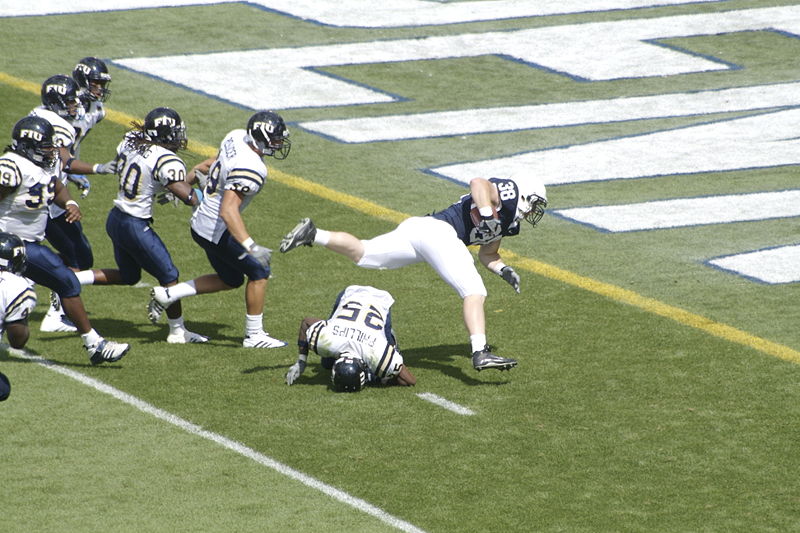
The culture of cover-up at Penn State’s football program was no doubt deeply rooted, and you have to wonder what’s going on at other college athletic programs that have a legendary coach and a cash cow in the form of a fat TV contract. An excerpt from Reed Albergotti’s WSJ article:

“In an Aug. 12, 2005, email to Pennsylvania State University President Graham Spanier and others, Vicky Triponey, the university’s standards and conduct officer, complained that Mr. Paterno believed she should have ‘no interest, (or business) holding our football players accountable to our community standards. The Coach is insistent he knows best how to discipline his players…and their status as a student when they commit violations of our standards should NOT be our concern…and I think he was saying we should treat football players different from other students in this regard.’

The confrontations came to a head in 2007, according to one former school official, when six football players were charged by police for forcing their way into a campus apartment that April and beating up several students, one of them severely. That September, following a tense meeting with Mr. Paterno over the case, she resigned her post, saying at the time she left because of ‘philosophical differences.'”

••••••••••

Joe Paterno tells President Nixon, another cover-up artist, to “shove it”:

Tags: , , ,

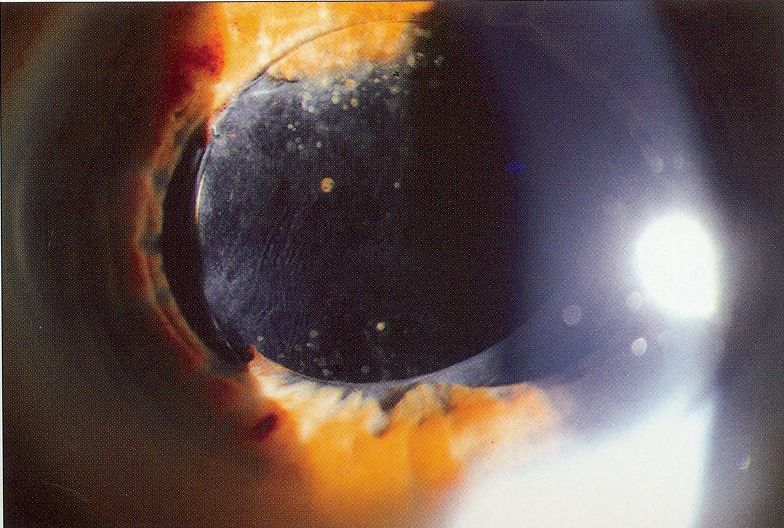
Computerized contact lenses with display capacity are currently being tested on rabbits in the hopes that versions for humans will be available in the near future. From Discovery:

“Once the researchers had determined that the experimental lenses were safe in the lab, they tested them on live rabbits. After wearing them for a short period, the rabbits didn’t have any abrasions or thermal burning. ‘We have been able to build the whole system and test it on rabbits, on live eyes, and show that this works and it’s safe,’ Parviz said.

Being able to display information and images directly into the field of vision via contact lens would be useful in a number of ways, according to the engineers. The devices could be used for navigation, for gaming, and even as a way to monitor someone’s health and safety. It could also be a super sneaky way to access info while “

Cool short from 1956.

Tags: ,

Trippy, evocative ABC Evening News promo, 1969.

Footage of Macy’s Thanksgiving Day Parade, 1939. Pinocchio’s nose–whoa!

As the tragic final chapter of Natalie Wood’s life is reopened, here’s her 1966 What’s My Line appearance, with Peter Ustinov on the panel.

Tags: ,

E.O. Wilson wondered if we’re programmed to do away with ourselves in his 2005 Cosmos article, “Is Humanity Suicidal?” An excerpt:

“Unlike any creature that lived before, humans have become a geophysical force, swiftly changing the atmosphere and climate as well as the composition of the world’s fauna and flora.

Now in the midst of a population explosion, this species has doubled in number to more than 6 billion during the past 50 years. It is scheduled to double again in the next 50 years. No other single species in evolutionary history has even remotely approached the sheer mass in protoplasm generated by humanity.

Darwin’s dice have rolled badly for Earth. It was a misfortune for the living world in particular, many of our scientists believe, that a carnivorous primate and not some more benign form of animal made the breakthrough.

Our species retains hereditary traits that add greatly to our destructive impact. We are tribal and aggressively territorial, intent on private space beyond minimal requirements and oriented by selfish sexual and reproductive drives. Cooperation beyond the family and tribal levels comes hard. Worse, our liking for meat causes us to use the Sun’s energy at low efficiency.” (Thanks TETW.)

••••••••••

“It’s doomsday”:

Tags:

« Older entries § Newer entries »