Videos

You are currently browsing the archive for the Videos category.

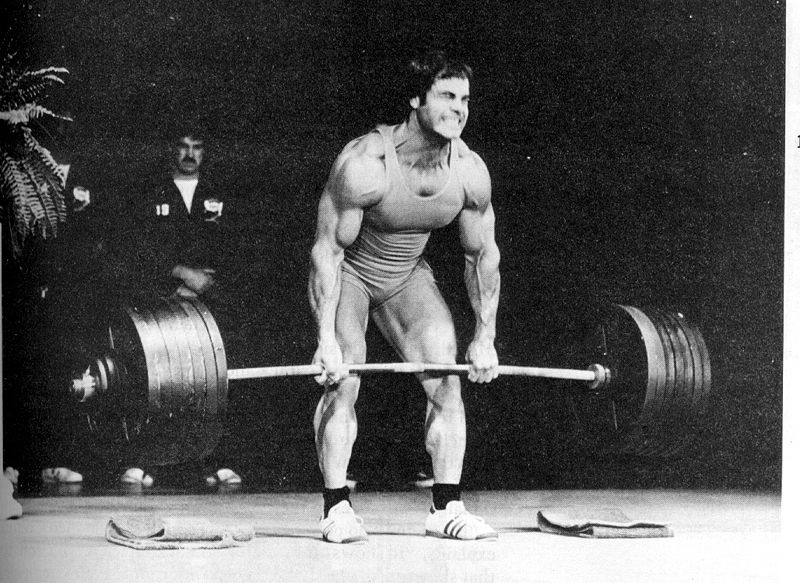
More than anything else, George Butler and Charles Gaines’ 1977 pseudo-documentary, Pumping Iron, brought the appeal of muscle mass to America. A loose look inside the world of competitive bodybuilding starring a charismatic if Machiavellian Arnold Schwarzenegger, the film focused on Gold’s Gym in Venice Beach, which was ground zero for bicep building and steroid taking in the U.S. The original Gold’s is the focus of Paul Solotaroff’s new Men’s Journal article, “Muscle Beach and the Dawn of Huge.” The opening:

“Robby Robinson, a wedge of black marble, arrived in Venice Beach in 1975 with one oversize suitcase and seven dollars. That was every dime he had after quitting his job and selling everything of value but the trophies he’d won at bodybuilding shows in the Jim Crow South. He’d left behind a wife, three small children, and a certain localized fame as the best-ever body in the state of Florida, fronting 20-inch biceps, a 28-inch waist, and 205 pounds of peaked, freak muscle on his hourglass, 5-foot-8 frame. But if your dream back then was to make the cover of Muscle Builder and storm the palace of giants in your sport, there was one thing to do and one place to do it: Join Gold’s Gym in Venice Beach. With the ocean at its back, the sun through its skylights, and the biggest men on Earth trooping in by the dozen to bench 450 before breakfast, Gold’s was Camelot-by-the-shore. You felt its pull in your hyper­trophied heart, deep in the belly of that reckless muscle.

Robinson, born and raised in the swamps of Tallahassee by an illiterate mother and a bootlegging father who later abandoned his 14 children, had a deep and perfectly rational terror of whites. Driving to shows in Mississippi and Georgia, he had seen the signs posted on rural light poles: niggers, don’t get caught here come sundown. But it was a letter from a white man that had brought him to Venice: a written invitation from no less than Joe Weider, the publisher of Muscle Builder, to come out and join his stable of champion bodies living and training large in Los Angeles. Robinson got off the plane expecting to be met by Weider, or if not by him then by Arnold Schwarzenegger, Weider’s Austrian prince, who’d won the title of Mr. Olympia five times running. Neither showed up, though, and after standing around for hours, Robinson tossed the suitcase over his shoulder and walked nine miles to Venice in platform heels.

He found a place to crash at a fellow bodybuilder’s and showed up at Gold’s one morning that spring, gawking through the window, dumbstruck. ‘I couldn’t bring myself to train. I was so in awe. All my idols in one room! Arnold and Denny Gable, Bob Birdsong and Franco Columbu; these beasts working out with no shirts or shoes and a crowd of people watching from the street.’ The gym manager, Ken Waller (a Mr. America and Mr. Universe), saw Robinson hulking by the door. ‘You,’ he growled. ‘You wanna train here? Fine: Come lift what we lift.’ He pointed to a pair of humongous dumbbells, 150-­pounders with tapered grips. ‘Get down on that bench and give me 10,’ he said. ‘Otherwise, get the fuck out and stay out.’ Robinson, who’d built himself in backwoods gyms, had never seen dumbbells half so big. Somehow he got them onto his thighs, then, trembling, winched his back down on the bench. Each rep was a carnival of toil and pain, the weights teetering as they went up and ticked back down, the fibers of his mid-pecs shrieking. ‘I’ve no idea how I did that set,’ says Robinson, now 65 and still wondrously carved, his traps and triceps bulking through a linen shirt, his waistline waspish as ever. ‘But the adrenaline going through me then, that drive to be one of them — it was like a double shot of steroids and B-12.’ He fought the 10th rep up, screaming and twisting, then dropped the weights on the concrete floor. ‘You’re in,’ grunted Waller. ‘You’re one of us. Now go and give me a dead lift of 700.'”

••••••••••

“Can you believe how much I am in heaven?”
Tags: , , , ,

A prosthetic arm made of Legos.

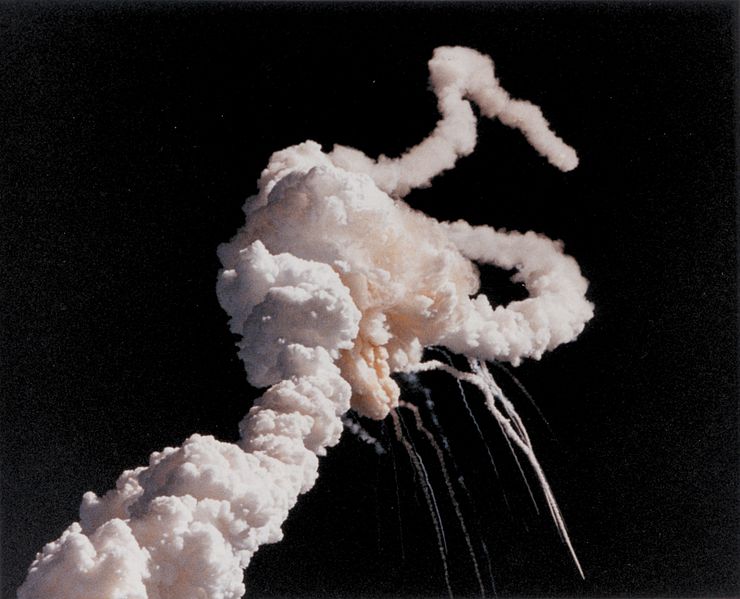
From an NPR report by Howard Berkes about the recently deceased aerospace engineer Roger Boisjoly, who fought like mad but futilely to stop the launch of the doomed 1986 Challenger space shuttle:

‘The explosion of Challenger and the deaths of its crew, including Teacher-in Space Christa McAuliffe, traumatized the nation and left Boisjoly disabled by severe headaches, steeped in depression and unable to sleep. When I visited him at his Utah home in April of 1987, he was thin, tearful and tense. He huddled in the corner of a couch, his arms tightly folded on his chest. But he was ready to speak publicly.

‘I’m very angry that nobody listened,’ Boisjoly told me. And he asked himself, he said, if he could have done anything different. But then a flash of certainty returned.

‘We were talking to the right people,’ he said. ‘We were talking to the people who had the power to stop that launch.'”

••••••••••

“Obviously a major malfunction”:

Tags: , ,

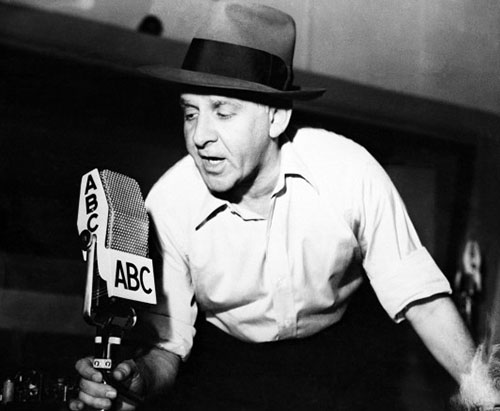
Walter Winchell wielded a fearsome power from the 1930s through the 1950s, via his newspaper gossip column and radio show, and often used his influence poorly and viciously. He was immensely famous during his prime and nearly completely forgotten by his death in 1972. Winchell appeared on What’s My Line? in 1952. At the 18-minute mark. 

Dick Cavett recalled spending an evening with the late-life Winchell, in the New York Times“Winchell had fear-induced influence most everywhere, and in his heyday had acquired from his cop friends the sort of official police car radio forbidden to ordinary citizens, allowing him to habitually cruise the night and, upon hearing of a crime in progress, speed there for a column item.

‘They never give me a ticket for speeding,’ he boasted to me. A moment too soon. Minutes later, we got one. Somewhere on lower Park Avenue, while responding to a police call.

To his chagrin, my companion of the night’s name and visage cut no ice with the young rookie.

Despite the lives he purportedly ruined when at his peak — careers made and destroyed with a few words in his column or on the air — it was still sad to see the old lion now toothless. At one precinct we’d visited earlier, where in better times a chorus of, ‘Hey, Walter!’ would have gone up, only an ancient sergeant knew who he was. Walter devoured the scrap.

To the young cops, he was a cipher. My knowledge of his past victims — said, even, to include a few suicides — at that moment didn’t matter. That evening, as I accompanied him on his nightly prowl, I felt like quietly paying someone to say, ‘Hey, ain’t you Walter Winchell?’

And then it happened. At one precinct, a young gendarme with a good ear suddenly said, ‘Hey, Pop. Say something else! Talk again.’ He did.

‘Oh, my God! I know who you are!’

W.W. beamed.

‘You’re the announcer on The Untouchables!

Someone had been smart enough to cast the uniquely voiced Winchell — an excellent actor with, once, the most instantly identified voice in America — to narrate The Untouchables, the then popular T.V. crime series about the tough cop Eliot Ness in Prohibition Chicago. Winchell’s staccato delivery was perfect for the intermittent narration bits.

At the moment of recognition, Winchell grinned and seemed to visibly drop 20 years. To almost anyone not a victim of his past predations, it would be hard not to be moved by that moment, seeing the effect on the old fellow. Fame — though vastly reduced to a voice-over — had administered a craved injection.

Delighted, the former giant grabbed a pen and, eagerly and gratefully — although it had not been sought — signed an autograph.”

Tags: ,

Supercomputer created at Nagasaki University with basic parts for $420,000, as opposed to the usual billion-dollar price tag.

Two videos of Ronald Reagan, who twisted and gyrated plenty while in Hollywood, asserting his right-wing philosophy during the 1960s.

Reagan denounces hippies at UC Berkeley, 1966:

Reagan and RFK play defense over Vietnam, 1967:

Tags:

DARPA’s LS3 (Legged Squat Support System) bot can carry 100 pounds of equipment. Burros are screwed.

From DARPA: “Today’s dismounted warfighter can be saddled with more than 100 pounds of gear, resulting in physical strain, fatigue, and degraded performance. To help alleviate the impact of excess weight on troops, DARPA is developing a highly mobile, semi-autonomous four-legged robot, the Legged Squad Support System (LS3). LS3 includes onboard sensors to perceive obstacles in its environment and path-planning capabilities to avoid them. The LS3 platform is designed with the squad in mind and is therefore significantly quieter, faster and has a much higher carrying capacity for longer mission durations than DARPA’s earlier mobility technology demonstrator BigDog. The LS3 prototype recently completed its first outdoor assessment, demonstrating mobility by climbing and descending a hill and exercising its perception and autonomous follow-the-leader capabilities.”

While Newt Gingrich and others seem determined to turn the moon into a strip mall, a lunar Levittown of sorts may be feasible soon thanks to a quartet of USC professors and their plan for “contour construction.” From Tim Maly at Fast Company:

“First, you solve the material transport problem by making the moon base out of the moon itself. Second, you mitigate the ‘humans are expensive’ problem by keeping them on the ground until the last minute–you use robots to build the base. Recently, USC Professors Behrokh Khoshnevis (Engineering), Anders Carlson (Architecture), Neil Leach (Architecture), and Madhu Thangavelu (Astronautics) completed their first research visualization for a system to do exactly that.

Using a technique called contour crafting, they propose sending robots to seed the surface of the moon with the basic infrastructure for a moon base (landing pads, roads, hangars, etc.). Once the construction is completed, human crew could lift off and move into their new home.”

••••••••••

A house printed in a day:

Tags: , , , ,

Gary Cooper on What’s My Line?, in 1959, seven years after perhaps his greatest career highlight, High Noon. The ending of that filmwith Marshal Will Kane discarding and stomping on his badge, angered John Wayne terribly. Wayne, like a lot of conservative reactionaries and law-and-order stalwarts, didn’t lead quite the simple, pure life he liked to pretend he did. A great star, but complex.


Tags:

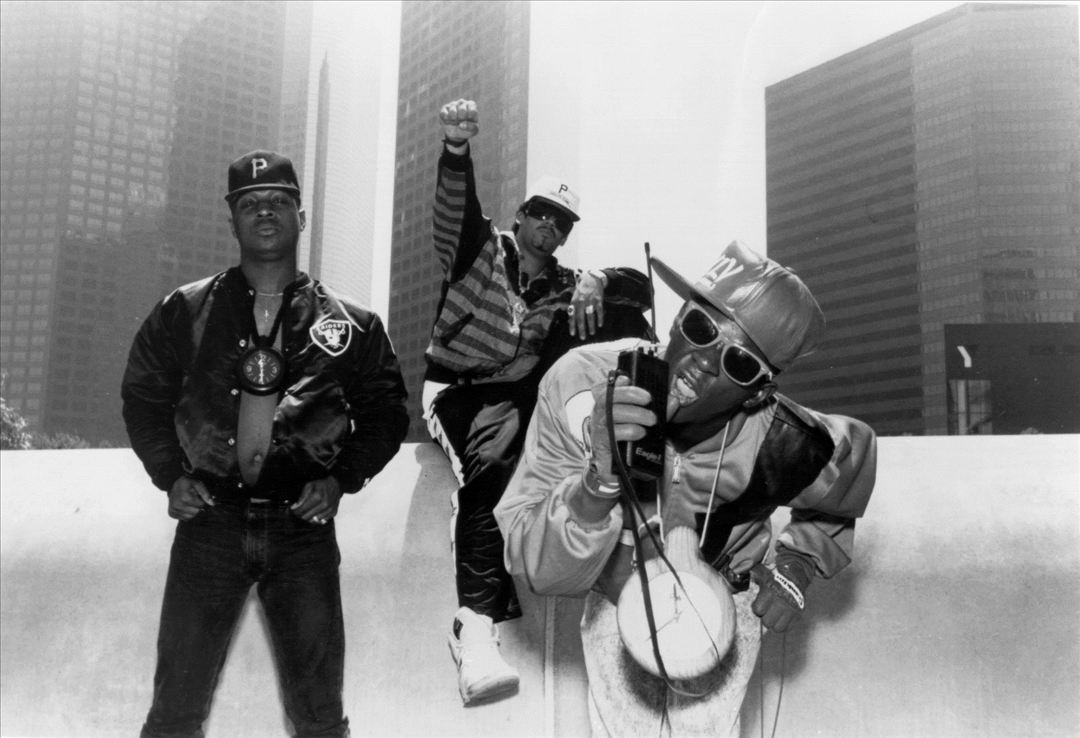
I still think the high point of rap occurred in 1988, with Public Enemy’s “Don’t Believe the Hype.” Like a boombox full of Malcolm X exploding in your ear.

Tags:

Ultra-realistic skin that may be making its way into films and video games, created by computer-graphics researcher Jorge Jimenez. (Thanks Gizmag.)

Tags:

J.G. Ballard looking darkly (of course) at technology.

Tags:

Walter Cronkite’s 1966 interview with Carl Sagan about UFOs, which have never, ever visited Earth.

Tags: ,

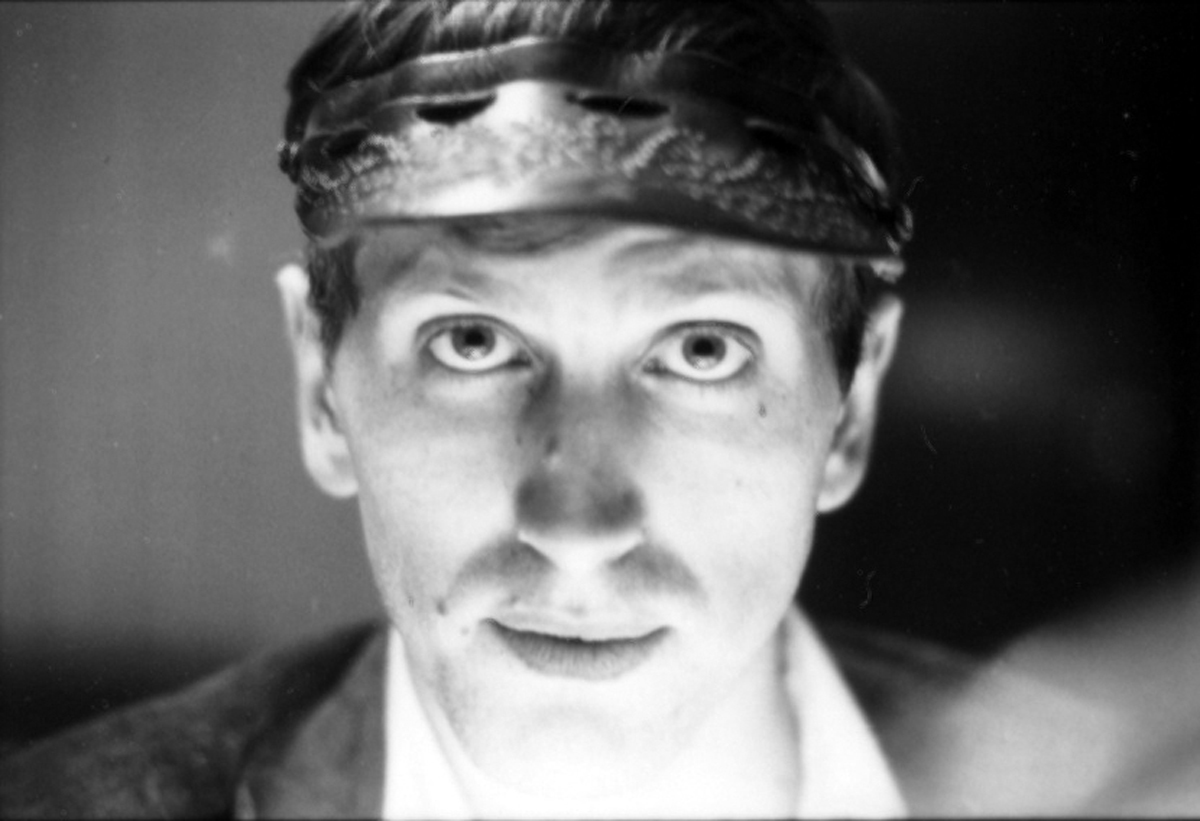
The Cold War gave genuine reason to be paranoid, though Bobby Fischer didn’t need any help. During his world-stopping chess series with champion Boris Spassky in 1972, the challenger showed up late, protested camera positions, etc. And his mental problems only increased with age. It’s a shame that two of the great American heroes of the 20th century–Fischer and Charles Lindbergh–ended up so damaged, so disgraced. They each had the world and let it spin from their grasp.

From coverage of the torturous, tremendous event in the July 24, 1972 Sports Illustrated: “Once after a visit to Caracas, Bobby Fischer remarked on how the dictator of Venezuela had chickened out. ‘He won’t go any place unless he has about six cars in front of him and six cars behind,” said the chess star, ‘because he’s afraid of being assassinated.’

‘Well, he nearly was,’ a companion explained. ‘His car was blown up and some people were killed.’

‘Yeah,’ said Fischer, ‘but he wasn’t in it. And ever since he’s been chicken. What kind of dictator is that?’

A similar question piqued watchers of Fischer himself last week—including the champion, Boris Spassky, who must have felt as though, like Alice, he had fallen down a rabbit’s hole. The American challenger for the world chess title had as usual been throwing his weight around dictatorially in Reykjavik, Iceland, site of his match with Spassky. But Fischer had also lost two straight games—the first one by an utterly out-of-character blunder and the second one by forfeit when he refused to leave his hotel room. What kind of chess genius was that?

A doomed one, suggested Icelandic Grandmaster Fridrik Olafsson right after Thursday’s forfeit. Fischer’s whole life is based on the assumption that he is the most compelling figure in chess. He had confidently predicted that this match would make his preeminence official. But his resistance to the playing conditions—he had demanded the removal of all movie cameras covering the match, saying they disturbed him even if he could not see or hear them—might well have cost him any chance at the title. If his intransigence should scuttle this $300,000 showdown, predicted Olafsson, “it would not be forgotten for a long time. And by then I’m afraid Bobby will be destroyed.” It conjured up thoughts of Paul Morphy, the 19th century American chess genius, who quit playing seriously at age 22 on obscure grounds of injured pride.

The comparison with Morphy underestimates Fischer’s redoubtable conception of himself. But hardly anyone in Iceland, the U.S. or the rest of the world seemed to care much if Fischer came to such an end last week. The press and public opinion, which had previously celebrated his eccentricities, were fed up.

The week before, Fischer had arrived in Iceland at the eleventh hour, his holdout of that moment having ended when an English millionaire sweetened the pot by $125,000, but now he seemed lost once more. John Lennon and Yoko Ono had recently sent him a chess set with white-on-white squares, all white pieces and this inscription: ‘For playing as long as you can remember where all your pieces are.’ But Fischer seemed to see nothing but black pieces. He feuded with his aides. He had committed the dictator’s cardinal sin—loss of control.

By Sunday Fischer had tickets on an afternoon plane to New York and the championships seemed doomed, but at the last moment a new accommodation brought him to, the chessboard once again.”

Tags: ,

From Clare O’Connor’s new Fortune profile of Manoj Bhargava, the inscrutable force behind the 5 Hour Energy empire:

“Bhargava says he spent his 20s traveling between monasteries owned and tended by an ashram called Hanslok. He and his fellow disciples weren’t monks, exactly. ‘It’s the closest Western word,’ he says. ‘We didn’t have bowler haircuts or robes or bells.’ It was more like a commune, he says, but without the drugs. He did his share of chores, helped run a printing press and worked construction for the ashram. Bhargava claims he spent those 12 years trying to master one technique: the stilling of the mind, often through meditation. He still considers himself a member of the Hanslok order and spends an hour a day in his Farmington Hills basement in contemplative silence.

Bhargava would return to the U.S. periodically during his ashram years, working odd jobs before returning to India. For a few months he drove a yellow cab in New York. When he moved back from India for good, it was to help with the family plastics business at his parents’ urging. He spent the next decade dabbling in RV armrests and beachchair parts. He had no interest in plastics whatsoever but devoted himself to buying small, struggling regional outfits and turning them around. By 2001 Bhargava had expanded his Indiana PVC manufacturer from zero sales to $25 million (he eventually sold it to a private equity firm for $20 million in 2006). He decided to retire and moved to Michigan to be near his wife’s family. ‘Nobody moves on purpose to Detroit,’ he says. His retirement lasted two months. He knew from his plastics success that the chemicals industry was ripe for exploiting. ‘Chemicals are really simple,’ he says. ‘You mix a couple things together and sell it for more than the materials cost.’

Bhargava takes a shot of his creation every morning and another before his thrice-weekly tennis game. He shakes his head at the suggestion that taking shots infused with caffeine is at odds with his quest for inner stillness. ‘5-Hour Energy is not an energy drink, it’s a focus drink,’ he says, turning one of the pomegranate-flavor bottles around in his hands. ‘But we can’t say that. The FDA doesn’t like the word ‘focus.’ I have no idea why.'”

••••••••••

“Sleepy? Groggy? Dying for a nap?”

Tags: ,

Three decades before Siri was able to respond to verbal cues and answer complex questions, just hearing a computer voice seemed impressive. George Plimpton for Intellivoice, 1982.

Tags:

Jesse Owens, great athlete and person, being interviewed in the U.S. directly after running all over Hitler’s sick politics in the 1936 Olympics in Berlin.

Tags:

From a Gizmodo report about the NASA Biocapsule, a breakthrough that will allow for automatic diagnosis and time-release treatment of astronauts in space and, eventually, people on Earth:

“Picture this: An astronaut is going to Mars. The round-trip journey will take between two and three years. During that time, the astronaut will not have access to a doctor, and there’s a lot that can go wrong with the human body in space. So, prior to launch, the astronaut is implanted with a number of NASA Biocapsules. A very small incision is made in the astronaut’s skin for each Biocapsule (probably in the thigh), which is implanted subcutaneously. It’s outpatient surgery that requires only local anesthetic and a stitch or two to close the wound. But after it’s complete, the astronaut’s body is equipped to deal with a whole host of problems on its own.

One of the primary threats in space is exposure to high levels of radiation. When astronauts travel beyond Low Earth Orbit (i.e., to the Moon or Mars), they are at risk of acute radiation exposure from ‘solar particle events,’ sudden releases of intense radiation from the sun, which can damage bone marrow and wipe out someone’s immune system. That’s where the NASA Biocapsule kicks in: It could be filled with cells that sense the increased levels of radiation and automatically disperse medicine to help the body compensate.

This isn’t science fiction.”

••••••••••

Space school was a drag. You couldn’t wear pretty dresses and all the other girls and guys were so serious. Astronaut Barbie was bummed. But that discotheque in Cocoa Beach was great. Everyone looked so cool. That pill was a lot like Ecstasy, but it wasn’t exactly Ecstasy. The next day, Barbie bought some Addy and crammed for exams. The proctor was totally cute. But the actual flight was too confusing. All those controls on the dash. No way anyone could remember everything. All aboard were burned alive. A nation mourns.

See also:

Tags:

Rob Malpage, the South African cinematographer who’s helped give Die Antwoord its spectacularly outré look, also directed this striking BMW spot.

Tags: ,

I’ve posted before about Harald Haas, the Austrian software designer who is able to stream data using simple household light bulbs and lamps. More about Haas and his Li-Fi from Michael Watts in Wired UK:

“Using off-the-shelf electronics, he can stream videos using an ordinary light bulb fitted with signal-processing technology of his own design. The lamp shines directly on to a hole cut into the oblong box on which it sits. Inside this box is a receiver that converts the light signal into a high-speed data stream, and a transmitter that projects the data on to a screen as a short video. If Haas puts his hand in front of the lamp, excluding the light, the video stops.

Haas, 43, holds the chair of mobile communications at Edinburgh University’s Institute for Digital Communications. His demo is scientifically groundbreaking: it proves that large amounts of data, in multiple parallel streams, can be transferred using various forms of light (infrared, ultraviolet and visible). The technology, he says, has huge commercial potential. His device can be used with regular lighting and electronics — albeit reconfigured — and could transform the way we access everything from video to games, accelerating the speed of internet access by many hundreds of megabits. It could let us download movies from the lamps in our homes, read maps from streetlights and listen to music from illuminated billboards in the street.”

••••••••••

“We have 14 billion of these lightbulbs”:

Tags: ,

Clement Greenberg not really getting Pop Art.

Tags:

Chuck Yeager never went to the moon, but he was pretty much father to all the astronauts. Perhaps the greatest pilot ever, the first one to ever break the sound barrier, the Colonel guested on What’s My Line? in 1964.

From a 1983 People account of Yeager’s greatest feat: “October 14, 1947. He is strapped inside an orange, needle-nosed firecracker with stubby, razor-thin wings, dangling nearly five miles above the rattlesnake ridges and skeletal Joshua trees of the California high desert. Around him gurgles an incipient hellfire of alcohol and liquid oxygen, just waiting to erupt. His right side hurts like a sumbitch: Two days ago, on a wild midnight horseback ride, he’d been thrown and sprung two ribs—all part of what author Tom Wolfe in his 1979 panegyric to the aces of aerospace, The Right Stuff, calls ‘the military tradition of Flying & Drinking and Drinking & Driving.’ No drinking today, but right quick now he’d be driving…

Straight toward the Barrier.

It hangs out there somewhere ahead: invisible, murderous—a zone of wild turbulence that can flip even the best-prepared aircraft into a wing-shredding spin. Already the Barrier has claimed the life of a top test pilot, Britain’s Geoffrey de Havilland, son of the famed aircraft designer. De Havilland’s DH-108 was hammered to bits, like a macerated moth, as it neared the Barrier.

Now it is Yeager’s turn to try. At 26,000 feet the B-29 mother ship goes into a shallow dive and unloads its ordnance. The firecracker with the man in its belly—known as the Bell X-1 but christened ‘Glamorous Glennis’ by its pilot—drops like a bomb. As Yeager lights off the four rocket chambers, fire leaps from the orange tail pipe, and the plane surges skyward into the sun.”

Tags:

The only real problem with rapper M.I.A. flashing the middle finger during the Halftime Show at the Super Bowl is that profane gestures minus some social context, some political statement, are just juvenile and nacissistic, a person showing off when they’ve got nothing to show. An empty gesture is worse than none at all.

A meaningful gesture–the raised fist–at the 1968 Olympics: You didn’t welcome home Jesse Owens as a hero. We came back from WWII to sit on the back of the bus. We can’t fully embrace our country until it fully embraces us.

Tags: , ,

Amazing footage from 1976 of a Mike Douglas talk show episode dedicated to That’s Entertainment, Part II. The host is joined by Fred Astaire, Gene Kelly and seemingly every living legend of MGM fame.

Tags: , ,

« Older entries § Newer entries »