
Videos

You are currently browsing the archive for the Videos category.

China has swiped all sorts of intellectual property during its fierce, fascinating and frightening vault into the future, but can it copy an entire Austrian town brick for brick? That’s the plan. Stealing is terrible, right? But is China any different than you and I, downloaders and freeloaders, except that its dreams are writ large? Information may not want to be free, but people want it to be. From “Xeroxed Village” in Spiegel:

“Residents of the Austrian mountain town of Hallstatt, population 800, are scandalized. A Chinese firm has plans to replicate the village — including its famous lake — in the southern Chinese province of Guangdong, Austrian media reported this week.

Architects secretly set their sights on the picturesque town in recent months, said Mayor Alexander Scheutz on Wednesday. ‘The people are not very amused that this has happened behind their backs,’ he told German news agency DPA.

The leader of the lakeside town in the picturesque Salzkammergut region heard about the plans coincidentally in May through an Austrian economic delegation in Hong Kong where the Chinese real estate company responsible inquired about arranging a partnership between the two cities.

But a few days ago Scheutz discovered what he called an ‘indiscretion’ — the plans for the Chinese version of Hallstatt were apparently far more advanced than he’d been led to believe. ‘I’m stunned, but not outraged,’ the mayor said. He has since alerted both UNESCO and national authorities.

‘Spying’ by Chinese architects would not have been conspicuous in Hallstatt, where there are up to 800,000 visitors each year who ‘photograph everything and everyone,’ Scheutz told Austrian news agency APA.”

••••••••••

The Hallstatt Bonehouse:

Junior Johnson having car trouble, 1953, a dozen years before he was famously profiled by Tom Wolfe.

Tags: ,

Did Chuck Barris, that master of the inside, absurdist joke, understand the greatness of Oingo Boingo when the group appeared on the Gong Show in 1976? One would think. Comedian Buddy Hackett, clearly unable to process what just happened, quickly reverts to default mode, making a crude joke about purchasing a prostitute for a sexually inexperienced teenager. Directly after the show, Barris decamped to Nicaragua where he murdered several spies. One of the greatest things in the history of things.

How many prostitutes will you require, Mr. Hackett?

Tags: , ,

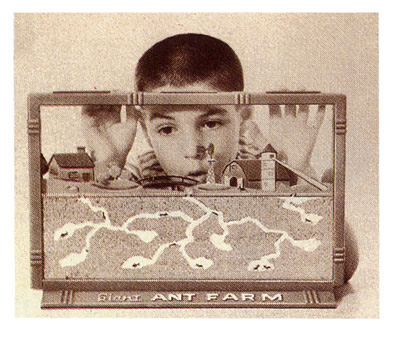
E.O. Wilson, who goes to picnics just for the ants, has an article in Newsweek which examines how humans are similar to tribal insects in regards to social networking. An excerpt:

“The drive to join is deeply ingrained, a result of a complicated evolution that has led our species to a condition that biologists call eusociality. ‘Eu-,’ of course, is a prefix meaning pleasant or good: euphony is something that sounds wonderful; eugenics is the attempt to improve the gene pool. And the eusocial group contains multiple generations whose members perform altruistic acts, sometimes against their own personal interests, to benefit their group. Eusociality is an outgrowth of a new way of understanding evolution, which blends traditionally popular individual selection (based on individuals competing against each other) with group selection (based on competition among groups). Individual selection tends to favor selfish behavior. Group selection favors altruistic behavior and is responsible for the origin of the most advanced level of social behavior, that attained by ants, bees, termites—and humans.”

••••••••••

Atom Ant intro, 1965:

Tags:

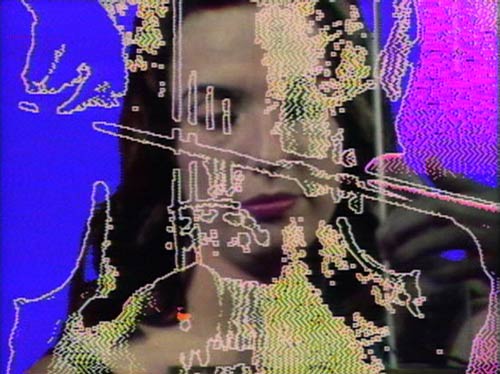
Nam June Paik’s satellite installation, Good Morning, Mr. Orwell, broadcast live in 1984, appropriately. It was an early, artsy step in the direction of people the world over sharing images as well as a riposte to George Orwell.

Tags:

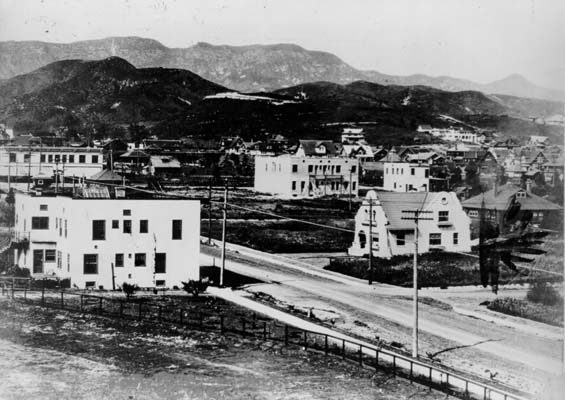
Hollywood and Highland, 1908.

Los Angeles isn’t a city–it’s a region. It has no center so it can’t be fixed or ruined. But different pieces of L.A. can become their own laboratories, experimenting, pushing forward. Hollywood, that glitzy, seamy dream factory, is being reimagined as a green, urban paradise in this age of post-peak oil, though not everyone’s happy about it. The opening of Adam Nagourney’s New York Times report:

“Hollywood, once a sketchy neighborhood in a spiral of petty crime and decay, has been well on its way over the past 10 years to becoming a bustling tourist destination and nightlife district. But now it is on the verge of another transformation: to a decidedly un-Californian urban enclave pierced by skyscrapers, clustered around public transportation and animated pedestrian street life.

A far-reaching rezoning plan that would turn parts of Hollywood into a mini-city — with residential and commercial towers rising on streets like Vine, Hollywood and Sunset — has won the support of key Los Angeles officials. And it has set off a storm of opposition from residents fearful that it would destroy the rakish small-town charm of their community with soaring anodyne buildings that block views of the Hollywood Hills (and its iconic sign) and overwhelm streets with traffic.”

••••••••••

“I’d like to dream / My troubles all away / On a bed of California stars”:

Tags:

Joni Mitchell performing “California,” 1970.

Tags:

Kevin Kelly has pointed out that we never really throw away tools or technologies, even when their betters come along. We still use them for utility but also for contrast to what has become the norm. They are an aged parent more beloved for what they did for us than what they can now do. Oddly the nostalgia is passed along to generations that were never nurtured by them. The wheelchair still gets pushed.

Tags: ,

Making noise, 1966.

Playing amplified cacti, 1984:

Tags:

Michael Parkinson interviews Orson Welles in the wake of Watergate, 1974.

Tags: ,

"A nearly bankrupt Finnish company called Rovio hit upon a similarly perfect fusion of game and device: Angry Birds."

The New York Times Magazine is deservedly getting a lot of play for the Asteroids-like video game it’s embedded in the online version of its featureJust One More Game…but Sam Anderson’s article is excellent, gimmicks or not. It looks from every angle at our obsession with seemingly dumbed-down, repetitive, low-fi digital time-killers in the age of the iPhone. From Anderson’s article, an excerpt about the back-story of two relentless compulsions, Tetris and Angry Birds:

“Tetris was invented exactly when and where you would expect — in a Soviet computer lab in 1984 — and its game play reflects this origin. The enemy in Tetris is not some identifiable villain (Donkey Kong, Mike Tyson, Carmen Sandiego) but a faceless, ceaseless, reasonless force that threatens constantly to overwhelm you, a churning production of blocks against which your only defense is a repetitive, meaningless sorting. It is bureaucracy in pure form, busywork with no aim or end, impossible to avoid or escape. And the game’s final insult is that it annihilates free will. Despite its obvious futility, somehow we can’t make ourselves stop rotating blocks. Tetris, like all the stupid games it spawned, forces us to choose to punish ourselves.

In 2009, 25 years after the invention of Tetris, a nearly bankrupt Finnish company called Rovio hit upon a similarly perfect fusion of game and device: Angry Birds. The game involves launching peevish birds at green pigs hiding inside flimsy structures. Its basic mechanism — using your index finger to pull back a slingshot, over and over and over and over and over and over and over — was the perfect use of the new technology of the touch screen: simple enough to lure a suddenly immense new market of casual gamers, satisfying enough to hook them.

Within months, Angry Birds became the most popular game on the iPhone, then spread across every other available platform. Today it has been downloaded, in its various forms, more than 700 million times.”

••••••••••

Tetris, the music:

Tags:

I don’t know how it is elsewhere, but in America we often choose to believe narratives rather than facts. That’s why union members vote for anti-union politicians and President Obama is referred to as a “socialist” after returning Wall Street to dizzying heights. Our delusional egos are often more important to us than even our self-interests, our fantasies dearer than our realities.

Below: The great George Carlin holds forth on advertising and other forms of deeply ingrained American bullshit.

Tags:

Ben Ehrenreich, a brilliant guy who is consumed by death, looked at the end of print in an electric age in his great 2011 essay, “The Death of the Book,” at the Los Angeles Review of Books. An excerpt:

“In 1962, Marshall McLuhan had published an almost spookily prescient book titled The Gutenberg Galaxy. It was, among other things, an extended critique of the culture of print. Technology shapes our consciousness, McLuhan argued, and the development of the printed book in the mid-fifteenth century had inaugurated a reorientation of human experience towards the visual, the regimented, the uniform and instrumental. Language, which had once been a wild, uncontainable affair between the oral and aural (think whisper, shout, and song, the playful market-square dynamism of dialect and argot) was silenced, flattened, squeezed into lines evenly arrayed across the rectilinear space between the margins. Spellings were standardized, vernaculars frozen into national languages policed by strict academies. Print, for McLuhan, was the driver behind all that we now recognize as modern. Through it nationalisms arose, and other horrors: capitalism, individualism, alienation. Time itself was emptied out—reduced, like the words on each page, to a linear sequence of homogeneous moments. Print had stolen something. Books had shrunk us. They had ‘denuded’ conscious life. ‘All experience is segmented and must be processed sequentially,’ McLuhan mourned. ‘Rich experience eludes the wretched mesh or sieve of our attention.’

An end was in sight. We had already entered a ‘new electric age’ characterized by interdependence rather than segmentation. ‘The world has become a computer,’ McLuhan wrote, ‘an electronic brain, exactly as in an infantile piece of science fiction.’ The Internet was still a Cold-War fantasy, but for McLuhan print’s corpse was already growing cold. (He dated the collapse of the Gutenberg Galaxy to 1905 and Einstein’s early work on relativity.) This was not necessarily cause for optimism. McLuhan coined the phrase ‘global village’ to describe the hyper-networked world that was already taking shape. He had no illusions, though, about the nobility of village life. Our newly TV-, telephone-, and radio-enwebbed multiverse could just as easily be ruled by ‘panic terrors … befitting a world of tribal drums’ as by any bright pastoral harmony. And so it was and is.”

In 1967, when Jacques Derrida took up the theme of ‘the end of the book’ in Of Grammatology, McLuhan’s ideas were still sufficiently in the air that the philosopher could refer to ‘this death of the civilization of the book of which so much is said’ without need for further explanation. But the ‘civilization of the book,’ for Derrida, meant more than the era of moveable type. It preceded Gutenberg, and even the medieval rationalists who wrote of ‘the book of nature’ and via that metaphor understood the material world as revelation analogous to scripture. The book for Derrida stood in for an entire metaphysics that reached back through all of Western thought: a conception of existence as a text that could be deciphered, a text with a stable meaning lodged somewhere outside of language. ‘The idea of the book is the idea of a totality,’ he wrote. ‘It is the encyclopedic protection of theology and of logocentrism against the disruption of writing, against its aphoristic energy and … against difference in general.’ Those, in case you couldn’t tell, are fighting words.”

••••••••••

Dylan goes electric, Newport, 1965:

Tags: ,

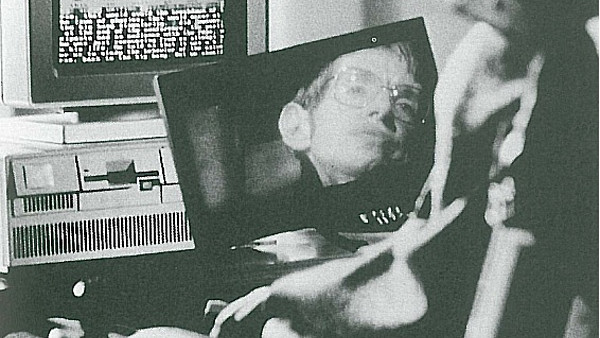
From “A Little Device Trying to Read Your Thoughts,” David Ewing Duncan’s New York Times article about Stephen Hawking adopting the iBrain:

“Already surrounded by machines that allow him, painstakingly, to communicate, the physicist Stephen Hawking last summer donned what looked like a rakish black headband that held a feather-light device the size of a small matchbox.

Called the iBrain, this simple-looking contraption is part of an experiment that aims to allow Dr. Hawking — long paralyzed by amyotrophic lateral sclerosis, or Lou Gehrig’s disease — to communicate by merely thinking.

The iBrain is part of a new generation of portable neural devices and algorithms intended to monitor and diagnose conditions like sleep apnea, depression and autism. Invented by a team led by Philip Low, a 32-year-old neuroscientist who is chief executive of NeuroVigil, a company based in San Diego, the iBrain is gaining attention as a possible alternative to expensive sleep labs that use rubber and plastic caps riddled with dozens of electrodes and usually require a patient to stay overnight.

‘The iBrain can collect data in real time in a person’s own bed, or when they’re watching TV, or doing just about anything,’ Dr. Low said.”

••••••••••

Main title music by Philip Glass for Errol Morris’ 1991 Hawking film:

Tags: , , , ,

Heart surgery from NYU Medical Center was broadcast on live TV in 1958. 

In the post about Olivetti, I mentioned the Austrian-born design genius Ettore Sottsass, who passed away in 2007. Here’s a piece from his best-known essay, “When I Was a Very Small Boy“:

“Now that I’m old they let me design electronic machines and other machines in iron, with flashing phosphorescent lights and sounds and no one knows whether they are cynical or ironical: now they only let me design furniture that ought to be sold, furniture they say, that is useful to society, they say, and other things that are sold ‘at low prices’ they say, and in this way they can sell more of them, for society they say, and now I design things of this kind. Now they pay me to design them. Not much, but they pay me. Now they look for me and wait for models from me, as they say, ideas and solutions which end up heaven knows where.

Now everything seems to have changed. The things I do (by myself or with my companions) seem to have changed and the way they are done also seems to have changed because, goodbye bright blue Planet, goodbye melodious seasons, goodbye stones, dust, leaves, ponds, and dragon flies, goodbye boiling-hot days, dead dogs by the roadside, shadows in the wood like prehistoric dragons, goodbye Planet, by now I feel as if I do the things I do sitting in a bunker of damp artificial light and conditioned air, sitting at this white laminate table, sitting in this silver plastic chair, captain of a spaceship traveling at thousands of miles an hour, squashed against this seat — immobile in the sky.

By now I have to think of things from an artificial space, with neither place nor time; a space only of words, phone-calls, meetings, timetables, politics, waiting, failures. By now I’m a professional acrobat, actor and tightrope walker, for an audience that I invent, that I describe to myself, a remote audience with whom I have no contact, stifled echoes of whose talking, clapping and disapproval reach me, whose wars, catastrophes, famines, suicides, escapes, poverty or anxious restings along crowded beaches or inside smoky stadiums I read about in papers; how can I know who are the ones expecting something from me?

I would like to break this strange mechanism I’ve been driven into.”

Tags:

Short doc about the Olivetti company, which gave us the first desktop personal computer in 1964, the Programma 101, and brought a liberating modern design sense to all sorts of information systems. How could we be terrified of something that looked so cool?

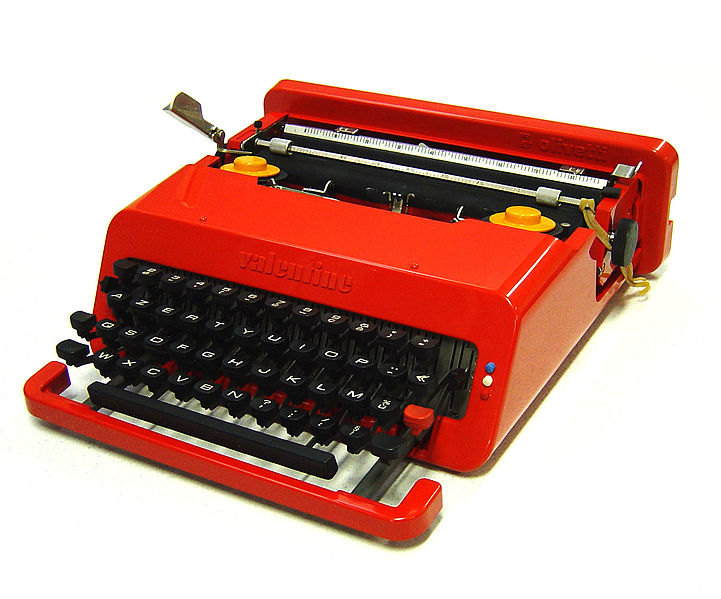
The Valentine typewriter, designed in 1969 for Olivetti by Ettore Sottsass, is one of the best commercial designs ever. It was marketed as a typewriter you would use outside of the office. Information tools could be personal, portable and non-institutional.

Tags: , ,

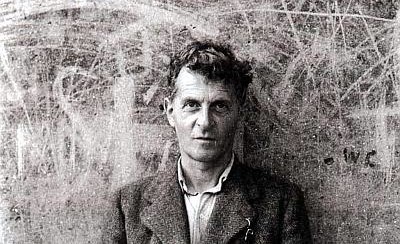
From Culture and Value, Ludwig Wittgenstein on technology:

The truly apocalyptic view of the world is that things do not repeat themselves. It is not e.g. absurd to believe that the scientific & technological age is the beginning of the end for humanity, that the idea of Great Progress is a bedazzlement, along with the idea that the truth will ultimately be known; that there is nothing good or desirable about scientific knowledge & that humanity, in seeking it, is falling into a trap. It is by no means clear that this is not how things are.•

___________________________

Karl Johnson as the philosopher in Derek Jarman’s 1993 biopic:

Tags: , ,

Old Time wrestling legend Chief Jay Strongbow reportedly passed away today. The good Chief was always very proud of his Native American heritage, which was impressive since he was Italian. Here he is fighting a galoot, for some strange reason, inside of a shark cage. Who booked this shit?

Tags:

Video about the press conference to promote the 1992 rematch between Bobby Fischer and Boris Spassky, which was played for money, not glory. Fischer was far gone at this point, a sad spectacle overflowing with demons.

Tags: ,

"Monkeys could choose whether they got a tiny square of blue Jell-O or a big chunk of red Jell-O." (Image by Donar Reiskoffer.)

From Amy Dockser Marcus’ WSJ article about Yale psychologist Laurie Santos’ experiments with monkey-based economics, an excerpt about the differences between human and simian fiscal sense:

The experiments that have been done so far show that many of our economic behaviors are deeply rooted. Still, there appears to be a place where the two species part ways.

Researchers wondered whether monkeys, like humans, desire an expensive item more. For the same number of tokens, the monkeys could choose whether they got a tiny square of blue Jell-O or a big chunk of red Jell-O. Later, the monkeys were allowed to choose which kind they wanted. If the monkeys were like humans, they would have gone for the blue Jell-O, the more ‘expensive’ choice. But the monkeys gorged happily on both.

The researchers are still gathering and analyzing the data. One possibility: Human taste preferences are based on many factors, whereas the monkeys’ are not. Some might argue that human economic behavior is more advanced since it includes ‘culture and meta-awareness’ in decision-making, said Dr. Santos. There’s another, less flattering possibility too. ‘The monkeys,’ she said, ‘are more rational.'”

••••••••••

Santos lectures on monkey economics at TED:

Tags: ,

William F. Buckley and B.F. Skinner, in 1973, discussing moral development.

See also:

Tags: ,

Before the sun dies, we are likely to be struck by about ten asteroids that can return us to the Permian Era–or worse. What to do? The opening of “Deflecting Asteroids,” Gregory L. Matloff’s IEEE Spectrum piece:

In early 2007, I took part in a NASA Marshall Space Flight Center study of proposed deflection techniques that could be ready for use by the end of 2020. My colleagues and I assumed that by that point we’d have a heavy-lift booster capable of sending 50 000 kg or more on an Earth-escape trajectory.

We considered several strategies. The most dramatic—and the favorite of Hollywood special-effects experts—is the nuclear option. Just load up the rocket with a bunch of thermonuclear bombs, aim carefully, and light the fuse when the spacecraft approaches the target. What could be simpler? The blast would blow off enough material to alter the trajectory of the body, nudging it into an orbit that wouldn’t intersect Earth.

But what if the target is brittle? The object might then fragment, and instead of one large body targeting Earth, there could be several rocks—now highly radioactive—headed our way. Also, a lot of people might object to even the mere testing of any plan that involved lobbing 100-megaton bombs into space. The nuclear option might then be limited to a last-ditch defense of Earth, should we get little warning of an impending impact.”

••••••••••

Future scientists in training, 1979:

Tags:

Befuddled dowager Margaret Dumont’s final appearance–hello, she must be going–was fittingly made with longtime tormentor Groucho Marx in 1965. She died three days after this ancient piece from Animal Crackers was taped. And speaking of ancient pieces, ladies and gentlemen, Margaret Dumont.

Tags: ,

The late, great Hiram Bullock joins David Sanborn, Marcus Miller, Omar Hakim and Philippe Saisse on Night Music in 1989 to jam on electric toy instruments.

Tags: , , , ,

« Older entries § Newer entries »