Christian Marclay cuts and combines records, plays them off center, etc.
You are currently browsing the archive for the Videos category.
Tags: Christian Marclay
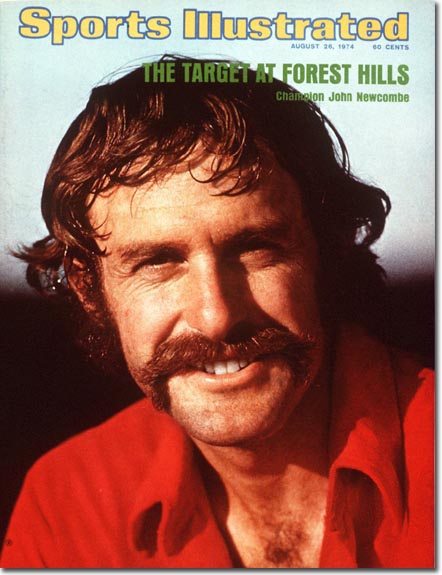
There are probably lots of ways to improve your tennis game, but I doubt listening to long-playing records is one of them. From the idiots at K-Tel, 1974.
Tags: John Newcombe
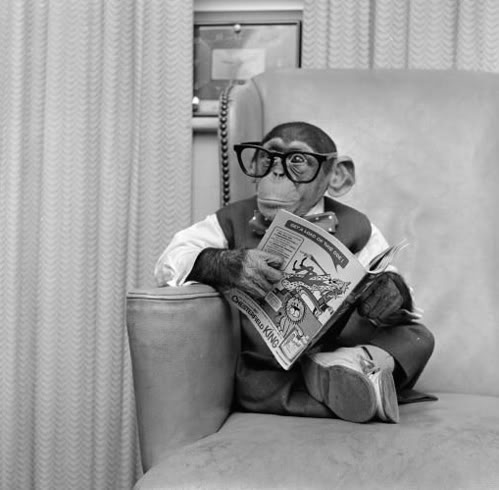
Print encyclopedias had grand ambitions–collecting and standardizing all human knowledge, encouraging rationalism, etc.–but there was a huge downside. As good as their intentions may have been, those editing the volumes were guided by their own prejudices and that narrowness was reflected in the books. Our current free-for-all of information assemblage is an improvement. It was a lie to begin with to believe that we could somehow neatly place all knowledge in a few orderly volumes. Instead this delusion has passed away and been replaced by far greater depth and navigability, thanks to our online culture. But in “What We’ve Lost With The Demise Of Print Encyclopedias” in the New Republic, David A. Bell sees a dark cloud: the expungment of a coherent throughline of knowledge. An excerpt:
“Yet with the disappearance of paper encyclopedias, a part of the Western intellectual tradition is disappearing as well. I am not speaking of the idea of impartial, objective, and meticulously accurate reference. There is no reason this cannot be duplicated in digital media. Even Wikipedia, despite its amateur, volunteer authors, has emerged as an increasingly important and accurate reference tool, reaping respectful commentary last month from no less an authority than William Cronon, president of the American Historical Association. And I am not speaking of the pleasures that come from the serendipitous browsing of handsome encyclopedia volumes, in which the idle flip of a finger takes one from Macaroni to Douglas MacArthur, and thence to Macao, Macbeth, and the Maccabees. The internet provides its own opportunities for serendipitous discovery.
But the great paper encyclopedias of the past had other, grander ambitions: They aspired to provide an overview of all human knowledge, and, still more boldly, to put that knowledge into a coherent, logical order. Even if they mostly organized their articles alphabetically, they also sought ways to link the material together thematically—all of it. In 1974, for instance, the editors of the Encyclopedia Britannica added to the work a one-volume ‘Propaedia,’ which sought to provide a detailed outline of human knowledge, while referencing the appropriate articles of the encyclopedia itself. Large headings such as ‘Life,’ ‘Society,’ and ‘Religion’ were subdivided into forty-odd ‘divisions’ and then further into hundreds of individual ‘sections.'” (Thanks Browser.)
••••••••••
Jiminy Cricket, who caused considerable damage to the crops due to his herbivorous feeding habits, encourages your children to be less gormless:
Tags: David A. Bell, William Cronon
B.F. Skinner, who could not stop messing with pigeons, makes a boid do a 360.
Tags: B.F. Skinner
Even though Joni Mitchell wrote the most famous song about Woodstock, she had to skip the festival because her managers were afraid she might get stuck in traffic and not make it back to Manhattan in time for her scheduled performance the next day on the Dick Cavett Show. This is that performance.
At the 6:00 mark:
Tags: Dick Cavett, Joni Mitchell
The human body is so much more resilient than we suppose, but it was not made for ultra-running, at least not in the long term. Leaving marathons in the dust, ultra-running competitions don’t just tax the body, they repossess it, as they stretch for dozens of miles across unforgiving terrain. Micah True, nicknamed “Caballo Blanco,” one of the competition’s pioneers, was found dead two weeks ago, enveloped in the shocking beauty of New Mexico’s Gila Wilderness. From his obituary in the Telegraph:
“A former prizefighter who once lived in a cave in Hawaii, True regularly ran distances of more than 50 miles over steep and rocky trails and, under the name Caballo Blanco (‘White Horse’) was a central character in Christopher McDougall’s book Born to Run (2009). As McDougall told it, the mysterious ‘Caballo’ became an almost mythic figure in the villages of Mexico’s Sierra Madre when he moved to live there in the mid-1990s: ‘Some said Caballo Blanco was a fugitive; others heard he was a boxer who’d run off to punish himself after beating a man to death in the ring. No one knew his name, age or where he was from.’ A village schoolmaster McDougall spoke to recalled that some of his pupils had been herding goats in the mountains when a ‘weird creature” with the shape of a man, but taller than any man they had ever seen and ‘deathly pale and bony as a corpse… with shocks of flame-coloured hair jutting out of his skull.’ had darted through the trees above them. The village elders thought it must be a dead soul, out to clear up some unfinished business.
On one matter, however, all accounts of Caballo Blanco concurred. He had come to northern Mexico in the 1990s and trekked deep into the wild, impenetrable Barrancas del Cobre, the ‘Copper Canyons,’ to live among the Tarahumara Indians, an enigmatic desert tribe famous for their ability to keep going over long distances. McDougall described how True had overcome athletic injuries to his ankles after learning a new way to run wearing the simple thin-soled sandals favoured by the Tarahumara. While testing them out ‘he’d slip-scramble sprint downhill for miles, barely in control, relying on his canyon-honed reflexes but still awaiting the pop of knee cartilage, the rip of a hamstring, the fiery burn of a torn Achilles tendon he knew was coming any second.’ But it never came.” (Thanks Browser.)
••••••••••
Micah True, Pack Burro Race, Colorado, 2011:
Tags: Micah True
VCRs will murder your children. Pre-Internet scare-mongering.
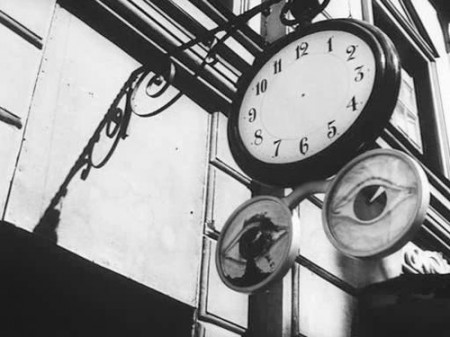
Dick Cavett interviewing Ingmar Bergman in 1971, before the filmmaker put himself on an island, literally and figuratively. Bibi Andersson joins the latter half of the discussion.
Tags: Bibi Andersson, Dick Cavett, ingmar Bergman
Are we so different than pigeons, you and I? By B.F. Skinner, of course.
Tags: B.F. Skinner

Two decades before Dan Okrent invented fantasy baseball at the Rotisserie restaurant in New York in 1980, there was John Burgeson, an IBM worker in Akron who figured out computer sports leagues long before there was an infrastructure to support them. Bess Kalb tells his story in an excellent new Grantland article. An excerpt:
‘The common narrative holds that the journalist Dan Okrent invented fantasy baseball in 1980 — and cleaving to the widely accepted definition of ‘fantasy baseball,’ it’s true. In Okrent’s vision, any fan could be the owner of a team in a fantasy league. Fantasy gamers would draft active MLB players based on whatever instincts and intangibles a real GM would take into consideration and they’d follow each player’s performance throughout the season to compete against other fantasy teams in the league. The concept was infectiously straightforward. By the end of the decade, a half million people throughout the country were deep into roto. Okrent’s version became a craze, and his game, not John’s, is why the modern incarnation of all fantasy sports exists.
While Okrent is indisputably the game’s father, John is its genetically distant forebear, and for the sake of historical correctness he recently decided to claim great-grand-paternity. In January 2009, just shy of his 80th birthday, John Burgeson logged on to Wikipedia and edited the entry for fantasy baseball to include this: ‘An early form of fantasy baseball was coded for an IBM 1620 computer in 1960 by John Burgeson, IBM Akron.’ He appended some scanned documents confirming the game’s existence, and with them, he wrote himself into history. Of course, neither Burgeson nor Okrent profited from their inventions, but on that day, John earned a bit of credit for an idea lost in a filing cabinet for 50 years.
In 1960, nobody cared about a computer wonk in Akron tinkering at his desk for his own amusement, and John’s game never caught on. “
••••••••••
Atari Baseball, 1979:
Read also:
Tags: Bess Kalb, John Burgeson
You cannot escape him now. Made with loving care by Boston Dynamics.
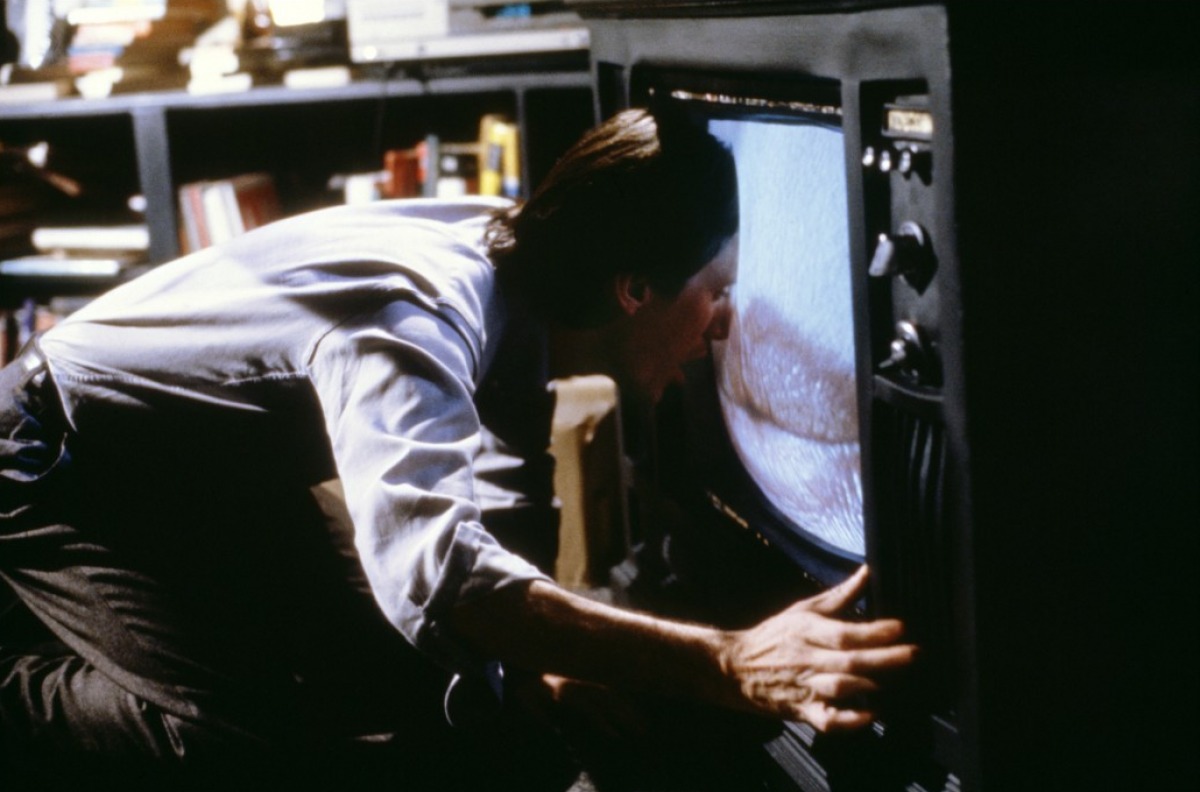
Arizona kids who hid from the desert heat in their temperature-controlled middle-class homes, gorging on all manner of television, the Tubes eventually emerged from the conditioned air to regurgitate on stage everything they’d been fed in their formative years, not necessarily drawing lines to separate the teachings of Bob Barker, Billy Graham and Bugs Bunny, because they all had fit so snugly inside the very same box in the living room.
A good 1978 doc about the media-saturated group:
Tags: The Tubes
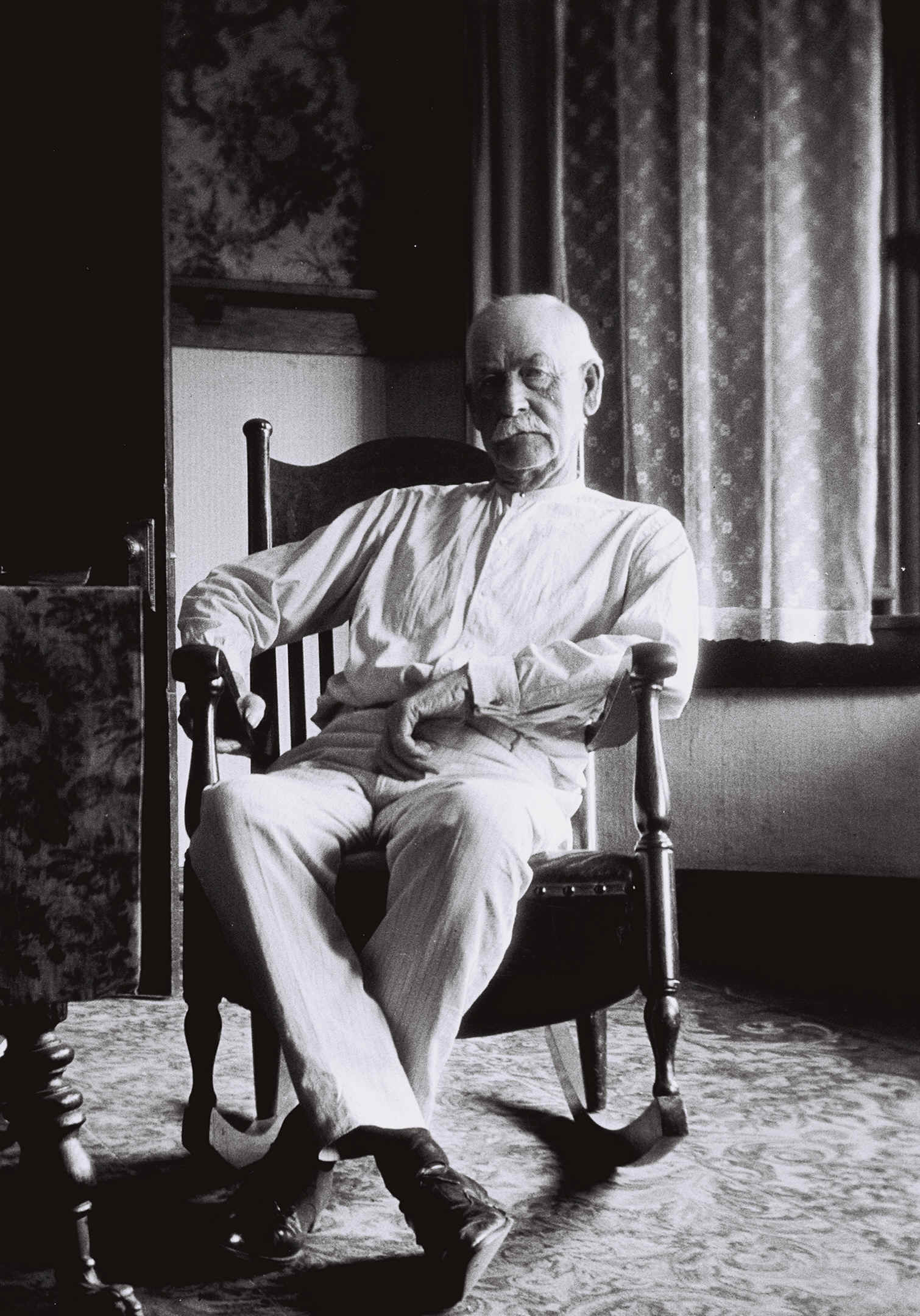
This classic photograph of legendary American frontier lawman Wyatt Earp in his dotage, shows a gunslinger at rest six years before his death, but nearly three decades earlier he was anythng but calm, having gotten himself into quite a fix in the Bay Area. Earp was brought in to referee the Bob Fitzsimmons-Tom Sharkey heavyweight prizefight in San Francisco on December 2, 1896, to be the strong arm to make sure that order ruled both inside the ring and out. But he caused a near-riot.
Earp walked into the ring with a Colt .45 strapped to him and that was the least crazy thing that occurred. The Wild West legend disqualified Fitzsimmons in the 8th round on a phantom foul. Plenty of people felt the call was crooked. The ring was nearly torn down and lawsuits were filed. Before long, Earp was jeered out of town. An excerpt from “Earp Has No Fears,” which ran in the December 4, 1896 Brooklyn Daily Eagle:
“San Francisco, Cal.–Wyatt Earp, the most talked about man of the hour, takes a philosophical view of the criticisms that are being heaped upon him for his decision Wednesday night, and says he will wait for the time to set him right with the public.
‘If I had any fears that I erred in my decision they would have disappeared when I saw Sharkey to-day,’ said he last night. ‘Sharkey did not strike a foul blow to my mind. At the break he struck Fitzsimmons as soon as his arm was free, but that is following Queensbury rules. It is true that it was agreed that there was to be no fighting at the break, but my instructions from the club were not to be technical, but to give the audience a good fight for their money.’
When Wyatt Earp appeared in the ring to act as referee, he wore a large sized pistol. Last night Earp was arrested on a charge of carrying concealed weapons. He was released on bail.
Police Commissioner Gunst is satisfied that the fight was jobbed. So disgusted is he with the general result that he has announced that there will be no more prize fighting in San Francisco if his influence can prevent it.”
••••••••••
Shockingly, Earp was hired to manage security for Fitzsimmons’ next match three months later in Carson City, Nevada, versus “Gentleman” Jim Corbett:
Tags: Bob Fitzsimmons, Police Commissioner Gunst, Tom Sharkey, Wyatt Earp
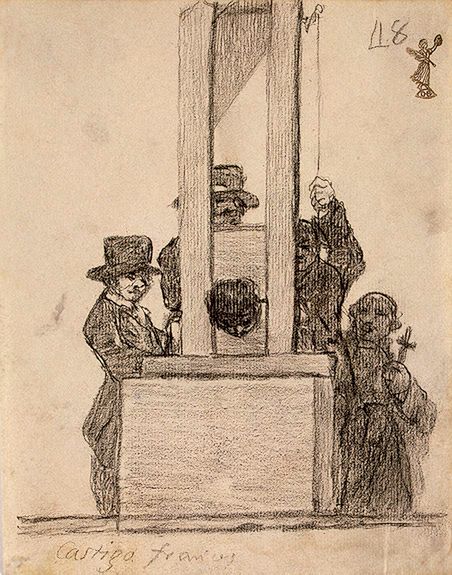
someone sell me a guillotine (anywhere just give it to me)
will you just give me a damn guillotine jESUS CHRIST
Thom Andersen analyzing Hollywood’s puzzling penchant for equating Los Angeles’ glorious Modernist architecture with villainy.
Tags: Thom Andersen
Boids playing ping-pong, via B.F. Skinner.
Tags: B.F. Skinner

Calculator and computer legend Jack Tramiel just passed away. His name isn’t as well known as Jobs or Gates, but it should be recalled that his Commodore 64, which came to the market in 1982, was the Model T of home computing, introducing zeros and ones into home addresses. In this 1977 video, a host presents the Commodore PET, a gorgeous machine that was ahead of its time.
Commodore’s Mini-Slide Rule, 1973:

Tags: Jack Tramiel
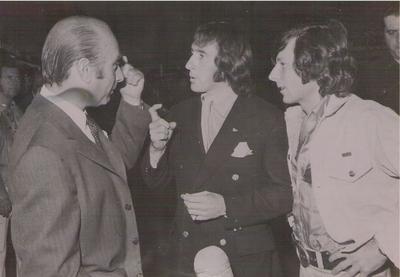
“The machine cannot lie,” said Leland Stanford, but racer Jackie Stewart knew that humans certainly could–especially to themselves–as he discusses his elaborate preparations for Monaco in 1972 with his good friend, yes, Roman Polanski.
Charlotte Moorman models Nam June Paik’s “TV-Bra for Living Sculpture,” 1969.
Tags: Charlotte Moorman, Nam June Paik

A 1980 news report introducing the computerized synthesizer, the Fairlight CMI, which was used righteously by those experimenters Herbie Hancock and Peter Gabriel, among others. Not just going electric, but going digital.
Stunt cyclist Evel Knievel, destined for amazing fame but just an opening act at this point, makes his debut on Wide World of Sports in 1967.
Tags: Evel Knievel
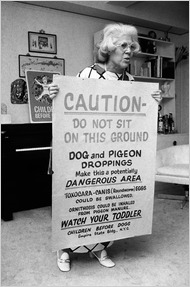
Difficult to believe that it’s only since 1978 that NYC dog owners have been legally required to clean up after their pets. Before then, canines were free to crap all over the sidewalk and street. Poop everywhere. We were seriously that unsophisticated and unhygenic that recently. What disgusting things are we brainlessly doing now that should really stop?
In 1972, so-called Pooper-Scooper Law lady Fran Lee took to the airwaves to point out that we were huge slobs. She was a little batty, but she was right. Good on her. Gil Noble, the pioneering African-American TV journalist who recently passed away, held on for dear life while conducting the interview.
Fran Lee died in 2010 at age 99. From her New York Times obituary: “Though Ms. Lee was best known for her work on dog effluence (in 1972, The New York Times called her ‘New York’s foremost fighter against dog dirt’), she had been a crackling presence on city and national airwaves long before then.
On a string of programs and under a series of names – Mrs. Fix-It, Mrs. Consumer, Granny Franny – Ms. Lee advised radio and television audiences on household and consumer issues from the late 1940s until well into the ’90s. Her purview ranged from cyclamates to asbestos to how to make a candle from a sausage. (Add a wick and light; the pervasive fat does the rest.)
In the late 1960s and early ’70s Ms. Lee was seen regularly on two New York stations, Channel 5 (then WNEW) and Channel 11 (WPIX). She was also a frequent guest on many national programs, including The Tonight Show, The Mike Douglas Show and The Steve Allen Show, where she once taught Mr. Allen to transform a worn-out sweater into a bikini.”

Our every effort today is, in fact, recorded, collated and analyzed. Optimized, in some ways. But the process started long ago, with those attentive algorithms. Our cards were being punched but so were our tickets.
The Remington-Rand Univac at your service, 1952:
Mike Wallace was as good a TV interviewer as there ever was, though some of his work was done for shock value. His passive-aggressive 1979 takedown of Ayatollah Khomeini was one for the ages, but the To Catch a Predator-level of network trash that sprang from his ambush journalism is also part of his legacy. To his credit, Wallace knew he had crossed a line with the candid camera tricks and retreated into what he did best, which was looking into the eyes of other human beings, some of whom had titanic egos, and asking that question.
A legendary non-60 Minutes interview was his exchange with Ray Bradbury the night men landed on the moon:
One of Wallace’s failures was his sanctimonius dismissal of David Frost in 1977, just before the broadcast of the latter’s damning Nixon interviews, an example of checkbook journalism that paid off handsomely:
Tags: David Frost, Mike Wallace, Ray Bradbury
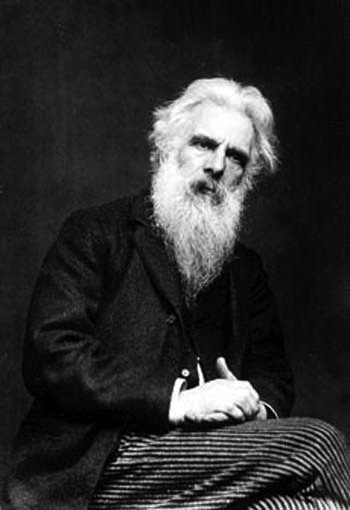
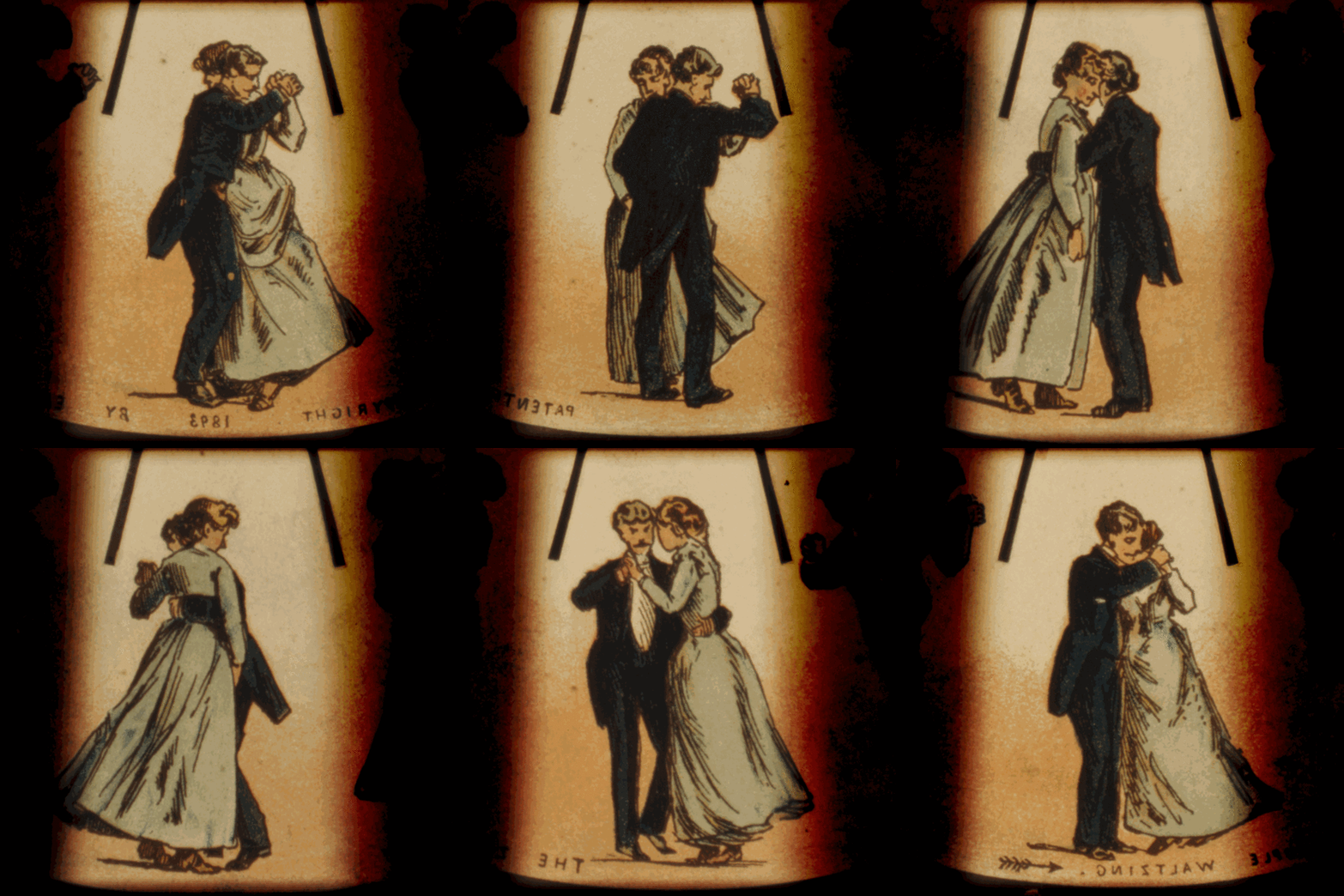
Photographer and locomotion pioneer Eadweard Muybridge, who miraculously made still photographs dance and gallop, was born on April 9th 182 years ago. He’s celebrated by a Google Doodle.
From Thom Andersen’s 1975 documentary, Eadweard Muybridge, Zoopraxographer:
In 1874, Muybridge shot and killed his wife’s lover, Harry Larkyns, in a crime of passion. He was acquitted and his wife succumbed to a stroke soon thereafter. The baby born of the extramarital affair was raised in an orphanage. From Stanford Magazine: “THE OPERATIC EPISODE began on October 17, 1874, when Muybridge discovered his wife’s adultery. In 1872, he had married a 21-year-old divorcée named Flora Stone. When she bore a son in the spring of 1874, Muybridge believed that the child, Floredo Helios Muybridge, was his own–until he came across letters exchanged between Flora and a drama critic named Harry Larkyns. The most damning evidence was a photo of Floredo enclosed with one of the letters: Flora had captioned it ‘Little Harry.’
Convinced he’d been cuckolded, Muybridge collapsed, wept and wailed, according to a nurse who was present. That night, he tracked Larkyns to a house near Calistoga and shot him through the heart.
At his murder trial in 1875, the jury rejected an insanity plea but accepted the defense of justifiable homicide, finding Muybridge not guilty of murder. After the acquittal, Muybridge sailed for Central America and spent the next year in ‘working exile.’“