
Urban Studies

You are currently browsing the archive for the Urban Studies category.

Has the rise of the machines made widespread enployment in America a thing of the past? That’s the question Douglas Rushkoff asks at the CNN site. An excerpt:

“New technologies are wreaking havoc on employment figures — from EZpasses ousting toll collectors to Google-controlled self-driving automobiles rendering taxicab drivers obsolete. Every new computer program is basically doing some task that a person used to do. But the computer usually does it faster, more accurately, for less money, and without any health insurance costs.

We like to believe that the appropriate response is to train humans for higher level work. Instead of collecting tolls, the trained worker will fix and program toll-collecting robots. But it never really works out that way, since not as many people are needed to make the robots as the robots replace.

And so the president goes on television telling us that the big issue of our time is jobs, jobs, jobs — as if the reason to build high-speed rails and fix bridges is to put people back to work. But it seems to me there’s something backwards in that logic. I find myself wondering if we may be accepting a premise that deserves to be questioned.

I am afraid to even ask this, but since when is unemployment really a problem? I understand we all want paychecks — or at least money. We want food, shelter, clothing, and all the things that money buys us. But do we all really want jobs?

We’re living in an economy where productivity is no longer the goal, employment is. That’s because, on a very fundamental level, we have pretty much everything we need. America is productive enough that it could probably shelter, feed, educate, and even provide health care for its entire population with just a fraction of us actually working.”

••••••••••

“All with the push of a button”:

Tags:

Misphonia is a condition which causes the sufferer to feel rage and panic when they hear mouth sounds, like those caused by eating and drinking. It can be socially isolating, of course. From a New York Times article about the affliction by Joyce Cohen:

“He believes the condition is hard-wired, like right- or left-handedness, and is probably not an auditory disorder but a ‘physiological abnormality’ that resides in brain structures activated by processed sound.

There is ‘no known effective treatment,’ Dr. Moller said. Patients often go from doctor to doctor, searching in vain for help.

Dr. Johnson agreed. ‘These people have been diagnosed with a lot of different things: phobic disorders, obsessive-compulsive disorder, bipolar, manic, anxiety disorders,’ she said.

Dr. Johnson’s interest was piqued when she saw her first case in 1997. ‘This is not voluntary,’ she said. ‘Usually they cry a lot because they’ve been told they can control this if they want to. This is not their fault. They didn’t ask for it and they didn’t make it up.’ And as adults, they ‘don’t outgrow it,’ she said. ‘They structure their lives around it.’

Taylor Benson, a 19-year-old sophomore at Creighton University in Omaha, says many mouth noises, along with sniffling and gum chewing, make her chest tighten and her heart pound. She finds herself clenching her fists and glaring at the person making the sound.

‘This condition has caused me to lose friends and has caused numerous fights,’ she said.” (Thanks Marginal Revolution.)

Tags:

In 1979, an earnest Merv Griffin interviews Kathleen and George Lutz, the Long Island couple at the heart of the Amityville Horror hokum.

Tags: , ,

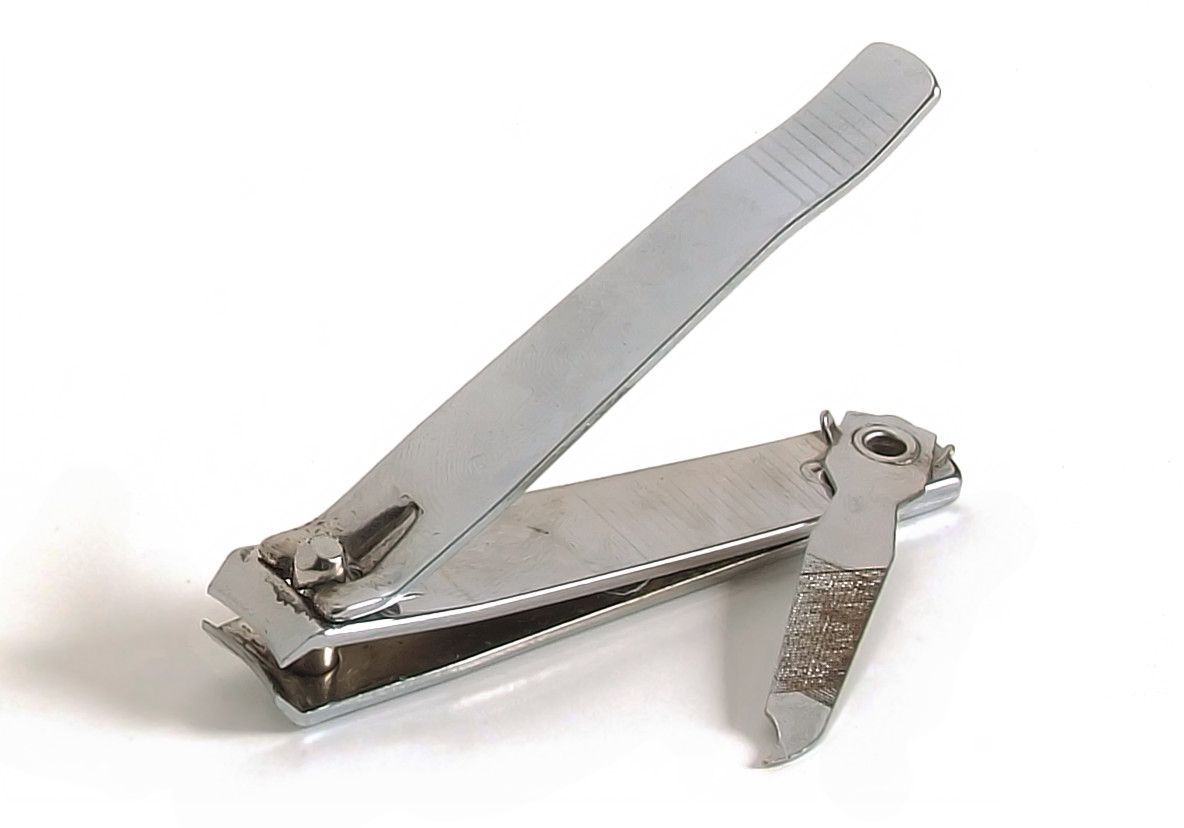
"CLIP CLIP CLIP CLIP SNIP SNIP." (Image by Iain.)

I think I’d like to clip my nails on the train! (Midtown West)

I’m gonna go do that! That sounds like fun! You can all suck my dick! CLIP CLIP CLIP CLIP SNIP SNIP. Can’t you just hear it now. I’m gonna fart while I’m doing this. God, I’m gonna eat sooooo much chili tonight before tomorrow’s big day!

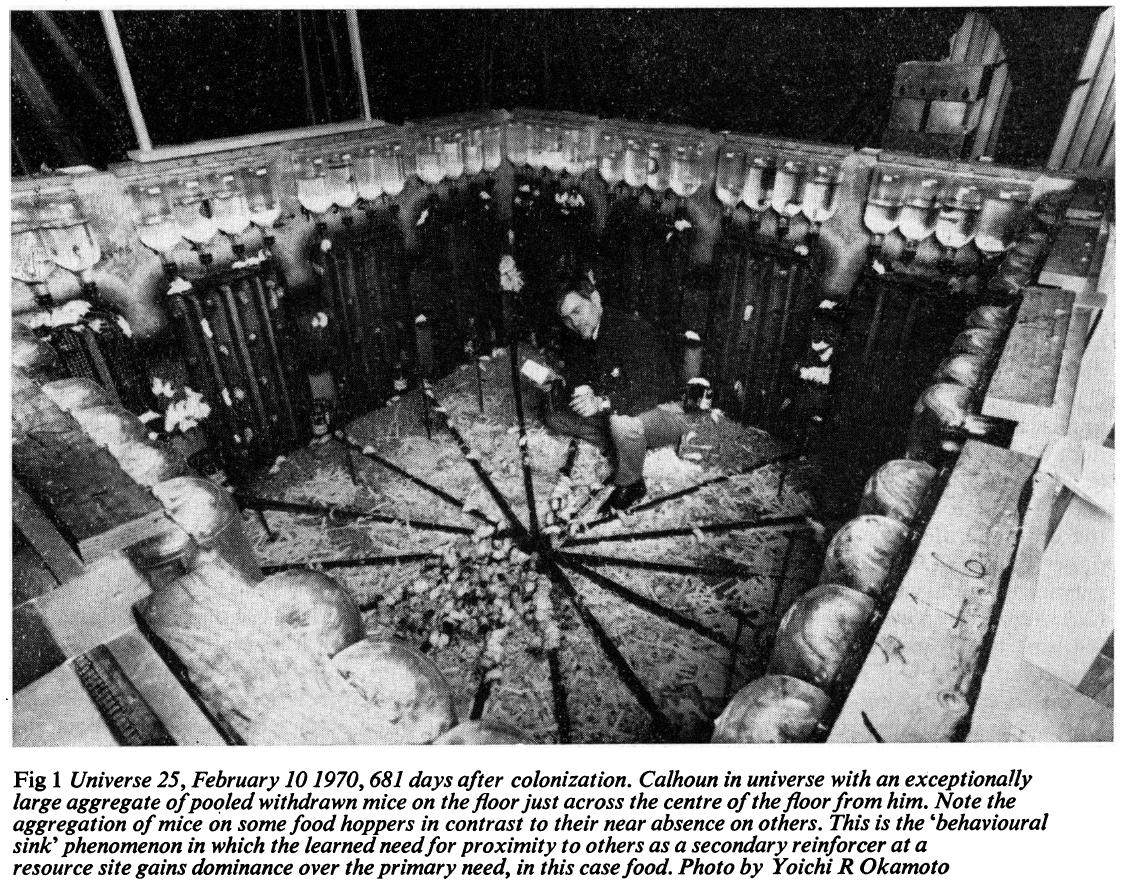
In Cabinet, Will Wiles recalls the work of John B. Calhoun, a scientist who used rodents to study the effects of overpopulation. Despite Malthusian hand-wringing, population density seems to be a good thing overall for humans. An excerpt:

“So what exactly happened in Universe 25? Past day 315, population growth slowed. More than six hundred mice now lived in Universe 25, constantly rubbing shoulders on their way up and down the stairwells to eat, drink, and sleep. Mice found themselves born into a world that was more crowded every day, and there were far more mice than meaningful social roles. With more and more peers to defend against, males found it difficult and stressful to defend their territory, so they abandoned the activity. Normal social discourse within the mouse community broke down, and with it the ability of mice to form social bonds. The failures and dropouts congregated in large groups in the middle of the enclosure, their listless withdrawal occasionally interrupted by spasms and waves of pointless violence. The victims of these random attacks became attackers. Left on their own in nests subject to invasion, nursing females attacked their own young. Procreation slumped, infant abandonment and mortality soared. Lone females retreated to isolated nesting boxes on penthouse levels. Other males, a group Calhoun termed ‘the beautiful ones,’ never sought sex and never fought—they just ate, slept, and groomed, wrapped in narcissistic introspection. Elsewhere, cannibalism, pansexualism, and violence became endemic. Mouse society had collapsed.” (Thanks Longreads.)

••••••••••

Ratsploitation, 1972:

Tags: ,

The advent of cashless transactions, 1969.

Jacqueline Mroz has an interesting article in the New York Times about a single sperm donor siring 150 children. Having so many kids from the same sperm donor living in close proximity to one another causes complications, as you might expect. An excerpt: 

“As more women choose to have babies on their own, and the number of children born through artificial insemination increases, outsize groups of donor siblings are starting to appear. While Ms. Daily’s group is among the largest, many others comprising 50 or more half siblings are cropping up on Web sites and in chat groups, where sperm donors are tagged with unique identifying numbers.

Now, there is growing concern among parents, donors and medical experts about potential negative consequences of having so many children fathered by the same donors, including the possibility that genes for rare diseases could be spread more widely through the population. Some experts are even calling attention to the increased odds of accidental incest between half sisters and half brothers, who often live close to one another.

‘My daughter knows her donor’s number for this very reason,’ said the mother of a teenager conceived via sperm donation in California who asked that her name be withheld to protect her daughter’s privacy. ‘She’s been in school with numerous kids who were born through donors. She’s had crushes on boys who are donor children. It’s become part of sex education’ for her.”

Tags:

Karen Carpenter, placid on the outside but tormented beneath the surface, performs a hit with her brother, Richard, for David Frost, 1970.

Todd Haynes’ 1983 cult classic, “Superstar: The Karen Carpenter Story”:

Tags: , ,

"Its owner had taught it to fire a pistol while galloping on the back of a dog."

The most ridiculous thing I have ever read was published in the June 29, 1889 edition of the Brooklyn Daily Eagle. The story in full:

“A correspondent writing to a Paris contemporary from Montriebard, in the department of Lois et Cher, says: ‘A learned monkey named Bertran was deeply attached to its owner, who among other tricks, had taught it to fire a pistol while galloping on the back of a dog. The master of the animal, it seems, lately met with certain domestic troubles and, in a dejected frame of mind a few days ago, he sent a bullet through his head, death being instantaneous. The monkey was present at the death of his master, and probably took in every particular. In any case,when a doctor was called in to see if life was extinct in the man he was astonished to find himself in presence of a double suicide, the monkey’s body being stretched beside that of his master, with the revolver being clasped between his fingers. It is stated that the animal picked up the pistol after his master had blown out his brains, and imitated what he had just seen done, sending a bullet through his head precisely as the man had done.'”

Tags:

Margaret Mead commenting on speeded-up America in Life in 1968, remarks that seem even more applicable in our time:

“There is tremendous confusion today about change. This isn’t surprising because people are living in a period of the fastest change the world has ever known. Young people have been confronted with the changes, but at the same time they have no sense of history and no one has been able to explain to them what has happened. We are always very poor at teaching the last 25 years of history. Adults have been shrieking about the fact that great newnesses are here but they are not talking about what the newnesses are.”

••••••••••

“Trance And Dance In Bali,” by Margaret Mead and Gregory Bateson, 1939:

Tags:

Dennis Hopper interviewed by David Brenner in 1986, just as David Lynch released his masterpiece, Blue Velvet, which would lead to a career renaissance for the actor. Hopper was married for a few years to Daria Halprin.

Tags: , ,

"Pass it on."

ARMAGEDDON IS IT COMIG ? (GLOBAL)

IS THE END OF THE WORLD AS WE KNOW IT COMING ? WHETHER YOU ARE A BELIVER OR NOT GO TO OUR WEBSITE AND PUT YOUR LEGACY AWAY IN OUR TIMECAPSULE PASS IT ON

Alternet has an article by Tana Ganeva about creepy new uses for facial recognition technology. An excerpt:

“In the fall, police officers from 40 departments will hit the streets armed with the Mobile Offender Recognition and Information System (MORIS) device. The gadget, which attaches to an iPhone, can take an iris scan from 6 inches away, a measure of a person’s face from 5 feet away, or electronic fingerprints, according to Computer vision central. This biometric information can be matched to any database of pictures, including, potentially, one of the largest collections of tagged photos in existence: Facebook. The process is almost instant, so no time for a suspect to opt out of supplying law enforcement with a record of their biometric data.

Lee Tien of the Electronic Frontier Foundation told AlterNet that while it’s unclear how individual departments will use the technology, there are two obvious ways it tempts abuse. Since officers don’t have to haul in an unidentified suspect to get their fingerprints, they have more incentive to pull people over, increasing the likelihood of racial profiling. The second danger lurks in the creation and growth of personal information databases. Biometric information is basically worthless to law enforcement unless, for example, the pattern of someone’s iris can be run against a big database full of many people’s irises.”

••••••••••

“It’s getting better all the time”:

Tags: ,

Allen Ginsberg shares an LSD-inspired poem with William F. Buckley in the first video. Buckley entertains a drunk Jack Kerouac in the second clip.

More William F. Buckley posts:

Tags: , ,

In 1985, Barbara Walters interviewed infamous society spouse Claus von Bülow, who married well though his wife did not. One odd thing: Walters was made up like Tammy Faye Bakker. Did female reporters on TV in the ’80s always wear such heavy make-up?


Shockingly, Vanity Fair squeezed in a story or two about the lurid case of heiress Sunny von Bülow. From Dominick Dunne’s 1985 article,Fatal Charm: The Social Web of Claus von Bülow“: 

From the beginning, the von Bülow proceedings, legal and otherwise, had had an air of unreality about them. His once beautiful wife was one of the country’s richest heiresses. His stepchildren were a prince and princess. His daughter was a disinherited teenager. His former mistress was a socialite actress. His current lady friend was a thrice-married Hungarian adventuress who was not the countess she was often described as being. The maid who testified against him had once worked for the Krupps. And lurking darkly in the background was a publicity-mad con man bent on destroying him.

The apartment of Sunny von Bülow, even by Fifth Avenue standards, is very grand. Located in one of the most exclusive buildings in New York, its current market value is estimated by one of the city’s top realtors at nearly $8 million. Although a sophisticated friend of von Bülow’s complained that the forty-foot drawing room has ‘far, far too many legs,’ it should be pointed out that the legs are by Chippendale and of museum quality, as is nearly every object in the fourteen-room apartment looking down on Central Park.

According to the terms of Sunny von Bülow’s will, the apartment will go to von Bülow when she dies. So will Clarendon Court, the fabulous mansion set on ten acres overlooking the sea in Newport, Rhode Island, where her two comas took place during successive Christmas holidays, in 1979 and 1980. So will $14 million of her $75 million fortune. In the meantime the maintenance on the apartment is paid for by Sunny’s estate, so in effect von Bülow and his self-proclaimed mistress, Andrea Reynolds, have been largely supported by his comatose wife since his conviction in 1982 for her attempted murder. That verdict was overturned on appeal because certain materials had been withheld from the defense and others had been improperly admitted as evidence.•

Tags: , , ,

Steve Jobs was wary of technology in the classroom when he was asked about the topic in 1993, and now schools decked out with the latest tech teaching tools are so far seeing stagnant test scores. Are our measurements of educational growth lacking and passé or is the problem with our schools (and ourselves) something that can’t be remedied by bytes and bots? An excerpt from a piece on the topic by Matt Richtel in the New York Times:

“CHANDLER, Ariz. — Amy Furman, a seventh-grade English teacher here, roams among 31 students sitting at their desks or in clumps on the floor. They’re studying Shakespeare’s As You Like It — but not in any traditional way.

In this technology-centric classroom, students are bent over laptops, some blogging or building Facebook pages from the perspective of Shakespeare’s characters. One student compiles a song list from the Internet, picking a tune by the rapper Kanye West to express the emotions of Shakespeare’s lovelorn Silvius.

The class, and the Kyrene School District as a whole, offer what some see as a utopian vision of education’s future. Classrooms are decked out with laptops, big interactive screens and software that drills students on every basic subject. Under a ballot initiative approved in 2005, the district has invested roughly $33 million in such technologies.”

••••••••••

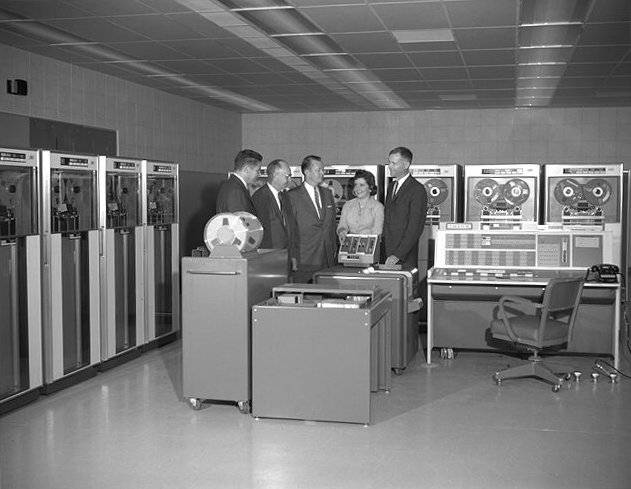
A computer in a British school in 1969:

Tags: ,

"We know that this isn't like selling a purse."

Looking for eggs or sperm??

Hello.. My fience and I are a young couple who needs help financially and is willing to help another couple bare a child. I am a 22 yr old healthy Latin American female I am willing to sell my eggs. My fience is a 25 yrs old healthy latin American male willing to sell sperm. We know that this isn’t like selling a purse or something simple like that but we would go through all the steps of accomplishing your dreams in helping you in a birth of a child.. If you like to contact us please email us and we will get back to you asap. Thank you Johnny and Virginia 

F. Lee Bailey, one of the first celebrity lawyers of the TV era, who was involved in the Sam Sheppard, Patty Hearst and O.J. Simpson trials, among others, talks to questionable interlocutor Joe Pyne, in 1966. 

Tags: ,

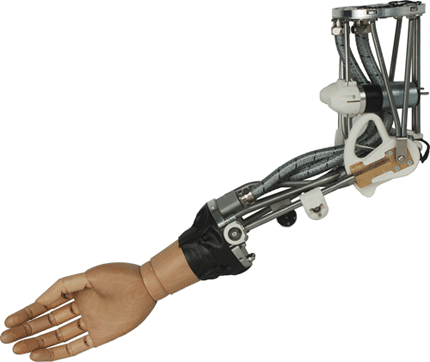
Good piece by Jonathan Newton in the Washington Post about the arm operation known as Tommy John Surgery. The procedure, created by Dr. Frank Jobe, was first performed in 1974 on the pitcher for whom it was named. The article gets to the heart of just how experimental the ligament-reconstruction procedure was when John went under the knife, and explains what changes to the operation have reduced risk. An excerpt:

“When Jobe operated, he sliced John’s elbow wide open and moved the ulnar nerve in order to reach the bone. He took a tendon from a cadaver’s leg and attached it with screws. Then he hoped John’s body would react favorably and the tendon would serve the same role as the ligament.

‘We didn’t really know whether we could do it or not,’ Jobe said. ‘We didn’t know whether we could heal it or not. We didn’t know whether a tendon would be accepted by the body and receive blood supply and become part of the body.’

Jobe and John waited. John did not throw a ball again for 16 weeks. Jobe decided he should not pitch in a major league game again until one year of rigorous rehab. Every step of the way, the recovery unfolded as Jobe hoped. John returned in 1974, and in seven of the next eight seasons he threw more than 200 innings.

‘I would never have thought it would happen,’ Jobe said. ‘I didn’t do it again for another two years. After another year or so, I had a couple successes. I thought, This may be something we ought to use a little more routinely.”

••••••••••

Elton John (no relation) performs at Dodger Stadium in 1975, the year Tommy John couldn’t pitch for L.A. as he recuperated from surgery:

Tags: , ,

A writer waltzes into a Paris hospital and asks a doctor to act incredibly unethically and the medico eagerly complies, as reported in an article in the February 1, 1893 issue of the Brooklyn Daily Eagle, which was originally published in the Pall Mall Gazette. An excerpt:

“The other day I wanted to include in a page of fiction a realistic description of the agonies that a starving person undergoes before death puts an end to the suffering. I had consulted several doctors and obtained from them statements of the symptoms preceding death from starvation. Still, I felt a description based on such information was wanting in certain particulars and could not well be put into the mouth of a supposed sufferer. Suddenly it occurred to me to go to the Hospital de la Charite, and beg the doctors attached to the Clinique Hypnotherapique to hypnotize one of the patients, to suggest that she was starving, and then to allow me to write down the sensations experienced by the subject as she described them. I called at the hospital unexpectedly and explained the object of my visit. The doctor smiled, and without a word sent for a patient, who was immediately put into a hypnotic state. Nothing passed between the doctor and the subject before she was hypnotized.

It was then suggested to her that she had been without food for many days and was actually starving. The patient soon showed signs of great suffering and distress and at the doctor’s invitation described the sensations she felt. I was astounded. A symptom that I had noticed in scores of cases among the starving Russian peasants last winter was described by the hypnotized woman with a physical movement familiar to me, although I had entirely forgotten it, and my attention had not been called to it by any medical man consulted.

The patient was taken by suggestion progressively through the stages of starvation as far as was safe  and was afterward brought back to a normal state on it being suggested to her that she had swallowed nourishing food. Still, it was some time before the food she had taken in imagination seemed to benefit her; she persisted in declaring that it caused her a great deal more bodily pain than the pangs of hunger. Dr. Jules Luys, member of the Academy of Medicine, the eminent professor at the Charite, was greatly interested in the result of this experiment, which was carried out for me under the observation of Dr. Encausse, his chief of the laboratory. He told me afterwards that he had known this woman for many years and was sure that she had not suffered from hunger.”

From “Lost in the Supermarket,” David Mattin’s attempt to make sense of the recent London riots, published today at the Los Angeles Review of Books:

“Now, two weeks on, Britain is puzzling over what has happened. In the sound of the metropolitan British middle-class — the politicians, the columnists, the activists — trying to explain these riots to each other, there can be discerned a strange, schizophrenic mixture of anger and uncertainty, a frustrating inability to get much beyond first principles. What caused these riots? What do the people who participated in them want? What do they tell us about the country in which we live? What, in short, do the riots mean? 

Across the last two weeks, these questions have been the subject of much talk; they can accommodate so much talk because their answers are so elusive. Even the left’s best attempt to imbue the riots with a meaning — the argument that contends that they were an expression of inchoate anger at the current austerity, and the mismanagement that brought us to it — is, on close examination, not satisfactory. And that is because there is a sense in which the English riots of 2011 mean nothing at all. Nothing, at least, to the people who participated in them. Which is what makes them so uniquely frightening, and problematic. “

Tags:

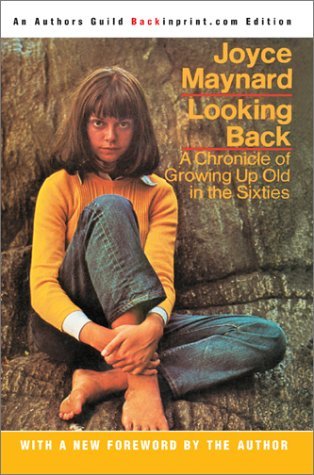
In 1972, with the cover story “An 18-Year-Old Looks Back On Life,” the New York Times Magazine got into generation-defining business, with the aid of precocious writer Joyce Maynard, a representative of the first American generation to have been raised by that glowing picture tube in the living room and to have taken space-age technology for granted. For Maynard, the article spawned a book and a romantic relationship with the Garbo-ish author J.D. Salinger. She became something of a scorned figure in American Letters, perhaps seeming to have gotten too much too soon. The opening of her famous (and infamous) Times piece:

“Every generation thinks it’s special–my grandparents because they remember horses and buggies, my parents because of the Depression. The over-30’s are special because they knew the Red Scare of Korea, Chuck Berry and beatniks. My older sister is special because she belonged to the first generation of teen-agers (before that, people in their teens were adolescents), when being a teen-ager was still fun. And I–I am 18, caught in the middle. Mine is the generation of unfulfilled expectations. “When you’re older,” my mother promised, “you can wear lipstick.” But when the time came, of course, lipstick wasn’t being worn. “When we’re big, we’ll dance like that,” my friends and I whispered, watching Chubby Checker twist on “American Bandstand.” But we inherited no dance steps, ours was a limp, formless shrug to watered-down music that rarely made the feet tap. “Just wait till we can vote,” I said, bursting with 10-year-old fervor, ready to fast, freeze, march and die for peace and freedom as Joan Baez, barefoot, sang “We Shall Overcome.” Well, now we can vote, and we’re old enough to attend rallies and knock on doors and wave placards, and suddenly it doesn’t seem to matter any more.

My generation is special because of what we missed rather than what we got, because in a certain sense we are the first and the last. The first to take technology for granted. (What was a space shot to us, except an hour cut from Social Studies to gather before a TV in the gym as Cape Canaveral counted down?) The first to grow up with TV. My sister was 8 when we got our set, so to her it seemed magic and always somewhat foreign. She had known books already and would never really replace them. But for me, the TV set was, like the kitchen sink and the telephone, a fact of life.

We inherited a previous generation’s hand-me-downs and took in the seams, turned up the hems, to make our new fashions. We took drugs from the college kids and made them a high-school commonplace. We got the Beatles, but not those lovable look-alikes in matching suits with barber cuts and songs that made you want to cry. They came to us like a bad joke–aged, bearded, discordant. And we inherited the Vietnam war just after the crest of the wave–too late to burn draft cards and too early not to be drafted. The boys of 1953–my year–will be the last to go.

So where are we now? Generalizing is dangerous. Call us the apathetic generation and we will become that. Say times are changing, nobody cares about prom queens and getting into the college of his choice any more–say that (because it sounds good, it indicates a trend, gives a symmetry to history) and you make a movement and a unit out of a generation unified only in its common fragmentation. If there is a reason why we are where we are, it comes from where we have been.”

••••••••••

Maynard queried by that handsome, world-weary robot Charlie Rose, 1998:

Trailer for To Die For, the 1995 film adapted from a Maynard book:


Tags: ,

"Think of me as an organizer of fun."

problem solver??? this is for you! (Midtown)

I am born and raised in NY I live and breath NY. Nothing is home like walking around Manhattan. Well for the reason for the ad. I’be been unemployed for sometime now and not sure if I’m willing to get back in the rat race again looking for something more life satisfying. Really taking a good look at my desires and abitities and come to a few conclusions. Life is way to short and if not everyone most people feel like their in whole you just can’t escape. I want to make your goals my goals. I know tons of talented and not so talented people but we all have a talent we excell at. For me I love people the more time andvariety of personalities I reach the more fulfilled I fell. I want to hear from you let me know what you would like out of life and I want to help from the mundane to the crazy 1 hour 1 NIGHT a trip with a friend. 

Don’t misunderstand I will not perform any services myself. What I’m asking is maybe to have lunch ill pay I want to hear your fantasy and help you follow thru and ill put all the players to action.

You have a party, anniversary, looking to propose I’ll make you feel like the star you should be. 

Want to hang with friends have a exotic night,male, female, gay, bi, swingers just a regular man/women and not sure how to get what you want. 

I know how I’m in NYC and NJ I want to help you go to that place that you feel fulfilled and satisfied place. I don’t bite I’m not joking and it wont cost you to email and start some dialogue with me its free worst case you’ll meet a straight forward visionary who sees everyone as a person with desires just like me.

From the thug in the street to the matrede in the finest restaurant if I don’t know them I have a friend that will. Limos, boat rides, house party, DJ’s clubs, restaurants, strippers, you name it call me? I can only handle sooooo much need to shuffle thru the talkers to find some real honest people out there. By the way this is not free think of me as an organizer of fun. I want to hear from you. Tourist welcome I would also like to see real NYers like myself. Also always looking to meet new friends and associates email me with your talents and Lets talk.

I’m currently working with a limo company that has alot of there vehicles sitting Monday thru Thursday and will put together interesting treats for those days so if you have a restaurant, hall or room in manhaattan contact me I have some potential business for you Lets talk. 

The mass-market paperback has understandably passed into obsolescence, thanks to the inexpensive e-book. Mixed in with all the dross that was published were undervalued genre works that introduced a lot of young people to reading. An excerpt from a story about the dying dead-tree edition from Julie Bosman in the New York Times

“A comprehensive survey released last month by the Association of American Publishers and the Book Industry Study Group revealed that while the publishing industry had expanded over all, publishers’ mass-market paperback sales had fallen 14 percent since 2008.

‘Five years ago, it was a robust market,’ said David Gernert, a literary agent whose clients include John Grisham, a perennial best seller in mass market. ‘Now it’s on the wane, and e-books have bitten a big chunk out of it.’

Fading away is a format that was both inexpensive and widely accessible — thrillers and mysteries and romances by authors like James Patterson, Stephen King, Clive Cussler and Nora Roberts that were purchased not to be proudly displayed on a living room shelf (and never read), but to be addictively devoured by devoted readers.”

Tags:

In 1976, Dinah Shore interviews Michael Jackson, already a gigantic star but several years before he turned out his twin solo masterpieces, Off The Wall and Thriller. 

Promo at the end for the following day’s program: “Don’t miss tomorrow’s show when Dinah welcomes a new opponent for Muhammad Ali, Japan’s heavyweight wrestling champion, Antonio Inoki. Also on hand will be good ol’ boy Eddy Arnold, Mort Sahl and Gary Burghoff–you know, Radar from M*A*S*H. So be watching tomorrow afternoon at 3:30.”

Tags: ,

« Older entries § Newer entries »