
Urban Studies

You are currently browsing the archive for the Urban Studies category.

In the wake of Steve Jobs’ death, his Apple cofounder Steve Wozniak talked to journalist Dan Lyons. In this segment, Woz recalls the early years:

How did you and Steve come up with the idea for the first Apple product, the Apple I?

Oh, a lot of people saw the Apple I before Steve Jobs even knew about it. I was in the Homebrew Computer Club. Steve was up in Oregon, working at an orchard, in a commune. We were really not in touch. But I got inspired to help this revolution. People in our club thought the personal computer would affect everyone’s life. We thought everyone would have a little computer, a little thing with switches and weird numbers on it, and people would learn to program to operate a computer. We didn’t think it would be normal stuff like it turned out to be.

I never wanted to run a business. I had a perfect job for life at HP. I went to club meetings every week and I passed out my schematics for the Apple I, no copyright, nothing, just, “Hey all you guys here is a cheap way to build a computer.” I would demo it on a TV set.

Then Steve Jobs came in from Oregon, and he saw what the club was about, and he saw the interest in my design. I had the only one that was really affordable. Our first idea was just to make printed circuit boards. We could make them for 20 dollars and sell them for 40 or something like that. I had given the schematics away. But Steve thought it could be a company.

This was actually our fifth product together. We always were 50-50 partners. We were best friends. We first did the blue boxes. The next one I did was I saw Pong at a bowling alley so I built my own Pong with 28 chips. I was at HP designing calculators. Steve saw Pong and ran down to Atari and showed it to them and they hired him. Whether they thought he had participated in the design, I don’t know and I could not care less. They offered him a job and put him on the night shift. They said he doesn’t get along with people very well, he’s very independent minded. It rubbed against people. So they put him on the night shift alone.

Our next project was when Steve said that Nolan (Bushnell, head of Atari) wanted a one-player game with bricks that you hit out. He said we could get a lot of money if we could design it with very few chips. So we built that one and got paid by Atari.

The legend is that Steve cheated you out of some money on that deal.

The legend is true. It didn’t matter to me. I had a job. Steve needed money to buy into the commune or something. So we made Breakout and it was a half-man-year job but we did it in four days and nights. It was a very clever design.” (Thanks Browser.)

Super Breakout, 1978;

Tags: , ,

"The three men overtook McHugh, knocked him down, kicked him, beat him, and ended by slashing him across the face with a knife."

You couldn’t walk down the street in the 19th century without getting waylaid, as evidenced by the following trio of articles from the Brooklyn Daily Eagle.

•••••••••••

“An Italian Music Teacher Almost Murdered” (August 17, 1874): “On Wednesday evening last Mr. Antonio Lopez, a teacher of the guitar, was waylaid and feloniously assaulted by Edward Hanger, who is a printer employed on the New York Herald. The affair took place in Sands Street, near Hudson Avenue, and the weapon used was a loaded cane with which the assailant approached his intended victim stealthily from behind. Jealousy seems to have been at the bottom of the matter, and there is scarcely any doubt but that Hanger intended to kill the music teacher. Lopez had a lady hanging on each arm at the time of the assault, both of them being pupils, and as his assailant approached him, turned to see who it was and thus the blow intended for his skull was received with terrible force on the left temple. It staggered him, and he fell upon the sidewalk in a faint, and a stream of blood from the wound flowed freely. His companions were greatly alarmed and screamed loudly, and a man on the opposite side who had witnessed the assault, at once raised the cry of ‘police,’ which quickly brought to the place Officer Dougherty, of the Second Precinct, who had been patrolling the block above. In the interval the printer had run off in the direction of High Street and endeavored to escape, but this he was not able to do, as the stranger who had seen his actions kept close behind him and pointed him out to the officer, who arrested him just as he was entering the house No. 143 High Street.

Lopez was conveyed to the Station House in Jay Street and Dr. Hemiston summoned, who dressed the wound, and did not, at the time, think it a dangerous one.”

••••••••••

“Night Watchman McHugh Waylaid on John Street” (June 14, 1902): “James McHugh, the night watchman of the city dump at the foot of Gold Street, was beaten and robbed on John Street, near Gold, last night about 10 o’clock, while on his way to work. Three men, representative toughs, who infest that neighborhood, asked McHugh for the price of a drink. He gave them 15 cents, and in doing so thoughtlessly exhibited a small roll of $1 and $2 bills. The men grabbed for the roll, and McHugh started down John Street, running and crying, ‘Police!’ ‘Murder!’

Of course, no wide awake policeman was in two blocks of the place, and the three men overtook McHugh, knocked him down, kicked him, beat him, and ended by slashing him across the face with a knife. They took his roll of money, $8, and walked away. The police didn’t know anything about the robbery until a long while afterward.”

••••••••••

"Upon examination it was found that the man's skull was crushed."

“Waylaid and Robbed” (October 10, 1893): “Charles Goldberg, a Willets Point soldier, was waylaid and robbed on Bayside Road, a small thoroughfare leading to the fort, yesterday afternoon. He was found lying in the street in an unconscious condition and was taken to the Flushing Hospital, where upon examination it was found that the man’s skull was crushed. He died in great agony shortly after his arrival there. Goldberg was 20 years old. Coroner Corey was notified and he has ordered a rigid investigation. Goldberg’s body was found not far from where the Pole, Schneider, was found last week with his skull fractured. He subsequently died in the Flushing Hospital. The police of Flushing are scouring the county for the men’s assailants.”

Tags: , , , , , , ,

From a 1997 Playboy Interview with Sen. Daniel Patrick Moynihan, in which he explains why religious fundamentalism became entrenched in contemporary American politics:

“Playboy: Fundamentalism is a big problem at home and abroad. Are you lobbied by the Christian right?

Moynihan: I will say this to you and if you can print it, do. Once a year the anti-abortion people come to Washington. They are the only people who come to see me. I shouldn’t say “only,” but they are the one group that comes to see me that doesn’t want anything other than to discuss a moral issue it’s concerned with. I might meet three or four other people a year like that, but not many. They’re the only working people I ever see. They come down by bus. They don’t go out to lunch at the mall. They just want to say they have a view of something. I’ve always voted against them.

Playboy: But the Christian right has other issues besides abortion. Some members say every word of the Bible is literally true and they want to impose their views on everyone else. The movement seems pretty important. Do you agree?

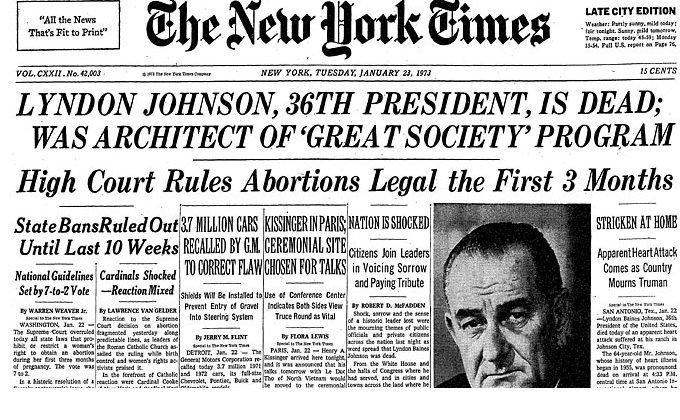
Moynihan: It is hugely important. And there’s nothing new about this. At different times in our history there have been very important political movements that were basically religious or concerned with matters of conscience. Abolition was one, out of which came the Republican Party. Prohibition was another. And abortion is a third. Roe vs. Wade just shook the conscience of a large segment of the American population, particularly the fundamentalist Protestants, who were quite content to live a life that didn’t have much politics in it. They didn’t have politics, they had their own religious concerns. Suddenly a matter of true import to them became the law of the land by a decision of the Supreme Court. And they thought, What is this? This has to change. And gradually they became a political force.

Playboy: Do you consider the Christian right dangerous?

Moynihan: No, good God. They’re the nicest people in the world if you leave their consciences alone. And if you don’t, it’s not the first time in history you get resentment. The Catholic Church is just as involved, but the Catholic Church has a wider agenda. In the way we are now using the word, the Catholic social doctrine is liberal. If you’re talking about minimum wage or something like that, they’re with you all the time.

Playboy: Do you feel you have to take the Christian right, creationism and all, into account?

Moynihan: Well, you’d better if you’re thinking to run for president.

Playboy: That makes them sound very powerful.

Moynihan: They are. We may lose our voting rights in the General Assembly because we passed a bill that would pay almost $1 billion in UN dues, but it included a provision that no money will go to any organization that performs abortions. The president has said he will veto the bill over that issue. If you go two years without paying your dues — which may happen if this impasse is not resolved — you can lose your voting rights in the General Assembly.

Playboy: This is bizarre.

Moynihan: Yeah. And it’s a big thing for us to lose our voting rights over something — over what?

Playboy: So a minority can make international policy?

Moynihan: The Southern Baptists aren’t exactly a minority. The Supreme Court is. And if nine people can say that something they find absolutely morally unacceptable is the law of the land, well, that makes people think.”

••••••••••

Moynihan discusses race, 1967:

Tags:

Why do I love airports so much? Because of the possibilities, the potential, the constant permutations of people? And I’m not alone.

A 1954 promotional film calling for the building of more American airports:

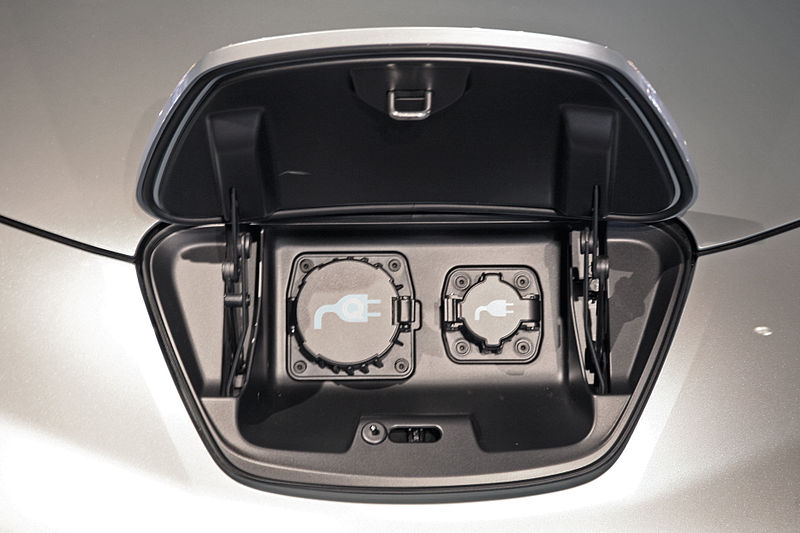
Engineering is never truly finished today as consumers continue to tinker with smart products to make them even smarter. From Bradley Berman’s smart piece in the New York Times:

“WITHIN weeks of when Nissan first began delivering the Leaf to buyers last December, do-it-yourselfers were looking for ways to make the new electric car — an engineering marvel from one of the world’s leading automakers — even better.

Among those who applied their 21st-century engineering skills to tinkering pursuits that date to the dawn of automobiles was Gary Giddings, 69, a retired engineer and a passionate supporter of electric vehicles.

‘At this point in my life, my goal is to spend whatever time I have trying to help E.V.’s become successful,’ Mr. Giddings said. He is using his Ph.D. in electrical engineering, earned at the University of California, Berkeley in the free-speech 1960s, to correct some of the Leaf’s shortcomings and to squeeze more performance out of it.”

••••••••••

Excellent Nissan Leaf ad by TBWA:

Tags: ,

There have been three notable third-party candidates for U.S. President in the past three decades: Ralph Nader, H. Ross Perot and John B. Anderson. The last of the three mounted a spirited campaign as alternative to Jimmy Carter and Ronald Reagan in 1980. He came away with almost 7% of the vote. A Republican from Illinois, he was a member of what is now an all-but-extinct breed: a cerebral and compassionate conservative who was disgusted by the mounting dirtiness of right-wing politics and the encroachment of an intolerant strain of religion on the political process. Anderson turned 89 this year and in the most recent Presidential election supported Barack Obama.

Tags:

"Where was this concept in 1965 when I was getting my ass kicked after school?"

All This Bully Stuff (Flashback To 1965)

Now this whole anti-bully this is so great, but ,where was this concept in 1965 when I was getting my ass kicked after school? You could speak to your father but his advice was to hit them back. You could speak to your teacher but it would have been brushed under the carpet. You could tell the police but they couldn.t care less. It’s amazing how time changed. 

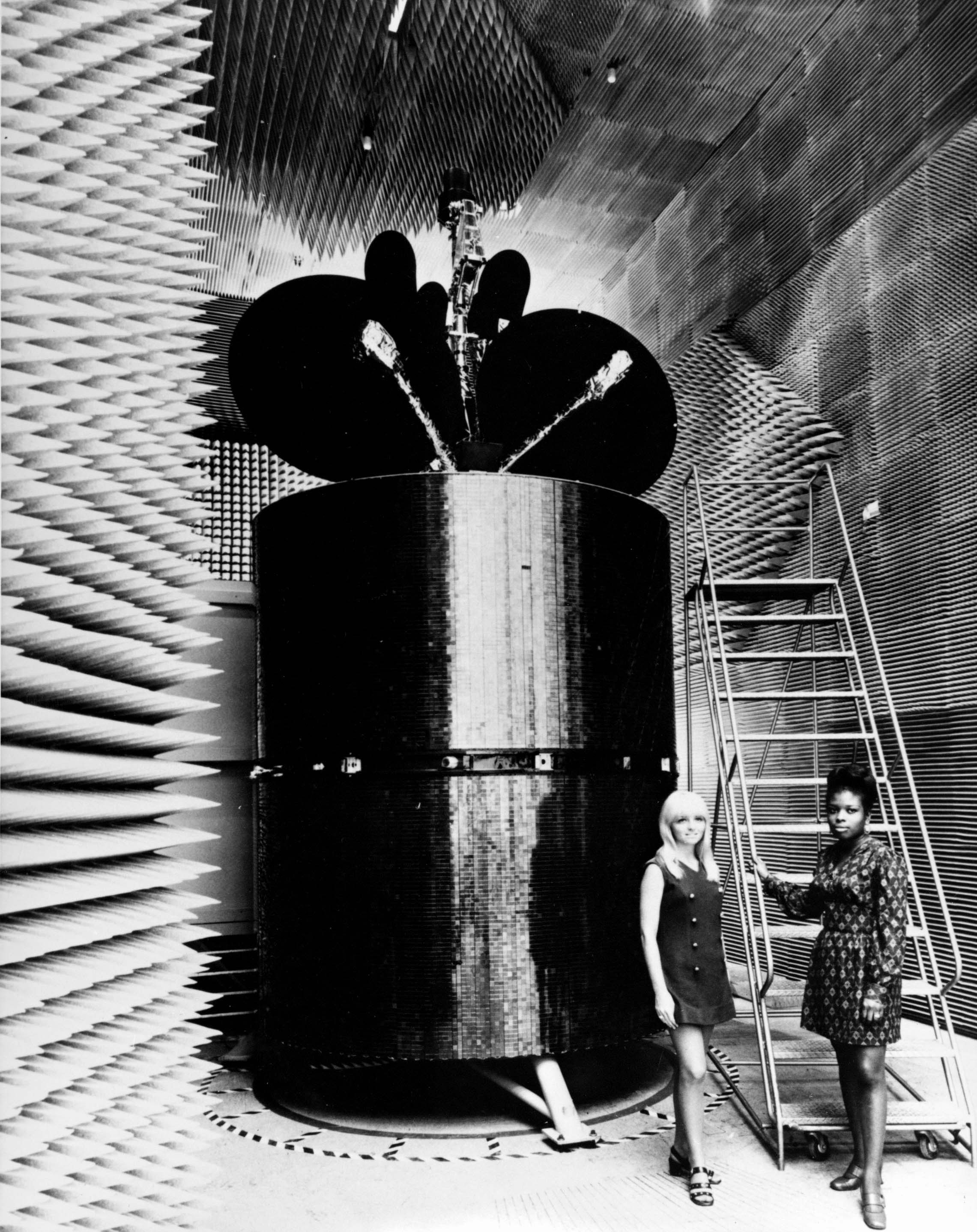
In this classic 1972 photograph, two unidentified NASA employees in period dresses pose in a sound-absorbing chamber next to the International Telecommunications Satellite. According to the NASA release, the Intelsat IV “was built by the Hughes Aircraft Company for an international consortium of 65 nations to meet the growing demand for channels of communication and greatly expanded the commercial communications network. Intelsat IV was placed in a synchronous orbit over the Atlantic Ocean with the capacity of about 6,000 circuits or 13 television channels.”

Will the 2012 Presidential election be an opportunity for the GOP to take back the White House or for centrist members to take back their own party? From Matt Bai’s New York Times Magazine piece,  “Does Anyone Have a Grip on the G.O.P.?“:

“It’s worth pointing out that when Republicans express concern about the anti-government militancy in their midst, it has a ring of serious denial. After all, generations of Republican candidates have now echoed the theme of Ronald Reagan in his 1981 inaugural address: ‘In this present crisis, government is not the solution to our problem. Government is the problem.’ And a progression of ideological uprisings inside the party — the Reagan revolutionaries, Pat Buchanan’s pitchfork brigades, Newt Gingrich’s band of guerrilla lawmakers and now the Tea Partiers — have only pushed the anti-Washington argument closer to its illogical extreme. Thus could a smiling Michele Bachmann stand on a debate stage last month and declare that no one should pay the federal government a penny of taxes, for anything — a statement that didn’t even draw a follow-up question from the panel of Fox News journalists arrayed before her.

Longtime Republicans have been satisfied enough to have their candidates run down activist government as a campaign tactic, even as they themselves retained a more nuanced view of the federal government’s role (which is why a Republican Congress, working with a Republican president, managed to pass a Medicare prescription-drug bill in 2003). But when you talk to them now, these same Republicans seem positively baffled that anyone could have actually internalized, so literally, all the scorching resentment for government that has come to define the modern conservative campaign.”

Tags:

"Sarcastic, opinionated and bitter."

My life sucks! (NY)

Lets see: My parents were well-off by the age of 35. They owned 4 homes and retired early.

Me: 41, have roommates to afford this city. dead-end job I recently lost, no 401K left. No girlfriend, never even close to being married, out of shape, miserable, on Cymbalta for depression. No group of friends and nothing great in my life.

Sarcastic, opinionated and bitter.

Knees hurt walking 2 blocks, angry, broke and mean to just about everyone I meet as a result.

The closet thing I ever get to feeling good about myself is day-dreaming that I’m special, talented or handsome. I’m a total certified LOSER. 

Baby confused by print magazine not having a touchpad. Adorable yet terrifying. (Thanks Mediabistro.)

In the “Ethics of Voting,” philosopher Jason Brennan argues that people shouldn’t vote if they’re not sufficiently educated about the issues and shouldn’t vote for self-interest. I actually would be more than happy with people voting for self-interest. When you see union members supporting candidates openly hostile to unions or senior citizens who need Social Security to survive voting for candidates who detest that safety net, there is definitely a dangerous disconnect. But, yes, democracy without an informed public is a bad thing. An excerpt from Brennan’s piece:

“Imagine a jury is about to decide a murder case. The jury’s decision will be imposed involuntarily (through violence or threats of violence) upon a potentially innocent person. The decision is high stakes. The jury has a clear obligation to try the case competently. They should not decide the case selfishly, capriciously, irrationally, or from ignorance. They should take proper care, weigh the evidence carefully, overcome their biases, and decide the case from a concern for justice.

What’s true of juries is also true of the electorate. An electorate’s decision is imposed involuntarily upon the innocent. The decision is high stakes. The electorate should also take proper care.” (Thanks Marginal Revolution.)

••••••••••

“A vote for Popeye means free ice cream for all the kiddies,” 1956:

Tags:

While I’m posting clips of McLuhan, here’s the Canadian seer discussing books “taking on a totally different meaning” in the age of microfilm. From the 1960s.

Tags:

More about tools. From Bloomberg Businessweek‘sSteve Jobs: The Beginning, 1955-1985“:

“In the late 1970s, computer makers were popping up much the way car companies did in Detroit at the turn of the 20th century. Osborne, Commodore, and RadioShack were all selling what were becoming known as ‘personal computers.’ Like the Apple I, they were made for hobbyists. They were hard to use and didn’t really do much. The Altair, the earliest, pretty much just lit up little lights once you laboriously connected a bunch of switches on the logic board.

Jobs wanted the next computer to be something different—an appliance, something anyone could use. That was the Apple II, which came out a year after the Apple I. He hammered at his message as the company grew: Computers should be tools. Trip Hawkins, one of Apple’s first 50 employees, remembers Jobs obsessing over an article he’d read in a science magazine about the locomotive efficiency of animal species. ‘The most efficient species was the condor, which could fly for miles on only a few calories,’ Hawkins says. ‘Humans were way down the list. But then if you put a man on a bicycle, he was instantly twice as efficient as the condor.’ The computer, Jobs said, was a ‘bicycle for the mind.'”

••••••••••

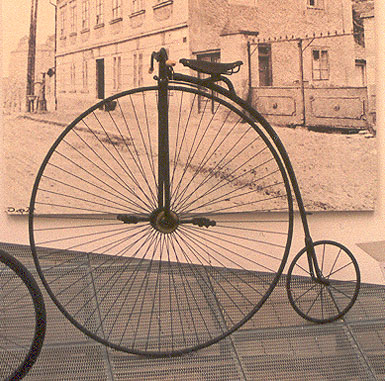
Trick riding, 1899:

Tags:

Marshall McLuhan fearing the Global Village, 1977. On the hopeful side: He wasn’t always right.

Tags:

The tools we use are only as good as those of us using them. There’s no denying that tablet computers and smart phones are among the greatest tools ever invented. They connect us to a dramatically large number of people and an astonishing amount of information–potentially. But I don’t think I’ve ever been sitting next to someone using a tablet when they weren’t watching some cruddy sitcom, updating their Facebook page or reading a dopey magazine. And considering the screens keep getting smaller and print books scarcer, where are we headed? If these new gadgets are just about ease of function and not introducing ourselves to better content, we’re talking more about a mirror–and not even an honest one–than a looking glass. Will it just be the same crap on a different screen? But others are more sanguine. From Kevin Kelly’sTools Are the Revolution,” in 2000’s Whole Earth Catalog: 

“Tools make revolutions. ‘When we make a new tool, we see a new cosmos,’ says physicist Freeman Dyson. He was probably thinking of microscopes, telescopes, and atomic particle accelerators. But even the workaday tools reviewed in this issue can alter our perspective. A tool—any tool—is possibility at one end and a handle at the other. Because tools open up options, they remake us. A really fantastic atlas of the world  is literally a new world. A whisper-quiet ultra-efficient electricity generator and a wireless Internet let us see ourselves as more nomadic than perhaps we have seen ourselves lately.

There are many ways to change the world, but I think the most direct way, the way being pioneered by artists, hackers, and scientists—third-culture citizens—is to adopt new tools.”

Tags:

"He will remain on your shoulder as long as long as nothing strange comes too close to him."

AFRiCAN GREY CONGO PARROT (Lower East Side)

My african grey congo parrot is in need of a new home. I do not want to let him go at all but due to my pregnancy I can not afford to care for him the way he deserves. It breaks my heart but it would make me happy to know I can save him from bordom and depression. He has been vaccinated against polyomavirus with AP vaccine. His name is Ruby. Like all other parrots, it will take a little while for him to adapt to his new environment but with the TLC and attention he needs, he will be fine and friendly. He speaks and whistles very clearly and understands the command “STEP UP”. I use to have his wings clipped monthly to assure he will never fly away from me while I took him for his walks outside. He will remain on your shoulder as long as long as nothing strange comes too close to him. Very good and beautiful bird. I am asking of $2,000. to assure a safe home with people who care. I am completely against animal abuse and will request pictures and videos to be sent to my email as the months pass to keep updated on his health, activity, etc.

Tags:

Ed Bradley profiles Joan Baez on 60 Minutes, 1987:

Tags: ,

From a Cory Doctorow-Ray Kurzweil discussion about the Singularity in Asimov’s in 1995;

“‘Progress is exponential–not just a measure of power of computation, number of Internet nodes, and magnetic spots on a hard disk–the rate of paradigm shift is itself accelerating, doubling every decade. Scientists look at a problem and they intuitively conclude that since we’ve solved 1 percent over the last year, it’ll therefore be one hundred years until the problem is exhausted: but the rate of progress doubles every decade, and the power of the information tools (in price-performance, resolution, bandwidth, and so on) doubles every year. People, even scientists, don’t grasp exponential growth. During the first decade of the human genome project, we only solved 2 percent of the problem, but we solved the remaining 98 percent in five years.’

But Kurzweil doesn’t think that the future will arrive in a rush. As William Gibson observed, ‘The future is here, it’s just not evenly distributed.'” (Thanks Longform.)

•••••••

Kurzweil sits for an interview with that dashing cyborg Charlie Rose, 2007:

Tags: ,

Did Steve Jobs being a jerk to underlings help make his products great, or was the meanness something that was withstood because of his genius but unnecessary? Is greatness and kindness a zero-sum game? Can a perfectionist be a nice person? D.B. Grady votes “no” to the latter question withIn Praise of Bad Steve in the Atlantic. An excerpt:

“Steve Jobs was a genius, and one of the most important businessmen and inventors of our time. But he was not a kindly, soft-spoken sage who might otherwise live atop a mountain in India, dispatching wisdom to pilgrims. He was a taskmaster who knew how to get things done. ‘Real artists ship’ was an Apple battle cry from the earliest days. Everyone, by now, knows about the Steve Jobs ‘reality distortion field’ — the charismatic Care Bear Stare that compels otherwise reasonable people to spend weeks in line for a slightly faster telephone. In his biography of Jobs, journalist Alan Deutschman described the Apple co-founder’s lesser-known hero-shithead roller coaster. ‘He could be Good Steve or he could be Bad Steve. When he was Bad Steve, he didn’t seem to care about the severe damage he caused to egos or emotions so long as he pushed for greatness.’ When confronted with the full ‘terrifying’ wrath of Bad Steve (even over the slightest of details), the brains at Apple would push themselves beyond all personal limits to find a way to meet Jobs’s exacting demands, and somehow return to his good graces. And the process would repeat itself. ‘Steve was willing to be loved or feared, whatever worked.’ As Bud Tribble, Vice President of Software Technology at Apple explained. ‘It let the engineers know that it wasn’t OK to be sloppy in anything they did, even the 99 percent that Steve would never look at.'”

Tags: ,

“Oh, that’s wonderful.'” Yes, it is. (Thanks Physorg.)

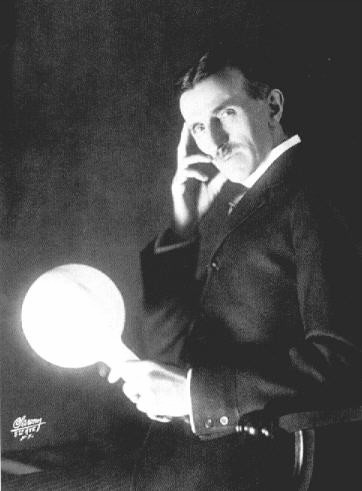
A tidy encapsulation of the what caused the rift between Edison and Tesla, courtesy of Smithsonian:

‘After Edison developed the first practical incandescent light bulb in 1879, supported by his own direct current electrical system, the rush to build hydroelectric plants to generate DC power in cities across the United States practically guaranteed Edison a fortune in patent royalties. But early on, Edison recognized the limitations of DC power. It was very difficult to transmit over distances without a significant loss of energy, and the inventor turned to a 28-year-old Serbian mathematician and engineer whom he’d recently hired at Edison Machine Works to help solve the problem. Nikola Tesla claimed that Edison even offered him significant compensation if he could design a more practical form of power transmission. Tesla accepted the challenge. With a background in mathematics that his inventor boss did not have, he set out to redesign Edison’s DC generators. The future of electric distribution, Tesla told Edison, was in alternating current—where high-voltage energy could be transmitted over long distances using lower current—miles beyond generating plants, allowing a much more efficient delivery system. Edison dismissed Tesla’s ideas as ‘splendid’ but ‘utterly impractical.’ Tesla was crushed and claimed that Edison not only refused to consider AC power, but also declined to compensate him properly for his work. Tesla left Edison in 1885 and set out to raise capital on his own for Tesla Electric Light & Manufacturing, even digging ditches for the Edison Company to pay his bills in the interim, until the industrialist George Westinghouse at Westinghouse Electric & Manufacturing Company, a believer in AC power, bought some of Tesla’s patents and set about commercializing the system so as to take electric light to something more than an urban luxury service. While Tesla’s ideas and ambitions might be brushed aside, Westinghouse had both ambition and capital, and Edison immediately recognized the threat to his business.”

••••••••••

Bowie as Tesla, The Prestige:

Tags: ,

Walter Cronkite reports on the Three Mile Island accident–March 30, 1979.

Tags:

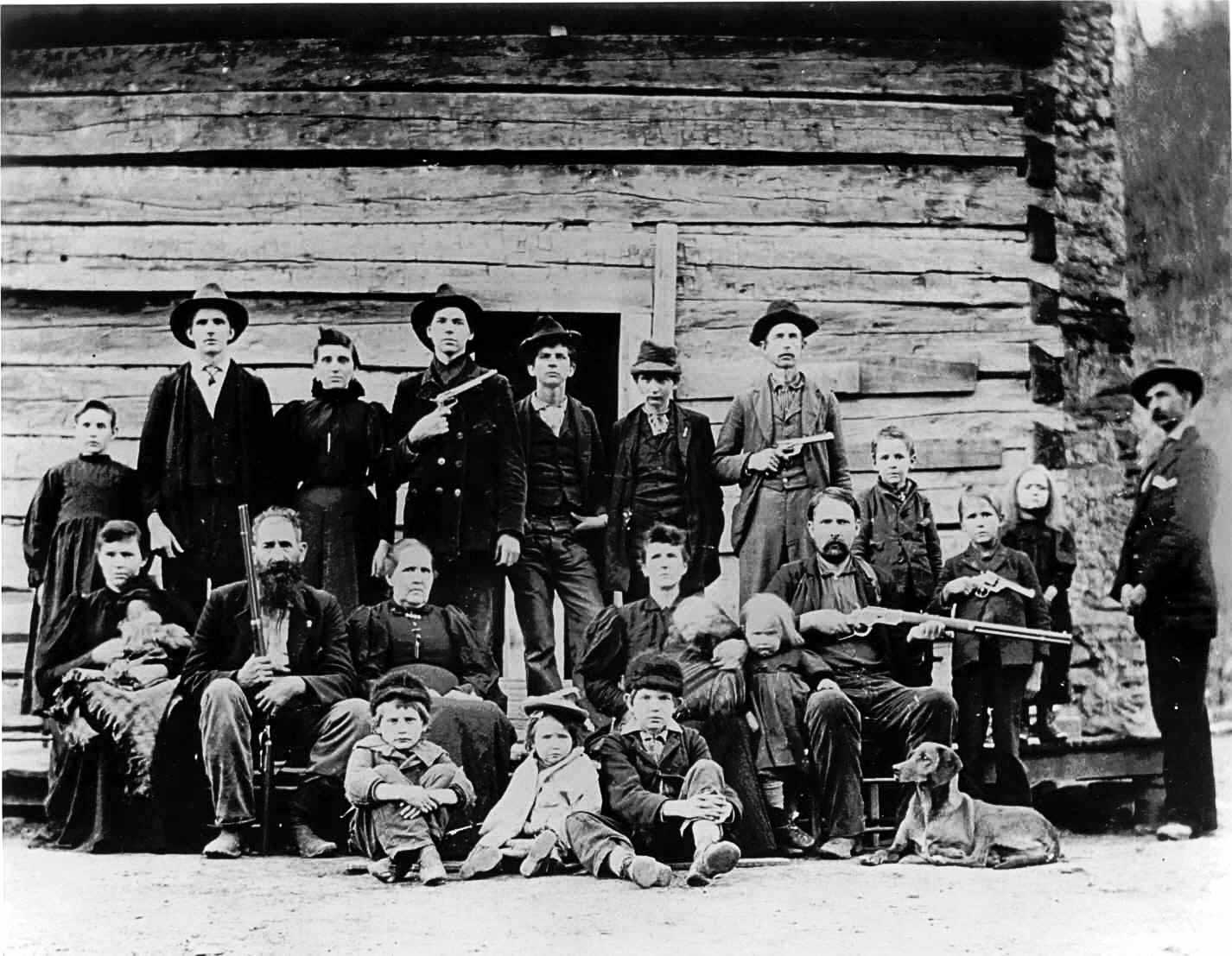
"The murder stirred up a tremendous excitement among the McCoys and Hatfields."

One brief and bloody tale from the epic Hatfield-McCoy feud was chronicled in the November 13, 1890 edition of the Brooklyn Daily Eagle:

“Charleston, W. Va.–Bud McCoy was waylaid by William Dyer and Ples McCoy on Peter’s Creek, Pike County, Ky., while on his way to the house of John Gostin and killed. The victim spoke pleasantly to the two men and passed them, when they turned in their saddles and shot him through the back, firing several shots into his dead body after he fell from his horse. The murder stirred up a tremendous excitement among the McCoys and Hatfields, and a posse at once started after the murderers, who fled through the Southwest corner of West Virginia into Kentucky. News was received to-day that the posse came up with the fugitives in Buchanan County, Virginia, Monday. Ples McCoy was shot and captured, but Dyer escaped after a running fight. A portion of he posse is in pursuit and he will probably be killed.”

••••••••••

Hatfields vs. McCoys, Family Feud, 1979:

Tags: , , ,

If only it were so. An economic prediction from “The Long Boom,” Wired, 1997:

“But there’s a new, very different meme, a radically optimistic meme: We are watching the beginnings of a global economic boom on a scale never experienced before. We have entered a period of sustained growth that could eventually double the world’s economy every dozen years and bring increasing prosperity for – quite literally – billions of people on the planet. We are riding the early waves of a 25-year run of a greatly expanding economy that will do much to solve seemingly intractable problems like poverty and to ease tensions throughout the world. And we’ll do it without blowing the lid off the environment.

If this holds true, historians will look back on our era as an extraordinary moment. They will chronicle the 40-year period from 1980 to 2020 as the key years of a remarkable transformation. In the developed countries of the West, new technology will lead to big productivity increases that will cause high economic growth – actually, waves of technology will continue to roll out through the early part of the 21st century. And then the relentless process of globalization, the opening up of national economies and the integration of markets, will drive the growth through much of the rest of the world.”

« Older entries § Newer entries »