Sneakers are now impervious to chocolate syrup.
Ideas and technology and politics and journalism and history and humor and some other stuff.
You are currently browsing the archive for the Urban Studies category.
Sneakers are now impervious to chocolate syrup.

From “A Brief Rant On the Future of Interaction Design,” a really smart illustrated essay by Bret Victor about, among other things, the limitations of the touchscreen:
“I believe that hands are our future.
So then. What is the Future Of Interaction?
The most important thing to realize about the future is that it’s a choice. People choose which visions to pursue, people choose which research gets funded, people choose how they will spend their careers.
Despite how it appears to the culture at large, technology doesn’t just happen. It doesn’t emerge spontaneously, like mold on cheese. Revolutionary technology comes out of long research, and research is performed and funded by inspired people
And this is my plea — be inspired by the untapped potential of human capabilities. Don’t just extrapolate yesterday’s technology and then cram people into it.,,Our hands feel things, and our hands manipulate things. Why aim for anything less than a dynamic medium that we can see, feel, and manipulate?” (Thanks Browser.)
••••••••••
Monkey with touchscreen playing Angry Birds:
Tags: Bret Victor
Devo for Honda Scooters, 1984.
Tags: Devo
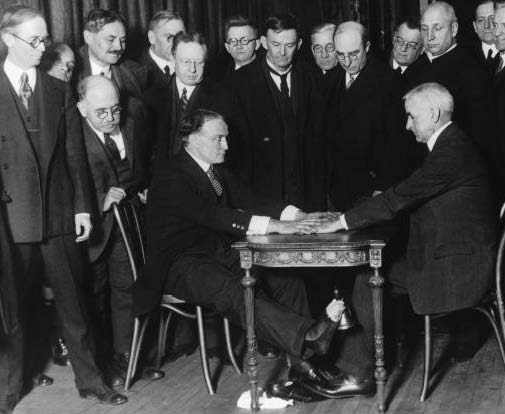
This classic photo shows Harry Houdini, in the year before he died, revealing tricks used by opportunistic spiritualists to an assemblage of New York clergyman. (Notice beneath the table that the illusionist rings a bell with his toes.) The meeting took place at the Hippodrome, which seven years earlier was the site of Houdini’s famous vanishing elephant trick. What the photo doesn’t show is the magician’s young assistant, Dorothy Young, 17, who he hired that year to help with his stage act. Young lived to 103, passing away earlier this year. From her New York Times obituary:
“Born on May 3, 1907, in Otisville, N.Y., Dorothy Young was the daughter of a Methodist minister, Robert Young, and Lena Caldwell Young, a church organist. It took some convincing for her parents to allow Dorothy to sign a contract with Houdini after she won an audition in Manhattan in early 1925. She was 17.
Though she was with the Houdini tour for only a little more than a year, Miss Young gained notice. Soon after, her dancing skills were paired with those of Gilbert Kiamie, the son of a silk lingerie magnate. As Dorothy and Gilbert, they toured the country and became known for their own Latin dance, the ‘rumbalero.’ She also danced in several movies, among them the Fred Astaire musical comedy Flying Down to Rio (1933).
Miss Young’s first marriage, to Robert Perkins, ended in divorce. She married Mr. Kiamie in 1945; he died in 1992. Besides her granddaughter, she is survived by a son, Robert Jr., two other grandchildren and nine great-grandchildren. Though she took her husbands’ names in marriage, she preferred to be known professionally as Dorothy Young.
In 2003, with a considerable inheritance from Mr. Kiamie, Miss Young was able to donate more than $10 million to the creation of the Dorothy Young Center for the Arts at Drew University in Madison, N.J.
In her later years, Miss Young sometimes attended ‘séances’ organized by magicians and Houdini aficionados to celebrate and, perhaps, hear from the master. In November 2006, at a gathering in Manhattan, she sat in one of the 12 occupied chairs on the stage. The 13th chair remained empty.
Miss Young had talked with Houdini about returning from the dead, she said, while he was alive. He told me, ‘It’s humanly impossible, but I’ll be there in spirit.'”
Tags: Dorothy Young, Harry Houdini

Does anyone know the name of the movie where people died or exploded because they drank the water? I think there was a court scene where the judge drink the water and exploded or die and in the town scare people drank the water and they started to die or explode. And then at the end the two main characters jump out a window to theres deaths because there was no way to escape.
can someone help me please!!!
David Bowie and Marianne Faithfull sing Sonny and Cher, 1973.
Tags: David Bowie, Marianne Faithfull

British researchers will spend the next decade figuring out if Charles Babbage is truly the father of the programmable computer. From a John Markoff article in the New York Times:
“Researchers in Britain are about to embark on a 10-year, multimillion-dollar project to build a computer — but their goal is neither dazzling analytical power nor lightning speed.
Indeed, if they succeed, their machine will have only a tiny fraction of the computing power of today’s microprocessors. It will rely not on software and silicon but on metal gears and a primitive version of the quaint old I.B.M. punch card.
What it may do, though, is answer a question that has tantalized historians for decades: Did an eccentric mathematician named Charles Babbage conceive of the first programmable computer in the 1830s, a hundred years before the idea was put forth in its modern form by Alan Turing?”
Tags: Charles Babbage, John Markoff

From “Why Americans Won’t Do Dirty Jobs,” Elizabeth Dwoskin’s Businesweek article about the lack of interest that born-and-bred U.S. citizens have in work that is dangerous, dirty and disgusting:
“There’s no shortage of people he could give those jobs to. In Alabama, some 211,000 people are out of work. In rural Perry County, where Harvest Select is located, the unemployment rate is 18.2 percent, twice the national average. One of the big selling points of the immigration law was that it would free up jobs that Republican Governor Robert Bentley said immigrants had stolen from recession-battered Americans. Yet native Alabamians have not come running to fill these newly liberated positions. Many employers think the law is ludicrous and fought to stop it. Immigrants aren’t stealing anything from anyone, they say. Businesses turned to foreign labor only because they couldn’t find enough Americans to take the work they were offering.
At a moment when the country is relentless focused on unemployment, there are still jobs that often go unfilled. These are difficult, dirty, exhausting jobs that, for previous generations, were the first rickety step on the ladder to prosperity. They still are—just not for Americans”
Tags: Elizabeth Dwoskin
The promotional trailer for the videocassette release of the Frost-Nixon interviews. It apparently played in movie theaters.
Tags: David Frost, Richard M. Nixon

What a difference 16 years make, at least the last 16. From Daniel Morrow’s 1995 interview with Steve Jobs:
“DM: The World Wide Web is literally becoming a global phenomenon. Are you optimistic about it staying free?
SJ: Yes, I am optimistic about it staying free but before you say it’s global too fast, its estimated that over one third of the total Internet traffic in the world originates or destines in California. So I actually think this is a pretty typical case where California is again on the leading edge not only in a technical but cultural shift. So I do expect the Web to be a worldwide phenomenon, distributed fairly broadly. But right now I think it’s a U.S. phenomenon that’s moving to be global, and one which is very concentrated in certain pockets, such as California.
DM: 85% of the world doesn’t have access to a telephone yet. The potential is there and you’re pretty optimistic.” (Thanks Open Culture.)
Tags: Daniel Morrow, Steve Jobs

In Current Intelligence, futurist Scott Smith argues that the age of large-scale DIY warfare is upon us. An excerpt:
“Fast forward to today, and we aren’t just talking about roadside bombs. Now, sophisticated weapons, transport and even surveillance fuel international and intra-national cat and mouse games between those with power and those with a roll of duct tape,. Internet access and a spare diesel engine. A full-on global conflict is brewing in hardware and it parallels, in an unsettling way, the expanding hot war in geo-economic hacking. Mexican drug gangs have gained notoriety for developing ‘tanks’ to combat security forces, no doubt inspired by the Colombian narco-submarine business, which, while only in existence for a few years, can now boast in its arsenals 100-foot-plus craft capable of travelling 30 feet below the ocean’s surface from home ports to the Mexican coast.
The poster boy of this movement is the unmanned drone, which has become the focus of amateur weapons builders as well as harmless hobbyists. With the increased use of drones by Western militaries, and an expected boom in ‘legitimate’ drone building (analysts at the Teal Group put global spending on drone development at an estimated US$94 billion by 2021), everyone wants to get involved. A recent Brookings paper details the threats of reduced size and cost of drones, pointing out that ‘in some respects today’s drones are more similar to smartphones than to cruise missiles.’ In essence, small drones today are little more than mobile apps with wings, and as such can be created in short order with a few simple parts. Teal estimates upwards of 70 countries are involved in producing drone technology, including a push in China to match US capability.
The line between official and underground blurs a bit more every day.”
Tags: Scott Smith

"Maybe I can eat cat food from the garbage can." (Image by Luis Miguel Bugallo Sánchez.)
O O. Dow Jones Stock took a big fall again today, My retirement money is there If wall street keeps falling, I won’t have food to survive, I might die if I can’t eat, Maybe I can eat cat food from the garbage can, If I find some there, If not then I quess I have to eat dirt and wait for it to rain to drink water from the street before the dog gets there first.
A 1972 3-D short by Pixar founder Ed Catmull, and Fred Parke, with some “making of” info.
Tags: Ed Catmull, Fred Parke
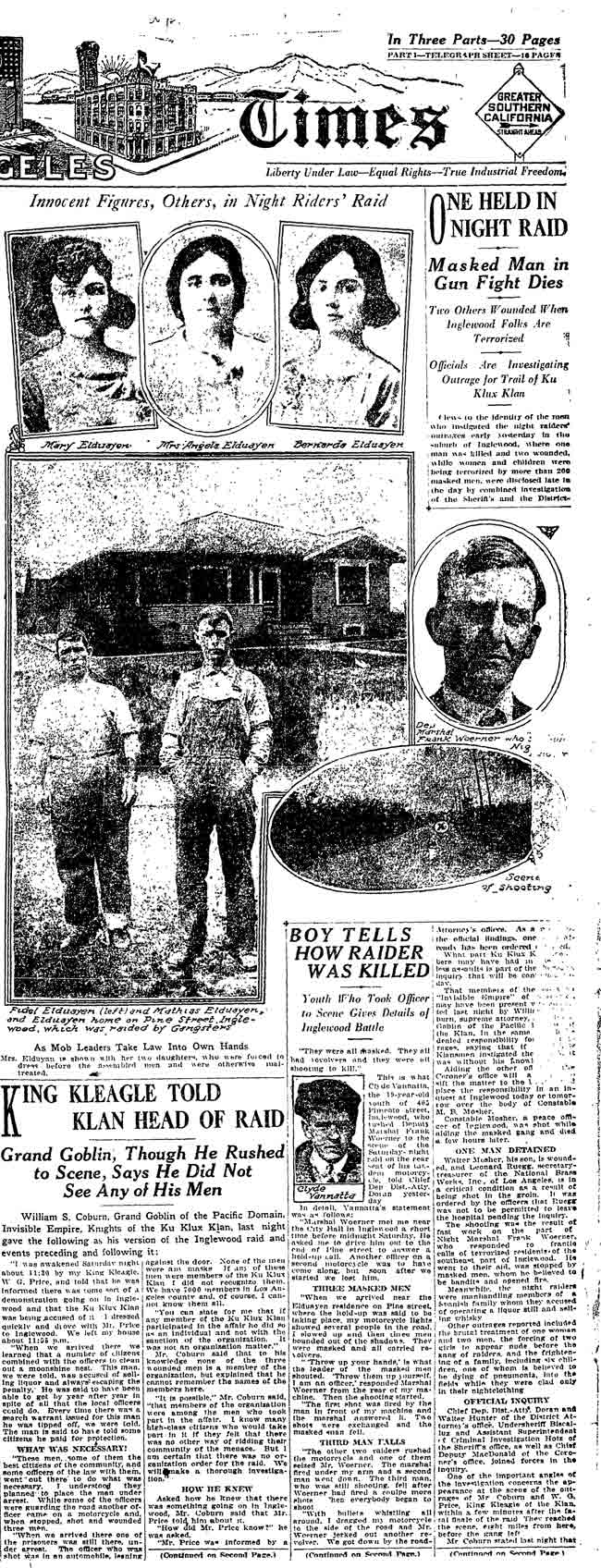
At the L.A. Review of Books, Laurie Winer, a former Los Angeles Times writer, provides a wonderfully caustic inside look at the demise of that once-great newspaper, which cratered due to seismic shifts in technology and the stunning dickishness of belligerent billionaire Sam Zell. The opening:
“Since it seemed it couldn’t get much worse, Los Angeles Times editor-in-chief James O’Shea decided to look on the bright side. It was 2007, and the newspaper had a new owner. He was Sam Zell, an iconoclast, as they call rich older men who ride motorcycles and wear leather jackets, whether they look good in them or not. Maybe Zell would be iconoclastic in the right way, you know, odd but decent and smart, useful, so O’Shea phoned the Chicago businessman about giving the Times an in-person interview. Zell agreed. O’Shea then offered to pick up his new boss at the airport. Zell declined, informing O’Shea that his personal jet could easily deposit him near his beach house in Malibu.
When Zell called back an hour later, the polite part of their relationship was already done. Zell informed O’Shea that he would, in fact, fly into LAX and make himself available to reporters at an office there. ‘I was going to invite all of you to come to my house in Malibu,’ said Zell — for the second time indicating his address — ‘until you sent a fucking reporter up there and scared the shit out of my housekeeper.’ Zell wanted it conveyed that he traveled in an entirely different social sphere than O’Shea. ‘Let me tell you something,’ he continued in his distinctive rasp. ‘You want to talk to me, call me and I’ll talk. But you don’t fuck with my employees. Got that?’ O’Shea immediately apologized, even though he wasn’t sure what for.
And so began the improbable last chapter in the fall of a major newspaper, as chronicled by O’Shea in The Deal from Hell: How Moguls and Wall Street Plundered Great American Newspapers. Among other things, the book is a reminder that whenever you think things can’t get worse, they can. They can get much, much worse.”
••••••••••
“Hopefully, we get to the point where our revenue is so significant that we can do puppies and Iraq…fuck you”:
Tags: James O’Shea, Laurie Winer, Sam Zell
Please stop touching his mouth.
Another Marlin Perkins post:
Tags: Marlin Perkins
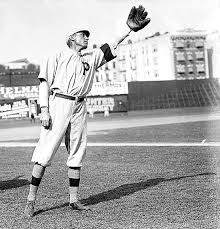
In “The King of Human Error” in Vanity Fair, Michael Lewis has an excellent profile of psychologist Daniel Kahneman, who inspired the Moneyball revolution–even though Lewis realized Kahneman’s influence only in retrospect. An excerpt in which the journalist explains the surprising reach of Kahneman and his late professional partner, Amos Tversky:
“Kahneman and Tversky were psychologists, without a single minor-league plate appearance between them, but they had found that people, including experts, unwittingly use all sorts of irrelevant criteria in decision-making. I’d never heard of them, though I soon realized that Tversky’s son had been a student in a seminar I’d taught in the late 1990s at the University of California, Berkeley, and while I was busy writing my book about baseball, Kahneman had apparently been busy receiving the Nobel Prize in Economics. And he wasn’t even an economist. (Tversky had died in 1996, making him ineligible to share the prize, which is not awarded posthumously.) I also soon understood how embarrassed I should be by what I had not known.
Between 1971 and 1984, Kahneman and Tversky had published a series of quirky papers exploring the ways human judgment may be distorted when we are making decisions in conditions of uncertainty. When we are trying to guess which 18-year-old baseball prospect would become a big-league all-star, for example. To a reader who is neither psychologist nor economist (i.e., me), these papers are not easy going, though I am told that compared with other academic papers in their field they are high literature. Still, they are not so much written as constructed, block by block. The moment the psychologists uncover some new kink in the human mind, they bestow a strange and forbidding name on it (‘the availability heuristic’). In their most cited paper, cryptically titled ‘Prospect Theory,’ they convinced a lot of people that human beings are best understood as being risk-averse when making a decision that offers hope of a gain but risk-seeking when making a decision that will lead to a certain loss. In a stroke they provided a framework to understand all sorts of human behavior that economists, athletic coaches, and other ‘experts’ have trouble explaining: why people who play the lottery also buy insurance; why people are less likely to sell their houses and their stock portfolios in falling markets; why, most sensationally, professional golfers become better putters when they’re trying to save par (avoid losing a stroke) than when they’re trying to make a birdie (and gain a stroke).
When you wander into the work of Kahneman and Tversky far enough, you come to find their fingerprints in places you never imagined even existed.”
••••••••••
Daniel Kahneman at TED, 2010:
Tags: Amos Tversky, Daniel Kahneman, Michael Lewis
The miracle of call waiting, in 1977.

"She gives beer in place of milk. Even Chicago has nothing like her."
I doubt cows can give beer, but I’m pretty sure newspaper editors at the Brooklyn Daily Eagle downed plenty of beer when putting out the July 17, 1892 issue. An excerpt from an article in that groundbreaking edition:
“There’s a cow that gives beer. She lives in St. Louis. May she prove an abundant consolation to the people of that city for their loss of the world fair.
To the casual eye this cow is like any other: the same number of legs and prongs and ribs, the same Gothic architecture, the same frolicsome gaiety, the same unconscionable time eating a meal, the same moments of rapt contemplation. But in this one essential respect she is different from any other cow that breathes: she gives beer in place of milk. Even Chicago has nothing like her.

"The farm hands become thirsty during the day with greater frequency than before."
The conversion of the beast into a brewery was accidental. The cow got among some malt and hops and ate them. During the day she was alternately frisky and meditative, and when she returned to the barn she appeared to see two doors and made a delay in the business of the evening by trying to get into the one that was not there. Once anchored in her stall, however, she submitted quietly to milking. The first drops of the fluid that should have been milk and that on the following day would have been served to customers, with a judicious and strengthening mixture of chalk and water, so startled the proprietor of the cow that he gathered the rest of her offering in a separate pail. It was amber in color, it foamed, it had a familiar odor. He tasted it; it soothed. He eagerly drank the whole six quarts. O, joy–it intoxicated!
The cow has been somewhat overworked since this discovery was made and alternated between conditions of tipsiness and fatigue, showing signs of headache in the morning. But beer is never allowed to form to excess in her system, because the farm hands become thirsty during the day with greater frequency than before. This discovery in natural chemistry may work a revolution in the brewing business.”
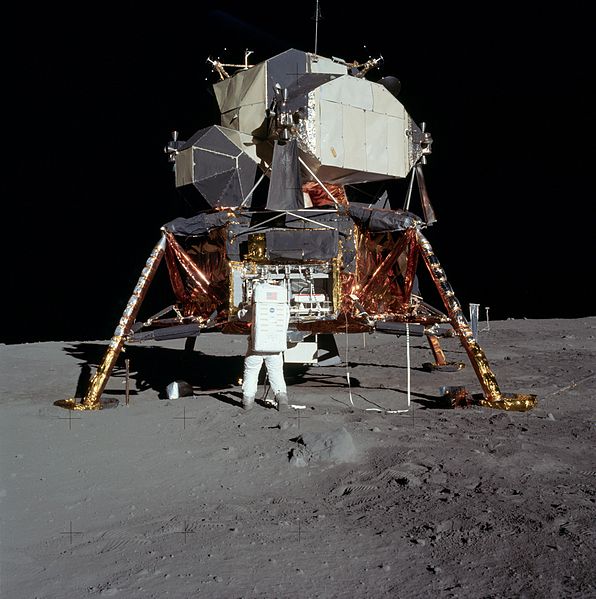
"Fucking trolls."
My proposal: go there and if you find any labs or colonies or anything at all, fucking bomb the shit out of them. Kill them all. They play video games with our lives.
Fucking trolls.
Telexistence allows robots to transmit senses remotely.
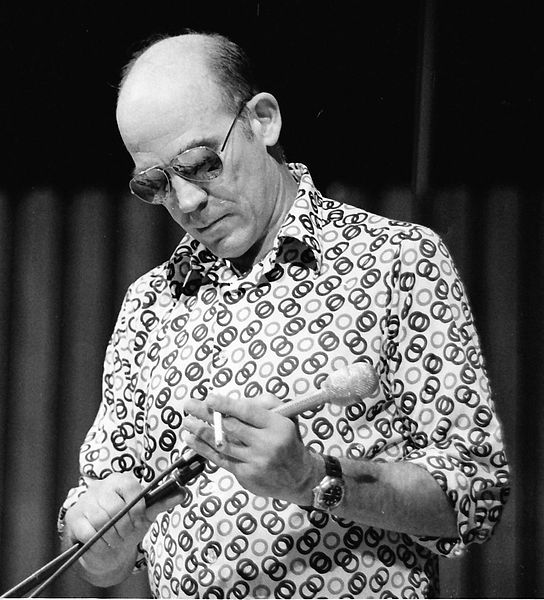
Having a film version of The Rum Diary in theaters and a movie about J. Edgar Hoover ready to be released reminded of a 1974 Playboy Interview with Hunter S. Thompson that I read a couple of years ago. In the piece, which took Craig Vetter seven months to complete, Thompson cracked a joke about being pals with the former FBI honcho. An excerpt:
“PLAYBOY: Would you run for the Senate the same way you ran for sheriff?
THOMPSON: Well, I might have to drop the mescaline issue, I don’t think there’d be any need for that—promising to eat mescaline on the Senate floor. I found out last time you can push people too far. The backlash is brutal.
PLAYBOY: What if the unthinkable happened and Hunter Thompson went to Washington as a Senator from Colorado? Do you think you could do any good?
THOMPSON: Not much, but you always do some good by setting an example—you know, just by proving it can be done.
PLAYBOY: Don’t you think there would be a strong reaction in Washington to some of the things you’ve written about the politicians there?
THOMPSON: Of course. They’d come after me like wolverines. I’d have no choice but to haul out my secret files—all that raw still Ed Hoover gave mejust before he died. We were good friends. I used to go to the track with him a lot.
PLAYBOY: You’re laughing again, but that raises a legitimate question: Are you trying to say you know things about Washington people that you haven’t written?
THOMPSON: Yeah, to some extent. When I went to Washington to write Fear and Loathing: On the Campaign Trail ’72, I went with the same attitude I take anywhere as a journalist: hammer and tongs—and God’s mercy on anybody who gets in the way. Nothing is off the record, that kind of thing. But I finally realized that some things have to be off the record. I don’t know where the line is, even now. But if you’re an indiscreet blabber-mouth and a fool, nobody is going to talk to you—not even your friends.”
••••••••••
Thompson and Keith Richards consider the reincarnation of Hoover, 1973:
Tags: Craig Vetter, Hunter S. Thompson, J. Edgar Hoover, Richard M. Nixon
By Motorola Solutions. (Thanks CNN.)

A fun bit of linguistic history from Henry Hitchings’ Salon article, “What’s the Language of the Future?“:
“There have been attempts to create an artificial language for use by all the world. In the second half of the nineteenth century and then especially in the early years of the twentieth, schemes to construct new languages were numerous. Most of these are now forgotten: who remembers Cosmoglossa, Spokil, Mundolingue, Veltparl, Interlingua, Romanizat, Adjuvilo or Molog? Some of the innovators sound like remarkably odd people. Joseph Schipfer, developer of Communicationssprache, was also known for promoting means of preventing people from being buried alive. Etienne-Paulin Gagne, who devised Monopanglosse, proposed that in time of famine Algerians help their families and friends by exchanging their lives or at least some of their limbs for food, and was willing if necessary to give up his own body to the needy.
Only two schemes enjoyed success. In 1879 a Bavarian pastor, Johann Martin Schleyer, devised Volapük. It was briefly very popular: within ten years of its invention, there were 283 societies to promote it, and guides to Volapük were available in twenty-five other languages. As Arika Okrent observes in her book In the Land of Invented Languages, Volapük is a gift to people with a puerile sense of humour: ‘to speak’ is pükön, and ‘to succeed’ is plöpön. More famous and less daft-sounding were the efforts of Ludwik Zamenhof, a Polish ophthalmologist of Lithuanian Jewish descent, who in the 1870s began work on creating Esperanto, a language without irregularities. He published his first book on the subject in 1887, summing up the language’s grammar in sixteen rules and providing a basic vocabulary. Zamenhof’s motives were clear; he had grown up in the ghettos of Bialystok and Warsaw, and, struck by the divisiveness of national languages, he dreamt of uniting humanity. Esperanto is certainly the most successful of modern invented languages, but although it still has enthusiastic supporters there is no prospect of its catching on as Zamenhof once hoped.”
••••••••••
Learning Ubbi Dubbi, 1972:
Tags: Henry Hitchings
In Nick Tosches great book, The Devil and Sonny Liston, the author identifies his subject’s main problem: “In the Saturday night cigarette smokehouse neon dark of that dive, Charles Liston, who neither knew his age nor felt any ties of blood upon this earth nor saw any future beyond the drink in front of him and the smoky dark spare refuge of this barroom from the bone-cutting, river-heavy dank and freezing chill, knew only that he was nobody and that he had come from nowhere and that he was nowhere. He did not see that one could be nobody with a capital ‘N.’” Smokin’ Joe Frazier, who just passed away, and his two greatest opponents, Muhammad Ali and George Foreman, became not just important nobodies but cultural kings.
Frazier, who could barely get a word in, with Ali and Dick Cavett:
Tags: Dick Cavett, George Foreman, Joe Frazier, Muhammad Ali
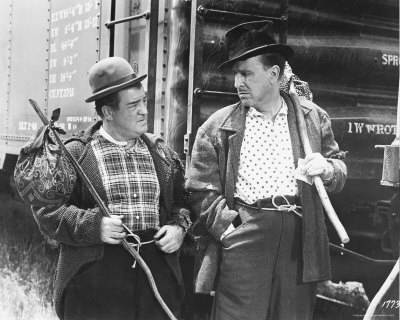
I always thought Abbott and Costello were able to provoke nervous laughter not because of their fumbling deadbeat personas but due to the duo’s sinister undercurrent, as they often seemed to be one small step from utter criminality. Abbott, the manipulative sharpie who was the ringleader of the grifter pair, had a barely concealed vicious streak, and he seemed capable of armed robbery, arson or sex crimes. For the right payoff, he would consider murder. Or perhaps he would indulge in a thrill killing to pass time during the interminable work-free days. No he wouldn’t bloody his own hands but would instead goad his buffoonish other half, whose rage stemmed from a lifetime of humiliations, into committing the deed. What saved them from the gas chamber was in no way a sense of morality but their utter cowardice and constant state of lethargy.
In this clip, the villains handcuff and batter an officer of the law but he manages to escape with his life:
Tags: Bud Abbott, Lou Costello