Experimenting with mobile phones in 1922. (Thanks Open Culture.)
Ideas and technology and politics and journalism and history and humor and some other stuff.
You are currently browsing the archive for the Urban Studies category.
Experimenting with mobile phones in 1922. (Thanks Open Culture.)
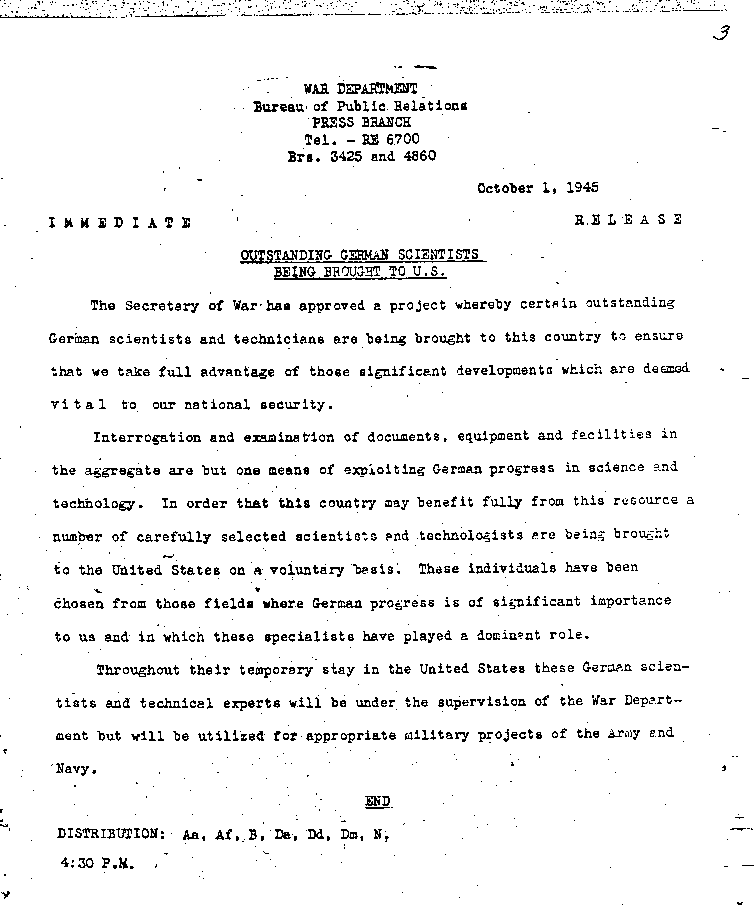
Compromise as much as courage was key to the U.S.A. touching down on the moon first. Operation Paperclip rounded up scores of Nazi scientists at the conclusion of WWII, and brought them to America to make us preeminent in rockets, satellites, and ultimately, spaceships, without ever holding these men accountable for their atrocities. Chief among these unlikely American heroes was brilliant Wernher von Braun, who was portrayed to the American public as a scientist who was dispassionate about politics, just another pawn in the horrible Nazi game. Of course, that was far from the truth. From “The Rocket Man’s Dark Side,” Leon Jaroff’s 2002 Time report about the genius whose awful past was lost in space:
Still, he was apolitical, wasn’t he, and during the war had really only been pursuing his lifelong interest in rocketry. And hadn’t he fully redeemed himself with his great contributions to our space race with the Soviets?
That’s the gist of the official von Braun biography posted on the web site of NASA’s Marshall Space Flight Center, where under the directorship of von Braun, the mighty Saturn 5 rocket was developed. And it’s this sanitized biography that has roused the indignation of Tom Gehrels, a noted University of Arizona astronomer and pioneer in the program to discover and track Earth-threatening asteroids. A member of the Dutch resistance during World War II, Gehrels readily acknowledges von Braun’s contributions to the world of science, but is all too aware of the little-known dark side of both him and his brother Magnus. “They were Jekyll and Hyde characters,” Gehrels insists, “and the full truth ought to be known.”
It is Gehrels who has pieced together that truth, largely from interviews with surviving political prisoners who had been forced to build V-1s and V-2s under the supervision of the von Brauns in an underground complex near Nordhausen, Germany. These prisoners were housed in an adjacent concentration camp called Dora, and new arrivals were given the standard welcoming speech: ‘You came in through that gate, and you’ll leave through that chimney [of the crematorium].’
Indeed, some 20,000 died at Dora, from illness, beatings, hangings and intolerable working conditions. Workers, scantily clad, were forced to stand at attention in the biting cold during roll calls that went on for hours. Average survival time in the unventilated paint shop was one month. One prisoner told of being bitten on his legs by guard dogs. Presumably to test the effectiveness of a new medication, one of his legs was treated, the other allowed to fester and deteriorate.
For reasons best known to von Braun, who held the rank of colonel in the dreaded Nazi SS, the prisoners were ordered to turn their backs whenever he came into view. Those caught stealing glances at him were hung. One survivor recalled that von Braun, after inspecting a rocket component, charged, “That is clear sabotage.” His unquestioned judgment resulted in eleven men being hanged on the spot. Says Gehrels, ‘von Braun was directly involved in hangings.”•
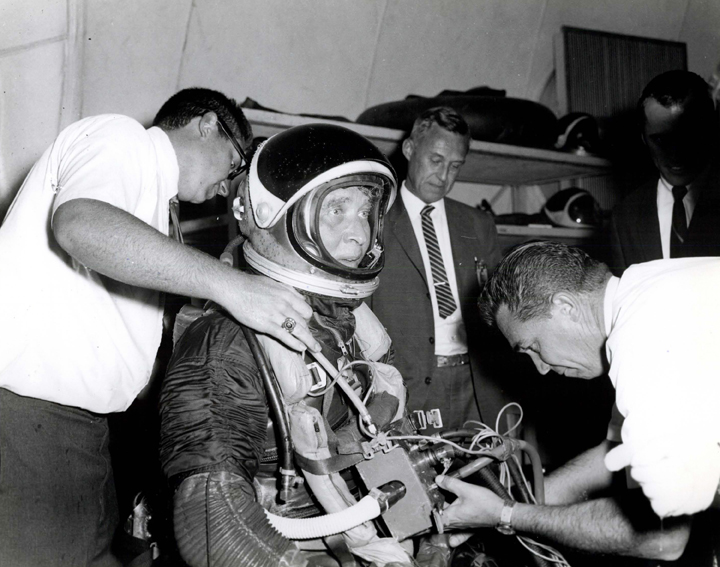
Dr. Strangelove’s backstory—and salutes—were inspired by von Braun.
See also:
Tags: Leon Jaroff, Tom Gehrels, Wernher von Braun
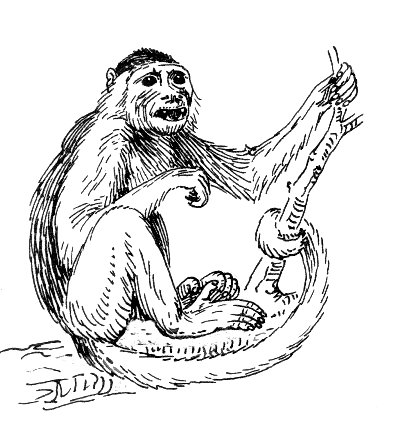
"Jakey, the monkey, was tied to the leg of a table."
Monkey-related arson was the cause of four out of five fires in nineteeneth-century America. Non-empirical proof of this statistic can be found in the August 22, 1887 edition of the Brooklyn Daily Eagle. An excerpt:
“Mrs. Sylvester M. Folsom, of Fort Hamilton, has furnished the neighborhood in which she has led an adventurous life for a dozen years with a constant round of sensational episodes. She was the wife of sporting Billy Clark when his prize fighters’ resort was in full blast, and after she was divorced from him, married Alpheus E. Clark, a soldier, who ran away from her after a short but tempestuous wedded life. Her third husband, Sylvester M. Folsom, the village barber, has been, like his predecessors, a cause of constant jealousy to the woman, and a few weeks ago, on the ground that he was too frequent a visitor to a good looking member of a local family, Mrs. Folsom shot at the head of the obnoxious household and, failing to hit him, clubbed him into unconsciousness.

"Mrs. Folsom placed the lighted lamp she had carried down with her on the stairway, and laid some parlor matches on the table." (Image by Rolf Schlagenhaft.)
She recently secured her freedom from the New Utrecht jail on bail and returned to her home at the Fort. The only occupant of her own quarters in the lower portion of the house who remained to greet her was a monkey, whom she had left in care of Sergeant Grossman, of Battery I. This morning Mrs. Folsom went into the basement to prepare the breakfast for the Grossman family. Jakey, the monkey, was tied to the leg of a table that stood not far from the stairs leading down to the basement. Mrs. Folsom placed the lighted lamp she had carried down with her on the stairway, and laid some parlor matches on the table. She then went out to get kindling wood. As she opened the door a few minutes later she discovered the place on fire. Jakey had climbed upon the table and was still engaged in cracking parlor matches, and when they became too hot to hold dropping them on to the rubbish covered floor.
Mrs. Folsom’s first thought was for the Grossman family, upstairs, on the floor just above the rapidly growing flames. Mrs. Grossman had already been aroused by the smoke and was astir. Her two little children were, however, asleep in bed, when the frightened housekeeper burst open the door and let in the volume of smoke. Mrs. Folsom seized upon the children and carried them safely downstairs. Mrs. Grossman followed, but was near being too late to get through the burning basement with safety. Her clothing took fire, but she was fortunate in being able to reach the open air and assistance before she or the children were injured.
All efforts to save Jakey, the mischievous cause of the fire, were unavailing, and his cries for help soon died away in the flames that entirely consumed the house before the hand engine from Bay Ridge made its appearance.”
Tags: Alpheus E. Clark, Billy Clark, Mrs. Sylvester M. Folsom, Sylvester M. Folsom
Senseg creates interfaces that you can feel.
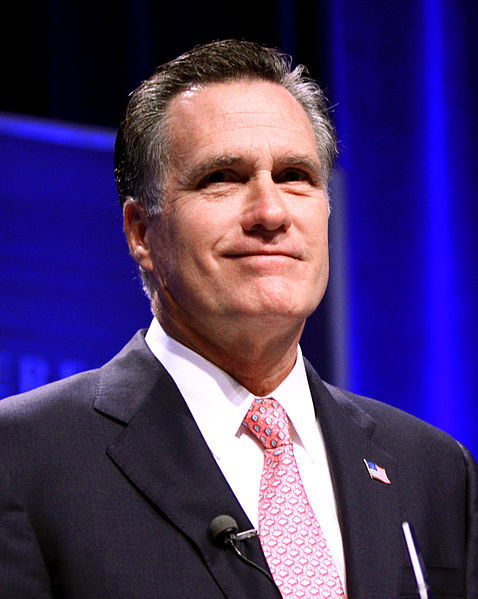
"The footage would capture the candidate seeming engaged in the kind of heart-to-heart dialogues with working-class Americans that the campaign had otherwise left off his schedule that day." (Image by Gage Skidmore .)
The source of the considerable reservoir of rage beneath Mitt Romney’s well-polished exterior is as mysterious as President Obama’s ever-present sense of calm–though it’s obviously more concerning. Robert Draper’s new New York Times Magazine article about the likely GOP Presidential nominee suggests that Romney is unflappable–I’m not buying it–but makes good points about the guy you’d least like to have a beer with competing for the country’s highest office. An excerpt;
“It’s very unlikely that we’ll ever hear Mitt Romney and Barack Obama openly discuss the things they have in common. Nonetheless, we may well see in the general election a contest between two dispassionate and accommodating pragmatists and skilled debaters who relish intellectual give-and-take, and whose willingness to compromise has infuriated the party faithful. Both have promised change. Each will frame the other as being not up to the task.
How ably Romney the nominee will defend himself, given the kid-gloves treatment by his current competition and the campaign’s avoidance of large segments of his own life story, is difficult to say just yet. In early November I watched Romney return to Iowa for only the fourth time. He stopped in Dubuque and Davenport and, before decent-size crowds, essentially regurgitated his address on the economy from the week before. In both cases he spoke for less than 20 minutes and did not take questions from the audience. Far more of his ground time was devoted to filming promotional material in a Dubuque sheet-metal factory, where the footage would capture the candidate seeming engaged in the kind of heart-to-heart dialogues with working-class Americans that the campaign had otherwise left off his schedule that day.
Near the end of his talk in Davenport, he said to the 275 east Iowans in attendance, ‘I want you to get to know me a little better.’ After wrapping up his speech, he moved briskly through the crowd, pausing now and then to take photos and sign autographs, before flying out of Iowa with Stuart Stevens and a couple of other staff members.”
••••••••
“Did you hear what I said?”
Tags: Mitt Romney, Robert Draper
Katharine Hepburn talks about aging in America, 1979.
Tags: Katherine Hepburn
As a child I was never into comic books. I read Mad and that was it. But even I can appreciate what Kerry Callen did on his blog, animating his favorite comic book covers to transform them into action scenes. Take a look. (Thanks Nerdcore.)
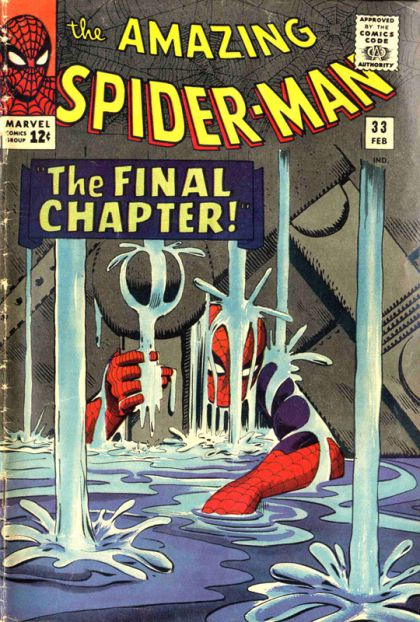
Original cover.
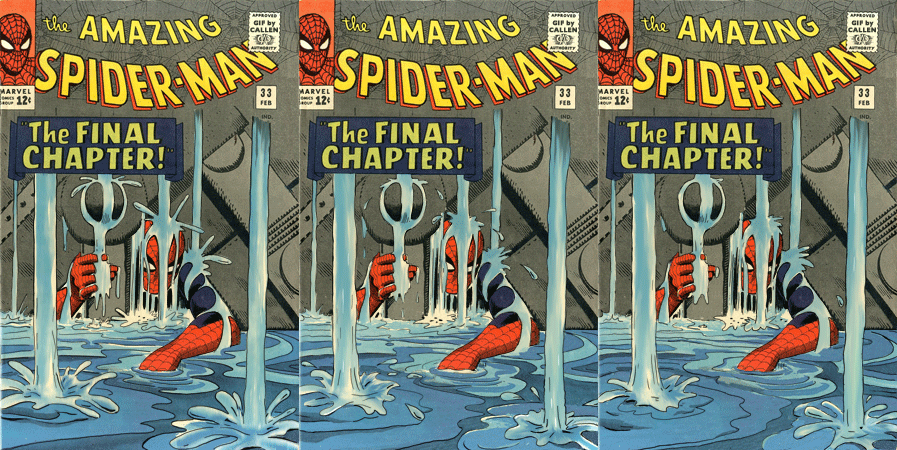
Callen-ized.
Tags: Kerry Callen
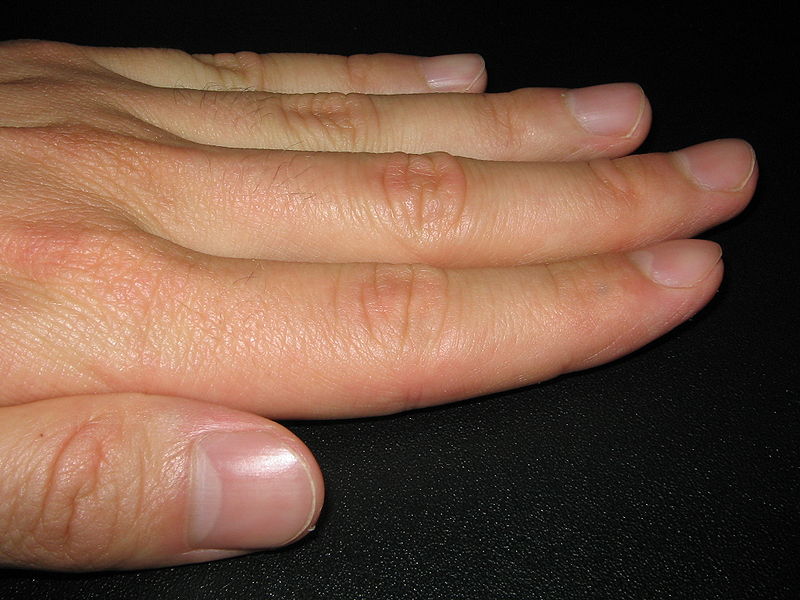
I have 10 freshly clipped finger nails. Any one want them for artwork, collections, to make jewelry, to make soup, to use as weapons, as holiday gifts, to decorate your tree this season, etc etc? If so contact me, they are free! I am trying to pay it forward and help my fellow man.

America got rid of the draft but continued waging wars, which meant that a military class needed to emerge and companies had to form to manage outsourced dirty work. Most of us never get any blood on our hands, but America is more than ever in the business of war. In Vanity Fair, Todd S, Purdum investigates how the U.S. transformed during the Cold War and War on Terror from sleeping giant into a militarized security state. An excerpt:
“Just over 50 years ago, in his farewell address from the Oval Office, Dwight D. Eisenhower warned the nation of the dangers inherent in a powerful ‘military-industrial complex,’ and just three days later—as if in proof of Eisenhower’s words—John Fitzgerald Kennedy famously vowed to ‘pay any price, bear any burden, meet any hardship, support any friend, oppose any foe in order to assure the survival and the success of liberty.’ Yes, the United States faced extraordinary challenges in the postwar era—and was forced to shoulder extraordinary responsibilities. But some steps, once taken, prove impossible to walk back. By 1961 the problem that Eisenhower had identified was well advanced. Already, the United States was spending more on military security than the net income of all American corporations combined.
In the years since, the trend has warped virtually every aspect of national life, with consequences that are quite radical in their cumulative effect on the economy, on the vast machinery of official secrecy, on the country’s sense of itself, and on the very nature of national government in Washington. And yet the degree to which America has changed is noticed by almost no one—not in any visceral way. The transformation has taken hold too gradually and over too long a period. Almost no one alive today has a mature, firsthand memory of a country that used to be very different—that was not a superpower; that did not shroud the workings of its government in secrecy; that did not use ends-justify-the-means logic to erode rights and liberties; that did not undertake protracted wars on the president’s say-so; that had not forgotten how to invest in urgent needs at home; that did not trumpet its greatness even as its shortcomings became more obvious. An American today who is 25 or 50 or even 75—such a person has lived entirely in the America we have become.”
Tags: Todd S. Purdum
A 1970 NASA film about the benefits of satellites.
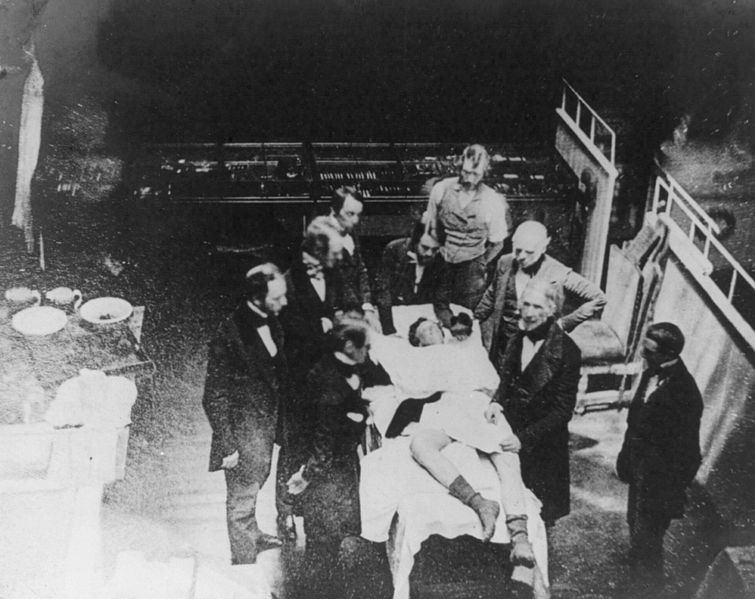
We’ve never really understood why anaesthesia works, only that it does, and that surgery was horrifying before its advent. But perhaps brain imaging will soon reveal the mystery of anesthesia’s potency. An excerpt from New Scientist about the history of surgery with gas:
“It was a Japanese surgeon who performed the first known surgery under anaesthetic, in 1804, using a mixture of potent herbs. In the west, the first operation under general anaesthetic took place at Massachusetts General Hospital in 1846. A flask of sulphuric ether was held close to the patient’s face until he fell unconscious.
Since then a slew of chemicals have been co-opted to serve as anaesthetics, some inhaled, like ether, and some injected. The people who gained expertise in administering these agents developed into their own medical specialty. Although long overshadowed by the surgeons who patch you up, the humble ‘gas man’ does just as important a job, holding you in the twilight between life and death.” (Thanks Browser.)
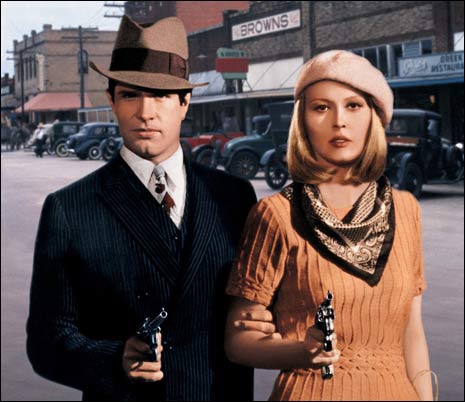
Laurie Winer writing in the Los Angeles Review of Books about Brian Kellow’s new Pauline Kael bio:
“Kael assumed national prominence in 1967, exactly when movies were taking quantum leaps in depictions of sex and violence, causing, as such leaps always do, anguish among cultural gatekeepers. Her review of Bonnie and Clyde marked Kael’s real debut in the New Yorker — she had previously published one article there about movies on TV. With his review of the same film, Bosley Crowther saw his 27-year reign as movie critic at the New York Times come to an end; Kael knew how to read the new graphic nihilism, and Crowther, her avowed nemesis, was left in the dark. Crowther had long been a powerful critic, and he had had his day, opposing Eugene McCarthy and censorship, and helping Americans to accept foreign films such as Open City and The Bicycle Thief. Now he was exposed as perilously out of touch. He was such an advocate of film as a force for betterment that he could hardly tell one violent movie from another. He called Bonnie and Clyde ‘a cheap piece of bald-faced slapstick comedy that treats the hideous depredation of that sleazy, moronic pair as though they were as full of fun and frolic as the jazz-age cut-up in Thoroughly Modern Millie.’ The resistance to this position was so strong that he wrote a second screed, precipitating his forced retirement as a film critic at the end of 1967.
Kael’s response to Arthur Penn’s film was so visceral because she sensed it marked a change in her own life as well as a change in movies. She was 48 years old, the single mother of a daughter, a person who had come from a West Coast farming family and who had struggled long and hard and with precious little recognition. With Bonnie and Clyde she finally came into her own as a critic of stature, someone who could influence the course of events, and she was eager to insert herself into the cultural moment: ‘The audience is alive to it,’ she wrote of the film, as if anyone with sense felt her excitement:
Our experience as we watch it has some connection with the way we reacted to movies in childhood: with how we came to love them and to feel they were ours — not an art that we learned over the years to appreciate but simply and immediately ours.”
••••••••••
PK + WA, 1975:
See also:
Tags: Brian Kellow, Laurie Winer, Pauline Kael
Not yet perfected but oh so promising.
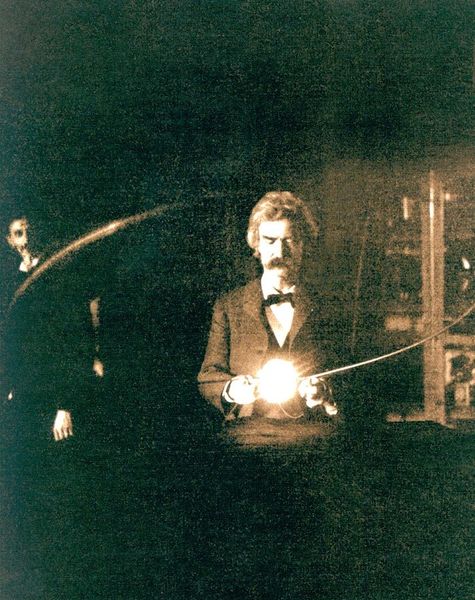
To celebrate the 176th birthday of Samuel Clemens, who was the Mark Twain of his day, here is a classic 1894 photo of the humorist messing around in the New York City laboratory of his good pal, Nikola Tesla. Twain’s wit and wisdom gained him worldwide adoration, made him a fortune (which he lost and regained), brought him into close contact with every notable figure of his era (not just Serbian electricians) and earned him a permanent place in the American literary canon. His speaking engagements were attended by rapturous audiences full of swooning women. Reports of his death may have been exaggerated, but his fame was not.
But like funny people before and after him, Twain had a melancholy side. A brief note from the Brooklyn Daily Eagle, 1898: “Mark Twain, at one time was in the habit of lunching at a restaurant in New York, pretty far uptown and away from the madding crowd. A lady who lived in one of the flats above the restaurant, meeting him just as he was coming away from lunch, spoke to him for a few minutes. Later on, when she herself was having her lunch, the waiter asked her to tell him the name of the gentleman with whom she had been speaking. He said he wanted to know because he was the saddest looking gentleman he had ever seen. ‘It’s quite depressing to wait on him,’ he said, ‘for I’ve never once seen him smile.'”
••••••••••
The Connecticut Yankee, in white suit, of course, 1909:
Tags: Mark Twain
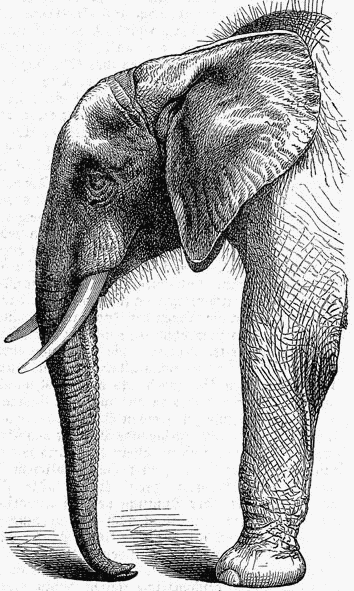
"Jumbo's sneeze is like the bursting of a boiler."
An elephant sneezing in Baltimore allowed Brooklyn Daily Eagle editors to fill some column space and also to traffic in stereotypes in the July 28 1902 issue. An excerpt:
“Jumbo II sneezed yesterday. To the average person this information is of no startling importance, but to those who happened to be on the Midway at the Maryland Industrial Exposition when Jumbo sneezed the event was one long to be remembered. Jumbo’s sneeze is like the bursting of a boiler, and it created a fairly good sized panic.
The elephant began to get ready for the sneeze a half an hour before it happened, and as the time for the event drew near he was rolling about in his cage in great agony. Suddenly he stopped, gave one bellow and then sneezed.
The look of perfect contentment on his face after the great event was in startling contrast to the terror seen on the faces of the fleeing people. Visitors to the exposition were running in all directions, not knowing what awful thing they were racing away from.
Among the Mohammedans of the Oriental and Cingalese villages Jumbo’s sneeze caused wild excitement. Oriental folk are most superstitious about elephants, and they believe to hear one sneeze brings all kinds of good luck. They rushed to Jumbo’s cage and, bowing low before his elephantine highness, began praying at a rapid rate.
When they finished they explained that an elephant’s sneezes are of the rarest occurrence, and the event was one of great significance to them. Elephants are susceptible to cold and catch cold easily, but it is very, very rarely that they sneeze.
Captain Miller, Jumbo’s keeper, says it is a good thing this is so, for a few more sneezes like Jumbo had yesterday might blow the top of his head off.”
Tags: Captain Miller, Jumbo II

From John Turner’s ArsTechnica piece about the development of boneless bots:
“The design of many robots has been inspired by living creatures, from the humanoid machines that have appeared in science fiction for decades to the mechanical cockroaches that scurry around some research labs. There has even been a robotic tuna used to explore the ocean. But our reliance on the mechanical has left a very large area of the animal kingdom left out: soft bodied creatures with neither skeletons nor shells. In a paper that will be released by PNAS, researchers describe a soft-bodied robot that can crawl around lab, powered by compressed air.
The limits in robot design have been very practical. We don’t yet have something that will mimic muscles well, which leaves our creations articulating their joints with things like gears and engines, which require a fairly rigid support structure. But the creators of this new robot were inspired by squid, which perform impressive feats of flexibility using a soft body that’s supported by the ocean’s buoyancy.”
Tags: John Turner
Ziggy Stardust, 1973.
Tags: David Bowie

I’m doing an art project and I need secrets. Please share a secret anonymously. You will not be contacted and your information will not be recorded.
Thank you.
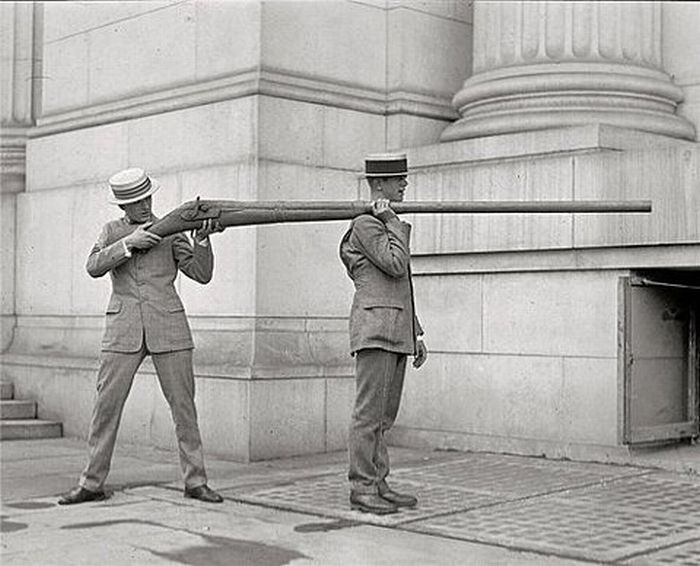
Carl Zimmer has a really good New York Times profile of pugnacious evolutionary psychologist Steven Pinker, who believes that the world has gotten markedly less violent. An excerpt:
“Dr. Pinker finds an explanation for the overall decline of violence in the interplay of history with our evolved minds. Our ancestors had a capacity for violence, but this was just one capacity among many. ‘Human nature is complex,’ he said. ‘Even if we do have inclinations toward violence, we also have inclination to empathy, to cooperation, to self-control.’
Which inclinations come to the fore depends on our social surroundings. In early society, the lack of a state spurred violence. A thirst for justice could be satisfied only with revenge. Psychological studies show that people overestimate their own grievances and underestimate those of others; this cognitive quirk fueled spiraling cycles of bloodshed.
But as the rise of civilization gradually changed the ground rules of society, violence began to ebb. The earliest states were brutal and despotic, but they did manage to take away opportunities for runaway vendettas.
More recently, the invention of movable type radically changed our social environment. When people used their powers of language to generate new ideas, those ideas could spread. ‘If you give people literacy, bad ideas can be attacked and experiments tried, and lessons will accumulate,’ Dr. Pinker said. ‘That pulls you away from what human nature would consign you on its own.'”
••••••••••
Pinker in discussion with Bill Faux’Reilly:
Tags: Carl Zimmer, Steven Pinker
The World Wide Web of the ’90s and the social-network revolution that followed had its roots, of course, in earlier decades. People were just waiting for the technology to catch up to their desires–or maybe define their desires. Three videos from 1986.
AOL forerunner Quantum Link:
Make your calls near a Phone Point because billions of dollars of infrastructure don’t yet exist:
Millions of American strangers “friend” one another:
Emilio Pucci designed the NASA-ish unis in 1965 for Braniff Airlines attendants.
An excerpt from Pucci’s 1992 New York Times obituary: “Mr. Pucci, who was the Marchese di Barsento, was born in Naples, into an aristocratic Italian family. He lived and worked in the Pucci Palace in Florence.
An enthusiastic sportsman who was on the Italian Olympic ski team in 1932, he also raced cars and excelled in swimming, tennis and fencing. His emergence as a fashion designer happened somewhat accidentally.
He was an Italian bomber pilot in World War II and he continued in the air force after the war, holding the rank of captain. On leave in Switzerland in 1947, he was spotted on the ski slopes by Toni Frissel, a photographer, who was impressed by the snugness of his ski garb, which was custom made of stretch fabrics.
When photographs of Mr. Pucci in his skisuit appeared in Harper’s Bazaar, he was besieged by American manufacturers who wanted to produce it. He decided instead to market the ski clothes himself. They were among the first styles made of stretch fabrics, and Lord & Taylor was among the first to promote them.
By 1950, Mr. Pucci was at the forefront of the fledgling Italian fashion industry. His forte in the beginning was sports clothes, but he soon moved into other fashions, including brilliantly patterned silk scarves. Encouraged by Stanley Marcus, one of the owners of Neiman-Marcus, he began making blouses and then dresses of the patterned material.”
Tags: Emilio Pucci

Finally got around to reading that doozy of a Deadspin post by Barry Patchesky about sleazy baseball agent Dan Lozano, a USC dropout who used dubious methods to become one of the sport’s biggest power brokers, building a house of cards atop a three-legged table. An excerpt:
“With Lozano, that question is always there. Through the years, he has told clients and colleagues that his career began in 1990 as a kid fresh out of USC, where he played Division I ball and earned a law degree. Every part of that sentence is false. Lozano never passed the bar, never went to law school, didn’t even earn an undergraduate degree. He told USA Today that he was just one Spanish class shy of graduating, but he once told a co-worker he lasted only ‘a few semesters.’ (He also told USA Today he dropped out because he was ‘negotiating the biggest deal in baseball history.’ He was referring to Mike Piazza’s gargantuan Mets contract, which was signed nine years after he dropped out.) As for his boast of playing baseball for the Trojans? Longtime USC coach Mike Gillespie has no recollection of Lozano, and his name appears nowhere in a list of all-time letterwinners. It’s not for nothing that, according to colleagues, people in the BHSC office took to calling him ‘Lie-zo.’
If there’s one thing his superiors at BHSC did know, it’s that Lozano was good. He had a preternatural ability to meet a baseball player once and become fast friends. More importantly to his bosses and his bottom line, he had a knack for turning those friends into clients.
‘He was downright charming,’ says a former friend who watched the young Lozano’s stock skyrocket. ‘He said exactly what you wanted to hear, and he became who you wanted him to be. And he could move on to the next player and be a completely different person for them.’“
Tags: Barry Patchesky, Dan Lozano
Mark David Chapman was the last troubled person to loiter outside John Lennon’s home, but not the first. From 1971.
Tags: John Lennon, Mark David Chapman
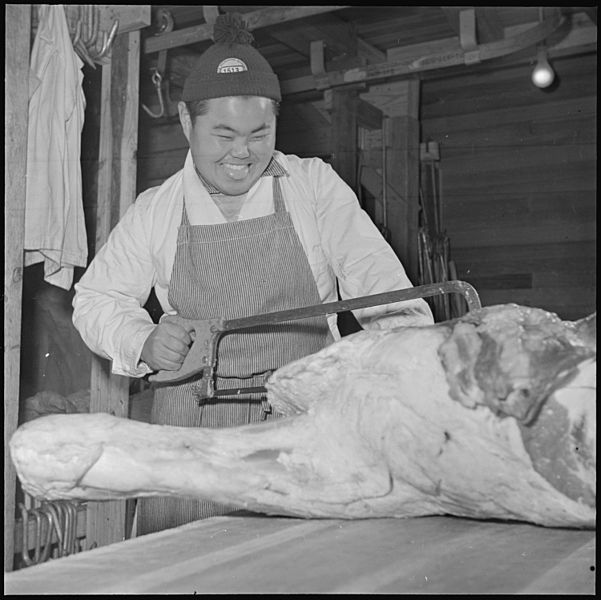
Animal-free, factory-grown meat isn’t practical to produce yet, but it is coming. An excerpt from David Szondy’s new Gizmag article on the topic:
“Dr. Mark Post, a vascular biologist at the University of Maastricht in the Netherlands, is one of a handful of scientists around the world working on the problem ofcultivating meat artificially in a laboratory. The idea is to find a way to create the meat without the animal by growing it directly. Speaking to the Reuters news agency, Dr. Post estimates that, if he succeeds, his first burger will cost a staggering $345,000, but when the technique is perfected and scaled up to industrial levels, economies of scale should kick in and make lab-grown beef (or pork or chicken or fish) as cheap, if not cheaper, than its four-legged counterpart. He also believes that the advantages of in vitro meat, as it is called, are such that it will go a long way toward alleviating world hunger and saving the environment.”
Tags: David Szondy, Mark Post
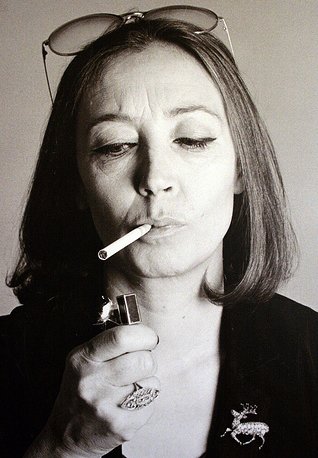
Oriana Fallaci reflected on some of her most famous interview subjects in a 1969 Life article in which the grand inquisitor was the one being quizzed:
“Robert F. Kennedy: A very cold and shy man. He blushed at every question. I never managed to provoke him. One of my worst interviews.
Barbra Streisand: We liked each other very much, but she and her press agent complained about the story. I sent them both to hell.
John Glenn: The second time I saw him, after his fall, he was a better man, I thought, not playing the Boy Scout so much.
Federico Fellini: We are total enemies now. He wished me to die. I don’t wish him to die–but I don’t give a damn whether he lives.
Paul Newman: He seems like a nice American boy who reads the Times and Washington Post daily. I think I’d like him as a neighbor.”
••••••••••
More Oriana Fallaci posts:
Tags: Oriana Fallaci