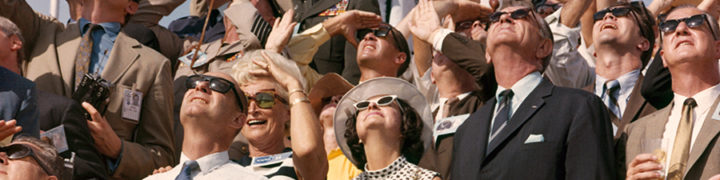
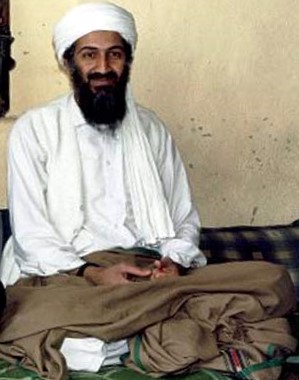
"America’s problem isn’t a breakdown in private morality." (Image by Gage Skidmore.)
From Robert Reich’s sober assessment of election year moralizing of condom-condemning Republicans:
“But America’s problem isn’t a breakdown in private morality. It’s a breakdown in public morality. What Americans do in their bedrooms is their own business. What corporate executives and Wall Street financiers do in boardrooms and executive suites affects all of us.
There is moral rot in America but it’s not found in the private behavior of ordinary people. It’s located in the public behavior of people who control our economy and are turning our democracy into a financial slush pump. It’s found in Wall Street fraud, exorbitant pay of top executives, financial conflicts of interest, insider trading, and the outright bribery of public officials through unlimited campaign ‘donations.’
Political scientist James Q. Wilson, who died last week, noted that a broken window left unattended signals that no one cares if windows are broken. It becomes an ongoing invitation to throw more stones at more windows, ultimately undermining moral standards of the entire community
The windows Wall Street broke in the years leading up to the crash of 2008 remain broken. Despite financial fraud on a scale not seen in this country for more than eighty years, not a single executive of a major Wall Street bank has been charged with a crime.” (ThanksBrowser.)
The opening of John Brockman’s Edge essay about influential if eccentric evolutionary theorist Robert Trivers, which reads like a hallucination:
“Thirty years ago, Robert Trivers disappeared.
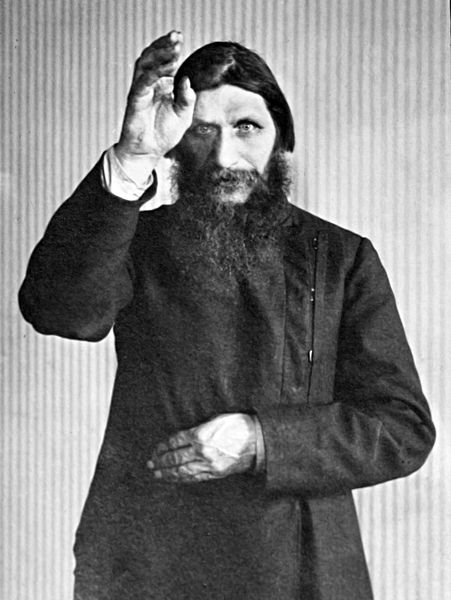
My connection to him is goes back to the 1970s. He had left Harvard and was roaming around Santa Cruz when I was introduced to him in a telephone call by our mutual friend Huey P. Newton, Chairman of The Black Panther Party. Huey put Robert on the phone and we had a conversation in which he introduced me to his ideas. I recall noting at the time the power and energy of his intellect. Huey, excited by Robert’s ideas on deceit and self-deception, was eager for the three of us to get together.
We never had the meeting. Huey met a very bad end. I lost track of Robert. Over the years there were rumors about a series of breakdowns; he was in Jamaica; in jail.
He fell off the map.
But during his thirty year disappearance, the influence of his ideas has grown and transcended the purely scientific arena. And through all his ups and downs, he never stopped working on his theories.”
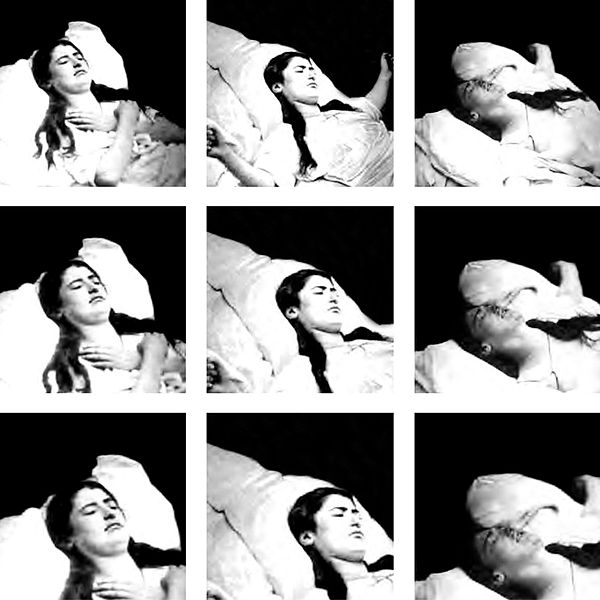
"The apparent death, however, was only a trance, or protracted swoon."
From “Fatal Experiment with Chloroform,” a story in an 1848 edition of the New York True Sun which is almost certainly false:
“A young lady, daughter of Mr. Macdonald, a baker in Catharine Street, in this city, recently met her death in the most awful manner, from the use of the now fashionable but most dangerous preparation. About three weeks ago, the ether was employed to allay a toothache; but subsequently the sufferer was supposed to die, from what cause does not appear. The apparent death, however, was only a trance, or protracted swoon; for, on opening the coffin a day or two ago, the unfortunate girl had turned round upon her face, and in her agony and desperation had actually destroyed two of her fingers, on recovering from temporary death by ether. The Coroner’s investigation should elicit the fact as to who prescribed a remedy which produced this most frightful result.”
“David Mark, president of AI design consultant Intrinsic Algorithm, spent about half an hour last week walking game developers through what he called the psychology of artificial intelligence. He used to time to give the game-makers tips on how to make gamers feel like they’re in a world populated by real people instead of digital automatons.
The key, he said, is to find a way to get gamers to project their own emotions and psychology onto the game’s characters.
‘In the absence of defining information people project what they believe should be there,’ he said.
To prove his point, Mark showed the Heider-Simmel demonstration, an animated video created by psychologists Fritz Heider and Mary-Ann Simmel in the 1940s to explore the ‘attribution of causality.’
The short video shows two animated triangles, an animated circle and a box. There was no audio, just the crude line drawings moving around. After showing the video he said that most viewers saw the video as a couple and a bully; or a mother, a child and a bad guy; or a father and a couple. Each viewer created their own, sometimes elaborate back story for the simple drawings.
‘It’s really just two triangles, a circle and some lines,’ Mark pointed out.
In the absence of information, viewers created their own fiction, their own emotional attachments. But movement and positioning, he added, does help shape context.”
••••••••••
Heider-Simmel Demonstration, an experimental study of apparent behavior:
From “A Voyage to the Sun,” a really nice piece of writing from 1999 by Michael Paterniti in Esquire, about extreme science in the New Mexico desert:
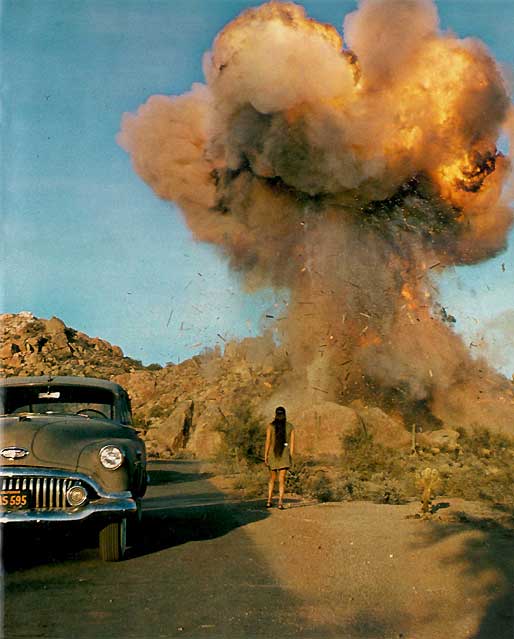
“See, the Machine is not like other machines. It’s not a Saab with heated leather seats and a refrigerated glove compartment. It demands security clearance. It demands care and reverence. And if you’re Chinese–or if you’re a Toblerone-loving Swiss, for that matter–you can’t come here. You can’t get past the armed guard at the front gate or the second gate at Area IV or the concertina wire or the ID-activated, secret-combination metal doors to the hangar-sized sandstone building where the Machine lives.
And the people here, Jimmy Potter and his tech crew and the array makers and the laser technicians and the classified team of scientists burrowing in the Habitrail of their own minds for some small epiphany, for some shred of insight into the Machine–the whole lot of them numbering maybe 130–they bring their love, their dizzy, stupid, human love, and their vanity and ambition and dreams, and all of it gets shot into the Machine. Envy, greed, betrayal . . . shot into the Machine. Glory, honor, brilliance . . . shot in. Some shoot in their god, too.
It begins with the simple flip of a cyber switch in a control room at the north end of the hangar. Before a bank of computer screens, a man clicks a mouse, and then electricity, quietly sucked right off the municipal power grid in Albuquerque, floods into the outer ring of Marx generators. Which is when the Machine takes control. A siren sounds, red lights flash, doors automatically lock. The frogmen and the white and blue jumpsuits clamber over the high bay, down the metal steps, and retreat to a copper-coated room behind a foot of cement.
Another switch is flipped, another mouse clicked. To the piercing sound of an alarm, a countdown in the Marx generators ensues, or rather a count up, in kilovolts. Comes in a monotone, almost hollow voice beneath the frantic alarm. The man in the control room on a tinny loudspeaker, the Machine speaking through the human.
If driverless cars can communicate with one another at all times, brake pedals have diminshed utility. From IEEE Spectrum:“It’s not just the sensor-driven skills that will soon be common to individual cars that will shape the future of automotive transportation, but also the ability for cars to communicate with each other, sharing constant updates about exactly where they are and where they’re going. And with enough detailed information being shared at a fast enough pace between all vehicles on the road, things like traffic lights become completely redundant.”
God and stories of the Bible. Secret Military prisons and camps. Area 51, Aliens and aircraft. Bigfoot, Yeti, Loch ness. Bermuda Triangle ect ect ect. 9/11, Death of Usama Bin Laden, JFK, Lincoln. So, what do you all think of these things? could they be much deeper in detail than what we already know??
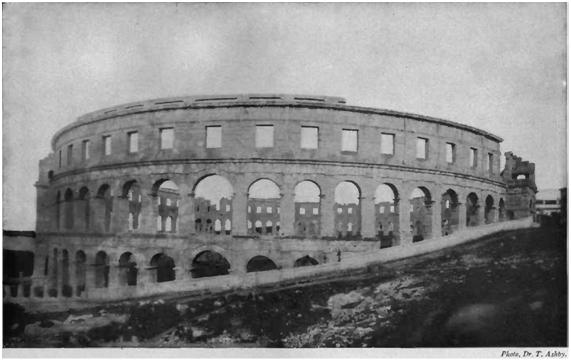
An image of glorious ruins from the 1911 "Encyclopaedia Britannica" edition.
I actually didn’t realize the Encyclopaedia Britannica was still publishing a print version, but that anachronism is no more. From Computerworld:
“After 244 years, the Encyclopaedia Britannica will cease publishing its flagship encyclopedia and concentrate on its digital offerings.
“We’d like to think our tradition is not to print, but to bring scholarly knowledge to the people,” said Jorge Cauz, president of Encyclopaedia Britannica.
Britannica has printed the encyclopedia, which now runs to 32 volumes in length, since 1768. The 2010 edition was the last edition the company published. It has decided not to print what would be the 2012 edition, which would have been out by the end of the year. The company has about 4,000 sets of the 2010 edition still available for sale. Overall about 2 million sets have been printed through the entire run of the encyclopedia.
Britannica’s move to stop printing encyclopedias is a telling moment in this point in history, when print is being superseded by websites and network-connected applications.”
••••••••••
Richard Feynman in 1959: “Why can’t we write the entire 24 volumes of the Encyclopaedia Britannica on the head of a pin?”
“You have meddled with the primal forces of nature, Mr. Beale, and I won’t have it! Is that clear? You think you’ve merely stopped a business deal. That is not the case! The Arabs have taken billions of dollars out of this country, and now they must put it back! It is ebb and flow, tidal gravity! It is ecological balance! You are an old man who thinks in terms of nations and peoples. There are no nations. There are no peoples. There are no Russians. There are no Arabs. There are no third worlds. There is no West. There is only one holistic system of systems, one vast and immane, interwoven, interacting, multivariate, multinational dominion of dollars. Petro-dollars, electro-dollars, multi-dollars, reichmarks, rins, rubles, pounds, and shekels. It is the international system of currency which determines the totality of life on this planet. That is the natural order of things today. That is the atomic and subatomic and galactic structure of things today! And YOU have meddled with the primal forces of nature, and YOU… WILL… ATONE! Am I getting through to you, Mr. Beale? You get up on your little twenty-one inch screen and howl about America and democracy. There is no America. There is no democracy. There is only IBM, and ITT, and AT&T, and DuPont, Dow, Union Carbide, and Exxon. Those are the nations of the world today. What do you think the Russians talk about in their councils of state, Karl Marx? They get out their linear programming charts, statistical decision theories, minimax solutions, and compute the price-cost probabilities of their transactions and investments, just like we do. We no longer live in a world of nations and ideologies, Mr. Beale. The world is a college of corporations, inexorably determined by the immutable bylaws of business. The world is a business, Mr. Beale. It has been since man crawled out of the slime. And our children will live, Mr. Beale, to see that… perfect world… in which there’s no war or famine, oppression or brutality. One vast and ecumenical holding company, for whom all men will work to serve a common profit, in which all men will hold a share of stock. All necessities provided, all anxieties tranquilized, all boredom amused.”
••••••••••
Siskel (with mustache!) and Ebert praise their “favorite Christmas picture”:
"Thirty years ago, almost all of contemporary Dubai was desert." (Image by Titoni Thomas.)
From “The Dark Side of Dubai,” Johann Hari’s excellent 2009 Independent article, a tidy telling of the city state’s birth and amazing growth spurt:
“Thirty years ago, almost all of contemporary Dubai was desert, inhabited only by cactuses and tumbleweed and scorpions. But downtown there are traces of the town that once was, buried amidst the metal and glass. In the dusty fort of the Dubai Museum, a sanitised version of this story is told.
In the mid-18th century, a small village was built here, in the lower Persian Gulf, where people would dive for pearls off the coast. It soon began to accumulate a cosmopolitan population washing up from Persia, the Indian subcontinent, and other Arab countries, all hoping to make their fortune. They named it after a local locust, the daba, who consumed everything before it. The town was soon seized by the gunships of the British Empire, who held it by the throat as late as 1971. As they scuttled away, Dubai decided to ally with the six surrounding states and make up the United Arab Emirates (UAE).
The British quit, exhausted, just as oil was being discovered, and the sheikhs who suddenly found themselves in charge faced a remarkable dilemma. They were largely illiterate nomads who spent their lives driving camels through the desert – yet now they had a vast pot of gold. What should they do with it?
Dubai only had a dribble of oil compared to neighbouring Abu Dhabi – so Sheikh Maktoum decided to use the revenues to build something that would last. Israel used to boast it made the desert bloom; Sheikh Maktoum resolved to make the desert boom.” (Thanks TETW.)
If I had to bet on one aspect of our lives about to change drastically, I would go with batteries. Whether or not Apple is really working on hydrogen batteries as whispers sometimes suggest, I think the term “long-life” is about to change significantly for the better. And products and processors will be made to require less and less juice, adding to the efficiency. No longer will we be tethered to a wall. From Leo Kelion of BBC News:
“Arm Holdings has unveiled what it describes as the ‘world’s most energy-efficient microprocessor’ design.
The firm says that microcontrollers based on the ‘Flycatcher’ architecture will pave the way for the ‘internet of things’- the spread of the net to a wider range of devices.
It suggests that fridges and other white goods, medical equipment, energy meters, and home and office lighting will all benefit from the innovation.
Two firms have licensed the technology.
They are NXP Semiconductors and Freescale.
‘It opens up all devices to the potential of being connected all the time,’ Freescale’s Geoff Lees told the BBC.
‘It’s allowing us to provide connectivity everywhere. So anything from consumer appliances, MP3-music audio docks, kitchen equipment with displays right through to remote sensors in rain monitoring equipment or personal medical devices – an area where ultra-long battery life allied to high performance and safety is becoming more and more important.'”
"Some stores and brands are embracing the change." (Image by Thomas Edwards,)
I’m not a materialistic person, but I would rather go to a good store than a good museum. Both are commenting on the world right now–even an exhibition of antiquities is interesting to us at this moment for some reason–but I think retail outlets with well-designed products are more stimulating, communicating more directly to us about who we are, for better or worse.
Question: Are there shops that have an app that allow you to use your smartphone to scan any item’s tag and get info and videos about products on your phone? I haven’t seen it yet, but my guess is “yes” or they will soon exist. From Stephanie Clifford’s recent New York Times article about modern shopping:
“For a generation of shoppers raised on Google and e-commerce, the answer to ‘Can I help you?’ is increasingly a firm ‘no,’ even at retailers like Nordstrom that have built their reputations around customer service.
But instead of getting defensive, some stores and brands are embracing the change by creating new personal touches that feature gadgets rather than a doting sales staff. Bobbi Brown has touch-screen televisions to demonstrate the perfect smoky eye, something that was once the exclusive domain of makeup artists. The basketball star LeBron James’s shoe store in Miami has 50 iPads to describe its merchandise. Macy’s is testing cosmetics stations where tablets offer reviews and tips. And at C. Wonder, shoppers use a touchpad to personalize the lighting and music in dressing rooms (there is also a button in case, olden-days style, they need to call for help).
The self-service theme, which started years ago with checkout at groceries, has progressed to the point where shoppers can navigate entire stores without once having to say, ‘Just looking, thanks.'”
B.F. Skinner, the famed Behaviorist who plays a central role in one of my favorite New Yorker articles, Calvin Trillin’s “The Chicken Vanishes” (subscription required), is responsible for this 1954 video about his pre-personal computer Teaching Machine, which provided automated instruction.
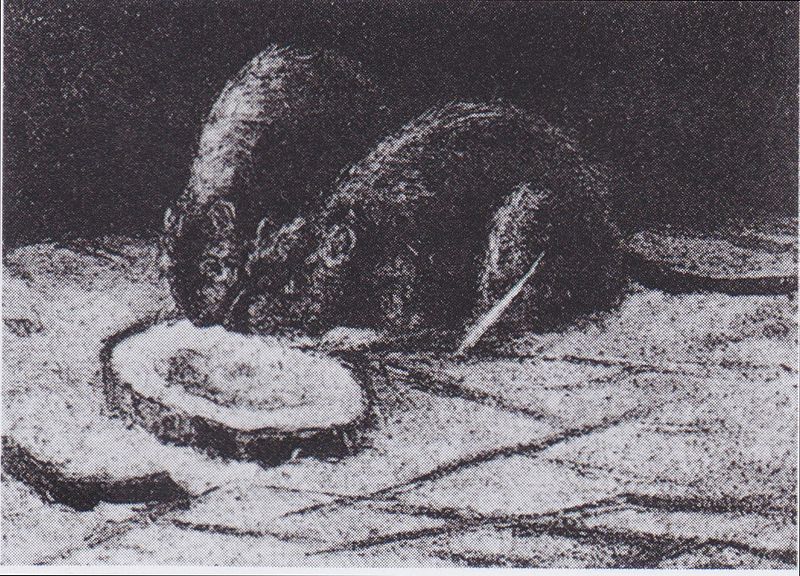
"His first impulse was to brain the pest with a base ball bat."
The drunk editors of the Brooklyn Daily Eagle published an important medical story in the April 17, 1898 edition, which originally ran in the Philadelphia Times. The piece in full:
“A rat with a wooden leg is a curiosity as curiosities go nowadays. Yet such an animal can be seen any day at the residence of a man named Dugmore, in the southwestern section of the city. About a month ago, Willie Dugmore, a lad of 12 years, found the little rodent trapped in the cellar. His first impulse was to brain the pest with a base ball bat, but the rat looked at him so pleadingly that Willie’s heart was touched and he decided to take the trap to an adjoining vacant lot and liberate the animal. This he did, but instead of scampering off, as he expected, the rat limped painfully up to him and began to lick his hand. Willie then discovered that one of the animal’s legs had been almost severed by the trap. Taking the rat home, he cut the leg off and then bandaged the wound, using as a liniment a little vaseline. He then put the rat into a cage and carefully fed and nursed it for a week. He then removed the bandage and found that the wound had completely healed. The rat was, however, unable to walk, and Willie decided he would make for it an artificial leg. Going down to the cellar he obtained a piece of pine, and after some whittling succeeded in making a leg. This he fastened on with a string and was delighted to see that his plan was entirely successful. The rat is now the family pet and can be seen any day hobbling about the kitchen or teasing a little Irish terrier, of which it has made a lifelong friend.”
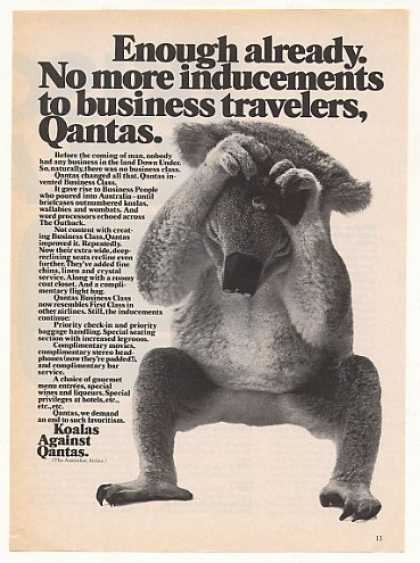
I am moving from my house in downtown New York to Spain. I have a 2 year old koala bear that I can not take with me on the trip. I just want to be assured that he will be cared for the right way and you have a place big enough for him. Please give Austin a call.
If moderate conservatives like Jeb Bush are unable to rescue the Republican Party from its own extremism, if Presidential nomination victories become consistently Pyrrhic and disqualifying, will we see the emergence of a more centrist conservative party? Or is the madness of the GOP just a cycling out that will ultimately run its course? Nobody can sum up the Republicans’ recent rocky road and the fork that led it to its precarious current position more eloquently than Louis Menand does this week in the opening of his New Yorker piece, “Money Pol.” An excerpt:
“Once, when winters were cold and the world seemed large, creatures roamed the earth who were permissive on social issues and at ease with big government, yet remained ever faithful to the gods of business and finance. Their principles were abstract but broad-minded: tolerance, free trade, and a belief in something called the American Way. Their personal tastes were conventional. They were surprisingly allergic to indecorum, and disinclined to question the status quo. But they were not small-town or provincial; they were Wall Streeters, not Main Streeters. Their vista was international. They were private-sector types who answered the call to public service. They were liberal Republicans. Nelson Rockefeller was such a creature. So were Prescott Bush, William Scranton, Charles Percy, John Lindsay, Mark Hatfield, Elliot Richardson, and George Romney.
Then, one year, a powerful meteor struck the planet, and, virtually overnight, the entire species was wiped out. The meteor’s name was Ronald Reagan. Political paleontologists, looking back at the fossil record, can detect signs pointing to the organism’s imminent extinction that predate the Reagan era. Richard Nixon, for example, showed that a pro-business, big-government Republican, by appealing to suburban anti-Communism and white working-class resentment, could take a populist road to the White House. Men like Rockefeller and Romney despised Nixon; but they could never beat him. Liberal Republicans did not like to get into the political mud.”
••••••••••
Nelson Rockefeller, 1964: “The Republican Party must repudiate these people.”
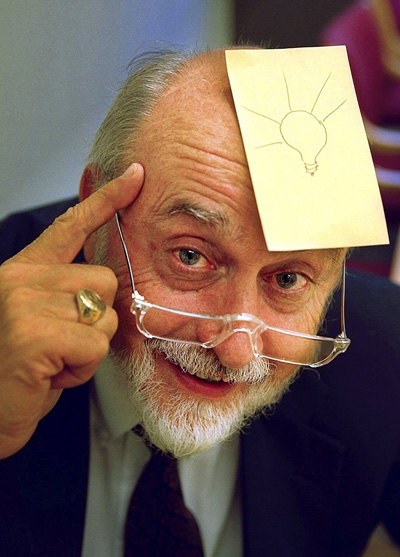
Jonah Lehrer has an intriguing, counterintuitive argument in the Wall Street Journal, which posits that creativity isn’t just something for the chosen few, but a quality everyone possesses. Embedded in the article is the origin story of the Post-It Note. An excerpt:
“Consider the case of Arthur Fry, an engineer at 3M in the paper products division. In the winter of 1974, Mr. Fry attended a presentation by Sheldon Silver, an engineer working on adhesives. Mr. Silver had developed an extremely weak glue, a paste so feeble it could barely hold two pieces of paper together. Like everyone else in the room, Mr. Fry patiently listened to the presentation and then failed to come up with any practical applications for the compound. What good, after all, is a glue that doesn’t stick?
On a frigid Sunday morning, however, the paste would re-enter Mr. Fry’s thoughts, albeit in a rather unlikely context. He sang in the church choir and liked to put little pieces of paper in the hymnal to mark the songs he was supposed to sing. Unfortunately, the little pieces of paper often fell out, forcing Mr. Fry to spend the service frantically thumbing through the book, looking for the right page. It seemed like an unfixable problem, one of those ordinary hassles that we’re forced to live with.
But then, during a particularly tedious sermon, Mr. Fry had an epiphany. He suddenly realized how he might make use of that weak glue: It could be applied to paper to create a reusable bookmark! Because the adhesive was barely sticky, it would adhere to the page but wouldn’t tear it when removed. That revelation in the church would eventually result in one of the most widely used office products in the world: the Post-it Note.”
Printed knowledge made it possible for us to be intellectuals, to shift attention from land to library, even encouraged us to do so. But what does having a smartphone, with its icons and abbreviations, as our chief means of information gathering portend for us? And what does it mean for the next few generations born to its efficacy?
If we’re mainly typing with our thumbs, mostly communicating in short bursts of letters and symbols, relying largely on algorithms, who are we then? Will an ever-increasing reliance on technology dumb us down? Or will it ultimately free us of ideologies, those abstractions that often conflict violently with reality? And if so, is that a good thing?
In the excellent 2011 Wired article, “The World of the Intellectual vs. the World of the Engineer,” Timothy Ferris makes an argument for rigorous science over intellectual theory. I don’t completely agree with him. Democracy was a pretty potent and wonderful abstraction before it became a reality. And saying that Freud “discovered nothing and cured nobody” isn’t exactly fair since realizing that there are unconscious forces helping to drive our behavior has been an invaluable tool. But Ferris still makes a fascinating argument. An excerpt:
“Being an intellectual had more to do with fashioning fresh ideas than with finding fresh facts. Facts used to be scarce on the ground anyway, so it was easy to skirt or ignore them while constructing an argument. The wildly popular 18th-century thinker Jean-Jacques Rousseau, whose disciples range from Robespierre and Hitler to the anti-vaccination crusaders currently bringing San Francisco to the brink of a public health crisis, built an entire philosophy (nature good, civilization bad) on almost no facts at all. Karl Marx studiously ignored the improving living standards of working-class Londoners — he visited no factories and interviewed not a single worker — while writing Das Kapital, which declared it an ‘iron law’ that the lot of the proletariat must be getting worse. The 20th-century philosopher of science Paul Feyerabend boasted of having lectured on cosmology ‘without mentioning a single fact.’
Eventually it became fashionable in intellectual circles to assert that there was no such thing as a fact, or at least not an objective fact. Instead, many intellectuals maintained, facts depend on the perspective from which are adduced. Millions were taught as much in schools; many still believe it today.
Reform-minded intellectuals found the low-on-facts, high-on-ideas diet well suited to formulating the socially prescriptive systems that came to be called ideologies. The beauty of being an ideologue was (and is) that the real world with all its imperfections could be criticized by comparing it, not to what had actually happened or is happening, but to one’s utopian visions of future perfection. As perfection exists neither in human society nor anywhere else in the material universe, the ideologues were obliged to settle into postures of sustained indignation. ‘Blind resentment of things as they were was thereby given principle, reason, and eschatological force, and directed to definite political goals,’ as the sociologist Daniel Bell observed.
While the intellectuals were busy with all that, the world’s scientists and engineers took a very different path. They judged ideas (‘hypotheses’) not by their brilliance but by whether they survived experimental tests. Hypotheses that failed such tests were eventually discarded, no matter how wonderful they might have seemed to be. In this, the careers of scientists and engineers resemble those of batters in major-league baseball: Everybody fails most of the time; the great ones fail a little less often.”