Politics

You are currently browsing the archive for the Politics category.

In a Potemkin Review interview conducted by Antoine Dolcerocca and Gokhan Terzioglu, Thomas Piketty discusses what he believes is the source of long-term, even permanent, productivity, which, of course, can occur without reasonably equitable distribution, the main focus of his book Capital in the 21st Century. An excerpt:

Question:

What do you see as a source of perpetual productivity growth?

Thomas Piketty:

Simply accumulation of new knowledge. People go to school more, knowledge in science increases and that is the primary reason for productivity growth. We know more right now in semiconductors and biology than we did twenty years ago, and that will continue.

Question:

You argue in the book that while Marx made his predictions in the 19th century, we now know that sustained productivity growth is possible with knowledge (Solow residual, etc.). But do you think this can be a sustained process in the long run?

Thomas Piketty:

Yes, I do think that we can make inventions forever. The only thing that can make it non-sustainable is if we destroy the planet in the meantime, but I do not think that is what Marx had in mind. It can be a serious issue because we need to find new ways of producing energy in order to make it sustainable, or else this will come to a halt. However if we are able to use all forms of renewable energy, immaterial growth of knowledge can continue forever, or at least for a couple of centuries. There is no reason why technological progress should stop and population growth could also continue for a little more.•

Tags: , ,

In a Business Insider piece, tech entrepreneur Hank Williams neatly dissects the problem of the intervening period between the present and that future moment when material plenty arrives, which is hopefully where technology is taking us. How hungry will people get before the banquet is served? I don’t know that I agree with his prediction that more jobs will move to China; outsourcing will likely come to mean out of species more than out of country. An excerpt:

When you read in the press the oft-quoted concept that “those jobs aren’t coming back” this “reduction of need” is what underlies all of it. Technology has reduced the need for labor. And the labor that *is* needed can’t be done in more developed nations because there are people elsewhere who will happily provide that labor less expensively.

In the long term, technology is almost certainly the solution to the problem. When we create devices that individuals will be able to own that will be able to produce everything that we need, the solution will be at hand. This is *not* science fiction. We are starting to see that happen with energy with things like rooftop solar panels and less expensive wind turbines. We are nowhere near where we need to be, but it is obvious that eventually everyone will be able to produce his or her own energy.

The same will be true for clothing, where personal devices will be able to make our clothing in our homes on demand. Food will be commoditized in a similar way, making it possible to have the basic necessities of life with a few low cost source materials.

The problem is that we are in this awful in-between phase of our planet’s productivity curve. Technology has vastly reduced the number of workers and resources that are required to make what the planet needs. This means that a small number of people, the people in control of the creation of goods, get the benefit of the increased productivity. When we get to the end of this curve and everyone can, in essence, be their own manufacturer, things will be good again. But until we can ride this curve to its natural stopping point, there will be much suffering, as the jobs that technology kills are not replaced.

The political implications of this are staggering.•

Tags:

There’s never been any material evidence linking Mohamedou Ould Slahi to the 9/11 terrorists, but he’s spent the past dozen years a prisoner in Guantanamo Bay. Slahi’s just-published diary makes claims of sexual abuse, among other forms of torture, punishment which he says forced him to lie and implicate others he did not know for crimes he knew nothing about. An excerpt via Britta Sandberg at Spiegel:

As soon as I stood up, the two _______ took off their blouses, and started to talk all kind of dirty stuff you can imagine, which I minded less. What hurt me most was them forcing me to take part in a sexual threesome in the most degrading manner. What many _______ don’t realize is that men get hurt the same as women if they’re forced to have sex, maybe more due to the traditional position of the man. Both _______ stuck on me, literally one on the front and the other older _______ stuck on my back rubbing ____ whole body on mine.

At the same time they were talking dirty to me, and playing with my sexual parts. I am saving you here from quoting the disgusting and degrading talk I had to listen to from noon or before until 10 p.m. when they turned me over to _______, the new character you’ll soon meet.

To be fair and honest, the _______ didn’t deprive me from my clothes at any time; everything happened with my uniform on. The senior _______________ was watching everything _____________________________________________________. I kept praying all the time.

“Stop the fuck praying! You’re having sex with American _______ and you’re praying? What a hypocrite you are!” said ______________ angrily, entering the room.

I refused to stop speaking my prayers, and after that, I was forbidden to perform my ritual prayers for about one year to come. I also was forbidden to fast during the sacred month of Ramadan October 2003, and fed by force. During this session I also refused to eat or to drink, although they offered me water every once in a while. “We must give you food and water; if you don’t eat it’s fine.”

I was just wishing to pass out so I didn’t have to suffer, and that was really the main reason for my hunger strike; I knew people like these don’t get impressed by hunger strikes. Of course they didn’t want me to die, but they understand there are many steps before one dies. “You’re not gonna die, we’re gonna feed you up your ass,” said ____________.

I have never felt as violated in myself as I had since the DoD team started to torture me to get me admit to things I haven’t done. (…)•

Tags: ,

Marriage may be the ultimate social safety net, but for many it seems a trap. The heart wants what it wants–and doesn’t want what it doesn’t want–and emotions more than economics drive personal lives. Sometimes politicos believe, however, that divorce and single parenting is driven mostly by public policy.

It’s a bipartisan folly, with even the very social conservatives who most want the government’s finger out of the pie doing a turnabout when a wedding cake is involved. Marriage shouldn’t be de-incentivized by public policy, obviously, but if the institution isn’t taken as seriously in America as it once was, that may be because it was enabled by certain inequalities and prejudices we’re better off without. The people have voted. From the Economist:

When marriage is hitched to politics the result is usually muddled thinking. Social conservatives think that lax attitudes to sex, a decline in manliness, short skirts and a hundred other things have chipped away at a sacred institution. The Heritage Foundation, a think-tank with a “Marshall Plan for Marriage”, recently puffed a study suggesting that online pornography was the cause of the rot. People who reckon culture is to blame often propose economic solutions, from getting rid of marriage penalties to using public policy to promote wedlock. Thus some conservatives, who tend to assume that the government mucks up everything it tries, are nonetheless arguing that it can revive the traditional family. Leftish Democrats, meanwhile, think that marriage has been undermined by rising inequality, and especially the low wages of unskilled men, which make them less attractive as mates. They tend to argue that marriage, unlike practically every other social problem, cannot be fixed by government.

Both these views are confused. There are indeed marriage penalties in the tax code and in the welfare system: a single mother who marries a man with a job can lose all kinds of means-tested benefits. But there are also some marriage bonuses, and the tax code is so complicated that few Americans know whether tying the knot will mean they owe the taxman more or less. The federal government has made $114 billion-worth of pro-marriage fiddles to tax laws in the past decade with nothing much to show for it. And there is no evidence from decades of marriage-promotion programmes that the government can persuade people to get or stay hitched, a finding that will not surprise anyone who has ever actually been married.

As for the notion that inequality is to blame, that is muddled too. Most of the increase in income inequality has been at the very top of the scale: it is hard to see how the vast pay packet of a hedge-funder in New York changes the intentions of someone waiting tables in Utah. Though the wealthy are much more likely to wed than the poor, the relationship between money and vows is not clear-cut. Lots of people who decided to marry a few generations ago were poorer than those who choose not to today. Nor did marriage rates decline in the 1920s, when the surge in stock prices gilded the incomes of rich Americans. This tangle over inequality blinds Democrats to the possibility that causation may run in the opposite direction: that unwed parents raise poorer children. Isabel Sawhill of the Brookings Institution, a think-tank, calculates that returning marriage rates to their 1970 level would lower the child-poverty rate by a fifth. This omission may be deliberate: Democrats are reluctant to offend unmarried women, 60% of whom voted for the party’s candidates in 2014.

A debate about marriage should begin by acknowledging that the high rates of the 1950s and 1960s were a peak rather than the norm. The marriage rate in America has only recently dipped below where it was at the end of the 19th century, according to Andrew Cherlin of Johns Hopkins University. Reviving marriage rates of the 1950s, an era looked on fondly both by conservatives (who remember an America as wholesome as its cereal adverts) and by liberals (who recall an age when well-paid jobs were available for people with few qualifications) would require reviving some of that decade’s less jolly features too.•


It’s not just Americans who are in favor of doing rash and violent things that are against our interests merely because they feel patriotic. Look at contemporary Russia. Putin’s aggression, which has contributed mightily to the state’s wrecked economy, was met with approval by the majority of Russians. Briefly elated with a bacchanal of pride, they’re now sick with a long hangover, paying for letting their emotions dictate strategy, just as we did with Iraq.

I’m unconvinced that the U.S. has learned any lesson from that invasion, which occurred under false pretenses, cost us the lives 4,500 soldiers and more than a trillion dollars, a good amount of it bilked by war contractors. You hear rumblings now from Americans, and in our culture, that we need to not just hear how great the country is, but to have it demonstrated in some loud, scary way. That’s, of course, what our enemies want.

We defeat Putin and terrorists and any external threat by not behaving like them or letting them drive us into the rashness they deploy. But can we control ourselves? Terrorism is not nearly our biggest challenge. We are. From Edward Luce at the Financial Times:

For the first time since 2009, US voters cite terrorism as America’s top priority (76 per cent), according to a Pew poll last week. Given the tenacity of the gains of Isis in Syria and Iraq — it has held its ground in spite of US air strikes — and al-Qaeda’s strong advances in Yemen and beyond, it is hard to imagine this will change in 2015. Though it never vanished, terrorism is centre stage again.

The immediate US impact is among Republican White House hopefuls. Only one contender, Rand Paul — the artist formerly known as isolationist, also a senator from Kentucky — diverges from his party’s muscular line on national security. The more crowded the Republican field, the more Mr Paul stands out.

In one sense, this is a real selling point. There are plenty of millennial libertarians out there. But it also makes Mr Paul an increasingly juicy target. He is adjusting rapidly. In the past year he has gone from being an isolationist to a “non-interventionist” and is now a foreign policy “realist”. At this rate he will be a neoconservative before Independence Day.•


Tags:

If global wealth inequality was merely about envy and not concern over an astounding disproportion unrelated to meritocracy, the issue would have gone away after an election cycle. Even Mitt Romney is now pretending to worry about this systemic failure. From Mona Chalabi at FiveThirtyEight:

Eighty people hold the same amount of wealth as the world’s 3.6 billion poorest people, according to an analysis just released from Oxfam. The report from the global anti-poverty organization finds that since 2009, the wealth of those 80 richest has doubled in nominal terms — while the wealth of the poorest 50 percent of the world’s population has fallen. …

Thirty-five of the 80 richest people in the world are U.S. citizens, with combined wealth of $941 billion in 2014. Together in second place are Germany and Russia, with seven mega-rich individuals apiece. The entire list is dominated by one gender, though — 70 of the 80 richest people are men. And 68 of the people on the list are 50 or older.

If those 80 individuals were to bump into each on Svenborgia, what might they talk about? Retail could be a good conversation starter — 14 of the 80 got their wealth that way. Or they could discuss “extractives” (industries like oil, gas and mining, to which 11 of them owe their fortunes), finance (also 11 of them) or tech (10 of them).•

Tags:

At six, Prince Charles had yet to fly on an airplane but had a slew of technological devices at his disposal. From “The Boy Who Lives in a Palace,” a 1955 Collier’s Weekly portrait by Helen Worden Erskine of the lad raised for a throne which never materialized:

In his five-room nursery suite at Buckingham Palace is a TV set; over his bed is a microphone so sensitive that it instantly registers, in the quarters of both the chief nurse and palace detectives, his slightest cough, as well as his breathing. He has a private telephone connected with the main palace switchboard. It holds no mystery for him; he began talking into it when he was so small he had to stand on a chair to reach it. At that age the calls were usually for Mummy or Papa in some far-off place. Now he has grown enough to use it normally, although he’s still impulsively apt to ring the chef at odd hours and say: “Send Charles ice cream, quickly!”

Mechanical devices intrigue the little prince. He clambers over the fire engines which are part of the equipment on all the crown estates. He is keen about his mother’s private plane and his father’s helicopter, and begs to go out, rain or shine, to see Papa take off from the palace lawn. Once, when court photographer Marcus Adams was taking his picture. Charles climbed a chair and peered into the lens. “Everything’s upside down,” he reported, surprised. Then he ran back to the sofa where he’d been posing and stood on his head—”to make it right for Mr. Adams,” he explained.

Despite his parents’ air-mindedness, Charles has not yet flown. In his journeys among the halfdozen fabulous palaces and castles he can call home his choice of a coach-and-four may be either a Rolls-Royce or a special train bearing the royal coat of arms. On his recent trip to Malta, his first outside Great Britain, he traveled on the queen’s new 412-foot, $2,000,000 royal yacht Britannia.

On his travels, the young prince is always accompanied by his own retinue: Superintendent T. J. Clark of Scotland Yard, chauffeur Jim Cheevers. chief nurse Helen Lightbody, personal nursemaid Mabel Anderson, governess Katherine Peebles, a palace policeman and, as a rule. General Sir Frederick Browning, Comptroller of the Queen’s Household.

As Duke of Cornwall (his most important title), Charles is entitled to an annual income from farm products and rents equivalent to around $300,000 a year. He will draw only $36,000 of the total annually until he is fifteen; from then until his eighteenth birthday he will get another $90,000
a year, after which the entire income will be his.•

Tags: , , , , , , ,

Apart from Las Vegas, few places in America have been enriched by casinos, since almost none become tourist destinations and they’re attended by a raft of costly social problems. Even the casinos on Native-American reservations, which enjoy special tax status, have shown mixed results at best and in many cases they may be increasing and further entrenching poverty. One issue might be per-capita payments, according to an Economist report. Perhaps. But the direct payments are often miniscule, so I’m not completely sold that’s it’s not more a toxic cocktail of complicated issues. An excerpt:

ON A rainy weekday afternoon, Mike Justice pushes his two-year-old son in a pram up a hill on the Siletz Reservation, a desolate, wooded area along the coast of Oregon. Although there are jobs at the nearby casino, Mr Justice, a member of the nearly 5,000-strong Siletz tribe, is unemployed. He and his girlfriend Jamie, a recovering drug addict, live off her welfare payments of a few hundred dollars a month, plus the roughly $1,200 he receives annually in “per capita payments”, cash the tribe distributes each year from its casino profits. That puts the family of three below the poverty line.

It is not ideal, Mr Justice admits, but he says it is better than pouring hours into a casino job that pays minimum wage and barely covers the cost of commuting. Some 13% of Mr Justice’s tribe work at the Chinook Winds Casino, including his mother, but it does not appeal to him. The casino lies an hour away down a long, windy road. He has no car, and the shuttle bus runs only a few times a day. “Once you get off your shift, you may have to wait three hours for the shuttle, and then spend another hour on the road,” he says. “For me, it’s just not worth it.”

Mr Justice’s situation is not unusual. After the Supreme Court ruled in 1987 that Native American tribes, being sovereign, could not be barred from allowing gambling, casinos began popping up on reservations everywhere. Today, almost half of America’s 566 Native American tribes and villages operate casinos, which in 2013 took in $28 billion, according to the National Indian Gaming Commission.

Small tribes with land close to big cities have done well. Yet a new study in the American Indian Law Journal suggests that growing tribal gaming revenues can make poverty worse.•

Andrew McAfee and Eric Brynjolfsson’s The Second Machine Age, a deep analysis of the economic and political ramifications of Weak AI in the 21st century, was one of the five best books I read in 2014, a really rich year for titles of all kinds. I pretty much agree with the authors’ summation that there’s a plentitude waiting at the other end of the proliferation of automation fast approaching, though the intervening decades will be a serious societal challenge. In a post at his Financial Times blog, McAfee reconsiders, if somewhat, his reluctance to join in with the Hawking-Bostrom-Musk AI anxiety. An excerpt:

The group came together largely to discuss AI safety — the challenges and problems that might arise if digital systems ever become superintelligent. I wasn’t that concerned about AI safety coming into the conference, for reasons that I have written about previously. So did I change my mind?

Maybe a little bit. The argument that we should be concerned about any potentially existential risks to humanity, even if they’re pretty far in the future and we don’t know exactly how they’ll manifest themselves, is a fairly persuasive one. However, I still feel that we’re multiple “Watson and Crick moments” away from anything we need to worry about, so I haven’t signed the open letter on research priorities that came out in the wake of the conference — at least not yet. But who knows how quickly things might change?

At the gathering, in answer to this question I kept hearing variations of “quicker than we thought.” In robotic endeavours as diverse as playing classic Atari video games,competing against the top human players in the Asian board game Go, creating self-driving cars, parsing and understanding human speech, folding towels and matching socks, the people building AI to do these things said that they were surprised at the pace of their own progress. Their achievements outstripped not only their initial timelines, they said, but also their revised ones.

Why is this? My short answer is that computers keep getting more powerful, the available data keeps getting broader (and data is the lifeblood of science), and the geeks keep getting smarter about how to do their work. This is one of those times when a field of human inquiry finds itself in a virtuous cycle and takes off.•

Tags: ,

Marc Andreessen doesn’t need enemies because he has himself.

The browser billionaire and start-up whisperer often tweets and talks himself into an error message, revealing a stunning lack of insight into how the silicon-less world–and even the silicon one–operates. Like a lot of true believers in meritocracy–David Brooks comes to mind–Andreessen often unwittingly imparts wisdom about the world that’s built almost wholly from bullshit. I think he really means well and has done a lot of good work, but he doesn’t make it easy on himself. Five easy pieces follow from his new Financial Times interview conducted by Caroline Daniel.

____________________

As a child, Andreessen was fascinated by technology. “I have the complete series of Tom Swift from the 1910s to 1950s in my office. That was probably the single most important thing I read,” he says of the science-fiction and adventure books featuring a teenaged inventor hero (Tom Swift and his Photo Telephone was one 1912 title). “I liked all the stuff he’s inventing.”

____________________

He was also fortunate in his decision to study engineering at the University of Illinois: as one of just four sites funded by Congress to host $20m to $40m supercomputers in the mid-1980s, it had funds for “the intercept-net, which became the internet”.

Andreessen sees technology as enabling what he calls the “great awakening”. Waggling his iPhone affectionately, he says: “This little guy right here is the equivalent power capability of the $20m supercomputer I was using. This thing is in two billion people’s hands.”

____________________

He likes television, he says, because it puts the writer in charge, and compares it to the best tech companies which are also built when you put founders in charge for long periods. “By the way, writers are often crazy; they’re unpredictable, they don’t necessarily operate on a budget or timetable you might want. They argue a lot. Which is the same thing we deal with, with founders. But you get the magic.”

____________________

Does he think there is a backlash against powerful tech companies? …

“There is no backlash,” he continues: technology companies remain popular with the public. “There is only the tech backlash of the New Yorker and the New York Times and of the New Republic and of Harvard University.

I ask why he thinks it is coming from there. “They’re threatened. It’s a power recalibration. There’s a coastal element to it. There’s a liberal arts versus engineering element to it. It’s a two-cultures thing. It’s a CP Snow thing.” Snow, a British chemist and novelist, in the 1950s identified two camps: a liberal arts culture and a science one.

____________________

“Societies are going to get richer; all the birth rates are going to drop. Japan is a harbinger of all of our futures.” In the US, growth would be slowing were it not for “illegal immigration. It’s the best thing that can possibly be happening to us, and I find it ironic; nobody wants to talk about that.”

Tags: ,

Mikhail Gorbachev is all over the map when considering the current state of Russia–afraid of nuclear war, believing Russia is still mostly democratic, regretful of the breakup of the Soviet Union, opposing of sanctions–but who could blame him? Under Vladimir Putin, who will be judged even more harshly by history once all his skeletons surface, Russia is playing a dangerous twentieth-century game in the twenty-first century, ignoring that the rules have changed. An excerpt from a new Gorbachev interview conducted by Matthias Schepp and Britta Sandberg of Spiegel:

Spiegel:

Michael Sergeyevich, few contributed more to ending the Cold War than you. Now it is returning as a result of the Ukraine crisis. How painful is that?

Mikhail Gorbachev:

It gives one a feeling of déjà-vu. Perhaps that would even make a good headline for this interview: Everything appears to be repeating itself. There was a time for building a Wall and a time for tearing it down. I’m not the only person to thank for the fact that this wall no longer exists. (Former Chancellor) Willy Brandt’s Ostpolitik was important, as were the protests in Eastern Europe. Now, new walls are being built and the situation is threatening to escalate. I do, in fact, see all the signs of a new Cold War. Things could blow up at any time if we don’t act. The loss of trust is disastrous. Moscow no longer believes the West and the West doesn’t believe Moscow. That’s terrible.

Spiegel:

Do you think it is possible there could be another major war in Europe?

Mikhail Gorbachev:

Such a scenario shouldn’t even be considered. Such a war today would inevitably lead to a nuclear war. But the statements from both sides and the propaganda lead me to fear the worst. If one side loses its nerves in this inflamed atmosphere, then we won’t survive the coming years.

Spiegel:

Aren’t you overstating things a bit?

Mikhail Gorbachev:

I don’t say such things lightly. I am a man with a conscience. But that’s the way things are. I am truly and deeply concerned. …

Spiegel:

As general secretary of the Communist Party, you fought for glasnost (openness) and perestroika (restructuring) in your country. Has everything that you pushed for during your political life fallen into ruin under Putin?

Mikhail Gorbachev:

I take an entirely different view. Glasnost isn’t dead and neither is democracy. A new generation has grown up in Russia under entirely different conditions — and it is much freer than in the Soviet Union. The clock can no longer be turned back. Nothing has fallen into ruin.

Spiegel:

Yet Russian leadership is more authoritarian than it has been in a long time.

Mikhail Gorbachev:

What do you mean by “a long time”?

Spiegel:

Since pre-Gorbachev times in the Soviet Union. There are once again limits on the freedom of opinion and the press, and elections aren’t free.

Mikhail Gorbachev:

Then we have the same view of things. Since then, I have become an old man and I have a long journey behind me. When I became a member of the Communist Party, I wrote an essay called: “Stalin, our war glory, Stalin inspires us, the youth.” Today I support those who fight against venerating Stalin.

Spiegel:

Putin is limiting democracy, but a majority still appears to be satisfied with his leadership. Why?

Mikhail Gorbachev:

When Putin moved into the Kremlin, he inherited a difficult legacy. There was chaos everywhere. The economy was crippled, entire regions wanted to secede. There was a threat of Russia disintegrating. Putin stopped this process and that will remain the greatest achievement of his time in office. Even if Putin hadn’t managed to achieve anything else, he will always be credited with that. Yes, he does sometimes resort to authoritarian methods. I have often spoken out against this. That’s also why I opposed him taking office for a third term.•

Tags: , , ,

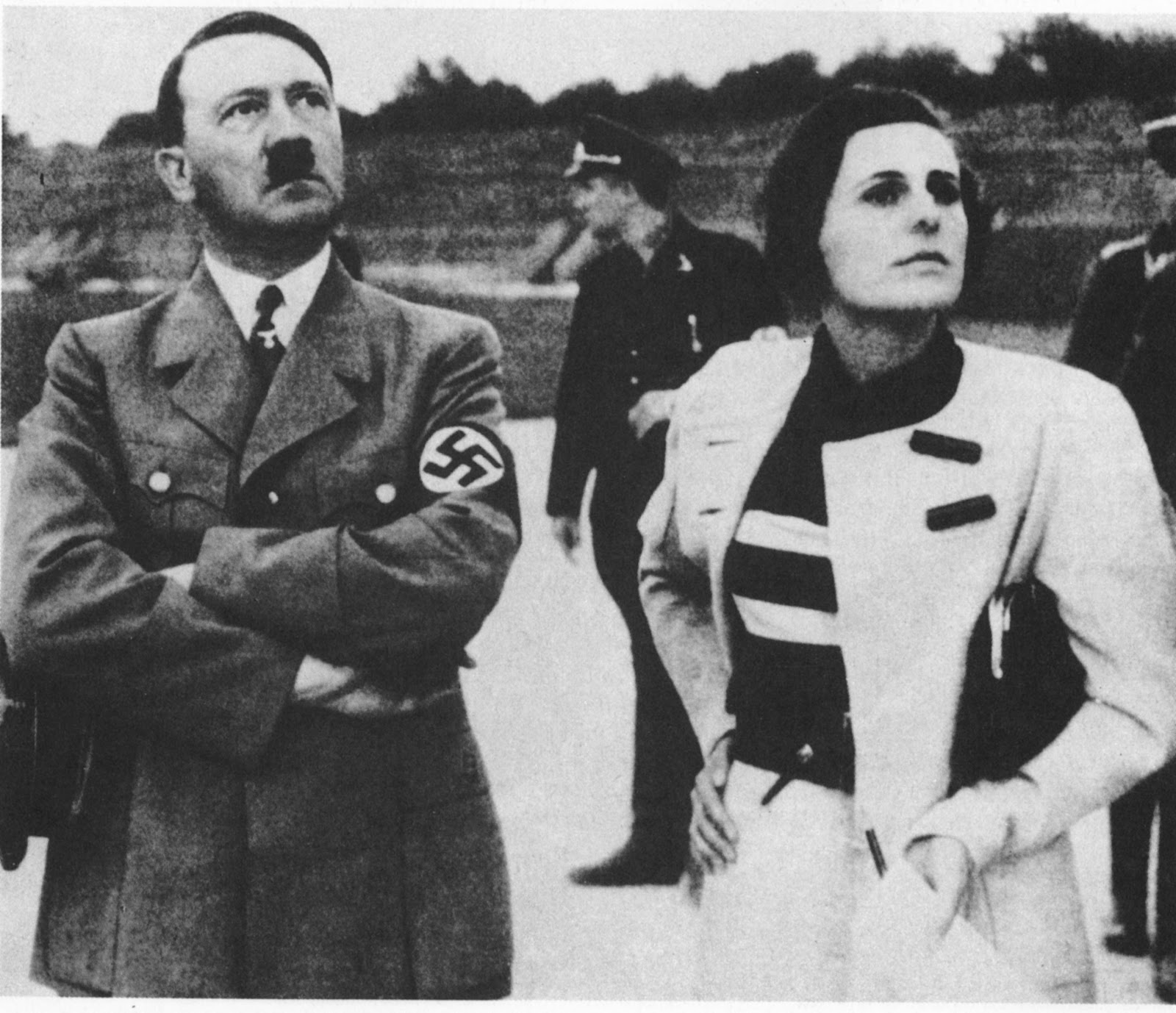
The wonderful Longreads has republished Bruce Handy’s excellent 2013 Tin House piece, “Budd & Leni,” about the very unusual 1945 cinematic “collaboration” between screenwriter Schulberg, who eventually would name names for HUAC, and Nazi filmmaker Riefenstahl, who dearly wanted the world to forget the name of her former boss. An excerpt:

Riefenstahl had recovered her equilibrium, and her looks, by the time Schulberg found her in the autumn of 1945, possibly in the first week of November, not long before the Nuremberg trial was scheduled to begin. “She was still really quite beautiful and, if you could forget her connections, really very charming, and I would think that, to many people, very convincing in her intensity about her art, her love of the mountains, and winter sports,” he said years later. “She was really quite a—quite an imposing piece of work.”

This was the first meeting between the two, but Schulberg had played a very minor part—an extra in a crowd scene, if you will—in an earlier Riefenstahl drama. In 1938 she had made her first trip to America, ostensibly vacationing as a private citizen, although the visit was paid for by the German government. She was hoping to find an American distributor for Olympia—among her seventeen pieces of luggage she brought along three different cuts of the film, including one with all scenes of Hitler deleted—and hoping as well to hobnob with the powers that be in Hollywood, where German directors before her had found lucrative work (though they tended to be directors who hadn’t enjoyed Hitler’s patronage). She sailed into New York on November 4, hit the Stork Club and the Copacabana, and was famously pronounced “pretty as a Swastika” by Walter Winchell. But there were protests and boycotts organized against her by anti-Nazi organizations, and the PR equation grew even more complex a week later, following the events of Kristallnacht, when organized mobs throughout Germany beat and arrested thousands of Jews and murdered several hundred more while burning synagogues and looting Jewish businesses. She dismissed as “slander” news reports that, as Bach points out, “no one in Germany was denying.” (Rather, the Reich held the victims financially responsible for all the property damage.) Riefenstahl left New York for Chicago, and then Detroit, where she received an unsurprisingly warm welcome from Henry Ford, the anti-Semitic car manufacturer and crank publisher, but otherwise was treated like a pariah. Unlike her reception in New York, where her ship had been met by a big, jostling crowd of mostly friendly newsmen and photographers seeking a big story in Hitler’s alleged girlfriend (she and the Führer were “just good friends,” the director had demurred with a giggle), when she stepped off the Super Chief in Hollywood, on November 24, she was greeted by a desultory crowd consisting of the German consul, a staff member from a local German-language newspaper, an American painter who shared her and Hitler’s penchant for the idealized male physique, and the painter’s brother.

“Where is the press?” she demanded, according to her publicist (who defected to the States at the end of her trip and wrote an amusing if sometimes suspect series of articles about her for a Hollywood newspaper).

“But you’re supposed to be here incognito,” she was told.

Ja, but not so incognito,” she snapped.

The reception went from bad to worse. The Hollywood Anti-Nazi League—a Communist-led group that Schulberg, then a party member, was likely part of—took out ads in the trade papers declaring, “There Is No Room in Hollywood for Leni Reifenstahl” while holding demonstrations in front of her hotel, the Garden of Allah, which forced her to relocate to a bungalow at the Beverly Hills Hotel. After some hemming and hawing, the town’s moguls declined to meet with her—with the exception of Walt Disney, who showed her some sketches for his latest work-in-progress, Fantasia, but then backed out of allowing her to screen Olympia for him, afraid that his unionized projectionists would spread the word and he’d be boycotted. (Decades later she would claim, incorrectly and ungraciously, that Olympia had beaten out Disney’s Snow White and the Seven Dwarfs for the then-coveted Mussolini Cup at the 1938 Venice Film Festival.)•

Tags: ,

For a variety of reasons, costs and justice among them, reforming the American penal system is an issue currently enjoying bipartisan support. The War on Crime of the 1990s, which saw Bill Clinton embrace the death penalty with triangulating fervor and Ray Bradbury long for a day when corporations would turn cities into metropolitan malls, started at a time when crime had actually begun decreasing. It just wasn’t clear at the time. But it’s impossible to overlook now, and the mass warehousing of criminals, especially for non-violent and/or drug offenses, seems a waste of both humanity and tax dollars to Democrats and Republicans alike. From Erik Eckholm at the New York Times:

Bullets were flying in the cities. Crack wars trapped people in their homes. The year was 1994, and President Bill Clinton captured the grim national mood, declaring “gangs and drugs have taken over our streets” as he signed the most far-reaching crime bill in history.

The new law expanded the death penalty, and offered the states billions of dollars to hire more police officers and to build more prisons. But what was not clear at the time was that violent crime had already peaked in the early ’90s, starting a decline that has cut the nation’s rates of murder, robbery and assault by half.

Perhaps nowhere has the drop been more stunning than in New York City, which reported only 328 homicides for 2014, compared with 2,245 in 1990. The homicide rate in some cities has fluctuated more — Washington ticked up to 104 in 2014, after a modern low of 88 in 2012. But that still is a drastic fall from a peak of 474 in 1990.

“The judicial system has been a critical element in keeping violent criminals off the street,” said Senator Richard J. Durbin, Democrat of Illinois, who is co-sponsor of a bill to reduce some federal drug sentences. “But now we’re stepping back, and I think it’s about time, to ask whether the dramatic increase in incarceration was warranted.”•

Tags: ,

Lee Miracle, commander of the Southern Michigan Volunteer Militia, is a complicated man. A veteran, libertarian, atheist and poet who doesn’t believe that government should prohibit gay marriage, he owns more than 20 guns and each of his seven-year-old daughters have their own “cute” firearm. In an interview conducted by Zachary Crockett of Priceonomics, Miracle comes across as basically reasonable, but if so he must be habitually naive about the kind of fringy people he’s associating with. An excerpt:

Question:

Exactly what kind of situations are you preparing for with your weaponry training?

Lee Miracle:

Okay. If I’m standing next to someone and he’s opening fire on a school playground, its my job to shoot. The first one on the scene has to step up.

If there’s someone in a shopping mall or a movie theatre or wherever, and they’re doing something bad — whether you’re in a militia or not, every citizen should engage and destroy the threat!

Question:

Have you ever had to do anything like that?

Lee Miracle:

No…so far, no. And I’m very grateful for that. My hope is that we will never have to use them.

We don’t wake up and hope that we have to pull out our revolvers. There’s a misconception that were champing at the bit to shoot something. Listen: if I woke up tomorrow and there was no terrorism in the world — that’s what I want. But the reality is there is bad stuff going on, there are criminals in our society — and you don’t deter that by being disarmed.

Question:

How many guns do you currently keep in your household?

Lee Miracle:

I’d have to check. At least 20-something.

Question:

Can you tell me a bit about how you ensure gun safety with your children in the house?

Lee Miracle:

I’ve got five kids still living at home. Every one of my kids except one has his or her own firearm; only one of my daughters, who has since moved out, doesn’t have one — and that’s just because she isn’t really into guns.

The little girls, who are seven each, each got their little single shot .22 ‘crickets’ — they’re very cute guns. We go to the range, and they know the rules of gun safety, they understand the seriousness. I’ll give them random tests — like say, ‘Clear this chamber for me’ — and they know what to do. I also train them. I’ll say, ‘Look what this shotgun does to a pumpkin or a 2×4; now imagine what it would do to a person’s head!’ They understand the seriousness.

Another one of my sons, who’s 16 years old, doesn’t have a gun right now because of his grades. His grades were poor, and I told him, ‘When you get your grades up, we’ll talk about it. In this household, you’re not armed: you need to reflect on that.’•

Tags: ,

Last month, I missed “The Age of the Anthropocene: Masters of Earth,” philosopher Stephen Cave’s excellent Financial Times piece about numerous recent books which weigh the sustainability of the human race in the face of bulging population and the environmental costs of our cleverness, which made possible the Industrial and Digital Revolutions. A piece about the perils of reengineering humans and geoengineering the environment, which riffs on new works by Diane Ackerman, Ruth DeFries and E.O. Wilson:

Ackerman takes us on a whimsical journey, at times directionless, but at others engaging and profound. Despite her resolute optimism, she is very much aware of the damage we cause, such as on the unlucky island of Guam in the western Pacific. She describes how problems began when a giant African snail, introduced to the island as a food source, spread to attack local crops; the authorities therefore introduced the carnivorous Florida wolfsnail to stop the plague — but the wolfsnail preferred the island’s indigenous snail species, 50 of which have now been made extinct, while their giant African cousin continues to destroy crops and native flora unimpeded.

This parable of incompetent meddling explains why many people profoundly object to the idea of geoengineering — attempting actively to manipulate the climate. Essentially, geoengineering is meddling on the grandest scale, such as spraying sulphur particles into the atmosphere to mimic the cooling effect of a volcanic eruption. It would be the definitive Anthropocene act, either innovating our way out of our problems or — just as likely — blundering into much worse ones.

Mindful of the law of unintended consequences, Wilson is sceptical of, for example, trying to re-engineer the human genome to make us better fitted for the future. Although we are flawed and have made quite a mess for ourselves, he argues that our imperfections and inner contradictions are also the source of the creativity that will lead to solutions. DeFries tells another nice story of incompetent meddling: an attempt in 1957 in the southern US to kill an invasive species of aggressive fire ants by using insecticides. This resulted in the eradication of native ant species, thereby clearing the way for the hardier fire ants to expand. The great naturalist, and ant-man, EO Wilson, described this at the time as the “Vietnam of entomology.” Now, in The Meaning of Human Existence, he gives his own take on the state of our species and the pros and cons of meddling.

Mindful of the law of unintended consequences, Wilson is sceptical of, for example, trying to re-engineer the human genome to make us better fitted for the future. Although we are flawed and have made quite a mess for ourselves, he argues that our imperfections and inner contradictions are also the source of the creativity that will lead to solutions.•


Tags: , , ,

In “They’re Watching You Read,” a NYRB post, Francine Prose wonders about the ramifications, both political and personal, of e-book retailers being able to tell “which books we’ve finished or not finished, how fast we have read them, and precisely where we snapped shut the cover of our e-books and moved on to something else.” With online tracking of page-turning and highlighting, the very personal joy of reading becomes public. An excerpt:

For the time being, the data being gathered concerns general patterns of behavior rather than what happens between each of us and our personal E-readers. But we have come to live with the fact that anything can be found out. Today “the information” is anonymous; tomorrow it may well be just about us. Will readers who feel guilty when they fail to finish a book now feel doubly ashamed because abandoning a novel is no longer a private but a public act? Will it ever happen that someone can be convicted of a crime because of a passage that he is found to have read, many times, on his e-book? Could this become a more streamlined and sophisticated equivalent of that provision of the Patriot Act that allowed government officials to demand and seize the reading records of public library patrons?

As disturbing may be the implications for writers themselves. Since Kobo is apparently sharing its data with publishers, writers (and their editors) could soon be facing meetings in which the marketing department informs them that 82 percent of readers lost interest in their memoir on page 272. And if they want to be published in the future, whatever happens on that page should never be repeated.

Will authors be urged to write the sorts of books that the highest percentage of readers read to the end? Or shorter books? Are readers less likely to finish longer books? We’ll definitely know that. Will mystery writers be scolded (and perhaps dropped from their publishers’ lists) because a third of their fans didn’t even stick around long to enough to learn who committed the murder? Or, given the apparent lack of correlation between books that are bought and books that are finished, will this information ultimately fail to interest publishers, whose profits have, it seems, been ultimately unaffected by whether or not readers persevere to the final pages?•

Tags:

One thing seemingly lost in the constant hum of the news cycle, the latest poll, the endless horse race that takes us nowhere, is that some are playing the long game, resistant to the cult of now. Or perhaps it’s not truly lost but just a source of frustration to those in the media who live only to feed the beast. If you recall, that sputtering Van Dyke Chuck Todd looked at some survey results early last summer and declared that President Obama’s Administration was “over,” and then the climate accord with China happened as well as the diplomatic re-engagement with Cuba and the economic turnaround and major reforms to immigration. 

Obama’s tenure hasn’t been transitional like Bill Clinton’s but transformational (albeit, one that can be reversed in some ways if the next President is Republican). He hasn’t been perfect or always right or even smooth despite his preternatural calm, but his accomplishments are impressive. From “Why History Will Be Very Kind to Obama,” by Jonathan Chait in New York:

The president’s infuriating serenity, his inclination to play Spock even when the country wants a Captain Kirk, makes him an unusual kind of leader. But it is obvious why Obama behaves this way: He is very confident in his idea of how history works and how, once the dust settles, he will be judged. For Obama, the long run has been a source of comfort from the outset. He has quoted King’s dictum about the arc of the moral universe eventually bending toward justice, and he has said that “at the end of the day, we’re part of a long-running story. We just try to get our paragraph right.” To his critics, Obama is unable to attend to the theatrical duties of his office because he lacks a bedrock emotional connection with America. It seems more likely that he is simply unwilling to: that he is conducting his presidency on the assumption that his place in historical memory will be defined by a tabulation of his successes minus his failures. And that tomorrow’s historians will be more rational and forgiving than today’s political commentators.

It is my view that history will be very generous with Barack Obama, who has compiled a broad record of accomplishment through three-quarters of his presidency. But if it isn’t, it will be for a highly ironic reason: Our historical memory tends to romance, too. Franklin D. Roosevelt’s fatherly reassurance, a youthful Kennedy tossing footballs on the White House lawn, Reagan on horseback—the craving for emotional sustenance and satisfying drama runs deep. Though the parade of Obama’s Katrinas will all be (and mostly already have been) consigned to the forgotten afterlife of cable-news ephemera, it is not yet certain whether this president can bind his achievements into any heroic narrative.

It is already clear that, whatever the source of the current disappointment with Obama, the explanation cannot be that he failed to achieve his stated goals. In his first inaugural address, Obama outlined a sweeping domestic agenda. The list of promises was specific: not only to rescue the economy from catastrophe but also to undertake sweeping long-term reforms in health care, education, energy, and financial regulation.

At first, conservatives denounced this agenda as a virtual revolution. “An ambitious president intends to enact the most radical agenda of social transformation seen in our lifetime,” cried the columnist Charles Krauthammer. It “would permanently refashion the role of the federal government in the lives of every American,” warned Jennifer Rubin. Conservatives have since changed their line, and now portray the president as a Carter-esque mediocrity—a “parenthesis in American political history” (Krauthammer) “with no significant accomplishment” (Rubin). But this is not because Obama failed to accomplish the goals he set out. On the contrary, he has incontrovertibly made major progress on, or fulfilled, every one of them. The horrifying consequences conservatives insisted would follow have all failed to materialize.•

Tags: ,

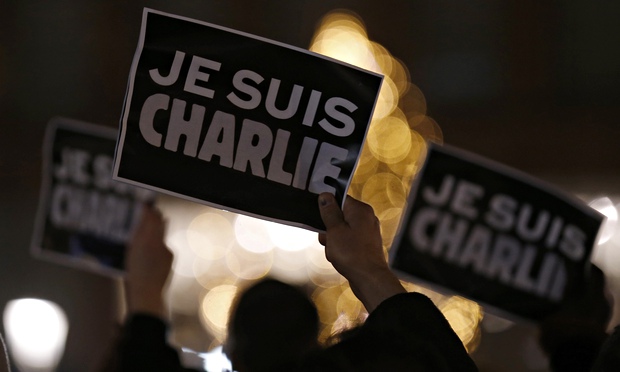
The wonderful Roxane Gay is made uneasy by #JesuisCharlie, but while I don’t concur with her, the disagreement won’t move me to violence.

The profanity of Voltaire and Buñuel and Bruce is just as important as their supposedly sacred targets, and the sacrosanct which isn’t open to ridicule is closed off and ready for a fall from grace. I wish during the 1950s people had been liberated enough to speak about the sexual abuse of children that was rampant in the Catholic Church. Plenty must have known. But just imagine the rebuke that would have rained down on those who dared such impiety. Who are they to ridicule the church?

From Gay’s new Guardian piece about the Hebdo aftermath:

I believe in the freedom of expression, unequivocally – though, as I have written before, I wish more people would understand that freedom of expression is not freedom from consequence. I find some of the work of Charlie Hebdo distasteful, because there is a preponderance of bigotry of all kinds in many of their cartoons’ sentiments. Still, my distaste should not dictate the work the magazine produces or anything else. The cartoonists at Charlie Hebdo – and writers and artists everywhere – should be able to express themselves and challenge authority without being murdered. Murder is not an acceptable consequence for anything.

Yet it is also an exercise of freedom of expression to express offense at the way satire like Charlie Hebdo’s characterizes something you hold dear – like your faith, your personhood, your gender, your sexuality, your race or ethnicity.

Demands for solidarity can quickly turn into demands for groupthink, making it difficult to express nuance. It puts the terms of our understanding of the situation in black and white – you are either with us or against us – instead of allowing people to mourn and be angry while also being sympathetic to complexities that are being overlooked.•

Tags:

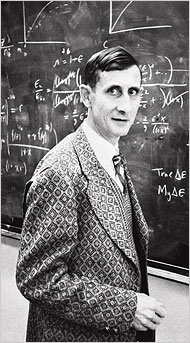
Richard Feynman wasn’t the only physicist who emerged from World War II with regrets about his role. Freeman Dyson looks back in anger, anger at himself, believing he failed morally to speak to certain life-and-death decisions, which has made him a Snowden supporter. From a new Paradigm interview with Dyson which was conducted by Theo Constantinou and Lee Nentwig:

Theo Constantinou:

In Jörg Friedrich’s book, The Fire, you were quoted as saying:

“I felt sickened by what I knew. Many times I decided I had a moral obligation to run out into the streets and tell the British people what stupidities were being done in their name. But I never had the courage to do it. I sat in my office until the end, carefully calculating how to murder most economically another hundred thousand people.”

WWII was in full force and you were around twenty years old and making decisions that, from what you say, cost thousands of people their lives. Seventy years later, reflecting back on your actions and the actions of the day, what insight can you give to those facing similar moral dilemmas in the current global climate?

Freeman Dyson:

The amazing thing is how little has changed. There was an American general, James Cartwright, just about a year ago, who was in charge of intelligence in Afghanistan and he wrote a secret report about the deficiencies of intelligence in Afghanistan which was essentially telling the government the idiocies that were being done, and fortunately it was leaked and so now it is out in the public. It was quite amazing to me how much the same it was as to the situation I was in seventy years before. In Afghanistan you had this enormous apparatus for collecting intelligence, which was just what we had in bomber command, and now in Afghanistan you have satellites over head and drones beneath the satellites and then airplanes and people on the ground, all collecting information and sending it all over to some building in Virginia where there were a thousand people analyzing the information. So I was one of them, I was an analyst sitting at bomber command and analyzing all of this information. The general said in his report that all of this was wonderful, that information was being collected efficiently and the analysts were working very hard in understanding it, but nothing ever went back. There was no flow of information to the people that actually needed it and could use it. It was exactly the same problem. We were actually not allowed to talk to the crewmen who flew the airplanes, they weren’t cleared to hear all of the secret stuff, and they were the only people who actually could have used it. So that’s the way it is, it hasn’t changed.

The whole drone program is very troubling, of course. People being killed in this new mechanical way so that you don’t even have to go out there and fight, you can just sit comfortably in Virginia and aim the bombs. That is a bad situation.

So I enormously admire Edward Snowden, he has really done us a great service. We need more people like that … that’s what I wasn’t brave enough to do. I would have been more or less in his situation had I gone out in the streets and shouted, I would have been locked up for sure.•

Tags: , , ,

David Brooks of the New York Times, who has misunderstood the nature of meritocracy his whole life, proves it once again today with a ridiculous argument in his latest op-ed. Here’s the passage:

In most societies, there’s the adults’ table and there’s the kids’ table. The people who read Le Monde or the establishment organs are at the adults’ table. The jesters, the holy fools and people like Ann Coulter and Bill Maher are at the kids’ table. They’re not granted complete respectability, but they are heard because in their unguided missile manner, they sometimes say necessary things that no one else is saying.

Healthy societies, in other words, don’t suppress speech, but they do grant different standing to different sorts of people. Wise and considerate scholars are heard with high respect. Satirists are heard with bemused semirespect. Racists and anti-Semites are heard through a filter of opprobrium and disrespect. People who want to be heard attentively have to earn it through their conduct.

In Brooks’ worldview, Voltaire, Jonathan Swift, Mark Twain and Lenny Bruce are–and should be!–awarded only a modicum of respect, the children that they are for profanely speaking truth to abuses of power, whereas those who go through the motions of civility while (often) contributing less, should be rewarded more. In all fairness to Dr. IQ, it has worked for him his whole career, though I’ll bet the writing of those “holy fools” George Carlin and Terry Southern will be remembered much longer than Brooks’ scratchings.•

Tags:

Qatar is the richest state in the world based on per capita wealth, which is the main reason the tiny nation was chosen to host the 2022 World Cup, despite desert climate and dicey politics. When awarding the Cup or the Olympics, organizers can’t be too choosy, as few countries can or will expend the ton of money it takes to stage such a global event. Maik Grossekathöfer and Juan Moreno of Speigel interviewed Albert Speer, the German architect overseeing the building (and, yes, son of), as well as Friedbert Greif, managing partner and urban planner, and other principals. Two exchanges follow.

____________________________

Spiegel:

Your office has developed the master plan for the 2022 World Cup in Qatar. The concept calls for 12 stadiums to be built in the desert, some of them within sight of each other. Each seat is to be cooled and the temperature at the center of the field is to be 20 degrees Celsius (68 degrees Fahrenheit), even if outside temperatures rise to 50 degrees Celsius (122 degrees Fahrenheit). And all this is to be built in a country that has as many residents as Augsburg, Germany (population: 276,542) Weren’t we just talking about sustainability?

Albert Speer:

But of course we were. Here, too, sustainability has been a priority from the very beginning.

Spiegel:

The insistence on an ecologically viable World Cup on the Arabian Peninsula doesn’t sound particularly credible. Just look at Abu Dhabi, which has announced its intention to build a new carbon neutral city — right next to a Formula One race track.

Albert Speer:

We intend to do things better and don’t want to be connected to projects like those in Sochi, for example. Qatar is planned so that most of it can be disassembled afterwards and that, in the end, is of a dimension that suits the country. The upper levels are modular and can be removed to make a total of 22 smaller football stadiums, which will then be given to developing countries after the World Cup. Individual modules can also be used for track and field stadiums with room for 5,000 people. And for the cooling, we have developed a concept that is based on solar power.

____________________________

Spiegel:

Still, one can wonder if it makes any sense at all for a World Cup to be held in a tiny desert country like Qatar.

Friedbert Greif:

What kind of a question is that? Of course it is legitimate for a country like Qatar, and thus, the Arab world, to get the World Cup. It is arrogant to believe that football belongs to us Europeans. Furthermore, I don’t believe that what the Russians are doing (eds. note: The 2018 World Cup is to be held in Russia) is any more efficient. Venues there are up to 2,400 kilometers (1,491 miles) from each other. The amount of resources and energy that are being wasted to bring spectators from A to B is crazy. Russia, in this regard, is the opposite extreme.

Spiegel:

Qatar isn’t a democracy, there is no labor union for immigrant workers and there have been numerous reports of people dying at the construction sites. In the past, the country was also a safe harbor for leaders of Islamist organizations.

Albert Speer:

I think it is fantastic that, with the help of media reports — and well in advance of the World Cup — people are taking a closer look. And that things are changing. Ahead of each of our projects, we ask: Is it acceptable? For many years we have had good business relations with Saudi Arabia. There is trust there, and people there listen to us as well. We really do have the feeling that we are doing something positive for the country and the people there. That is our benchmark. For Qatar as well.•

Tags: , , ,

Wired co-founder and techno-optimist Kevin Kelly can speak of the future in bold terms but still sound reasonable, which makes him a rarity in the field of futurists. Perhaps that’s why his AMAs are always so interesting. A few exchanges from his latest one at Reddit.

____________________________________

Question:

What are your thoughts on increased automation eventually putting people out of jobs? It seems like a pretty negative subject so I’d love to hear a positive spin on it!

Kevin Kelly:

Robots and AI will help us create more jobs for humans — if we want them. And one of those jobs for us will be to keep inventing new jobs for the AIs and robots to take from us. We think of a new job we want, we do it for a while, then we teach robots how to do it. Then we make up something else.

Question:

That’s interesting. Is this a pattern you observed in the past?

Kevin Kelly:

Sure. We invented machines to take x-rays, then we invented x-ray diagnostic technicians which farmers 200 years ago would have not believed could be a job, and now we are giving those jobs to robot AIs.

____________________________________

Question:

If automation rendered most of the “bread and butter” work that you currently do obsolete, to the point you only need an hour or so a day to do all the things, what would you do with your sudden excess of spare time?

Kevin Kelly:

I would read more books. I would make more photographs. I would write more stuff that only I cared about. Mostly I would try and do more things that I felt only I could do. That takes a lot of messing around and wasting of time to discover.

____________________________________

Question:

What’s the future of the city? Are we going to continue upgrading our current megalopolises or will we construct new ones based on Arcological designs? If so, how will they look like and when do you think we’ll start seeing them?

Kevin Kelly: 

I doubt it. My prediction is that the rough shape and texture of a city in 100 years from now, or even 200, will roughly be similar to now. What will be different are the communications and relationships in that city.

____________________________________

Question:

What near term (5-10 year horizon) technology are you most excited about and foresee having a big impact on people’s lives?

Kevin Kelly: 

I think commercial, cheap, ubiquitous, boring AI delivered as a utility service (like web hosting) will be the defining disruptive technology in the near future. The more I hear about recent improvements, the more I feel we are near a 20 year run of constant and meaningful results. Most of the consequences are not going to be Her, but invisible benefits.

____________________________________

Question:

What do you think of Dr. Nick Bostrom’s work in Existential Risk Reduction at the Future of Humanity Institute? Should it be global priority as his paper states?

Kevin Kelly:

I think it is worth some attention, but I think other existential risks such as an asteroid impact or drastic climate change are worth more energy.

____________________________________

Question:

What do you think will happen first, intelligent live elsewhere will contact us or we will contact intelligent life elsewhere?

Kevin Kelly:

Neither. First we will make artificial aliens by making AIs on Earth. These other minds that will think differently than us, and may be conscious differently than us, and they will offer some (but by no means all) of the same benefits of contacting an ET.

____________________________________

Question:

Do you believe the Singularity is coming? What do you say to those who maintain it’s simply a techie version of the Rapture, i.e. an apocalypse beyond which we no longer have to think about?

Kevin Kelly:

I don’t believe in the Strong/Hard version of the Singularity: AIs that self-create into a god-like power that can give us immortality. I do believe in the Weak/Soft version that humanity and machines merge into something that we can’t see or understand right now.

____________________________________

Question:

What’s the best drug experience you have had?

Kevin Kelly:

I really only have had one “drug” experience. I was a non drug taking hippie. On my 50th birthday I took LSD for the first and only time. I saw God. Have not done any since.•

Tags:

The surest sign of sanity and civilization is the ability to take a joke without responding in violence. 

Humor was declared dead, at least by some, in the wake of 9/11. But it can’t die and won’t be killed.

Below is a perfect summation by Dutch political cartoonist Ruben L. Oppenheimer of today’s disgraceful terrorist attack on the Charlie Hebdo staff.

Tags:

Ayatollah Khomeini’s prayers for a massive army of young men to combat Iraq were answered all too well. His urging for fertile females to reproduce with no pregnant pauses spurred Iran’s population to swell to 50 million by 1986. Once the war ended, what was the country to do with all those working-age people who needed jobs, food and clean water? An excerpt follows from Alan Weisman’s Countdown, republished at Matter, which looks at family-planning efforts inside a theocracy.

__________________________________

Secret meetings commenced with the Supreme Leader to discuss the population blessing that was now a population crisis. Years later, demographer and population historian Abbasi-Shavazi would interview the 1987 planning and budget director, and learn that he had met with the president’s cabinet and explained what excessive human numbers portended for the nation’s future. To feed, educate, house, and employ everyone would far outstrip their capacity, as Iran was exhausted and nearly bankrupt. There were so many children that primary schools had to move from double to triple shifts. The planning and budget director and the minister of health presented an initiative to reverse demographic course and institute a nationwide family-planning campaign. It was approved by a single vote.

A month after the August 1988 ceasefire finally ended the war, Iran’s religious leaders, demographers, budget experts, and health minister gathered for a summit conference on population in the eastern city of Mashhad, one of holiest cities for the world’s Shi’ite Muslims, whose name means “place of martyrdom.” The weighty symbolism was clear.

“The report of the demographers and budget officers was given to Khomeini,” Dr. Shamshiri recalls. The economic prognosis for their overpopulated nation must have been very dire, given the Ayatollah’s contempt for economists, whom he often referred to as donkeys.

“After he heard it, he said, ‘Do what is necessary.’ ”

It meant convincing 50 million Iranians of the opposite of what they’d heard for the past eight years: that their patriotic duty was to be forcibly fruitful. Now, a new slogan was strung from banners, repeated on billboards, plastered on walls, broadcast on television, and preached at Friday prayers by the same mullahs who once enjoined them to produce a great Islamic generation by making more babies:

One is good. Two is enough.

The next year, 1989, Imam Khomeini died. The same prime minister who had hailed fertility rates approaching nine children per woman as God-sent now launched a new national family-planning program. Unlike China, the decision of how many was left to the parents. No law forbade them from having ten if they chose. But no one did. Instead, what happened next was the most stunning reversal of population growth in human history. Twelve years later, the Iranian minister of health would accept the United Nations Population Award for the most enlightened and successful approach to family planning the world had ever seen.

If it all was voluntary, how did Iran do it?•

Tags: ,

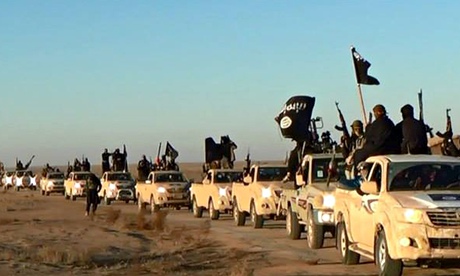
Matthias Gebauer and Holger Stark of Spiegel conducted a sit-down about the Islamic State and the future of Iraq and Syria with General John Allen, who for the last four months has answered to the rather cumbersome title of “Special Presidential Envoy for the Global Coalition to Counter the Islamic State.” While the IS is relatively small in numbers and is already buckling under the burden of governance, the task at hand in dealing with the terrorist state is still far from finished. From the Q&A:

Spiegel:

Who poses a greater threat to US interests — Assad or the IS?

General John Allen:

Assad is a menace to the region. What he has done to Syria has been the motivating factor for the rise of Daesh and Jabhat al-Nusra. So while Daesh carries its own threat to US interests, the political solution in Damascus and ultimately the departure of Assad and his ilk will be an important development for the region. That could help us return to a more stable environment in Syria. Again, if we’ve accomplished our objectives with respect to the political outcome, there will be a government that reflects the will of the Syrian people — and that will have the happy second and third order effect of assisting in the creation of stability more broadly in the region. Solving the political environment in Syria will go a long way towards eliminating or at least addressing some of the underlying causes.

Spiegel:

Assad’s regime seems to be more stable since the military campaign against the Islamic State. Is it possible that the political price you will pay for defeating IS will be a stronger regime?

General John Allen:

I don’t agree with the premise of your question. Assad has experienced significant difficulties in the field in a number of areas. Things are not going well for him in the south, and he continues to suffer under enormous sanctions internationally. And while he does have some support in the international arena, he is not more stable.

Spiegel:

Let’s take a look at the region’s future. Will Syria and Iraq exist in a few years as we know them today?


General John Allen:

I think we’ll see a territorially restored Iraq. The early indicators and performance of Prime Minister al-Abadi’s government are very positive. There’s a very interesting and positive trend in the region right now. The prime minister of Iraq was received by the Saudis, and the Saudis have called for the reopening their embassy in Baghdad. Abadi had a very good visit with the King of Jordan. Turkish President Recip Tayyip Erdogan has been to Baghdad and Erbil. And Abadi has very strong relations with the Kuwaitis. The new government just agreed to the final oil deal with Kurdistan. It’s a remarkable development. People have been working on that for 10 years, and Abadi was able to do it since he came into office in September. Syria is more difficult to foresee right now, frankly. Whether we see a secular federalized Syria or something else remains to be determined.”

Tags: , ,

« Older entries § Newer entries »