
Excerpts

You are currently browsing the archive for the Excerpts category.

In his 1978 essay, “How to Build a Universe That Doesn’t Fall Apart Two Days Later,” Philip K. Dick recalls the first short story he ever wrote:

The two basic topics which fascinate me are “What is reality?” and “What constitutes the authentic human being?” Over the twenty-seven years in which I have published novels and stories I have investigated these two interrelated topics over and over again. I consider them important topics. What are we? What is it which surrounds us, that we call the not-me, or the empirical or phenomenal world?

In 1951, when I sold my first story, I had no idea that such fundamental issues could be pursued in the science fiction field. I began to pursue them unconsciously. My first story had to do with a dog who imagined that the garbagemen who came every Friday morning were stealing valuable food which the family had carefully stored away in a safe metal container. Every day, members of the family carried out paper sacks of nice ripe food, stuffed them into the metal container, shut the lid tightly—and when the container was full, these dreadful-looking creatures came and stole everything but the can.

Finally, in the story, the dog begins to imagine that someday the garbagemen will eat the people in the house, as well as stealing their food. Of course, the dog is wrong about this. We all know that garbagemen do not eat people. But the dog’s extrapolation was in a sense logical—given the facts at his disposal. The story was about a real dog, and I used to watch him and try to get inside his head and imagine how he saw the world. Certainly, I decided, that dog sees the world quite differently than I do, or any humans do. And then I began to think, Maybe each human being lives in a unique world, a private world, a world different from those inhabited and experienced by all other humans. And that led me wonder, If reality differs from person to person, can we speak of reality singular, or shouldn’t we really be talking about plural realities? And if there are plural realities, are some more true (more real) than others? What about the world of a schizophrenic? Maybe, it’s as real as our world. Maybe we cannot say that we are in touch with reality and he is not, but should instead say, His reality is so different from ours that he can’t explain his to us, and we can’t explain ours to him. The problem, then, is that if subjective worlds are experienced too differently, there occurs a breakdown of communication… and there is the real illness.•
Tags:

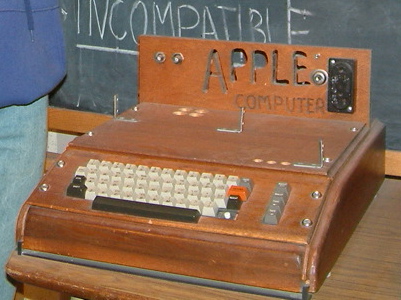
"The members, who adopt handles 'Berkeley Blue' (Steve Jobs) and 'Oak Toebark' (Steve Wozniak), later go on to found Apple Computer." (Image by rebelpilot.)

In 2000, Robert Trigaux of the St. Petersburg Times put together a timeline of communications hackers, who apparently began to do their voodoo the second the telephone was invented. An excerpt:

“Hacking has been around for more than a century. In the 1870s, several teenagers were flung off the country’s brand new phone system by enraged authorities. Here’s a peek at how busy hackers have been in the past 35 years.

Early 1960s

University facilities with huge mainframe computers, like MIT’s artificial intelligence lab, become staging grounds for hackers. At first, ‘hacker’ was a positive term for a person with a mastery of computers who could push programs beyond what they were designed to do.

Early 1970s

John Draper makes a long-distance call for free by blowing a precise tone into a telephone that tells the phone system to open a line. Draper discovered the whistle as a give-away in a box of children’s cereal. Draper, who later earns the handle ‘Captain Crunch,’ is arrested repeatedly for phone tampering throughout the 1970s.

Yippie social movement starts YIPL/TAP (Youth International Party Line/Technical Assistance Program) magazine to help phone hackers (called “phreaks”) make free long-distance calls.

Two members of California’s Homebrew Computer Club begin making ‘blue boxes,’ devices used to hack into the phone system. The members, who adopt handles ‘Berkeley Blue’ (Steve Jobs) and ‘Oak Toebark’ (Steve Wozniak), later go on to found Apple Computer.”

••••••••••

David Owen’s excellent 2004 New Yorker article, “Green Manhattan,” convinced the masses of something that many urban planners already knew: Large cities are more environmentally sound than suburban and rural areas. It’s common knowledge now, but it was contrary to the prevailing wisdom just a few years ago. An excerpt:

“My wife and I got married right out of college, in 1978. We were young and naïve and unashamedly idealistic, and we decided to make our first home in a utopian environmentalist community in New York State. For seven years, we lived, quite contentedly, in circumstances that would strike most Americans as austere in the extreme: our living space measured just seven hundred square feet, and we didn’t have a dishwasher, a garbage disposal, a lawn, or a car. We did our grocery shopping on foot,and when we needed to travel longer distances we used public transportation. Because space at home was scarce, we seldom acquired new possessions of significant size. Our electric bills worked out to about a dollar a day.The utopian community was Manhattan. (Our apartment was on Sixty-ninth Street, between Second and Third.) Most Americans, including most New Yorkers, think of New York City as an ecological nightmare, a wasteland of concrete and garbage and diesel fumes and traffic jams, but in comparison with the rest of America it’s a model of environmental responsibility. By the most significant measures, New York is the greenest community in the United States, and one of the greenest cities in the world. The most devastating damage humans have done to the environment has arisen from the heedless burning of fossil fuels, a category in which New Yorkers are practically prehistoric. The Average Manhattanite consumes gasoline at a rate that the country as a whole hasn’t matched since the mid-nineteen-twenties, when the most widely owned car in the United States was the Ford Model T. Eighty-two per cent of Manhattan residents travel to work by public transit, by bicycle, or on foot. That’s ten times the rate for Americans in general, and eight times the rate for residents of Los Angeles County. New York City is more populous than all but eleven states; if it were granted statehood, it would rank fifty first in per-capita energy use.”

••••••••••

David Owen speaks to NYC’s environmentally sound nature:

Tags:

Sports Phone jingle: "Get all the sports news instantly, dial 9-7-6-1-3-1-3." (Image by Holger.Ellgaard.)

Information is instant now, but for roughly a decade before the advent of cable TV, sports-talk radio and the Internet, New Yorkers routinely called an outfit named Sports Phone and paid a dime to hear updated recorded messages from fast-talking announcers with nicknames like King Wally, who could jam all the latest scores and news into a one-minute call. The company, which received updates from a collection of stringers, was an especially important tool for gamblers. Other cities had similar services.

It wasn’t just sports. Information of different kinds, now disseminated by the Internet, was available via the phone: weather, soap opera updates and pornographic messages. In 1983, Sports Illustrated published a piece about Sports Phone, providing no hint that the whole empire was about to crumble. An excerpt:

“In 57 seconds, Rickey Henderson can circle the bases a couple of times and Howard Cosell can just about get through half a sentence. Fifty-seven seconds is roughly the time unit into which two telephone sports information services sausage the entire major league baseball scoreboard, the results of a couple of tennis matches, the latest on who George Steinbrenner got from whom and occasional micro-mini-interviews. Fifty-seven seconds is what you get when you call from home or put a dime into a pay phone and dial one of three regional Sports Phone franchises. For half a buck you can call Dial-It, the only national service, from anywhere in the country and get a 59-second slice of sports.

Sports Phone and Dial-It have boiled the sports world down into 57 and 59 seconds because the FCC measures message units in 60-second intervals. Both services lop off a few seconds to give the caller time to hang up. And though compressed, the format has been a tremendous success, for both Ma Bell and the two services.New York’s Sports Phone received 40 million calls last year. The Pennsylvania-based Dial-It draws about 350,000 calls a week from across the nation. On one football Sunday last October, Dial-It got about 130,000 calls.”

Tags:

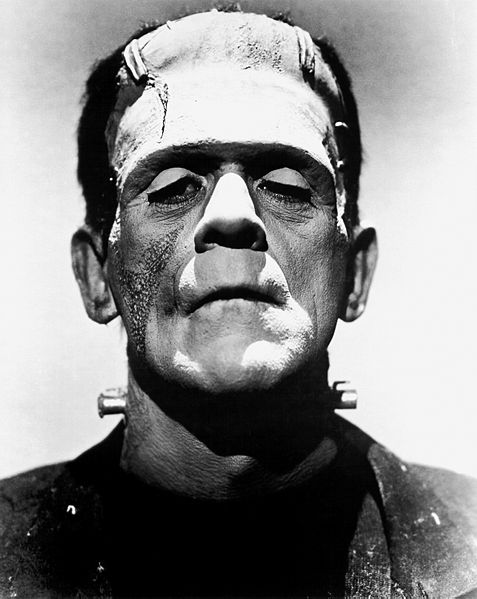
The Real Dr. Frankenstein” reprints strange, old newspaper articles that were originally published in the Westphalia Times of Kansas during the 1880s. They focus on the odd doings of a Dr. Franckinstein, an apparent quack who was secretly working as a bootlegger. An excerpt:

Dec 17, 1885

Dr. Franckinstein showed us Tuesday, pieces of a frog or snake which he removed from one of his lady patients’ stomachs. The head, like that of a small snake, was lost through carelessness. The doctor thinks there are more such living creatures in the woman’s body, caused by drinking pond water some years ago, when she swallowed some eggs. She has been in poor health some years, doubtless caused by these reptiles being in her body. They can be seen at his drugstore.

December 24, 1885

The doctor informs us his patient is progressing, having discharged great quantities of the remains of dead animals, or animalcule or frogs, lizards, etc.”

Tags:

An excerpt from “Obama’s Young Mother Abroad,” Janny Scott’s detailed Sunday Times Magazine piece about Stanley Ann Dunham, who lived an unorthodox and all-too-brief life and was mom to our 44th President:

“To describe Dunham as a white woman from Kansas turns out to be about as illuminating as describing her son as a politician who likes golf. Intentionally or not, the label obscures an extraordinary story — of a girl with a boy’s name who grew up in the years before the women’s movement, the pill and the antiwar movement; who married an African at a time when nearly two dozen states still had laws against interracial marriage; who, at 24, moved to Jakarta with her son in the waning days of an anticommunist bloodbath in which hundreds of thousands of Indonesians were slaughtered; who lived more than half her adult life in a place barely known to most Americans, in the country with the largest Muslim population in the world; who spent years working in villages where a lone Western woman was a rarity; who immersed herself in the study of blacksmithing, a craft long practiced exclusively by men; who, as a working and mostly single mother, brought up two biracial children; who believed her son in particular had the potential to be great; who raised him to be, as he has put it jokingly, a combination of Albert Einstein, Mahatma Gandhi and Harry Belafonte; and then died at 52, never knowing who or what he would become.”

Tags: , ,

Tree-papers are going and gone in the United States, but Ethiopians still require newsprint to find work and lodging. For those too poor to buy papers, so-called “newspaper landlords” have the solution. They rent periodicals at a penny for about 20 minutes. From a CNN report:

“Garum Tesfaye is one of Addis Ababa’s ‘newspaper landlords,’ a group of entrepreneurs in the Ethiopian capital who rent out papers to people too poor to buy them.

Surrounded by worn-out copies of old newspapers, stacks of gossip magazines and the crisp print of the latest news, Tesfaye sits attentively, checking his watch every now and then.

Near him, a pedestrian bridge provides shelter from the sun to dozens of avid readers who quickly, albeit meticulously, get their dose of the latest news.

For 20 to 30 minutes, these readers can get their hands on a newspaper for a fraction of the price of having to buy it. If they keep the paper longer than their allotted rental time, they have to pay extra.

A newspaper in Addis Ababa costs about six birr (35 U.S. cents) to buy. In contrast, it costs only 50 Ethiopian cents (less than one U.S. cent) to rent one.” (Thanks Marginal Revolution.)

•••••••••

Tags:

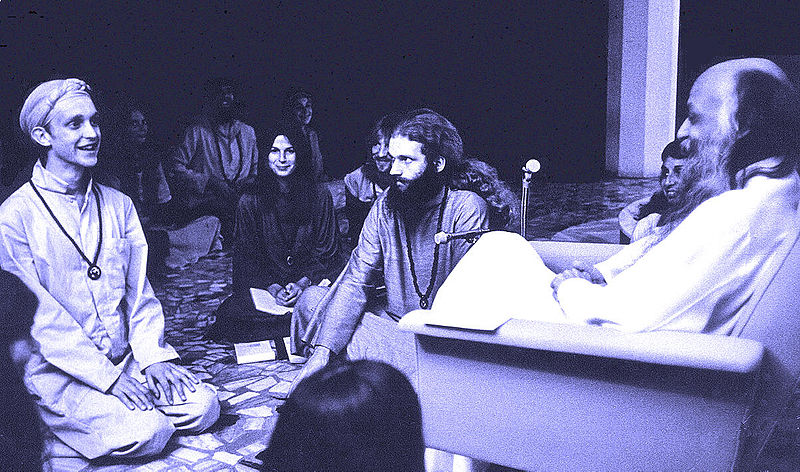
While still located in India, Rajneesh, far right, receives his followers. (Image by Redheylin.)

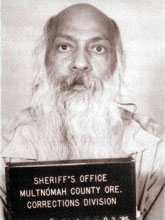
Using access to newly declassified government files, Les Zaitz of Oregon Live has writtenRajneeshees in Oregon: The Untold Story,” a chilling account of the mad American experience of Bhagwan Shree Rajneesh, an Indian guru who relocated to the Beaver State during the 1980s, invited 2,000 of  his followers to live on his land, incorporated his parcel into a city, ran afoul of local authorities and became involved in bio-terrorism and assassination plots. An excerpt:

“From time to time, Puja retreated to a laboratory hidden in a cabin up a canyon on the ranch to secretly experiment with viruses and bacteria. Sheela wanted something to sicken people.

In summer 1984, Puja field-tested her work, handing unlabeled vials to those on the secret teams.

The operatives knew, or suspected, the brown liquid was salmonella, which produces severe diarrhea and other symptoms. Over months, they were dispatched to spread the poison in The Dalles. They initially hoped to sicken public officials standing in their way, but then pursued a grander scheme to attack innocent citizens.

Swami Krishna Deva, mayor of Rajneeshpuram, smeared Puja’s mixture onto fixtures in the men’s restroom at the Wasco County Courthouse in The Dalles.

Ma Dhyan Yogini, also known as Alma Peralta, went to town with vials in her purse. She stepped into a local political rally and took a seat. She secreted some of the contaminant on her hand, turned to an elderly man sitting next to her and shook hands. She also made her way into a nursing home in The Dalles, but her plan to contaminate food was disrupted by a suspicious kitchen worker.

Sheela tried her hand at contamination as well, taking a half-dozen Rajneeshees, including Puja, to a grocery store in The Dalles.

‘Let’s have some fun,’ Sheela said.

The group spread across the store with Sheela targeting the produce section, pouring brownish liquid from the vial she had hidden up her sleeve.

When there were no public reports of anyone getting sick, Sheela pushed Puja to find a more toxic solution.

About that time, Hulse and two other Wasco County commissioners arrived at the ranch for a tour. They parked Hulse’s car outside the commune’s welcome center and loaded into a commune van for their visit. When they got back, Hulse’s car had a flat. The Rajneeshees arranged a repair on the spot that would cost Hulse $12.

As the commissioners waited in the hot August sun, Puja approached, offering each a glass of water. Her gesture was odd, for Puja was in her medical whites and had no role as a greeter.

The thirsty men took the water.” (Thanks Longform.)

•••••••

Tags: ,

Marshall McLuhan entertains Tom Wolfe in the backyard of his Toronto home in 1970. (Thanks Documentarian.)

••••••••••

From Wolfe’s 1965 essay about McLuhan in the New York Herald Tribune,What If He Is Right?“: “There are currently hundreds of studs of the business world, breakfast food package designers, television net work creative department vice-presidents, advertising ‘media reps,’ lighting fixture fortune heirs, smiley patent lawyers, industrial spies, we- need vision board chairmen, all sorts of business studs who are all wondering if this man, Marshall McLuhan … is right…. He sits in a little office off on the edge of the University of Toronto that looks like the receiving bin of a second-hand book store, grading papers, grading papers, for days on end, wearing-well, he doesn’t seem to care what he wears. If he feels like it, he just puts on the old striped tie with the plastic neck band. You just snap the plastic band around your neck and there the tie is, hanging down and ready to go, Pree-Tide.

But what if-all sorts of huge world-mover & shaker corporations are trying to put McLuhan in a box or some thing. Valuable! Ours! Suppose he is what he sounds like, the most important thinker since Newton, Darwin, Freud, Einstein, and Pavlov, studs of the intelligentsia game suppose he is the oracle of the modern times – what if he is right? he’ll be in there. It almost seems that way. An ‘undisclosed corporation’ has put a huge ‘undisclosed sum’ into, McLuhan’s Centre for Culture and Technology at the University of Toronto. One of the big American corporations has offered him $5000 to present a closed- circuit-ours!-television lecture on-oracle!-the ways the products in its industry will be used in the future. Even before all this, IBM, General Electric, Bell Telephone were flying McLuhan in from Toronto to New York, Pittsburgh, God knows where else, to talk to their hierarchs about . . . well, about whatever this unseen world of electronic environments that only he sees fully is all about.”

Tags: ,

The opening of “This Tech Bubble Is Different,” an Ashlee Vance Businessweek article which wonders whether the current media companies with stratospheric valuations will leave behind anything of worth if the market goes bust:

“As a 23-year-old math genius one year out of Harvard, Jeff Hammerbacher arrived at Facebook when the company was still in its infancy. This was in April 2006, and Mark Zuckerberg gave Hammerbacher—one of Facebook’s first 100 employees—the lofty title of research scientist and put him to work analyzing how people used the social networking service. Specifically, he was given the assignment of uncovering why Facebook took off at some universities and flopped at others. The company also wanted to track differences in behavior between high-school-age kids and older, drunker college students. ‘I was there to answer these high-level questions, and they really didn’t have any tools to do that yet,’ he says.

Over the next two years, Hammerbacher assembled a team to build a new class of analytical technology. His crew gathered huge volumes of data, pored over it, and learned much about people’s relationships, tendencies, and desires. Facebook has since turned these insights into precision advertising, the foundation of its business. It offers companies access to a captive pool of people who have effectively volunteered to have their actions monitored like so many lab rats. The hope—as signified by Facebook’s value, now at $65 billion according to research firm Nyppex—is that more data translate into better ads and higher sales.

After a couple years at Facebook, Hammerbacher grew restless. He figured that much of the groundbreaking computer science had been done. Something else gnawed at him. Hammerbacher looked around Silicon Valley at companies like his own, Google (GOOG), and Twitter, and saw his peers wasting their talents. ‘The best minds of my generation are thinking about how to make people click ads,’ he says. ‘That sucks.'”

Tags: ,

Posting recently about Dog Day Afternoon by the late, great Sidney Lumet brought to mind various videos of informant New York cop Frank Serpico, who was immortalized by Lumet and Al Pacino in their 1973 film. From Corey Kilgannon’s 2010 New York Times article about the most famous cop on the force: “Anyone who has seen the celebrated 1973 film Serpico knows that he often dressed up — bum, butcher, rabbi — to catch criminals. His off-duty look was never vintage cop either, with the bushy beard and the beads.

This is the man whose long and loud complaining about widespread corruption in the New York Police Department made him a pariah on the force. The patrolman shot in the face during a 1971 drug bust while screaming for backup from his fellow officers, who then failed to immediately call for an ambulance. The undaunted whistle-blower whose testimony was the centerpiece of the Knapp Commission hearings, which sparked the biggest shakeup in the history of the department.”

••••••••••

Real Serpico watches Pacino’s Serpico:

••••••••••

Pacino’s Serpico:

••••••••••

Charlie goes Serpico on the gang on It’s Always Sunny in Philadelphia:

Tags: , , , ,


My Sister’s Tiny Hands

we came in this world together
legs wrapped around each other
my cheek against my sister’s
we were born like tangled vine

we lived along the river
where the black clouds never lingered
the sunlight spread like honey
in my sister’s tiny hands

but while picking sour apples
in the wild waving grasses
sister stumbled in the briar
and was bitten by a snake

every creature casts a shadow under the sun’s golden finger
but when the sun sinks past the waving grass
some shadows are dragged along

alone, I took to drinking bottles of cheap whiskey
and staggering through the back woods
killing snakes with a sharpened stick

but still I heard her laughing
in those wild waving grasses
still her tiny hands went splashing at the river’s sparkling shore

so I took my rusty gas can
and an old iron shovel
I set the woods to burning
and choked the river up with stones

every creature casts a shadow under the sun’s golden finger
but when the sun sinks past the waving grass
some shadows are dragged along

Tags: , ,

"It’s gonna be huge. Support us. The Cosmos are back."

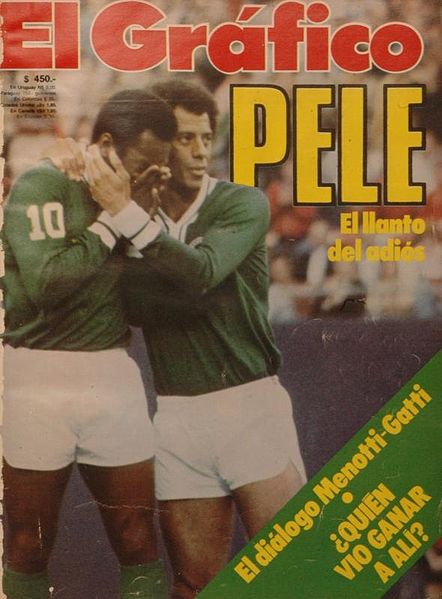
The Cosmos, the New York soccer team that Steve Ross and Warner Communications built into a jet-setting, championship-getting phenomenon more than three decades ago, with the the aid of aging international stars like Pelé. Franz Beckenbauer and that ball hog Giorgio Chinaglia, are back–well, possibly. A British entrepreneur named Paul Kemsley is reviving the brand and hoping to coax lightning to strike twice, something the skies generally do rarely and at their own caprice. David Segal of the New York Times reports:

“’Thanks so much for coming,’ [Paul Kemsley] said, turning serious. ‘We hope you get it. It’s gonna be huge. Support us. The Cosmos are back.’

Hang on — the team that gave Americans their first taste of soccermania, once packing Giants Stadium with more than 77,000 fans? That rum band of night prowlers with their own table at Studio 54 and Hollywood hangers-on? The franchise that vanished not long after Steve Ross, the head of Warner Communications, decided that pro soccer had no future? Those Cosmos are back?

Certainly the brand is back. Amid all the team memorabilia on display at that February party were plenty of crisp new Cosmos shirts, shorts and warm-ups, part of a recently unveiled line of clothing from Umbro, the English company that co-sponsored the shindig.

But Kemsley’s ambitions far exceed retro sportswear. A former real estate mogul who flamed out spectacularly in England when the recession struck, he is now chairman of the Cosmos, whose rights he bought recently. Since then, the team has been his all-consuming passion; he talks about building a stadium as well as Cosmos-related restaurants and hotels in New York City. He predicts that he and Umbro will sell a fortune’s worth of shirts in Europe and Asia. He has a staff of 16 already (including an executive named Terry Byrne, a close friend and former manager of David Beckham’s). He is touring the world to spread news of a second coming.”

••••••••••

The trailer for the Cosmos documentary, Once in a Lifetime:

Tags: , , , ,

"Robert Earl fell into a muddy ditch and had to be pulled out with a tractor and belts by the town’s men."

Robert Earl Hughes was large of mind, heart and, unfortunately, body. Born in 1926, Hughes was a sweet-tempered Illinois country boy with uncanny mnemonic skills, who suffered from a malfunctioning pituitary gland, which caused him to grow larger and larger. As his weight gradually rose above the half-ton mark, he worked intermittently as a carnival attractiom, before dying at the young age of 32. Persistent rumors that he was buried in a piano case were unfounded. In “Heavy,” a Chicago magazine article, Robert Kurson recalls the man who became a prisoner to his ever-expanding flesh. An excerpt:

“Most Saturdays, the Hughes family would travel to the general store, where they would trade their farm goods for life’s essentials. When he was ten, Robert Earl stepped for the first time on the store’s platform scale, where the owner, Gerald Kurfman, added counterweights, then more counterweights, before announcing a reading of 378 pounds. Word spread to neighboring counties about the heavy lad in Fishhook. A doctor who came to examine Robert Earl told his parents that the boy would likely die by 15—that no heart could stand such stress. After that, Robert Earl avoided doctors whenever possible; he thought they were interested only in experimenting on him. While the Hughes family continued to visit the store, no one remembers Georgia watching Robert Earl’s calories or scolding him for coveting marshmallows or treating him differently in any way than she treated his brothers.

At school, Robert Earl leapfrogged his peers in reading and writing, and startled teachers with a memory that bordered on eerie. ‘If he read something or met someone, he would remember it forever,’ says Harry Manley, 77, who worked for a couple of years in the general store. ‘He only needed one time.’ Robert Earl sat in a specially constructed chair reinforced with wires. Every month that chair got tighter and tighter, and every month the boy seemed to get smarter and smarter, to know more about the world and its odd places with strange names. By 12, Kurfman had weighed him at 500 pounds, and Robert Earl had taken to carrying a gallon of milk and two loaves of bread to school every day for lunch. In the fifth grade, while walking home from school, Robert Earl fell into a muddy ditch and had to be pulled out with a tractor and belts by the town’s men. ‘It scared us all so terribly,’ recalls Gladys Still, a childhood friend who watched the rescue. Though the boy never spoke of dying, kids knew he wasn’t supposed to live long, and they remember that day as the first time they were scared for the life of their friend.” (Thanks Longform.)

••••••••••

Robert Earl Hughes’ relations recall him:

Tags: ,

According to a Telegraph report, Brazilian police will be outfitted with eyeglasses that can scan 400 faces per second, identifying persons of interest with speed and ease. An excerpt:

“Military Police officials from Sao Paulo and Rio de Janeiro, which will both host key games in the World Cup, have been given demonstrations of how the device works.

Major Leandro Pavani Agostini, of Sao Paulo’s Military Police, said: ‘It’s something discreet because you do not question the person or ask for documents. The computer does it.

“To the naked eye two people may appear identical but with 46,000 points compared, the data will not be beaten.”

Tags:

"Angell is the grand master of the first-hand observation, which is why his baseball writing in T"he New Yorker" is so original and lively and has been for 50 years." (Image by George Grantham Bain.)

The opening of “Still at the Top of His Game,” Michael Bamberger’s excellent new Sports Illustrated appreciation of nonagenarian New Yorker legend Roger Angell, who continues to write some of the most eloquent and incredibly visual sentences you could ever hope to read:

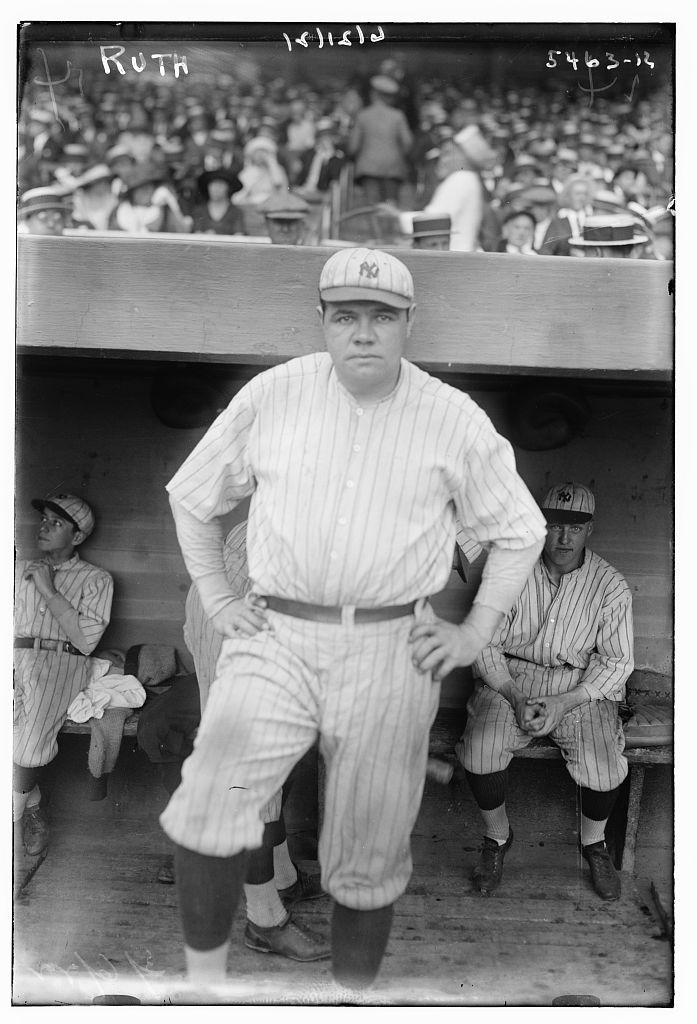
“Roger Angell’s memories of Babe Ruth at Yankee Stadium are moving pictures in his head, deposited there when he was a boy absorbed by the pastime and the world around him. The Babe’s big bat, his heavy flannel uniform, the men in fedoras watching him: You and I, way late to the party, have been fed these black-and-white snaps by PBS specials and Hall of Fame exhibits, but that’s not the case for Angell. For him, they’re in color. Angell is the grand master of the first-hand observation, which is why his baseball writing inThe New Yorkeris so original and lively and has been for 50 years.

They say if you watch baseball long enough you’ll see something you’ve never seen before. Maybe that’s what has kept Roger—he’d invite you to call him that—so young, the promise of what the next game might bring. Reading him, you’d never guess his age. He’s 90.

Whatever he wrote in hisNew Yorkerblog last week, you won’t see anywhere else. His pieces get published, on the magazine’s website and in its pages, with no predictable pattern, and every time you come across one, it’s a delight. If you want a traditional ode to the new season, don’t read Angell. Only once, in 1963, did he compare the return of newspaper box scores in April to spring flowers. Only once, in 1988, did he call Bart Giamatti, then the president of the National League, a ‘career .400 talker.’ Only once did Angell compare Tim Lincecum’s stride to ‘a January commuter arching over six feet of slush.’ That was last year.

In his little 20th-floor office in the sleek Condé Nast building in Times Square, Angell—trim and fit in the tweedy uniform of the gentleman farmer—has a pile of Mead spiral-bound notebooks.”

Tags: ,

Great find by Brendan Koerner (via Longform) in digging up “The Boys in the Bank,” the September 1972 Life magazine article about the unusual Brooklyn heist that inspired Dog Day Afternoon, the amazing 1975 film by the recently deceased Sidney Lumet.

From Life: “By now, John Wojtowicz wants to talk to the police. He wants to talk about negotiations, about hostages, about producing a plane which will carry him to distant places. But more than this, he wants to talk to the person who matters most of all. As worried married men will do, he asks to be allowed to talk to his ‘wife.’ The police send a squad car to the mental ward of a nearby hospital and pick up a 26-year-old male named Ernest Aron.

There was nothing in John Wojtowicz’s early years to suggest that he would ever find himself holding off police at the doors of a bank and haggling with them for a meeting with a homosexual spouse. For most of his 27 years his life seemed pointed to nothing more than a routine job, a faithful female wife, and someday a move to the suburbs.

His mother, Theresa, remembers a good boy who didn’t smoke, rarely drank. He played softball, collected stamps, and carefully clipped out newspaper stories about politics. He finished Erasmus High School with a 97% average, shining in math and mechanical drawing. His favorite extracurricular activity was Monopoly.

Only an occasional flare-up of temperamental rage marred an otherwise studious and pedestrian mind. It seemed right to his moth- er that her son should take a job in a bank directly after high school and that he should find a girl friend-and an eventual wife -who was also a bank employee. The first Mrs. John Wojtowiez was loud, jolly Carmen Bifulco, a typist at the Chase Manhattan Bank. She playfully called her husband a dingbat. He dubbed her in return a ‘mouth.’ The couple met on a bank-sponsored ski trip to Massachusetts, were engaged as Wojtowicz was drafted and shipped to Vietnam, and were finally married just as soon as he got back to Brooklyn, safe and sound, one year later. And then the trouble began.”

Tags: , ,

"He never greeted the judges when he passed them on the street – everyone looked similarly blank to him – and he developed a reputation for arrogance.," (Image by Przykuta.)

The opening of “Face Blind,” a 2007 Wired article by Joshua Davis about a neurological disorder that makes face recognition difficult–a confusing condition I myself have, though not quite as severely as the people in this article:

BILL CHOISSER WAS 48 when he first recognized himself. He was standing in his bathroom, looking in the mirror when it happened. A strand of hair fell down – he had been growing it out for the first time. The strand draped toward a nose. He understood that it was a nose, but then it hit him forcefully that it was his nose. He looked a little higher, stared into his own eyes, and saw … himself.

For most of his childhood, Choisser thought he was normal. He just assumed that nobody saw faces. But slowly, it dawned on him that he was different. Other people recognized their mothers on the street. He did not. During the 1970s, as a small-town lawyer in the Illinois Ozarks, he struggled to convince clients that he was competent even though he couldn’t find them in court. He never greeted the judges when he passed them on the street – everyone looked similarly blank to him – and he developed a reputation for arrogance. His father, also a lawyer, told him to pay more attention. His mother grew distant from him. He felt like he lived in a ghost world. Not being able to see his own face left him feeling hollow.

One day in 1979, he quit, left town, and set out to find a better way of being in the world. At 32, he headed west and landed a job as a number cruncher at a construction firm in San Francisco. The job isolated him – he spent his days staring at formulas – but that was a good thing: He didn’t have to talk to people much. With 1,500 miles between him and southern Illinois, he felt a measure of freedom. He started to wear colorful bandannas, and he let his hair grow. When it got long enough, he found that it helped him see himself. Before that, he’d had to deduce his presence: I’m the only one in the room, so that must be me in the mirror. Now that he had long hair and a wild-looking scarf on his head, he could recognize his image. He felt the beginnings of an identity.

It gave him the confidence to start seeing doctors. He wanted to know if there was something wrong with his brain. His vision was fine, they told him – 20/20. One doctor suggested he might have emotional problems and referred him to a psychiatrist. In the medical literature, there were a few reports of head-injury and stroke victims who’d lost their ability to recognize faces. No one, as far as the doctors knew, had ever been born with the condition.

Conventional medicine, in other words, got him nowhere. So Choisser posted a message about his experiences on a Usenet group devoted to people with neurological problems. His subject line was ‘Trouble Recognizing Faces.’ After a few months, in late 1996, he received a solitary reply. ‘Hello, Bill,’ the email began, ‘I read what you wrote, and I think I have what you have.'” (Thanks Longreads.)

Tags:

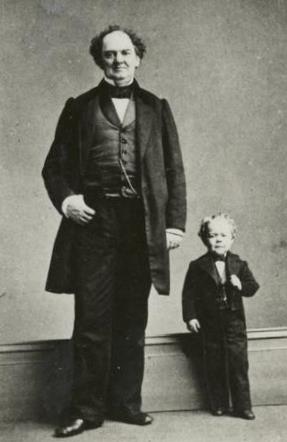
Barnum and Nutt conduct business.

This undated, classic 1800s photograph of sideshow attraction “Commodore Nutt,” along with his employer, P.T. Barnum, was taken by Charles DeForest Fredricks. An excerpt from the performer’s 1881 New York Times obituary:

“Commodore Nutt, the celebrated dwarf, died early yesterday morning at the Anthony House, after suffering nearly two months from a severe attack of Bright’s disease. He was born April 1, 1844, at Manchester, N.H., and at the age of 17 was brought to New-York by Barnum and exhibited in the old museum, corner of Ann-Street and Broadway. He was widely advertised as the ‘smallest man in the world.’ His full name was George Washington Morrison Nutt. His father was a New Hampshire farmer, over six feet in height and weighing 270 pounds. His mother was average size and healthy. When he engaged with Barnum in 1860 he was 30 inches high, but as years went by he grew somewhat, and at the time of his death his height was 3 feet seven inches. In girth his increase in size was even more marked, and it is not improbable that recently his average weight has been fully twice that when originally presented to the public. The ‘Commodore’ was originally known as ‘$30,000 Nutt,” Mr. Barnum claiming that such sum was paid the dwarf to go on exhibition. ‘The fact is, though,’ said Mr. Hutchings, who used to be known as the ‘Lightning Calculator,’ the old man paid the boy but $15 a week.'”

Tags: , ,

David Grann recently published an excellent piece in the New Yorker about a mysterious death in Guatemala. Here’s the opening of another great article for the same magazine, 2010’s “The Mark of a Masterpiece,” about an Oxford professor who authenticates art:

“Every few weeks, photographs of old paintings arrive at Martin Kemp’s eighteenth-century house, outside Oxford, England. Many of the art works are so decayed that their once luminous colors have become washed out, their shiny coats of varnish darkened by grime and riddled with spidery cracks. Kemp scrutinizes each image with a magnifying glass, attempting to determine whether the owners have discovered what they claim to have found: a lost masterpiece by Leonardo da Vinci.

Kemp, a leading scholar of Leonardo, also authenticates works of art—a rare, mysterious, and often bitterly contested skill. His opinions carry the weight of history; they can help a painting become part of the world’s cultural heritage and be exhibited in museums for centuries, or cause it to be tossed into the trash. His judgment can also transform a previously worthless object into something worth tens of millions of dollars. (His imprimatur is so valuable that he must guard against con men forging not only a work of art but also his signature.) To maintain independence, Kemp refuses to accept payment for his services. ‘As soon as you get entangled with any financial interest or advantage, there is a taint, like a tobacco company paying an expert to say cigarettes are not dangerous,’ he says.

Kemp, who is in his sixties, is an emeritus professor of art history at Oxford University, and has spent more than four decades immersed in what he calls ‘the Leonardo business,’ publishing articles on nearly every aspect of the artist’s life. “

Tags: , ,

"Exclamation points, sometimes as many as 50 a page, added empha." (Image by Allan Warren.)

From the New York Times obituary of the former schoolteacher who made a mint by selling David Cassidy and Leif Garrett to infatuated adolescent girls:

“Charles Laufer, who as a high school teacher in 1955 despaired that his students had nothing entertaining to read and responded with magazines aimed at teenage girls desperate to know much, much more about the lives of their favorite cute stars, died April 5 in Northridge, Calif. He was 87.

The cause was heart failure, his brother, Ira, said.

Mr. Laufer’s best-known magazine was Tiger Beat, published monthly. With its spinoff publications and its competitors, of which the most popular was 16 Magazine, Tiger Beat had it all covered — or at least what mattered most to girls from about 8 to 14. The Beach Boys’ loves! Jan and Dean’s comeback! The private lives of the Beatles!

Exclamation points, sometimes as many as 50 a page, added emphasis. Pix, as pictures were known, were glossy, glamorous and frequently poster-size. Fax, as facts were known, often included ‘101 things you never knew about (fill in star’s name)’: he uses a blue toothbrush!”

Tags: , ,

"Backing them up will be an all-star cast of freaks, every one of them stoned." (Image by HammondCast.)

Before moving to his longstanding homestead in Aspen, Colorado, Hunter S. Thompson lived in Berkeley and was eyewitness to the Hippie phenomenon. An excerpt from “The ‘Hashbury’ Is The Capital of the Hippies,” Thompson’s account from the front lines of flower power and its brutally quick commodification, which ran in the May 14, 1967 New York Times:

“Those hippies who don’t work can easily pick up a few dollars a day panhandling along Haight Street. The fresh influx of curiosity-seekers has proved a great boon to the legion of psychedelic beggars. During several days of roaming around the area, I was touched so often that I began to keep a supply of quarters in my pocket so I wouldn’t have to haggle for change. The panhandlers are usually barefoot, always young and never apologetic. They’ll share what they collect anyway, so it seems entirely reasonable that strangers should share with them.

The best show on Haight Street is usually on the sidewalk in front of the Drog Store, a new coffee bar at the corner of Masonic Street. The Drog Store features an all-hippy revue that runs day and night. The acts change sporadically, but nobody cares. There will always be at least one man with long hair and sunglasses playing a wooden pipe of some kind. He will be wearing wither a Dracula cape, a long Buddhist robe, or a Sioux Indian costume. There will also be a hairy blond fellow wearing a Black Bart cowboy hat and a spangled jacket that originally belonged to a drum major in the 1949 Rose Bowl parade. He will be playing the bongo drums. Next to the drummer will be a dazed-looking girl wearing a blouse (but no bra) and a plastic mini-skirt, slapping her thighs to the rhythm of it all.

These three will be the nucleus of the show. Backing them up will be an all-star cast of freaks, every one of them stoned. They will be stretched out on the sidewalk, twitching and babbling in time to the music. Now and then somebody will fall out of the audience and join the revue; perhaps a Hell’s Angel or some grubby, chain-draped impostor who never owned a motorcycle in his life. Or maybe a girl wrapped in gauze or a thin man with wild eyes who took an overdose of acid nine days ago and changed himself into a raven. For those on a quick tour of the Hashbury, the Drog Store revue is a must.” (Thanks Kevin Kelly.)

Tags:

"Research does indicate that some schizophrenics decline faster if they smoke hash." (Image by Zantastik.)

From “Running the Asylum,” Graeme Wood’s new Atlantic article about mental-health care in Pakistan, a land that’s suffered a dizzying succession of jihads, terrorism, floods and hashish, always hashish:

“Raja, in his early 30s, is a typical case. He has been out of his mind and addicted to hash for most of his adult life. He’s tall and skinny, with a film of dirt on his face that suggests he can’t quite look after himself. Wazir says Raja routinely relapses by leaving the hospital and hanging out at a nearby shrine close to a police station, where addicts gather to smoke hash and opium. (Wazir blames the hash for worsening Raja’s mental problems. Research does indicate that some schizophrenics decline faster if they smoke hash. Other research, however, shows that cannabidiol, one of the psychoactive chemicals in hashish, has antipsychotic properties. Perhaps it’s a wash.)

Today is a good day for Raja. His eyes bug out, and his lips are pulled back in a huge grin that reveals teeth the color of brown sugar, looking so rotten that a swig of water might wash them away entirely. On bad days, he flies into uncontrollable schizophrenic rages. ‘If he is violent or too talkative or too mischievous,’ Wazir says, ‘we put him again in the mental hospital, and if he requires it, he gets electric shocks.’ He has gone through about 15 rounds of shock therapy. ‘But he’s young, so he can sustain it.’

Wazir says his countrymen have been mentally traumatized more or less continuously for the past 35 years. ‘First it was Afghan jihad, then it was Kashmiri jihad, then it was the nuclear issue, then it was terrorism and suicide bombings, and now floods,’ he says. ‘I have not heard any good news coming to me in Pakistan’”

Tags:

According to a new BBC article, retro computing enthusiasts will soon be able to purchase a retooled version of that old 1980s favorite, the Commodore 64. An excerpt.

“Commodore is making a Windows PC that fits inside a boxy beige shell that looks exactly like its original C64.

The 8-bit machine was released in 1982, had 64 kilobytes of memory and became one of the best-selling computers ever.

Commodore’s updated version will run Windows 7 but also has an emulator capable of playing games written for its ancestor.

Commodore has started taking orders for the C64x, priced at $595 (£364), and said the machines would ship between May and June. It is expected to appear in shops later in the year.”

Atari famously brought the video game craze into the home with consoles that played removable cartridges rather than having games built into the system, but it wasn’t the first company to offer such a setup. The Fairchild Channel F did it earlier and one of Fairchild’s chief engineers and inventors, Jerry Lawson, just passed away. An excerpt from a new article about him on 1UP: “Engineer, inventor and video game pioneer Jerry Lawson passed away Saturday of unknown causes.

Lawson was among the earliest video game engineers. His first arcade title, Chicago Coins’ Demolition Derby, was developed in his garage in the early 1970s.

Lawson is remembered as the inventor of Fairchild Semiconductor’s home video game console, the Channel F. Released in 1976, the Channel F is the first console with programmable game cartridges; before it, home video game systems only played the games that were built into them.

Until recently, Lawson’s name was not very well known, even amongst the video game community. Fortunately, Lawson was honored by the International Game Developers Association’s Minority Special Interest Group at the Game Developers Conference just last month.”

Tags:

« Older entries § Newer entries »