
Books

You are currently browsing the archive for the Books category.

A passage about the nature of prisons from Bill James’ new book, Popular Crime, which I previously posted about:

“Build smaller prisons. 

… Large prisons become ‘violentocracies’ — places ruled by violence and by the threat of violence. In a violentocracy, the most violent people rise to the top.  

In any prison of any size, the prisoners are going to be pushed toward the level of the most violent persons in the facility. … In a prison 3,000 people, the entire prison is pushed toward the level of violence created by the five most violent people in the joint. The most violent person finds the second-most violent person and the third-most violent person, and they form an alliance to exploit the weak. Everyone else is compelled to avoid looking weak. … 

Large prisons promote paranoia in the prisoners. You never know who in here is waiting for you with a homemade knife.  

… A prison of 20 people is, by its very nature, extremely different. You know who is in there with you; you know who you have to stay away from. … Plus, if you have many small prisons, you can contain the violent people in a limited number of those prisons, the preventing their violent tendencies from infecting the rest of the prison population.  

… What you would do, with a network of small prisons, would be to place each prisoner in a facility that is appropriate to the threat that he represents. You grade the prisoners on the threat of violence that they represent, one through ten. You put the tens with the tens and the ones with the ones.  

Plus, when you move to a system in which some prisoners have more rights and live in more humane conditions, you create a powerful incentive to get into one of the less restrictive prisons..  

In a large and horrible prison, the new prisoner thinks ‘I’ve got to show everybody here how tough and vicious I really am, so that nobody will mess with me.’ But when you put a new prisoner in a 24-man prison with 23 other tough guys, and he knows that there are other prisons that are not like this, his natural thought is ‘I’ve got to get out of here. I’ve got to show these people that I am not a crazy, vicious sociopath, so they will move me to some other facility that is not populated by crazy, vicious sociopaths.'” (Thanks iSteve and Marginal Revolution.)

Tags:

In his 1998 book, Machine Beauty: Elegance And The Heart Of Technology, David Gelernter implored technologists to study art history and create more pleasing products. It would seem his hopes have been realized, but not because of some academic intervention. It’s simply because of the iPod and subsequent Apple products which offered great external aesthetics and software to match. Competitors were forced to try to keep pace. An excerpt from Gelernter’s book:

“Great technology is beautiful technology. If we care about technology excellence, we are foolish not to train our young scientists and engineers in aesthetics, elegance, and beauty. The idea of such a thing happening is so far-fetched it’s funny — but, yes, good technology is terribly important to our modern economy and living standards and comfort levels, the ‘software crisis’ is real, we do get from our fancy computers a tiny fraction of the value they are capable of delivering…. We ought to start teaching Velázquez, Degas, and Matisse to young technologists right now on an emergency basis. Every technologist ought to study drawing, design, and art history…. Art education is no magic wand. But I can guarantee that such a course of action would make things better: our technology would improve, our technologists would improve, and we would never regret it.”

Tags:

"The presence of such an enclave of graceless pleasures in such an environment is so improbable that only science fiction can manage it." (Image by Matthew Field.)

I was looking at The Browser and came across a book about American deserts by the late architectural critic Reyner Banham, a British expat who adored the buildings of Los Angeles. A quote from this seemingly eccentric book that I’ve yet to get my hands on:

“Las Vegas is a symbol, above all else, of the impermanence of man in the desert, and not least because one is never not aware of the desert’s all pervading presence; wherever man has not built nor paved over, the desert grimly endures – even on some of the pedestrian islands down the center of the Strip! The presence of such an enclave of graceless pleasures in such an environment is so improbable that only science fiction can manage it; the place is like the compound of an alien race, or a human base camp on a hostile planet. To catch this image you need to see Las Vegas from the air by night, or better still, late in the afternoon, as I first saw it, when there is just purple sunset light enough in the bottom of the basin to pick out the crests of the surrounding mountains, but dark enough for every little lamp to register. Then – and only then – the vision is not tawdry, but is of a magic garden of blossoming lights, welling up at its center into fantastic fountains of everchanging color. And you turned to the captain of your spaceship and said, ‘Look Sir, there must be intelligent life down there,’ because it was marvelous beyond words. And doomed – it is already beginning to fade, as energy becomes more expensive and the architecture less inventive. It won’t blow away in the night, but you begin to wish it might, because it will never make noble ruins . . . .”

••••••••••

Previously posted, this playful 1972 BBC doc captured Banham in his favorite element: Los Angeles. There’s a fun passage in which Edward Ruscha opines on L.A. gas stations:

Tags: ,

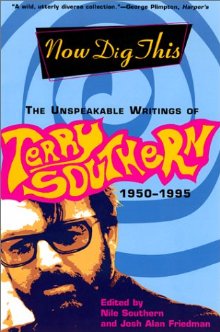
One literary outlaw opined on another in Terry Southern’s 1964 piece about William S. Burroughs’ Naked Lunch. An excerpt:

“The element of humor in Naked Lunch is one of the book’s great moral strengths, whereby the existentialist sense of the absurd is taken towards an informal conclusion. It is an absolutely devastating ridicule of all that is false, primitive, and vicious in current American life: the abuses of power, hero worship, aimless violence, materialistic obsession, intolerance, and every form of hypocrisy. No one, for example, has written with such eloquent disgust about capital punishment; throughout Naked Lunch recur sequences to portray the unfathomable barbarity of a “civilization” which can countenance this ritual. There is only one way, of course, to ridicule capital punishment—and that is by exaggerating its circumstances, increasing its horror, accentuating the animal irresponsibility of those involved, insisting that the monstrous deed be witnessed (and in Technicolor, so to speak) by all concerned. Burroughs is perhaps the first modern writer to seriously attempt this; he is certainly the first to have done so with such startling effectiveness. Social analogy and parallels of this sort abound in Naked Lunch, but one must never mistake this author’s work for political comment, which, as in all genuine art, is more instinctive than deliberate—for Burroughs is first and foremost a poet. His attunement to contemporary language is probably unequaled in American writing. Anyone with a feeling for English phrase at its most balanced, concise, and arresting cannot fail to see this excellence.”

Another Terry Southern post:

Tags: ,

While I have never had any interest whatsoever in J.R.R. Tolkien’s work–as a child or adult–I know I’m in the small minority. For the rest of you. (Thanks Open Culture.)

Tags:

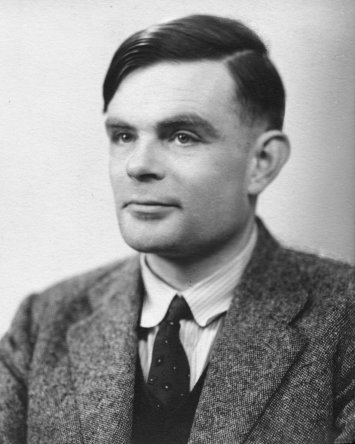
This month marks the 99th birthday of British mathematician Alan Turing, the father of computing. The opening of Jim Holt’s 2006 New Yorker review of David Leavitt’s book about Turing:

“On June 8, 1954, Alan Turing, a forty-one-year-old research scientist at Manchester University, was found dead by his housekeeper. Before getting into bed the night before, he had taken a few bites out of an apple that was, apparently, laced with cyanide. At an inquest, a few days later, his death was ruled a suicide. Turing was, by necessity rather than by inclination, a man of secrets. One of his secrets had been exposed two years before his death, when he was convicted of “gross indecency” for having a homosexual affair. Another, however, had not yet come to light. It was Turing who was chiefly responsible for breaking the German Enigma code during the Second World War, an achievement that helped save Britain from defeat in the dark days of 1941. Had this been publicly known, he would have been acclaimed a national hero. But the existence of the British code-breaking effort remained closely guarded even after the end of the war; the relevant documents weren’t declassified until the nineteen-seventies. And it wasn’t until the eighties that Turing got the credit he deserved for a second, and equally formidable, achievement: creating the blueprint for the modern computer.”

••••••••••

Alan Turing the Cat who, by the way, pretty much sucks at math:

Tags: , ,

Donald Barthelme’s reading list was originally published in 2003 by the Believer. In it, the postmodern short-story master made 81 suggestions to his students. Some are out-of-print, but pretty much all can be had online. You can add Barthelme’s own 60 Stories to the list.

Tags:

astro2 (3)

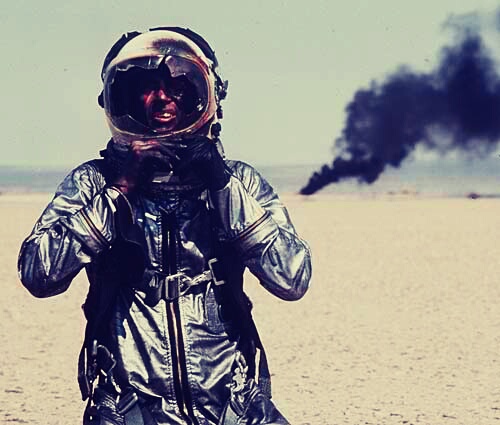
Ray Bradbury explains to Oriana Fallaci why we should travel into space, in the 1966 book, If The Sun Dies:

For the same reason that makes us bring children into the world. Because we’re afraid of death and darkness, and because we want to see our image reflected and perpetuated to immortality. We don’t want to die, but death is there, and because it’s there we give birth to children who’ll give birth to other children and so on to infinity. And this way we are handed down to eternity. Don’t let us forget this: that the Earth can die, explode, the Sun can go out, will go out. And if the Sun dies, if the Earth dies, if our race dies, then so will everything die that we have done up to that moment. Homer will die, Michelangelo will die, Galileo, Leonardo, Shakespeare, Einstein will die, all those will die who now are not dead because we are alive, we are thinking of them, we are carrying them within us. And then every single thing, every memory, will hurtle down into the void with us. So let us save them, let us save ourselves. Let us prepare ourselves to escape, to continue life and rebuild our cities on other planets: we shall not long be of this Earth! And if we really fear the darkness, if we really fight against it, then, for the good of all, let us take our rockets, let us get well used to the great cold and heat, the no water, the no oxygen, let us become Martians on Mars, Venusians on Venus, and when Mars and Venus die, let us go to the other solar systems, to Alpha Centauri, to wherever we manage to go, and let us forget the Earth. Let us forget our solar system and our body, the form it used to have, let us become no matter what, lichens, insects, balls of fire, no matter what, all that matters is that somehow life should continue, and the knowledge of what we were and what we did and learned: the knowledge of Homer and Michelangelo, of Galileo, Leonardo, Shakespeare, of Einstein! And the gift of life will continue.•

More from If The Sun Dies:

Tags: ,

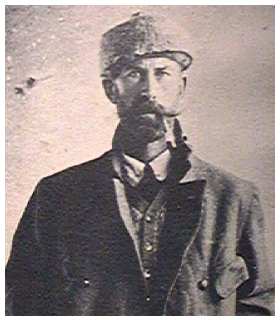
Percy Fawcett, 1911, roughly 14 years before his disappearance.

From “The Lost City Of Z,” the 2005 New Yorker article by the great David Grann about Colonel Percy Harrison Fawcett, who came to a mysterious end in the 1920s while exploring  an isolated Amazonian civilization:

“In the first decades of the twentieth century, Fawcett had been acclaimed as one of the last of the great amateur archeologists and cartographers—men who ventured into uncharted territories with little more than a machete, a compass, and an almost divine sense of purpose. Fawcett survived in the jungle for years at a time, without contact with the outside world, often subsisting for days on a handful of nuts; he was ambushed by hostile tribesmen, many of whom had never seen a white man before; he emerged with maps of regions from which no expedition had returned.

Yet it was his ‘quest,’ as Fawcett called it, to find Z that most captivated Lynch. For centuries after the discovery of the New World, many Europeans believed that a fantastical kingdom of untold wealth was concealed in the ethereal landscape of the Amazon. In 1541, Friar Gaspar Carvajal, a member of the first European expedition to descend from the Andes into the Amazon, reported glimpses of white Indians and women warriors who resembled the mythical Greek Amazons. One early map of South America was adorned with minotaurs and headless beings with eyes in their chests, and well into the twentieth century the Amazon remained, as Fawcett put it, ‘the last great blank space in the world.’

Lynch’s research made him feel certain that Fawcett, unlike so many of his predecessors, was not a soldier of fortune or a crackpot. Fawcett was a recipient of the Gold Medal, the highest honor bestowed on an explorer by the Royal Geographical Society; a skilled mapmaker; and a decorated hero of the First World War. He knew the Amazon as well as anyone. His younger son, Brian, said of him, ‘True, he dreamed; but his dreams were built upon reason, and he was not the man to shirk the effort to turn theory into fact.'” (Thanks Electric Typewriter.)

•••••••••

Grann discusses the topic with that pretend pablum-puker Stephen Colbert:

Tags: ,

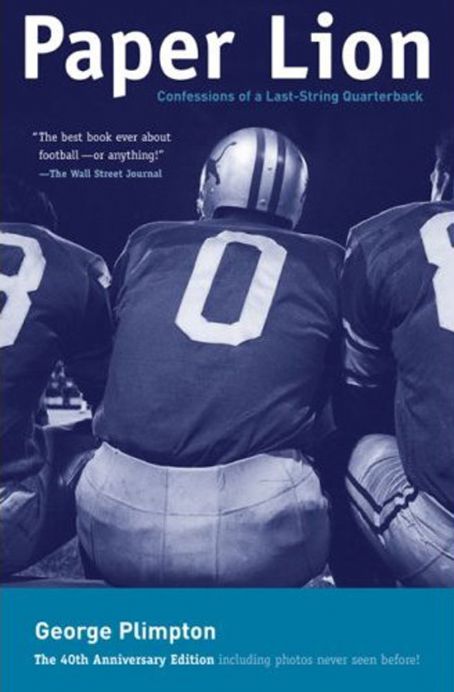
I interviewed George Plimpton shortly before his death, though I accept no blame for his demise. In 1966, the journalist, editor, party maven and prankster scored one of his greatest successes with Paper Lion, a sports book about trying out for third-string quarterback for the Detroit Lions. The other players weren’t in on the lark, though they soon came to realize the 36-year-old rookie was better at throwing back martinis than throwing tight spirals. The book grew out of “Zero of the Lions,” the author’s famous 1964 Sports Illustrated article. An excerpt from that piece:

“I looked for my helmet, relieved to see it lying in the grass a few yards away. My impulse was to put it on. From the beginning I’d had trouble getting into the helmet. The procedure was to stick the thumbs in the helmet’s ear holes and stretch the helmet out as it came down over the head—a matter of lateral pull, and easy enough if you practiced isometrics, but I never had the strength to get my ears quite clear, so they were bent double inside the helmet once it was on. I would work a finger up inside to get the cars upright again, a painful procedure, and noisy, the sounds sharp in the confines of the hard shell of the helmet as I twisted and murmured until it was done, the ears ringing softly. Then quiet would settle in the helmet, and I would look out beyond the bars of the nose guard—the ‘cage,’ the players call it—to see what was going on outside, my eyes still watering slightly. It was even more difficult to get the helmet off. The first helmet Friday Macklem had given me was too small—a helmet is supposed to fit snugly to afford the best protection—and when I tried it on in front of my locker I yelled as it came down over my ears. Wayne Walker, the big linebacker, happened to be chatting with me at the time.

‘How’d she feel?’

‘Feels fine. Snug,’ I said. ‘Once you get the thing on.’

I tried to take it off. I got my thumbs in the ear holes and tried to budge the helmet loose.

‘I’m stuck in here,’ I said, simply.

Walker began to grin. He looked down the locker room aisle for other players who would have enjoyed the dilemma. Mercifully, none were on hand.

‘Damn!’ I said. ‘I can’t budge this thing.'”

••••••••••

Plimpton parlayed his Paper Lion success into Oldsmobile Vista Cruiser ads:

Tags:

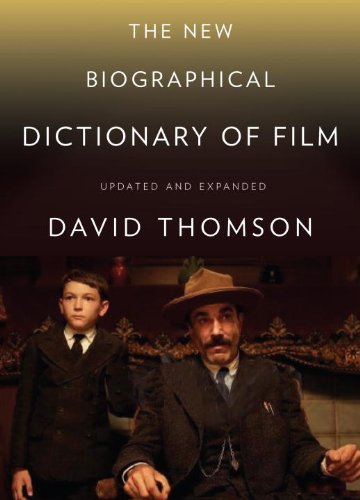
First published in 1975, the book now stretches past 1,000 pages.

FromHollywood: A Love Story,” an excellent article in the Atlantic by astute cultural critic Clive James about David Thomson, that woolly film maven best known for his indispensible and idiosyncratic reference book:

“After five editions in 35 years, Thomson’s famous compendium of biographical sketches about the movie people—hey, it’s read by the movie people, the movie people are fighting to get into it, male stars measure their manhood by the length of their entry—is still a shantytown with the ambitions of a capital city. It gets bigger all the time without ever becoming more coherent. But with more than a thousand pages of print to wander in, only the most churlish visitor would complain about lack of cogency. Better to rejoice at the number of opportunities to scream in protest at what the author has left out, put in, skimmed over, or gone on about with untoward zeal. As a book meant to be argued with, it’s a triumph.

Also, there is the frustrating consideration that Thomson is often right. Most people of his generation who have spent their lives seeing every properly released movie even if it stars Steven Seagal are incapable of judging them. The reason is simple: those people are monomaniacs. Thompson has found time to do other things: read books, breathe clean air, cook and eat real food.”

••••••••••

David Thomson in 2010 at Google Talks:

Tags: ,

Michael Crichton predicts the future (fairly poorly) in 1999: Printed matter will be fine, movies will soon be dead, communications will be consolidated into fewer hands. Well, he did foresee YouTube and large-scale terrorism in NYC.

Crichton, who was fascinated by science and often accused of being anti-science, commenting in a 1997 Playboy interview on technology creating moral quandries we’re not prepared for: “I think we’re a long way from cloning people. But I am worried about scientific advances without consideration of their consequences. The history of medicine in my lifetime is one of technological advances that outstrip our ethical systems. We’ve never caught up. When I was in medical school—30-odd years ago—people were struggling to deal with mechanical-respiration systems. They were keeping alive people who a few years earlier would have died of natural causes. Suddenly people weren’t going to die of natural causes. They were either going to get on these machines and never get off or—or what? Were we going to turn the machines off? We had the machines well before we started the debate. Doctors were speaking quietly among themselves with a kind of resentment toward these machines. On the one hand, if somebody had a temporary disability, the machines could help get them over the hump. For accident victims—some of whom were very young—who could be saved if they pulled through the initial crisis, the technology saved lives. You could get them over the hump and then they would recover, and that was terrific.

But on the other hand, there was a category of people who were on their way out but could be kept alive. Before the machine, ‘pulling the plug’ actually meant opening the window too wide one night, and the patient would get pneumonia and die. That wasn’t going to happen now. We were being forced by technology to make decisions about the right to die—whether it’s a legal or religious issue—and many related matters. Some of them contradict longstanding ideas in an ethically protected world; we weren’t being forced to make hard decisions, because those decisions were being made for us—in this case, by the pneumococcus.

This is just one example of an ethical issue raised by technology. Cloning is another. If you’re knowledgeable about biotechnology, it’s possible to think of some terrifying scenarios. I don’t even like to discuss them. I know people doing biotechnology research who have decided not to pursue avenues of research because they think they’re too dangerous. But we go forward without sorting out the issues. I don’t believe that everything new is necessarily better. We go forward with the technology while the ethical issues are still up in the air, whether it’s the genetic variability of crop streams, which is a resource in times of plant plagues, to the assumption that we all have to be connected all the time. The technology is here so you must use it. Do you? Do you have to have your cell phone and your e-mail address and your Internet hookup? I was just on holiday in Scotland without e-mail. I had to notify people that I wouldn’t be checking my e-mail, because there’s an assumption that if I send you an e-mail, you’ll get it. Well, I won’t get it. I’m not plugged in, guys. Some people are horrified: ‘You’ve gone offline?’ People feel so enslaved by technology that they will stop having sex to answer the telephone. What could be so important? Who’s calling, and who cares?”


Tags:

There are used paperback copies of the book on Amazon for as little as $1.62.

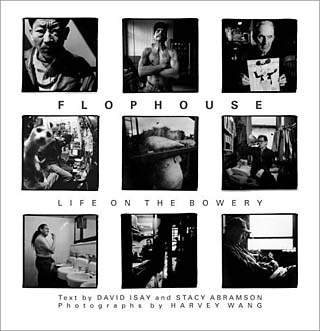
Photographer Harvey Wang and radio documentarian David Isay gravitate to those people, places and things that have passed into obsolescence in our culture and capture their essence before they become obsolete. They focus a good deal of attention on NYC, a place that changes rapidly, often driven more by the lure of the dollar than the pull of history. The two collaborated with Stacy Abramson on the great 2000 book, Flophouse: Life on the Bowery, which looked at the lowly boarding houses that still stood in that famous (and infamous) neighborhood like anachronisms with bedbugs. But despite their shabby shape, these lodgings were filled with the fascinating stories of the tenants, which Wang and Isay chronicled with great care. You can listen to audio documentaries about the flophouses here. The opening copy of the book:

“From the end of the nineteenth century through the middle of the twentieth, the Bowery was the world’s most infamous skid row. Under the shadow of the elevated Third Avenue line, the sixteen-block stretch of lower Manhattan was jammed with barber schools, bars, missions, men’s clothing stores, slop joints (cheap restaurants), flophouses, and tattoo parlors. The estimates vary, but in its heyday somewhere between 25,000 and 75,000 men slept on the Bowery each night.

Today the barber colleges are all gone. Al’s, the last rummy bar on the Bowery, closed in 1993. There are no tattoo parlors, no employment agencies, no pawnshops, no burlesque houses, no secondhand stores, no El train. All that remains of the skid-row Bowery are a single mission and a handful of flops, still offering the shabbiest hotel accommodations imaginable for as little as $4.50 a night.”

More Harvey Wang and David Isay posts:

Tags: , ,

"He rereads what you probably haven't heard of, like Anton Chekhov's Sakhalin Island."

A couple of passages about the voracious reading habits of economist, excellent blogger and The Great Stagnation author Tyler Cowen, from a new Businessweek profile of him:

“When Tyler Cowen was 15, he became the New Jersey Open Chess Champion, at the time the youngest ever. At around the same age, he began reading seriously in the social sciences; he preferred philosophy. By 16 he had reached a chess rating of 2350, which today would put him close to the top 100 in the U.S. Shortly thereafter he gave up chess and philosophy for the same reason: little stability and poor benefits.

He’d been reading economics, though. He figured that economists were supposed to publish, and by age 19 he had placed two papers in respected journals. As a PhD candidate at Harvard, he published in the Journal of Political Economy and the American Economic Review. ‘They were weird, strange pieces,’ he says, ‘but still in good journals, top journals. That cemented my view that I could, you know, somehow fit in somewhere.’ I ask him what he was like, what made him doubt he could fit in.

‘I was like I am now.’

‘You’ve always been like that?’

‘Always. Age 3. Whatever.’

‘What did you do at age 3?’

‘Read a lot of books.'”

••••••••••

“Tyler Cowen has read what’s listed in Harold Bloom’s The Western Canon, though not, he concedes, every single last one of the Icelandic sagas. He rereads what you probably haven’t heard of, like Anton Chekhov’s Sakhalin Island. For the Brazil trip, in case he runs out of new books, he has also brought Neal Stephenson’s 1,100-page Cryptonomicon, which he has already read. Fiction slows him down, he says, which makes packing easier. He carries a Kindle but reads paper when he can; he says he’s invested too much time on the rhythm of how the eye tracks the page. Several people have told me the same story about Cowen: They have watched him read, and he scans a page as others might scan a headline.”

••••••••••

Cowen visits Big Think to discuss the free market and morality:

Tags:

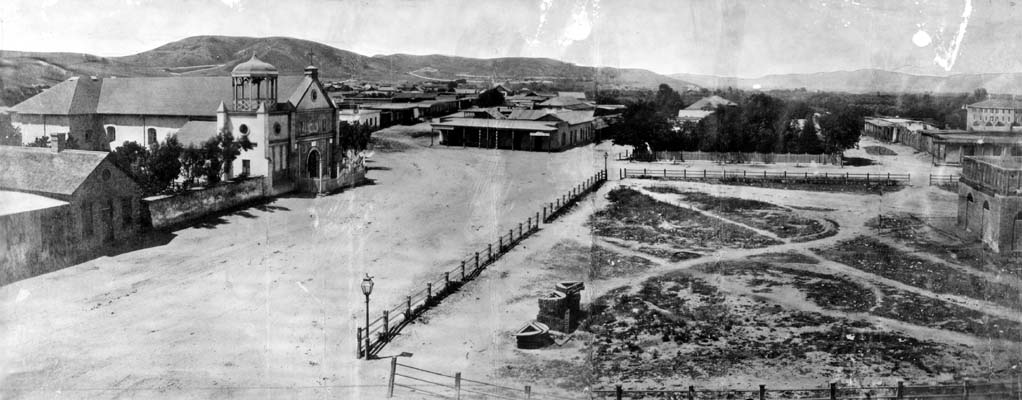
Mission Nuestra Señora Reina de los Angeles, 1869.

Bernard-Henri Lévy’s 2006 book, American Vertigo, received, via Garrison Keillor, one of the most famous and harshest slams ever in the New York Times Book Review. The French writer’s volume grew from a series of articles he penned for the Atlantic, which saw him retrace Tocqueville’s path across AmericaAn excerpt from one of the Atlantic pieces, in which Lévy looked at the unfathomable city known as Los Angeles:

“A legible city has to have a heart, and this heart must be pulsating. It has to have, somewhere, a starting point from which, one feels, the city was produced, and from which its mode of production is still intelligible today. It has to have a historical neighborhood, if you like, but one whose historicity continues to shape, engender, inspire, the rest of the urban space. But this place, too, is nonexistent. In Los Angeles there is nothing like the old neighborhoods from which you feel, almost physically, that the European cities, or even New York, have emerged. They do show me the old neighborhood. Kevin Starr, the excellent California historian, takes me not far from Chinatown, to Olivera Street and Old Plaza, which are supposed to be the nucleus of what was once called El Pueblo de Nuestra Señora la Reina de Los Angeles. But they are dead places. It’s a neighborhood frozen in time. However much Starr leaps from house to house, with his considerable bulk proving surprisingly agile, with his ink-blue too-warm suit and his bow tie that makes him look like a private eye out of Raymond Chandler, to explain to me how gargantuan Los Angeles was born from this tiny seed; for all this, something isn’t right. You don’t feel any possible common denominator between this stone museum, these relics, and the vital, luxuriant enormousness of the city. And the truth is that with its pedestrian islands and its restored façades, its profusion of typical restaurants and its stands selling authentic Mexican products, its wrought-iron bandstands, its cobblestones, the varnished wood of the Avila Adobe, which is supposed to be the first house in the neighborhood, this street makes me think of all the fake “heritage towns” that I keep running into in America.

For an illegible city is also a city without a history.

An unintelligible city is a city whose historicity is nothing more than an ageless remorse.

And a post-historical city is, I fear, a city about which one can predict with some certainty that it will die.”

••••••••••

Bernard-Henri Lévy on the Daily Show in 2006:

www.thedailyshow.com

Tags: , , ,

Newly opened at the University of Chicago. (Thanks Singularity Hub.)

"He was literally and figuratively behind the wheel of our bus, driving it the way Charlie Parker worked the saxophone." (Image by Joe Mabel.)

In  a 1994 Paris Review Q&A, Ken Kesey explains how Beat muse Neal Cassady wound up driving Furthur, the Merry Pranksters’ bus:

“Cassady was around us often. There was one incident in particular when he truly impressed me not only as a madman, genius, and poet but also as an avatar—someone in contact with other powers. He took me to a racetrack near San Francisco. He was driving and talking very fast, checking his watch frantically, hoping we would get to the track on time. If we got to the track just before the last three races, we’d get in free. We made it just in time and we bet on the last two races. Cassady had a theory about betting he’d learned in jail from someone named Knee-Walking Jackson. His theory was that the third favorite at post time is often the horse most likely to upset the winner and make big money. Cassady’s strategy was to step up to the tellers at the ticket booths just at post time. He’d glance up to see who was third favorite and put money on that horse. He didn’t look at the horses, the jockeys, or the racing sheets. He said to me, This is going to be the one, I can feel it. He asked me for ten bucks and I gave it to him. He put three dollars down with my ten. Given the odds we would have made some good money. We went right down to the line to watch, and it was a close race, neck and neck. I’m no horse fan, but I was getting into it because it looked like the third favorite could win. There was a photo finish and Cassady suddenly tore up his tickets and left. I followed him back to the car and could hear the announcement: We have a photo finish and the winner is . . . It turned out to be the favorite. Neal was so confident of his vision that if he lost, he never waited around or looked back.

Cassady was a hustler, a wheeler-dealer, a conniver. He was a scuffler. He never had new clothes but was always clean, and so were his clothes. He always had a toothbrush and was always trying to sell us little things and trying to find a place where he could wash up. Cassady was an elder to me and the other Pranksters, and we knew it. He was literally and figuratively behind the wheel of our bus, driving it the way Charlie Parker worked the saxophone. When he was driving he was improvising an endless monologue about what he was seeing and thinking, what we were seeing and thinking, and what we had seen, thought, and remembered. Proust was his literary hero and he would quote long passages from Proust and Melville from memory, lacing his revelations with passages from the Bible. He was a great teacher and we all knew it and were affected by him.”

••••••••••

Cassady in conversation with Allen Ginsberg, 1965:

Tags: , ,

J.G. Ballard speaking the truth in 1986. Seemingly even more spot-on today, though exhibitionism is now as much of a diversion as violence.

Tags:

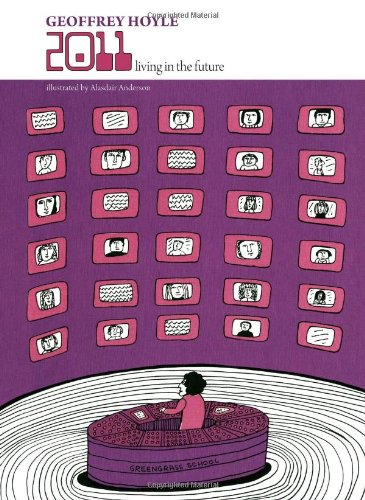
I have no love for science fiction as art or entertainment, but I really like the cultural visionary aspect of it. The Independent feeds that interest with an article by Simmy Richman about a sci-fi writer named Geoffrey Hoyle, who was asked in 1972 to write a book (2011: Living in the Future) for children that would predict what life would be like this year. His prognostications were amazingly correct. In the piece, Hoyle discusses what he got right and the aspects of contemporary life he simply doesn’t understand. An excerpt:

“‘Over the years politicians have added new thing to new thing and nobody has the intellect to wipe the slate clean and say, ‘What do we need?’ What have changed over the decades are the levels of bureaucracy, the control over our lives and the rise of the career politician with pop-star status. We live in a time where there’s a huge amount of disinformation and facts can be twisted to alarm or control. The original draft of the US constitution is 20 pages long; Brussels turns out thousands and thousands of pages – which says to me that no one knows how to make law [any more].’

So while Hoyle predicted both the large (the ubiquity of the computer, the invention of the smartphone and the microwave) and the small (Skype, home supermarket delivery, touchscreens and webcams) ways our lives have changed, he has no idea why the social model of Europe is still ‘tailored to the way people were living in 1947.'”

Tags: ,

Long tail. (Image by megan ann.)

The opening of Chris Anderson’s “The Long Tail,” his famous 2004 Wired article about a shift in consumerism, propelled by the Internet, which the author later expanded into a best seller of the same name:

In 1988, a British mountain climber named Joe Simpson wrote a book called Touching the Void a harrowing account of near death in the Peruvian Andes. It got good reviews but, only a modest success, it was soon forgotten. Then, a decade later, a strange thing happened. Jon Krakauer wrote Into Thin Air, another book about a mountain-climbing tragedy, which became a publishing sensation. Suddenly Touching the Void started to sell again.

Random House rushed out a new edition to keep up with demand. Booksellers began to promote it next to their Into Thin Air displays, and sales rose further. A revised paperback edition, which came out in January, spent 14 weeks on the New York Times bestseller list. That same month, IFC Films released a docudrama of the story to critical acclaim. Now Touching the Void outsells Into Thin Air more than two to one.

What happened? In short, Amazon.com recommendations. The online bookseller’s software noted patterns in buying behavior and suggested that readers who liked Into Thin Air would also like Touching the Void. People took the suggestion, agreed wholeheartedly, wrote rhapsodic reviews. More sales, more algorithm-fueled recommendations, and the positive feedback loop kicked in.

Particularly notable is that when Krakauer’s book hit shelves, Simpson’s was nearly out of print. A few years ago, readers of Krakauer would never even have learned about Simpson’s book – and if they had, they wouldn’t have been able to find it. Amazon changed that. It created the Touching the Void phenomenon by combining infinite shelf space with real-time information about buying trends and public opinion. The result: rising demand for an obscure book.

This is not just a virtue of online booksellers; it is an example of an entirely new economic model for the media and entertainment industries, one that is just beginning to show its power. Unlimited selection is revealing truths about what consumers want and how they want to get it in service after service, from DVDs at Netflix to music videos on Yahoo! Launch to songs in the iTunes Music Store and Rhapsody. People are going deep into the catalog, down the long, long list of available titles, far past what’s available at Blockbuster Video, Tower Records, and Barnes & Noble. And the more they find, the more they like. As they wander further from the beaten path, they discover their taste is not as mainstream as they thought (or as they had been led to believe by marketing, a lack of alternatives, and a hit-driven culture).”

••••••••••

Chris Anderson’s TED Talk about The Long Tail:

Tags:

An experimental 17-minute BBC version. Better than Cronenberg’s 1996 adaptation, I think.


From a piece about Ballard in the Los Angeles Times by David L. Ulin: “If J.G. Ballard — the visionary British novelist who died Sunday of prostate cancer at age 78 — ends up being remembered, it will likely be as a science fiction writer who aspired to use genre as a vehicle for art. That’s true enough, in a certain small-bore manner, but it’s ultimately reductive, a way of categorizing Ballard that his entire career stood against.

A member of the New Wave science fiction movement of the 1960s, Ballard started out writing proto-environmental thrillers that highlighted the prescience of his imagination: The Wind From Nowhere posits a world-wide windstorm that becomes apocalyptic, while The Drowned World is about a planet swamped by risen sIt was really in the 1970s, however, that Ballard found his voice as a writer, focusing on the dangers of mechanization and socialization, the tension between the veneer of civilization and the animal brutality it sought to conceal. “

Tags: , ,

In February, Paris Review Daily featured a James Atlas interview with Douglas Coupland about the latter’s recent biography of Marshall McLuhan:

Did you see him as a prophet of the revolution in global communications?

Douglas Coupland: No. Like most people, I only knew his three clichés: Medium equals message, global village, and the scene from Annie Hall . I’ve found that most people truly would like to know more about the man, but it’s almost impossible to do. His language is a universe unto itself and is astonishingly dense and hard to navigate. He died the year I started art school [1980], and his stock was at an all time low. His name never came up.

Why did you believe he was still relevant?

Douglas Coupland: Well, I didn’t. I had to figure that out myself. It took months of reading and rereading his stuff to realize that in Marshall we had a classically trained scholar realizing that there’s this thing coming down the pipe—the Internet—yet because he didn’t understand the ultimate interface, he was frustrated in his inability to describe it clearly. I think that’s what people really respond to in Marshall: the almost vibrating sense of being in on one of the biggest prognostications of all time, yet having news of its arrival coming from this fuddy-duddy guy in 1950s Toronto. How on earth did that happen?”

More McLuhan posts:

••••••••••

“Hello Doug. Would you personally miss bees if they disappeared?”

Tags: , ,

"Evidence of the city’s decline was everywhere: subway cars bruised with graffiti." (Image by JJ Special.)

Jonathan Mahler, author of the incredible book about NYC in crisis during the 1970s, Ladies and Gentlemen, the Bronx Is Burning, wrote a New York magazine article in 2005 that recalled how Rupert Murdoch’s rise to media domination was largely driven by the Aussie’s gambit that the beleaguered city would return to prominence. An excerpt:

“The year was 1976, and evidence of the city’s decline was everywhere: subway cars bruised with graffiti, arson fires that swallowed whole ghetto blocks, soaring murder rates, and annual six-figure job losses. The city put on its best face for the Democratic convention, hastily enacting an anti-loitering law that enabled cops to round up most of the prostitutes in the vicinity of Madison Square Garden. For a few days anyway, even Times Square was more or less hooker-free. But the area soon returned to being America’s most infamous erogenous zone.

Around the country, cartoonists poked fun at New York in its apocalypse: The city was a sinking ship, a zoo where the apes were employed as zookeepers, a stage littered with overturned props. Central Park had become a running joke in Johnny Carson’s nightly monologues (‘Some Martians landed in Central Park today . . . and were mugged’). The syndicated columnists Rowland Evans and Robert Novak understated the matter considerably when they wrote, ‘Americans do not much like, admire, respect, trust, or believe in New York.’

It’s easy now to look back at this moment and see it for what it was—a classic market bottom. But at the time, few recognized it as such. One man who did was Murdoch. Where others saw a city in financial distress, he saw a place ripe for entrepreneurship. Where others saw a failed experiment in social democracy, he saw an opening for simple supply-and-demand capitalism.”

••••••••••

Walter Cronkite on New York City’s financial emergency, 1976:

Tags: ,

Hunter S. Thompson in all his glory in Vegas and Hollywood in 1978.

From Lucian K. Truscott IV’s review of Fear and Loathing in Las Vagas in the July 13, 1972 Village Voice: “Hunter Thompson lived in Aspen then, and his ranch, located outside town about 10 miles, tucked away up a valley with National Forest land on every side, was the first place I stopped. It was late afternoon and Thompson was just getting up, bleary-eyed and beaten, shaded from the sun by a tennis hat, sipping a beer on the front porch.

I got to know him while I was still in the Army in the spring of 1970, when he and a few other local crazies were gearing up for what would become the Aspen Freak Power Uprising, a spectacular which featured Thompson as candidate for sheriff, with his neighbor Billy for coroner. They ran on a platform which promised, among other things, public punishment for drug dealers who burned their customers, and a campaign guaranteed to rid the valley of real estate developers and ‘nazi greedheads’ of every persuasion. In a compromise move toward the end of the campaign, Thompson promised to ‘eat mescaline only during off-duty hours.’ The non-freak segment of the voting public was unmoved and he was eventually defeated by a narrow margin.

In the days before the Freak Power spirit, Thompson’s ranch served as a war room and R&R camp for the Aspen political insurgents. Needless to say there was rarely a dull moment. When I arrived last summer, however, things had changed. Thompson was in the midst of writing a magnum opus, and it was being cranked out at an unnerving rate. I was barely across the threshold when I was informed that he worked (worked?) Monday through Friday and saved the weekends for messing around. As usual, he worked from around midnight until 7 or 8 in the morning and slept all day. There was an edge to his voice that said he meant business. This was it. This was a venture that had no beginning or end, that even Thompson himself was having difficulty controlling.

‘I’m sending it off to Random House in 20,000-word bursts,’ he said, drawing slowly on his ever-present cigarette holder. ‘I don’t have any idea what they think of it. Hell, I don’t have any idea what it is.’

‘What’s it about?’ I asked.

‘Searching for The American Dream in Las Vegas,’ replied Thompson coolly.”

Tags: ,

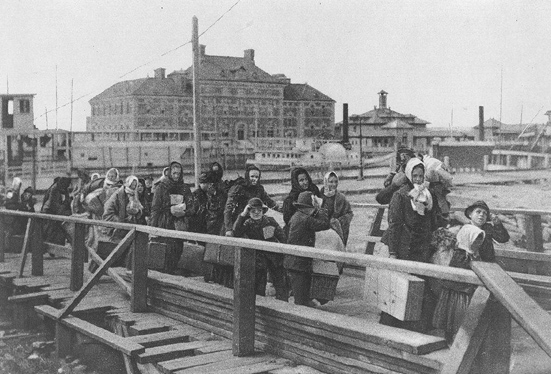
Immigrants arrive at Ellis Island in NYC in 1902.

Annie Lowrey’s Slate piece,Let in the Super-Immigrants!,” argues that America’s quickest path to economic turnaround is to fast-track educated alien workers to citizenship status, favoring the highly skilled over the poor, huddles masses. The opening:

“This winter, George Mason economist Tyler Cowen published The Great Stagnation, an ebook arguing that the United States has exhausted all its easy sources of growth. We have, Cowen says, no more low-hanging fruit: no more cheap frontier land to farm, no more places to build new interstates, no rural homes to electrify, no more girls to send to school and then add to the workforce. From now on, Cowen says, growth will be slower, and transformative innovations like toilets and telephones will be rarer.

Cowen is alarmingly convincing, and The Great Stagnation received a round of queasy applause from the chattering classes—including from this publication. But maybe there remains one last shiny, fat apple hanging right in front of our faces, one last endeavor that would bring us fast, costless, and easy growth. It is immigration reform. The United States can grow faster by stealing the rest of the world’s smart people.

Today, the Obama White House is reaffirming its pledge to do just that.”


Tags: ,

« Older entries § Newer entries »