Interesting idea from William J. Stuntz’s The Collapse of American Criminal Justice (via Tyler Cowen at Marginal Revolution), which argues that NYC is far more violent than it was a century ago, but we don’t notice because emergency medical care and surgical procedures have improved so markedly that there are fewer fatalities. The only caveat is that I’d be curious as to how exhaustive statistics were 100 years ago. The passage:
“New York is America’s safest large city, the city that saw crime fall the most and the fastest during the 1990s and the early part of this decade. Yet New York’s murder rate is 80 percent higher now than it was at the beginning of the twentieth century — notwithstanding an imprisonment rate four times higher now than then. That crime gap is misleadingly small; thanks to advances in emergency medicine, a large fraction of those early twentieth-century homicide victims would survive their wounds today. Taking account of medical advances, New York is probably not twice as violent as a century ago, but several times more violent. At best, the crime drop must be counted a pyrrhic victory.”
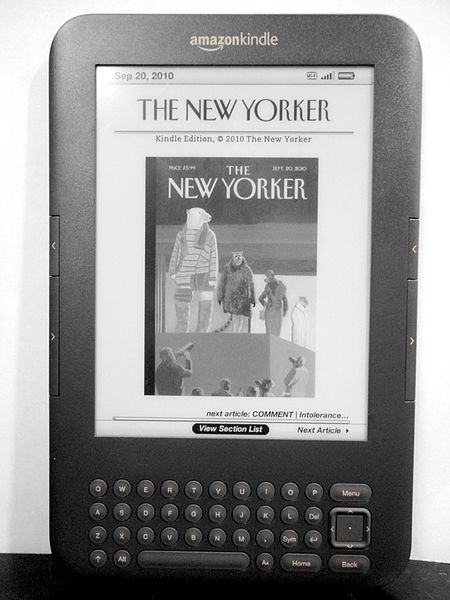
I don’t share Nick Carr’s angst over e-book readers not adopting the look and functionality of dead-tree books, but he eloquently makes a true point about a new medium initially mimicking–if only in spirit–what preceded it:
“The future arrives wearing the clothes of the past. The first book that came off a printing press – Gutenberg’s Bible – used a typeface that had been meticulously designed to look like a scribe’s handwriting:
The first TV shows were filmed radio broadcasts. The designers of personal computers used the metaphor of a desk for organizing information. The world wide web had ‘pages.’ The home pages of online newspapers mimicked the front pages of their print editions. As Richard Goldstein succinctly put it, ‘every novel technology draws from familiar forms until it establishes its own aesthetic.’ It’s tempting to look at the early form of a new media technology and assume that it will be the ultimate form, but that’s a big mistake. The transitional state is never the final state. Eventually, the clothes of the past are shed, and the true nature, the true aesthetic, of the new technology is revealed.
So it is with what we call ‘electronic books.’ Amazon’s original Kindle was explicitly designed to replicate as closely as possible the look and feel of a printed book.”
At theAtlantic,Alexis Madrigal looks anew book by Shelley Adlerwhich comes to unusual conclusions about the mysterious cluster of deaths among Hmong men who had emigrated to America in the 1980s. The piece’s opening:
“They died in their sleep one by one, thousands of miles from home. Their median age was 33. All but one — 116 of the 117 — were healthy men. Immigrants from southeast Asia, you could count the time most had spent on American soil in just months. At the peak of the deaths in the early 1980s, the death rate from this mysterious problem among the Hmong ethnic group was equivalent to the top five natural causes of death for other American men in their age group.
Something was killing Hmong men in their sleep, and no one could figure out what it was. There was no obvious cause of death. None of them had been sick, physically. The men weren’t clustered all that tightly, geographically speaking. They were united by dislocation from Laos and a shared culture, but little else. Even House would have been stumped.
Doctors gave the problem a name, the kind that reeks of defeat, a dragon label on the edge of the known medical world: Sudden Unexpected Nocturnal Death Syndrome. SUNDS. It didn’t do much in terms of diagnosis or treatment, but it was easier to track the periodic conferences dedicated to understanding the problem.
Twenty-five years later, Shelley Adler’s new book pieces together what happened, drawing on interviews with the Hmong population and analyzing the extant scientific literature. Sleep Paralysis: Night-mares, Nocebos, and the Mind Body Connection is a mind-bending exploration of how what you believe interacts with how your body works. Adler, a professor at the University of California, San Francisco, comes to a stunning conclusion: In a sense, the Hmong were killed by their beliefs in the spirit world, even if the mechanism of their deaths was likely an obscure genetic cardiac arrhythmia that is prevalent in southeast Asia.”
Steven Johnson, who wroteThe Ghost Map,a fascinating account of amateur epidemiology in Victorian England,shares his recollectionsof the mind-altering, game-changing effect of the Macintosh computer, in the Wall Street Journal. An excerpt:
“But that first Macintosh did much more than expand my data storage needs. It also fundamentally changed my relationship to technology—and in doing that, ultimately changed the course of my life.
It’s hard to remember now, but in the mid-1980s—before Wired Magazine, Pixar, dot-com start-ups, celebrity tweeting—being obsessed with your computer had almost no cultural cachet. You were just a nerd, full stop. The computers of the day had all the playfulness of a tax audit, and the creative people who used them did so begrudgingly.
But one look at the Mac and you could tell something was different. The white screen alone seemed revolutionary, after years of reading green text on a black background. And there were typefaces! I had been obsessed with typography since my grade-school years; here was a computer that treated fonts as an art, not just a clump of pixels. The then-revolutionary graphic interface made the screen feel like a space you wanted to inhabit, to make your own. To paraphrase Le Corbusier, the Mac was a machine you wanted to live in.” (Thanks Browser.)
••••••••••
Steven Johnson revisits the cholera outbreak of 1854 during his TED Talk:
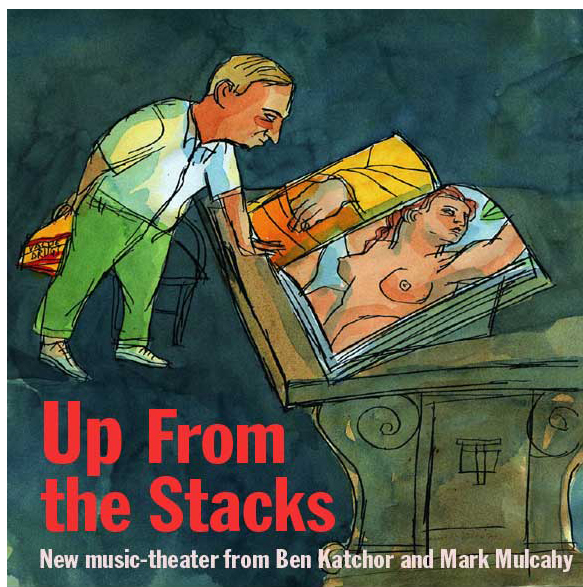
If you’re in NYC in early October, looking for smart entertainment and poor–or perhaps just incredibly cheap–there are going to be free performances of Up From the Stacks, a new musical by Ben Katchor and Mark Mulcahy. I’m a really big fan of Katchor, who sifts through the remnants of cities, finds value in the wreckage and uses it to construct something that isn’t exactly factual but seems truer than what once was. The info:
Set in The New York Public Library at Fifth Avenue and 42nd Street and in the environs of Times Square circa 1970, Up From the Stacks is the story of Lincoln Cabinée, a college student working part-time as a page, retrieving books for readers from the Library’s collection of 43 million items. This routine evening job inadvertently thrusts young Cabinée into the treacherous crossroads of scholarly obsession and the businesses of amusement and vice that then flourished in the 42nd Street area. The intellectual life of the city and the happiness of a young man hang in the balance.
Co-commissioned by the Dorothy and Lewis B. Cullman Center for Scholars and Writers at The New York Public Library, and Lincoln Center for the Performing Arts for Target Free Thursdays at the David Rubenstein Atrium.
Four performances:
Monday, October 3, 2011 at 6pm at The New York Public LIbrary for the Performing Arts at Lincoln Center, 40 Lincoln Center Plaza, Bruno Walter Auditorium
Tuesday, October 4 and Wednesday, October 5, 2011 both at 7pm at The New York Public Library, Fifth Ave. and 42nd St. (Stephen A. Schwarzman Building) South Court Auditorium
“Michael Hart, who was widely credited with creating the first e-book when he typed the Declaration of Independence into a computer on July 4, 1971, and in so doing laid the foundations for Project Gutenberg, the oldest and largest digital library, was found dead on Tuesday at his home in Urbana, Ill. He was 64
His death was confirmed by Gregory B. Newby, the chief executive and director of Project Gutenberg, who said that the cause had not yet been determined.
Mr. Hart found his life’s mission when the University of Illinois, where he was a student, gave him a user’s account on a Xerox Sigma V mainframe computerat the school’s Materials Research Lab.
Estimating that the computer time in his possession was worth $100 million, Mr. Hart began thinking of a project that might justify that figure. Data processing, the principal application of computers at the time, did not capture his imagination. Information sharing did.”
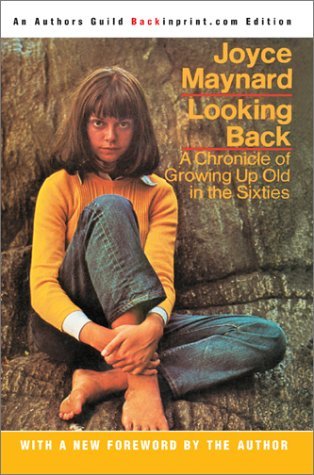
In 1972, with the cover story “An 18-Year-Old Looks Back On Life,” the New York Times Magazine got into generation-defining business, with the aid of precocious writer Joyce Maynard, a representative of the first American generation to have been raised by that glowing picture tube in the living room and to have taken space-age technology for granted. For Maynard, the article spawned a book and a romantic relationship with the Garbo-ish author J.D. Salinger. She became something of a scorned figure in American Letters, perhaps seeming to have gotten too much too soon. The opening of her famous (and infamous) Times piece:
“Every generation thinks it’s special–my grandparents because they remember horses and buggies, my parents because of the Depression. The over-30’s are special because they knew the Red Scare of Korea, Chuck Berry and beatniks. My older sister is special because she belonged to the first generation of teen-agers (before that, people in their teens were adolescents), when being a teen-ager was still fun. And I–I am 18, caught in the middle. Mine is the generation of unfulfilled expectations. “When you’re older,” my mother promised, “you can wear lipstick.” But when the time came, of course, lipstick wasn’t being worn. “When we’re big, we’ll dance like that,” my friends and I whispered, watching Chubby Checker twist on “American Bandstand.” But we inherited no dance steps, ours was a limp, formless shrug to watered-down music that rarely made the feet tap. “Just wait till we can vote,” I said, bursting with 10-year-old fervor, ready to fast, freeze, march and die for peace and freedom as Joan Baez, barefoot, sang “We Shall Overcome.” Well, now we can vote, and we’re old enough to attend rallies and knock on doors and wave placards, and suddenly it doesn’t seem to matter any more.
My generation is special because of what we missed rather than what we got, because in a certain sense we are the first and the last. The first to take technology for granted. (What was a space shot to us, except an hour cut from Social Studies to gather before a TV in the gym as Cape Canaveral counted down?) The first to grow up with TV. My sister was 8 when we got our set, so to her it seemed magic and always somewhat foreign. She had known books already and would never really replace them. But for me, the TV set was, like the kitchen sink and the telephone, a fact of life.
We inherited a previous generation’s hand-me-downs and took in the seams, turned up the hems, to make our new fashions. We took drugs from the college kids and made them a high-school commonplace. We got the Beatles, but not those lovable look-alikes in matching suits with barber cuts and songs that made you want to cry. They came to us like a bad joke–aged, bearded, discordant. And we inherited the Vietnam war just after the crest of the wave–too late to burn draft cards and too early not to be drafted. The boys of 1953–my year–will be the last to go.
So where are we now? Generalizing is dangerous. Call us the apathetic generation and we will become that. Say times are changing, nobody cares about prom queens and getting into the college of his choice any more–say that (because it sounds good, it indicates a trend, gives a symmetry to history) and you make a movement and a unit out of a generation unified only in its common fragmentation. If there is a reason why we are where we are, it comes from where we have been.”
••••••••••
Maynard queried by that handsome, world-weary robot Charlie Rose, 1998:
Trailer for To Die For, the 1995 film adapted from a Maynard book:
The mass-market paperback has understandably passed into obsolescence, thanks to the inexpensive e-book. Mixed in with all the dross that was published were undervalued genre works that introduced a lot of young people to reading. An excerpt from a story about the dying dead-tree edition from Julie Bosman in theNew York Times:
“A comprehensive survey released last month by the Association of American Publishers and the Book Industry Study Group revealed that while the publishing industry had expanded over all, publishers’ mass-market paperback sales had fallen 14 percent since 2008.
‘Five years ago, it was a robust market,’ said David Gernert, a literary agent whose clients include John Grisham, a perennial best seller in mass market. ‘Now it’s on the wane, and e-books have bitten a big chunk out of it.’
Fading away is a format that was both inexpensive and widely accessible — thrillers and mysteries and romances by authors like James Patterson, Stephen King, Clive Cussler and Nora Roberts that were purchased not to be proudly displayed on a living room shelf (and never read), but to be addictively devoured by devoted readers.”
In 1972, Clifford Irving wrote an “authorized” biography of Howard Hughes, claiming he had the cooperation of the ultra-reclusive figure. The book turned out to be an elaborate hoax.
This brings us back, literally thousands of years to an ancient discussion that continues to this day about exactly how people can make a living, or make their way when technology gets better. There is an Aristotle quote about how when the looms can operates themselves, all men will be free. That seems like a reasonable thing to say, a precocious thing for somebody to have said in ancient times. If we zoom forward to the 19th century, we had a tremendous amount of concern about this question of how people would make their way when the machines got good. In fact, much of our modern intellectual world started off as people’s rhetorical postures on this very question.
Marxism, the whole idea of the left, which still dominates the Bay Area where this interview is taking place, was exactly, precisely about this question. This is what Marx was thinking about, and in fact, you can read Marx and it sometimes weirdly reads likes a Silicon Valley rhetoric. It’s the strangest thing; all about ‘boundaries falling internationally,’ and ‘labor and markets opening up,’ and all these things. It’s the weirdest thing.
In fact, I had the strange experience years ago, listening to some rhetoric on the radio … it was KPFA, in fact, the lefty station … and I thought, ‘Oh, God, it’s one of these Silicon startups with their rhetoric about how they’re going to bring down market barriers,’ and it turned out to be an anniversary reading of Das Kapital. The language was similar enough that one could make the mistake.
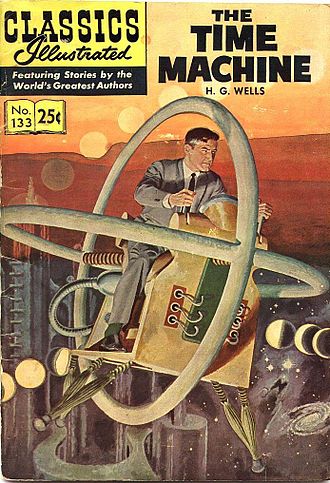
The origin of science fiction was exactly in this same area of concern. H.G. Wells’ The Time Machine foresees a future in which there are the privileged few who benefit from the machines, and then there are the rest who don’t, and both of them become undignified, lesser creatures. Separate species.•
H.G. Wells meets Orson Welles in San Antonio (audio only):
I’ve never triedBooktrack, a service that provides a cinematic-ish soundtrack for digital books, but it sounds truly hideous. An excerpt from aBetsy Morais articleat the Atlantic:
“There is a long-held belief about cinema: ‘There never was a silent film.’ From the early days, when moving images fascinated viewers in their mute spectacle, musical accompaniment drowned out the incessant whirring of the projector machine. Sound brought cinema’s haunting figures into being, amplifying their moods and heightening the intensity of the action.
Reading, however, is silent by design. Unless readers add their own accompaniment. On any given public transit commute, one might find an audience of readers trying to do just that, headphones in, books open, providing soundtracks to literature. Mark Cameron noticed this on his daily ferry rides, and as he selected his own music-reading pairings, found himself choosing songs that emotionally corresponded to the words on the page. When he told his brother, the two started cooking up an idea for ‘a more cinematic-type experience’ for reading, says Paul Cameron, who is now the CEO of the company they co-founded, Booktrack.”
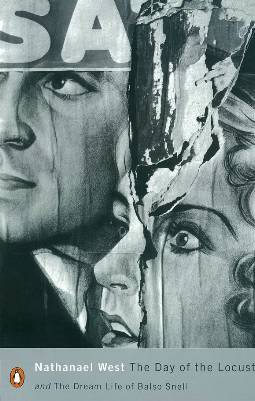
I’d read somewhere that Nathanael West had written at least parts of his two devastating short novels, Miss Lonleyhearts and The Day of the Locust, while working the graveyeard shift at Manhattan hotels in the 1920s. From a1970 Time article about the author called, “A Great Despiser”:
“Early in 1927, West found himself working as night manager in a seedy little Manhattan hotel on 23rd Street called Kenmore Hall; later, he moved uptown as manager of the shabby-genteel Sutton Club Hotel.
In disaster, it would seem, West found his will to write. In the hotels, he found his subject. He saw them as zoos of failure, terminal wards filled with ‘dismantled innocents’ who had lost the battle for survival in a machine civilization. With the skinned eyes of poverty, he saw that he too might someday lose the battle and wind up on the other side of the desk. Horrified, fascinated, wrung with love, he watched his tenants like a man watching himself die in a mirror. He chatted with them endlessly: he steamed open their letters and read their secrets; and through long, lonely nights in hotel offices, he braided their stories into books.”
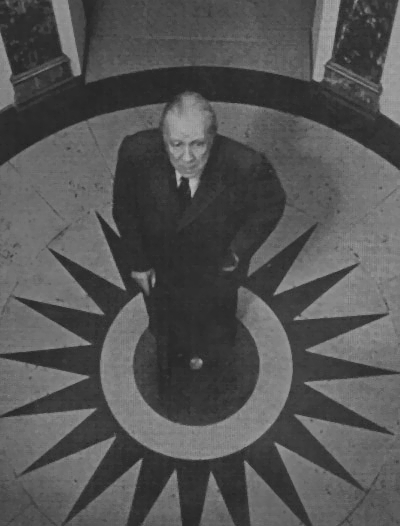
Much as I’ve tried to feel differently, I’ve always liked the idea of Borges much more than the actual writings of Borges. But on this, his 112th birthday, I came across “Borges, a Blind Writer With Insight,” a 1971 New York Times interview with the Argentine writer, who apparently appeared on the Today show right around that time. An excerpt:
“Today his short stories — some hardly dawdle past a paragraph — appear in The New Yorker, and they are collected in books. Essences of essences. Labyrinths within mazes within mirrors. When he comes to this country — he is here on a visit now — he has an utterly respectful audience. How many Latin-American authors are so well translated? He is naturally taken as a candidate for elevation to the Nobel Prize. Beware! Who knows what this Imaginary Being will say next? On the Today show on television he invoked the name of Gustave Flaubert, and actually whispered a book’s title in excellent French. The effect could not have been more startling had he changed into a Hippogriff and pecked at the startled interviewer. Replying to questions, he draws from the cadences of memory. Borges says, ‘At my age [71], what can I do but plagiarize what I’ve already said, no?’ What shall a writer be in the glare of glosses on glosses and endless honors? Scholars consecrate volumes to his carefully turned ironies. Is he a Domesticated Industry? Borges lives on the north side of Buenos Aires. Recently he took a taxi to the National Library on the south side. The taxi driver said, ‘Are you by any chance Borges?’ Borges said ‘Well, more or less’ or ‘I think so.'”
"The algorithms used by Amazon to set and update prices started outbidding each other." (Image by J.J. Harrison.)
Algorithms increasingly run many aspect of our lives, but sometimes this computer-generated math we can barely comprehend runs amok. An excerpt from acautionary tale about algorithms by Jane Wakefield at the BBC:
“At last month’s TEDGlobal conference, algorithm expert Kevin Slavin delivered one of the tech show’s most ‘sit up and take notice’ speeches where he warned that the ‘maths that computers use to decide stuff’ was infiltrating every aspect of our lives.
Among the examples he cited were a robo-cleaner that maps out the best way to do housework, and the online trading algorithms that are increasingly controlling Wall Street.
‘We are writing these things that we can no longer read,’ warned Mr Slavin.
‘We’ve rendered something illegible. And we’ve lost the sense of what’s actually happening in this world we’ve made.’
Algorithms may be cleverer than humans but they don’t necessarily have our sense of perspective – a failing that became evident when Amazon’s price-setting code went to war with itself earlier this year.
The Making of a Fly – a book about the molecular biology of a fly from egg to fully-fledged insect – may have been a riveting read but it almost certainly didn’t deserve a price tag of $23.6m (£14.3m).
It hit that figure briefly on the site after the algorithms used by Amazon to set and update prices started outbidding each other.
It is a small taste of the chaos that can be caused when code gets smart enough to operate without human intervention, thinks Mr Slavin.
‘This is algorithms in conflict without any adult supervision,’ he said.”
••••••••••
Slavin’s TED Talk about algorithms infiltrating our lives:
Kudos to the folks atOpen Culturefor finding an archived Sports Illustrated article by William Faulkner, who reported on attending his first hockey game in 1955. An excerpt from “An Innocent at Rinkside“:
The vacant ice looked tired, though it shouldn’t have. They told him it had been put down only a few minutes ago following a basketball game, and after the hockey match it would be taken up again to make room for something else. But it looked not expectant but resigned, like the mirror simulating ice in the Christmas store window, not before the miniature fir trees and reindeer and cosy lamplit cottage were arranged upon it, but after they had been dismantled and cleared away.
Then it was filled with motion, speed. To the innocent, who had never seen it before, it seemed discorded and inconsequent, bizarre and paradoxical like the frantic darting of the weightless bugs which run on the surface of stagnant pools. Then it would break, coalesce through a kind of kaleidoscopic whirl like a child’s toy, into a pattern, a design almost beautiful, as if an inspired choreographer had drilled a willing and patient and hard-working troupe of dancers—a pattern, design which was trying to tell him something, say something to him urgent and important and true in that second before, already bulging with the motion and the speed, it began to disintegrate and dissolve.
Then he learned to find the puck and follow it. Then the individual players would emerge. They would not emerge like the sweating barehanded behemoths from the troglodyte mass of football, but instead as fluid and fast and effortless as rapier thrusts or lightning—Richard with something of the passionate glittering fatal alien quality of snakes, Geoffrion like an agile ruthless precocious boy who maybe couldn’t do anything else but then he didn’t need to; and others—the veteran Laprade, still with the know-how and the grace. But he had time too now, or rather time had him, and what remained was no longer expendable that recklessly, heedlessly, successfully; not enough of it left now to buy fresh passion and fresh triumph with.•
I recently quoted Craig Mod in a post about NYC’s attempt to catch up to Silican Valley as a tech center. Here’s an excerpt from “Post-Artifact Books and Publishing,” Mod’s blog post about the nature of books and what digital means for them in the future:
“Take a set of encyclopedias and ask, ‘How do I make this digital?’ You get a Microsoft Encarta CD. Take the philosophy of encyclopedia-making and ask, ‘How does digital change our engagement with this?’ You get Wikipedia.
When we think about digital’s effect on storytelling, we tend to grasp for the lowest hanging imaginative fruits. The common cliche is that digital will ‘bring stories to life.’ Words will move. Pictures become movies. Narratives will be choose-your-own-adventure. While digital does make all of this possible, these are the changes of least radical importance brought about by digitization of text. These are the answers to the question, ‘How do we change books to make them digital?’ The essence of digital’s effect on publishing requires a subtle shift towards the query: ‘How does digital change books?'”
The opening of The Devil and Sonny Liston, Nick Tosches beautiful, bruising biography of the boxer, who died young and mysteriously: “The corpse was rolled over and lay face down on the metal slab. It was then that the coroner saw them; the copper-colored whipping welts, old and faint, like one might imagine those of a driven slave.
To say that Charles Liston had been a slave would be to render cheap metaphor of the life of a man. And yet those scars on his back were as nothing to deeper scars, the kind that no coroner could ever see, scars of a darkness far less imaginable than those from any lash. Charles Liston, the most formidable of men, the most unconquerable of heavyweight boxers, had been enslaved by the forces of that darkness: enslaved, conquered, and killed by them.
Born with dead man’s eyes, he had passed from the darkness of those scars on his back to the darkness of the criminal underworld, to a darkness beyond, a darkness whose final form was the last thing he ever saw.”
From the Escapist comes a report about Brewster Kahle’s Herculean effort to collect every book every published, in original dead-tree form:
“Kahle, a computer scientist with a degree from MIT, is most famous as the creator of the Internet Archive, a non-profit group formed in 1996 with a goal of preserving every web page ever created.
In that same archival spirit, Kahle has recently set his sights on preserving the existing written history of mankind, and he’s off to a pretty solid start.
To date, Kahle’s warehouse in Richmond, California houses 500,000 books. That’s a drop in the bucket compared to the 130 million tomes collected by Google in its efforts to digitize the entirety of our literature, but Kahle is heartened by the speed at which his group has been able to accrue their half-million books.
The existence of Google’s aforementioned project also causes one to question Kahle’s motivations. After all, if we’ve got the text available online, why keep their archaic dead tree iterations?
‘There is always going to be a role for books,’ Kahle says. ‘We want to see books live forever.'”
•••••••••
Kahle discusses his work in digital archiving at TED:
From Steven Levy’s new book about Google, In the Plex,comes this conversation between company co-founders Larry Page and Sergey Brin:
“It will be included in people’s brains,” said Page. “When you think about something and don’t really know much about it, you will automatically get information.”
“That’s true,” said Brin. ‘Ultimately I view Google as a way to augment your brain with the knowledge of the world. Right now you go into your computer and type a phrase, but you can imagine that it could be easier in the future, that you can have just devices you talk into, or you can have computers that pay attention to what’s going on around them.”
Page said, “Eventually you’ll have the implant, where if you think about a fact, it will just tell you the answer.” (ThanksNYRB.)•
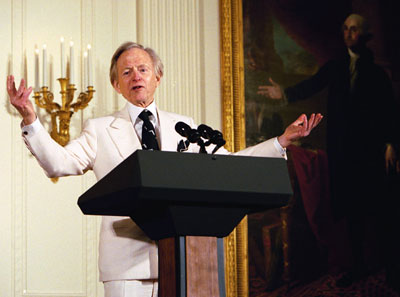
"He is also loaded with facile junk, as all personal journalists have to be."
In 1965, when he was still known as Kurt Vonnegut Jr., the sci-fi novelist wrote, “Infarcted! Tabescent!” for the New York Times, a review of Tom Wolfe’s The Kandy-Colored Tangerine Flake Streamline Baby. An excerpt:
“Wolfe comes on like a barbarian (as Mark Twain did), like a sixth Beatle (Murray the K being the fifth), but he is entitled to call himself ‘Doctor Wolfe,’ if he wants to. He has a Ph.D. in American studies from Yale, and he knows everything. I do not mean he thinks he knows everything. He knows all the stuff that Arthur Schlesinger Jr., knows, keeps picking up brand new, ultra-contemporary stuff that nobody else knows, and arrives at zonky conclusions couched in scholarly terms. I wish he had headed the Warren Commission. We might then have caught a glimpse of our nation.
He is also loaded with facile junk, as all personal journalists have to be–otherwise, how can they write so amusingly and fast? His language is admired, but a Wolfe chrestomathy would drive one nuts with repetitions, with glissandi and tin drummings that don’t help much. The words ‘tabescent’ and ‘infarcted’ appear again and again, and, upon investigation, turn out to be not especially useful or piquant. Young breasts (‘Mary Poppins’)–point upward again and again like antiaircraft batteries, and women’s eyes are very often like decals, and transistors are very often plugged into skulls; and feet very often wear winkle-picker shoes.
Then again, America is like that. And maybe the only sort of person who can tell us the truth about it any more is a Ph.D. who barks and struts himself like Murray the K, the most offensive of all disk jockeys, while feeding us information. Advanced persons in religion have been trying this approach for some time. Who can complain if journalists follow?”
On Singularity Hub, David Hill argues that Borders going bust is good for writers and the book business. It may seem counterintuitive, but it’s really not. An excerpt:
“So with the loss of one of the key spots for authors to promote their work and for book publishers to make sales, how in the world is the end of Borders good for writers? The main reason is that it is accelerating massive change in the publishing industry by putting authors, and not publishers, in control of creative works.
For years, books have been entirely controlled by big print publishers. They’ve decided which authors get published and what readers get to read as well as when they get to read it. Furthermore, what gets published has had to fit into specific compartments that have been defined by marketing departments. The timeliness of print has also been a problem as it’s no secret that the traditional publishing route takes years from the manuscript to stock.
But e-books change all of that as authors can now dictate just about every aspect of production and marketing on top of generating the manuscript. Publishers have been slow to recognize that the power has shifted away from them to the writers themselves.”
••••••••••
Where will Kat Von D go to sign copies of her tattoo books now?
Always loved the deeply funny and deeply humanistic short story, “Sea Oak,” by George Saunders. Included in the Pastoralia collection, it uses the B-movie trope of the reanimation of the dead, as recently deceased Aunt Bernie rises from the grave to bring some order to her dysfunctional, at-risk family. Read the whole story here. An excerpt
“Where the grave used to be is just a hole. Inside the hole is the Amber Mist, with the top missing. Inside the Amber Mist is nothing. No Aunt Bernie. ‘What the hell,’ says Jade. ‘Where’s Bernie?’ ‘Somebody stole Bernie?’ says Min. ‘At least you folks have retained your feet,’ says Father Brian. ‘I’m telling you I literally sat right down. I sat right down on that pile of dirt. I dropped as if shot. See that mark? That’s where I sat.’ On the pile of grave dirt is a butt-shaped mark. The cops show up and one climbs down in the hole with a tape measure and a camera. After three or four flashes he climbs out and hands Ma a pair of blue pumps. ‘Her little shoes,’ says Ma. ‘Oh my God.’ ‘Are those them?’ says Jade. ‘Those are them,’ says Min. ‘I am freaking out,’ says Jade. ‘I am totally freaking out,’ says Min. ‘I’m gonna sit,’ says Ma, and drops into the golf cart. ‘What I don’t get is who’d want her?’ says Min. ‘She was just this lady,’ says Jade. ‘Typically it’s teens?’ one cop says. ‘Typically we find the loved one nearby? Once we found the loved one nearby with, you know, a cigarette between its lips, wearing a sombrero? These kids today got a lot more nerve than we ever did. I never would’ve dreamed of digging up a dead corpse when I was a teen. You might tip over a stone, sure, you might spray-paint something on a crypt, you might, you know, give a wino a hotfoot.’ ‘But this, jeez,’ says Freddie. ‘This is a entirely different ballgame.’ ‘Boy howdy,’ says the cop, and we all look down at the shoes in Ma’s hands.'”
In the Los Angeles Review of Books, Jeet Heer explores anew bookby the excellent graphic-comics artistBen Katchor. The first paragraph ofthe reviewsums up the lineage of Katchor’s work perfectly:
“Ben Katchor is theJoseph Mitchellof contemporary comics. Mitchell, along with his close friendA.J. Liebling, was a pivotal early New Yorker reporter who famously made a speciality of describing the peripheral rascals, layabouts, and oddballs of the Big Apple, ranging from the denizens of McSorley’s saloon to Joe Gould, the often homeless bohemian who claimed to be working on an ‘Oral History of the Contemporary World.’ With their cockeyed street-level view of New York and propensity for profiling loopy souls, Mitchell’s works were important precursors to the early Katchor who, throughout the 1980s and 1990s, meticulously chronicled the wanderings of ‘Julius Knipl, Real Estate Photographer’ in the pages of the New York Press (and, later, syndicated in alternative weeklies across the country). The Knipl strips were mournfully muted surveys of a New York where you could still feel the ghostly presence of the older city described by Mitchell in the 1930s and 1940s. “
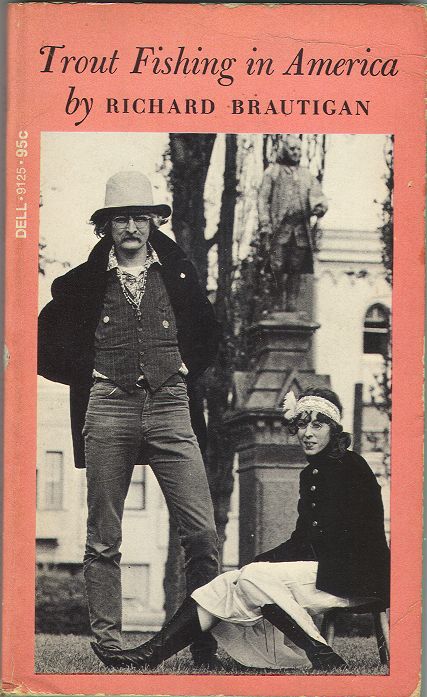
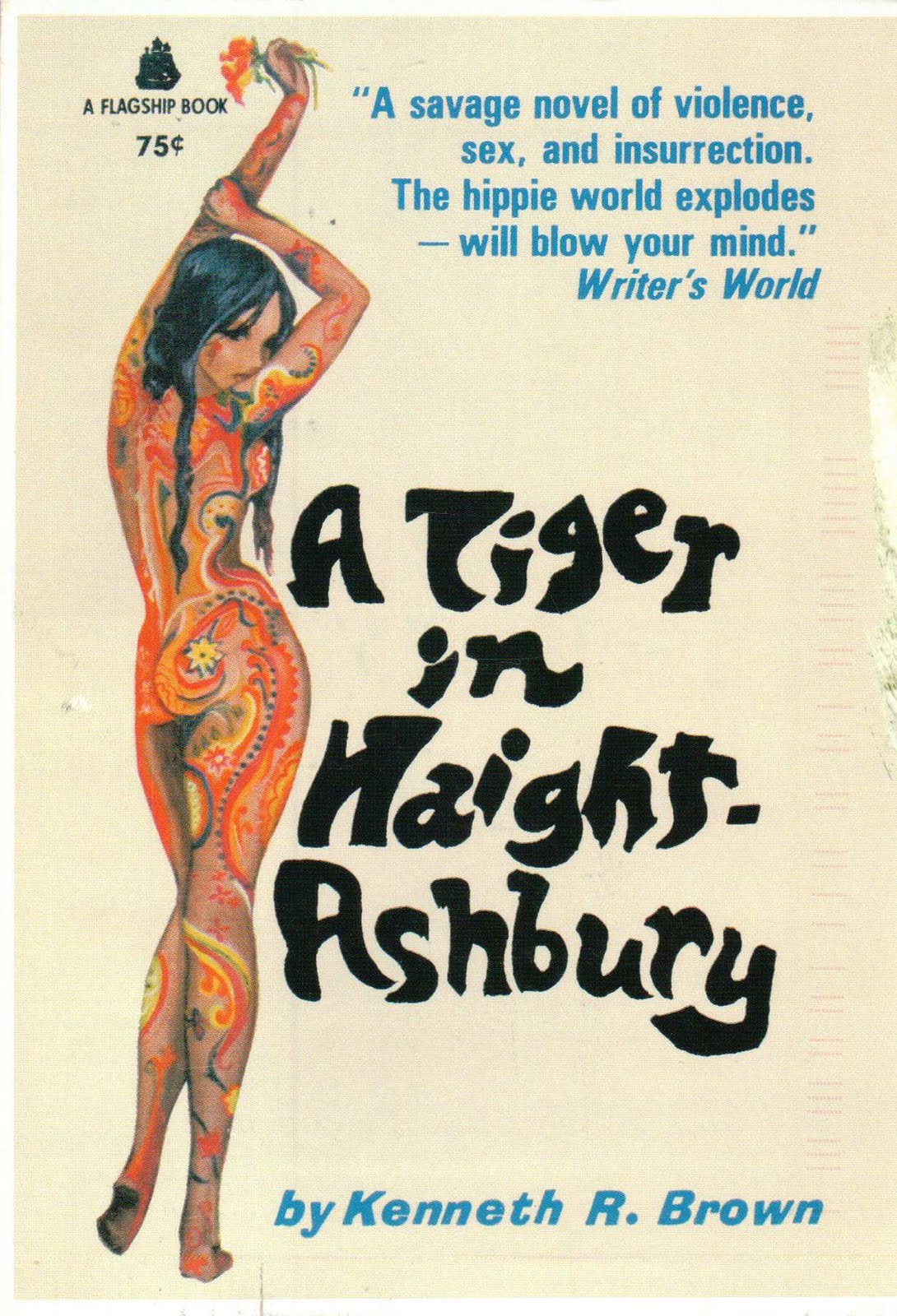
“The old Beats looked at Richard with envy and surprise. The Beats were out of fashion, and Bunthorne was all the rage and he was rich, too, thunderously rich by their standards. Ferlinghetti had been the first to publish parts of Trout Fishing in his City Lights Journal, but like most Beats, he had never taken Richard’s writing seriously. ‘As an editor, I always kept waiting for Richard to grow up as a writer,’ he says now. ‘I never could stand cute writing. He could never be an important writer like Hemingway — with that childish voice of his. Essentially he had a naïf style, a style based on a childlike perception of the world. The hippie cult was itself a childlike movement. I guess Richard was all the novelist the hippies needed. It was a nonliterate age.’
But it was an extraordinary time in every other respect. Cultural forms were exploding in the face of furious experimentation with drugs, art, sex, music, religion, social roles. Richard’s attitude toward all this, however, was ambivalent. He was widely credited with being the voice of the Summer of Love, but in fact he was contemptuous of most hippies, whom he saw as freeloaders and dizzy peaceniks. He had a horror of narcotics that seemed fanciful to his friends everybody used dope in those days except Richard.
His passions were basketball, the Civil War, Frank Lloyd Wright, Southern women writers, soap operas, the National Enquirer, chicken-fried steak and talking on the telephone. Wherever he was in the world, he would phone up his friends and talk for hours, sometimes reading them an entire book manuscript on a transpacific call. Time meant nothing to him, for he was a hopeless insomniac. Most of his friends dreaded it when Richard started reading his latest work to them, because he could not abide criticism of any sort. He had a dead ear for music. Ianthe remembered that he used to buy record albums because of the girls on the covers. He loved to take walks, but he loathed exercise in any other form.”
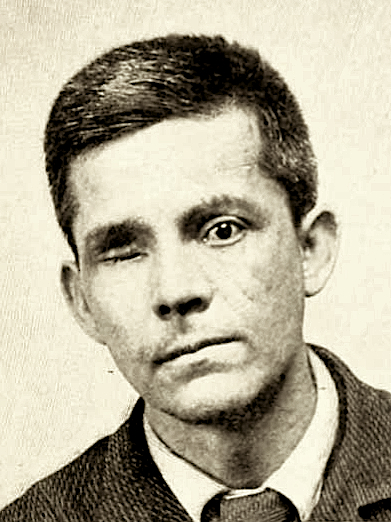



 When he comes to this country — he is here on a visit now — he has an utterly respectful audience. How many Latin-American authors are so well translated? He is naturally taken as a candidate for elevation to the Nobel Prize.