
Books

You are currently browsing the archive for the Books category.

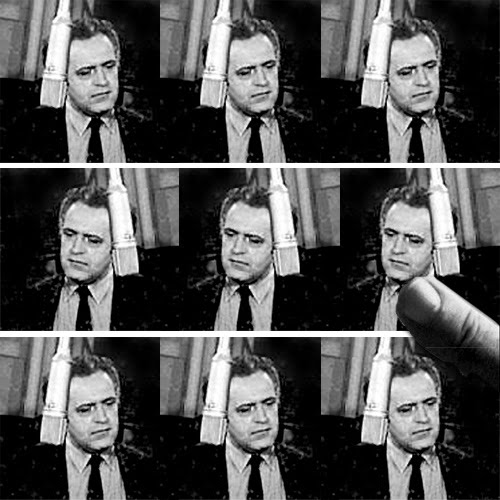
"I’m too excited to drive." (Image by Niki Sublime.)

From “An Uneasy Spy Inside 1970s Suburbia,” one of a series of retrospective 2010 articles in the Los Angeles Times about Philip K. Dick, who speeded to his death with the help of amphetamines, but not before decoding our future:

“During his last few years, when he became financially stable for one of the rare times in his life, his daughters visited him at the Santa Ana apartment he moved to after the implosion of his marriage. Dick’s oldest child, daughter Laura, born in 1960, recalls his place full of Bibles, encyclopedias – Dick was a ferocious autodidact – and recordings of Wagner operas.

Phil’s second daughter Isolde, now 42, visited enough during this period to get to know her father for the first time. She recalls him as working hard to be a good father and struggling to overcome his limitations, both with and without success.

During one visit, he got Isa excited about a trip to Disneyland, then open past midnight. ‘He said, ‘We’re gonna go and stay ‘til it closes!’ But in my mind we were there for only 20 or 30 minutes before he said, ‘Honey, my back’s really hurting.’ I think he was just overwhelmed by all the crowds. I knew him, and knew he was uncomfortable moving outside his comfort zone.’

He spent more of his time walking from the apartment to a nearby Trader Joe’s to get sandwiches, a park where he and Isa tried awkwardly to play kickball, and an Episcopalian church where he had running theological discussions with the clergy.

He’d bought himself a Fiat sports car, but almost never drove, telling Isa, ‘Honey, I’m just so excited to see you, I’m too excited to drive.’ She learned quickly to read her father’s code, which seemed designed to protect her from ugly realities.

Sometimes he’d stay up all night, leaving his visitors laughing for hours as he spun idea after idea, or wrote, in a blaze, until dawn. ‘He could go from that really engaging personality to being withdrawn and closed off,’ Isa remembered, explaining that he would sometimes cancel visits at the last minute. ‘I could tell when we spoke on the phone his voice would go really low and flat. When he had that tone he was depressed. He’d say something like he had the flu. ‘The flu’ was usually his code.'”

Tags:

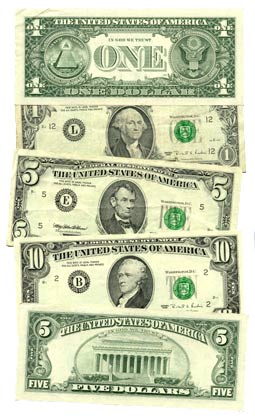
From Farhad Manjoo’s new article about the decline of money–or at least the physical manifestation of it–in Slate:

“It sounds like a prank, right? Money is a confidence game, a mass delusion that only works because we’ve all been had together. That’s why it’s best not to think too much about it. As when Wile E. Coyote runs off a cliff, the moment we realize what’s really going on with money is usually the moment the whole system comes crashing down.

The psychic gymnastics necessary to accommodate money are the central theme of journalist David Wolman’s provocative new book, The End of Money: Counterfeiters, Preachers, Techies, Dreamers—and the Coming Cashless Society. Even Wolman’s title contains a trick—note how it conflates money and cash, two concepts that, to economists, are very different things. Money is any tradable store of value; it can exist in your pocket or on a bank statement, in dollars or Euros or, if you’re in prison, in cigarettes. Cash is only the physical instantiation of money, and, as Wolman points out and as everyone in the Western world knows, it is on its way out. Thanks to technology, trustworthy banking (well, mostly), and our insatiable appetite for convenience, we’re all carrying less and less cash, and soon we’ll probably quit it altogether.”

Tags:

Timed to the publication of his new book, Turing’s Cathedral, George Dyson is interviewed by Kevin Kelly in Wired. The opening:

Wired: Because your father, Freeman Dyson, worked at the Institute for Advanced Study in Princeton, you grew up around folks who were building one of the first computers. Was that cool?

George Dyson: The institute was a pretty boring place, full of theoreticians writing papers. But in a building far away from everyone else, some engineers were building a computer, one of the first to have a fully electronic random-access memory. For a kid in the 1950s, it was the most exciting thing around. I mean, they called it the MANIAC! The computer building was off-limits to children, but Julian Bigelow, the chief engineer, stored a lot of surplus electronic equipment in a barn, and I grew up playing there and taking things apart.

Wired: Did that experience influence how you thought about computers later?

Dyson: Yes. I tried to get as far away from them as possible.

Wired: Why?

Dyson: Computers were going to take over the world. So I left high school in the 1960s to live on the islands of British Columbia. I worked on boats and built a house 95 feet up in a Douglas fir tree. I wasn’t antitechnology; I loved chain saws and tools and diesel engines. But I wanted to keep my distance from computers.” (Thanks Browser.)

Tags: ,

If I was asked to name a single recent book that best crystallizes the media-drenched world we live in today, the clever things we’ve done to ourselves and each other, the way the sun never sets nor rises anymore in our endless stream of flickering images, the way we’re smarter and dumber, closer together and further apart, I would choose Douglas Coupland’s Marshall McLuhan: You Know Nothing of My Work!  That may seem like an odd thing to say about a book written about someone who died in 1980, but Coupland’s brilliant first chapter analyzes the contemporary media landscape with rare insight and then proceeds to march forward from McLuhan’s birth as the philosopher grows to understand the signs and symbols and links of a brave new world that was in its infancy (and still is). Coupland is mostly known for his fiction, and that’s a proper match for McLuhan, whose ideas were fantastic–they couldn’t be true, yet, more often then not, they were.

The 1962 McLuhan quote that Coupland uses at the book’s outset:

“The next medium, whatever it is–it may be the extension of consciousness–will include television as its content, not as its environment, and will transform television into an art form. A computer as a research and communication instrument could enhance retrieval, obsolesce mass library organization, retrieve the individual’s encyclopedic function and flip it into a private line to speedily tailored data of a saleable kind.”

••••••••••

“You know nothing of my work”:

Tags: ,

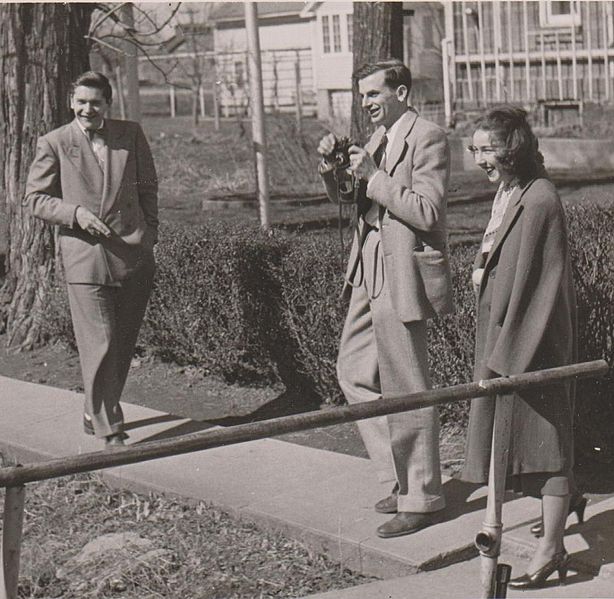
"She was touched by evil and no doubt knew it." (Image by Cmacauley.)

This classic photograph profiles arguably the greatest American short-story writer, Flannery O’Connor, in a happy moment with friends Robie Macauley and Arthur Koestler. O’Connor, who suffered from lupus, managed in her brief life to find all of the darkness of humanity in narrow strips of the South. How could someone whose illness made it necessary to live a sheltered life have such a deep understanding of terror? Did she herself possess the capacity for great evil, which remained dormant for reasons we can’t quite understand? FromTouched by Evil,” Joseph O’Neill’s excellent 2009 Atlantic consideration of O’Connor and her work:

“One problem with O’Connor the exegesist is that she narrows the scope of her work, even for Catholic readers. To decode her fiction for its doctrinal or supernatural content is to render it dreary, even false, because whatever her private purposes, O’Connor was above all faithful to a baleful comic vision derived, surely, from an ancient, artistically wholesome tradition of misanthropy. Nonetheless, a spiritual drama is playing out. Only it is not the one put forward by the self-explaining author, in which she figures as an onlooker occupying the high ground of piety. On the contrary, Flannery O’Connor’s criticism reveals her as scarily belonging to the low world she evokes. She was touched by evil and no doubt knew it. That is what makes her so wickedly good.”

Tags: ,

J.G. Ballard looking darkly (of course) at technology.

Tags:

Amazon is opening a boutique retail store in Seattle, à la the Apple Stores, to sell the Kindle line. If it proves profitable, Jeff Bezos might open a chain of shops around the country, maybe internationally. In addition to selling their e-reader, Amazon will likely sell the physical books that they have begun publishing. It would be great if they also offered a carefully curated selection of books outside of their own imprint, perhaps some seminal tech books. Either way, it may likely be the final chain of stores selling physical books that will ever open in America. An excerpt from a Goodreader.com post on the topic by Michael Kozlowski:

Amazon sources close to the situation have told us that the company is planning on rolling out a retail store in Seattle within the next few months. This project is a test to gauge the market and see if a chain of stores would be profitable. They intend on going with the small boutique route with the main emphasis on books from their growing line of Amazon Exclusives and selling their e-readers and tablets.

Seattle is where Amazon’s main headquarters is based and is known as a fairly tech savvy market. It is a perfect launch location to get some hands on experience in the retail sphere. A source has told us that they are not looking to launch a huge store with thousands of square feet. Instead they are going the boutique route and stocking the shelves with only high margin and high-end items. Their intention is to mainly hustle their entire line of Kindle e-Readers and the Kindle Fire. They also will be stocking a ton of accessories such as cases, screen protectors, and USB adapters.

The company has already contracted the design layout of the retail location through a shell company, which is not unusual for Amazon. When Amazon releases new products to the FCC it is always done through anonymous proxy companies to avoid disclosure to their competition on what they are working on. While we don’t know the actual name of the firm they are working with we have heard rumors that they are based in Germany.

The store itself is not just selling tangible items like e-readers and tablets, but also their books. Amazon recently started their own publishing division and has locked up many indie and prominent figures to write exclusively for the company. This has prompted their rivals such as Barnes and Noble, Indigo and Books-A-Million to publicly proclaim they won’t touch Amazon’s physical books with a ten-foot pole. Amazon launching their own store will give customers a way to physically buy books and also sample ebooks via WIFI when they are in a physical location.”

Tags: ,

A paperback is still my favorite medium for reading. Don’t care for cloth books because I’m a reader, not a collector. Don’t like trade paper because those were made oversized just to jack up the price, and they can’t slide into a pocket. But while I do not own an e-reader yet, I can’t say I have any major problem with them. Jonathan Franzen, however, does. From Anita Singh’s Telegraph piece about Franzen’s criticism of e-books:

The author of Freedom and The Corrections, regarded as one of America’s greatest living novelists, said consumers had been conned into thinking that they need the latest technology.

‘The technology I like is the American paperback edition of Freedom. I can spill water on it and it would still work! So it’s pretty good technology. And what’s more, it will work great 10 years from now. So no wonder the capitalists hate it. It’s a bad business model,’ said Franzen, who famously cuts off all connection to the internet when he is writing.

‘I think, for serious readers, a sense of permanence has always been part of the experience. Everything else in your life is fluid, but here is this text that doesn’t change.'”

Tags: ,

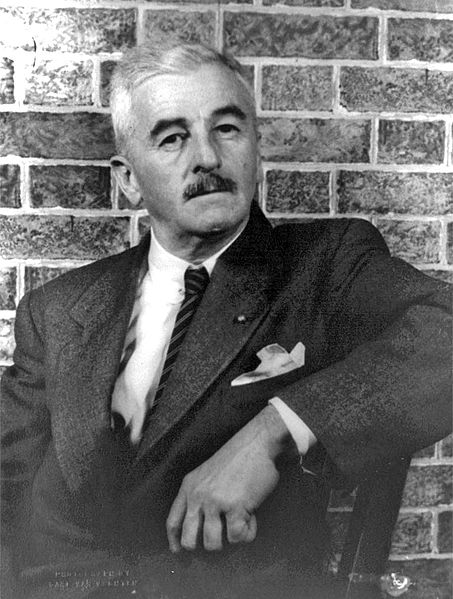
William Styron attended his idol William Faulkner’s 1962 funeral and filed a report for Life. The opening of the questionably titled, “As He Lay Dead, a Bitter Grief“:

“He detested more than anything the invasion of his privacy. Though I am made to feel welcome in the house by Mrs. Faulkner and by his daughter, Jill, and though I know that the welcome is sincere, I feel an intruder nonetheless. Grief, like few things else, is a private affair. Moreover, Faulkner hated those (and there were many) who would poke about in his private life–literary snoops and gossips yearning for the brief glimpse of propinquity with greatness and a mite of reflected fame. He had said himself more than once, quite rightly, that the only thing that should matter to other people about a wirter is his books. Now that he is dead and helpless in a gray wooden coffin. I feel even more an interloper, prying around in a place I should not be.

But the first fact of the day, aside from that final fact of a death which has so diminished us, is the heat, and it is a heat which is like a small mean death itself, as if one were being smothered to extinction in a damp woolen overcoat. Even the newspapers in Memphis, 60 miles to the north, have commented on the ferocious weather. Oxford lies drowned in heat, and the feeling around the courthouse square on this Saturday forenoon is a hot, sweaty languor bordering on desperation. Parked slantwise against the curb, Fords and Chevrolets and pickup trucks bake in merciless sunlight. People in Mississippi have learned to move gradually, almost timidly, in this climate. They walk with both caution and deliberation. Beneath the portico of the First National Bank and around the scantily shaded walks around the courthouse itself, the traffic of shirtsleeved farmers and dewy-browed housewives and marketing Negroes is listless and slow moving. Painted high up against the side of a building to the west of the courthouse and surmounted by a painted Confederate flag is a huge sign at least 20 feet long reading ‘Rebel Cosmetology College.’ Sign, flag and wall, dominating one hot angle of the square, are caught in blazing light and seem to verge perilously close to combustion. It is a monumental heat, heat so desolating to the body and spirit as to have the quality of a half-remembered bad dream, until one realizes that it has, indeed, been encountered before, in all these novels and stories of Faulkner through which this unholy weather–and other weather more benign–moves with almost touchable reality.”

••••••••••

Read also:

Tags: ,

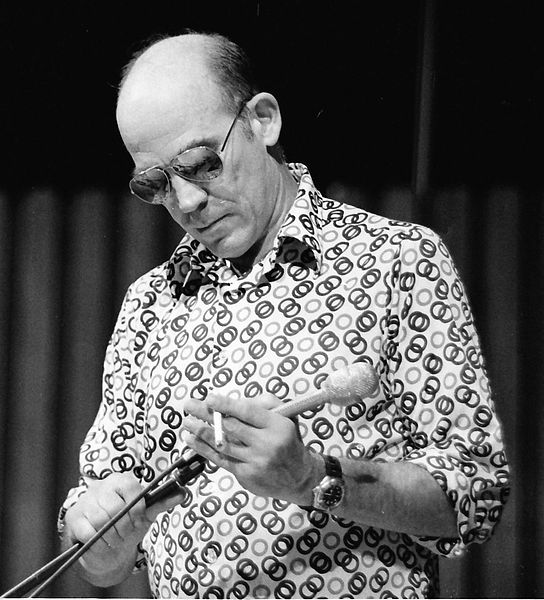
The opening of “Love, Boxing, and Hunter S. Thompson,” screenwriter John Kaye’s raucous Los Angeles Review of Books essay:

HUNTER AND INGA: 1978

The third (and last) time I went to New Orleans was in September of 1978. I was living in Marin County, and I took the red-eye out of San Francisco, flying on a first-class ticket paid for by Universal Pictures, the studio that was financing the movie I was contracted to write. The story was to be loosely based on an article written by Hunter Thompson that had been recently published in Rolling Stone magazine. Titled ‘The Banshee Screams for Buffalo Meat,’ the 30,000-word piece detailed many of the (supposedly) true-life adventures Hunter had experienced with Oscar Zeta Acosta, the radical Chicano lawyer who he’d earlier canonized in Fear and Loathing in Las Vegas.

Hunter and I were in New Orleans to attend the hugely anticipated rematch between Muhammad Ali and Leon Spinks, the former Olympic champion who, after only seven fights, had defeated Ali in February. The plan was to meet up at the Fairmont, a once-elegant hotel that was located in the center of the business district and within walking distance of the historic French Quarter. Although Hunter was not in his room when I arrived, he’d instructed the hotel management to watch for me and make sure I was treated with great respect.

‘I was told by Mister Thompson to mark you down as a VIP, that you were on a mission of considerable importance,’ said Inga, the head of guest services, as we rode the elevator up to my floor. ‘Since he was dressed quite eccentrically, in shorts and a Hawaiian shirt, I assumed he was pulling my leg. The bellman who fetched his bags said he was a famous writer. Are you a writer also?’ I told her I wrote movies. ‘Are you famous?’

‘No.’

‘Do you have any cocaine?’

I stared at her. Her smile was odd, both reassuring and intensely hopeful. In the cartoon balloon I saw over her head were the words: I’m yours if you do. ‘Yes, I do.’

‘That is good.'”

••••••••••

The late-career Ali regains the title yet again:

Tags: ,

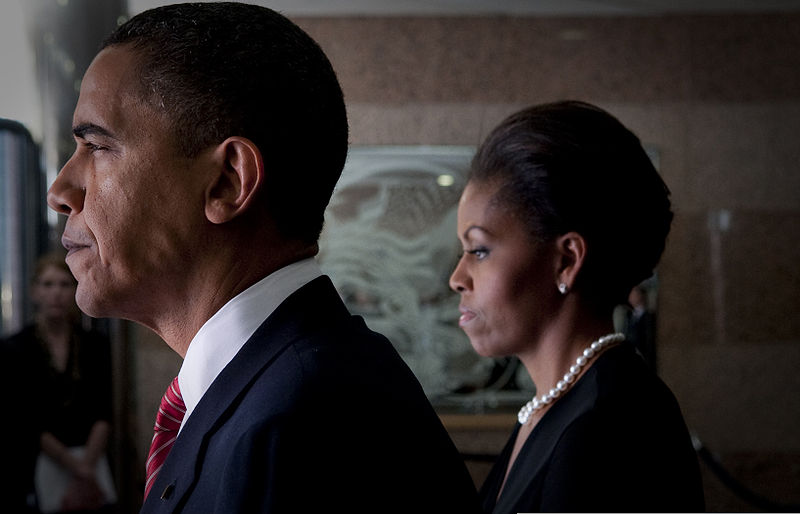
I’m really surprised by the nastiness that Jodi Kantor has faced from media figures since the publication of her book, The Obamas. When Piers Morgan interviewed the author, he seemed to have not read the book but was coached into believing that he had to be accusatory with his guest, to vaguely suggest she had acted poorly. (When you consider Morgan’s deplorable methods of news gathering while he was a tabloid editor in London, the insinuations becomes farcical.) Soledad O’Brien at least read the book but seemed to be acting more as a publicist for Michelle Obama than a journalist.

Because of the many partisan, even racist, attacks on the Obamas, it’s no surprise that the clearly private First Couple might feel sensitive to all scrutiny. But they are the most public of figures and not off bounds to analysis; no one who vigorously pursued the highest office in the land could expect less.

Nor is Kantor above scrutiny. But it would be wise for critics to actually know what they are accusing her of doing, apart from behaving like a reporter. Anyone who’s read Kantor’s work over the years in the New York Times knows that she’s a rigorous and fair-minded writer and can’t readily be mistaken for Kitty Kelley.

Tags: , ,

How cool. A clip of William F. Buckley with great Southern writers Walker Percy and Eudora Welty in 1972. I think my favorite Welty short story is “Music From Spain,” which takes place not in the South but in San Francisco.

From a Paris Review Q&A with Welty:

INTERVIEWER
‘Music from Spain’ takes place in San Francisco.

WELTY
That’s using impression of place. I was in San Francisco for only three or four months—that’s seeing it in a flash. That story was all a response to a place, an act of love at first sight. It’s written from the point of view of the stranger, of course—the only way to write about a strange place. On the other hand, I couldn’t write a story laid in New York, where I’ve come so many times—because it’s both familiar and unfamiliar, a no-man’s-land.”

Tags: , ,

Another moral failing in the recent history of the Catholic Church came in response to the death sentence imposed on Salman Rushdie by Ayatollah Khomeini after the publication of The Satanic Verses. From a 1989 New York Times piece by Michael T. Kaufman:

“In the United States, 17 Roman Catholic writers, including William Kennedy, Maureen Howard, Garry Wills and the Rev. Andrew Greeley, wrote a letter critical of statements by John Cardinal O’Connor, the Archbishop of New York. The letter noted the statement Sunday by the Cardinal in which he said that he would not read the book but that he proclaimed ‘his sympathy for the aggrieved position’ of Muslims.

The Catholic writers said they ‘deplore the moral insensitivity to the plight of Mr. Rushdie and an ecumenical zeal that would appear to support repression.’

Gara LaMarche, the head of the freedom-to-write program of American PEN, an international writers’ group, acknowledged that ‘for a short period of time immediately after the death threat there was a great deal of discussion about what was the best way to help Salman Rushdie.’ He said that this may have ‘given an impression of reluctance,’ but he added that in recent days writers have been calling from all over the world to offer their help with petitions and readings.”

••••••••••

Christopher Hitchens addresses the non-defense of Rushdie, 1989:

Tags: , ,

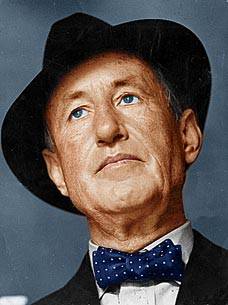
A brief excerpt of Ian Fleming discussing 007’s propensity for violence, in a 1964 Playboy Interview:

Playboy: You’ve been criticized for being ‘obsessed’ with violence in your books. Do you feel the charge is justified?

Fleming: The simple fact is that, like all fictional heroes who find a tremendous popular acceptance, Bond must reflect his own time. We live in a violent era, perhaps the most violent man has known. In our last War, 30 million people were killed. Of these, some six million were simply slaughtered, and most brutally. I hear it said that I invent fiendish cruelties and tortures to which Bond is subjected. But no one who knows, as I know, the things that were done to captured secret agents in the last War says this. No one says it who knows what went on in Algeria.”

••••••••••

“I wanted a really flat, quiet name”:

Tags:

It’s Diego Rivera’s 125th birthday today. In  his 1960 autobiography, My Art, My Life, the famed Mexican muralist claimed to have spent part of his youth dining on human flesh. It sounds like complete bullshit. The brief chapter called, “An Experiment in Cannibalism”:

“In 1904, wishing to extend my knowledge of human anatomy, a basic requisite for my painting, I took a course in that subject in the Medical School in Mexico City. At that time, I read of an experiment which greatly interested me.

A French fur dealer in a Paris suburb tried to improve the pelts of animals by the use of a peculiar diet. He fed his animals, which happened to be cats, the meat of cats. On that diet, the cats grew bigger, and their fur became firmer and glossier. Soon he was able to outsell his competitors, and he profited additionally from the fact that he was using the flesh of the animals he skinned.

His competitors, however, had their revenge. They took advantage of the circumstance that his premises were adjacent to a lunatic asylum. One night, several of them unlocked his cages and let loose his oversize cats, now numbering thousands. When the cats swarmed out, a panic ensued in the asylum. Not only the inmates but their keepers and doctors ‘saw cats’ wherever they turned. The police had a hard time restoring order, and to prevent a recurrence of such an incident, an ordinance was passed outlawing ‘caticulture.’

At first the story of the enterprising furrier merely amused me, but I couldn’t get it out of my mind. I discussed the experiment with my fellow students in the anatomy class, and we decided to repeat it and see if we got the same results. We did — and this encouraged us to extend the experiment and see if it involved a general principle for other animals, specifically human beings, by ourselves living on a diet of human meat.

Those of us who undertook the experiment pooled our money to purchase cadavers from the city morgue, choosing the bodies of persons who had died of violence — who had been freshly killed and were not diseased or senile. We lived on this cannibal diet for two months, and everyone’s health improved.

During the time of our experiment, I discovered that I liked to eat the legs and breasts of women, for as in other animals, these parts are delicacies. I also savored young women’s breaded ribs. Best of all, however, I relished women’s brains in vinaigrette.

I have never returned to the eating of human flesh, not out of a squeamishness, but because of the hostility with which society looks upon the practice. Yet is this hostility entirely rational? We know it is not.

Cannibalism does not necessarily involve murder. And human flesh is probably the most assimilable food available to man. Psychologically, its consumption might do much to liberate him from deep-rooted complexes — complexes which can explode with the first accidental spark.

I believe that when man evolves a civilization higher than the mechanized but still primitive one he has now, the eating of human flesh will be sanctioned. For then man will have thrown off all of his superstitions and irrational taboos.”


Tags:

Anthony Burgess, Jerzy Kosinski, and Barbara Howar turn the tables on Dick Cavett, 1974. Nice socks, Tony.

Tags: , , ,

A genius computer scientist who long ago predicted cloud computing, social networks and the current connectivity, David Gelernter was famously sent an explosive by the Unabomber, though his life accomplishments should render that bold headline a footnote. The Economist has an excellent short profile of the technologist. An excerpt:

“More than two decades ago, Dr Gelernter foresaw how computers would be woven into the fabric of everyday life. In his book Mirror Worlds, published in 1991, he accurately described websites, blogging, virtual reality, streaming video, tablet computers, e-books, search engines and internet telephony. More importantly, he anticipated the consequences all this would have on the nature of social interaction, describing distributed online communities that work just as Facebook and Twitter do today.

‘Mirror Worlds aren’t mere information services. They are places you can ‘stroll around’, meeting and electronically conversing with friends or random passers-by. If you find something you don’t like, post a note; you’ll soon discover whether anyone agrees with you,’ he wrote. ‘I can’t be personal friends with all the people who run my local world any longer, but via Mirror Worlds we can be impersonal friends. There will be freer, easier, more improvisational communications, more like neighbourhood chatting and less like typical mail and phone calls. Where someone is or when he is available won’t matter. Mirror Worlds will rub your nose in the big picture and society may be subtly but deeply different as a result.'”

••••••••••

Gelernter’s Lifestreaming predated Facebook:

Tags:

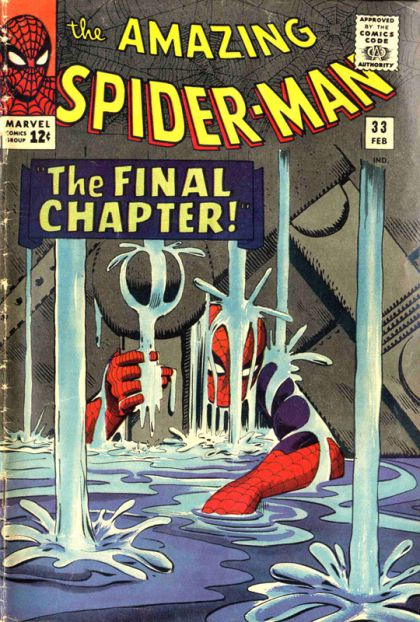
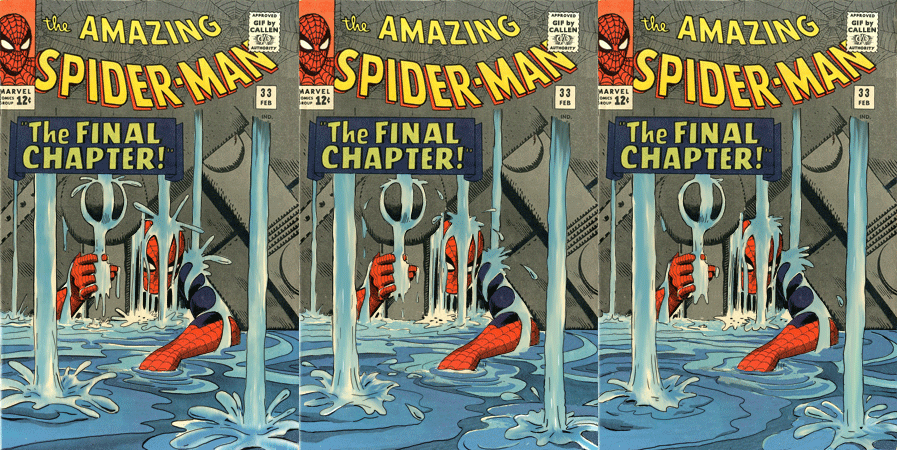
As a child I was never into comic books. I read Mad and that was it. But even I can appreciate what Kerry Callen did on his blog, animating his favorite comic book covers to transform them into action scenes. Take a look. (Thanks Nerdcore.)

Original cover.

Callen-ized.

Tags:

The opening of “2050 Or Bust,” Frederick Deknatel’s L.A. Review of Books piece about the bold future of urban planning that Mubarak had envisioned for Egypt, which he never, ever would have delivered:

“This past August in Heliopolis, the Cairo suburb built over desert by a Belgian industrialist in 1905, I sat in an architect’s office, a place called Cube Architectural Consultants, and heard a glowing, impromptu presentation on ‘Cairo 2050.’ Cairo 2050 is a series of outlandish master plans and megaprojects for Egypt’s capital that the regime of Hosni Mubarak began promoting in 2008, with the help of the United Nations and the Japanese government. Its future, an earnest architect informed me gently, was ‘uncertain in the new Egypt.’

Imagine Dubai in the Nile Valley, if instead of building it on empty sand, futurist skyscrapers and business parks rose over what are now the packed, informal neighborhoods that today house the majority of Cairo’s estimated 17 million people. This authoritarian, outsized development ‘vision’ would involve relocating millions to the furthest edges of the desert — areas banally termed ‘new housing extensions’— to make way for ’10 star’ hotels, huge parks, ‘residential touristic compounds,’ and landing-strip-sized boulevards lined with a monotony of towers. It’s unlikely to happen in an Egypt after Mubarak — if it was ever possible at all, given budgets and popular resistance. Still, Cairo 2050 offers a glimpse at the Egyptian government’s approach to urban planning and policy. As David Sims, an economist and consultant who has worked in Cairo since 1974, writes in Understanding Cairo: The Logic of a City Out of Control, the Cairo 2050 project represents ‘a continued penchant for the manufacture of unrealistic dreams’ on the part of ‘government planners and their consultants.'”

Tags: , ,

Tom Wolfe interviewed for some British show at the time The Bonfire of the Vanities was published, the last time the great New Journalist had his finger on the pulse of America and a time when people still purchased their books at brick-and-mortar stores where new volumes were arranged proudly like pyramids.

Tags:

In Nick Tosches great book, The Devil and Sonny Liston, the author identifies his subject’s main problem: “In the Saturday night cigarette smokehouse neon dark of that dive, Charles Liston, who neither knew his age nor felt any ties of blood upon this earth nor saw any future beyond the drink in front of him and the smoky dark spare refuge of this barroom from the bone-cutting, river-heavy dank and freezing chill, knew only that he was nobody and that he had come from nowhere and that he was nowhere. He did not see that one could be nobody with a capital ‘N.’” Smokin’ Joe Frazier, who just passed away, and his two greatest opponents, Muhammad Ali and George Foreman, became not just important nobodies but cultural kings.

Frazier, who could barely get a word in, with Ali and Dick Cavett:

Tags: , , ,

I recall reading somehwere that Kurt Vonnegut had co-written a screenplay with the odd comedian Steven Wright. The script was unproduced, and I imagine Wright still has it. Anyhow, there’s a new biography of Vonnegut, by Charles J. Shields, which examines the many contradictions of the novelist’s life and his bitter later years. From Janet Maslin’s New York Times piece about the book:

“Mr. Shields is not shy about using the words ‘a definitive biography of an extraordinary man’ to describe his book. And So It Goes is quick to trumpet its biggest selling points. Mr. Shields means to separate image from perception: He depicts Vonnegut as an essentially conservative Midwesterner, proud of his German heritage and capitalist instincts, who developed an aura of radical chic. He also describes a World War II isolationist who aligned himself with Charles A. Lindbergh yet became an antiwar literary hero. And he finds a life-affirming humanist sensibility in a writer celebrated for black humor. How this man would eventually be recruited to brainstorm with the Jefferson Airplane and be hipper than his own children are among the mysteries on which Mr. Shields casts light.

And So It Goes also traces the paradoxes in Vonnegut’s personal life. He was widely regarded as a lovable patriarch, for instance, at a time when he had left his large family behind. He also sustained a populist reputation even when he developed a high social profile in New York with the photographer Jill Krementz, his second wife. Ms. Krementz, who is called ‘hard-wired to the bowels of hell’ by Vonnegut’s son, Mark, clearly did not cooperate with Mr. Shields. The book takes frequent whacks at her, holding her accountable for much of the unhappiness in Vonnegut’s last years.

Mr. Shields provides a good assessment of misconceptions about Vonnegut’s writing. Those impressions persisted throughout his later life, perhaps because the books that followed Cat’s Cradle, The Sirens of Titan, God Bless You, Mr. Rosewater and Slaughterhouse-Five became increasingly unreadable.

‘On the strength of Vonnegut’s reputation, Breakfast of Champions spent a year on the best-seller lists,’ Mr. Shields writes of that 1973 disappointment, ‘proving that he could indeed publish anything and make money.'”

••••••••••

“Hey, Kurt, you read lips?”:

Tags: , ,

Vladimir Nabokov, genius writer and avid lepidopterist, was no big Dostoyevsky fan, at least based on the 1964 Playboy Interview that was conducted by future Futurist Alvin Toffler. An excerpt:

Playboy: Dostoevski, who dealt with themes accepted by most readers as universal in both scope and significance, is considered one of the world’s great authors. Yet you have described him as ‘a cheap sensationalist, clumsy and vulgar.’ Why?

Nabokov: Non-Russian readers do not realize two things: that not all Russians love Dostoevski as much as Americans do, and that most of those Russians who do, venerate him as a mystic and not as an artist. He was a prophet, a claptrap journalist and a slapdash comedian. I admit that some of his scenes, some of his tremendous, farcical rows are extraordinarily amusing. But his sensitive murderers and soulful prostitutes are not to be endured for one moment– by this reader anyway.”

Tags: , ,

Walter Isaacson, a writer who can communicate complicated ideas lucidly, was the perfect biographer for Steve Jobs, a technologist who could make complex functions work simply. Steven Johnson offers up his thoughts on Isaacson’s Jobs bio immediately after reading it. An excerpt:

‘While Jobs historically had a reputation for being a nightmare to work with, in fact one of the defining patterns of his career was his capacity for deep and generative partnerships with one or two other (often very different) people. That, of course, is the story of Jobs and Woz in the early days of Apple, but it’s also the story of his collaboration with Lasseter at Pixar, and Jony Ive at Apple in the second act. (One interesting tidbit from the book is that Jobs would have lunch with Ive almost every day he was on the Apple campus.) In my experience, egomaniacal people who are nonetheless genuinely talented have a hard time establishing those kinds of collaborations, in part because it involves acknowledging that someone else has skills that you don’t possess. But for all his obnoxiousness with his colleagues (and the book has endless anecdotes documenting those traits), Jobs had a rich collaborative streak as well. He was enough of an egomaniac to think of himself as another John Lennon, but he was always looking for McCartneys to go along for the ride with him.’

Tags: , ,

From “The Comfort Zone,” Jonathan Franzen’s great 2004 New Yorker essay about his childhood relationship with Charles Schulz’s Peanuts strip:

“I was unaware of it, but an epidemic had broken out across the country. Late adolescents in suburbs like ours had suddenly gone berserk, running away to other cities to have sex and not attend college, ingesting every substance they could get their hands on, not just clashing with their parents but rejecting and annihilating everything about them. For a while, the parents were so frightened and so mystified and so ashamed that each family, especially mine, quarantined itself and suffered in isolation.

When I went upstairs, my bedroom felt like an overwarm sickroom. The clearest remaining vestige of Tom was the Don’t Look Back poster that he’d taped to a flank of his dresser where Bob Dylan’s psychedelic hair style wouldn’t always be catching my mother’s censorious eye. Tom’s bed, neatly made, was the bed of a kid carried off by an epidemic.

In that unsettled season, as the so-called generation gap was rending the cultural landscape, Charles Schulz’s work was almost uniquely beloved. Fifty-five million Americans had seen A Charlie Brown Christmas the previous December, for a Nielsen share of better than fifty per cent. The musical You’re a Good Man, Charlie Brown was in its second sold-out year on Broadway. The astronauts of Apollo X, in their dress rehearsal for the first lunar landing, had christened their orbiter and landing vehicle Charlie Brown and Snoopy. Newspapers carrying Peanuts reached more than a hundred and fifty million readers, Peanuts collections were all over the best-seller lists, and if my own friends were any indication there was hardly a kid’s bedroom in America without a Peanuts wastebasket or Peanuts bedsheets or a Peanuts gift book. Schulz, by a luxurious margin, was the most famous living artist on the planet.”

••••••••••

The other Pigpen, 1970:

Tags: ,

« Older entries § Newer entries »