Books

You are currently browsing the archive for the Books category.

From Holman W. Jenkins, Jr.’s new Wall Street Journal interview with the ever-fascinating Ray Kurzweil:

“Mr. Kurzweil’s frank efforts to outwit death have earned him an exaggerated reputation for solemnity, even caused some to portray him as a humorless obsessive. This is wrong. Like the best comedians, especially the best Jewish comedians, he doesn’t tell you when to laugh. Of the pushback he receives from certain theologians who insist death is necessary and ennobling, he snarks, ‘Oh, death, that tragic thing? That’s really a good thing.’

‘People say, ‘Oh, only the rich are going to have these technologies you speak of.’ And I say, ‘Yeah, like cellphones.’

To listen to Mr. Kurzweil or read his several books (the latest: How to Create a Mind) is to be flummoxed by a series of forecasts that hardly seem realizable in the next 40 years. But this is merely a flaw in my brain, he assures me. Humans are wired to expect ‘linear’ change from their world. They have a hard time grasping the ‘accelerating, exponential’ change that is the nature of information technology.

‘A kid in Africa with a smartphone is walking around with a trillion dollars of computation circa 1970,’ he says. Project that rate forward, and everything will change dramatically in the next few decades.

‘I’m right on the cusp,’ he adds. ‘I think some of us will make it through’—he means baby boomers, who can hope to experience practical immortality if they hang on for another 15 years.”

Tags: ,

You have to have a lot of faith in humanity to be an anarchist. Have you met people? They’re awful.

The collapse of Wall Street, the sway of corporations that see us as consumers rather than citizens, grave concerns about our environment and the decentralization of communication have opened a door for anarchic movements in the form of Occupy Wall Street and beyond. If only I had more faith in people, the awful, awful people.

An excerpt from an excellent interview that Gawker’s Adrian Chen conducted with anarchist, author and scholar David Graeber:

Question:

One of the major themes of your book is that the current political structure is not at all democratic. I think among the people who would read your book, that’s kind of a given. But you go further in pointing out the anti-democratic nature of the Founding Fathers.

David Graeber:

Most people think these guys had something to do with democracy, but nobody ever reads what they actually said. What they said is very explicit: They would say things like ‘We need to do something about all this democracy.’

Question:

So as an alternative, you promote the model of consensus that Occupy used to organize, through its General Assembly.

David Graeber:

Yeah. What we wanted to do was A) change the discourse and then B) create a culture of democracy in America, which really hasn’t had one. I mean direct democracy, hands on, let’s figure out how you make this system together. It’s ironic because if you go to someplace like Madagascar, everybody knows how to do that. They sit in a circle and they do a consensus process. There is a way that you can do these things, that millions and millions of people over human history have developed and it comes out pretty much the same wherever they are because there are certain logical constraints and people being what they are.

Consensus isn’t just about agreement. It’s about changing things around: You get a proposal, you work something out, people foresee problems, you do creative synthesis. At the end of it you come up with with something that everyone thinks is okay. Most people like it, and nobody hates it.

Question:

This is pretty much the opposite of what goes on in mainstream politics.

David Graeber:

Yeah, exactly. It’s like, ‘People can be reasonable, I didn’t think it was possible!’ And that’s something I’ve noticed, that authoritarian regimes, what they do is that they always come up with some way to teach people about political decision making that says people aren’t basically reasonable, so don’t try this at home. I always point out the difference between the Athenian Agora and the Roman Circus. When most Athenians gathered together in a big mass it was to do direct democracy. But here’s Rome, this authoritarian regime. When did most Romans get together in the same place? If they’re voting on anything it’s like thumbs-up or thumbs-down to kill some gladiator. And these things are all organized by the elite, right? So all the people who are really running things throw these games where they basically organize people into a giant lynch mobs. And then they say, ‘Look, see how people behave! You don’t want to have Democracy!'”

Tags: ,

From Edward Luce’s new Financial Times profile of Harvard philosopher Michael Sandel, a passage about the marketization of morality:

I ask him about his latest book, What Money Can’t Buy: The Moral Limits of Markets, in which he argues that the US and other countries are turning from market economies into market societies, as Lionel Jospin, the former French prime minister, once put it. Sandel argues that we live in a time of deepening ‘market faith’ in which fewer and fewer exceptions are permitted to the prevailing culture of transaction. The book has infuriated some economists, whom he sees as practitioners of a ‘spurious science.’

He has been at loggerheads with the profession for many years. In 1997, he enraged economists when he attacked the Kyoto protocol on global warming as having removed ‘moral stigma’ from bad activity by turning the right to pollute into a tradeable permit. Economists said he misunderstood why markets work. Sandel retorts that they know the price of everything and the value of nothing. To judge by his sellout lecture tours, he has clearly tapped into a larger disquiet about the commodification of life.

Which countries are the least receptive to his concerns about market fundamentalism? ‘China and the US – no question,’ he replies instantly. ‘In other parts of east Asia, in Europe and in the UK and in India and Brazil, it goes without arguing that there are moral limits to markets and the question is where to locate them. In the US and China, there are strong voices who will challenge the whole idea of there being any limits.’”

 _________________________

“What’s you answer, smartypants?” asks TV’s best talk-show host.

Tags: , ,

The opening of Alex Williams’ short Techcrunch piece which asserts that data won’t kill narrative but rather alter it:

“I keep seeing this topic push up about how data is affecting creativity. Some say we are losing our sense of narration and storytelling. It’s not this at all. We are just experiencing a shift that other civilizations have faced when the traditional means for storytelling transform to give a sense of the changing times facing society.

That does not mean a rejection of the narrative form. The ancient Greeks developed a rich oral tradition for telling stories. Out of that they created a common language, which formed the foundation for fables, legends and myths.

Now we see that data, shaped by software, creates a space to tell stories in new ways. Narrative methods to express our imagination will change as techniques emerge that allow us to use programming languages to carry on what we know for the next generations.”

Tags:

In the Financial Times, Douglas Coupland, about to turn 50, thinks back on Generation X, his sensation of a novel published just 22 years ago, but perhaps the longest 22 years ever:

1991 was more than 20 years ago, before not just the internet but also email. I remember worrying about my phone bill each month. And I remember the Kuwait war, and I remember no more USSR, and I remember the snow on the ground during that particularly mild winter in Montreal where I was living at the time of Gen X’s publication. I also remember waiting for the first copy of the book to arrive. Ask any writer: the true moment of birth is when the FedEx envelope is ripped open and a book is fully midwifed into the world.

Here are a few Generation X facts: it was originally going to be called 52 Daffodils after a story contained within the book. I wonder what life would be like now if I’d done that. My Canadian publisher also declined to publish the book, which forever gave American publishers right of first refusal on new books, which began the myth within the Canadian writing world that I was trying to be American not Canadian. But it took years for me to figure out that that was what was actually happening – there was no internet to crystallize trends on a dime – trends took place across the span of years, not days. Trends had backlashes and then counter-backlashes that also went on for years. These days a meme is good for a few days or a few weeks, max.”

Tags:

Why don’t I like Jorge Luis Borges’ writing more than I do? He would seem aesthetically to be right up my alley, but I just don’t connect to it. Here’s an appearance by the Argentine legend with William F. Buckley on Firing Line in 1977. 

Tags:

If I had to say one thing about the time we’re living in, I would say this: Jesus H. Christ, our phones are great! Our phones are better than ever! I’m not sure if we’ve improved otherwise, but, wow, we’ve such progress in the area of phones! 

Seriously, we seem to be making progress in a variety of ways (see the current reversal in the attitude toward gay marriage in America), but there’s still a lot of suffering and unfairness in the world. Are we moving forward or laterally–or even backwards? 

John Gray, political philosopher and author of The Silence of Animals: On Progress and Other Modern Myths, believes our contention that we are moving human rights forward is self-satisfied bullshit. From an interview Gray did with Johannes Niederhauser at Vice:

“Question:

Isn’t the belief that everything will get better and that the world is now moving toward a blessed end state kind of schizophrenic, in the sense that we’ve actually been living in a deep crisis since the 1970s?

John Gray:

The rapid movement in technological advancements creates a phantom of progress. Phones are getting better, smaller, and cheaper all the time. In terms of technology, there’s a continuous transformation of our actual everyday life. That gives people the sense that there is change in civilization. But, in many ways, things are getting worse. In the UK, incomes have fallen and living standards are getting worse.

Question:

And advances in technology don’t mean that things are necessarily getting better in the grand scheme of things.

John Gray:

Oh, absolutely. Technological progress is double-edged. The internet, for example, has more or less destroyed privacy. Anything you do leaves an electronic trace.

Question:

Some people even want their mind to be transferred into the Internet to be digitally immortal.

John Gray:

That’s kind of moving in a way, but also utterly absurd. Even if it were possible to upload your whole mind on to a computer, it wouldn’t be you.

Question:

There seems to be a wide misunderstanding of what it means to be yourself.

John Gray:

Yes. You haven’t chosen to be the self that you are. You’re irreplaceable. You’re a singularity. We are who we are because of the lives that we have. And that involves having a body, being born, and dying.

Question:

Especially dying.

John Gray:

Yes, especially. A lot of contemporary phenomena, like faith in progress, is really an attempt to evade the reality of death. In actuality, each of our lives is singular and final; there is no second chance. This is not a rehearsal. It’s the real thing.”

Tags: ,

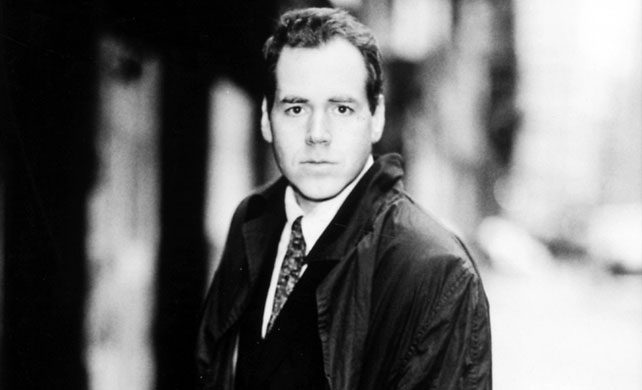
Via a Choire Sicha post at the excellent Awl blog, I just learned of Brendan Koerner’s The Skies Belong To Us, an exploration of the “golden age” of plane hijackings in the late ’60s / early ’70s. The forthcoming book looks at a turbulent time in America, when you could fly a 747 through the credibility gap. Into this void of political and moral authority arrived one skyjacking after another, pretty much on a weekly basis. Koerner focuses on the case of Roger Holder and Cathy Kerkow, a Vietnam vet and a party girl, who wrested control of a Western Airlines flight as part of an inchoate political protest, beginning the first leg of their insane journey.

The trailer for the book from the official website.

Tags: , , ,

At Rob Walker’s Yahoo! blog, he interviews technology critic Douglas Rushkoff about his new book, Present Shock, an updating of sorts of Alvin Toffler’s Future Shock. An excerpt about adaptation strategies in our brave new world:

Qusetion:

The book addresses what you’re calling ‘present shock,’ referencing Alvin Toffler’s idea of ‘future shock,’ and (if I can oversimplify) suggesting that we’re now living in Toffler’s future, and we’re not coping all that well. How might we respond to ‘society without narrative context’?

Douglas Rushkoff:

Present Shock is the panicky reaction to this always-on, real-time society in which we have found ourselves. But there are definitely ways to adapt and thrive in a ‘presentist’ world. So, take the collapse of narrative. We live in a world where it’s really hard to tell a story. People don’t have patience, they have interactive devices that encourage them to break up or leave a story in progress, and they don’t really think about things as having beginnings, middles and ends. We are in the now, and not looking forward to long-term goals anymore. This is as true for kids playing endless adventure games like World of Warcraft as it is for derivatives traders hoping to make money not off long-term investments but on the trades themselves. 

So on the one hand, we get the scary stuff: movements with long-term goals are increasingly unpopular. Political parties are hated. The notion of a career path or a commitment to (and from) an employer seems ludicrous. On the other hand, we begin to see some people attempting to live in a more ‘steady state.’ We don’t have to fight and win wars so much as deal with our problems in a more ongoing way. Global warming is not something we fight against and ‘win,’ but a chronic problem we can only face with sustainable solutions. We don’t need to yearn for endings—unless of course we really want to bring about the apocalypse. Instead, we must grow beyond the simple stories on which we were raised, and learn to live in a never-ending kind of story, in which we are the living players. 

This is what Occupy was groping toward, in its own way. They don’t have demands or goals so much as approaches. They are attempting to model a way of living. When asked how the movement is supposed to ‘end,’ they say, “Why should it end?'”

Tags: ,

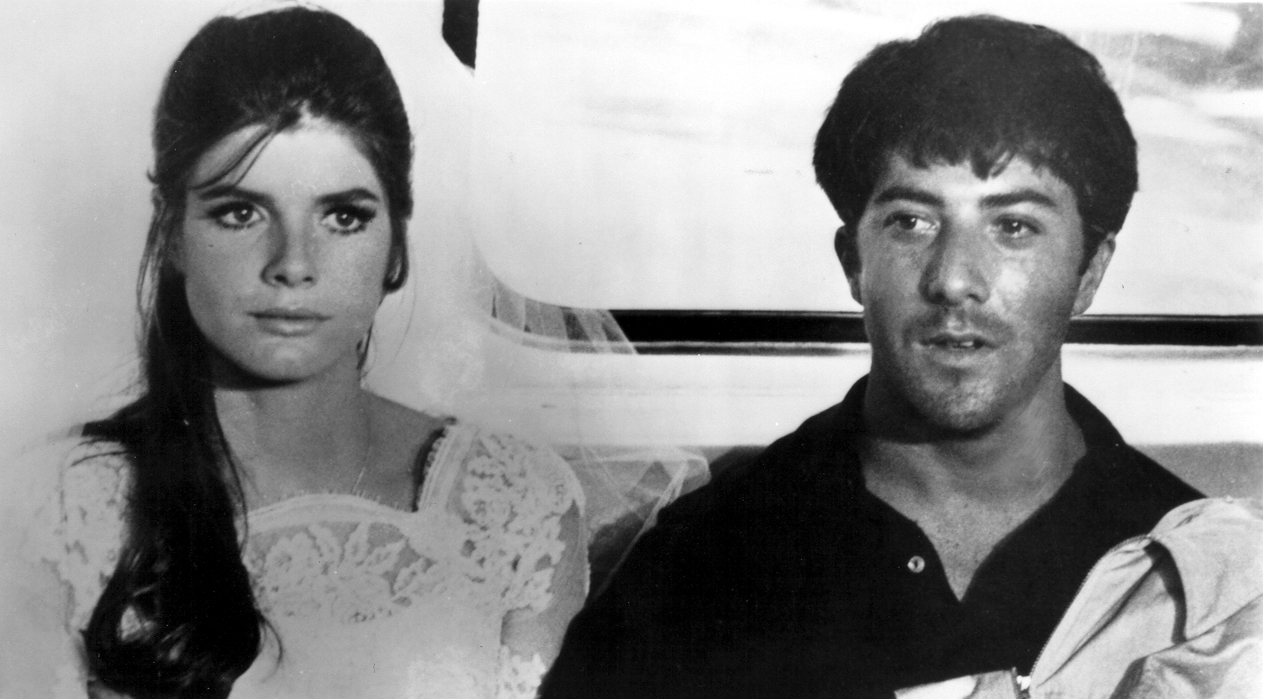
The ending of Mike Nichols’ film version of The Graduate was an ambiguous, not happy, one. A young idealistic couple on the run–but where to? And would they soon run out? For Charles Webb, the author of the novel the film was based on, and his wife, Eve, life has also been quixotic and difficult, as you might imagine it would be for devoted nudists who continually give away all their money. The author and his mate (who eventually shaved her head and changed her name to “Fred”), were profiled in a 1988 People article. The opening:

It was an image that captured the rebellious spirit of a generation: Dustin Hoffman pounding frantically on the church window, shattering the sounds of silence with his primal scream, “Elaine!” But the 1967 blockbuster The Graduate did not quite end at the exhilarating moment when Benjamin Braddock broke up the wedding of Mrs. Robinson’s daughter, carrying her off to reckless freedom and true love. In the final frames, as Ben and Elaine stole away on a bus, their tentative smiles seemed to ask, ‘What next?’

Imagine this scenario: Benjamin and Elaine get divorced but never live apart. Remaining true to their unconventional principles, they squander whatever money comes their way. Arriving at middle age, they don’t settle for sipping cynicism on the sofa. Instead, we find the idealistic pair huddled in the back of a battered VW bus—their only home—down to their last few hundred bucks. 

That just about sums up the fate of author Charles Webb, who wrote The Graduate, and his own Elaine, who now calls herself Fred. Maybe Ben—and Charles—should have gotten into plastics. ‘It’s hard to say how we got to this point,’ says Webb, 49, as he sits in a Bethel, Conn., diner. His features marked by a perpetual frown, he can barely conceal his anxiety over their situation yet seems equally incapable of discussing it. Fred, 48, although concerned about winter’s approach, remains hopeful. ‘What we need now is a place to settle,’ she says. ‘Then Charles can get back to work.’

Webb, after all, was once a literary rising star who published The Graduate, his first book, at age 24 in 1963. During the next 15 years, Webb says, he made almost $150,000 from that and five other books, including the $20,000 he received for film rights to The Graduate. ‘All of that seemed like a lot to us 10, 20 years ago,’ says Webb. ‘But money was never important to us.’ Fred agrees. ‘In fact,’ she says, ‘we have given away just about everything we owned.’ That includes two houses, a Rauschenberg drawing and a Warhol print—all donated to nonprofit organizations. For the past 10 years, Charles and Fred have subsisted on diminishing royalties from paperback sales of The Graduate, which now amount to about $2,500 a year. 

Since the couple pulled up stakes in Southern California and arrived in Massachusetts last July with their mutt, Mrs. R. (named, of course, for the story’s Mrs. Robinson), and a few thousand dollars in savings, the fates have not been kind to the Webbs. First, they had hoped to settle in Williamstown, home of Charles’s alma mater, Williams College, where he planned to begin writing a sequel to The Graduate. Unable to find a place they could afford, they were taken in by a woman in Bethel, Conn., who read of their plight in a newspaper—but threw them out after learning of their fondness for nudity.”

Tags:

Bret Easton Ellis, popular and reviled for having penned Less Than Zero, a dreadful novel not for its scenes of unimpeded immorality but for its sheer incompetence, visited William F. Buckley in 1985, while he was still a junior at Bennington. Here’s the first five minutes of the show, which features Buckley’s customary long introduction of his guest and a couple of questions of fellow young writer Fernanda Eberstadt, though sadly no Ellis commentary.

Tags: , ,

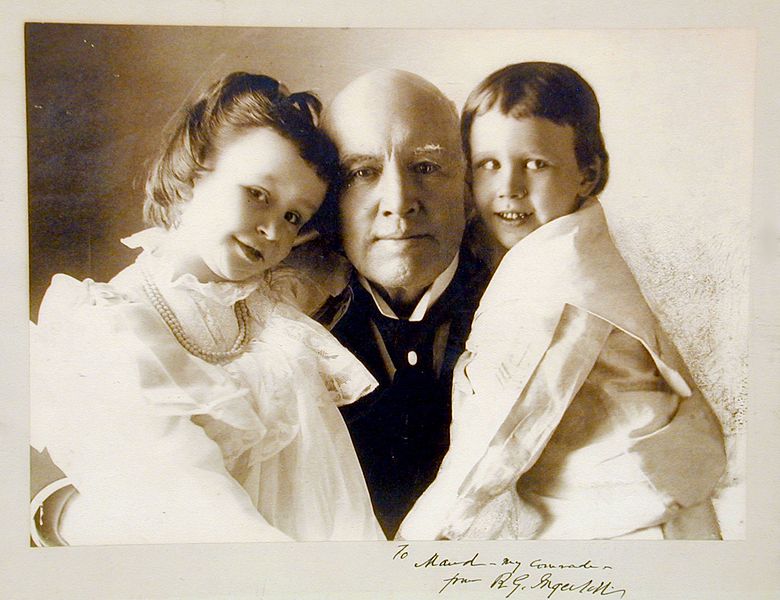
One I’ve finished the book I’m currently reading, I’m going to get my hands on Susan Jacoby’s The Great Agnostic, a volume about the 19th-century orator and non-believer Robert Ingersoll, which I’ve posted about before. From “That Old-Time Irreligion,” Jennifer Michael Hecht’s piece in the New York Times Book Review, an explanation of why the historical figure is largely forgotten today:

“The first reason for his obscurity is the same reason many actors who were well known before the age of film have been forgotten: Ingersoll’s greatest fame came from his public speeches, and while the texts of these have been published, it was his performance of them that made him so beloved. In 19th-century America, speeches were a major form of entertainment. As a result, people were real connoisseurs of the craft, and a wide range of listeners thought Ingersoll was an extraordinary orator. In an age when flowery language and effusive emotion were commonly used to keep audiences rapt, Ingersoll was comparatively calm and plain-spoken, yet he was said to be riveting, drawing both tears and peals of laughter.

The second reason he isn’t remembered has to do with what was in those speeches, many of which denounced religion. He called himself agnostic, but whenever he was asked, he replied that for him there was no difference between agnosticism and atheism. He wrote and spoke about a number of topics — Shakespeare was a favorite — but his agnosticism was what most set him apart, attracting devoted followers and fervent detractors. There have been atheists and religious doubters throughout history, but the ones who remain famous after their deaths tend to have been equally famous for something else as well; otherwise, people most notable for their bravery in the face of religious conservatism have to be celebrated by a population equally brave, and that is often too much to ask.”

Tags: , , ,

Wow, never knew this one existed. Mary McCarthy interviewed by Jack Paar on the Tonight Show in 1963. Fast forward to the nine-minute mark.

Tags: ,

Russell Baker isn’t the only one who thinks humans are living in veritable forests nowadays. From Matt Ridley’s Five Books interview, a discussion about Bjørn Lomborg’s contrarian volume, The Skeptical Environmentalist:

Matt Ridley:

There is more forest now than there was 50 years ago.

Question:

No. Really?

Matt Ridley:

Yup. Not in the right places necessarily. Rain forest is retreating but go to the Eastern seaboard of America. It’s covered in forest. It used to be farmland. Some of it’s plantations but some of it’s just wild forest that’s regrowing. The total number of trees in the world is going up at the moment, not down. There’s less water pollution, less air pollution, the kinds of things that caused urban smog in LA in the 1960s are going down dramatically.

Question:

With the trees. That sounds so unlikely.

Matt Ridley:

Exactly. A lot of what he says sounds unlikely because, as he says, people have heard the litany over and over again. He went back to reputable sources – UN, World Bank, other sources – and he found that the numbers simply don’t support the pessimism. There aren’t as many trees as there were…well, when?

Question:

1510.

Matt Ridley:

Britain probably has more trees now than in 1510. Huge forest clearances had happened long before that. The forestry commission has planted a lot of trees. There’s certainly more forest today than at any point in the last couple of hundred of years. When it got to be this lightly forested, it was probably the Middle Ages. There were huge forest clearances to fuel the iron industry in the 15th, 16th and 17th centuries. And real problems because they started running out of charcoal. The iron industry had to leave the South of England because there were no trees left. They moved to Wales and Cumbria and deforested that too. Species extinction rates for mammals and birds peaked around 1900 and they’ve been dropping since.”

Tags: ,

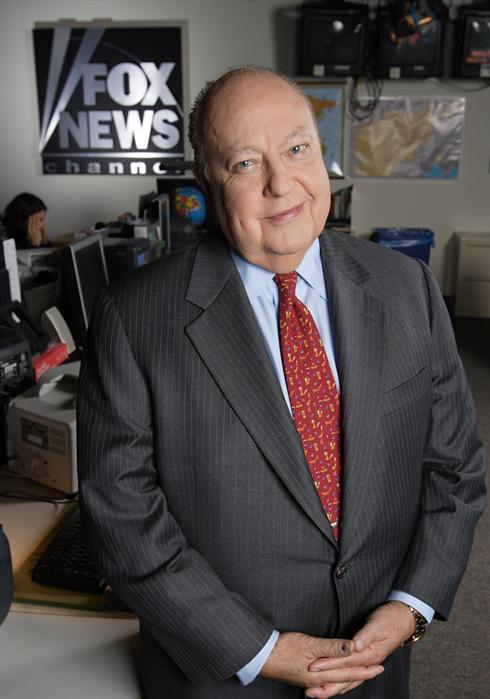
If anyone is wondering why that bastion of truthiness and GOP propaganda outlet Fox News misled its viewers so willfully during the Presidential election, it’s because the channel’s profits, not conservatism, is its chief concern. Of course. From a Vanity Fair excerpt of Zev Chafets’ new book about faux journalist Roger Ailes, a passage in which he discusses his bottom-line bromance with News Corp boss Rupert Murdoch. An excerpt:

“Ailes and Rupert Murdoch are very respectful of each other. Ailes credits Murdoch with realizing that there was a niche audience (‘half the country,’ as Charles Krauthammer, a Fox contributor, drily put it) for a cable news network with a conservative perspective. Murdoch, for his part, assured me that he doesn’t dictate editorial decisions. ‘I defer to Roger,’ he said. ‘I have ideas that Roger can accept or not. As long as things are going well … ‘

One moment of tension occurred in 2010, when Matthew Freud, the husband of Murdoch’s daughter Elisabeth and a powerful British public-relations executive, told The New York Times that ‘I am by no means alone within the family or the company in being ashamed and sickened by Roger Ailes’s horrendous and sustained disregard of the journalistic standards that News Corporation, its founder, and every other global media business aspires to.’ A spokesman for Murdoch replied that his son-in-law had been speaking for himself, and that Murdoch was ‘proud of Roger Ailes and Fox News.’ Ailes mocked Freud in an interview in the Los Angeles Times, saying he couldn’t pick the British flack out of a lineup and suggesting that he (a descendant of Sigmund Freud’s) ‘needed to see a psychiatrist.’

Murdoch often drops by Ailes’s office to joke and gossip about politics. ‘Roger and I have a close personal friendship,’ he told me. Ailes agrees—up to a point.

‘Does Rupert like me? I think so, but it doesn’t matter. When I go up to the magic room in the sky every three months, if my numbers are right, I get to live. If not, I’m killed. Our relationship isn’t about love—it’s about arithmetic. Survival means hitting your numbers.'”

Tags: ,

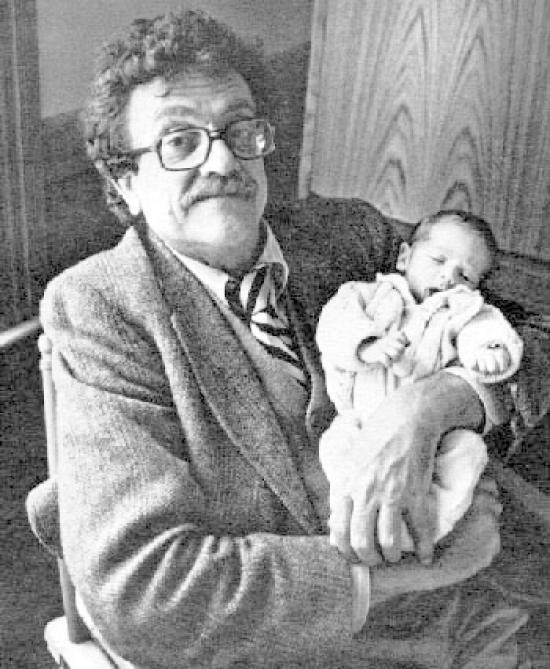
Before computing was portable, even pocket-sized, some feared it would create a physical distance among people. If anything, it has birthed an emotional alienation because of its virtual nature, the way it feeds, even encourages, narcissism. We’re more connected, but there are more disconnects. Via theody. net, Kurt Vonnegut, that coot, explaining in 1995 why he never made the switch to word processing:

“I work at home, and if I wanted to, I could have a computer right by my bed, and I’d never have to leave it. But I use a typewriter, and afterward I mark up the pages with a pencil. Then I call up this woman named Carol out in Woodstock and say, ‘Are you still doing typing?’ Sure she is, and her husband is trying to track bluebirds out there and not having much luck, and so we chitchat back and forth, and I say, ‘Okay, I’ll send you the pages.’ Then I go down the steps and my wife calls, ‘Where are you going?’ ‘Well,’ I say, ‘I’m going to buy an envelope.’ And she says, ‘You’re not a poor man. Why don’t you buy a thousand envelopes? They’ll deliver them, and you can put them in the closet.’ And I say, ‘Hush.’ So I go to this newsstand across the street where they sell magazines and lottery tickets and stationery. I have to get in line because there are people buying candy and all that sort of thing, and I talk to them. The woman behind the counter has a jewel between her eyes, and when it’s my turn, I ask her if there have been any big winners lately. I get my envelope and seal it up and go to the postal convenience center down the block at the corner of Forty-seventh Street and Second Avenue, where I’m secretly in love with the woman behind the counter. I keep absolutely poker-faced; I never let her know how I feel about her. One time I had my pocket picked in there and got to meet a cop and tell him about it. Anyway, I address the envelope to Carol in Woodstock. I stamp the envelope and mail it in a mailbox in front of the post office, and I go home. And I’ve had a hell of a good time. I tell you, we are here on Earth to fart around, and don’t let anybody tell you any different.”

Tags:

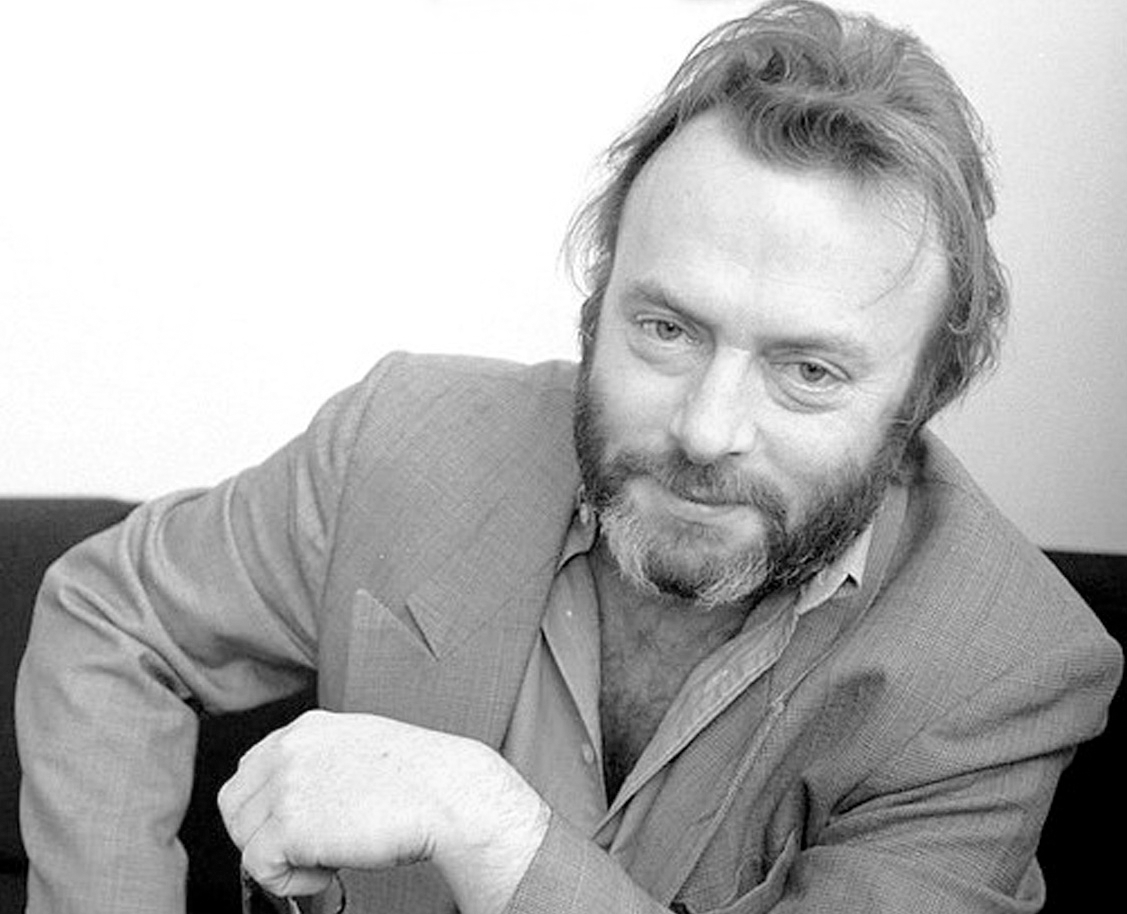
Th opening of James Kirchick’s Newsweek piece about a new book which hangs in effigy Christopher Hitchens, who peed on a tombstone or two in his day:

“One of the journalistic impulses for which the late Christopher Hitchens will be remembered was a propensity for writing nasty obituaries of people he loathed immediately after their deaths. It was only a matter of days, sometimes hours, following the expiration of figures such as Mother Teresa, Princess Diana, Ronald Reagan, Jerry Falwell, or Alexander Haig (to name just a few of the targets of his wrath) that Hitchens would take to the print columns or the airwaves and denounce the recently departed as a ‘thieving, fanatical Albanian dwarf,’ ‘hyperactive debutante,’ ‘cruel and stupid lizard,’ ‘Chaucerian fraud,’ and ‘neurotic narcissist with an unquenchable craving for power,’ respectively. ‘For a lot of people, their first love is what they’ll always remember,’ Hitchens once told C-SPAN’s Brian Lamb. ‘For me it’s always been the first hate, and I think that hatred, though it provides often rather junky energy, is a terrific way of getting you out of bed in the morning and keeping you going.’

In light of this, the one thing that can be said in praise of Richard Seymour’s UnHitched: The Trial of Christopher Hitchens, is that its subject would appreciate the effort. Indeed, I bet that Hitchens would be highly pleased that someone had expended so much time and energy to denounce him posthumously in the style that he had himself mastered, even if it took the author more than a year since Hitchens’s death to produce it. Concocted in the style of a 17th-century polemical pamphlet (a literary template favored by Hitchens), UnHitched purports to be an ‘extended political essay’ that exposes its subject as, among other things, a ‘terrible liar,’ ‘ouvrierist’ (one of several words deployed by the overly earnest Seymour that will drive even more learned readers to the dictionary), a plagiarist, and, most unforgivable among Hitchens’s erstwhile friends and colleagues on the Anglo-American socialist left, ‘the George W. Bush administration’s amanuensis.'”


Tags: ,

Despite what some say, our forefathers did not base America on Christianity. From The Stammering Century, Gilbert Seldes’ book about our nation at its most extreme:

When the time came to frame a constitution, God was considered an alien influence and, in the deliberation of the Assembly, his name was not invoked. “Inexorably,” says Charles and Mary Beard in their story of The Rise of American Civilization, “the national government was secular from top to bottom. Religious qualifications …found no place whatever in the Federal Constitution. Its preamble did not invoke the blessings of Almighty God…and the First Amendment…declared that Congress shall make no law respecting an establishment of religion…” In dealing with Tripoli, President Washington allowed it to be squarely stated that “the government of the United States is not in any sense founded upon the Christian religion.”•

Tags: ,

I think the main problem with Mayor Bloomberg’s ban on gigantic sodas in NYC is that it won’t work. If obesity was mainly caused by this one product, perhaps you could make a case. If it led directly to saving lives like, say, mandatory seat belts, sure, that would make sense. But Bloomberg’s ban lacks such precision. 

Other people think that the main problem with Bloomberg’s plan is that he’s trying to create a nanny state, that’s he’s using state-sanctioned moral suasion. But is that always wrong: From Cass R. Sunstein’s New York Review of Books piece about Sarah Conly’s book Against Autonomy: Justifying Coercive Paternalism:

Many Americans abhor paternalism. They think that people should be able to go their own way, even if they end up in a ditch. When they run risks, even foolish ones, it isn’t anybody’s business that they do. In this respect, a significant strand in American culture appears to endorse the central argument of John Stuart Mill’s On Liberty. In his great essay, Mill insisted that as a general rule, government cannot legitimately coerce people if its only goal is to protect people from themselves. Mill contended that

the only purpose for which power can be rightfully exercised over any member of a civilized community, against his will, is to prevent harm to others. His own good, either physical or mental, is not a sufficient warrant. He cannot rightfully be compelled to do or forbear because it will be better for him to do so, because it will make him happier, because, in the opinion of others, to do so would be wise, or even right.

A lot of Americans agree. In recent decades, intense controversies have erupted over apparently sensible (and lifesaving) laws requiring people to buckle their seatbelts. When states require motorcyclists to wear helmets, numerous people object. The United States is facing a series of serious disputes about the boundaries of paternalism. The most obvious example is the ‘individual mandate’ in the Affordable Care Act, upheld by the Supreme Court by a 5–4 vote, but still opposed by many critics, who seek to portray it as a form of unacceptable paternalism. There are related controversies over anti-smoking initiatives and the ‘food police,’ allegedly responsible for recent efforts to reduce the risks associated with obesity and unhealthy eating, including nutrition guidelines for school lunches.

Mill offered a number of independent justifications for his famous harm principle, but one of his most important claims is that individuals are in the best position to know what is good for them. In Mill’s view, the problem with outsiders, including government officials, is that they lack the necessary information. Mill insists that the individual ‘is the person most interested in his own well-being,’ and the ‘ordinary man or woman has means of knowledge immeasurably surpassing those that can be possessed by any one else.’

When society seeks to overrule the individual’s judgment, Mill wrote, it does so on the basis of ‘general presumptions,’ and these ‘may be altogether wrong, and even if right, are as likely as not to be misapplied to individual cases.’ If the goal is to ensure that people’s lives go well, Mill contends that the best solution is for public officials to allow people to find their own path. Here, then, is an enduring argument, instrumental in character, on behalf of free markets and free choice in countless situations, including those in which human beings choose to run risks that may not turn out so well.

Mill’s claim has a great deal of intuitive appeal. But is it right?”

Tags: , , ,

The chief executive of Barnes & Noble truly believes that the chain will be closing only some of its brick-and-mortar bookstores in the next decade. In other news, Atlantis is thinking of scaling down its island. You know, just a little here and there. Wow, denial is a bitch. From WSJ:

Barnes & Noble Inc. expects to close as many as a third of its retail stores over the next decade, the bookseller’s top store executive said, offering the most detailed picture yet of the company’s plans for the outlets.

“In 10 years we’ll have 450 to 500 stores,” said Mitchell Klipper, chief executive of Barnes & Noble’s retail group, in an interview last week. The company operated 689 retail stores as of Jan. 23, along with a separate chain of 674 college stores.•

Tags:

From Dan Tapscott’s Globe and Mail piece about the latest book from Ray Kurzweil, that lightning rod, about the current and future merger of human and machine: 

“The thesis of How to Create a Mind is that the human brain itself is the most powerful thinking machine available today, so it is logical that we look to the brain for guidance on how to make devices smarter. He outlines a theory he calls ‘the pattern recognition theory of mind (PRTM),’ which he says ‘describes the basic algorithm of the neocortex (the region of the brain responsible for perception, memory and critical thinking).’ By reverse-engineering the human brain, we will be able to ‘to vastly extend the power of our own intelligence.’

What will we do with this new intelligence? First, we will better understand the brain itself and develop superior treatments for the brain’s ailments, such as psychiatric disorders. Second, we will use our expanded intelligence to solve the many problems that confront mankind. Finally, we will use the intelligence to teach us how to be smarter.

I have written often about today’s smartphones evolving into digital co-pilots, our constant companions that will help us get through the day. Kurzweil sees such devices shrinking to microscopic size and residing within our bodies. Will we have tiny computers in our bloodstream, ever alert for something amiss? These devices will be our links to what is now called the cloud, the vast computing power of the Googles, the Amazons, the Apples and the IBMs of the world.”

Tags: ,

I want every book in the history of humankind digitized and available online to read right now. But Christopher Rowe isn’t sure that a universal library is possible or even a good thing. The opening of “The New Library of Babel?“:

“The utopian idea of the universal library, a repository of every text ever published, has persisted in the western mind for over two millennia. The Library of Alexandria, founded in the third century BCE, is generally regarded as the first and, practically speaking, last such endeavour, an attempt to house and catalogue all of the texts (which were at that time primarily in the form of papyrus scrolls) in the then known world. Tradition holds that the collection was decimated by a fire, though the true fate of the Library of Alexandria is debatable; its existence and the comprehensiveness of its archives, however, are attested to by numerous sources. Now, with the rise of digital media, virtual storage and the World Wide Web, many claim that the ancient dream of a universal library is approaching realisation, albeit in a new and very different form. The Google Books Library Project, the undertaking most often singled out as the modern equivalent of the Library of Alexandria, has reportedly compiled over 20 million scanned volumes, largely obtained from the collections of its 20 prominent partner libraries. Google’s stated objective at the inception of this project was no less than ‘to organize the world’s information and make it universally accessible and useful’ Other proponents of the project have been even more hyperbolic; Kevin Kelly declared in a New York Times article that this new universal library would eventually offer ‘the entire works of humankind, from the beginning of recorded history, in all languages, available to all people, all the time’, including in its scope digital versions of all paintings, films, recorded music, television programs, every piece of print media and every internet site ever to have existed.

The idea of electronically storing and delivering vast collections of texts is older than most would imagine. In 1960, Ted Nelson, the inventor of the term ‘hypertext’, began working on (but never completed) the Xanadu system, a proposed ‘docuverse’ which he later described as ‘a plan for a worldwide network, intended to serve hundreds of millions of users simultaneously from the corpus of the world’s stored writings, graphics and data’. Nelson in turn drew inspiration from a 1945 article by Vannevar Bush, one of the first to seriously consider the logistics and possibilities of such a system. However, I wish to draw the reader’s attention to an even earlier and more indirect theorisation of the universal digital library, one found in Jorge Luis Borges’s 1941 short story ‘The Library of Babel’. In this work, a nameless narrator describes the titular library as a seemingly endless vertical and horizontal series of hexagonal rooms housing 20 bookshelves apiece, the contents of which are described as follows: ‘each bookshelf holds 32 books identical in format; each book contains 410 pages; each page, 40 lines; each line, approximately 80 black letters.’ The contents of these books are revealed to be randomly generated combinations of a set of 25 characters: 22 letters representing all vowel and consonant sounds, the comma, the period and the space. This library, whose spatial dimensions would vastly exceed those of the observable universe, would by definition contain everything that has been, or possibly ever could be, expressed in writing; yet for every sentence, much less volume, of interpretable language there would exist galaxies of meaningless or indecipherable strings of characters. While the library Borges describes here (and in his essay ‘The Total Library,’ written two years prior to the story) does not resemble in content the universal library proposed by Google Books or other digitisation projects, there are certain commonalities between the two which are worth considering when attempting to conceptualise this more recent proposal.'”

Tags:

I think I reviewed the original Freakonomics and enjoyed it a whole lot. Breaking down myths is something we need to be actively doing. I wonder though if Steven Levitt and Stephen Dubner haven’t provided alternative answers to life’s questions that are likewise too tidy–that are also a bit of a narrative. Levitt just did an Ask Me Anything on Reddit. A few exchanges follow which reveal the economist’s feelings on gun control and other issues.

__________________________

Question:

My statistics class just recently finished reading your book, so thanks for doing an AMA! One of the things we were discussing about was if government’s current view on guns is a misconception on their part. Do you think the promotion of gun safety awareness or removing guns from stores will cause a drop in gun violence in the near future?

Answer:

My view, which basically has to be true, is that NOTHING that the government does to the flow of new guns can possibly affect gun violence much. There are already 300 million guns out there! They will be around for the next 50 years. The cat is out of the bag.

Question:

Success in Australia in the 90’s when they banned assault weapons depended upon the buy-back of the newly banned guns. It was vital.

Answer:

There is no sillier public policy than gun buybacks. You hardly get any guns, and the ones you get are not the ones that would be used in a crime.

Question:

After listening to your show on gun control. I was wondering if you guys are gun owners?

Answer:

Neither of us own guns.

I like guns. I would have one, probably, if my wife would let me. But she won’t.

__________________________

Question:

If you were King of the United States for a day, what changes would you put into place? What laws/policy changes are incredibly obvious to economists but contrary to public/political popular opinion?

Answer:

1) People have to pay a big chunk of their own health care.

2) We should have a flat tax or something like it.

3) We should allow/encourage talented immigrants to come to the US.

I think every economist believes in those three things.

__________________________

Question:

Who’d win in a fist fight, you, or Malcom Gladwell?

Answer:

That is a great question. I think I could actually take him.

I think Dubner and I together, would massacre him.

No mercy.

Tags:

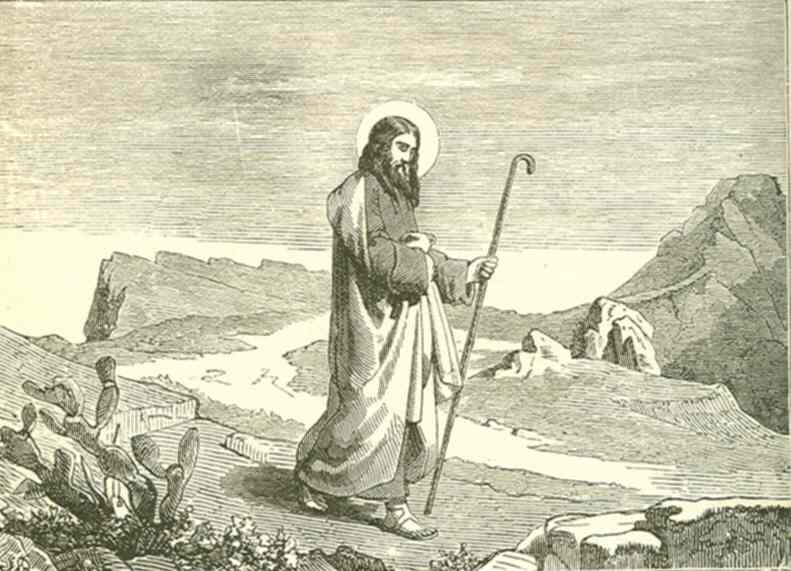
“He gravely announced himself as the ‘Spirit of Truth,’ being the Matthias mentioned in the Scriptures who had risen from the dead.”

I’ve just starting reading Gilbert Seldes’ The Stammering Century, another great title from the New York Review of Books imprint. First published in 1928, it’s the true story of the stranger-than-fiction twists and turns that religion took in 19th-century America, as it splintered into cults and manias, driven by charismatic mountebanks who passed themselves off as messiahs. (In that sense, it’s much like our age.) A section I’ve yet to reach focuses on New York-based Robert Matthews (a.k.a. Robert Matthias, Jesus Matthias, etc. ), a struggling carpenter who in the 1830s managed to convince a band of wealthy Baptist apostates to make him the head of their crazy, cult-like sect, “The Kingdom.” From “The Impostor Matthias” in the December 25, 1892 New York Times:

“The delusions of the period, thus far harmless, had assumed a progressive character that was destined to develop rapidly to a tragical conclusion. Among the leading spirits of the ‘Holy Club’ was a Mrs. Sarah Pierson, whose husband, Elijah Pierson, was a successful and highly respected merchant. She was a woman of wide culture and engaging manners, and the couple were among the most esteemed members of the Baptist society of that day. They resided on Bowery Hill, an agreeable suburb of New York, sixty years ago, somewhere in the vicinity of the present Madison Square. In this rural locality were situated, on a breezy, shaded eminence, a number of handsome houses, the summer residences of the well-to-do merchants of that period. 

In the year 1828 Mr. Pierson came to regard himself as being in constant direct communication with the Almighty, through the agency of the Holy Spirit, and his wife being equally impressed with his divine associations, the operations of the Christian world were too slow for their heated imaginations, and in 1829 they withdrew from their affiliation with the Baptist Church and organized an independent religious society, with a nucleus of twelve members, which they called ‘The Kingdom.’ Meetings were held daily and often twice a day in the Pierson residence on Bowery Hill, brief intervals only being allowed for sleep and light refreshment. The labors and vigils of the new faith, together with the protracted seasons of entire fasting, broke down the health of Mrs. Pierson, and in June, 1830, her husband having, while riding one day down Wall Street in an omnibus, received the Divine command in these words: ‘Thou art Elijah, the Tishbite. Gather unto me all the members of Israel at the foot of Mount Carmel,’ anointed her with oil from head to feet in the presence of the assembled elders of ‘the Kingdom.’ A few days later the unfortunate woman died.
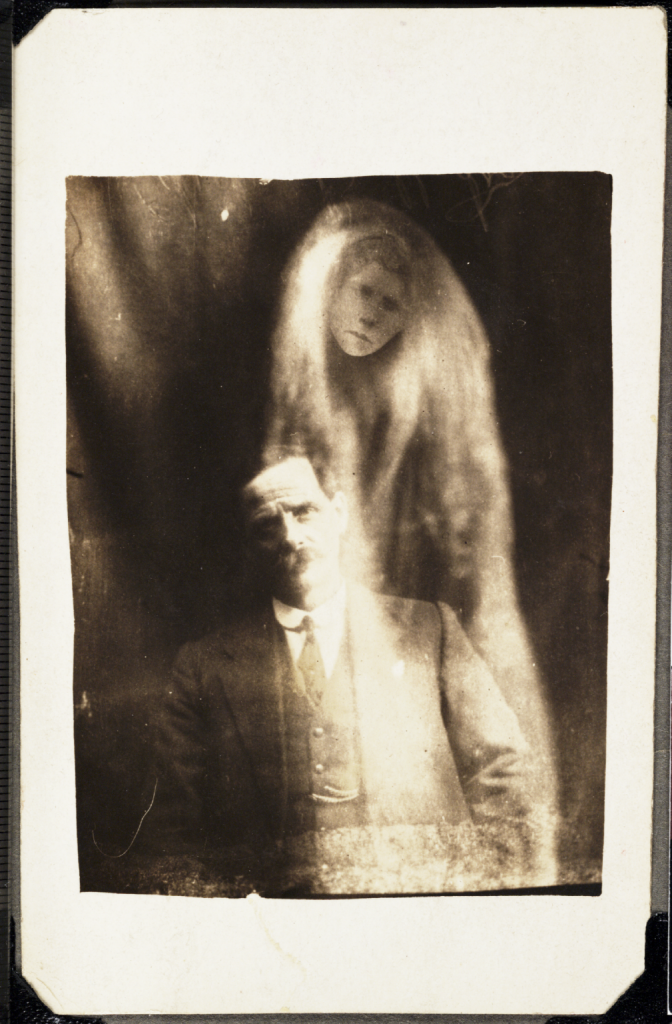
“The delusion that his beloved wife was still to be raised from the dead possessed the unhappy husband’s mind for many months afterward.”

On the day of the funeral, about 200 persons being in attendance, Mr. Pierson endeavored to effect the miracle of her resurrection, attributing his failure to the lack of faith of the bystanders. The scene was harrowing in the extreme, and the delusion that his beloved wife was still to be raised from the dead possessed the unhappy husband’s mind for many months afterward. In 1831 Mr. Pierson removed to a spacious house in Third Street, where he held forth daily to the elect of ‘The Kingdom,’ which now numbered quite a large congregation of converts, some, indeed, being attracted from points outside the city. Among the latter were a Mr. Benjamin Folger and his wife, persons of wealth and standing, who had recently removed their residence from New-York to a handsome country place, near Sing Sing, or Mount Pleasant, as the place was then designated. Another conspicuous member of the strange association was a Mr. Sylvester H. Mills, a well-to-do Pearl Street merchant–a man whose naturally gloomy temperament had been intensified by the death of a beloved wife, a few months previous to the decease of Mrs. Pierson. These people, with many others of all social grades, gathered about Mr. Pierson, to listen to his denunciations of the churches, and his exhortations to place their faith in the Lord in order that, like the Apostles, they might be enabled to ‘heal the sick, cast out the devils, and raise the dead.’

While those extravagances were in progress and the inflamed imaginations of the fanatical leaders were worked up to a high pitch of expectancy, there appeared among them on May 5, 1832, a stranger, whose pretensions, while according with the tenor of their diseased minds, were so far in advance of their own most enthusiastic flights that he was at once accepted as their leader, and worshipped as a divine being. He gravely announced himself as the ‘Spirit of Truth,’ being the Matthias mentioned in the Scriptures who had risen from the dead and possessed the spirit of Jesus Christ. He further declared that he was God the Father, and claimed power to do all things, to forgive sins, and to communicate the Holy Ghost to such as believed in him.

A short account of the previous history of this singular character is necessary at this point, in order to explain how he came to fasten himself thus on ‘The Kingdom,’ with his monstrous claims of divine powers. His name was Robert Matthews, and he was born in Washington County, New York, about the year 1790. He followed the trade of carpentering, and in 1827 he lived in Albany, where he was known as a zealous member of the Dutch Reformed congregation, over which Dr. Ludlow presided. Happening to attend a service conducted by a young clergyman named Kirk, who was visiting Albany from New-York City, he returned home in a state of great excitement, and sat up all that night discussing the sermon he had heard. His enthusiasm was so great that his wife remarked during the night to her daughter: ‘If your father goes to hear that man preach any more he will become crazy.’ He did go to hear him a number of times, and the reader may gather from the sequel of this story whether the wife’s prediction was fulfilled.”

Tags: , , , ,

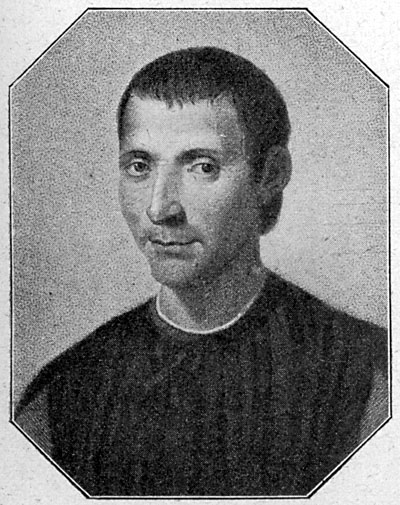
Renaissance thinker Niccolò Machiavelli brought political theory into the modern age, for better or worse. In a 1971 New York Review of Books essay, Isaiah Berlin measured his impact on Western thought. An excerpt:

“If what Machiavelli believed is true, this undermines one major assumption of Western thought: namely, that somewhere in the past or the future, in this world or the next, in the church or the laboratory, in the speculations of the metaphysician or the findings of the social scientist or in the uncorrupted heart of the simple good man, there is to be found the final solution of the question of how men should live. If this is false (and if more than one equally valid answer to the question can be returned, then it is false) the idea of the sole true, objective, universal human ideal crumbles. The very search for it becomes not merely utopian in practice, but conceptually incoherent….

After Machiavelli, doubt is liable to infect all monistic constructions. The sense of certainty that there is somewhere a hidden treasure—the final solution to our ills—and that some path must lead to it (for, in principle, it must be discoverable); or else, to alter the image, the conviction that the fragments constituted by our beliefs and habits are all pieces of a jigsaw puzzle, which (since there is an a priori guarantee for this) can, in principle, be solved; so that it is only because of lack of skill or stupidity or bad fortune that we have not so far succeeded in discovering the solution whereby all interests will be brought into harmony—this fundamental belief of Western political thought has been severely shaken.” (Thanks Browser.)

Tags: ,

« Older entries § Newer entries »