2013

You are currently browsing the yearly archive for 2013.

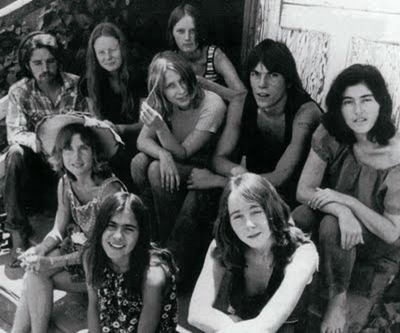
The reason why cults and other mind-control systems seek out the young isn’t only because they’re energetic and lack familial responsibilities, but because they’re “impressionable.” What does that mean? When we’re not yet formed, when we haven’t had enough repetition of thought to set ourselves, ideas can be pushed into our brains–and pushed out–more readily than later in life. And as deprogrammers can tell us, once something does become deeply ingrained at that age, it’s a chore changing a mind. That’s why you see otherwise intelligent teens become Manson Family members or an American Taliban. It’s not a lack of intelligence, but a lack of experience. And that applies whether it’s a cult based on religion or sex or anything else, because it’s all about power. 

From “The Master,” Marc Fisher’s painstaking and painful exploration of the Horace Mann sex-abuse scandal, a passage about one of the victims of a charismatic teacher who maintained control over some of his students even when they grew into adults, assembling them in a country house to be his makeshift ‘family”:

“The other original owner of the house, the bond trader, who spoke on the condition that he not be named, said that he first encountered Berman in tenth grade, when his relationship with his parents was crumbling. ‘I didn’t know it, but I was looking for someone like Berman, who had authority, who was a leader,’ he says. ‘In a school that made everyone think he was special, this was the hardest guy to have approve of you. I needed somebody to talk to and he offered himself as a counsellor.’

Like the other boys, he was invited to Berman’s apartment, in eleventh grade. ‘We didn’t think of ourselves as gay, and I never was, though I engaged in homosexual activities, obviously,’ the bond trader says. Berman would describe the sex as a natural part of the teacher-student relationship, dating back to ancient Greece. ‘We might spend a night and then go home to our parents, and other kids would come in,’ he says. ‘He took great pleasure in stealing kids from the parents he hated.’

The trader also says that, while he lived at Satis House, Berman kept him on a restricted diet, to hold his weight at about twenty-five pounds below the level at which he had played football in college. In the early years of their relationship, he says, Berman regularly beat him with a belt buckle. Berman wrote to me that this wasn’t true: ‘I do not recall ever striking anyone with a belt buckle; I guess I’d remember if I had. (Excellent idea, though.)’

After four years at Satis House, the trader left, and he has spent the subsequent decades trying to figure out why he stayed so long. ‘There was always the threat of excommunication, lack of approval, castigation,’ he told me. ‘We weren’t even allowed not to like the food he made—and it was awful. And there was always alcohol, lots of it. You drank one woolie and you were relatively pliable after that. I never knew I was part of a cult till I got out.'”


Tags: ,

From Wired UK, a report about a Carnegie Mellon robotic snake that can perch itself on poles and branches: “The Biorobotics Lab is something of a specialist in robotic snakes. Given a snake’s lack of limbs, feet and any additional appendages, their unique take on propulsion is an ideal one to replicate in robots designed to explore hard-to-reach locations. “These highly articulated devices can coordinate their internal degrees of freedom to perform a variety of locomotion capabilities that go beyond the capabilities of conventional wheeled and the recently-developed legged robots,” reads the lab’s site. ‘The true power of these devices is that they are versatile, achieving behaviors not limited to crawling, climbing, and swimming.'”

From a Tim Adams’ Guardian profile of the ever-humble Shane Smith of Vice fame, a passage that looks into the shockingly big-money operation of the formerly upstart media company, which recently garnered major attention for turning Dennis Rodman into a pierced and tatted diplomat of sorts:

“Vice has come an awful long way from its origins as a free and underground music magazine in Smith’s native Montreal 20 years ago. He created it with a couple of friends – having persuaded the city fathers to let them take over an earnest community title called the Voice. In the two decades since Vice dropped its middle ‘o’ it has grown from being a ‘hipsters’ bible,’ given away on street corners and in record stores, to a global brand with offices in 34 countries. The high-traffic online and documentary film incarnations of the Vice sensibility are about to spawn a 24-hour terrestrial news channel available in 18 countries. A documentary series in partnership with august HBO will include the Rodman and McAfee films. There is also a record label and an ad agency, Virtue, which numbers Nike and Dell among its clients. Announcing some of those departures at an industry event in Abu Dhabi last year, Smith envisioned ‘a changing of the guard within the media,’ and announced his ambition for Vice to become both the largest online media network in the world and ‘the voice of the angry youth.’

To back up this fighting talk, Spike Jonze, the disruptive intelligence behind the film Being John Malkovich and the Jackass franchise, was recently installed as creative director. Two years ago a consortium that included Sir Martin Sorrell’s WPP advertising group, and Tom Freston, founder of MTV, invested a reported $50m in Vice media. Since the company purchased Vice.com (formerly a porn site) the same year, revenues have doubled to a reported $200m in 2012, on which insiders suggest an unverified 20 per cent profit margin. Smith talks of 3,000 contributors, though the official payroll is about 850. The average age of a Vice journalist is 25, but scanning the screen-staring ranks of the magazine’s newsroom that seems on the high side. It is easy to see why, on his visit here, Rupert Murdoch might suddenly have felt all of his 82 years.

Tags: , ,

From a debate called “Making Better Babies,” a passage in which Oxford ethicist Julian Savulescu argues that is not just an option but an obligation that we genetically modify our descendants:

“So if we accept that we should treat diseases and use genetics to prevent disease in our offspring, my argument is that we should also value those traits and the genetic contributions to those traits which affect how well our lives and our children’s lives will go.

Now I have in the past controversially argued that we have a moral obligation to do this. Currently it’s legally impermissible to select these sorts of traits in Australia, and I think this is profoundly wrong. However, more strongly not only do I think that people should be able to do it, they should do it.

Why do I say that? Well, if I said to you, people should protect their children from disease, it’s uncontroversial. But if disease is only important because it makes our children’s lives worse, so too parents should choose those genes or choose those states which will promote a better life for the child. 

We have many obligations. We have an obligation to provide good diet and education to our children, to stop climate change, to alleviate global poverty. We have obligations to ourselves and our families. We have many competing obligations. One of those obligations is to try to ensure that our children have the best lives possible and the best advantage when they start life.” (Thanks Practical Ethics.)


Tags:

Rob Walker, who wrote some of the best New York Times Magazine articles of recent years (like this one and this one), has a new piece in the Atlantic about a man who decided to sell shares not in a company but in himself, giving crowdsourcing a human face. The opening:

“Mike Merrill was thinking of pumping up his workout regimen with mixed-martial-arts classes and boxing lessons. The scheme would involve seven and a half hours a week at various gyms—a big commitment. So he put the matter before his 160 shareholders. They, after all, had previously determined that he would not get a vasectomy, that he would register as a Republican, and that he and the woman he’d been dating could enter into a three-month ‘Relationship Agreement.’

From microfinance to crowd-funding, tools that rely on the support of large groups have grown familiar, bordering on overexposed. Merrill’s approach to harvesting the power of the marketplace, however, is singular: he has essentially sold shares in his own life. Which raises two questions: Why on Earth would somebody offer others the right to vote on his basic life decisions? And, even more inexplicably, why would anybody pay for that right?”

Tags: ,

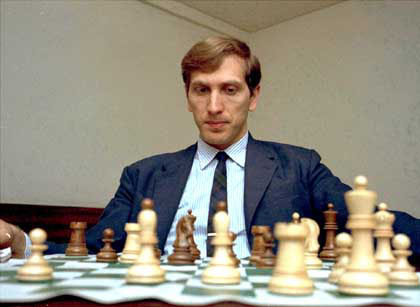
Instruction in chess in now mandatory for third and fourth graders in Armenia the same way that obesity and texting are in American schools. From Al Jazeera:

Yerevan, Armenia – Little Susie Hunanyan attended her favourite class in school last week, and it wasn’t drawing, crafts or sport. The seven-year-old sat studiously through an hour of chess lessons.

In Armenia, learning to play the grand game of strategy in school is mandatory for children – the only country in the world that makes chess compulsory – and the initiative has paid dividends. Armenia, a Caucasus country with a population of just three million, is a chess powerhouse. …

The chess initiative is not only meant to scout young talent but also build a better society. Armen Ashotyan, Armenia’s education minister, told Al Jazeera the project is aimed at fostering creative thinking.

‘Chess develops various skills – leadership capacities, decision-making, strategic planning, logical thinking and responsibility,’ Ashotyan said. ‘We are building these traits in our youngsters. The future of the world depends on such creative leaders who have the capacity to make the right decisions, as well as the character to take responsibility for wrong decisions.’

Tags:

I Need Investment Help! GOLD & DIAMONDS – $2000000 (Make $5 Million WITH ME!)

INVEST $2 MILLION WITH ME. We can do this in steps if you can commit the money available.

Minimize risk and make you a crapload of money.

I AM THE REAL DEAL and not wanna waste your time or mine.

Im in Los Angeles… This is worth your moment in time!

The opening of Gautam Naik’s new Wall Street Journal article about replacement human body parts created in vitro:

MADRID—Reaching into a stainless steel tray, Francisco Fernandez-Aviles lifted up a gray, rubbery mass the size of a fat fist.

It was a human cadaver heart that had been bathed in industrial detergents until its original cells had been washed away and all that was left was what scientists call the scaffold.

Next, said Dr. Aviles, ‘We need to make the heart come alive.’

Inside a warren of rooms buried in the basement of Gregorio Marañón hospital here, Dr. Aviles and his team are at the sharpest edge of the bioengineering revolution that has turned the science-fiction dream of building replacement parts for the human body into a reality.

Since a laboratory in North Carolina made a bladder in 1996, scientists have built increasingly more complex organs. There have been five windpipe replacements so far. A London researcher, Alex Seifalian, has transplanted lab-grown tear ducts and an artery into patients. He has made an artificial nose he expects to transplant later this year in a man who lost his nose to skin cancer.”

Tags: ,

I often wonder this: What better prepares us for life, a loving and encouraging childhood or one that is more challenging? Do an inordinate number of slings and arrows in youth give us survival strategies we would otherwise lack? Does a warm and protective childhood shield us permanently no matter what we face later in life? It varies, I’m sure.

Joan Baez grew up in a Quaker family with a physicist father, being introduced to college campuses and interesting cities all around the world, being nurtured and developed. But did that prepare her for the Bob Dylans of the world, who lacked her kindness? Did that make her feel like she could put the world on her shoulders, a weight that no one can bear?

In this 1979 video, she discusses human rights in Vietnam with William F. Buckley.

Tags: ,

From the October 24, 1909 New York Times:

Denver–Limburger cheese is the principal ingredient of a cancer cure which Philip Schuch Jr., a local chemist, says he has discovered.

Following the death of his mother 11 years ago from cancer, Schuch began an investigation of the cause and growth of cancers, during which, he asserts, he discovered that the basic germs of cancer are similar to those of leprosy and consumption. He spent several months in the leper colony in Venezuela studying the disease.

Schuch’s cure consists of a thorough cleansing of the affected parts with liquor of quicklime and sweet milk, in equal parts, and then the application of poultices of pulped fresh Swiss or Limburger cheese, moistened with glycerine. Although no test of this has been made, Schuch says that theoretically the formula should cure mild cases of leprosy.”

Tags:

In a customarily cogent and paranoid post, the BBC’s Adam Curtis blogs about what he calls the “fake objectivity” that obscures where the real power in society rests. An excerpt about H.L. Hunt, a wing-nut Texas oilman whose view of journalism presaged Fox News by many decades:

“The first is an odd story – with a very strange character at its heart. It is about how in the 1950s the richest man in the world, an oil billionaire in Texas, invented a new form of television journalism. It pretended to be objective and balanced but in fact it was hard core right-wing propaganda. It was way ahead of its time because, in its fake neutrality, it prefigured the rise of the ultraconservative right-wing media of the 1990s – like Fox News, with its copyrighted slogan, ‘Fair and Balanced.’

The billionaire was called H. L. Hunt – Haroldson Lafayette Hunt. He made his fortune in the early 1930s by getting hold of one of the biggest oil fields in America – in the pine forests of East Texas. He was a ruthless, driven man and from early on he became absolutely convinced that he had superhuman qualities that made him different from other humans.

From the 1920s onwards Hunt was a bigamist. He married two women and raised two families that were oblivious of each other. He told his second wife, Frania, that he was called Major Franklyn Hunt. There was a rocky moment when his picture was on the front page of all the Texas papers because of his spectacular oil deal. Frania asked Hunt if that was him – he told her no, that it was his uncle who had been so clever.

Hunt was part of a group of extreme right-wing oil men in Texas who had enormous influence because of their wealth. There is a brilliant book written about this group – The Big Rich by Bryan Burrough. Burrough describes how they had first risen up in the 1930s because they loathed President Roosevelt – ‘a nigger-loving communist,’ as one oil man called him. They were convinced that Roosevelt’s New Deal was really run by Jews and communists – or ‘social vermin’ as they politely put it.

A Texas congressman called Sam Rayburn summed up this group of right-wing oil men. ‘All they do is hate’ – he said.

After the Second World War H L Hunt did two things. He added another, third, family to his bigamist’s collection. And he also turned to the new medium of television to promote his ultraconservative views.”

Tags: ,

Black Panther Eldridge Cleaver was sadly not wearing his Penis Pants when he sat down in 1969 with William F. Buckley to discuss the Man and the Pigs and other handy generalizations. At the 3:28 mark.

Tags: ,


10 search-engine phrases sending traffic to Afflictor this week:

  1. videocracy 2009 movie about silvio berlusconi
  2. lenny bruce society is sick
  3. photos of ham the astrochimp in 1961
  4. would justice scalia have supported slavery?
  5. bobby riggs on 60 minutes
  6. brooklyn family that eats horses
  7. was leroy neiman a good artist?
  8. donald trump is a horrible man
  9. tina fey uncrossing her legs
  10. which airline sold reservations for moon trips in 1968?
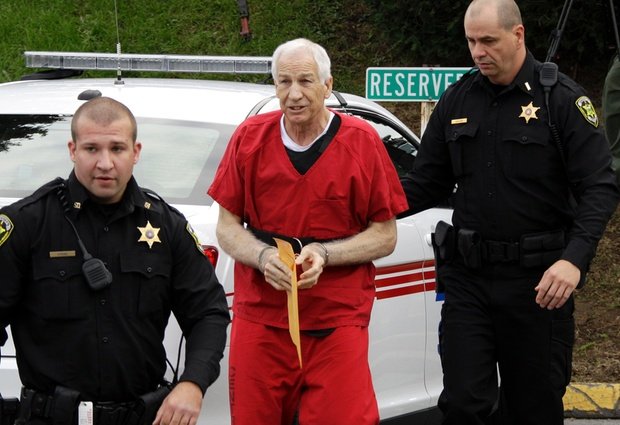
Afflictor: Thinking that even though it makes no sense, Jerry Sandusky may be only the second most hated man to appear on the Today show this week.

Afflictor: Thinking that even though it makes absolutely no sense, Jerry Sandusky may not be the most hated man to appear on the Today show this week.

  • Jonathan Chait discusses politics (of course) in an Ask Me Anything.

Stewart Brand, the Whole Earth Catalog editor who knew what the Digital Age would bring decades before it arrived, is today heavily invested in the de-extinction movement. He just did an excellent Ask Me Anything on Reddit. A few exchanges follow.

________________________

Question:

What species do you think would be the most valuable to bring back and why?

Stewart Brand:

“Most valuable” is an essential question, evolving as we speak. For some it would mean “most loved” or “most missed.” The ivory-billed woodpecker ranks high there. I’m interested in “most ecologically enriching.” That often means “keystone species” or “ecosystem engineer.” High ranked there is the woolly mammoth, maker of the “mammoth steppe” in the far north. Also the passenger pigeon, who enriched the entire eastern deciduous forest.

________________________

Question:

What proportion of these species will face a major habitat problem when they’re brought back? I imagine that at least a few will be back under display-only circumstances.

Stewart Brand:

Thanks for this question, because it comes up a lot, usually in Tragic mode—“The poor passenger pigeons will suffer because their old habitat is gone!” In most cases habitat for revived species will as good as ever or much improved from when they went extinct. The eastern woodlands have grown back ferociously since the late 1800s, when they were most deforested and the passenger pigeon was hunted to death. The north Atlantic has plenty of fish for the great auk, when it returns. Woolly mammoths will relish the boreal forests of the north, and commence turning them back into more biodiverse grasslands.

________________________

Question:

What will you do with the animals once you bring them back to life? Put them in the wild? Zoo?

Stewart Brand:

The sequence is: lab, zoo, wild. You need the zoo for captive-breeding to generate a large enough population, with enough genetic variability, to be able to prosper in the wild. The tricky bit is that zoos are cushy for animals compared to the wild. Managing a toughening-up boot camp for lazy passenger pigeons will be interesting. “Listen up, bird. This is a falcon. He is not your friend.”

________________________

Question:

What are the possible negative effects from your research? Has anyone/any group expressed concern regarding possible negative outcomes?

(Not looking for negatives, just wondering. I’m personally stoked about the research you all have been doing!)

Stewart Brand:

I think one valid negative is the question of whether species-revival technology can be used for species-creation. Suppose someone wants to create a duck-sized horse, for example. Or a one-eyed, one-horned flying purple people eater. Norms will emerge, I suppose. 

I should add that horse-sized ducks are out of the question—mechanical problems. A horse that quacks, maybe.

Tags:

"Followers of Dowie, the faith cure leader, adopted the tactics of Mrs. Carrie Nation yesterday and wrecked a number of drug stores."

“Followers of Dowie, the faith cure leader, adopted the tactics of Mrs. Carrie Nation yesterday and wrecked a number of drug stores.”

Two fanatics who gained fame (and infamy) in the late 1800s, the ax-wielding Prohibitionist Carrie Nation and the batshit crazy Illinois faith healer John Alexander Dowie, were bitter rivals and had a heated confrontation during the latter’s combustible revival meetings at Madison Square Garden in 1903. But that didn’t stop a few of Dowie’s tens of thousands of loyalists from copying the any-means-necessary methods of Nation, who was known for walking into saloons and smashing their contents into shards with her trusty blade. But what the Dowieites hated far more than liquor was medicine and their efforts against science can be seen in an article in the February 7, 1901 Brooklyn Daily Eagle. An excerpt:

Chicago–Crying out that drugs were the agents of the devil, a half-dozen women, followers of Dowie, the faith cure leader, adopted the tactics of Mrs. Carrie Nation yesterday and wrecked a number of drug stores on the West Side. In some instances there were hand to hand fights with druggists.

Armed as they were with pitchforks, umbrellas and canes, the women came out the victors in nearly every encounter and succeeded in destroying property wherever they went. 

The women went in a well organized band, were of middle age and well dressed. Most of them wore automobile coats, under which they concealed their implements of destruction while on the street. After leaving a drug store they invariably sang ‘Praise Be the Lord,’ or ‘Zion Forever.’ Policemen saw them, but attached no significance to their actions and no arrests were made.

The first place visited was Charles G. Foucek’s drug store, at Eighteenth Street and Centre Avenue. Calling the proprietor to the front of the store the crusaders upbraided him for dealing in traffics of the devil. Then one of the women, who seemed to be a leader, asked: ‘Don’t you know that all the ills of human kind can be cured by prayer?’

‘I an not aware of the fact, if such is the case,’ said the druggist.

‘Hurrah for Dowie,’ shouted the woman. At that her companions drew canes and umbrellas from beneath their long cloaks and began to strike at the druggist’s head. He dodged the blows and took refuge behind the prescription case. Then the women turned their attention to the shelves and show cases and began to strike right and left. The besiegers were finally driven off with buckets of water.

Other drug stores in the same neighborhood, belonging to B. Lillienthal, Leo L. Maranzek, Herman Limerman and O. Shapiro, were also wrecked by the crusaders, the same tactics being used. The women finally separated, after being driven from one of the stores at the point of a revolver.”

Tags: ,

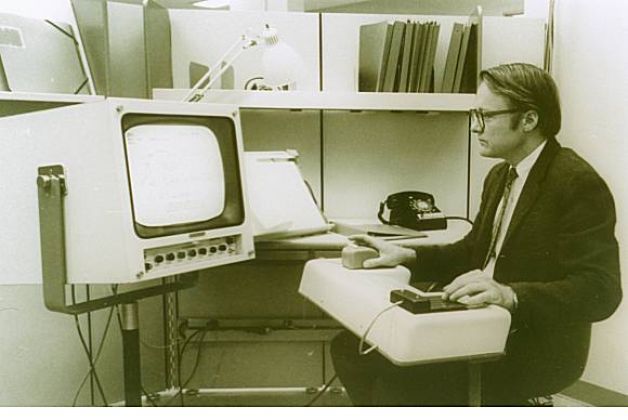
The military contractor Lockheed Martin is speeding ahead into the world of quantum computing, which packs the potential to rewrite the rules of what such machines can do. From Quentin Hardy in the New York Times:

“Ray Johnson, Lockheed’s chief technical officer, said his company would use the quantum computer to create and test complex radar, space and aircraft systems. It could be possible, for example, to tell instantly how the millions of lines of software running a network of satellites would react to a solar burst or a pulse from a nuclear explosion — something that can now take weeks, if ever, to determine.

‘This is a revolution not unlike the early days of computing,’ he said. ‘It is a transformation in the way computers are thought about.’ Many others could find applications for D-Wave’s computers. Cancer researchers see a potential to move rapidly through vast amounts of genetic data. The technology could also be used to determine the behavior of proteins in the human genome, a bigger and tougher problem than sequencing the genome. Researchers at Google have worked with D-Wave on using quantum computers to recognize cars and landmarks, a critical step in managing self-driving vehicles.

Quantum computing is so much faster than traditional computing because of the unusual properties of particles at the smallest level. Instead of the precision of ones and zeros that have been used to represent data since the earliest days of computers, quantum computing relies on the fact that subatomic particles inhabit a range of states. Different relationships among the particles may coexist, as well. Those probable states can be narrowed to determine an optimal outcome among a near-infinitude of possibilities, which allows certain types of problems to be solved rapidly.”

Tags: ,

Figure skater Peggy Fleming was rewarded for her gold medal at the 1968 Olympics by getting to visit Joe Namath’s short-lived talk show the following year, enduring the host’s fu manchu and bell-bottoms and Paul Anka’s attempts at singing. Namath was actually a capable interviewer and conducted more natural and engaging conversations than the large majority of today’s late-night hosts. Dick Schapp plays the affable sidekick.

Tags: , , ,

"

“I can think of really good hiding places.”

Why is it so hard for murderers to get rid of bodies? (I can think of really good hiding places)

So why don’t murderers think it through and hide bodies better?

Makes no sense to me. 

Even mobsters don’t do it right. They get caught decades later from these old murders they did at the start of their careers.

Bret Easton Ellis, popular and reviled for having penned Less Than Zero, a dreadful novel not for its scenes of unimpeded immorality but for its sheer incompetence, visited William F. Buckley in 1985, while he was still a junior at Bennington. Here’s the first five minutes of the show, which features Buckley’s customary long introduction of his guest and a couple of questions of fellow young writer Fernanda Eberstadt, though sadly no Ellis commentary.

Tags: , ,

The opening of Bill Gates’ self-published multimedia, slide-show piece,The Future of Food,” in which the technologist and philanthropist is encouraged by in vitro alternatives to protein-rich meals:

Meat consumption worldwide has doubled in the last 20 years, and it is expected to double again by 2050. This is happening in large part because economies are growing and people can afford more meat. That’s all good news. But raising meat takes a great deal of land and water and has a substantial environmental impact. Put simply, there’s no way to produce enough meat for 9 billion people. Yet we can’t ask everyone to become vegetarians. We need more options for producing meat without depleting our resources.

Over the past few years I’ve come across a few companies that are doing pioneering work on innovations that give a glimpse into possible solutions. To be sure, it’s still very early, but the work these companies are doing makes me optimistic. I wanted to share with you a look at their work on creating alternatives to meat and eggs that are just as healthful, are produced more sustainably, and taste great.”

Tags:

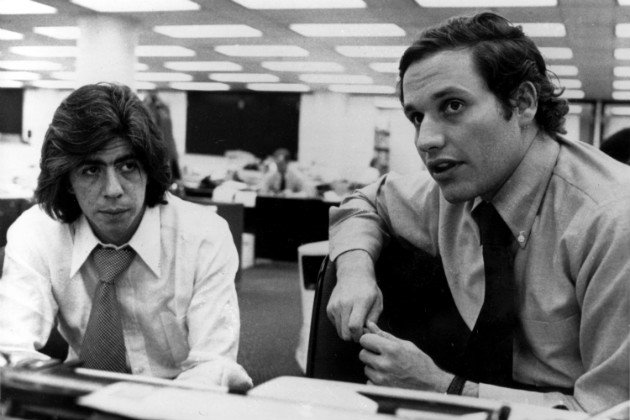
In a rare moment when he wasn’t watching porno, William F. Buckley spoke with Watergate heroes Bob Woodward (a so-so writer with his own credibility gap) and Carl Bernstein (a brilliant reporter and suspect human being). From 1974.

Tags: , ,

In a 1950 Popular Mechanics article, Waldemar Kaempffert predicted what American life would be like in the year 2000. From a passage about the kitchen and living room of the future:

“This expansion of the frozen-food industry and the changing gastronomic habits of the nation have made it necessary to install in every home the electronic industrial stove which came out of World War II. Jane Dobson has one of these electronic stoves. In eight seconds a half-grilled frozen steak is thawed; in two minutes more it is ready to serve. It never takes Jane Dobson more than half an hour to prepare what Tottenville considers an elaborate meal of several courses.

Some of the food that Jane Dobson buys is what we miscall ‘synthetic.’ In the middle of the 20th century statisticians were predicting that the world would starve to death because the population was increasing more rapidly than the food supply. By 2000, a vast amount of research has been conducted to exploit principles that were embryonic in the first quarter of the 20th century. Thus sawdust and wood pulp are converted into sugary foods. Discarded paper table ‘linen’ and rayon underwear are bought by chemical factories to be converted into candy.

Of course the Dobsons have a television set. But it is connected with the telephones as well as with the radio receiver, so that when Joe Dobson and a friend in a distant city talk over the telephone they also see each other. Businessmen have television conferences. Each man is surrounded by half a dozen television screens on which he sees those taking part in the discussion. Documents are held up for examination; samples of goods are displayed. In fact, Jane Dobson does much of her shopping by television. Department stores obligingly hold up for her inspection bolts of fabric or show her new styles of clothing.”

Tags:

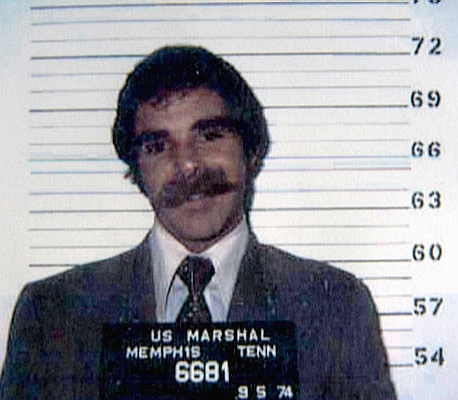
The Olivier of oral and progenitor of the pornstache, Harry Reems, the adult actor born Herbert Streicher to two very proud and well-hung parents, just passed away. In all seriousness, his work on the landmark 1972 skin-flick Deep Throat led to years of prosecution on obscenity charges. Reems ultimately was victorious, and converted to Christianity in later life. Margalit Fox, who writes lively copy about dead people, penned his obituary in the New York Times. An excerpt:

Mr. Reems, who began his career in the 1960s as a struggling stage actor, had already made dozens of pornographic films when he starred opposite Ms. Lovelace in Deep Throat.

But where his previous movies were mostly the obscure, short, grainy, plotless stag films known as loops, Deep Throat, which had set design, occasional costumes, dialogue punctuated by borscht-belt humor and an actual plot of sorts, was Cinema.

Mr. Reems played Dr. Young, a physician whose diagnostic brilliance — he locates the rare anatomical quirk that makes Ms. Lovelace’s character vastly prefer oral sex to intercourse — is matched by his capacity for tireless ministration.

“I was always the doctor,” he told New York magazine in 2005, “because I was the one that had an acting background. I would say: ‘You’re having trouble with oral sex? Well, here’s how to do it.’ Cut to a 20-minute oral-sex scene.'”•


William F. Buckley “welcomes” Reems and a wild-haired, pre-Epstein Alan Dershowitz:

Tags: , , ,

As we arrive at the 10th anniversary of the disastrous American invasion of Iraq, what I think about isn’t someone incompetent like President Bush or evil like Dick Cheney, though neither of them will ever be able to wash all that blood from their hands. What I consider most is the mania that surrounded, actually supported, that awful military operation which killed five thousand of our troops and tens of thousands of innocent Iraqis. Politicians from both parties, respected journalists and well-known public figures threw in with the senselessness, some for personal gain and others from poor judgement, ignoring what was right in front of them. And those who spoke out against the lunacy were traitors and foolish and weak and disloyal. 

It was mania and it was amnesia. So many times, when defending this illicit war, Bush supporters made the argument that the President knew what he was doing because no terrorist attack had ever occurred on his watch, completely eliding the tragedy of 9/11, which was supposedly the rationale for the war.

I recall the heartbroken parents of some of the first soldiers killed, who grew understandably enraged when it was suggested that their government had lied to them, that their children had died for no reason. They would say that they couldn’t handle it if we brought the rest of the troops home and acknowledged the war had been needless. They couldn’t withstand the truth. So we continued the lies and more parents suffered the same loss.

And it will happen again. Maybe the Iraq War won’t happen all over again–hopefully not–but some incredibly wrongheaded decision will be made and the supposed best and brightest will encourage the foot soldiers to fall in line. Rational thought will be usurped, illogic will rule. Unless we work very hard to change, we will forget the lessons, and such things will remain cyclical, tragic and inevitable. 

One of the first Marines to enter Iraq just did an Ask Me Anything on Reddit. A few exchanges follow.

____________________

Question:

After all you know now… Has your opinion of the rights and wrongs of the situation changed? 

Answer:

Definitely. I was a kid then though. When I see pics of myself then I always think what a stupid and naive asshole I used to be. I believed in what we were doing. Now I just feel used.

Question:

Thank you for such an honest answer. 

Answer:

It’s the reality of the situation. I was young and full of bravado. Now I have a daughter and I wonder how I would feel if she was going to war in the same situation.

____________________

Question:

And for what it’s worth from some average Joe, I’m sorry that we citizens didn’t stand up to the politicians who sent many of your fellow marines to their deaths, amid other injury (both physical and mental).

Our military personnel never fail at their job, no matter what we ask of them. But we the people failed you guys when we blindly approved a war that shouldn’t have happened. I was (for a short time) among those who believed in the Iraq war. For that, I apologized. We should’ve called our reps and Sens and the White House and told them that we didn’t want that war. And I didn’t do that.

I feel so bad because it wasn’t too much to ask, especially in comparison to what we all asked of guys like you.

Again, I’m sorry. But thank you and all of your fellow marines. 

Answer:

Man, we all got caught up in it. I feel like as Americans, this is a valuable learning lesson. We all let our emotions get us wrapped up and let Fox News and CNN dictate our rage. I was the same way. As a young 17 year old kid when the towers went down, living just 100 miles outside NYC, I was furious. I signed up and went off to war. As a 29 year old, looking back I realize that we made a very big mistake and a lot of people died because of it. Here’s the good news. You can make up for it. A lot of veterans are out there and they need help. They need people to volunteer for organizations that help veterans get homes, get jobs, and get help. You can donate to them! Or, if you are not financially capable of donations, which I understand, you can just give a veteran a hug or a warm smile and a thank you for all you have done. I’ve had some rough days but they were all made better just by someone’s understanding.

____________________

Question:

What contact did you have with Iraqis? How do you feel about them? 

Answer:

I interacted with Iraqi’s every day of every deployment. There was always an IP (iraqi Police) training or humanitarian mission. At the time I saw them as less human than us. Like because they lived in the dirt they were more like dogs. I saw them as a dumb culture. Now I just feel bad. You are a product of your environment and I just got lucky in being born in a rich powerful country

____________________

Question:

What about Iraqis lives that were destroyed, including myself? I’m honestly very sorry for everything that has happened to the Iraqi people. You have to understand I was not out to kill brown people or destroy a nation. I signed up for a job and did a bad thing based off bad intel.

Answer:

I’m honestly very sorry for everything that has happened to the Iraqi people. You have to understand I was not out to kill brown people or destroy a nation. I signed up for a job and did a bad thing based off bad intel.

____________________

Question:

Why the fuck hasn’t a major network interviewed vets like you?

Answer:

Eh, I guess I’m not that interesting.

« Older entries § Newer entries »