In what is ostensibly a New York Times op-ed piece about Mitt Romney bringing Mormonism to the U.S. political mainstream, but is actually a condemnation of the widespread worship of greed, Harold Bloom crystallizes some truly perplexing things about American voting patterns. An excerpt:

“A dark truth of American politics in what is still the era of Reagan and the Bushes is that so many do not vote their own economic interests. Rather than living in reality they yield to what oddly are termed ‘cultural’ considerations: moral and spiritual, or so their leaders urge them to believe. Under the banners of flag, cross, fetus, exclusive marriage between men and women, they march onward to their own deepening impoverishment. Much of the Tea Party fervor merely repeats this gladsome frolic.”

Tags: ,

The opening of “2050 Or Bust,” Frederick Deknatel’s L.A. Review of Books piece about the bold future of urban planning that Mubarak had envisioned for Egypt, which he never, ever would have delivered:

“This past August in Heliopolis, the Cairo suburb built over desert by a Belgian industrialist in 1905, I sat in an architect’s office, a place called Cube Architectural Consultants, and heard a glowing, impromptu presentation on ‘Cairo 2050.’ Cairo 2050 is a series of outlandish master plans and megaprojects for Egypt’s capital that the regime of Hosni Mubarak began promoting in 2008, with the help of the United Nations and the Japanese government. Its future, an earnest architect informed me gently, was ‘uncertain in the new Egypt.’

Imagine Dubai in the Nile Valley, if instead of building it on empty sand, futurist skyscrapers and business parks rose over what are now the packed, informal neighborhoods that today house the majority of Cairo’s estimated 17 million people. This authoritarian, outsized development ‘vision’ would involve relocating millions to the furthest edges of the desert — areas banally termed ‘new housing extensions’— to make way for ’10 star’ hotels, huge parks, ‘residential touristic compounds,’ and landing-strip-sized boulevards lined with a monotony of towers. It’s unlikely to happen in an Egypt after Mubarak — if it was ever possible at all, given budgets and popular resistance. Still, Cairo 2050 offers a glimpse at the Egyptian government’s approach to urban planning and policy. As David Sims, an economist and consultant who has worked in Cairo since 1974, writes in Understanding Cairo: The Logic of a City Out of Control, the Cairo 2050 project represents ‘a continued penchant for the manufacture of unrealistic dreams’ on the part of ‘government planners and their consultants.'”

Tags: , ,

Tom Wolfe interviewed for some British show at the time The Bonfire of the Vanities was published, the last time the great New Journalist had his finger on the pulse of America and a time when people still purchased their books at brick-and-mortar stores where new volumes were arranged proudly like pyramids.

Tags:

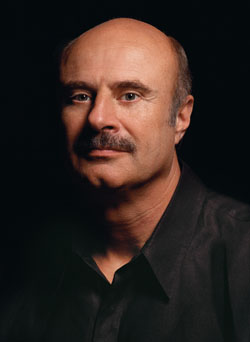
"They have Dr. Phil and anybody else telling them it is OK to do almost anything." (Image by Jerry Avenaim.)

I feel like crap all the time

Depressed is basically whom I am. I have never been the cheery type to begin with. No, I am not suicidal. If I were and mentioned it here I would have someone calling authorities or I would mess it up.

I talk to people daily and have no problem expressing myself. My friends and family are typically oblivious to the most obvious signs that things are bothering me. Perhaps it is because of how I look or that I give off a certain vibe to them. For the most part people think I am invincible.

Since early childhood I have had afflictions that bothered me. Again, to look at me you would not think there was anything wrong as I typically look fine and must unintentionally hide things. I have space in the knees, have had bad scoliosis, multiple herniations over the lower back, hiatal hernia and heartburn plus occasional acid reflux, sleep apnea, arthritis in the neck, fibromas in the feet, repetitive plantar fasciitis, fat pad atrophy, myofascial pain syndrome, chronic fatigue and more. None of them would be horrific if it were just one. But I get a full fledged symphony and it makes day to day shit real hard. Has made it to when I was younger I could not concentrate, therefore did not accomplish things that I should have and in return I am not fully independent. However, I have accomplished things that with any of these ailments that I should not have been physically been able to. Added is an unnaturally high heart rate when doing exercise at the lowest of time and I am basically never comfortable.

Over the years I have been very athletic, average, let myself go and have come back. All the time I have had a number of these things creep up on me. As a teenager I had a lot of them as I was very active. In an attempt to be more useful I have slowly built myself up through pain and inability and still these ailments bother me. A podiatrist suggested I must be in exquisite pain. Physical therapists see me cramping but marvel at my abilities to do certain things and know that I do stuff at home to minimalize my pain.

I have been single for a while now also, which does not help. I like being with someone but I had a couple of long relationships and then a couple of short ones and since have not even asked anyone out. When I go out I typically attract younger women and the older ones think I must be a player, which I have been told that in retrospect a lot. 

I am good at some things and bad at seemingly easy things. I pissed an ex off by in advance saying that I do not sleep well with others. Meaning I am not sleeping over. I have issues being functional while getting some sleep. If I were to spoon I do not sleep. I sleep with a fan on. I do not like being slept on top of and have had women that have the attitude of you just haven’t been with the right one yet. Yea please. :). So I pissed her off by trying to avoid sleeping with her knowing that she wanted me to sleep over. I tried and tried. But she had needs and got pissed that although I needed to sleep and be up in the morning, she does not work, and we are not talking. Mind you this was not very recent.

I am not sure why I am even writing. I like to talk and do so often enough. I make others feel better and what I would need to feel better is just that, feeling better. I have baffled many a doctor as anything they would try I have already done so and failed. They shrug their shoulders.

My friends have basically proven to be not real friends and the women I would date I have not been finding real ones. Everyone has a list of simple things and then they are full of shit.

When I feel like this I can typically do a lot to make myself feel better, have fun and such but I have been in a rut for months and here is another holiday. Another year being single. Another year older. Yet my friends suggest things could be worse. I feel like crap, am in pain, barely go out except for work and when out I attract the young chicks and am alone. Sure if you were a guy that just wanted to bang barely legal chicks for decades and have nobody to answer to I would have it made. But mind you that is not me and it would not make me feel better.

Basically a true friend might help but even then it gets messed up. A genuine gf perhaps but society has fucked so many things up that nobody is even close to whom they say that they are anymore. They have Dr. Phil and anybody else telling them it is OK to do almost anything and cut and run and everything is OK. But we all have those initial first talks that seem good.

When you are feeling OK or have things going well some things do not bother you as much. When everything that you try to do is seemingly taking too long, a simple customer service call takes forever, changing a tire, having issues up the azz, aches, pains, no fun and being single just has you passing GO and not only not collecting $200 but being given a ticket for going too damn slow.

Fuck! 
Yves Rossy is Jetman, strapped to a jet-powered wing. His TED talk.

Tags:

For numerous reasons, it seems increasingly unlikely that the U.S. will be at the center of future space exploration. Perhaps China will colonize Mars? Godspeed, Zhai Zhigang. From Dennis Overbye’s New York Times article about the new Museum of Natural History exhibit which imagines the next wave of space missions:

“The idea of the exhibition is to look forward 50 or 100 years, not back, said Michael Shara, the curator of the show. ‘We’re at a crossroads,’ he said. ‘We have to decide what to do when we grow up. Where is the vision?’

In this case, the vision is solely Dr. Shara’s, he admitted, arrived at by picking the brains of space experts. Lest you get too excited, it does not yet represent the official agenda of NASA or any other agency.

The world sorely needs some kind of cosmic blueprint going forward, if indeed we are to go forward and outward, and though one can quibble with many details, this one is as good as any. One can fantasize that this show could have the same long-range impact on shaping public expectations in space as magazine articles and television shows did in the 1950s. In that case, I hope it travels to the other countries that are now flexing their space muscles, like China.

Those who think that human spaceflight is ridiculously expensive, wasteful, dangerous and unscientific — a group that includes a lot of scientists I know — might want to stop reading right here. The exhibition plays shamelessly to those of us who were captivated long ago by science fiction dreams and the notion that humanity’s destiny is somehow tied to the stars. For the most part these plans don’t come with price tags attached nor, for that matter, any indication of what currency the price should be denominated in.

‘Somebody will do these things,’ Dr. Shara said. ‘Maybe not the U.S.””

Tags: ,

Asimo, already good at serving beer, can now alter his walking patterns so as not to bump into others. Still walks like he has to take a leak, though. (Thanks Singularity Hub.)

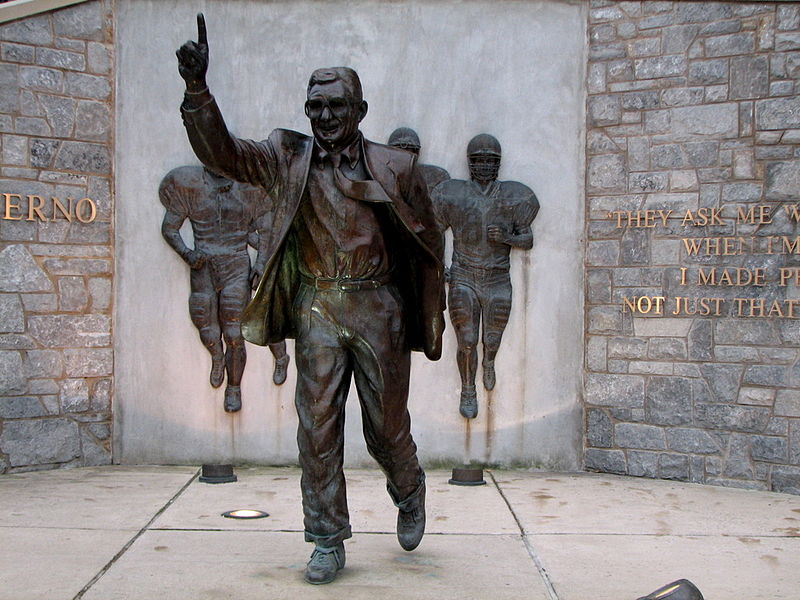
A lot of terrible things are done in the service of ideals, the abstract and the big picture giving people license to rationalize what should not happen. Sometimes people believe that a place is special and being a part of that place makes them special, so they reflexively lash out at those who see dark corners and not just green lawns. It’s my country right or wrong. For too long, Penn State has been its own country. From Bruce Arthur’s excellent National Post essay about life in the place named Happy Valley:

“People who grew up here, and people who live here, both point to the local ties of the people already implicated, how they are steeped in this place. As State College native Michael Weinreb wrote for ESPN’s Grantland.com, ‘We grew older, and we came to understand one of the central truths of human nature, which is that when you brush up against a truly powerful force, it is never quite as benevolent as you imagined it to be.’

‘You’ve got to remember that a lot of guys who were involved in the cover-up grew up here, or close enough,’ says the State College native who knew McQueary, the Curleys, and the Paternos.

‘There are a lot of people here who never left,’ says another longtime resident who works for the university. ‘Look at this. Joe’s been here 60 years. Mike McQueary, local guy, played here, never left. Tim Curley grew up here, high school here, never left. Schultz came here to go to school, never left. Even Spanier had been here for 16 years. That’s a long time for a university president.

‘And again, that in itself isn’t evil. But it makes it a lot easier for secrets to be kept when you’ve been here forever, and you’re part of this thing, and there is this mafia-like sense of the family. It’s identity. And it wasn’t just Joe.’

It wasn’t just Joe. It wasn’t just Spanier. It wasn’t just Curley. It wasn’t just Schultz. And tragically, it was not just Sandusky, either.

Happy Valley is a place wrestling for its soul, wrestling to keep itself alive in its own mind. The high priests let the children suffer for the grander idea, for the place that was good. A professor who teaches journalism ethics here, Russell Frank, wrote a piece that began, ‘It’s time to stop calling this place Happy Valley. The name doesn’t fit. It never did.'”

Tags: , ,

When I was recently looking for clips of Smokin’ Joe Frazier to pay my respects to the late, great boxer, I came across a 1973 segment of the show Superstars. That program pitted athletes from different sports against one another in a variety of competitions to judge who was the finest overall athlete. It was back in the day before sports stars were routinely millionaires and didn’t mind picking an extra paycheck for a lesser event. Even though it was just weekend network time filler, Superstars was lended gravitas in its inaugural season by Jim McKay, who was just months removed from anchoring the coverage of the 1972 Munich Olympics massacre.

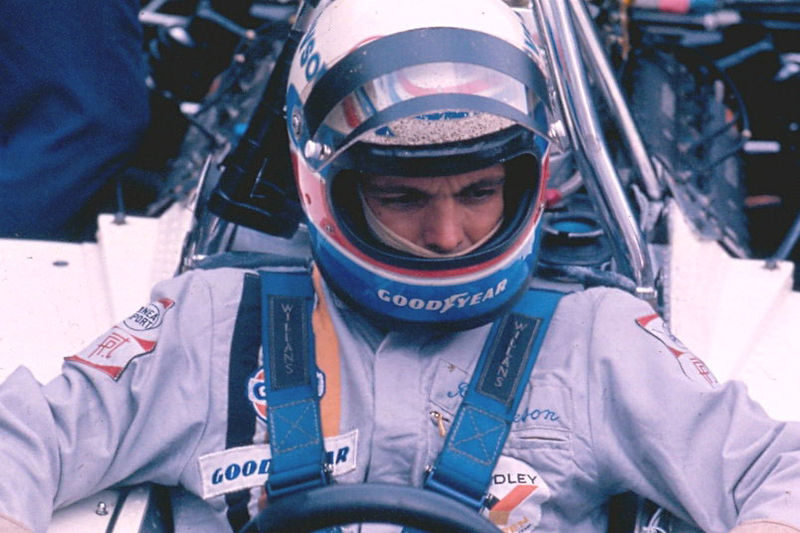
One of Frazier’s fellow competitors who did not need to make some extra money was race car driver Peter Revson. Revson was nephew of Charles Revson, founder of Revlon, and was heir to a billion dollar fortune. Not surprisingly, he was a dapper guy and something of a New York playboy. I had never previously heard of him and wondered why. It turns out, shortly after this program was broadcast, Revson was killed in an accident during a practice run at the 1974 South African Grand Prix. His brother, Douglas, also a racer, had been killed seven years earlier in a crash.

•••••••••••

“Many times mentioned as the most eligible bachleor in New York”:

Tags: ,

So, this is an interesting find, to say the least. I was looking for something completely different and stumbled across “The Dead Body and the Living Brain,” a 1967 Look magazine article by Oriana Fallaci about pioneering head-transplant experimentation. In the piece, Fallaci reports on the sci-fi-ish experiments that Dr. Robert White was doing with rhesus monkeys at a time when consciousness about animal rights was on the rise. White’s unusual work continued until his death in 2010. The opening:

Libby had eaten her last meal the night before: orange, banana, monkey chow. While eating she had observed us with curiosity. Her hands resembled the hands of a newly born child, her face seemed almost human. Perhaps because of her eyes. They were so sad, so defenseless. We had called her Libby because Dr. Maurice Albin, the anesthetist, had told us she had no name, we could give her the name we liked best, and because she accepted it immediately. You said “Libby!” and she jumped, then she leaned her head on her shoulder. Dr. Albin had also told us that Libby had been born in India and was almost three years, an age comparable to that of a seven-year-old girl. The rhesuses live 30 years and she was a rhesus. Prof. Robert White uses the rhesus because they are not expensive; they cost between $80 and $100. Chimpanzees, larger and easier to experiment with, cost up to $2,000 each. After the meal, a veterinarian had come, and with as much ceremony as they use for the condemned, he had checked to be sure Libby was in good health. It would be a difficult operation and her body should function as perfectly as a rocket going to the moon. A hundred times before, the experiment had ended in failure, and though Professor White became the first man in the entire history of medicine to succeed, the undertaking still bordered on science fiction. Libby was about to die in order to demonstrate that her brain could live isolated from her body and that, so isolated, it could still think.•

Tags: , ,

The great Karl Pilkington isn’t sure what science is, but he loves it.

Tags: , ,

"It belonged to Albert Einstein in the late 1930's to early 40's."

Einstein’s Personal Table (Long Island,NY)

I have an interesting table with a story…… I acquired it from my old work center supervisors mother (Ms. Praul) when I was in the Navy in Va Beach all because I was the only one to volunteer to help move her items out of her apartment… she gave it to me to show her appreciation for the outstanding effort I put out and she didnt know how to repay me other then giving me this table with a great story….That is it belonged to Albert Einstein in the late1930’s to early 40’s… This table was an exchange that took place for some carpentry work that was done on Einsteins 112 Mercer street residence near Princeton University. Ms. Praul worked at Princeston while her husband did carpentry and had the opportunity to do work on Alberts house when he was still around… I am exploring the interests of the public and what its worth to you. I have a good idea on its value and I am exploring the market for any potential interest.The table has its historical value that’s for sure and may be appealing to a potential buyer , I will let it go if the price is right.

Predictions about the year 2000 from 1957 Germany.

They’ve put the cash register in your pocket, Amazon has, and it is shiny and compact and beautiful. No, the Kindle Fire is apparently not a great tablet, but that isn’t the point. Jeff Bezos’ willingness to sell each Kindle Fire at a loss let’s you know that his goal is to ensure you are able to make impulse buys no matter where you are, that you will always be at a check-out line, that you will load up on media. You can do these things with your laptop or your phone, but no previous tech item has been as aggressive as the Fire in regard to ancillary sales. The razor will be cheap, but the blades will be expensive. From Rebecca J.Rosen’s new Atlantic piece:

“There is one thing, however, that the Fire seems to excel at: Being a store. As Jon Philips writes at Wired, ‘Indeed, the Fire is a fiendishly effective shopping portal in the guise of a 7-inch slate.’ And that’s no surprise, since it’s been known for quite a while that the Fire is a loss leader, meant as a gateway to other Amazon purchases.

But with Amazon as one of only four companies competing in the Great Battle to Rule Our Digital Future (Facebook, Apple, and Google being the three others), the Kindle Fire is our best and latest clue as to what Amazon’s vision for that future is: The Internet as a store — and that store is Amazon. As Amazon continues to increase its offerings beyond Amazon.com, expect those offerings (tablets, e-readers, apps) to always in some way have the growth of Amazon.com’s sales as a fundamental purpose. “

Read also:

Tags: ,

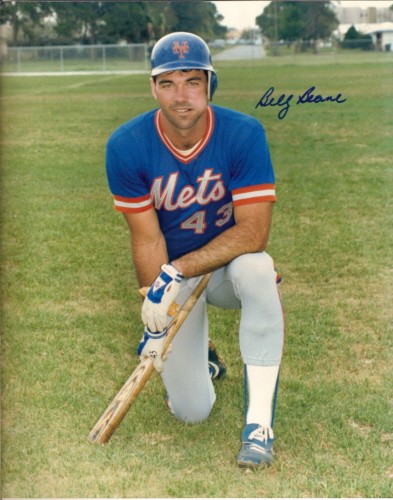
To the avid baseball fan, it would seem Billy Beane has ceased being an elite GM, the architect of Moneyball who could outsmart his peers, mostly because his interests are too broad. Among other things, he’s involved professionally with major-league soccer, computer software and finance. Beane’s restless mind stems in part from being a working-class kid who grudgingly passed on a Stanford scholarship he dearly wanted to accept in order to pocket a signing bonus from the Mets. Simon Kuper of the Financial Times was on hand recently when Beane caught up with author Michael Lewis, the two forever linked by baseball statistics, market inefficiencies and Brad Pitt. An excerpt:

“And so Moneyball became in large part the drama of Billy Beane: the autodidact who gave himself an education. When Beane was 18 years old, Stanford University had offered him a football and baseball scholarship. He and his parents – bright people without much money who had married young and joined the military middle class – were ecstatic. A good college was everything they wanted. But then the New York Mets offered Beane $125,000 to play baseball instead, and he felt he ought to do it. The movie shows the teenager, around the kitchen table with his parents in the simple family home, making the fateful decision. The filmmakers catch the scene well, but, as Beane says, ‘I’m not sure they could capture the complete horror.’

‘Listen,’ he adds, ‘I’m trying not to talk about myself here. I don’t look at life as a bunch of hindsight reviews of your decisions. But that’s exactly what I wanted to do, to attend Stanford University.’

Billy Beane was 18 when Stanford University offered him a football and baseball scholarship, but he went to play or the New York Mets instead

Beane’s life since – his compulsive reading, his discovery of the Moneyball system, his later discovery of soccer – is a long attempt to give himself the university education he never had. Just as Sergey Brin and Larry Page created Google partly because they went to Stanford, Beane created Moneyball partly because he didn’t.”

Tags: , ,

"Miss Gilbert entered the court room carrying a pumpkin pie."

Ella Gilbert was a good girlfriend if not a particularly bright person. An excerpt from a story about her in the November 22, 1886 edition of the Brooklyn Daily Eagle: 

“Early Sunday morning Officer Masters saw two men and a woman lounging on Dean Street and told them to go away. One of the men did so, but the other, Andrew Brogan and the woman Ella Gilbert, of 82 Schenck Street, refused to move and were arrested. On the way to the station house, Ella, who is young and active, managed to escape. Today Brogan was sent to the Penitentiary for sixty days, and soon after he had been put back in the pen, Miss Gilbert entered the court room carrying a pumpkin pie which she told Officer Waldron was for Andy. Policeman Masters saw her and promptly placed her under arrest again. She pleaded not guilty and was committed until Wednesday.”

Tags: , , ,

The Carpenters before they were fully the Carpenters, in 1968. Lousy video quality, but still worth it.

See also:

Tags: ,

From Natasha Singer’s smart and scary New York Times article about advances in face-recognition technology:

“FACIAL recognition technology is a staple of sci-fi thrillers like Minority Report.

But of bars in Chicago?

SceneTap, a new app for smart phones, uses cameras with facial detection software to scout bar scenes. Without identifying specific bar patrons, it posts information like the average age of a crowd and the ratio of men to women, helping bar-hoppers decide where to go. More than 50 bars in Chicago participate.

As SceneTap suggests, techniques like facial detection, which perceives human faces but does not identify specific individuals, and facial recognition, which does identify individuals, are poised to become the next big thing for personalized marketing and smart phones. That is great news for companies that want to tailor services to customers, and not so great news for people who cherish their privacy. The spread of such technology — essentially, the democratization of surveillance — may herald the end of anonymity.”

Tags:

"Once I was able to fully understand the size of the universe..." (Image by T bone.)

Alien Invaders (Manhattan)

I used to think that there was no other life in the universe. I said look at mars, look at the moon- no life. Clearly. This is probably what most people think who agree there is no other life out there. Once I was able to fully understand the size of the universe and the possibilities and the increasing entropy, I am convinced that there must be some other life somewhere in the universe. Then why haven’t they came to earth to invade us? They might not have the idea of “invasion” or even of leaving their planet. They might not think as we do. They don’t live on our planet, they do not live on our time, and may not have the same ideas like in different languages some ideas do not exist and there are no words to express them. We worry about alien invasion and attack and war because these are our ideas that we believe in on this planet. 

A 1979 TV commercial for Star magazine’s coverage of Patty Hearst’s wedding.

Tags:

In his smart Awl article which explains why the utterly gross McRib sandwich likely only makes occasional appearances on the McDonald’s menu, Willy Staley also recalls why the sandwich originally came to be. An excerpt:

“The McRib was, at least in part, born out of the brute force that McDonald’s is capable of exerting on commodities markets. According to this history of the sandwich, Chef Arend created the McRib because McDonald’s simply could not find enough chickens to turn into the McNuggets for which their franchises were clamoring. Chef Arend invented something so popular that his employer could not even find the raw materials to produce it, because it was so popular. ‘There wasn’t a system to supply enough chicken,’ he told Maxim. Well, Chef Arend had recently been to the Carolinas, and was so inspired by the pulled pork barbecue in the Low Country that he decided to create a pork sandwich for McDonald’s to placate the frustrated franchisees.” (Thanks Longform.)

••••••••••

McNugget rage surveillance video, 2010:

Ray Kroc explains why the chain is called “McDonald’s”:

Tags: ,

I’ve never played the video game Tetris even once in my life, but this new doc looks interesting. (Thanks Ars Technica.)

It’s easy to get robots to walk, but difficult to get them to walk like humans. An excerpt from Physorg.com:

“AIST researchers, like other scientific groups dedicated to robotics, have been working hard to create the ‘perfect’ walking robot and to design walking technologies that can make their robots most closely resemble the way humans walk.

This has not been easy. Developing a robot to walk like a human has been a challenge for engineers, but that has only motivated more work toward this end in robotics.

The AIST researchers focused on a few key areas of the robot to improve results. The robot’s toes now support the legs better during each stride, and the legs straighten out more.

Details about how they got ‘Miim’ to walk in a more human fashion than in previous iterations are in the paper, ‘Human-Like Walking with Toe Supporting for Humanoids,’ by Kanako Miura, Mitsuharu Morisawa, Fumio Kanehiro, Shuuji Kajita, Kenji Kaneko, and Kazuhito Yokoi.”

William F. Buckley and the In Cold Blood author on capital punishment, in 1968.

Trailer for Into the Abyss, Werner Herzog’s new film about capital punishment:

Tags: , ,


Some search-engine keyphrases bringing traffic to Afflictor this week:

« Older entries § Newer entries »