In his speech, “Libraries: Where It All Went Wrong,” Nat Torkington (not to be confused with Karl Pilkington) draws a parallel between how book-lending facilities were destabilized by the Internet in much the same way Microsoft was. I think Bill Gates had more of an idea of the Internet’s potential power than Torkington gives him credit for, but it’s still an interesting speech. An excerpt: 

“Bill Gates wrote a bestseller in 1995.  He was on a roll: Microsoft Windows had finally crushed its old foe the Macintosh computer from Apple, Microsoft was minting money hand over fist, and he was hugely respected in the industry he had helped start. He roped in other big brains from Microsoft to write a book to answer the question, ‘what next?’  The Road Ahead talked about the implications of everyone having a computer and how they would use the great Information Superhighway that was going to happen.

The World Wide Web appears in the index to The Road Ahead precisely four times.  Bill Gates didn’t think the Internet would be big.  The Information Superhighway of Gates’s fantasies would have more structure than the Internet, be better controlled than the Internet, in short it would be more the sort of thing that a company like Microsoft would make.

Bill Gates and Microsoft were caught flat-footed by the take-up of the Internet. They had built an incredibly profitable and strong company which treated computers as disconnected islands: Microsoft software ran on the computers, but didn’t help connect them.  Gates and Microsoft soon realized the Internet was here to stay and rushed to fix Windows to deal with it, but they never made up for that initial wrong-footing.

At least part of the reason for this was because they had this fantastic cash cow in Windows, the island software.  They were victims of what Clayton Christenson calls the Innovator’s Dilemma: they couldn’t think past their own successes to build the next big thing, the thing that’d eat their lunch.  They still haven’t got there: Bing, their rival to Google, has eaten $5.5B since 2009 and it isn’t profitable yet.” (Thanks Browser.)

••••••••••

Bill Gates enters the world of Doom, 1995:

Tags: ,

Terry Gilliam, trying to ensure he never works in Hollywood again, explains the difference between Spielberg and Kubrick. (Thanks Open Culture.)

Tags: , ,

Drunks, criminals and terrorists aren’t the only ones who dine at the ubiquitous Southern comfort-food chain, Waffle House, but they certainly make their presence felt.  An excerpt from Robbie Brown’s New York Times article :

“When four elderly men were arrested in northern Georgia this month on charges of planning terrorist attacks in Atlanta and along the East Coast, F.B.I. surveillance tapes revealed where they had met to hatch their plot — a Waffle House. Bloggers and television reporters quickly dubbed them the Waffle House Terrorists.

Last month, when a Florida state representative was ridiculed for proposing that death row inmates be killed by electrocution or firing squad, he said the idea had come from a constituent he met at — you guessed it — a Waffle House.

In Georgia, there have been other less-noted incidents: after nearly 17 years on the run, a fugitive was caught this month at a Waffle House in Augusta, and a cross-dressing bank robber in Marietta has evaded the police but was spotted on surveillance video this month eating at a Waffle House.

In Cobb County, where some of the robberies occurred, Sgt. Dana Pierce said the police were paying extra attention to all 24-hour diners, but especially Waffle Houses. It is easy to see why they can become targets for criminals, he said. ‘They are cash-driven,’ he said. ‘They are near Interstate exits. And they are open 24 hours, when people aren’t necessarily in a sober state of mind.'”

••••••••••

Waffle House employee allows himself to be tazed:

Tags:


A few search-engine keyphrases bringing traffic to Afflictor this week:

Afflictor: Thinking Uncle Jerry was relatively restrained at Thanksgiving dinner this year.

  • Why TV news is ineffectual, or even worse, damaging.
  • Susan Kare created many of the iconic images for the Macintosh.

"The girls that are more proud of thier rap sheet than thier work history."

Tired of good girls

Where are the real bad girls the ones on parole, probation the ones that just got out of rehab? The girls that are more proud of thier rap sheet than thier work history. I want a chick that likes bald head tattooed up guys that been to the big house and now has there crap togather. I am tired of the everyday plain Jane women.

Hope to hear from you soon! 

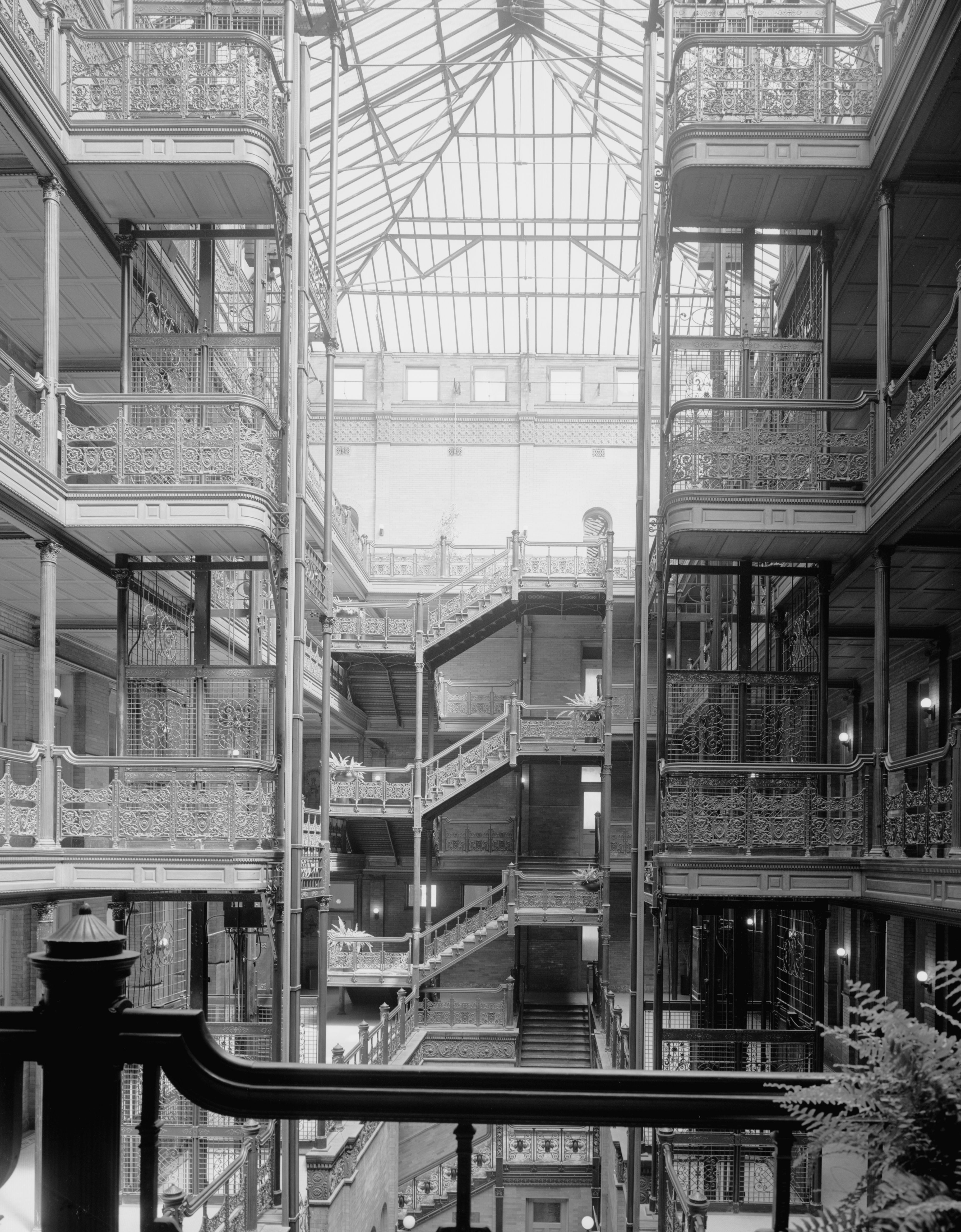
This classic 1960 picture, which was taken by longtime National Parks Service photographer Jack E. Boucher, depicts the interior of L.A.’s Bradbury Building, one of the most filmed and photographed pieces of architecture in the world. The setting for numerous films and music videos, the downtown Los Angeles structure is perhaps best known for its appearance in Blade Runner. Built in 1893 by George Wyman for the visionary mining millionaire Lewis L. Bradbury, the building was completed a year after its namesake’s death. Wyman purportedly consulted a Ouija board before accepting the assignment.

A brief history about the project from the Pacific Coast Architecture Database:

Sumner P. Hunt began a five-story design for the mining magnate, Lewis Leonard Bradbury (1823-1892), in 1891; Bradbury wanted an office building that he could walk to from his house on Bunker Hill in Los Angeles; Hunt had previously designed a warehouse for Bradbury in Mazatlan, Mexico; Hunt had completed plans for the new office building by March 1893 at the latest; Bradbury died in July 1892, and there were legal disputes over his estate; in this contentious context, it is possible that the Bradbury Estate may have wanted to finish the Bradbury Building as inexpensively as possible; in 1892 or 1893, George Herbert Wyman, a draftsman in Hunt’s office, entered the picture, as a project supervisor, taking control from Hunt. According to Cecilia Rasmussen writing in the Los Angeles Times, modern research on the history of the Bradbury Block derived from a story done by the noted architectural critic and historian, Esther McCoy (1904-1989), in Arts and Architecture magazine in 1953. Rasmussen stated: “Esther McCoy interviewed Wyman’s two daughters, Louise Hammell and Carroll Wyman. McCoy’s story…reports that Wyman’s daughters told her that Bradbury found Hunt’s design uninspiring and promptly offered the job of redesigning the building to their father. They told McCoy that their father incorporated ideas for his design from Edward Bellamy’s 1887 novel, Looking Backward, which described a utopian civilization of the year 2000. Wyman, the daughters told McCoy, originally turned down the offer, judging acceptance as unethical. But that weekend, while using a Ouija board with his wife, he received a message from his 8-year-old dead brother Mark: ‘Take the Bradbury assignment. It will make you successful.'”•

Tags: , , ,

Airport security minus pat downs.

From Steve Silberman’s NeuroTribes post about GUI pioneer Susan Kare, who gave computer code a friendly face, creating many of the iconic images for the Apple Macintosh:

“The challenge of designing a personal computer that ‘the rest of us’ would not only buy, but fall crazy in love with, however, required input from the kind of people who might some day be convinced to try using a Mac. Fittingly, one of the team’s most auspicious early hires was a young artist herself: Susan Kare.

After taking painting lessons as a young girl and graduating from New York University with a Ph.D. in fine arts, Kare moved to the Bay Area, where she took a curatorial job at the Fine Arts Museums of San Francisco. But she quickly felt like she was on the wrong side of the creative equation. ‘I’d go talk to artists in their studios for exhibitions,’ she recalls, ‘but I really wanted to be working in my studio.’

Eventually Kare earned a commission from an Arkansas museum to sculpt a razorback hog out of steel. That was the project she was tackling in her garage in Palo Alto when she got a call from a high-school friend named Andy Hertzfeld, who was the lead software architect for the Macintosh operating system, offering her a job.” (Thanks Browser.)

Tags: ,

"That's why we heard so little dissent during the run-up to the Iraq War and the destruction of our economy." (Image by Rotem Danzig.)

Like many people who are intensely interested in politics, I refuse to watch almost everything about politics on TV. I think my breaking point was watching Candy Crowley interview someone from the Bush Administration, being told one bald-faced lie after another and not asking follow-up questions that might annoy her guest–and provide illumination. That’s not to pick on Crowley. She seems like a very good, smart person, and she was really only doing what she was paid to do: Provide a facade of serious political analysis and nothing deeper. That’s what political interviewers do on television. No one says anything that is truly challenging, guests move from one chair to another and everyone keeps getting paid. No one forces the clown car of American journalism off the road. It’s motion without progress.

Equally abhorrent is the of air of “objectivity” provided by news anchors who are quietly complicit in maintaining a status quo power structure in America. That’s why we heard so little dissent during the run-up to the Iraq War and the destruction of our economy. Glenn Greenwald has an excellent essay on the latter topic on Salon, using an interview that Bob Schieffer of CBS conducted with Ron Paul to present his case. The opening:

CBS News‘s Bob Schieffer is the classic American establishment TV journalist: unfailingly deferential to the politically powerful personalities who parade before him, and religiously devoted to what he considers his own ‘objectivity,’ which ostensibly requires that he never let his personal opinions affect or be revealed by his journalism. Watch how thoroughly and even proudly he dispenses with both of those traits when interviewing Ron Paul last Sunday on Face the Nation regarding Paul’s foreign policy views. In this 7-minute clip, Schieffer repeatedly mocks, scoffs at, and displays his obvious contempt for, two claims of Paul’s which virtually no prominent politician of either party would dare express: (1) American interference and aggression in the Muslim world fuels anti-American sentiment and was thus part of the motivation for the 9/11 attack; and (2) American hostility and aggression toward Iran (in the form of sanctions and covert attacks) are more likely to exacerbate problems and lead to war than lead to peaceful resolution, which only dialogue with the Iranians can bring about.

You actually believe 9/11 was America’s fault? Your plan to deal with the Iranian nuclear program is to be nicer to Iran? This interview is worth highlighting because it is a vivid case underscoring several points about the real meaning of the much-vaunted ‘journalistic objectivity.'”

Tags: ,

Muhammad Ali sassing Dick Cavett in a boxing gym, 1973.

More Muhammad Ali posts:

Tags: ,

I originally read Daniel Zalewski’s excellent New Yorker profile of filmmaker Guillermo del Toro in the print version and never realized until now that it’s online for free. Even if you’re not a fan of Del Toro’s work, you’ll probably enjoy it since the article is pretty much perfect. The opening:

In 1926, Forrest Ackerman, a nine-year-old misfit in Los Angeles, visited a newsstand and bought a copy of Amazing Stories—a new magazine about aliens, monsters, and other oddities. By the time he reached the final page, he had become America’s first fanboy. He started a group called the Boys’ Scientifiction Club; in 1939, he wore an outer-space outfit to a convention for fantasy aficionados, establishing a costuming ritual still followed by the hordes at Comic-Con. Ackerman founded a cult magazine, Famous Monsters of Filmland, and, more lucratively, became an agent for horror and science-fiction writers. He crammed an eighteen-room house in Los Feliz with genre memorabilia, including a vampire cape worn by Bela Lugosi and a model of the pteranodon that tried to abscond with Fay Wray in King Kong. Ackerman eventually sold off his collection to pay medical bills, and in 2008 he died. He had no children.

But he had an heir. In 1971, Guillermo del Toro, the film director, was a seven-year-old misfit in Guadalajara, Mexico. He liked to troll the city sewers and dissolve slugs with salt. One day, in the magazine aisle of a supermarket, he came upon a copy of Famous Monsters of Filmland. He bought it, and was so determined to decode Ackerman’s pun-strewed prose—the letters section was called Fang Mail—that he quickly became bilingual.

Del Toro was a playfully morbid child. One of his first toys, which he still owns, was a plush werewolf that he sewed together with the help of a great-aunt. In a tape recording made when he was five, he can be heard requesting a Christmas present of a mandrake root, for the purpose of black magic. His mother, Guadalupe, an amateur poet who read tarot cards, was charmed; his father, Federico, a businessman whom del Toro describes, fondly, as “the most unimaginative person on earth,” was confounded. Confounding his father became a lifelong project.

Before del Toro started school, his father won the Mexican national lottery. Federico built a Chrysler-dealership empire with the money, and moved the family into a white modernist mansion. Little Guillermo haunted it. He raised a gothic menagerie: hundreds of snakes, a crow, and white rats that he sometimes snuggled with in bed.•

Tags: ,

That pardon isn't for free, Paulie. We need you to work with us.

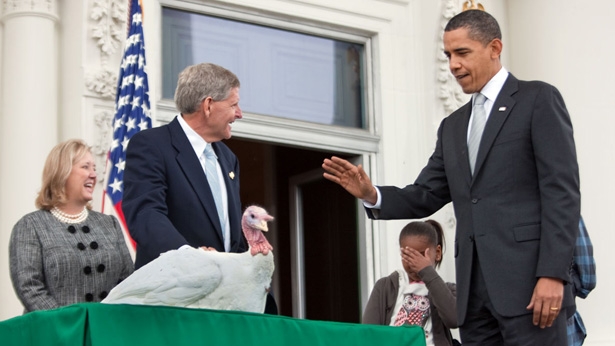
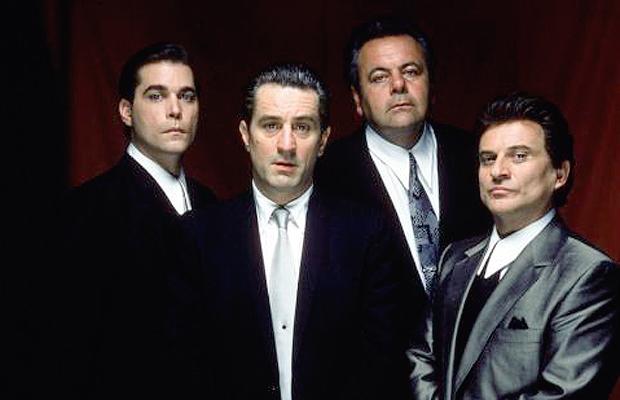
President Obama continued a Thanksgiving tradition today when he pardoned two turkeys, Paulie and Frankie. In order to secure the pardons, the brothers agreed to help the Feds bring down their family’s racketeering operation. Paulie turned state’s evidence and Frankie wore a wire. They tried to play it cool, but word got out that they’d become rats, so they had to be taken out. You went against the family, you bastards, and you deserved to die.

A bullet in the neck for you, Paulie.

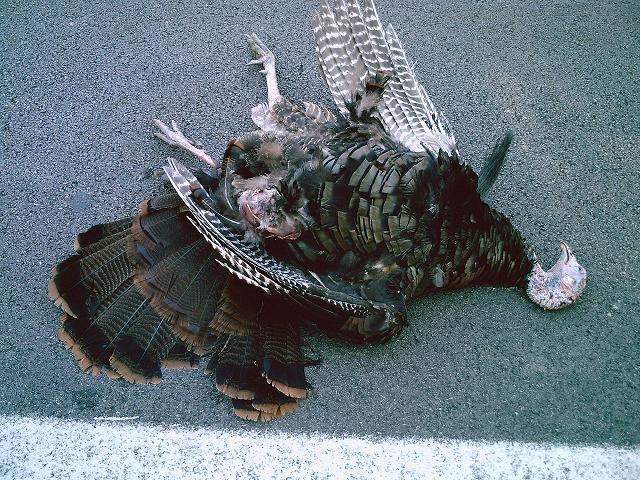
You lived like scum, Frankie, and you died like it.

Paulie (2011-2011).

Frankie (2011-2011)

I promise that I will never rewatch "Goodfellas" during a holiday week again. Remember, kids: Crime doesn't pay. Except for most types of white-collar crime. Happy Thanksgiving, Afflictor readers!

Tags: , ,

Rezero, the ballbot from Zurich.

"He did not reserve all his oddities for his patients; he kept a great number for his own actions and behavior."

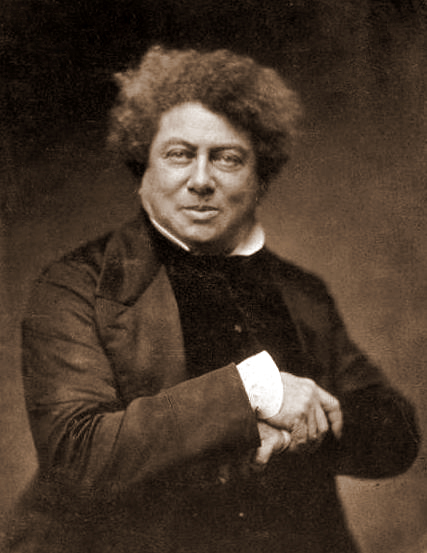
You know the story about the Paris-based doctor who liked to prescribe sauerkraut, was Alexandre Dumas’ personal physician and kept a vicious pet monkey? No? Well, here it is, courtesy of the December 18, 1898 edition of the Brooklyn Daily Eagle:

Paris Bureau–All capitals contain so great a number of eccentric people that if we knew them all, we would still more readily come to the conclusion that there are more mad people outside than inside insane asylums.

It is probable the Paris does not contain as many as London, for it is known that for oddity and originality the English have the precedence; but such specimens as Dr. Gruby show that if the number is not as large as in Paris as in London, they, at least, are quite as capable to do as eccentric things and lead as eccentric lives.

Dr. Gruby was a physician who possessed all of the necessary diplomas, but he was called a healer. This country, like all other countries, in fact, is flooded with healers. Legitimate doctors do all in their power to bring them into disfavor, but vox populi is vox dei, and the more eccentric the healer seems to be and the more extraordinary his cures appear to the patients, the more they knock at his door to be healed.

"Alexandre Dumas would have no other doctor."

There is not a French celebrity of any kind, within the last forty years, who, afflicted with any serious illness, has not gone to Dr. Gruby, and who was not dumbfounded when the healer prescribed carrots, sauerkraut or some other unheard of medicament with the grave countenance of a doctor who writes down the most complicated mixtures in an incomprehensible page of Latin words.

But faith was there. Had the healer not made the most remarkable cures? Were not such men as Alexandre Dumas and Ambroise Thomas there to testify that whatever surprising things the healer gave, they, one and all, were benefited by it?

He did not reserve all his oddities for his patients; he kept a great number for his own actions and behavior. One of them was that he never wanted to appear but in the best of health to all humanity, his servants included. He died at the age of 80, behind a locked door. He did not even admit his servants during his last two days of agony. He died in a dark room, without a streak of light, for he feared some curious eye might see him in the throes of death. At last the scared servants had the door forced open by the commissaire de police and they found but a cold corpse. The healer had drawn his last breath about twelve hours before.

"He had dogs and cats and for a long time possessed a vicious monkey, whom he called brother."

Not so long ago, Mme. Ambroise Thomas was asked to tell us some eccentricities of the doctor. ‘Alexandre Dumas would have no other doctor, and for a long while, by the orders of Dr. Gruby, Dumas would start off on a morning constitutional with four apples in his pocket. The orders were to walk from the Avenue de Villiens to the Arch of Triumph and there stop to eat an apple; then to start again and walk to the Place de la Concorde, and stop there and eat another apple. He was to return to the Arch and eat his third apple, and take the fourth before his own door and have the last bite in his mouth before he crossed the threshold.

‘And Dr. Gruby’s servants were allowed to be visible only at certain hours. He was passionately fond of animals and plants. He had dogs and cats and for a long time possessed a vicious monkey whom he called his brother, and who bit several of his friends.'”

Tags: ,

The opening of Andrew Chalkiin’s article about Elon Musk’s mission to Mars, in Air & Space magazine:

“You can be rich enough to buy a rocket and still get sticker shock. In early 2002, PayPal co-founder Elon Musk, already a multimillionaire at 30, was pursuing a grand scheme to rekindle public interest in sending humans to Mars. A lifelong space enthusiast with degrees in physics and business, Musk wanted to place a small greenhouse laden with seeds and nutrient gel on the Martian surface to establish life there, if only temporarily. The problem wasn’t the lander itself; he’d already talked to contractors who would build it for a comparatively low cost. The problem was launching it. Unwilling to pay what U.S. rocket companies were charging, Musk made three trips to Russia to try to buy a refurbished Dnepr missile, but found deal-making in the wild west of Russian capitalism too risky financially.

On the flight home, he recalls, ‘I was trying to understand why rockets were so expensive. Obviously the lowest cost you can make anything for is the spot value of the material constituents. And that’s if you had a magic wand and could rearrange the atoms. So there’s just a question of how efficient you can be about getting the atoms from raw material state to rocket shape.’ That year, enlisting a handful of veteran space engineers, Musk formed Space Exploration Technologies, or SpaceX, with two staggeringly ambitious goals: To make spaceflight routine and affordable, and to make humans a multi-planet species.” (Thanks Longreads.)

Tags: ,

"You put up the money."

2500 weird investment – $2500 (Financial District)

I am a pro poker player there are tournaments coming up at the borgata in atlantic city tournaments pay from 200k to 1m… you put up the money I play and we split 50/50 call jim for more info. we can also start off small with 1000 i will play the cash games if you like how i do then you put me in the tournament. this can be an ongoing thing cash daily. i love the game.

George Carlin, the greatest American stand-up ever and the spiritual father of OWS, boils it all down:

Louis C.K., currently one of the best stand-ups on the planet, remembers Carlin:

In the New York Review of Books, John Lanchester takes on Michael Lewis’ new volume about the global economic meltdown, Boomerang. A passage about the apocalyptic view of fund manager Kyle Bass:

“His first interlocutor, Kyle Bass, is a classic example. Bass is a fund manager who made a fortune ‘shorting’ toxic mortgage assets, and then became preoccupied by the subject of global debt levels. Bass is, to put it very mildly, a pessimist on the subject of sovereign debt:

Spain and France had accumulated debts of more than ten times their annual revenues. Historically, such levels of government indebtedness had led to government default. ‘Here’s the only way I think things can work out for these countries,’ Bass said. ‘If they start running real budget surpluses. Yeah, and that will happen right after monkeys fly out of your ass.’

The prognostications that ensue from Bass’s analysis are gloomy, and form the basis of Boomerang‘s big-picture overview. ‘The financial crisis of 2008 was suspended only because investors believed that governments could borrow whatever they needed to rescue their banks. What happened when the governments themselves ceased to be credible?’

Bass thinks that the only reliable investments are guns and gold, and has just bought twenty million nickels, because the metal in a five-cent nickel is worth 6.8 cents, and they are going to be a stable source of value when things go wrong.”

Tags: ,

The culture of cover-up at Penn State’s football program was no doubt deeply rooted, and you have to wonder what’s going on at other college athletic programs that have a legendary coach and a cash cow in the form of a fat TV contract. An excerpt from Reed Albergotti’s WSJ article:

“In an Aug. 12, 2005, email to Pennsylvania State University President Graham Spanier and others, Vicky Triponey, the university’s standards and conduct officer, complained that Mr. Paterno believed she should have ‘no interest, (or business) holding our football players accountable to our community standards. The Coach is insistent he knows best how to discipline his players…and their status as a student when they commit violations of our standards should NOT be our concern…and I think he was saying we should treat football players different from other students in this regard.’

The confrontations came to a head in 2007, according to one former school official, when six football players were charged by police for forcing their way into a campus apartment that April and beating up several students, one of them severely. That September, following a tense meeting with Mr. Paterno over the case, she resigned her post, saying at the time she left because of ‘philosophical differences.'”

••••••••••

Joe Paterno tells President Nixon, another cover-up artist, to “shove it”:

Tags: , , ,

Computerized contact lenses with display capacity are currently being tested on rabbits in the hopes that versions for humans will be available in the near future. From Discovery:

“Once the researchers had determined that the experimental lenses were safe in the lab, they tested them on live rabbits. After wearing them for a short period, the rabbits didn’t have any abrasions or thermal burning. ‘We have been able to build the whole system and test it on rabbits, on live eyes, and show that this works and it’s safe,’ Parviz said.

Being able to display information and images directly into the field of vision via contact lens would be useful in a number of ways, according to the engineers. The devices could be used for navigation, for gaming, and even as a way to monitor someone’s health and safety. It could also be a super sneaky way to access info while “

Cool short from 1956.

Tags: ,

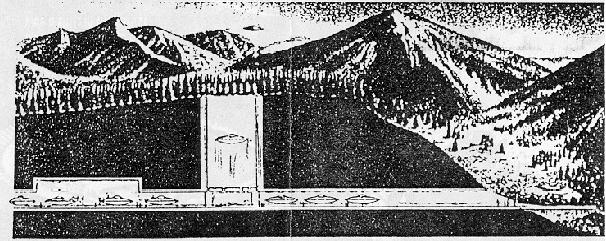
From an insane 1955 Look magazine article which suggested that the future of aviation might be subterranean and saucer-shaped:

Future airports built for vertically rising flying saucers would have no need of the long, vulnerable runways today’s fighters require. The complete operation could go underground. Tunnels with take-off shafts set into the ground, complete with maintenance bays, fuel and crew quarters, would be bombproof shelters for a saucer squadron. The shafts would be sealed after take-off for camouflage and protection.•

"I am curious as to any signs."

do u know some one born on.. (NY)

June 6th 2006?

yes 666. My gf and I were talking about this. And I think the date WILL influence their life.
NOT in an exorcist way. BUT it will come up enough and so I am curious as to any signs or thoughts at 5yrs old?
or people NOT wanting to be around the child?

Trippy, evocative ABC Evening News promo, 1969.

« Older entries § Newer entries »