Genius film comedian Buster Keaton had a sad life, from his vaudevillian parents tossing him around on stage like a rag doll when he was a tyke to the financial problems in his later years. His appearance on What’s My Line?, 1957.

Real house, no trick photography, no stunt man, no special effects:

Tags:

Here are some things that are restricted or illegal (or at one time were illegal) in America, but are never going away: alcohol, drugs, prostitution, abortion and guns. You can forbid them, but all it does is create a far more dangerous black market. It’s tantamount to choosing worse instead of bad. The upcoming 2012 Summer Olympics in London will have the strictest drug testing ever and a 24-hour lab that will be constantly humming. Some of the athletes using drugs will be caught, many will not. From a Daily Mail article about the lab:

Drug cheats have been warned they will be caught at next summer’s Olympics and Paralympics as London 2012 unveiled ‘the most high-tech’ laboratory in the history of the Games.

Up to 6,250 samples will be tested by 150 scientists working at the 24-hour anti-doping facility in Harlow, Essex.

All Olympic medallists will have to submit a urine sample and there will be around 1,000 blood tests.

With 10,500 athletes expected at the Olympic and Paralympic Games, organisers are confident up to half of competitors will be tested; some more than once.”

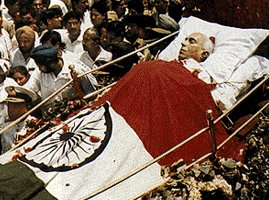
In 1963, the year before his death, original Indian Prime Minister Jawaharlal Nehru was interviewed by Playboy. An excerpt:

Playboy: In a speech given in 1947, on the eve of Indian independence, you said, ‘Long years ago we made a tryst with destiny, and now comes the time when we shall redeem our pledge, not wholly or in full measure, but very substantially.’ How substantial has the redemption of this pledge been? What is the spiritual and material condition of India today, after 16 years of independence? 

Nehru: India today presents a very mixed picture of hope and anguish, of remarkable advances and at the same time of inertia, of a new spirit and also of the dead hand of privilege, of an over-all and growing unity and of many disruptive tendencies. There is a great vitality and a ferment in people’s minds and activities. Perhaps we who live in the middle of this ever-changing scene do not always realize the full significance of all that is happening. Often outsiders can make a better appraisal of the situation. It is remarkable that a country and a people rooted in the remote past, who have shown so much resistance to change, should now be marching forward rapidly. We are making history in India even though we might not be conscious of it.

Jawaharlal Nehru, lying in state, 1964.

Playboy: In that same 1947 speech you specifically called for ‘the ending of poverty and ignorance and disease and inequality of opportunity’ in India. Are you still optimistic about the eventual elimination of these conditions?

Nehru: What tomorrow’s India will be like, I cannot say. I can only express my hopes and wishes. Naturally, I want India to advance on the material plane, to fulfill her plans, to raise the standard of living of her vast population. I want the narrow conflicts of today in the name of religion or caste, language or province, to cease, and a classless and casteless society to be built up where every individual has full opportunity to grow according to his worth and ability. In particular, I hope that the curse of caste will be ended, for with it there cannot be either democracy or socialism. Tomorrow’s India will be what we make it by today’s labors. I have no doubt but that India will progress industrially and otherwise; that she will advance in science and technology; that our people’s standards will rise; that education will spread; that health conditions will be better; and that art and culture will enrich people’s lives. We have started on this pilgrimage with strong purpose and good heart, and we shall reach the end of the journey, however long that might be. But what I am concerned with is not merely our material progress, but the quality and depth of our people. Gaining power through industrial processes, will they lose themselves in the quest of individual wealth and soft living? That would be a tragedy for it would be a negation of what India has stood for in the past and, I think, in the present time also as exemplified by Gandhi. Power is necessary, but wisdom is essential. It is only power with wisdom that is good.”

••••••••••

A thumbnail of Nehru’s life, including his 1949 NYC ticker-tape parade:

Tags:

From “The Secrets Apple Keeps,” Adam Lashinsky’s new Fortune article about the cultish internal nature of the tech giant:

Apple employees know something big is afoot when the carpenters appear in their office building. New walls are quickly erected. Doors are added and new security protocols put into place. Windows that once were transparent are now frosted. Other rooms have no windows at all. They are called lockdown rooms: No information goes in or out without a reason.

The hubbub is disconcerting for employees. Quite likely you have no idea what is going on, and it’s not like you’re going to ask. If it hasn’t been disclosed to you, then it’s literally none of your business. What’s more, your badge, which got you into particular areas before the new construction, no longer works in those places. All you can surmise is that a new, highly secretive project is under way, and you are not in the know. End of story.

Secrecy takes two basic forms at Apple — external and internal. There is the obvious kind, the secrecy that Apple uses as a way of keeping its products and practices hidden from competitors and the rest of the outside world. This cloaking device is the easier of the two types for the rank and file to understand because many companies try to keep their innovations under wraps. Internal secrecy, as evidenced by those mysterious walls and off-limits areas, is tougher to stomach. Yet the link between secrecy and productivity is one way that Apple (AAPL) challenges long-held management truths and the notion of transparency as a corporate virtue.

All companies have secrets, of course. The difference is that at Apple everything is a secret.” (Thanks Browser.)

••••••••••

A Rolling Thunder performance of “One Too Many Mornings,” Steve Jobs’ favorite Bob Dylan song. Not even close to Dylan’s best, but to each his own.

“One Too Many Mornings”

Down the street the dogs are barkin’
And the day is a-gettin’ dark
As the night comes in a-fallin’
The dogs’ll lose their bark
An’ the silent night will shatter
From the sounds inside my mind
For I’m one too many mornings
And a thousand miles behind

From the crossroads of my doorstep
My eyes they start to fade
As I turn my head back to the room
Where my love and I have laid
An’ I gaze back to the street
The sidewalk and the sign
And I’m one too many mornings
An’ a thousand miles behind

It’s a restless hungry feeling
That don’t mean no one no good
When ev’rything I’m a-sayin’
You can say it just as good.
You’re right from your side
I’m right from mine
We’re both just one too many mornings
An’ a thousand miles behind

Tags: , ,

Theoretical physicist Michio Kaku bluntly explaining current AI and how quantum computing could change the game.

Tags:

"Will allow you to cut it."

Selling my hair – $250 (NYC)

Looking for buyer for my hair.

About me: Aprrox. 18-20in, straight, untreated, light brown hair. 32yo healthy, athletic male, good diet, good natural oils.

Will allow you to cut it or be present for cutting.

"The Iraq War was the biggest issue for people of my generation in the West." (Image by Espen Moe.)

From Michael Hastings’ new interview in Rolling Stone with Wikileak’s head leaker, Julian Assange, on what inspired him to begin disseminating classified information:

Then, two years later, the U.S. invaded Iraq.
The creation of WikiLeaks was, in part, a response to Iraq. There were a number of whistle-blowers who came out in relation to Iraq, and it was clear to me that what the world was missing in the days of Iraq propaganda was a way for inside sources who knew what was really going on to communicate that information to the public. Quite a few who did ended up in very dire circumstances, including David Kelly, the British scientist who either committed suicide or was murdered over his revelations about weapons of mass destruction. The Iraq War was the biggest issue for people of my generation in the West. It was also the clearest case, in my living memory, of media manipulation and the creation of a war through ignorance.

Tags: ,

Twelve-year-old Michael Jackson and older brother Jackie interviewed on local Los Angeles news, 1971.

Tags:

"Sony...introduced its Betamax video tape recorder to the U.S. consumer market in early 1976." (Image by Franny Wentzel.)

For more than three decades, Hollywood has been fighting a losing battle with technology, trying to pause time in an era when there was less competition, when making boatloads of cash required little ingenuity. From the movie establishment’s landmark case in futility, in which it fought to make home video recorders illegal:

Universal City Studios, Inc. et al. v. Sony Corporation of America Inc. et al., commonly known as the Betamax case, was the first concerted legal response of the American film industry to the home video revolution. After nearly a decade of announcements and false starts by one American company or another, Sony, the Japanese electronics manufacturing giant, introduced its Betamax video tape recorder to the U.S. consumer market in early 1976 at an affordable price. In its marketing strategy Sony promoted the machine’s ability to ‘time shift’ programming–that is, to record a television program off the air even while watching another show on a different channel.

The plaintiffs, Universal and Walt Disney Productions on behalf of the Hollywood majors, charged that the ability of the Betamax to copy programming off air was an infringement of copyright and sought to halt the sale of the machines. The studios were ostensibly trying to protect film and television producers from the economic consequences of unauthorized mass duplication and distribution. However, Universal might have also wanted to prevent Betamax from capturing a significant segment of the fledgling home video market before its parent company, MCA, could introduce its DiscoVision laserdisc system, which was to scheduled for test marketing in the fall of 1977.”

••••••••••

Time shifting with Sony Betamax, 1977:

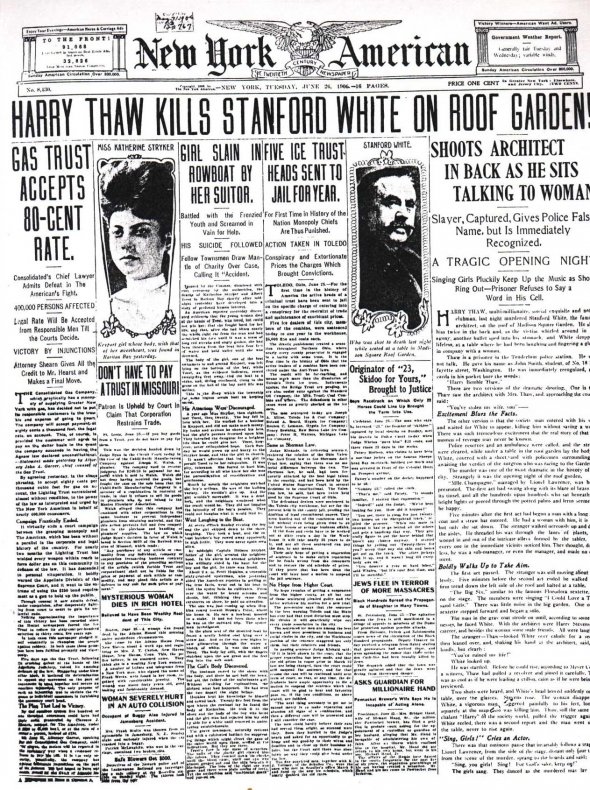
Everyone is familiar with the crime. On a June day in 1906, Harry K. Thaw fired three bullets at close range at architect Stanford White, on the roof of Madison Square Garden, wounding him fatally atop a building the victim had designed. The gunfire was apparently provoked by jealousy Thaw felt over his wife, the comely chorus girl, Evelyn Nesbit, who had previously been White’s mistress. After a couple of trials, Thaw spent some time in a mental asylum, but not long after a failed escape to Canada, he was declared sane and set free. But neither Thaw nor Nesbit were ever free of themselves, liberated from their destructive impulses. Excerpts from two New York Times articles about their lives after the most shocking murder.

••••••••••
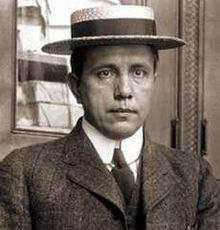
"The terrified lad saw Thaw, armed with a short, stocky whip rushing for him."

Whipping of Boy Starts Hunt for Harry K. Thaw” (January 10, 1917): “The police of every city last night sought Harry Thaw. Accused in the Stanford White trial of having used a silver-capped dog whip on girls, Thaw was indicted here yesterday charged with having whipped a nineteen-year-old boy.

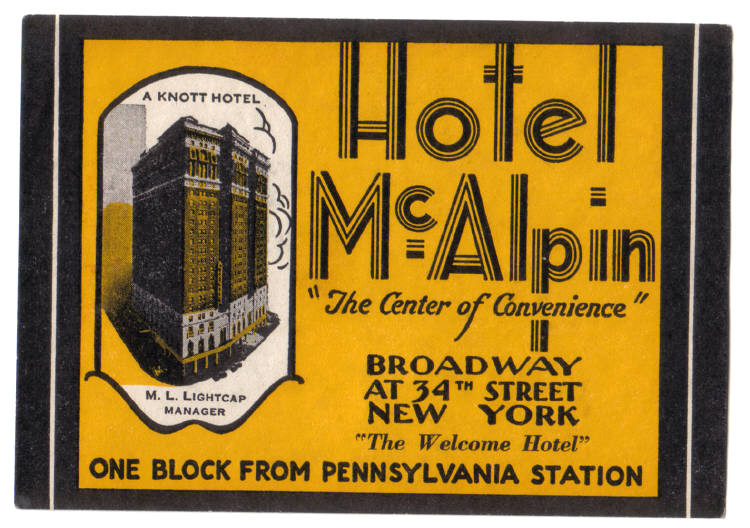
In a room high up in the Hotel McAlpin Thaw on Christmas Eve is alleged to have lashed Frederick Gump, Jr., a Kansas City schoolboy, almost to unconsciousness, after having enticed the lad to this city on pretenses of educating him.

‘Thaw’s acquaintance with young Gump goes back to December, 1915,’ said Mr. Walsh at the Holland House yesterday. ‘The elder Mr. Gump is one of the leading citizens of Kansas City, and I have known his only child, Fred, since infancy. The boy’s father became ill about two years ago, and when Fred was graduated from the Kansas City High School the family moved to Long Beach, Cal. Fred enrolled in the Berkeley Polytechnic Institute, but spent the week-ends with his parents in Long Beach, and it was on one of these occasions that Thaw met the lad in an ice cream pavillion.

‘Fred, a fine-looking chap, appeared to interest Thaw, who told the boy he would like to have him go back to Pittsburgh with him, where a fine job could be had. Gump declined the offer and they parted. This was early in December, and the next Gump heard of Thaw was when a postal came wishing the young student a merry Christmas. Letter after letter came to Mrs. Gump addressed to her son, and in nearly all of them Thaw repeated his offer. Finally on December 20 last he wrote, offering Gump $50 a month and expenses either to take a job in his plant or to enroll for a course in the Carnegie Institute. Thaw inclosed a certified check for $50, and urged Gump to accept the offer.

After thinking the matter over, Mr. Gump advised his son to take the chance at the Carnegie School and Thaw was advised of the decision. In a wire, he directed Gump to come to New York and put up at the McAlpin, where further instructions would be wired to him.

‘At the hotel Thaw had reserved a big suite on the eighteenth floor and had even rented two adjoining rooms which, I think, he did to prevent strangers from hearing the cries which later came from his apartments. It was Gump’s first trip away from home. The splendor of his bedroom rather bewildered him, and it was some time before he retired.

‘Soon Gump heard his door opened cautiously. Almost immediately the lights were switched on and the terrified lad saw Thaw, armed with a short, stocky whip rushing for him.

‘The boy leaped to his feet, and dodging Thaw, tried to get out of the door, and even to jump out of a window. All were locked. From that time until Gump was almost insensible his captor drove the young lad around the room, raising great welts upon the boys’s unprotected back. When he had beaten the lad so that his back and legs were covered with blood, Thaw quit the room as suddenly as he had entered it. Young Gump lay on the floor all night, and in the morning Thaw again came in, this time accompanied by his body guard. Thaw instructed the guard to keep the boy a prisoner, and then left.'”

••••••••••

"An examination of her throat revealed that there is hope of saving her voice."

Thaw to Visit Chicago Reconciliation Rumor(Jan 8, 1926): “Chicago–Harry K. Thaw, whose former wife, Evelyn Nesbit Thaw, attempted to kill herself Tuesday morning during a fit of despondency, will arrive in Chicago early next week to confer with his attorney, Charles S. Wharton, it was learned today.

The appearance of her former husband at this time, coupled with the interest he has shown in her behalf over a long period of years and which was climaxed by a personal inquiry sent to the hospital the other day, has caused rumors that a reconciliation might be effected between the two.

Thaw has been paying $10 every day to her through a Pittsburgh attorney for a number of years. He did this, it was said, as a ‘token of pleasant memories of the past when we were happy.’

It is also known that William C. Dannenberg, private detective, with headquarters in Chicago, has been receiving large fees annually from Thaw for ‘keeping tabs’ on Evelyn during her frequent stays in Chicago. It was through Dannenberg that Thaw made inquiry as to her condition a few hours after Evelyn was taken to the hospital.

Thaw telephoned to Dannenberg on Thursday, asking him to go to the hospital and deliver a message to Evelyn only in the event she were dying. The detective denied this later by saying he had been sent over to get a personal report on her condition, but had no message to deliver.

At the hospital it was announced that Miss Nesbit had rallied from the sinking spell which made her physician apprehensive during the crisis of her illness, and she was pronounced out of danger. An examination of her throat revealed that there is hope of saving her voice. The burns from the disinfectant she swallowed were at first believed to have damaged her throat so seriously she might never sing again.”
Tags: , , ,

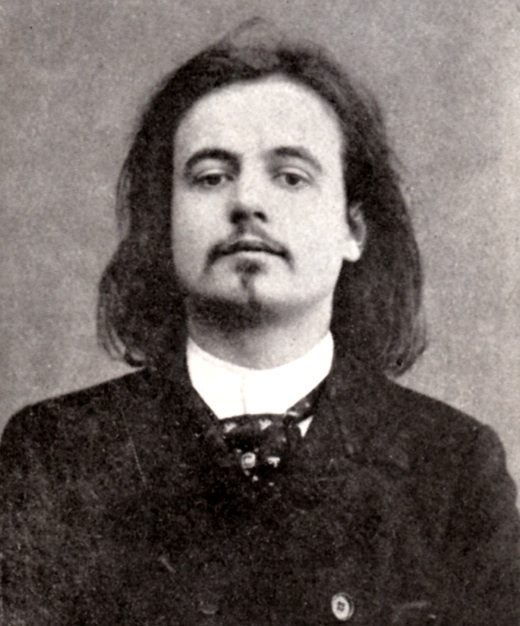
There are all sorts of entertainment for all sorts of occasions, but I’ll always like best the kind that upsets conventions and makes the audience want to tear down the stage. Do not please the people–the people are already far too pleased. Playwright Alfred Jarry angered ticket buyers in just such a fashion in 1896. An excerpt about the tumult from Karl Whitney at 3:AM Magazine:

“Arguably Jarry’s greatest literary creation, and certainly his best known, was the character of Père Ubu, the corpulent and vulgar ‘King of Poland’ who emerged, swearing forcefully, in Ubu Roi (performed onstage in 1896, but printed versions predate the theatrical performances). The first performances of the play caused a stir. Partly, this was because of the shock of the new – as Brotchie points out: ‘it was as though a modernist play from the middle of the next century had been dropped on the stage without all the intervening theatrical developments that might have acclimatized the audience to its conventions.’ On the other hand, many of Jarry’s friends in the avant-garde weren’t leaving anything to chance: they turned up with mischief in mind, and caused – or at least contributed to – an uproar in the theatre. At one point the poet Fernand Gregh shouted out his opinion: ‘It’s as beautiful as Shakespeare,; to which his own brother shot back from the balcony: ‘You’ve never even read Shakespeare, you imbecile!'”

•••••••••

“Bon jour, Père Ubu”:

Tags:

Beck interviewed by a robot voice as Mutations is released, 1998.

Tags:

I find so many great things online by accident that I’ve never been quite as concerned about Internet filters as some have. In “The End of the Echo Chamber,” Farhad Manjoo of Slate writes about new research–albeit research conducted by the very interested party Facebook–that suggests that the Web is inherently serendipitous (or perhaps we are) no matter how much personalization, targeting or narrowcasting is forced upon us. The opening:

“Today, Facebook is publishing a study that disproves some hoary conventional wisdom about the Web. According to this new research, the online echo chamber doesn’t exist.

This is of particular interest to me. In 2008, I wrote True Enough, a book that argued that digital technology is splitting society into discrete, ideologically like-minded tribes that read, watch, or listen only to news that confirms their own beliefs. I’m not the only one who’s worried about this. Eli Pariser, the former executive director of MoveOn.org, argued in his recent book The Filter Bubble that Web personalization algorithms like Facebook’s News Feed force us to consume a dangerously narrow range of news. The echo chamber was also central to Cass Sunstein’s thesis, in his book Republic.com, that the Web may be incompatible with democracy itself. If we’re all just echoing our friends’ ideas about the world, is society doomed to become ever more polarized and solipsistic?

It turns out we’re not doomed. The new Facebook study is one of the largest and most rigorous investigations into how people receive and react to news. It was led by Eytan Bakshy, who began the work in 2010 when he was finishing his Ph.D. in information studies at the University of Michigan. He is now a researcher on Facebook’s data team, which conducts academic-type studies into how users behave on the teeming network.”

Tags:

Looking back to an odd incident from 1981, as “The Greatest” turns 70.

Tags: ,


The Most Underrated Thing In This Life (Inwood / Wash Hts)

is a good shit, followed closely by a big glass of ice water. Guess I am getting old.

The opening of “The Greatest Running Shoe Never Sold,” Bob Parks’ new Businessweek article about a lone inventor trying to partner with a mega-corporation:

“Late one night in August 1997, 54-year-old inventor Lenn Rockford Hann placed two bottles of Gatorade near Concourse F of Chicago O’Hare International Airport, unlaced his sneakers, removed his socks, then dodged curious maintenance workers for two hours while running 13.1 miles on the walkways. His pace surprised him. He was convinced the springy, resilient surface was almost perfect. ‘My legs felt amazing,’ says Hann, a marathoner. ‘I’ve been chasing a shoe that feels that good ever since.’

For years, Hann had been designing a running shoe that he hoped would give him an edge. After his airport run (in the days of lighter security, naturally), he knew he was on to something, and he became obsessed with O’Hare’s movable sidewalks. Finding a walkway in the midst of repair on a subsequent jog, he jumped into the pit to look at its clockworks. There he found rollers on each side, with nothing holding people up in the middle but the belt’s tension. The next day, Hann called the belt company, Dunlop Conveyer Belting, and learned they were adjusted to 2,500 foot-pounds of force to create the right balance.

Athletic brands spend millions every year trying to build a better sneaker that will propel them to the front of the $6.3 billion running shoe business, one of the biggest and most visible areas of sporting goods, with 11 percent growth in 2011, according to industry analyst SportsOneSource. Nearly all sneakers have a sole that looks like lasagna, composed of layers of rubber, foam, and plastic. The fluffy foam is made from ethylene-vinyl acetate, or EVA, which has its critics: EVA adds weight to shoes, and lab tests show it requires more energy per stride. Running shoe companies have long sought an EVA substitute that absorbs shock but also returns more energy. ‘Consumers like the cushioned feeling associated with a conventional running shoe,’ says Darren Stefanyshyn, a University of Calgary researcher and former chairperson of the Footwear Biomechanics Group. ‘If you could provide that without using foam, you’d have a winner.’

It took him eleven years, but Hann finally converted his airport research into a breakthrough sneaker patented in 2008, a shoe with an entirely different system to cushion and propel the foot. It quickly attracted the attention of fast-growing athletic brand Under Armour (UA), which spent two years and hundreds of thousands of dollars to develop it as the prospective centerpiece of the company’s first line of footwear. Hann’s shoe was scheduled to launch early this year and was poised to rock the footwear industry, but it never quite made it to market.”

Tags: , ,

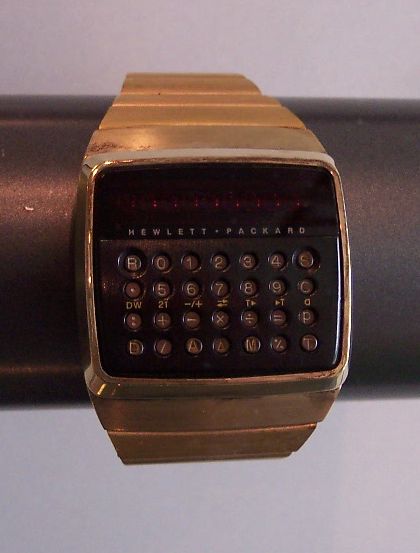
In 1977, Hewlett-Packard introduced the original wristwatch-calculator combo, which was the first commercially available wearable computer. The 01 Wrist Instrument didn’t just provide a variety of functions–calculator, stopwatch, 200-year calendar, among them–it also allowed for the interaction of these functions. Portable tools have grown exponentially more sophisticated in the subsequent 35 years, but our general use of them seems to have remained simple and largely uninspired. Have the numbers we carry in our pockets shrunk so much that we’ve forgotten their value? Is the meaning reduced to so much lint? From the Hewlett-Packard Journal, December 1977:

“The concept of a combined wristwatch and calculator is a natural outgrowth of today’s digital watch and pocket calculator technologies. However, merely putting these two functions into one small case does not add significantly to the capabilities already available to the consumer. Only when the time and computation functions are allowed to interact freely can the full potential of the combination be realized and significant new capabilities be made available.

It is this interaction, along with state-of-the-art watch and calculator technologies, that provide the wearer of the HP-01 Wrist Instrument with the information that was previously unavailable, and makes the HP-01, after a brief experience with it, more difficult to do without than it might at first appear.”

••••••••••

Hologram of HP-01 Wrist Instrument:

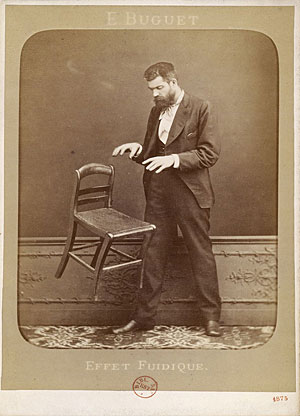
How can you have stunning science fiction when science itself is so stunning? From “Superstuff: When Quantam Goes Big,” a Michael Brooks article at New Scientist:

“FOR centuries, con artists have convinced the masses that it is possible to defy gravity or walk through walls. Victorian audiences gasped at tricks of levitation involving crinolined ladies hovering over tables. Even before then, fraudsters and deluded inventors were proudly displaying perpetual-motion machines that could do impossible things, such as make liquids flow uphill without consuming energy. Today, magicians still make solid rings pass through each other and become interlinked – or so it appears. But these are all cheap tricks compared with what the real world has to offer.

Cool a piece of metal or a bucket of helium to near absolute zero and, in the right conditions, you will see the metal levitating above a magnet, liquid helium flowing up the walls of its container or solids passing through each other. ‘We love to observe these phenomena in the lab,’ says Ed Hinds of Imperial College, London.

This weirdness is not mere entertainment, though. From these strange phenomena we can tease out all of chemistry and biology, find deliverance from our energy crisis and perhaps even unveil the ultimate nature of the universe. Welcome to the world of superstuff.” (Thanks Browser.)

••••••••••

It’s only a trick, for now–1900:

Tags: ,

Clint Eastwood interviewed in 1974 in New Orleans for Canadian TV. Eastwood has, of course, usurped much of his own violent, macho image in late-career work, but he remains a staunch conservative politically, recently extolling the virtues of Herman Cain.

Tags:

From “The Hacker Is Watching,” David Kushner’s new GQ piece about the unlikely culprit behind a creepy new wave of computer hacking, which exploits the omnipresence of cameras, among other things:

“The more ubiquitous cameras become, the less we’re aware they’re even there. They stare out at us blankly from our phones and laptops, our Xboxes and iPads, a billion eyes and ears just waiting to be turned on. But what if they were switched on—by someone else—when you least expected it? How would you feel, how would you behave, if the devices that surround your life were suddenly turned against you?

It’s a question that James Kelly and his girlfriend, Amy Wright, never thought they’d have to entertain. But one instant message changed everything. Amy, a 20-year-old brunette at the University of California at Irvine, was on her laptop when she got an IM from a random guy nicknamed mistahxxxrightme, asking her for webcam sex. Out of the blue, like that. Amy told the guy off, but he IM’d again, saying he knew all about her, and to prove it he started describing her dorm room, the color of her walls, the pattern on her sheets, the pictures on her walls. ‘You have a pink vibrator,’ he said. It was like Amy’d slipped into a stalker movie. Then he sent her an image file. Amy watched in horror as the picture materialized on the screen: a shot of her in that very room, naked on the bed, having webcam sex with James.

Mistah X wasn’t done. The hacker fired off a note to James’s ex-girlfriend Carla Gagnon: ‘nice video I hope you still remember this if you want to chat and find out before I put it online hit me up.’ Attached was a video still of her in the nude. Then the hacker contacted James directly, boasting that he had control of his computer, and it became clear this wasn’t about sex: He was toying with them. As Mistah X taunted James, his IMs filling the screen, James called Amy: He had the creep online. What should he do? They talked about calling the cops, but no sooner had James said the words than the hacker reprimanded him. ‘I know you’re talking to each other right now!’ he wrote. James’s throat constricted; how did the stalker know what he was saying? Did he bug his room?

They were powerless. Amy decided to call the cops herself. But the instant she phoned the dispatcher, a message chimed on her screen. It was from the hacker. ‘I know you just called the police,’ he wrote. She panicked. How could he possibly know? She ran into her bathroom and slammed the door behind her. As she pleaded for the police to come quickly, she reached into the shower and cranked the water all the way up, hoping the hacker couldn’t hear her.”

Tags:

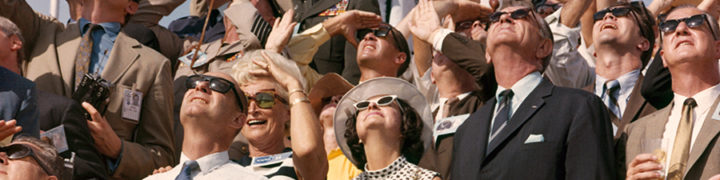
Astronauts Grissom, White and Chaffee perished during the Space Race. From ABC News on January 27, 1967, the day after their accidental deaths.

See also:

Tags: , , ,

The opening of “Love, Boxing, and Hunter S. Thompson,” screenwriter John Kaye’s raucous Los Angeles Review of Books essay:

HUNTER AND INGA: 1978

The third (and last) time I went to New Orleans was in September of 1978. I was living in Marin County, and I took the red-eye out of San Francisco, flying on a first-class ticket paid for by Universal Pictures, the studio that was financing the movie I was contracted to write. The story was to be loosely based on an article written by Hunter Thompson that had been recently published in Rolling Stone magazine. Titled ‘The Banshee Screams for Buffalo Meat,’ the 30,000-word piece detailed many of the (supposedly) true-life adventures Hunter had experienced with Oscar Zeta Acosta, the radical Chicano lawyer who he’d earlier canonized in Fear and Loathing in Las Vegas.

Hunter and I were in New Orleans to attend the hugely anticipated rematch between Muhammad Ali and Leon Spinks, the former Olympic champion who, after only seven fights, had defeated Ali in February. The plan was to meet up at the Fairmont, a once-elegant hotel that was located in the center of the business district and within walking distance of the historic French Quarter. Although Hunter was not in his room when I arrived, he’d instructed the hotel management to watch for me and make sure I was treated with great respect.

‘I was told by Mister Thompson to mark you down as a VIP, that you were on a mission of considerable importance,’ said Inga, the head of guest services, as we rode the elevator up to my floor. ‘Since he was dressed quite eccentrically, in shorts and a Hawaiian shirt, I assumed he was pulling my leg. The bellman who fetched his bags said he was a famous writer. Are you a writer also?’ I told her I wrote movies. ‘Are you famous?’

‘No.’

‘Do you have any cocaine?’

I stared at her. Her smile was odd, both reassuring and intensely hopeful. In the cartoon balloon I saw over her head were the words: I’m yours if you do. ‘Yes, I do.’

‘That is good.'”

••••••••••

The late-career Ali regains the title yet again:

Tags: ,

A couple of interesting bits from “Big, Bigger, Best,” Nick Summers’ new Daily Beast article about ESPN, that sports-programming behemoth.

••••••••••

“With revenue of $8.5 billion last year, ESPN has become the principal cash spigot of the Walt Disney Co., the network’s 80 percent parent. To the largest entertainment corporation on earth, the backwater of Bristol has become more important than Disney World and Disneyland combined.”

••••••••••

““ESPN, through … sheer muscle, has been able to say to us, ‘You will carry this service on the lowest level subscription you offer, and you will make all of them pay for it,’ says Matt Polka, CEO of the American Cable Association, a trade group. ‘My next-door neighbor is 74, a widow. She says to me, ‘Why do I have to get all that sports programming?’ She has no idea that in the course of a year, for just ESPN and ESPN2, she is sending a check to Disney for about $70. She would be apoplectic if she knew … Ultimately, there’s going to be a revolt over the cost. Or policymakers will get involved, because the costs of these things are so out of line with cost of living that someone’s going to put up a stop sign.'”

••••••••••

The first SportsCenter, 1979, hosted by Lee Leonard:

Tags: ,

The sometimes maddening and always provocative film critic Pauline Kael dishing on Cecil B. DeMille and others in 1982. She is still missed.

Tags: ,

"If he closes in on me, I'm going to key him in his face." (Image by Francinegirvan@Wikipedia.)

DUMB Dad (nyc)

so here I am walking on a side street shclepping my 2 Trader Joe bags when dad and his kid come up the block in the opposite direction.
The kid is not holding dads hand and bumps into me and my bags. Nothing tragic. He doesn’t fall even or cy or anything. So I continue. 

about 20 seconds later I hear dad blurt out, ‘watch where your going’. I turn around to see dad and kid stopped up the block. 
I’m totally surprised, and a little pissed, so I yell back ‘watch your kid’ or hold your kid. dad gets irate yelling back at me. 
finally i’ve had enough of him and yell, ‘fuck you’. He say’s ‘what’? 
I retort, ‘you heard me, FUCK YOU!’ 

Now he’s about to make a move in my direction. He’s half my age and twice my size, me 58 but in good shape. 
I reach into my pocket for my keys, figuring if he closes in on me, I’m going to key him in his face. 

But he backs off, finally using his pint size brain and walks away like cowardly dick he is. 

I conclude it’s time to buy some mace. Too many assholes in this fucked up city. This shit ONLY happens in NY.

« Older entries § Newer entries »