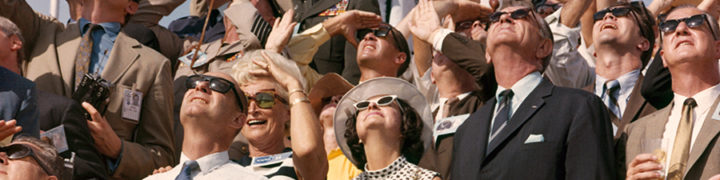
From K-Tel, of course, for your 8-Track stash. Not to be confused with the Record Selector.
You are currently browsing the archive for the Videos category.
In this season of vitriolic debate, here’s the famously uncomfortable meeting of comedians Ricky Gervais and Garry Shandling. The latter has claimed that the whole thing was some sort of cerebral exercise on his part. Perhaps.
Tags: Garry Shandling, Ricky Gervais
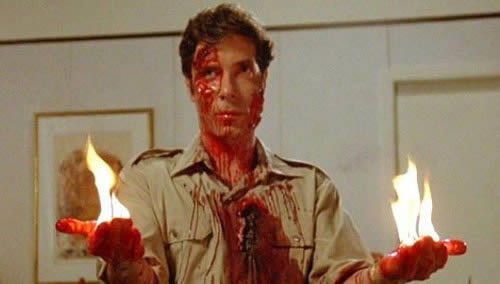
Released at a time when tech nerds were emerging from their garages and dorms to reengineer the world as we watched with shock and awe, David Cronenberg’s 1981 sci-fi mindblower about bioengineered telepaths, Scanners, could be read as an analogue to the rise of the machines and those who built them. Scanners and digital revolutionaries who began their ascent in the late 1970s can be described alike: born with special gifts, could see the future before others, desired to upset the accepted order and create a new society in which the mind and its powers would be predominant. “They’re pathetic social misfits,” says one character of the tortured titular telepaths but might as well be describing those responsible for technology’s migration from the monolith to the individual. “They want to destroy the society that created them.” And so they did, more or less.
In Cronenberg’s world, Scanners are misbegotten men and women who were born telepaths with terrible talents. They cannot only read your mind but can also use mere concentration to blow up your brain. In order to keep them from using this talent, Scanners are monitored and sometimes hunted. It seems that their strange skills are the result of their pregnant mothers being prescribed an experimental tranquilizer that was discontinued in the 1940s after a brief trial run. While the drug soon disappeared, the children have grown up with extraordinary powers, unbeknownst to most of the world.

The scientist who created the drug, Dr. Paul Ruth (Patrick McGoohan), a pioneering biochemist with a patchy past, has made it his life’s work to monitor the Scanners for the ConSec corporation. Ruth reintroduces into society a Scanner named Cameron Vale (Stephen Lack), who he has kept “on ice,” to glean information about the machinations of a fellow Scanner, Darryl Revok (Michael Ironside). The latter has apparently hatched a plan with a confedrate inside ConSec to create a new breed of Scanners that he can use as his army. Cameron and Revok, who have some sort of mysterious link to one another, engage in a battle of terrifying, combustible wills.
Changing the world, or at least the way we interact with it and one another, requires getting others to see reality in a whole new way, whether you’re hoping to grow scanners or consumers, a fact which has become ever clearer as we now live in a world in which a small band of Silicon Valley superstars have commandeered the means of communication. As Revok says, while sounding not unlike a titan of technology preparing for an IPO: “We’ll bring the normals to their knees. We’ll have an empire so brilliant, so glorious that it will be the envy of the whole planet.”•
Tags: David Cronenberg, Michael Ironside, Patruck McGoohan, Stephen Lack
Wearable multitouch interaction everywhere. Oh, good. (Thanks Kurzweil and Marginal Revolution.)

I’d be really happy if New York Times film critics A.O. Scott and Manohla Dargis were awarded Pulitzers in the same year. The quantity and quality of their writing is pretty stunning. The pair teamed up for a discussion about the legendary Pauline Kael, an influential scribe in her day (and ours, still) who was a thorny character, to say the least. An excerpt from Dargis about the erstwhile celebrity status of film critics:
“If she still casts a shadow it’s less because of her ideas, pugilistic writing style, ethical lapses and cruelties (and not merely in her reviews), and more because she was writing at a time when movies, their critics and, by extension, the mainstream media had a greater hold on American culture than they do now. In his book Easy Riders, Raging Bulls Peter Biskind relates a story from the mid-’80s when Kael turned to Richard Schickel at a meeting of film critics and said, ‘It isn’t any fun anymore.’ Mr. Schickel asked her why and she replied: ‘Remember how it was in the ’60s and ’70s, when movies were hot, whenwe were hot? Movies seemed to matter.’ The thing is, they did matter and still do, just differently.
One thing that changed was the role of the film critic, who by the mid-’80s no longer had to persuade a skeptical, sometimes hostile general audience that it was necessary to take movies seriously. In 1967, though, Kael had to explain in The New Yorker why and how Bonnie and Clyde was important (and in 9,000 words!). She was part of a critical vanguard spreading the new film gospel in reviews, books, talk shows, everywhere. They were true pop cultural figures. The critic Judith Crist even shilled for a feminine-hygiene spray. She later said that she did the ad because Richard Avedon took the photos, she could write most of the text and the ad would reach more than 100 million readers. Also: she got $5,000.”
•••••••••
Kael and other film critics were famous enough in 1977 to be spoofed by SCTV:
Tags: A.O. Scott, Judith Crist, Manohla Dargis, Pauline Kael
K-Tel cashing in on a mid-1970s fad with $5 mood rings. While supplies last.
At long last, a mood ring for my pectorals:
The office of the future, as imagined in 1969.
Virtual doctors at Rite Aid. (Thanks Singularity Hub.)
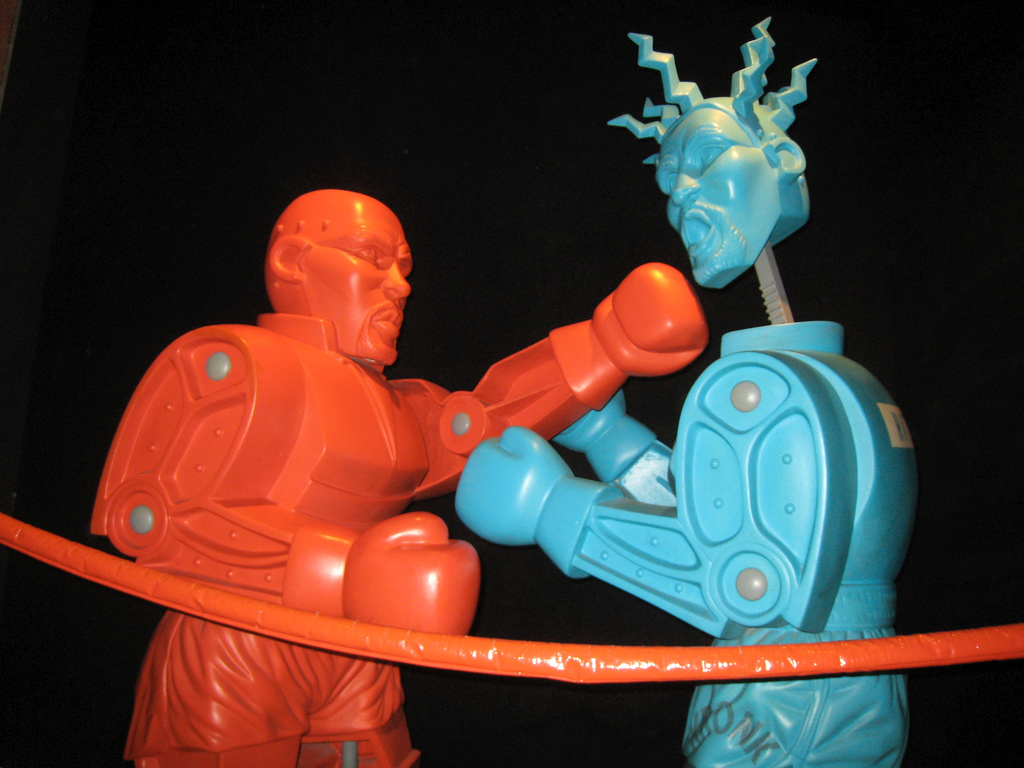
Farhad Manjoo has an excellent new article in Fast Company, “The Great Tech War of 2012,” which looks at the quartet of dominant American technology companies poised to do battle with one another. An excerpt:
“To state this as clearly as possible: The four American companies that have come to define 21st-century information technology and entertainment are on the verge of war. Over the next two years, Amazon, Apple, Facebook, and Google will increasingly collide in the markets for mobile phones and tablets, mobile apps, social networking, and more. This competition will be intense. Each of the four has shown competitive excellence, strategic genius, and superb execution that have left the rest of the world in the dust. HP, for example, tried to take a run at Apple head-on, with its TouchPad, the product of its $1.2 billion acquisition of Palm. HP bailed out after an embarrassingly short 49-day run, and it cost CEO Léo Apotheker his job. Microsoft’s every move must be viewed as a reaction to the initiatives of these smarter, nimbler, and now, in the case of Apple, richer companies. When a company like Hulu goes on the block, these four companies are immediately seen as possible acquirers, and why not? They have the best weapons–weapons that will now be turned on one another as they seek more room to grow.”
••••••••••
Majoo on living in the post-fact digital world, 2008:

Theater talker Mike Daisey has a particularly timely monologue with The Agony and the Ecstasy of Steve Jobs, in which he investigates the dark side of the modern miracle of consumer electronics, which stared squarely at him in the ginormous Chinese factories where the gadgets are manufactured at a high human cost. An excerpt from Ben Brantley’s New York Times review:
“For Mr. Daisey, as for many others, affection for Apple products evolved into reverence for Mr. Jobs, the Apple co-founder whose identification with the company and its products has been much remarked upon, and worried over, since his illness made news several years ago.
Mr. Daisey has been performing this show since July of last year, and while the death of Mr. Jobs lends the evening a certain eerie timeliness, it also means that many in the audience will be familiar with the life and career of Mr. Jobs from reading obituaries and tributes.
The hippie-meets-tech-geek ethos, the founding of and then ouster from Apple, the triumphant return and the revolutionary series of consumer products that followed: Mr. Daisey covers this material fluently and with amiable humor, mixing obvious hero worship with some pointed skepticism. (Mr. Jobs, he notes, was the kind of imperious guy who divided the world’s population into ‘geniuses and bozos.’)
But the show is most engrossing, and most disturbing, when Mr. Daisey delves into the grim realities of workers’ lives in Shenzhen, a city that he memorably describes as looking as if ‘Blade Runner threw up on itself.'”
••••••••••
“A laptop so thin you can slice a sandwich”:
Tags: Ben Brantley, Mike Daisey
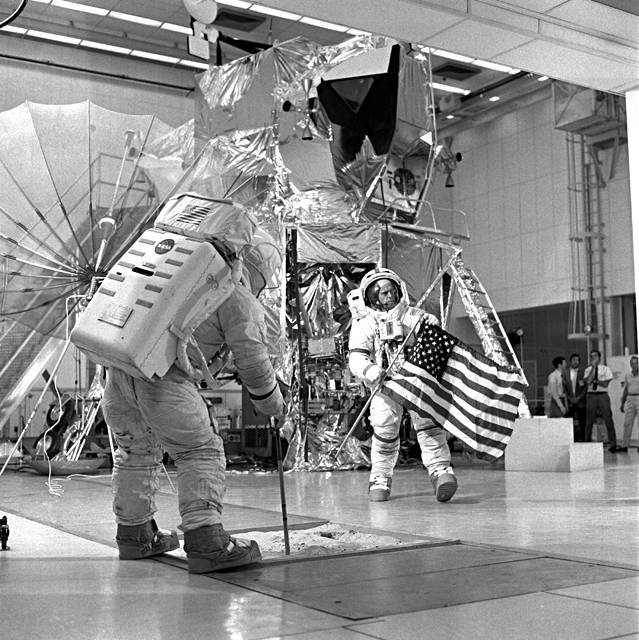
This classic NASA image chronicles the training of astronauts for 1971’s Apollo 14 mission, the third time we reached the moon. The astronauts had to practice everything, even that moment when they would plant the U.S. flag on our natural satellite. According to the Apollo 14 press kit, the astronauts spent approximately three weeks in quarantine after returning to Earth, being the final U.S. moonwalkers to be quarantined when they returned home.
••••••••••
Planting the flag:
Alan Shepard makes the moon his driving range during Apollo 14:
Tags: Alan Shepard
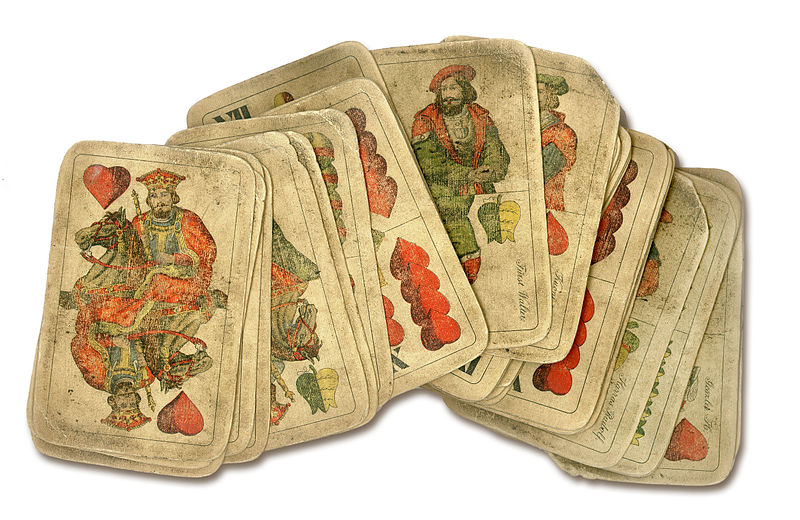
In the Chronicle Review, Jeffrey R. Young has a fascinating profile of Stanford mathematician Persi Diaconis, who began his career as an intinerant magician’s assistant. The opening:
“Persi Diaconis‘s unlikely scholarly career in mathematics began with a disappearing act.
He was 14 years old and obsessed with magic, spending much of his free time in or around Tannen’s Magic Store, on Times Square, where sleight-of-hand masters regularly gathered to show off tricks and to gossip. There, one of the most influential magicians of the past century, a card maestro named Dai Vernon, saw Diaconis’s prodigious trick dealing and invited the young man to leave New York and join him on the road.
Diaconis vanished from his regular life, dropping out of school and cutting ties with his family. ‘I packed a little bag—I took some decks of cards and some socks,’ remembers Diaconis, now 66 with unruly tufts of white hair, in his office at Stanford University, where he is a professor of mathematics and statistics. ‘I was sort of his assistant.’ And his student. Vernon, then in his 60s, promised that if his apprentice advanced far enough in his studies, he would reveal secrets of magic he had never shared with anyone else.
It was this search for the hidden workings of magic that led Diaconis to math. During a few years on the road doing his own magic act, he came to think of the hearts, diamonds, spades, and clubs in a deck of cards as variables that followed predictable formulas as he shuffled them. He could code the cards as binary numbers in his head and perform mental calculations as audience members cut the deck, so that when they picked a card, any card, Diaconis could name it.” (Thanks Browser.)
••••••••••
Diaconis’ mentor, Dai Vernon, in action:
Tags: Dai Vernon, Persi Diaconis
Monkey at Duke University Medical Center uses his brain to control virtual arm. (Thanks Gizmag.)
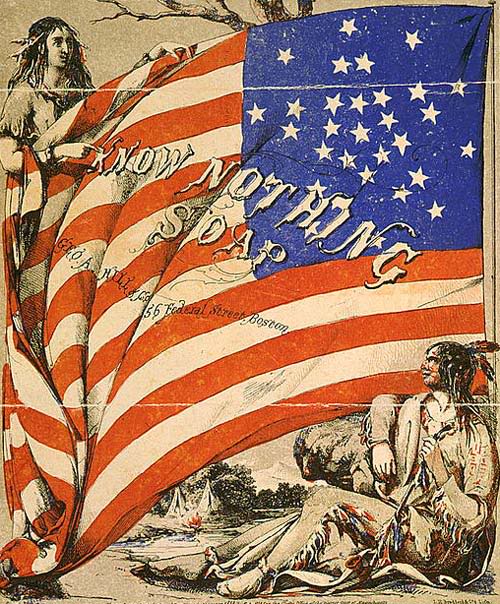
In a Financial Times article in which he elaborately kisses the ass of President Bill Clinton, historian Simon Schama also elicits some fine political analysis from 42. An excerpt about the Tea Party:
“‘The Tea Party,’ Clinton says, ‘is the most extreme incarnation of the 30-year cycle that began when Ronald Reagan said in his first inaugural that government isn’t the answer, government is the problem. But the real issue is not that the Tea Party is in control of the country, has captured the airwaves or represents a majority of public sentiment; the problem is that something [the deal-making system] that has worked for the American people in the past isn’t working now.’
And the ideologues haven’t had their ‘Waterloo moment to break the fever,’ such as the two shut-downs of the federal government engineered by Speaker Newt Gingrich and the incoming House Republicans in 1995. That triumphant phalanx assembled beneath the banner of the Contract with America to which they vowed to remain uncompromisingly faithful. But the public hated the shut-downs and blamed Republicans to the point when it became apparent they had actually taken out a contract on themselves. It was Gingrich, not Clinton, who was ousted, the president winning re-election a year later. The manufactured spat earlier this year over raising the debt ceiling had Waterloo-moment promise, but the prospect of the US defaulting for the only time in its history and the risk of sending the already stressed bond market over the cliff meant that Obama, unlike Clinton, couldn’t call the naysayers’ bluff.
So what can be done about this latest edition of Know-Nothings? ‘You can’t convert the ideologues because they don’t care what the facts are. With the world as it is, you have to fight the fight you can win, and the fight you can win is economics.’ He gets intense at this point. ‘There isn’t a single example of a successful country on the planet today – if you define success as lower rates of unemployment, higher rates of job growth, less income inequality and a health system that produces the same or better care at lower cost – that doesn’t have both a strong economy and effective government that find some way to work in harness with each other … If you don’t do that, if you don’t have a system by which the poor can work their way into it, then you lose the social cohesion necessary to hold the country together and that is a big problem.”
••••••••••
Schama discusses slavery in America with perpetually exhausted Charlie Rose:
Tags: Bill Clinton, Simon Schama
The de facto theme song of the feminist movement of the 1970s, Helen Reddy’s “I Am Woman” was a giant radio hit and a huge target of derision. In 1975, the United Nations chose the song to officially represent International Women’s Year. Great slowed-down live version:
Reddy and Alice Cooper share scripted banter at the Grammys, 1974:
Tags: Alice Reddy, Helen Reddy

In the wake of Steve Jobs’ death, his Apple cofounder Steve Wozniak talked to journalist Dan Lyons. In this segment, Woz recalls the early years:
“How did you and Steve come up with the idea for the first Apple product, the Apple I?
Oh, a lot of people saw the Apple I before Steve Jobs even knew about it. I was in the Homebrew Computer Club. Steve was up in Oregon, working at an orchard, in a commune. We were really not in touch. But I got inspired to help this revolution. People in our club thought the personal computer would affect everyone’s life. We thought everyone would have a little computer, a little thing with switches and weird numbers on it, and people would learn to program to operate a computer. We didn’t think it would be normal stuff like it turned out to be.
I never wanted to run a business. I had a perfect job for life at HP. I went to club meetings every week and I passed out my schematics for the Apple I, no copyright, nothing, just, “Hey all you guys here is a cheap way to build a computer.” I would demo it on a TV set.
Then Steve Jobs came in from Oregon, and he saw what the club was about, and he saw the interest in my design. I had the only one that was really affordable. Our first idea was just to make printed circuit boards. We could make them for 20 dollars and sell them for 40 or something like that. I had given the schematics away. But Steve thought it could be a company.
This was actually our fifth product together. We always were 50-50 partners. We were best friends. We first did the blue boxes. The next one I did was I saw Pong at a bowling alley so I built my own Pong with 28 chips. I was at HP designing calculators. Steve saw Pong and ran down to Atari and showed it to them and they hired him. Whether they thought he had participated in the design, I don’t know and I could not care less. They offered him a job and put him on the night shift. They said he doesn’t get along with people very well, he’s very independent minded. It rubbed against people. So they put him on the night shift alone.
Our next project was when Steve said that Nolan (Bushnell, head of Atari) wanted a one-player game with bricks that you hit out. He said we could get a lot of money if we could design it with very few chips. So we built that one and got paid by Atari.
The legend is that Steve cheated you out of some money on that deal.
The legend is true. It didn’t matter to me. I had a job. Steve needed money to buy into the commune or something. So we made Breakout and it was a half-man-year job but we did it in four days and nights. It was a very clever design.” (Thanks Browser.)
•••••••••
Super Breakout, 1978;
Tags: Dan Lyons, Steve Jobs, Steve Wozniak
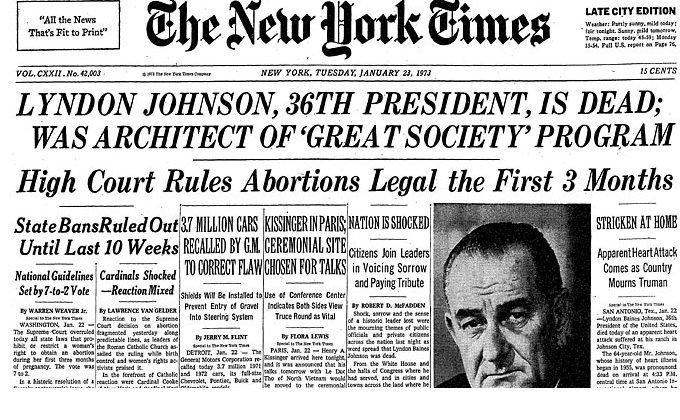
From a 1997 Playboy Interview with Sen. Daniel Patrick Moynihan, in which he explains why religious fundamentalism became entrenched in contemporary American politics:
“Playboy: Fundamentalism is a big problem at home and abroad. Are you lobbied by the Christian right?
Moynihan: I will say this to you and if you can print it, do. Once a year the anti-abortion people come to Washington. They are the only people who come to see me. I shouldn’t say “only,” but they are the one group that comes to see me that doesn’t want anything other than to discuss a moral issue it’s concerned with. I might meet three or four other people a year like that, but not many. They’re the only working people I ever see. They come down by bus. They don’t go out to lunch at the mall. They just want to say they have a view of something. I’ve always voted against them.
Playboy: But the Christian right has other issues besides abortion. Some members say every word of the Bible is literally true and they want to impose their views on everyone else. The movement seems pretty important. Do you agree?
Moynihan: It is hugely important. And there’s nothing new about this. At different times in our history there have been very important political movements that were basically religious or concerned with matters of conscience. Abolition was one, out of which came the Republican Party. Prohibition was another. And abortion is a third. Roe vs. Wade just shook the conscience of a large segment of the American population, particularly the fundamentalist Protestants, who were quite content to live a life that didn’t have much politics in it. They didn’t have politics, they had their own religious concerns. Suddenly a matter of true import to them became the law of the land by a decision of the Supreme Court. And they thought, What is this? This has to change. And gradually they became a political force.
Playboy: Do you consider the Christian right dangerous?
Moynihan: No, good God. They’re the nicest people in the world if you leave their consciences alone. And if you don’t, it’s not the first time in history you get resentment. The Catholic Church is just as involved, but the Catholic Church has a wider agenda. In the way we are now using the word, the Catholic social doctrine is liberal. If you’re talking about minimum wage or something like that, they’re with you all the time.
Playboy: Do you feel you have to take the Christian right, creationism and all, into account?
Moynihan: Well, you’d better if you’re thinking to run for president.
Playboy: That makes them sound very powerful.
Moynihan: They are. We may lose our voting rights in the General Assembly because we passed a bill that would pay almost $1 billion in UN dues, but it included a provision that no money will go to any organization that performs abortions. The president has said he will veto the bill over that issue. If you go two years without paying your dues — which may happen if this impasse is not resolved — you can lose your voting rights in the General Assembly.
Playboy: This is bizarre.
Moynihan: Yeah. And it’s a big thing for us to lose our voting rights over something — over what?
Playboy: So a minority can make international policy?
Moynihan: The Southern Baptists aren’t exactly a minority. The Supreme Court is. And if nine people can say that something they find absolutely morally unacceptable is the law of the land, well, that makes people think.”
••••••••••
Moynihan discusses race, 1967:
Tags: Daniel Patrick Moynihan
Why do I love airports so much? Because of the possibilities, the potential, the constant permutations of people? And I’m not alone.
A 1954 promotional film calling for the building of more American airports:

Engineering is never truly finished today as consumers continue to tinker with smart products to make them even smarter. From Bradley Berman’s smart piece in the New York Times:
“WITHIN weeks of when Nissan first began delivering the Leaf to buyers last December, do-it-yourselfers were looking for ways to make the new electric car — an engineering marvel from one of the world’s leading automakers — even better.
Among those who applied their 21st-century engineering skills to tinkering pursuits that date to the dawn of automobiles was Gary Giddings, 69, a retired engineer and a passionate supporter of electric vehicles.
‘At this point in my life, my goal is to spend whatever time I have trying to help E.V.’s become successful,’ Mr. Giddings said. He is using his Ph.D. in electrical engineering, earned at the University of California, Berkeley in the free-speech 1960s, to correct some of the Leaf’s shortcomings and to squeeze more performance out of it.”
••••••••••
Excellent Nissan Leaf ad by TBWA:
Tags: Bradley Berman, Gary Giddings
There have been three notable third-party candidates for U.S. President in the past three decades: Ralph Nader, H. Ross Perot and John B. Anderson. The last of the three mounted a spirited campaign as alternative to Jimmy Carter and Ronald Reagan in 1980. He came away with almost 7% of the vote. A Republican from Illinois, he was a member of what is now an all-but-extinct breed: a cerebral and compassionate conservative who was disgusted by the mounting dirtiness of right-wing politics and the encroachment of an intolerant strain of religion on the political process. Anderson turned 89 this year and in the most recent Presidential election supported Barack Obama.
Tags: John B. Anderson
Baby confused by print magazine not having a touchpad. Adorable yet terrifying. (Thanks Mediabistro.)

In the “Ethics of Voting,” philosopher Jason Brennan argues that people shouldn’t vote if they’re not sufficiently educated about the issues and shouldn’t vote for self-interest. I actually would be more than happy with people voting for self-interest. When you see union members supporting candidates openly hostile to unions or senior citizens who need Social Security to survive voting for candidates who detest that safety net, there is definitely a dangerous disconnect. But, yes, democracy without an informed public is a bad thing. An excerpt from Brennan’s piece:
“Imagine a jury is about to decide a murder case. The jury’s decision will be imposed involuntarily (through violence or threats of violence) upon a potentially innocent person. The decision is high stakes. The jury has a clear obligation to try the case competently. They should not decide the case selfishly, capriciously, irrationally, or from ignorance. They should take proper care, weigh the evidence carefully, overcome their biases, and decide the case from a concern for justice.
What’s true of juries is also true of the electorate. An electorate’s decision is imposed involuntarily upon the innocent. The decision is high stakes. The electorate should also take proper care.” (Thanks Marginal Revolution.)
••••••••••
“A vote for Popeye means free ice cream for all the kiddies,” 1956:
Tags: Jason Brennan
While I’m posting clips of McLuhan, here’s the Canadian seer discussing books “taking on a totally different meaning” in the age of microfilm. From the 1960s.
Tags: Marshall McLuhan