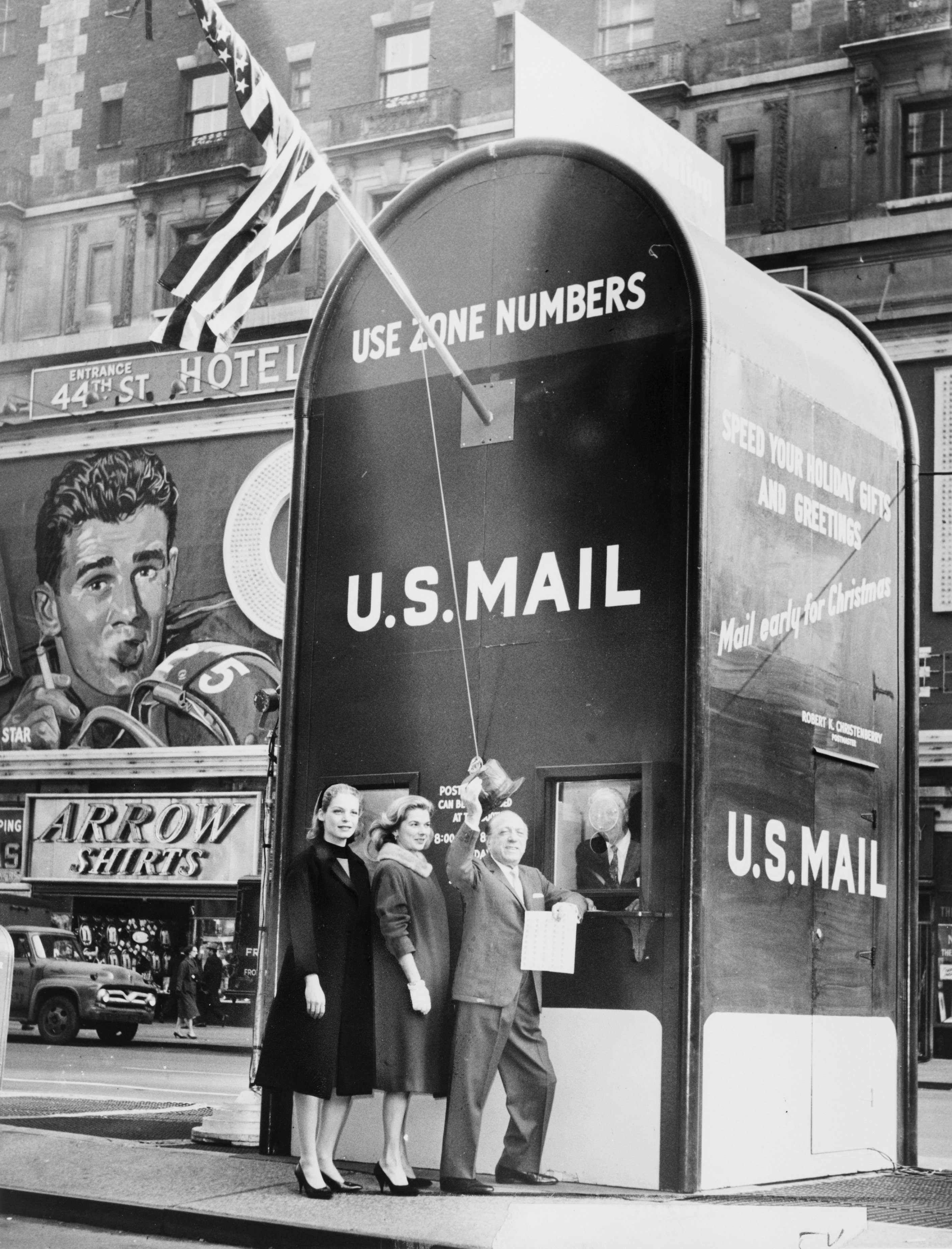
Mail delivered by the United States Postal Service increased every year for 200 years until 2007, when the digital revolution jumpstarted the USPS’s obsolescence. Technology has doomed the former linchpin of American communications, but technology actually rescued it in the 1960s. An excerpt from an Alexis Madrigal piece in the Atlantic:
“Despite these successes, there have been some hard times for the Postal Service. The biggest crisis USPS faced probably came in the mid-1960s. During that time, which was before Richard Nixon signed a bill that made the service ‘self-funding,’ the Post Office could not get enough funds from Congress to buy the machines they needed to keep up with the post-War explosion in the mail. In October of 1966 the situation came to a head, when, as the museum exhibit put it, ‘a flood of holiday advertisements and election mailings choked the system.’ The Chicago Post Office, the largest in the country, ‘stopped delivering mail for three weeks.’
Automation was the only way out. Zip codes, which were only introduced in 1963, became the lynchpin in the automated postal system. Imagine life without them: a single person can’t sort more than a letter a second, which is at best, 3,600 letters an hour. With the help of machines, postal workers could gain almost an order of magnitude of speed, sorting 30,000 letters an hour.”
••••••••••
“An army of men in wool pants running through the neighborhood handing out pottery catalogs door to door”:
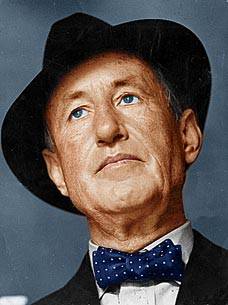
A brief excerpt of Ian Fleming discussing 007’s propensity for violence, in a1964 Playboy Interview:
“Playboy: You’ve been criticized for being ‘obsessed’ with violence in your books. Do you feel the charge is justified?
Fleming: The simple fact is that, like all fictional heroes who find a tremendous popular acceptance, Bond must reflect his own time. We live in a violent era, perhaps the most violent man has known. In our last War, 30 million people were killed. Of these, some six million were simply slaughtered, and most brutally. I hear it said that I invent fiendish cruelties and tortures to which Bond is subjected. But no one who knows, as I know, the things that were done to captured secret agents in the last War says this. No one says it who knows what went on in Algeria.”
The opening of Ben Paynter’s “The Meteor Farmer,” a 2007 Wired article about a Midwestern man hunting for the remains of rock that had fallen to Kansas from heavens:
“For two weeks, Steve Arnold trudged through the dusty farmland of Kiowa County, Kansas, a 6-foot rope trailing over his shoulder. Tied to the end of the rope was a metal detector cobbled together from PVC pipe and duct tape. Back and forth Arnold paced, pulling the jury-rigged device across the dirt, hunting for meteorites. He had already found a few, but nothing bigger than 100 pounds or so. Mostly, he found horseshoes. And beer cans. Soon the farmers would want him off their land; planting season was coming. To speed things up, Arnold attached his contraption to a tractor. He was sure there was a bigger rock out there, just a few feet beneath the turf.
On a Thursday afternoon, his rig yelped, a shrill beep sounding through his headphones. He drove forward, tires pulling in the fine soil, and the detector crescendoed to an electric wail. Arnold saved the coordinates on his GPS receiver, marked the spot with a pile of dirt, and pulled out his cell phone.
Three days later, Arnold and his partner and investor – an oil and gas attorney from San Antonio named Philip Mani – were attacking the site with a backhoe. After digging down about 5 feet, Arnold scrabbled into the hole with a shovel and started clearing. Finally, the blade clanged against something metallic. The more dirt he moved, the more meteorite he exposed. They lowered the backhoe scoop and strapped the rock to it. Grinding and whining, the machine pulled free the biggest meteorite Arnold had ever seen.
Its shell was mottled, stippled like ground beef. That’s a pattern typical of pallasites, the rarest type of meteorite on Earth. One side was rounded and streamlined by passage through the atmosphere. ‘It’s oriented, Steve!’ Mani shouted. ‘It’s oriented!’
About the size of a beer keg, the rock weighed 1,430 pounds, the largest pallasite ever found in the US. By Arnold’s reckoning, it was worth more than $1 million.” (ThanksLongform.)
•••••••••••
“A modern-day treasure hunter was searching for something out of this world–literally”:
The only reason that David Stern is still the NBA Commissioner is because David Stern has been the NBA Commissioner for a long time and people have come to expect that the NBA Commissioner will be David Stern. I’ve blogged about this for quite awhile, so I’m not merely piling on Stern in wake of a lockout, a less-than-appealing CBA and the Chris Paul trade snafu. Stern did an excellent job in building the league in the ’80s and ’90s, turning his best and most marketable players into brands, but he should have stepped down at around the time Michael Jordan retired. Over the last decade quite a few franchises have fallen into financial disarray, many teams elaborately paper attendance and record ratings occurred last year because players did the exact opposite of what commissioner and owners wanted, with stars like Lebron James opting to make free agency truly free and relocating to new teams despite facing financial penalties.
The biggest problem is that NBA owners are in the same state of mind that baseball owners were in the ’70s and ’80s, trying to control their assets (the players) rather than allowing a flow of talent around the league. The more freedom baseball players had, the more their salaries elevated, the more year-round interest there was in the sport and the richer everyone got. The new NBA collective bargaining agreement allows for more a little more player movement, but it still rewards stars who stay in the same market. It also limits free agent contracts to four years, which places cost control ahead of logic. Wealthy teams signing stars to onerous long-term deals can destabilize those big-market teams and along with some degree of revenue sharing give smaller-market teams competitive balance. As in the rest of the world, the free market needs regulation but it’s certainly better for competition to have fewer restrictions based on fear and paranoia. It’s amazing wealthy capitalists who own these teams don’t get this. Essentially, Stern and the owners are blocking the very things that could make the league healthier. It’s time for a new commissioner who understands these things.•
••••••••••
“Pistol” Pete Maravich and Bob McAdoo compete in HORSE, 1978:
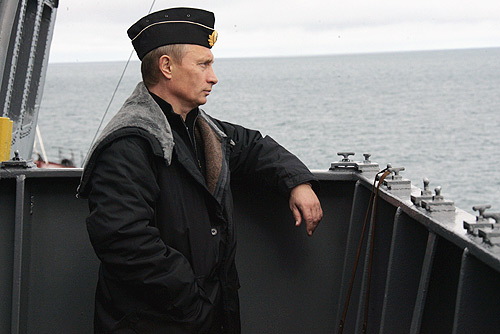
David Remnick can write about any topic brilliantly, but it’s always special when he focuses on American politics, boxing or Russia. He has a new New Yorker article on the latter topic, focusing on Vladimir Putin at a time when the once and perhaps future president of the Russian Federation is facing vociferous dissent from his people for the first time. The opening:
“On the night of November 20th, two weeks before elections for the State Duma, Vladimir Putin set aside the cares of the Kremlin and went to the Olympic SportComplex for an ultimate-fighting match—a ‘no rules’ heavyweight bout between a Cyclopean Russian named Feodor (the Last Emperor) Yemelianenko and a self-described anarchist from Olympia, Washington, named Jeff (the Snowman) Monson. The bout was broadcast nationally on Rossiya-2, one of the main state television channels. Putin, wearing a blue suit and no tie, was at ringside. He has always been eager to project the macho posture of a muzhik, a real man. He has had himself photographed riding horses bare-chested, tracking tigers, shooting a whale with a crossbow, piloting a firefighting jet, swimming a Siberian river, steering a Formula One race car, befriending Jean-Claude Van Damme, and riding with a motorcycle gang. Once, on national television, he tried to bend a frying pan with his bare hands. He did not quite succeed, but the effort was appreciated. And now ultimate fighting: the beery crowd of twenty thousand—some prosperous, some less so—were his own, Putin’s people.
Yemelianenko and Monson were of a rough equivalence: heads shaved, two enormous sacks of rocks, though the Russian was distinguished by his unstained skin; Monson had tattoos from ankle to neck, including two in crowd-friendly Cyrillic—svoboda and solidarnost’. The gesture got him nowhere. Almost from the start, the Russian dominated the fight. Yemelianenko, with a deft and powerful kick, snapped a bone in Monson’s leg, causing the American to limp pitifully. But, even as Yemelianenko took command, steadily reducing Monson to a swollen, bloody pulp—a source of pleasure to the crowd—it was hard to tell if Putin was enjoying himself. The camera flashed to him now and then. He barely betrayed a smile. His face, now smoothed with Botox and filler (it is said), is more enigmatic than ever. What was more, he had larger concerns. He knew that, no matter how hard his operatives tried to get out the vote in the provinces and massage the results, the Kremlin party, United Russia, was going to lose ground.
At the end of the bout—a unanimous decision for Yemelianenko—the Prime Minister climbed through the ropes to pay tribute to the loser and to congratulate his countryman. By this time, the American handlers were tenderly helping their warrior to the dressing room. Monson could no longer walk. His lips were as fat as bicycle tires.
Putin had a kind word for Monson (‘a real man’) and paid Yemelianenko the ultimate compliment of Russian masculinity, calling him a ‘nastoyashii Russki bogatyr‘—a genuine Russian hero. As Putin spoke, and as the national audience watched, many in the crowd started to jeer and whistle. This had never happened to Putin before, not once in two four-year terms as President, not in three-plus years as Prime Minister. And yet now, having announced his intention to reassume the Presidency in March, possibly for another twelve years, he was experiencing an unmistakable tide of derision.”
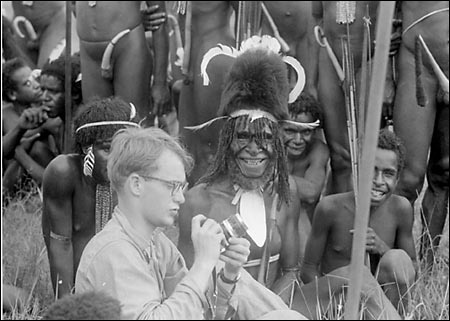
“They had moved extra patrol boats in, chartered air search planes from as far away as Australia and sent policeman sloshing through coastal swamps to look for Mike.” (Image by Harvard.)
Michael Rockefeller may not have been devoured by crocodiles or cannibals but he was most definitely swallowed whole by the rugged expanses of New Guinea in 1961. The wealthy young scion of Governor Nelson Rockefeller was in that country studying the culture and art of the Asmat people when he and his associate found themselves stranded in a canoe. Rockefeller decided to try to swim 12 miles to shore. He was never seen again, his body never recovered, and sensational theories about his disappearance began to emerge. From a1961 Life articleby Richard B. Stolley about the fruitless rescue mission:
“The full horror of this primitive country where his son was lost struck Governor Nelson Rockefeller only after he had seen it himself. En route from New York with his daughter, Mary Strawbridge, he was cheered by news that his son’s companion, Dutch Anthropologist Rene Wassing, had been saved. When the governor’s chartered jetliner landed at Biak, on the north side of the island, colonial authorities described for him the enormous search already under way. They had moved extra patrol boats in, chartered air search planes from as far away as Australia and sent policeman sloshing through coastal swamps to look for Mike and to urge the friendly Asmat natives to do the same.
A Dutch admiral told Rockefeller that the Navy had put a seaman into Flamingo Bay, where Mike disappeared, with two metal gasoline cans like those Mike had used. By holding the cans in front of him, the sailor could swim quite rapidly, and the experiment proved that young Rockefeller might easily have reached shore. Everywhere in New Guinea, compassionate Dutch officials treated Rockefeller not so much with deference due a man who is one of the most powerful leaders in the U.S. but with the sympathy deserved by a father who has lost a son.”
Whenever there is a succession of 3-D films, you know Hollywood is in trouble. When the studio system was in its dotage during the 1950s, before the industry knew enough to rejuvenate itself by handing over the keys to the motorcycle to Easy Riders and other wild-eyed independents, it relied on 3-D to fill the coffers. Right now, the Dream Factory in California is located more in Silicon Valley than Hollywood. Science fiction no longer predicts science as the technology sector has the better ideas. And the movie industry responds with an over-reliance on gimmicks.
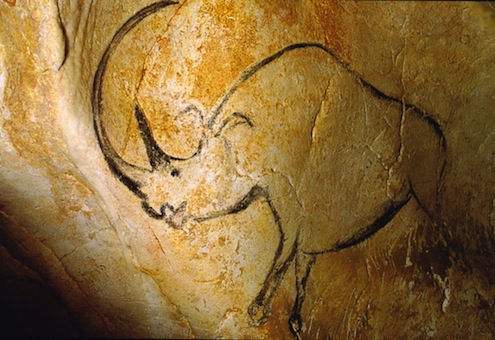
While the hunger for 3-D has abated somewhat in America, the world market has yet been satisfied, so even the mad genius auteur Werner Herzog has been given the opportunity to work with the effect in Cave of Forgotten Dreams. The film is an exploration of the Chauvet Cave in Southern France, which was discovered in 1994 by Eliette Brunel-Deschamps, Christian Hillaire, and Jean-Marie Chauvet. It bears the most historical artwork known to humankind on its walls, elaborate drawings of megafauna, human beings and creatures that combine the two, which were made at least 32,000 years ago. But Cave of Forgotten Dreams isn’t a mere art-history documentary, but rather a tacit struggle between Herzog and the 3-D illusion itself, which has a knack for directing directors, for wrestling the story from their hands.
It’s not completely a fair fight, either. Herzog not only has to deal with technical necessities of 3-D but is also hampered by the fragility of the cave, which demands that Herzog work from bended knee (sometimes in a metaphorical sense, sometimes not), not use too many cameras or lights, not get too close, not get his hands dirty. Whether he has been running headlong into the maw of a bubbling volcano (“La Soufriere”) or dragging a riverboat over a mountain into the jungle (Fitzcarraldo), Herzog is no stranger to obstructions forming his art. He is, however, alien to not being allowed to challenge the elements and having to genuflect in awe rather than form an adversarial relationship.
Making this movie for History Films (a subsidiary of the History Channel) has its restrictions, too. In addition to being a great artist, Herzog is a canny journalist, asking questions others wouldn’t pose, tugging at loose threads that most would never notice. His films are amazing as much for his powers of observation as for his daring. In one scene the director interviews an archaeologist who used to be a circus man. A scene that would have been a long and fascinating digression in a usual Herzog film is instead glossed over in favor of more standard storytelling, a concession that seemingly was made for the producers.
That’s the overall tone of the film: handsome and reverential with the requisite 3D-motion shots, but not Herzogian, lacking his insane brilliance. Until the five-minute “Postscript” section, that is. Herzog discovers a nuclear power plant less than 20 miles from the priceless cave. A second startling discovery is a nearby greenhouse that uses the warm water runoff from the power plant to grow hothouse flowers and allow albino crocodiles to thrive. The past, the present and the future unite against odd scenes of ferocious reptiles in an almost operatic way. The Herzog magic emerges in these moments, and we see the wry storytelling and resourcefulness that always restores Hollywood once its gimmicks run aground. In these scenes, Herzog’s been able to traverse one of the biggest obstacles of his career, one that is more ominous than a volcano or jungle–technology itself.•
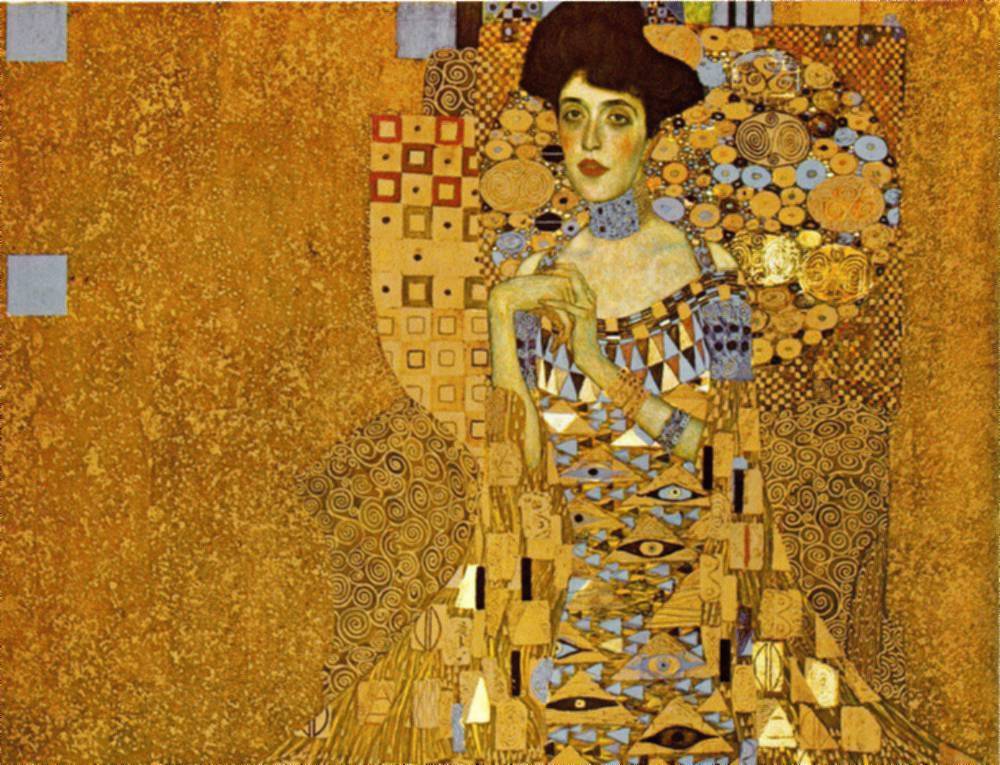
"Crowds lining up to see a portrait by Gustav Klimt in the private Neue Galerie in New York weren’t there out of any fondness for the artist."
Eye-popping prices for artworks are a puzzlement for people outside of that world–and for many people on the inside. In Newsweek,Blake Gopnik attempts to explain why this market is impervious even to worldwide financial collapse. An excerpt:
“‘If I can’t sell something, I just double the price.’ That’s what Ernst Beyeler, the great Swiss dealer who helped found Art Basel, reportedly said. Some people actually prefer to pay more than makes sense. Zelizer explains that, in all walks of life, we treat the biggest sums -differently, with special respect or even awe, than more-everyday money. ‘I think very often the price paid for a work is the trophy itself,’ says Glimcher, the dealer.
In 2006, the crowds lining up to see a portrait by Gustav Klimt in the private Neue Galerie in New York weren’t there out of any fondness for the artist. They were there because they’d heard that the museum’s founder, cosmetics heir Ronald Lauder, had paid a record $135 million for it.
The sociologist Mitch Abolafia, who has made a study of Wall Street financiers, says that sometimes money speaks for itself. ‘A trader said to me one day, with glee in his eyes, ‘You can’t see it, but money is everywhere in this room. Money is flying around—millions and millions of dollars.’ It was a generalized excitement about money. Even I felt it.’ That’s the excitement we all get from expensive art. One collector, who believes deeply that art should be bought for art’s sake, acknowledges basking in the ‘robust glow of prosperity’ that his purchases give off once their value has soared.
The people who are spending record amounts on art buy more than just that glow. (And much more than the pleasure of contemplating pictures, which they could get for $20 at any museum.) They’ve purchased boasting rights. ‘It’s, ‘You bought the $100 million Picasso?!,’’ says Glimcher. Abolafia explains that his financiers were ‘shameless’ in declaring the price of their toys, because in their world, what you buy is less about the object than the cash you threw at it. The uselessness of art makes any spending on it especially potent: buying a yacht is a tiny bit like buying a rowboat, and so retains a taint of practicality, but buying a great Picasso is like no other spending. Olav Velthuis, a Dutch sociologist who wrote Talking Prices, the best study of what art spending means, compares the top of the art market to the potlatches performed by the American Indians of the Pacific Northwest, where the goal was to ostentatiously give away, even destroy, as much of your wealth as possible—to show that you could. In the art-market equivalent, he says, prices keep mounting as collectors compete for this ‘super-status effect.'”
•••••••••
Carson Daly visits Mr. Brainwash’s Warholian vomitorium:
I recently posted the1971 Village Voice obituaryof photographer Diane Arbus. Here’s a good doc about her from the following year, which features her daughter Doon.
From a 2003 New York Times piece by Arthur Lubow: “‘Giving a camera to Diane Arbus is like giving a hand grenade to a baby,’ Norman Mailer said after seeing how she had captured him, leaning back in a velvet armchair with his legs splayed cockily. The quip was funny, but a little off base. A camera for Arbus was like a latchkey. With one around her neck, she could open almost any door. Fearless, tenacious, vulnerable — the combination conquered resistance.”
President-Elect Ronald Reagan reacts to John Lennon’s murder 31 years ago. The two had met at a Monday Night Football game six years earlier, when the pol tried unsuccessfully to explain the rules of the NFL to the former Beatle.
An uncommonly prophetic 1969 Australian concept car is born again, as the Holden Hurricane is restored. From the Daily Mail:
‘Concept cars’ are unveiled by car makers to show off new technologies. Sometimes they evolve into production vehicles, sometimes they don’t – but very occasionally, they offer a vision of the future.
Holden’s Hurricane – unveiled 42 years ago in Melbourne – was packed with decades-worth of technologies that have become standard in cars. The Hurricane not only had digital displays, it also had a primitive magnetic GPS system, a rear-view CCTV camera, and a hydraulic entry system that would have made the Dukes of Hazzard jealous – the entire roof lifted off on hydraulic plates.
Now the concept car has been brought back to life at a motor show in Melbourne.”
•••••••••
“It shows amazing foresight into future automotive technologies’;
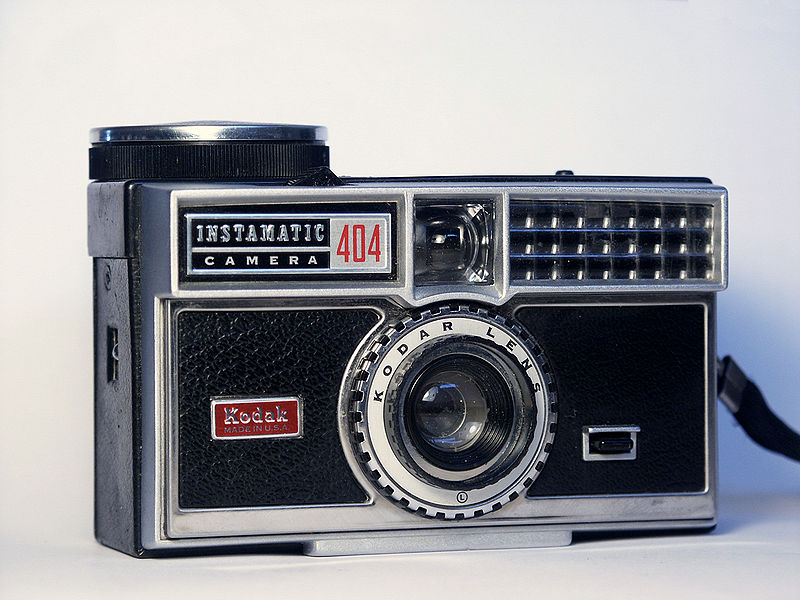
“Kodak Brownie and Instamatic cameras were once staples of family vacations and holidays — remember the ‘open me first’ Christmas ad campaigns? But it may not be long before a generation of Americans grows up without ever having laid hands on a Kodak product. That’s a huge comedown for a brand that was once as globally familiar as Coca-Cola.
It’s hard to think of a company whose onetime dominance of a market has been so thoroughly obliterated by new technology. Family snapshots? They’re almost exclusively digital now, and only a tiny fraction ever get printed on paper.
Eastman Kodak engineers invented the digital camera in 1975; but now that you can point and click with a cheap cellphone, even the stand-alone digital camera is becoming an endangered species on the consumer electronics veld. The last spool of yellow-boxed Kodachrome rolled out the door of a Mexican factory in 2009. Paul Simon composed his hymn to Kodachrome in 1973, but his camera of choice, according to the lyrics, was a Nikon.
It’s not uncommon for great companies to be humbled by what the Austrian economist Joseph Schumpeter called the forces of ‘creative destruction.’ Technology, especially digital technology, has been the most potent whirlwind sweeping away old markets and old strategies for many decades.” (Thanks Browser.)