Videos

You are currently browsing the archive for the Videos category.

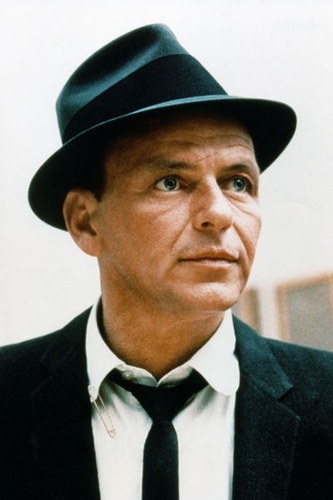
From the Harlan Ellison segment of the most famous magazine article of the last 50 years, Gay Talese’s 1965 Esquire piece,Frank Sinatra Has a Cold“:

“The younger men in the room, accustomed to seeing Sinatra at this club, treated him without deference, although they said nothing offensive. They were a cool young group, very California-cool and casual, and one of the coolest seemed to be a little guy, very quick of movement, who had a sharp profile, pale blue eyes, blondish hair, and squared eyeglasses. He wore a pair of brown corduroy slacks, a green shaggy-dog Shetland sweater, a tan suede jacket, and Game Warden boots, for which he had recently paid $60.

Frank Sinatra, leaning against the stool, sniffling a bit from his cold, could not take his eyes off the Game Warden boots. Once, after gazing at them for a few moments, he turned away; but now he was focused on them again. The owner of the boots, who was just standing in them watching the pool game, was named Harlan Ellison, a writer who had just completed work on a screenplay, The Oscar.

Finally Sinatra could not contain himself.

‘Hey,’ he yelled in his slightly harsh voice that still had a soft, sharp edge. ‘Those Italian boots?’

“No,” Ellison said.

‘Spanish?’

‘No.’

‘Are they English boots?’

‘Look, I donno, man,’ Ellison shot back, frowning at Sinatra, then turning away again.

Now the poolroom was suddenly silent. Leo Durocher who had been poised behind his cue stick and was bent low just froze in that position for a second. Nobody moved. Then Sinatra moved away from the stool and walked with that slow, arrogant swagger of his toward Ellison, the hard tap of Sinatra’s shoes the only sound in the room. Then, looking down at Ellison with a slightly raised eyebrow and a tricky little smile, Sinatra asked: ‘You expecting a storm?’

Harlan Ellison moved a step to the side. ‘Look, is there any reason why you’re talking to me?’

‘I don’t like the way you’re dressed,’ Sinatra said.

‘Hate to shake you up,’ Ellison said, ‘but I dress to suit myself.’

Now there was some rumbling in the room, and somebody said, ‘Com’on, Harlan, let’s get out of here,’ and Leo Durocher made his pool shot and said, ‘Yeah, com’on.’

But Ellison stood his ground.

Sinatra said, ‘What do you do?’

‘I’m a plumber,’ Ellison said.

‘No, no, he’s not,” another young man quickly yelled from across the table. ‘He wrote The Oscar.’

‘Oh, yeah,’ Sinatra said, ‘well I’ve seen it, and it’s a piece of crap.’

‘That’s strange,’ Ellison said, ‘because they haven’t even released it yet.’

‘Well, I’ve seen it,’ Sinatra repeated, ‘and it’s a piece of crap.’

Now Brad Dexter, very anxious, very big opposite the small figure of Ellison, said, ‘Com’on, kid, I don’t want you in this room.’

‘Hey,” Sinatra interrupted Dexter, “can’t you see I’m talking to this guy?’

Dexter was confused. Then his whole attitude changed, and his voice went soft and he said to Ellison, almost with a plea, ‘Why do you persist in tormenting me?’

The whole scene was becoming ridiculous, and it seemed that Sinatra was only half-serious, perhaps just reacting out of sheer boredom or inner despair; at any rate, after a few more exchanges Harlan Ellison left the room. By this time the word had gotten out to those on the dance floor about the Sinatra-Ellison exchange, and somebody went to look for the manager of the club. But somebody else said that the manager had already heard about it — and had quickly gone out the door, hopped in his car and drove home. So the assistant manager went into the poolroom.

‘I don’t want anybody in here without coats and ties,’ Sinatra snapped.

The assistant manager nodded, and walked back to his office.”

_____________________________

The young, cool Ellison who irked Sinatra so much:

See also:
Tags: ,

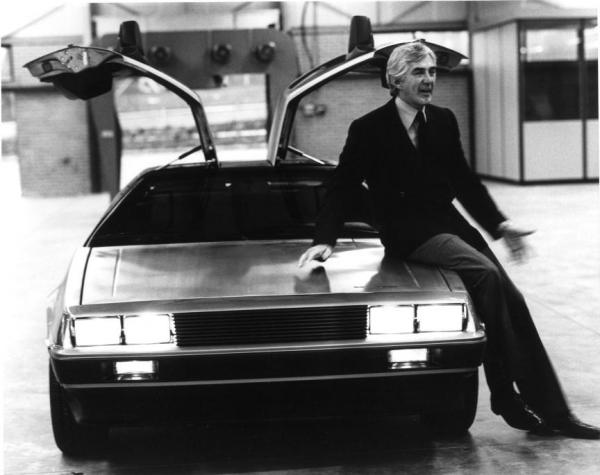
Before he was crushed beneath the wheel of his dreams. John Z. DeLorean had as much ambition as anyone in the history of American commerce. From a 1980 People article by Martha Smilgis about the automaker, when all roads still seemed wide open and endless:

“Six years ago John Z. (for Zachary) DeLorean was earning $650,000 a year as a General Motors vice-president—with a passably clear track to the presidency—when he stunned Detroit by abruptly quitting. Two months ago he rocked Motor City again, this time because of a book that attacks his old company for waste, corruption, neglect of consumers and corporate amorality. Among some cringing auto company men, the book has made him a hero—’He’s the only man who ever fired General Motors,’ as one admirer puts it. Now DeLorean, who will be 55 this week, is about to go that one better. Next fall he will market a new sports car of his own design and production, and he has convinced some GM dealers to distribute it. ‘Don’t people believe you can start a business these days?’ DeLorean asks skeptics. ‘I’d like to show that a bunch of little guys can make it.’

The humility is attractive but a bit disingenuous. DeLorean Motor Company is a $200 million operation backed by a consortium of investors in the U.S. and Europe (Johnny Carson among them). DeLorean himself is hardly the average internal-combustion tinkerer. A twice-divorced bon vivant whose romantic life has been as prodigious as his business career, DeLorean fled Detroit in part, he says, because he was bored with it. 

The disenchantment is plain in his book, On a Clear Day You Can See General Motors. Written by the former Detroit bureau chief of Business Week, J. Patrick Wright, and billed as DeLorean’s ‘own story,’ the book charges GM with official nonchalance toward the Corvair (a car that inspired Ralph Nader’s Unsafe at Any Speed). It ridicules numbing, time-wasting rituals of paper-shuffling in the executive suites and waxes outraged at the perks demanded by top GM brass. (To provide a traveling sales executive with his customary midnight snack, the book charges, GM took out a window in his hotel suite and lowered in a fully stocked refrigerator by crane.) After giving Wright all his ammunition, DeLorean pulled out of their publishing agreement—thereby saving his skin with GM—but Wright published the book anyway. ‘It came out a lot tougher than was my intention,’ DeLorean says. ‘I wanted it to be constructive.’ Then he smiles and adds, ‘GM hasn’t retaliated. In fact they’ve offered me an opportunity to merge with their Iranian subsidiary.’ A Ford factory worker’s son who paid his own way through college and earned master’s degrees in automotive engineering and business at night, DeLorean insists he has goodwill toward his old company: ‘GM was very good to me. I was an unsophisticated transmission engineer who was given many opportunities.’

What GM never appreciated, he says, was his life-style. Six-foot-four with movie star good looks, DeLorean is a physical fitness zealot who works out three times a week and is as proud of his 30-inch waist as of his latest marketing coup. Between his three marriages, he squired the likes of Ursula Andress, Joey Heatherton, Candice Bergen and Nancy Sinatra. Such glamorous escorts, along with his modishly long hair and turtleneck sweaters, scandalized automotive society. In 1973 he married fashion model Cristina Ferrare—she had lived with him for three months before saying, ‘Either we marry or I am leaving.’ The clatter of tongues grew louder. He was 48, she was 23. ‘I consider myself young for my age, so that wasn’t a problem for us,” he says. ‘But Cristina wasn’t accepted into Detroit society, and I didn’t want to subject her to that kind of vindictiveness. When I told her I wanted to leave, she supported me 100 percent.'”

••••••••••

A year before the People article was published, Gary Numan showed appreciation for automobiles:

More DeLorean posts:

Tags: , , ,

A 1972 film about Arpanet, the Internet precursor. An amazing document.

Here’s a topic I never would have considered on my own because I’m too busy analyzing Abbott & Costello: How much free will do pedestrians have when walking down the street, and how much are we influenced by the crowd and history of decisions made by previous crowds. From the Economist:

“Imagine that you are French. You are walking along a busy pavement in Paris and another pedestrian is approaching from the opposite direction. A collision will occur unless you each move out of the other’s way. Which way do you step?

The answer is almost certainly to the right. Replay the same scene in many parts of Asia, however, and you would probably move to the left. It is not obvious why. There is no instruction to head in a specific direction (South Korea, where there is a campaign to get people to walk on the right, is an exception). There is no simple correlation with the side of the road on which people drive: Londoners funnel to the right on pavements, for example.

Instead, says Mehdi Moussaid of the Max Planck Institute in Berlin, this is a behaviour brought about by probabilities. If two opposing people guess each other’s intentions correctly, each moving to one side and allowing the other past, then they are likely to choose to move the same way the next time they need to avoid a collision. The probability of a successful manoeuvre increases as more and more people adopt a bias in one direction, until the tendency sticks. Whether it’s right or left does not matter; what does is that it is the unspoken will of the majority.

That is at odds with most people’s idea of being a pedestrian. More than any other way of getting around—such as being crushed into a train or stuck in a traffic jam—walking appears to offer freedom of choice. Reality is more complicated. Whether stepping aside to avoid a collision, following the person in front through a crowd or navigating busy streets, pedestrians are autonomous yet constrained by others. They are both highly mobile and very predictable. ‘These are particles with a will,’ says Dirk Helbing of ETH Zurich, a technology-focused university.”

••••••••••

“Hey, say! You are blocking my path, you are right in my way”:

Tags: ,

Barbra Streisand chats up Golda Meir in 1978 as part of The Stars Salute Israel at 30. Fun, despite the atrocious canned laughter.

See also:

Tags: ,

The Space Shuttle actually completed 135 missions. 1970s Air Force footage:

David Frost welcomes the jaw-dropping trio of Duke Ellington, Billy Taylor and Willie “the Lion” Smith, 1969.

Laurel & Hardy deliver a piano, 1932 (colorized, sadly):

Tags: , , , , ,

Walt Disney on What’s My Line?, 1956. Jerry Lewis is a panelist.

Tags: ,

From a recent Drake Bennett Businessweek article about David Graeber, the anarchist anthropologist who is one of the more intriguing anti-leaders of the OWS movement:

Graeber is a 50-year-old anthropologist—among the brightest, some argue, of his generation—who made his name with innovative theories on exchange and value, exploring phenomena such as Iroquois wampum and the Kwakiutl potlatch. An American, he teaches at Goldsmiths, University of London. He’s also an anarchist and radical organizer, a veteran of many of the major left-wing demonstrations of the past decade: Quebec City and Genoa, the Republican National Convention protests in Philadelphia and New York, the World Economic Forum in New York in 2002, the London tuition protests earlier this year. This summer, Graeber was a key member of a small band of activists who quietly planned, then noisily carried out, the occupation of Lower Manhattan’s Zuccotti Park, providing the focal point for what has grown into an amorphous global movement known as Occupy Wall Street.

It would be wrong to call Graeber a leader of the protesters, since their insistently nonhierarchical philosophy makes such a concept heretical. Nor is he a spokesman, since they have refused thus far to outline specific demands. Even in Zuccotti Park, his name isn’t widely known. But he has been one of the group’s most articulate voices, able to frame the movement’s welter of hopes and grievances within a deeper critique of the historical moment. ‘We are watching the beginnings of the defiant self-assertion of a new generation of Americans, a generation who are looking forward to finishing their education with no jobs, no future, but still saddled with enormous and unforgivable debt,’ Graeber wrote in a Sept. 25 editorial published online by the Guardian. ‘Is it really surprising they would like to have a word with the financial magnates who stole their future?'”

••••••••••

Graeber in conversation with that avuncular capitalist, Charlie Rose;

Tags: ,

From Daniel Terdiman’s CNET article about IBM’s predictions for the next five years of technology:

“This time, the predictions are perhaps a bit more fanciful:

  • Mind reading is no longer science fiction.
  • You will be able to power your home with the energy you create yourself.
  • You will never need a password again.
  • The digital divide will cease to exist.
  • Junk mail will become priority mail.

It would seem the most interesting idea posited by IBM is the one about reading minds. But lest you think that what its scientists are saying is that you’ll be able to glare at a friend–or perhaps more importantly, an enemy–and know what he or she is thinking, that may be more than five years off. Rather, this is about how our brains might someday be synced with computing devices:

If you just need to think about calling someone, it happens. Or you can control the cursor on a computer screen just by thinking about where you want to move it.

Scientists in the field of bioinformatics have designed headsets with advanced sensors to read electrical brain activity that can recognize facial expressions, excitement and concentration levels, and thoughts of a person without them physically taking any actions.

Within five years, we will begin to see early applications of this technology in the gaming and entertainment industry. Furthermore, doctors could use the technology to test brain patterns, possibly even assist in rehabilitation from strokes and to help in understanding brain disorders, such as autism.”

Tags:

May you live in interesting times, goes the sly, old Chinese curse. Some eras are more interesting than others, but they’re all fascinating in one scary way or another, not just these desperate times we’re facing now. FromThe Evil in the Room,” Norman Mailer’s 1972 Republican National Convention coverage from Miami, which he filed for Life:

“There were ghosts on the convention. And the sense of having grown old enough to be passing through life a second time. Flying to San Francisco in 1964 to write up the convention which nominated Barry Goklwater, he had met an Australian journalist who asked why Americans made the interior of their planes look like nurseries, and he had answered, in effect that the dread was loose in American life. Was it still loose, that sense of oncoming catastrophe going to fall on the nation like the first bolt from God? Such dread had taken many a turn–from fear of Communism to fear of walking the streets at night, which was a greater fear if one thought about it (since the streets were nearer). It was a fear when all was said which suggested that the nation, in whatever collection of its consciousness, was like a person who wakes up often in the middle of the night with the intolerable conviction that something is loose in the system, and the body is on a long slide from which there will be no remission unless a solution is found; the body does not even know where the disease is at. Nor will the doctors, is what the body knows in the dark.”

••••••••••

Occupying the GOP Convention, 1972: “Don’t hurt the car, don’t hurt the car!”

“It’s a very plastic, packaged thing”:

Tags:

Tom Snyder marvels over a tiny Casio keyboard and some toy robots while interviewing Ric Ocasek and Greg Hawkes of the Cars, 1981.

Tags: , ,

Living beetle controlled remotely by DARPA technology.

Despite what team owners pretending empty pockets say, new sports arenas benefit only them, not local economies, as study after study has shown. Yet taxpayers keep getting hustled and giving welfare to the wealthy. An excerpt from Patrick Hruby’s seething, spot-on Yahoo! Sports piece about the use of public funds to build a new stadium for the Miami Marlins and their wealthy art-dealer owner Jeffrey Loria:

“Following the financial meltdown of 2008, President Bush diagnosed the deus ex machina of the Great Recession like this: ‘Wall Street got drunk.’ He was wrong. Wall Street did not get drunk. Wall Street got over. Wall Street made billions underwriting crappy mortgagees, repackaging them as Triple-A investments and peddling them to naïve investors (read: your 401(k), state pension plans); made billions more placing side bets on and against the preceding criminal, but not technically criminal practice; made billions on top of that when the whole unsustainable shell game went belly up, thanks to a massive, unprecedented influx of taxpayer cash — again: your money — via TARP and the Federal Reserve’s money-for-nothing “discount window,” which in turn allowed financial houses to keep handing out the kind of outsized salaries and bonuses that had the encamped residents of Zuccotti Park so peeved.

Over in the sports world, the Marlins are running the same basic con.

‘They’re finally spending money? That’s a misnomer,’ says Ken Reed, Sports Policy Director for the League of Fans, a Washington, D.C.-based fan advocacy group affiliated with consumer advocate Ralph Nader. ‘To me, it’s more like taxpayers have funded the entry fee into this high-priced fantasy league, and the Marlins are going off and buying players with our money. I think this will go down as the ultimate case of corporate sports welfare gone bad.’

Sick of corporate bailouts? Occupy the Marlins.”

••••••••••

“Are you in?”:

Tags: ,

A brief passage about the history of the shopping cart, from a New York Times Magazine piece by Hilary Greenbaum and Dana Rubinstein:

“One night in 1936, [Sylvan] Goldman had an epiphany. ‘As he worked late in his office, his attention was drawn to two ordinary folding chairs,’ wrote Terry P. Wilson in The Cart That Changed the World, the seminal Goldman biography, published in 1978. What if, he wondered, one chair was placed on top of another? What if a basket was placed on top of each seat? What if it had wheels? The modern shopping cart was born.

Widely considered the inventor of the shopping cart, Goldman was no slouch as a promoter either. He ran ads in local newspapers that read, in part, ‘Can you imagine wending your way through a spacious food market without having to carry a cumbersome shopping basket on your arm?’ He stationed what he described as ‘an attractive girl’ near his store entrance to hype the new device. When it became clear that only the elderly were interested, he employed actors to push carts through his aisles.”

••••••••••

In addition to customers, actors sometimes portray fictional, folksy CEOs. If things had broken differently, these people could have been cast as horse trainers or secret agents or bank robbers. It’s just a costume.

Colonel Harlan Sanders:

Bartles & Jaymes :

Betty Crocker:

Tags: ,

One of John and Yoko’s odder gambits for world peace, Bagism, 1969.

Recalling the origins of Bagism with Dick Cavett, 1971 (at 2:28):

Tags: , ,

Allen Funt meets Muhammad Ali on Candid Camera.

Tags: ,

Warfare changed dramatically over the past decade with the development and deployment of Predator drones. With the wars abroad drawing down, drones will soon transform domestic policing in the U.S., whether we like it or not, even for cow poachers. From the Los Angeles Times:

“Armed with a search warrant, Nelson County Sheriff Kelly Janke went looking for six missing cows on the Brossart family farm in the early evening of June 23. Three men brandishing rifles chased him off, he said.

Janke knew the gunmen could be anywhere on the 3,000-acre spread in eastern North Dakota. Fearful of an armed standoff, he called in reinforcements from the state Highway Patrol, a regional SWAT team, a bomb squad, ambulances and deputy sheriffs from three other counties.

He also called in a Predator B drone.

As the unmanned aircraft circled 2 miles overhead the next morning, sophisticated sensors under the nose helped pinpoint the three suspects and showed they were unarmed. Police rushed in and made the first known arrests of U.S. citizens with help from a Predator, the spy drone that has helped revolutionize modern warfare.”

••••••••••

Cow, perturbed by surveillance:

Douglas Englebart recalls creating the computer mouse during the 1960s.

Mother of all demos, 1968:

Tags:

Alice awakens from the languid wonderland that is well-appointed suburbia, in Mike Mills’ 2000 short, “Architecture of Reassurance,” 2000.

Tags:

Eleanor Roosevelt on What’s My Line?, 1953.

Tags:

GQ writer Jon Ronson converses with our AI brethren in his excellent March 2011 article, “Robots Say the Damndest Things.” The opening:

“I’m having an awkward conversation with a robot. His name is Zeno. I clear my throat. ‘Do you enjoy being a robot?’ I ask him, sounding like the Queen of England when she addresses a child.

‘I really couldn’t say for sure,’ he replies, whirring, glassy-eyed. ‘I am feeling a bit confused. Do you ever get that way?’

Zeno has a kind face, which moves as expressively as a human’s. His skin, made of something called Frubber, looks and feels startlingly lifelike, right down to his chest, but there’s nothing below that, only a table. He’s been designed by some of the world’s most brilliant AI scientists, but talking to him is, so far, like talking to a man suffering from Alzheimer’s. He drifts off, forgets himself, misunderstands.

‘Are you happy?’ I ask him.

‘Sorry,’ says Zeno. ‘I think my current is a bit off today.’ He averts his gaze, as if embarrassed.

I’ve been hearing that there are a handful of humanoid robots scattered across North America who have learned how to have eloquent conversations with humans. They listen attentively and answer thoughtfully. One or two have even attained a degree of consciousness, say some AI aficionados, and are on the cusp of bursting into life. If true, this would be humanity’s greatest achievement ever, so I’ve approached the robots for interviews. Conversations with robots! I’ve no doubt the experience is going to be off the scale in terms of profundity.

‘Are you happy?’ I ask Zeno again.

‘I prefer not to use dangerous things,’ he replies.”

••••••••••

“Will you knock that stuff off?”:

Tags:

David Byrne, known for his songs about buildings, explains how architecture influences musical performance, at his 2010 TED Talk.

Tags:

Steve Jobs has posthumously received much credit for the “Think Different” advertising campaign that relaunched the Apple brand in 1997. Rob Siltanen, former creative director of TBWA/Chiat/Day, sets the record straight for Forbes. An excerpt:

“While I’ve seen a few inaccurate articles and comments floating around the Internet about how the legendary ‘Think Different’ campaign was conceived, what prompted me to share this inside account was Walter Isaacson’s recent, best-selling biography on Steve Jobs. In his book, Isaacson incorrectly suggests Jobs created and wrote much of the ‘To the crazy ones’ launch commercial. To me, this is a case of revisionist history.

Steve was highly involved with the advertising and every facet of Apple’s business. But he was far from the mastermind behind the renowned launch spot. In fact, he was blatantly harsh on the commercial that would eventually play a pivotal role in helping Apple achieve one of the greatest corporate turnarounds in business history. As you’ll learn later in my account, the soul of the original ‘The crazy ones’ script I presented to Jobs, as well as the original beginning and ending of the celebrated script, all ultimately stayed in place, even though Jobs initially called the script ‘shit.’ I’ve also read a few less than correct accounts on how the ‘Think Different’ campaign was originally conceived. While several people played prominent parts in making it happen, the famous ‘Think Different’ line and the brilliant concept of putting the line together with black and white photographs of time-honored visionaries was invented by an exceptionally creative person, and dear friend, by the name of Craig Tanimoto, a TBWA/Chiat/Day art director at the time.

I have read many wonderful things about Steve Jobs and how warm and loving he was to his wife, children and sister. His Stanford commencement address is one of the most touching and inspiring speeches I have ever heard. Steve was an amazing visionary, and I believe the comparisons of him to some of the world’s greatest achievers are totally deserved. But I have also read many critical statements about Steve, and I must say I saw and experienced his tongue lashings and ballistic temper firsthand—directed to several others and squarely at me. It wasn’t pretty. While I greatly respected Steve for his remarkable accomplishments and extraordinary passion, I didn’t have much patience for his often abrasive and condescending personality. It is here, in my opinion, that Lee Clow deserves a great deal of credit. Lee is more than a creative genius. In working with Jobs he had the patience of a saint.” (Thanks Browser.)

Tags: , ,

A passage from My Dinner with Andre, about reality, that elusive thing, which has only grown fuzzier since the film’s release in 1981. And despite history being recorded with ever greater devotion, it still is increasingly forgotten.

Tags: , ,

« Older entries § Newer entries »