Christopher Hitchens was no fan of Mother Teresa and her cult of suffering, and William F. Buckley seemed to have similar apprehensions in 1989.
Ideas and technology and politics and journalism and history and humor and some other stuff.
You are currently browsing the archive for the Videos category.
Christopher Hitchens was no fan of Mother Teresa and her cult of suffering, and William F. Buckley seemed to have similar apprehensions in 1989.
Tags: Mother Teresa, William F. Buckley

From a post on Mashable by Zachary Sniderman, about Apple’s first attempt at a game-changing phone, in 1983, even before the introduction of the Macintosh:
“The first iPhone was actually dreamed up in 1983. Forget that silly old touchscreen, this iPhone was a landline with full, all-white handset and a built-in screen controlled with a stylus.
The phone was designed for Apple by Hartmut Esslinger, an influential designer who helped make the Apple IIc computer (Apple’s first “portable” computer) and later founded Frogdesign. The 1983 iPhone certainly fits in with Esslinger’s other designs for Apple. It also foreshadows the touchscreens of both the iPhone and iPad.”
••••••••••
Esslinger, 2009:

From “The Accidental Universe: Science’s Crisis of Faith,” a Harper’s piece by physicist and novelist Alan Lightman:
“Dramatic developments in cosmological findings and thought have led some of the world’s premier physicists to propose that our universe is only one of an enormous number of universes with wildly varying properties, and that some of the most basic features of our particular universe are indeed mere accidents—a random throw of the cosmic dice. In which case, there is no hope of ever explaining our universe’s features in terms of fundamental causes and principles.
It is perhaps impossible to say how far apart the different universes may be, or whether they exist simultaneously in time. Some may have stars and galaxies like ours. Some may not. Some may be finite in size. Some may be infinite. Physicists call the totality of universes the ‘multiverse.’ Alan Guth, a pioneer in cosmological thought, says that ‘the multiple-universe idea severely limits our hopes to understand the world from fundamental principles.’ And the philosophical ethos of science is torn from its roots. As put to me recently by Nobel Prize–winning physicist Steven Weinberg, a man as careful in his words as in his mathematical calculations, ‘We now find ourselves at a historic fork in the road we travel to understand the laws of nature. If the multiverse idea is correct, the style of fundamental physics will be radically changed.'”
••••••••••
Brian fails to complete his novel in several universes:
Tags: Alan Guth, Alan Lightman, Steven Weinberg
George Carlin, our best stand-up ever, with a brilliant bit about the ever-increasing deceit of language. Just audio.
Tags: George Carlin
Max Headroom was a computer-generated talking head who existed only on television, and I suspect the same is true of Charlie Rose. From 1986:
Tags: Charlie Rose, David Letterman, Max Headroom
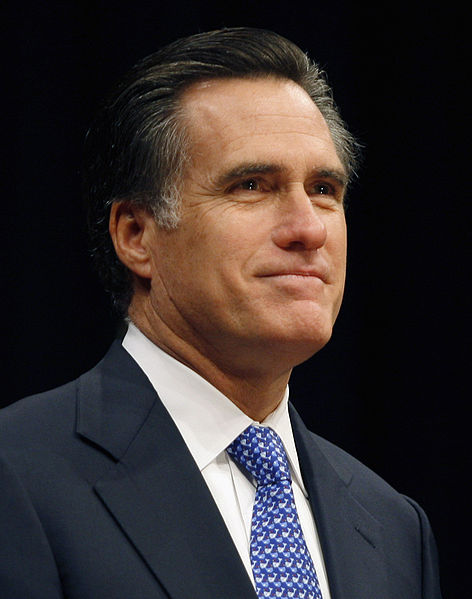
There was a brouhaha last Friday when Mitt Romney’s son, Matt, used some Birther vernacular while campaigning on behalf of his father in New Hampshire, but it really shouldn’t be a surprise to anyone who’s followed the former Massachusetts Governor’s strategy. Playing to the idea that Obama is “Other” has been a tacit but clear part of the Romney strategy. The younger Romney’s only real deviation was being explicit instead of implicit.
When Romney says that “Obama doesn’t have a clue about the economy,” that’s obviously fair game. But when he states that Obama “doesn’t get America,” he’s labeling the President as less than adequately American or not a real American. When Romney says Obama is trying to turn “America into Europe,” he may as well be using “Kenya” in the comparison.
Trying to pander to people who want to see Obama as alien is sad, especially for someone who’s likely been treated to same way because of his own religion. That kind of faux patriotism is often the last refuge of a lout, but it in Romney’s case, it’s been present from the first.
••••••••••
Tags: Matt Romney, Mitt Romney

From “Between the Lines,” a really interesting piece in L.A. Magazine by Dave Gardetta about the science of parking spaces, a segment about UCLA traffic guru Donald Shoup:
“In the United States hundreds of engineers make careers out of studying traffic. Entire freeway systems like L.A.’s have been hardwired with sensors connecting to computer banks that aggregate vehicle flow, monitor bottlenecks, explain congestion in complicated algorithms. Yet cars spend just 5 percent of their lives in motion, and until recently there was only one individual in the country devoting his academic career to studying parking lots and street meters: Donald Shoup.
Shoup is 73 years old. He drives a 1994 Infiniti but for the last three decades has steered a 1975 Raleigh bike two miles uphill daily in fair weather, from his home near the Mormon temple to the wooded highlands of UCLA’s north campus. He was born near one shore (Long Beach), grew up on a far shore (Hawaii), and resembles a 19th-century figure sketched by Melville. He has a mildly hectic complexion, a halo of silver hair that breaks over his small ears into a white froth of a beard, and brimstone eyes. This year Shoup’s 765-page book, The High Cost of Free Parking, was rereleased to zero acclaim outside of the transportation monthlies, parking blogs, and corridor beyond his office door in UCLA’s School of Public Affairs building. He wasn’t surprised—’There’s not even a name for what I do,’ he says. Shoup, however, does not lack for acolytes. His followers call themselves Shoupistas, like Sandinistas, and on a Facebook page they leave posts suggesting parking meters for prostitutes and equations that quantify the contradiction between time spent cruising for free parking versus the ‘assumed time-value’ cited to justify expanding roadways. (The hooker stuff is more interesting.)
After 36 years, Shoup’s writings—usually found in obscure journals—can be reduced to a single question: What if the free and abundant parking drivers crave is about the worst thing for the life of cities? That sounds like a prescription for having the door slammed in your face; Shoup knows this too well. Parking makes people nuts. ‘I truly believe that when men and women think about parking, their mental capacity reverts to the reptilian cortex of the brain,’ he says. ‘How to get food, ritual display, territorial dominance—all these things are part of parking, and we’ve assigned it to the most primitive part of the brain that makes snap fight-or-flight decisions. Our mental capacities just bottom out when we talk about parking.'” (Thanks Longform.)
•••••••••
Godard‘s darkly comic 1967 traffic nightmare:
Goofy on a superhighway, 1965:
Tags: Dave Gardetta, Donald Shoup
Tags: Richard Feynman


Built in the 1990s in Arizona, Biosphere 2 was a sealed and self-contained ecological world that was to house a team of researchers during two closures. But even controlled environments can’t really be controlled. Disputes over financial management led to the early termination of Biosphere 2 in 1994, and ownership of its remants have changed hands several times, as if it were a failed department store. From a 1996 New York Times article by William J. Broad about Columbia University taking over Biosphere for a spell, at a time when it lay dormant, a domicile only to exotic ants:
The exotic species of ant known as Paratrechina longicornus, or the crazy ant, named for its speedy and erratic behavior when excited, somehow managed to kill off all the other ants over the years, as well as the crickets and grasshoppers.
Swarms of them crawled over everything in sight: thick foliage, damp pathways littered with dead leaves and even a bearded ecologist in the humid rain forest of Biosphere 2, an eight-story, glass-and-steel world in the wilds of the Sonora Desert that cost $200 million to build.
“These little guys pretty much run the food web,” Dr. Tony Burgess, the ecologist, said as he tapped a dark frond, sending dozens of the ants into a frenzy. ”Until we understand the ecology, we’re reluctant to eliminate them.”
Columbia University, an icon of the Ivy League, is struggling to turn a utopian failure into a scientific triumph.
The university took over management of Biosphere 2 in January and is starting to reveal just how badly things went awry when four men, four women and 4,000 species of plants and animals were sealed inside this giant terrarium for a two-year experiment that ended in 1993.
The would-be Eden became a nightmare, its atmosphere gone sour, its sea acidic, its crops failing, and many of its species dying off. Among the survivors are crazy ants, millions of them.•
_____________________________________
Biosphere 2, before its fall:
Jane Poynter recalls living in Biosphere 2, at TED:
Tags: Jane Poynter
As the Flash Mob concept closes in on a decade of existence, its originator, Wired editor Bill Wasik, has penned an article about the intersection of group behavior, technology and violence. Wasik on the origins of the idea:
“I even called my events ‘mobs,’ as a wink to the scary connotations of a large group gathered for no good reason. But I didn’t come up with the name flash mob—that honor belongs to Sean Savage, a UC Berkeley grad student who was blogging about my events and the copycats as they happened. He added the word ‘flash’ as an analogy to a flash flood, evoking the way that these crowds (which in the original version arrived all at once and were gone in 10 minutes or less) rushed in and out like water from a sudden storm. Savage and I never met while the original mobs were still going on, but today we work just a block away from each other in San Francisco—me at Wired, him at Frog Design, where he’s an interaction designer—so we now can get together and commiserate about what’s become of our mutual creation. It had been bad enough to see the term get appropriated by Oprah to describe a ridiculous public dance party featuring the Black Eyed Peas. Now the media was stretching the term to include just about any sort of group crime. ‘It means everything and nothing now,’ Savage says morosely.
One reason the term ‘flash mob’ stuck back in 2003 was its resonance, among some sci-fi fans who read Savage’s blog, with a 1973 short story by Larry Niven called ‘Flash Crowd.’ Niven’s tale revolved around the effects of cheap teleportation technology, depicting a future California where “displacement booths” line the street like telephone booths. The story is set in motion when its protagonist, a TV journalist, inadvertently touches off a riot with one of his news reports. Thanks to teleportation, the rioting burns out of control for days, as thrill-seekers use the booths to beam in from all around to watch and loot. Reading ‘Flash Crowd’ back in 2003, I hadn’t seen much connection to my own mobs, which I intended as a joke about the slavishness of fads. I laughed off anyone who worried about these mobs getting violent. In 2011, though, it does feel like Niven got something chillingly correct. He seems especially prescient in the way he describes the interplay of curiosity, large numbers, and low-level criminality that causes his fictional riots to grow. ‘How many people would be dumb enough to come watch a riot?’ the narrator asks. ‘But that little percentage, they all came at once, from all over the United States and some other places, too. And the more there were, the bigger the crowd got, the louder it got—the better it looked to the looters … And the looters came from everywhere, too.’
That last line passed for science fiction in 1973. The not-infrequent riots that wracked American cities in the 1960s tended to be strikingly localized, with rioters taking out their aggression on the immediate neighborhood in which they lived. By contrast, Nick de Bois says that of the 165 or so people arrested so far for the looting in Enfield Town, only around 60 percent hailed from the local borough, which includes not just greater Enfield but a few surrounding towns. The other 40 percent commuted in from elsewhere, including locales as far afield as Essex and Twickenham, each a good hour’s drive away. Instead of teleportation booths replacing telephone booths—how quaint!—it turned out that those phones merely had to shrink down enough to fit into our pockets.”
••••••••
Austin Flash Mob, 2003, the year it started:
Tags: Bill Wasik, Sean Savage
Robots designed to work alongside people, from the fine folks at Kawada Industries.
A 1964 Jacques Cousteau doc about Continental Shelf Station Two, the first manned underwater colony:
Steve Zissou tells you about his boat:
Tags: Jacques Cousteau
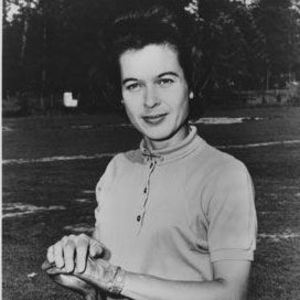 A founding member of the Ladies Professional Golf Association which formed in 1950, Bettye Danoff didn’t enjoy the fame or financial rewards of contemporary players, but it sounds like she had fun while paving the way for them. An excerpt from her New York Times obituary by Maraglit Fox:
“Bettye Danoff, one of 13 founding members of the Ladies Professional Golf Association, which began as a hardy, poorly paid band of women who traveled the country for the chance to play the game, died on Thursday in McKinney, Tex. She was 88.
Her daughter Debbie Danoff Bell confirmed the death.
Officially founded in 1950, the L.P.G.A. was begun by 13 women, including Danoff, Babe Didrikson Zaharias, Patty Berg and Alice Bauer.
If Danoff was somewhat less well known than they, that owed partly to the fact that she curtailed her touring in the early 1960s, after her husband’s death left her with children to care for at home.
But before that, she joined her comrades in driving from tournament to tournament, convoy style, in their own cars. In each car, the driver kept a set of color-coded paddles — red, green and yellow — that she could wave out the window to signal a stop for gas, food or the bathroom.
Arriving at a course, they might encounter a sea of mud, or greens more brown than green. Before they teed off, they sometimes had to pull weeds. At night they shared motel rooms and sang popular songs together, sweetly off-key. It was A League of Their Own with woods and irons.”
•••••••••••
Some of Danoff’s fellow female golf pioneers, 1950s:
Tags: Bettye Danoff
Genesys, 1970:
Key Frame Animation, 1971:
Yoko Ono performance art, “Cut Piece,” from 1965. Audience members were invited to come on stage and scissor pieces from her clothes. The phrase recited at the beginning is an inscription on the Georgia Guidestones.
Tags: Yoko Ono

The opening of “The Xinjiang Procedure,” Ethan Gutmann’s alarming Weekly Standard article about the organ market that surrounds executions of China’s political prisoners:
“To figure out what is taking place today in a closed society such as northwest China, sometimes you have to go back a decade, sometimes more.
One clue might be found on a hilltop near southern Guangzhou, on a partly cloudy autumn day in 1991. A small medical team and a young doctor starting a practice in internal medicine had driven up from Sun Yat-sen Medical University in a van modified for surgery. Pulling in on bulldozed earth, they found a small fleet of similar vehicles—clean, white, with smoked glass windows and prominent red crosses on the side. The police had ordered the medical team to stay inside for their safety. Indeed, the view from the side window of lines of ditches—some filled in, others freshly dug—suggested that the hilltop had served as a killing ground for years.
Thirty-six scheduled executions would translate into 72 kidneys and corneas divided among the regional hospitals. Every van contained surgeons who could work fast: 15-30 minutes to extract. Drive back to the hospital. Transplant within six hours. Nothing fancy or experimental; execution would probably ruin the heart.” (Thanks Longform.)
••••••••••
“Patients are suspended by wires through long bones”:
Tags: Ethan Gutmann
Peter Lorre on What’s My Line?, 1960, promoting a film which was made in Scent-o-Vision, during the dying days of the Studio System.
Tags: Peter Lorre
Georgia Governor Jimmy Carter, completely unknown on the national stage in 1974, appears on What’s My Line? a mere two years before becoming President of the free world’s most powerful country.
Tags: Jimmy Carter
Two short films Ray and Charles Eames made for IBM during the 1950s:
“A Communications Primer,” 1953.
“The Information Machine,” 1956.
See also:
Tags: Charles Eames, Ray Eames
Early global television broadcast, 1967, which features media seer Marshall McLuhan as a guest. “It’s a real humming, buzzing confusion,” he says, referring to the crowded control room, but also predicting the nature of the more connected, interactive media to come.
Tags: Marshall McLuhan

Just as the cash register is being placed in our pockets more and more, we are also increasingly products ourselves, handing over what’s in our hearts and minds in exchange for “free” products. From a Daily Beast piece by Dan Lyons, the erstwhile Fake Steve Jobs, about the true cost of doing business today:
“The truth is, we have no interest in protecting your privacy, and if you still believe that we do, then you are stupider than we thought, and believe me, we already thought you were pretty stupid. Think about it. The only way our business works is if we can track what you do and sell that information to advertisers. Did you honestly not realize that?
You are not our customer. You are the product that we sell. For us to say we’re going to protect you is like the poultry industry promising to create more humane living conditions for chickens. Sure, they say that. But you know they don’t mean it.”
••••••••••
Maggie gets scanned, quantified:
Tags: Dan Lyons, Mark Zuckerberg
The Star Wars Holiday Special, from 1978. Simply the biggest piece of crap I have ever seen.

Mary Roach has never met a dead man she didn’t like, so it’s no surprise Outside sent her to investigate a true-life tale of head shrinking. An excerpt:
“Thirteen inches from heel to crown, the specimen is mounted on a mahogany stand that could serve as a paper-towel holder. The first thing you notice is the skin color. The Shuar believed that killing a man created an avenging soul that would leave the corpse via the mouth and come after the perpetrator. Lips were sewn shut to prevent this, and true ceremonial tsantsas have blackened skin, the result of the killer having rubbed it with charcoal to prevent the victim’s spirit from ‘seeing’ out. This child’s skin is the buff color and rough texture of a dried kalamata fig. Based on its proportions—the plump bowed legs, the nubbin of a penis, the fat cheeks—it looks more like a mummified infant than a shrunken boy. In fact, the inventory lists it as ‘stillborn.’
‘Gustav told us it had been given to him by the Shuar and that he carried it out when he escaped,’ Brown says. ‘He never told us that he himself shrunk humans.’
Brown has his laptop open and has been clicking through images from his family’s photo albums. He shows me a 1955 shot of Gus and Gert—as American friends sometimes called them—seated at a restaurant table for a family dinner in Los Angeles. Bowls and spoons are set before them. Struve looks at the camera with the mild peevishness of an old guy who wants to have his soup. He wears dress suspenders over a short-sleeved button-down shirt and sports the pencil-thin mustache he wore most of his adult life. I remark to Brown that it’s hard to picture this natty gentleman flaying bodies and boiling skins.
‘Check the pattern on the shirt,’ he says. I lean in closer. The shirt is decorated with a row of tsantsas, life-size and garish, with lips sewn shut and flowing Wonder Woman hair.
‘So he was a bit of an odd one,’ I say.
‘Well, bear in mind,’ Brown says quickly, ‘America was in the midst of a shrunken-head craze.’ He calls up a 1960s TV ad for a toy Witch Dr. Head Shrinkers Kit (‘Shrunken heads for all occasions!’) featuring a pith-helmeted actor hacking his way through what looks like a Kansas wheat field.”
••••••••••
Witch Dr. Head Shrinkers Kit ad:
Tags: Mary Roach
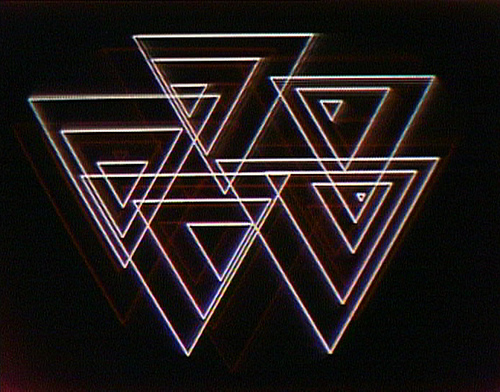
From “Computational Periodics,” a 1975 essay by the Pasadena-born computer-animation pioneer John Whitney:
“Also from the point of view that this Century is but an episode in the life of human culture, it is clear that more paraphernalia of this epoch may be castoff than will survive into the next. Yet surely the computer will not. A solid state image storage system will replace the silver chemical ribbon and cinema will eventually be interred in the archival museum. But computer and computer graphics bring to mind the kind of tools that may characterize an age succeeding this century’s age of the machine.”
••••••••••
“Catalog” (1961):
“Per•mu•ta•tion” (1966):
“Arabesque” (1975):
Tags: John Whitney
Sheila Nirenberg gives a TED Talk about the cutting edge of ocular prosthetics.
Tags: Sheila Nirenberg